Exercises
For all exercises, assume the perpetual inventory system is used unless stated otherwise.
E6-14 Using accounting vocabulary
Learning Objectives 1, 2
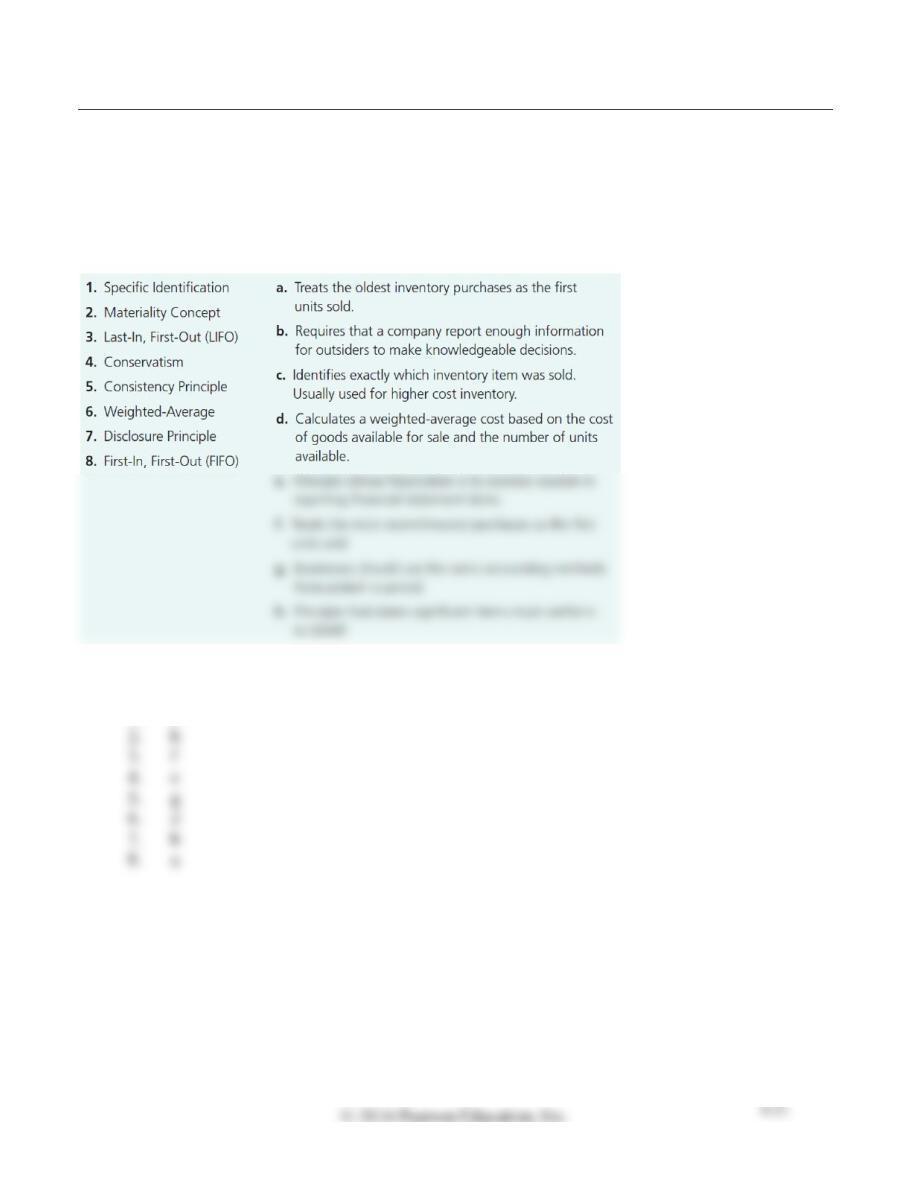
Match the accounting terms with the corresponding definitions.
SOLUTION
1.
c
2.
h
3.
f
4.
e
5.
g
6.
d
7.
b
8.
a
6-22
E6-15 Comparing inventory methods
Learning Objective 2
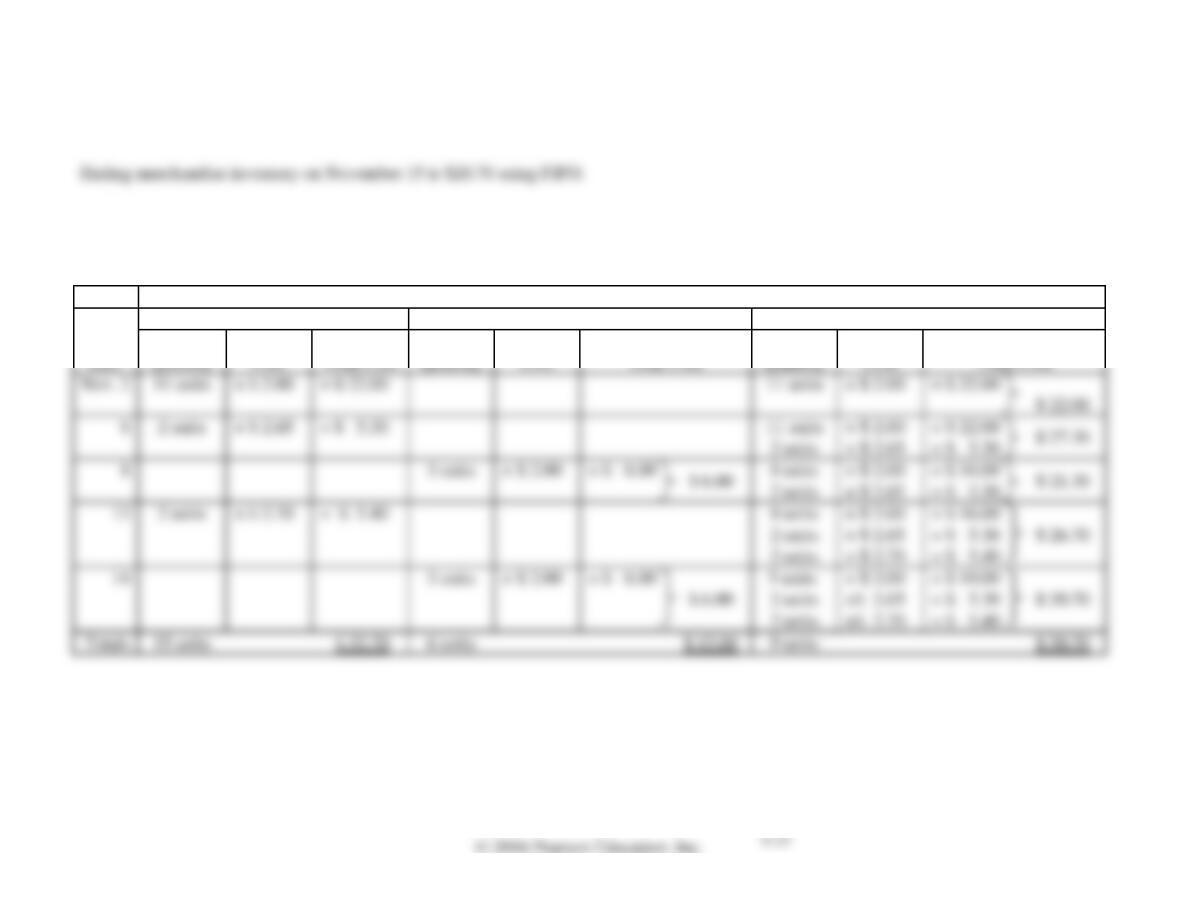
1. Ending Merch. Inv. $20.70
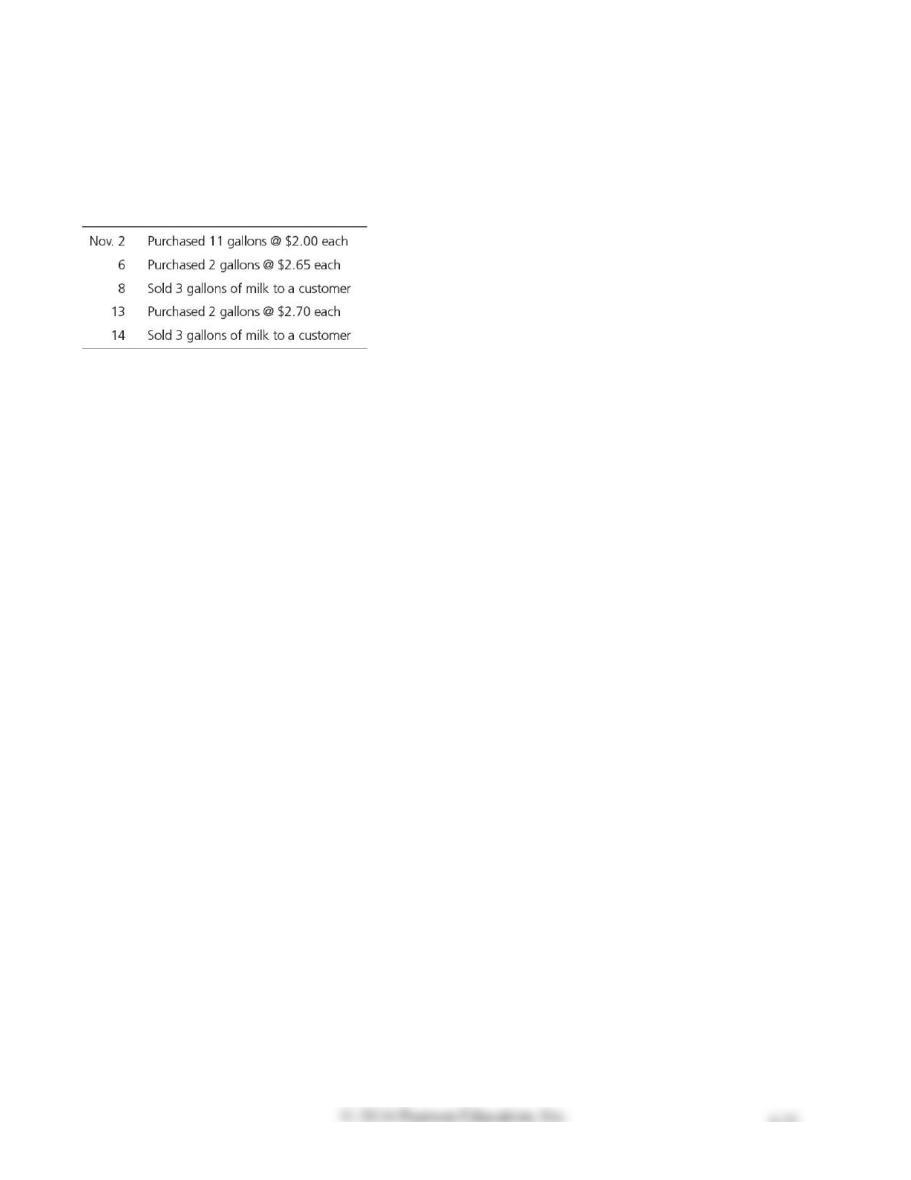
Zippy, a regional convenience store chain, maintains milk inventory by the gallon. The first month’s
milk purchases and sales at its Columbus, Ohio, location follow:
Requirements
1. Determine the amount that would be reported in ending merchandise inventory on November 15
using the FIFO inventory costing method.
2. Determine the amount that would be reported in ending merchandise inventory on November 15
using the LIFO inventory costing method.
3. Determine the amount that would be reported in ending merchandise inventory on November 15
using the weighted-average inventory costing method. Round all amounts to the nearest cent.
SOLUTION
Requirement 1
Calculations:
FIFO
Purchases
Cost of Goods Sold
Inventory on Hand
× $ 2.65
= $ 5.30
× $ 2.00
= $ 22.00
× $ 2.00
= $ 6.00
× $ 2.00
= $ 16.00
× $ 2.70
= $ 5.40
× $ 2.00
= $ 16.00
= $ 5.30
= $ 5.40
× $ 2.00
= $ 6.00
5 units
× $ 2.00
= $ 10.00
×$ 2.65
= $ 5.30
×$ 2.70
= $ 5.40
Unit
Unit
Unit
6-24
E6-15, cont.
Requirement 2
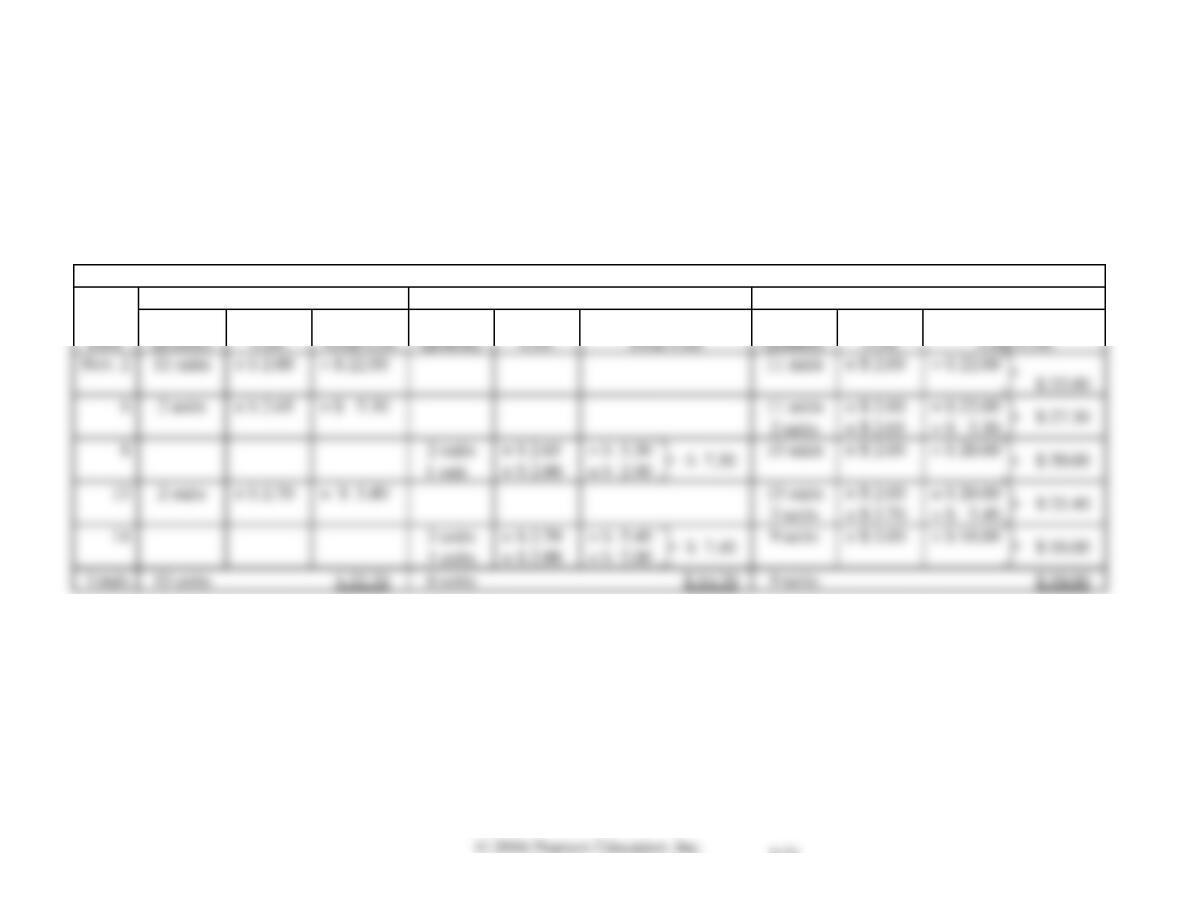
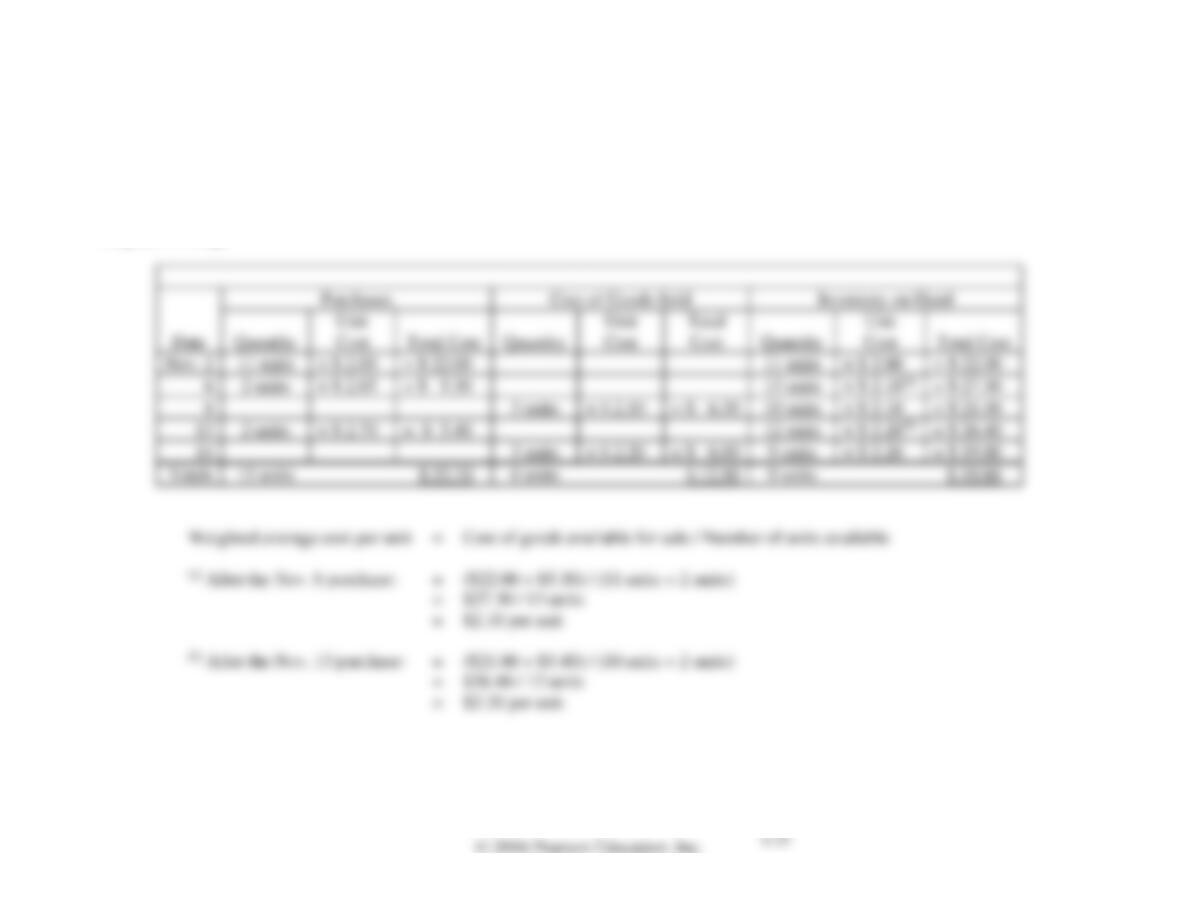
Ending merchandise inventory on November 15 is $18.00 using LIFO.
Calculations:
LIFO
Purchases
Cost of Goods Sold
Inventory on Hand
× $ 2.65
= $ 5.30
× $ 2.00
= $ 22.00
× $ 2.65
= $ 5.30
× $ 2.00
= $ 20.00
1 unit
= $ 2.00
× $ 2.70
= $ 5.40
× $ 2.00
= $ 20.00
= $ 5.40
× $ 2.70
= $ 5.40
× $ 2.00
= $ 18.00
= $ 2.00
Unit
Unit
Unit
E6-15, cont.
Requirement 3
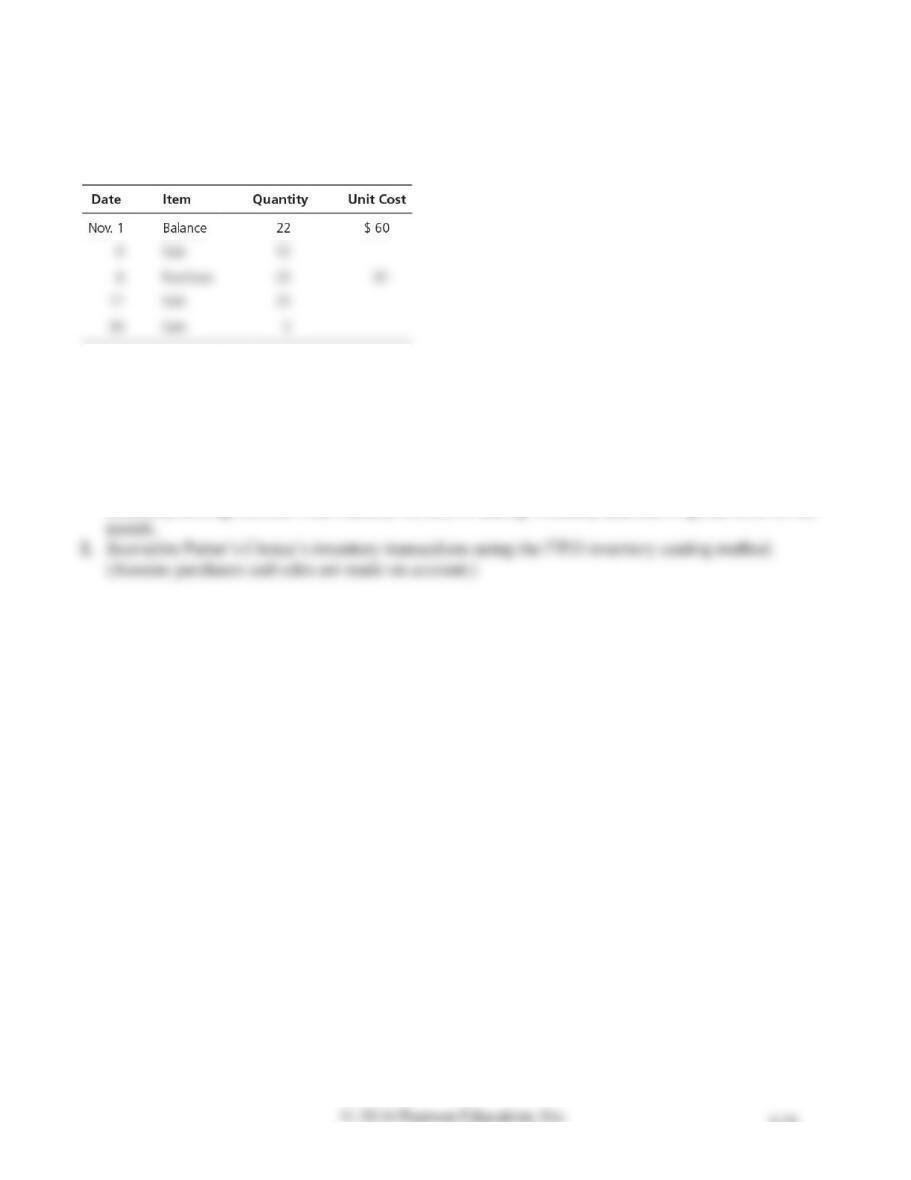
Ending merchandise inventory on November 15 is $19.80 using weighted-average.
Calculations:
Weighted-Average
6-26
Use the following information to answer Exercises E6-16 through E6-18.
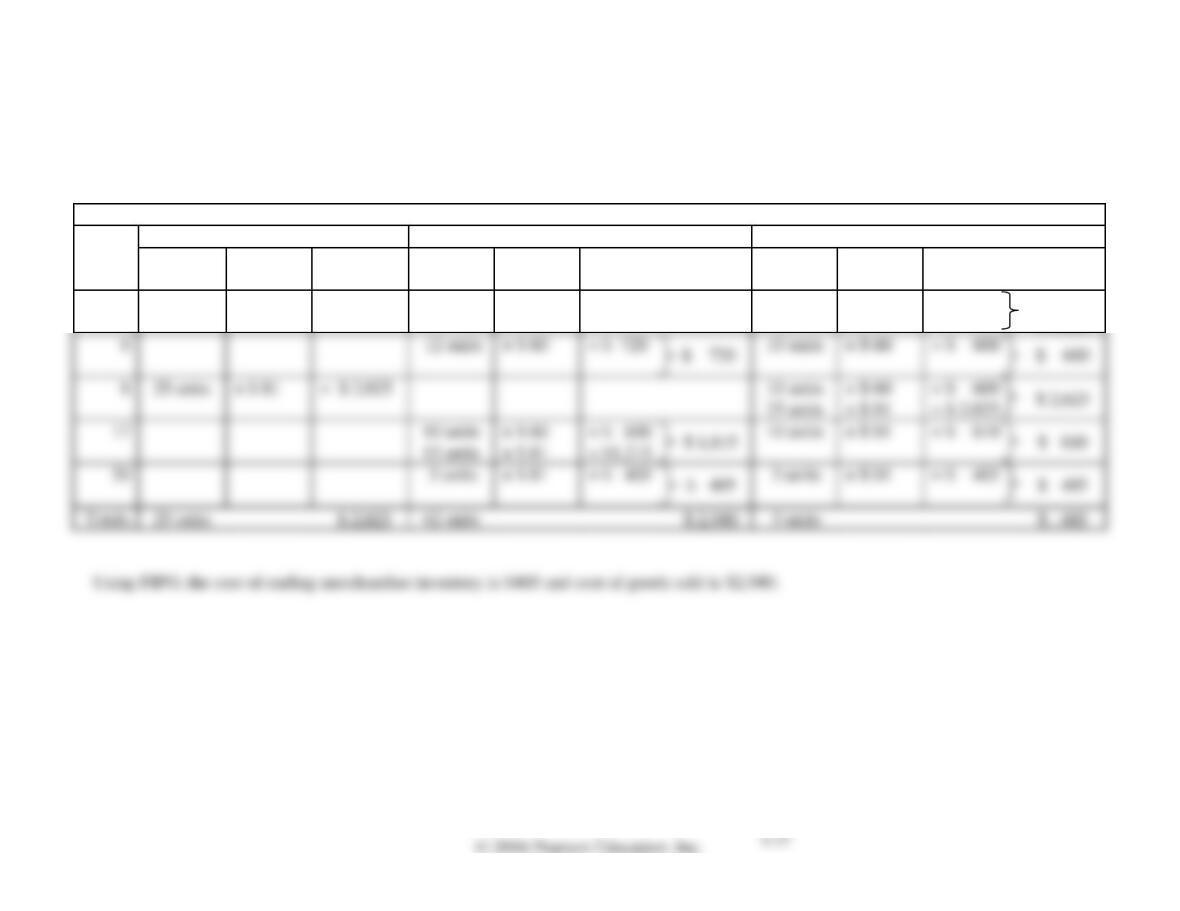
Putter’s Choice carries an inventory of putters and other golf clubs. The sales price of each putter is
$119. Company records indicate the following for a particular line of Putter’s Choice putters:
E6-16 Measuring and journalizing merchandise inventory and cost of goods sold—FIFO
Learning Objective 2
1. CoGS $2,940
Requirements
1. Prepare a perpetual inventory record for the putters assuming Putter’s Choice uses the FIFO
inventory costing method. Then identify the cost of ending inventory and cost of goods sold for the
SOLUTION
Requirement 1
Perpetual Inventory Record: FIFO
Purchases
Cost of Goods Sold
Inventory on Hand
Date
Quantity
Unit
Cost
Total Cost
Quantity
Unit
Cost
Total Cost
Quantity
Unit
Cost
Total Cost
Nov. 1
22 units
× $ 60
= $ 1,320
$ 1,320
× $ 60
= $ 720
× $ 60
= $ 600
× $ 81
= $ 2,025
× $ 60
= $ 600
= $ 2,025
× $ 60
= $ 600
× $ 81
= $ 810
= $1,215
$ 2,025
5 units
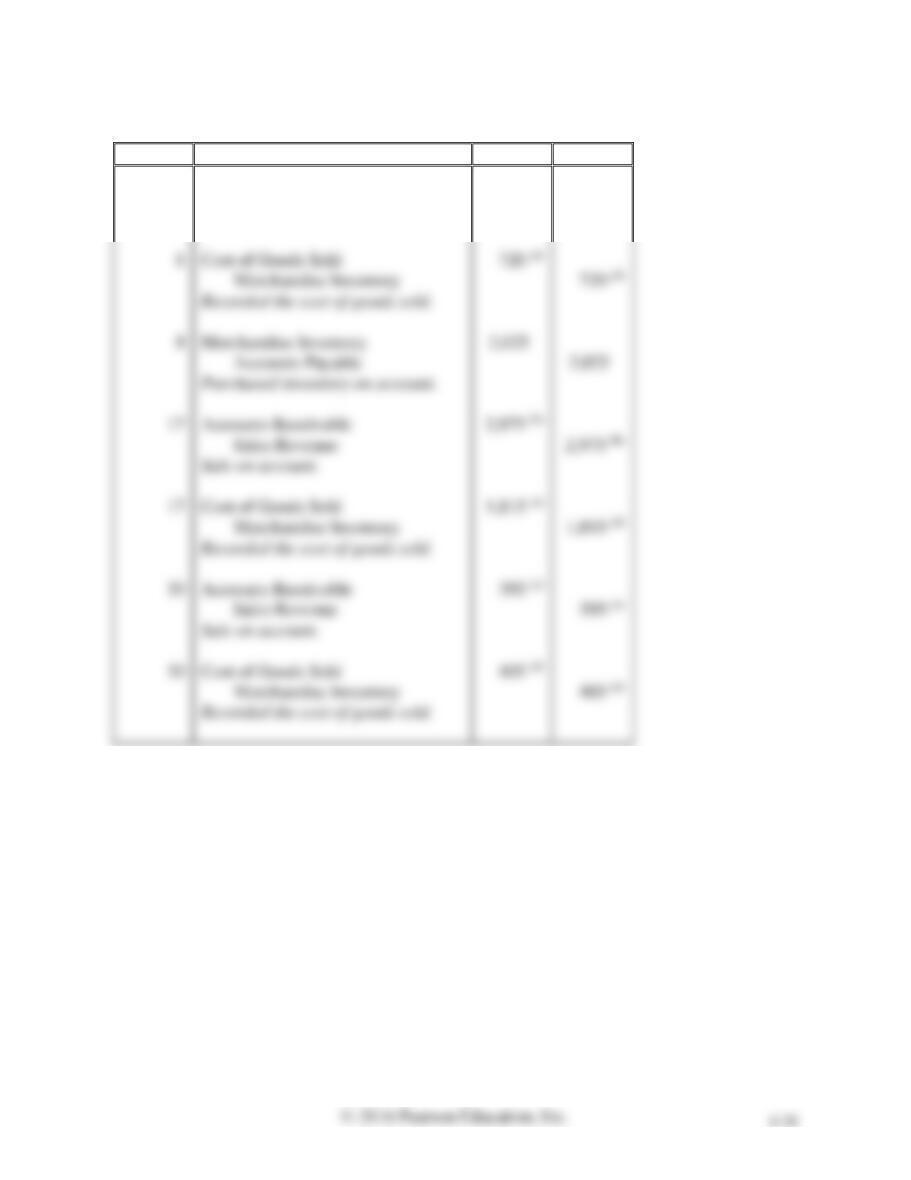
E6-16, cont.
Requirement 2
Date
Accounts and Explanation
Debit
Credit
Nov. 6
Accounts Receivable
1,428 (a)
Sales Revenue
1,428 (a)
Sale on account.
Cost of Goods Sold
Recorded the cost of goods sold.
Merchandise Inventory
2,025
Accounts Payable
2,025
Purchased inventory on account.
Accounts Receivable
Sales Revenue
Sale on account.
Cost of Goods Sold
Recorded the cost of goods sold.
Accounts Receivable
Sales Revenue
Sale on account.
Cost of Goods Sold
Recorded the cost of goods sold.
E6-16, cont.
Requirement 2, cont.
Calculations:
Total sales revenue
=
Number of putters sold × Sales price per putter
=
12 putters × $119 per putter
=
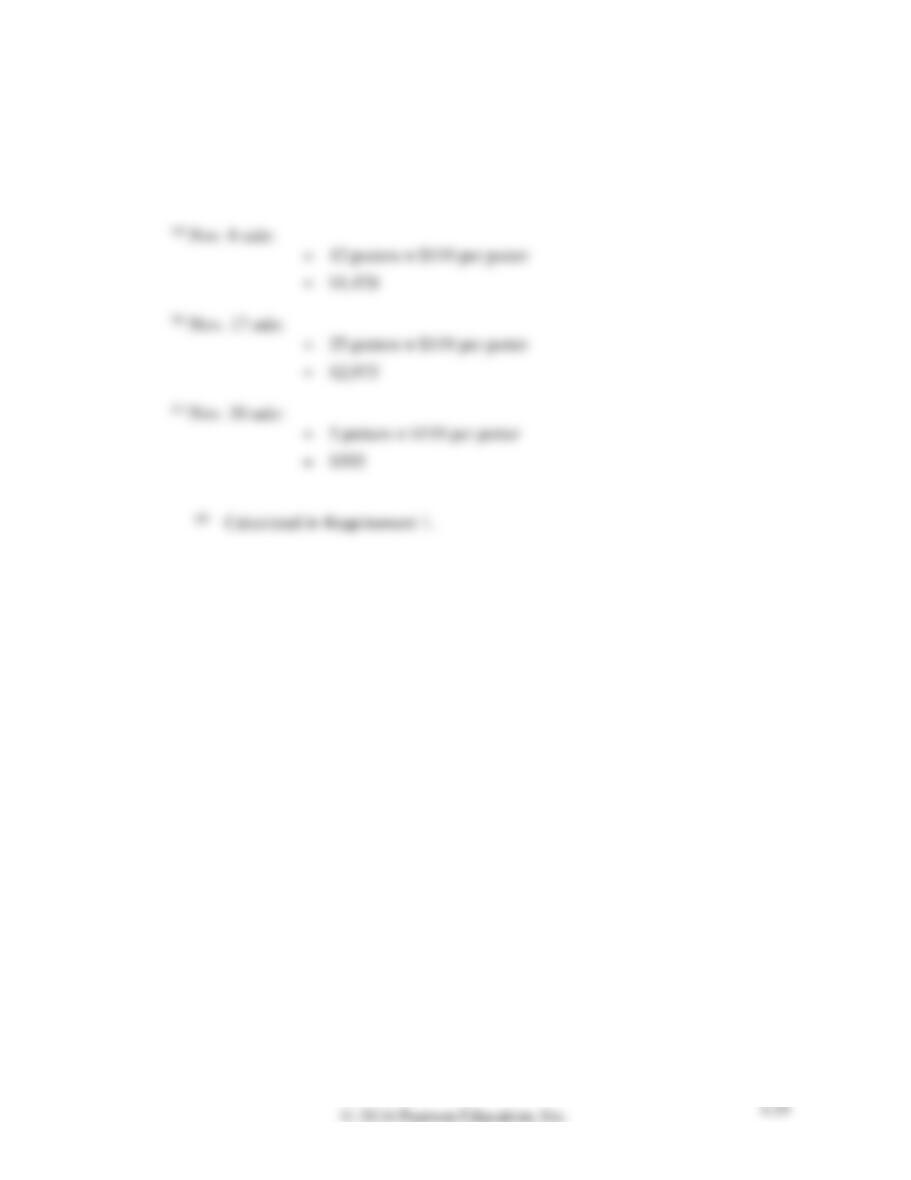
$1,428
=
25 putters × $119 per putter
=
$2,975
=
5 putters × $119 per putter
=
$595
Calculated in Requirement 1.
E6-17 Measuring ending inventory and cost of goods sold in a perpetual inventory system—LIFO
Learning Objective 2
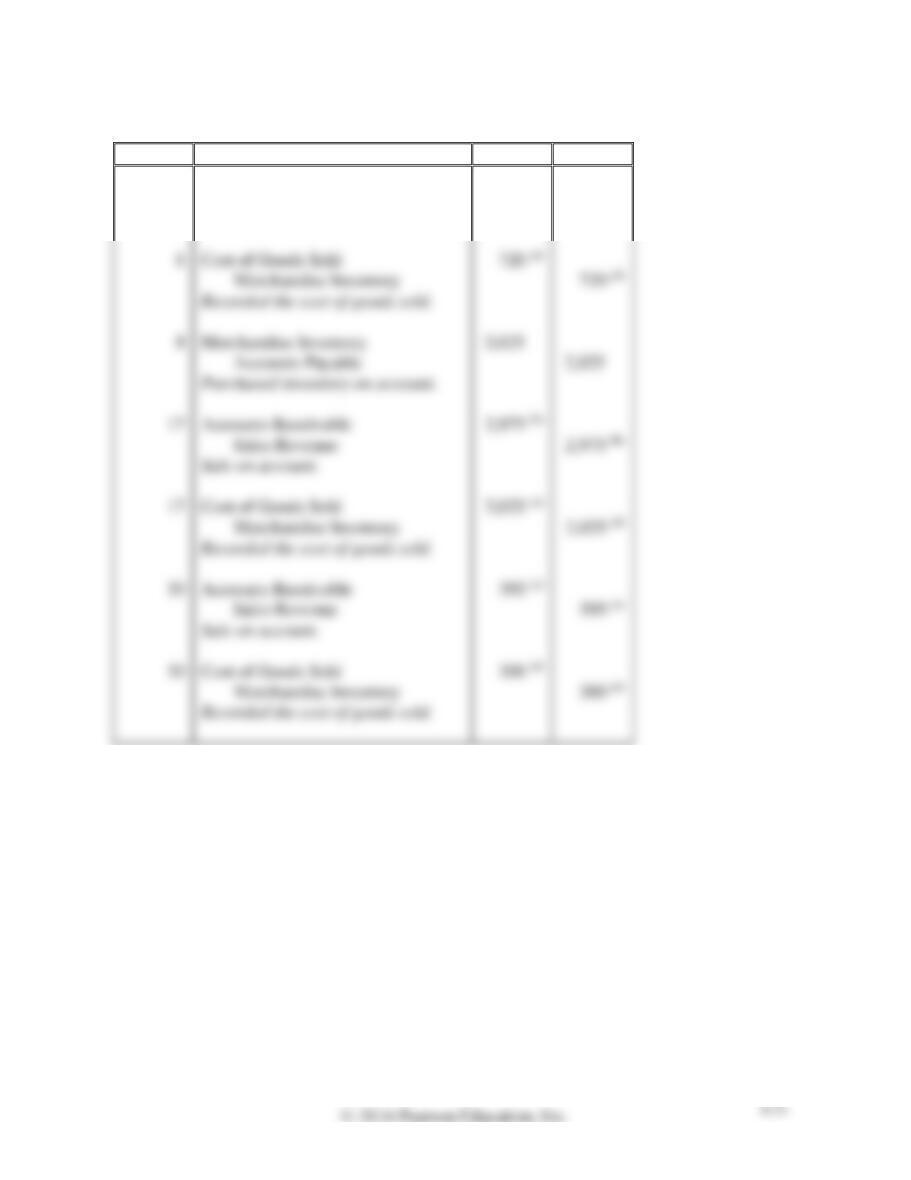
1. Ending Merch. Inv. $300
Requirements
1. Prepare Putter’s Choice’s perpetual inventory record for the putters assuming Putter’s Choice uses
the LIFO inventory costing method. Then identify the cost of ending inventory and cost of goods
sold for the month.
2. Journalize Putter’s Choice’s inventory transactions using the LIFO inventory costing method.
(Assume purchases and sales are made on account.)
SOLUTION
Requirement 1
Perpetual Inventory Record: LIFO
Purchases
Cost of Goods Sold
Inventory on Hand
Date
Quantity
Unit
Cost
Total Cost
Quantity
Unit
Cost
Total Cost
Quantity
Unit
Cost
Total Cost
Nov. 1
22 units
× $ 60
= $ 1,320
$ 1,320
$ 2,025
5 units
E6-17, cont.
Requirement 2
Date
Accounts and Explanation
Debit
Credit
Nov. 6
Accounts Receivable
1,428 (a)
Sales Revenue
1,428 (a)
Sale on account.
Cost of Goods Sold
Recorded the cost of goods sold.
Merchandise Inventory
2,025
Accounts Payable
2,025
Purchased inventory on account.
Accounts Receivable
Sales Revenue
Sale on account.
Cost of Goods Sold
Recorded the cost of goods sold.
Accounts Receivable
Sales Revenue
Sale on account.
Cost of Goods Sold
Recorded the cost of goods sold.
6-32
E6-17, cont.
Requirement 2, cont.
Calculations:
Total sales revenue
=
Number of putters sold × Sales price per putter
=
12 putters × $119 per putter
=
$1,428
=
25 putters × $119 per putter
=
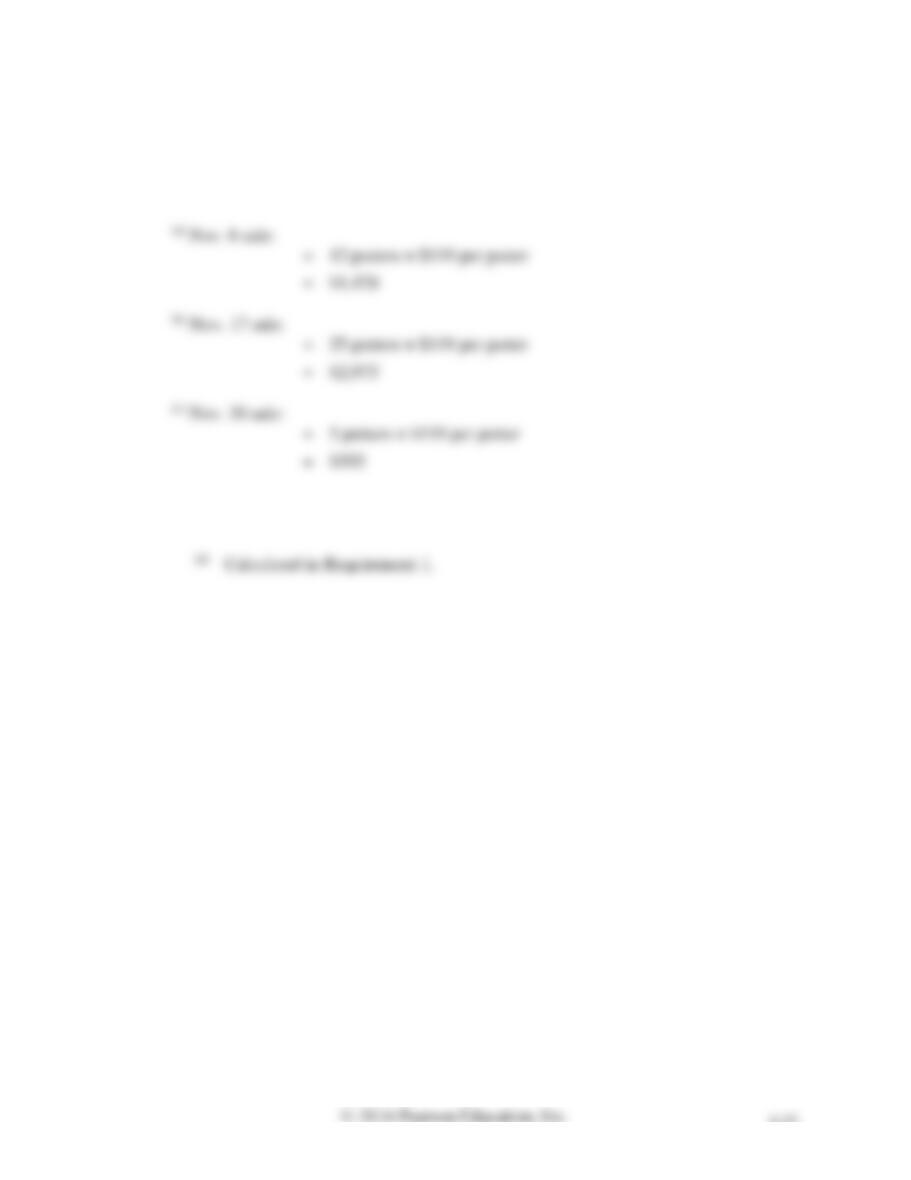
$2,975
=
5 putters × $119 per putter
=
$595
Calculated in Requirement 1.
E6-18 Measuring ending inventory and cost of goods sold in a perpetual inventory system—
Weighted-average
Learning Objective 2
1. CoGS $2,970
Requirements
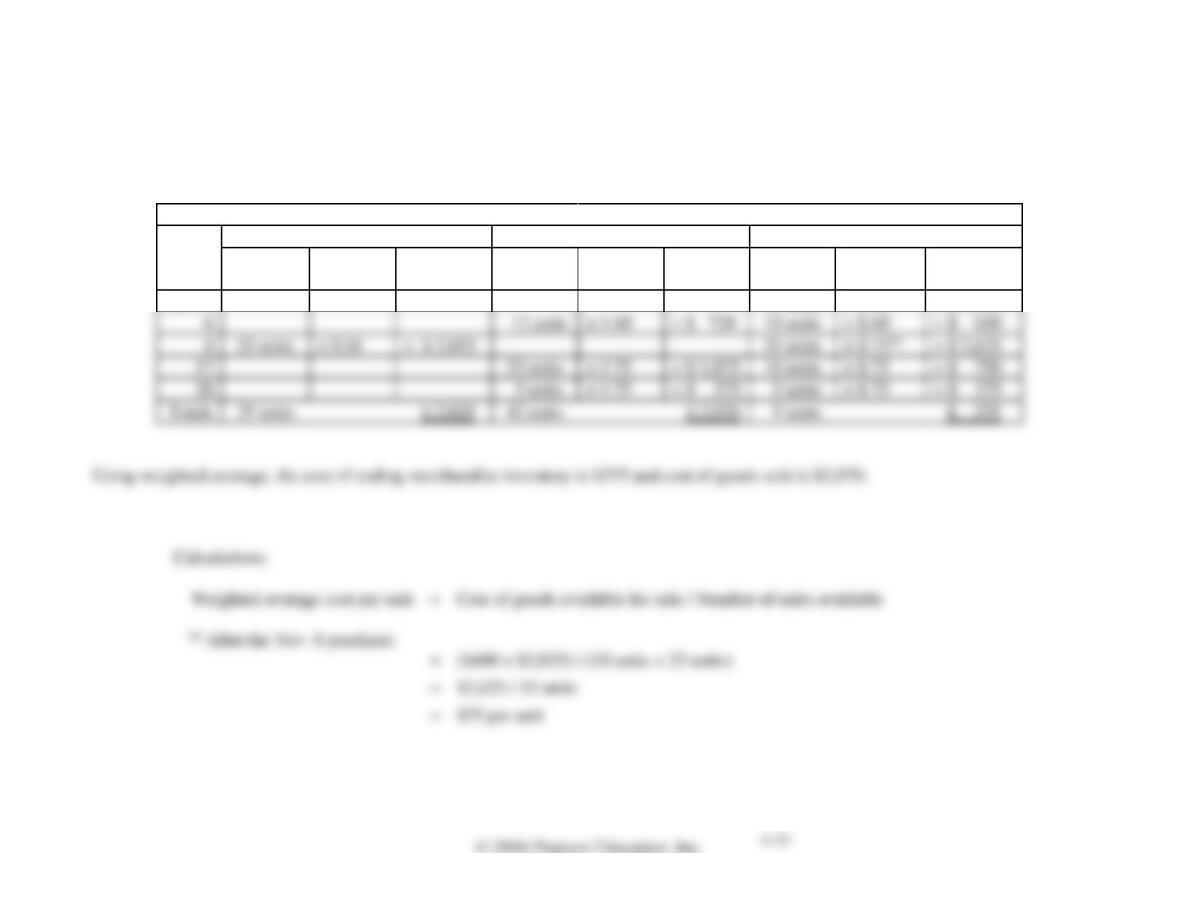
1. Prepare Putter’s Choice’s perpetual inventory record for the putters assuming Putter’s Choice uses
the weighted-average inventory costing method. Round weighted-average cost per unit to the nearest
cent and all other amounts to the nearest dollar. Then identify the cost of ending inventory and cost
of goods sold for the month.
2. Journalize Putter’s Choice’s inventory transactions using the weighted-average inventory costing
method. (Assume purchases and sales are made on account.)
SOLUTION
Requirement 1
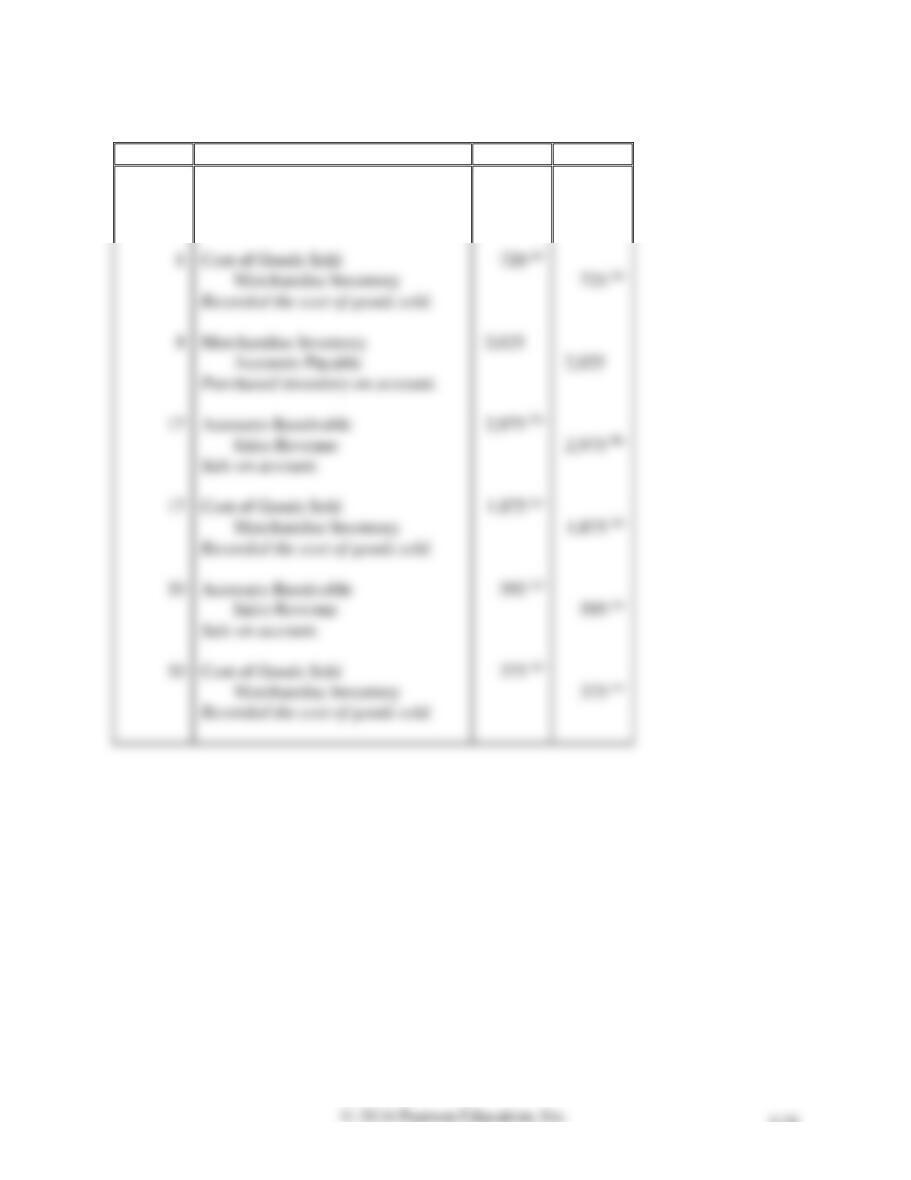
Perpetual Inventory Record: Weighted-Average
Purchases
Cost of Goods Sold
Inventory on Hand
Date
Quantity
Unit
Cost
Total Cost
Quantity
Unit
Cost
Total
Cost
Quantity
Unit
Cost
Total Cost
Nov. 1
22 units
× $ 60
= $ 1,320
× $ 60
10 units
× $ 60
= $ 600
× $ 81
= $ 2,025
35 units
= $ 2,625
25 units
× $ 75
= $ 1,875
10 units
× $ 75
= $ 750
5 units
× $ 75
= $ 375
5 units
× $ 75
= $ 375
$ 2,025
42 units
5 units
$ 375
=
Cost of goods available for sale / Number of units available
=
($600 + $2,025) / (10 units + 25 units)
=
$2,625 / 35 units
=
$75 per unit
6-34
E6-18, cont.
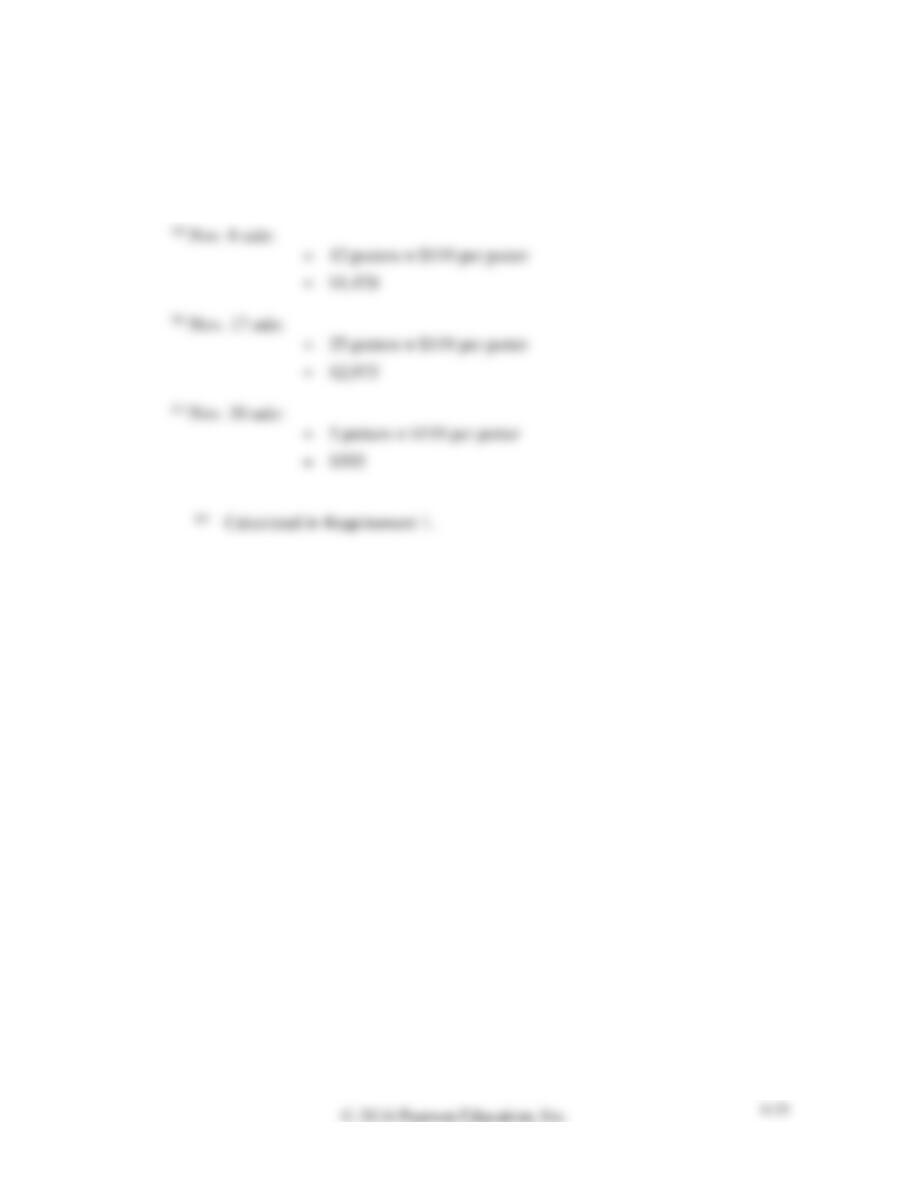
Requirement 2
Date
Accounts and Explanation
Debit
Credit
Nov. 6
Accounts Receivable
1,428 (a)
Sales Revenue
1,428 (a)
Sale on account.
Cost of Goods Sold
Recorded the cost of goods sold.
Merchandise Inventory
2,025
Accounts Payable
2,025
Purchased inventory on account.
Accounts Receivable
Sales Revenue
Sale on account.
Cost of Goods Sold
1,875 (e)
1,875 (e)
Recorded the cost of goods sold.
Accounts Receivable
Sales Revenue
Sale on account.
Cost of Goods Sold
Recorded the cost of goods sold.
E6-18, cont.
Requirement 2, cont.
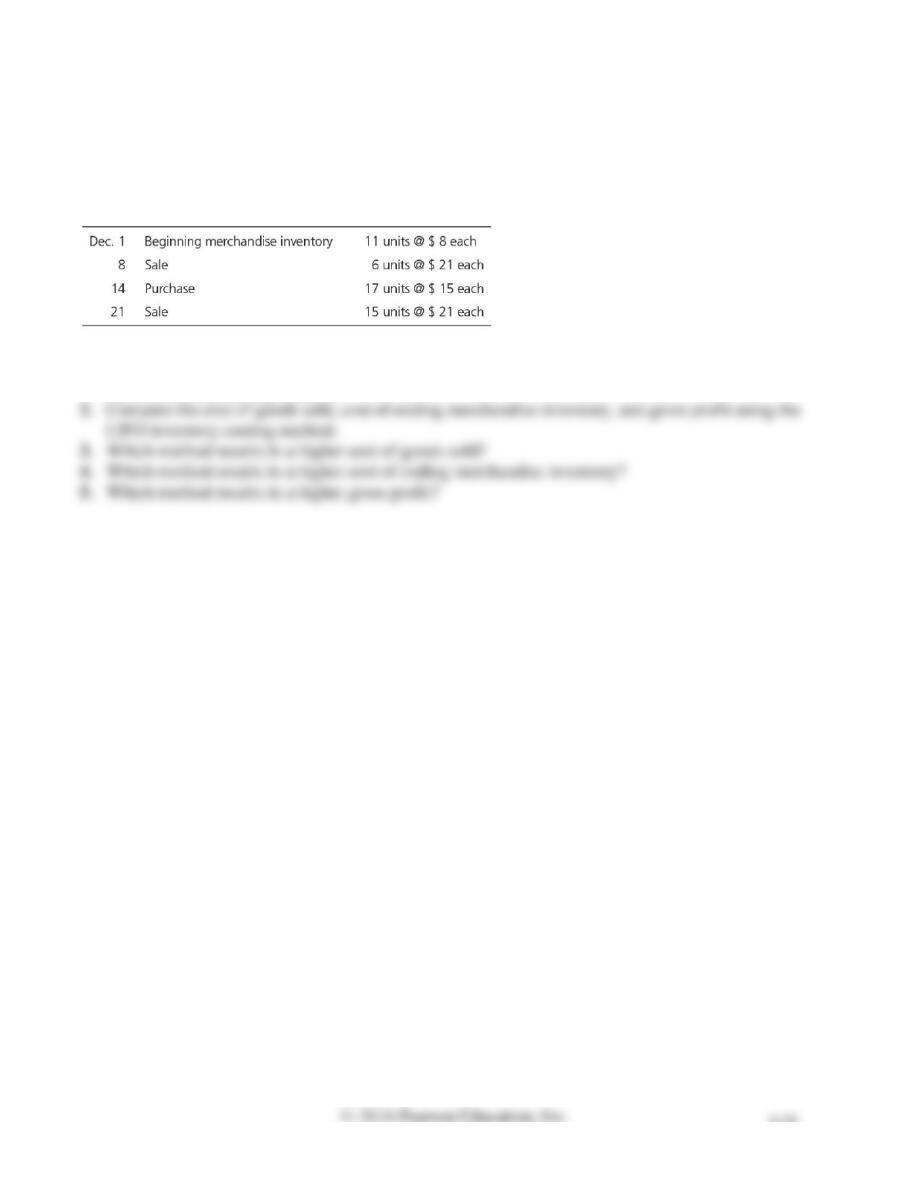
Calculations:
Total sales revenue
=
Number of putters sold × Sales price per putter
=
12 putters × $119 per putter
=
$1,428
=
25 putters × $119 per putter
=
$2,975
=
5 putters × $119 per putter
=
$595
Calculated in Requirement 1.
6-36
E6-19 Comparing amounts for cost of goods sold, ending inventory, and gross profit—FIFO and
LIFO
Learning Objectives 2, 3
2. Ending Merch. Inv. $70
Assume that Toyland store bought and sold a line of dolls during December as follows:
Requirements
1. Compute the cost of goods sold, cost of ending merchandise inventory, and gross profit using the
FIFO inventory costing method.
SOLUTION
Requirement 1
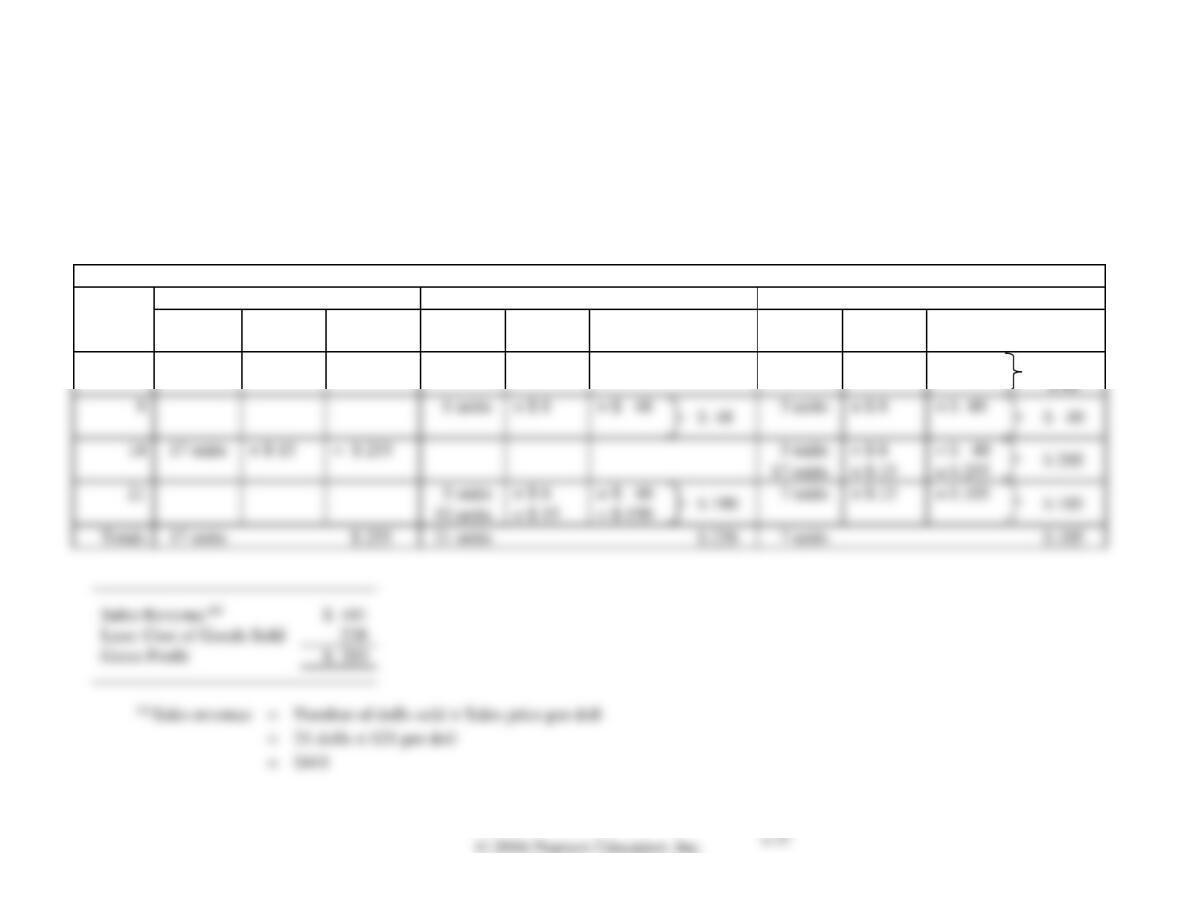
Using FIFO, cost of goods sold is $238, ending merchandise inventory is $105, and gross profit is $203.
Calculations:
Purchases
Cost of Goods Sold
Inventory on Hand
Date
Quantity
Unit
Cost
Total Cost
Quantity
Unit
Cost
Total Cost
Quantity
Unit
Cost
Total Cost
Dec. 1
11 units
× $ 8
= $ 88
$ 255
Less: Cost of Goods Sold
Gross Profit
=
Number of dolls sold × Sales price per doll
=
21 dolls × $21 per doll
E6-19, cont.
Requirement 2
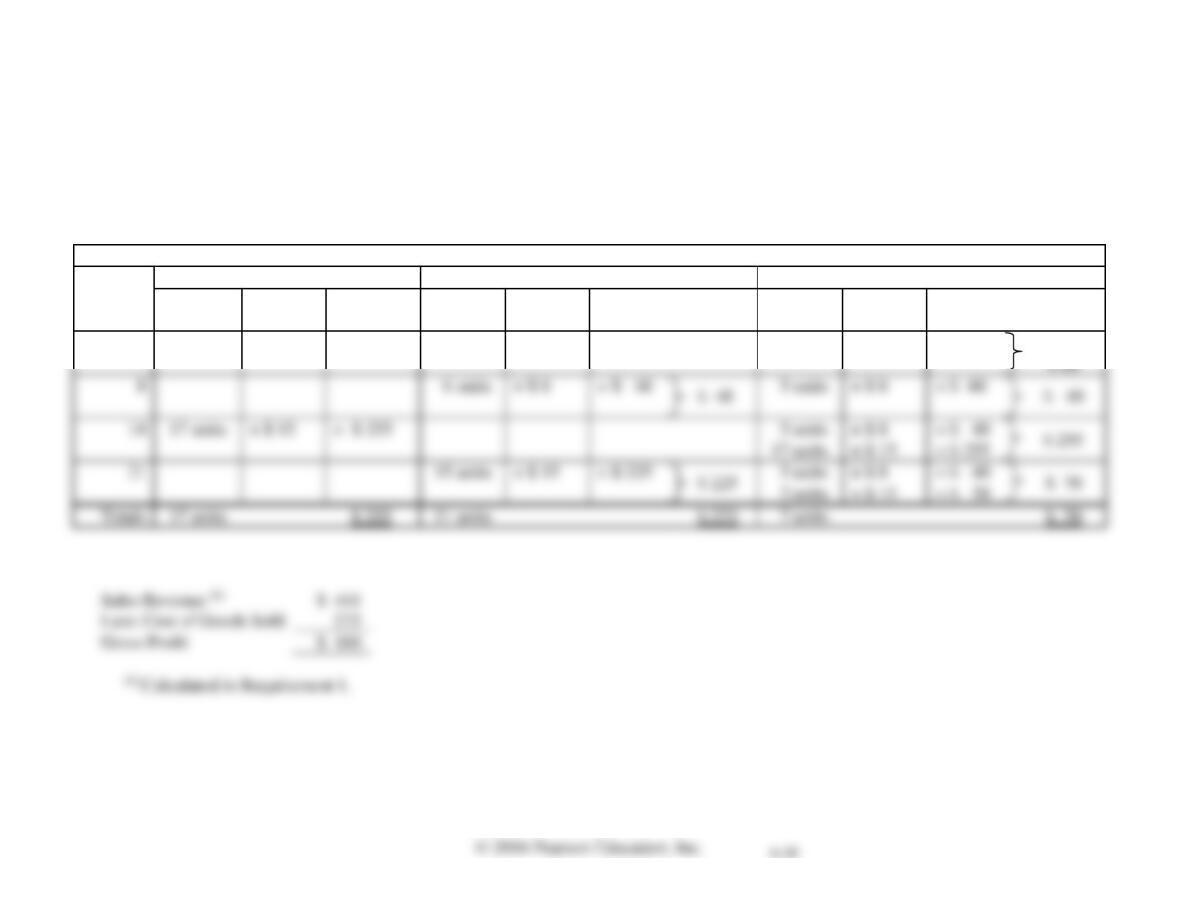
Using LIFO, cost of goods sold is $273, ending merchandise inventory is $70, and gross profit is $168.
Calculations:
Purchases
Cost of Goods Sold
Inventory on Hand
Date
Quantity
Unit
Cost
Total Cost
Quantity
Unit
Cost
Total Cost
Quantity
Unit
Cost
Total Cost
Dec. 1
11 units
× $ 8
= $ 88
$ 255
$ 70
Less: Cost of Goods Sold
273
Gross Profit
E6-19, cont.
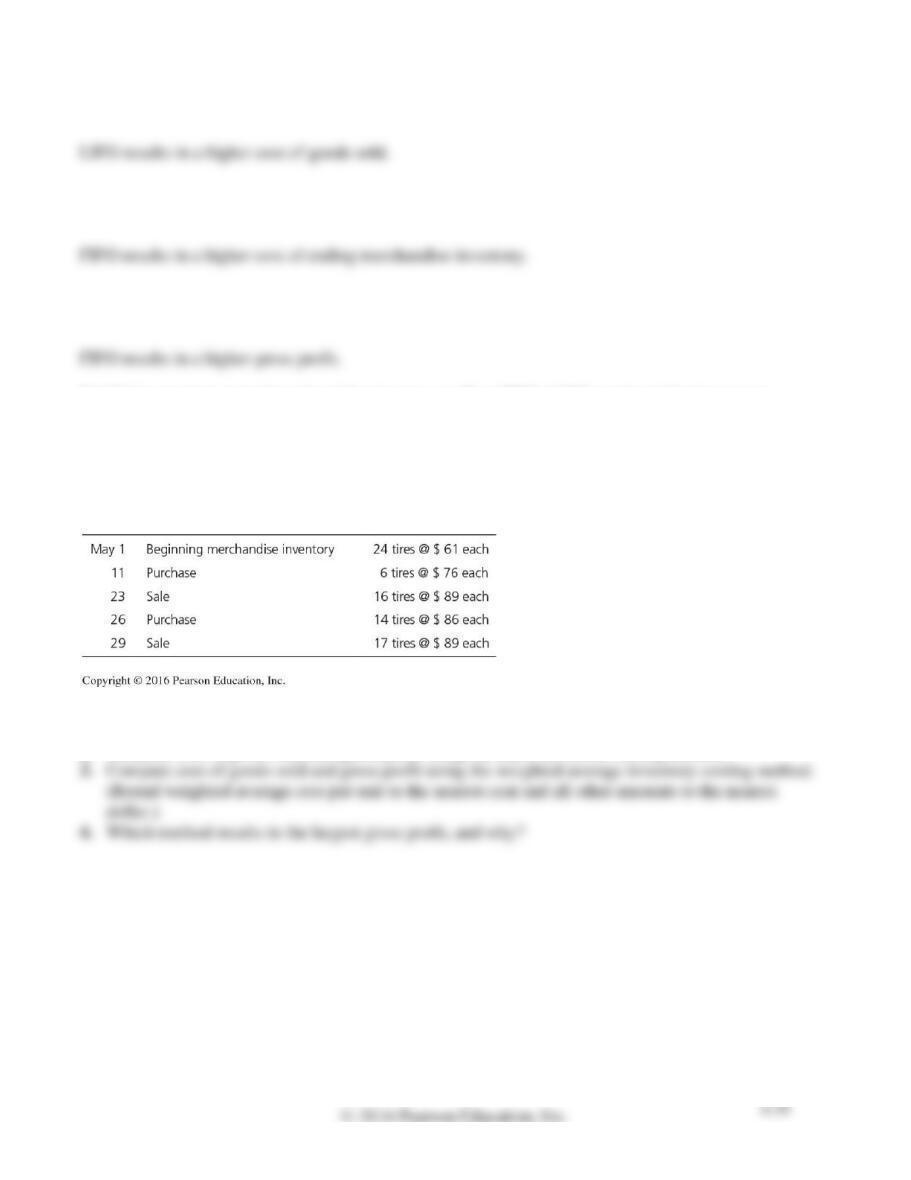
Requirement 3
Requirement 4
Requirement 5
E6-20 Comparing cost of goods sold and gross profit—FIFO, LIFO, and weighted-average
methods
Learning Objectives 2, 3
1. CoGS $2,178
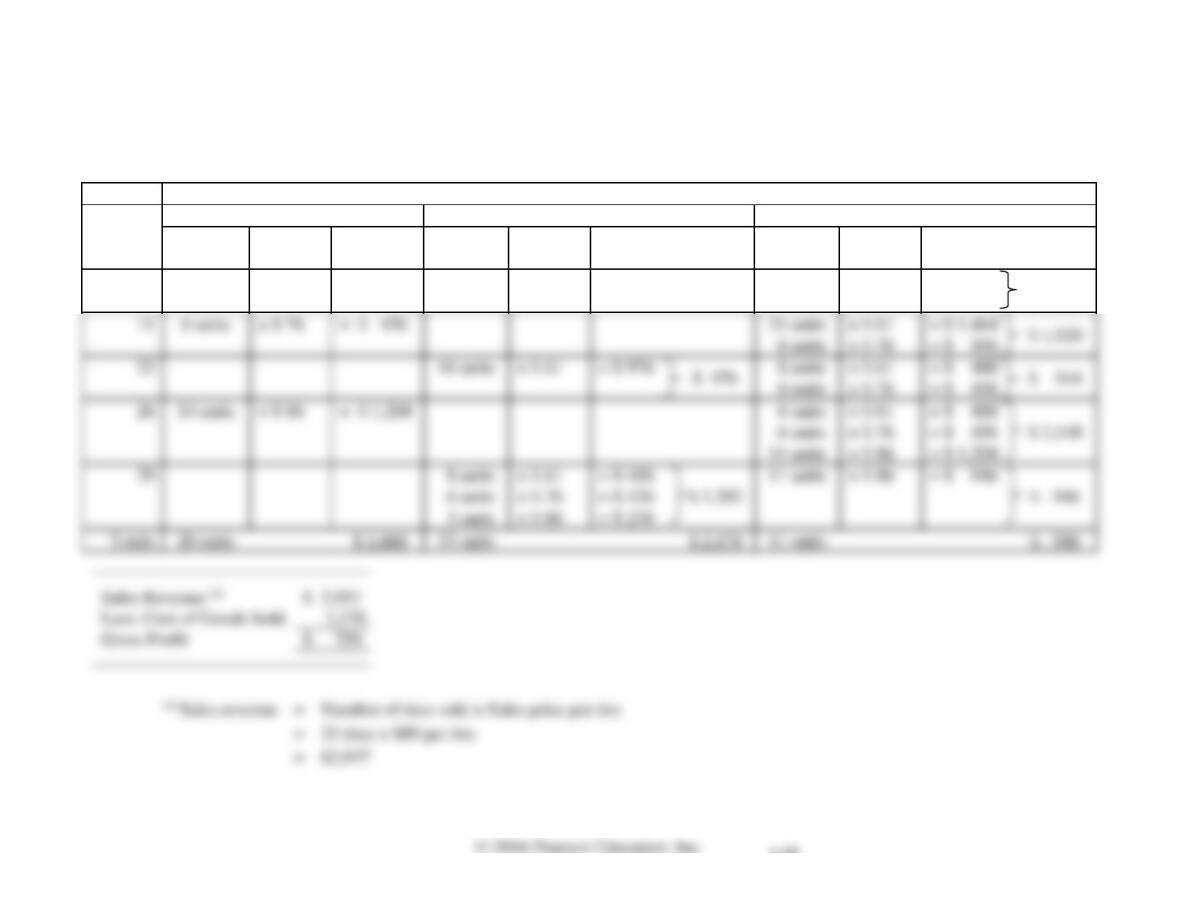
Assume that RK Tire Store completed the following perpetual inventory transactions for a line of tires:
Requirements
1. Compute cost of goods sold and gross profit using the FIFO inventory costing method.
2. Compute cost of goods sold and gross profit using the LIFO inventory costing method.
6-40
SOLUTION
Requirement 1
Using FIFO, cost of goods sold is $2,178 and gross profit is $759.
Calculations:
Purchases
Cost of Goods Sold
Inventory on Hand
Date
Quantity
Unit
Cost
Total Cost
Quantity
Unit
Cost
Total Cost
Quantity
Unit
Cost
Total Cost
May 1
24 units
× $ 61
= $ 1,464
$ 1,464
× $ 76
= $ 456
× $ 61
= $ 1,464
× $ 76
× $ 61
= $ 976
× $ 61
= $ 488
× $ 76
= $ 456
× $ 86
= $ 1,204
× $ 61
= $ 488
× $ 76
= $ 456
× $ 86
= $ 1,204
× $ 76
= $ 456
× $ 86
= $ 258
$ 2,178
$ 2,937
Less: Cost of Goods Sold
Gross Profit
$ 759
=
Number of tires sold × Sales price per tire
=
33 tires × $89 per tire