PROBLEM 6-10
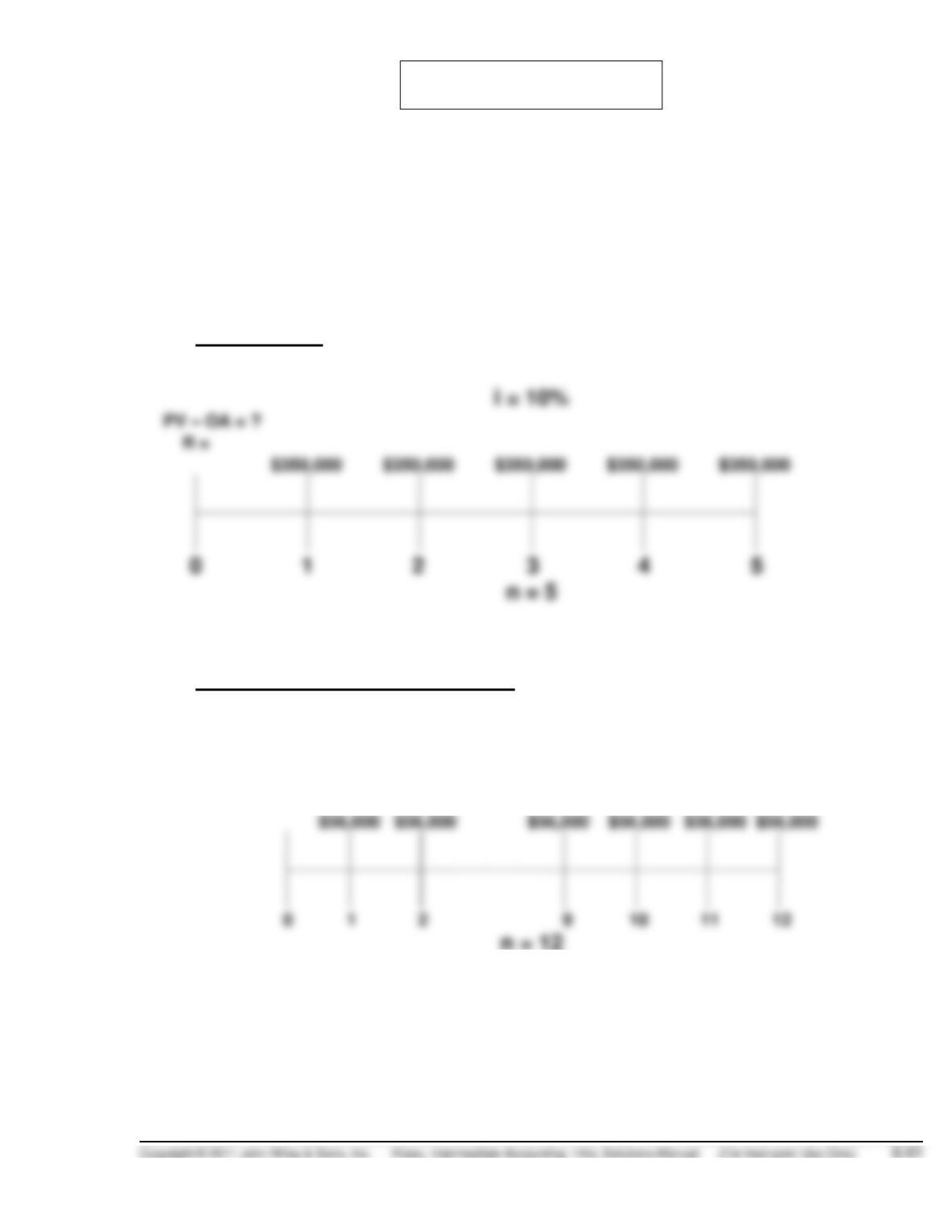
1. Purchase.
Time diagrams:
Installments
Property taxes and other costs
i = 10%
PV – OA = ?
R =
PROBLEM 6-10 (Continued)
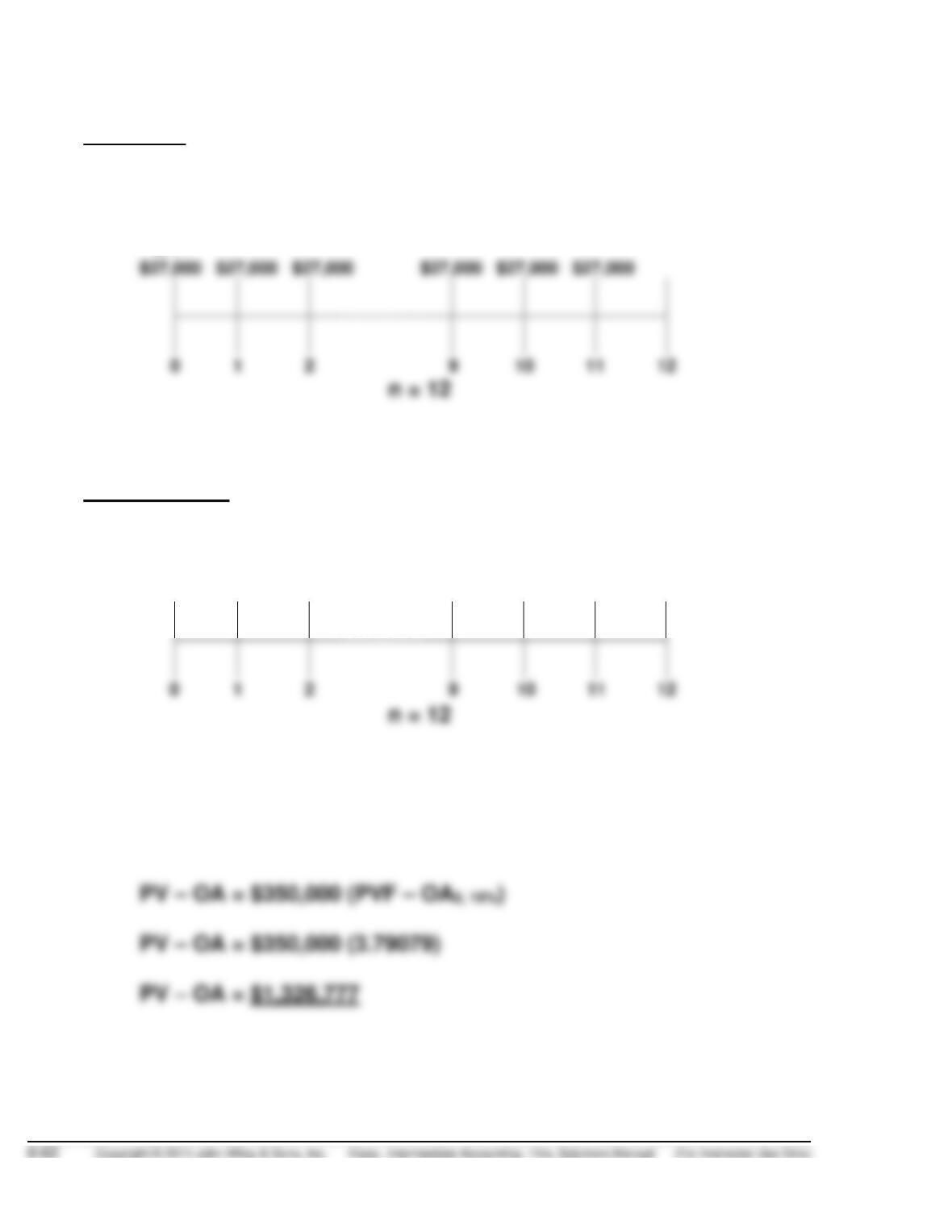
Insurance
i = 10%
PV – AD = ?
R =
Salvage Value
i = 10%
PV = ? FV = $500,000
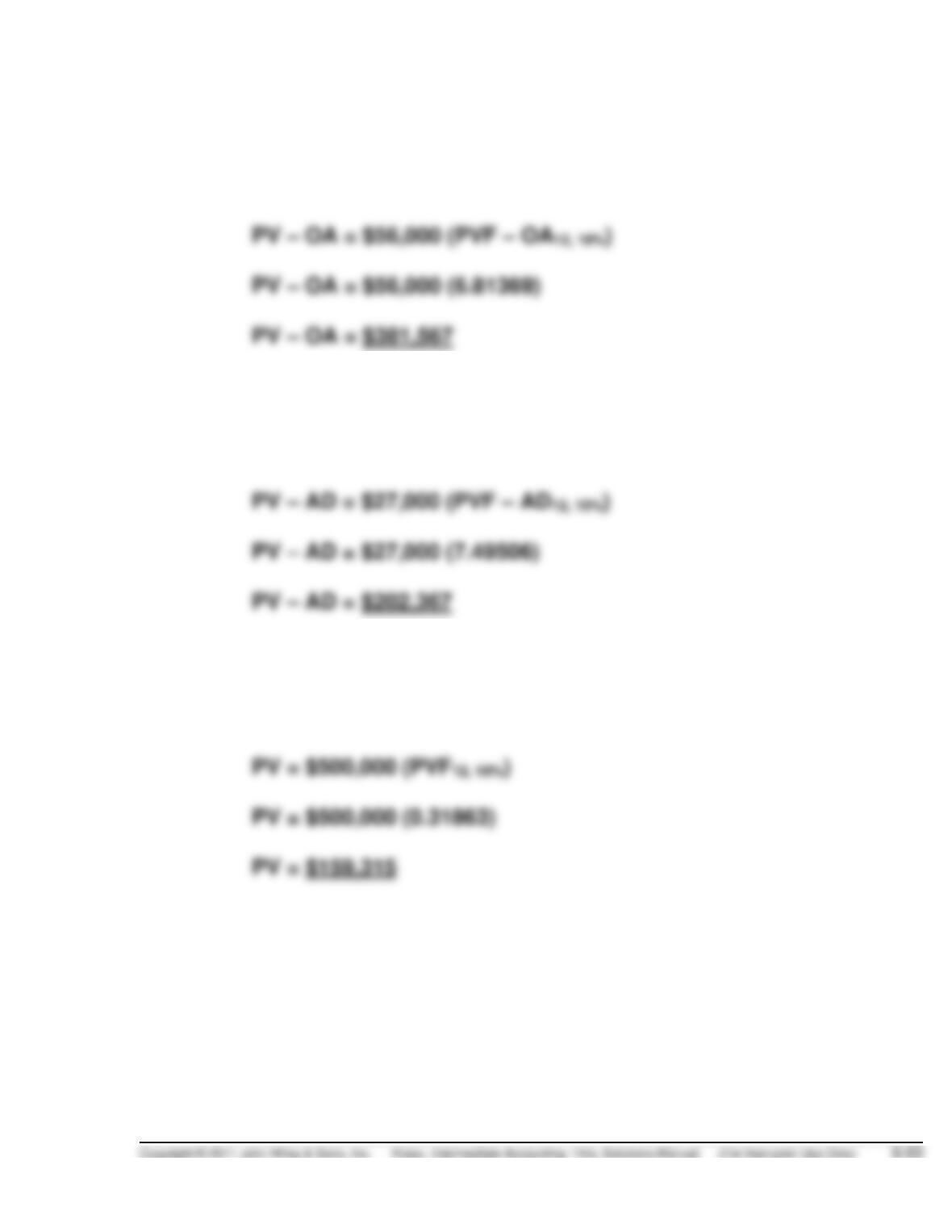
Formula for installments:
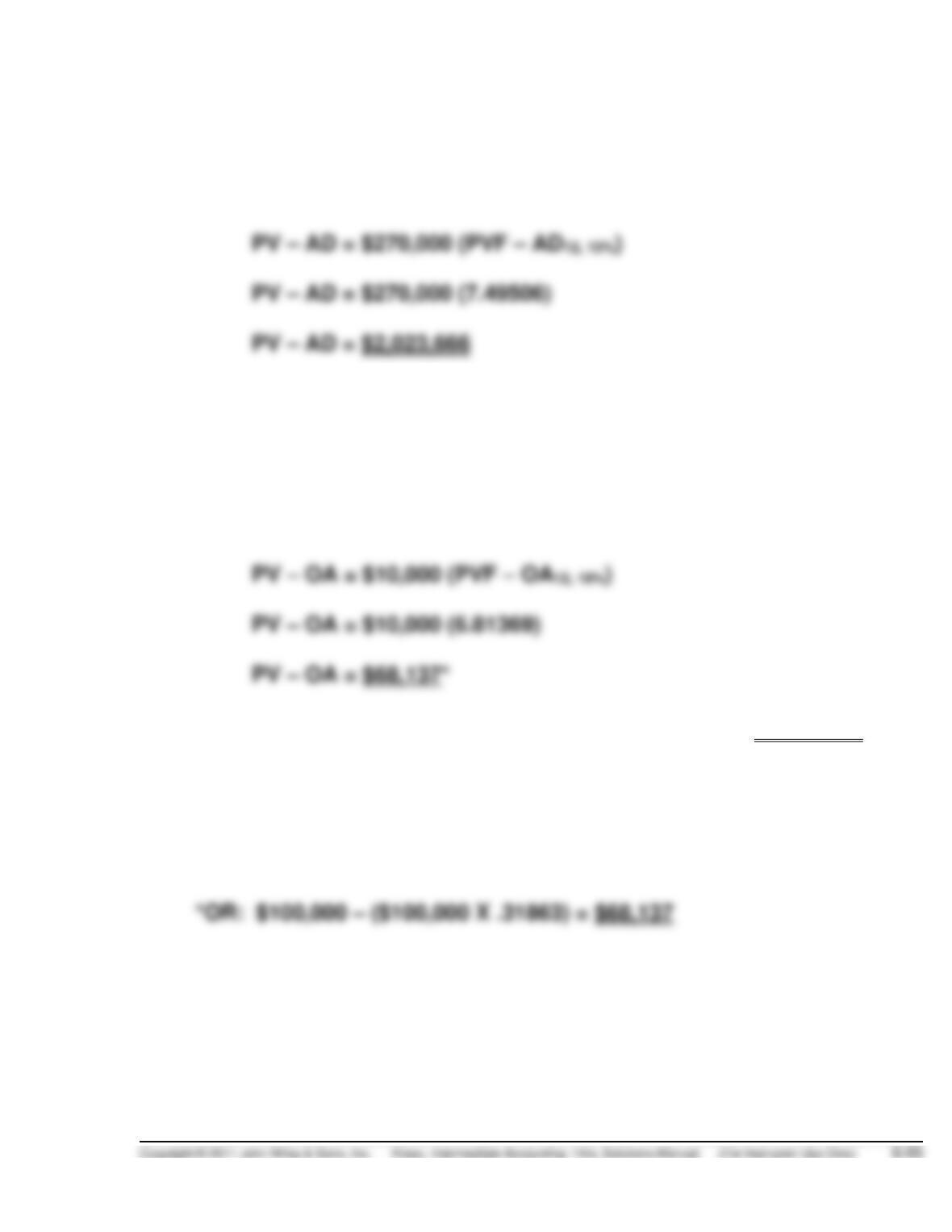
PV – OA = R (PVF – OAn, i)
PROBLEM 6-10 (Continued)
Formula for property taxes and other costs:
PV – OA = R (PVF – OAn, i)
Formula for insurance:
PV – AD = R (PVF – ADn, i)
Formula for salvage value:
PV = FV (PVFn, i)
PROBLEM 6-10 (Continued)
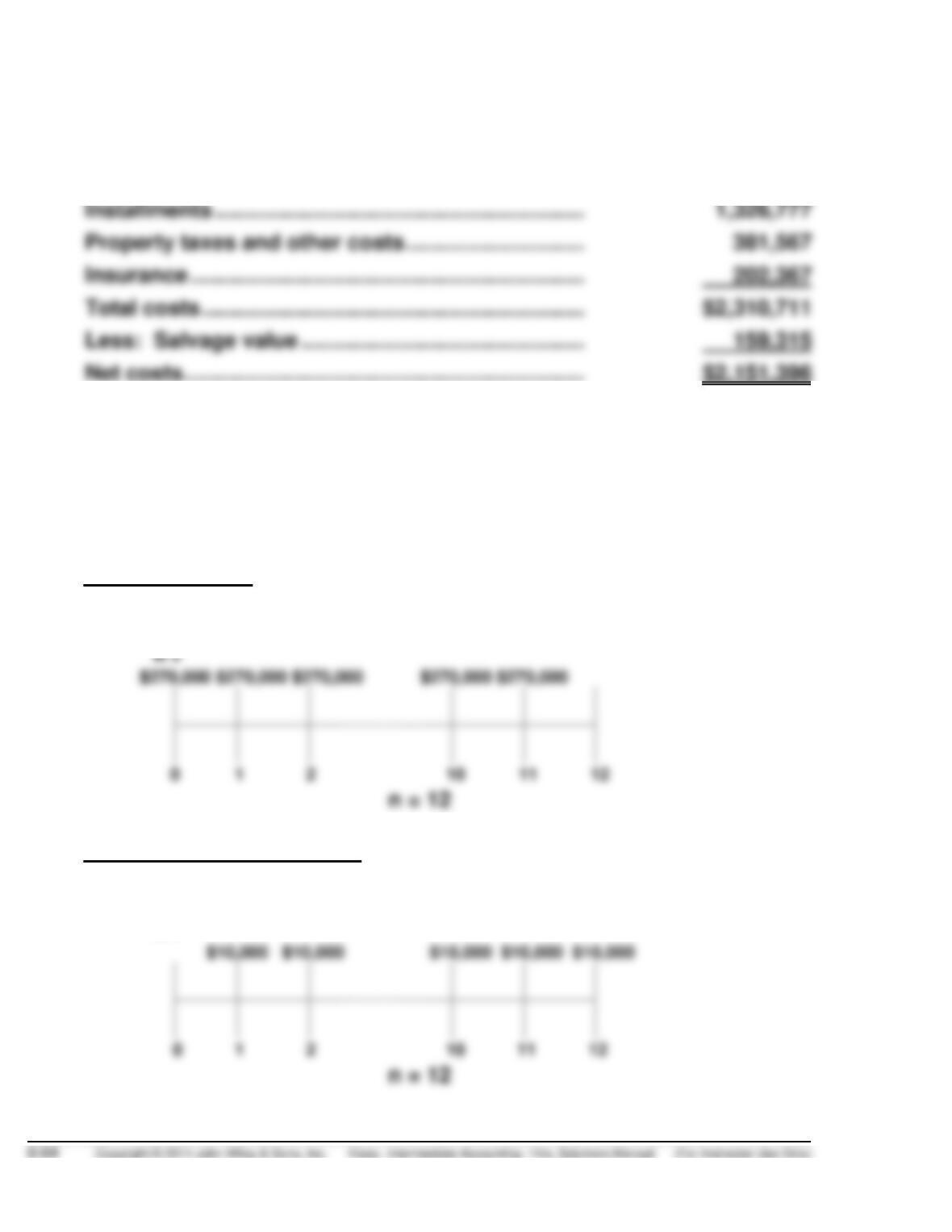
Present value of net purchase costs:
Down payment………………………………………………..
$ 400,000
Installments ……………………………………………………
Property taxes and other costs ………………………..
Insurance ……………………………………………………….
202,367
Total costs ……………………………………………………..
$2,310,711
Less: Salvage value ……………………………………….
159,315
2. Lease.
Time diagrams:
Lease payments
i = 10%
PV – AD = ?
Interest lost on the deposit
i = 10%
PV – OA = ?
R =
PROBLEM 6-10 (Continued)
Formula for lease payments:
PV – AD = R (PVF – ADn, i)
Formula for interest lost on the deposit:
Interest lost on the deposit per year = $100,000 (10%) = $10,000
PV – OA = R (PVF – OAn, i)
Cost for leasing the facilities = $2,023,666 + $68,137 = $2,091,803
Dunn Inc. should lease the facilities because the present value of the
costs for leasing the facilities, $2,091,803, is less than the present
value of the costs for purchasing the facilities, $2,151,396.
PROBLEM 6-11
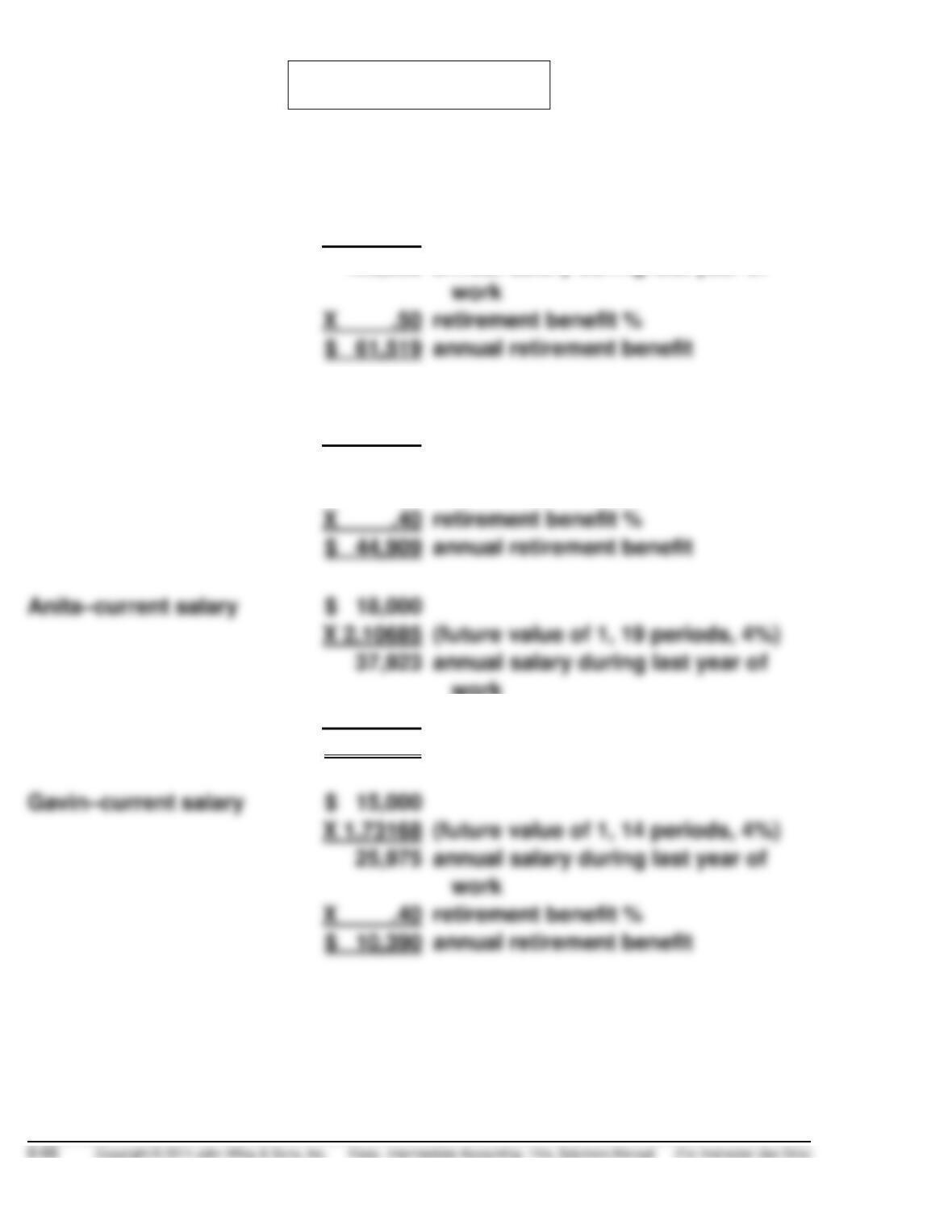
(a) Annual retirement benefits.
Jean–current salary
$ 48,000
X 2.56330
(future value of 1, 24 periods, 4%)
123,038
work
X .50
retirement benefit %
annual salary during last year of
Colin–current salary
$ 36,000
X 3.11865
(future value of 1, 29 periods, 4%)
112,271
annual salary during last year of
work
X .40
retirement benefit %
Anita–current salary
$ 18,000
X 2.10685
(future value of 1, 19 periods, 4%)
annual salary during last year of
work
X .40
retirement benefit %
$ 15,169
annual retirement benefit
Gavin–current salary
$ 15,000
X 1.73168
(future value of 1, 14 periods, 4%)
annual salary during last year of
work
X .40
retirement benefit %
PROBLEM 6-11 (Continued)
(b) Fund requirements after 15 years of deposits at 12%.
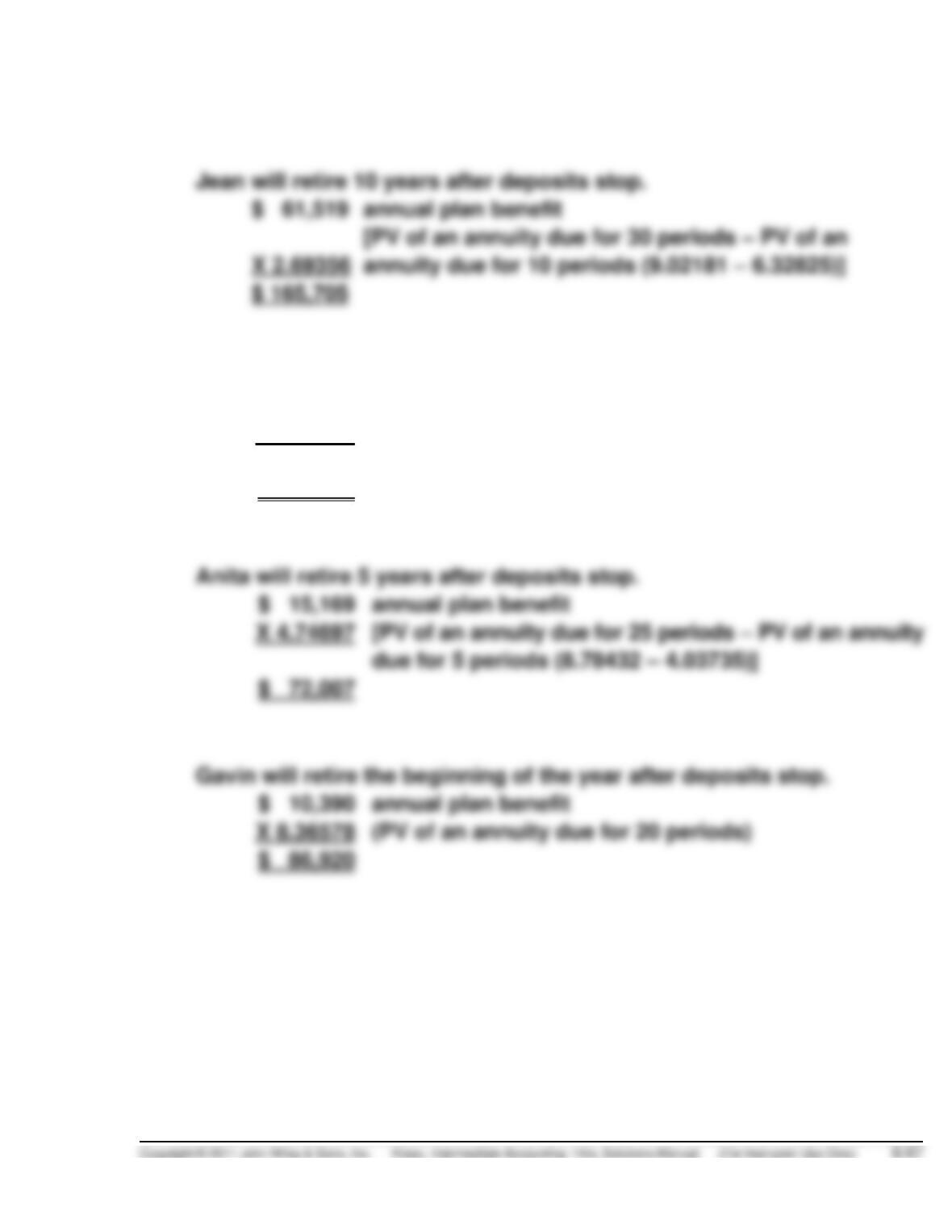
Colin will retire 15 years after deposits stop.
$ 44,909
annual plan benefit
X 1.52839
[PV of an annuity due for 35 periods – PV of an annuity
due for 15 periods (9.15656 – 7.62817)]
$ 68,638
$ 15,169
annual plan benefit
$ 72,007
$ 10,390
annual plan benefit
(PV of an annuity due for 20 periods)
PROBLEM 6-11 (Continued)
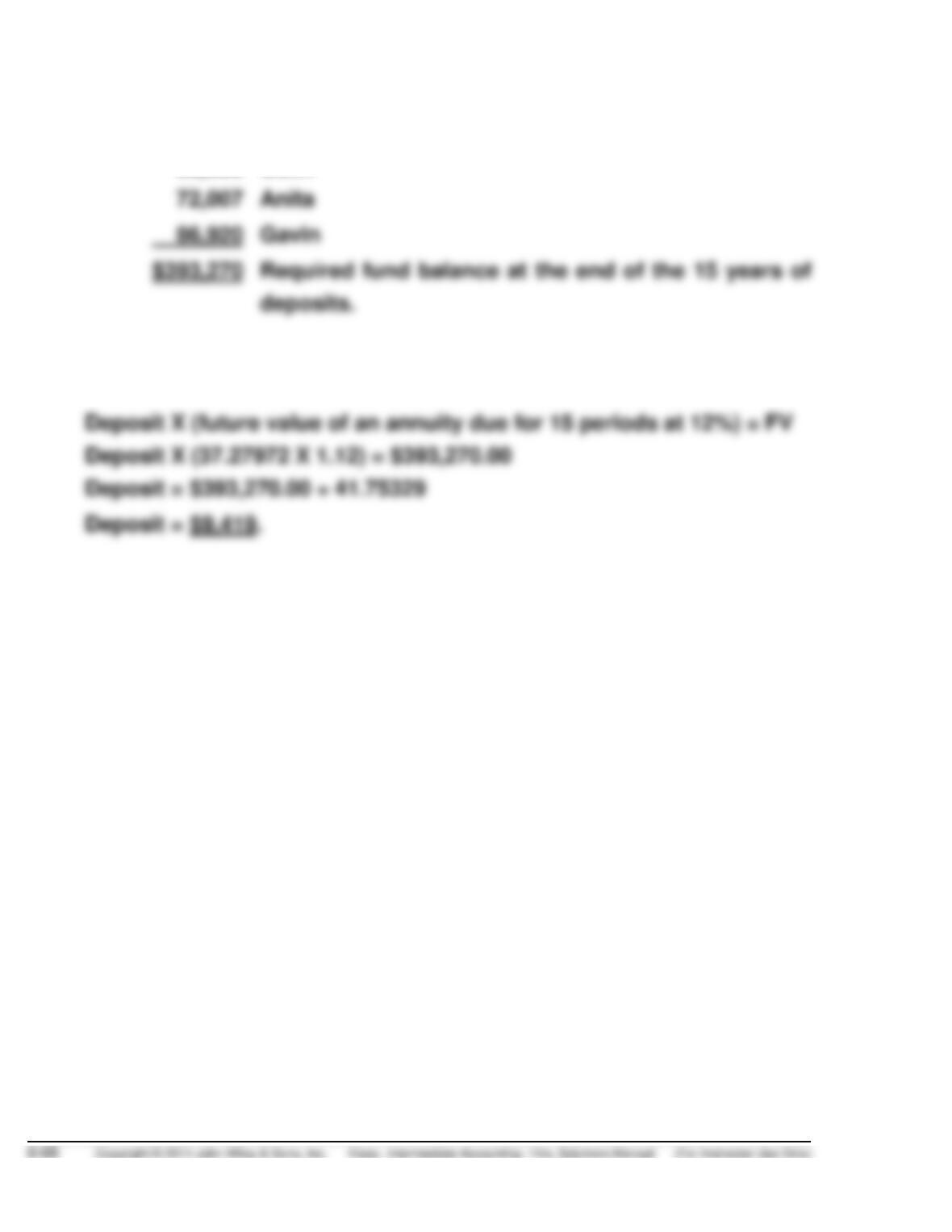
$165,705
Jean
68,638
Colin
(c) Required annual beginning-of-the-year deposits at 12%:
Deposit X (future value of an annuity due for 15 periods at 12%) = FV
Deposit X (37.27972 X 1.12) = $393,270.00
PROBLEM 6-12
(a) The time value of money would suggest that NET Life’s discount rate
was substantially higher than First Security’s. The actuaries at NET Life
are making different assumptions about inflation, employee turnover,
life expectancy of the work force, future salary and wage levels, return
on pension fund assets, etc. NET Life may operate at lower gross and
net margins and it may provide fewer services.
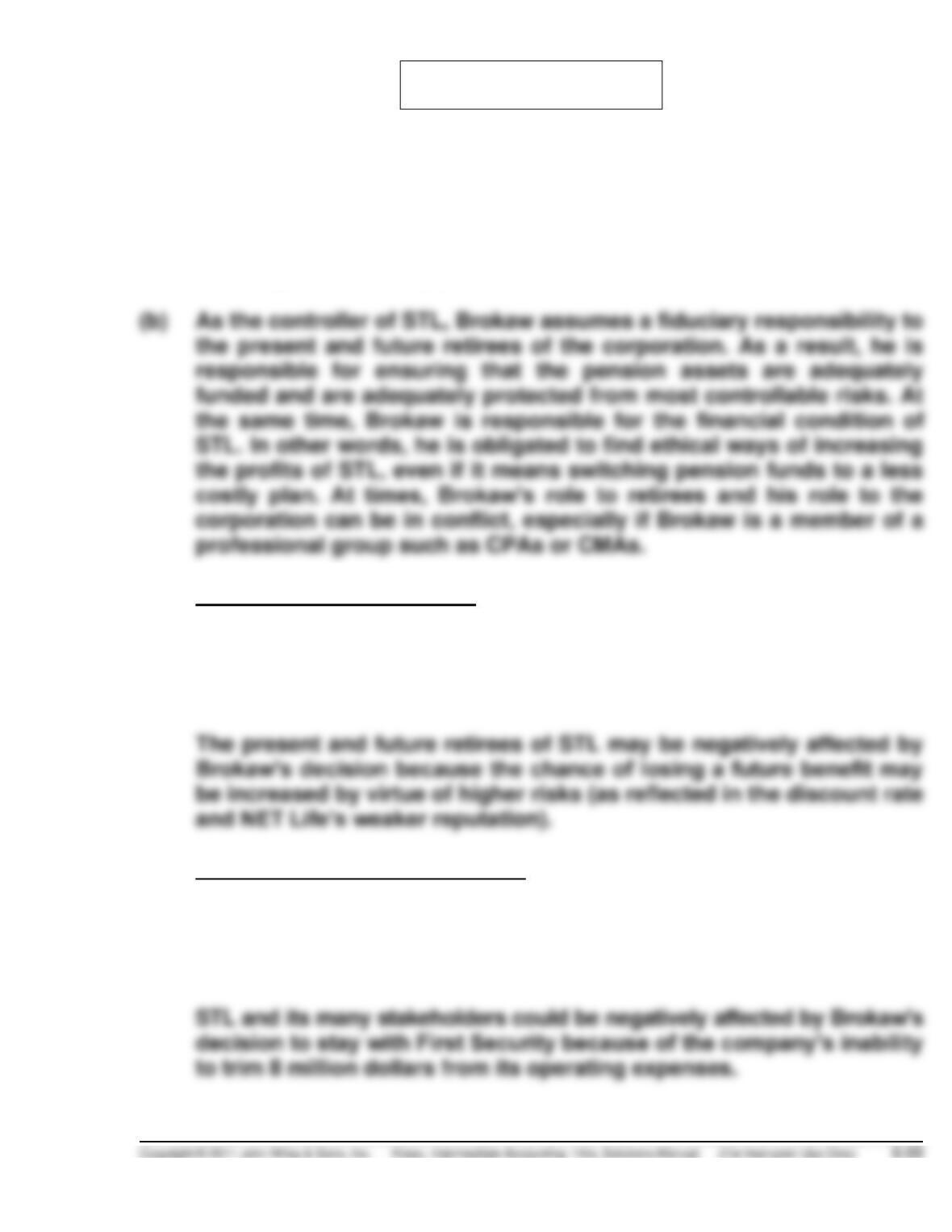
(c) If STL switched to NET Life
The primary beneficiaries of Brokaw’s decision would be the corporation
and its many stockholders by virtue of reducing 8 million dollars of
annual pension costs.
If STL stayed with First Security
In the short run, the primary beneficiaries of Brokaw’s decision would
be the employees and retirees of STL given the lower risk pension
asset plan.
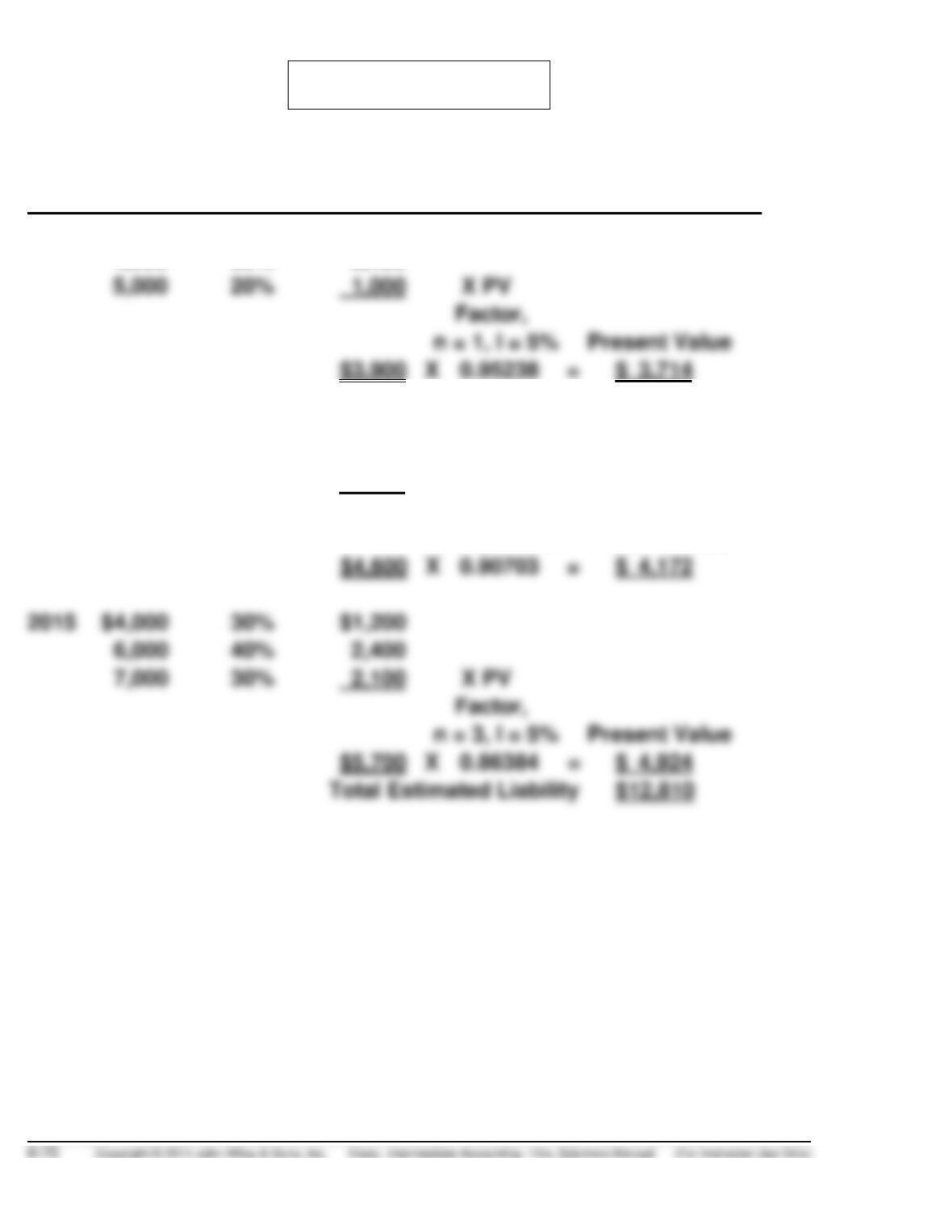
PROBLEM 6-13
Cash Flow Probability
Estimate X Assessment = Expected Cash Flow
2013 $ 2,500 20% $ 500
4,000 60% 2,400
2014 $3,000 30% $ 900
5,000 50% 2,500
6,000 20% 1,200 X PV
Factor,
n = 2, I = 5% Present Value
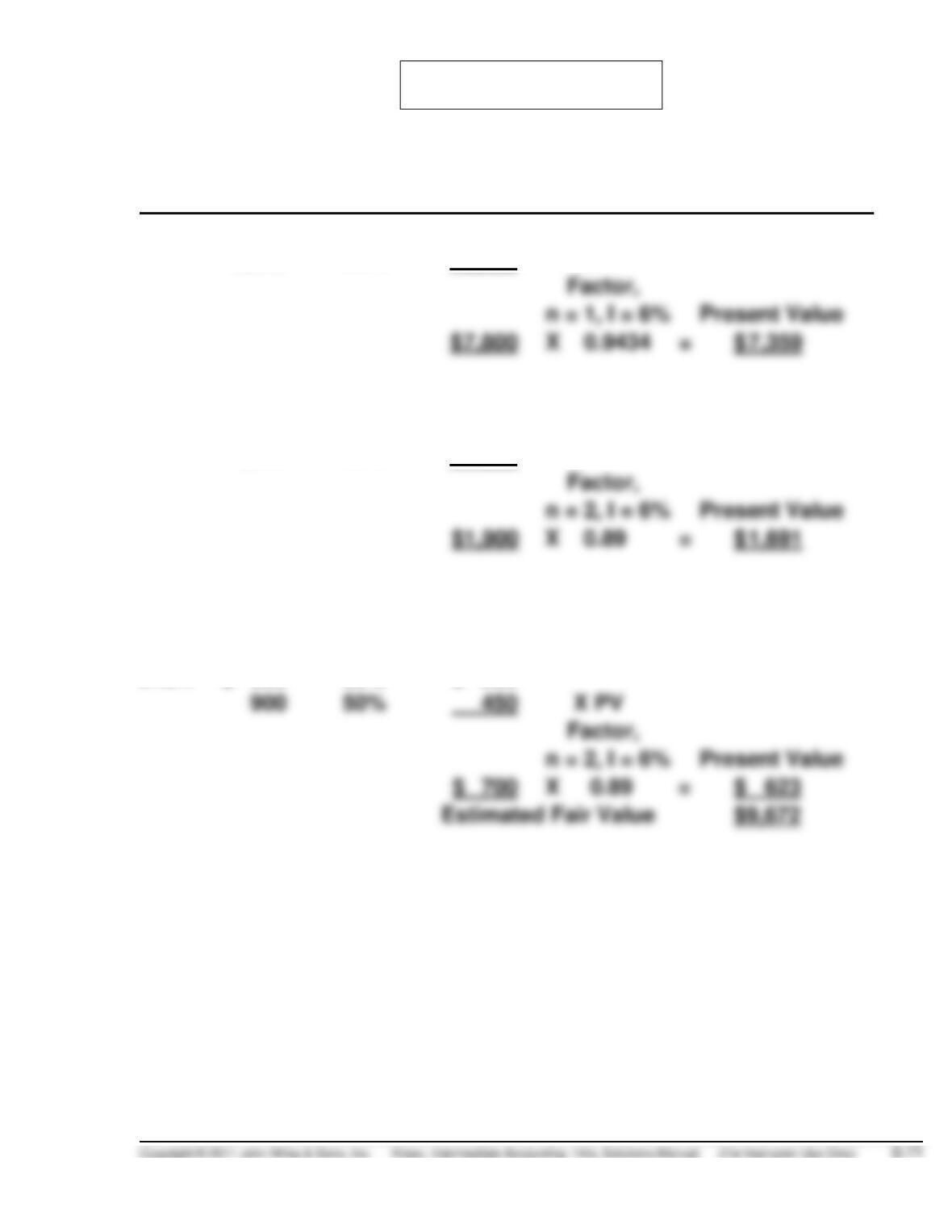
PROBLEM 6-14
Cash Flow Probability
Estimate X Assessment = Expected Cash Flow
2013 $ 6,000 40% $ 2,400
9,000 60% 5,400 X PV
2014 $ (500) 20% $ (100)
2,000 60% 1,200
4,000 20% 800 X PV
Scrap
Value
Received
at the End
of 2014 $ 500 50% $ 250