Problem 6.1
The velocity in a certain two-dimensional flow field is given by the equation ˆˆ
22
V
xt yt=ij
–
where the velocity is in ft
s when x, y, and t are in feet and seconds, respectively. Determine
expressions for the local and convective components of acceleration in the x and y direc-
tions. What is the magnitude and direction of the velocity and the acceleration at the point
2ftxy== at the time 0t=?
Solution 6.1
From the expression for velocity, 2ux
t
= and 2vyt=− .
Since
And
∂
==−
∂
(local) 2
y
v
ay
t
Problem 6.2
The velocity in a certain flow field is given by the equation 2
ˆˆ
ˆ
xxzyz
=+Vi j k
. Determine
the expressions for the three rectangular components of acceleration.
Solution 6.2
From expression for velocity, u = x, v = x2z, w = yz
Since
x
uuu u
a
uvw
txyz
∂∂∂ ∂
=+ + +
∂∂∂ ∂
a
a
Problem 6.3
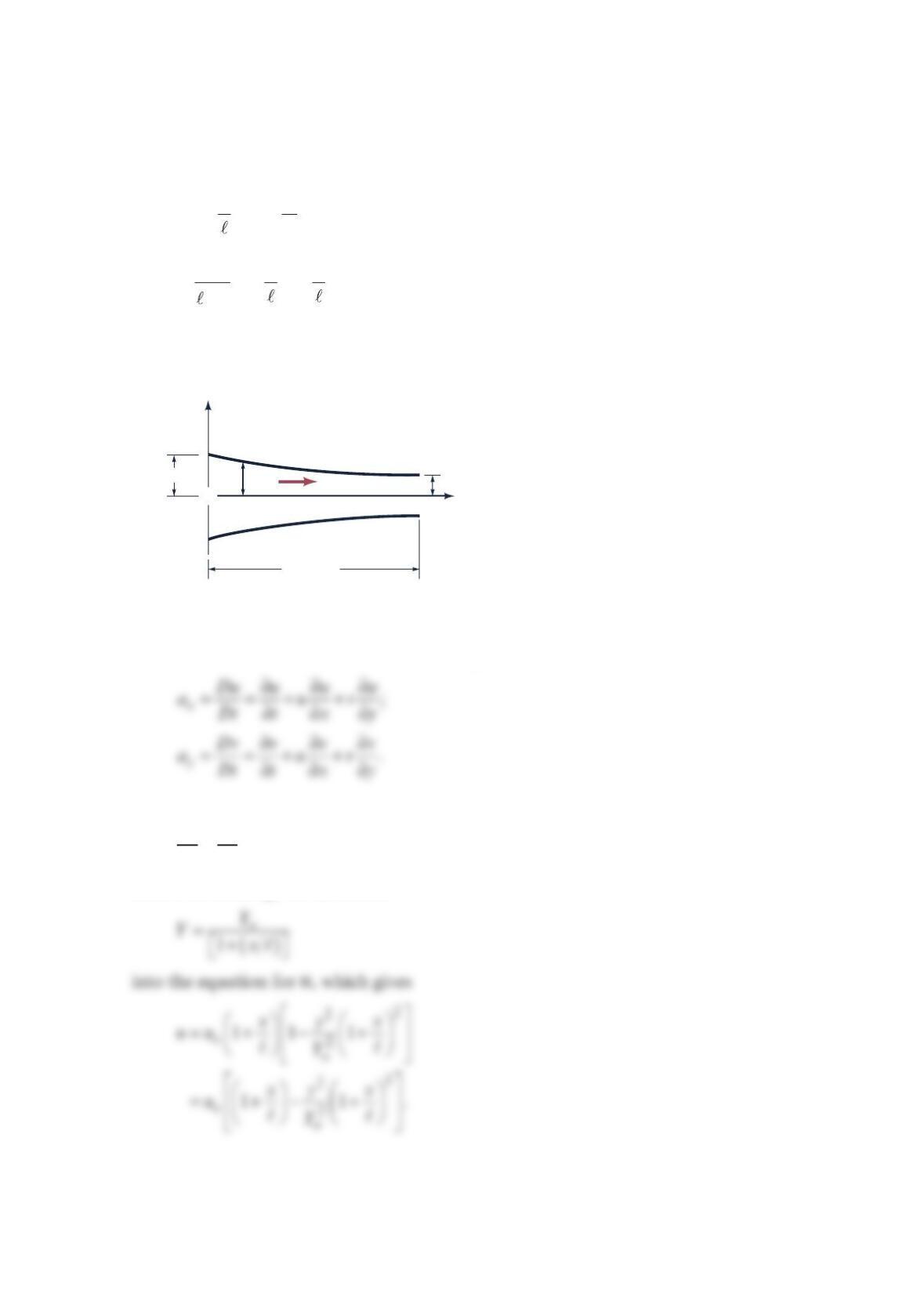
The flow in the plane two-dimensional channel shown in the figure below has x– and y–
components of velocity given by
2
2
3
2
11
1
o
o
o
xy
uu Y
y
xy
vu Y
=+ −
=+−
Calculate the linear acceleration, rotation, vorticity, rate of volumetric strain, and rate of
shear deformation for the flow.
Solution 6.3
There are two linear accelerations, x
a
and .
y
a
Equations (5.1) and (5.2) give
By inspection,
0.
uv
tt
∂∂
==
∂∂
Before continuing, we substitute
ℓ = 5.0 m
Y
0
= 1.0 m
+
Y
ℓ
= 0.5 m
x
y
Y
(
x
)
u
(
x, y
)
Then
Substituting and simplifying, we obtain
and
The angular velocity is
The vorticity is
2,
zz
ξ
ω
=
so
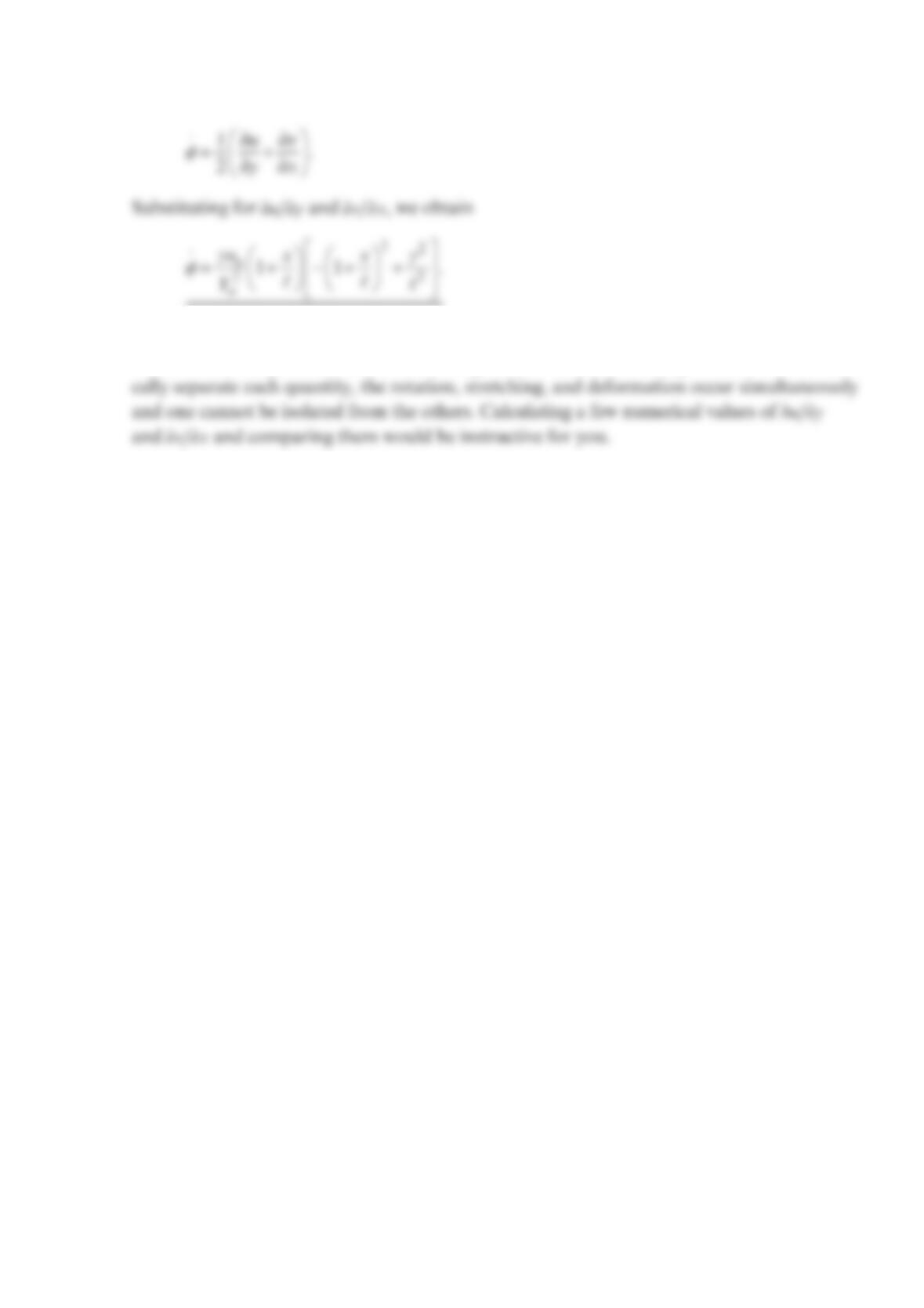
The rate of shear deformation is
Comment It would be informative if we could observe the rotation, stretching, and defor-
mation of a fluid particle as it moved through a flow field. Even though we can mathemati-
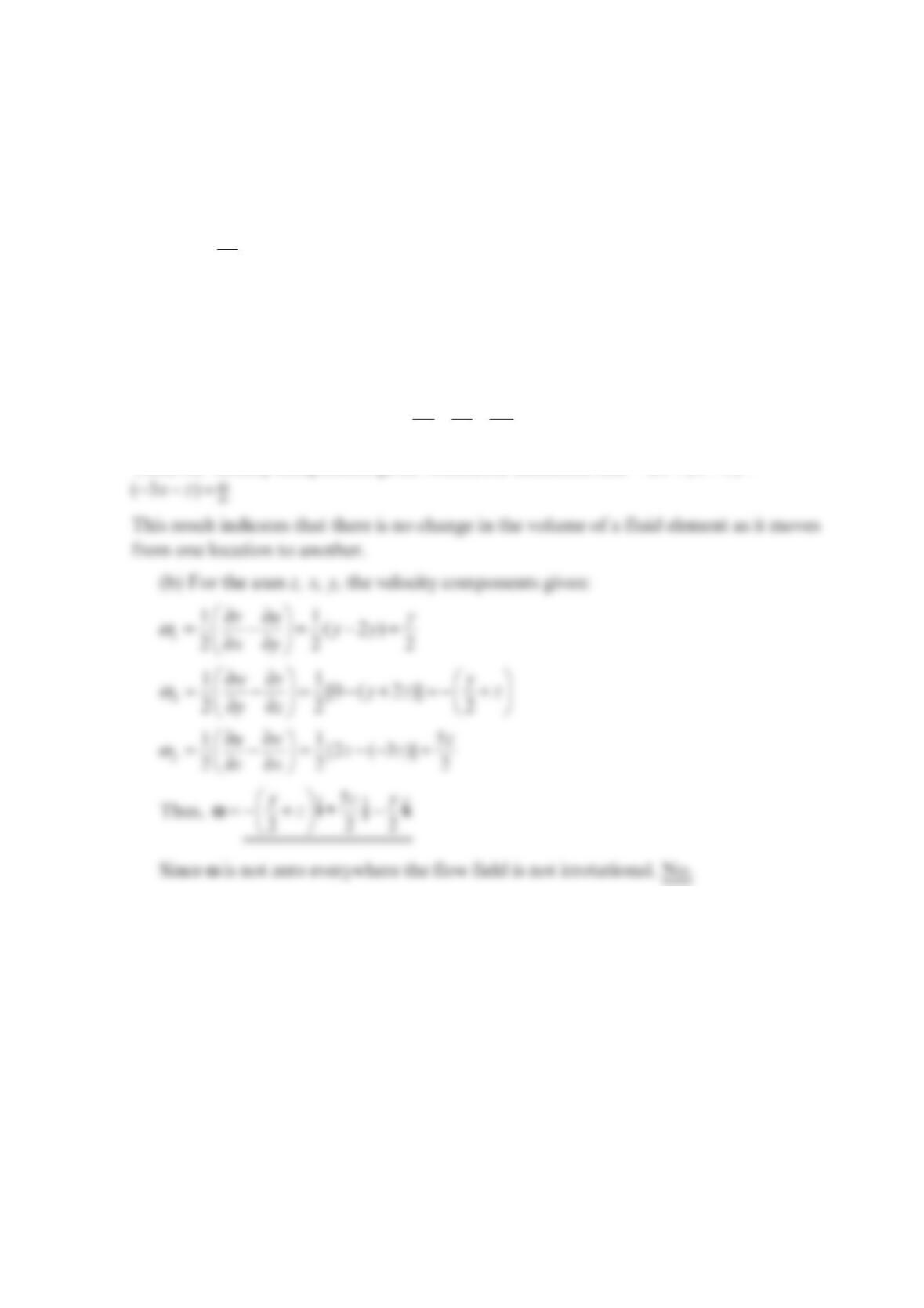
Problem 6.4
The three components of velocity in a flow field are given by
222
ux y z=++
2
v
xy yz z=++
2
34
2
z
wxz=− − +
(a) Determine the volumetric dilatation rate and interpret the results. (b) Determine an
expression for the rotation vector. Is this an irrotational flow field?
Solution 6.4
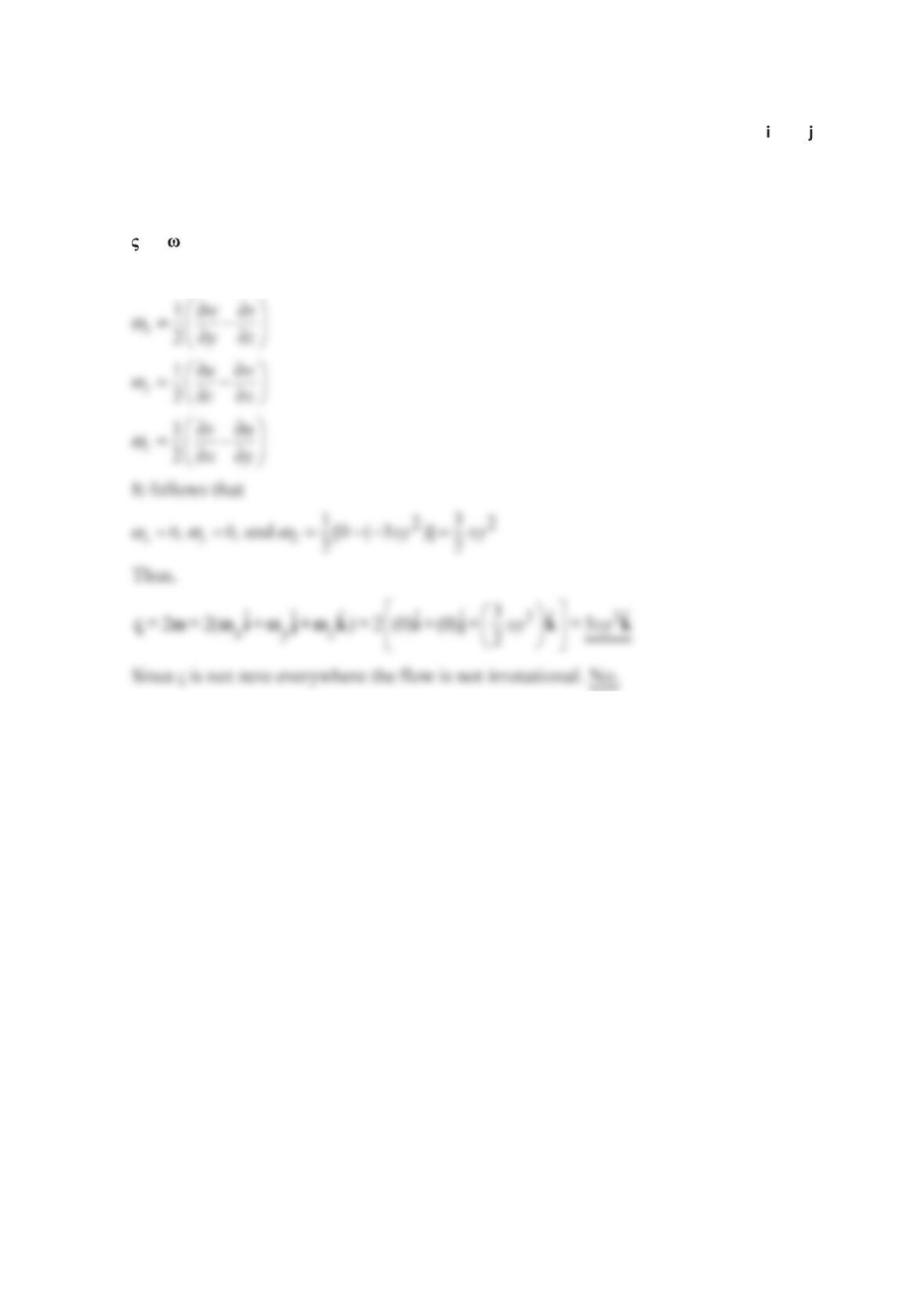
(a) Volumetric dilatation rate uvw
xyz
∂∂∂
=
++
∂∂∂
Thus, for velocity components given volumetric dilatation rate = +++
2
()xxz
Problem 6.5
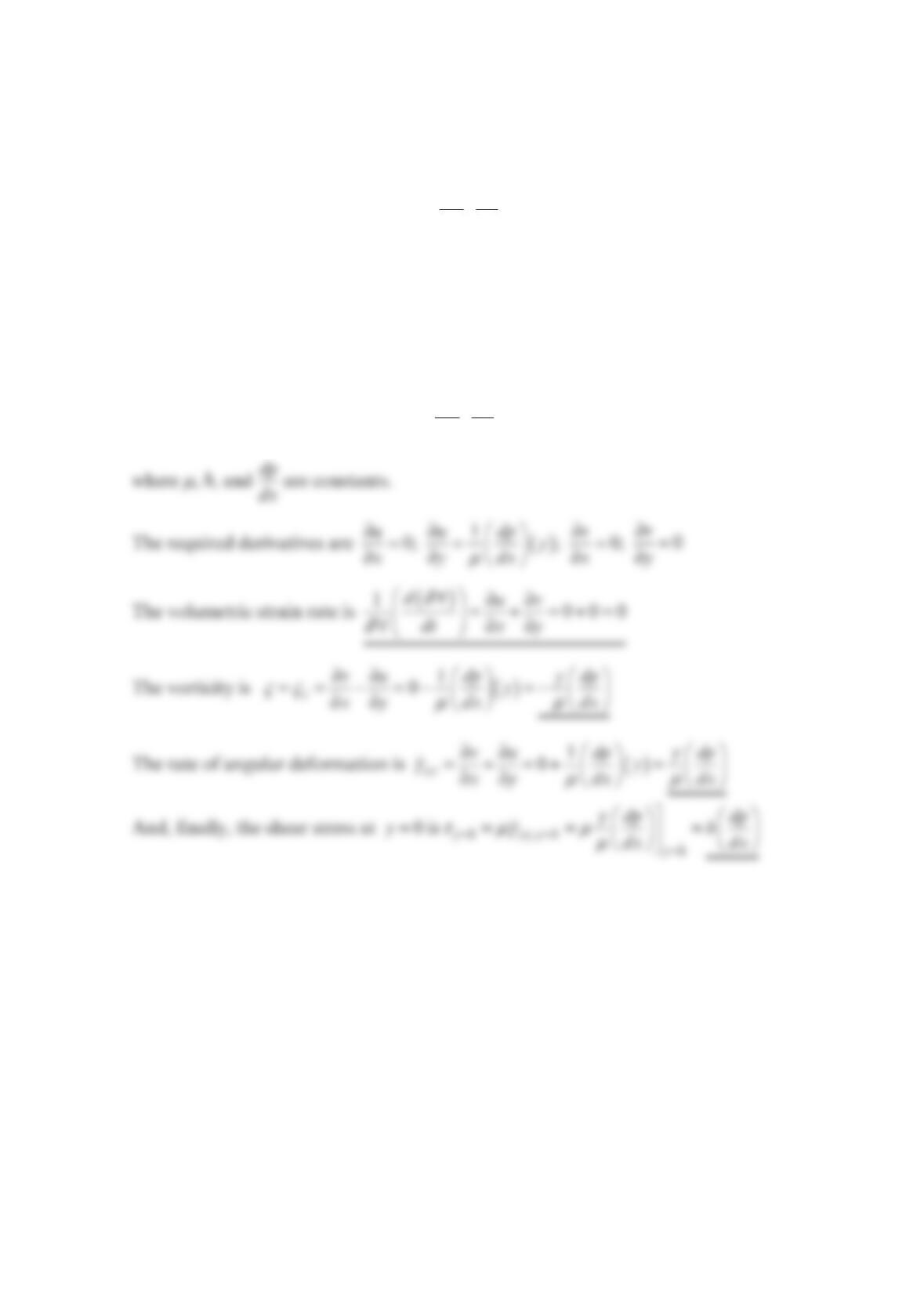
Determine an expression for the vorticity of the flow field described by 34
ˆˆ
xy y=− +V
Is the flow irrotational?
Solution 6.5
2=
From expression for velocity, 3
uxy=− , 4
v
y=, and 0w=, and with
Problem 6.6
According to Eq. (6.134), the x-velocity in fully developed laminar flow between parallel
plates is given by
()
µ
=−
22
1
2
dp
uyh
dx
The y-velocity is 0v=. Determine the volumetric strain rate, the vorticity, and the rate of
angular deformation. What is the shear stress at the plate surface?
Solution 6.6
The given velocity distribution is
()
22
1
2
dp
uyh
dx
µ
=−
and 0v=
Problem 6.7
For a certain incompressible, two-dimensional flow field the velocity component in the
y direction is given by the equation
2
3
v
xy x y=+
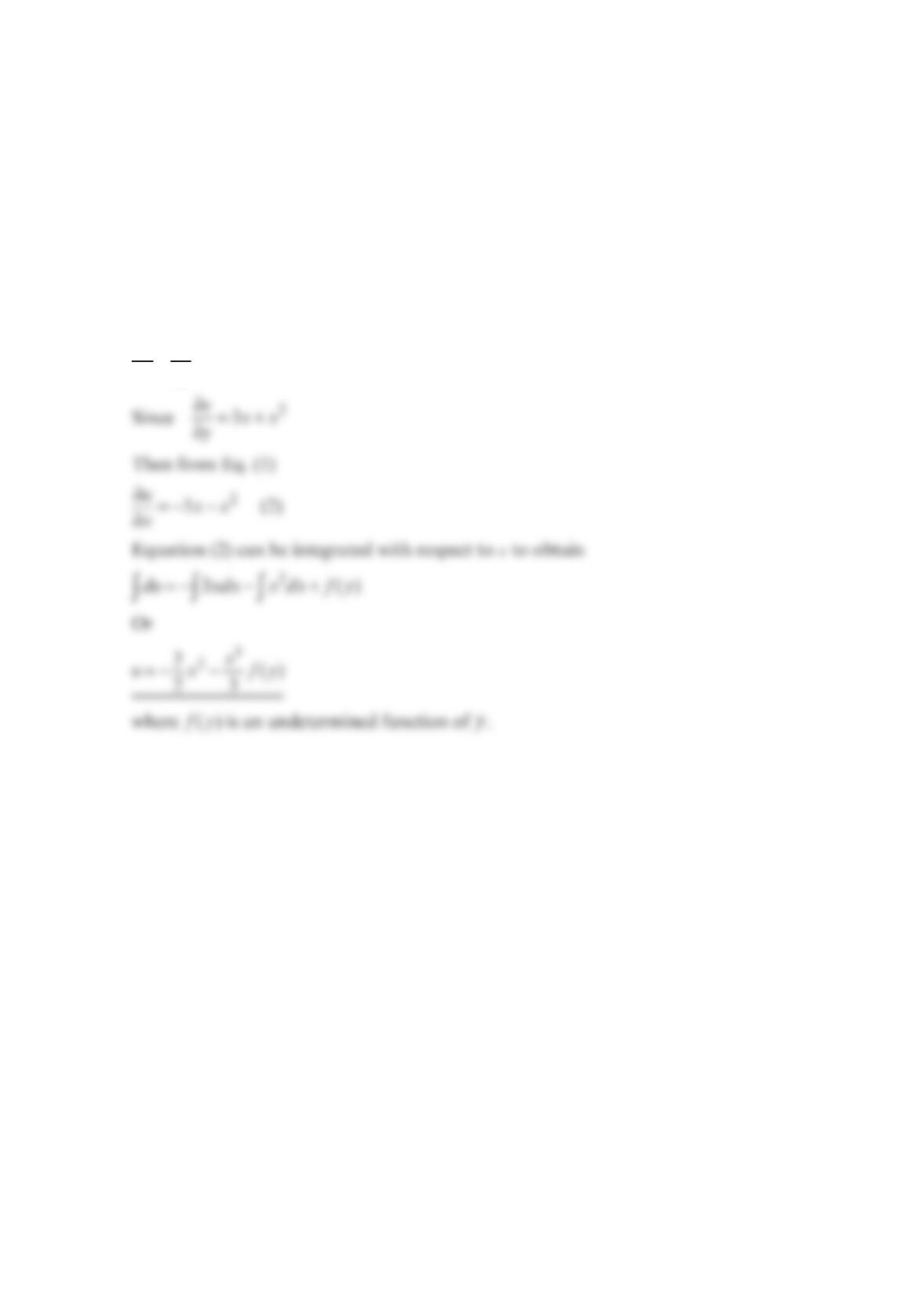
Determine the velocity component in the x direction so that the volumetric dilatation rate is
zero.
Solution 6.7
For zero volumetric rate in a two-dimensional flow,
0
uv
xy
∂∂
+=
∂∂ (1)
Problem 6.8
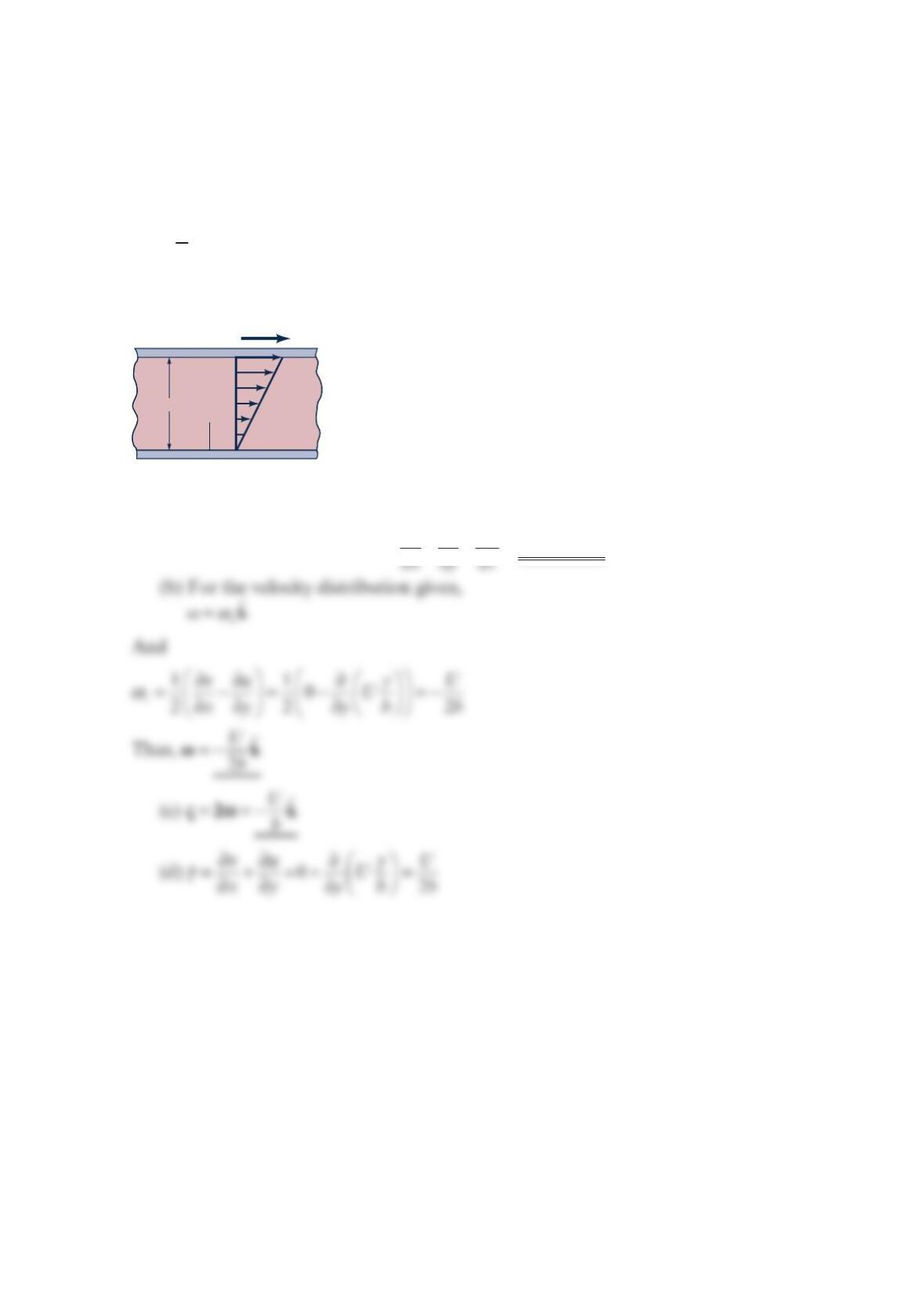
An incompressible viscous fluid is placed between two large parallel plates as shown in the
figure below. The bottom plate is fixed and the upper plate moves with a constant velocity,
U
. For these conditions, the velocity distribution between the plates is linear and can be
expressed as
y
uU
b
=
Determine: (a) the volumetric dilatation rate, (b) the rotation vector, (c) the vorticity, and
(d) the rate of angular deformation.
Solution 6.8
(a) Volumetric dilation rate = 0000
uvw
∂∂∂
++ =++=
U
b
y
u
Fixed
plate
Moving
plate
Problem 6.9
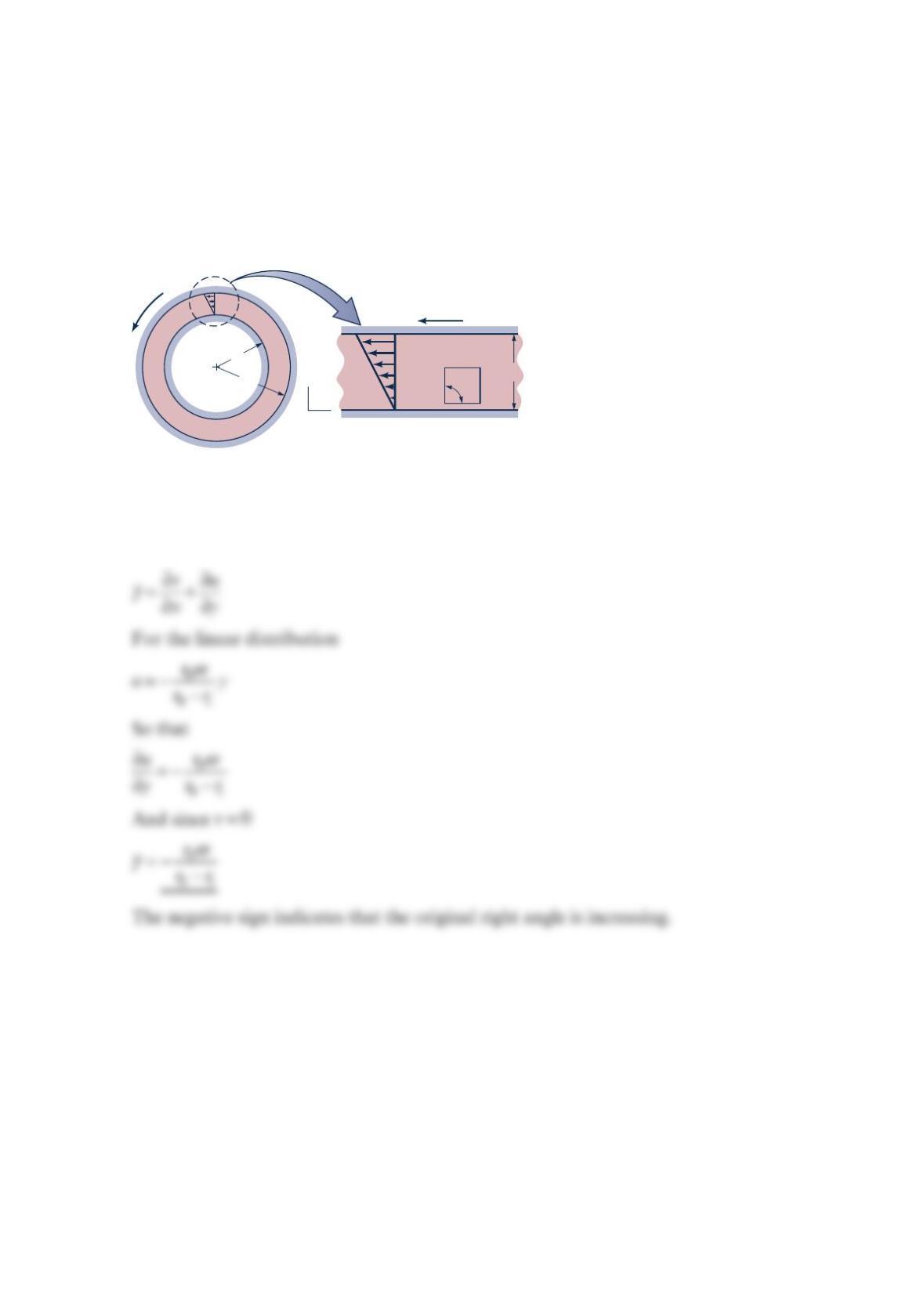
A viscous fluid is contained in the space between concentric cylinders. The inner wall is
fixed, and the outer wall rotates with an angular velocity
ω
. (See the figure (a) below)
Assume that the velocity distribution in the gap is linear as illustrated in the figure (b) be-
low. For the small rectangular element shown in the figure (b) below, determine the rate of
change of the right angle
γ
due to the fluid motion. Express your answer in terms of r0, ri,
and
ω
.
Solution 6.9
From
r
o
r
i
ω
r
o
ω
x
y
u
γ
r
o
–
r
i
(
a
)(
b
)
Problem 6.10
Air is delivered through a constant-diameter duct by a fan. The air is inviscid, so the fluid
velocity profile is “flat” across each cross section. During the fan start-up, the following
velocities were measured at the time
t
and axial positions x:
x = 0 x = 10 m x = 20 m
t = 0 s V = 0 m/s V = 0 m/s V = 0 m/s
t = 1.0 s V = 1.00 m/s V = 1.20 m/s V = 1.40 m/s
t = 2.0 s V = 1.70 m/s V = 1.80 m/s V = 1.90 m/s
t = 3.0 s V = 2.10 m/s V = 2.15 m/s V = 2.20 m/s
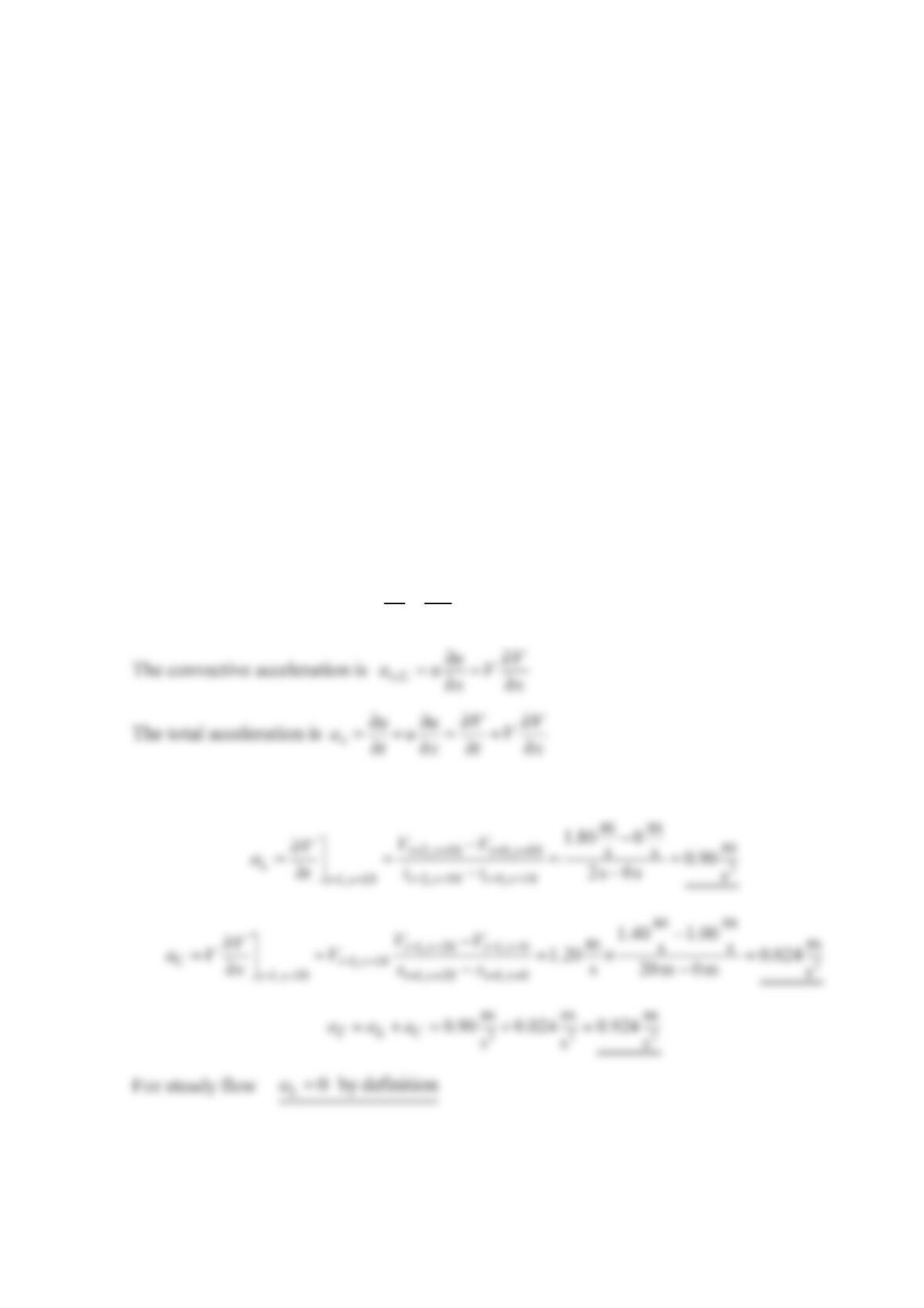
Calculate the local acceleration, the convective acceleration, and the total acceleration at
1.0 st= and 10
m
x=. What is the local acceleration after the fan has reached a steady air
flow rate?
Solution 6.10
The local acceleration is ∂∂
==
∂∂
,Lx
uV
att
For the discrete data, the derivatives will be approximated by central finite differences
Problem 6.11
For a certain incompressible flow field, it is suggested that the velocity components are giv-
en by the equations
2uxy= 2
vxy=− 0w=
Is this a physically possible flow field? Explain.
Solution 6.11
Any physically possible incompressible flow field must satisfy conservation of mass as ex-
pressed by the relationship
Problem 6.12
The velocity components of an incompressible, two-dimensional velocity field are given by
the equations
2(1 )uy x x=− +
(2 1)vyx=+
Show that the flow is irrotational and satisfies conservation of mass.
Solution 6.12
If the two-dimensional flow is irrotational,
And the
f
low is irrotational.
To satisfy conservation of mass,
Problem 6.13
Consider the two-dimensional channel flow of Problem 6.3. Show that the given velocities
satisfy conservation of mass in both differential and control volume forms.
Solution 6.13
The control volume form of conservation of mass is
As the flow is steady 0
d
t
ρ
∂∀=
∂ and because
ρ
is constant, we need to show
Substituting for
u
at the exit,
Y
is the magnitude of the channel half-height at x= and
W
is the width of the channel.
Integrating,
Similarly,
As 1.0 m
o
Y
= and 1.0 m s,
o
u=
=
4.
3
Ain udA W
Then
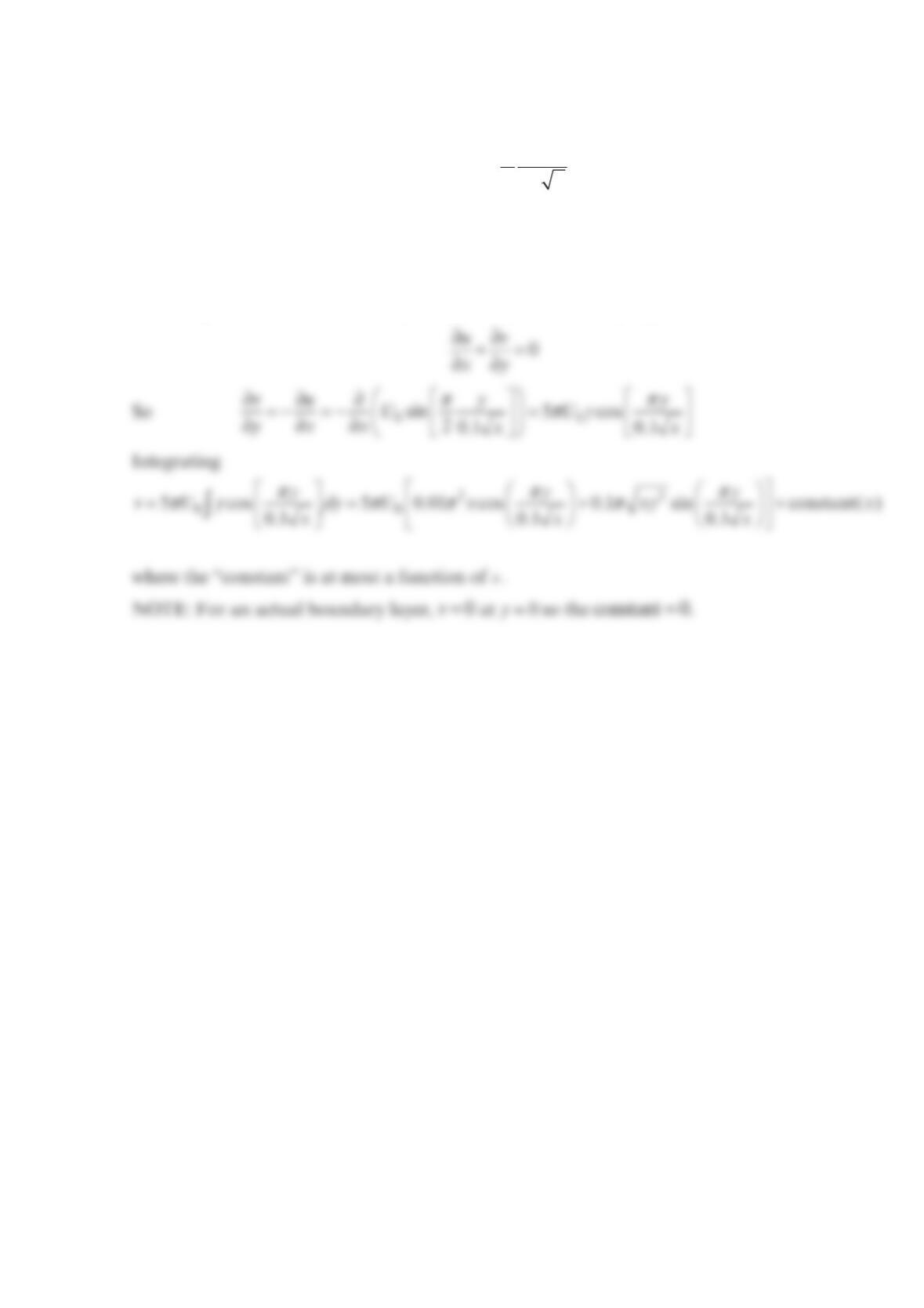
Conservation of mass in differential form is expressed by the continuity equation. For in-
compressible two-dimensional flow
0
uv
xy
∂∂
+=
∂∂
Before continuing, we substitute
Y
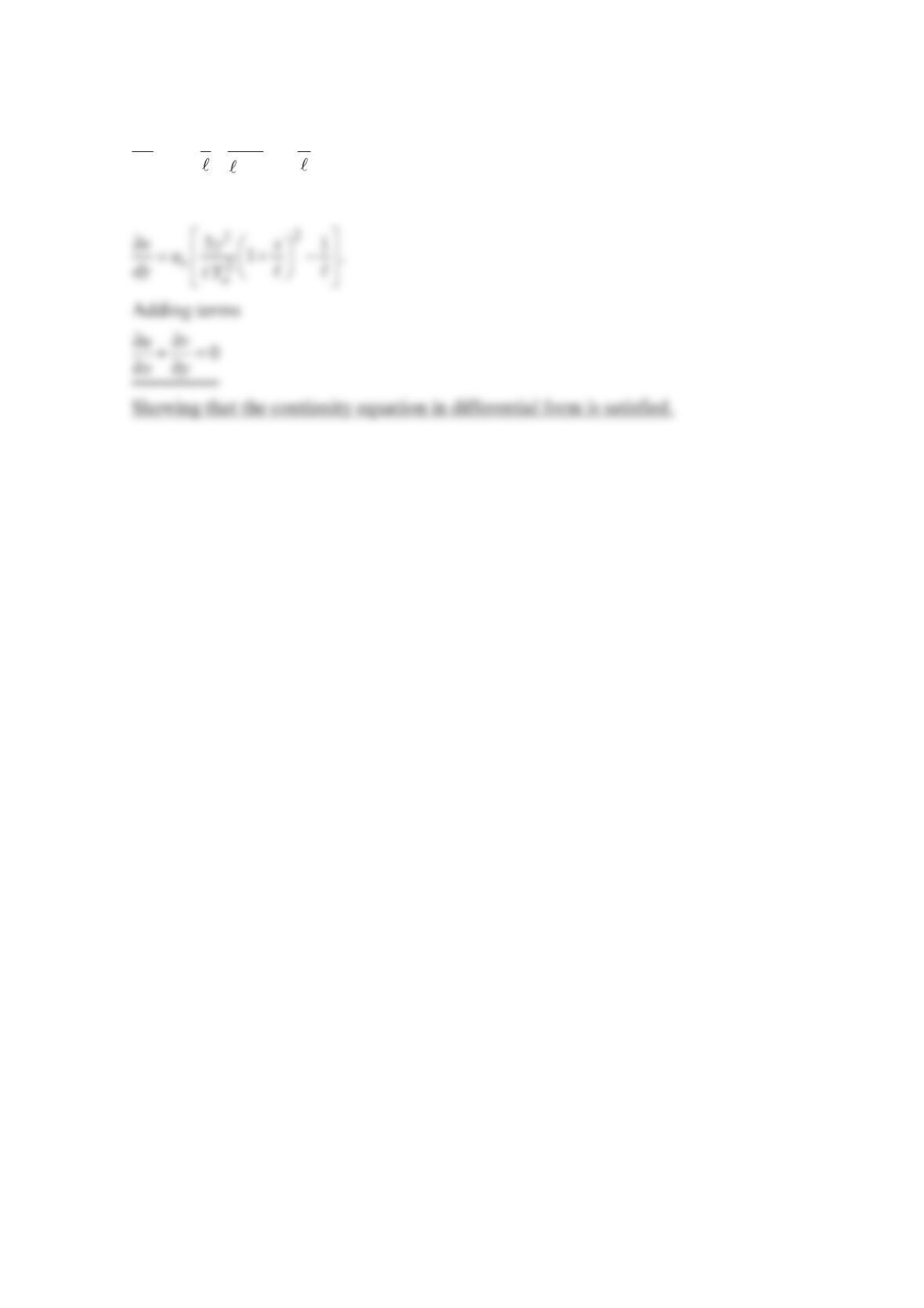
Then
2
2
2
13 1;
o
o
uyx
u
xY
∂
=− +
∂
and
Problem 6.14
The x-velocity profile in a certain laminar boundary layer is approximated as follows
0sin 20.1
y
uU x
π
=
Determine the y-velocity, .(), vx y
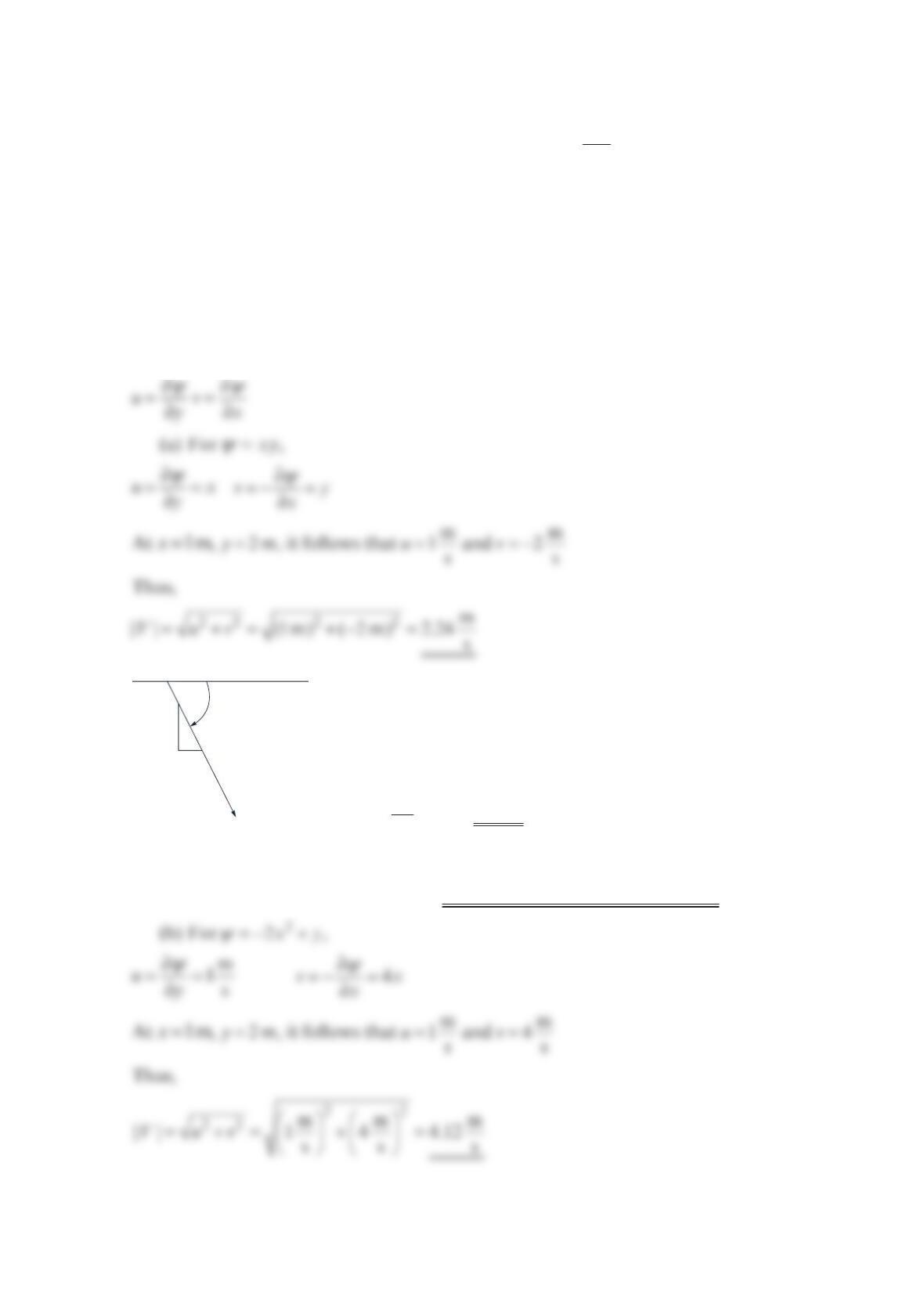
Solution 6.14
Assuming two-dimensional incompressible flow, the continuity equation is
Problem 6.15
For each of the following stream functions, with units of
2
m
s, determine the magnitude
and the angle the velocity vector makes with the x axis at 1
m
x= , 2m
y
= . Locate any
stagnation points in the flow field.
(a) xy=
ψ
(b) 2
2xy
ψ
=− +
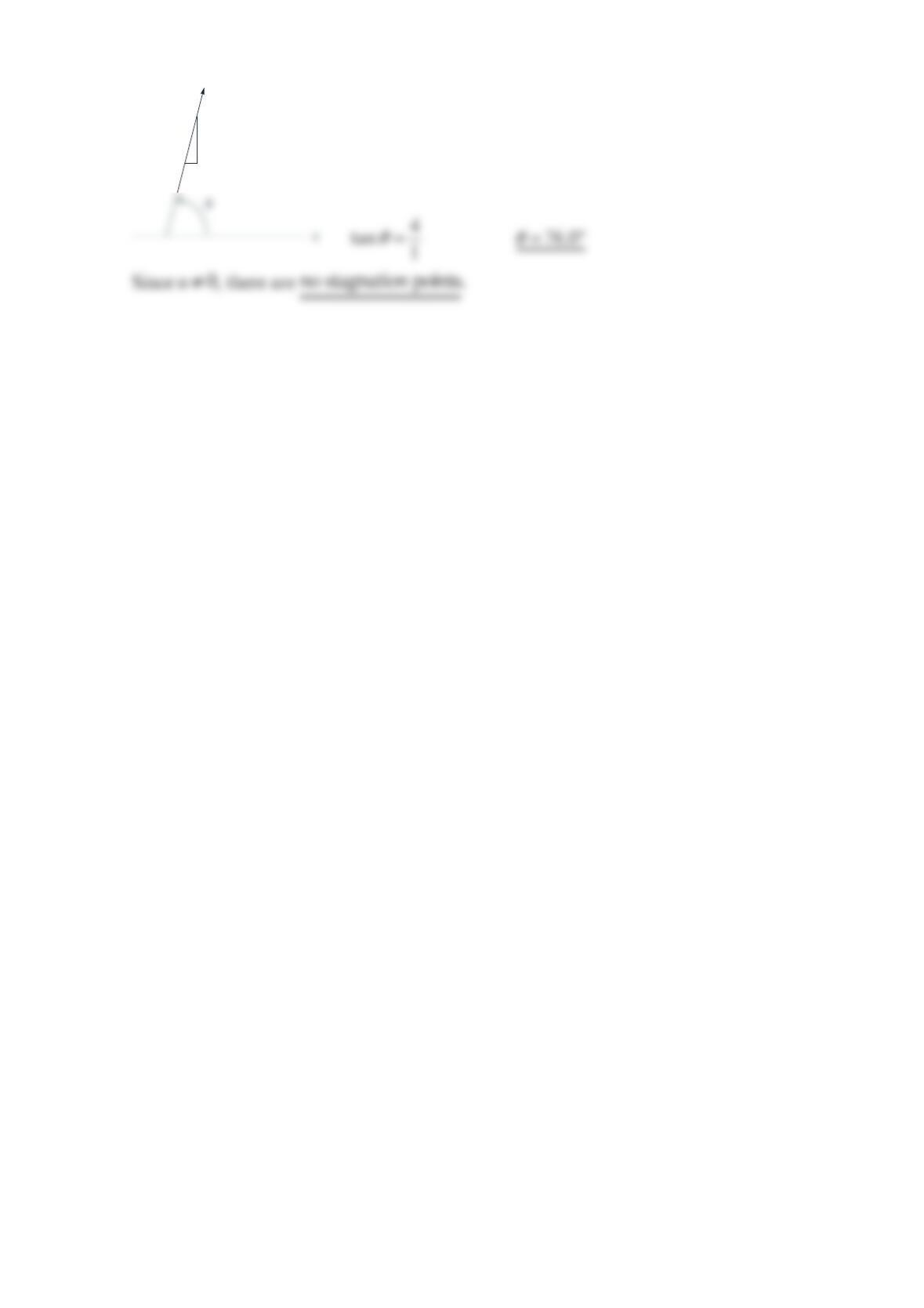
Solution 6.15
From the definition of the stream function,
2
t
an 1
θ
−
= 63.4
θ
=− °
Since 0u= at 0x= and 0v= at 0
y
=, a stagnation point occurs at 0xy==
m
1
–2
θ
V
x
1
4
V