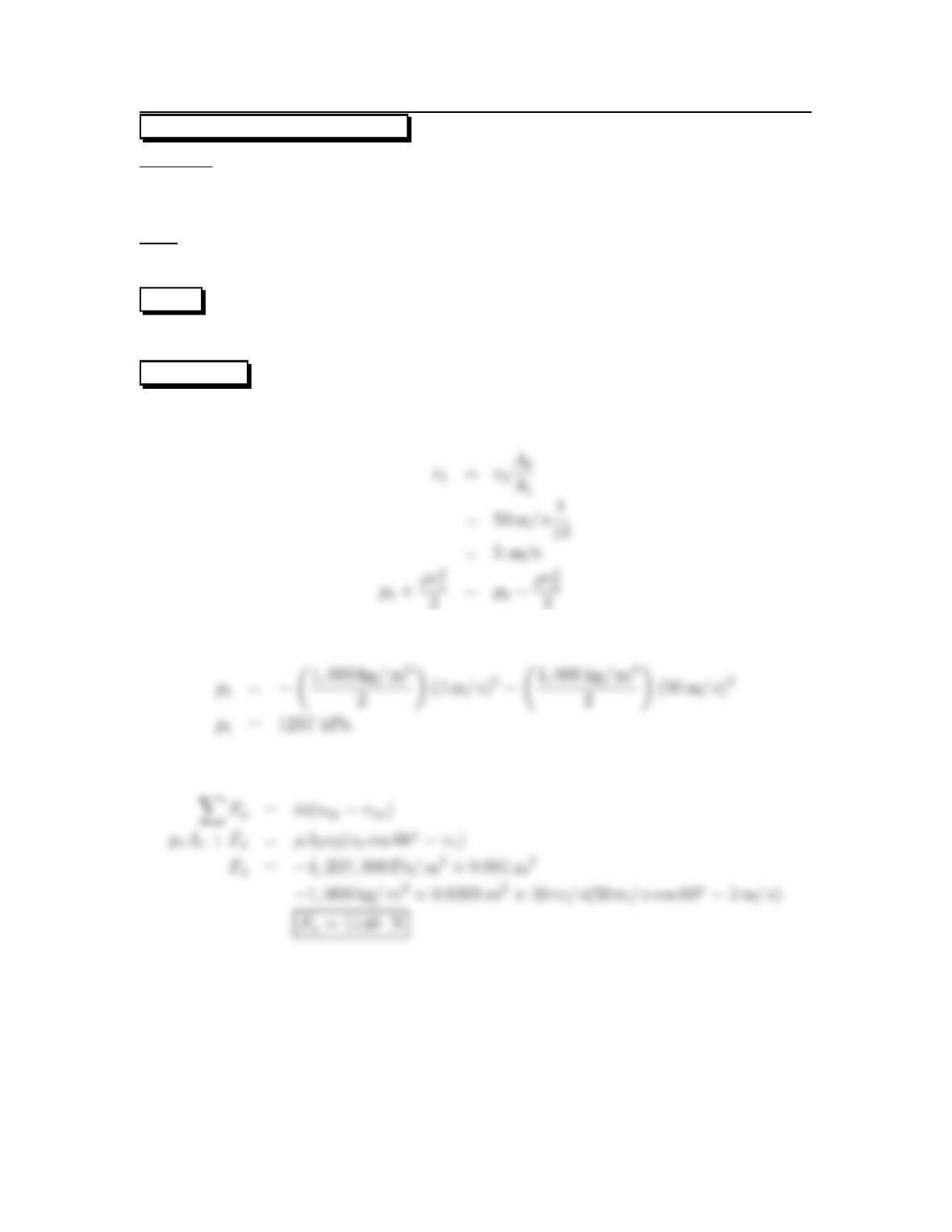
6.70: PROBLEM DEFINITION
Situation:
Water flows through a 60oreducing bend–additional details are provided in the
problem statement.
Find:
Horizontal force required to hold bend in place: Fx
PLAN
Apply the Bernoulli equation, then the momentum equation.
SOLUTION
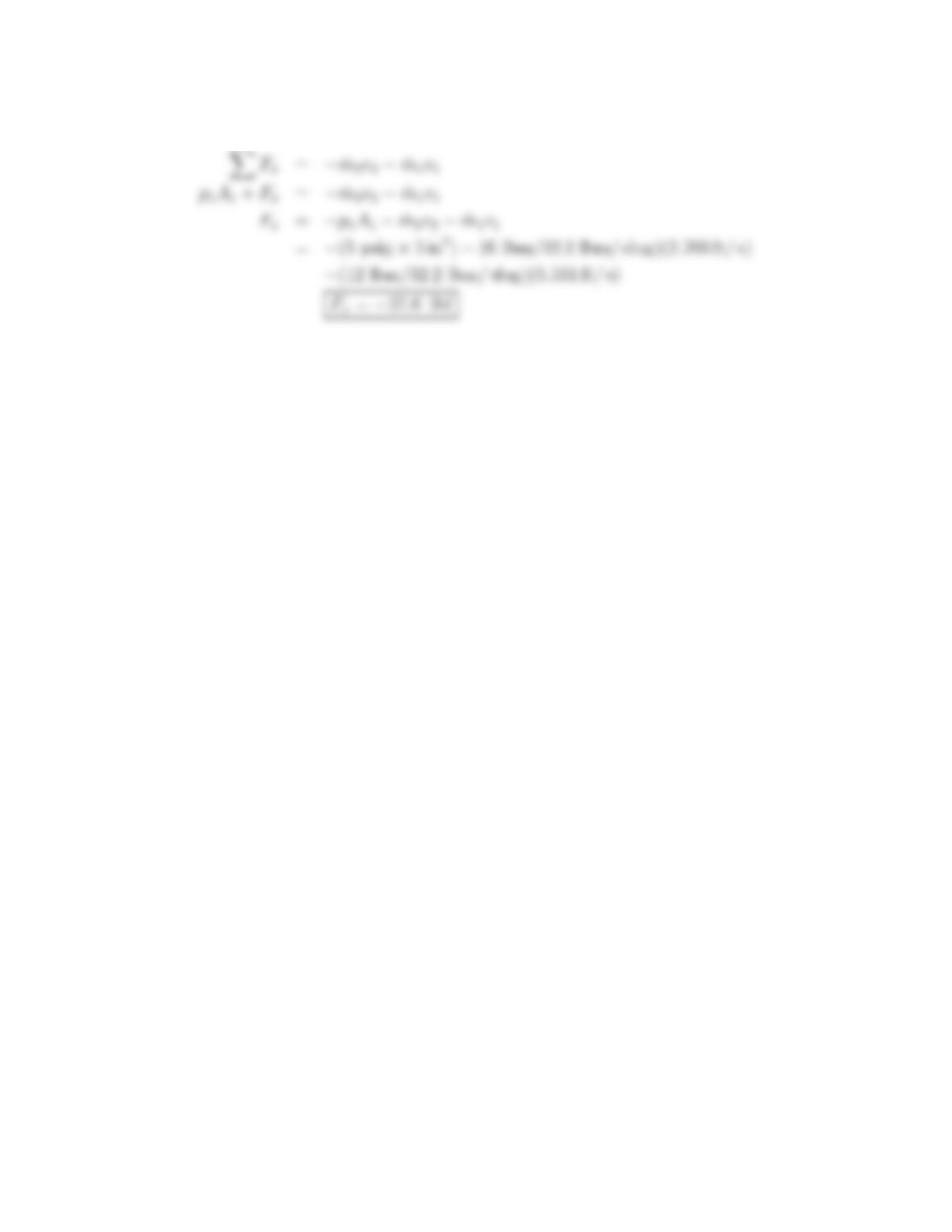
Bernoulli equation
Let p2=0,then
Momentum equation (x-direction)
101
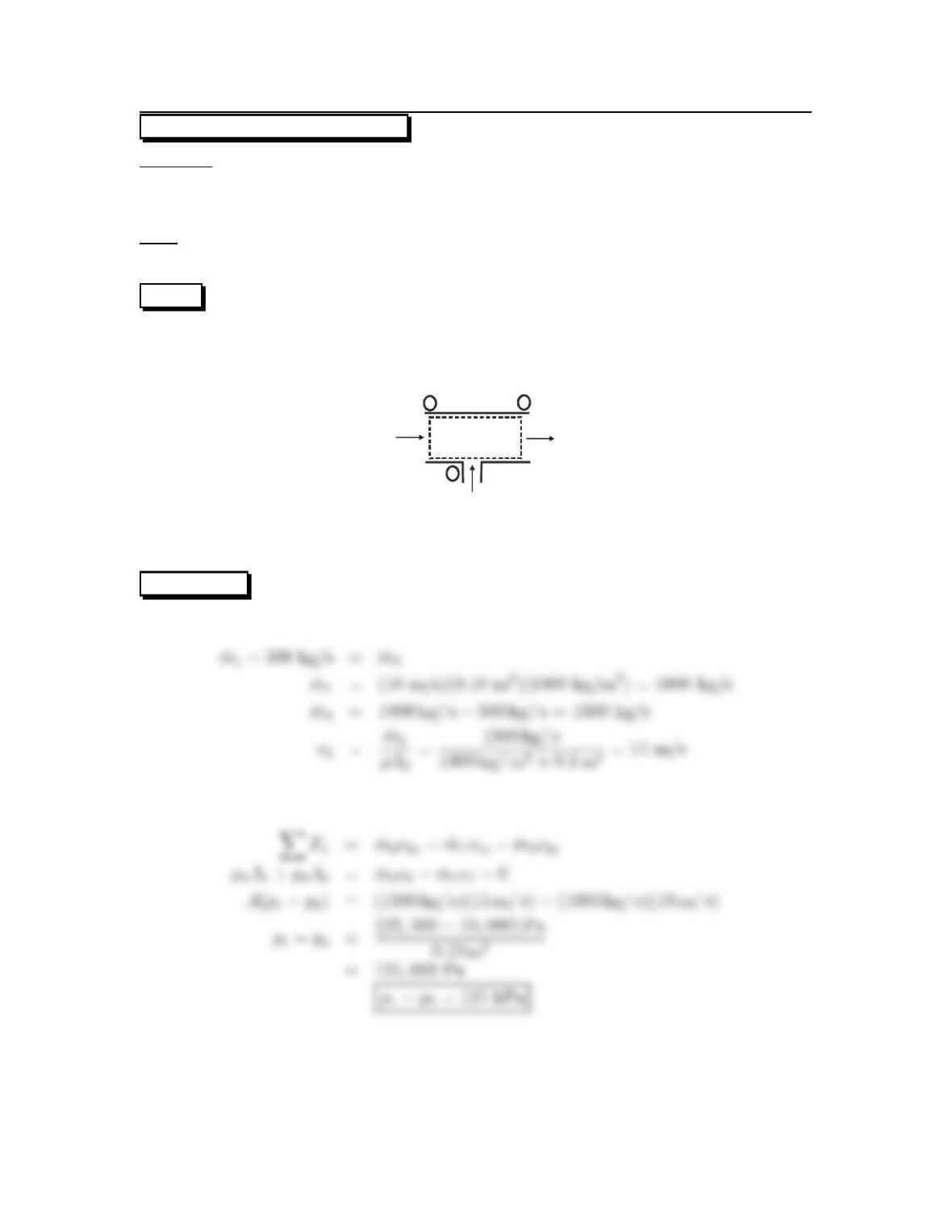
6.71: PROBLEM DEFINITION
Situation:
Water flows through a tee–—additional details are provided in the problem state-
ment.
Find:
Pressure difference between sections 1 and 2.
PLAN
Apply the continuity equation, then the momentum equation.
12
3500 kg
/
s
SOLUTION
Continuity equation
Momentum equation (x-direction)
102
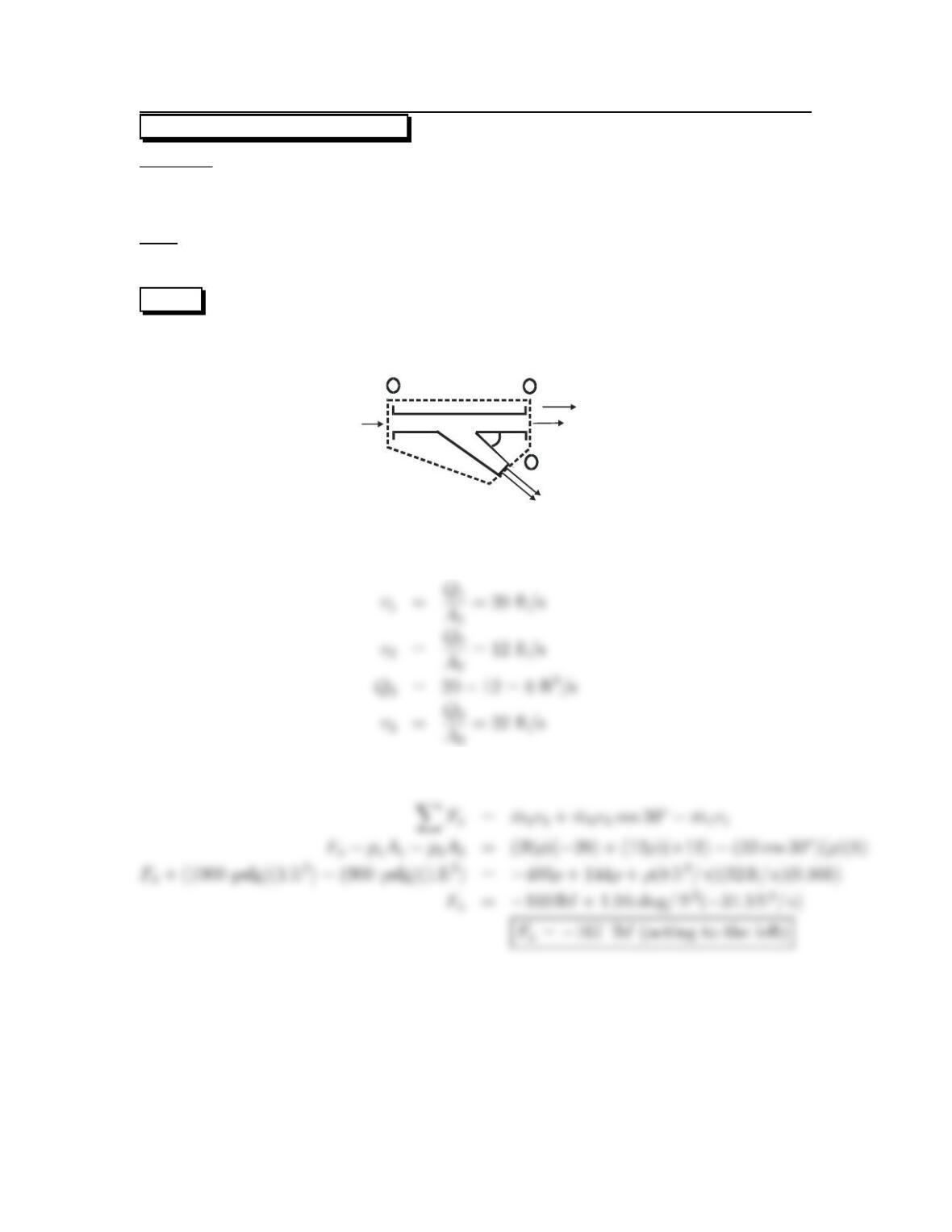
6.72: PROBLEM DEFINITION
Situation:
Water flows through a wye–additional details are provided in the problem state–
ment.
Find:
x−component of force to hold wye in place.
PLAN
Apply the momentum equation.
12
3
30
o
x
Flow rate
Momentum equation (x-direction)
103
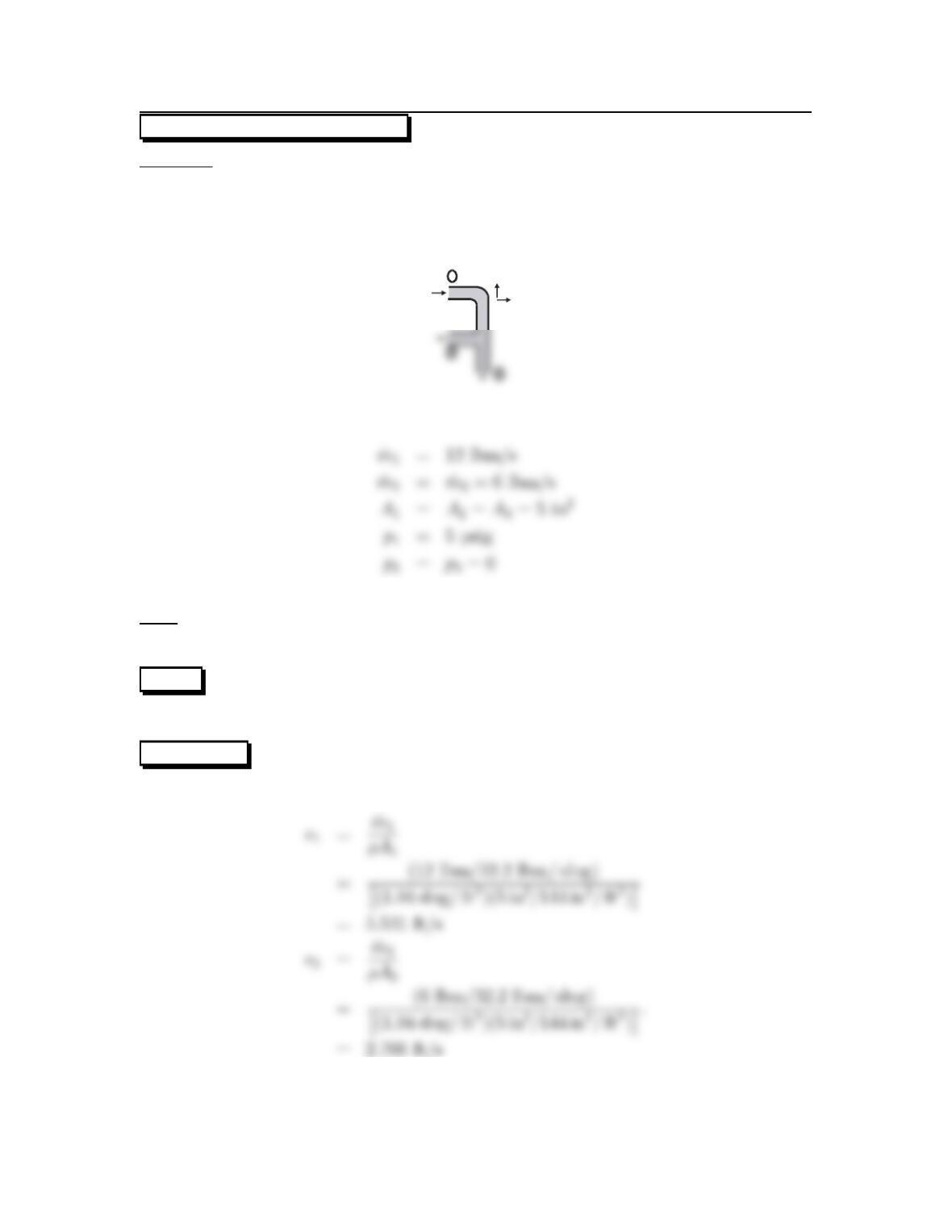
6.73: PROBLEM DEFINITION
Situation:
Water flow through a horizontal bend and T section–additional details are pro-
vided in the problem statement.
y
x
1
Find:
Horizontal component of force to hold fitting stationary: Fx
PLAN
Apply the momentum equation.
SOLUTION
Velocity calculations
104
Momentum equation (x-direction)
105
6.74: PROBLEM DEFINITION
Situation:
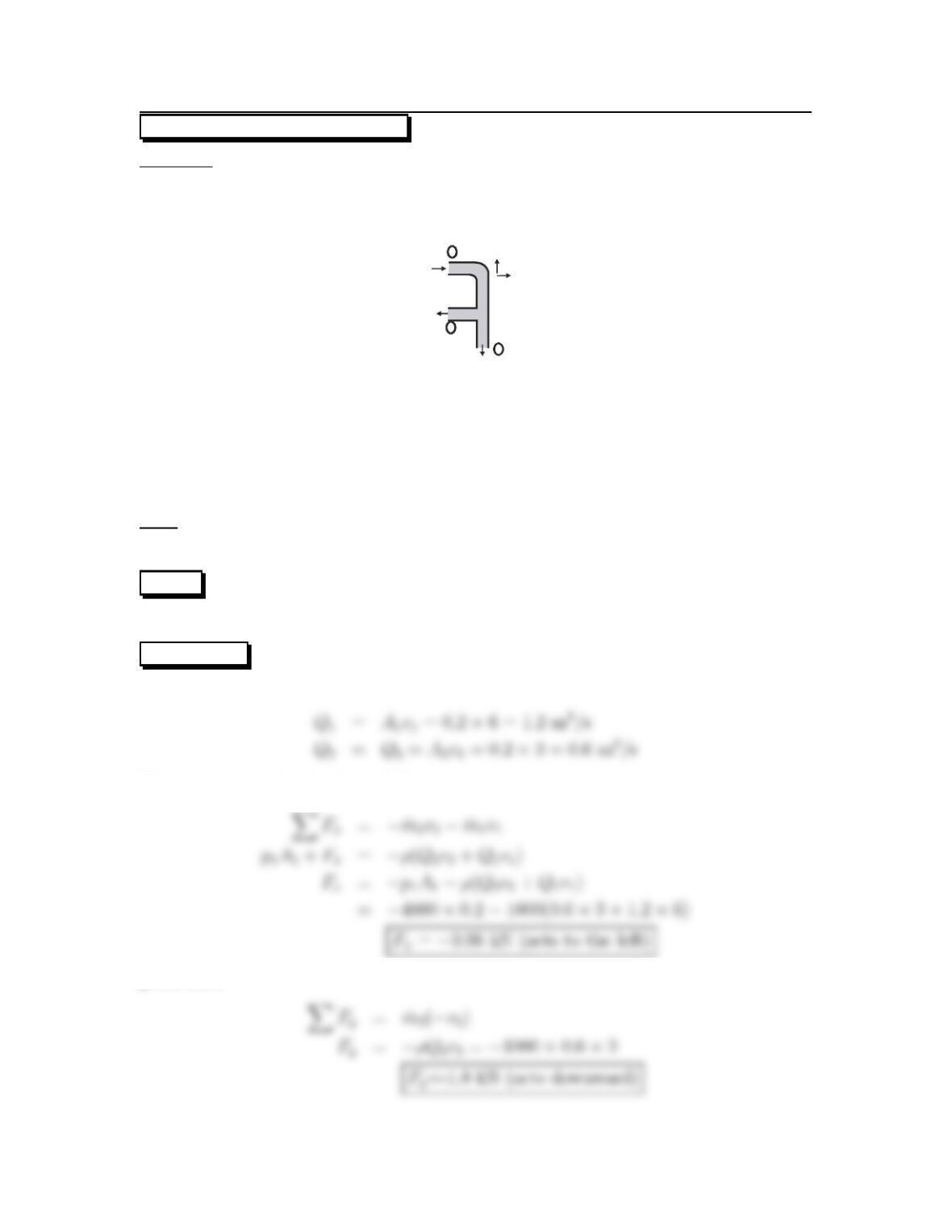
Water flows through a horizontal bend and T section–additional details are pro-
vided in the problem statement.
y
x
1
2
3
v1=6m/s p1=4.8kPa
v2=v3=3m/s p2=p3=0
A1=A2=A3=0.20 m2
Find:
Components of force (Fx,F
y)needed to hold bend stationary.
PLAN
Apply the momentum equation.
SOLUTION
Discharge
Momentum equation (x-direction)
y-direction
106
6.75: PROBLEM DEFINITION
Situation:
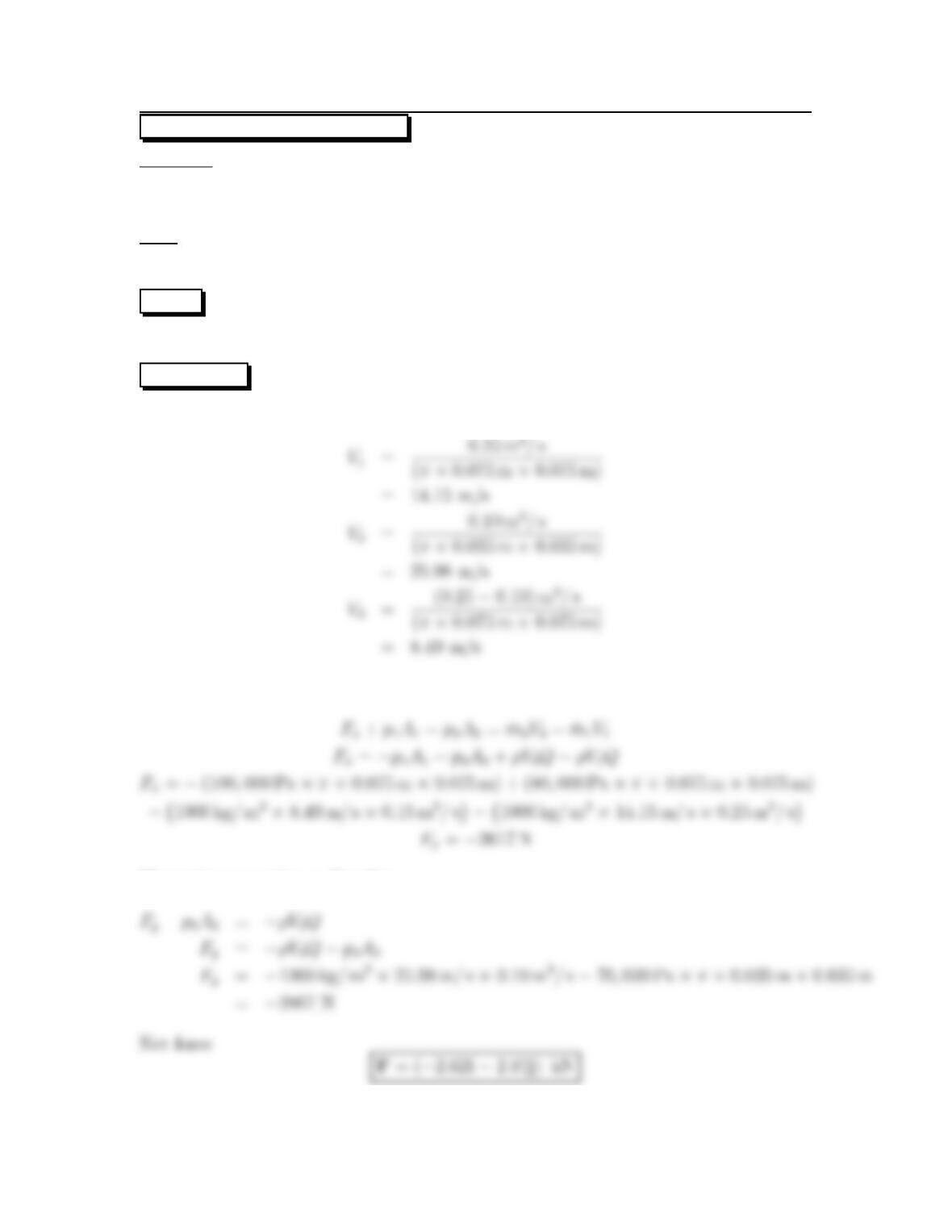
Water flows through a horizontal tee–additional details are provided in the problem
statement.
Find:
Components of force (Fx,F
y)needed to hold the tee in place.
PLAN
Apply the momentum equation.
SOLUTION
Velocity calculations
Momentum equation (x-direction)
Momentum equation y-direction
107
6.76: PROBLEM DEFINITION
Situation:
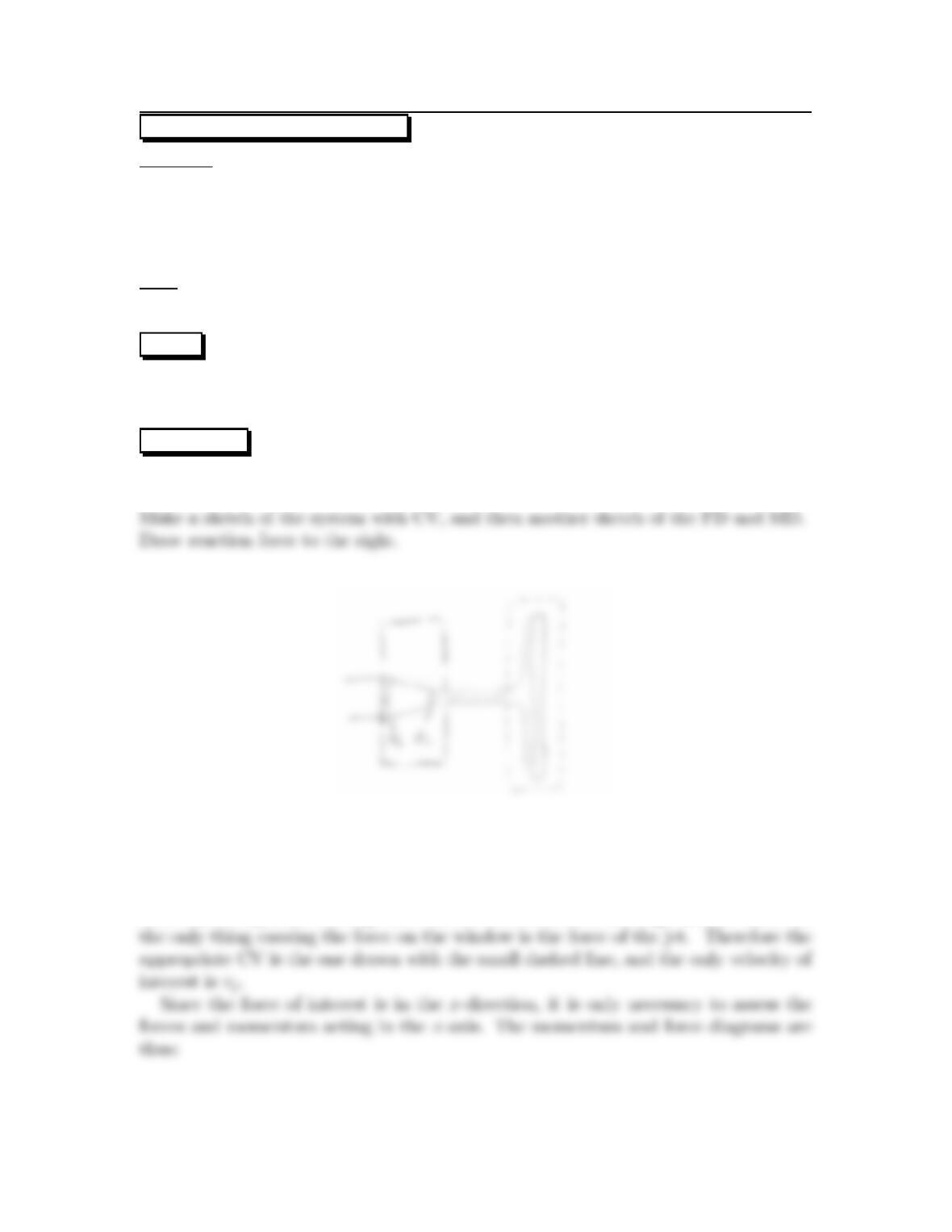
Risk of windows being broken by the force of jet from a firehose.
A0.2–m(D1)firehose attached to a nozzle with a 0.1-m (d2)outlet.
Thefreejetfromthenozzleisdeflected by 90◦when it hits the window.
Water from firehose flows at a rate of 0.15 m3/s.
Find:
Force the window must withstand due to the impact of the jet.
PLAN
1. Assess the CV and set up the problem
2. Apply the momentum equation
SOLUTION
Problem setup.
Choose coordinate system.
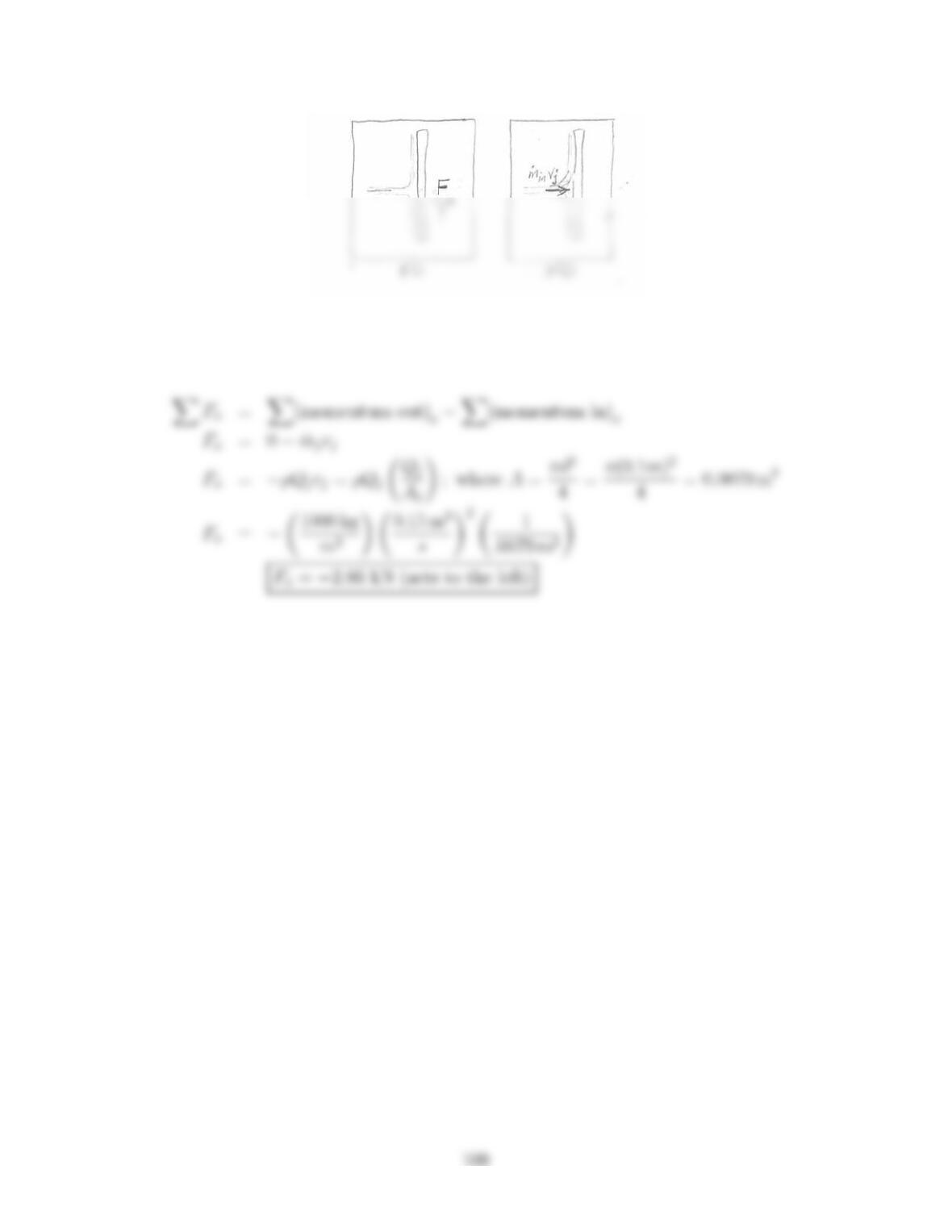
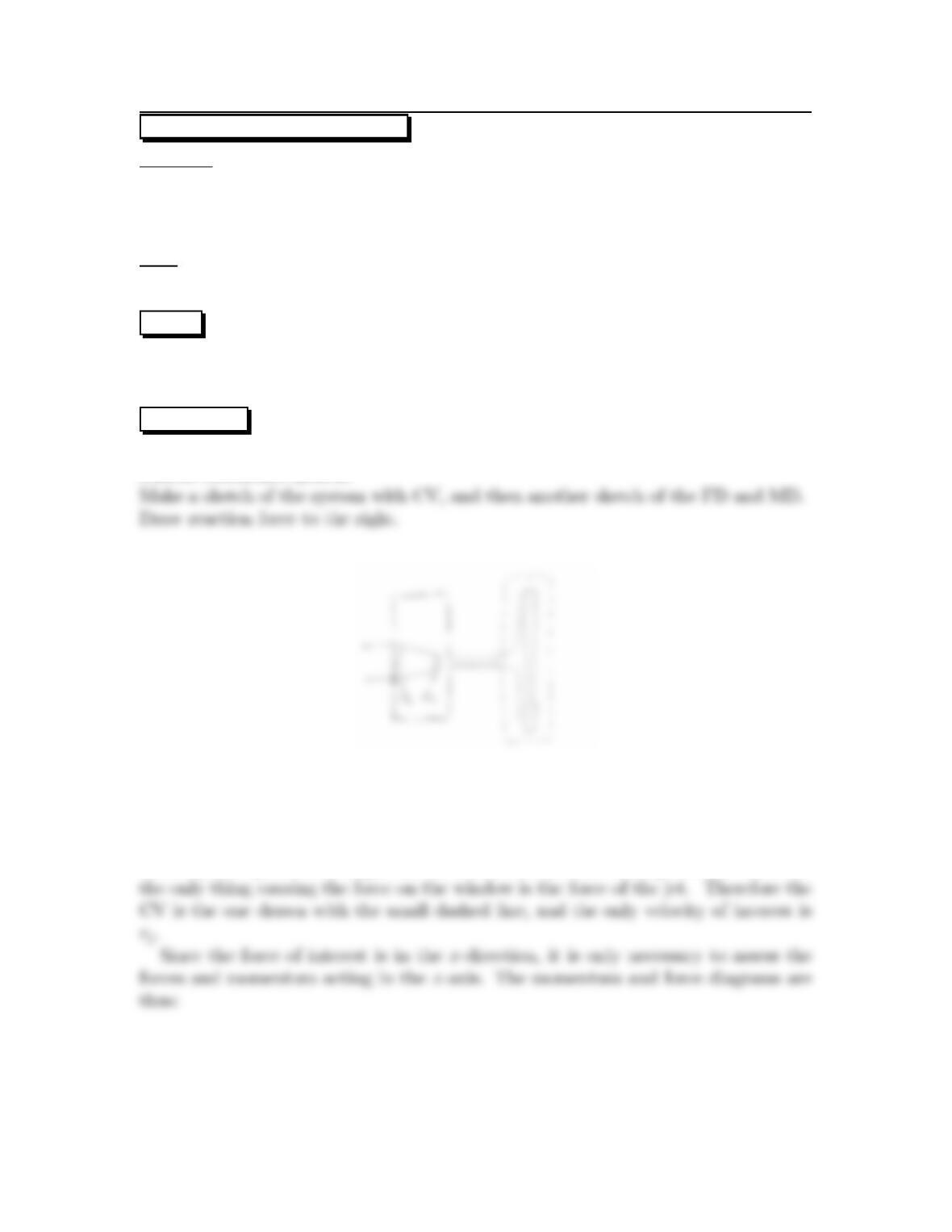
Consider: Where does one draw the CV? The big dashed line, or the small dashed
line? Some problem-solvers may think that they need to include information about
both D1and d2, and thus might use the CV described with the large dashes. However
108
6.77: PROBLEM DEFINITION
Situation:
Fireman wants to throttle down his flow rate so that it will not break windows.
Assumption is given that typical window withstands a force up to 25 lbf.
8-inch (D1)firehose discharging through a nozzle with 4-inch ( d2)outlet.
Find:
The largest volumetric flow rate fireman should allow to exit his nozzle (gpm).
PLAN
1. Assess the CV and set up the problem
2. Apply the momentum equation
SOLUTION
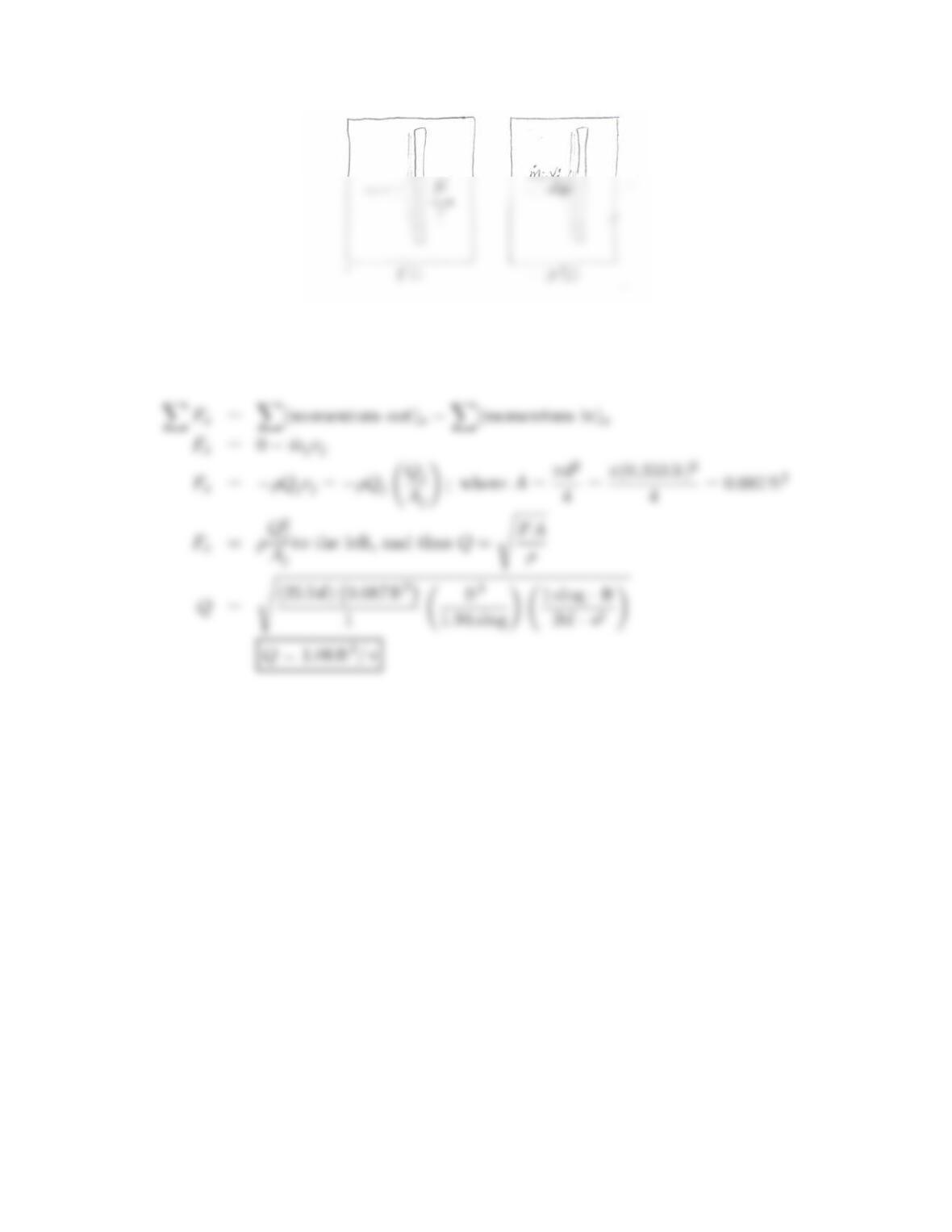
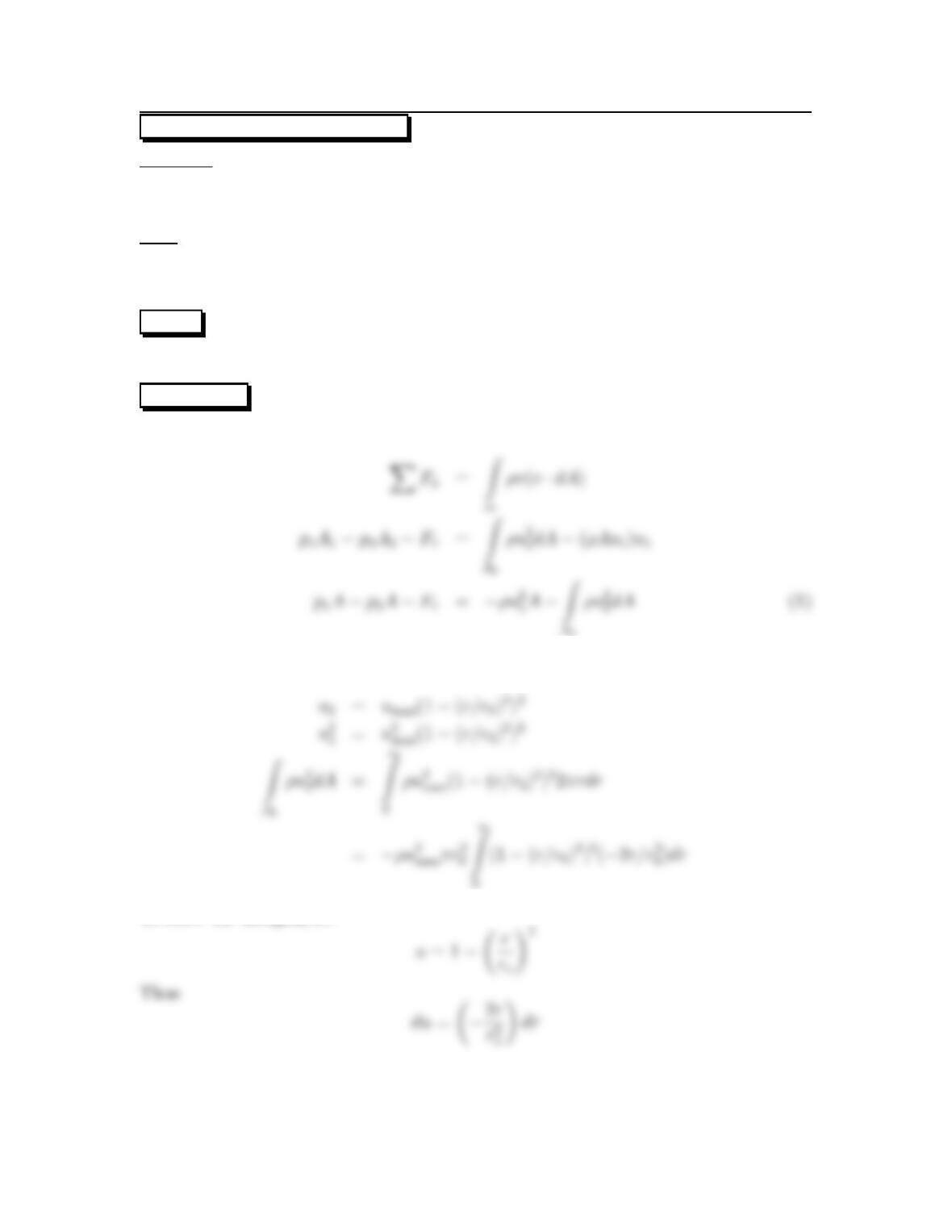
Problem setup.
Choose coordinate system.
Consider: Where does one draw the CV? The big dashed line, or the small dashed
line? Some problem-solvers may think that they need to include information about
both D1and d2, and thus might use the CV described with the large dashes. However
110
111
6.78: PROBLEM DEFINITION
Situation:
Aflow in a pipe is laminar and fully developed–additional details are provided in
the problem statement.
Find:
Derive a formula for the resisting shear force (Fτ)as a function of the parameters
D, p1,p
2,ρ,and U.
PLAN
Apply the momentum equation, then the continuity equation.
SOLUTION
Momentum equation (x-direction)
Integration of momentum outflow term
To solve the integral, let
112
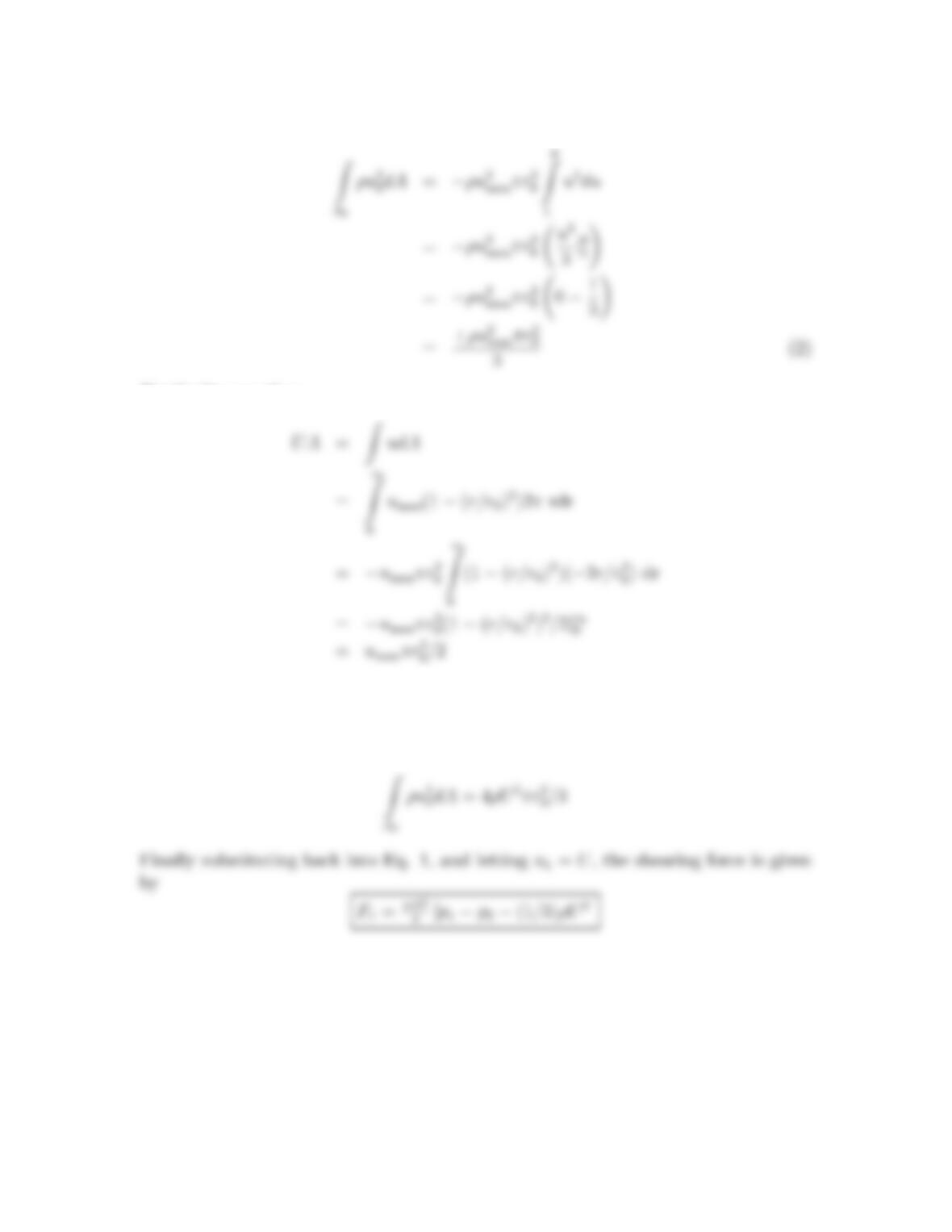
The integral becomes
Continuity equation
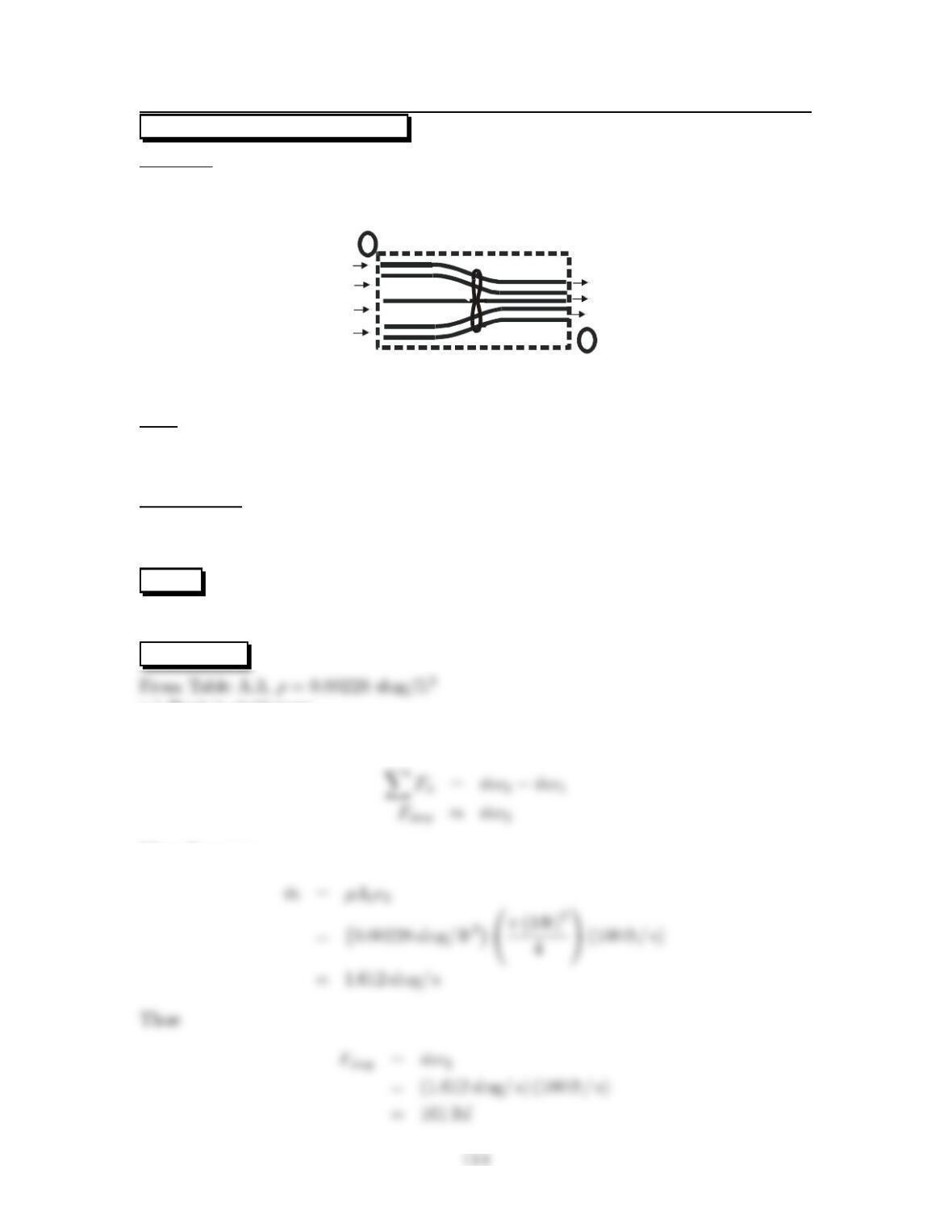
Therefore
umax =2U
Substituting back into Eq. 2 gives
113
6.79: PROBLEM DEFINITION
Situation:
A swamp boat is powered by a propeller–additional details are provided in the
problem statement.
1
2
Find:
(a) Propulsive force when the boat is not moving.
(b) Propulsive force when the boat is moving at 30 ft/s.
Assumptions:
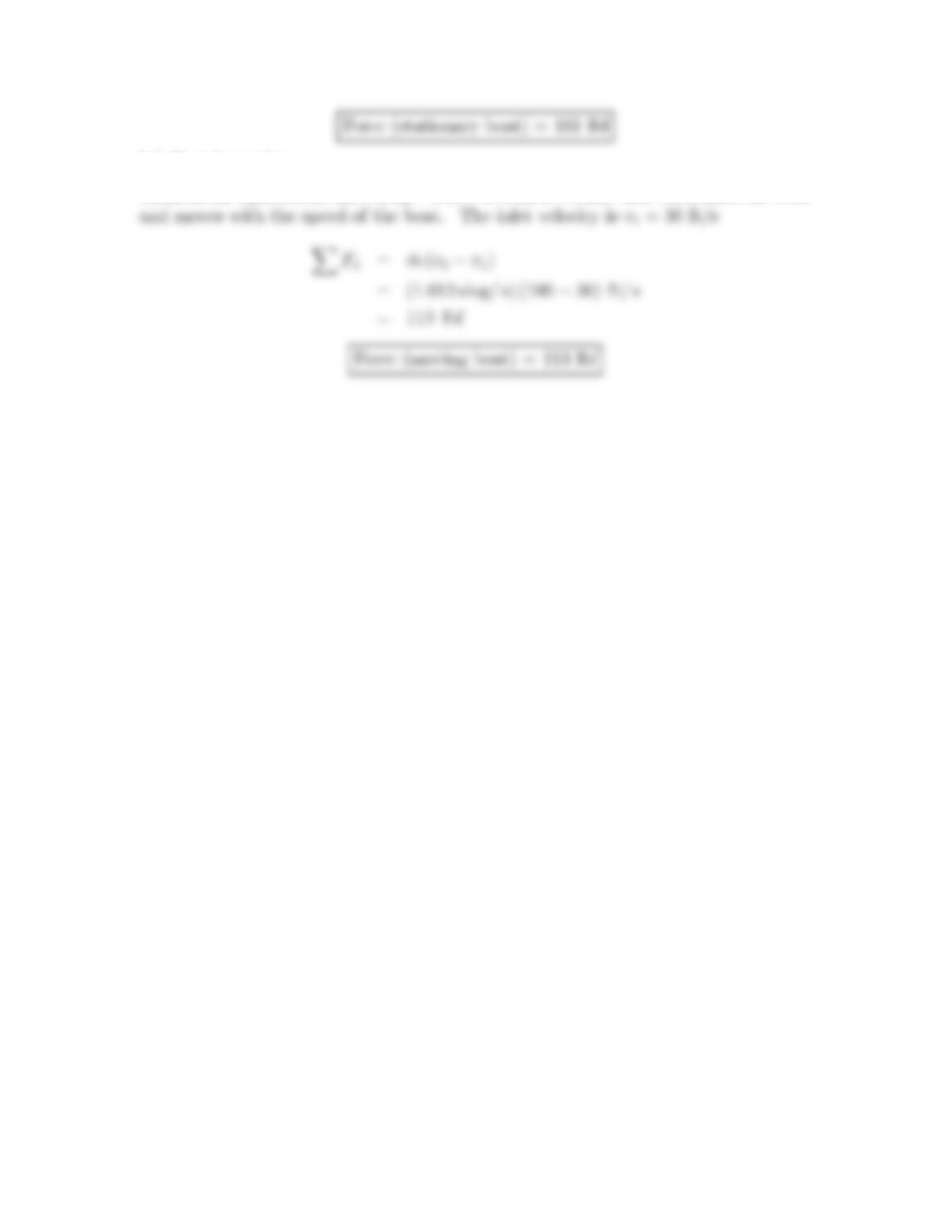
Whentheboatisstationary,neglecttheinletflow of momentum—that is, assume
v1≈0.
PLAN
Apply the momentum equation.
SOLUTION
a.) Boat is stationary
Momentum equation (x-direction) Select a control volume that surrounds the boat.
Mass flow rate
b.) Boat is moving
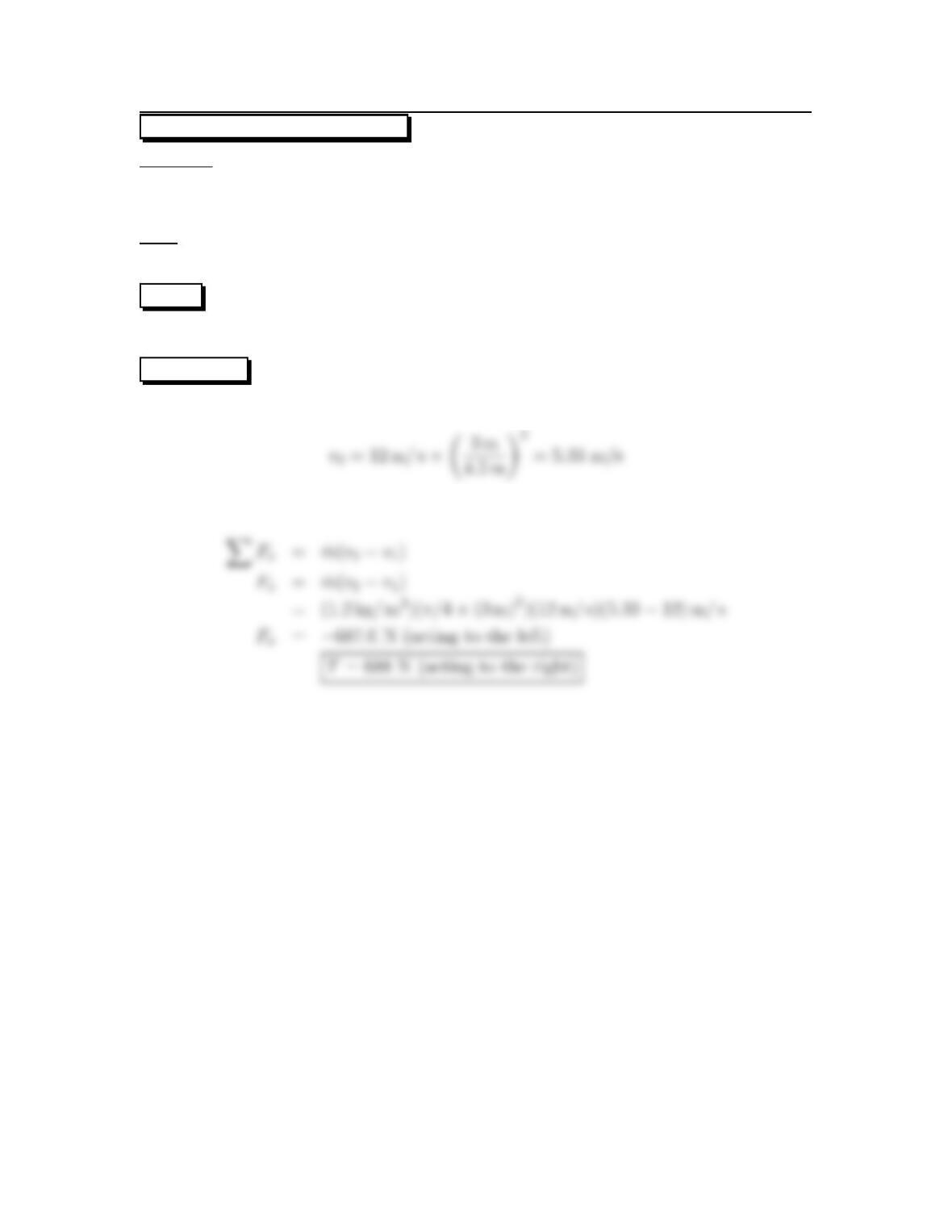
Momentum equation (x-direction). Select a control volume that surrounds the boat
115
6.80: PROBLEM DEFINITION
Situation:
Air flows through a windmill–additional details are provided in the problem state-
ment.
Find:
Thrust on windmill.
PLAN
Apply the continuity equation, then the momentum equation.
SOLUTION
Continuity equation
Momentum equation (x-direction)
116
6.81: PROBLEM DEFINITION
Situation:
A jet pump is described in the problem statement.
Find:
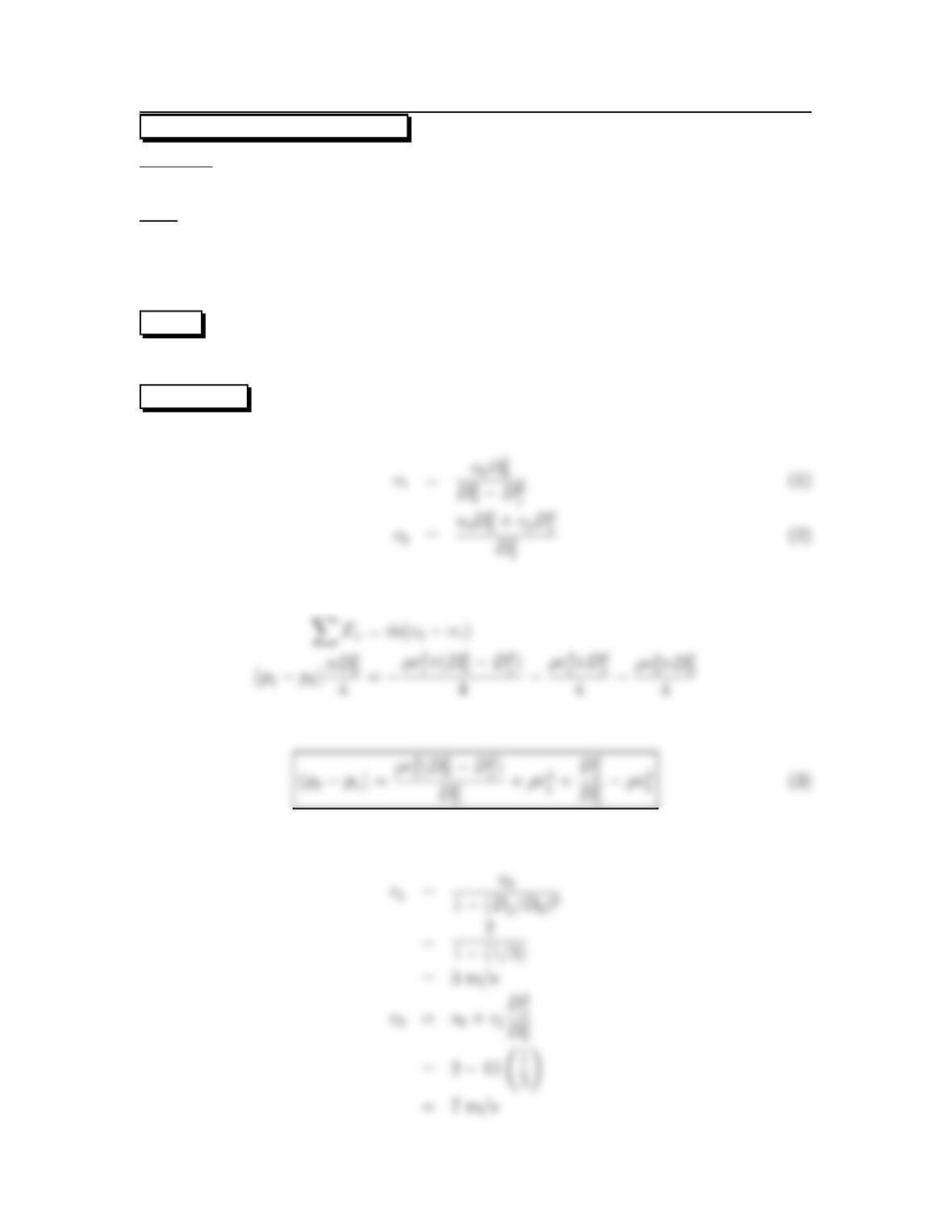
(a) Derive a formula for pressure increase across a jet pump.
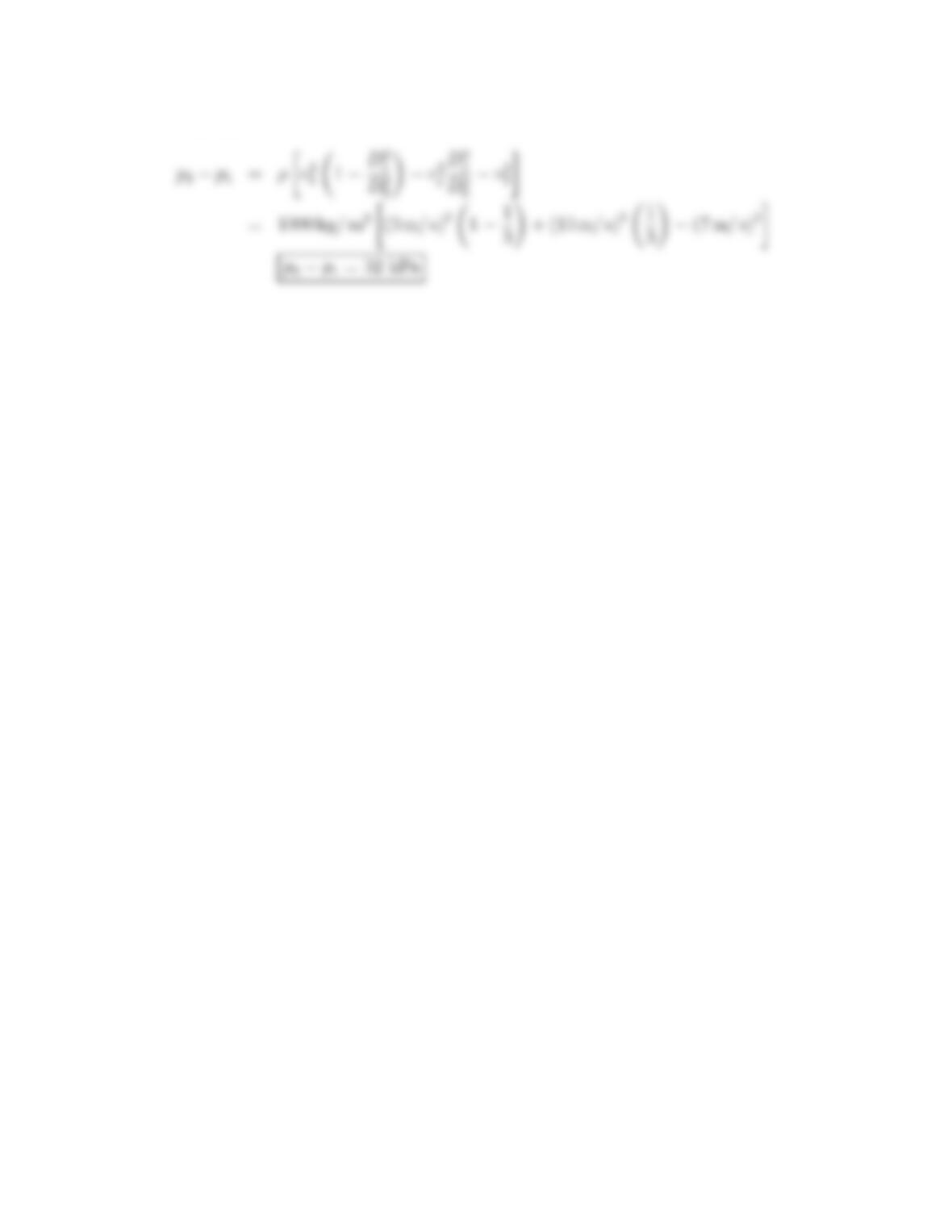
(b) Evaluate the pressure change for water if Aj/Ao=1/3,v
j=15m/s and vo=2
m/s.
PLAN
Apply the continuity equation, then the momentum equation.
SOLUTION
Continuity equation
Momentum equation (x-direction)
thus,
Calculations
117
from Eq. (3)
118
6.82: PROBLEM DEFINITION
Situation:
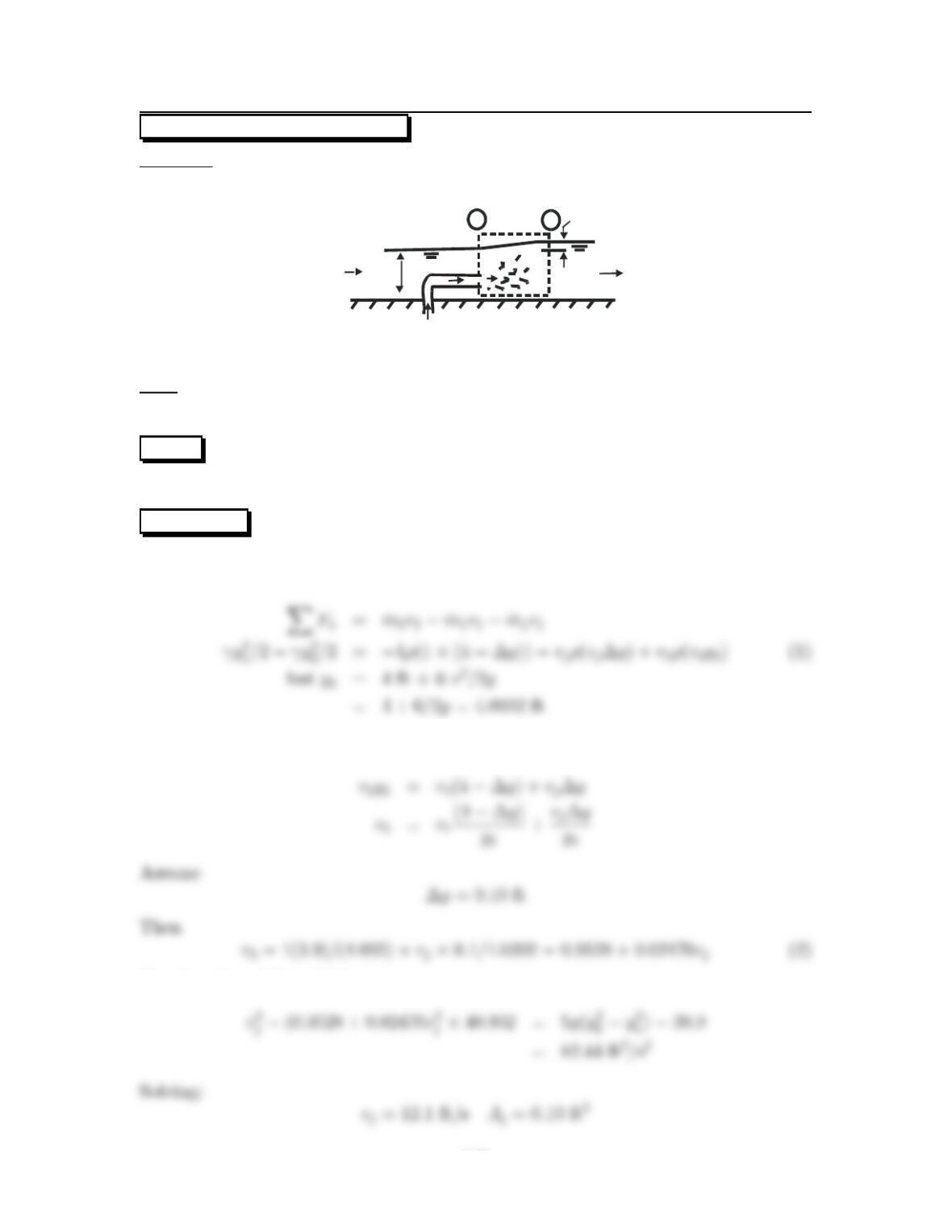
The problem statement describes a jet pump.
26v
/
2g
2
x
v
j
4f
ty
Δ
1
v= 1 ft/s
Find:
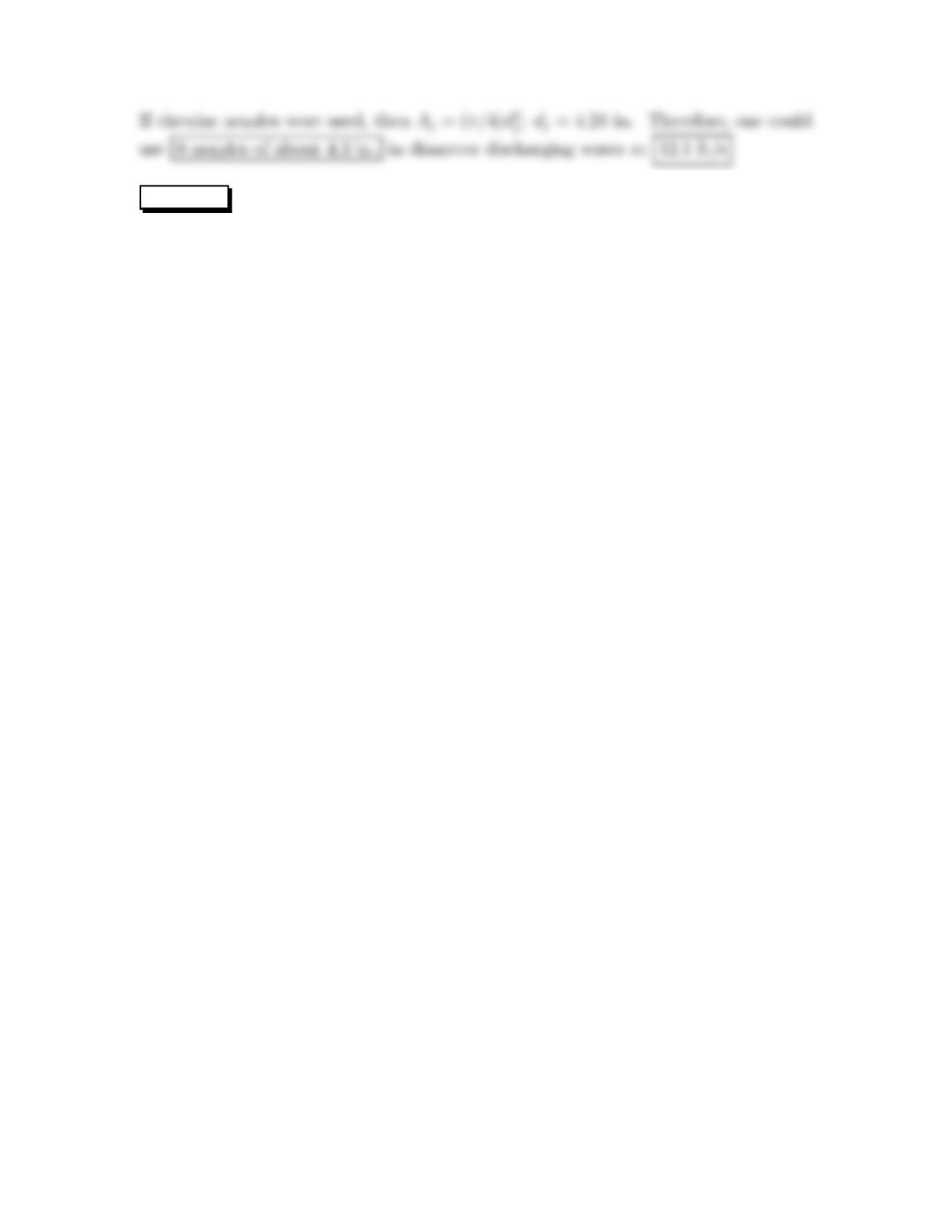
Develop a preliminary design by calculating basic dimensions for a jet pump.
PLAN
Apply the momentum equation, then the continuity equation.
SOLUTION
Momentum equation (x-direction)
Carry out the analysis for a section 1 ft wide (unit width) and neglect bottom friction.
Continuity equation
Combine Eqs. (1) and (2)
119
REVIEW
Like most design problems, this problem has more than one solution. That is, other
combinations of dj,v
jand the number of jets are possible to achieve the desired
result.
120