Problem 6.92
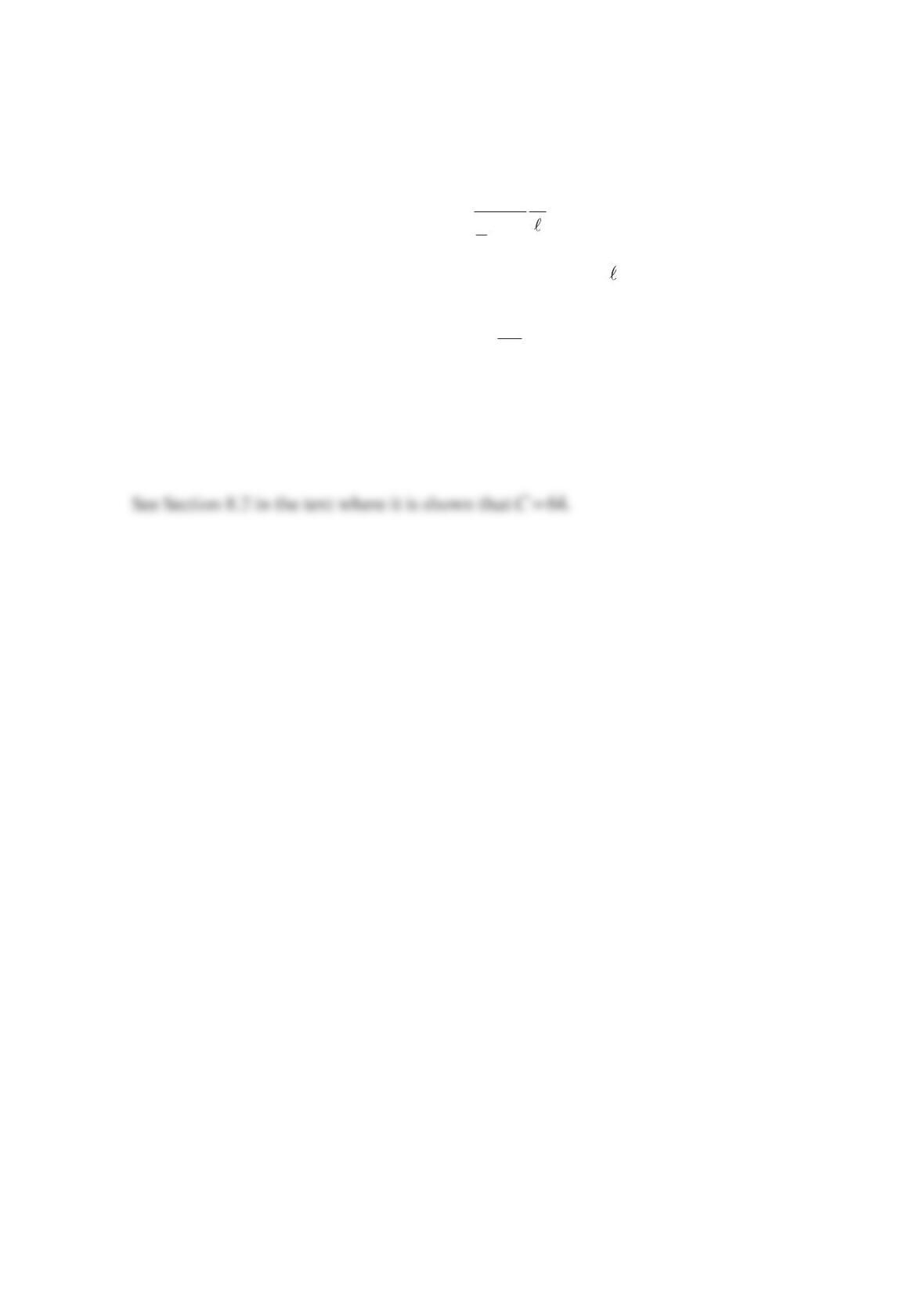
We will see in Chapter 8 that the pressure drop in fully developed pipe flow is sometimes
computed with the aid of a friction factor, defined by
2
1
2
p
D
f
V
ρ
Δ
=
where
V
is the average velocity,
D
is the pipe diameter, and is the length of pipe over
which
p
Δ
occurs. For laminar fully developed flow,
f
can be evaluated from
Re
C
f=
where
C
is a constant and Re is the Reynolds number, given by / .
R
eVD
ρµ
= Find the con-
stant
C
for flow in a circular tube.
Solution 6.92
Problem 6.93
A liquid (viscosity = 2
Ns
0.002 m
⋅; density = 3
kg
1
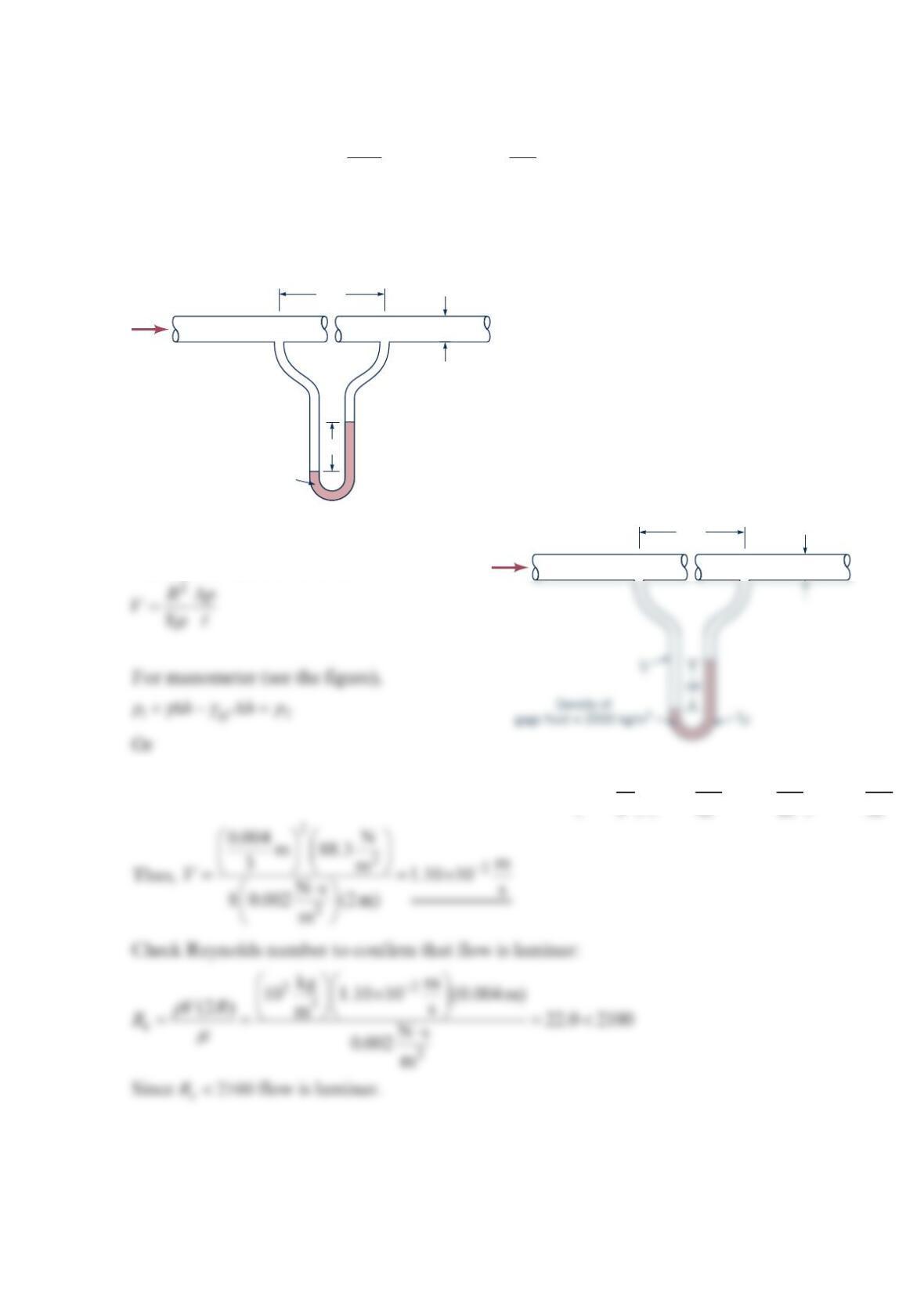
000 m) is forced through the circular tube
shown in the figure below. A differential manometer is connected to the tube as shown to
measure the pressure drop along the tube. When the differential reading, h
Δ
, is
9
m
m
, what
is the mean velocity in the tube?
Solution 6.93
Assume laminar flow so that
γγ ρρ
−=Δ=Δ −=Δ − = − =
12 2332
mkgkg N
( ) ( )( ) (0.009 m) 9.81 2000 1000 88.3
smmm
gf gf f
pp p h hg
2 m 4 mm
Δ
h
Density of
gage fluid = 2000 kg/m
3
2 m
(1) (2)
4 mm
Problem 6.94
Fluid with kinematic viscosity
v
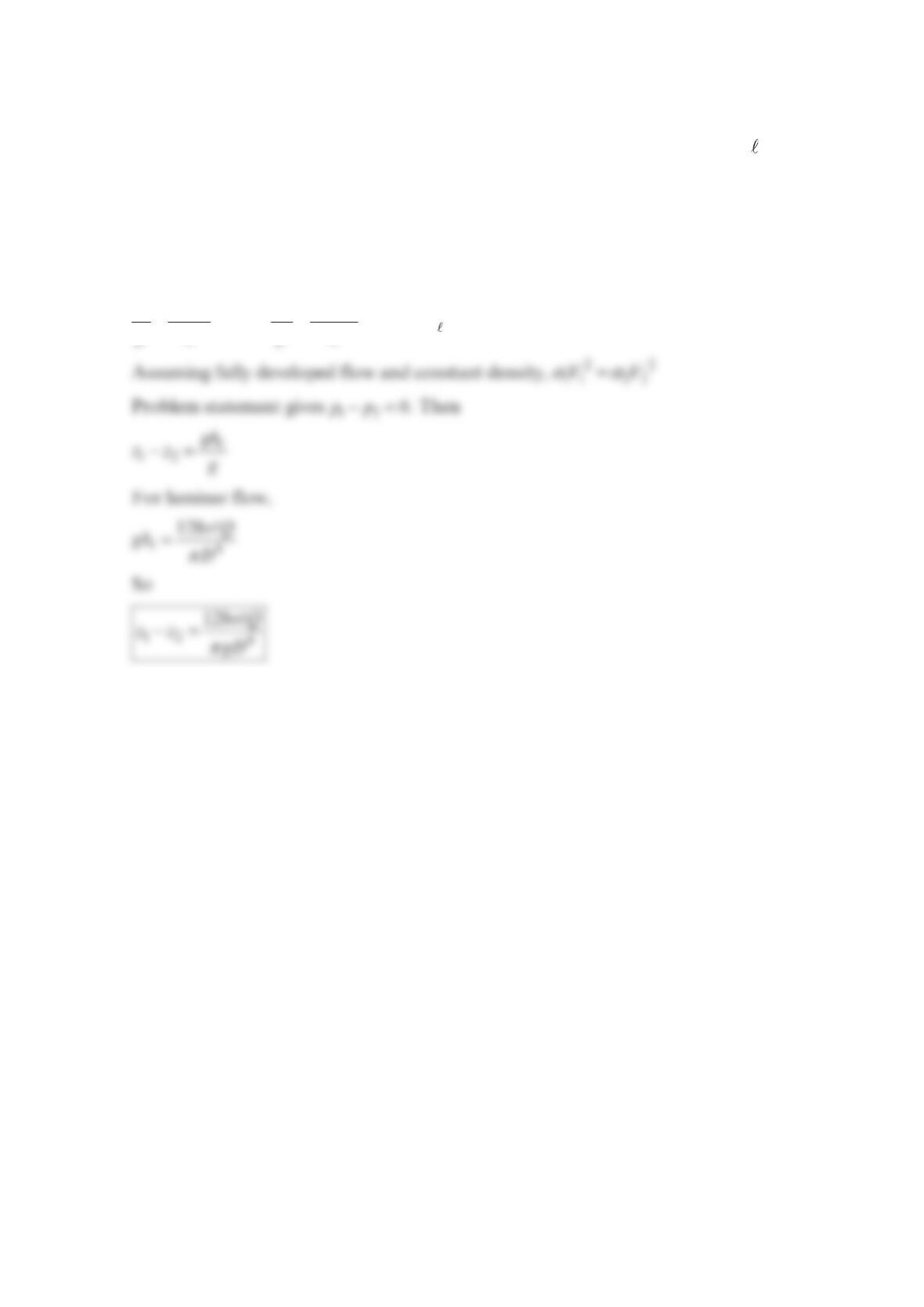
flows down an inclined circular pipe of length and
diameter
D
with flowrate Q. Find the vertical drop per unit length of the pipe so that the
pressure drop ( 12
p
p−) is zero for laminar flow.
Solution 6.94
The mechanical energy equation is written from
1
to
2
to get
22
111 2 22
12
22
pV p V
gz gz gh
αα
ρρ
++=+ ++
p
Problem 6.95
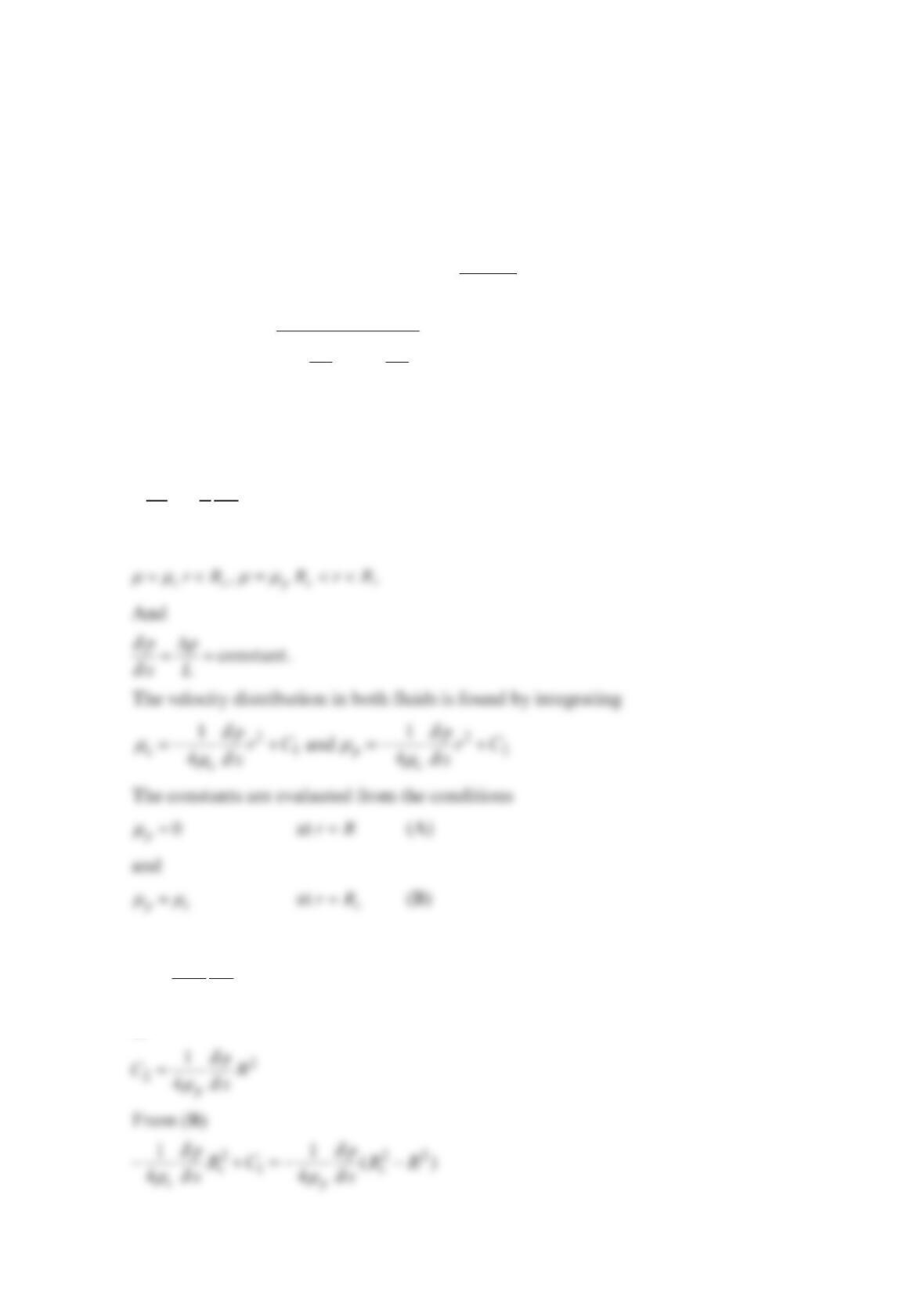
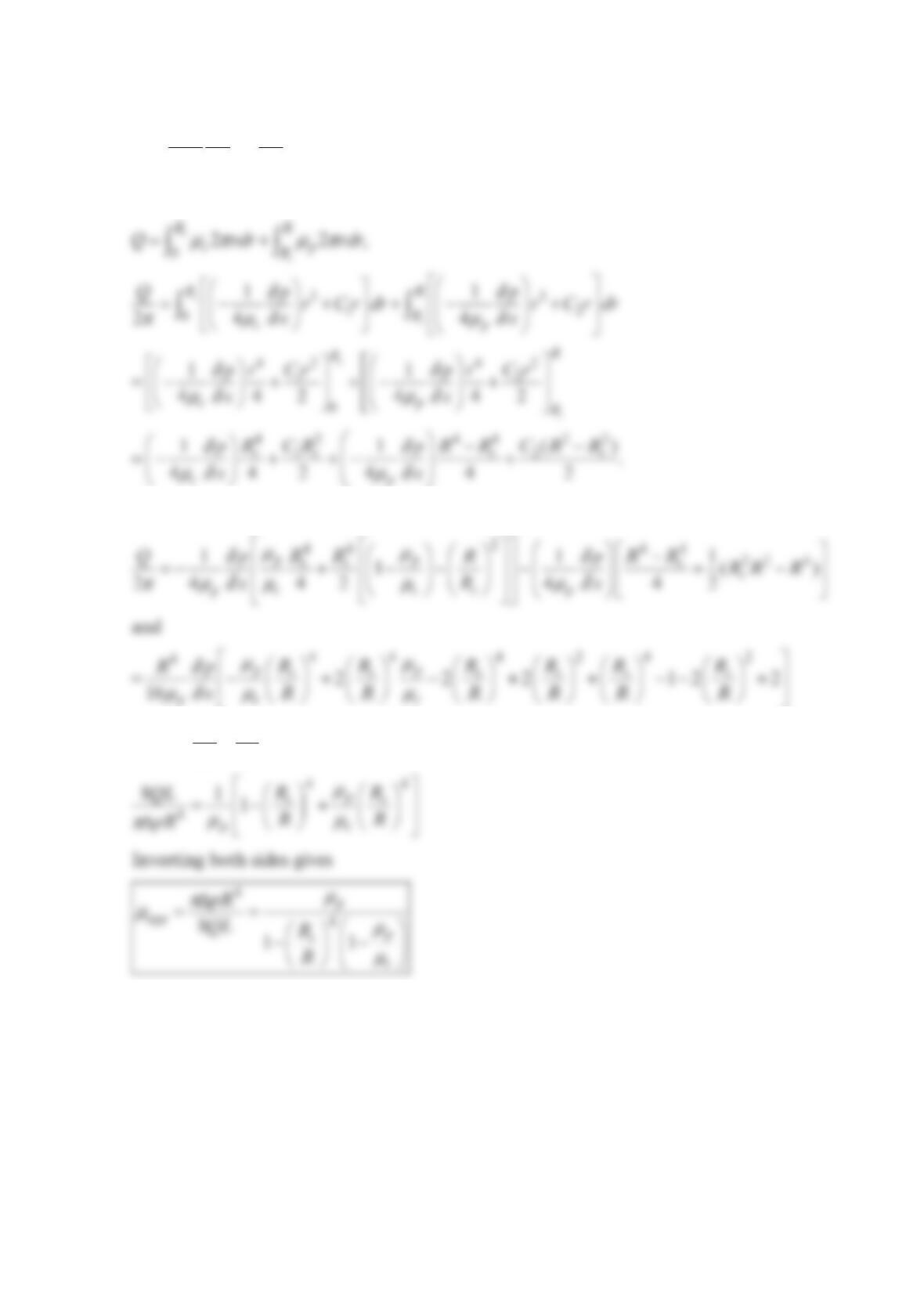
Blood flows at volume rate Q in a circular tube of radius
R
. The blood cells concentrate and
flow near the center of the tube, while the cell-free fluid (plasma) flows in the outer region.
The center core of radius c
R has a viscosity
µ
c, and the plasma has a viscosity
µ
p. Assume
laminar, fully developed flow for both the core and plasma flows and show that an
“apparent” viscosity is defined by
π
µ
Δ
=
4
app 8
Rp
LQ
is given by
µ
µ
µ
µ
=
−−
p
app 4p
c
c
11
R
R
Solution 6.95
We begin with a force balance on a cylindrical fluid element, this gives
2
du r p
dr x
δ
µ
δ
=−
where
From (A)
2
2
1
04p
p
RC
x
δ
µδ
=− +
so
p
so
22
1
11
4
p
c
pc
p
C
RR
x
µ
δ
µδ µ
=−+
.
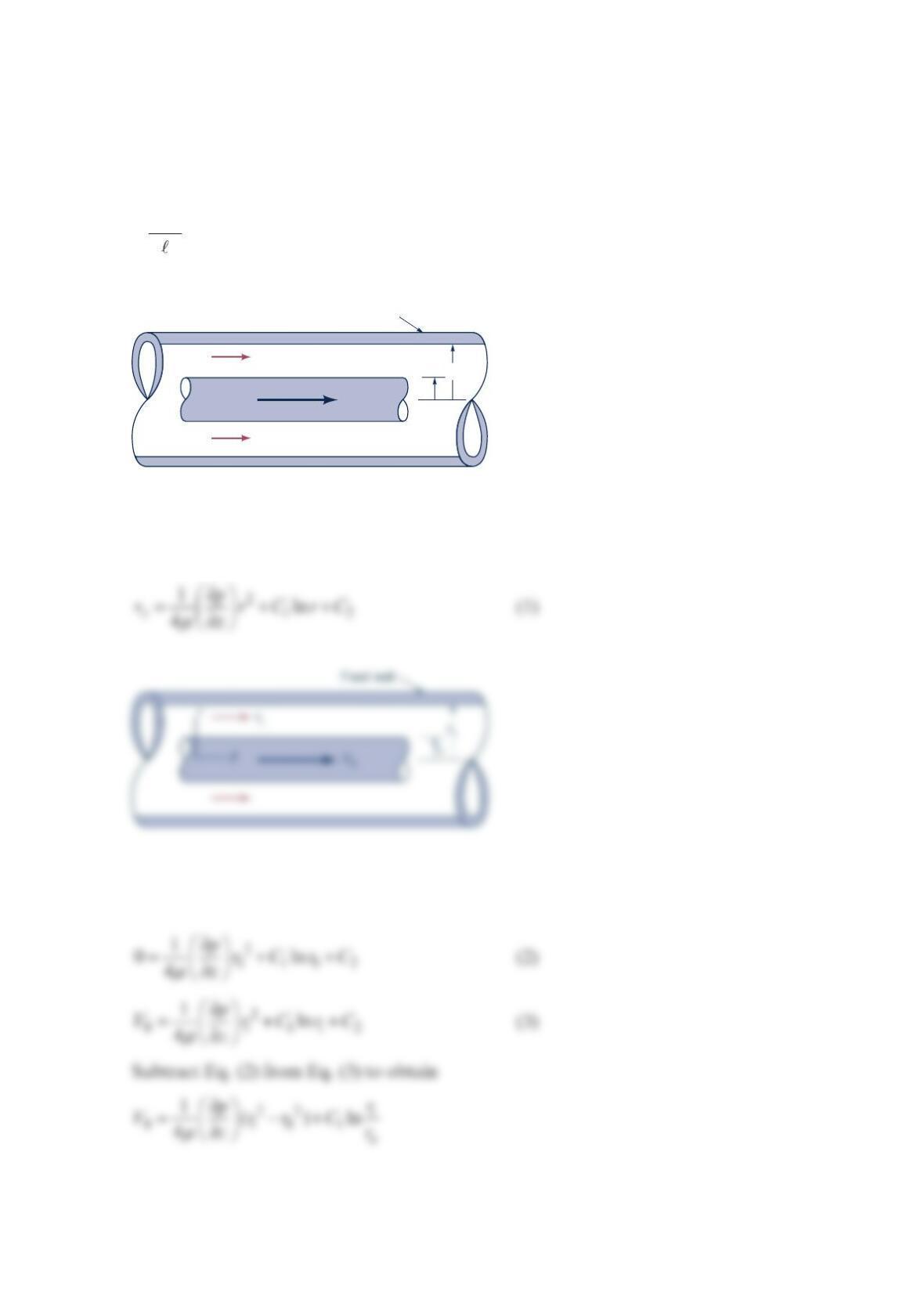
The flowrate is calculated by
Substituting 1
C
and 2
C
gives
Noting
p
p
xL
δ
δ
Δ
=, we can collect terms to get
Problem 6.96
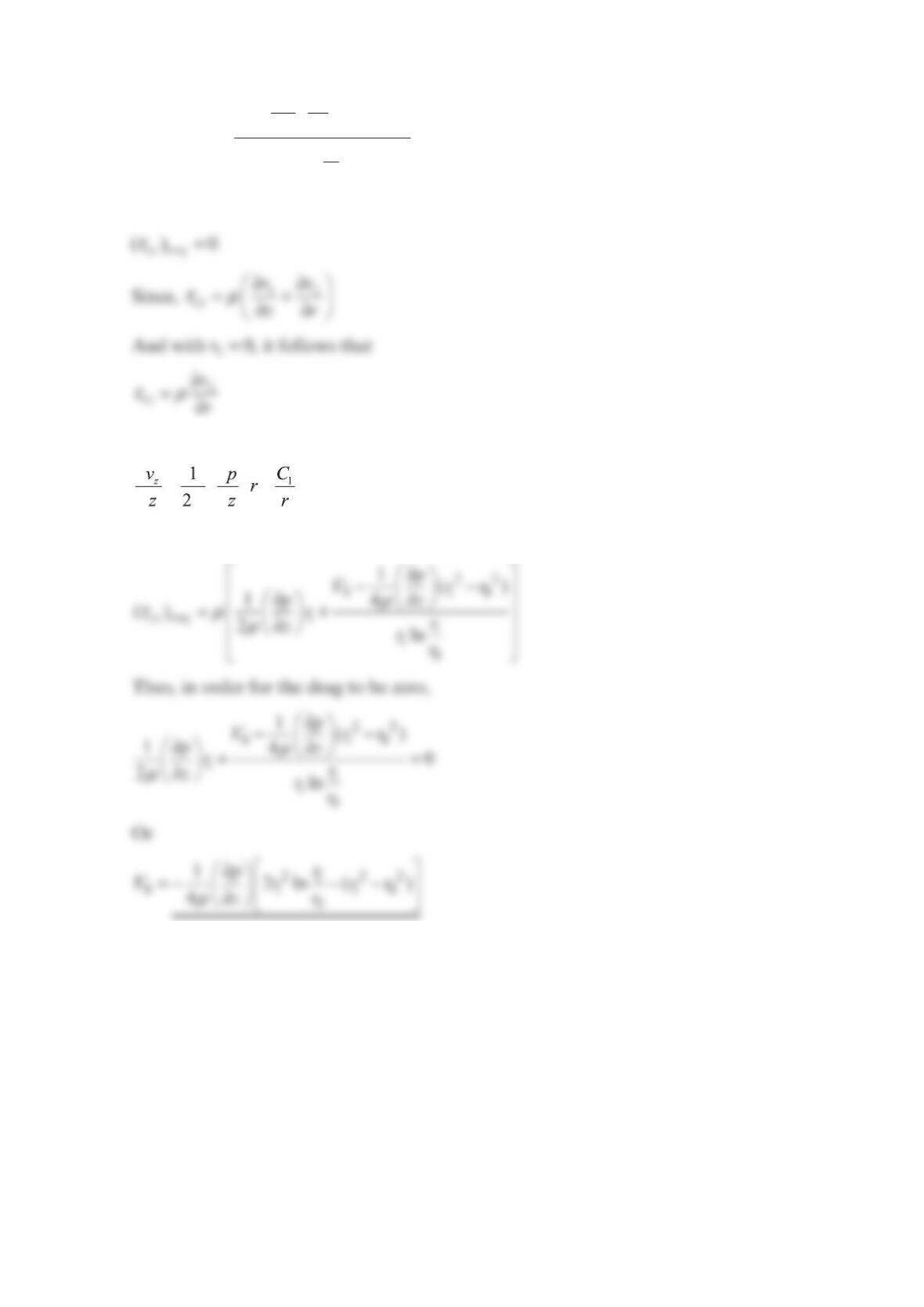
An incompressible Newtonian fluid flows steadily between two infinitely long, concentric
cylinders as shown in the figure below. The outer cylinder is fixed, but the inner cylinder
moves with a longitudinal velocity 0
V as shown. The pressure gradient in the axial direction
is −Δ
p
. For what value of 0
V will the drag on the inner cylinder be zero? Assume that the
flow is laminar, axisymmetric, and fully developed.
Solution 6.96
The equation below for flow in circular tubes applies in the annular region. Thus,
With boundary conditions, =0
rr
, =0
z
v, and =i
rr
, =0z
vV
,
it follows that:
V
0
Fixed wall
r
i
r
o
So that
µ
∂
−−
∂
=
22
00
1
0
1()
4
ln
i
i
p
Vrr
z
Cr
r
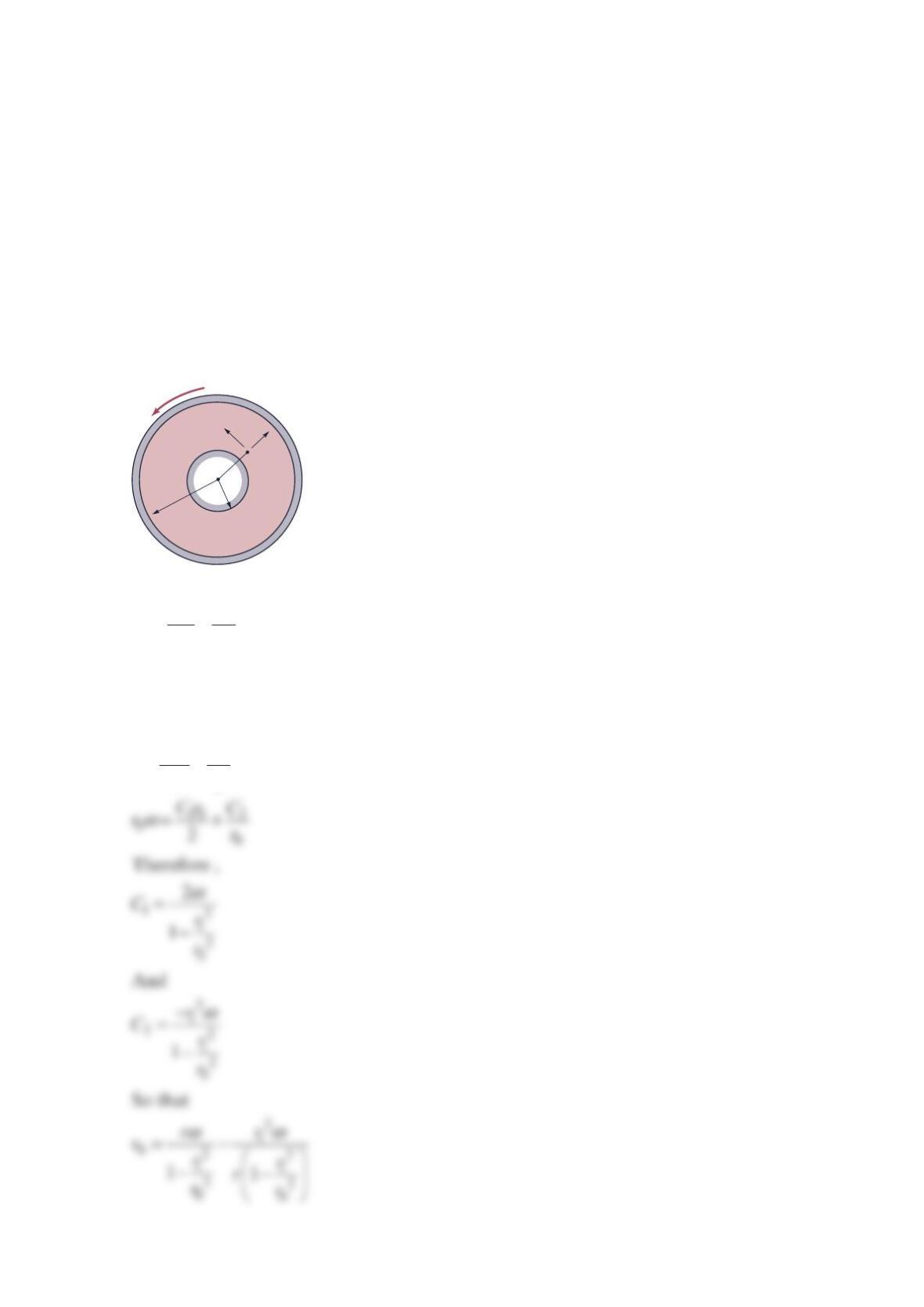
The drag on the inner cylinder will be zero if
Differentiate Eq. (1) with respect to r to obtain
µ
∂∂
=+
∂∂
So that at =i
rr
Problem 6.97
A viscous fluid is contained between two infinitely long, vertical, concentric cylinders. The
outer cylinder has a radius o
r and rotates with an angular velocity
ω
.The inner cylinder is
fixed and has a radius i
r. Make use of the Navier–Stokes equations to obtain an exact
solution for the velocity distribution in the gap. Assume that the flow in the gap is axisym-
metric (neither velocity nor pressure are functions of angular position
θ
within the gap) and
that there are no velocity components other than the tangential component. The only body
force is the weight.
Solution 6.97
The velocity distribution in the annular space is given by the equation
θ
=+
12
2
Cr C
v
r (1)
With the boundary conditions =i
rr
,
θ
=0v, and 0
rr=, 0
vr
θ
ω
= (see the figure above), it fol-
lows
From Eq. (1) that :
12
02
i
i
Cr C
r
=+
ω
ri
r0
r
vr = 0
v
θ

Or
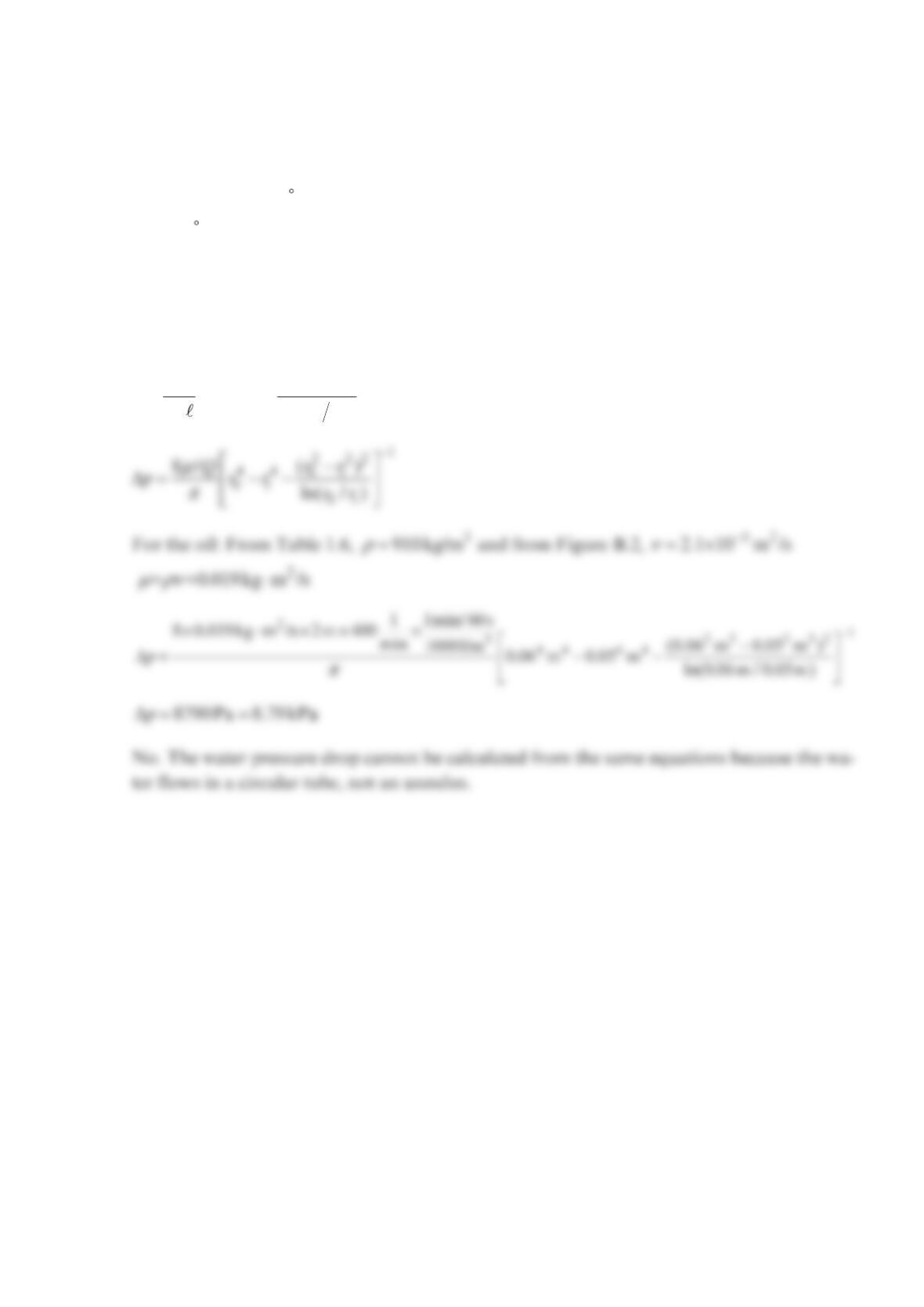
Problem 6.98
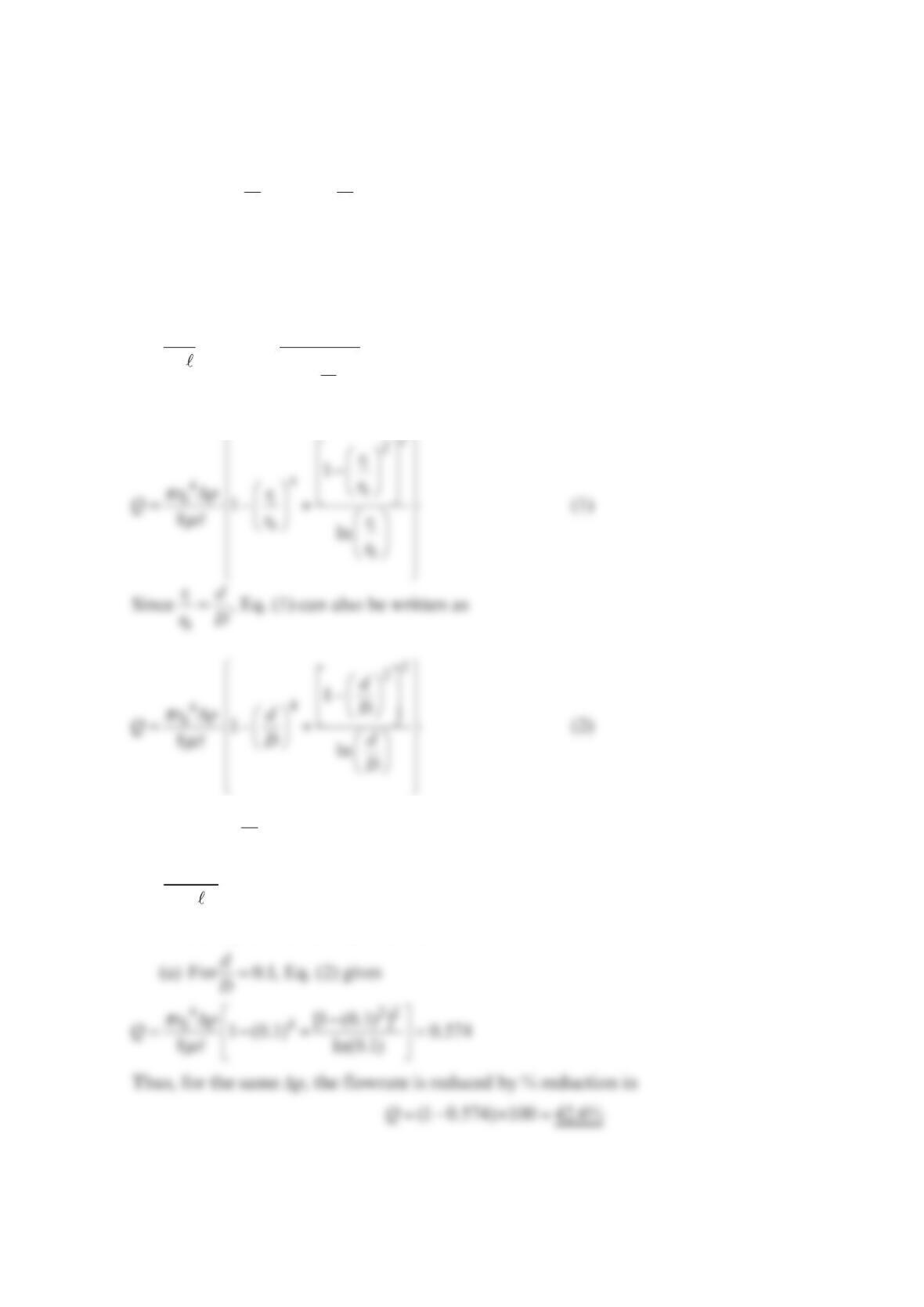
A double-pipe heat exchanger consists of two concentric tubes with one fluid flowing in the
central tube and the other flowing in the annulus between the tubes. In a particular
exchanger, cold (15 C) water flows at 300 l/min through a 10-cm diameter inner tube and
hot (50 C) SAE 30 oil flows at 400 l/min in the annulus between the inner tube and a
12-cm diameter outer tube. The heat exchanger is 2m in length. (a) Calculate the pressure
drop in the oil stream. (b) Can you calculate the pressure drop in the water using the same
equations? Why or why not?
Solution 6.98
222
44 0
0
0
()
8ln()
i
i
i
rr
p
Qrr
rr
π
µ
−
Δ
=−−
Problem 6.99
A wire of diameter
d
is stretched along the centerline of a pipe of diameter
D
. For a given
pressure drop per unit length of pipe, by how much does the presence of the wire reduce the
flowrate if (a) =0.1
d
D; (b) =0.01
d
D?
Solution 6.99
The volume flowrate is given by the equation
222
44 0
0
0
()
8ln
i
i
i
rr
p
Qrr r
r
π
µ
−
Δ
=−−
which can be written as
Note that for =0
d
D (no wire)
4
0
8
rp
Q
π
µ
Δ
=
which corresponds to Poiseuille’s Law.
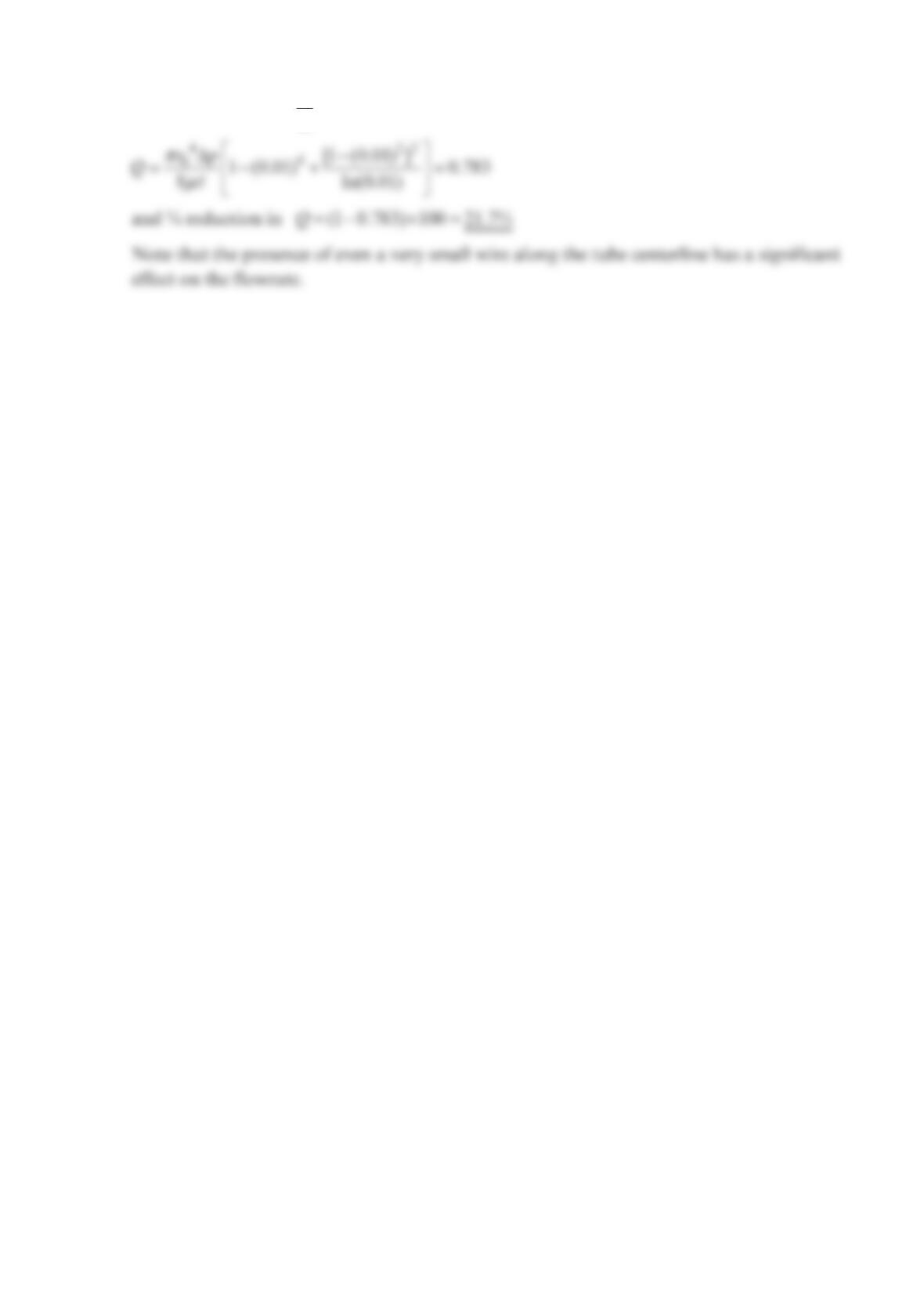
(b) Similarly, for =0.01
d
D, Eq. (2) gives

Problem 6.100
Look through several professional society magazines such as Civil Engineering, Mechanical
Engineering, or ASEE Prism. Count the advertisements for CFD software and calculate an
“ad density” in advertisements per issue.
Solution 6.100

Problem 6.101
Consider the Navier–Stokes equations as written in Eq. (6.158). Write the physical meaning
of each term in the equation; for example, “The term
ρ
g is the gravity force (or weight) per
unit volume.”
Solution 6.101

Problem 6.102
Find out what CFD software packages your college or university has. How many “seats” of
each? How much does your institution spend annually on CFD software?
Solution 6.102