Chap. 5 Performance Requirements
5.1 The second paragraph of this chapter argues that a retail building that is damaged during an
earthquake and must be demolished may not constitute a failure. Do you agree with this
assessment? Defend your position.
Solution
There is no right or wrong answer to this question.
The International Building Code specifies different occupancy categories [Chapter 3] and
assigns risk categories to structures [1604.5] based on occupancy categories and building
Chap. 5 Performance Requirements
5.2 Why would the AASHTO separate structural dead load from wearing surface dead loads and use
different load factors for each, whereas ASCE-7 has only one category for dead loads?.
Solution
The operation of a bridge is very different front that of a building. Weight of the bridge
Chap. 5 Performance Requirements
5.3 A proposed column has the following design loads:
Axial load: PD = 200 k, PL = 170 k, PE = 50 k, PW = 60 k (all compression)
Shear load: PD = 0, PL = 0, PE = 40 k, PW = 48 k
Compute the design axial and shear loads for foundation design using ASD.
Solution
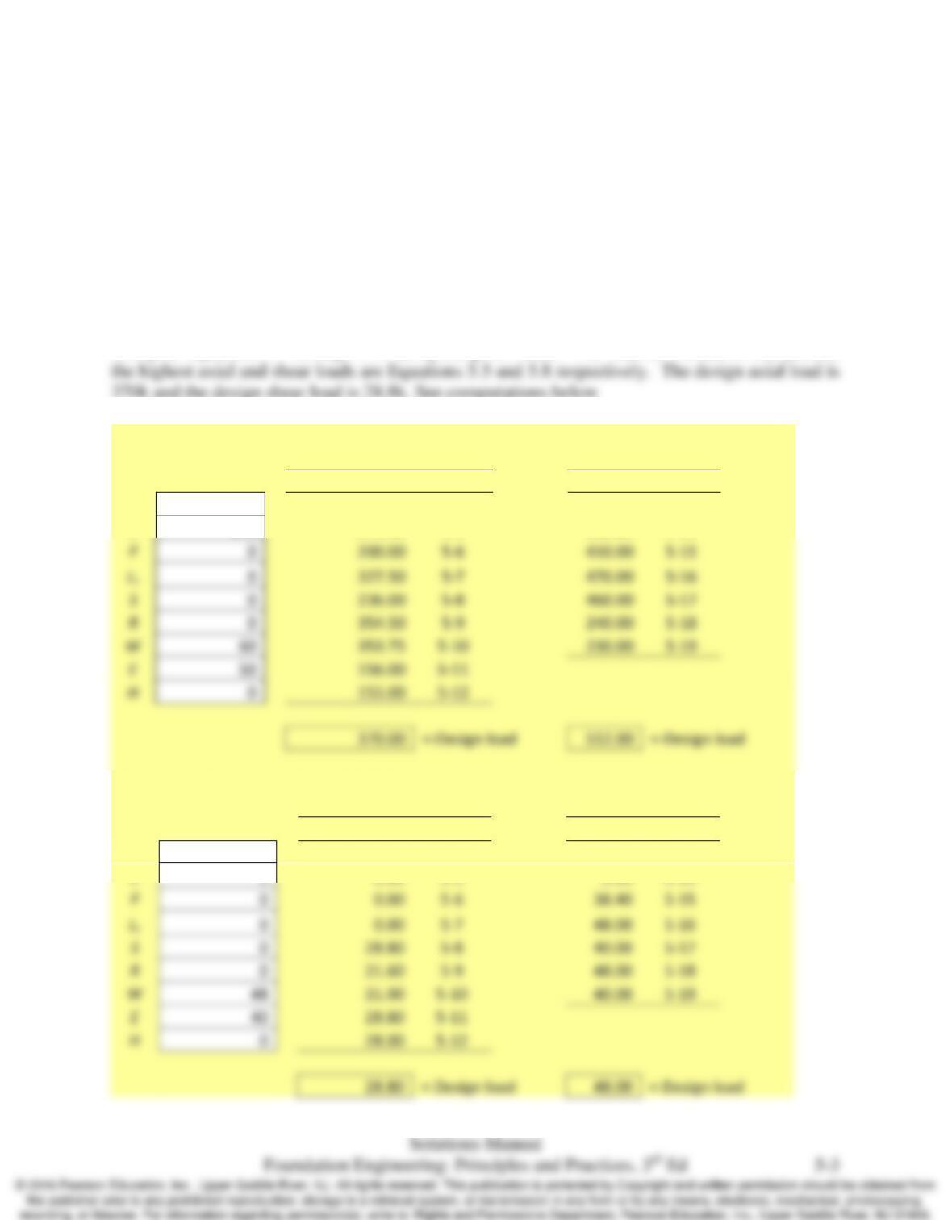
Compute Equations 5.4 through 5.12 using the given loads. The load combinations that yielded
370k and the design shear load is 28.8k. See computations below
Axial Load Combinations From ASCE-7
ASD
LRFD
Axial Loads
Value
Equation
Value
Equation
D
200
200.00
5-4
280.00
5-13
L
170
370.00
5-5
512.00
5-14
F
200.00
5-6
410.00
5-15
327.50
5-7
470.00
5-16
S
236.00
5-8
460.00
5-17
R
354.50
5-9
240.00
5-18
353.75
5-10
230.00
5-19
E
156.00
5-11
H
155.00
5-12
370.00
Shear Load Combinations From ASCE-7
ASD
LRFD
Shear Loads
Value
Equation
Value
Equation
D
0
0.00
5-4
0.00
5-13
L
0
0.00
5-5
0.00
5-14
F
0
0.00
5-6
5-15
0
0.00
5-7
5-16
S
0
5-8
5-17
0
5-9
5-18
5-10
5-19
5-11
H
0
5-12
Chap. 5 Performance Requirements
5.4 Repeat Problem 5.3 using LRFD with the ACI load factors
Solution
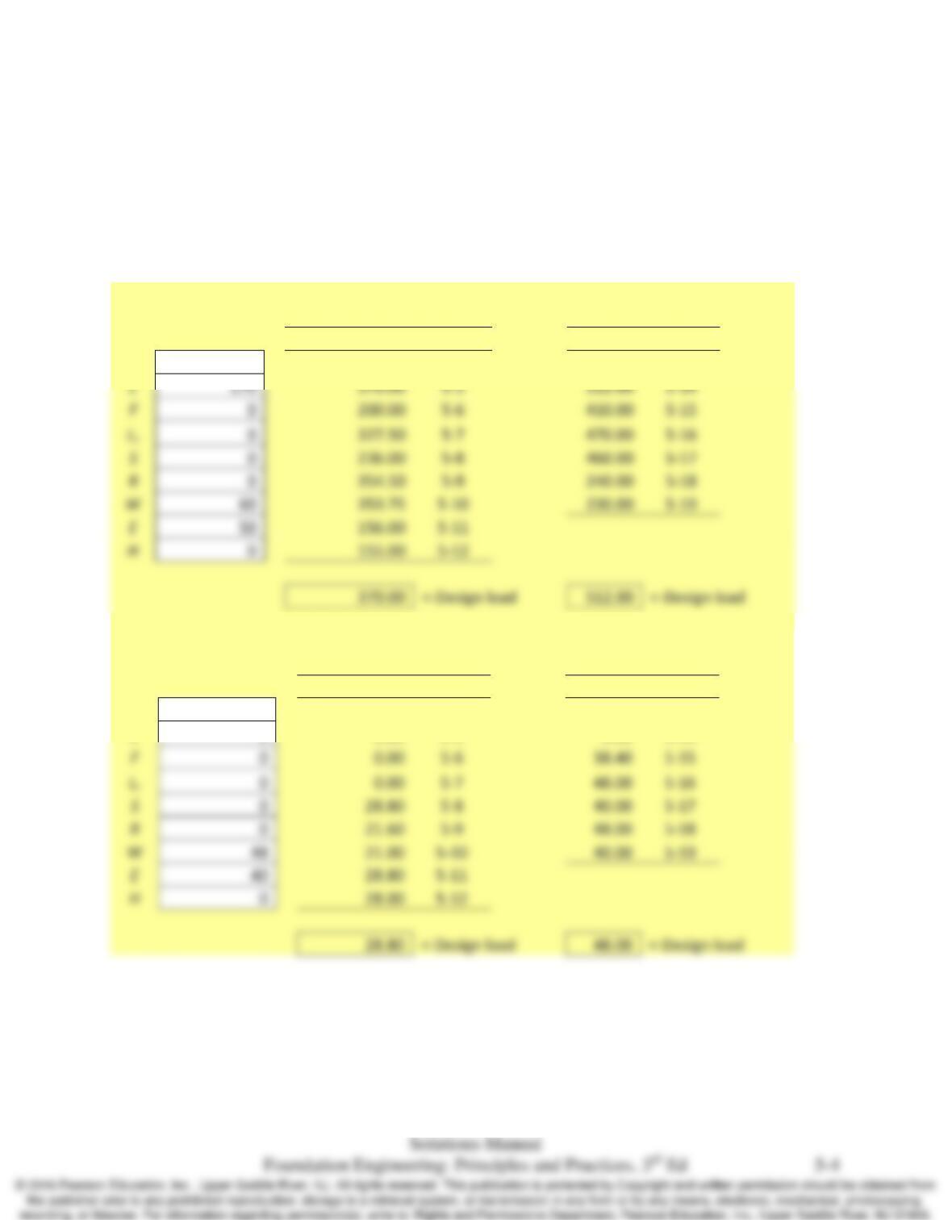
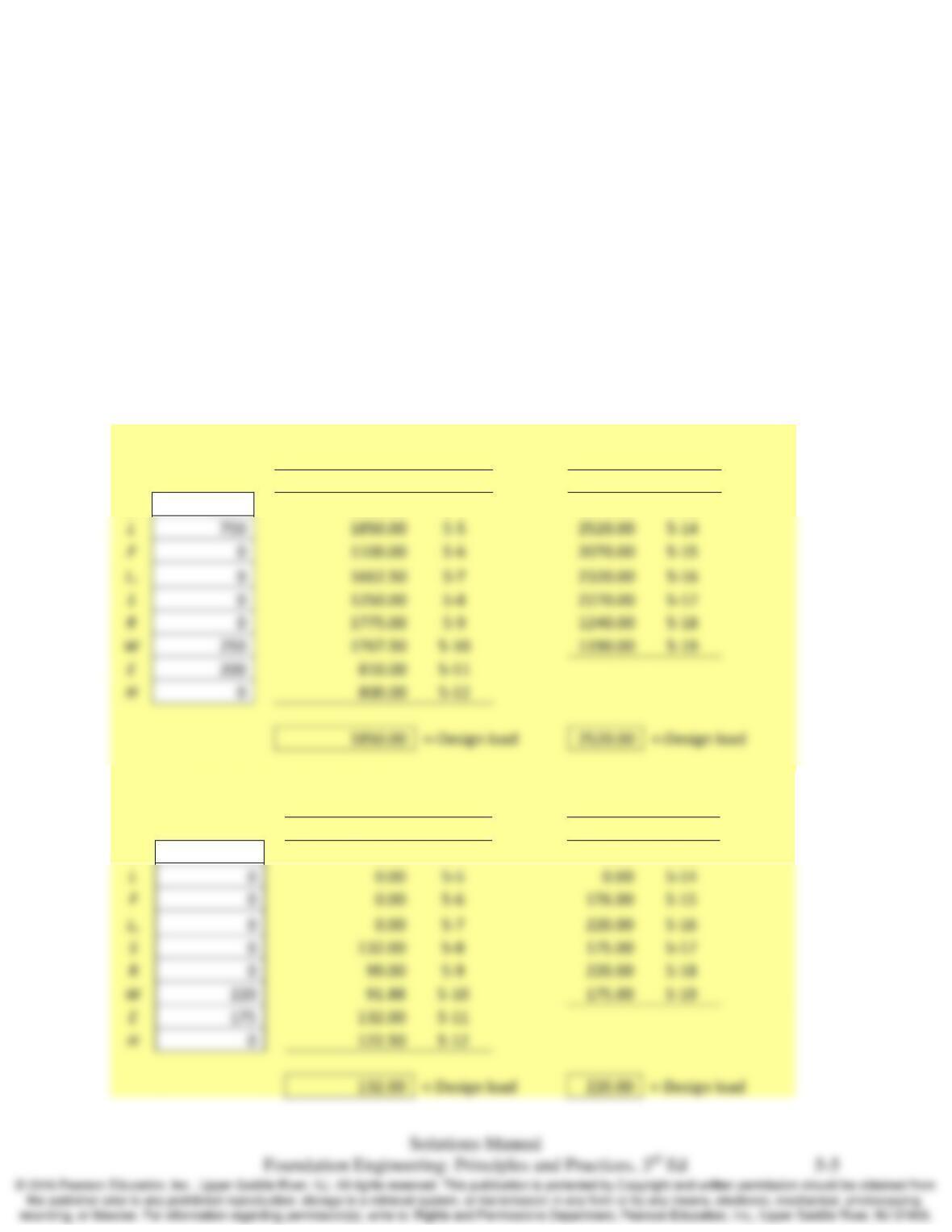
Compute Equations 5.13 through 5.19 using the given loads. The load combinations that yielded
the highest axial and shear loads are Equations 5.14 and 5.16 respectively. The design axial load
is 512k and the design shear load is 48k. See computations below.
Axial Load Combinations From ASCE-7
ASD
LRFD
Axial Loads
Value
Equation
Value
Equation
D
200
200.00
5-4
280.00
5-13
Shear Load Combinations From ASCE-7
ASD
LRFD
Shear Loads
Value
Equation
Value
Equation
D
0
0.00
5-4
0.00
5-13
L
0
0.00
5-5
0.00
5-14
0
0.00
5-6
5-15
0
0.00
5-7
5-16
0
5-8
5-17
0
5-9
5-18
5-10
5-19
5-11
0
5-12
L
5-5
5-14
200.00
5-6
410.00
5-15
327.50
5-7
470.00
5-16
236.00
5-8
460.00
5-17
R
354.50
5-9
240.00
5-18
353.75
5-10
230.00
5-19
5-11
H
155.00
5-12
370.00
Chap. 5 Performance Requirements
5.5 A proposed column has the following design loads:
Axial load: PD = 1100 kN, PL = 750 kN, PE = 200 kN, PW = 250 kN (all
compression)
Shear load: PD = 0, PL = 0, PE = 175 k, PW = 220 k
Compute the design axial and shear loads for foundation design using ASD:
Solution
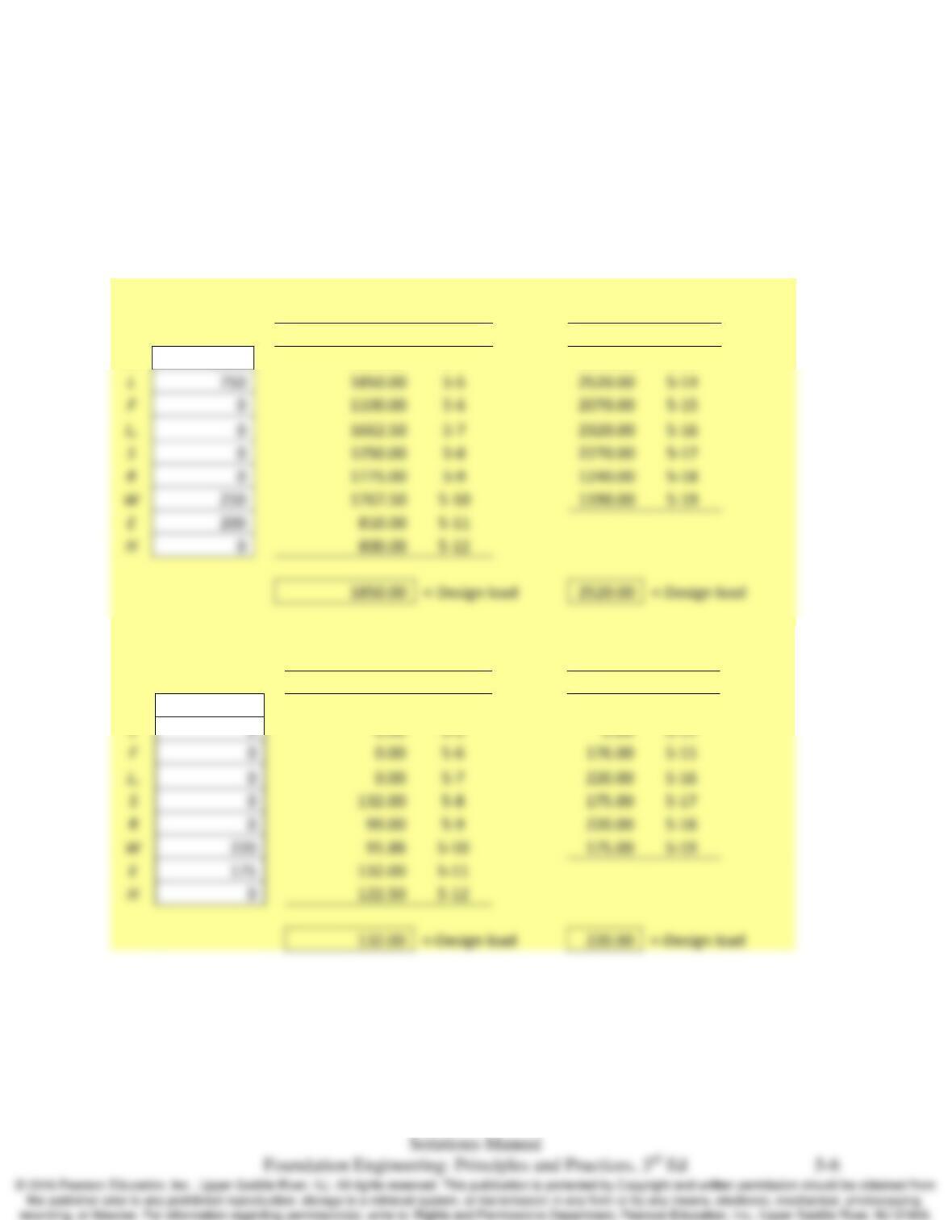
Compute Equations 5.4 through 5.12 using the given loads. The load combinations that yielded
the highest axial and shear loads are Equations 5.5 and 5.8 respectively. The design axial load is
1,850 kN and the design shear load is 132 kN. See computations below.
Axial Load Combinations From ASCE-7
ASD
LRFD
Axial Loads
Value
Equation
Value
Equation
D
1100
1100.00
5-4
1540.00
5-13
Shear Load Combinations From ASCE-7
ASD
LRFD
Shear Loads
Value
Equation
Value
Equation
D
0
0.00
5-4
0.00
5-13
0
0.00
5-5
0.00
5-14
0
0.00
5-6
5-15
0
0.00
5-7
5-16
0
5-8
5-17
R
0
5-9
5-18
W
5-10
5-19
E
5-11
H
0
5-12
1100.00
5-6
2070.00
5-15
1662.50
5-7
2320.00
5-16
S
1250.00
5-8
2270.00
5-17
1775.00
5-9
1240.00
5-18
1767.50
5-10
1190.00
5-19
5-11
H
5-12
1850.00
2520.00
Chap. 5 Performance Requirements
5.6 Repeat Problem 5.5 using LRFD with the ACI load factors:
Solution
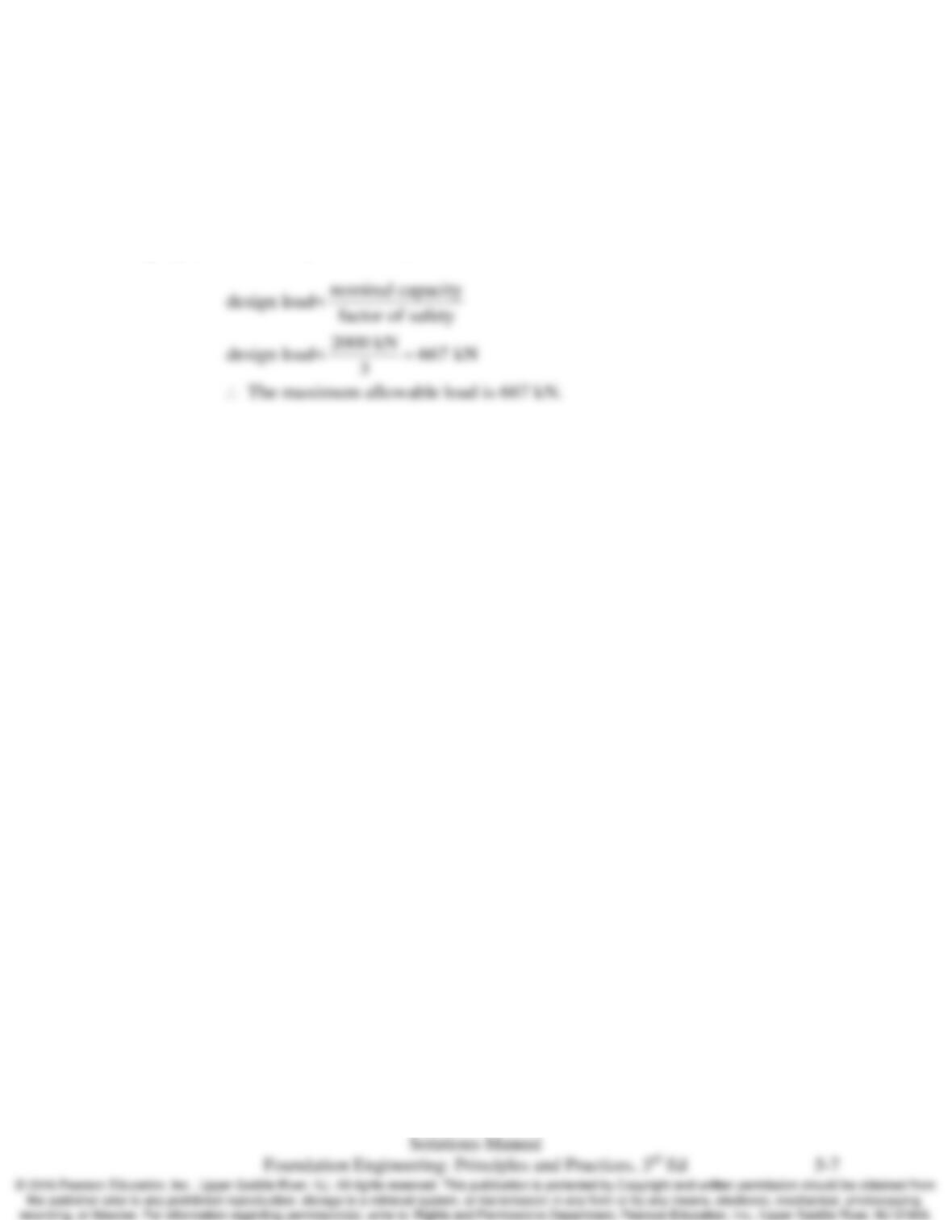
Compute Equations 5.13 through 5.19 using the given loads. The load combinations that yielded
the highest axial and shear loads are Equations 5.14 and 5.16 respectively. The design axial load
is 2,520 kN and the design shear load is 220 kN. See computations below.
Axial Load Combinations From ASCE-7
ASD
LRFD
Axial Loads
Value
Equation
Value
Equation
D
1100
1100.00
5-4
1540.00
5-13
Shear Load Combinations From ASCE-7
ASD
LRFD
Shear Loads
Value
Equation
Value
Equation
D
0
0.00
5-4
0.00
5-13
5-5
5-14
5-6
5-15
5-7
5-16
5-8
5-17
5-9
5-18
5-10
5-19
5-11
5-12
L
5-5
5-14
1100.00
5-6
2070.00
5-15
1662.50
5-7
2320.00
5-16
1250.00
5-8
2270.00
5-17
1775.00
5-9
1240.00
5-18
1767.50
5-10
1190.00
5-19
5-11
H
5-12
1850.00
2520.00
Chap. 5 Performance Requirements
5.7 A certain foundation will experience a bearing capacity failure when it is subjected to a
downward load of 2200 kN. Using ASD with a factor of safety of 3, determine the maximum
allowable load that will satisfy geotechnical ULS requirements.
Solution
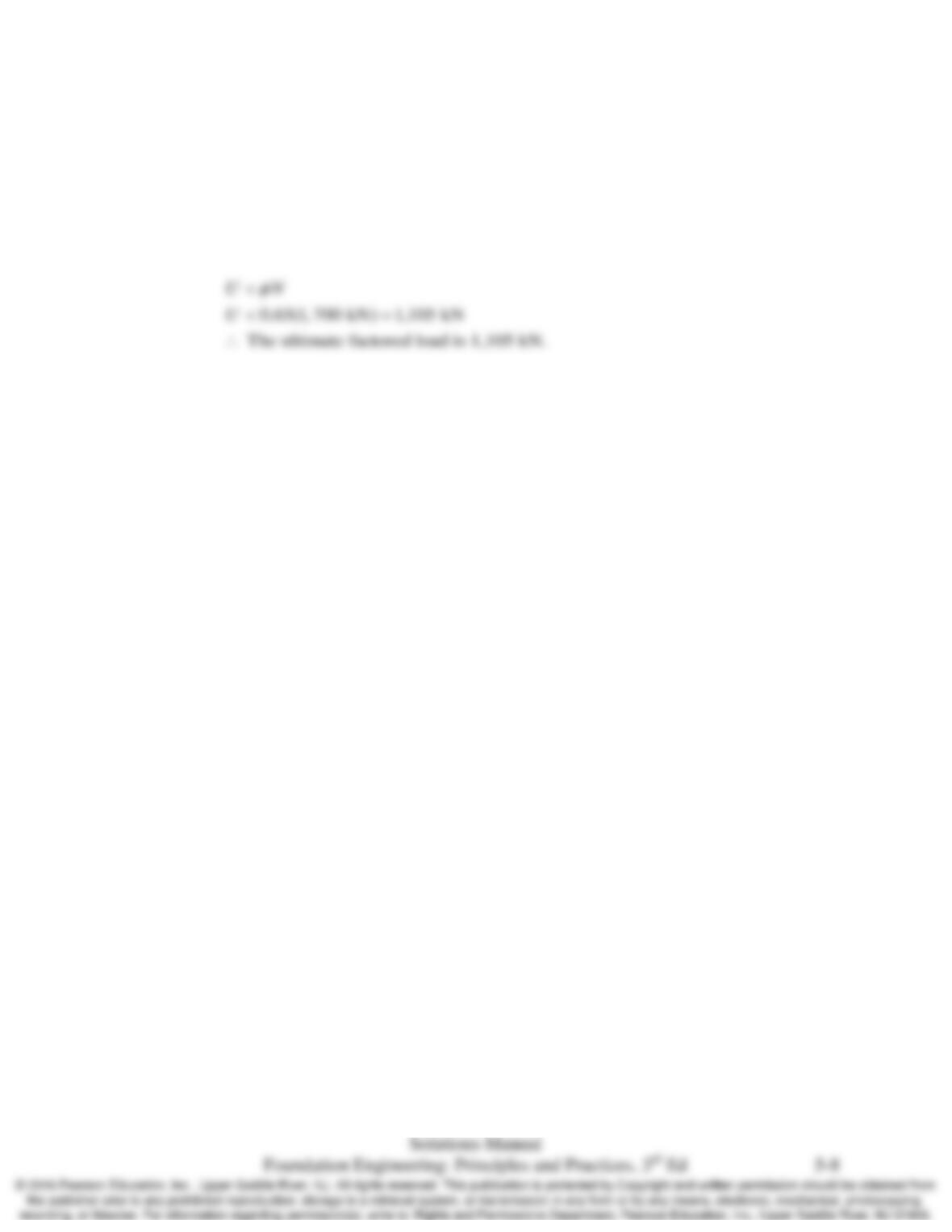
Using Equations 5.1, compute maximum allowable load
Chap. 5 Performance Requirements
5.8 A bridge foundation has a nominal load capacity of 1700 kN. If the resistance factor for this
foundation is 0.65, what is the ultimate factored load this foundation can carry using the LRFD
method?
Solution
Using Equation 5.3, compute the ultimate factored load
Chap. 5 Performance Requirements
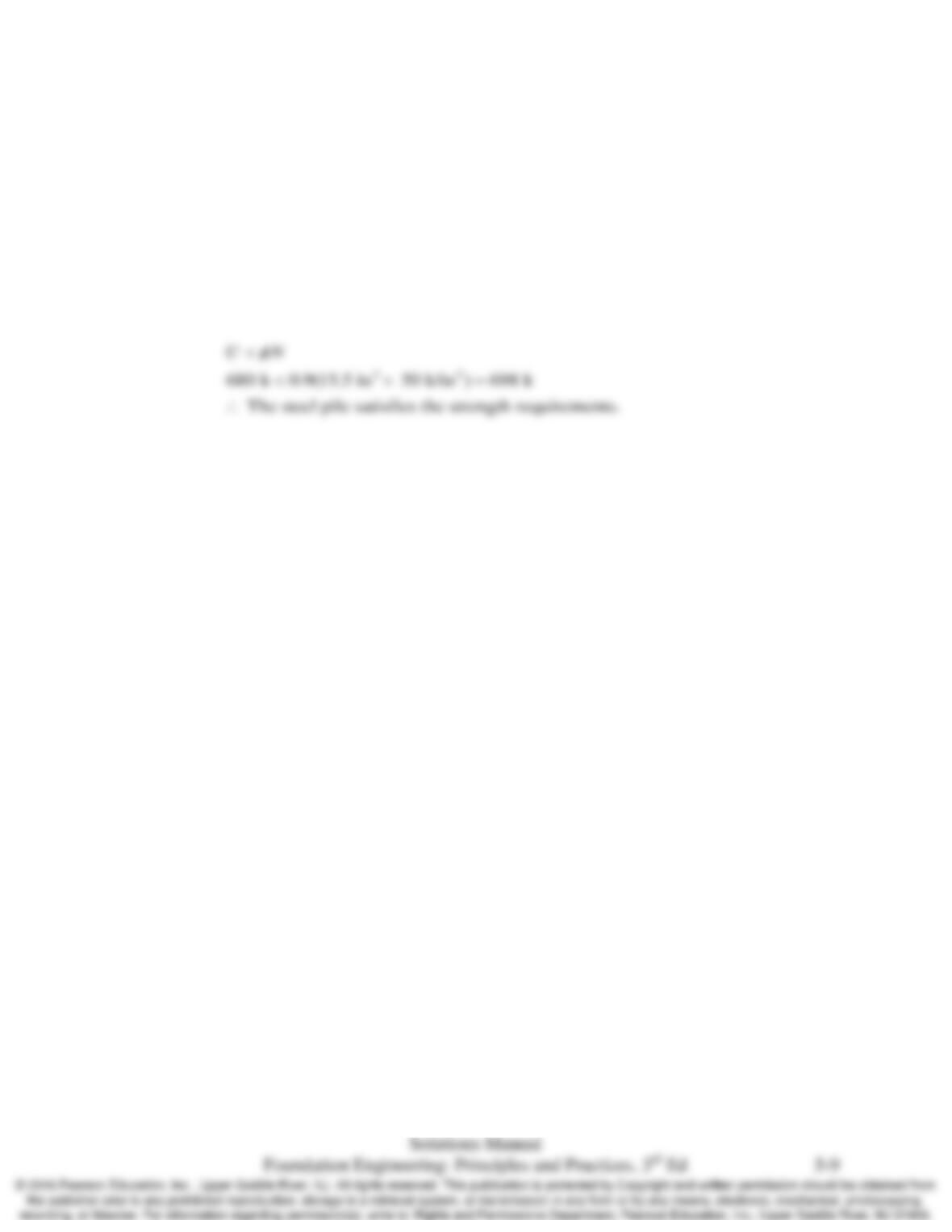
5.9 A steel pile foundation with a cross-sectional area of 15.5 in2 and fy = 50 k/in2 is to carry axial
compressive dead and live loads, of 300 and 200 k, respectively. Using LRFD with the ASCE
load factors and a resistance factor of 0.90, determine whether this pile satisfies structural
strength requirements for axial compression:
Solution
Equation 5.14 provided the highest load combination, thus the unfactored load is 680 k. Use
equation 5.3 to determine whether this pile satisfies the strength requirements for axial
compressions
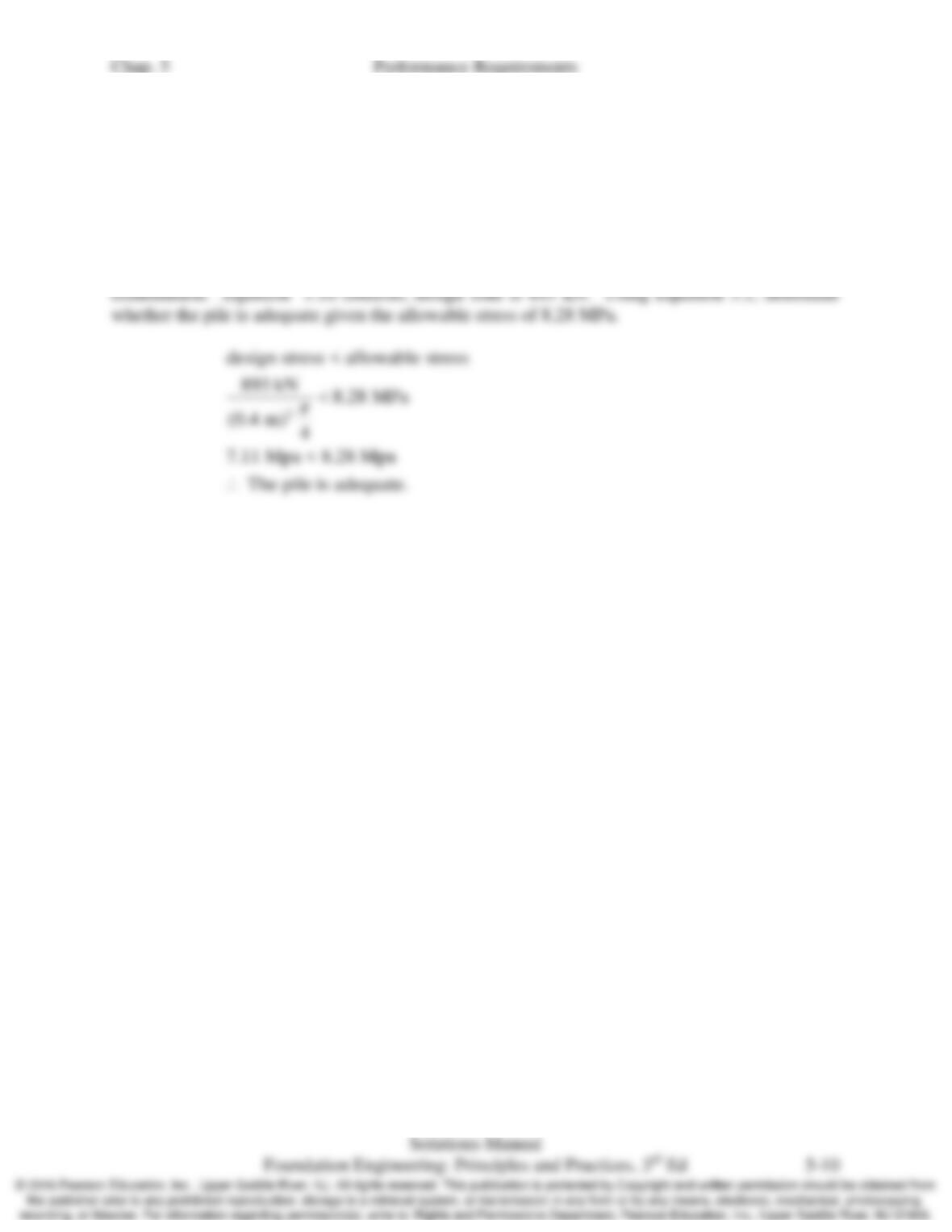
5.10 A timber pile 400 mm in diameter is subject to the following axial compressive loads: dead 600
kN, live 250 kN, earthquake 200kN. If the allowable compressive stress in the pile using ASD
methods is 8.28 MPa, is this pile adequate?
Solution
Compute Equations 5.4 through 5.12 using the given loads to determine the controlling load
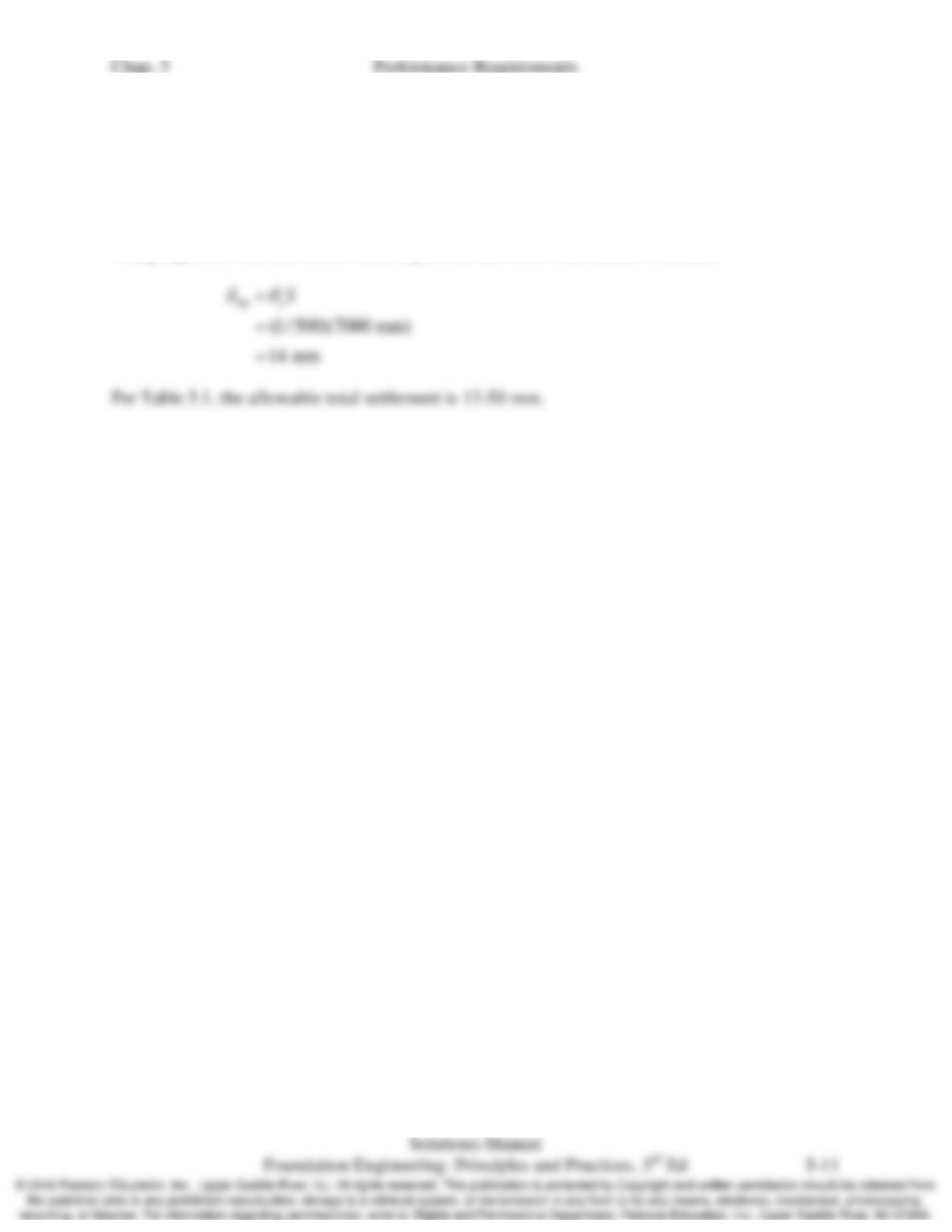
5.11 A seven–story steel–frame office building will have columns spaced 7 m on center and will have
typical interior and exterior finishes. Compute the allowable total and differential settlements for
this building.
Solution
Using Equation 5.22 and Table 5.2, compute the allowable differential settlement