5.103: PROBLEM DEFINITION
Situation:
Air flows through constant area, heated pipe.
D=4in,V=10m/s.
p2=80kPa,p
1=100kPa.
Find:
Velo city at exit.
Determine if the Bernoulli equation be used to relate the pressure and velocity
changes.
Properties:
T1=20◦C,T2=50◦C.
PLAN
Apply the continuity equation.
SOLUTION
The flow is steady so the continuity equation for constant area pipe yields
From ideal gas law ρ1
114
5.104: PROBLEM DEFINITION
Situation:
On a hot day a fuel pump can cavitate.
Find:
What is happening to the gasoline?
Howdoesthisaffect pump operation?
Properties:
p2=80kPa,p
1=100kPa.
SOLUTION
Sometimes driving your car on a hot day, you may encounter a problem with the fuel
pump called pump cavitation. What is happening to the gasoline?
The temperature of a hot day causes the vapor pressure to increase. The high fluid
Howdoesthisaffect the operation of the pump?
115
5.105: PROBLEM DEFINITION
Situation:
Cavitation.
Find:
What is cavitation?
Why does tendency for cavitation in a liquid increase with temperature?
SOLUTION
What is cavitation?
Why does the tendency for cavitation in a liquid increase with increased tempera-
tures?
The tendency of cavitation to increase with temperature is the result of the vapor
116
5.106: PROBLEM DEFINITION
Situation:
The following questions have to do with cavitation.
Find:
a. Is it more correct to say that cavitation has to do with
i) vacuum pressures, or
i i) vapor pressures?
SOLUTION
It is most correct to say that cavitation has to do with vapor pressures. Vapor pressure
Find:
b. Is cavitation more likely to occur on the low pressure (suction) side of a pump,
or the high pressure (discharge) side? Why?
SOLUTION
Cavitation is more likely to occur on the suction side of a pump. When the pump
Find:
c. What does the word cavitation have to do with cavities, like the ones we get in
ourteeth?Isthisaspectofcavitationthe
(i) cause, or the
(ii) result of the phenomenon?
SOLUTION
When cavitation occurs, small bubbles of vapor are created. As soon as the fluid
Find:
d. When water goes over a waterfall, and one can see lots of bubbles in the water,
is that due to cavitation?
Why, or why not?
117

SOLUTION
When water goes over a waterfall, the bubbles you see are entrained air. Cavitation
118
5.107: PROBLEM DEFINITION
Situation:
Cavitation in a venturi section.
D=50cm,d=10cm.
Find:
Discharge for incipient cavitation.
Properties:
Water (10 ◦C), Table A.5: ρ=1000kg/m3.
pA=130kPa,patm = 100 kPa.
PLAN
Apply the continuity equation and the Bernoulli equation.
SOLUTION
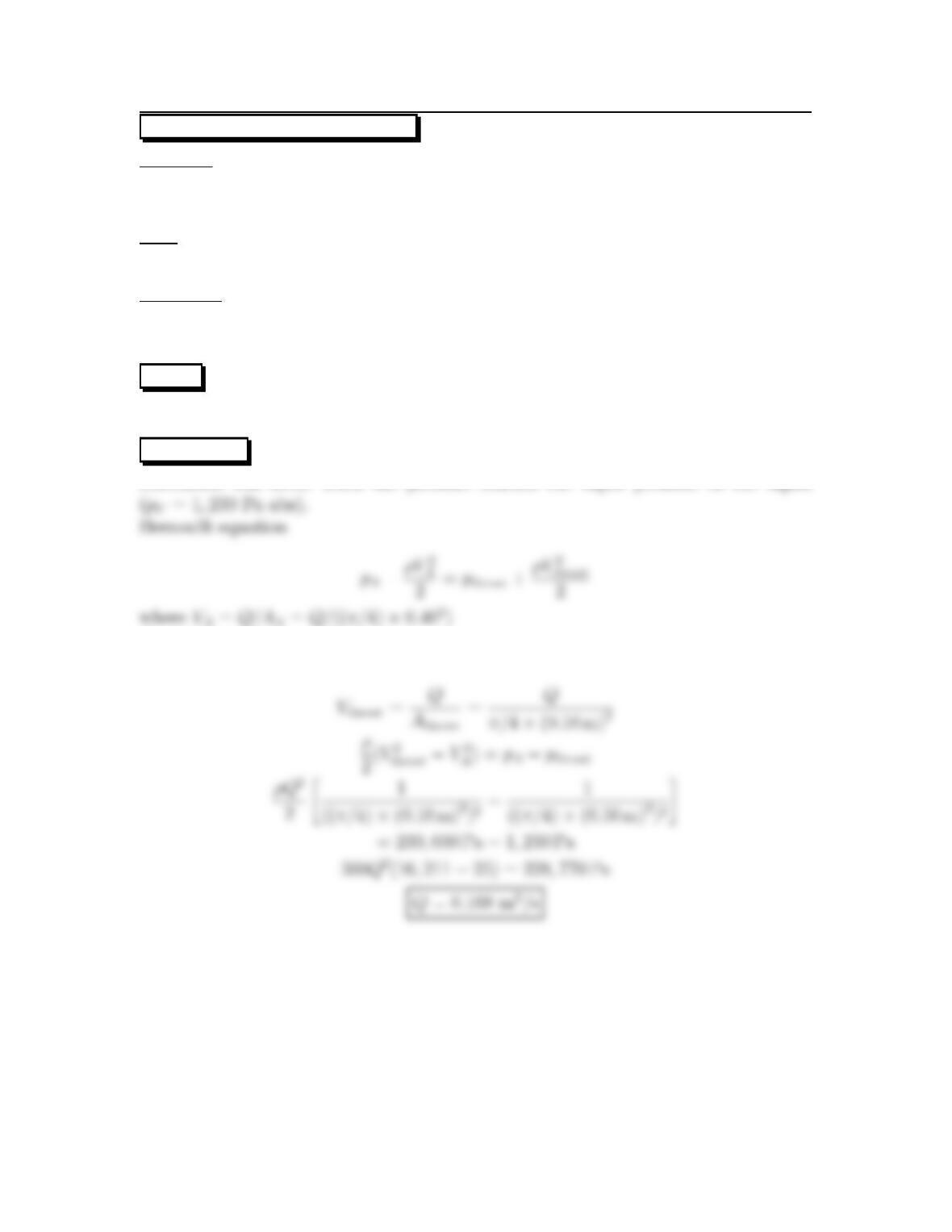
Cavitation will occur when the pressure reaches the vapor pressure of the liquid
Continuity equation
119
5.108: PROBLEM DEFINITION
Situation:
A sphere moves below the surface in water.
D=1ft,h=12ft.
Find:
Speed at which cavitation occurs.
Properties:
Water (50 ◦F), Table A.5: ρ=1.94 slug/ft3.
PLAN
Apply the Bernoulli equation between the free stream and the maximum width.
SOLUTION
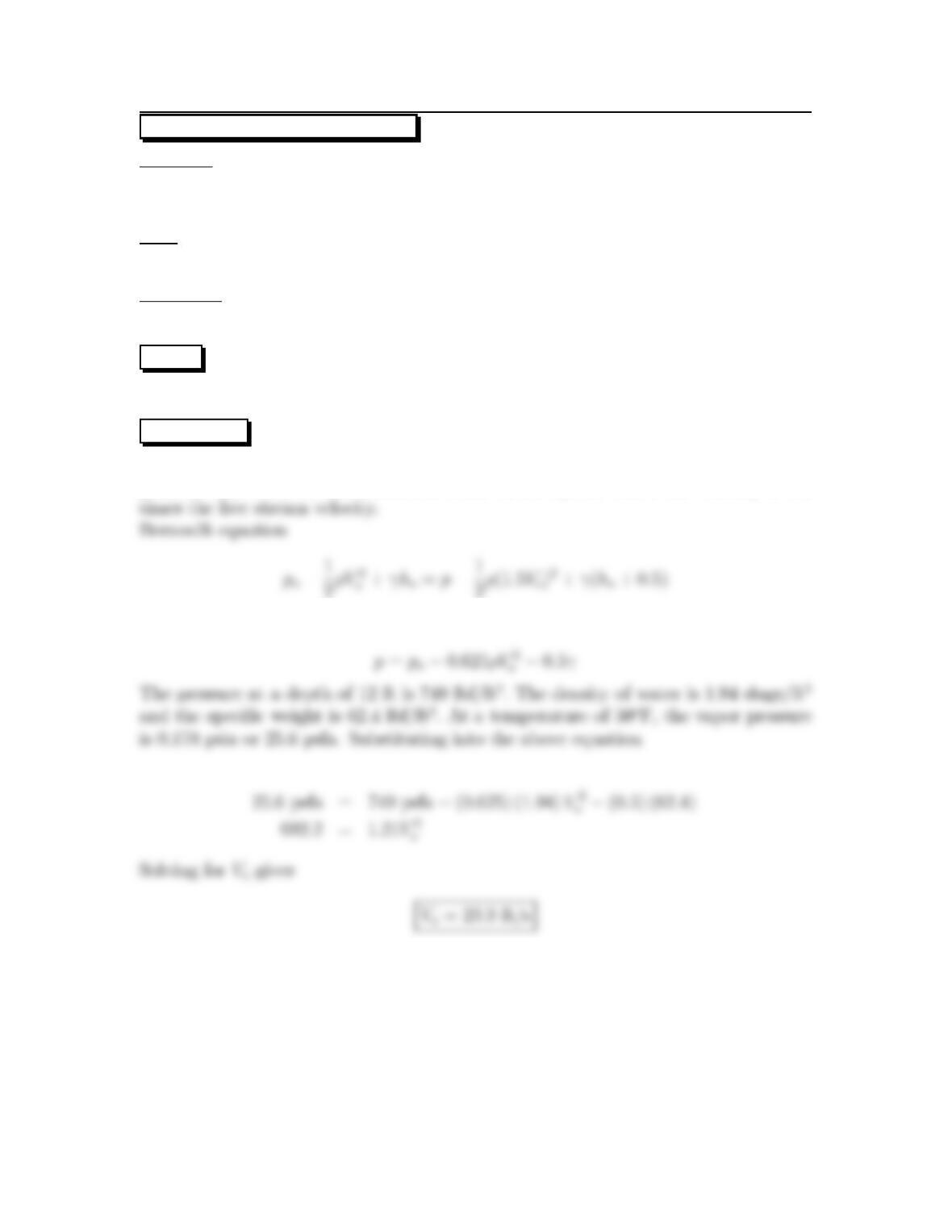
Let pobe the pressure on the streamline upstream of the sphere. The minimum
pressure will occur at the maximum width of the sphere where the velocity is 1.5
Solving for the pressure pgives
120
5.109: PROBLEM DEFINITION
Situation:
A hydrofoil is tested in water.
h=1.8m,V=8m/s.
Find:
Speed that cavitation occurs.
Assumptions:
patm = 101 kPa abs; pvapor =1,230 Pa abs.
Properties:
T=10◦C,p0=70kPa.
PLAN
Consider a point ahead of the foil (at same depth as the foil) and the point of minimum
pressure on the foil, and apply the pressure coefficient definition between these two
points.
SOLUTION
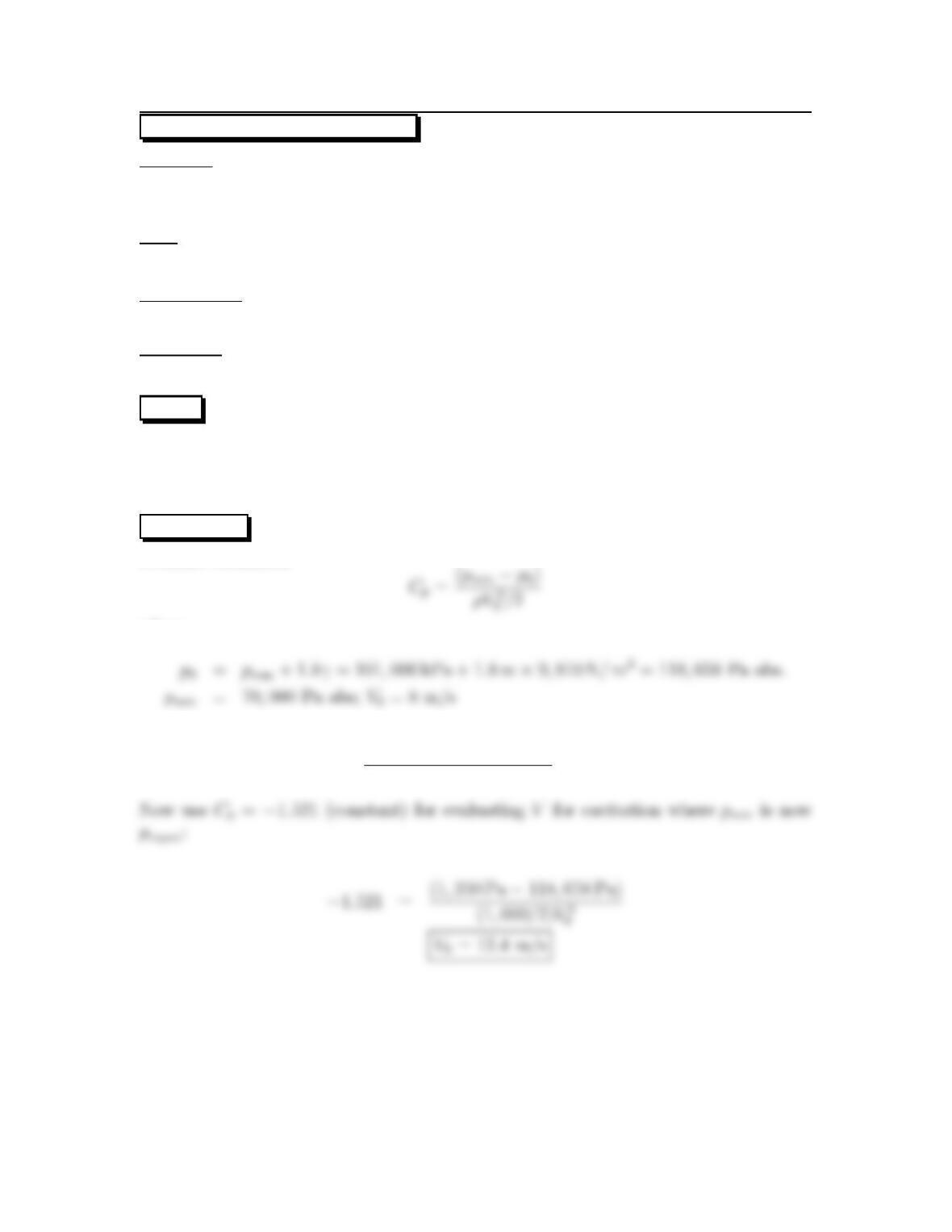
Pressure coefficient
where
Then
Cp=70,000 Pa −118,658 Pa
500 ×(8 m/s)2=−1.521
121
5.110: PROBLEM DEFINITION
Situation:
A hydrofoil is tested in water.
h=3m,V=8m/s.
Find:
Speed that cavitation begins.
Properties:
T=10◦C,p0=70kPa.
PLAN
Same solution procedure applies as in Prob. 5.98.
SOLUTION
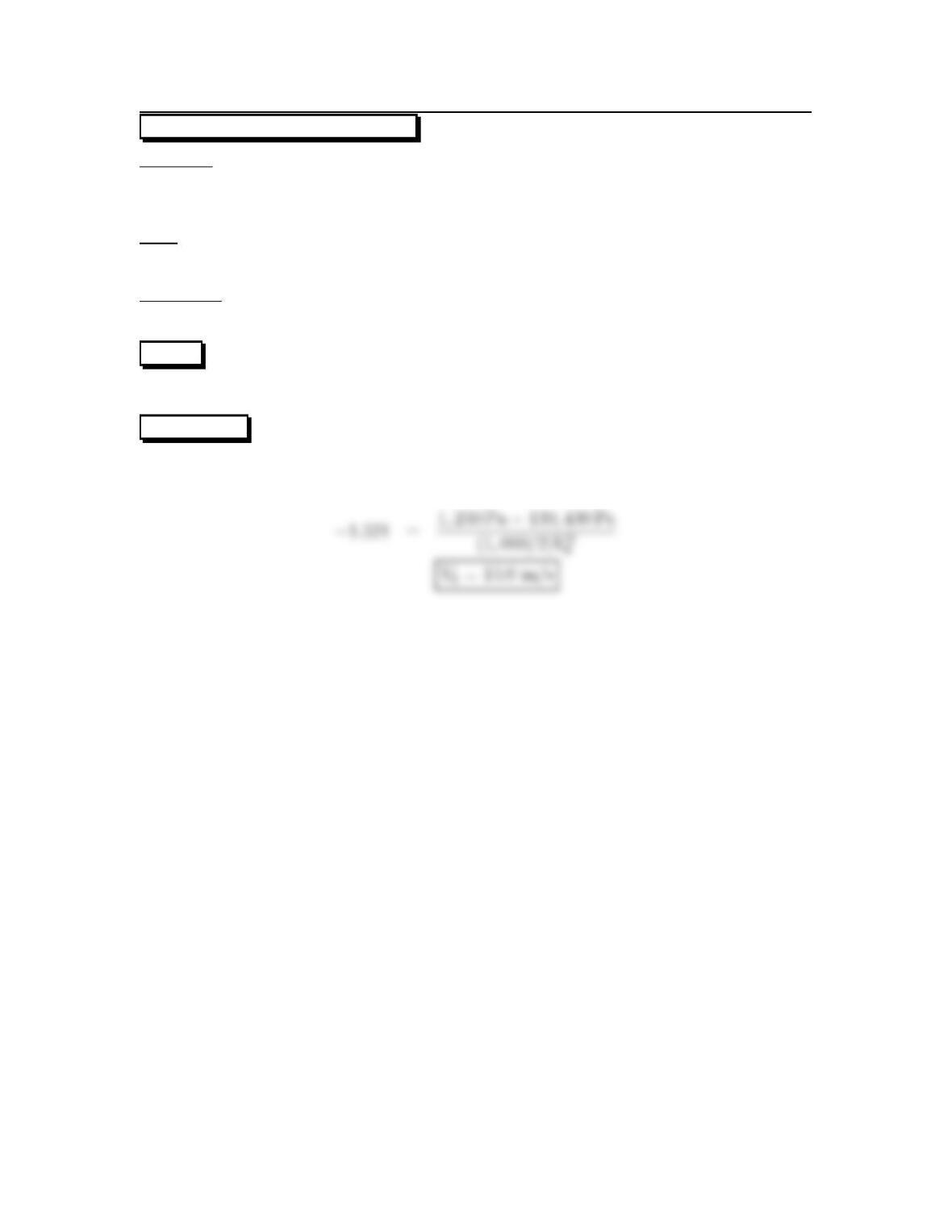
From the solution to Prob. 5.98, we have the same Cp,but p0=101,000 + 3γ=
130,430.Then:
122
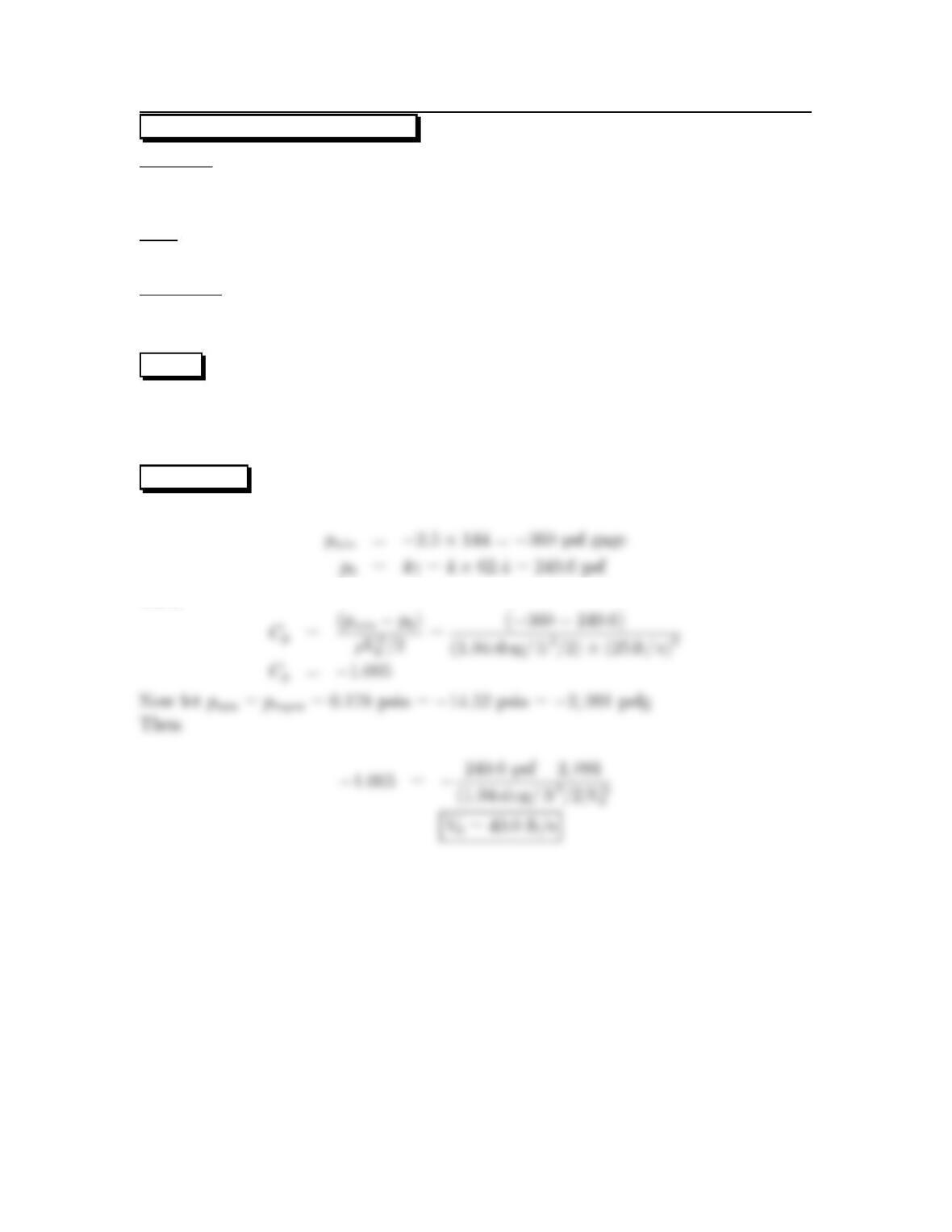
5.111: PROBLEM DEFINITION
Situation:
A hydrofoil is tested in water.
h=4ft,V=25ft/s.
Find:
Speed that cavitation begins.
Properties:
p0=2.5psi vacuum.
Water (50 ◦F) Table A.5, pv=0.178 psia.
PLAN
Consider a point ahead of the foil (at same depth as the foil) and the point of minimum
pressure on the foil, and apply the pressure coefficient definition between these two
points.
SOLUTION
Then
123
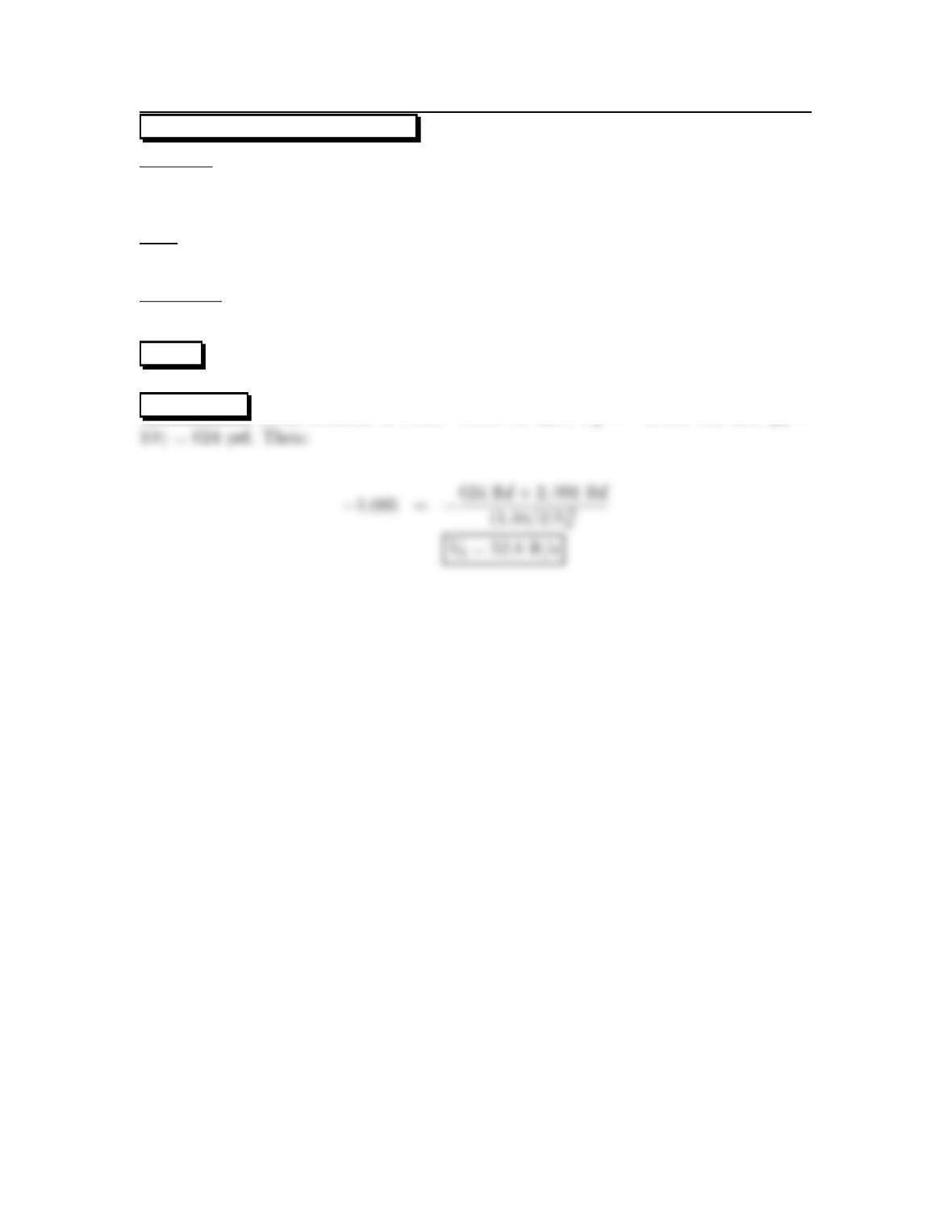
5.112: PROBLEM DEFINITION
Situation:
A hydrofoil is tested in water.
h=10ft,V=25ft/s.
Find:
Speed that cavitation begins when depth is 10 ft.
Properties:
T=50◦F,p0=2.5psi vacuum.
PLAN Same solution procedure applies as in Prob. 5.100.
SOLUTION From solution of Prob. 5.100 we have Cp=−1.005 but now p0=
124
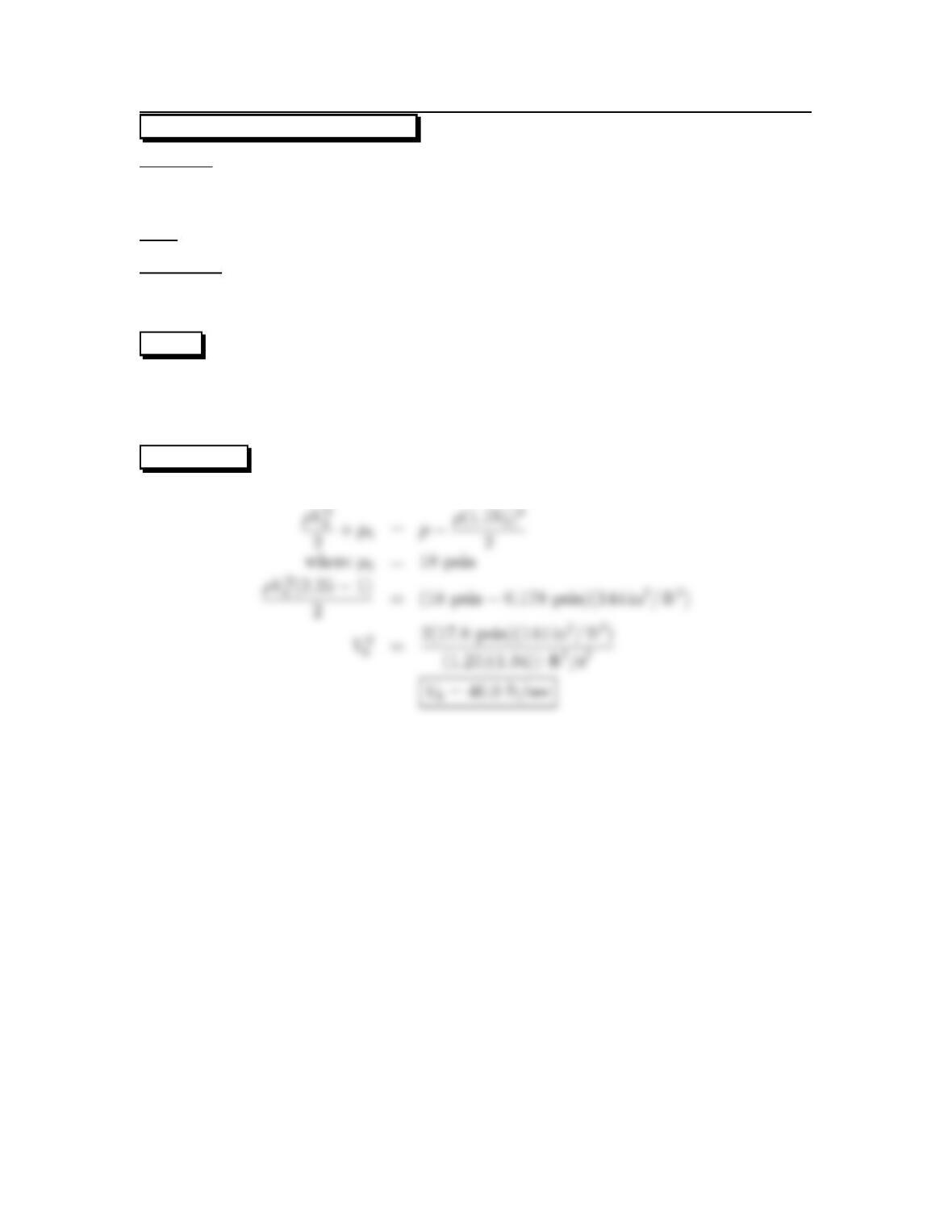
5.113: PROBLEM DEFINITION
Situation:
Aspheremovinginwater.
V=1.5V0.
Find: Speed at which cavitation occurs.
Properties:
Water (50 ◦F) Table A.5: pv=0.178 psia, γ=62.4lbf/ft3.
p0=18psia.
PLAN
Apply the Bernoulli equation between a point in the free stream to the 90◦position
where V=1.5V0. The free stream velocity is the same as the sphere velocity
(reference velocities to sphere).
SOLUTION
Bernoulli equation
125
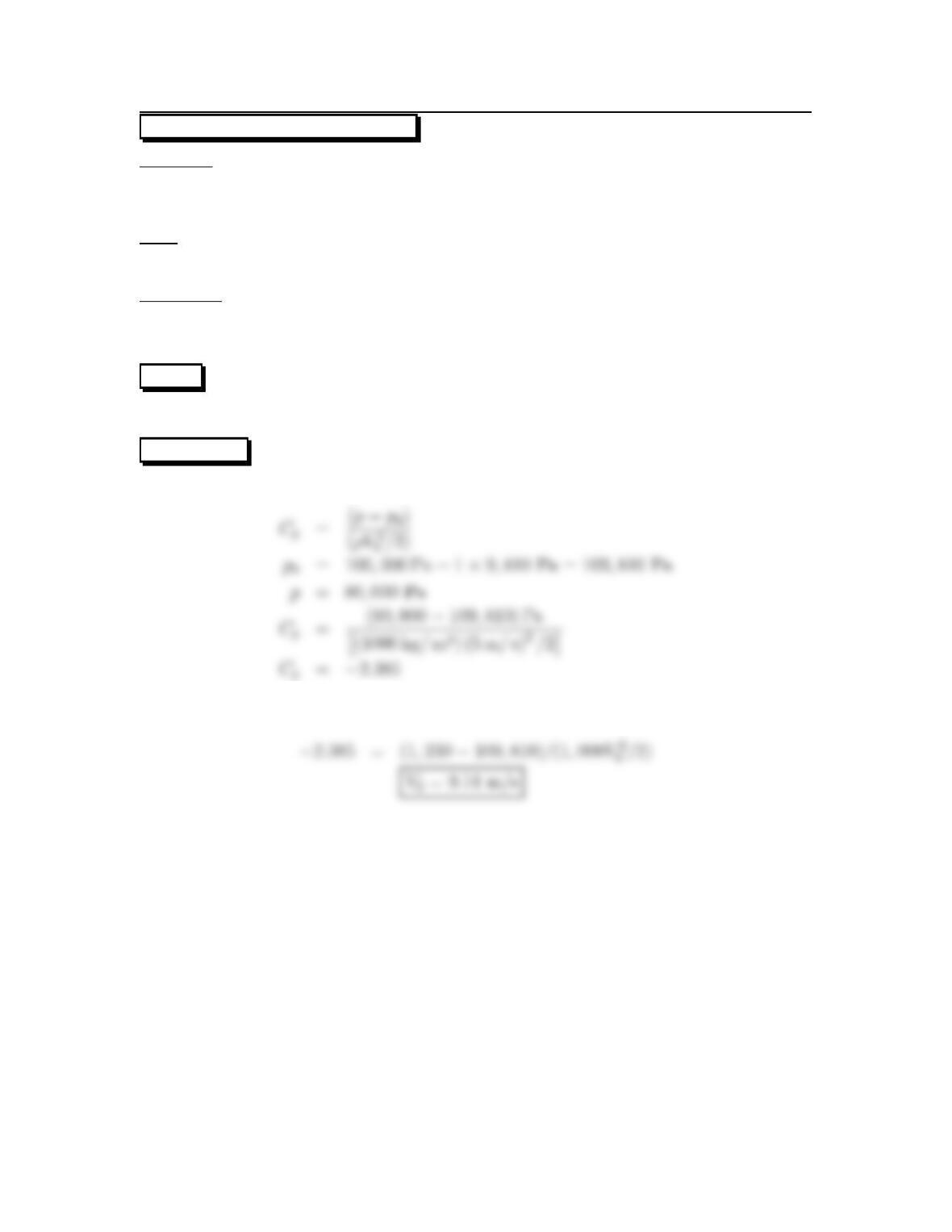
5.114: PROBLEM DEFINITION
Situation:
A cylinder is moving in water.
h=1m,V0=5m/s.
Find:
Velocity at which cavitation occurs.
Properties:
Water (10 ◦C) Table A.5 pv=1,230 Pa,ρ=1000kg/m3.
p0=80kPa,p
atm =100kPa.
PLAN
Apply the definition of pressure coefficient.
SOLUTION
Pressure coefficient
For cavitation to occur p=1,230 Pa
126