PROBLEM 5.79
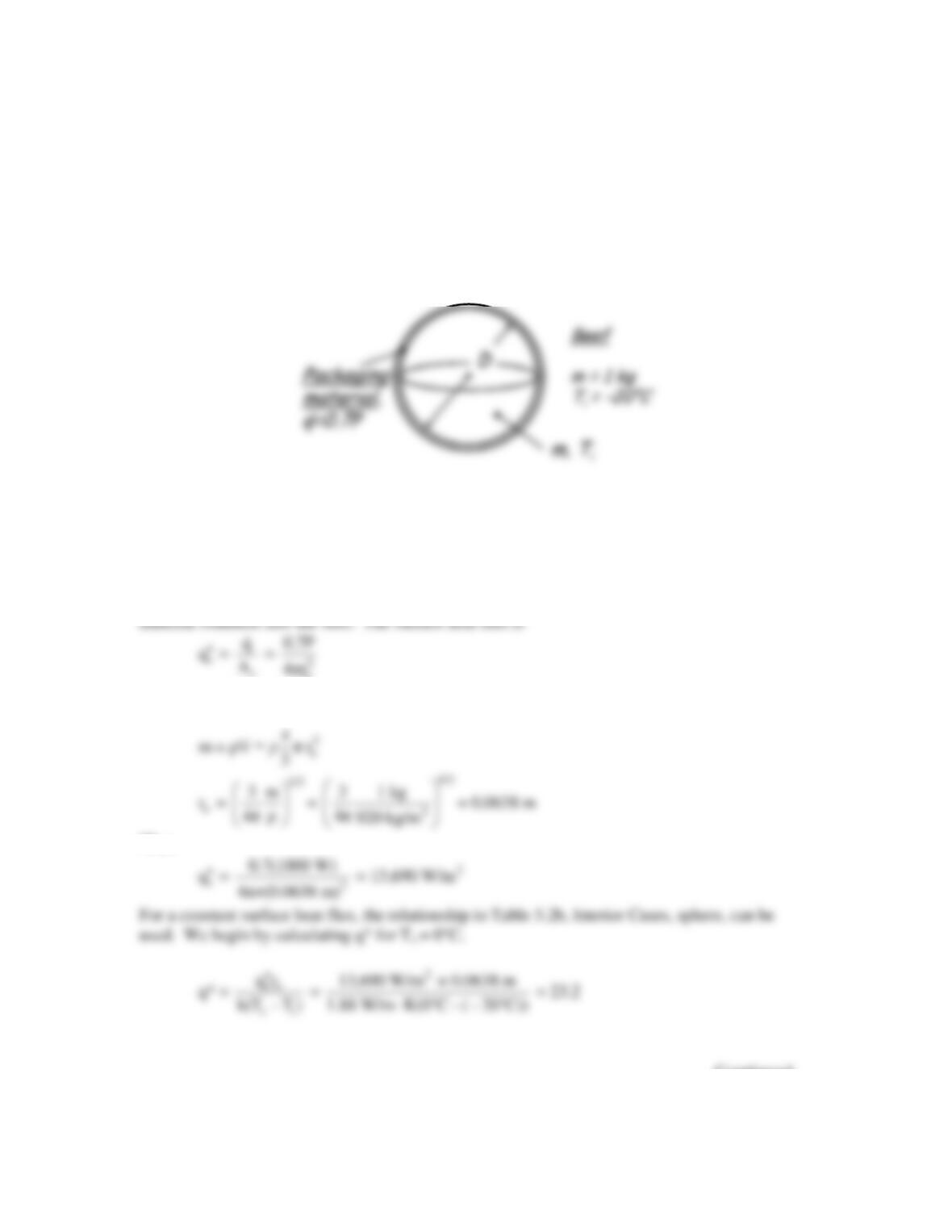
KNOWN: Mass and initial temperatures of frozen ground beef. Rate of microwave power
absorbed in packaging material.
FIND: Time for beef adjacent to packaging to reach 0°C.
SCHEMATIC:
ASSUMPTIONS: (1) Beef has properties of ice, (2) Radiation and convection to environment
are neglected, (3) Constant properties, (4) Packaging material has negligible heat capacity.
PROPERTIES: Table A.3, Ice (≈ 273 K): ρ = 920 kg/m3, c = 2040 J/kg∙K, k = 1.88 W/m∙K.
ANALYSIS: Neglecting radiation and convection losses, all the power absorbed in the packaging
The radius of the sphere can be found from knowledge of the mass and density:
Thus
Continued…
PROBLEM 5.79 (Cont.)
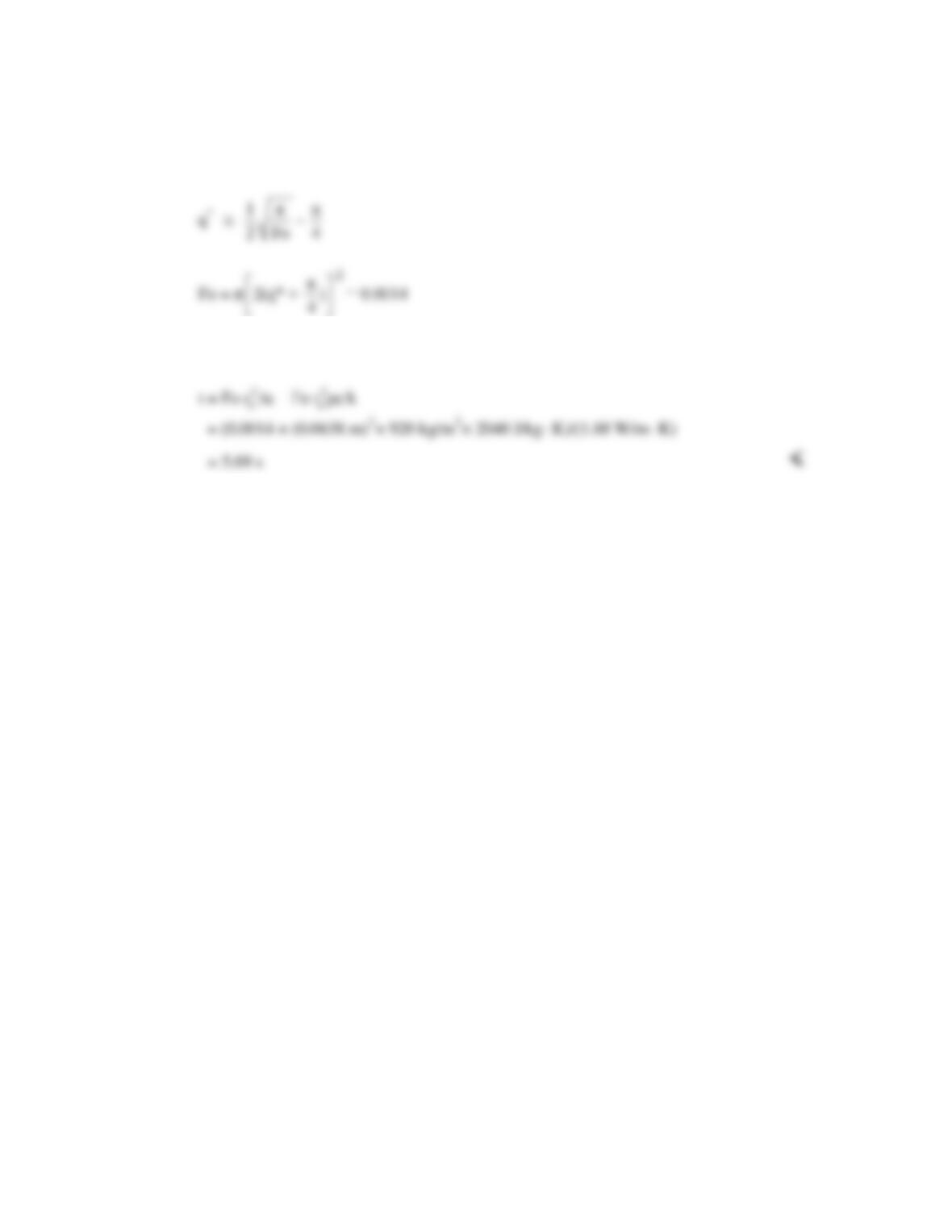
We proceed to solve for Fo. Assuming that Fo < 0.2, we have
Since this is less than 0.2, our assumption was correct. Finally we can solve for the time:
COMMENTS: At the minimum surface temperature of -20°C, with T∞ = 30°C and
h = 15 W/m2∙K from Problem 5.27, the convection heat flux is 750 W/m2, which is less than 6%
of the microwave heat flux. The radiation heat flux would likely be less, depending on the
temperature of the oven walls.
PROBLEM 5.80
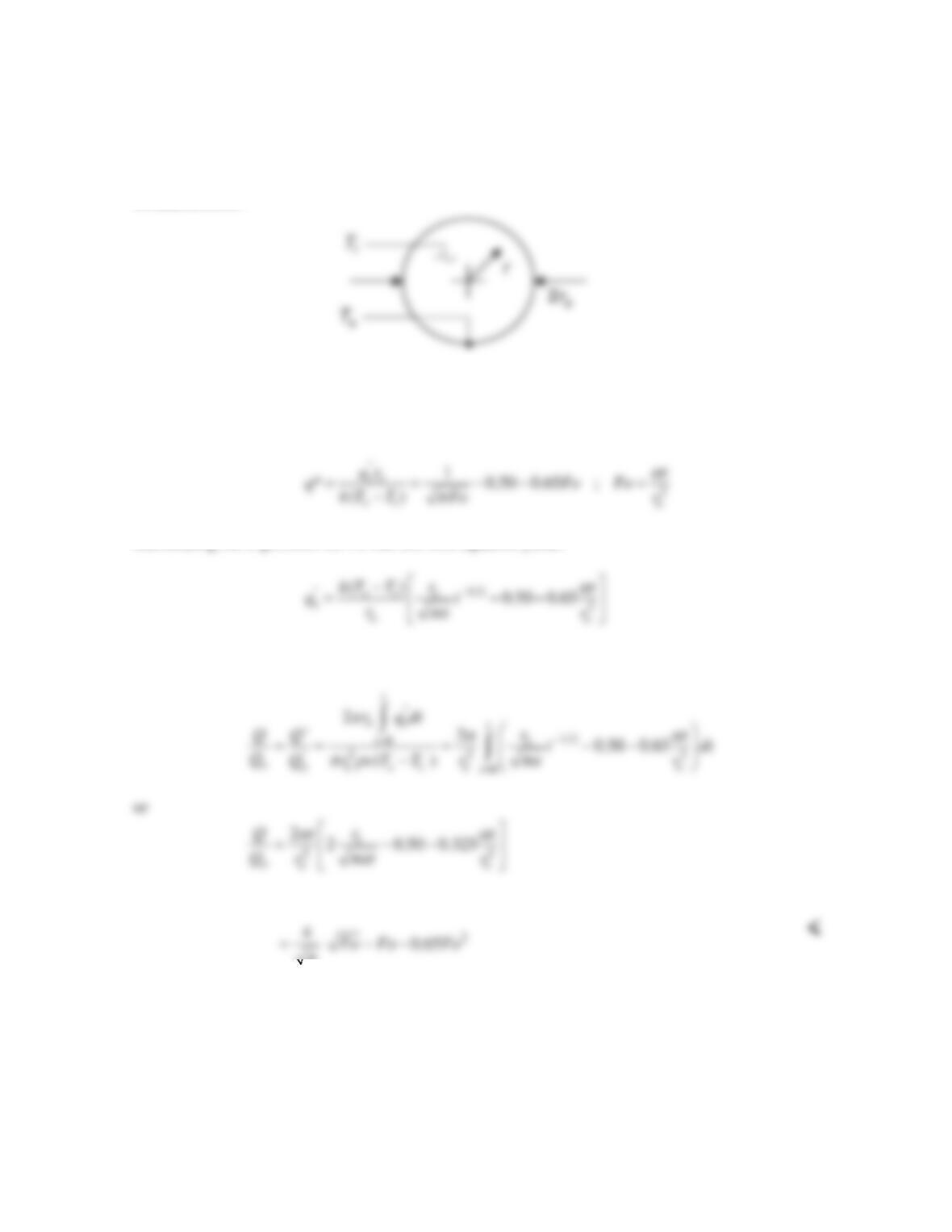
KNOWN: Cylinder with constant surface temperature.
FIND: Expression for Q/Qo as a function of Fo =
α
t/ro
2.
SCHEMATIC:
ASSUMPTIONS: (1) One–dimensional conduction, (2) Constant properties, (3) Validity of the
approximate solution of Table 5.2a.
ANALYSIS: From Table 5.2a for Fo < 0.2,
Substituting the expression for Fo into the first equation yields
We desire an expression for Q/Qo. Hence,
π
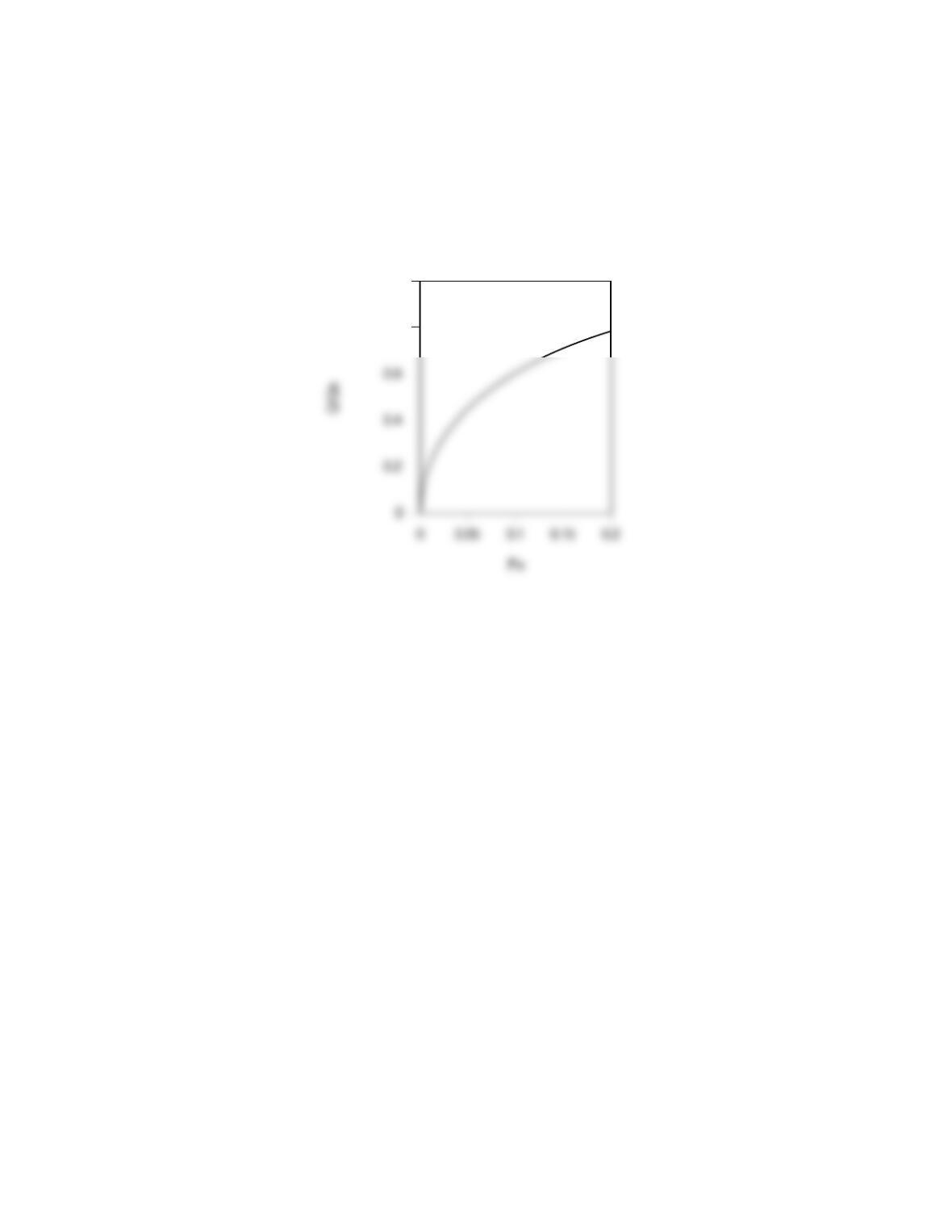
COMMENTS: (1) A plot of Q/Qo versus Fo is shown below. (2) The exact solution for Q/Qo
involves many terms that would need to be evaluated in the infinite series expression. (2) See Lavine
and Bergman, “Small and Large Time Solutions for Surface Temperature, Surface Heat Flux, and
Energy Input in Transient, One-Dimensional Conduction in Simple Geometries,” ASME Journal of
Heat Transfer, Vol 130, pp. 101302-1 to 101302-8, 2008 for details.
Continued…
PROBLEM 5.80 (Cont.)
Q/Qo vs. Fo (cylinder)
0.8
1
PROBLEM 5.81
KNOWN: Plane wall, infinite cylinder and sphere each subjected to a constant surface heat flux.
FIND: The ratio of (i) the actual surface temperature minus the initial temperature, (Ts,act – Ti), to (ii)
the value of this temperature difference associated with lumped capacitance behavior, (Ts,lc – Ti), for
each of the three geometries. Criteria associated with (Ts,act – Ti)/(Ts,lc – Ti) ≤ 1.1.
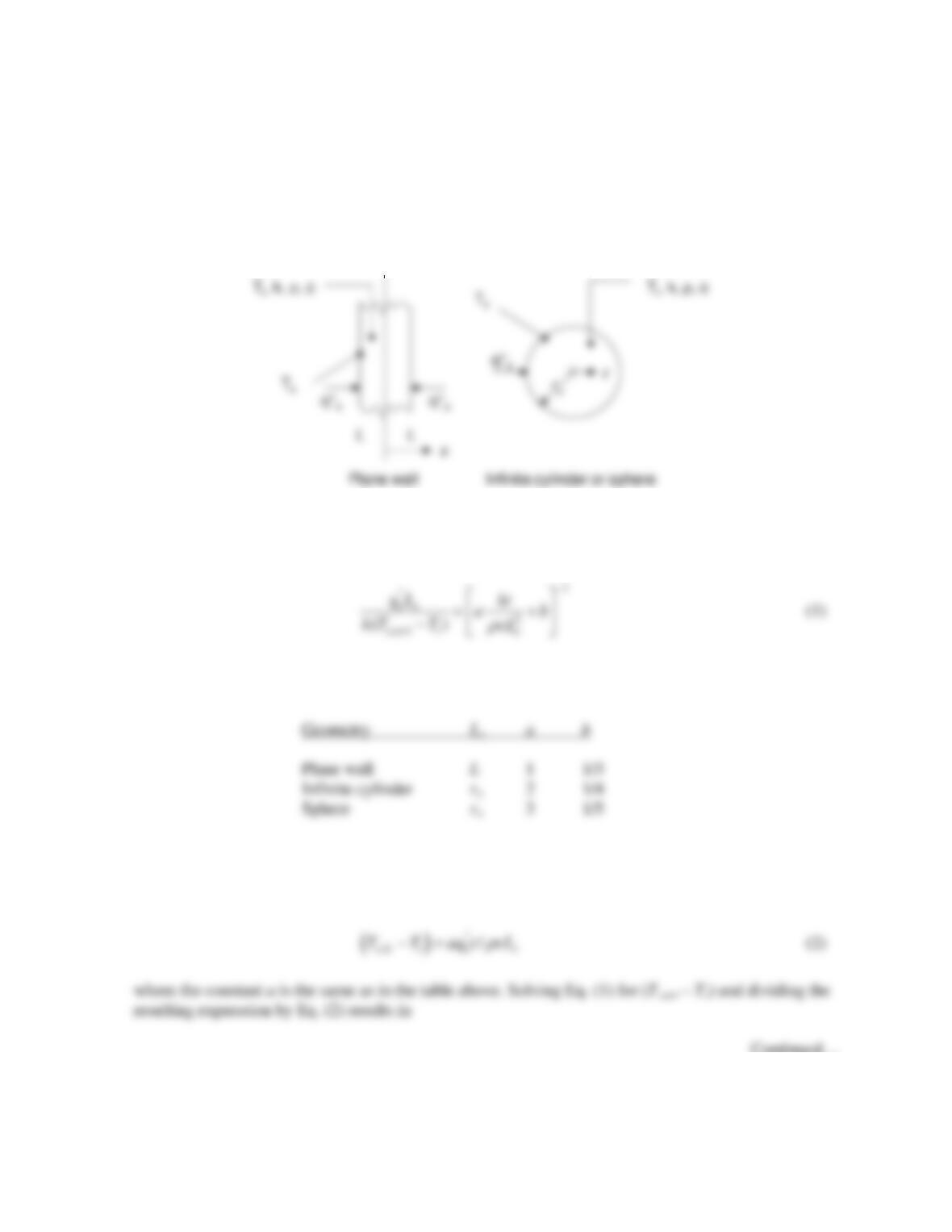
SCHEMATIC:
ASSUMPTIONS: (1) One-dimensional conduction, (2) Constant properties, (3) Fo ≥ 0.2.
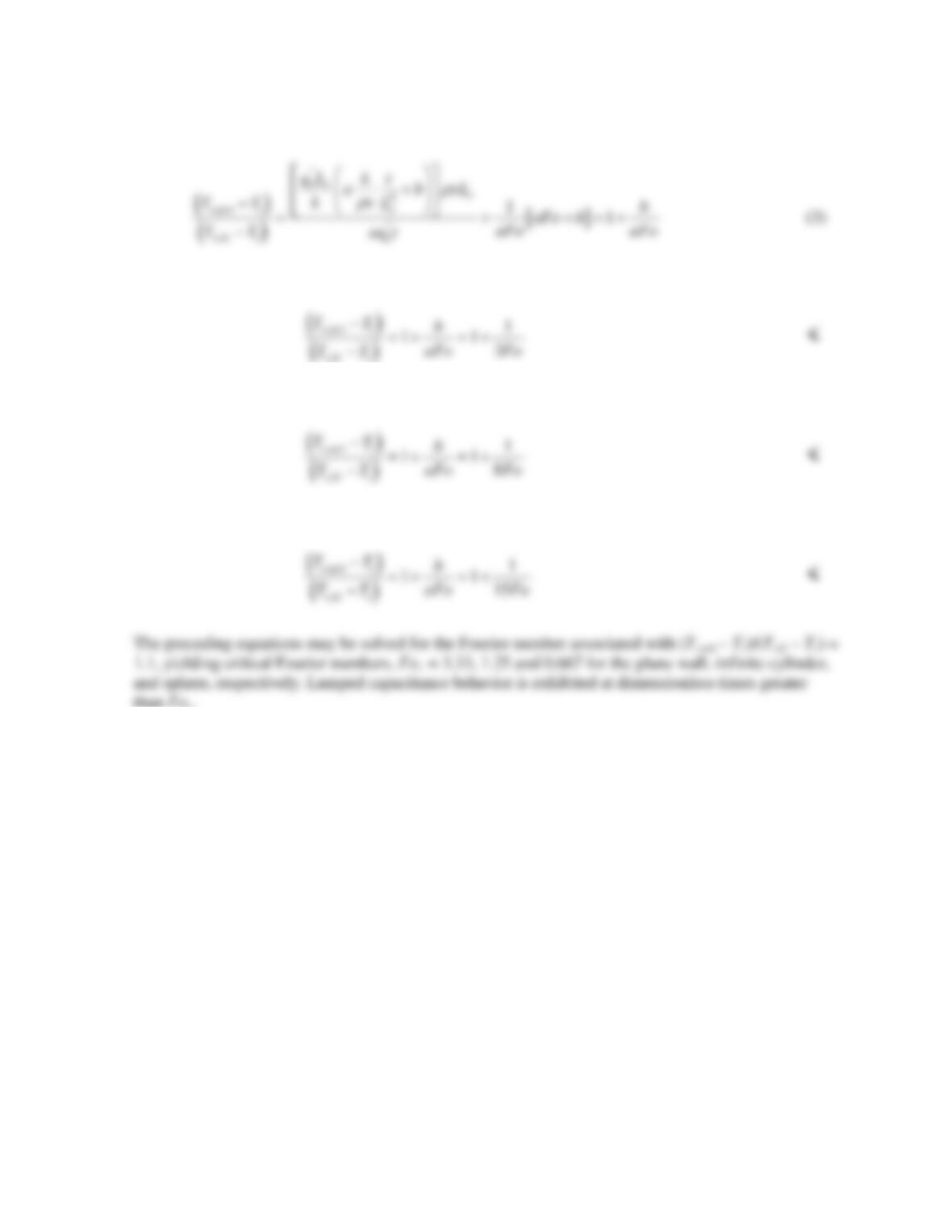
ANALYSIS: From Table 5.2b, the approximate solutions for all three geometries may be expressed
as
where Lc = L for the plane wall, and Lc = ro for the infinite cylinder and the sphere. The constants a
and b have the following values.
For the lumped-capacitance analysis with constant heat flux, we note that in general,
“
,
()
s s s lc i
q A t cV T T
ρ
= −
. Substituting expressions for the surface area and volume of each of the three
geometries results in the general expression,
Continued…
PROBLEM 5.81 (Cont.)
Therefore, for the plane wall,
for the infinite cylinder,
for the sphere,
than Foc.
COMMENTS: (1) The calculated values of the Fourier number are each greater than 0.2. Hence, use
of the approximate solutions for Fo ≥ 0.2 is justified. (2) The dimensionless time at which lumped
capacitance behavior is reached varies with the geometry.
PROBLEM 5.82
KNOWN: Energy generation rate within a buried spherical container of known size.
FIND: Time needed for the surface of the sphere to come within 10 degrees Celsius of the
steady–state temperature.
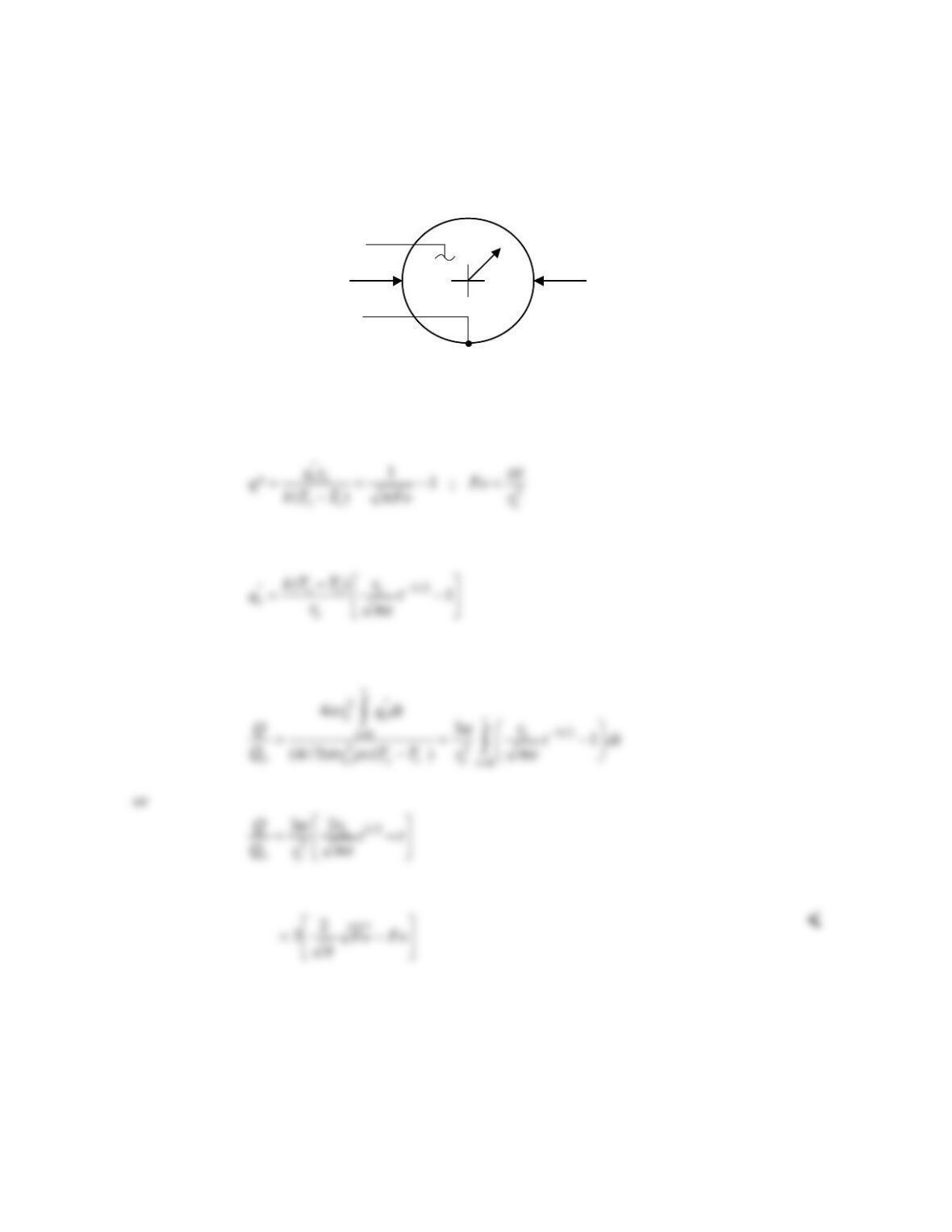
SCHEMATIC:
ASSUMPTIONS: (1) Infinite medium, (2) Constant properties, (3) Negligible contact resistance
between the sphere and the soil.
PROPERTIES: Table A.3, soil (300 K): k = 0.52 W/m⋅K,
ρ
= 2050 kg/m3, cp = 1840 J/kg⋅K.
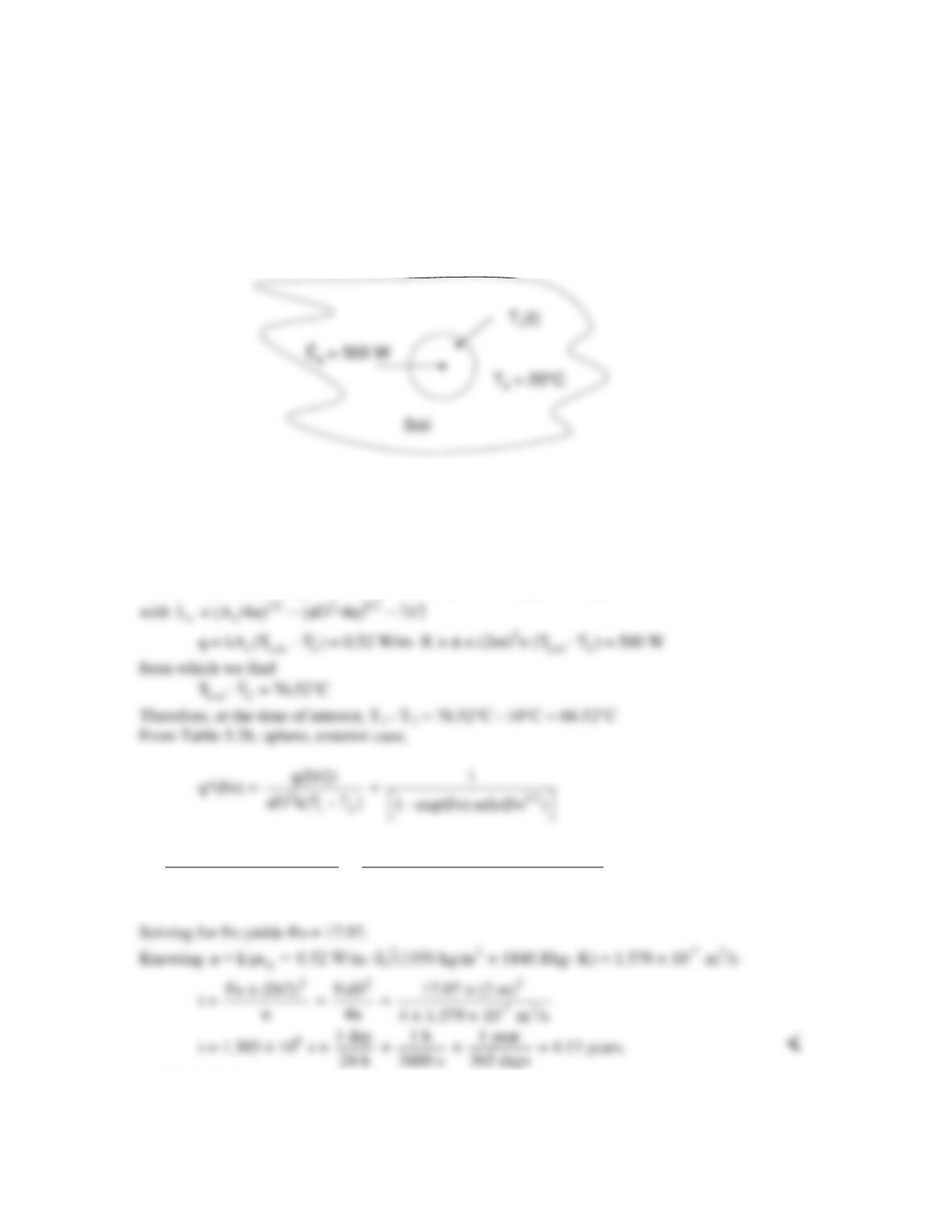
ANALYSIS: The steady–state temperature difference may be obtained from case 12 of Table 4.1
or
1/2
1 500 W
= = 1.15
2π × 2 m × 0.52 W/m K × 66.52K
1- exp (Fo) erfc (Fo ) ⋅
COMMENTS: The time to reach the steady–state is significant. In practice, it is often difficult to
ascertain when steady–state is achieved due to the slow thermal response time of many systems.
PROBLEM 5.83
KNOWN: Sphere with constant surface temperature.
FIND: Expression for Q/Qo as a function of Fo =
α
t/ro
2.
SCHEMATIC:
ASSUMPTIONS: (1) One–dimensional conduction, (2) Constant properties, (3) Validity of the
approximate solution of Table 5.2a.
ANALYSIS: From Table 5.2a for Fo < 0.2,
Substituting the expression for Fo into the first equation yields
We desire an expression for Q/Qo. Hence,
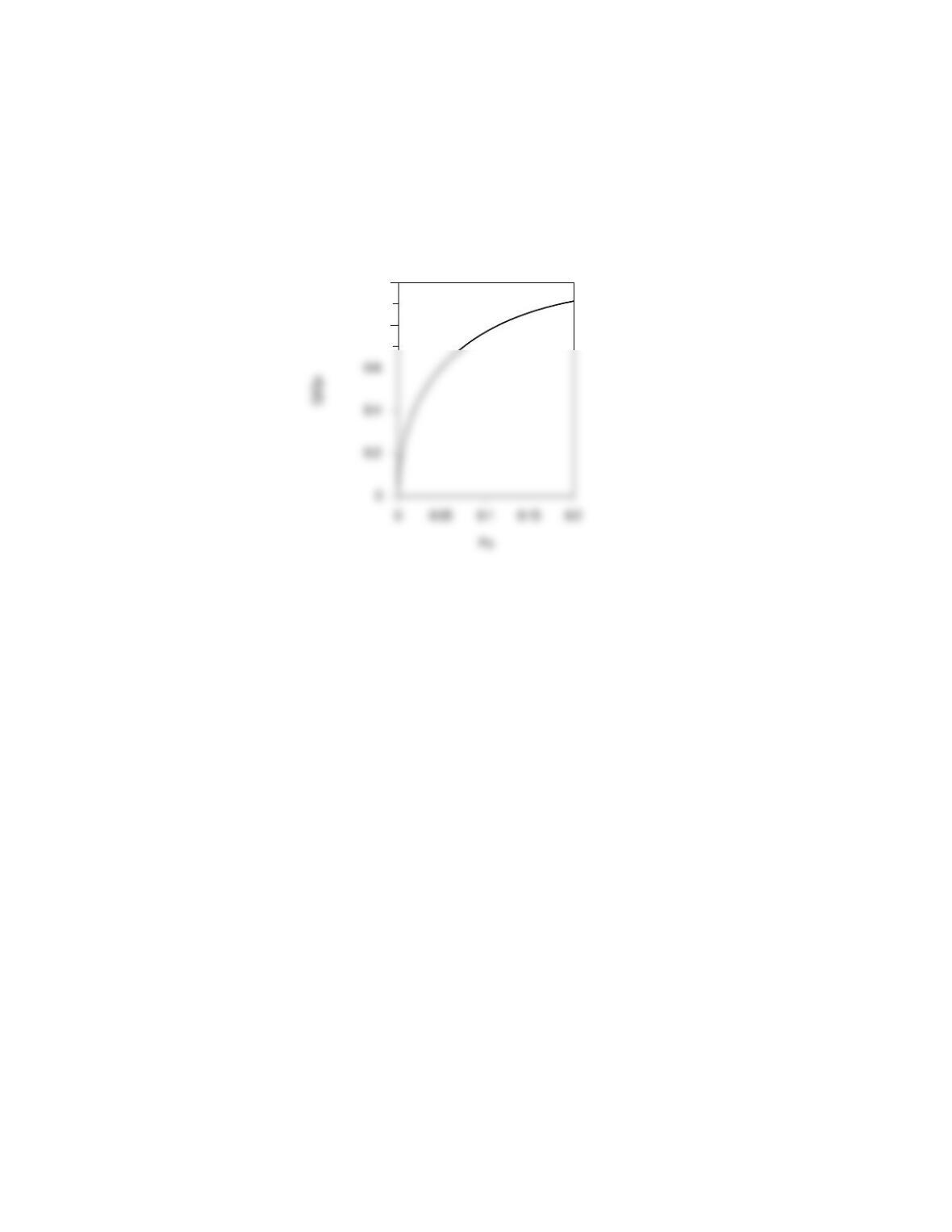
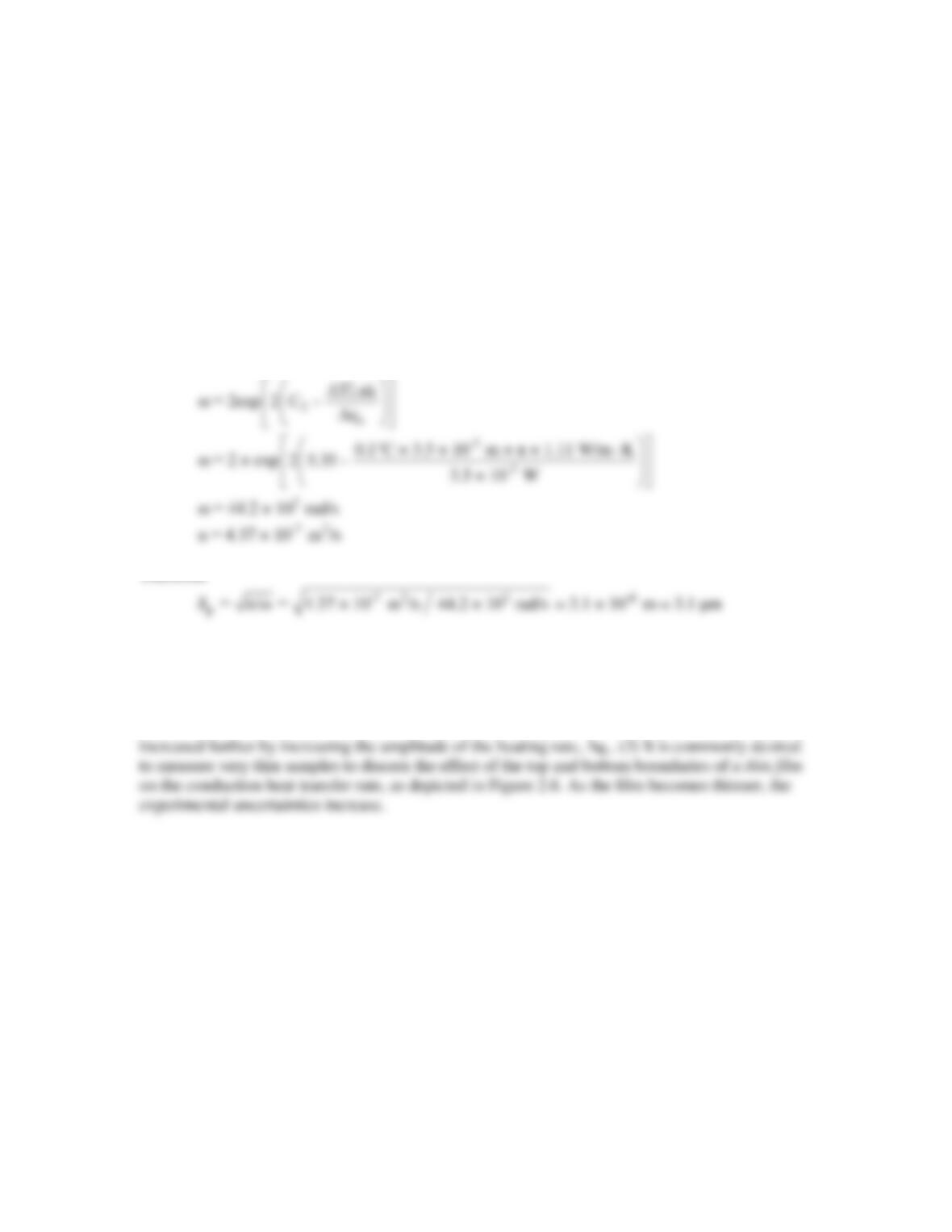
COMMENTS: (1) A plot of Q/Qo versus Fo is shown below. (2) The exact solution for Q/Qo
involves many terms that would need to be evaluated in the infinite series expression.
Continued…
r
2ro
Ts
Ti
r
2ro
Ts
Ti
PROBLEM 5.83 (Cont.)
Q/Qo vs. Fo (spher e)
0.8
1
PROBLEM 5.84
KNOWN: Desired minimum temperature response of a 3
ω
measurement.
FIND: Minimum sample thickness that can be measured.
ASSUMPTIONS: (1) Constant properties, (2) Two–dimensional conduction, (3) Semi-infinite
medium, (4) Negligible radiation and convection losses from the metal strip and the top surface of
the sample.
PROPERTIES: (Example 5.10): k = 1.11 W/m∙K, a = 4.37 × 10⁻⁷ m2/s.
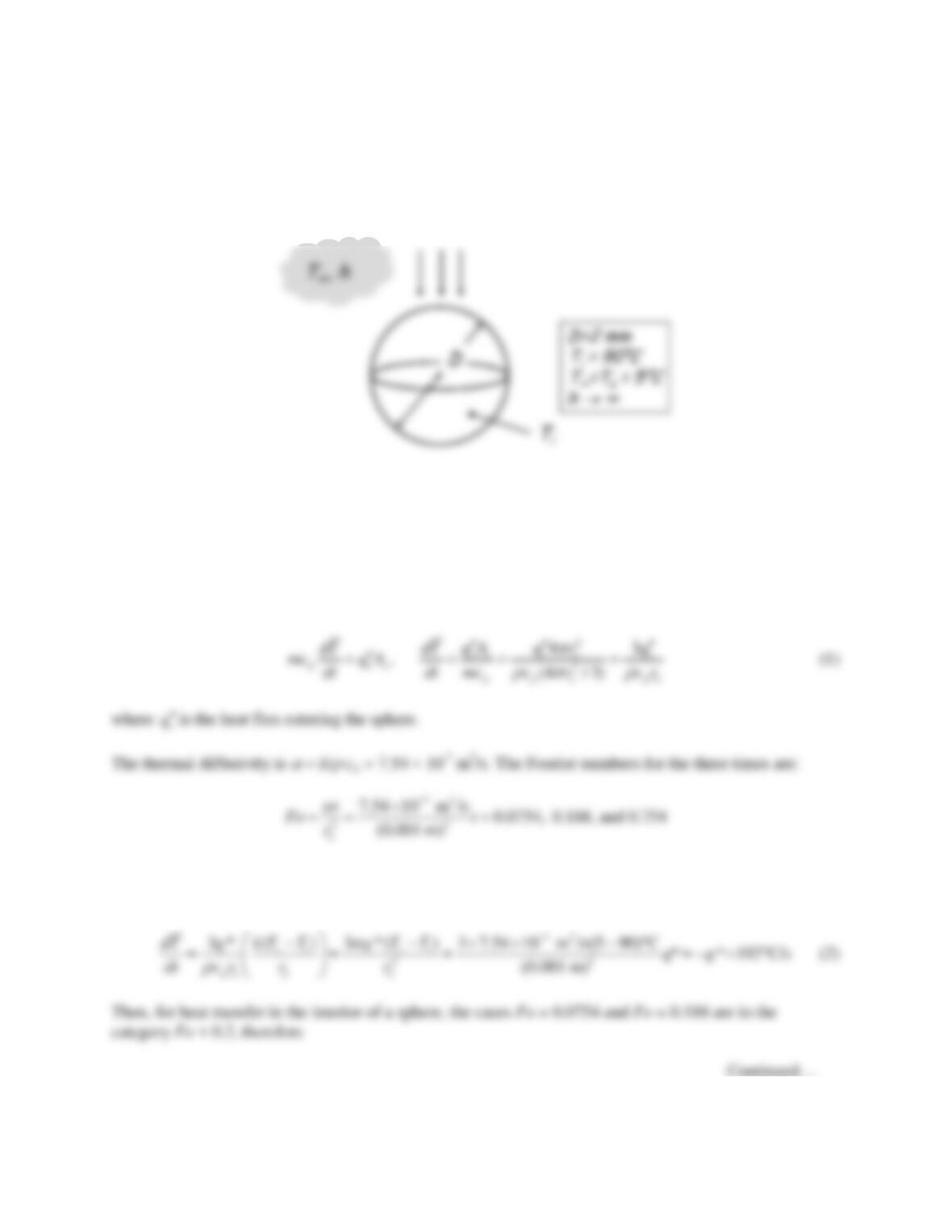
ANALYSIS: Equation 5.74 maybe rearranged to yield
The minimum sample thickness is therefore 3.1 µm. <
COMMENTS: (1) To ensure the thickness of the sample is adequate, the actual minimum
thickness should be greater than the thermal penetration depth. (2) The sample thickness could be
PROBLEM 5.85
KNOWN: Diameter and initial temperature of spheres with properties of Pyrex. Temperature of
environment with large heat transfer coefficient.
FIND: Rate of cooling of spheres at t = 0.1, 0.25, and 1 s.
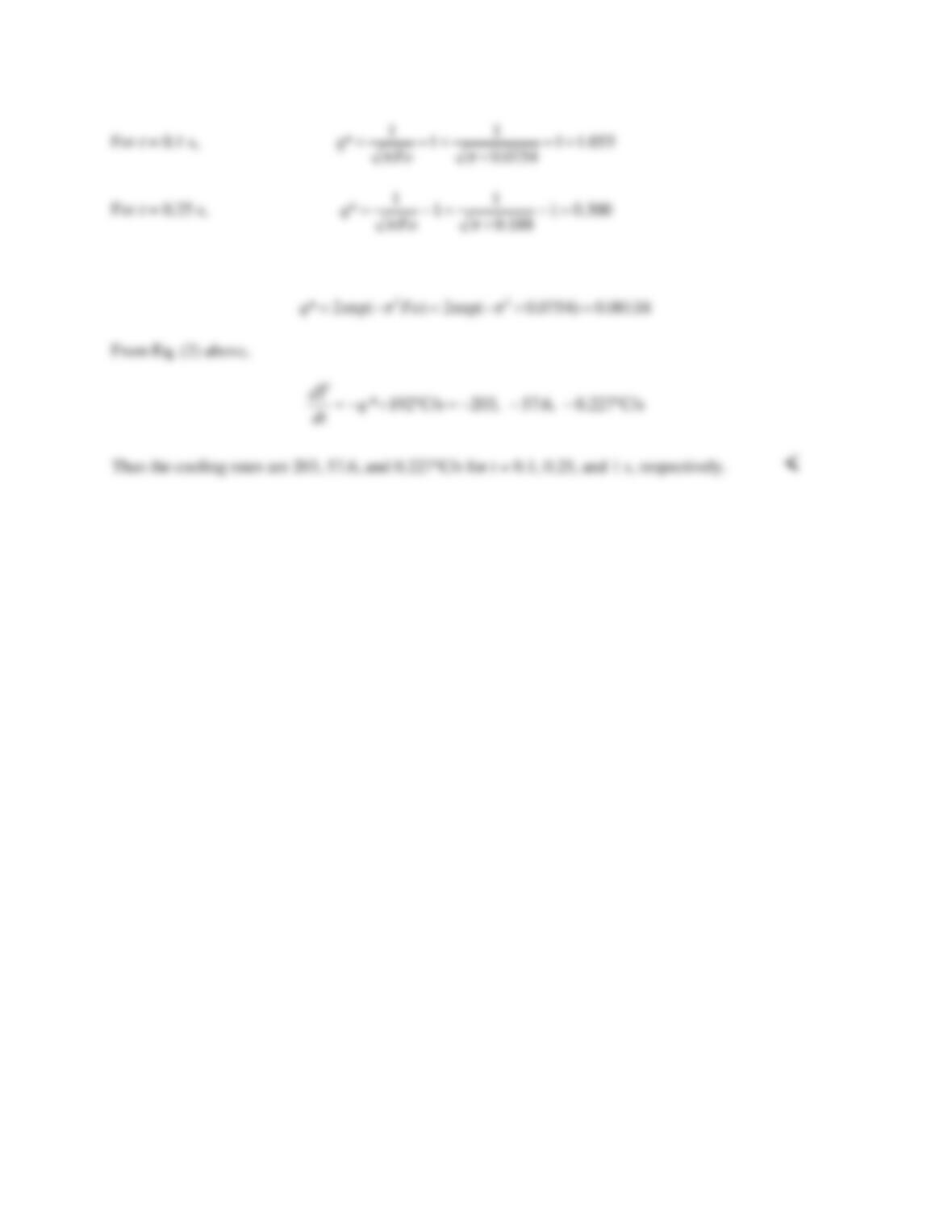
SCHEMATIC:
ASSUMPTIONS: (1) Uniform properties, (2) Heat transfer coefficient is infinite, therefore surface
temperature is equal to environment temperature, (3) Negligible radiation.
PROPERTIES: Table A-3, Pyrex, (T = 300 K):
ρ
= 2225 kg/m3, cp = 835 J/kg⋅K, k = 1.4 W/m⋅K.
ANALYSIS: The cooling rate can be found from an energy balance on a sphere, written in terms of the
average sphere temperature:
From Table 5.2a, the heat flux entering the sphere is related to q* according to
* ( )/ .
s sio
q q kT T r
′′ = −
Combining this with Eq. (1) gives:
PROBLEM 5.85 (Cont.)
The case Fo = 0.754 is in the category Fo > 0.2, therefore
COMMENTS: (1) The cooling rate is highest at early times when the temperature difference between the
spheres and water is large, and decreases with time. (2) The middle case, Fo = 0.188, is close to the
border of Fo = 0.2 The result of the Fo > 0.2 formula yields a cooling rate of 60.0, within around 4% of
the more accurate result found earlier.
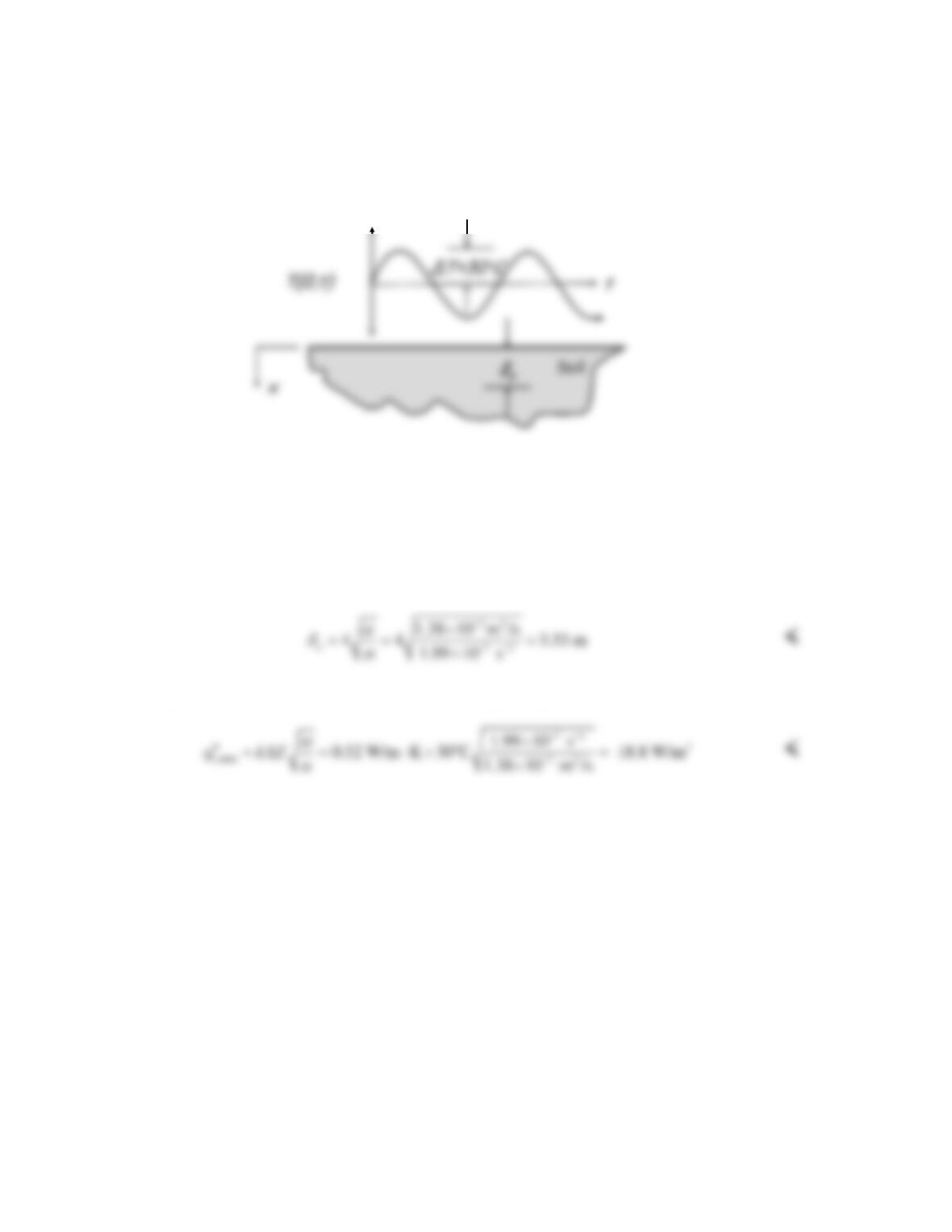
PROBLEM 5.86
KNOWN: Periodic soil surface temperature variation of known amplitude and frequency.
FIND: Thermal penetration depth and maximum soil surface heat flux.
SCHEMATIC:
ASSUMPTIONS: (1) Uniform properties, (2) One-dimensional conduction.
PROPERTIES: Table A-3, Soil, (T = 300 K):
ρ
= 2050 kg/m3, cp = 1840 J/kg⋅K, k = 0.52 W/m⋅K,
α
=
k/
ρ
cp = 1.38 × 10⁻⁷ m2/s.
ANALYSIS: The period of temperature oscillations is one year, therefore
ω
= 2
π
/(1 year) = 1.99 × 10⁻⁷
s-1. The thermal penetration depth is given by
From Equation 5.73, the maximum surface heat flux is given by
COMMENTS: The assumption of one-dimensional heat transfer is probably poor since the soil surface
temperature will only experience the specified variation close to the heat pump–air conditioning system.
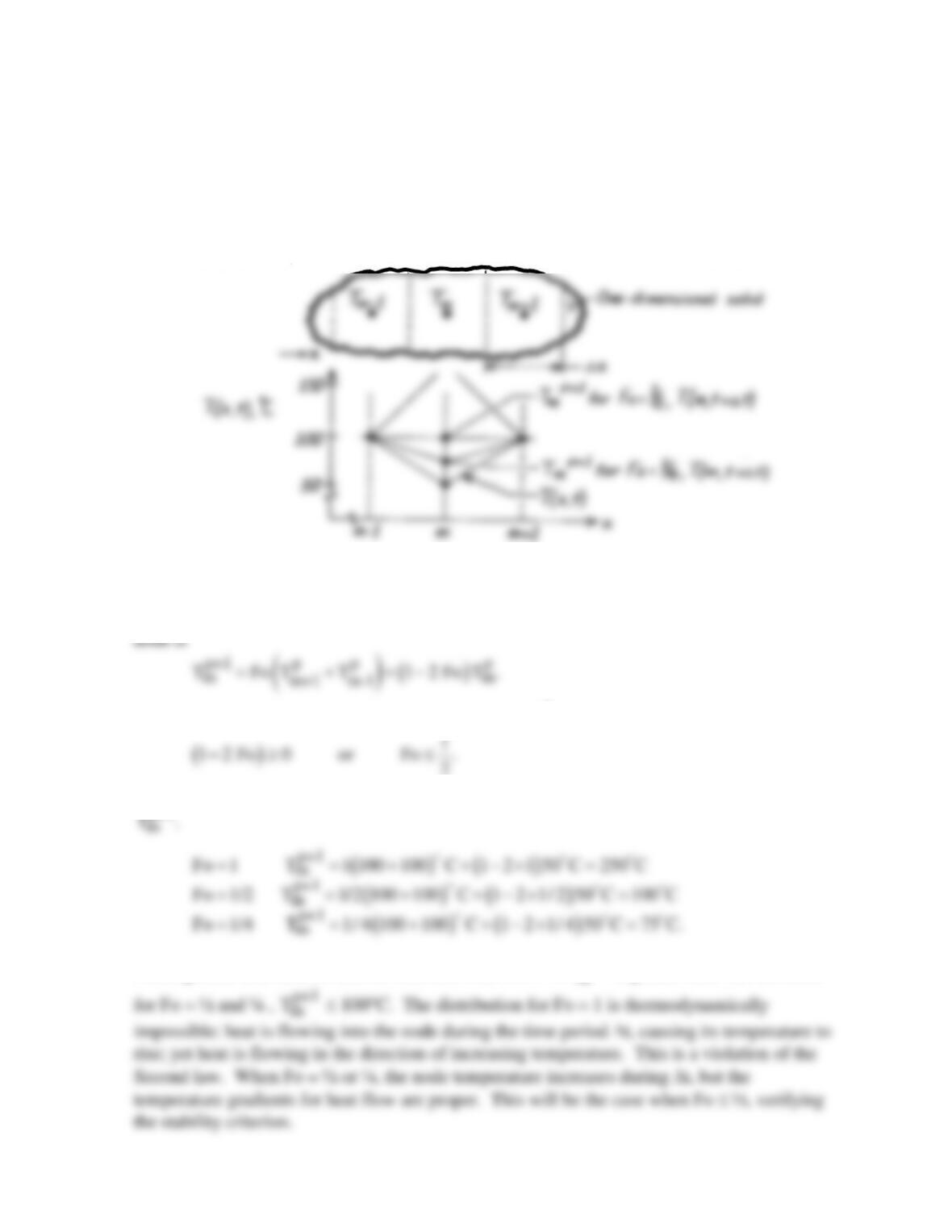
PROBLEM 5.87
KNOWN: Stability criterion for the explicit method requires that the coefficient of the
p
m
T
term of the one-dimensional, finite-difference equation be zero or positive.
FIND: For Fo > 1/2, the finite-difference equation will predict values of
p+1
m
T
which violate
the Second law of thermodynamics. Consider the prescribed numerical values.
SCHEMATIC:
ASSUMPTIONS: (1) One-dimensional conduction in x, (2) Constant properties, (3) No
internal heat generation.
ANALYSIS: The explicit form of the finite-difference equation, Eq. 5.81, for an interior
The stability criterion requires that the coefficient of
p
m
T
be zero or greater. That is,
2
For the prescribed temperatures, consider situations for which Fo = 1, ½ and ¼ and calculate
p+1
Plotting these distributions above, note that when Fo = 1,
p+1
m
T
is greater than 100°C, while
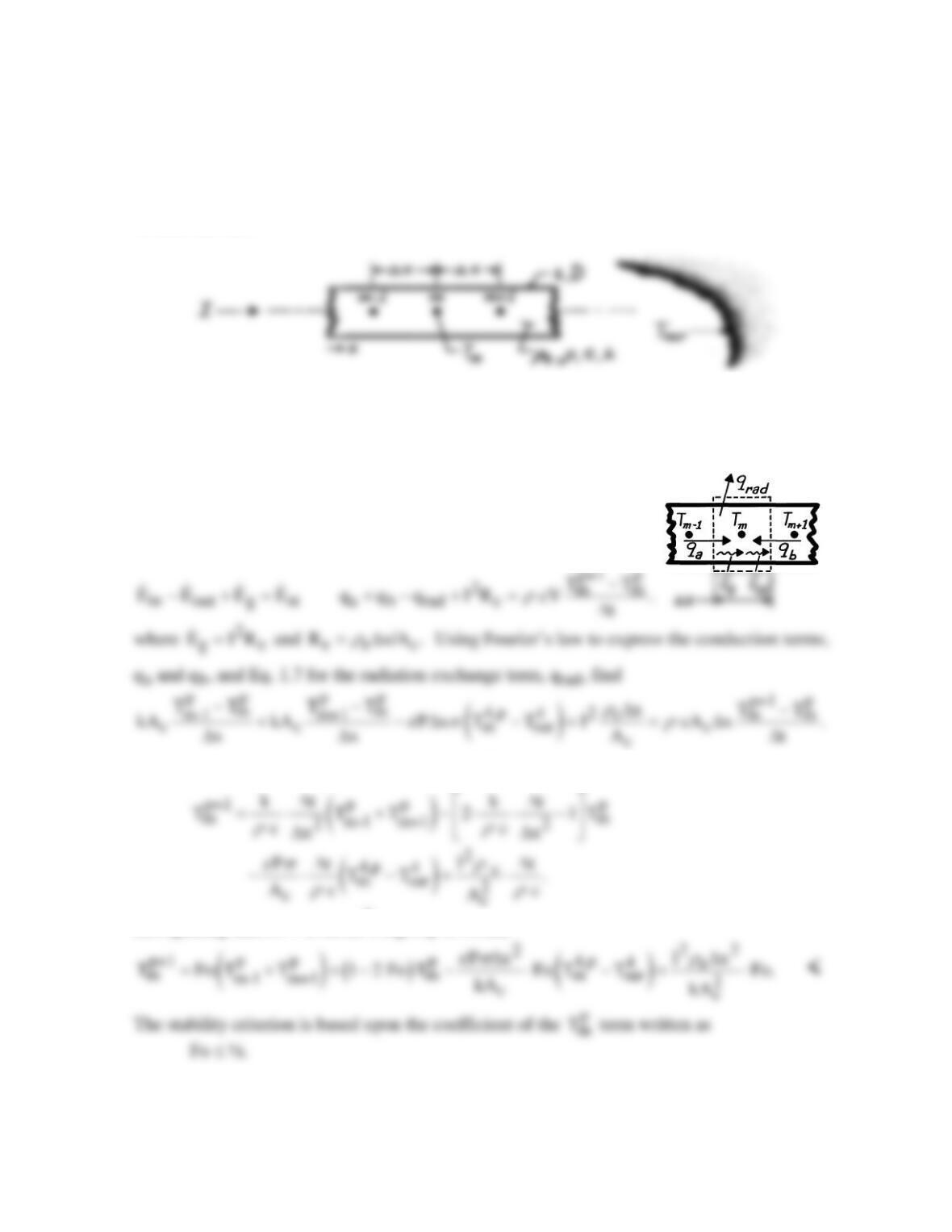
PROBLEM 5.88
KNOWN: Thin rod of diameter D, initially in equilibrium with its surroundings, Tsur,
suddenly passes a current I; rod is in vacuum enclosure and has prescribed electrical
resistivity, ρe, and other thermophysical properties.
FIND: Transient, finite-difference equation for node m.
SCHEMATIC:
ASSUMPTIONS: (1) One-dimensional, transient conduction in rod, (2) Surroundings are
much larger than rod, (3) Properties are constant and evaluated at an average temperature, (4)
No convection within vacuum enclosure.
ANALYSIS: The finite-difference equation is derived from
the energy conservation requirement on the control volume,
Ac∆x, where
2
c
A D / 4 and P D.
ππ
= =
The energy balance has the form
Divide each term by ρcAc ∆x/∆t, solve for
p+1
m
T
and regroup to obtain
Recognizing that Fo = α ∆t/∆x2, regroup to obtain
COMMENTS: Note that we have used the forward–difference representation for the time derivative;
see Section 5.10.1. This permits convenient treatment of the non-linear radiation exchange term.
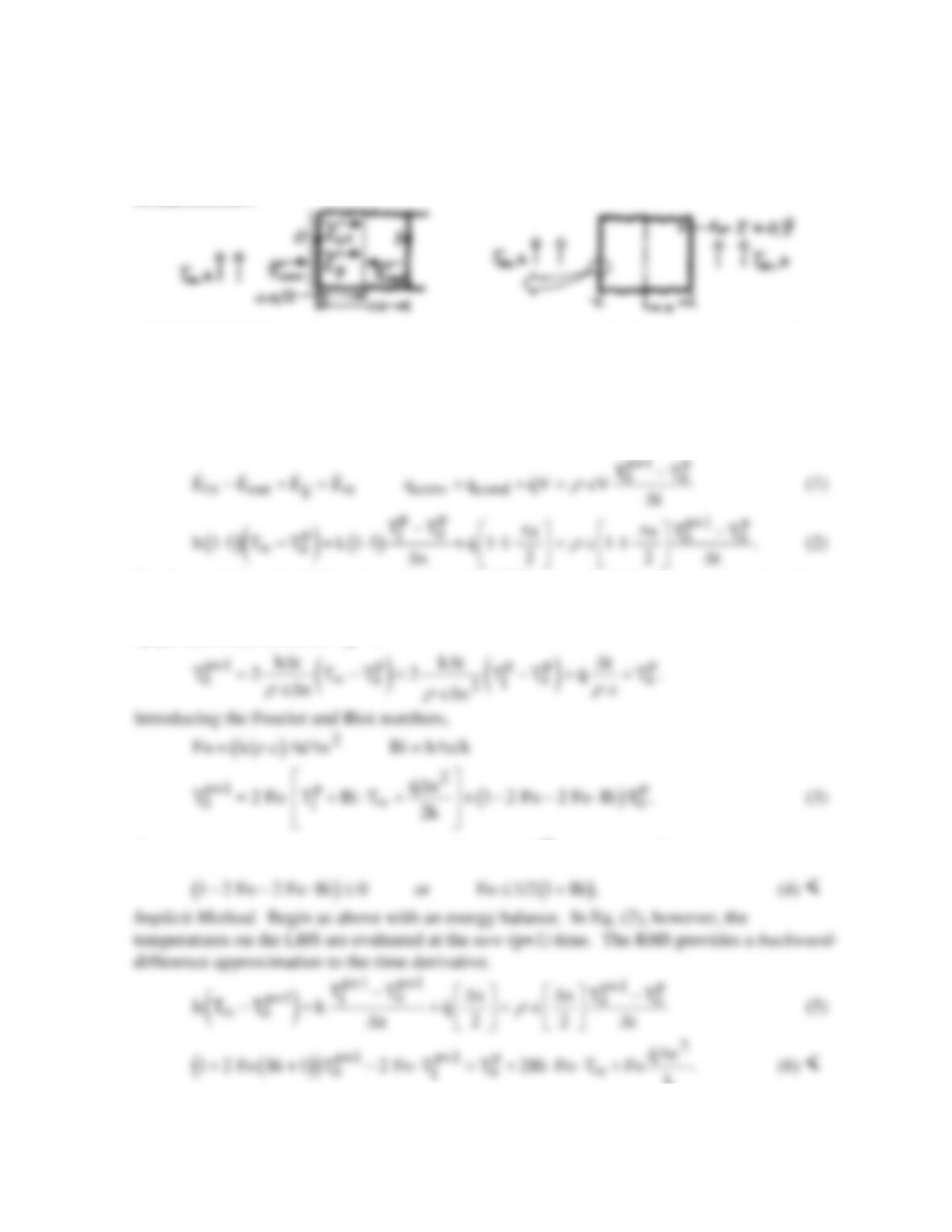
PROBLEM 5.89
KNOWN: One-dimensional wall suddenly subjected to uniform volumetric heating and
convective surface conditions.
FIND: Finite–difference equation for node at the surface, x = –L.
SCHEMATIC:
ASSUMPTIONS: (1) One–dimensional transient conduction, (2) Constant properties, (3)
Uniform
q.
ANALYSIS: There are two types of finite-difference equations for the explicit and implicit
methods of solution. Using the energy balance approach, both types will be derived.
Explicit Method. Perform an energy balance on the surface node shown above,
For the explicit method, the temperatures on the LHS are evaluated at the previous time (p).
The RHS provides a forward–difference approximation to the time derivative. Divide Eq. (2)
by ρc∆x/2∆t and solve for
p+1
T.
The stability criterion requires that the coefficient of
p
o
T
be positive. That is,
k
COMMENTS: Compare these results (Eqs. 3, 4 and 6) with the appropriate expression in
Table 5.3.
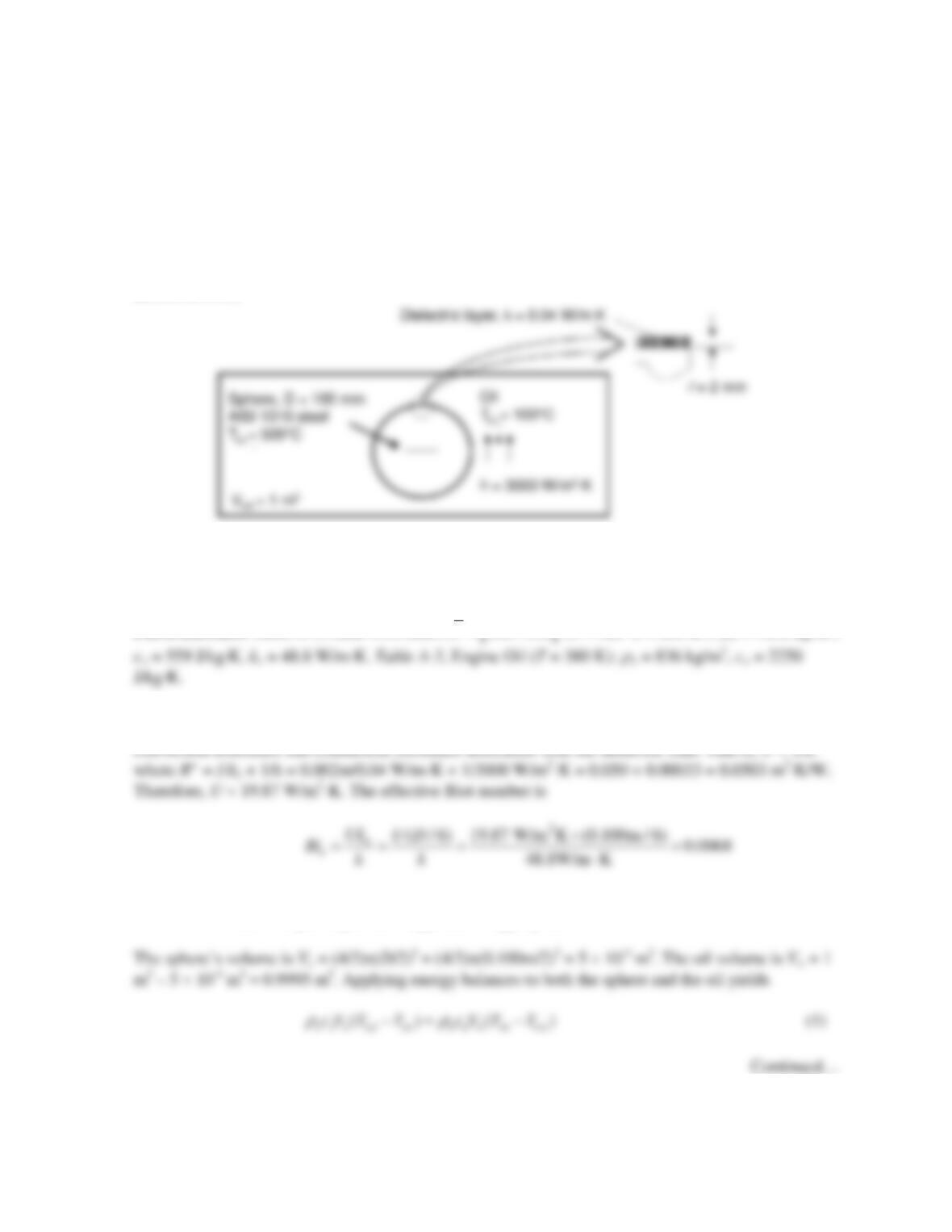
PROBLEM 5.90
KNOWN: Volume of sphere and oil, initial sphere and oil temperatures, convection coefficient,
thickness and thermal conductivity of dielectric film coating.
FIND: (a) Steady–state sphere temperature of the sphere, (b) explicit expressions for sphere and oil
temperatures and stability requirements, (c) Sphere and oil temperatures after one time step for ∆t =
1000, 10,000 and 20,000 s, (d) time needed for the coated sphere to reach 150°C using an implicit
finite difference formulation and solution and graph of thermal response of sphere and oil.
SCHEMATIC:
ASSUMPTIONS: (1) Dielectric layer has negligible thermal capacitance compared to steel sphere,
(2) Constant properties, (3) Negligible contact resistance between dielectric coating and steel, (4) Oil
bath is well–stirred, (5) Oil bath is well–insulated.
PROPERTIES: Table A-1, AISI 1010 Steel (
500 150 C/ 325 C 600 KT= + ° = °≈
):
ρ
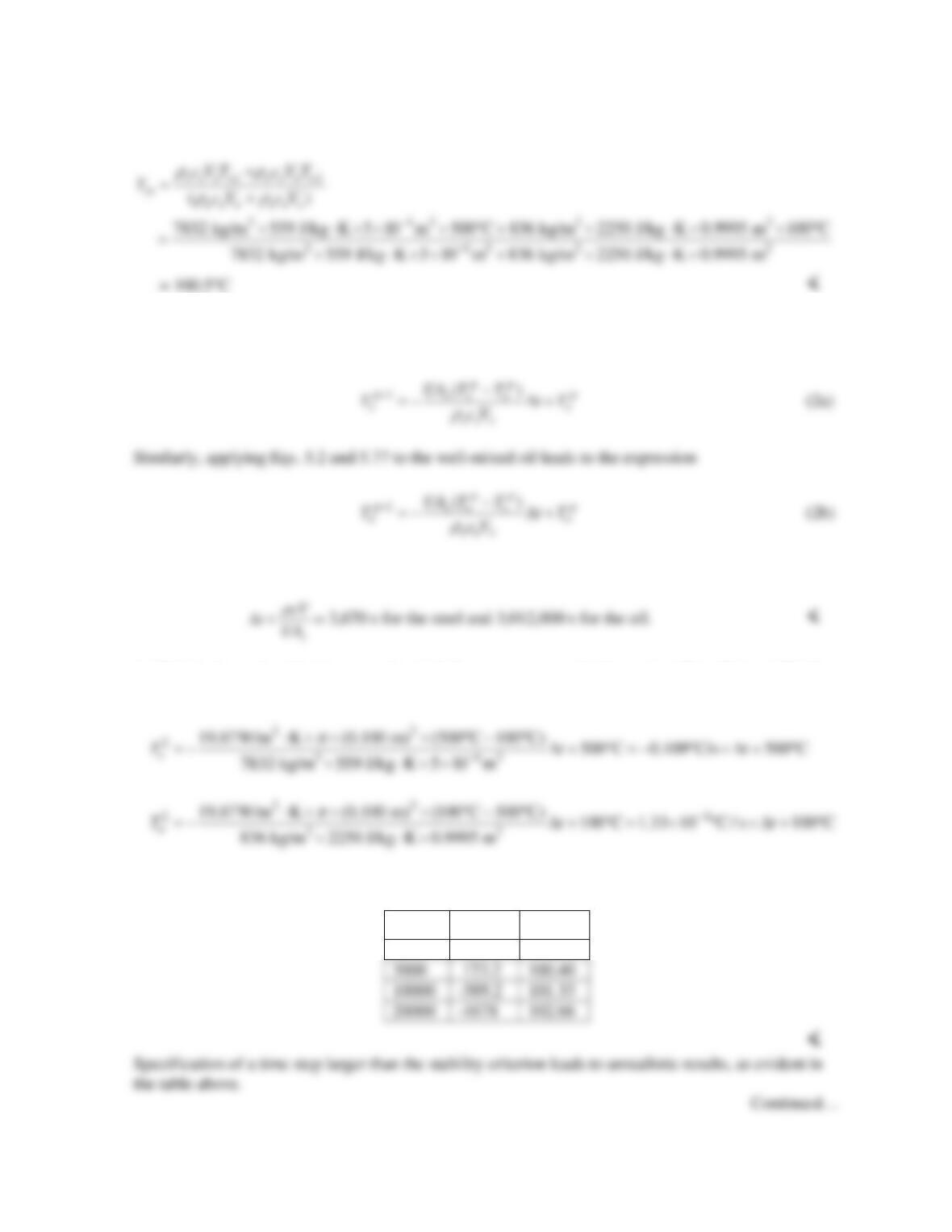
ANALYSIS: (a) Let U be the overall heat transfer coefficient that combines the effects of
Since the Bie < 0.1, a lumped capacitance approach is appropriate for the sphere. Similarly, since the
oil is well–mixed, a lumped capacitance approach is appropriate for the oil.
PROBLEM 5.90 (Cont.)
where Tss is the steady-state temperature of both the oil and the sphere. Rearranging Eq. (1) yields
(b) Recognizing that the oil temperature varies with time, applying Eqs. 5.2 and 5.77 to the sphere
yields
We require the coefficient of Tp to be positive. Thus,
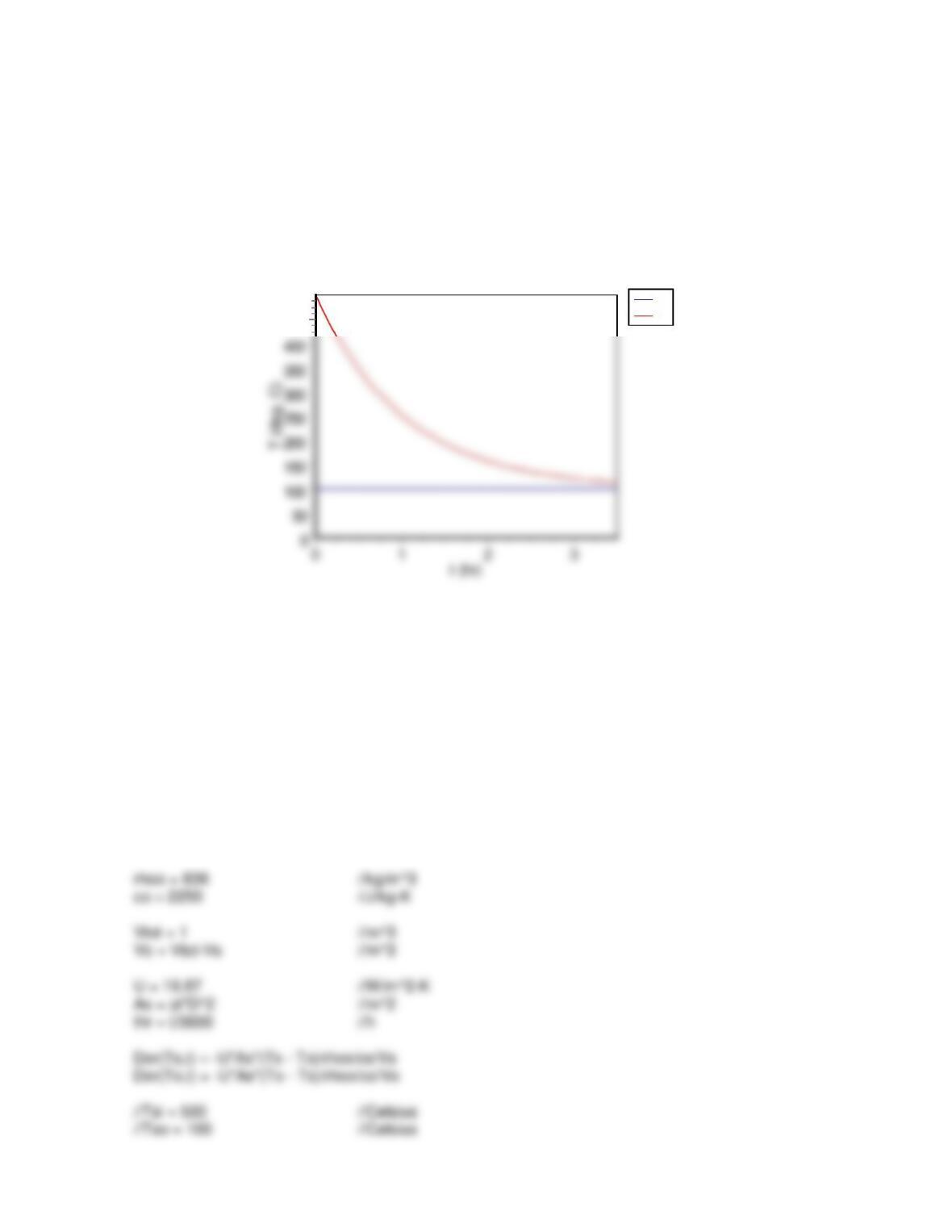
(c) Substituting values for the properties, initial temperatures, and volumes into Eqs. (2a) and (2b) for
one time step yields the following.
Results for various time step sizes are:
∆t (s)
2
s
T
(°C)
2
o
T
(°C)
1000
391.1
100.13
20000
-1678
102.66
PROBLEM 5.90 (Cont.)
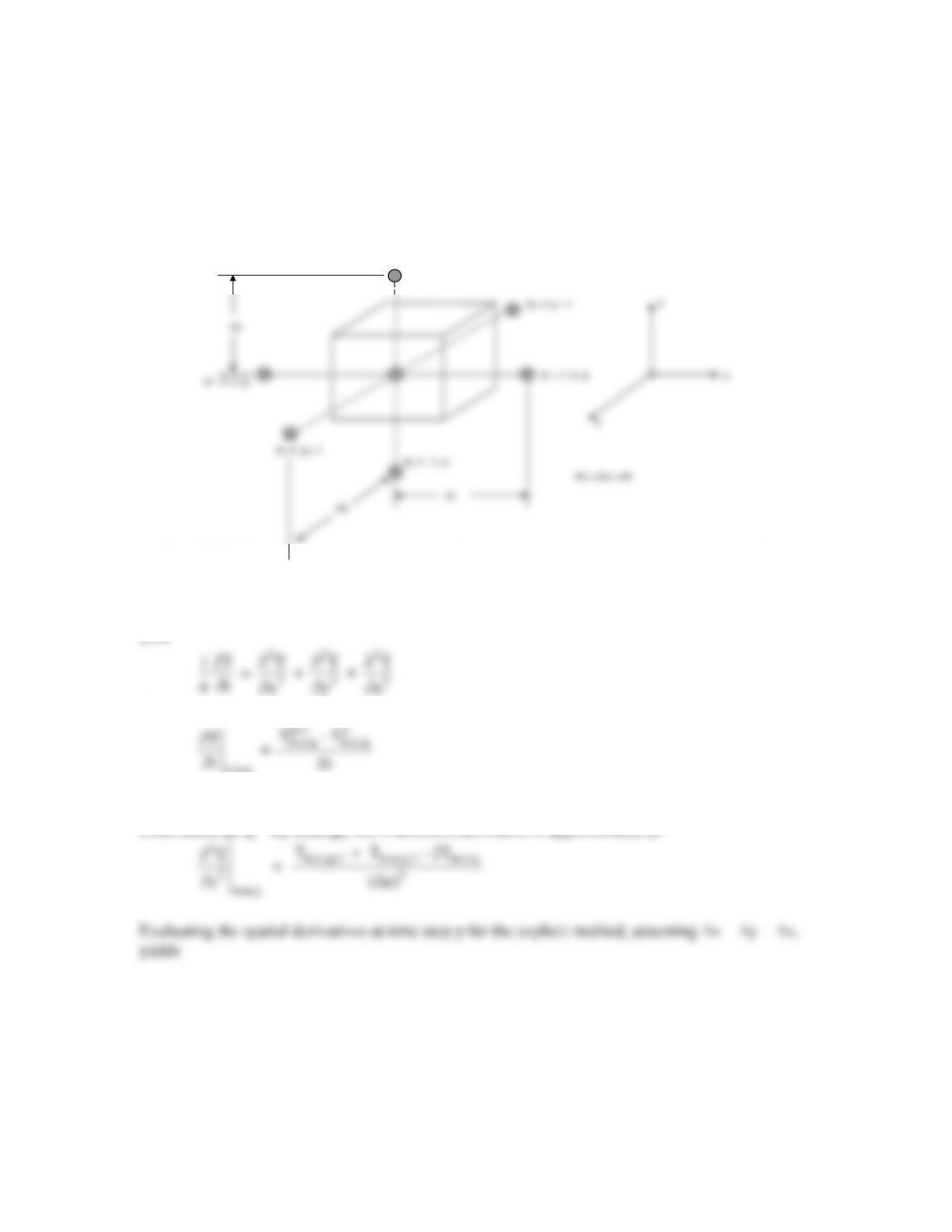
(d) Using the IHT code listed in the Comments, the following response was found for the sphere and
oil temperatures as a function of quench time using a time step of ∆t = 100 s. The time required for the
sphere to reach a temperature of 150°C is 7,800 s = 2.17 h. <
The time associated with a large oil bath (constant oil temperature) was found in Problem 5.10 using
the lumped capacitance method and is t = 7623 s = 2.12 h. <
To
Ts
450
COMMENTS: (1) The IHT Code is shown below. (2) The bath temperature at 2.17 h is 100.4°C.
The bath temperature has barely changed from its initial temperature because the bath is so large
relative to the sphere and therefore has so much greater thermal capacity than the sphere. For a smaller
bath, the oil temperature would change more significantly with time and the changing oil temperature
would have a larger impact on the sphere temperature. (3) For a total volume of 0.01 m3, the
steady–state temperature of the oil and sphere is 145.6°C, and the sphere reaches a temperature
of 150°C at 4.03 h instead of 2.17 h.
rhos = 7832 //kg/m^3
cs = 559 //J/kg-K
D = 0.1 //m
Vs = pi*D^3/6 //m^3
PROBLEM 5.91
KNOWN: Three–dimensional, transient conduction.
FIND: Explicit finite difference equation for an interior node, stability criterion.
SCHEMATIC:
ASSUMPTIONS: (1) Constant properties, (2) Equal grid spacing in all three directions, (3) No
heat generation.
ANALYSIS: We begin with the three-dimensional form of the transient heat equation, Equation
The finite-difference approximation to the time derivative is given by Equation 5.77:
m,n,q
The spatial derivatives for the x– and y- directions are given by Equations 4.27 and 4.28, with an
Continued…
m, n + 1, q
m, n + 1, q