5.21: PROBLEM DEFINITION
Situation:
A rectangular channel has a 30oincline.
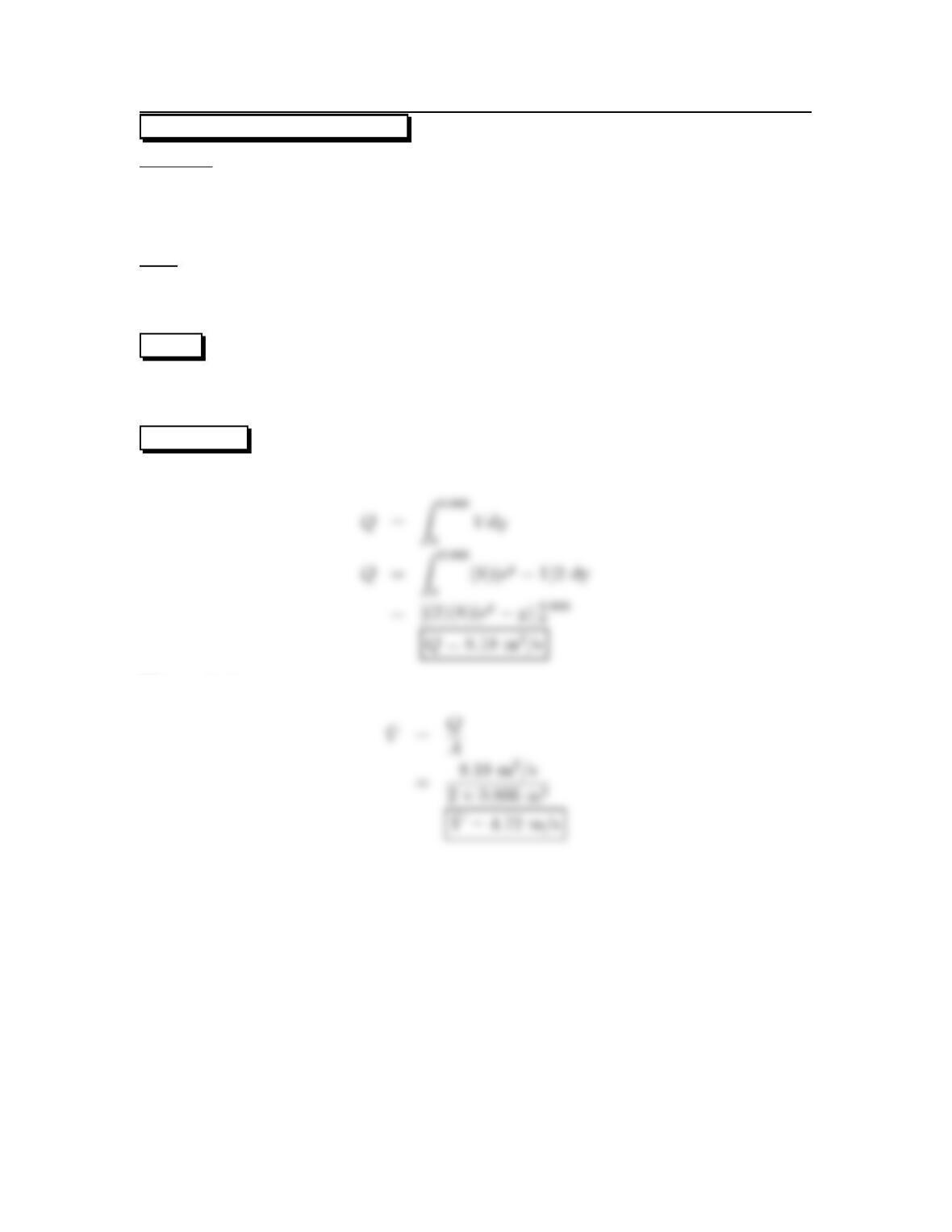
u=8[exp(y)−1] m/s.
y=1m,x=2m.
Find:
Discharge (m3/s).
Mean velocity ( m/s).
PLAN
Apply the integral form of the flow rate equation becuse velocity is not constant over
the area.
SOLUTION
Discharge.
Mean velocity
21
5.22: PROBLEM DEFINITION
Situation:
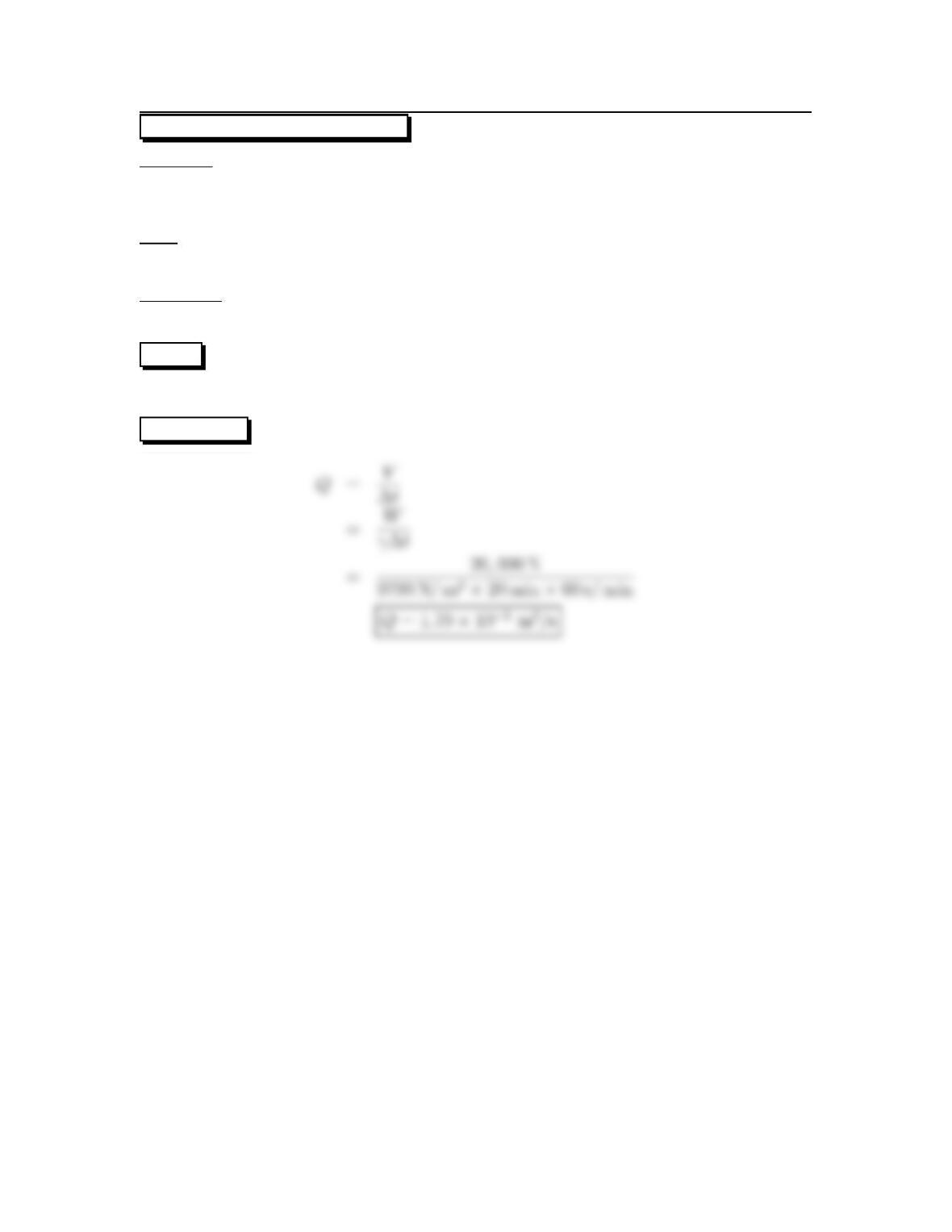
Water enters a weigh tank from a pip e.
t=20min,W=20kN.
Find:
Discharge (m3/s).
Properties:
Water (20 ◦C), Table A.5: γ=9790N/m3.
PLAN
Definition of discharge is a volume/time.
SOLUTION
22
5.23: PROBLEM DEFINITION
Situation:
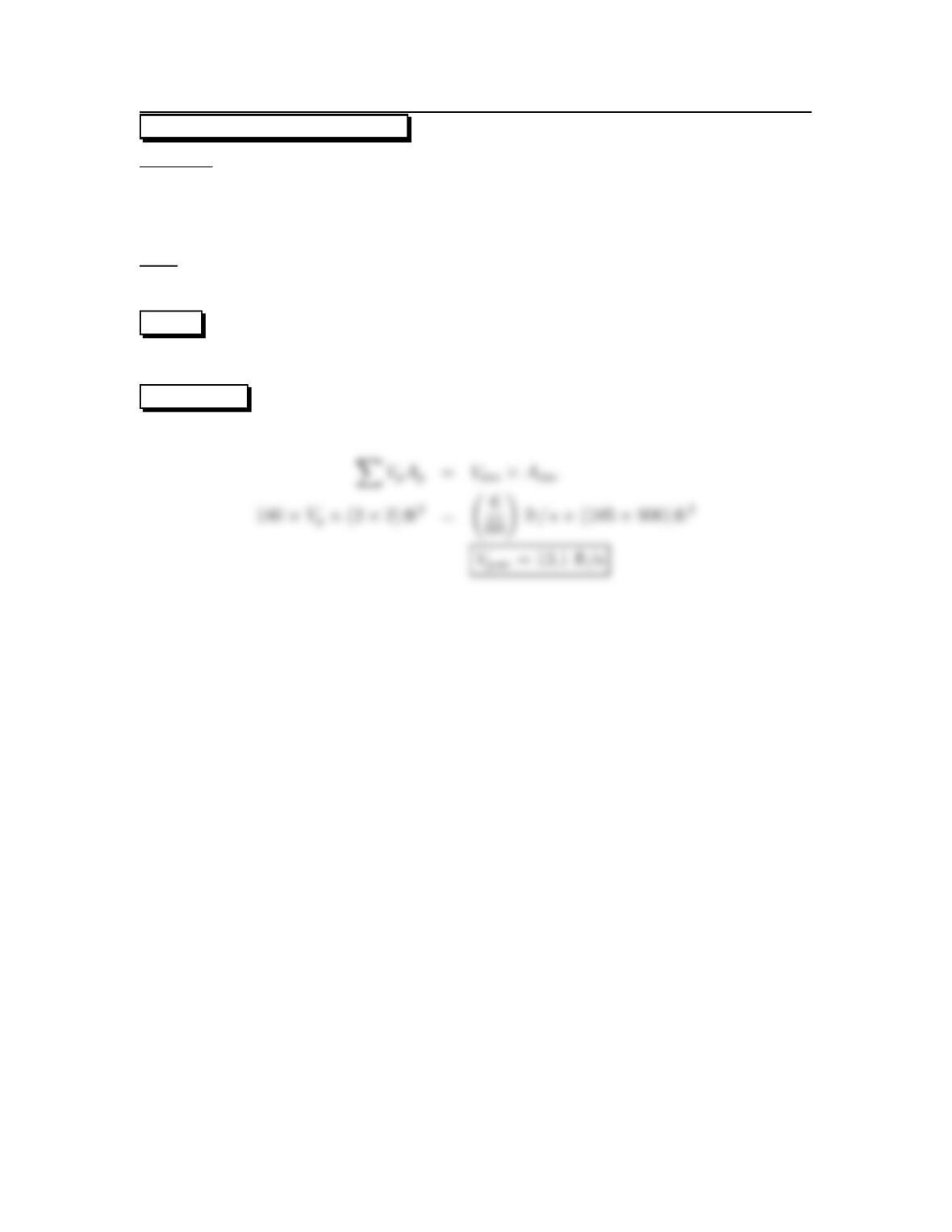
Water enters a lock for a ship canal through 180 ports.
Ap=2ft×2ft,A
rise =105ft×900 ft.
Vrise =6ft/min.
Find:
Mean velocity in each port (ft/s).
PLAN
Apply the continuity equation.
SOLUTION
Continuity equation
23
5.24: PROBLEM DEFINITION
Situation:
Water flows through a rectangular and horizontal open channel.
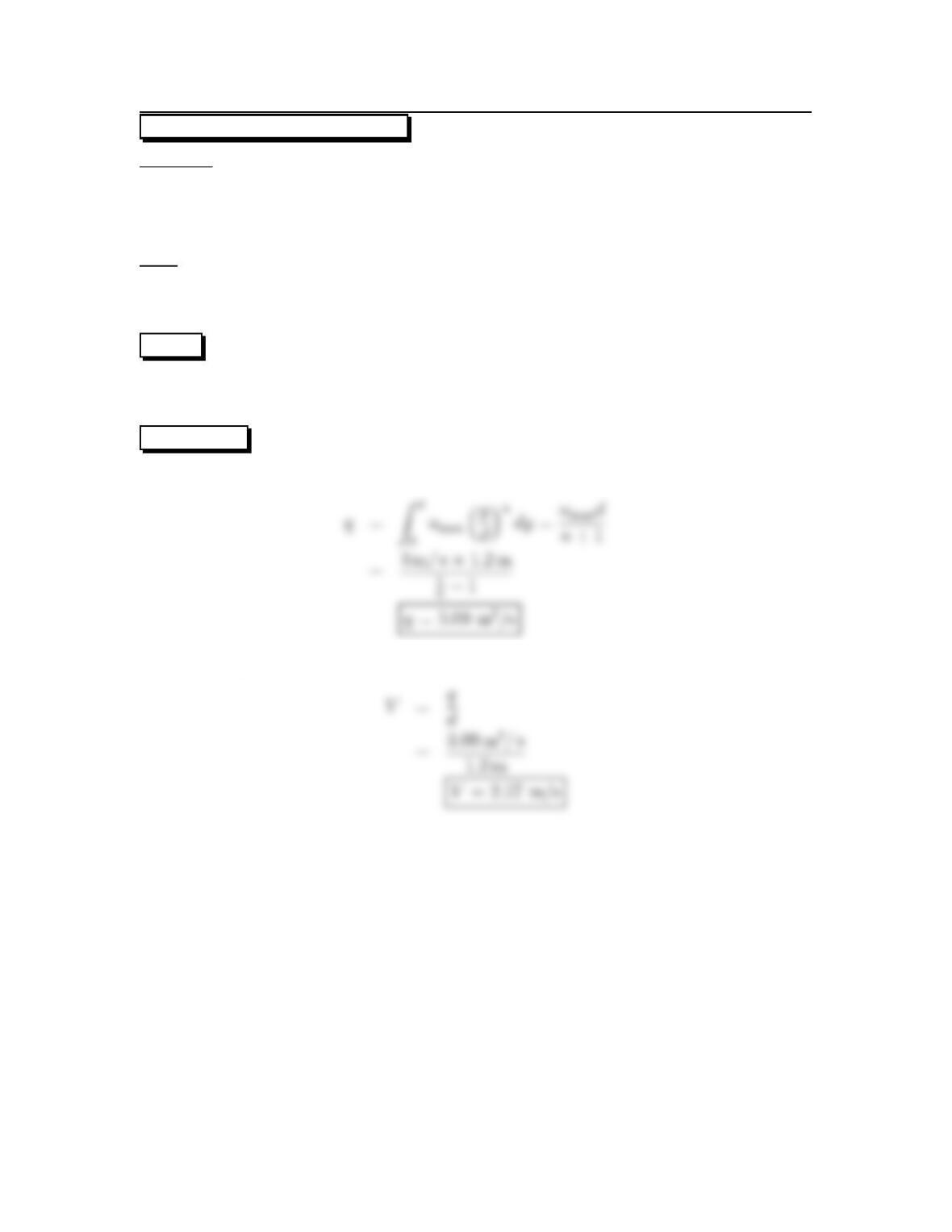
u=umax(y/d)n,umax =3 m/s.
d=1.2m,andn=1/6.
Find:
Discharge per meter of channel width (m2/s).
Mean velocity (m/s).
PLAN
Apply the flow rate equation, considering that velocity is not constant of the cross-
sectional area.
SOLUTION
Discharge per meter
Mean velocity
24
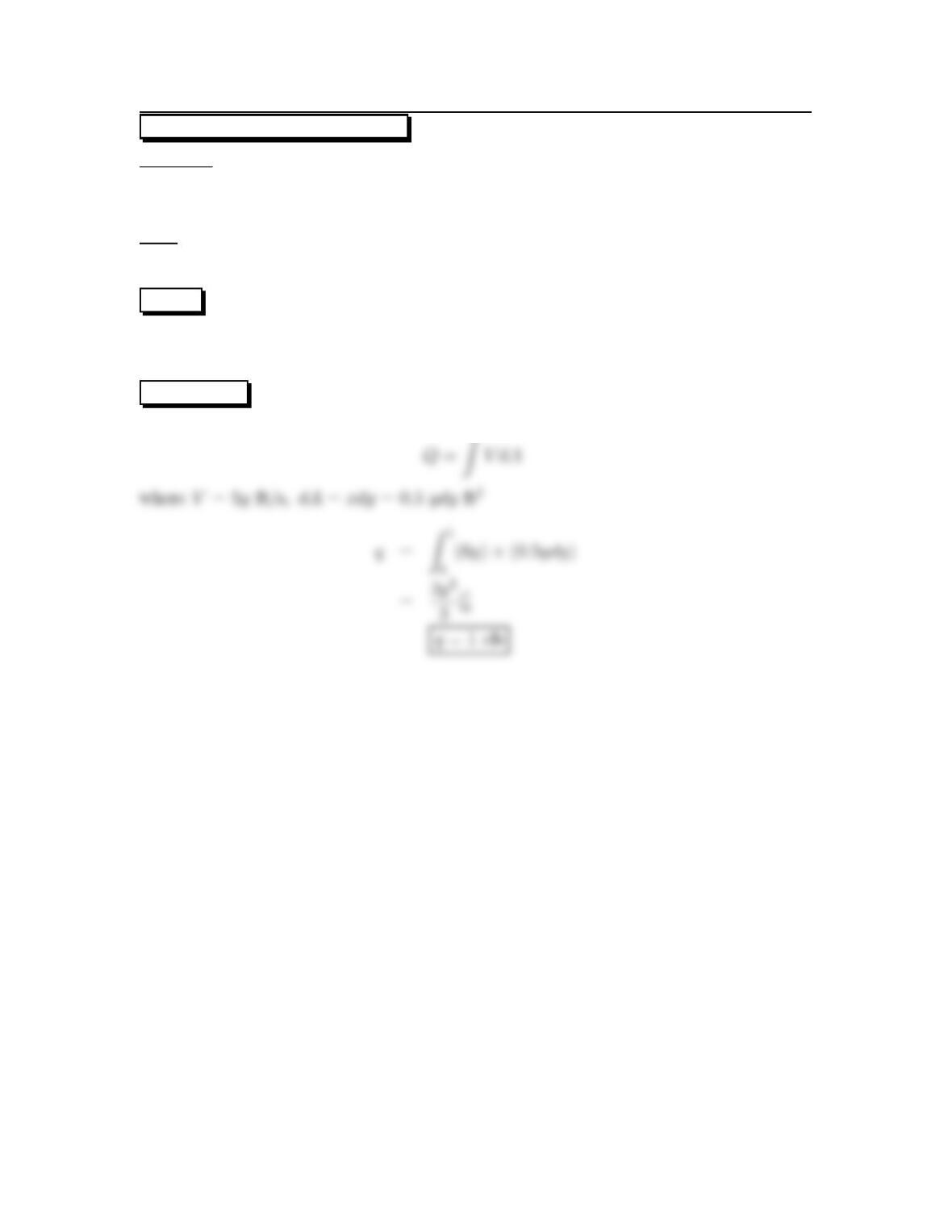
5.25: PROBLEM DEFINITION
Situation:
Aflow with a linear velocity profile occurs in a triangular-shaped open channel.
Vmax =6ft/s,d=1ft,w
max =0.5ft.
Find:
Discharge (cfs).
PLAN
Apply the flow rate equation, considering that velocity is not constant of the cross-
sectional area.
SOLUTION
Flow rate equation
25
5.26: PROBLEM DEFINITION
Situation:
Flow in a circular pipe.
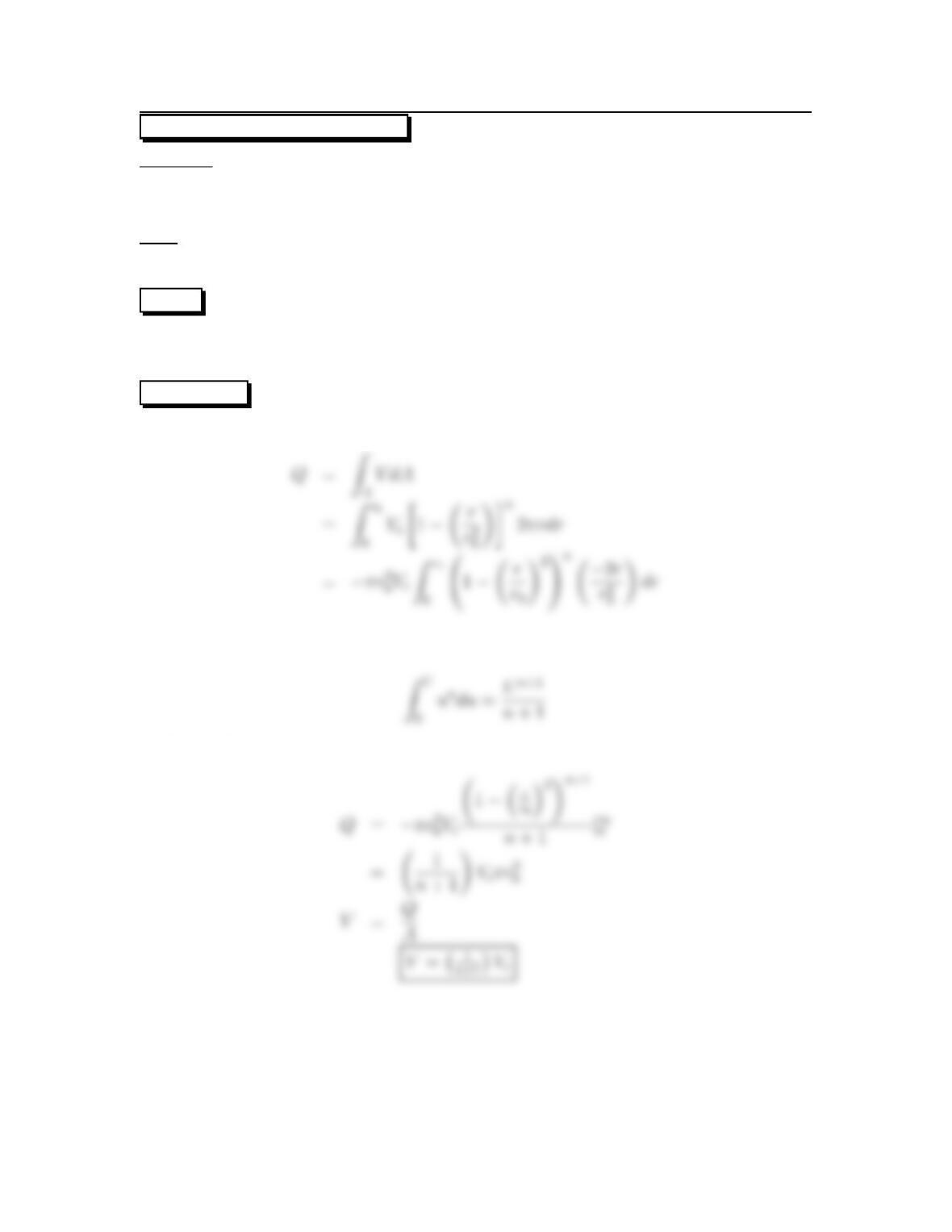
V=Vc(1 −(r/ro))n.
Find:
Mean velocity of the form V=V(Vc,n).
PLAN
Apply the flow rate equation, considering that velocity is not constant across the
cross-sectional area.
SOLUTION
Flow rate equation
This integral is in the form of
so the result is
26
5.27: PROBLEM DEFINITION
Situation:
Flow in a pipe.
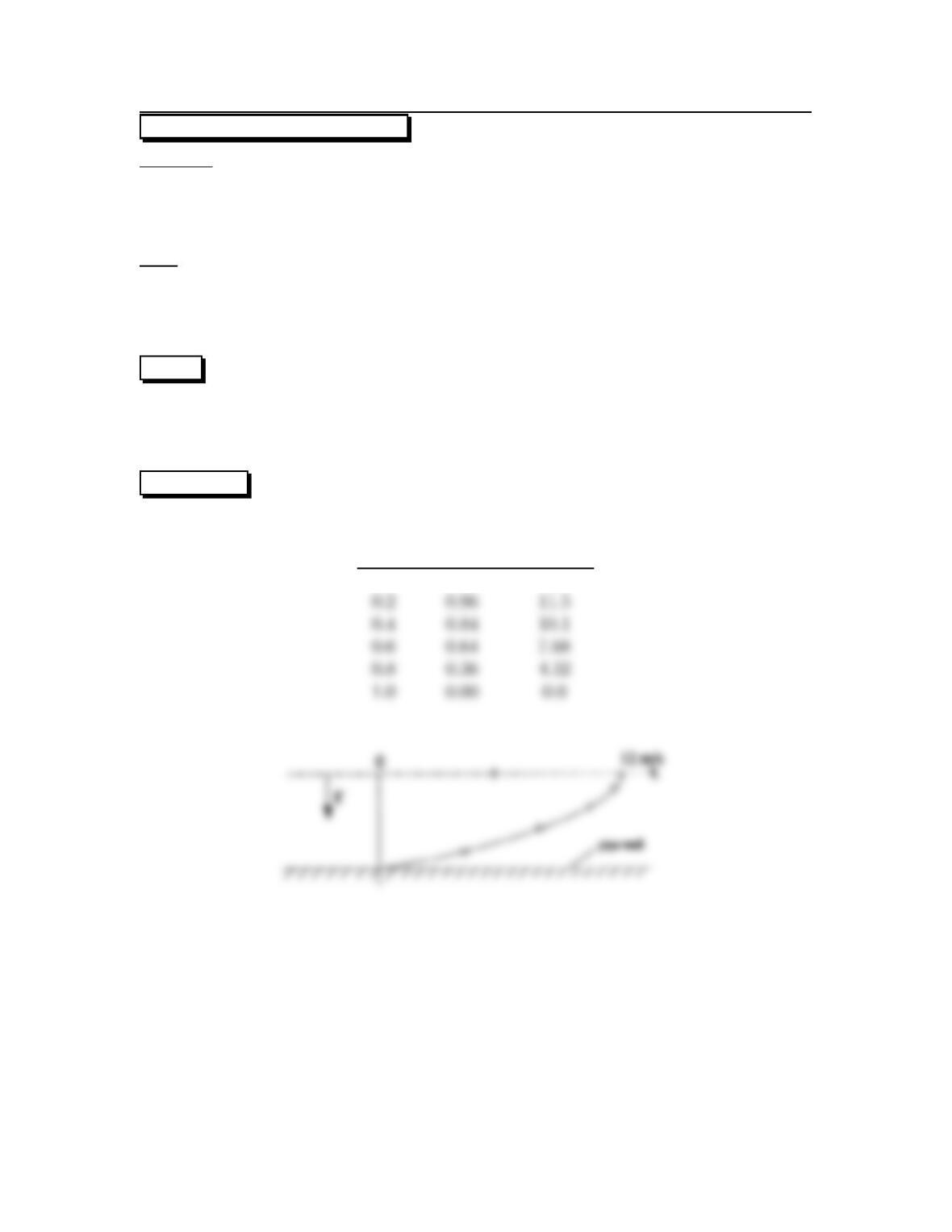
V=12(1−r2/r2
o).
D=1m,Vc=12m/s.
Find:
Plot the velocity profile.
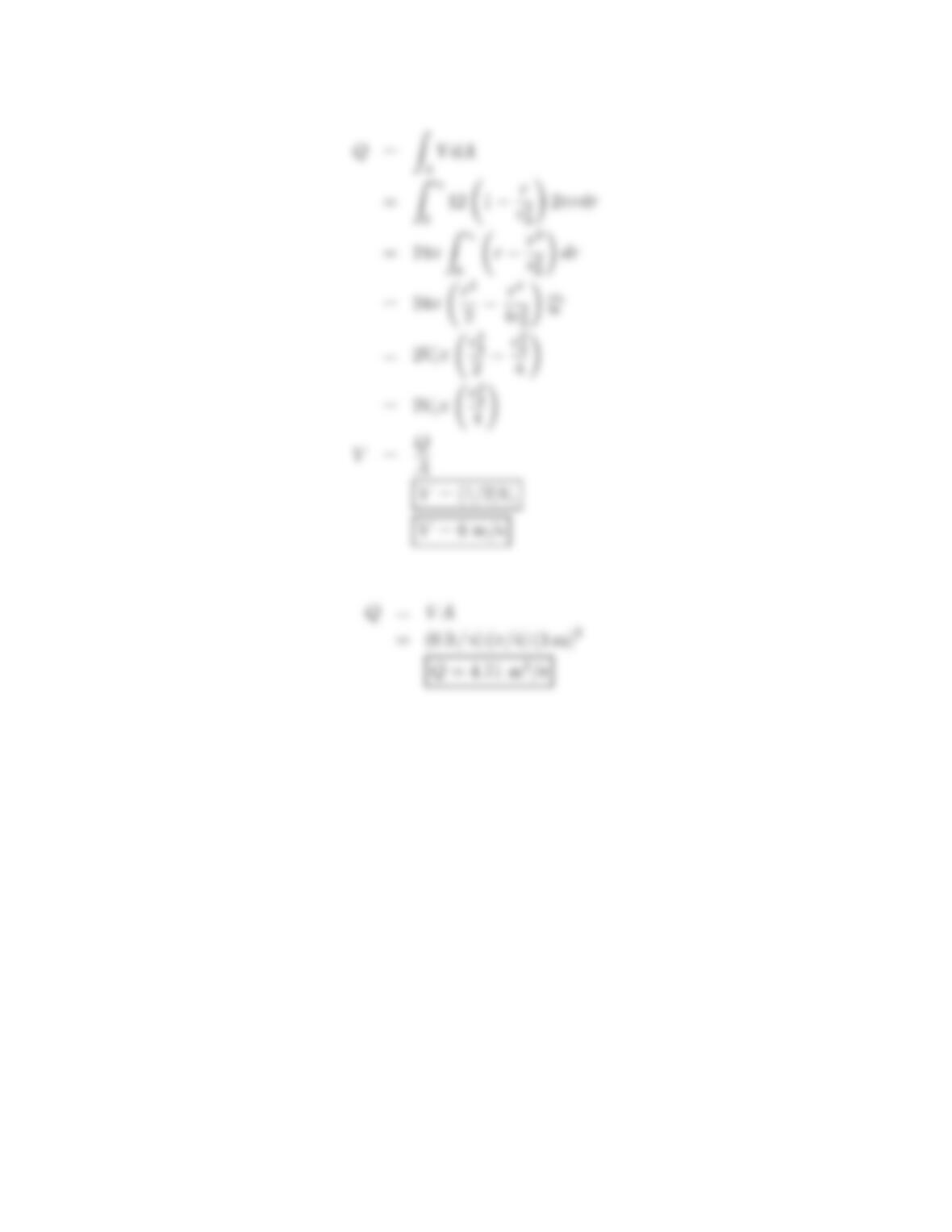
Mean velocity (m/s).
Discharge (m3/s).
PLAN
1. Velocity profile is V=f(r).
2. Apply the flow rate equation, considering that velocity is not constant across the
cross-sectional area.
SOLUTION
1. Velocity
r/r01−(r/r0)2V(m/s)
0.0 1.00 12.0
2. Flow rate equation
27
28
5.28: PROBLEM DEFINITION
Situation:
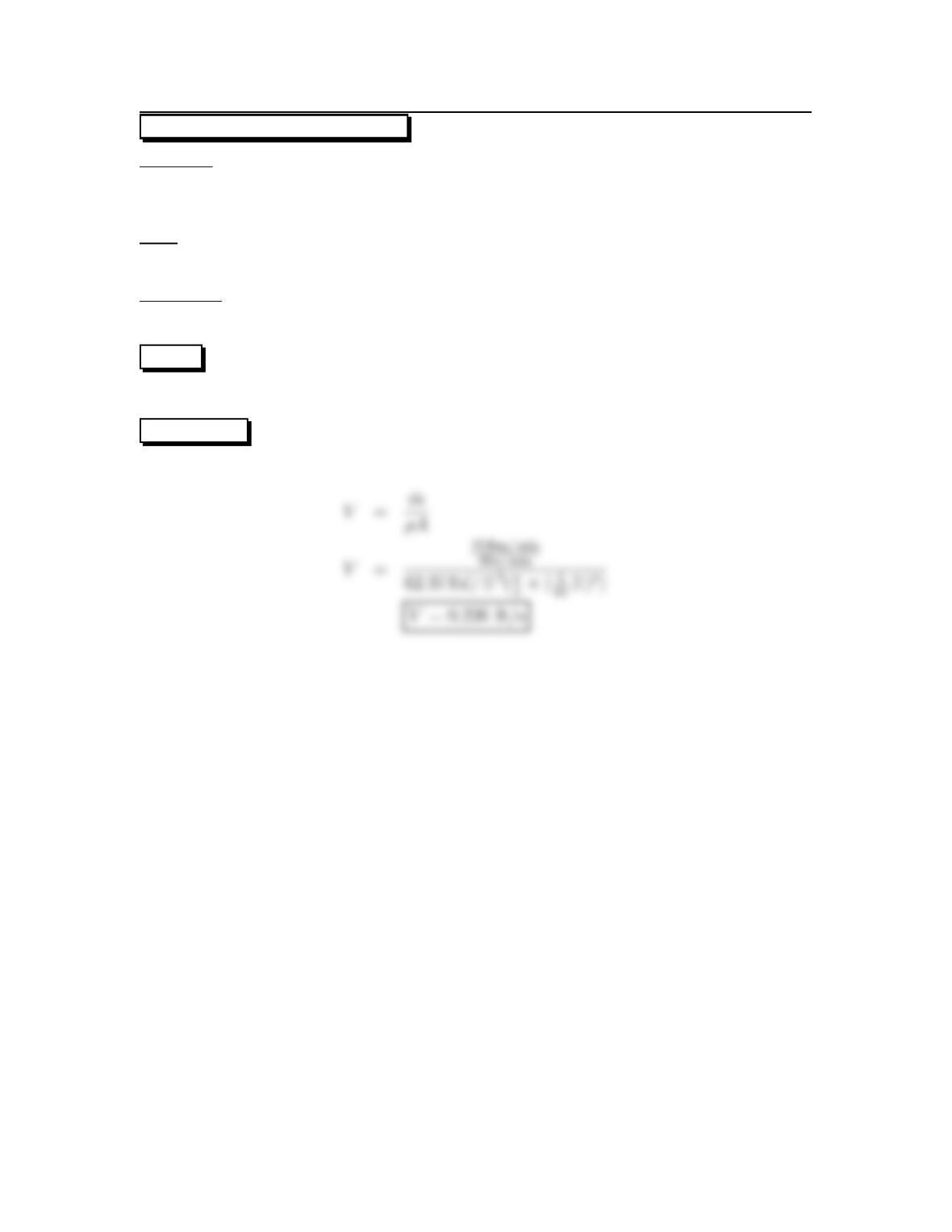
Water flows in a pipe.
D=4in,˙m=75 lbm/min.
Find:
Mean velocity (ft/s).
Properties:
Water (60 ◦F), Table A.5: ρ=1.94 slug/ft3=62.37 lbf/ft3.
PLAN
Apply the flow rate equation.
SOLUTION
Flow rate equation
29
5.29: PROBLEM DEFINITION
Situation:
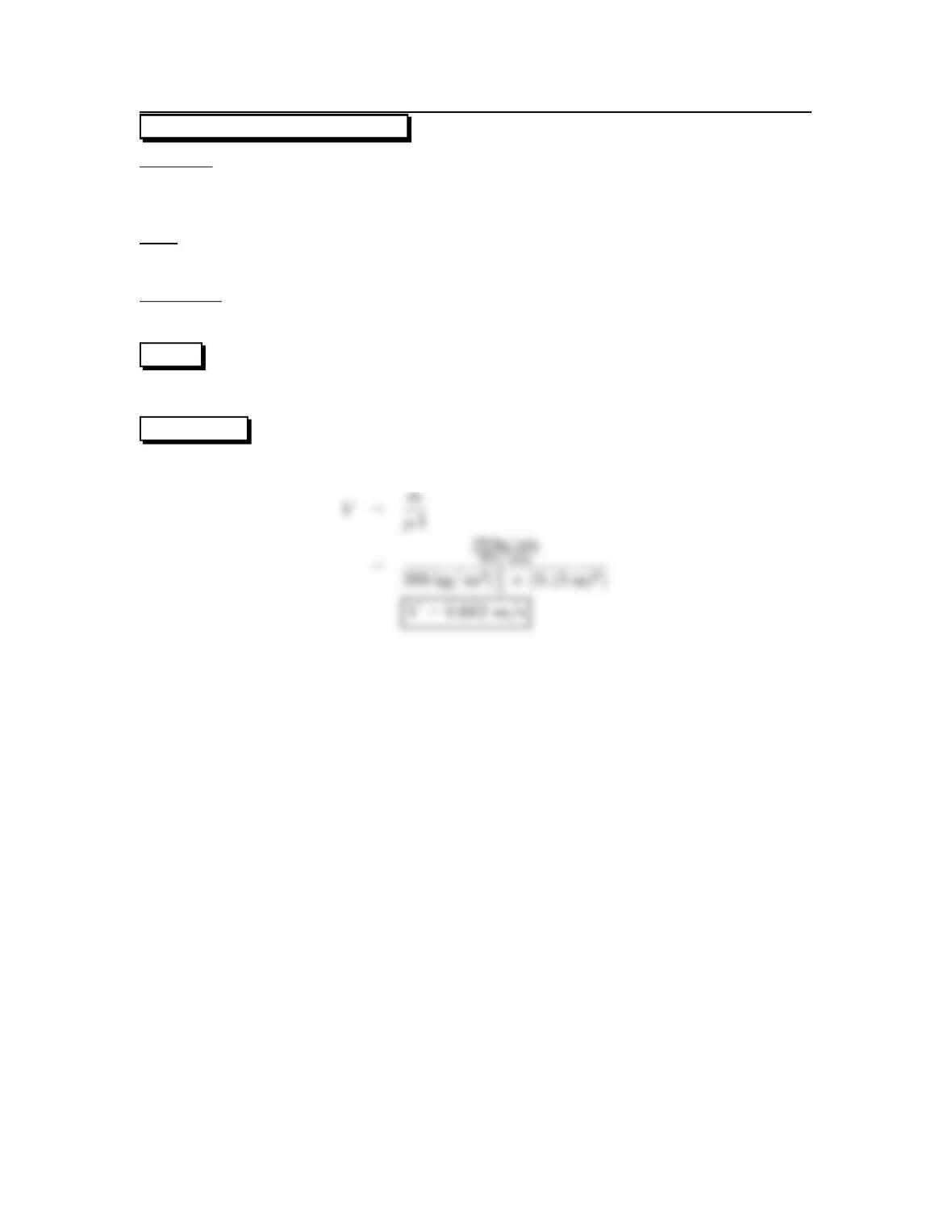
Water flows in a pipe.
D=0.15 m,˙m=700 kg/min.
Find:
Mean velocity (m/s).
Properties:
Water (20 ◦C), Table A.5: ρ=998 kg/m3.
PLAN
Apply the flow rate equation.
SOLUTION
Flow rate equation
30
5.30: PROBLEM DEFINITION
Situation:
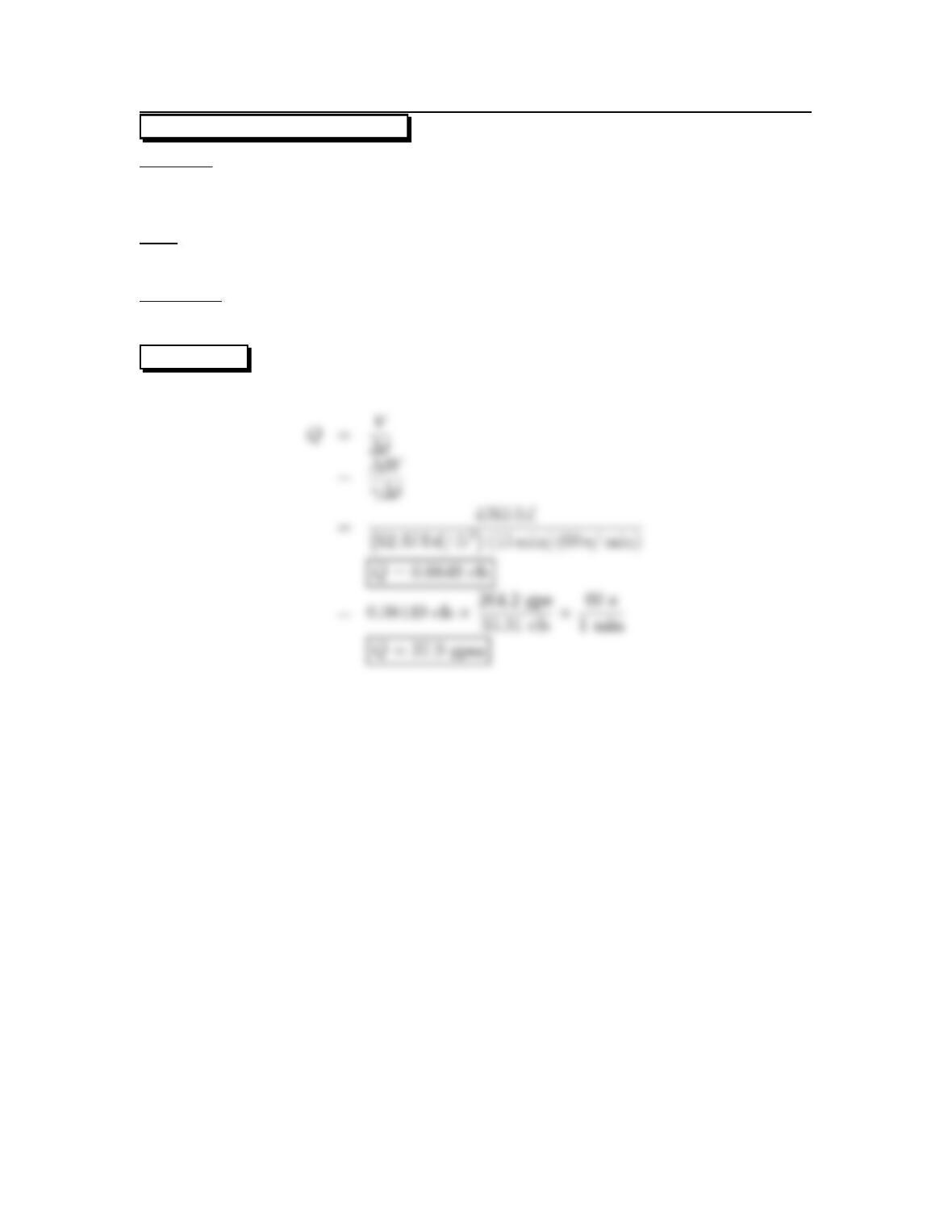
Water enters a weigh tank.
W= 4765 lbf,t=15min.
Find:
Discharge in units of cfs and gpm.
Properties:
Water (60 ◦F), Table A.5: γ=62.37 lbf/ft3.
SOLUTION
31
5.31: PROBLEM DEFINITION
Situation:
A shell and tube heat exchanger with one pipe inside another pipe. Liquids flow
in opposite directions.
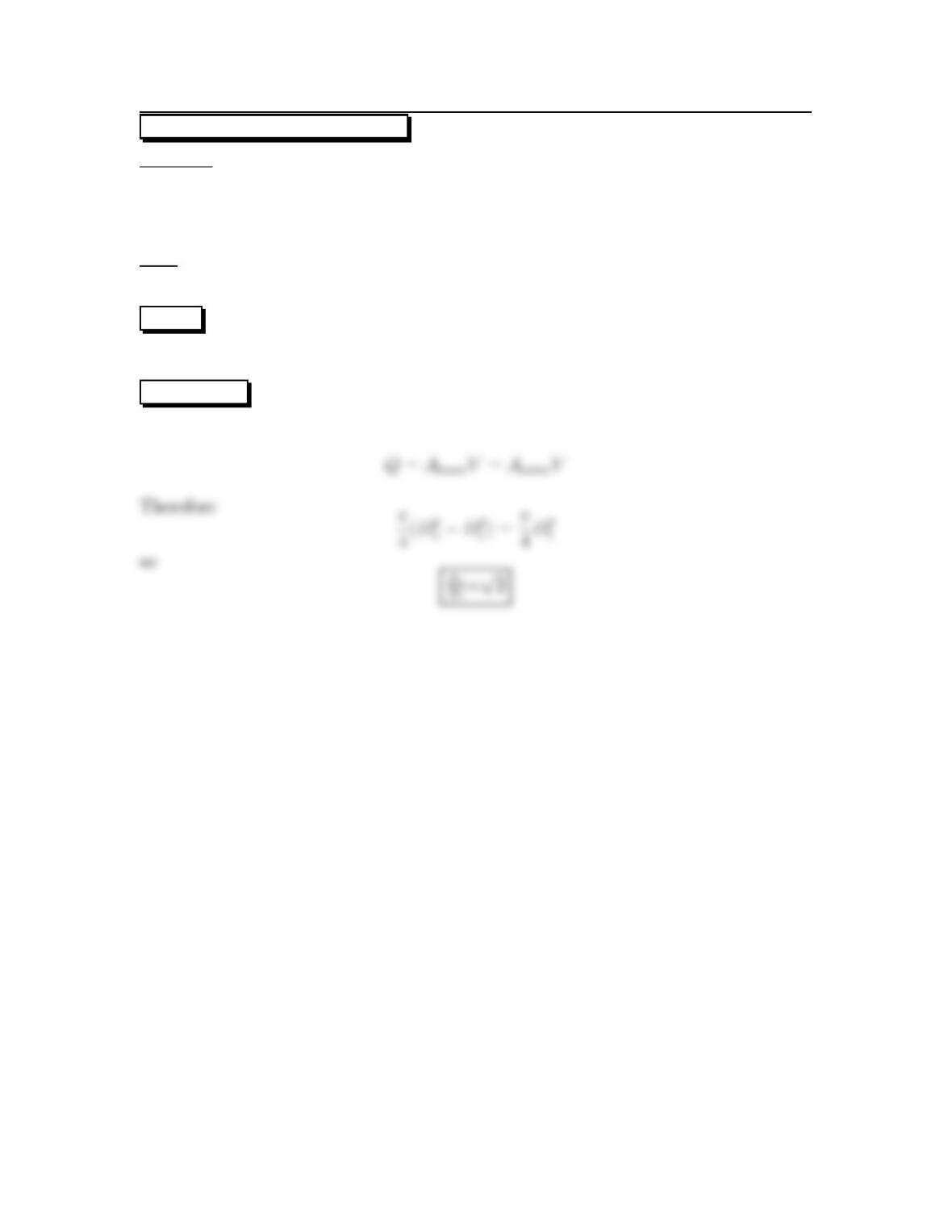
Vo=Vi,Q
o=Qi.
Find:
Find ratio of diameters.
PLAN
Use discharge equation Q=AV and neglect pipe wall thickness.
SOLUTION
Discharge and velocity the same so
32
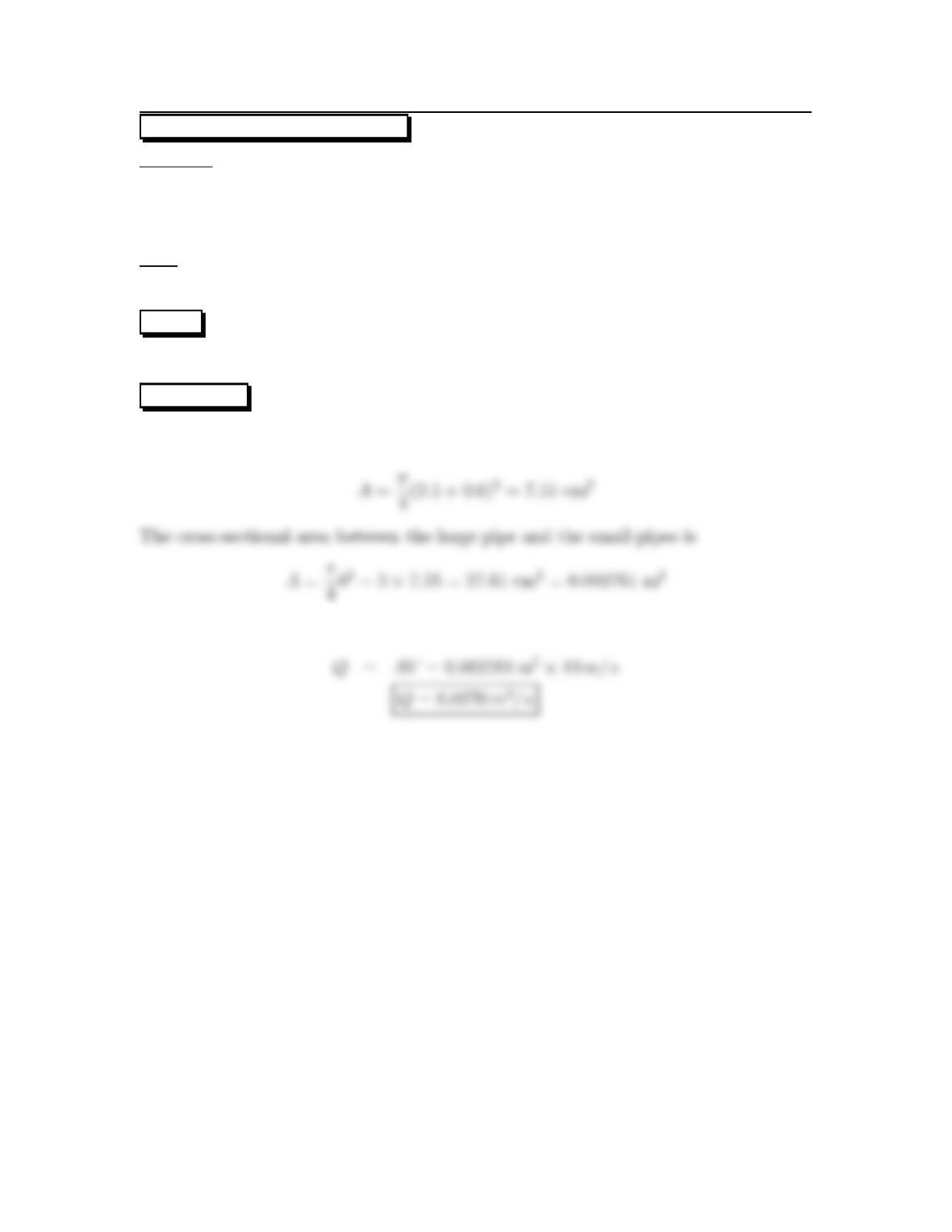
5.32: PROBLEM DEFINITION
Situation:
A heat exchanger has three pipes enclosed in a larger pipe.
V=10m/s,Dsmall =2.5cm with wall thickness 3mm.
Dlarge =8cm.
Find:
Dischargeinsidelargerpipe.
PLAN
Use discharge equation, Q=AV where Ais net area inside large pipe.
SOLUTION
The outside cross-sectional area of each smaller pipe is
The discharge is
33
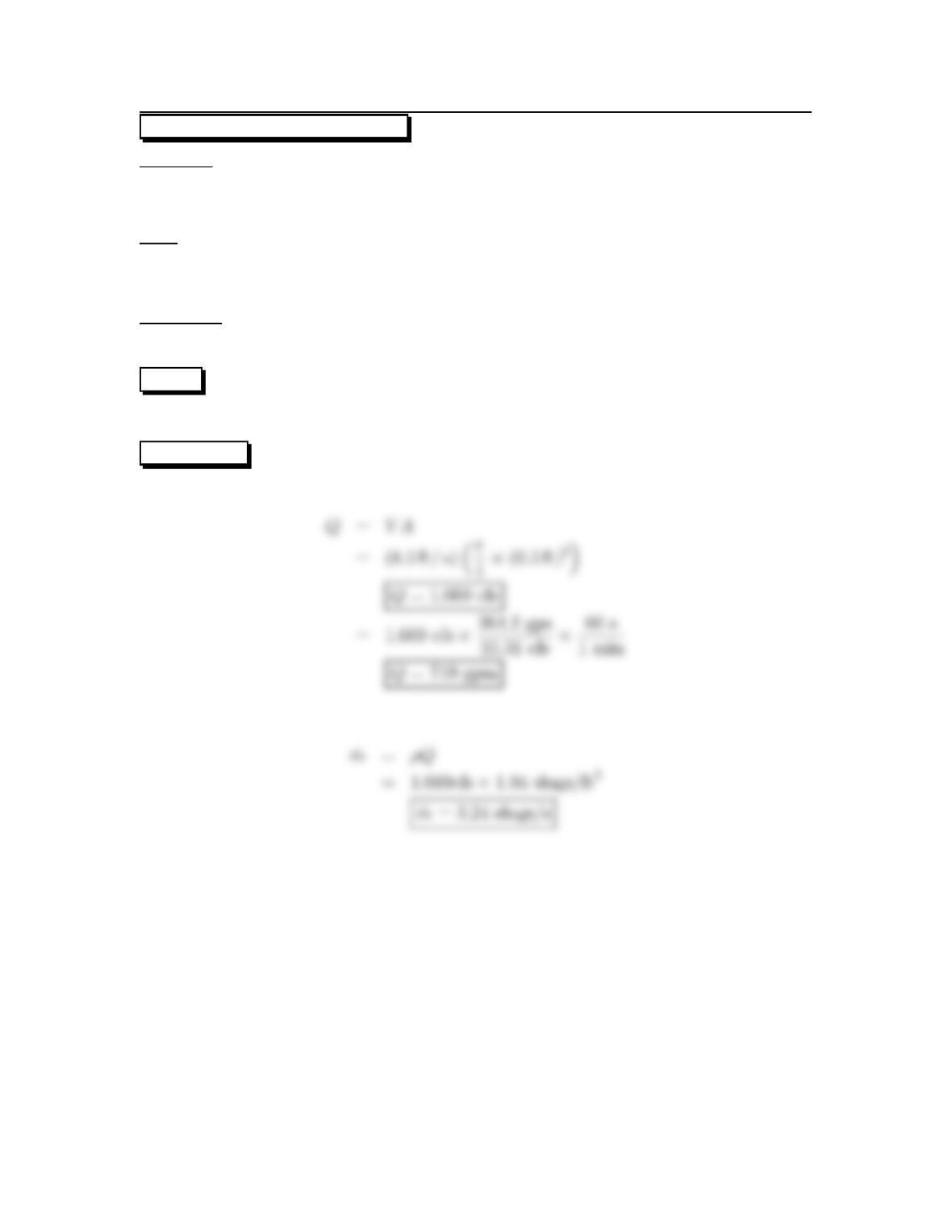
5.33: PROBLEM DEFINITION
Situation:
Water flows in a pipe.
V=8.5ft/s,D=6in=0.5ft.
Find:
Discharge in units of cfs and gpm.
Mass flow rate (kg/s).
Properties:
Water (60 ◦F), Table A.5: ρ=1.94 slug/ft3.
PLAN
Apply the flow rate equation.
SOLUTION
Flow rate equation
Mass flow rate
34
5.34: PROBLEM DEFINITION
Read §4.2, §5.2 of EFM10e, and the internet to find answers to the following questions.
Find:
a. What does the Lagrangian approach mean? What are three real-world examples
that illustrate the Lagrangian approach? [use examples that are not in the text].
SOLUTION
Generally, a Lagrangian approach means to observe or describe the motion of a body
of matter of fixed identity. In fluid mechanics, the Lagrangian approach means moni-
Find:
b. What does the Eulerian approach mean? What are three real world examples
that illustrate the Eulerian approach? [use examples that are not in the text].
SOLUTION
TheEulerianapproachinvolvesselectingaregioninspaceandthendescribingthe
motion that is occurring at points in that region. In addition, the Eulerian approach
allows properties to be evaluated at spatial locations as a function of time. This is
Find:
c. What are three important differences between the Eulerian and the Lagrangian
approach?
SOLUTION
35
Find:
d. Why use an Eulerian approach? What are the benefits?
SOLUTION
The benefit of using a Eulerian approach is that you just need to be able to describe
the flow field, such as the pressure distribution, everywhere throughout the system,
Find:
e. What is a field? How is a field related to the the Eulerian approach?
SOLUTION
Afieldissomevariablethathasbeendefined over some spatial region, such as the
Find:
f. What are the shortcomings of describing a flow field using the Lagrangian descrip-
tion?
SOLUTION
Onemustknowwherethestreamlinesareatalltimes,whichisdifficult in many
36
5.35: PROBLEM DEFINITION
Situation:
Properties.
Find:
What is the difference between an intensive and extensive property?
SOLUTION
The value of an extensive property depends on the amount matter and an intensive
37
5.36: PROBLEM DEFINITION
Situation:
State whether each of the following quantities is extensive or intensive:
a. mass
b. volume
c. density
d. energy
e. specificenergy
SOLUTION
a. mass — extensive, because it depends upon amount
38
5.37: PROBLEM DEFINITION
Situation:
What type of property do you get when you divide an extensive property by another
extensive property — extensive or intensive?
Hint: Consider density.
SOLUTION
39
5.38: PROBLEM DEFINITION
Situation:
Control surface and volume.
Find:
What is a control surface and control volume?
Can mass pass through a control surface?
SOLUTION
A control volume is volume defined in space and the control surface encloses the
40