5.1: PROBLEM DEFINITION
Situation:
Consider an automobile gas tank being filled by a nozzle.
Find:
(a) Discharge (gpm).
(b) Time to put 50 gallons in the tank (min).
(c) Cross-sectional area (ft2) of the nozzle and velocity at the exit (ft/s).
SOLUTION
a)
c)
A=π
4D2=π
4(1 in)21ft2
(12 in)2
A=0.00545 ft2
Discharge in cfs (ft3/s).
Discharge velocity.
1
5.2: PROBLEM DEFINITION
Situation:
Water is released through Grand Coulee Dam.
A=Wd,W=100yd =300ft.
Q= 110000 ft3/s.
Find:
Calculate river depth (ft).
Assumptions:
Make a reasonable estimate of the river velocity (V=5mi/h=7.3ft/s).
PLAN
Apply flow rate equation.
SOLUTION
The discharge is given by
2
5.3: PROBLEM DEFINITION
Situation:
Fill a jar with water and measure the time to fill.
Find:
Calculate discharge ( m3/s).
Calculate velocity ( m/s).
Assumptions:
Make an estimate of the cross-sectional area for the faucet (d=0.5in).
V=2L, t=13s.
PLAN
Apply flow rate equation.
SOLUTION
The discharge is
Faucet outlet area
3
5.4: PROBLEM DEFINITION
Situation:
Another name for the volume flow rate equation could be:
a. the discharge equation
b. the mass flow rate equation
c. either a or b
SOLUTION
4
5.5: PROBLEM DEFINITION
Situation:
Liquid flows through a pipe at constant velocity.
Find:
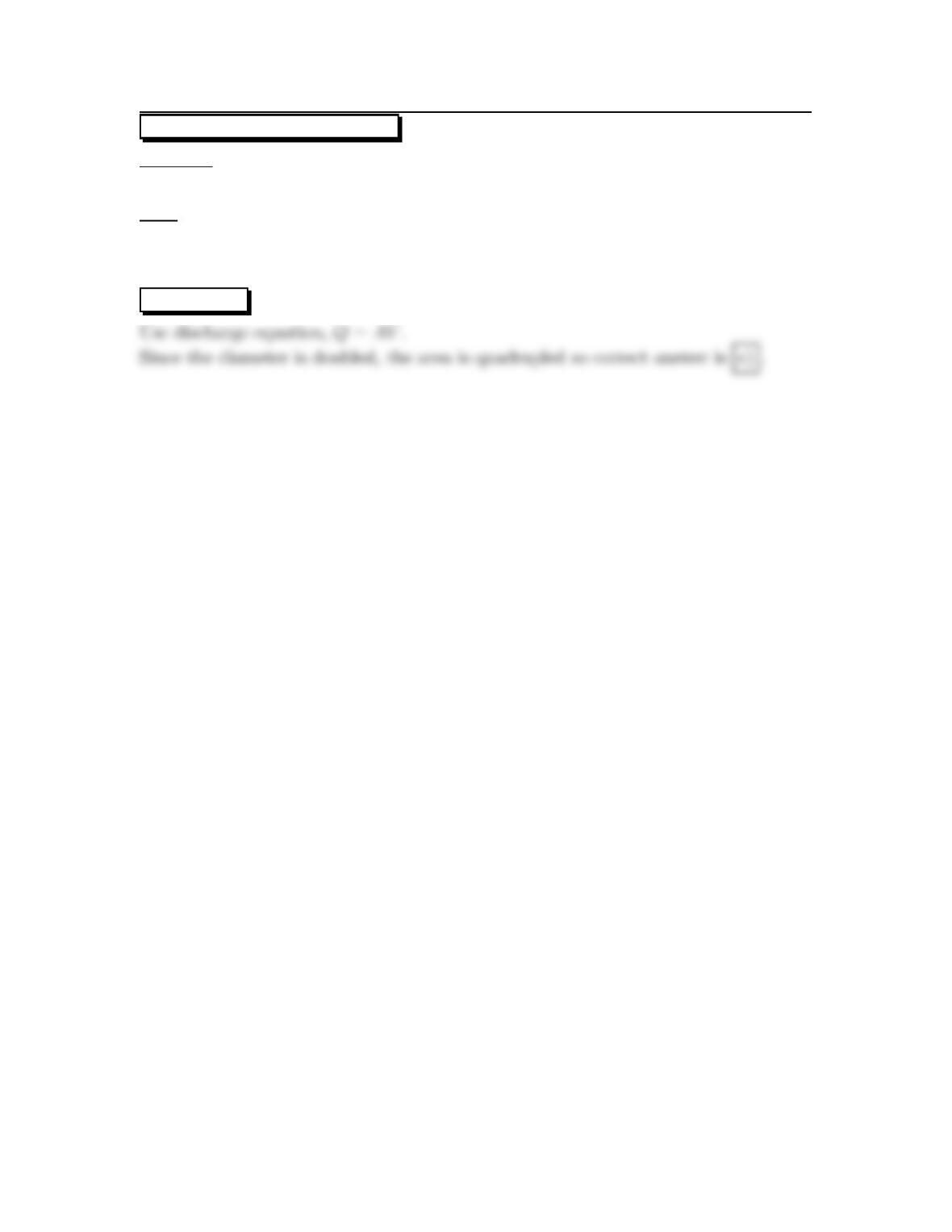
Ifapipetwicethesizeisusedwiththesameflow rate, find whether the flow rate
is (a) halved, (b) doubled, or (c) quadrupled.
SOLUTION
5
5.6: PROBLEM DEFINITION
Situation:
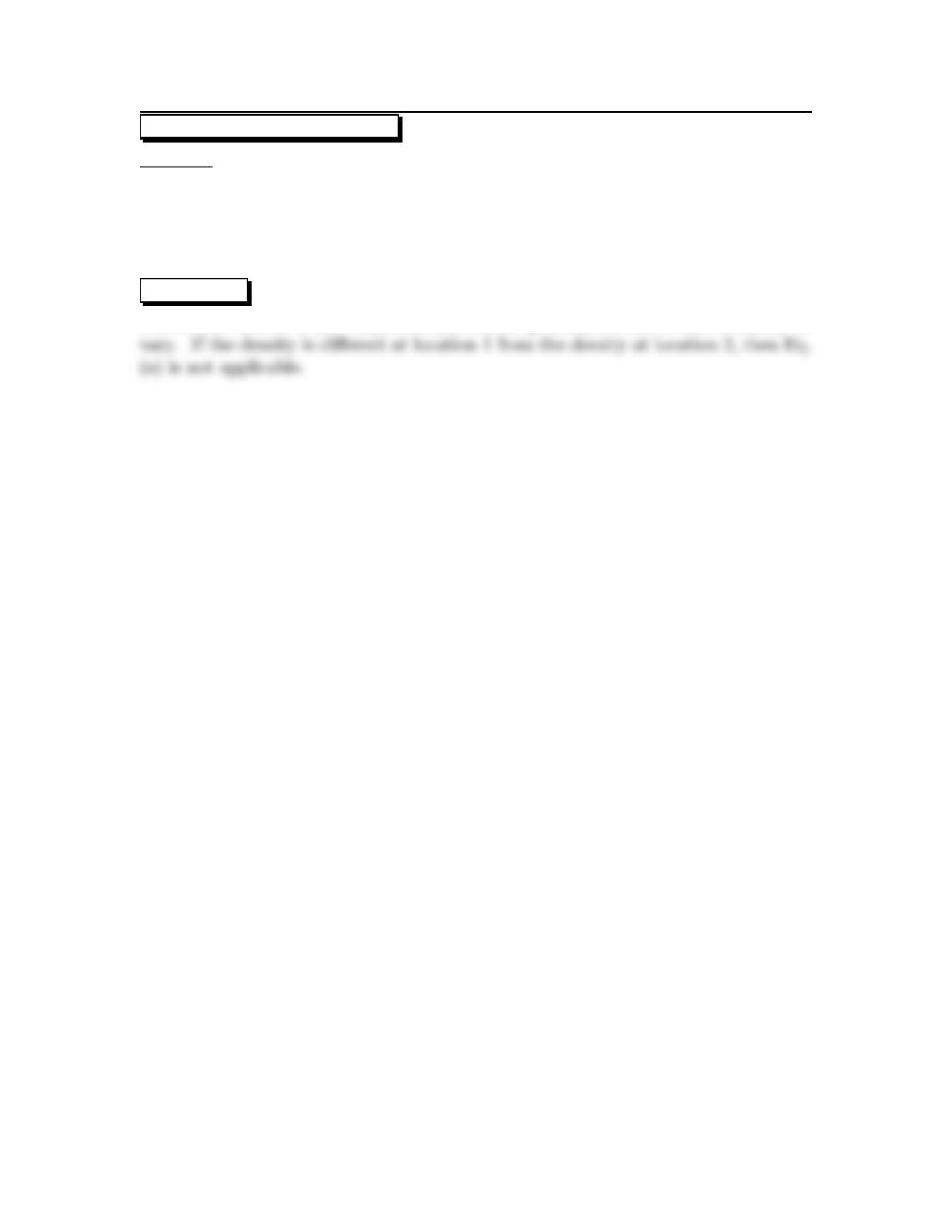
For flow of a gas in a pipe, which form of the continuity equation is more general?
a. V1A1=V2A2
b. ρ1V1A1=ρ2V2A2
c. both are equally applicable
SOLUTION
The correct answer is (b). Equation (b) is more general, because it allows density to
6
5.7: PROBLEM DEFINITION
Situation:
Water flows in a pipe.
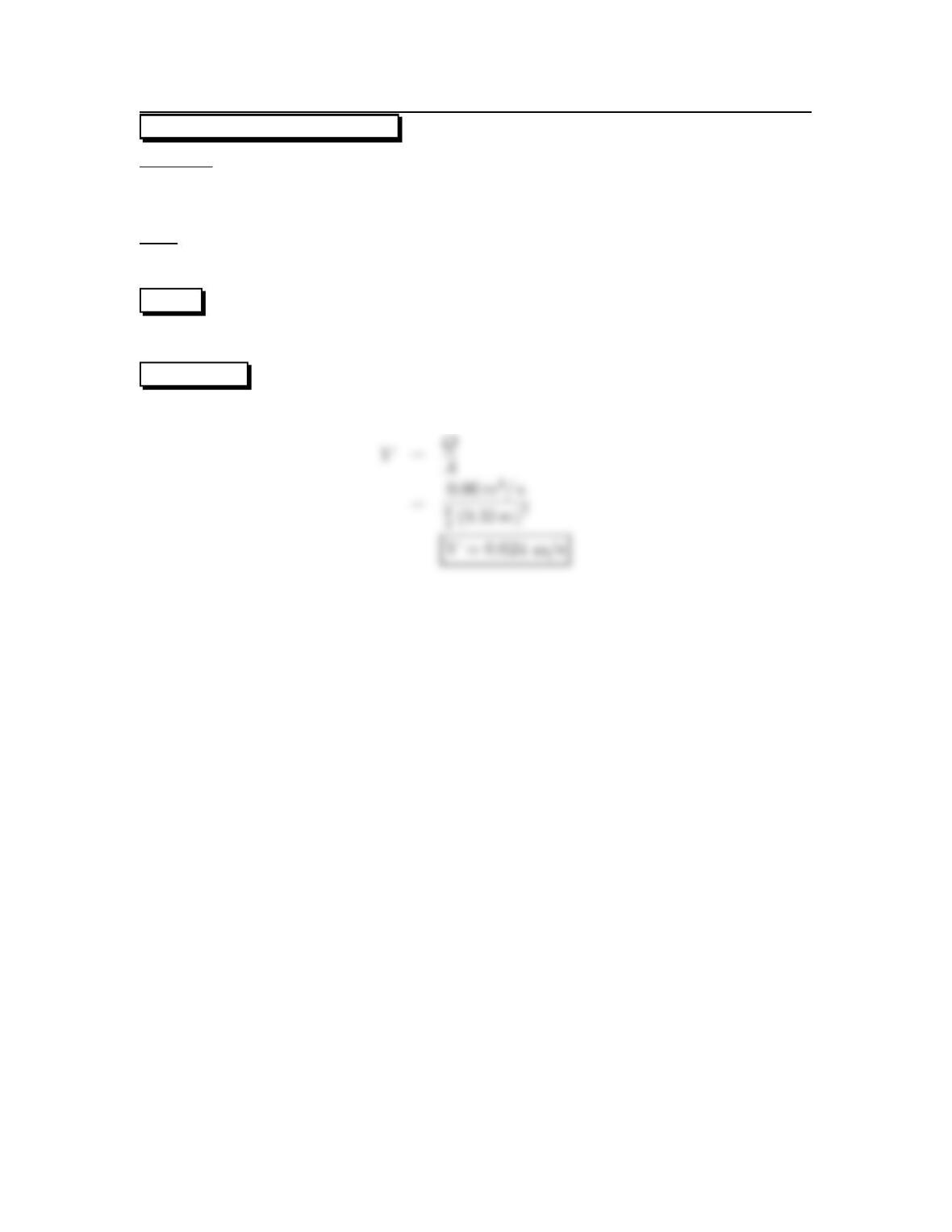
Q=0.06 m3/s, D=0.35 m.
Find:
Mean velocity (m/s).
PLAN
Apply the flow rate equation.
SOLUTION
Flow rate equation
7
5.8: PROBLEM DEFINITION
Situation:
Water flows in a pipe.
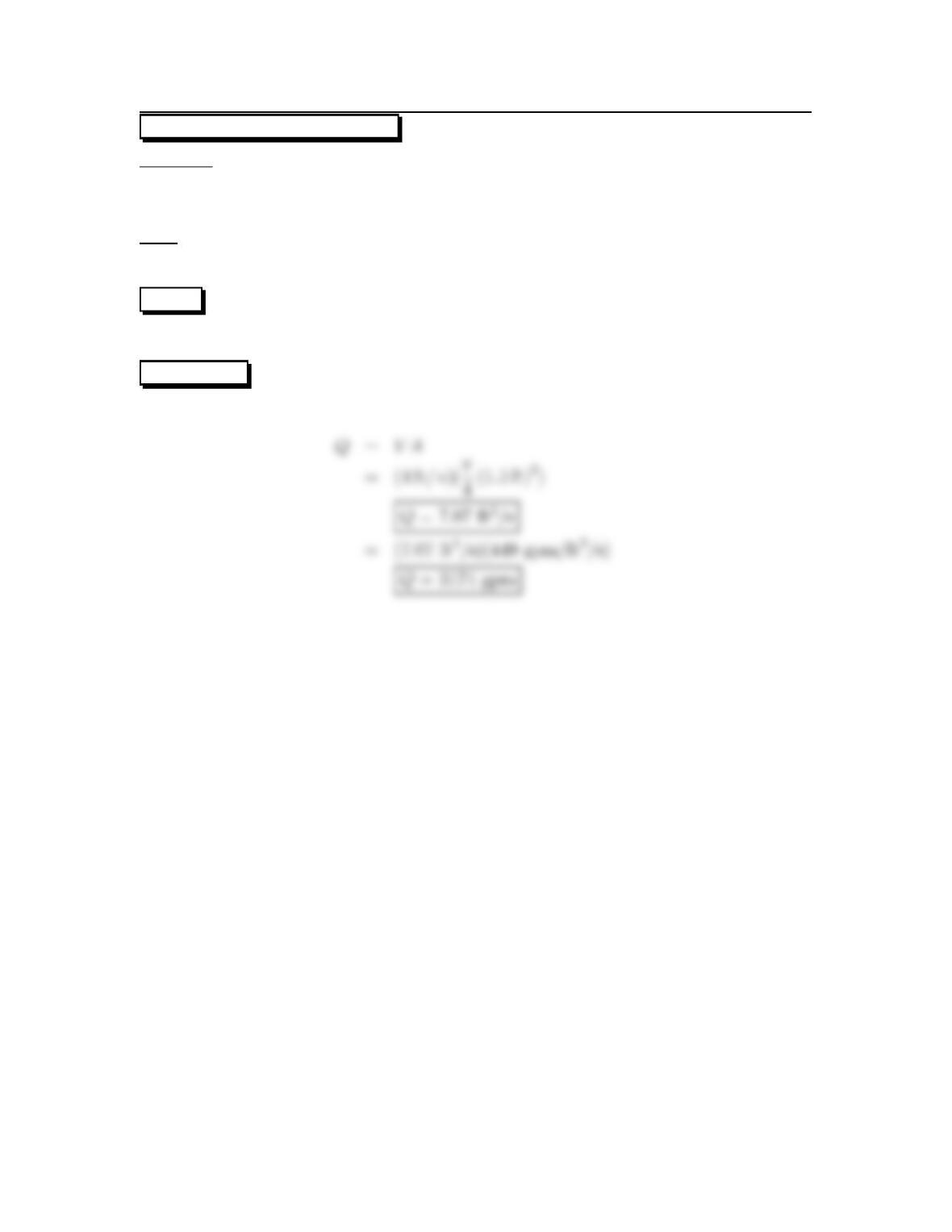
V=4ft/s,D=18in.
Find:
Discharge in cfs and gpm.
PLAN
Apply the flow rate equation.
SOLUTION
Flow rate equation
8
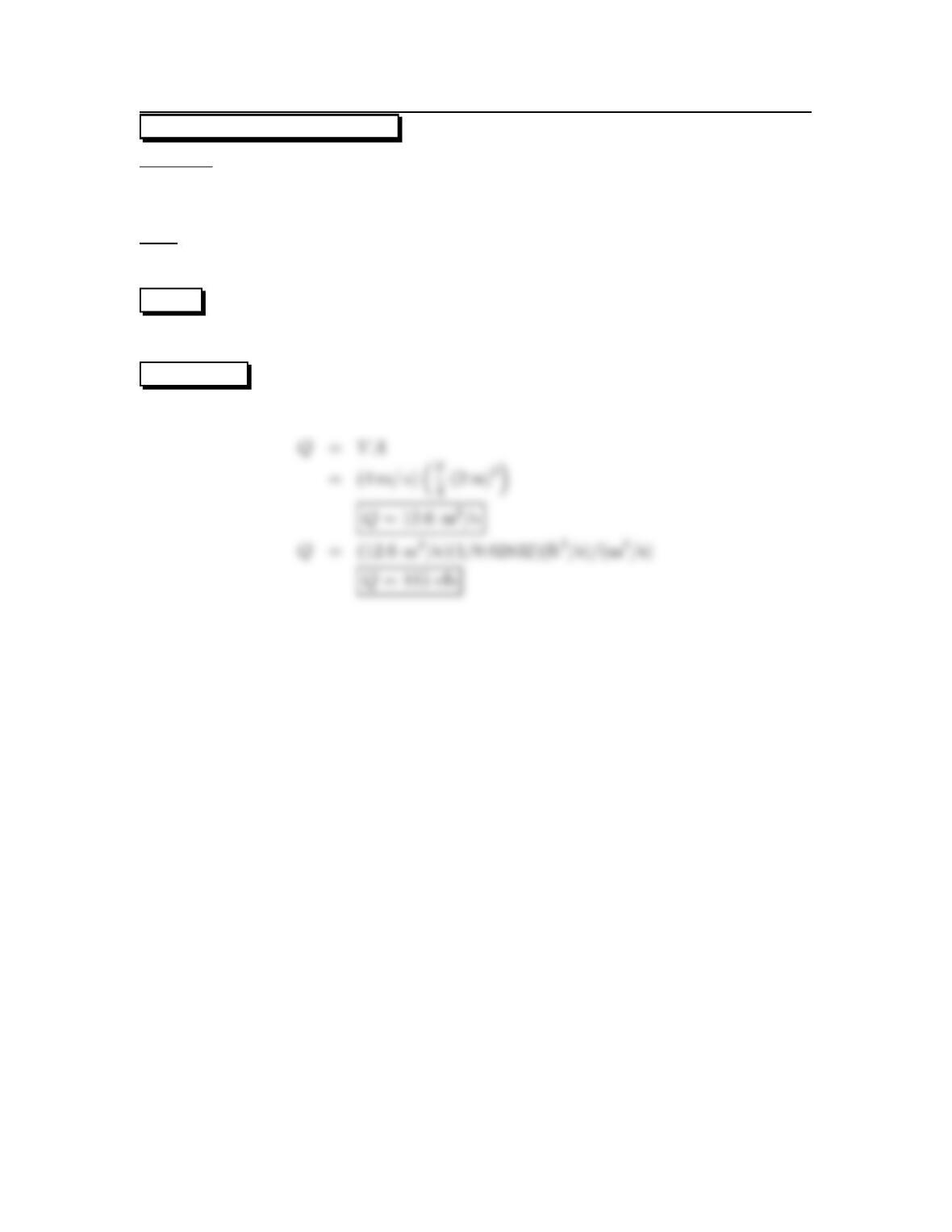
5.9: PROBLEM DEFINITION
Situation:
Water flows in a pipe.
V=4 m/s,D=2m.
Find:
Discharge in m3/s and cfs.
PLAN
Apply the flow rate equation.
SOLUTION
Flow rate equation
9
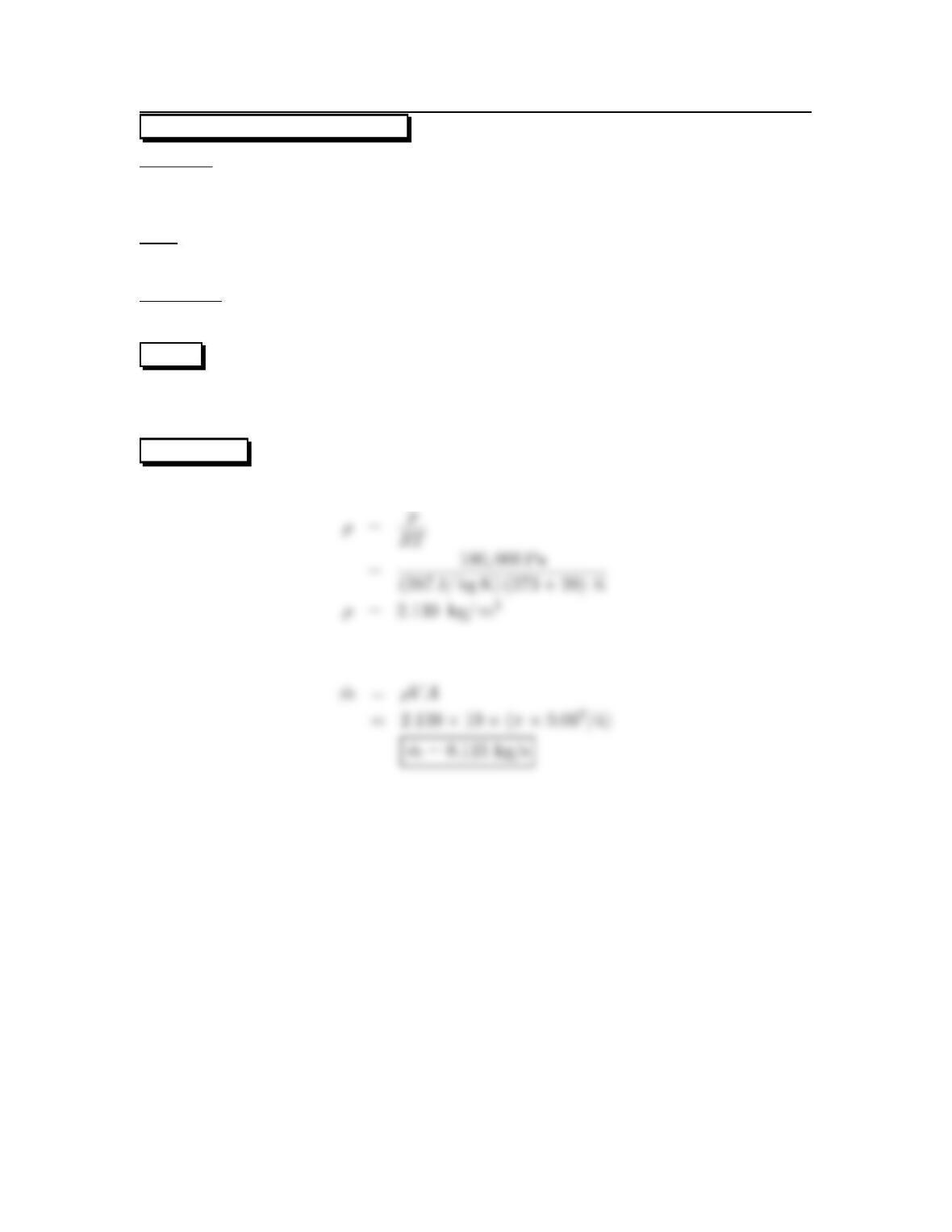
5.10: PROBLEM DEFINITION
Situation:
A pipe carries air.
V=19 m/s,D=0.06 m.
Find:
Mass flow rate ( kg/m3).
Properties:
Air (20 ◦C,180 kPa)TableA.2:R=287J/kg K.
PLAN
1. Use Ideal Gas Law to find density.
2. Use Mass Flow Rate equation to find ˙m.
SOLUTION
1. Ideal gas law
2. Flow rate equation
10
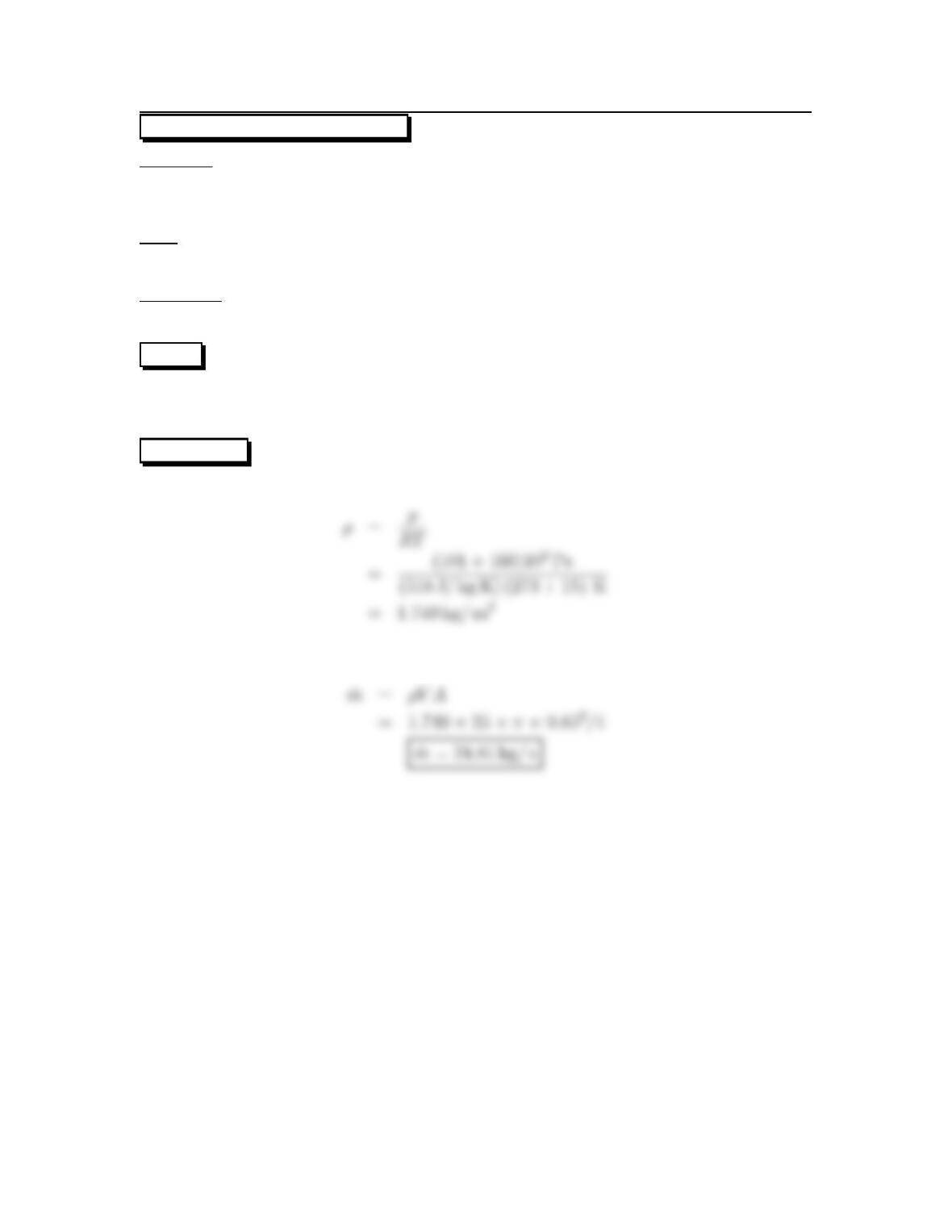
5.11: PROBLEM DEFINITION
Situation:
A pipe carries natural gas.
V=25 m/s,D=0.85 m.
Find:
Mass flow rate ( kg/m3).
Properties:
Methane (15 ◦C,160 kPa gage) Table A.4:R=518 J/kg K.
PLAN
1. Apply the ideal gas law to find ρ.
2. Use the flow rate equation to find ˙m.
SOLUTION
1. Ideal gas law
2. Flow rate equation
11
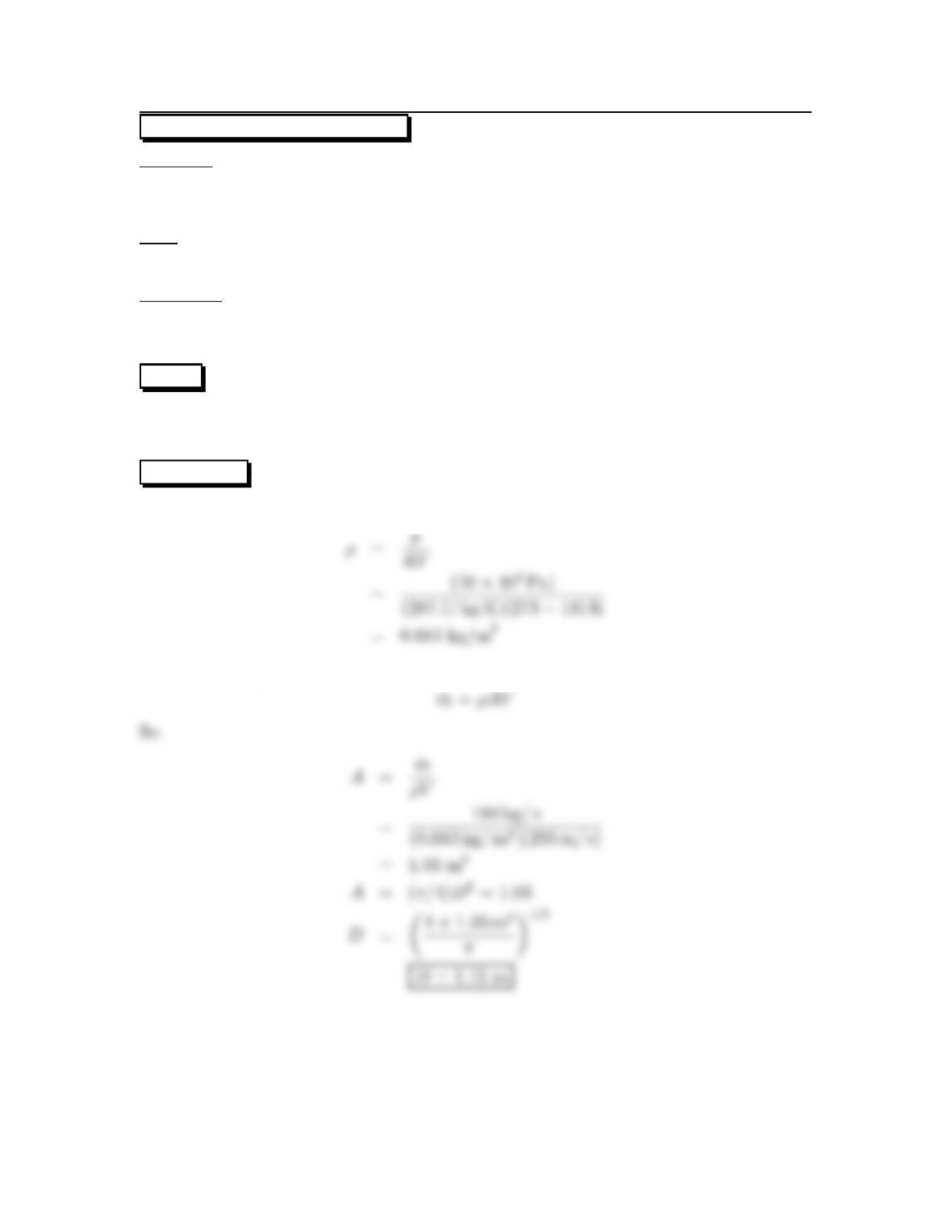
5.12: PROBLEM DEFINITION
Situation:
A duct is attached to an aircraft engine.
˙m=180 kg/s,V=255 m/s.
Find:
Pipe diameter (m).
Properties:
Air (−18 ◦C,50 kPa)TableA.2:R=287J/kg K.
p=50 kPa.
PLAN
1. Apply the ideal gas law to find ρ.
2. Use the flow rate equation to find Afrom ˙mand then find D.
SOLUTION
1. Ideal gas law
2. Flow rate equation
12
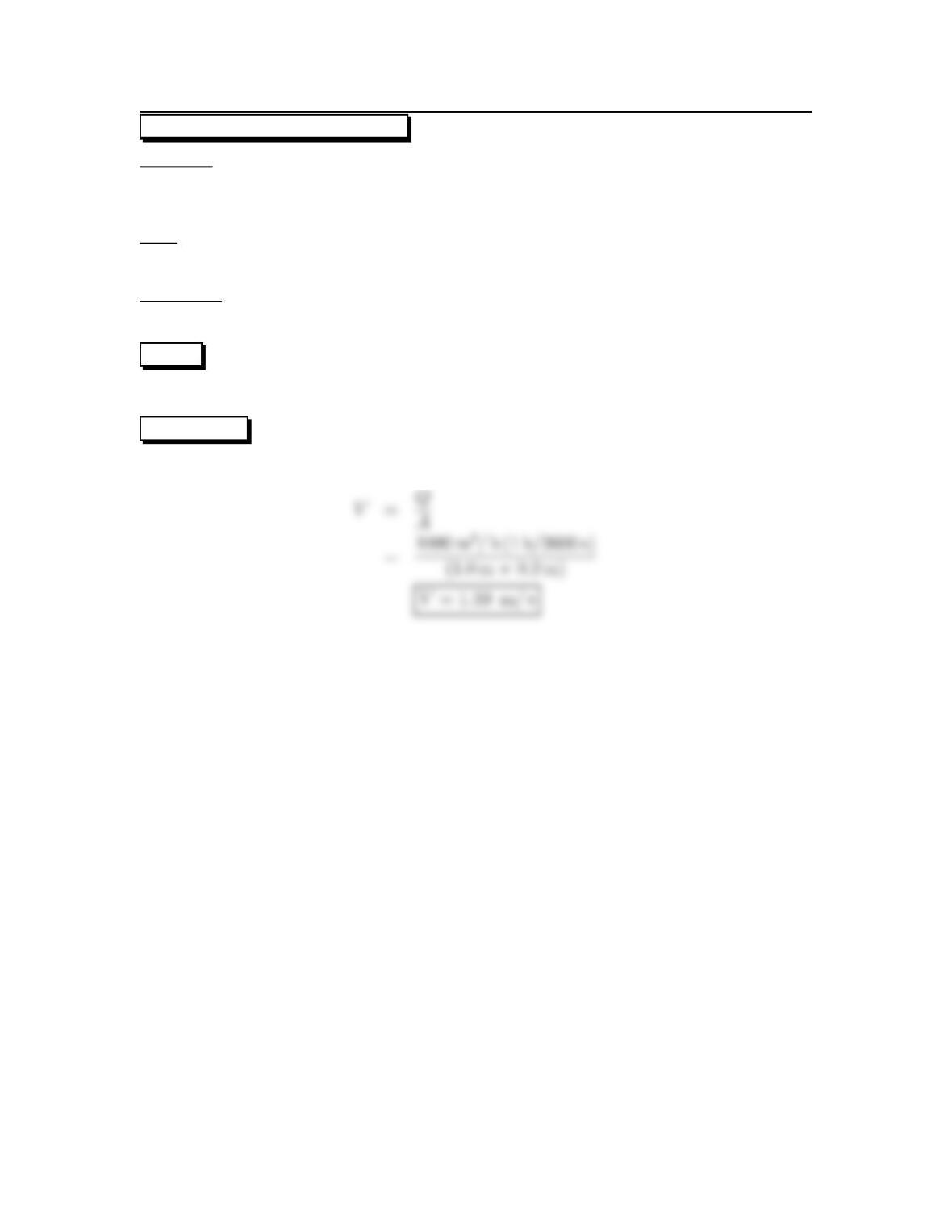
5.13: PROBLEM DEFINITION
Situation:
Air flows in a rectangular air duct.
A=1.0m×0.2m,Q=1000 m
3/h.
Find:
Air velocity (m/s).
Properties:
Air (30 ◦C,100 kPa).
PLAN
Apply the flow rate equation.
SOLUTION
Flow rate equation
13
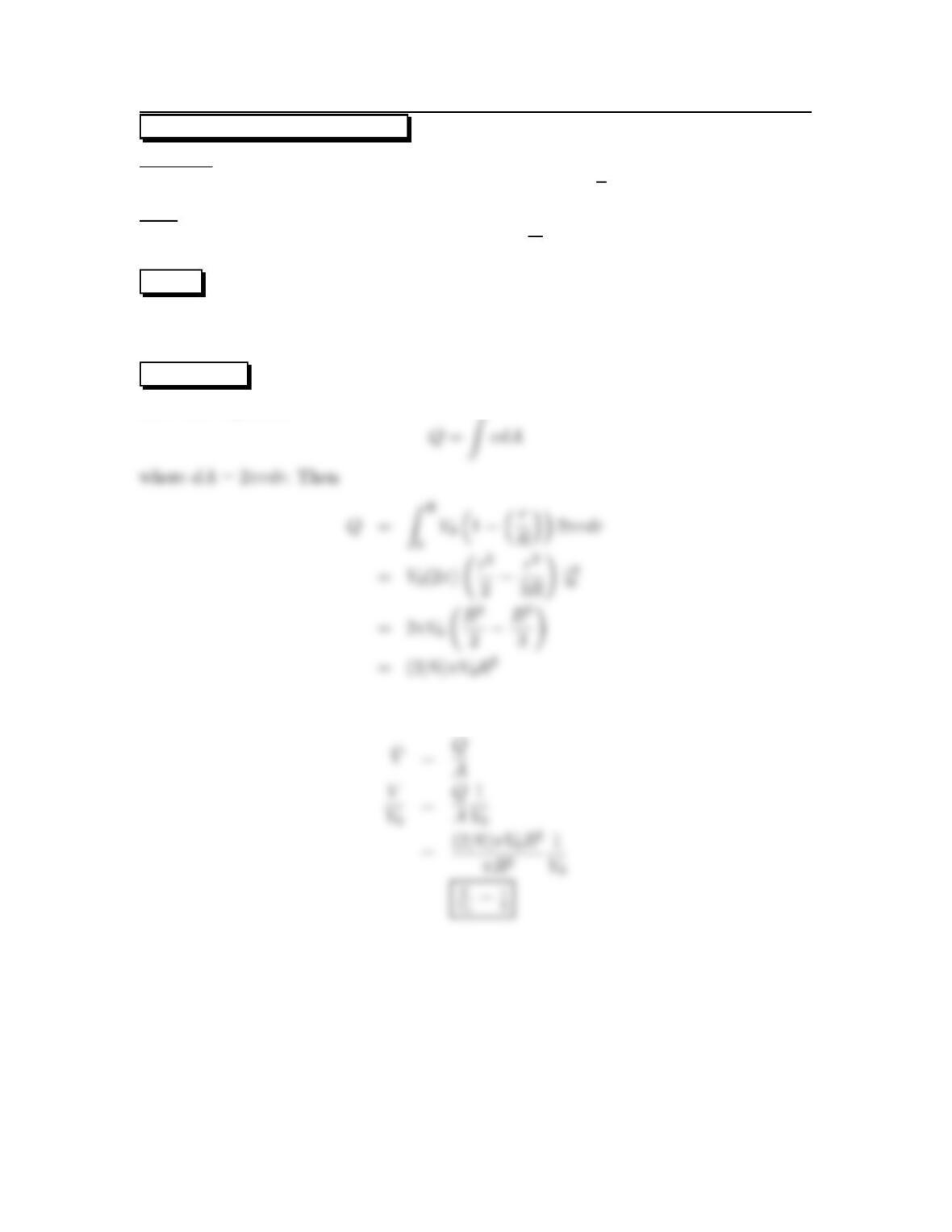
5.14: PROBLEM DEFINITION
Situation:
In a circular duct the velocity profile is v(r)=V0¡1−r
R¢.
Find:
Ratio of mean velocity to center line velocity, ¯
V
V0.
PLAN
Apply the integral form of the flow rate equation, because velocity is not constant
across the cross-section.
SOLUTION
Flow rate equation
Average Velocity
14
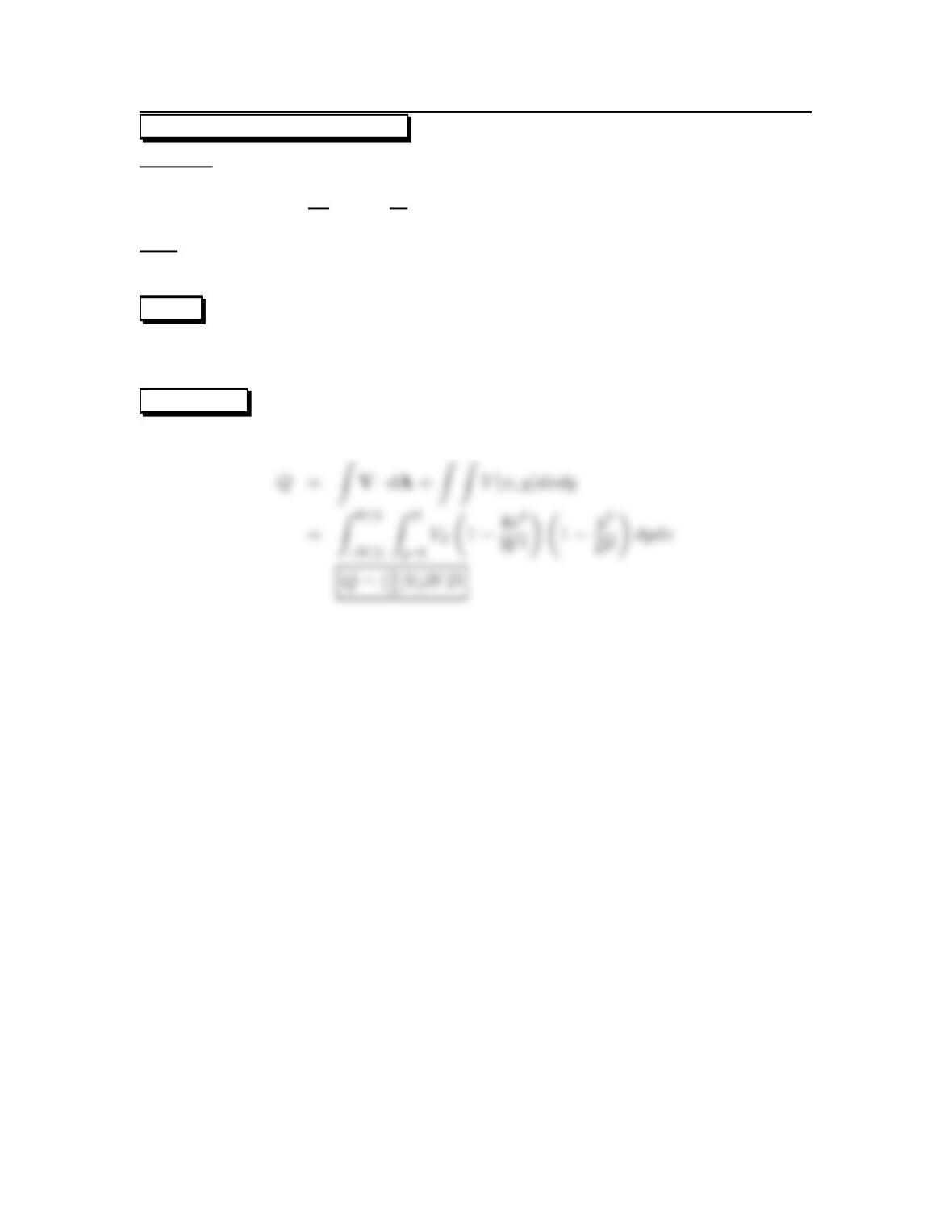
5.15: PROBLEM DEFINITION
Situation:
Two dimensional flow in a channel of width W and depth D.
V(x, y)=VS³1−4x2
W2´³1−y2
D2´.
Find:
An expression for the discharge: Q=Q(VS,D,W).
PLAN
Apply the integral form of the flow rate equation, because v is not constant over the
cross-section.
SOLUTION
Flow rate equation
15
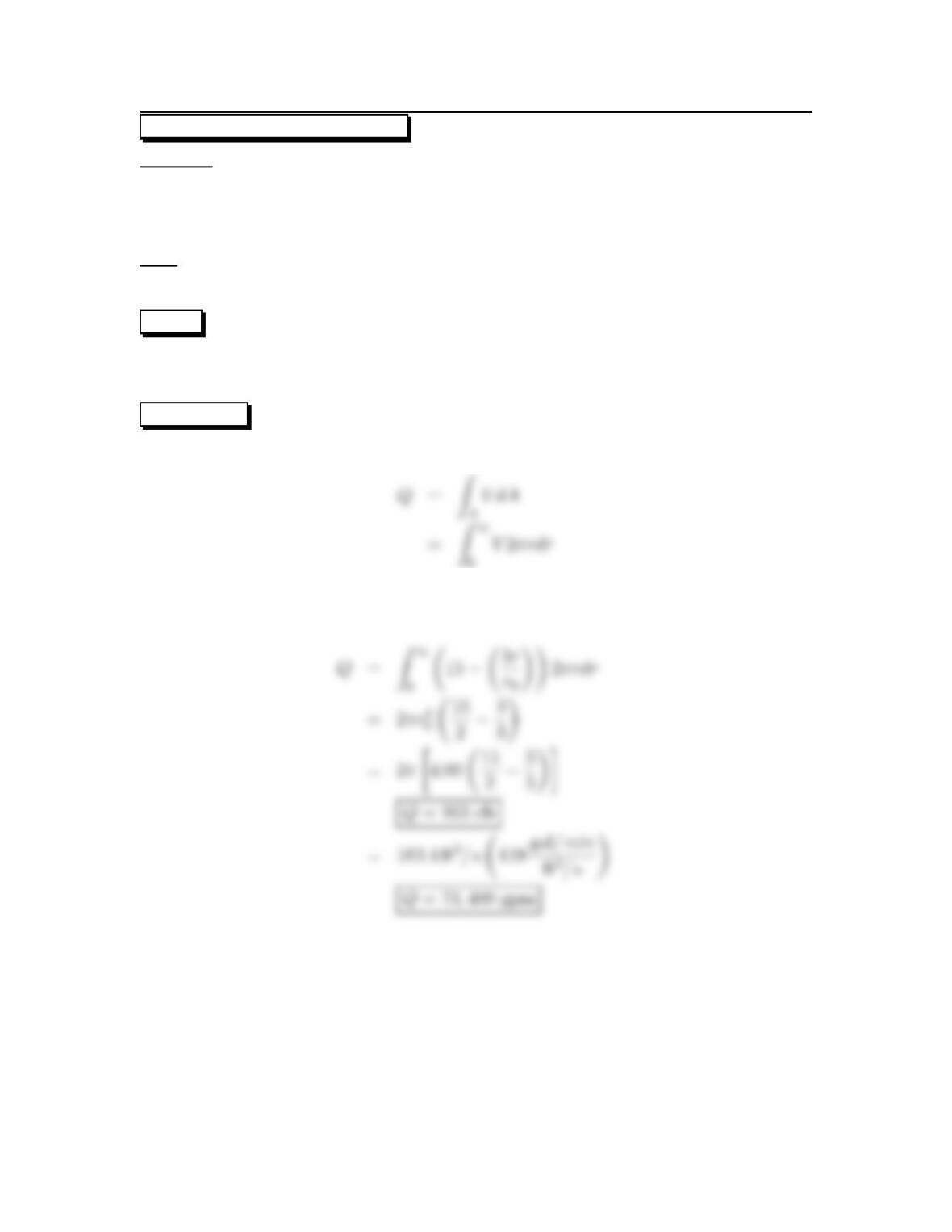
5.16: PROBLEM DEFINITION
Situation:
Water flows in a pipe with a linear velocity profile.
Vmax =15 ft/s,Vmin =12 ft/s.
D=4ft.
Find:
Discharge in cfs and gpm.
PLAN
Apply the integral form of the flow rate equation with area expressed as a function
of radius.
SOLUTION
Flow rate equation
The equation for the velocity distribution is a straight line in the form V=mr +b
with V=15ft/s at r=0and V=12ft/s at r=r0yielding V=15ft/s−3r/r0.
16
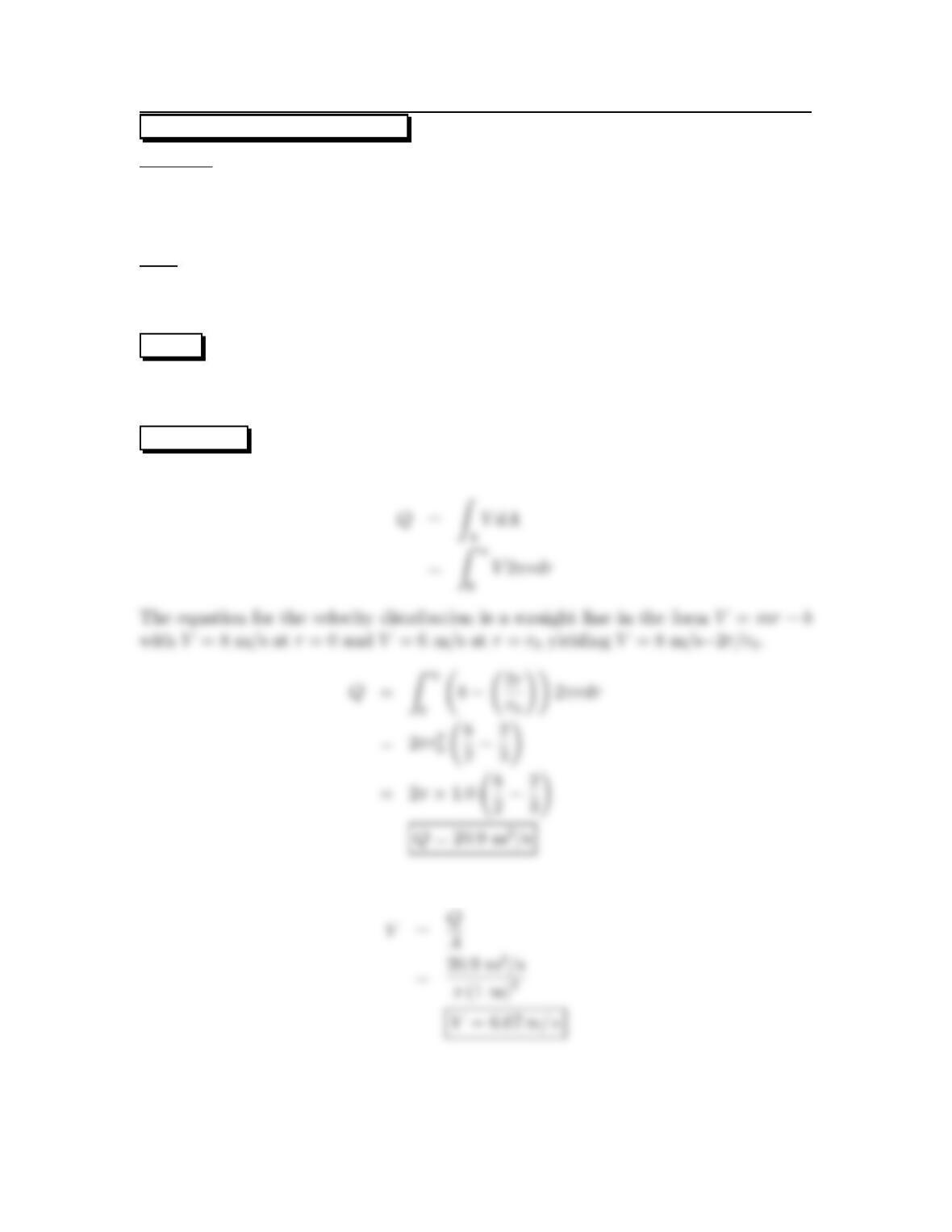
5.17: PROBLEM DEFINITION
Situation:
Water flows in a pipe with a linear velocity profile.
Vmax =8 m/s,Vmin =6 m/s.
D=2m.
Find:
Discharge (m3/s).
Mean velocity (m/s).
PLAN
Apply the integral form of the flow rate equation with area expressed as a function
of radius.
SOLUTION
Flow rate equation
Mean velocity
17
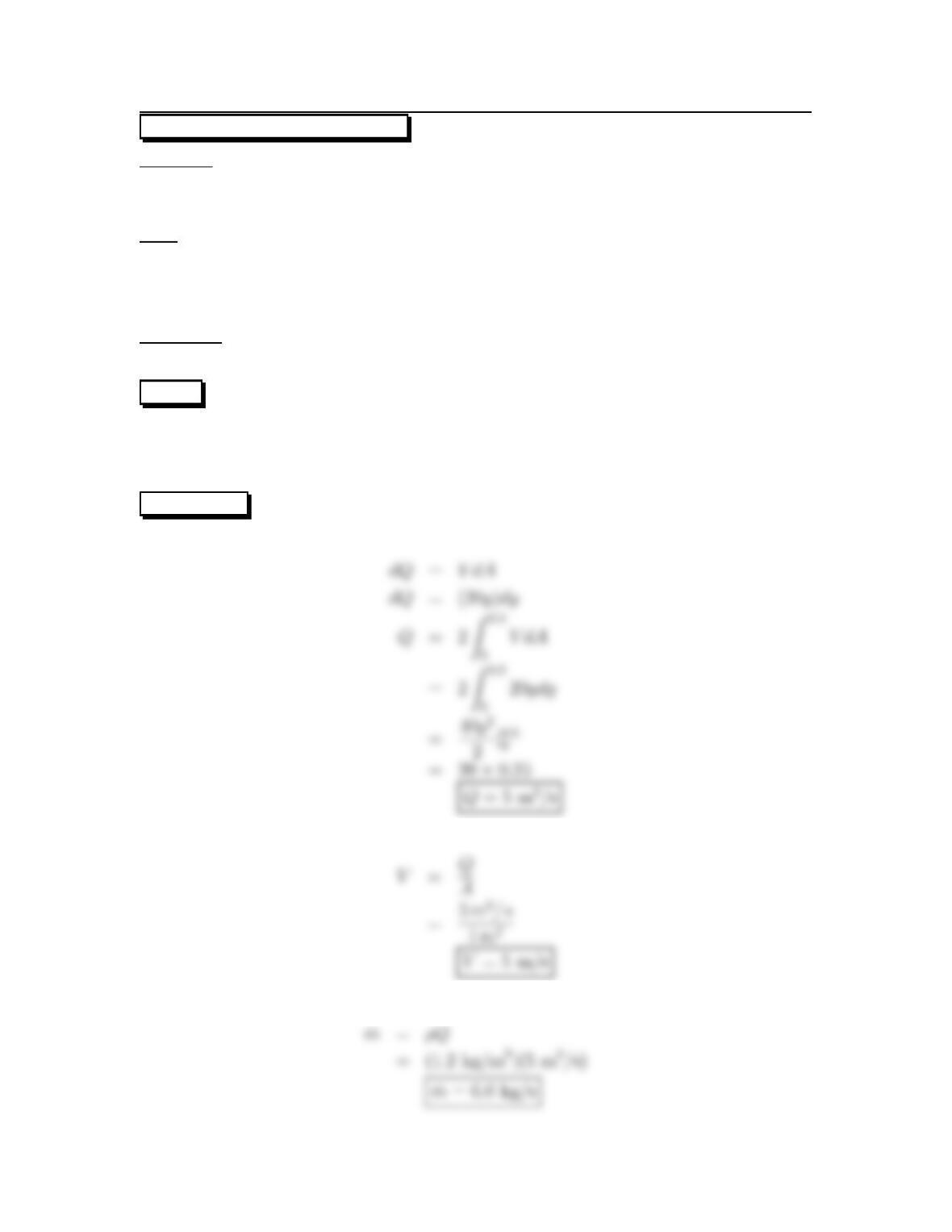
5.18: PROBLEM DEFINITION
Situation:
Air flowsinasquareductwithvelocityprofile shown in the figure.
D=1m,Vmax =10m/s.
Find:
(a) Volume flow rate ( m3/s).
(b) Mean velocity ( m/s).
(c) Mass flow rate ( kg/s).
Properties:
Air: ρ=1.2kg/m3.
PLAN
Use various form of the flow rate equation.
Use the integral form of the flow rate equation because velocity is not constant of the
area.
SOLUTION
The velocity profile is V=20y.
Mean velocity
Mass flow rate
18
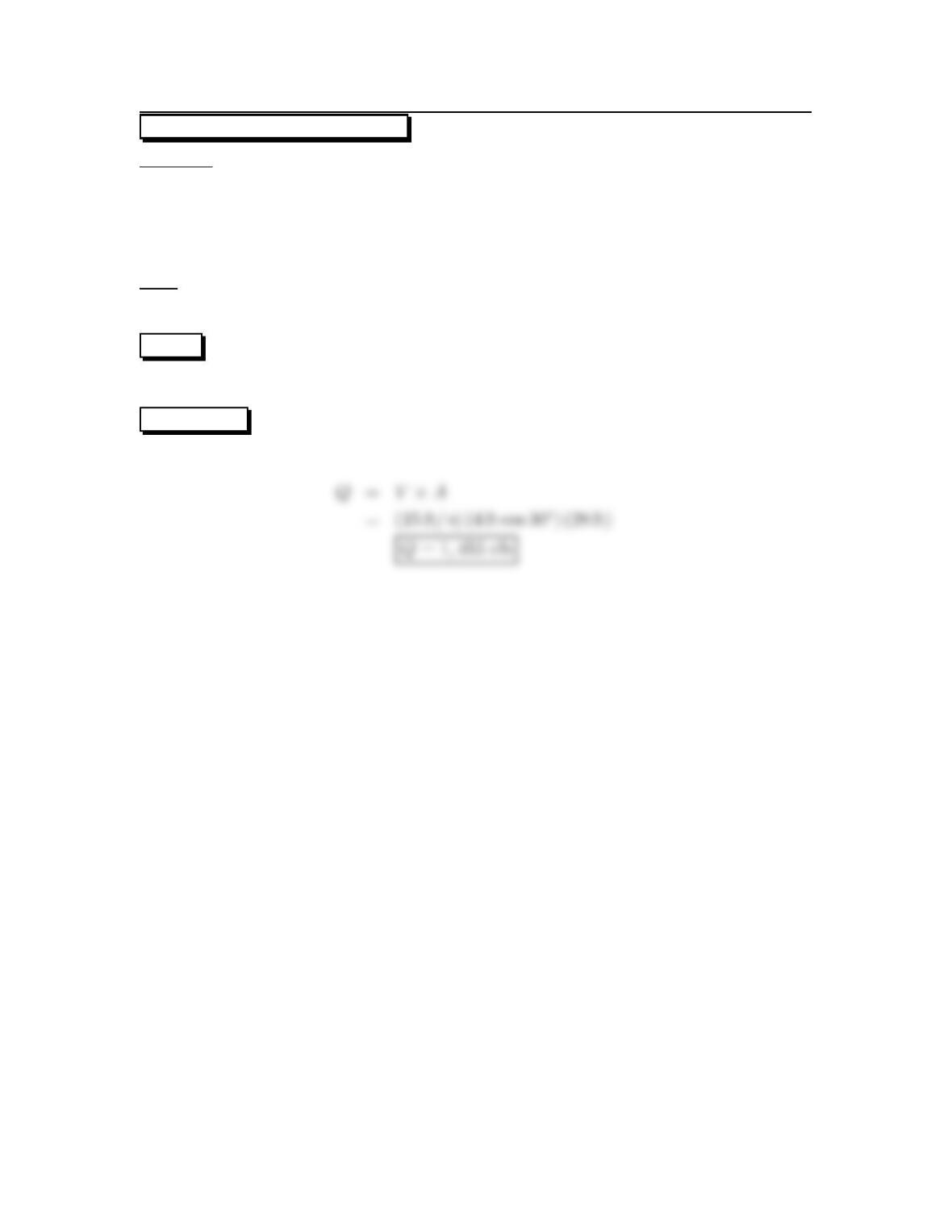
5.19: PROBLEM DEFINITION
Situation:
An open channel flow has a 30oincline.
V=15 ft/s.
Depth =y=4ft.
Width =x=28ft.
Find:
Discharge (cfs).
PLAN
Apply the flow rate equation.
SOLUTION
Flow rate equation
19
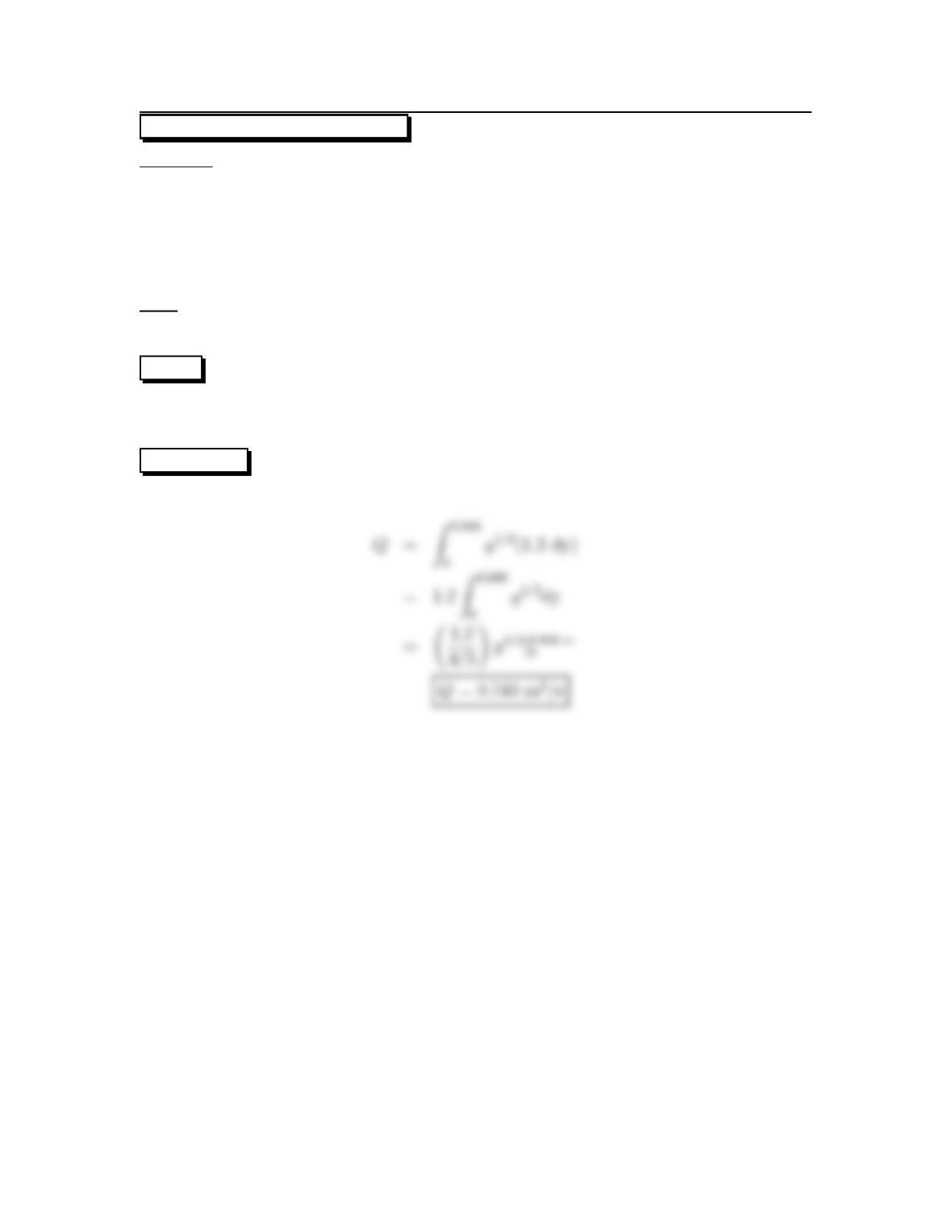
5.20: PROBLEM DEFINITION
Situation:
A rectangular channel has a 30oincline.
u=y1/3m/s.
Depth =y=1m.
Width =x=1.2m.
d=1m×cos(30o)=0.866 m
Find:
Discharge ( m3/s).
PLAN
Apply the integral form of the flow rate equation becuse velocity is not constant over
the area.
SOLUTION
Flow rate equation
20