Problem 5.109
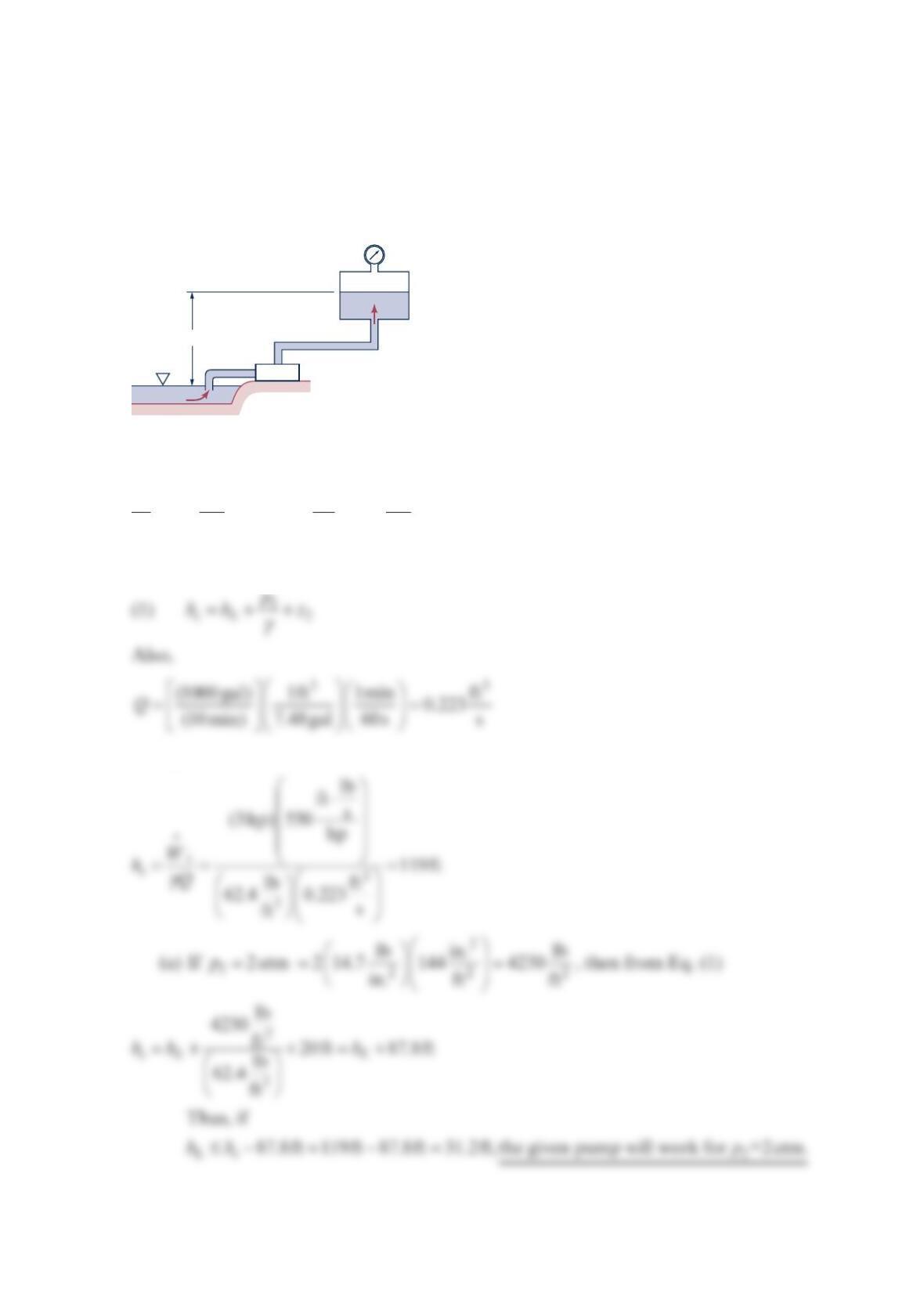
A pump is to move water from a lake into a large, pressurized tank as shown in the figure
below at a rate of 1000 gal in 10 min or less. Will a pump that adds 3hp to the water work
for this purpose? Support your answer with appropriate calculations. Repeat the problem if
the tank were pressurized to 3, rather than 2, atmospheres.
Solution 5.109
22
11 2 2
12
,
22
sL
p
VpV
zhh z
gg
γγ
++ +− = + + where === =
111 2
0, z 0, 0, and 20 ft
p
Vz .
Thus,
so that
20 ft
Air
Pump
p
= 2 atm
(b) If ==
22
lb
3atm 6350 ft
p, then
Problem 5.110
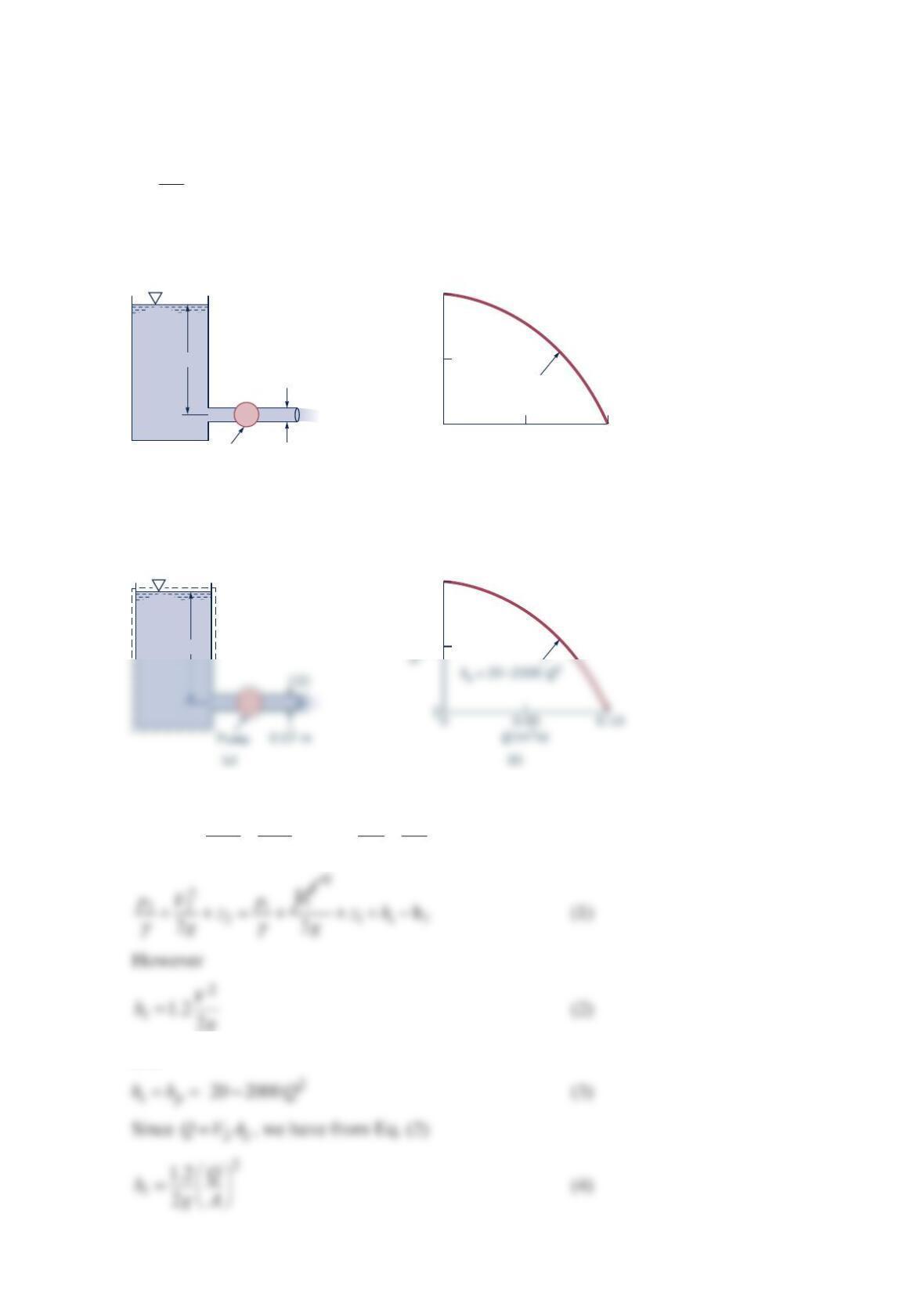
Water is pumped from the tank shown in the figure (a). The head loss is known to be
2
1.2 2
V
g, where V is the average velocity in the pipe. According to the pump manufacturer,
the relationship between the pump head and the flowrate is as shown in the figure (b):
2
20 2000
p
h
Q=− , where
p
h
is in meters and Q is in 3
m/s. Determine the flowrate, Q.
Solution 5.110
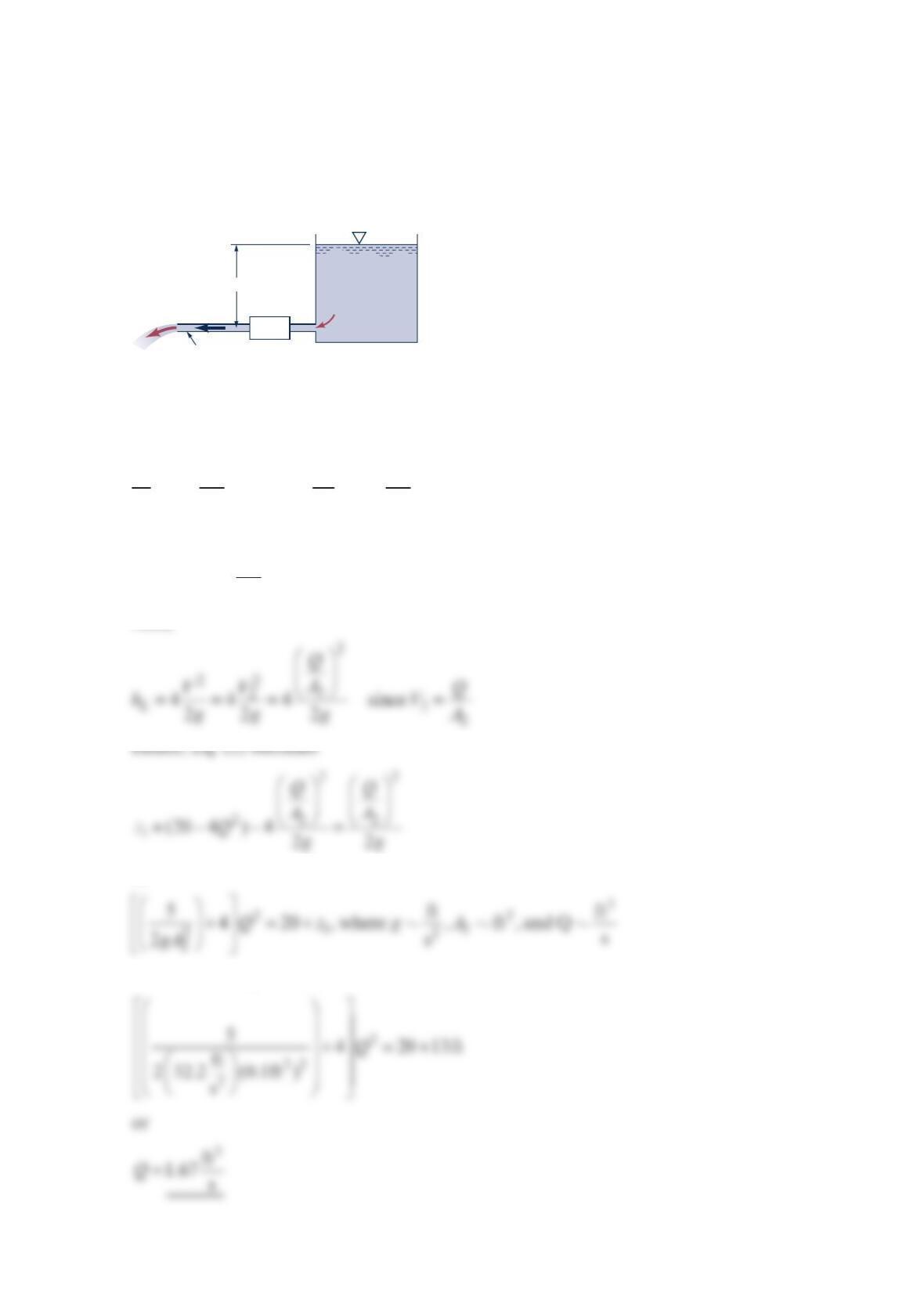
We want to know the flowrate Q. For the control volume shown, application of the energy
equation
22
out out in in
out in
22
sL
pV pV
zzhh
gg
γγ
++=+++−
yields.
and
0.07 m
Pump
6 m
(
a
)
h
p
= 20–2000 Q
2
20
10
00 0.05 0.10
h
p
(m)
Q
(m
3
/s)
(b)
(1)
6 m
20
10
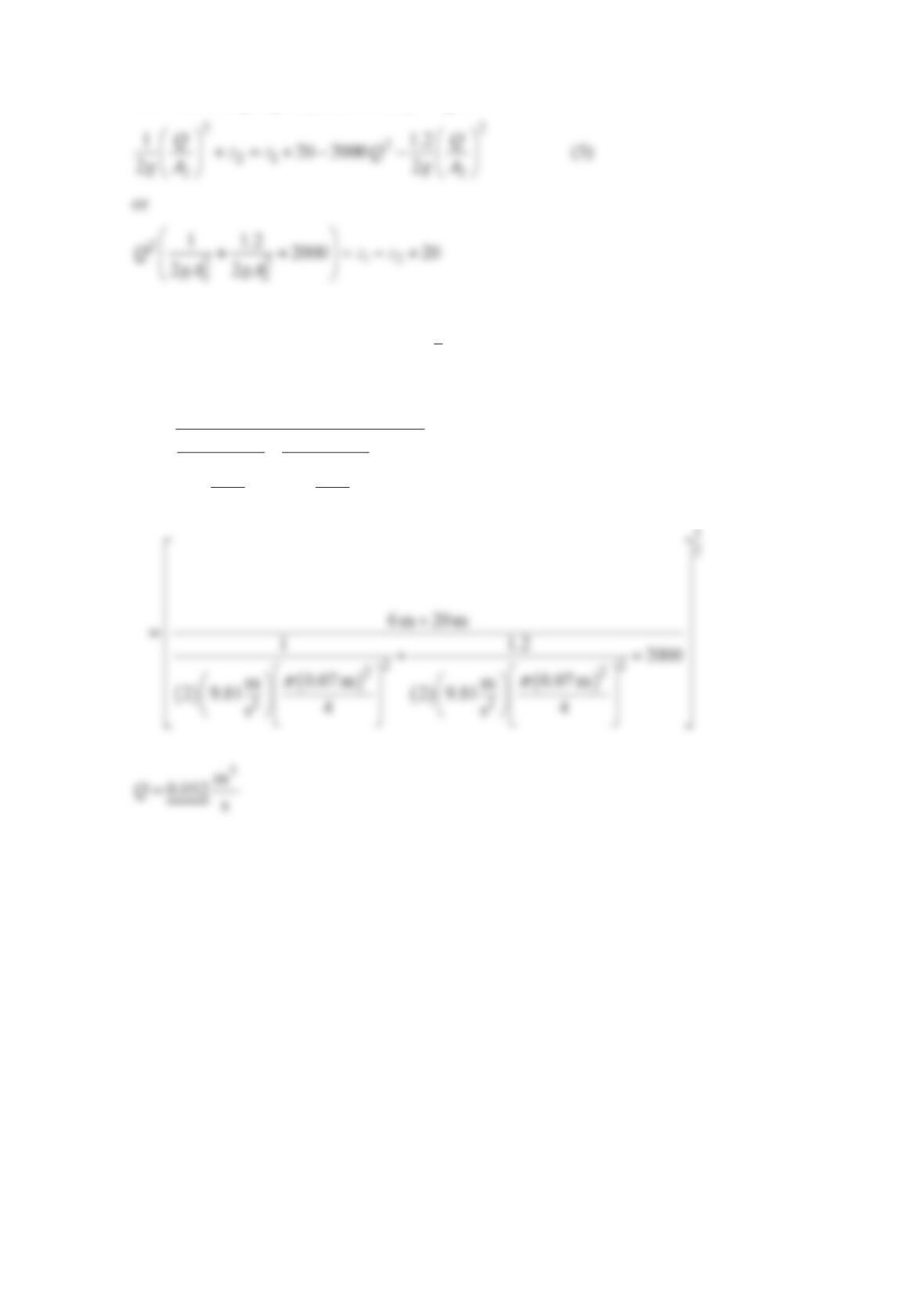
and combining Eqs. (1), (3) and (4), we get:
so
ππ
−+
=
++
1
2
12
22
22
22
20
11.2
2000
22
44
zz
Q
dd
gg
Problem 5.111
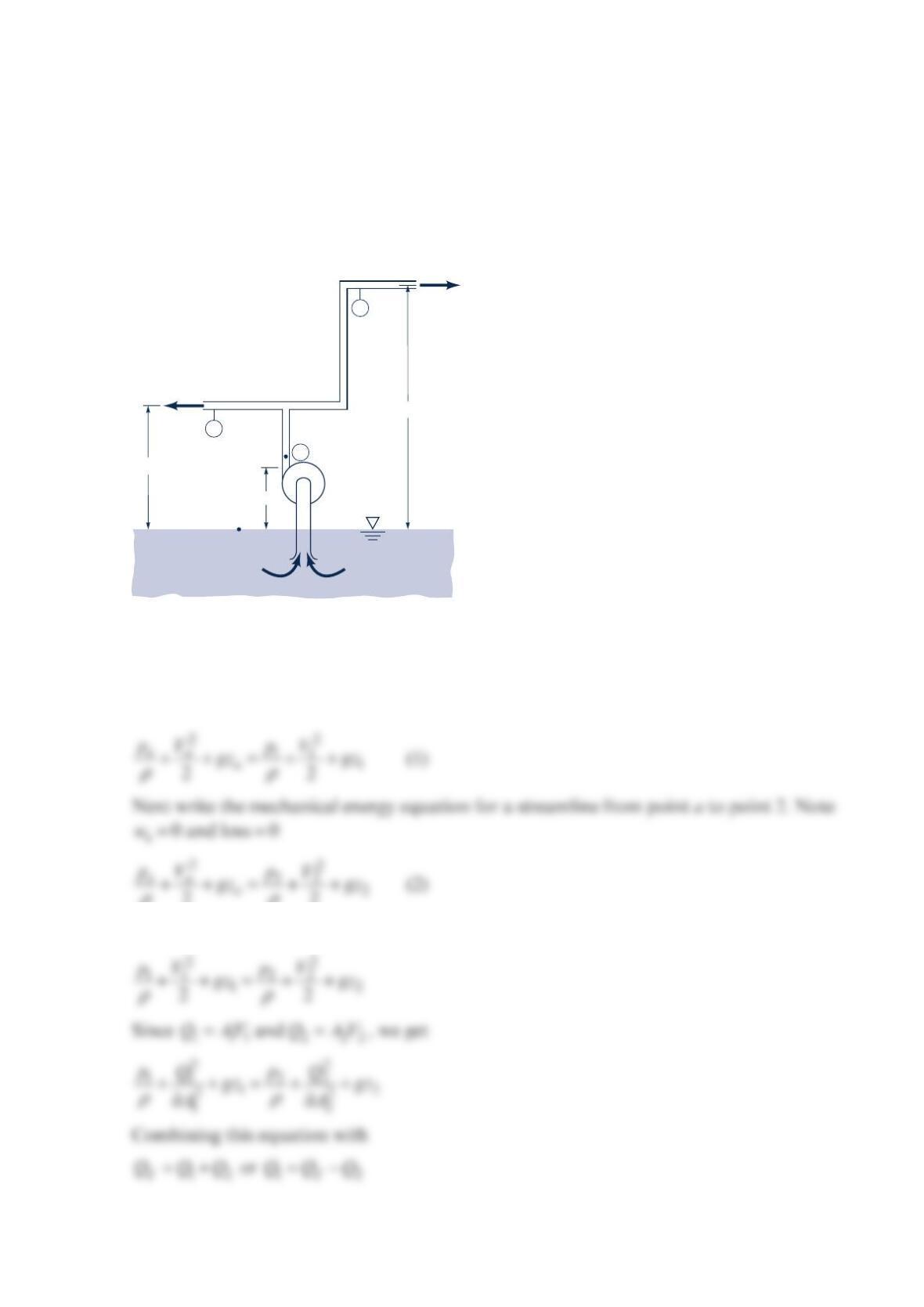
Water is pumped steadily through the apparatus as shown in the figure below. The pipe
area and gage pressure are shown for both outlet sections (1) and (2). Assume that the 40 °F
water is frictionless and incompressible. Compute the horsepower input to the pump. The
total volume flowrate 3
1.0 ft /s
T
Q=. =4.0 in.
a
D
Solution 5.111
Denote the pump discharge as point a. Write the mechanical energy equation for a
streamline from point a to point 1. Note ==
s0 and loss 0w.
ρρ
22
Equating Eqs. (1) and (2) give
A1
= 0.04 ft
2
p1
= 10 psig
patm
= 14.7 psi
A2
= 0.03 ft
2
p2
= 15 psig
1
25 ft
7 ft
0
Pump
Q1
Q2
15 ft
2
a
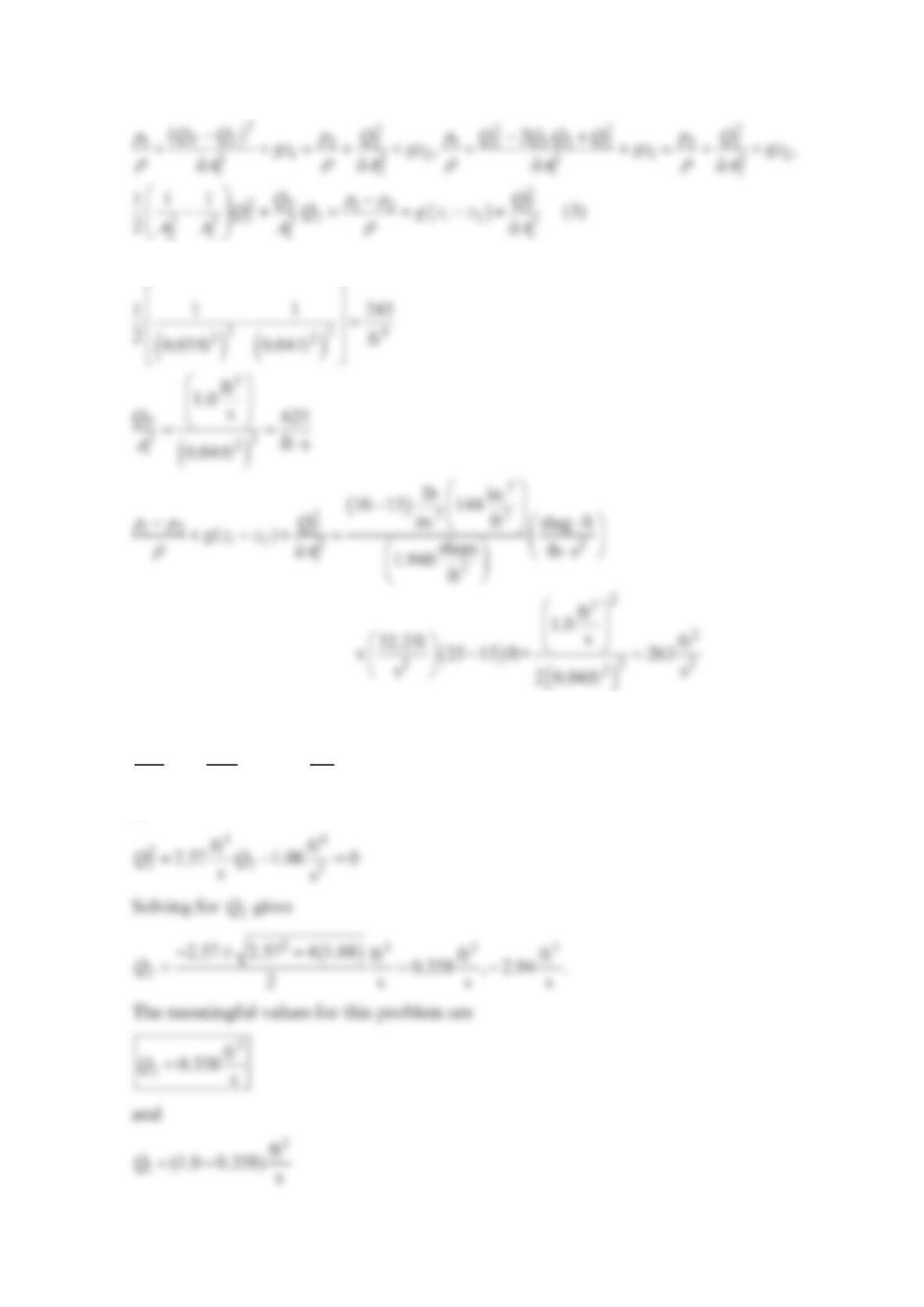
gives
The numerical values give (for 40 °F water)
Equation (3) is then
+=
⋅
2
2
22
42
243 625 ft
263
ft s
ft s
QQ
or
=
3
1
ft
0.642 s
Q
The pump input power is found by writing the mechanical energy equation for the pump on
a streamline from point 0 to point a,
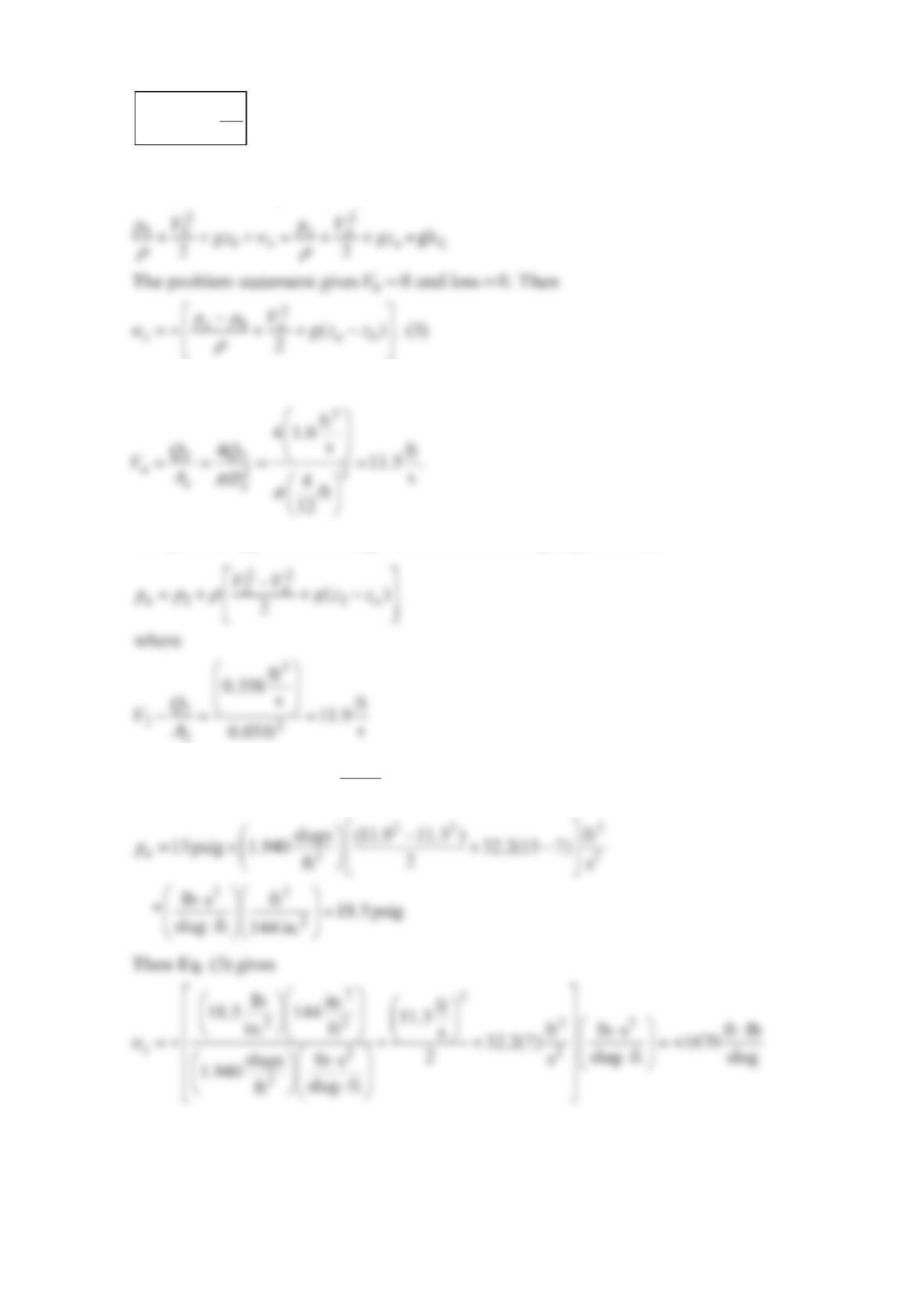
The velocity a
V is computed from
The pressure a
p
is found using the mechanical energy equation (2).
For 40 °F water,
ρ
=3
slugs
1.940 ft .so
.
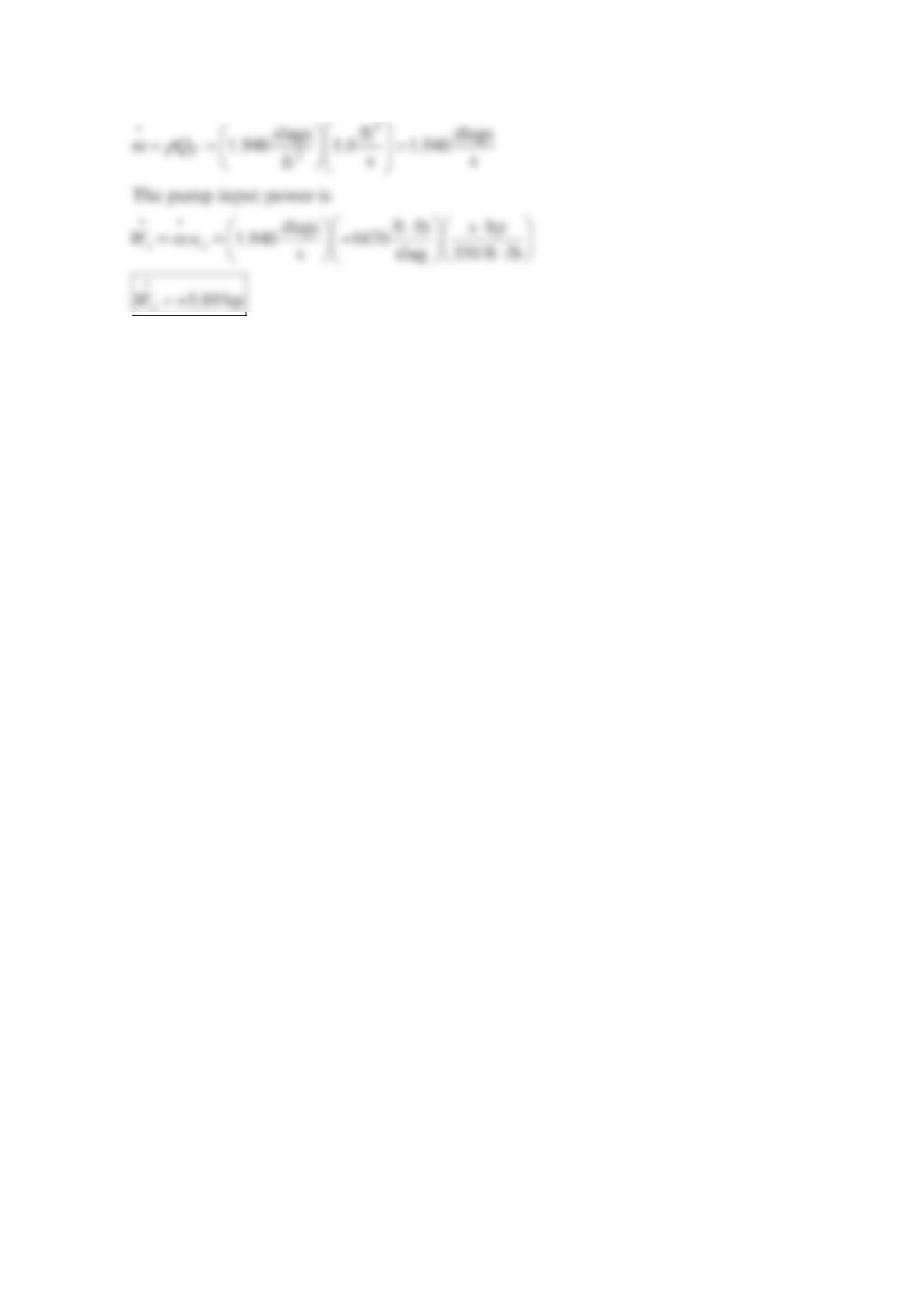
The mass flowrate is
Problem 5.112
Water is pumped from the large tank as shown in the figure below. The head loss is known
to be equal to 2
4/2Vg
and the pump head is 2
20 4
p
h
Q=−, where
p
h
is in ft when Q is in
3
f
t/s
. Determine the flowrate.
Solution 5.112
22
11 2 2
12
,
22
sL
p
VpV
zhh z
gg
γγ
++ +− = + + where 12 1 2 1
0, 13ft, 0, , and 0.
sp
p
pz zhh V== = = = =
Thus,
2
2
12
pL
V
zh h g
+−= (1)
Also,
or
Thus, with the given data
13 ft
QV
Pipe area = 0.10 ft
2
Pump
Problem 5.113
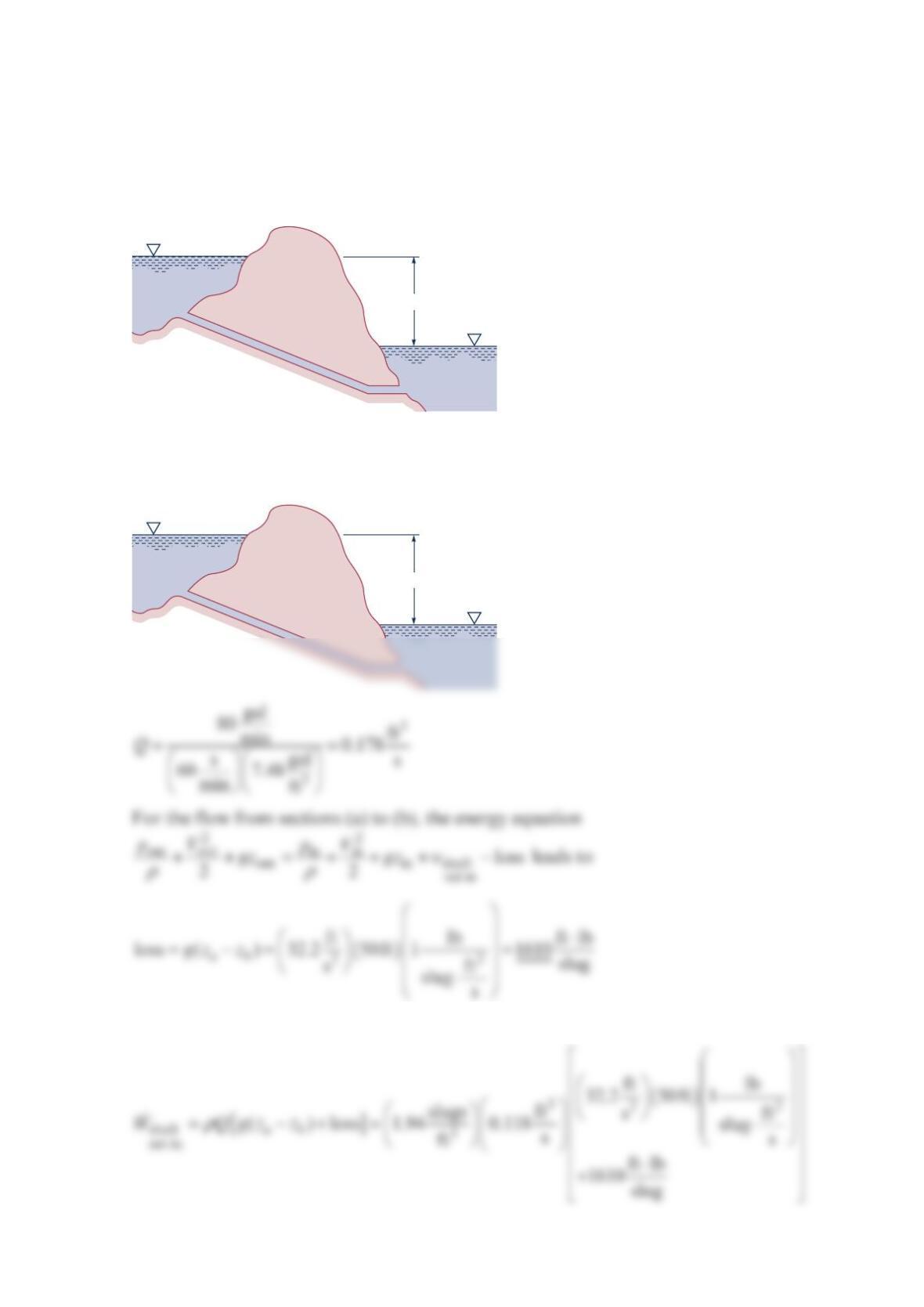
Water flows by gravity from one lake to another as sketched in the figure below at the
steady rate of 80 gpm. What is the loss in available energy associated with this flow? If this
same amount of loss is associated with pumping the fluid from the lower lake to the higher
one at the same flowrate, estimate the amount of pumping power required.
Solution 5.113
For pumped flow from sections (b) to (a), the energy equation (see above) yields
50 ft
50 ft
(a)
(b)

or
Problem 5.114
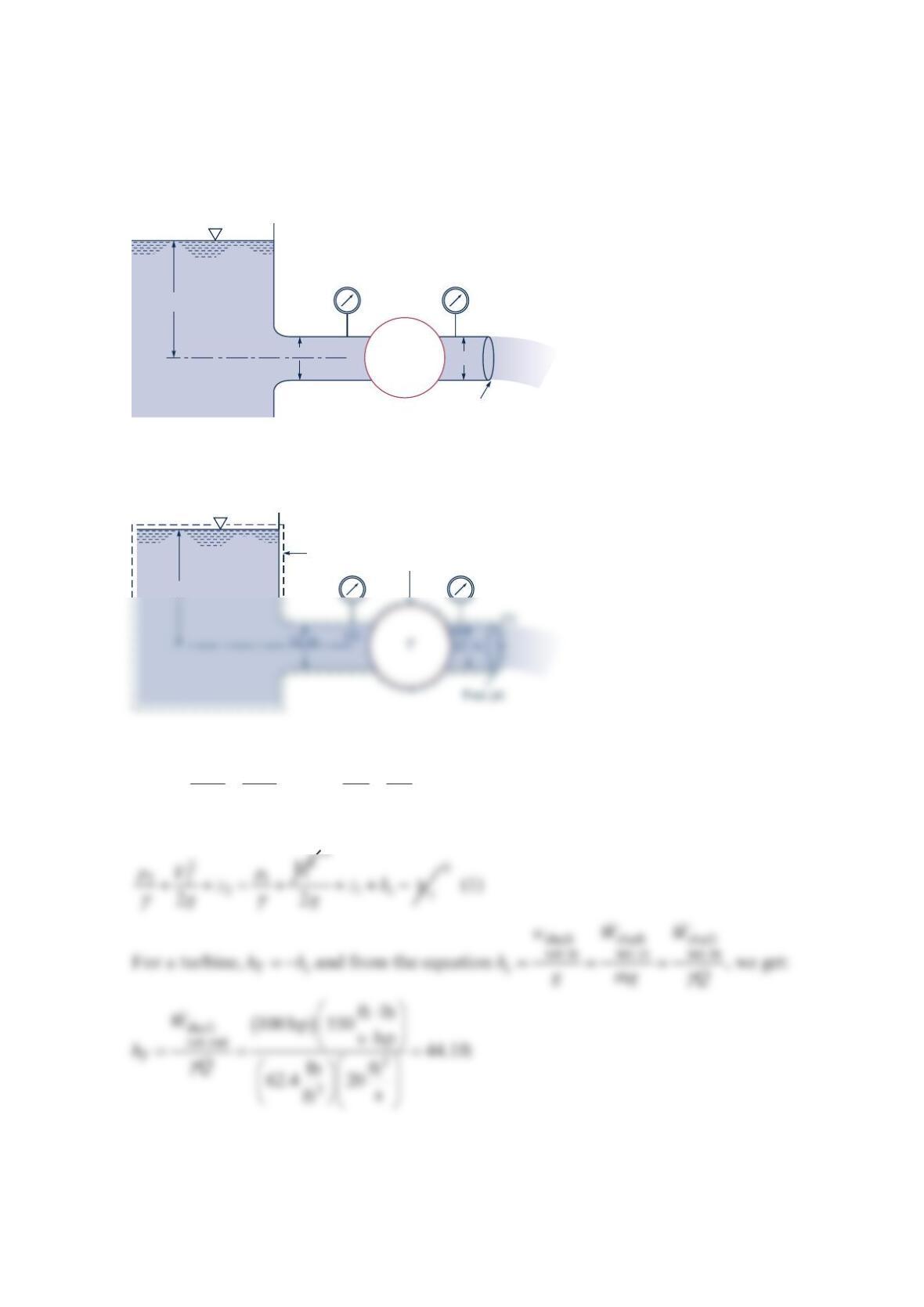
The turbine shown in the figure below develops 100 hp when the flowrate of water is
3
20 ft /s . If all losses are negligible, determine (a) the elevation
h
, (b) the pressure difference
across the turbine, and (c) the flowrate expected if the turbine were removed.
Solution 5.114
(a) Using control volume A and the energy equation
γγ
++=+++−
22
out out in in
out in s L
22
pV pV
zzhh
gg
we get:
12 in. 12 in.
h
p
3
p
4
Free jet
T
(1)
h
p
3
CV
A
CV
B
p
4
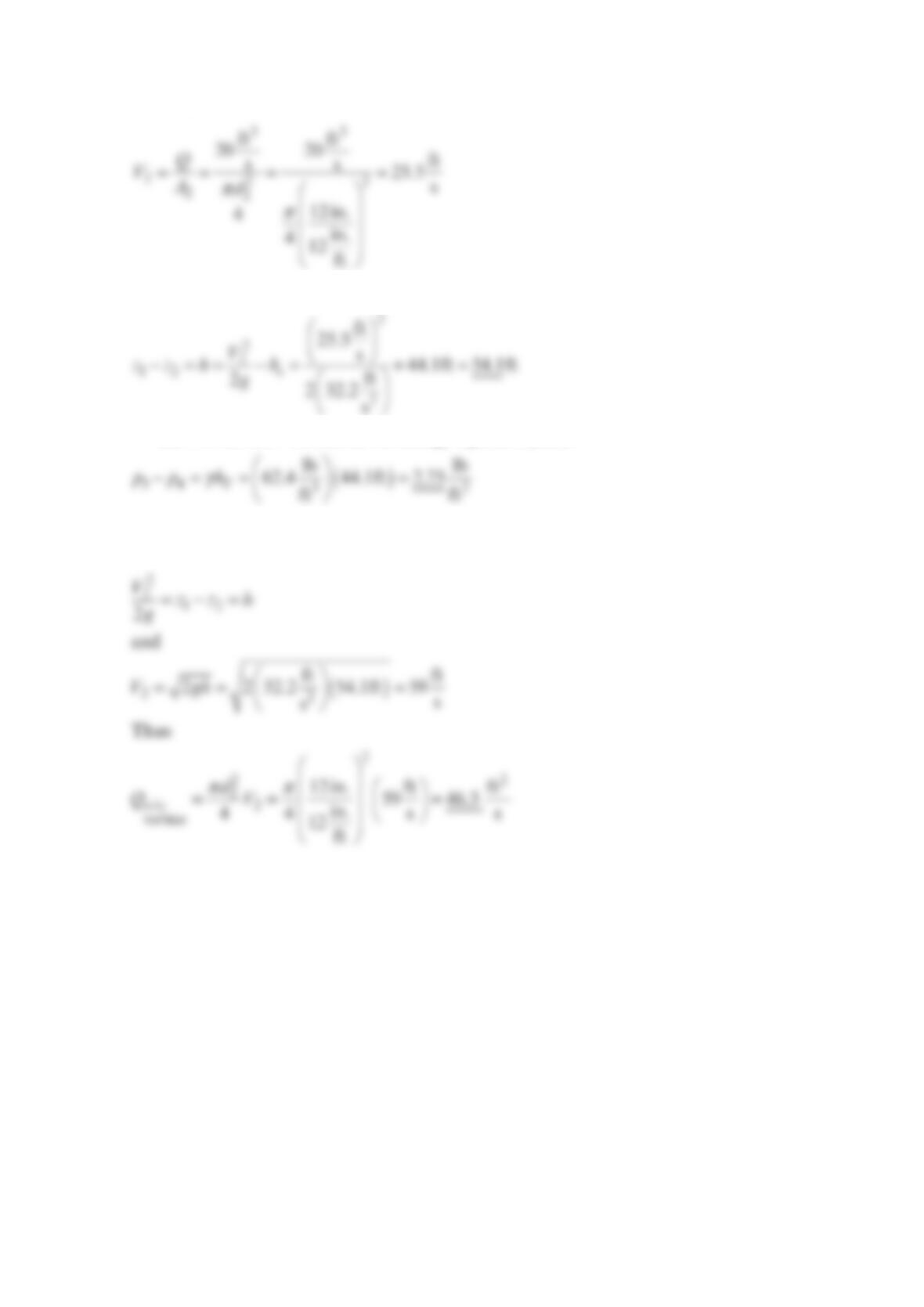
Since =QAV
, we have
Then from Eq. (1)
(b) For control volume B, the energy equation yields
(c) Since ==
22
QVAVA
, if we knew value of 2
V with the turbine removed, we could
calculate Q with the turbine removed. Without the turbine, Eq. (1) reduces to
Problem 5.115
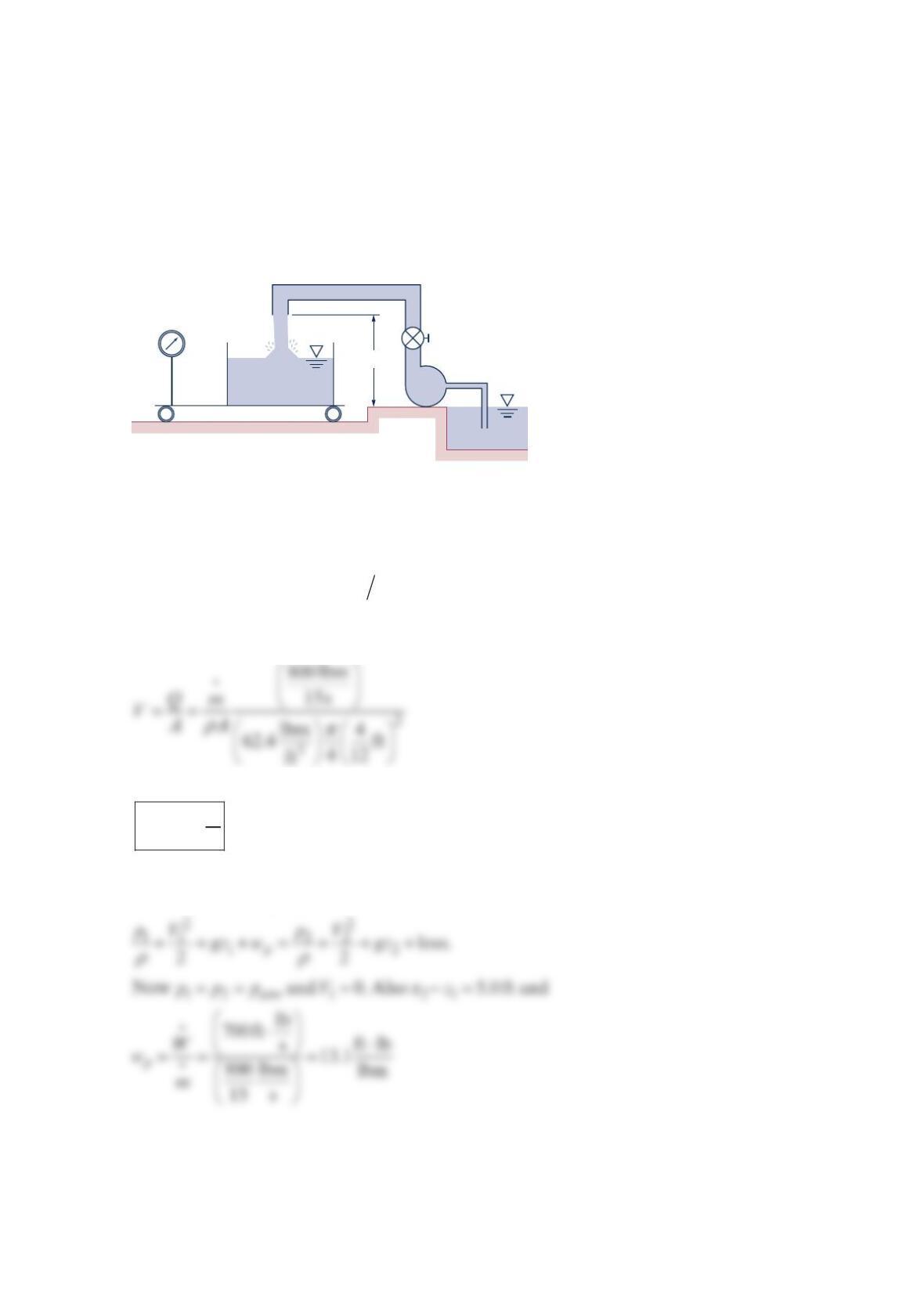
The figure below shows a pump testing setup. Water is drawn from a sump and pumped
through a pipe containing a valve. The water is discharged into a catch tank sitting on a
scale. During a test run, 800 lb of water is collected in the catch tank in 15s. The pump
power input to the fluid during this period is ⋅700 ft lb/s. Calculate the water velocity in the
pipe and the mechanical energy loss ( ⋅
f
t lb/lbm) in the pipe and valve.
Solution 5.115
For 60 °F water,
ρ
=3
62.4 lbm ft
so
=
or
ft
9.79 s
V
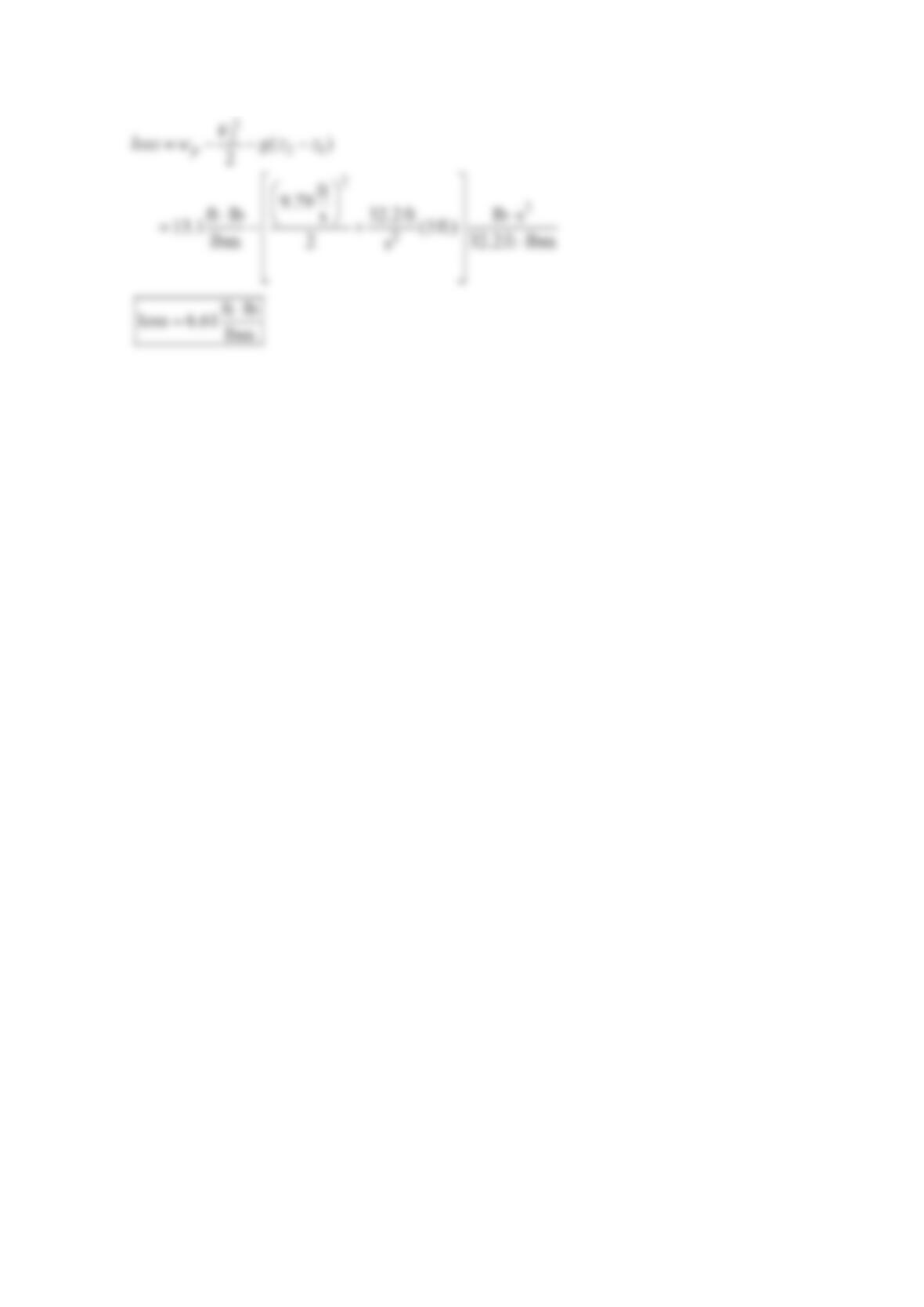
We next write the mechanical energy equation from the water level (1) in the sump to the
4-in.pipe discharge (2). For steady state conditions,
Sump
Catch
tank
5 ft
Valve
4-in. I.D. pipe
60°F H2O
Then
Problem 5.116
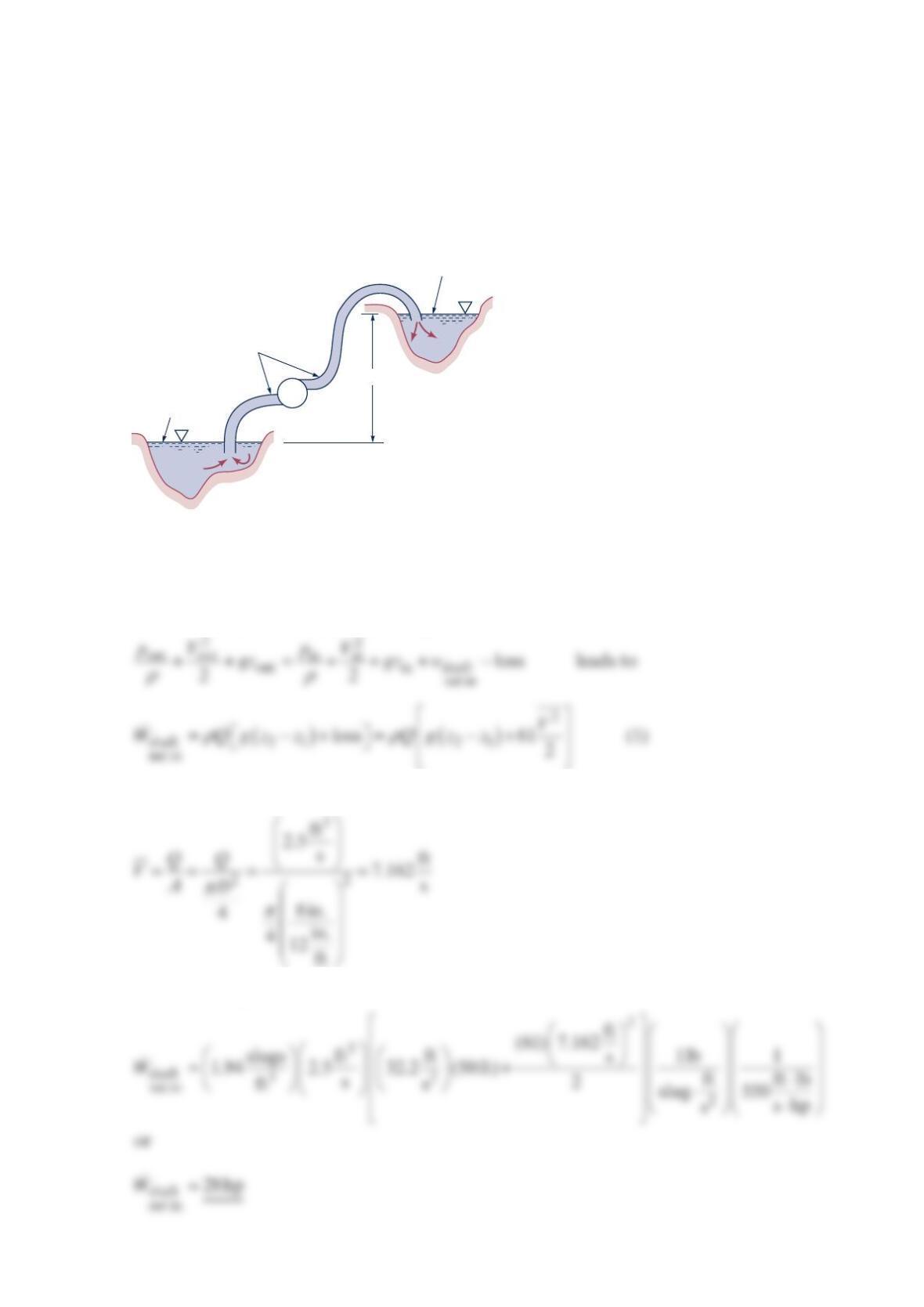
Water is to be moved from one large reservoir to another at a higher elevation as indicated
in the figure below. The loss of available energy associated with 3
2.5ft /s being pumped
from sections (1) to (2) is =222
loss 61 / 2 ft /sV, where Vis the average velocity of water in
the 8-in. inside-diameter piping involved. Determine the amount of shaft power required.
Solution 5.116
For the flow sections (1) to (2), the equation
From the volume flowrate, we obtain
Thus, from Eq. (1)
Pump
8-in. inside-
diameter pipe
Section (1)
50 ft
Section (2)
Problem 5.117
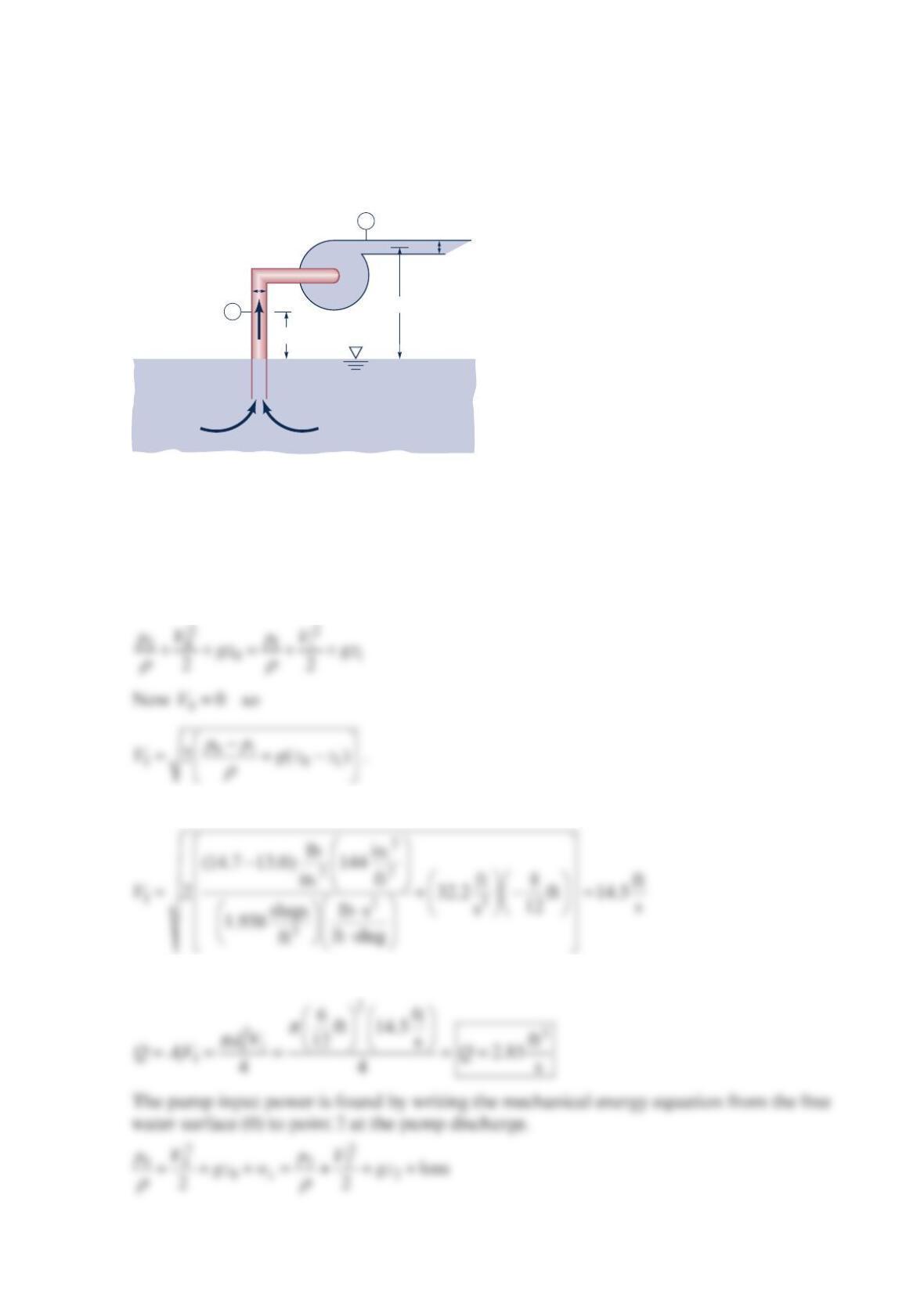
Determine the volume flowrate and minimum power input to the water pump in the figure
below. Determine the actual power if the hydraulic efficiency is 75% and losses in the
motor and bearings are negligible.
Solution 5.117
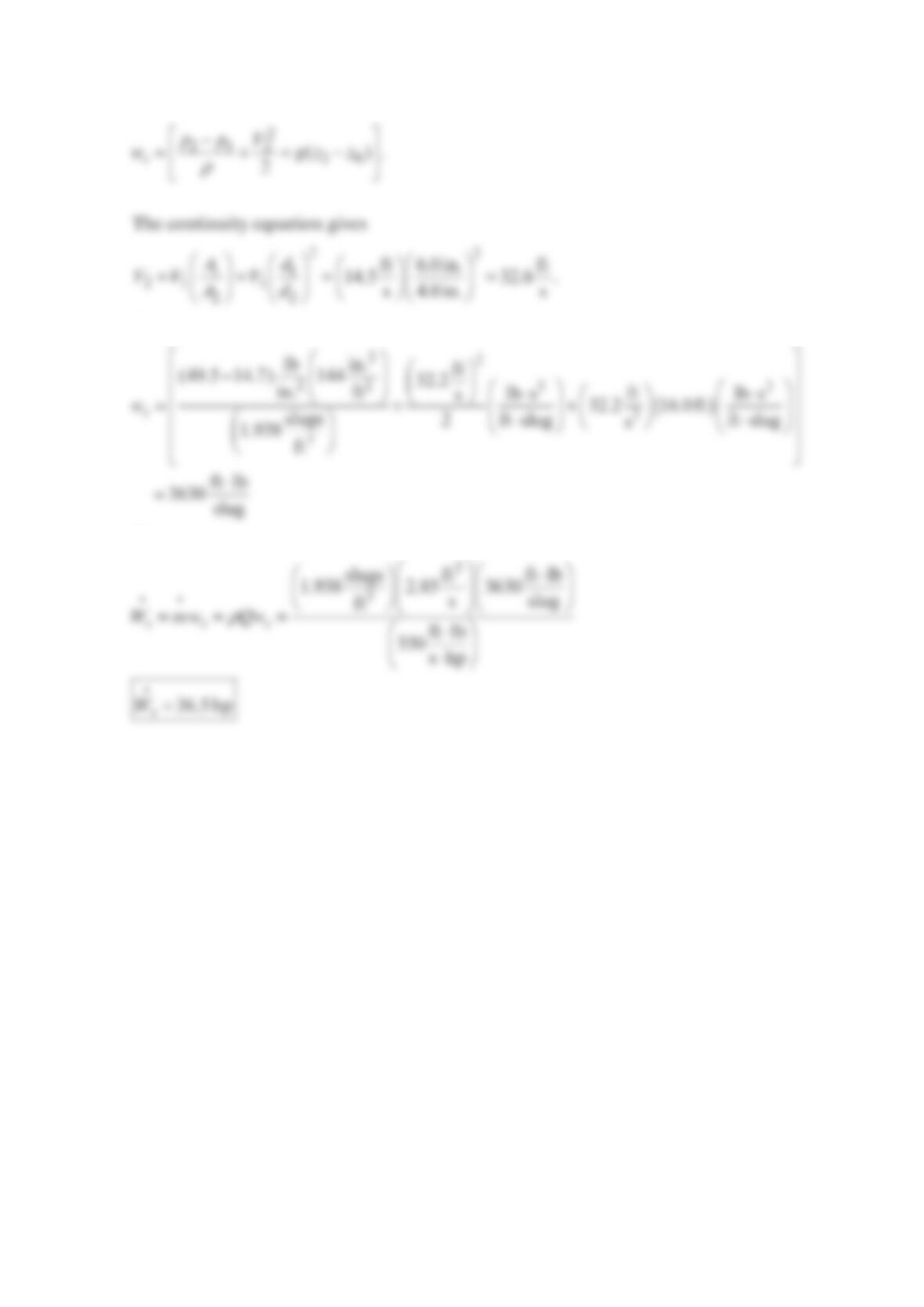
The minimum pump input power occurs for frictionless flow. Assume constant fluid
density. Apply Bernoulli’s equation from the free water surface (0) to the pump inlet pipe at
location 1, 8 in. above water surface.
Assuming 60 °F water
and
p2
= 49.5 psia
patm
= 14.7 psia
p1
=
13.0 psia
d2
= 4.0 in.
d1
= 6.0 in.
p2
Q
p1
16.0 ft
8.0 in.
Now =
00V and the minimum pump input power occurs if =loss 0 . This gives
Then
Then
Problem 5.118
A pump moves water horizontally at a rate of 3
0.02 m /s. Upstream of the pump where the
pipe diameter is 90 mm, the pressure is 120 kPa. Downstream of the pump where the pipe
diameter is 30 mm, the pressure is 400 kPa. If the loss in energy across the pump due to
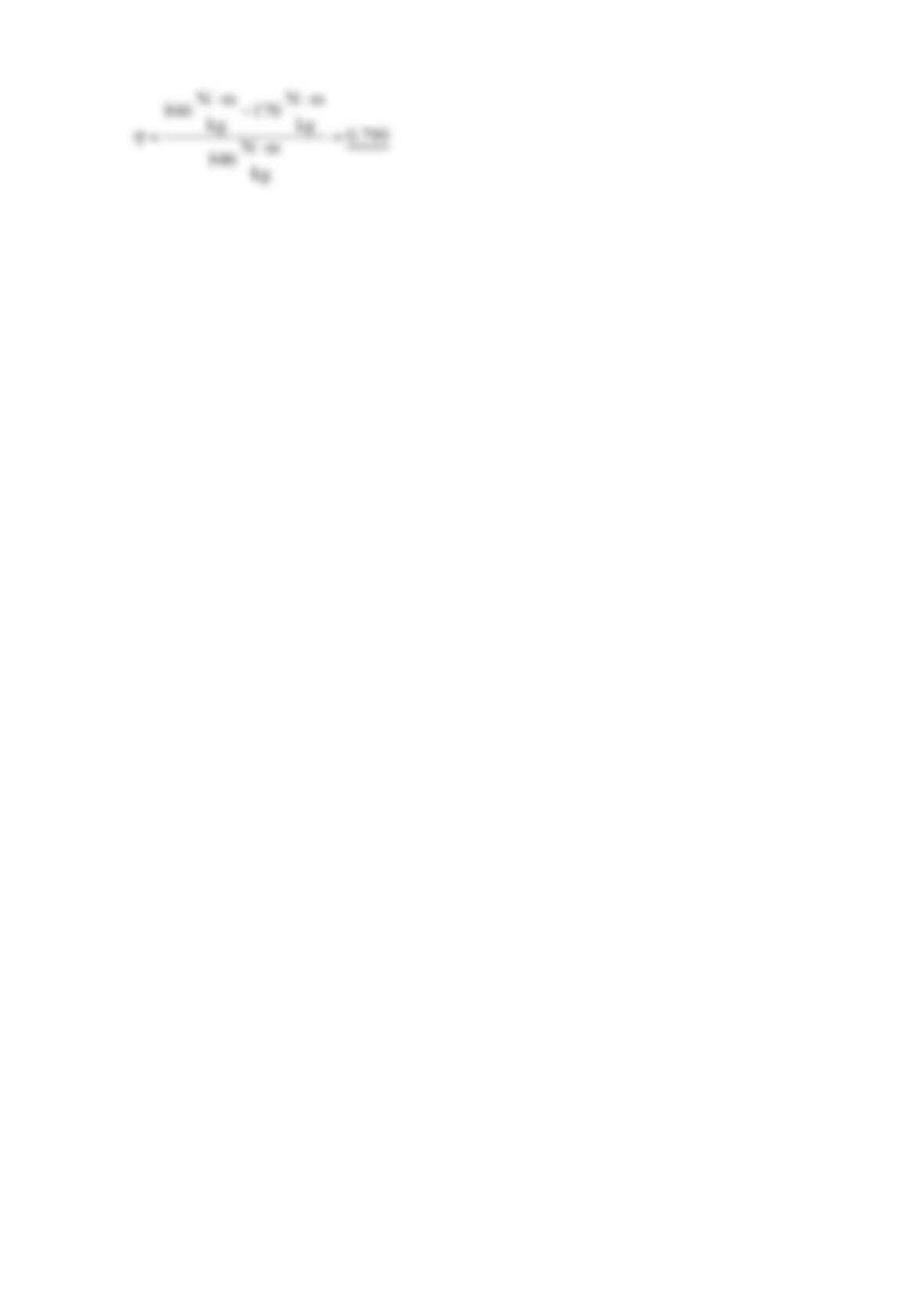
fluid friction effects is ⋅170 N m/kg, determine the hydraulic efficiency of the pump.
Solution 5.118
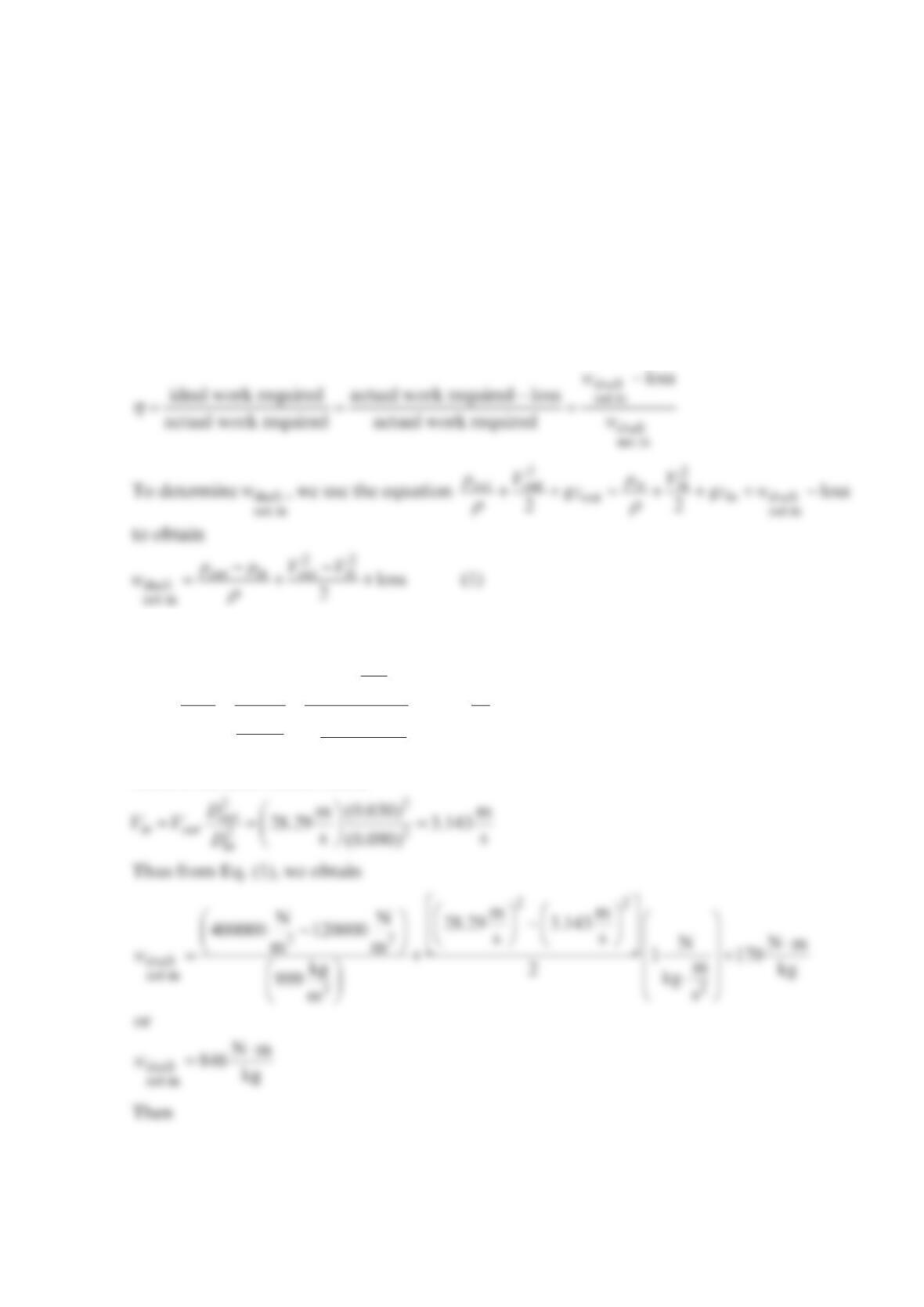
The efficiency of the pump,
η
, is
From the volume flowrate, we obtain
()
3
22
m
0.02 sm
28.29 s
0.030 m
44
out
out out
QQ
V
AD
ππ
== = =
Also, from mass conservation