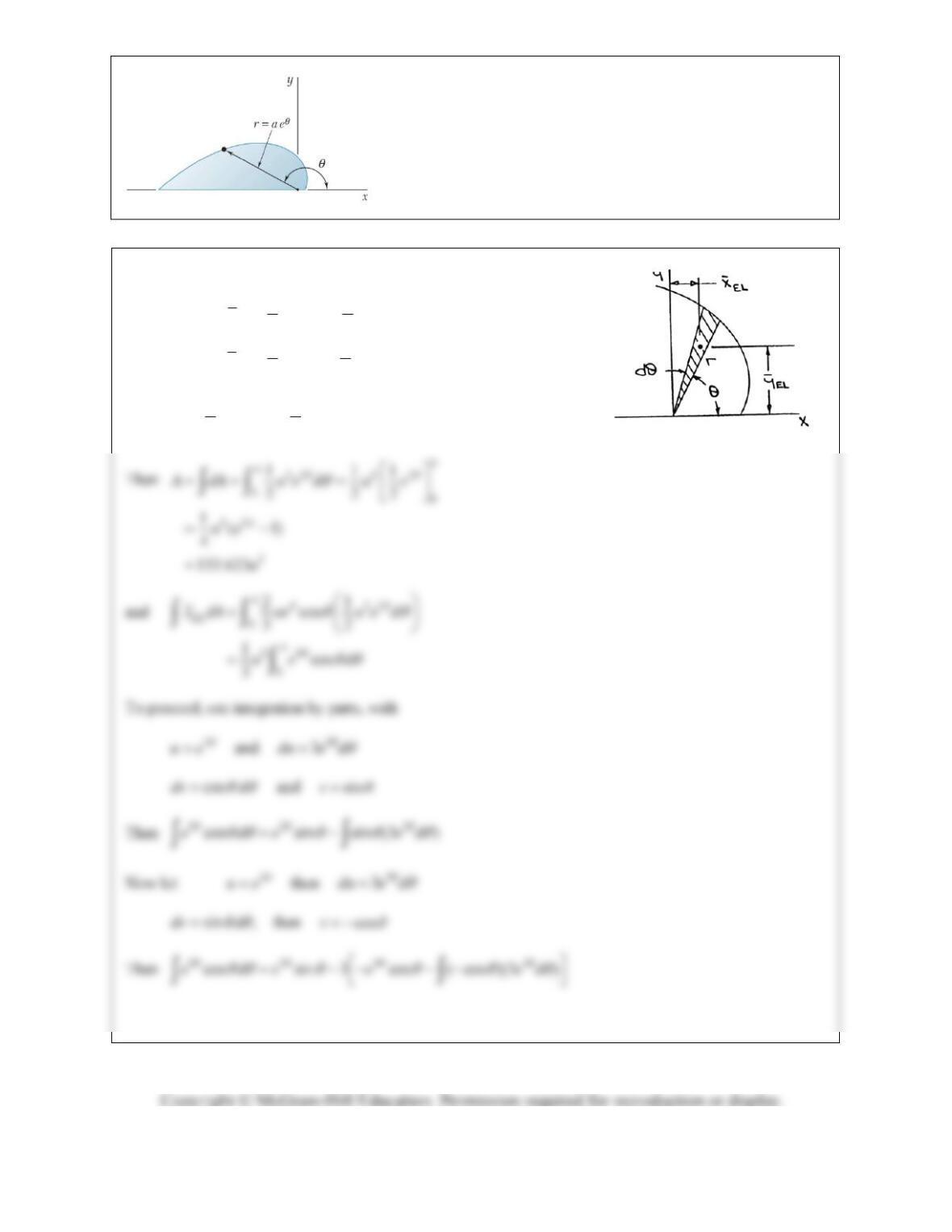
PROBLEM 5.48*
Determine by direct integration the centroid of the area shown.
SOLUTION
We have
22
cos cos
33
22
sin sin
33
EL
EL
xr ae
yr ae
and
22
11
()( )
22
dA r rd a e d
PROBLEM 5.48* (Continued)
so that
3
3
3
3
0
cos (sin 3cos )
10
1(sin 3cos )
310
EL
e
ed
e
xdA a
Use integration by parts, as above, with
3
ue
and 3
3du e d
sindv d
and cosv
Then 33 3
sin cos ( cos )(3 )ede ed
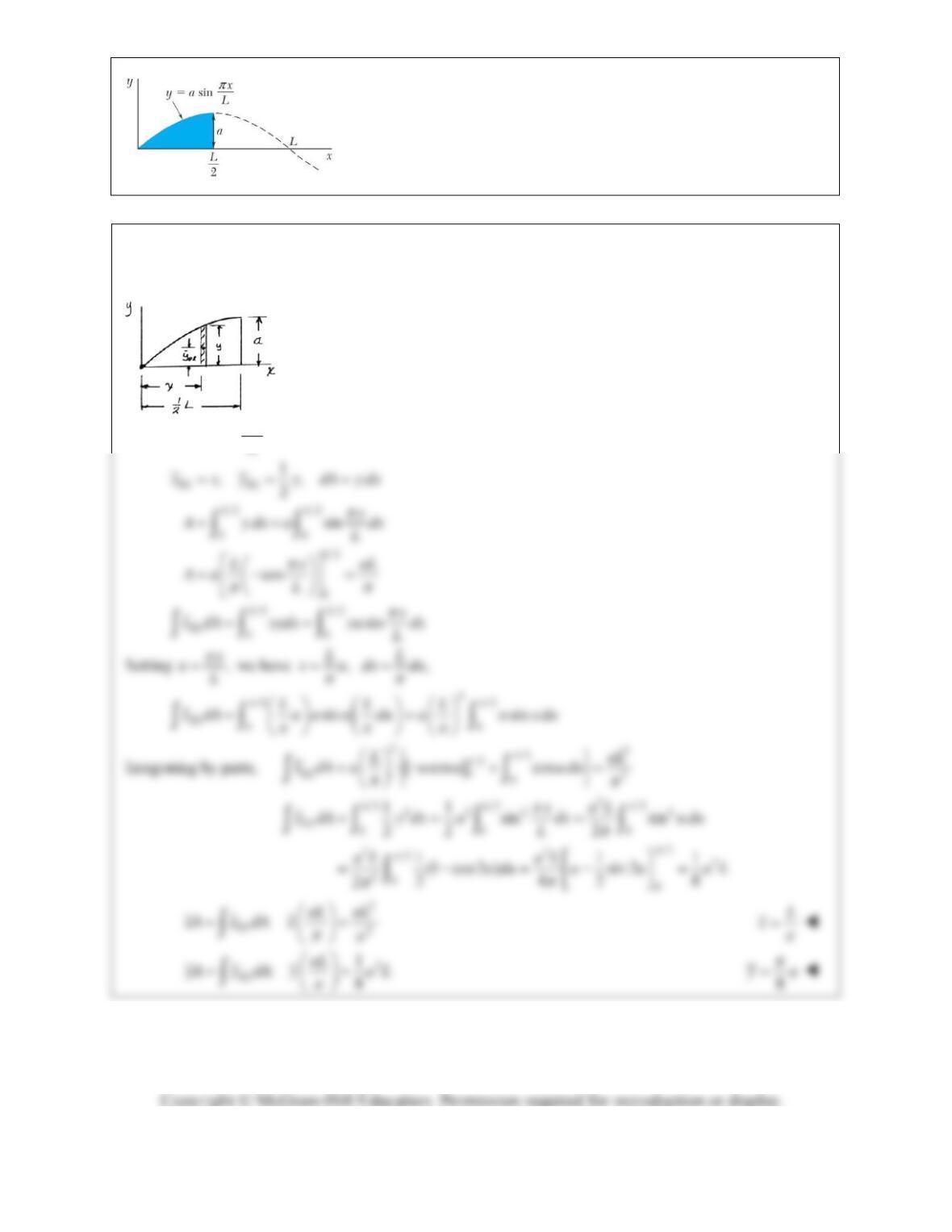
PROBLEM 5.49*
Determine by direct integration the centroid of the area shown.
SOLUTION
sin
x
ya L
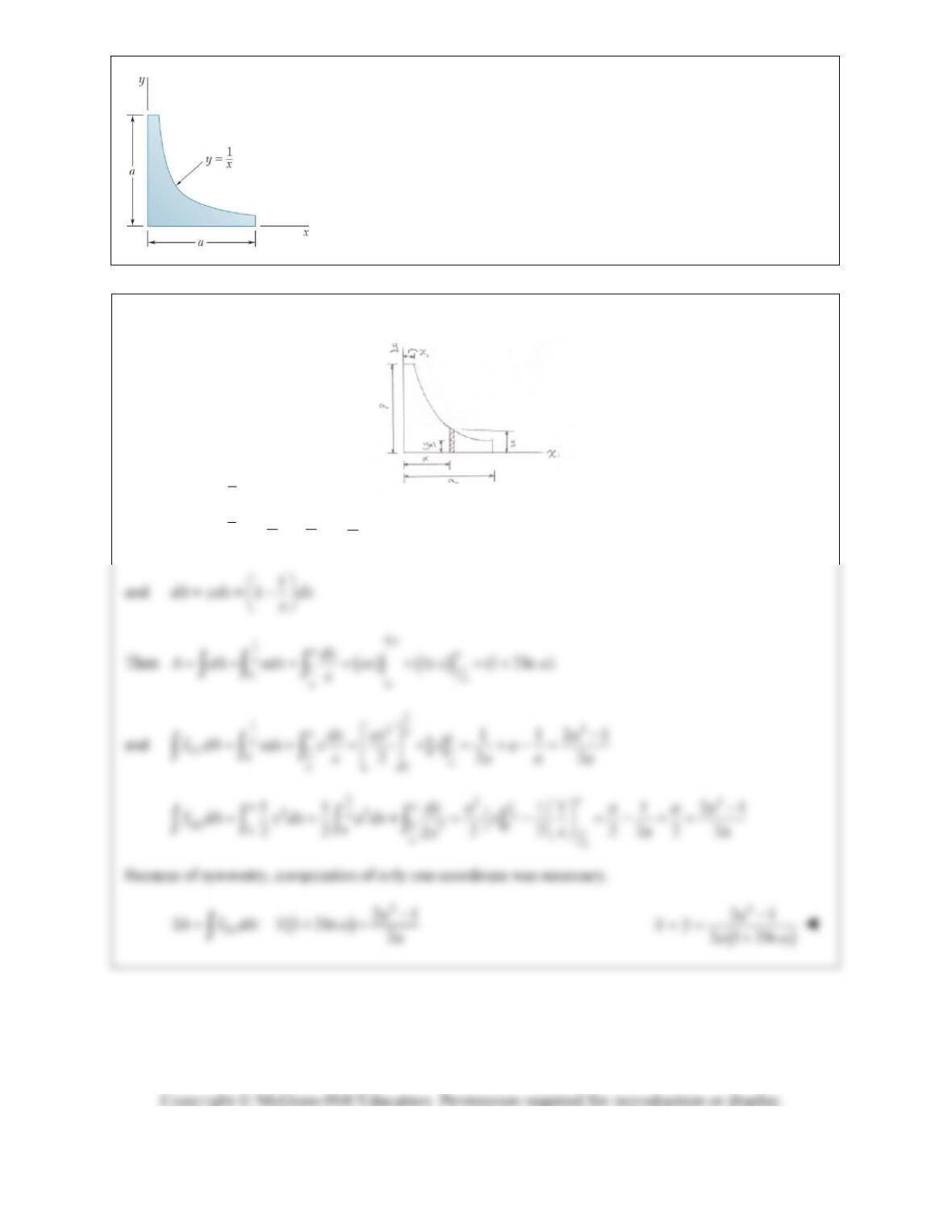
PROBLEM 5.50
Determine the centroid of the area shown in terms of a.
SOLUTION
We have
11 1
1
22
EL
EL
xx
yy x
PROBLEM 5.51
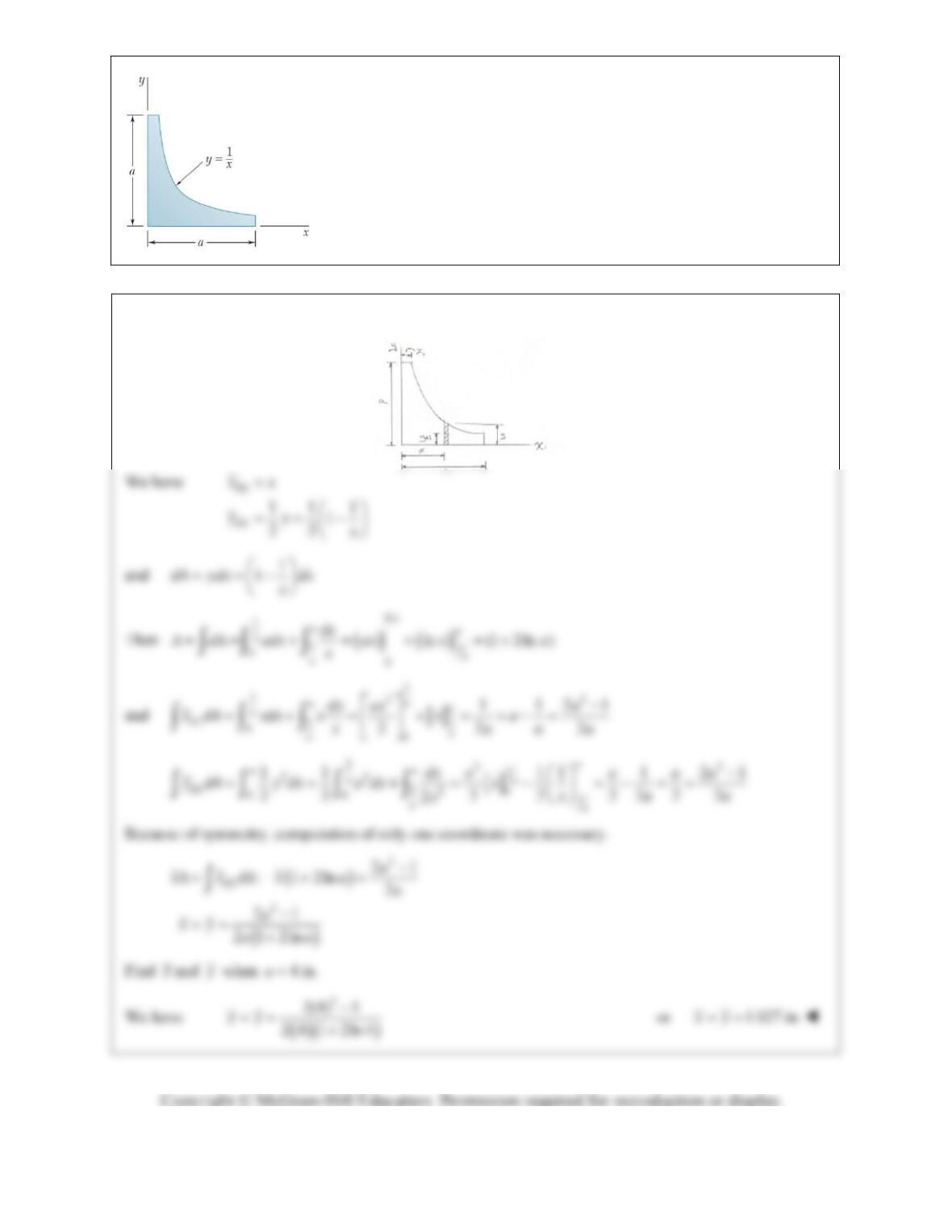
Determine the centroid of the area shown when a = 4 in.
SOLUTION
PROBLEM 5.52
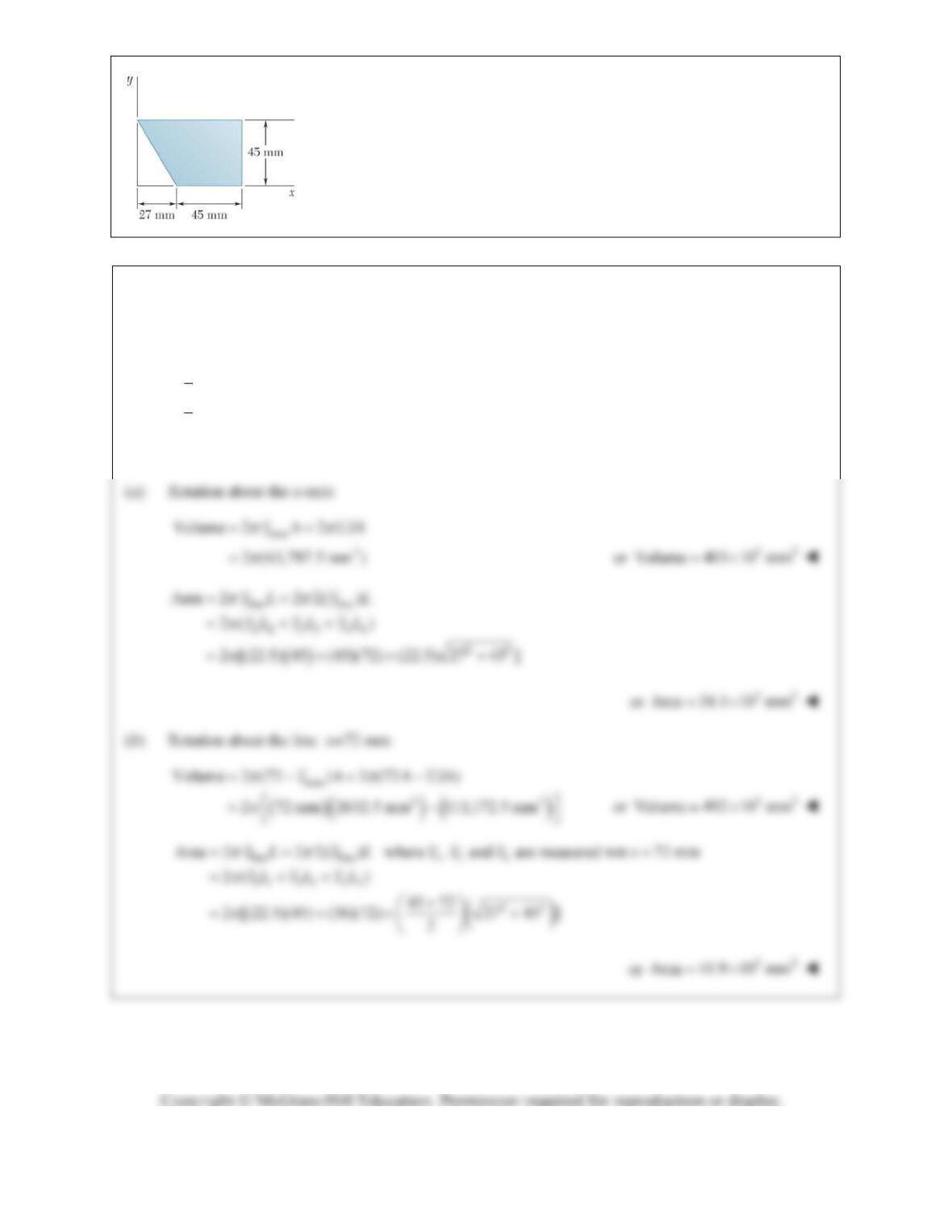
Determine the volume and the surface area of the solid obtained by rotating
the area of Prob. 5.1 about (a) the x axis, (b) the line x = 72 mm.
SOLUTION
From the solution of Problem 5.1, we have
2
3
3
2632.5 mm
111,172.5 mm
63, 787.5 mm
A
xA
yA
Applying the theorems of Pappus-Guldinus, we have
PROBLEM 5.53
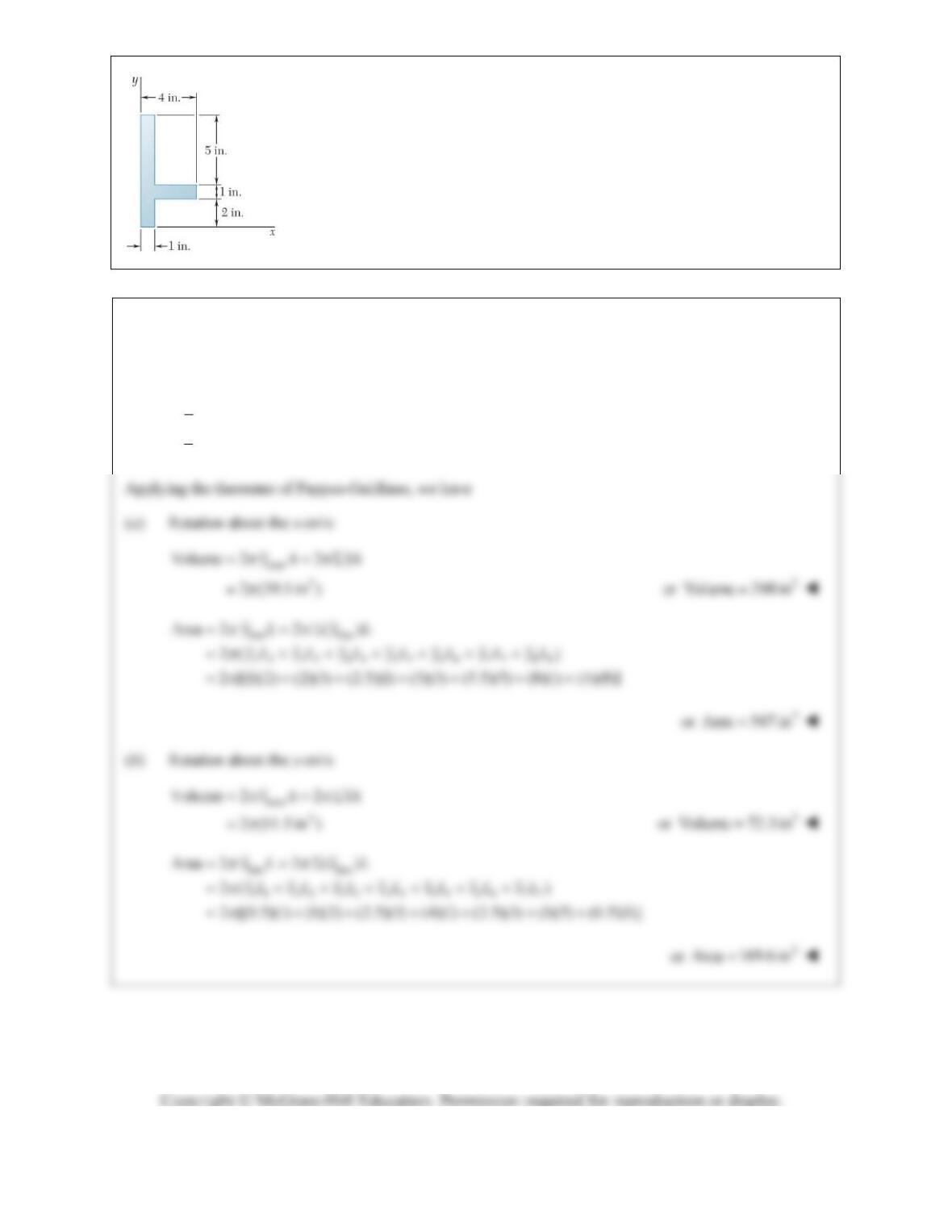
Determine the volume and the surface area of the solid obtained by rotating the
area of Problem 5.2 about (a) the x-axis, (b) the y-axis.
SOLUTION
From the solution of Problem 5.2, we have
2
3
3
11 in
11.5 in
39.5 in
A
xA
yA
PROBLEM 5.54
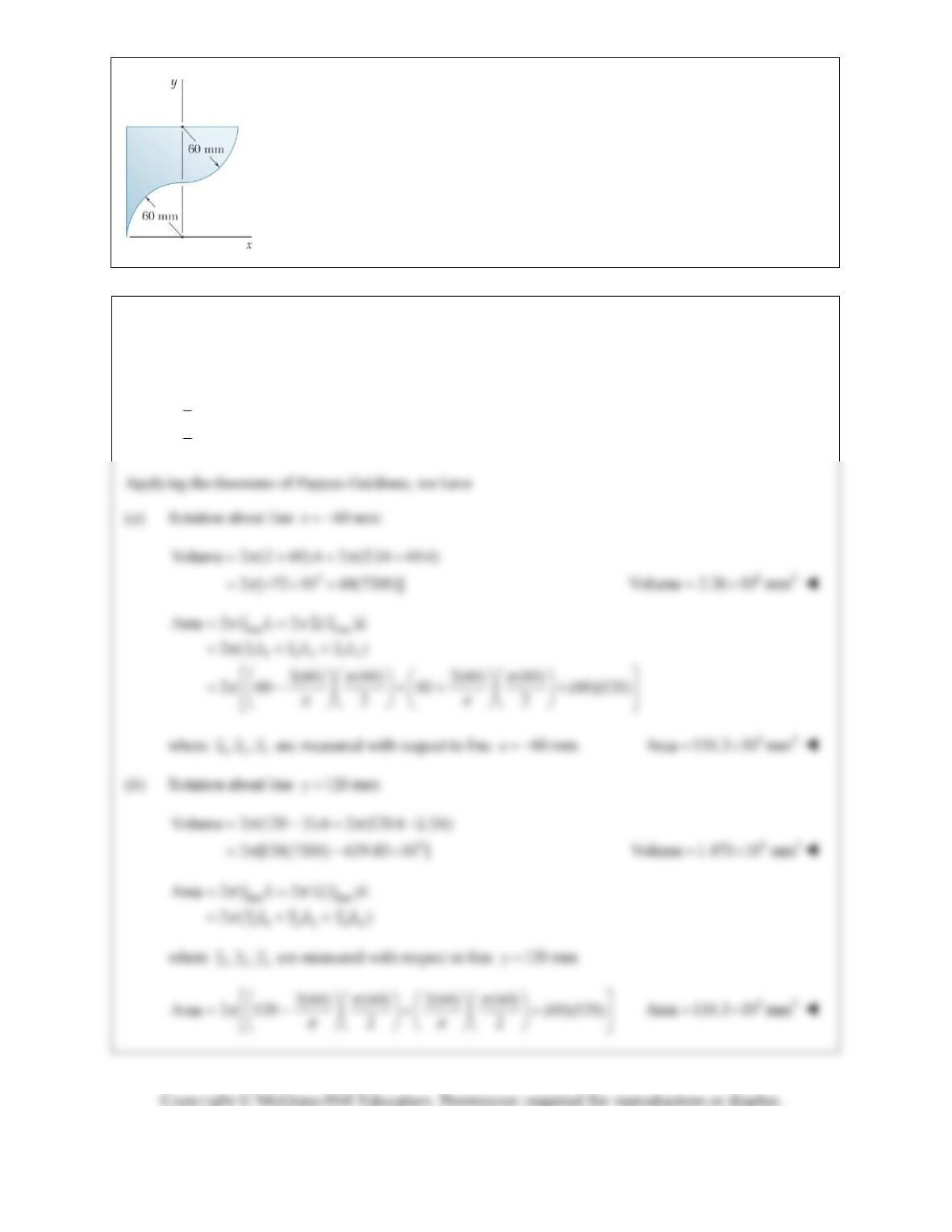
Determine the volume and the surface area of the solid obtained by rotating the
area of Problem 5.6 about (a) the line x 60 mm, (b) the line y 120 mm.
SOLUTION
From the solution of Problem 5.6, we have
2
33
33
7200 mm
72 10 mm
629.83 10 mm
A
xA
yA
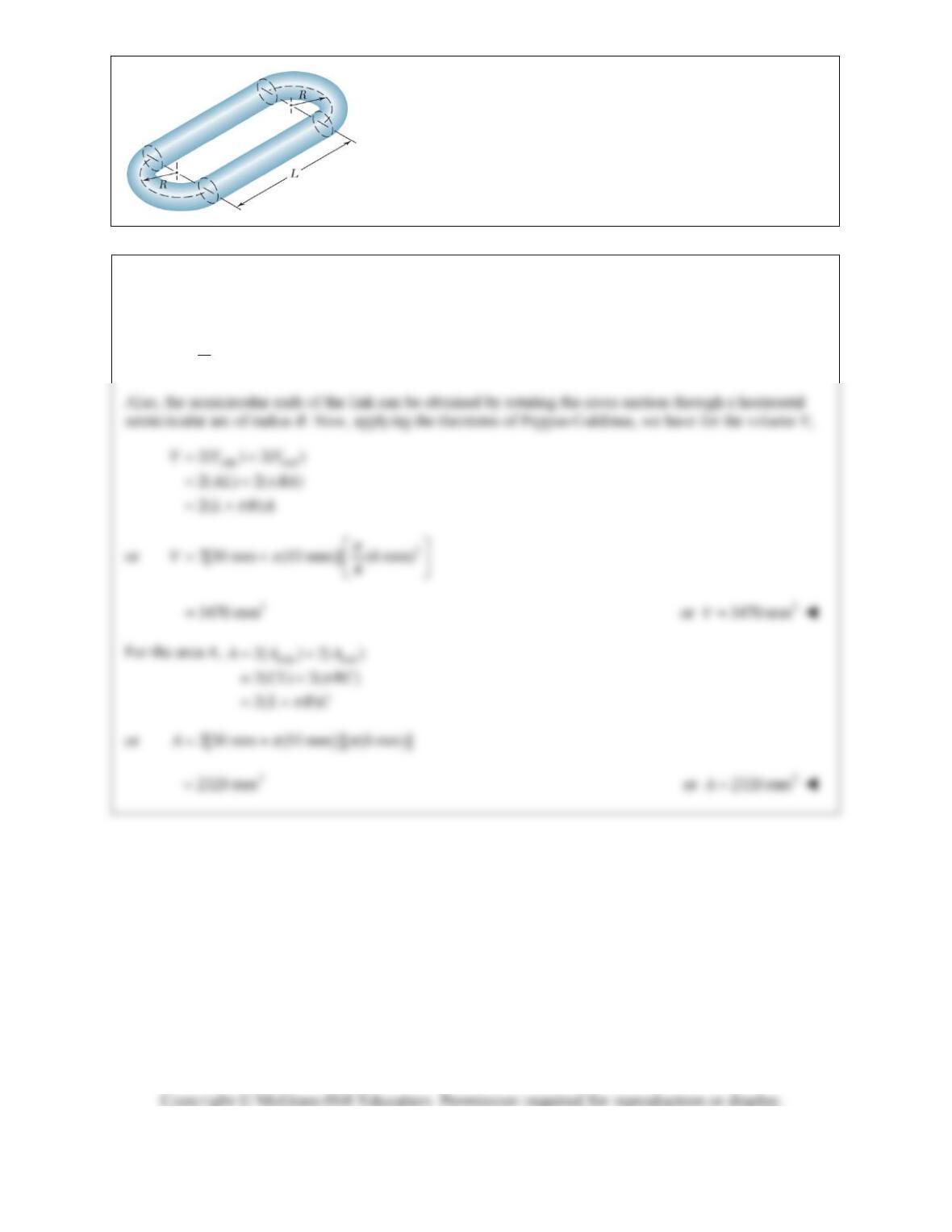
PROBLEM 5.55
Determine the volume and the surface area of the chain link
shown, which is made from a 6-mm-diameter bar, if R 10 mm
and L 30 mm.
SOLUTION
The area A and circumference C of the cross section of the bar are
2and .
4
A
dCd
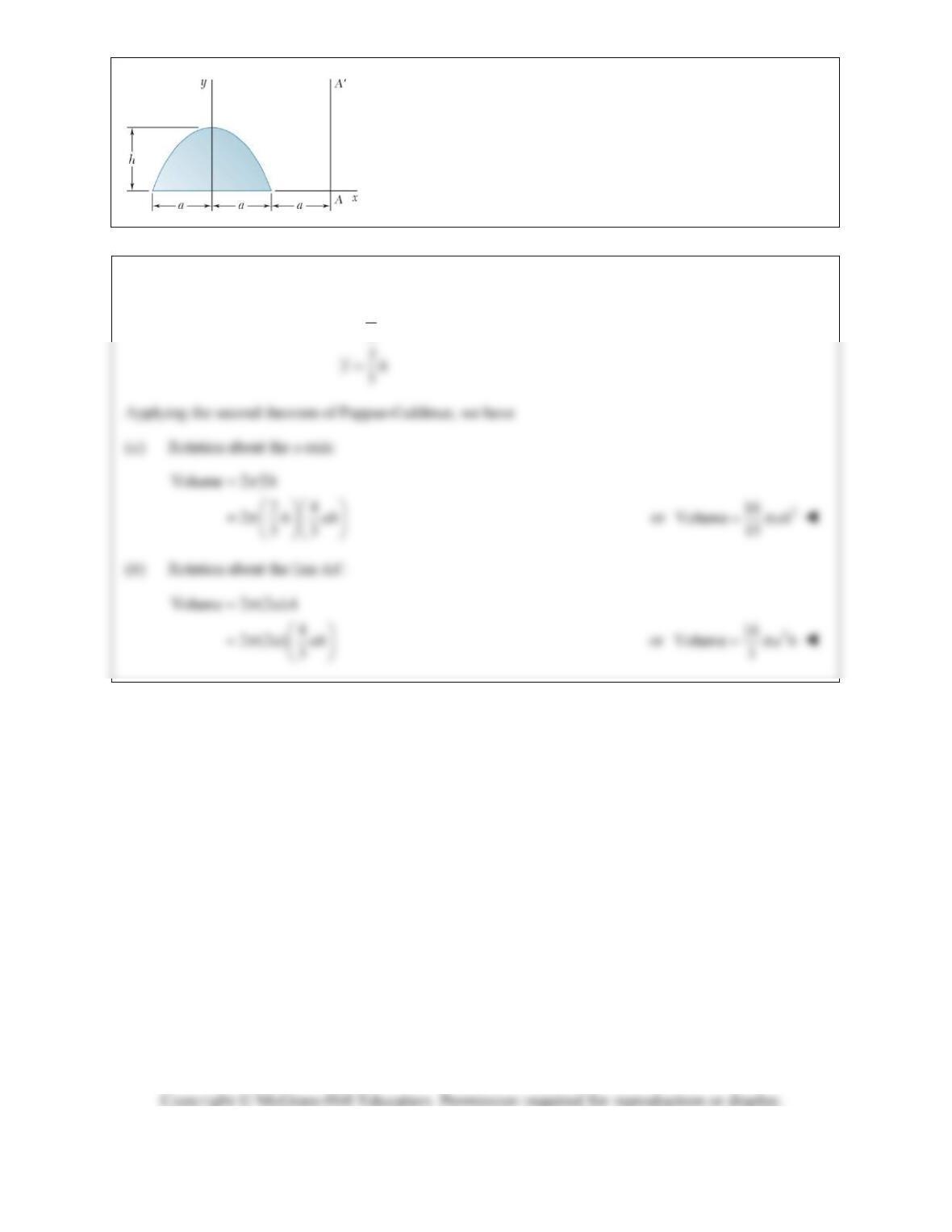
PROBLEM 5.56
Determine the volume of the solid generated by rotating the
parabolic area shown about (a) the x-axis, (b) the axis AA.
SOLUTION
First, from Figure 5.8a, we have 4
3
A
ah
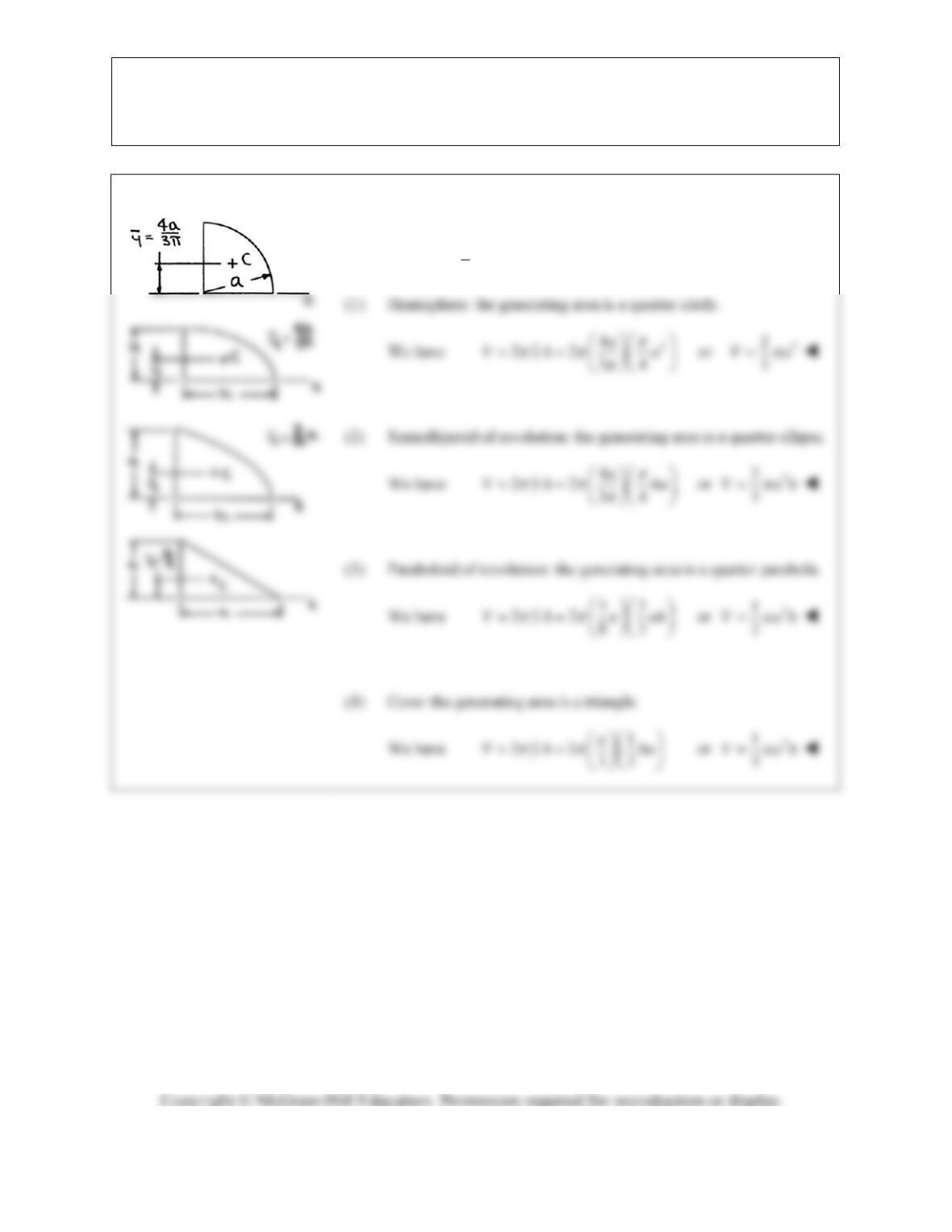
PROBLEM 5.57
Verify that the expressions for the volumes of the first four shapes in Fig. 5.21 are correct.
SOLUTION
Following the second theorem of Pappus-Guldinus, in each case, a specific
generating area A will be rotated about the x-axis to produce the given
shape. Values of
y
are from Figure 5.8a.
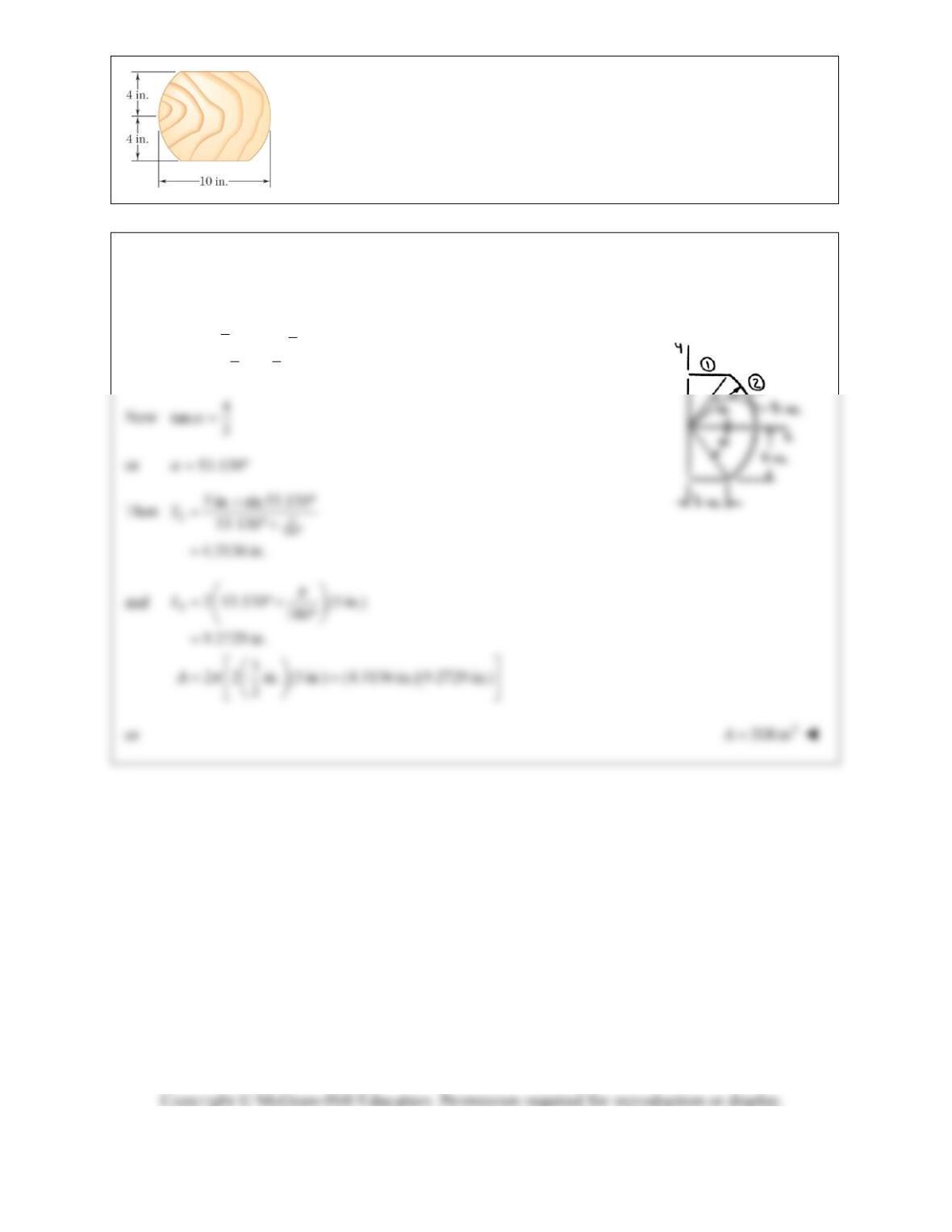
PROBLEM 5.58
Knowing that two equal caps have been removed from a 10-in.-diameter
wooden sphere, determine the total surface area of the remaining portion.
SOLUTION
The surface area can be generated by rotating the line shown about the y-axis. Applying the first theorem of
Pappus-Guldinus, we have
11 2 2
22
2(2 )
AXL xL
xL x L
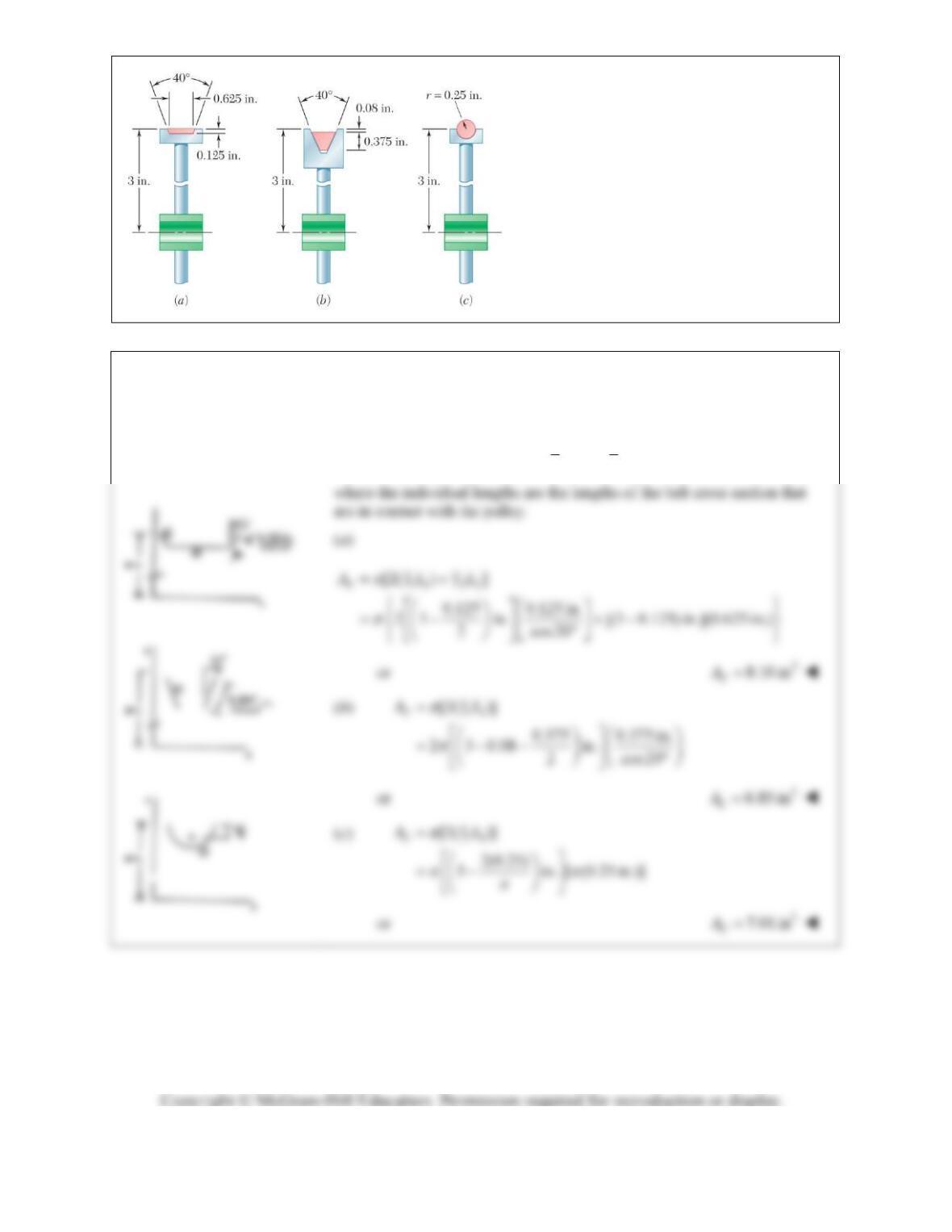
PROBLEM 5.59
Three different drive belt profiles are to be
studied. If at any given time each belt
makes contact with one-half of the
circumference of its pulley, determine the
contact area between the belt and the
pulley for each design.
SOLUTION
Applying the first theorem of Pappus-Guldinus, the contact area
C
A
of a
belt is given by
C
AyL yL
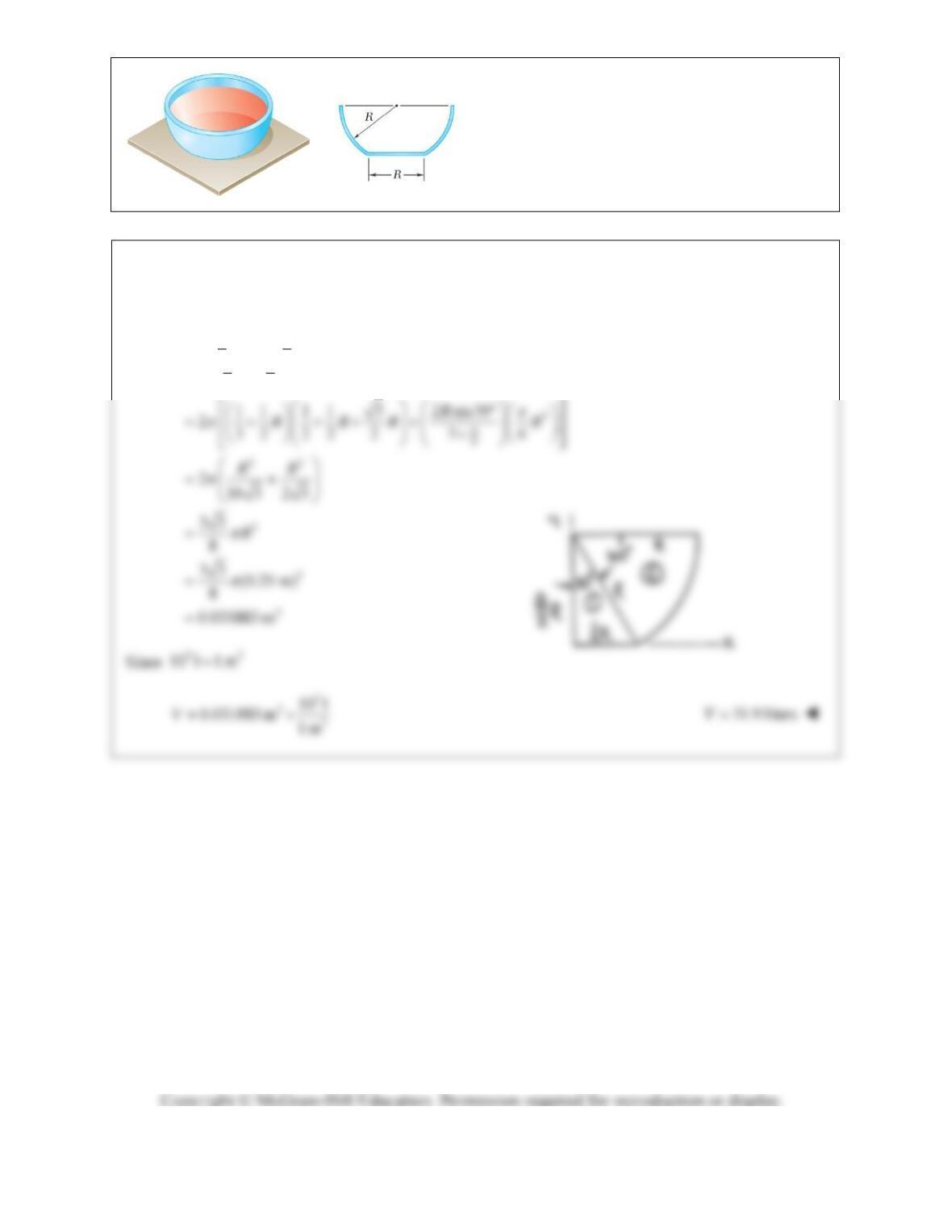
PROBLEM 5.60
Determine the capacity, in liters, of the punch bowl
shown if R 250 mm.
SOLUTION
The volume can be generated by rotating the triangle and circular sector shown about the y-axis. Applying
the second theorem of Pappus-Guldinus and using Figure 5.8a, we have
11 2 2
22
2( )
VxA xA
xA x A
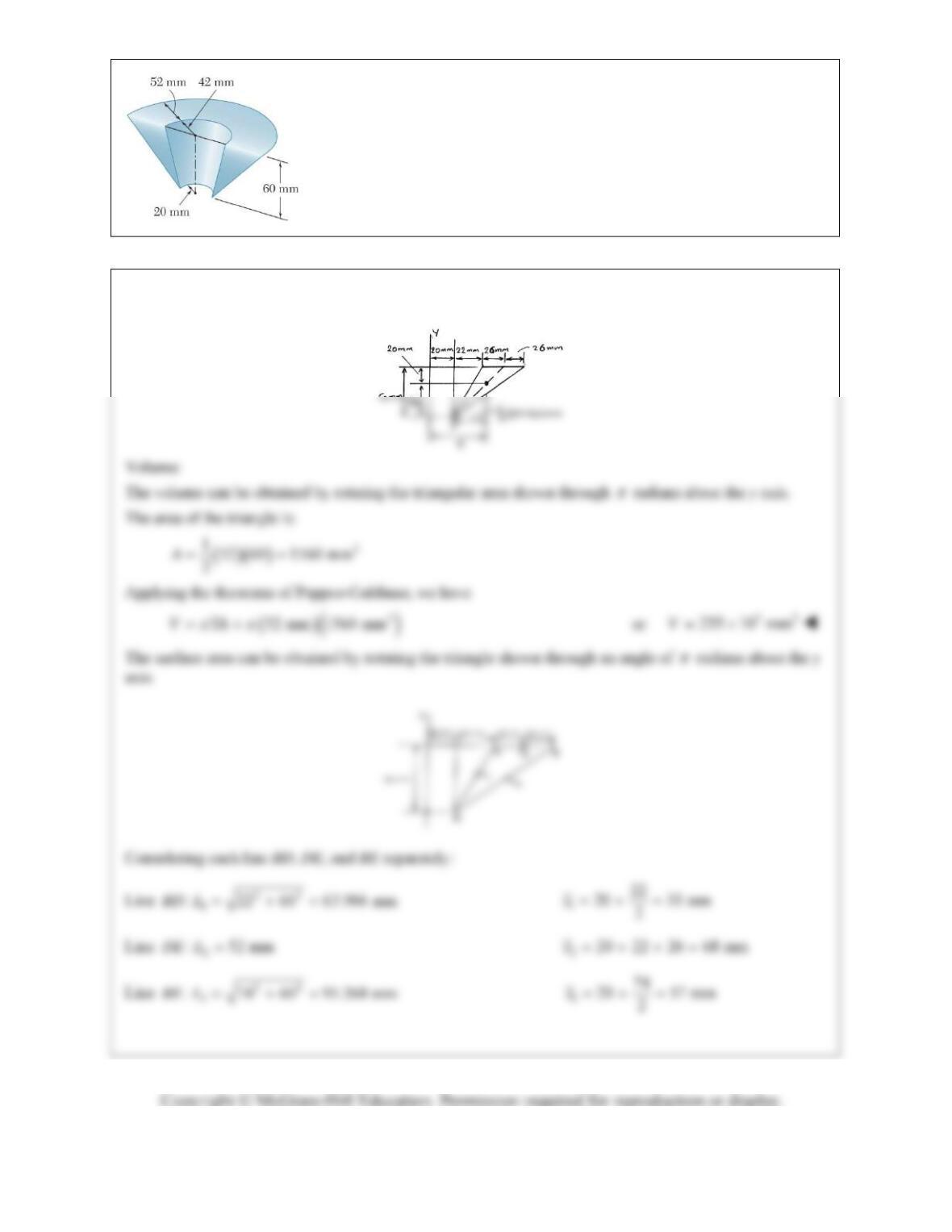
PROBLEM 5.61
Determine the volume and total surface area of the bushing shown.
SOLUTION
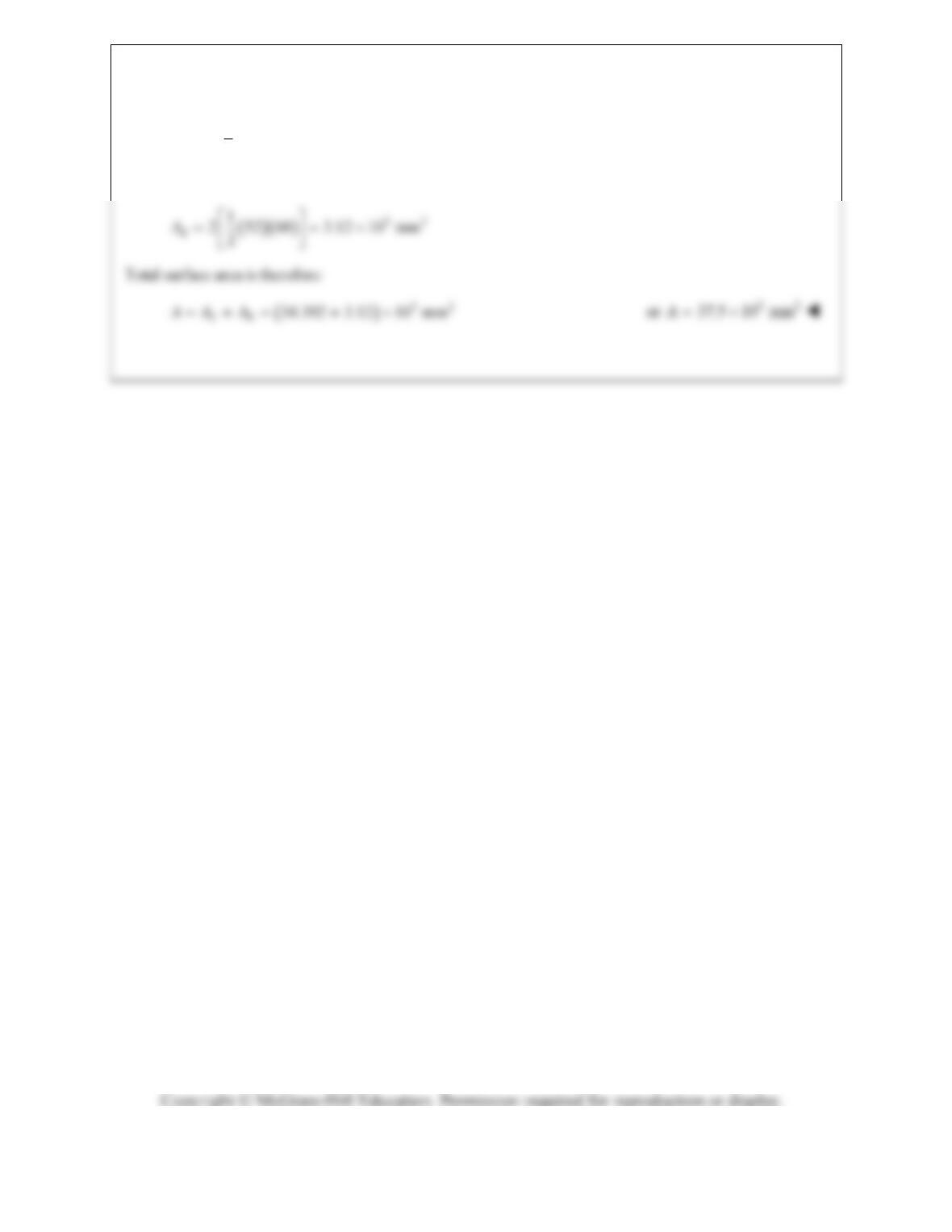
PROBLEM 5.61 (Continued)
Then applying the theorems of Pappus-Guldinus for the part of the surface area generated by the lines:
32
31 63.906 68 52 57 95.268 10947.6 34.392 10 mm
L
AxA
The area of the “end triangles”:
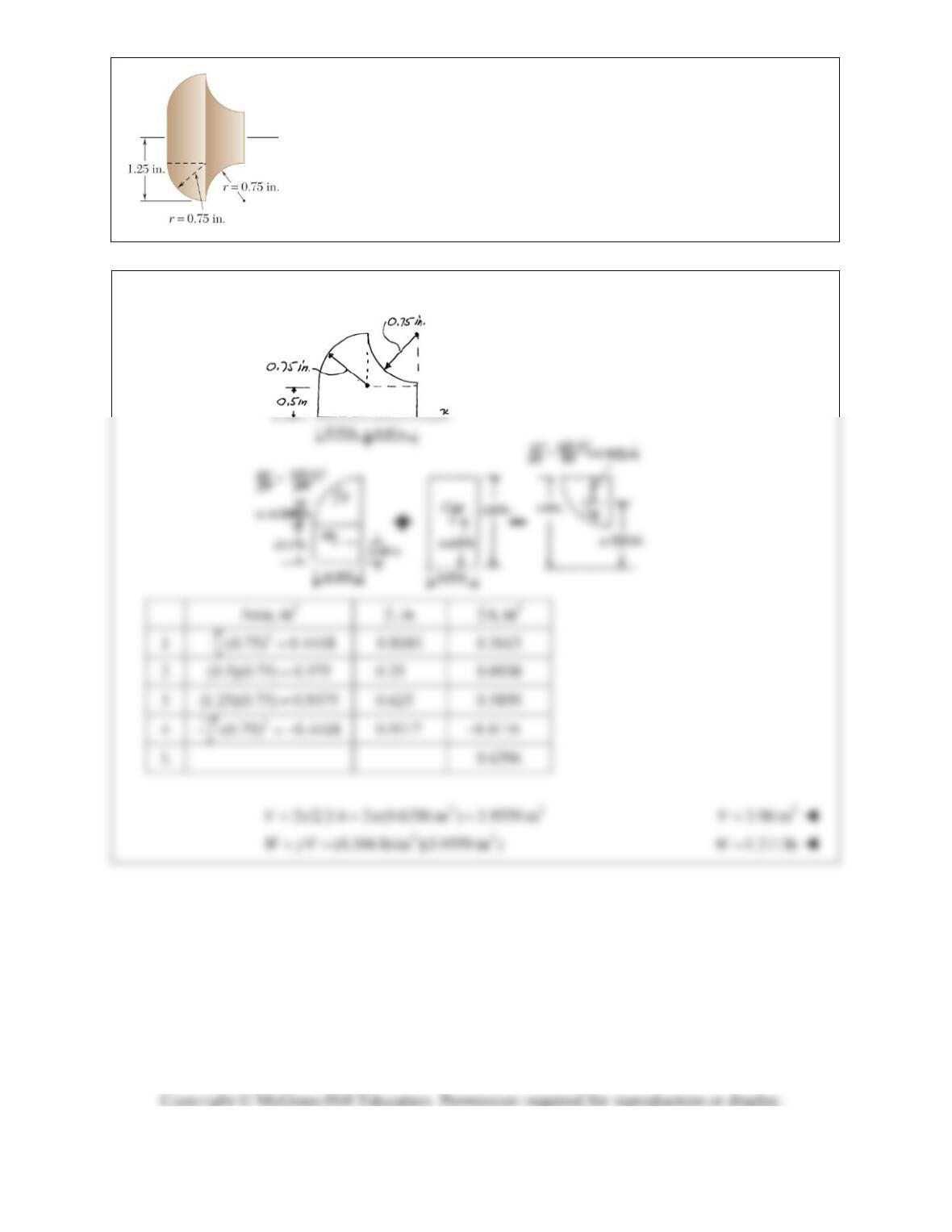
PROBLEM 5.62
Determine the volume and weight of the solid brass knob shown, knowing
that the specific weight of brass is 0.306 lb/in3.
SOLUTION
Volume of knob is obtained by rotating area
at left about the x-axis. Consider area as made
of components shown below.
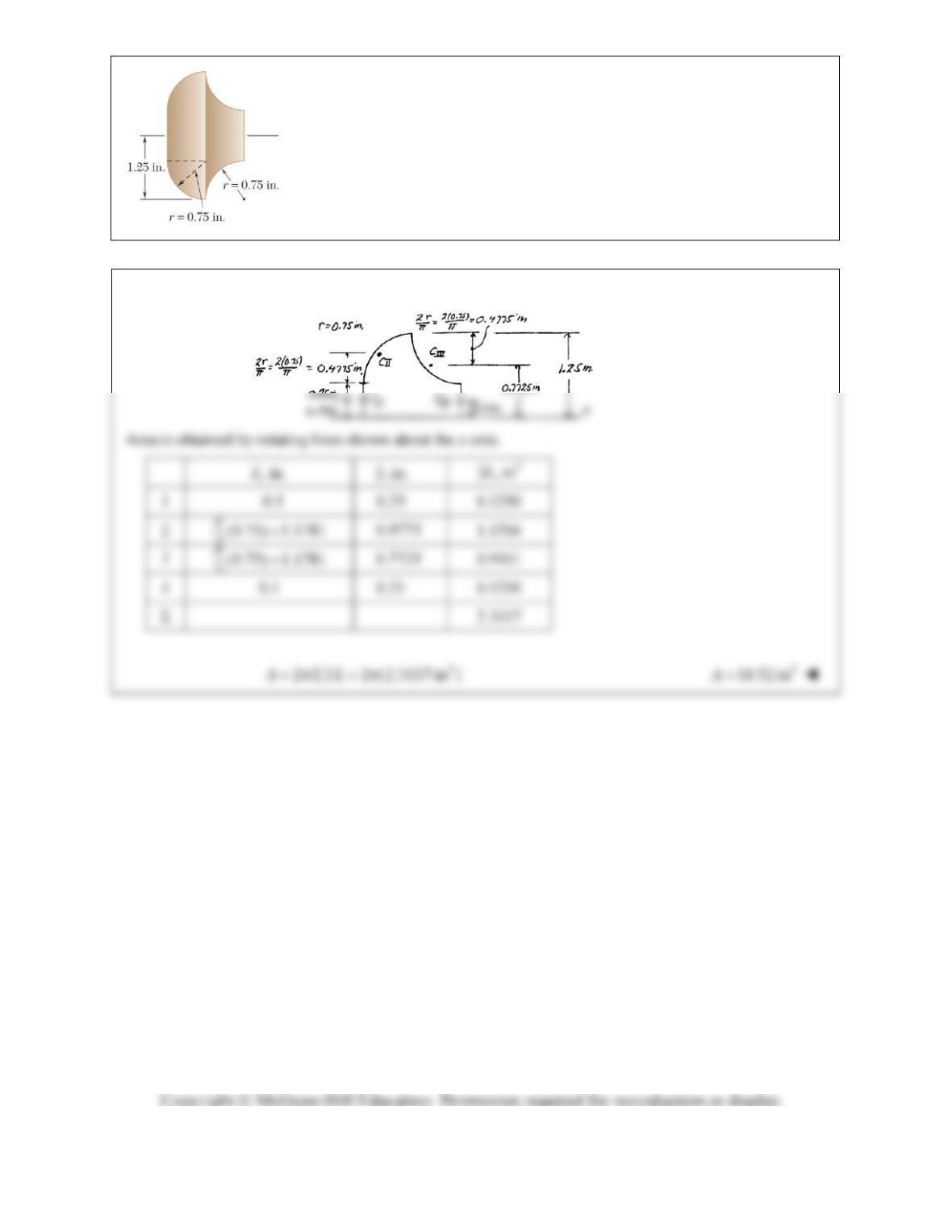
PROBLEM 5.63
Determine the total surface area of the solid brass knob shown.
SOLUTION
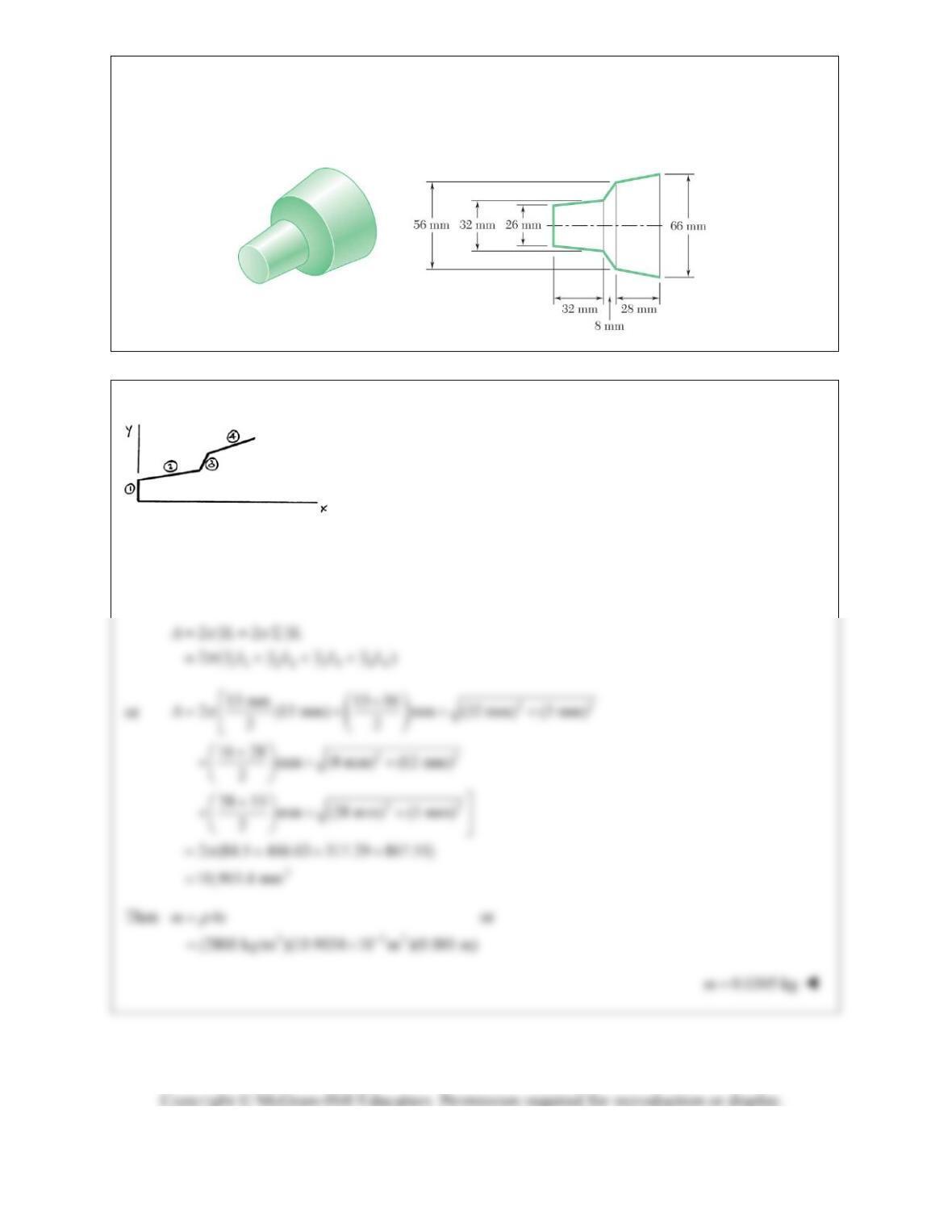
PROBLEM 5.64
The aluminum shade for the small high-intensity lamp shown has a uniform thickness of 1 mm. Knowing
that the density of aluminum is 2800 kg/m
3
, determine the mass of the shade.
SOLUTION
The mass of the lamp shade is given by
mV At
where A is the surface area and t is the thickness of the shade. The area can be generated by rotating the line
shown about the x-axis. Applying the first theorem of Pappus Guldinus, we have
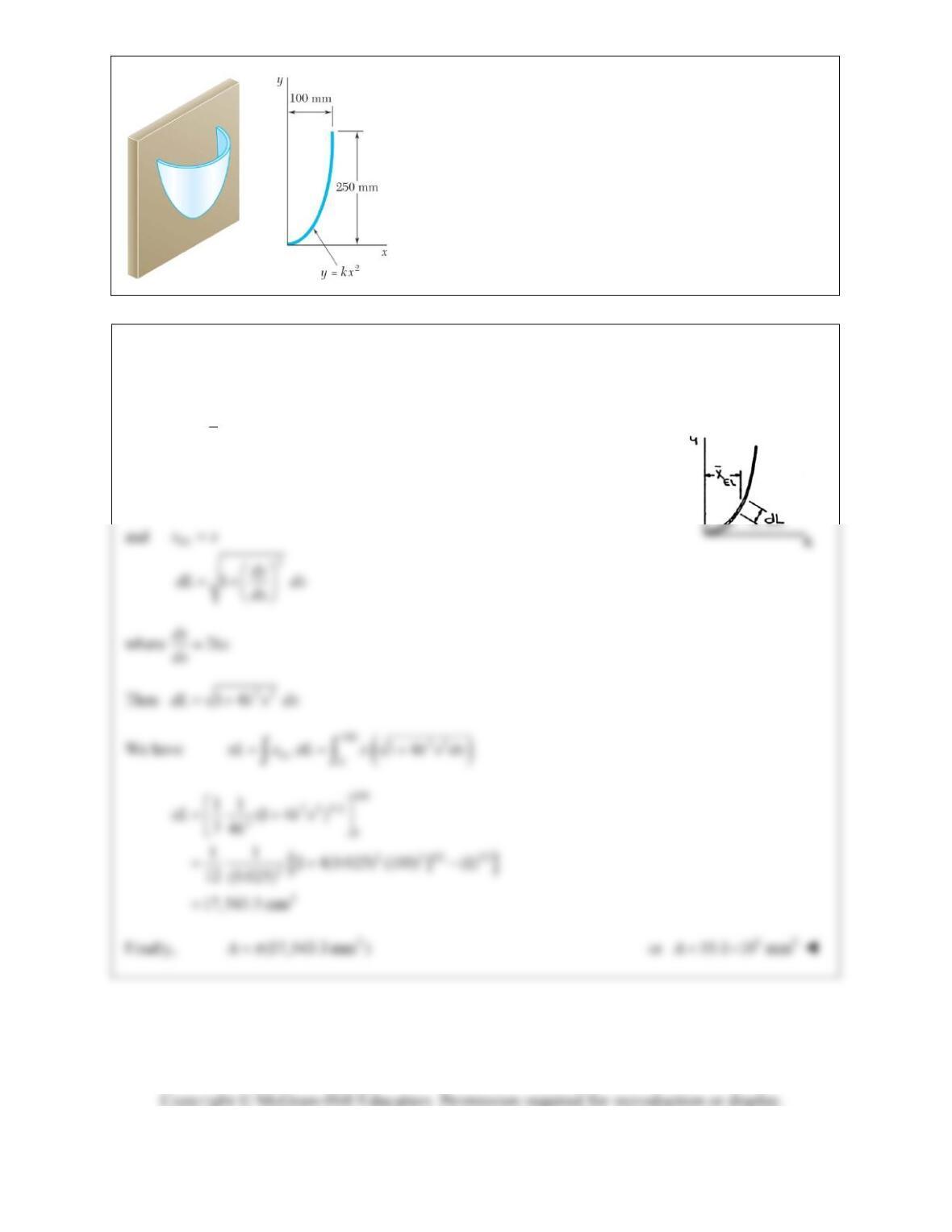
PROBLEM 5.65*
The shade for a wall-mounted light is formed from a thin
sheet of translucent plastic. Determine the surface area of the
outside of the shade, knowing that it has the parabolic cross
section shown.
SOLUTION
First note that the required surface area A can be generated by rotating the parabolic cross section through
radians about the y-axis. Applying the first theorem of Pappus-Guldinus, we have
AxL
Now at
21
100 mm, 250 mm
250 (100) or 0.025 mm
xy
kk