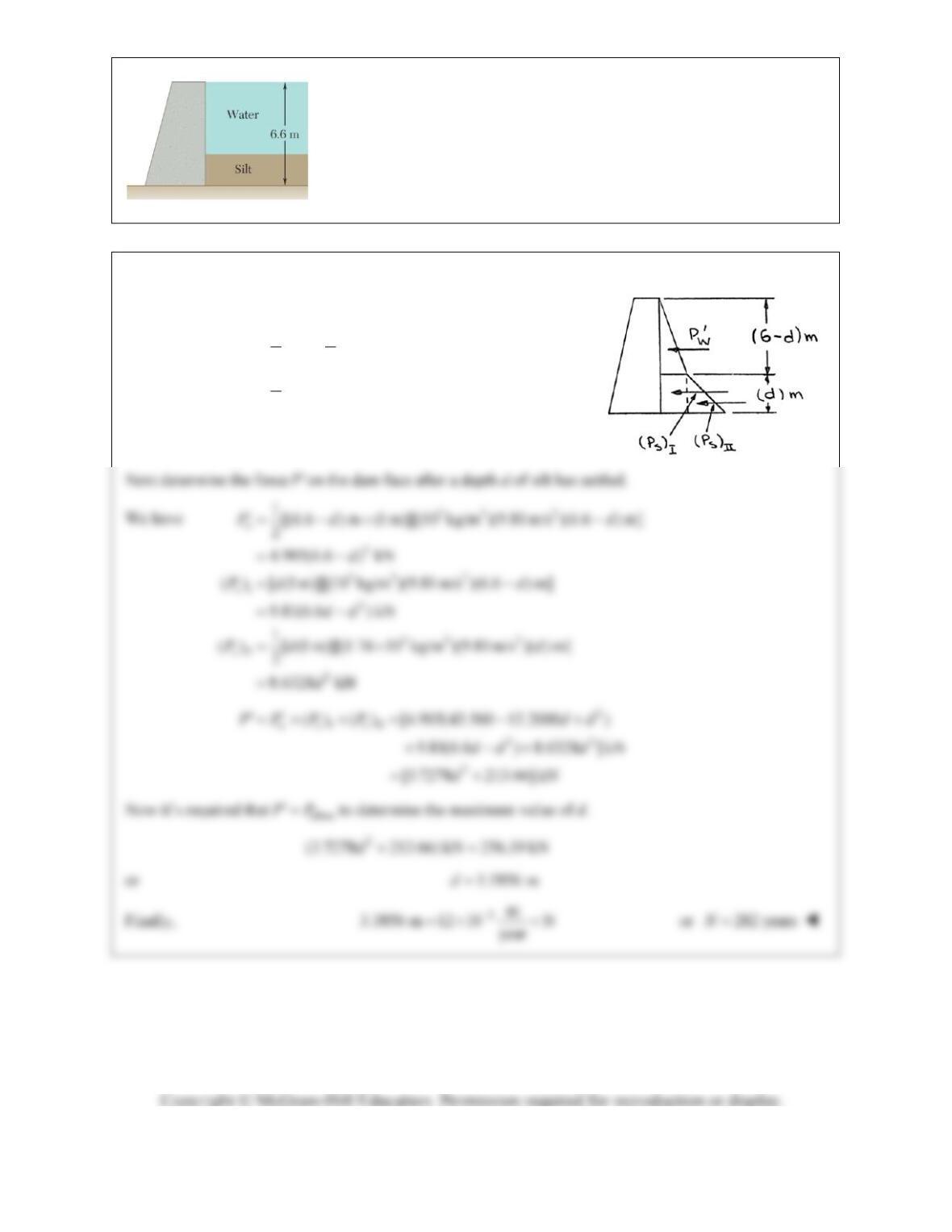
PROBLEM 5.83
The base of a dam for a lake is designed to resist up to 120 percent of the
horizontal force of the water. After construction, it is found that silt (that is
equivalent to a liquid of density 33
1.76 10 kg/m )
s
is settling on the
lake bottom at the rate of 12 mm/year. Considering a 1-m-wide section of
dam, determine the number of years until the dam becomes unsafe.
SOLUTION
First determine force on dam without the silt,
33 2
allow
11
()
22
1[(6.6 m)(1 m)][(10 kg/m )(9.81 m/s )(6.6 m)]
2
213.66 kN
1.2 (1.5)(213.66 kN) 256.39 kN
w
wp
w
PA Agh
PP
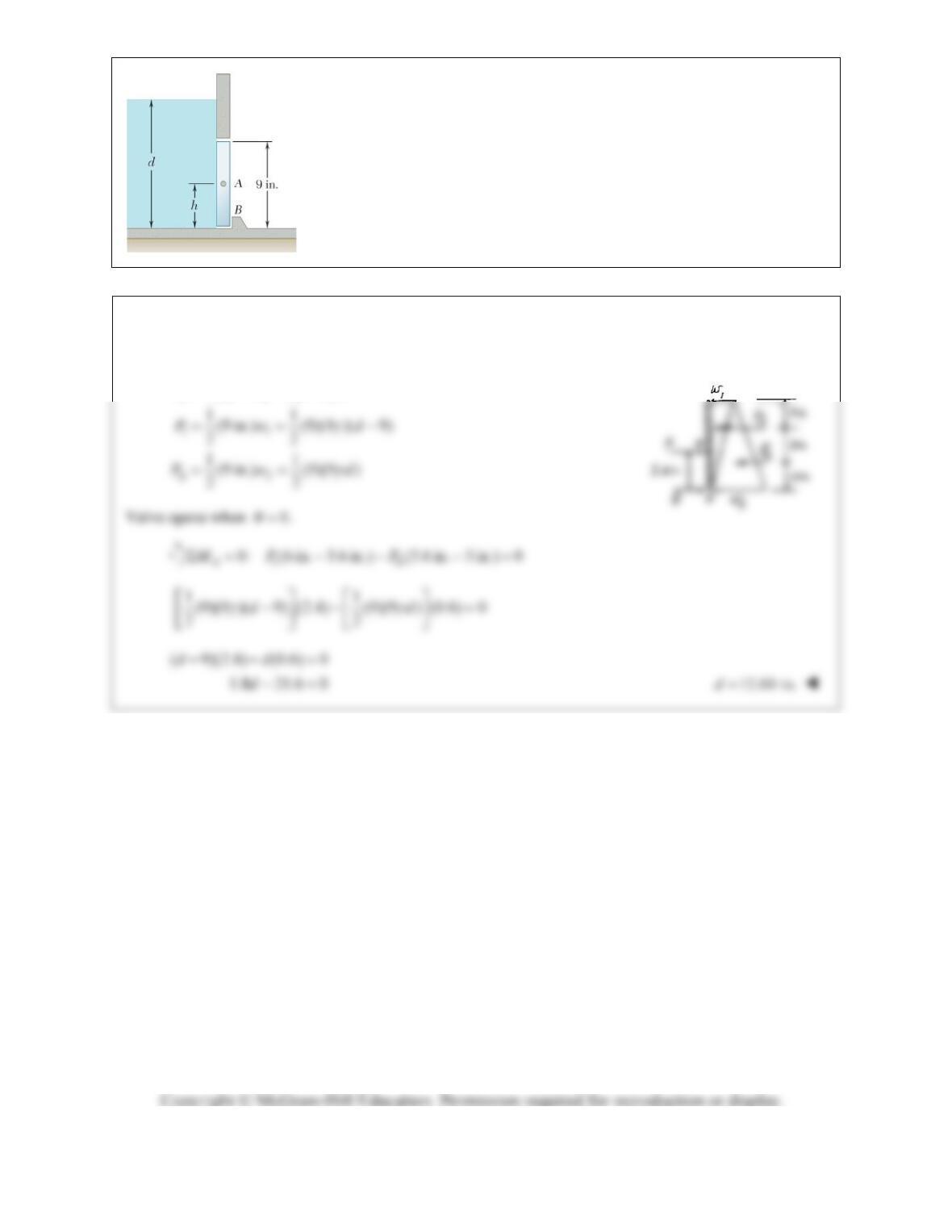
PROBLEM 5.84
An automatic valve consists of a 9 9-in. square plate that is pivoted about
a horizontal axis through A located at a distance h 3.6 in. above the lower
edge. Determine the depth of water d for which the valve will open.
SOLUTION
Since valve is 9 in. wide,
99,wp h
where all dimensions are in inches.
12
9( 9), 9
wd wd
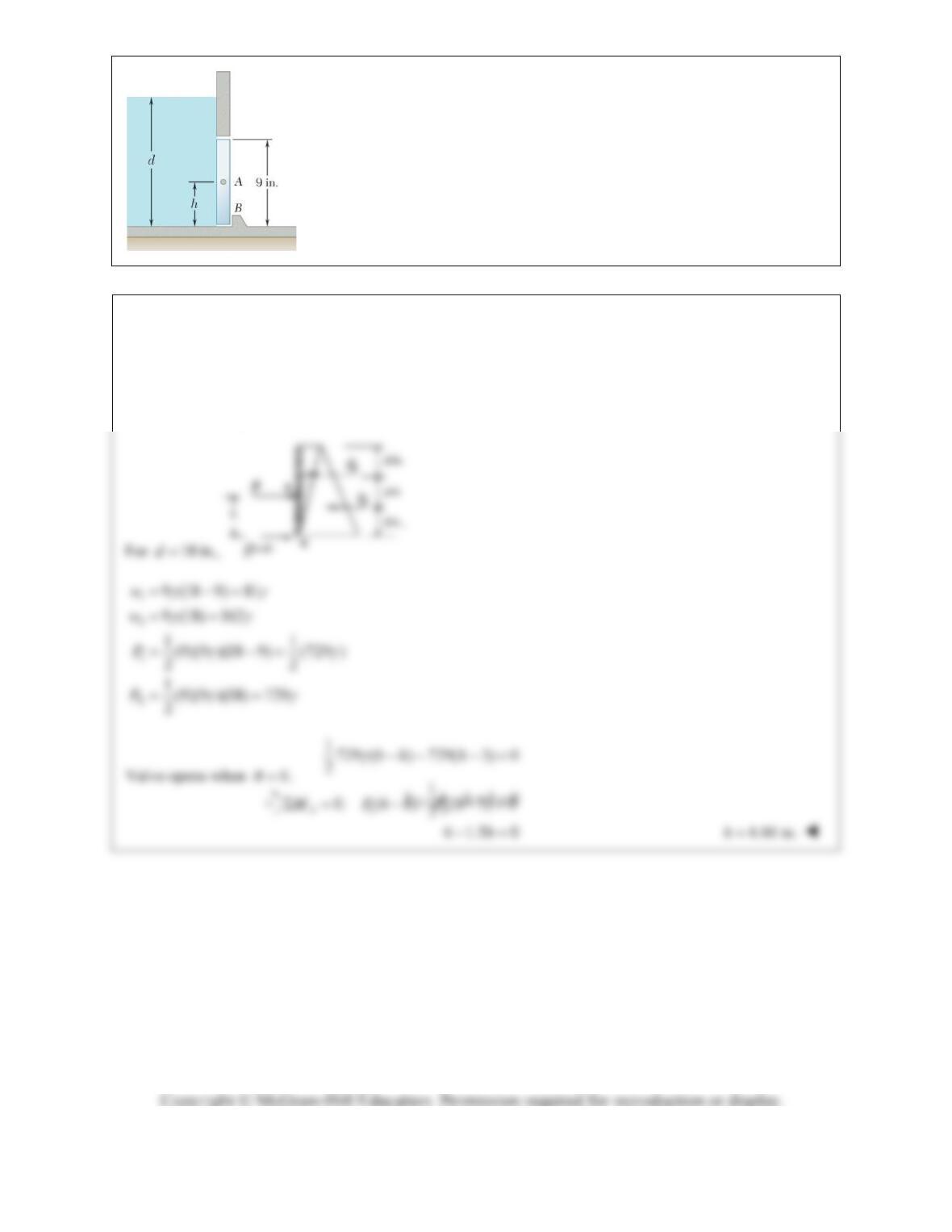
PROBLEM 5.85
An automatic valve consists of a 9 9-in. square plate that is pivoted about
a horizontal axis through A. If the valve is to open when the depth of water
is d 18 in., determine the distance h from the bottom of the valve to the
pivot A.
SOLUTION
Since valve is 9 in. wide,
99,wp h
where all dimensions are in inches.
1
2
9( 9)
9
wd
wd
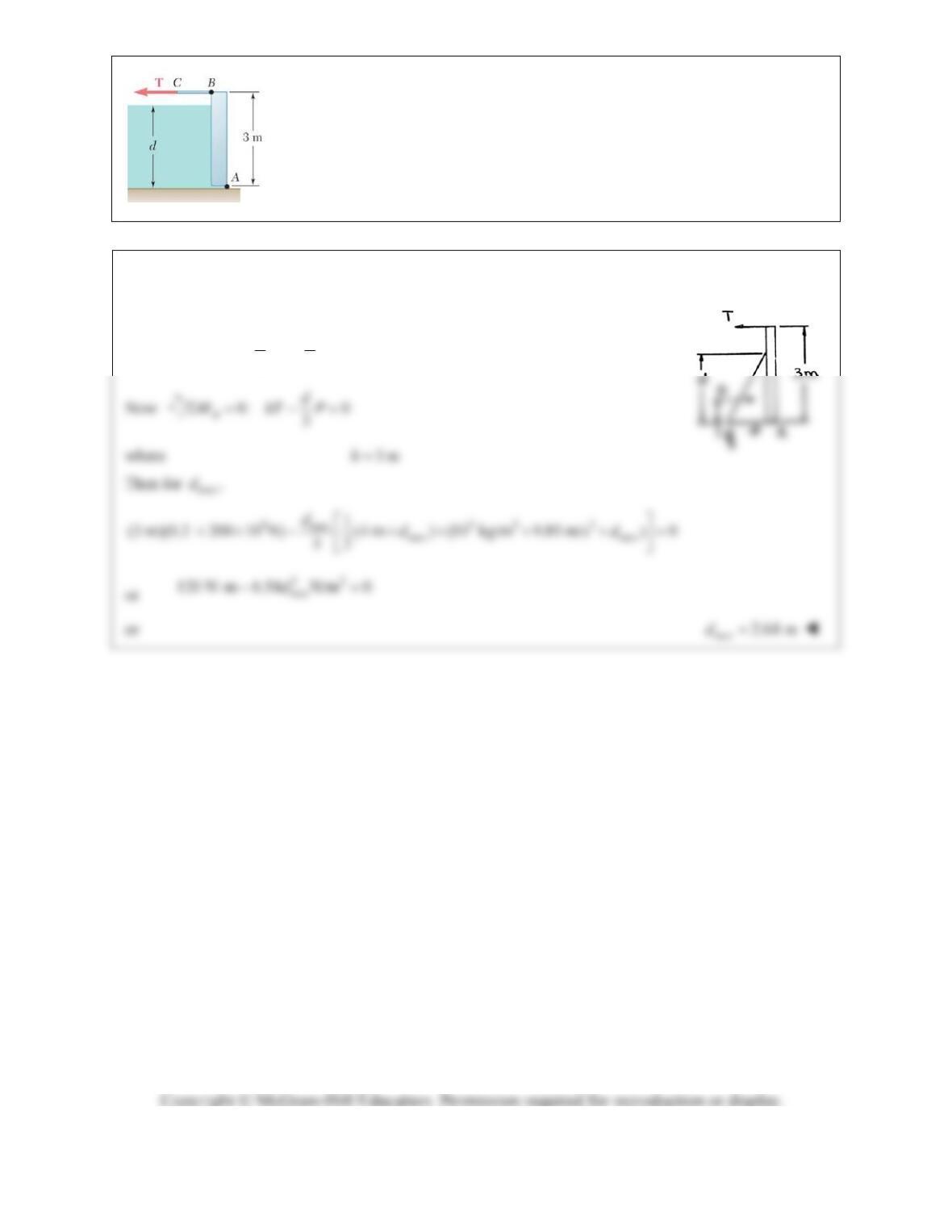
PROBLEM 5.86
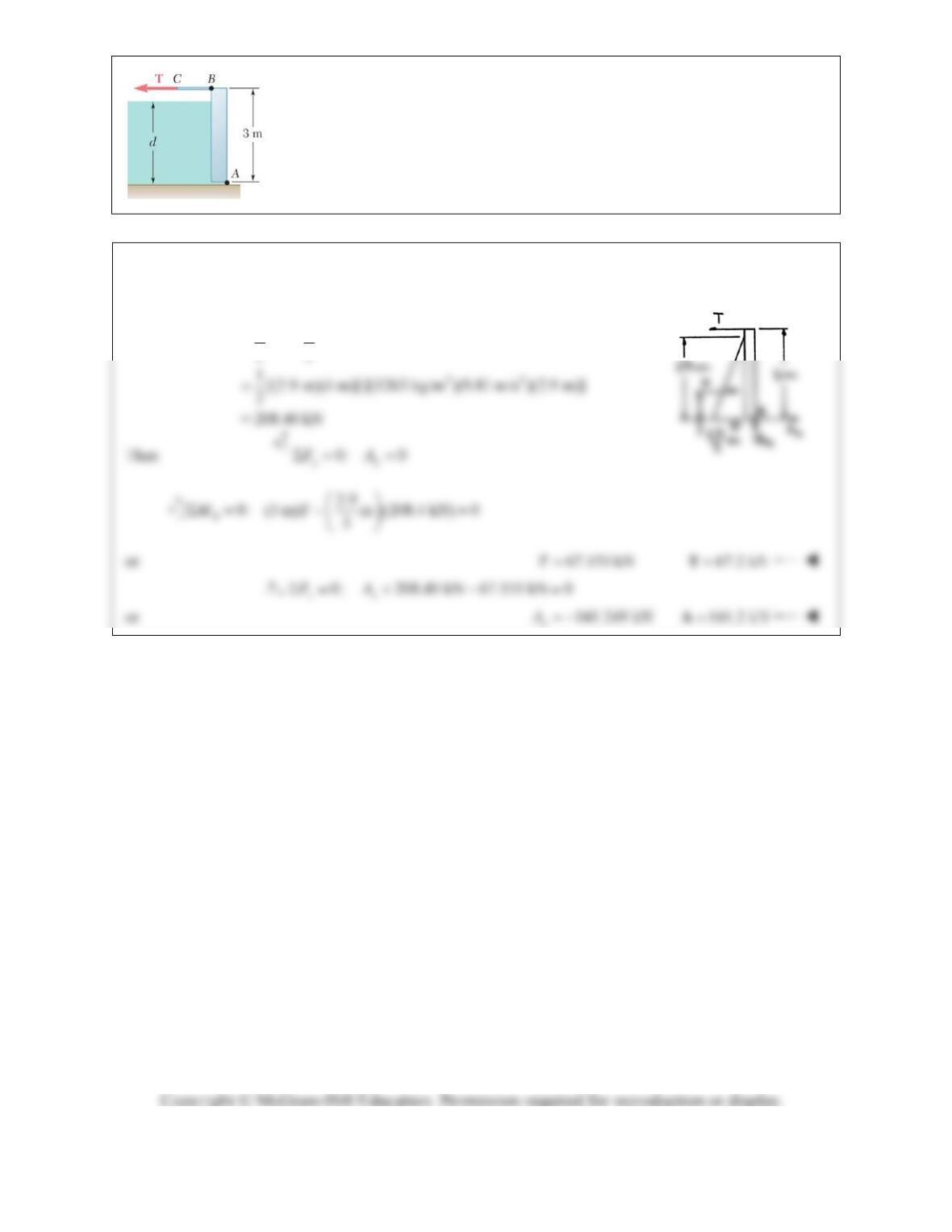
The 3 4-m side AB of a tank is hinged at its bottom A and is held in place by a
thin rod BC. The maximum tensile force the rod can withstand without breaking
is 200 kN, and the design specifications require the force in the rod not to exceed
20 percent of this value. If the tank is slowly filled with water, determine the
maximum allowable depth of water d in the tank.
SOLUTION
Consider the free-body diagram of the side.
We have
11
()
22
PApAgd
PROBLEM 5.87
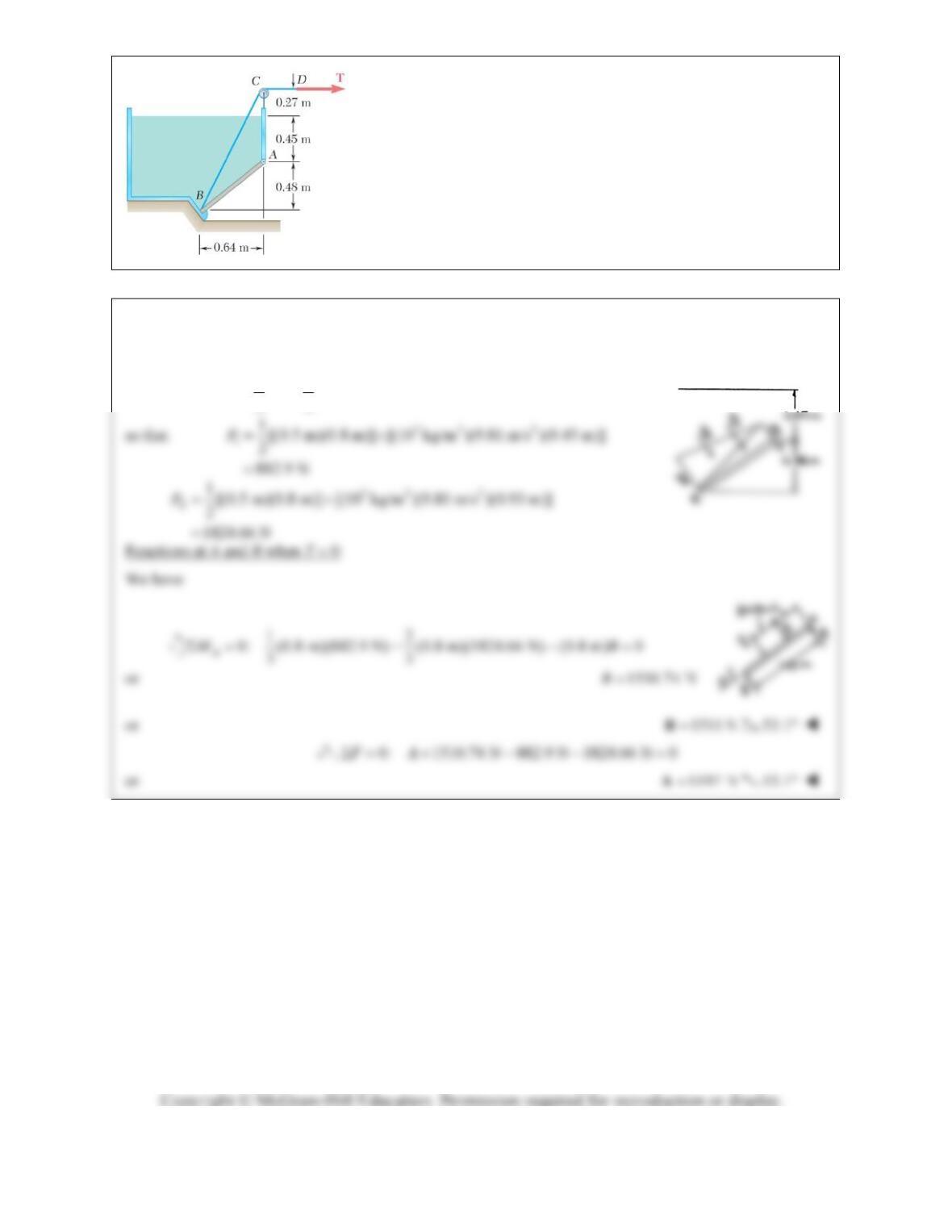
The 3 4-m side of an open tank is hinged at its bottom A and is held in place by
a thin rod BC. The tank is to be filled with glycerine, whose density is 1263
kg/m
3
. Determine the force
T
in the rod and the reactions at the hinge after the
tank is filled to a depth of 2.9 m.
SOLUTION
Consider the free-body diagram of the side.
We have
11
()
22
PApAgd
PROBLEM 5.88
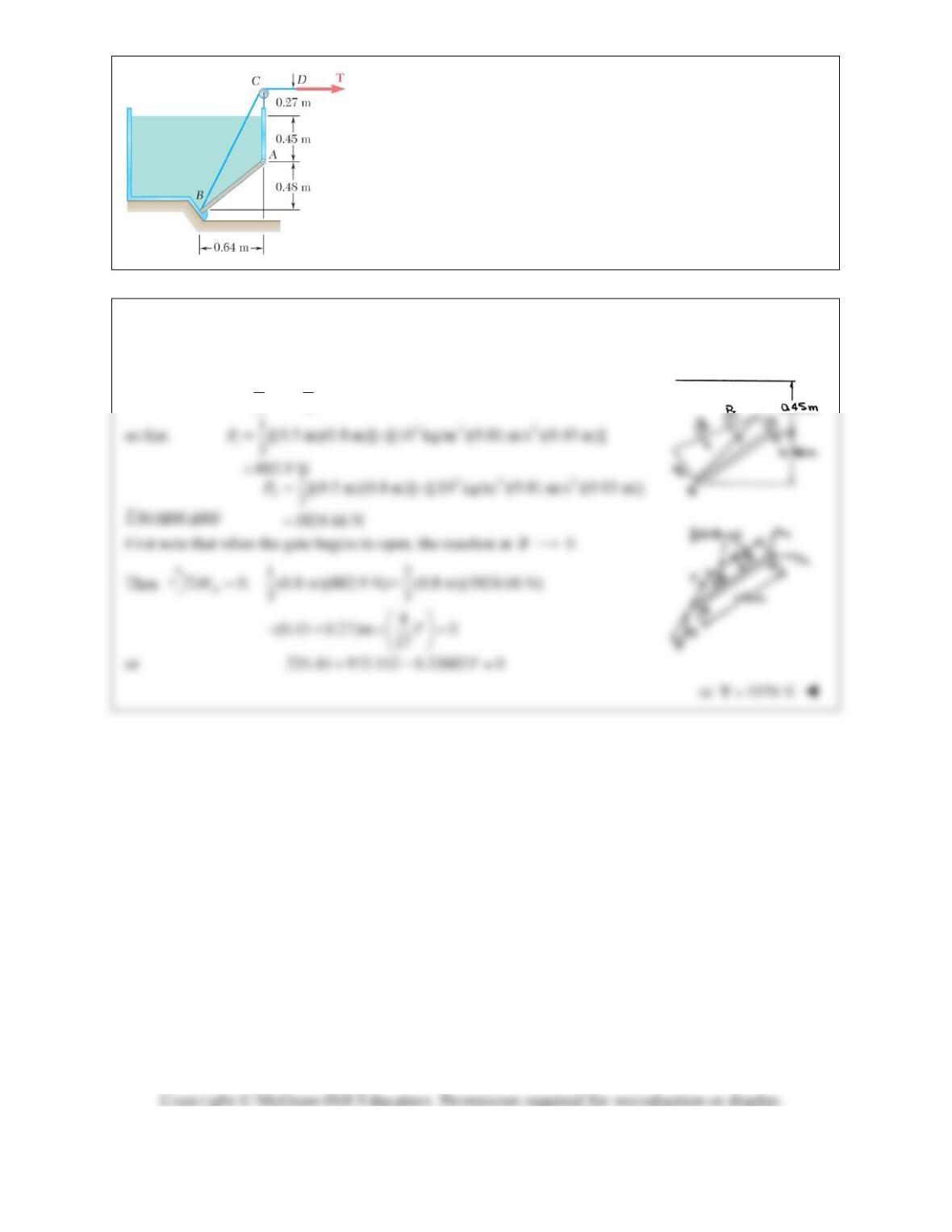
A 0.5 0.8-m gate AB is located at the bottom of a tank filled with
water. The gate is hinged along its top edge A and rests on a
frictionless stop at B. Determine the reactions at A and B when cable
BCD is slack.
SOLUTION
First consider the force of the water on the gate.
We have
11
()
22
PApAgh
PROBLEM 5.89
A 0.5 0.8-m gate AB is located at the bottom of a tank filled with
water. The gate is hinged along its top edge A and rests on a
frictionless stop at B. Determine the minimum tension required in
cable BCD to open the gate.
SOLUTION
First consider the force of the water on the gate.
We have
11
()
22
PApAgh
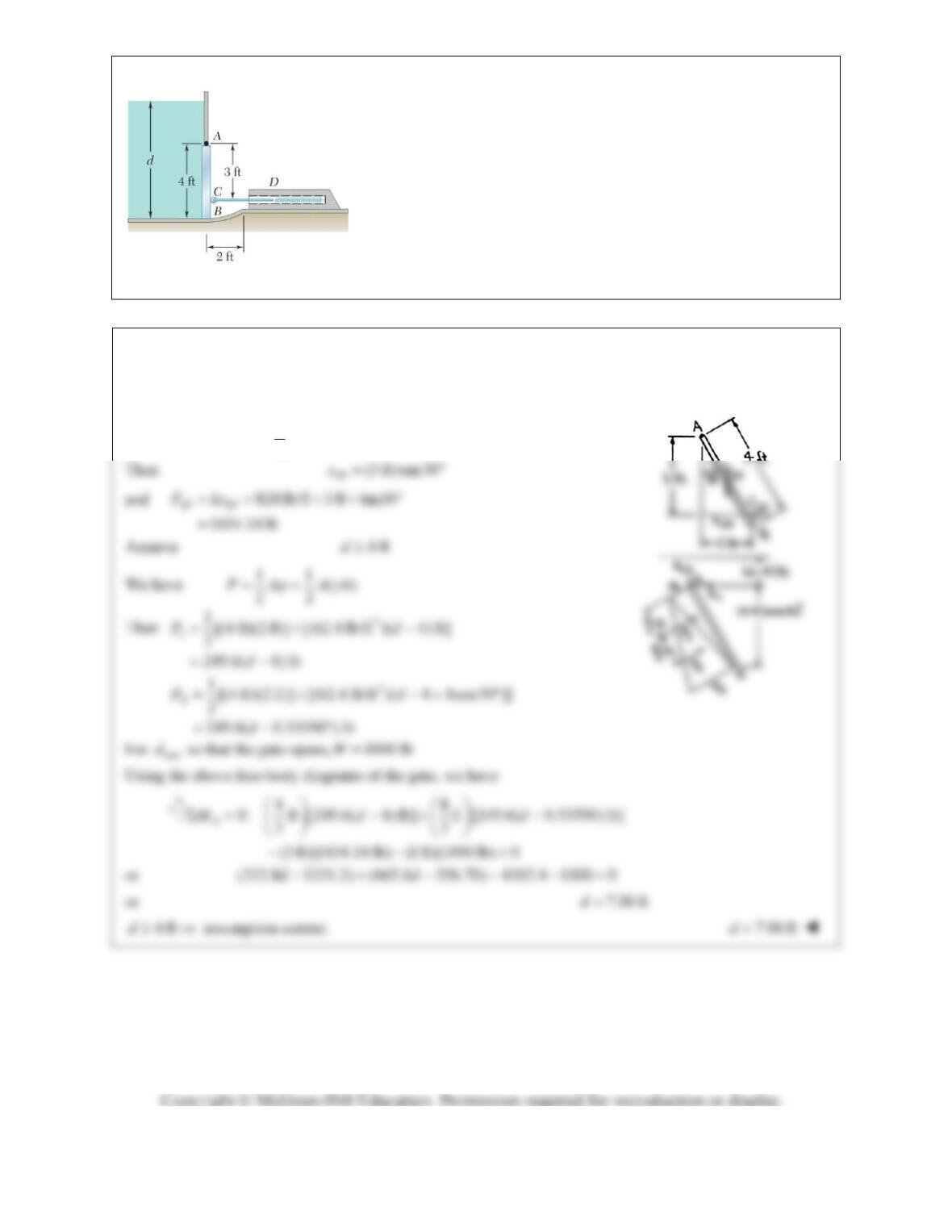
PROBLEM 5.90
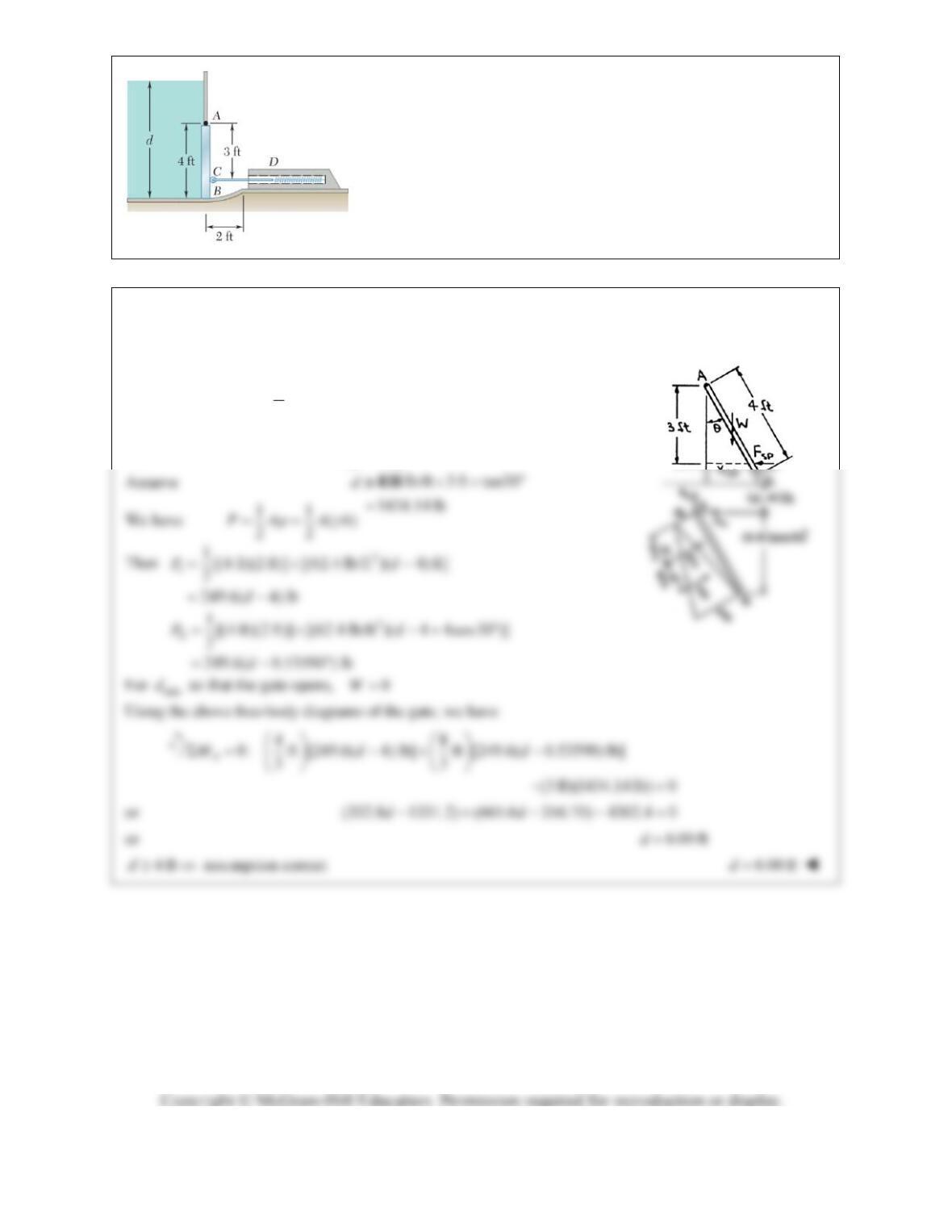
A
42–ft
gate is hinged at A and is held in position by rod CD. End
D rests against a spring whose constant is 828 lb/ft. The spring is
undeformed when the gate is vertical. Assuming that the force
exerted by rod CD on the gate remains horizontal, determine the
minimum depth of water d for which the bottom B of the gate will
move to the end of the cylindrical portion of the floor.
SOLUTION
First determine the forces exerted on the gate by the spring and the water when B is at the end of the
cylindrical portion of the floor.
We have
2
sin 30
4
Then (3 ft) tan 30
SP
x
and
SP SP
Fkx
PROBLEM 5.91
Solve Problem 5.90 if the gate weighs 1000 lb.
PROBLEM 5.90
A
42–ft
gate is hinged at A and is held in
position by rod CD. End D rests against a spring whose constant is
828 lb/ft. The spring is undeformed when the gate is vertical.
Assuming that the force exerted by rod CD on the gate remains
horizontal, determine the minimum depth of water d for which the
bottom B of the gate will move to the end of the cylindrical portion
of the floor.
SOLUTION
First determine the forces exerted on the gate by the spring and the water when B is at the end of the
cylindrical portion of the floor.
We have
2
sin 30
4
PROBLEM 5.92
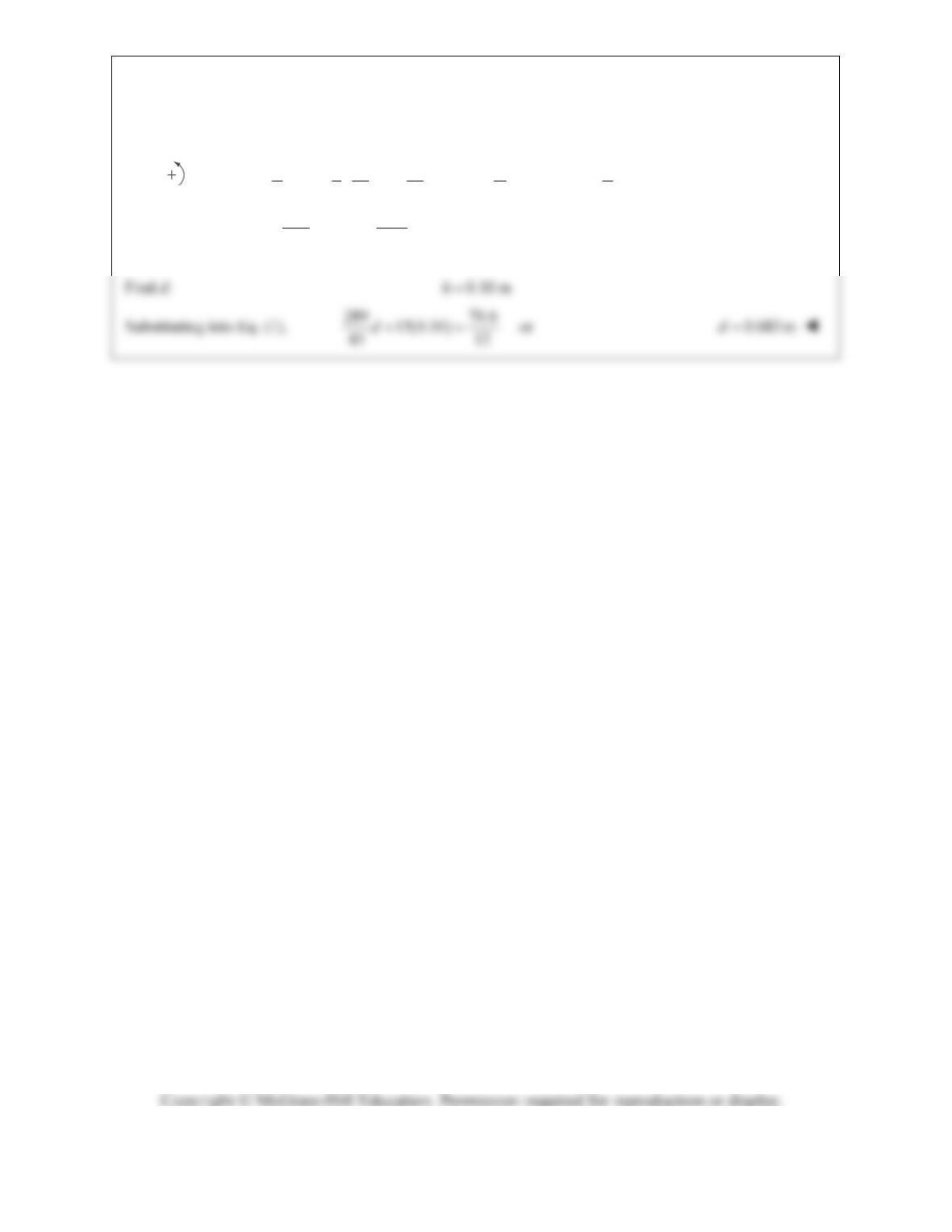
A prismatically shaped gate placed at the end of a freshwater channel is
supported by a pin and bracket at A and rests on a frictionless support at
B. The pin is located at a distance 0.10 mh below the center of gravity
C of the gate. Determine the depth of water d for which the gate will
open.
SOLUTION
First note that when the gate is about to open (clockwise rotation is impending),
y
B
0
and the line of
action of the resultant
P
of the pressure forces passes through the pin at A. In addition, if it is assumed that
the gate is homogeneous, then its center of gravity C coincides with the centroid of the triangular area.
Then
(0.25 )
3
d
ah
Alternative solution:
Consider a free body consisting of a 1-m thick section of the gate and the triangular section BDE of water
above the gate.
Now
2
11
(1m)( )
22
1(N)
2
PAp d gd
gd
PROBLEM 5.92 (Continued)
Then with 0
y
B (as explained above), we have
22
2184 1
0: (0.4) (0.25 ) 0
3 3 15 15 3 2
A
d
Mdgdhgd
Simplifying yields 289 70.6
15
45 12
dh
as above.
PROBLEM 5.93
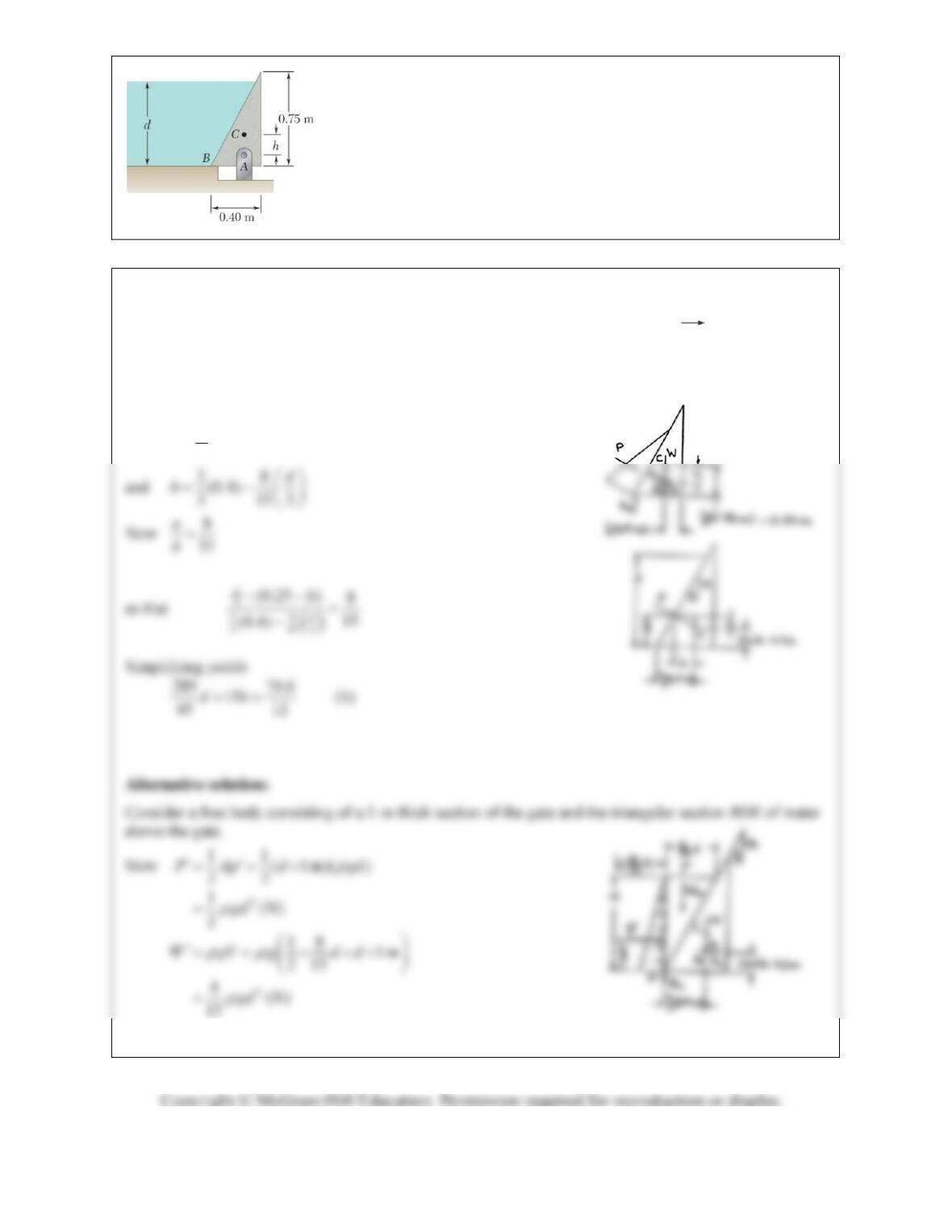
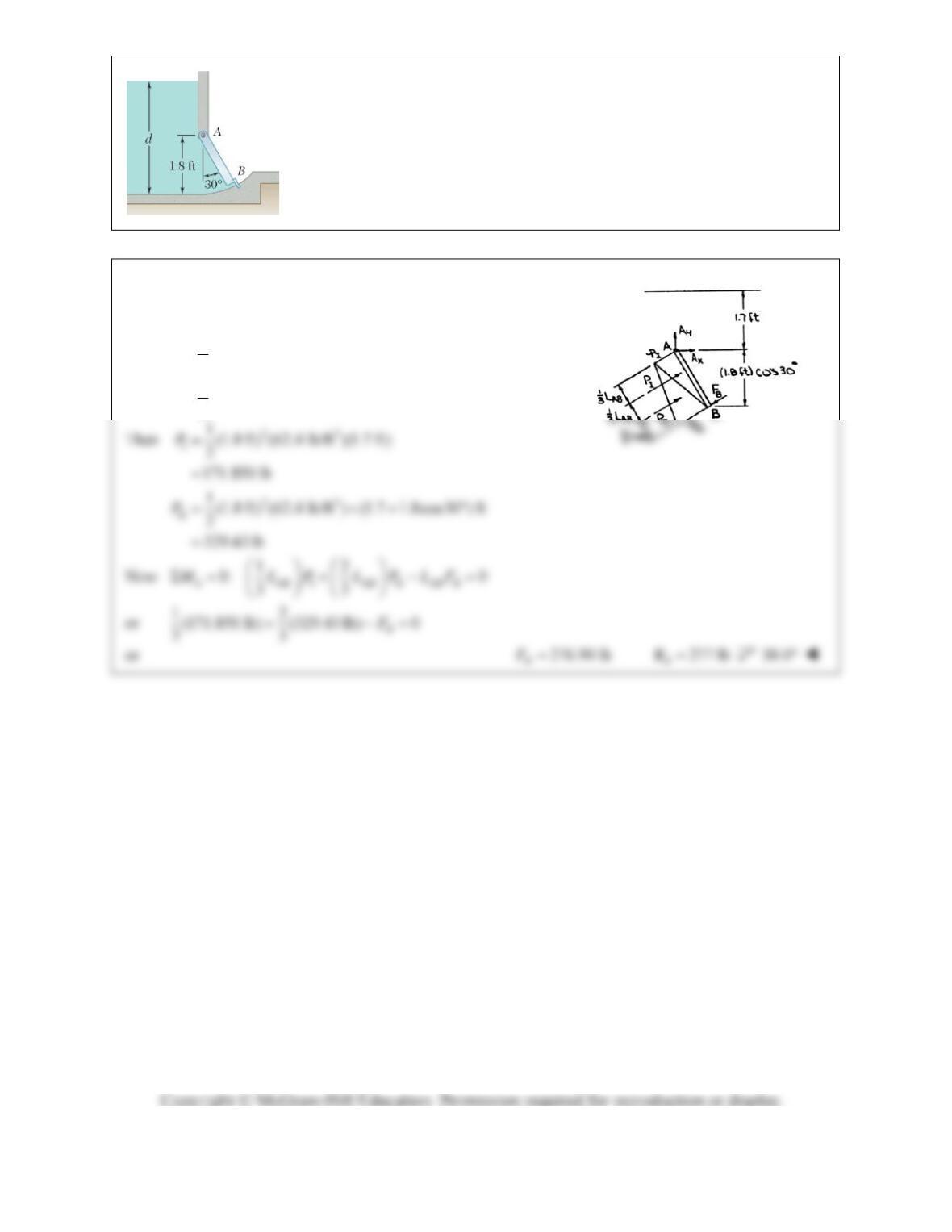
A prismatically shaped gate placed at the end of a freshwater channel is
supported by a pin and bracket at A and rests on a frictionless support at
B. Determine the distance h if the gate is to open when
0.75 m.d
SOLUTION
First note that when the gate is about to open (clockwise rotation is impending),
y
B
0
and the line of
action of the resultant
P
of the pressure forces passes through the pin at A. In addition, if it is assumed that
the gate is homogeneous, then its center of gravity C coincides with the centroid of the triangular area.
Then
(0.25 )
3
d
ah
PROBLEM 5.93 (Continued)
Then with 0
y
B (as explained above), we have
22
2184 1
0: (0.4) (0.25 ) 0
3 3 15 15 3 2
A
d
Mdgdhgd
Simplifying yields 289 70.6
15
45 12
dh
PROBLEM 5.94
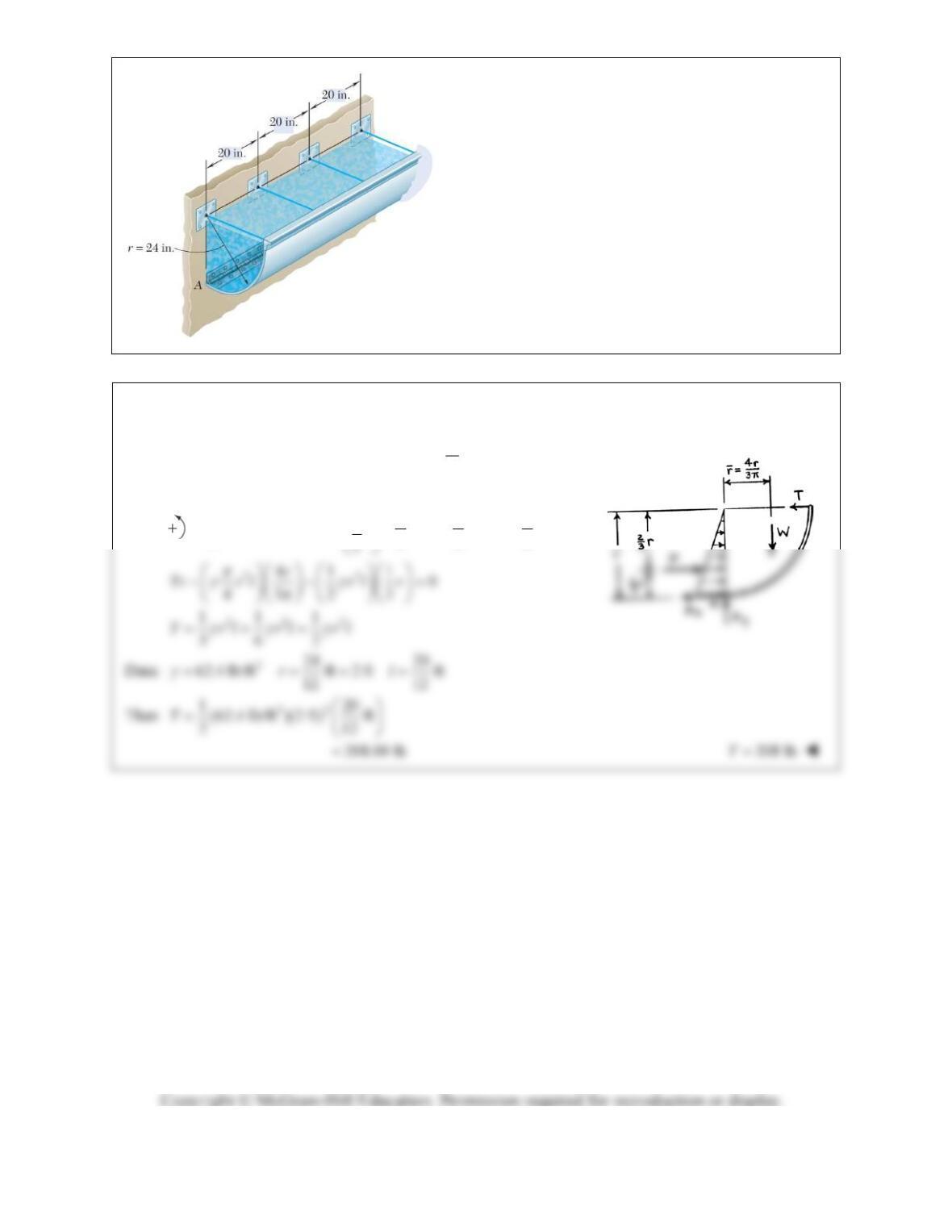
A long trough is supported by a continuous hinge along
its lower edge and by a series of horizontal cables
attached to its upper edge. Determine the tension in
each of the cables, at a time when the trough is
completely full of water
.
SOLUTION
Consider free body consisting of 20-in. length of the trough and water.
20-in.llength of free body
2
2
4
11 1
()
22 2
A
A
Wv rl
Pr
P
Prl rrl rl
1
0: 0
A
MTrWrPr
PROBLEM 5.95
The square gate AB is held in the position shown by hinges along its top edge
A and by a shear pin at B. For a depth of water 3.5dft, determine the force
exerted on the gate by the shear pin.
SOLUTION
First consider the force of the water on the gate. We have
1
2
1()
2
PAp
Ah
PROBLEM 5.96
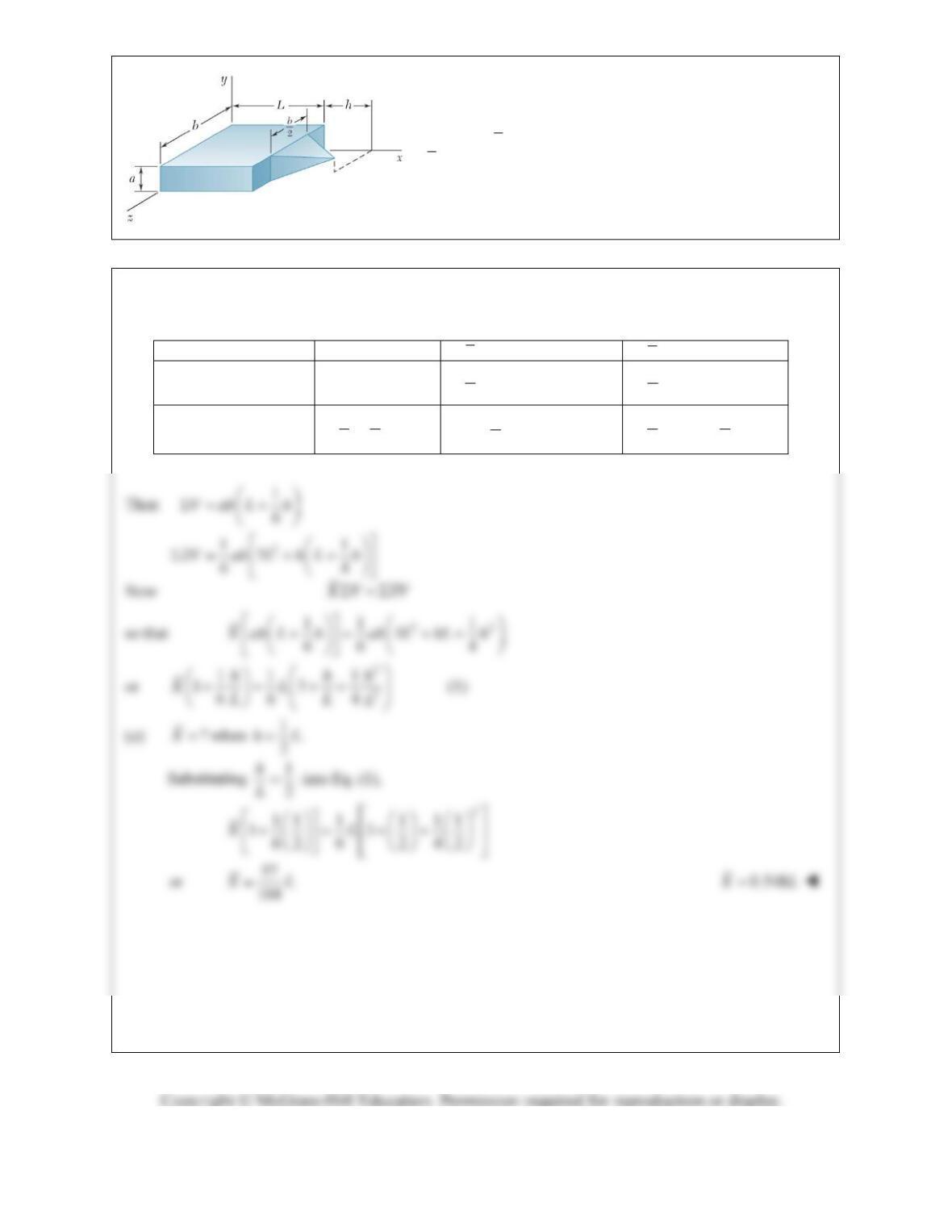
Consider the composite body shown. Determine (a) the
value of
x
when /2,hL
(b) the ratio h/L for which
.
x
L
SOLUTION
V
x
x
V
Rectangular
prism Lab 1
2
L
2
1
2
L
ab
Pyramid 1
32
b
ah
1
4
L
h 11
64
abh L h
PROBLEM 5.96 (Continued)
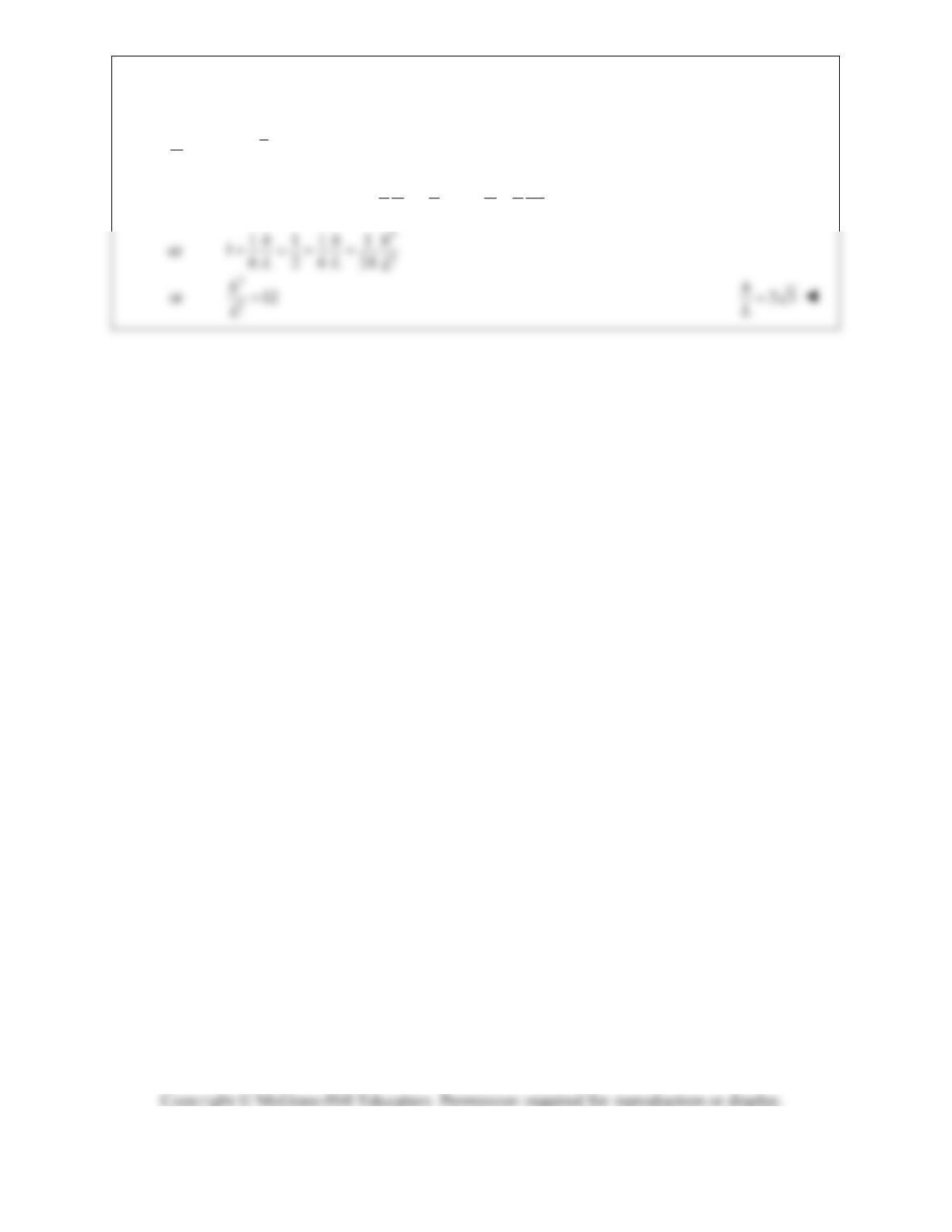
(b) ?
h
L when .XL
Substituting into Eq. (1),
2
2
11 1
13
66 4
hhh
LL
LL
L
PROBLEM 5.97
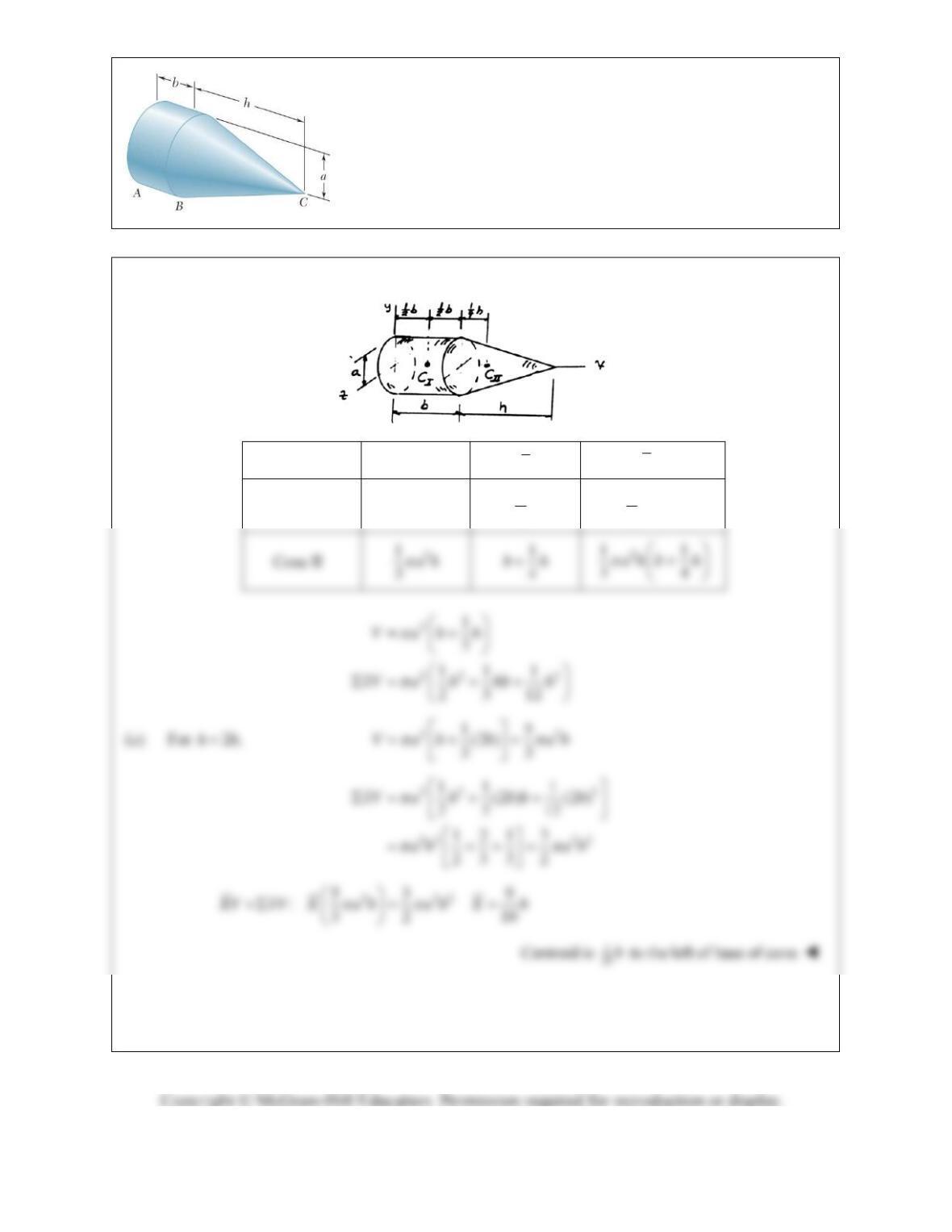
Determine the location of the centroid of the composite body shown
when (a)
2,hb
(b)
2.5 .hb
SOLUTION
V
x
xV
Cylinder I 2
ab
1
2b
22
1
2ab
PROBLEM 5.97 (Continued)
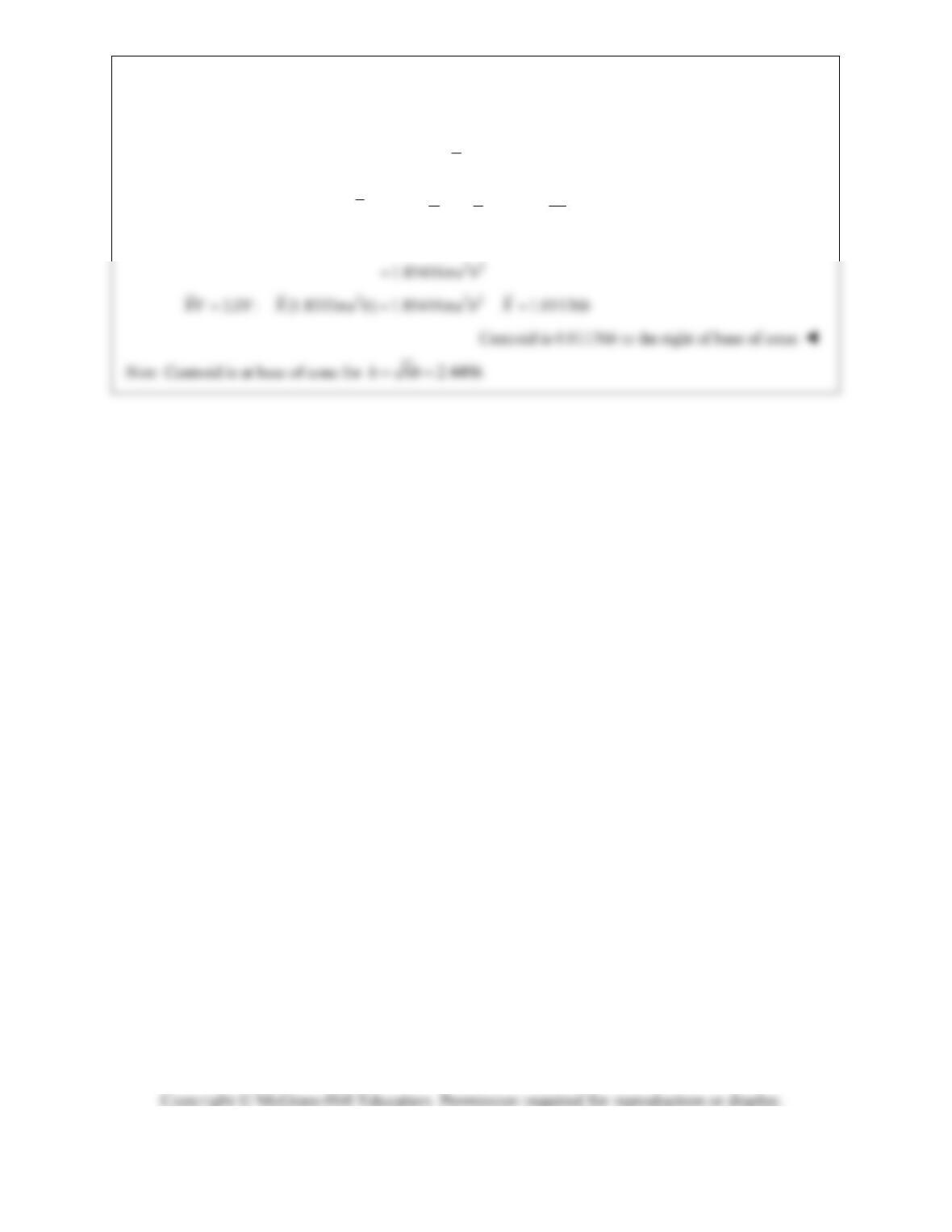
(b) For 2.5 ,hb 22
1(2.5 ) 1.8333
3
Vab b ab
22 2
22
11 1
(2.5 ) (2.5 )
23 12
[0.5 0.8333 0.52083]
x
Vab bb b
ab
PROBLEM 5.98
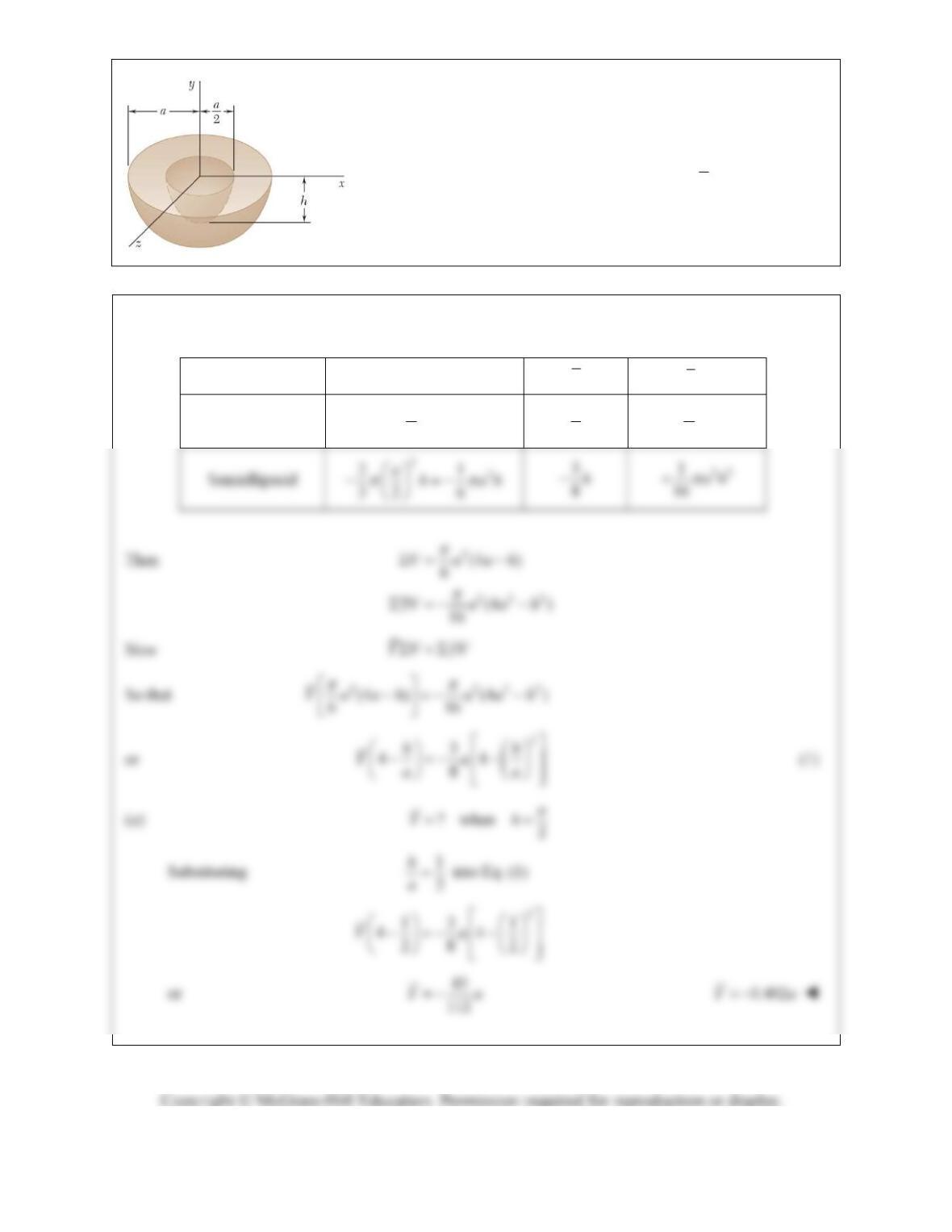
The composite body shown is formed by removing a semiellipsoid
of revolution of semimajor axis h and semiminor axis a/2 from a
hemisphere of radius a. Determine (a) the y coordinate of the
centroid when h a/2, (b) the ratio h/a for which y 0.4a.
SOLUTION
V
y
yV
Hemisphere 3
2
3
a 3
8a 4
1
4a