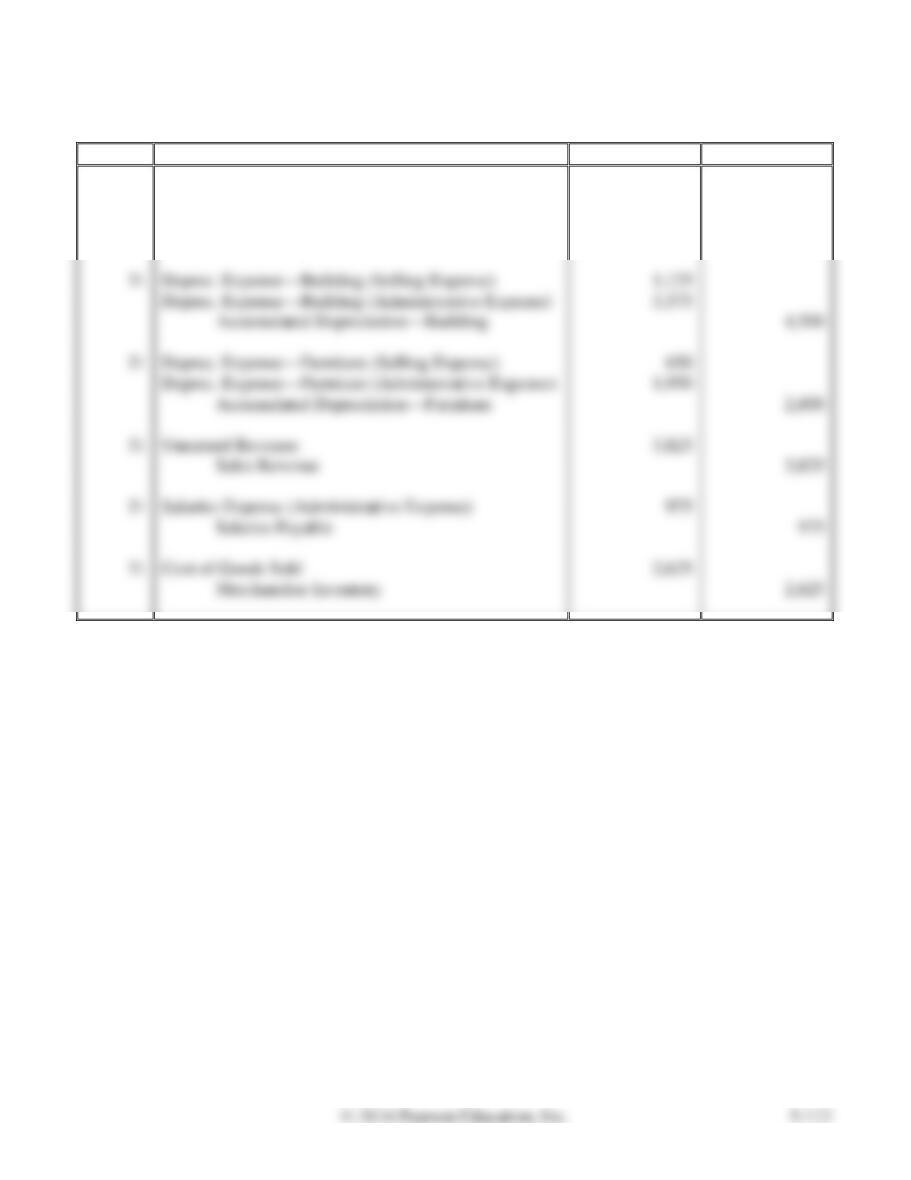
Comprehensive Problem, cont.
Requirement 2
Date
Accounts and Explanation
Debit
Credit
Adjusting Entries
Jan. 31
Office Supplies Expense (Selling Expense)
890
Office Supplies Expense (Administrative Expense)
890
Office Supplies
1,780
Deprec. Expense—Building (Selling Expense)
1,125
Deprec. Expense—Building (Administrative Expense)
3,375
Accumulated Depreciation—Building
4,500
Deprec. Expense—Furniture (Selling Expense)
650
Deprec. Expense—Furniture (Administrative Expense)
1,950
Accumulated Depreciation—Furniture
2,600
Unearned Revenue
3,825
Sales Revenue
3,825
Salaries Expense (Administrative Expense)
975
Salaries Payable
975
Cost of Goods Sold
2,625
Merchandise Inventory
2,625
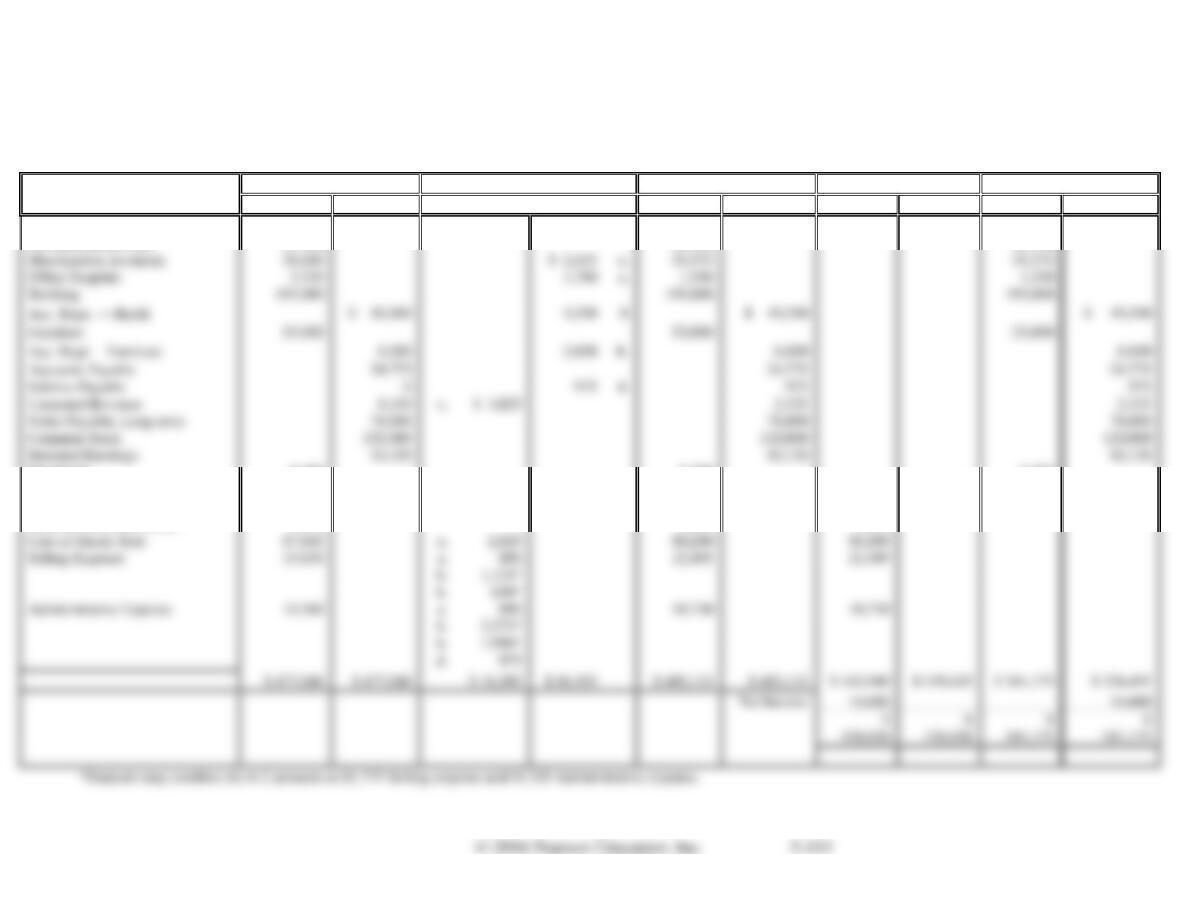
Comprehensive Problem, cont.
Requirement 3
ST. JOHN TECHNOLOGY
Worksheet
January 31, 2016
Account Names
Unadjusted Trial Balance
Adjustments
Adjusted Trial Balance
Income Statement
Balance Sheet
Debit
Credit
Debit
Credit
Debit
Credit
Debit
Credit
Debit
Credit
Cash
$ 12,660
$ 12,660
$ 12,660
Accounts Receivable
15,390
15,390
15,390
Merchandise Inventory
55,375
Office Supplies
1,550
1,550
Building
Furniture
Accounts Payable
24,775
24,775
Salaries Payable
0
Unearned Revenue
$ 3,825
Notes Payable, Long-term
78,000
78,000
Common Stock
120,000
120,000
Retained Earnings
42,120
42,120
Dividends
8,200
8,200
8,200
Sales Revenue
154,795
3,825
c.
158,620
$158,620
Sales Discounts
7,350
7,350
7,350
Sales Returns and Allow.
5,075
5,075
5,075
Cost of Goods Sold
2,625
90,290
Selling Expense
890
22,495
1,125*
Administrative Expense
890
18,730
3,375*
975
$ 477,040
$ 16,305
$ 158,620
$ 326,495
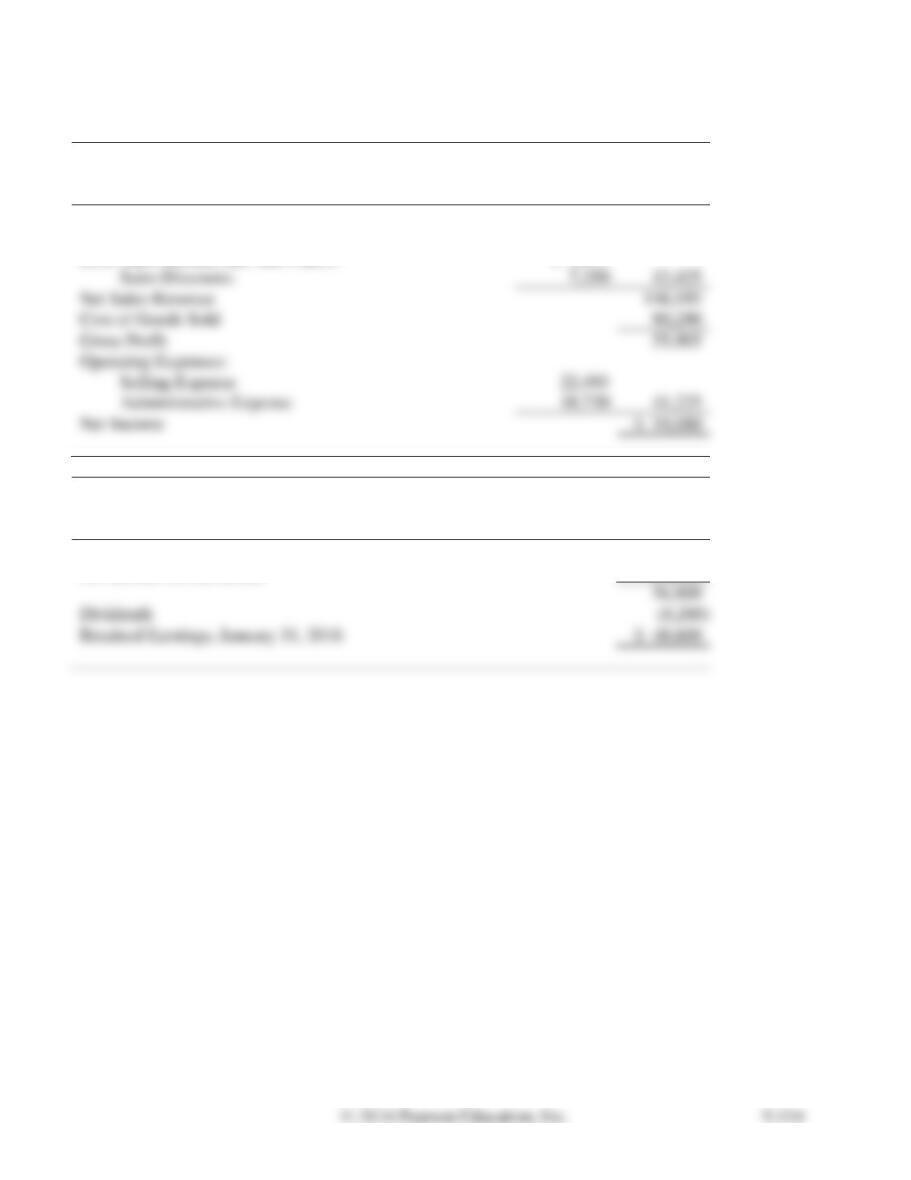
Comprehensive Problem, cont.
Requirement 4
St. John Technology
Income Statement
Month Ended January 31, 2016
Revenue:
Sales Revenue
$ 158,620
Less: Sales Returns and Allowances
$ 5,075
Net Sales Revenue
Cost of Goods Sold
Gross Profit
Operating Expenses:
Net Income
St. John Technology
Statement of Retained Earnings
Month Ended January 31, 2016
Retained Earnings, January 1, 2016
$ 42,120
Net income for the month
14,680
Retained Earnings, January 31, 2016
$ 48,600
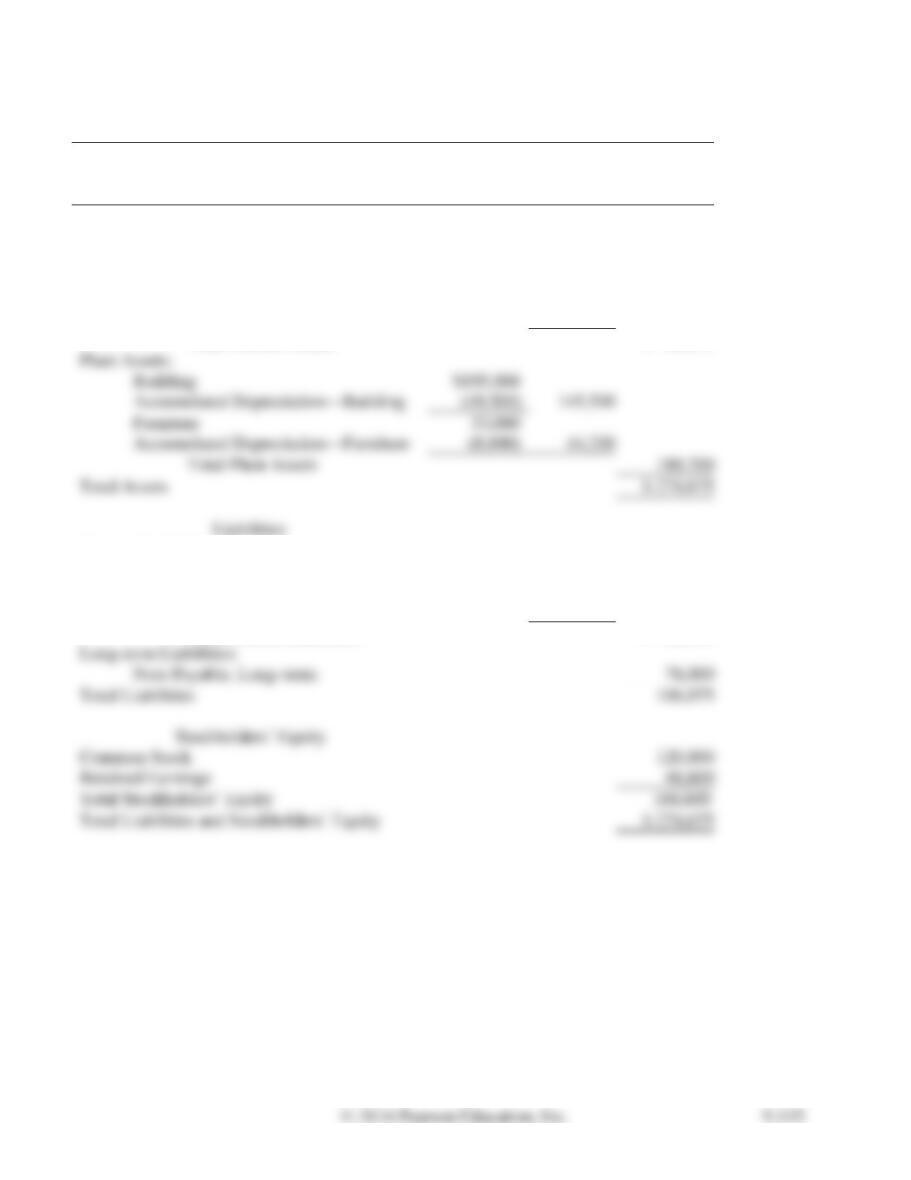
Comprehensive Problem, cont.
Requirement 4, cont.
St. John Technology
Balance Sheet
January 31, 2016
Assets
Current Assets:
Cash
$ 12,660
Accounts Receivable
15,390
Merchandise Inventory
55,375
Office Supplies
1,550
Total Current Assets
$ 84,975
Plant Assets:
Building
$195,000
Accumulated Depreciation—Building
145,500
Furniture
Accumulated Depreciation—Furniture
Total Plant Assets
Total Assets
$ 274,675
Liabilities
Current Liabilities:
Accounts Payable
$ 24,775
Salaries Payable
975
Unearned Revenue
2,325
Total Current Liabilities
$ 28,075
Long-term Liabilities:
Note Payable, Long–term
Total Liabilities
Common Stock
Retained Earnings
Total Liabilities and Stockholders’ Equity
$ 274,675
Comprehensive Problem, cont.
Requirement 5
Date
Accounts and Explanation
Debit
Credit
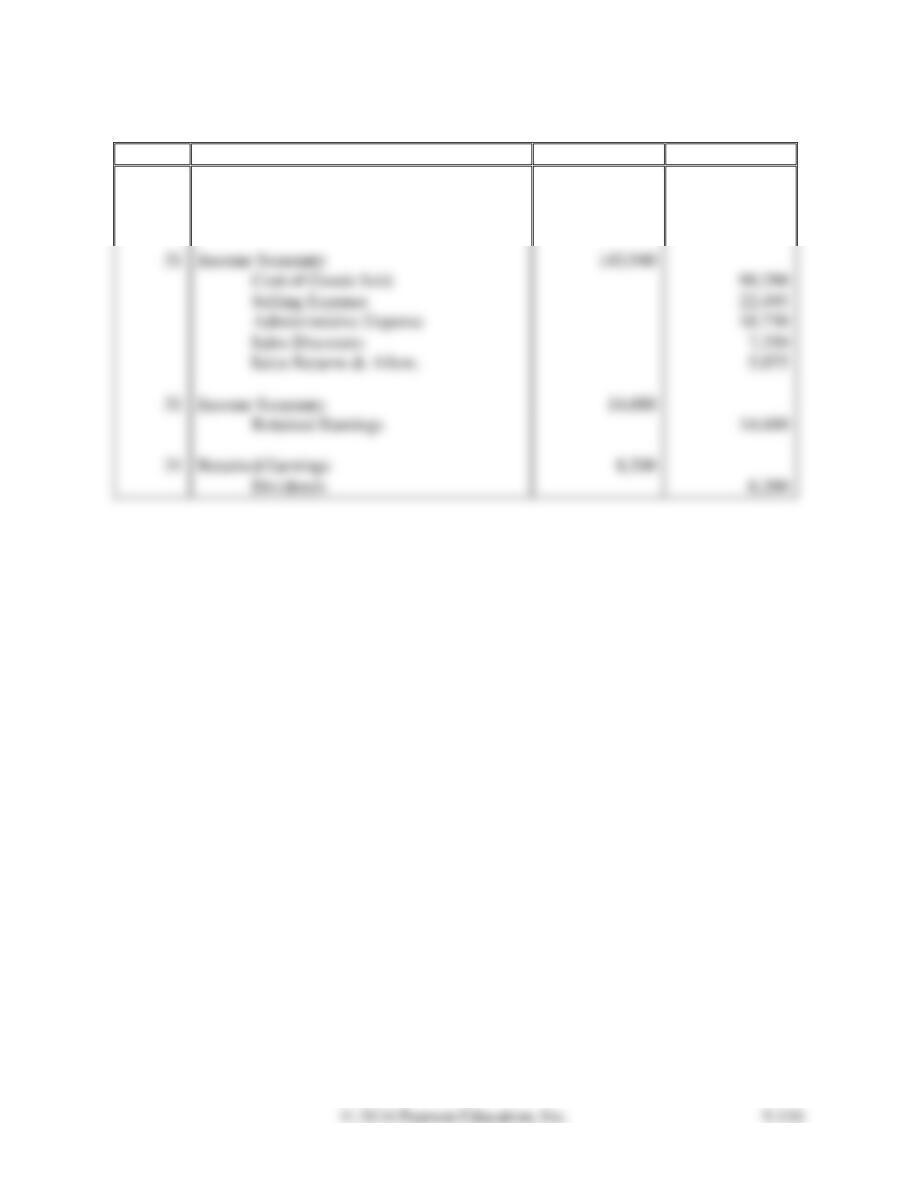
Closing Entries
Jan. 31
Sales Revenue
158,620
Income Summary
158,620
Income Summary
143,940
Cost of Goods Sold
Selling Expense
Administrative Expense
Sales Discounts
Income Summary
Retained Earnings
Retained Earnings
Dividends
Critical Thinking
Decision Case 5-1
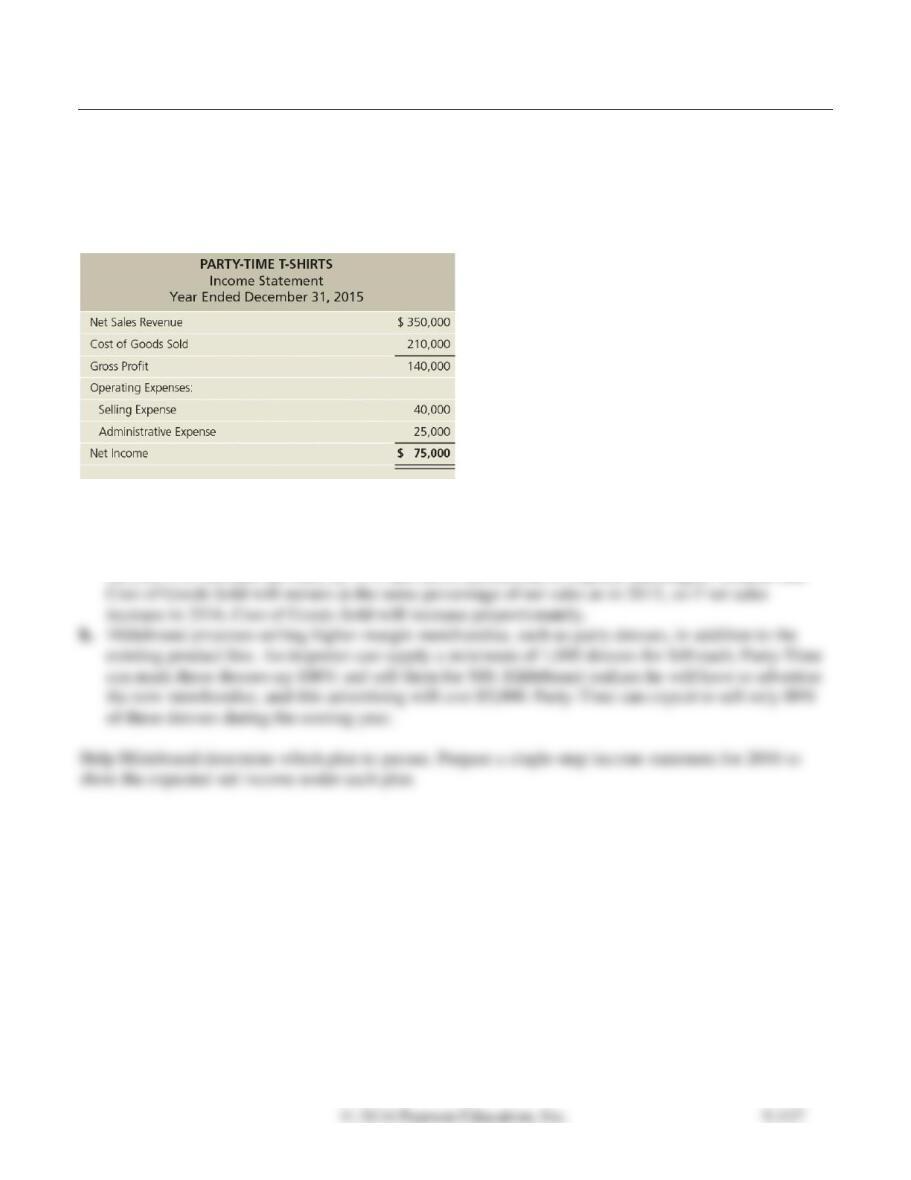
Party-Time T-Shirts sells T-shirts for parties at the local college. The company completed the first year
of operations, and the shareholders are generally pleased with operating results as shown by the
following income statement:
Bill Hildebrand, the controller, is considering how to expand the business. He proposes two ways to
increase profits to $100,000 during 2016.
a. Hildebrand believes he should advertise more heavily. He believes additional advertising costing
$20,000 will increase net sales by 30% and leave administrative expense unchanged. Assume that
SOLUTION
Plan a:
PARTY-TIME T-SHIRTS
Expected Income Statement
Year Ended December 31, 2016
Net Sales Revenue
($350,000 × 1.3)
$ 455,000
Expenses:
($210,000 × 1.3)
($40,000 + $20,000)
Net Income
$ 97,000
Plan b:
PARTY-TIME T-SHIRTS
Expected Income Statement
Year Ended December 31, 2016
Net Sales Revenue
($350,000 + (800 dresses × $80))
$ 414,000
Expenses:
($210,000 + (800 dresses × $40))
($40,000 + 5,000)
Net Income
Ethical Issue 5-1
Dobbs Wholesale Antiques makes all sales under terms of FOB shipping point. The company usually
ships inventory to customers approximately one week after receiving the order. For orders received late
in December, Kathy Dobbs, the owner, decides when to ship the goods. If profits are already at an
acceptable level, Dobbs delays shipment until January. If profits for the current year are lagging behind
expectations, Dobbs ships the goods during December.
Requirements
1. Under Dobbs’s FOB policy, when should the company record a sale?
2. Do you approve or disapprove of Dobbs’s manner of deciding when to ship goods to customers and
record the sales revenue? If you approve, give your reason. If you disapprove, identify a better way
to decide when to ship goods. (There is no accounting rule against Dobbs’s practice.)
SOLUTION
Requirement 1
Requirement 2
This is a difficult ethical issue because there is no single correct answer. There is no rule of accounting,
law, or ethics to govern when a business should ship the goods. Therefore, students can legitimately
Fraud Case 5-1
Rae Philippe was a warehouse manager for Atkins Oilfield Supply, a business that operated across eight
Western states. She was an old pro and had known most of the other warehouse managers for many
years. Around December each year, auditors would come to do a physical count of the inventory at each
warehouse. Recently, Rae’s brother started his own drilling company and persuaded Rae to “loan” him
80 joints of 5-inch drill pipe to use for his first well. He promised to have it back to Rae by December,
but the well encountered problems and the pipe was still in the ground. Rae knew the auditors were on
the way, so she called her friend Andy, who ran an- other Atkins warehouse. “Send me over 80 joints of
5-inch pipe tomorrow, and I’ll get them back to you ASAP,” said Rae. When the auditors came, all the
pipe on the books was accounted for, and they filed a “no–exception” report.
Requirements
1. Is there anything the company or the auditors could do in the future to detect this kind of fraudulent
practice?
2. How would this kind of action affect the financial performance of the company?
SOLUTION
Requirement 1
Auditors should arrive unannounced, so that the local manager cannot make an arrangement like this in
Financial Case 5-1
This case uses both the income statement (consolidated statement of earnings) and the balance sheet of
Starbucks Corporation. Visit http://www.pearsonhighered.com/ Horngren to view a link to the
Starbucks Corporation Fiscal 2013 Annual Report.
Requirements
1. What was the value of the company’s inventory at September 29, 2013, and September 30, 2012?
2. Review Note 5 (specifically Inventories) in the Notes to Consolidated Financial Statements. What do
Starbucks’ inventories consist of?
3. What was the amount of Starbucks’s cost of goods sold (cost of sales) for the year ending September
29, 2013, and the year ending September 30, 2012?
4. What income statement format does Starbucks use? Explain.
5. Compute Starbucks’s gross profit percentage for the year ending September 29, 2013, and the year
ending September 30, 2012. Did the gross profit percentage improve, worsen, or hold steady?
Assuming the industry average for gross profit percentage is 58.58%, how does Starbucks compare
in the industry?
SOLUTION
Requirement 1
Starbucks Inventory Value
September 29, 2013
$ 1,111.2 (in millions)
September 30, 2012
$ 1,241.5 (in millions)
Starbucks Cost of Goods Sold
September 29, 2013
$ 6,382.3 (in millions)
September 30, 2012
$ 5,813.3 (in millions)
Requirement 5
September 29, 2013 (in millions)
September 30, 2012 (in millions)
Net Revenues
$ 14,892.2
$ 13,299.5
Cost of Sales
6,382.3
5,813.3
Gross Profit
8,509.9
7,486.2
Gross Profit %
57.14%
56.29%