Problem 5.1
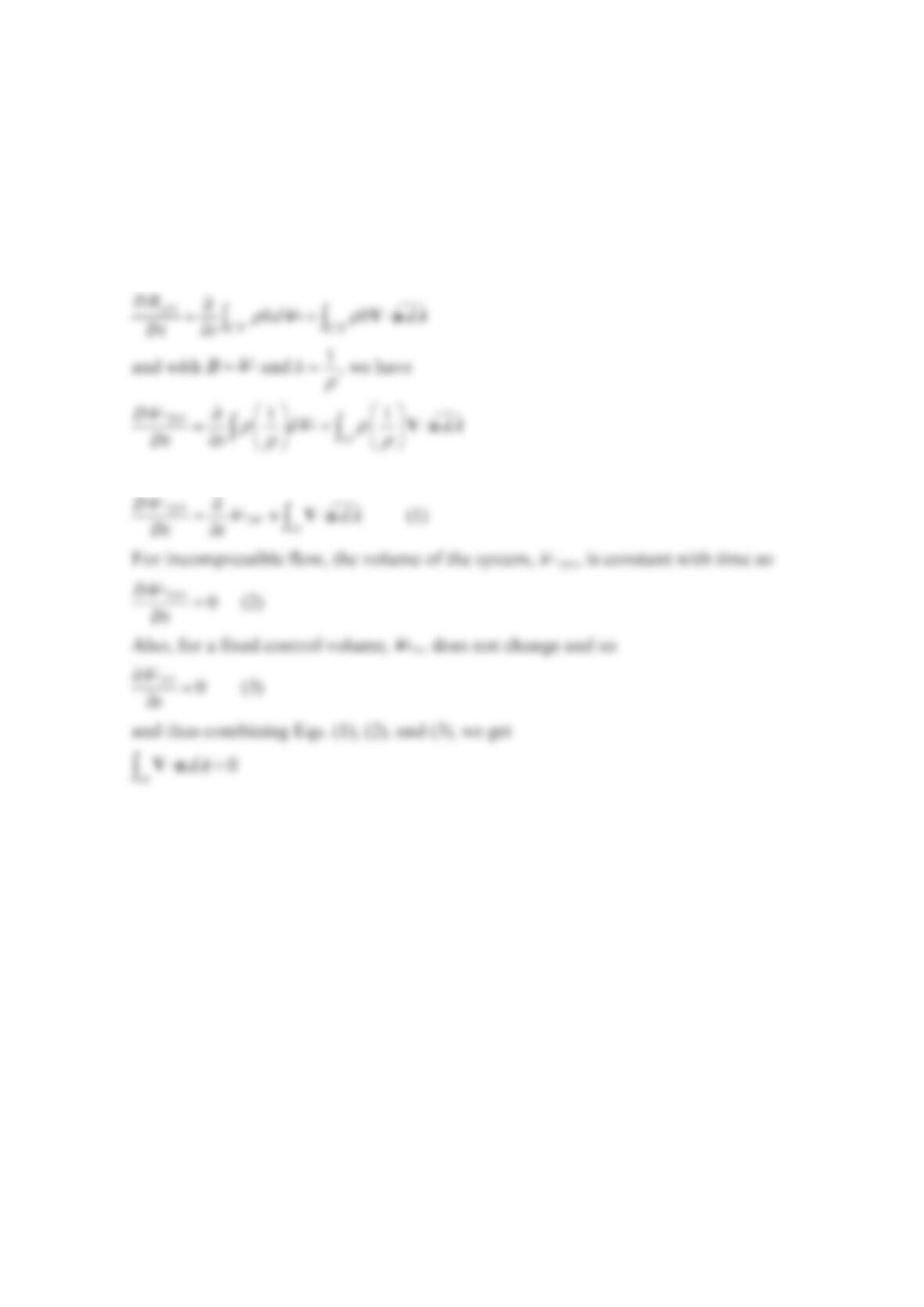
Use the Reynolds transport theorem with volumeB= and, therefore,
==volume/mass 1/densityb to obtain the continuity equation for steady or unsteady
incompressible flow through a fixed control volume: 0
CV dA⋅=
Vn .
Solution 5.1
The Reynolds Transport Theorem is
or
Problem 5.2
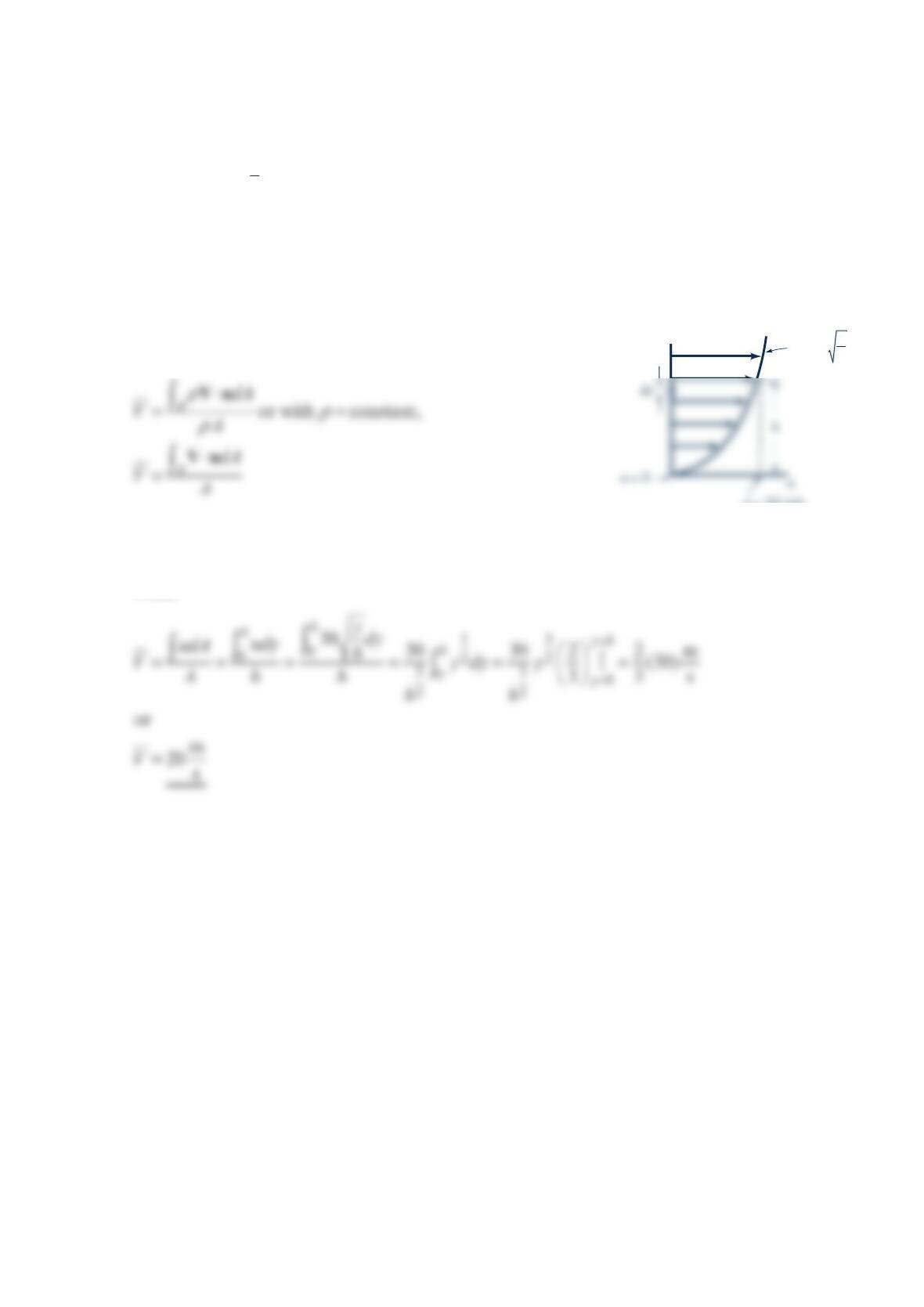
An incompressible fluid flows horizontally in the x–y plane with a velocity given by
−
=−
=
4
30 m/s, 01e
y
h
uv
where
y
and
h
are in meters and h is a constant. Determine
the average velocity for the portion of the flow between 0
y
= and =
y
h.
Solution 5.2
From the equation
Consider a unit depth normal to the x–y plane so that
=× = =× =1and1AhhdAdydy
Thus,
u
= 30 m/s
u
= 30
yy
h
Problem 5.3
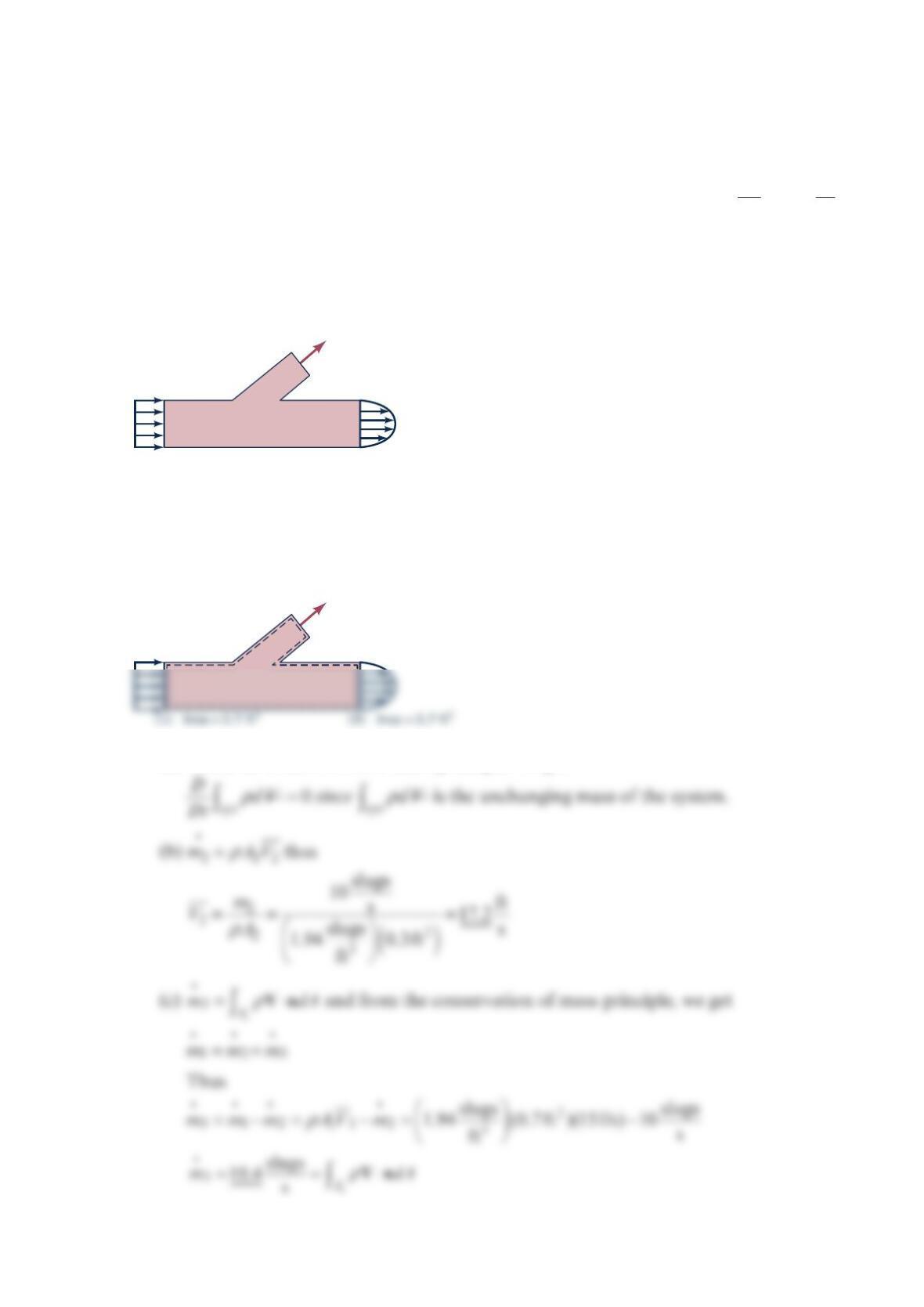
Water flows steadily through the horizontal piping system as shown in the figure below.
The velocity is uniform at section (1), the mass flowrate is
1
0 slugs/s at section (2), and the
velocity is nonuniform at section (3). (a) Determine the value of the quantity DdV
Dt
ρ
sys
where the system is the water contained in the pipe bounded by sections (1), (2), and (3). (b)
Determine the mean velocity at section (2). (c) Determine, if possible, the value of the
integral
()
3VdA⋅
n
ρ
over section (3). If it is not possible, explain what additional
information is needed to do so.
Solution 5.3
Use the control volume that are shown with the dashed lines in the figure below.
(a) From the conservation of mass principle, we get
10 slugs/s
Area = 0.3 ft
2
(3) Area = 0.7 ft
2
15 ft/s
(1) Area = 0.7 ft
2
(2)
10 slugs/s
Area = 0.3 ft
2
15 ft/s
(2)
Problem 5.4
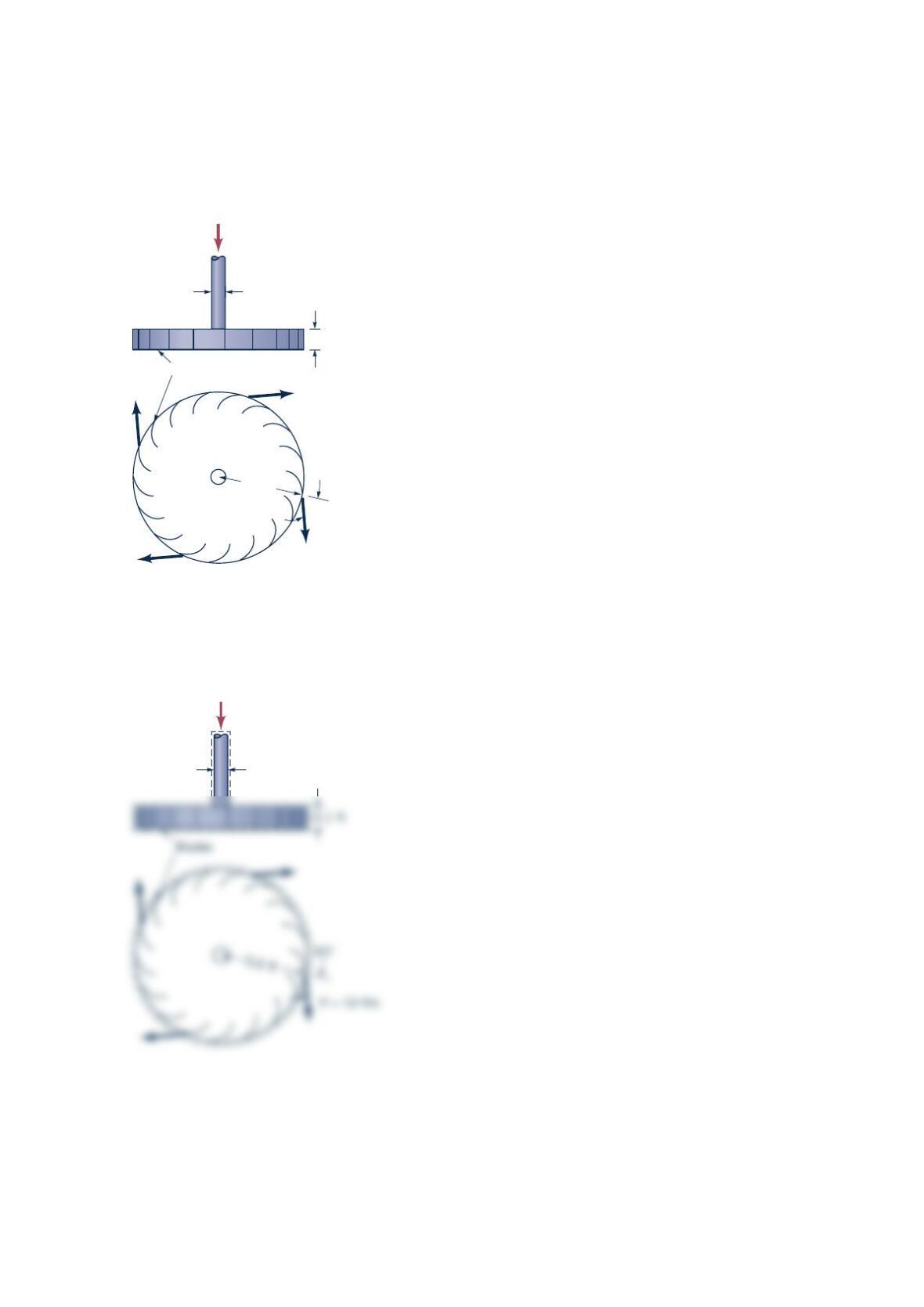
Water flows out through a set of thin, closely spaced blades as shown in the figure below
with a speed of =10 ft/sV around the entire circumference of the outlet. Determine the
mass flowrate through the inlet pipe.
Solution 5.4
Use the control volume container within the broken lines as shown in the sketch below.
0.08-ft diameter
0.1 ft
Inlet
Blades
0.6 ft
60°
V
= 10 ft/s
0.08-ft diameter
Inlet
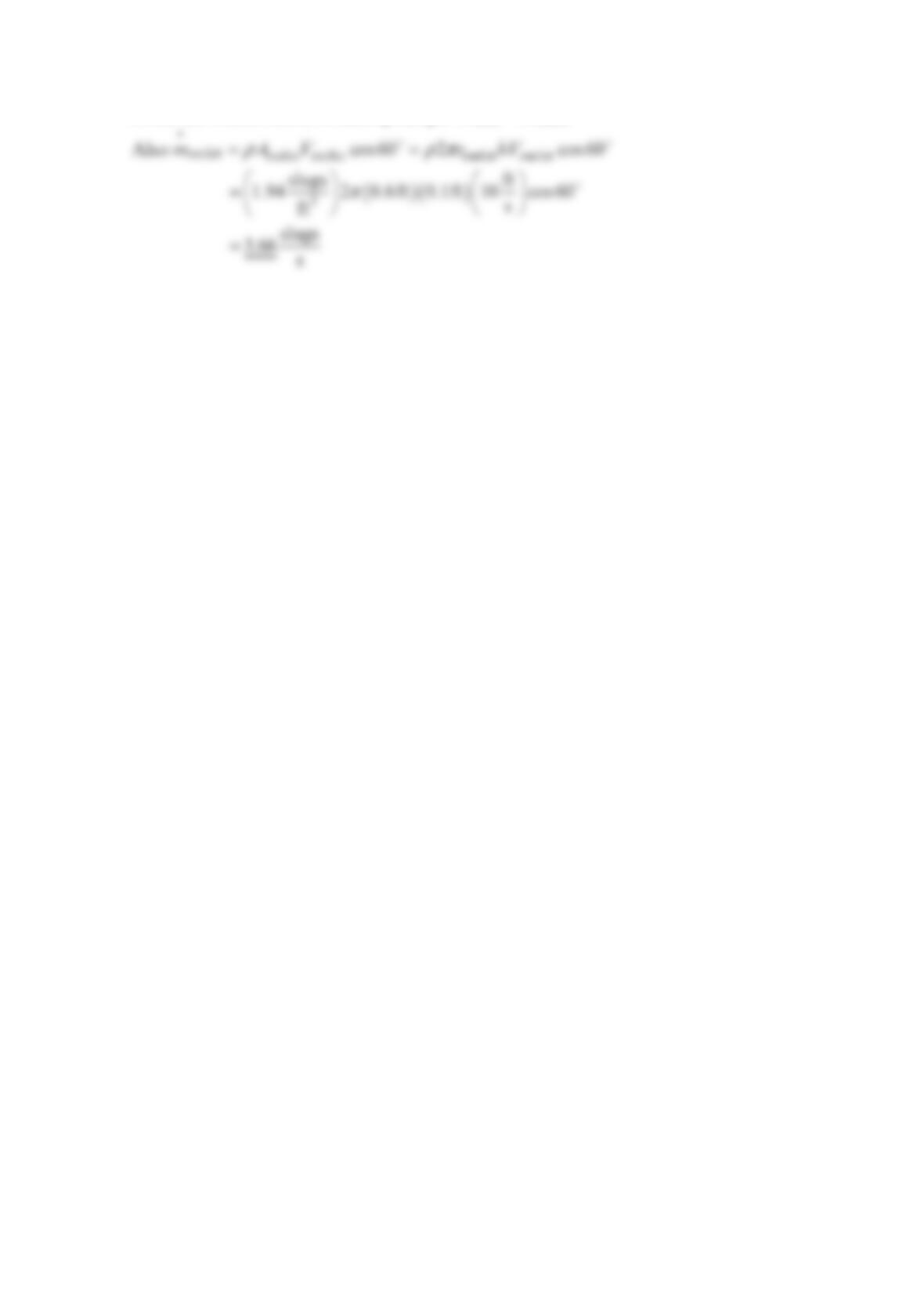
From the conservation of mass principle =
inlet outlet
mm
Problem 5.6
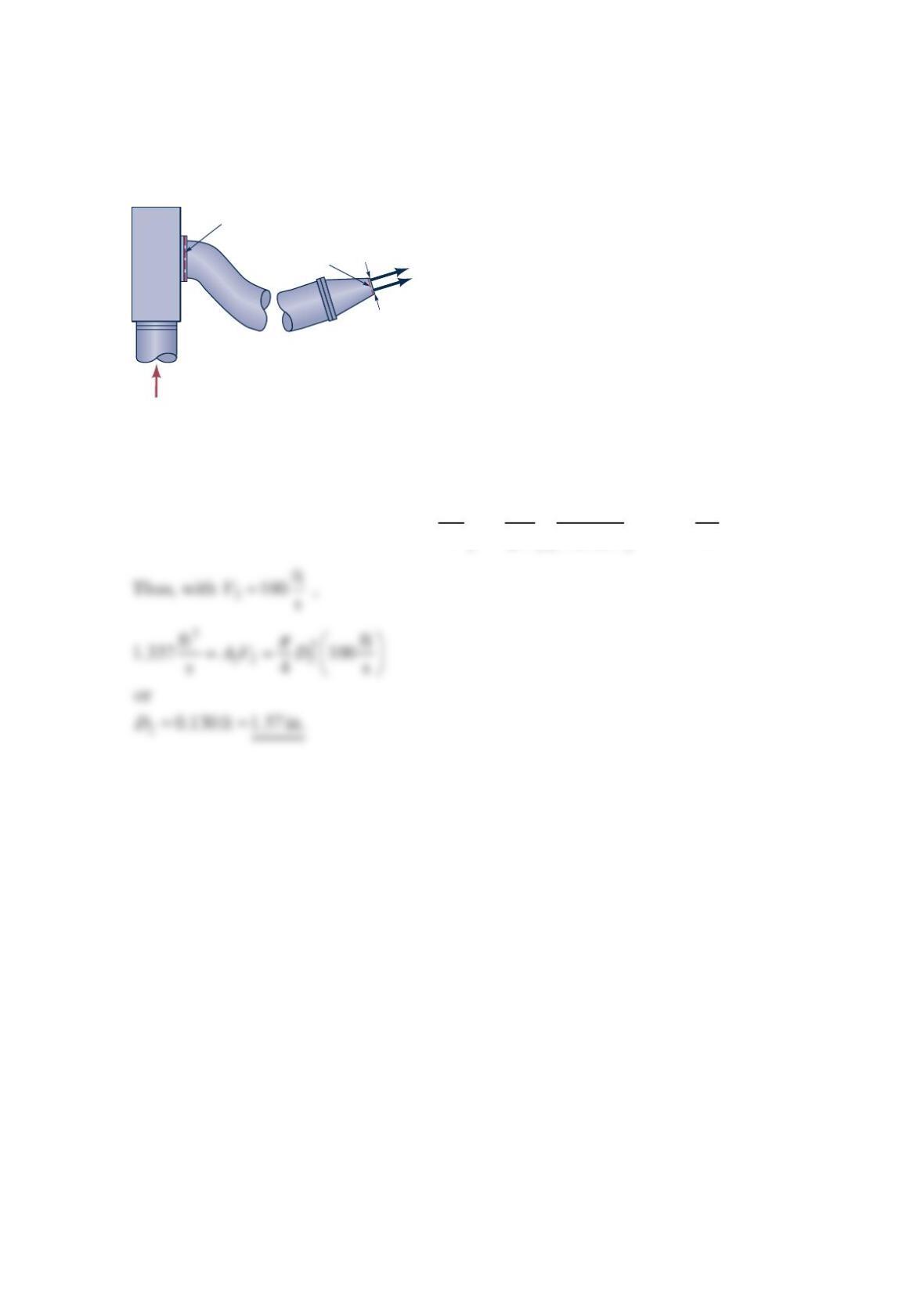
The pump shown in the figure below produces a steady flow of 10 gal/s through the nozzle.
Determine the nozzle exit diameter, 2
D
, if the exit velocity is to be =
2 100ft/sV.
Solution 5.6
For steady flow 12
Q
Q=, where
==
33 3
13
gal in. 1ft ft
10 231 1.337
s gal s
1728in.
Q
Section (1)
Section (2)
D
2
V
2
Pump
Problem 5.7
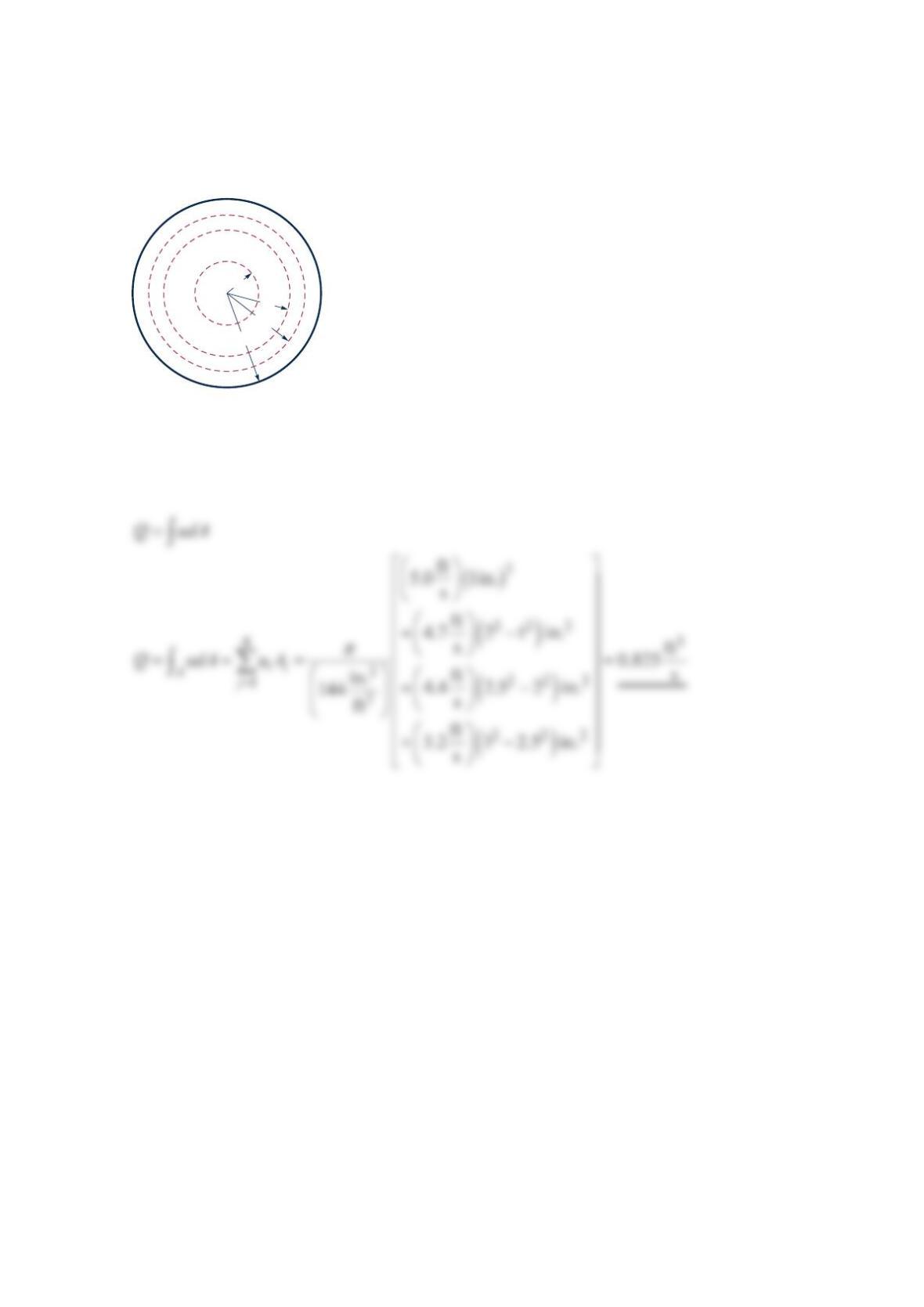
The fluid axial velocities shown in the figure below are the average velocities measured in
f
t/s in each annular area of a duct. Find the volume flowrate for the flowing fluid.
Solution 5.7
The volume flowrate is
3.2
4.4
4.7
5.0
+1ʺ
2ʺ
3ʺ
2½ʺ
Problem 5.8
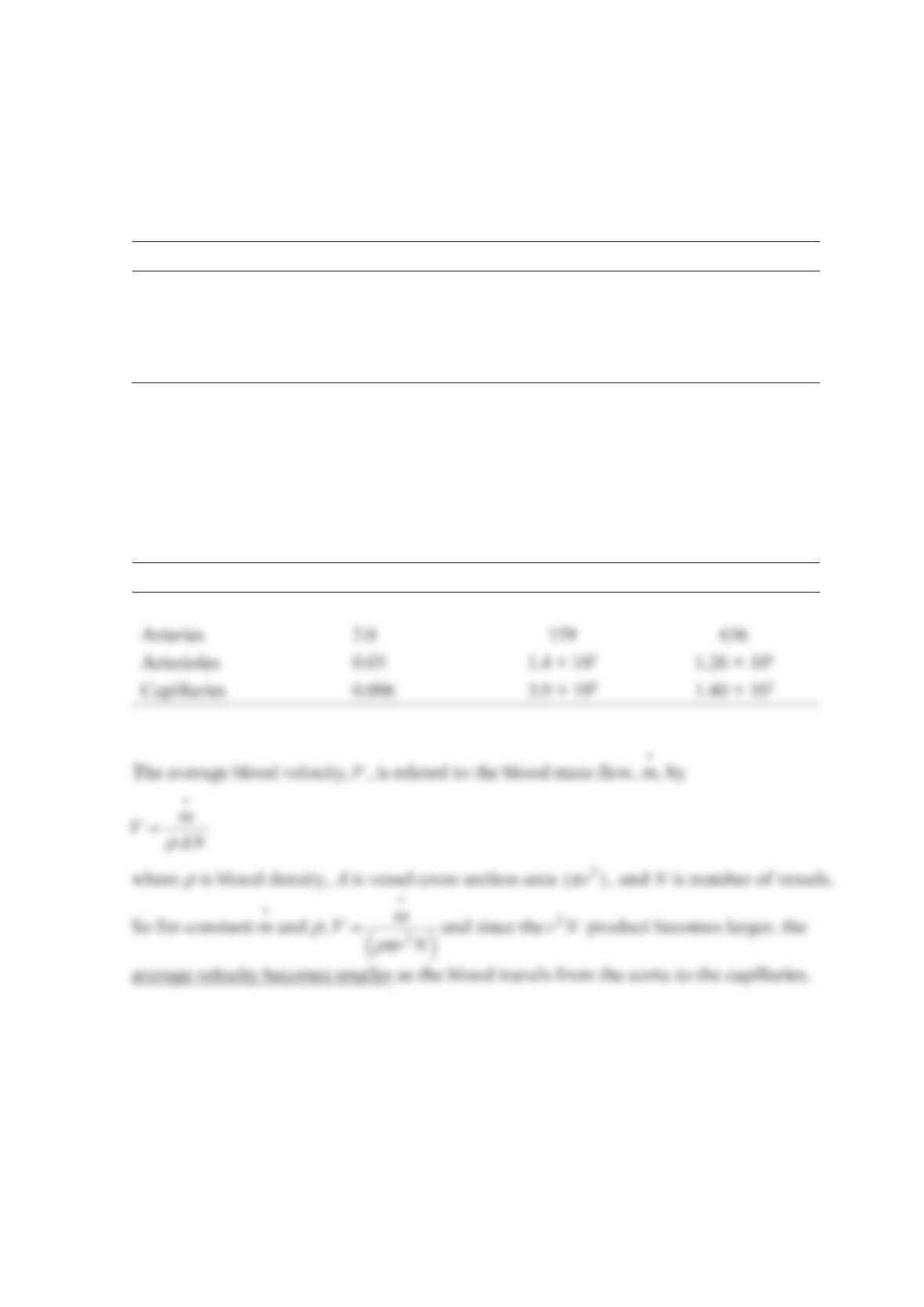
The human circulatory system consists of a complex branching pipe network ranging in
diameter from the aorta (largest) to the capillaries (smallest). The average radii and the
number of these vessels are shown in the table. Does the average blood velocity increase,
decrease, or remain constant as it travels from the aorta to the capillaries?
Vessel Average Radius, mm Number
Aorta 12.5 1
Arteries 2.0 159
Arterioles 0.03 1.4 × 10⁷
Capillaries 0.006 3.9 × 10⁹
Solution 5.8
The product of the square of the average radius, which is a measure of the flow area, and
the number of blood vessels is in the last column of the table.
Vessel Average Radius, mm Number R2 Number
Aorta 12.5 1 156
Problem 5.9
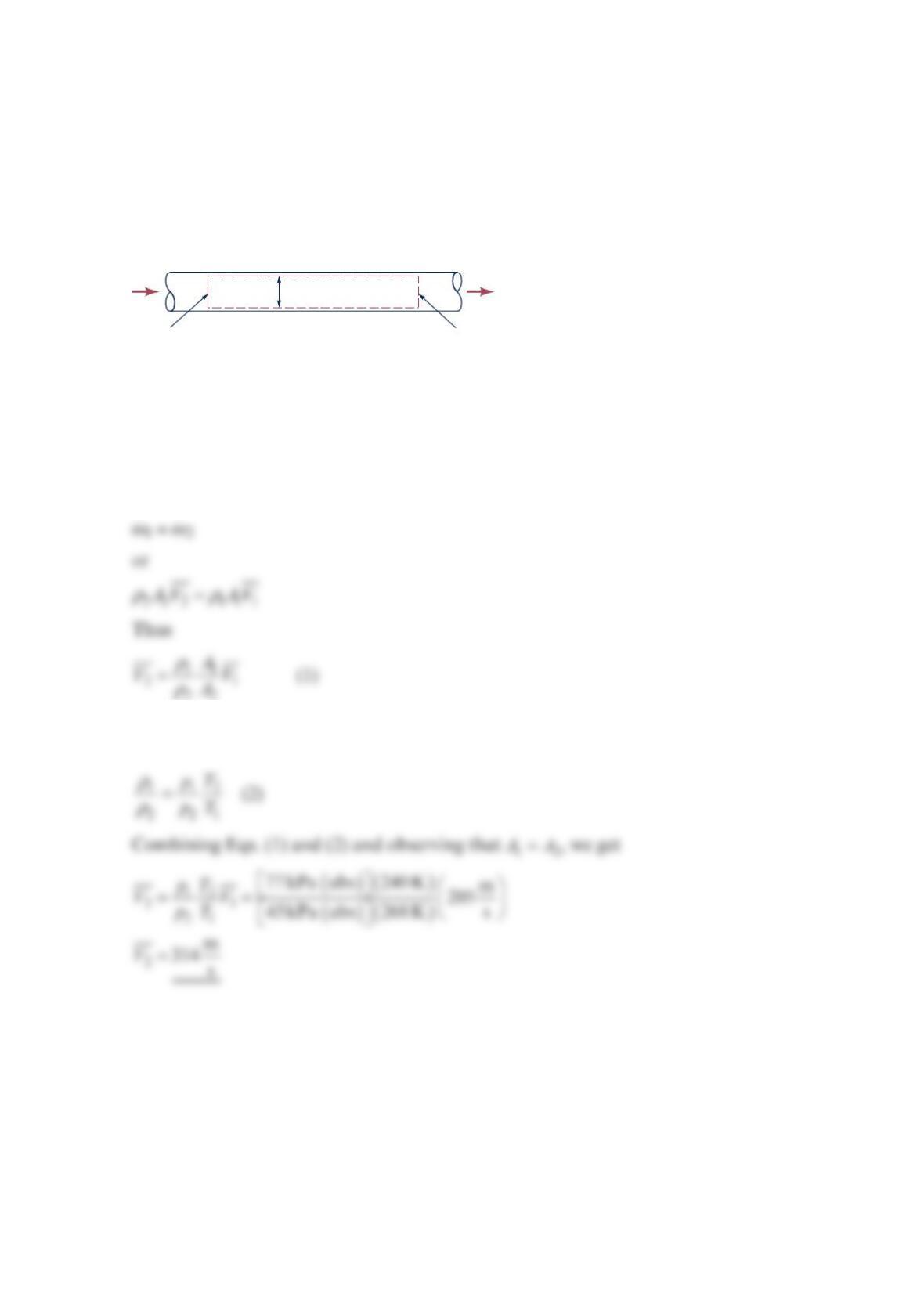
Air flows steadily between two cross sections in a long, straight section of 0.1-m-inside-
diameter pipe. The static temperature and pressure at each section are indicated in the
figure below. If the average air velocity at section (1) is 205 m/s , determine the average air
velocity at section (2).
Solution 5.9
For steady flow between sections (1) and (2)
Assuming that under the conditions of this problem, air behaves as an ideal gas, we use the
ideal gas equation of state (
p
RT=
ρ
) to get
D
= 0.1 m
Section (1) Section (2)
p
1
= 77 kPa (abs)
T
1
= 268 K
V
1
= 205 m/s
p
2
= 45 kPa (abs)
T
2
= 240 K
Problem 5.10
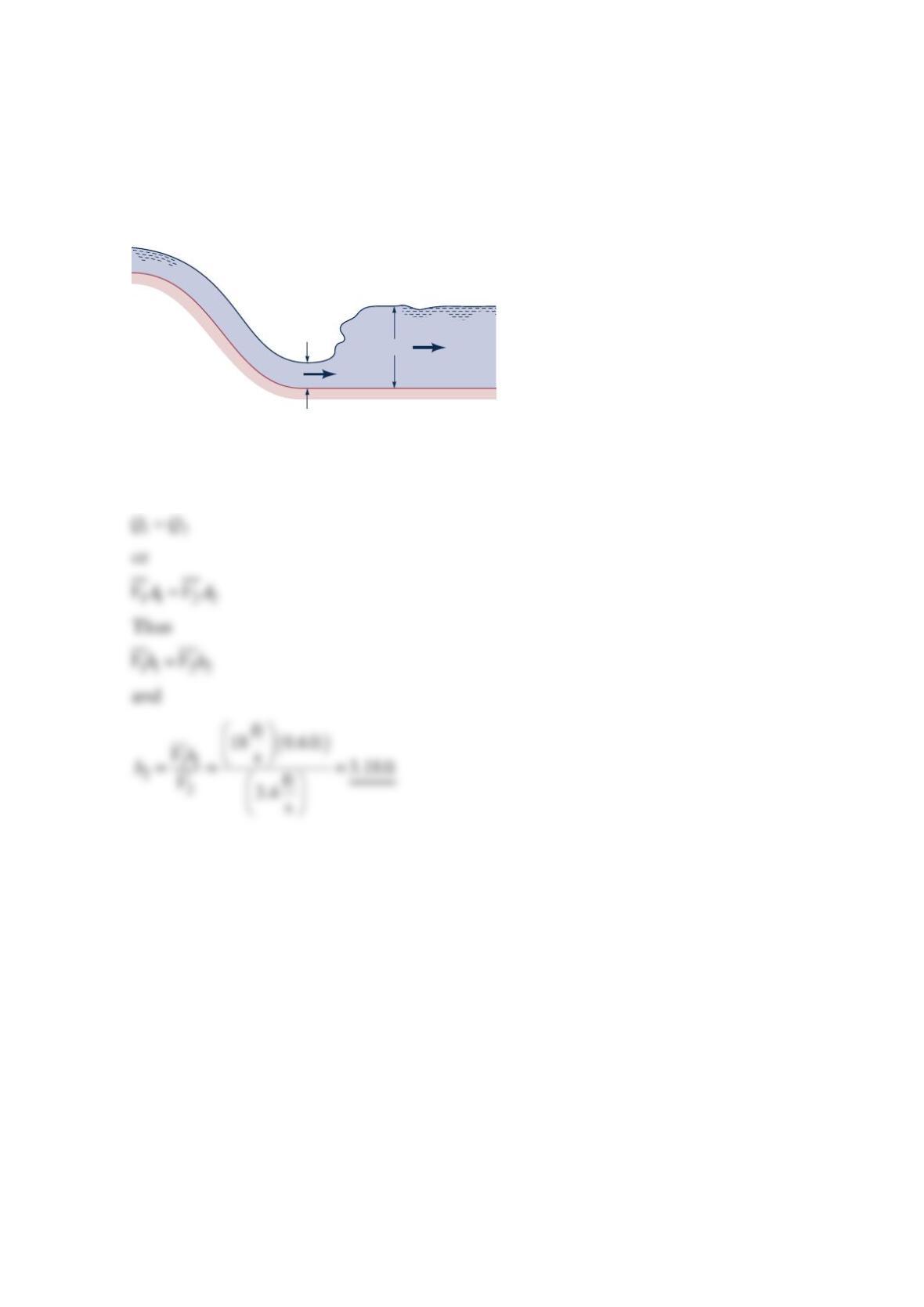
A hydraulic jump is in place downstream from a spillway as indicated in the figure below.
Upstream of the jump, the depth of the stream is 0.6 ft and the average stream velocity is
18 ft/s . Just downstream of the jump, the average stream velocity is 3.4 ft/s . Calculate the
depth of the stream,
h
, just downstream of the jump.
Solution 5.10
For steady in compressible flow between sections (1) and (2)
18 ft/s
3.4 ft/s
0.6 ft
h
Problem 5.11
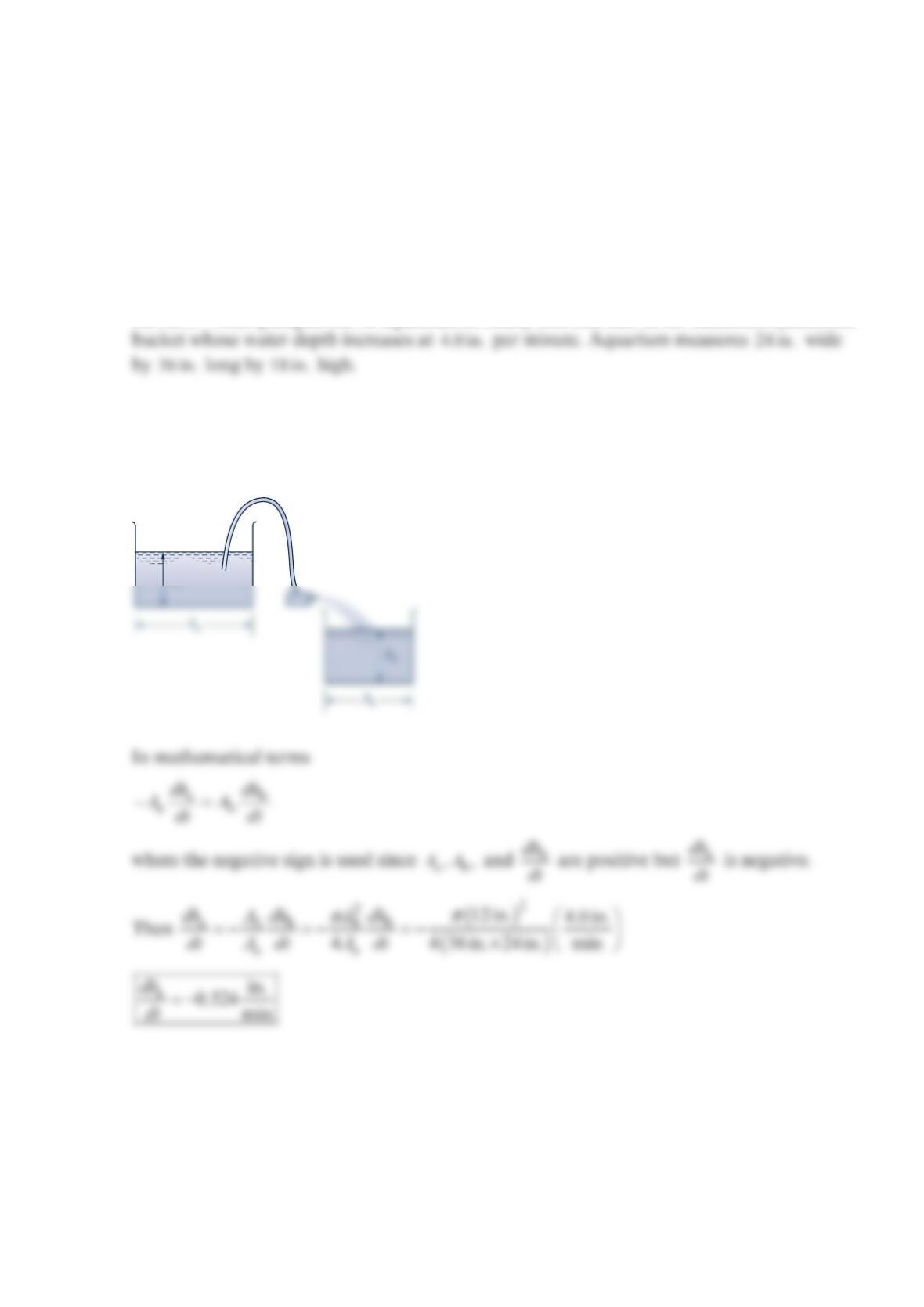
A woman is emptying her aquarium at a steady rate with a small pump. The water pumped
to a 12-in.-diameter cylindrical bucket, and its depth is increasing at the rate of 4.0 in. per
minute. Find the rate at which the aquarium water level is dropping if the aquarium
measures 24 in. (wide) × 36 in. (long) × 18in. (high).
Solution 5.11
GIVEN: Water pumped out of aquarium at steady rate and fills 12-in.-diameter, cylindrical
FIND: Rate at which aquarium water level is dropping.
SOLUTION: Using the attached sketch and assuming constant water density, conservation
of mass gives
r
ate of water drained out of aquarium rate of water filling bucket.=
h
Problem 5.12
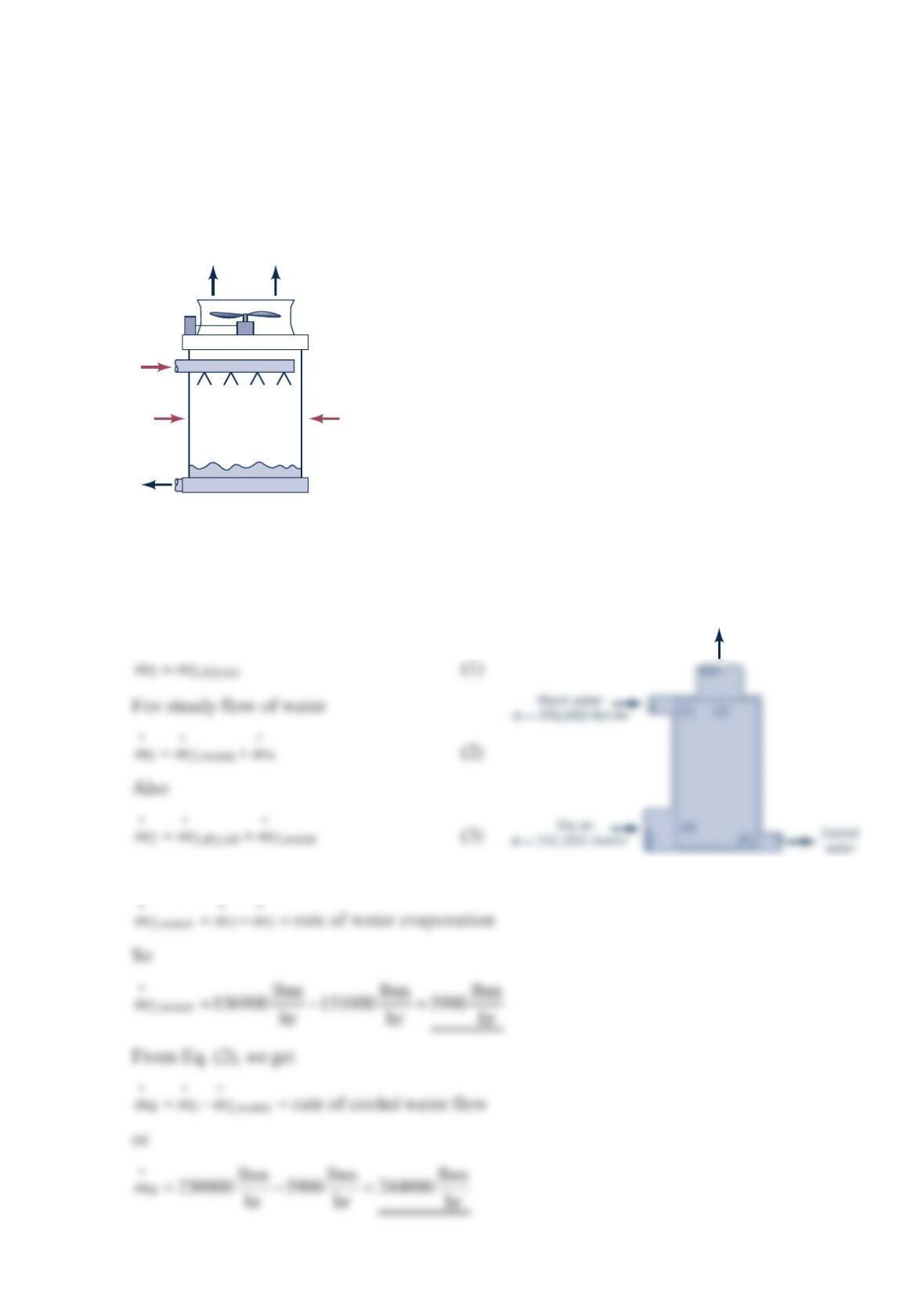
An evaporative cooling tower (see the figure below) is used to cool water from
1
10 to 80 F.
Water enters the tower at a rate of 250,000 lbm/hr . Dry air (no water vapor) flows into the
tower at a rate of 151,000 lbm/hr . If the rate of wet airflow out of the tower is
156,900 lbm/hr , determine the rate of water evaporation in lbm/hr and the rate of cooled
water flow in lbm/hr.
Solution 5.12
For steady flow of dry air
Combining Eqs. (1) and (3), we get
Water out
Air in Air in
Wet
air out
Water in
Wet air
= 156,900 Ibm/hr
m
∙
Problem 5.13
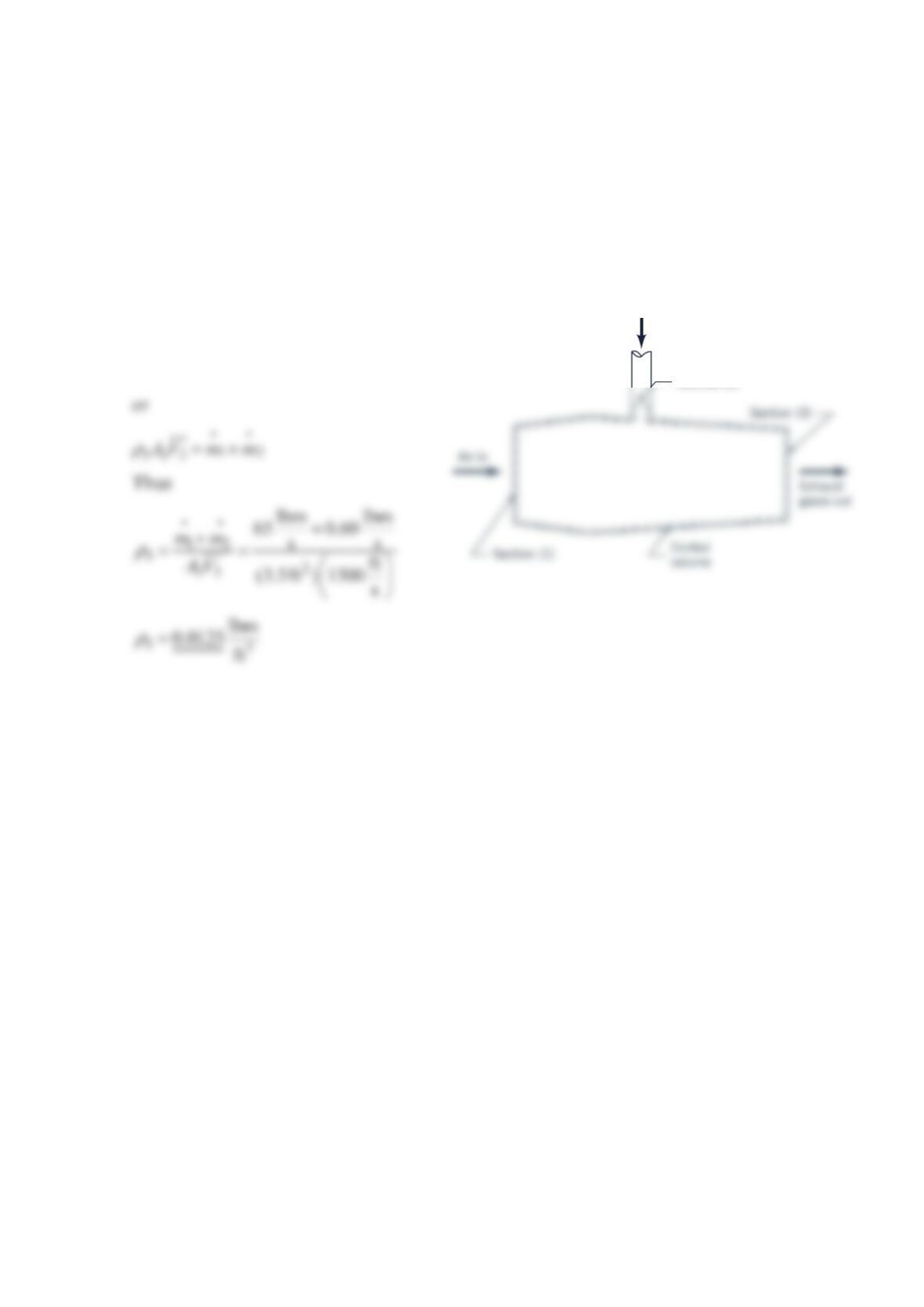
At cruise conditions, air flows into a jet engine at a steady rate of 65 lbm/s . Fuel enters the
engine at a steady rate of 0.60 lbm/s . The average velocity of the exhaust gases is 1500 ft/s
relative to the engine. If the engine exhaust effective cross-sectional area is 2
3.5 ft , estimate
the density of the exhaust gases in 3
lbm/ft .
Solution 5.13
For steady flow
312
mmm=+
Fuel in
Section (2)
Problem 5.14
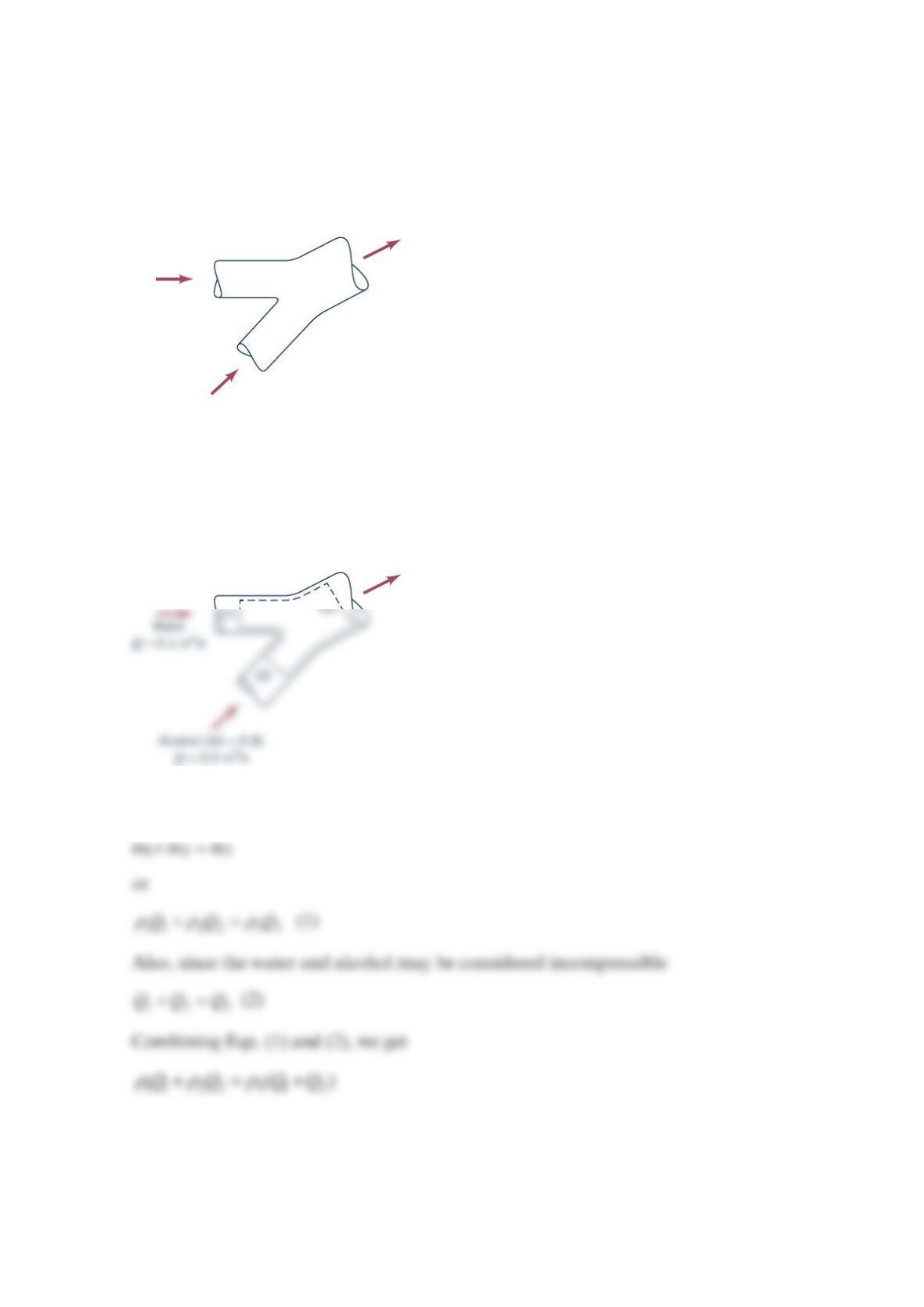
Water at 3
0.1m /s and alcohol ( 0.8
S
G=) at 3
0.3m /s are mixed in a y-duct as shown in the
figure below. What is the average density of the mixture of alcohol and water?
Solution 5.14
For steady flow
Water and
alcohol mixture
Water
Q = 0.1 m
3
/s
Alcohol (SG = 0.8)
Q = 0.3 m
3
/s
Water and
alcohol mixture
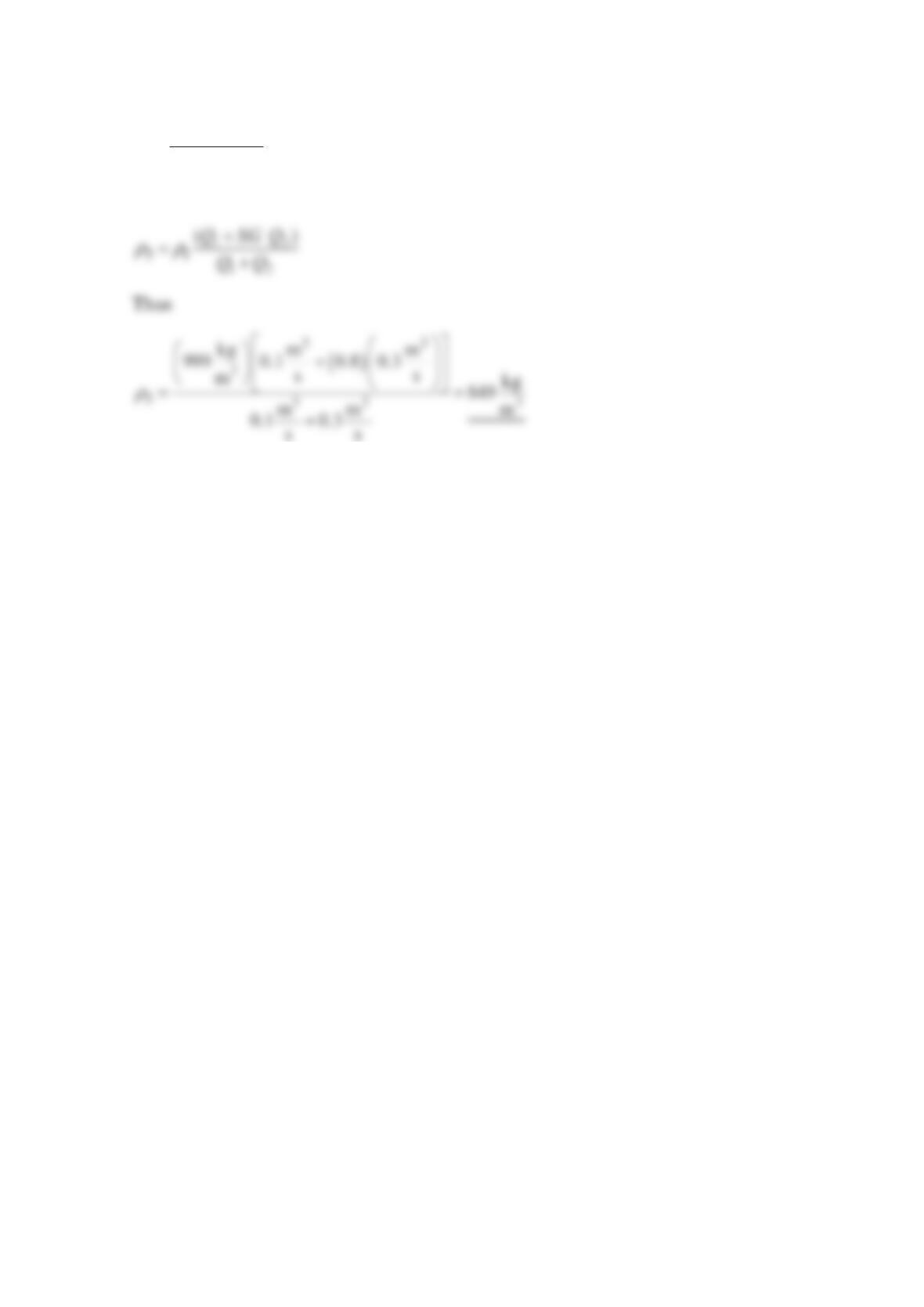
or
11 2 2
3
12
QQ
QQ
ρρ
ρ
+
=+
and
Problem 5.15
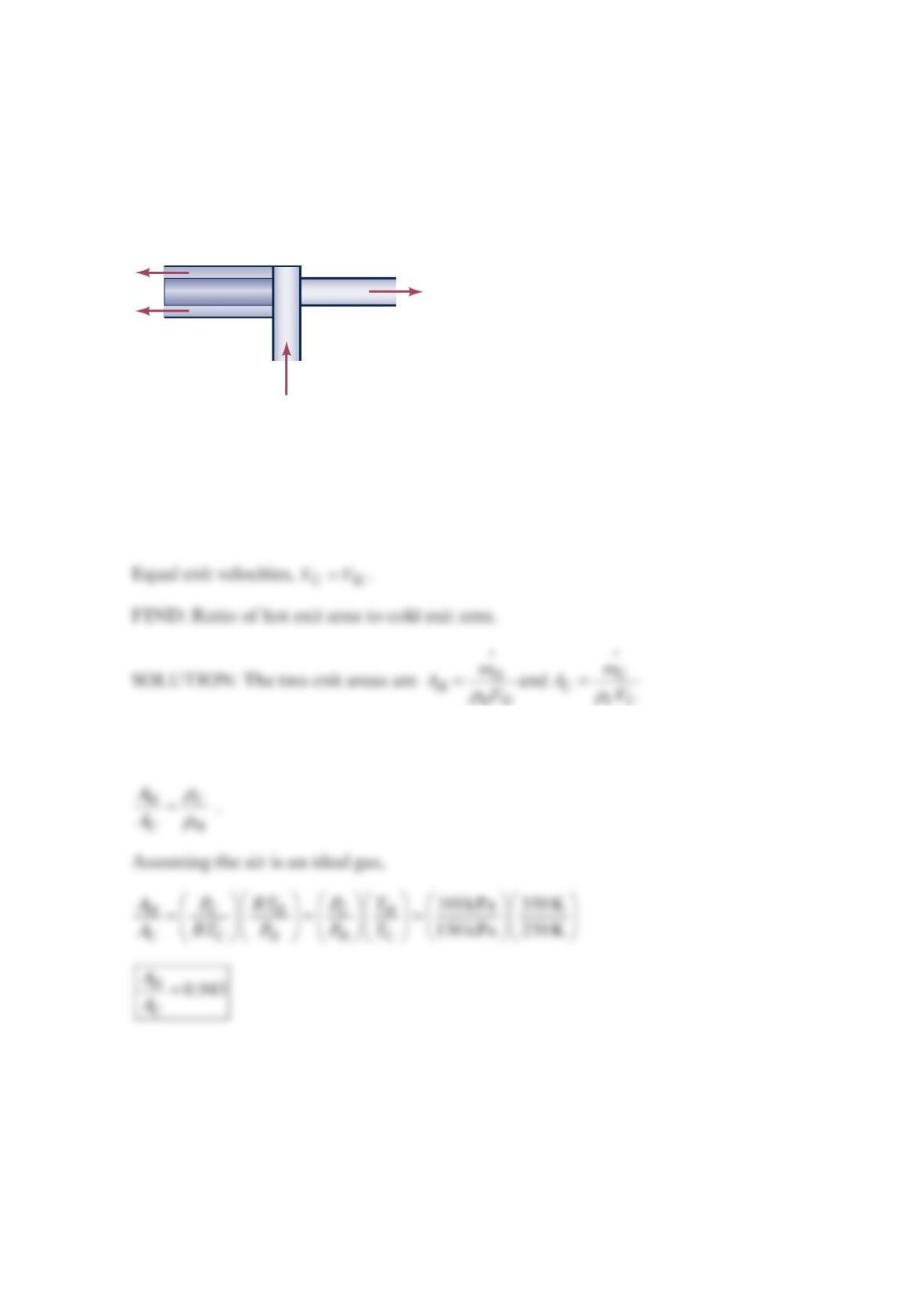
In the vortex tube shown in the figure below, air enters at 202 kPa absolute and 300 K .
Hot air leaves at 150 kPa absolute and 350 K , whereas cold air leaves at 101kPa absolute
and 250 K . The hot air mass flowrate, H
m
, equals the cold air mass flowrate, C
m
. Find
the ratio of the hot air exit area to cold air exit area for equal exit velocities.
Solution 5.15
GIVEN: Vortex tube in figure. =
CH
mm
.
HH CC
Since =
CH
mm
and =
CH
VV
,
T
H
= 350 K
p
H
= 150 kPa
m
H
T
C
= 250 K
p
C
= 101 kPa
m
C
T
= 300 K
p
= 202 kPa
∙
∙
Problem 5.16
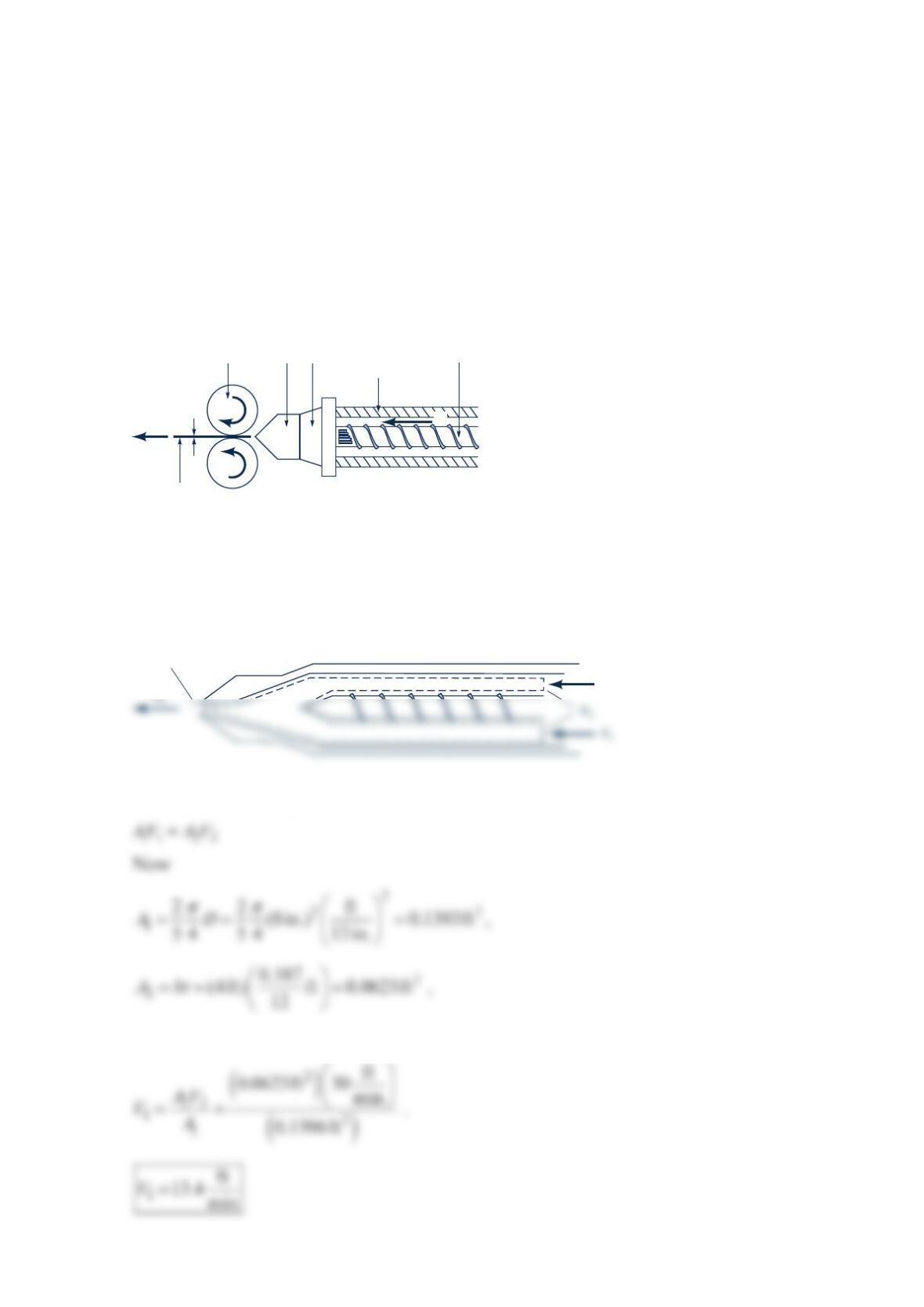
Molten plastic at a temperature of 510 °F is augured through an extruder barrel by a screw
occupying 3/5 of the barrel’s volume (see figure below). The extruder is 16 ft long and
has an inner diameter of 8in. The barrel is connected to an adapter having a volume of
3
0.48ft . The adapter is then connected to a die of equal volume. The plastic exiting the die
is immediately rolled into sheets. The line is producing 4-ft widths of material at a rate of
30 ft/min and a gauge thickness of 187 mil . What is the axial velocity, 1
V
, of the plastic in
the barrel? Assume that the plastic density is constant as it solidifies from a liquid (in the
extruder) into a solid sheet.
Solution 5.16
Apply conservation of mass (i.e., continuity equation) to a control volume enclosing the
plastic. Assume steady state.
For constant density (and steady state)
and
ScrewExtruder
barrel
AdapterDieRolls
Thin sheet
V2
=
30 ft/min
t
V1
V1
A2
Problem 5.17
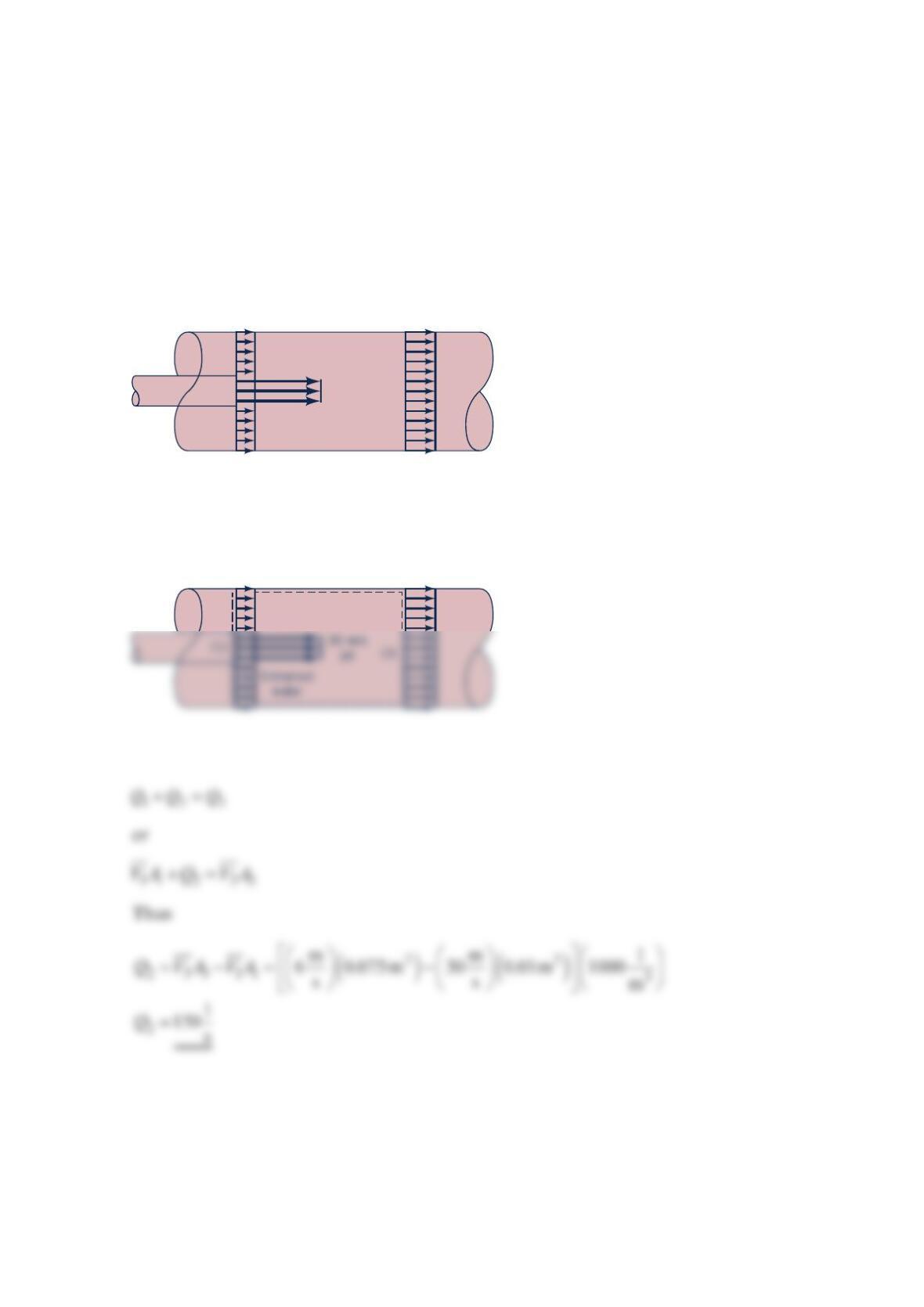
A water jet pump (see the figure below) involves a jet cross-sectional area of 2
0.01m , and a
jet velocity of 30 m/s . The jet is surrounded by entrained water. The total cross-sectional
area associated with the jet and entrained streams is 2
0.075 m . These two fluid streams
leave the pump thoroughly mixed with an average velocity of 6m/s through a cross-
sectional area of 2
0.075 m . Determine the pumping rate (i.e., the entrained fluid flowrate)
involved in l/s .
Solution 5.17
For steady incompressible flow through the control volume
Entrained
water
Entrained
water
30 m/s
jet
6 m/s
Entrained
water
(2)
6 m/s
Problem 5.18
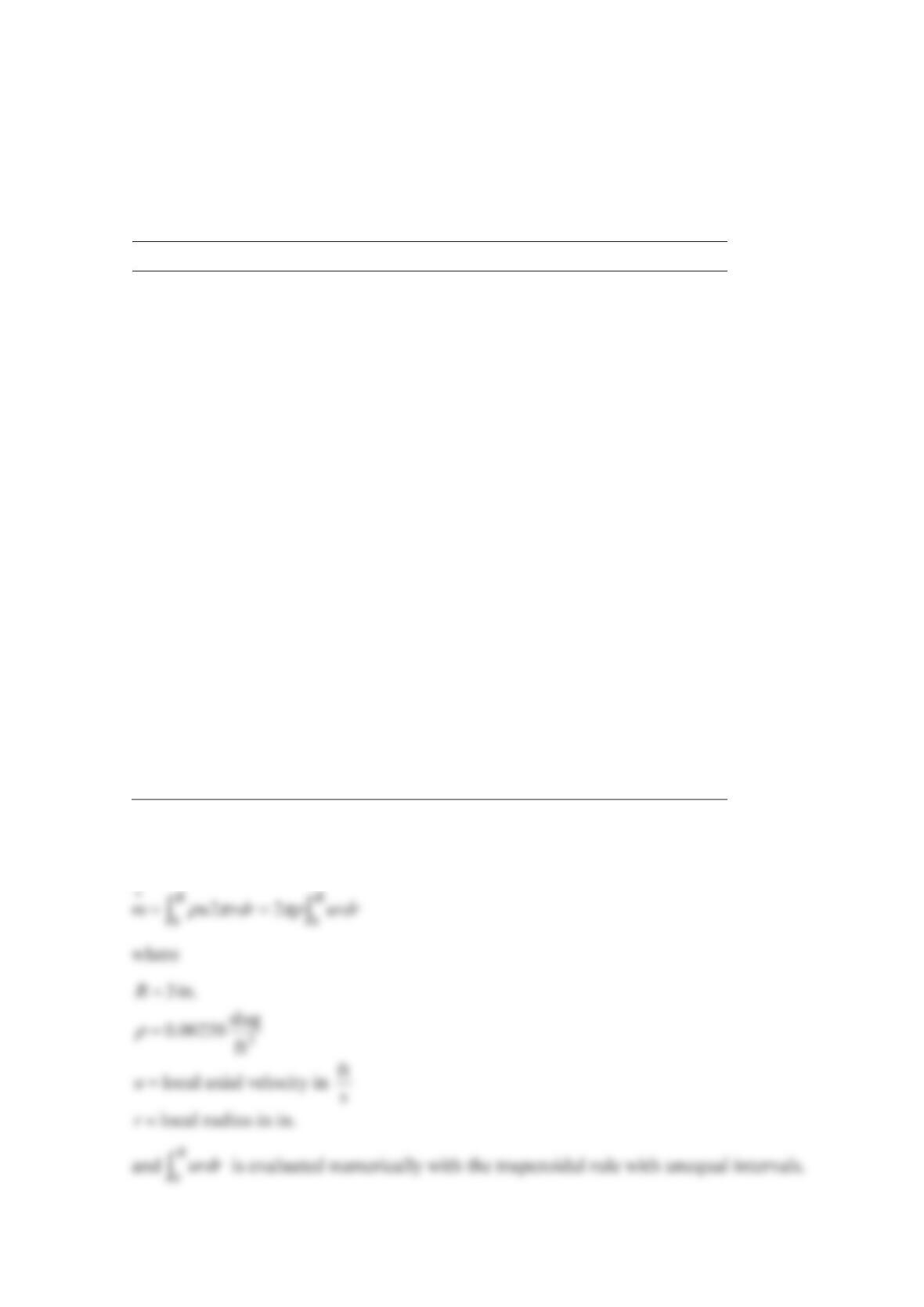
To measure the mass flowrate of air through a 6-in.- inside diameter pipe, local velocity
data are collected at different radii from the pipe axis (see the table below). Determine the
mass flowrate corresponding to the data listed in the following table. Plot the velocity
profile and comment.
r (in.) Axial Velocity (ft/s)
0 30
0.2 29.71
0.4 29.39
0.6 29.06
0.8 28.70
1.0 28.31
1.2 27.89
1.4 27.42
1.6 26.90
1.8 26.32
2.0 25.64
2.2 24.84
2.4 23.84
2.6 22.50
2.8 20.38
2.9 18.45
2.95 16.71
2.98 14.66
3.00 0
Solution 5.18
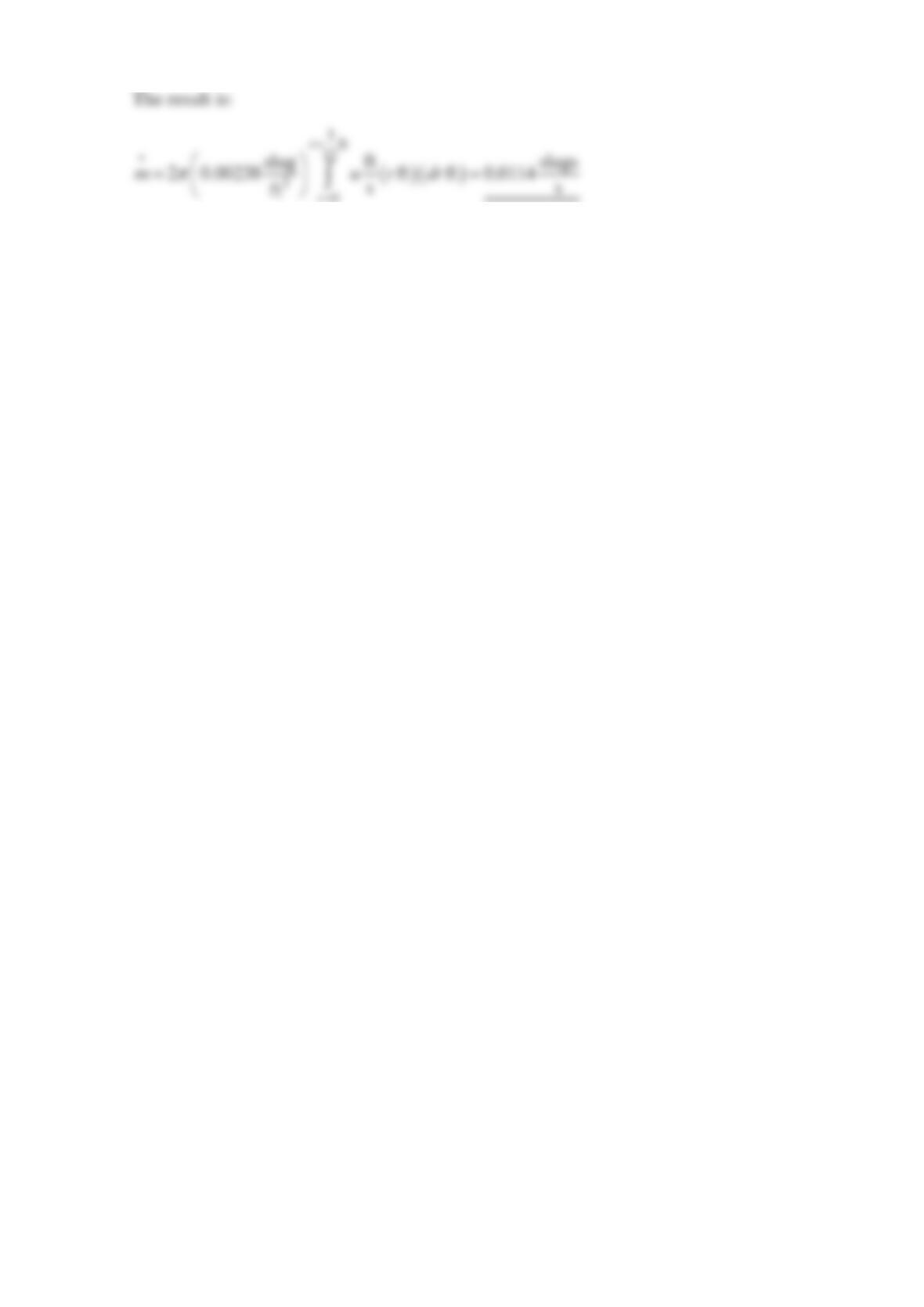
The mass flowrate is calculated with
=
r