4.41: PROBLEM DEFINITION
Situation:
Water accelerated from rest in horizontal pipe.
L=80m,D=30cm,as=5m/s2.
Find:
Pressure at upstream end (kPa).
Properties:
ρ=1000kg/m3,pdownstream =90kPa.
PLAN
Apply Euler’s equation.
SOLUTION
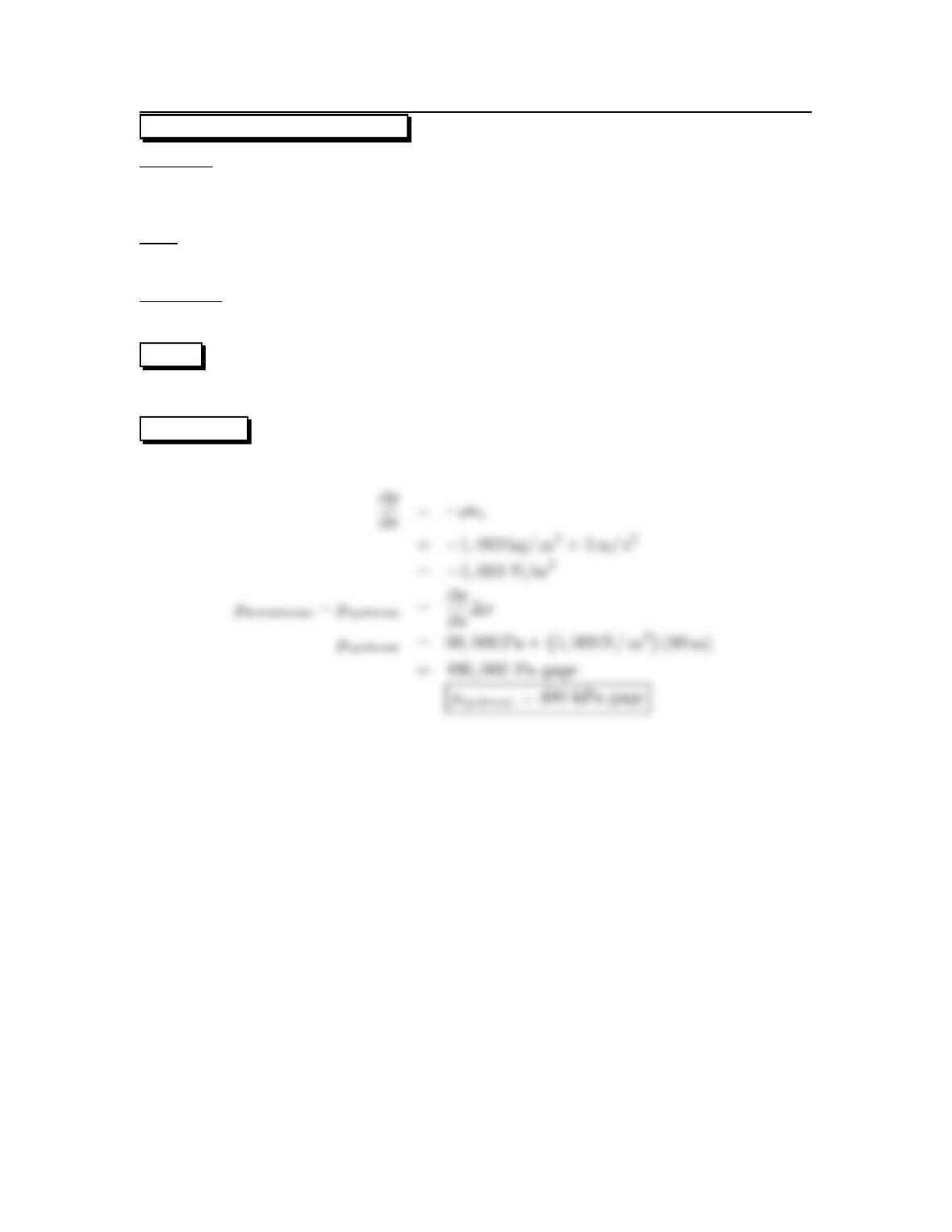
Euler’s equation with no change in elevation
41
4.42: PROBLEM DEFINITION
Situation:
Water stands in a vertical pipe closed at the bottom by a piston.
z=10ft.
Find:
Maximum downward acceleration before vaporization (ft/s2).
Assumptions:
Vapor pressure is zero.
Properties:
ρ=62.4lbm/ft3=1.94 slug/ft3,γ=62.4lbf/ft3.
PLAN
Apply Euler’s equation.
SOLUTION
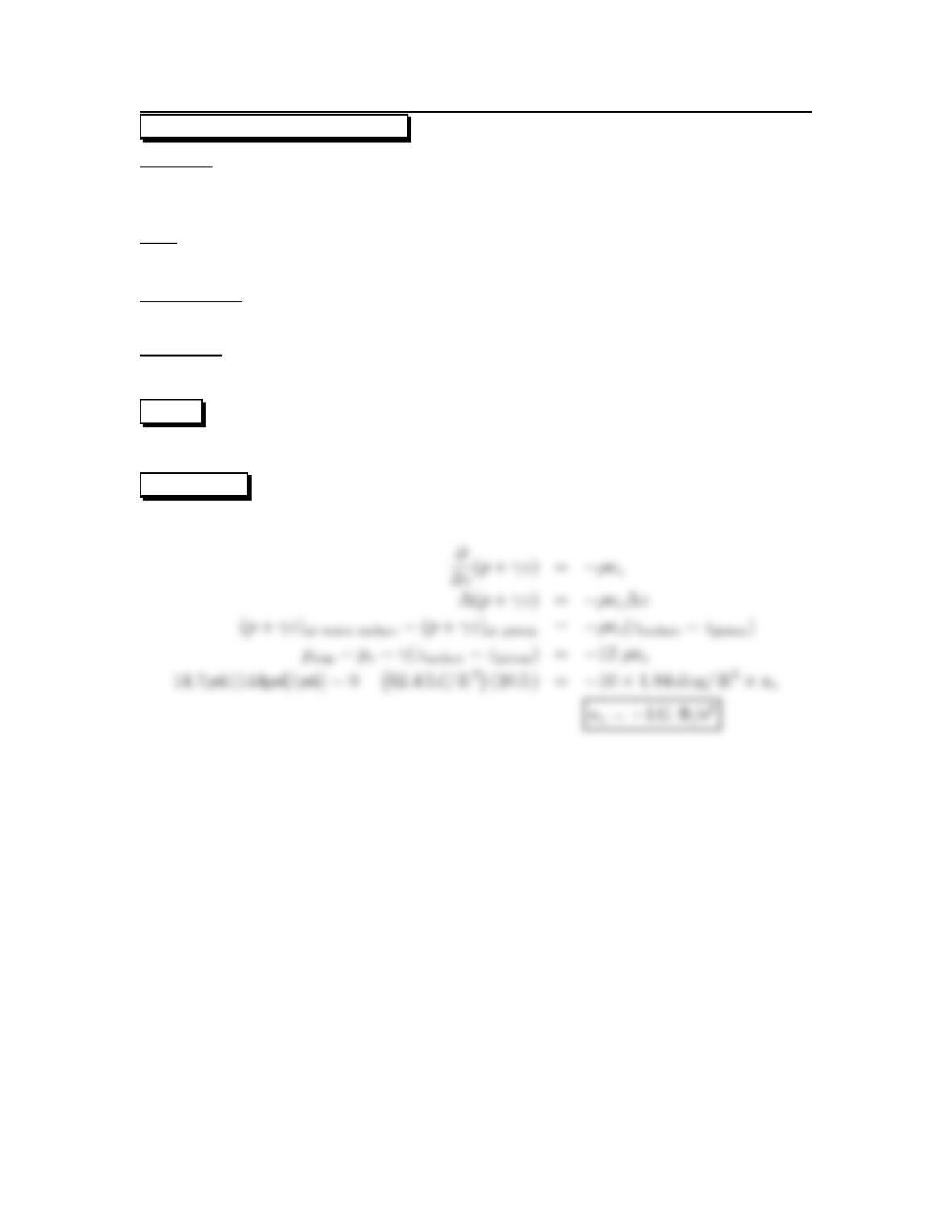
Applying Euler’s equation in the z-direction with p=0at the piston surface
42
4.43: PROBLEM DEFINITION
Situation:
A liquid flows through a conduit.
Find:
Which statements can be discerned with certainty:
(a) The velocity is in the positive direction.
(b) The velocity is in the negative direction.
(c) The acceleration is in the positive direction.
(d) The acceleration is in the negative direction.
Assumptions:
Viscosity is zero.
Properties:
pA=170psf, pB=100psf,γ=100lbf/ft3.
PLAN
Apply Euler’s equation.
SOLUTION
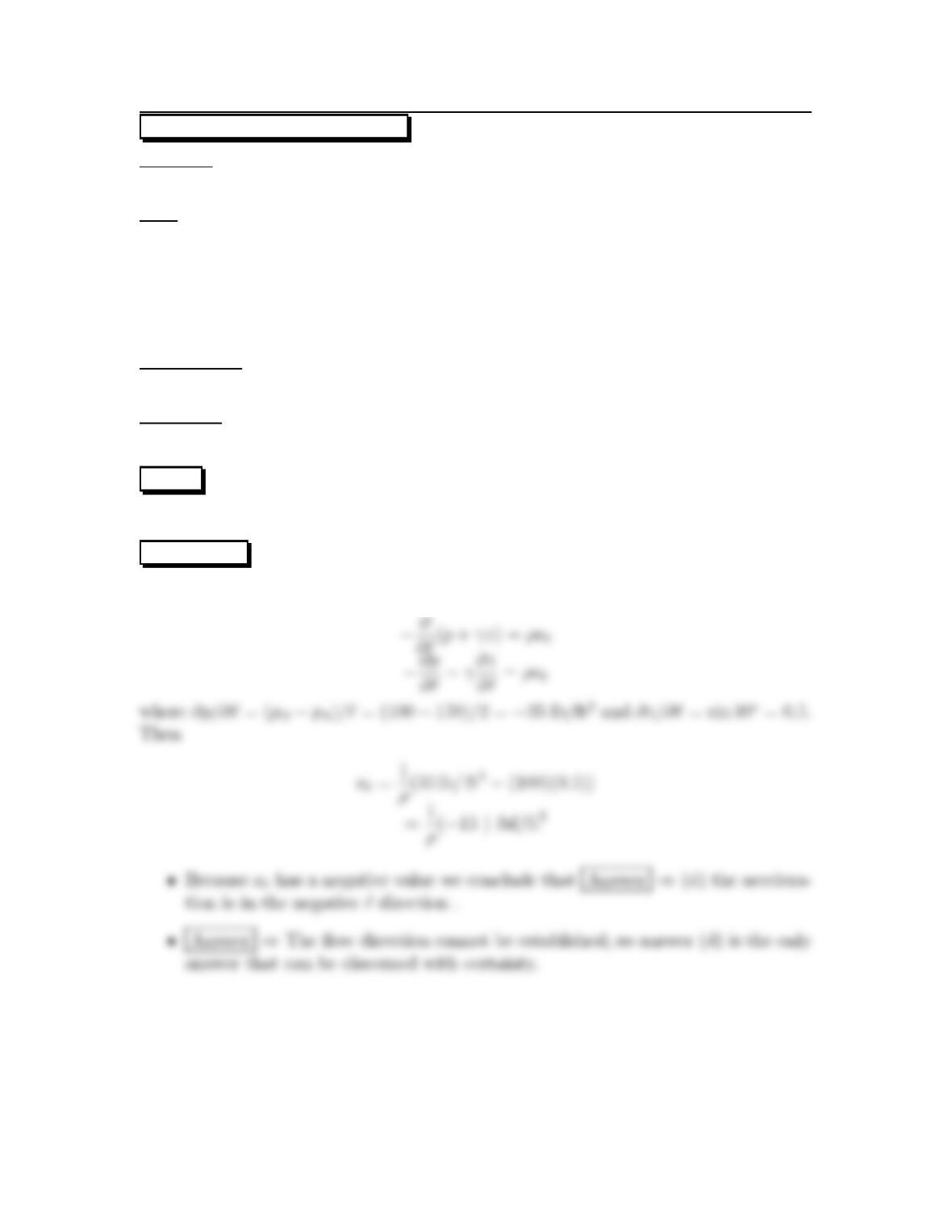
Euler’s equation
43
4.44: PROBLEM DEFINITION
Situation:
Velocity varies linearly with distance in water nozzle.
L=1ft,V1=30ft/s,V
2=80ft/s.
Find: Pressure gradient midway in the nozzle (psf/ft).
Properties:
ρ=62.4lbm/ft3=1.94 slug/ft3.
PLAN
Apply Euler’s equation.
SOLUTION
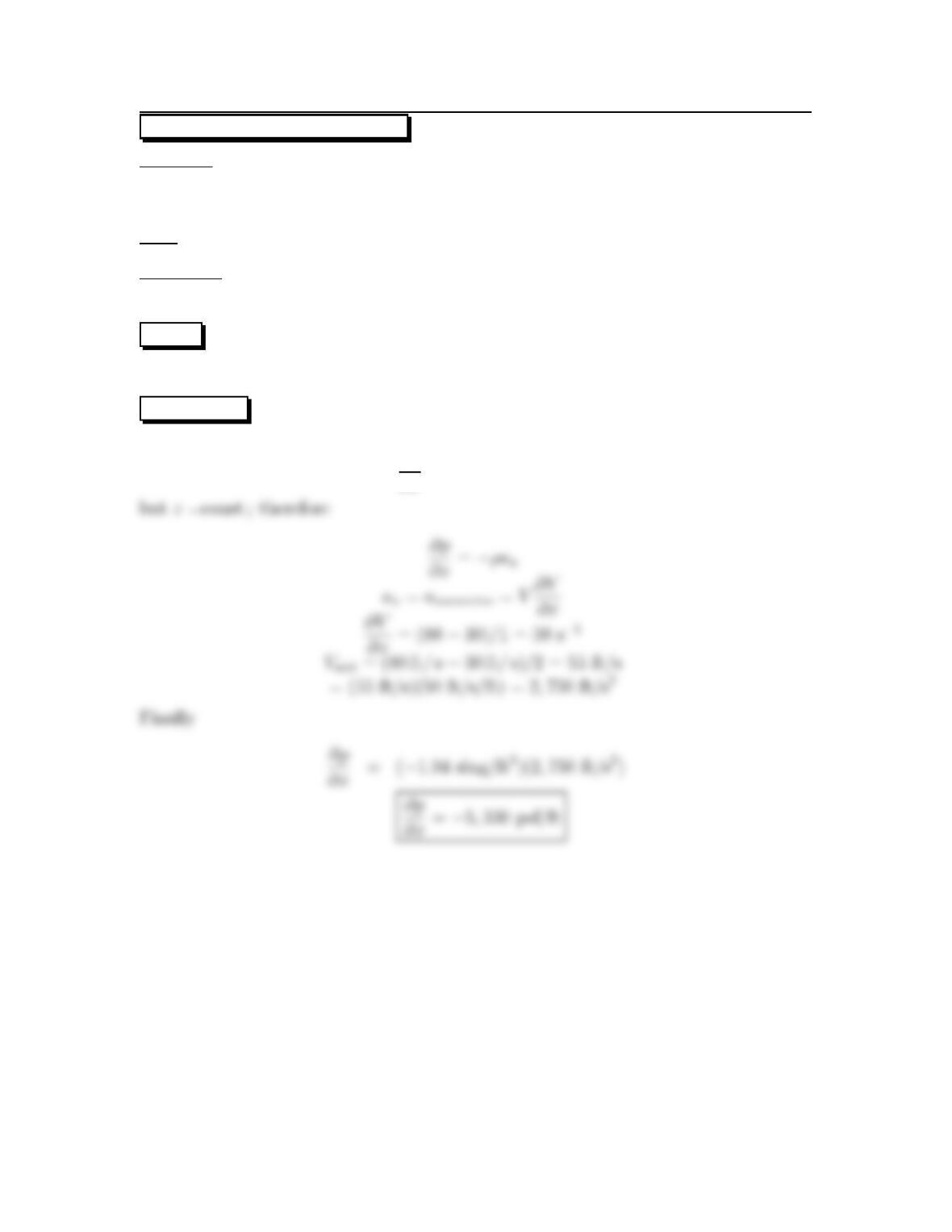
Euler’s equation ∂
∂x(p+γz)=−ρax
44
4.45: PROBLEM DEFINITION
Situation:
Closed tank is full of liquid.
L=3ft,H=4ft,ax=0.9g.
a=1.5g,S=1.2.
Find:
(a) pC−pA(psf).
(b) pB−pA(psf).
Properties:
ρ=1.94 slug/ft3.
PLAN
Apply Euler’s equation.
SOLUTION
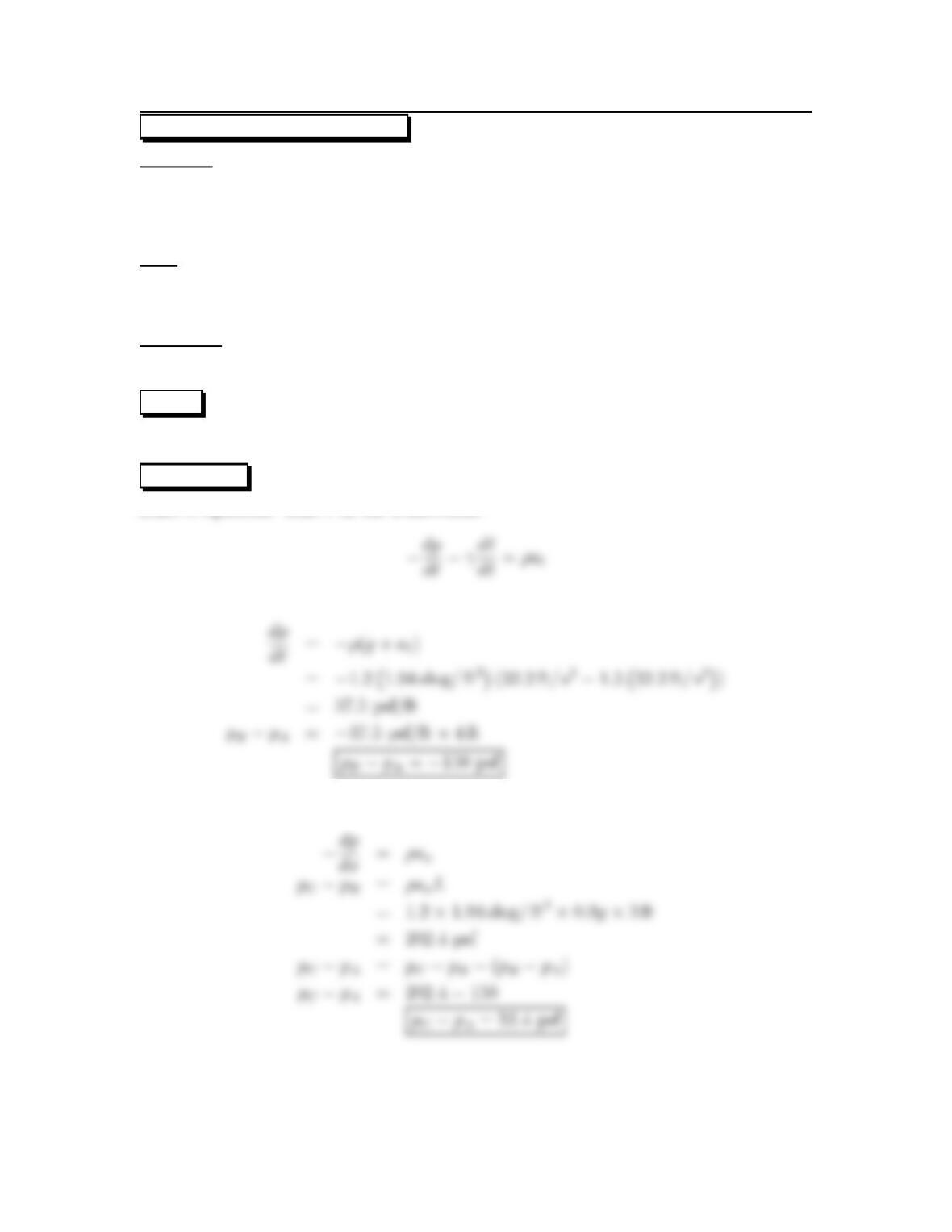
Euler’s equation. Take in the z-direction.
Take in the x-direction. Euler’s equation becomes
45
4.46: PROBLEM DEFINITION
Situation:
Closed tank is full of liquid.
L=2.5m,H=3m,ax=2/3g,a=1.2g,S=1.3.
Find:
(a) pC−pA(kPa).
(b) pB−pA(kPa).
Properties:
ρ=1000kg/m3.
PLAN
Apply Euler’s equation.
SOLUTION
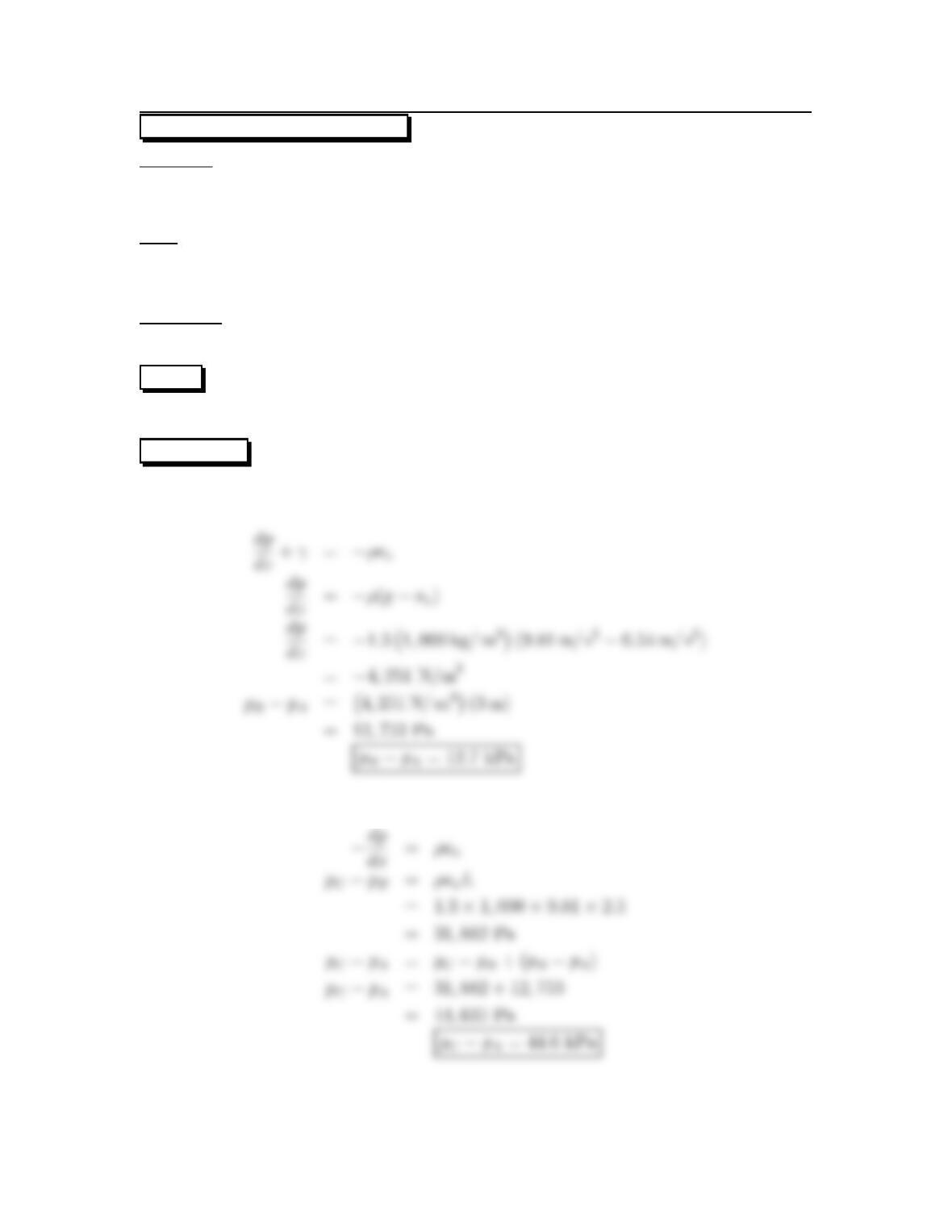
Euler’s equation in zdirection
Euler’s equation in x-direction
46
4.47: PROBLEM DEFINITION
Situation:
Aspirators.
Find:
How does an aspirator work?
SOLUTION
Air is forced through a constriction in a duct There is a port at the smallest area
47
4.48: PROBLEM DEFINITION
Situation:
When the Bernoulli Equation applies to a venturi, such as in Fig. 4.27 (EFM10e)
in §4.6, which of the following are true? (Select all that apply.)
a. if the velocity head and elevation head increase, then the pressure head must
decrease
b. pressure always decreases in the direction of flow along a streamline
c. the total head of the flowing fluid is constant along a streamline
SOLUTION
The correct answers are a and c.
REVIEW
If you selected b, you were probably thinking of a pipe of constant diameter.
48
4.49: PROBLEM DEFINITION
Situation:
Awaterjetfires vertically from a nozzle.
V=18ft/s.
Find:
Height jet will rise.
PLAN
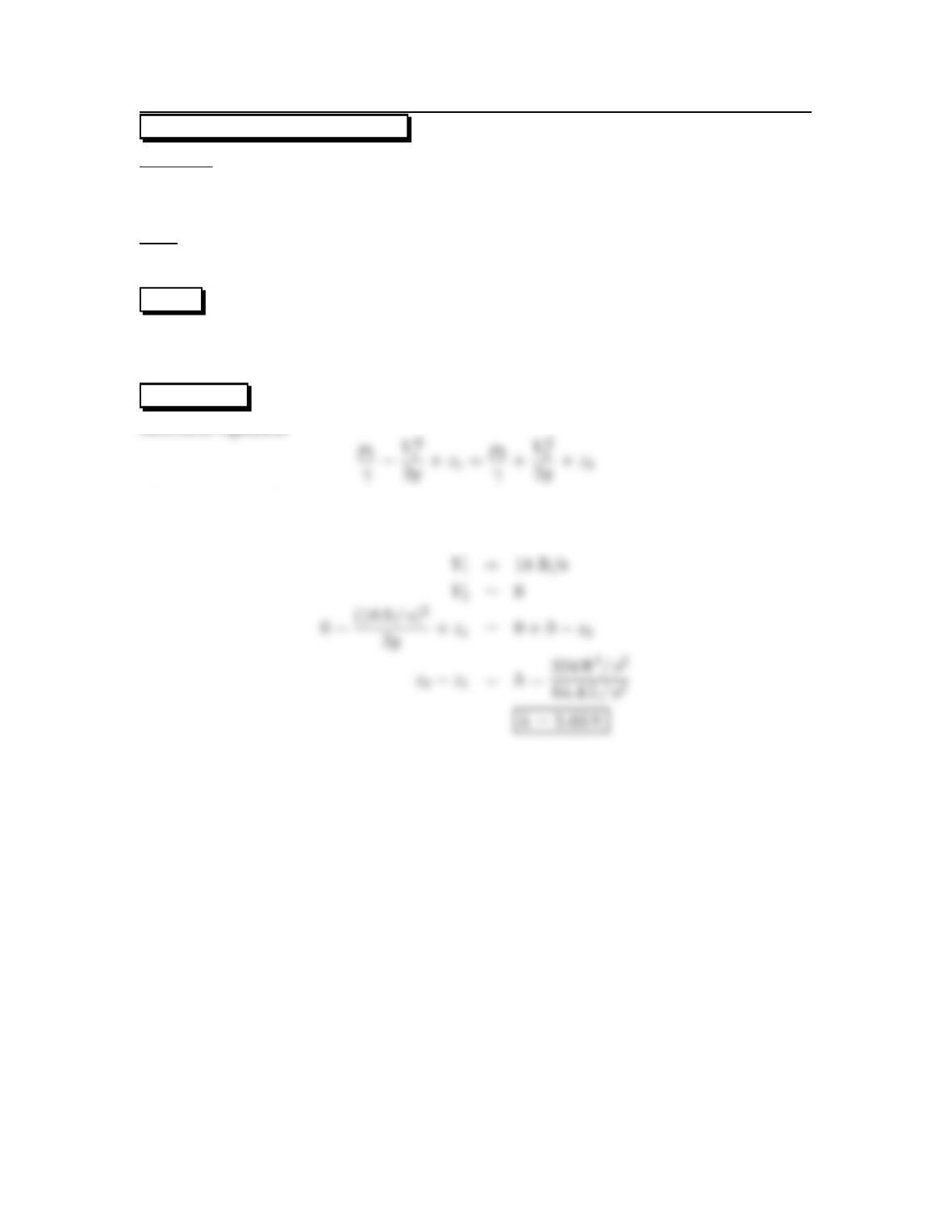
Apply the Bernoulli equation from the nozzle to the top of the jet. Let point 1 be
inthejetatthenozzleandpoint2atthetop.
SOLUTION
where p1=p2=0gage
49
4.50: PROBLEM DEFINITION
Situation:
Water discharges from a pressurized tank.
z1=0.5m,z2=0m,V
1=0m/s.
Find:
Velocity of water at outlet (m/s).
Properties:
Water (20 ◦C,10 kPa), Table A.5: ρ= 998 kg/m3,γ= 9790 N/m3.
SOLUTION
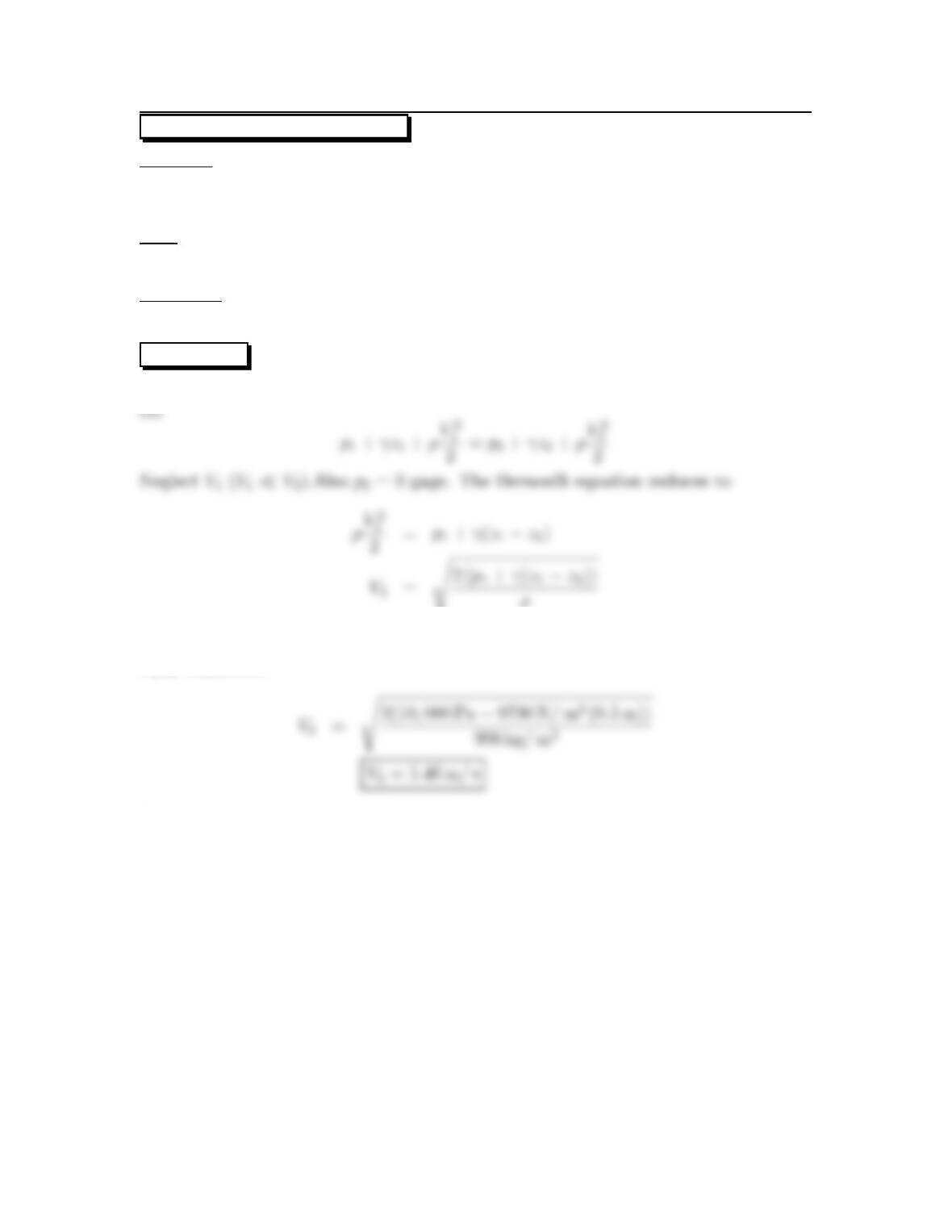
Apply the Bernoulli equation between the water surface in the tank (1) and the outlet
Elevation difference z1−z2=0.5m. For water at 20oC, ρ=998kg/m3and γ=9790
N/m3.Therefore
(
50
4.51: PROBLEM DEFINITION
Situation:
Water flows through a vertical venturi configuration.
V1=10ft/s,∆z=0.5ft.
Find:
Velo city at minimum area (ft/s).
Properties:
T=68◦F.
SOLUTION
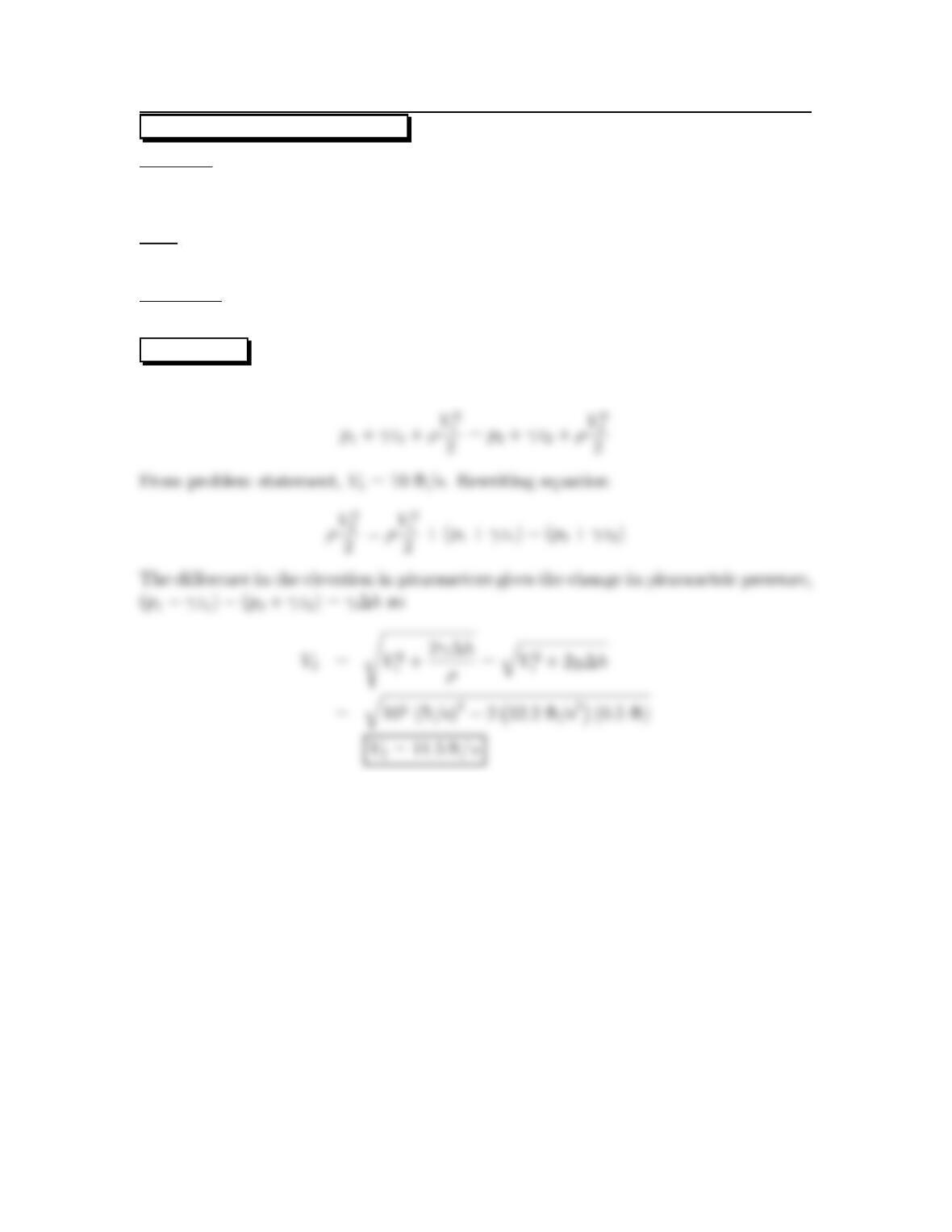
Apply the Bernoulli equation between the pipe (1) and the minimum area (2)
51
4.52: PROBLEM DEFINITION
Situation:
Kerosene flows through a contraction section and a pressure is measured between
pipe and contraction section.
V2=10m/s.
Find:
Velocity in upstream pipe (m/s).
Properties:
Table A.4: ρ=814kg/m3.
T=20◦C,∆p=20kPa.
SOLUTION
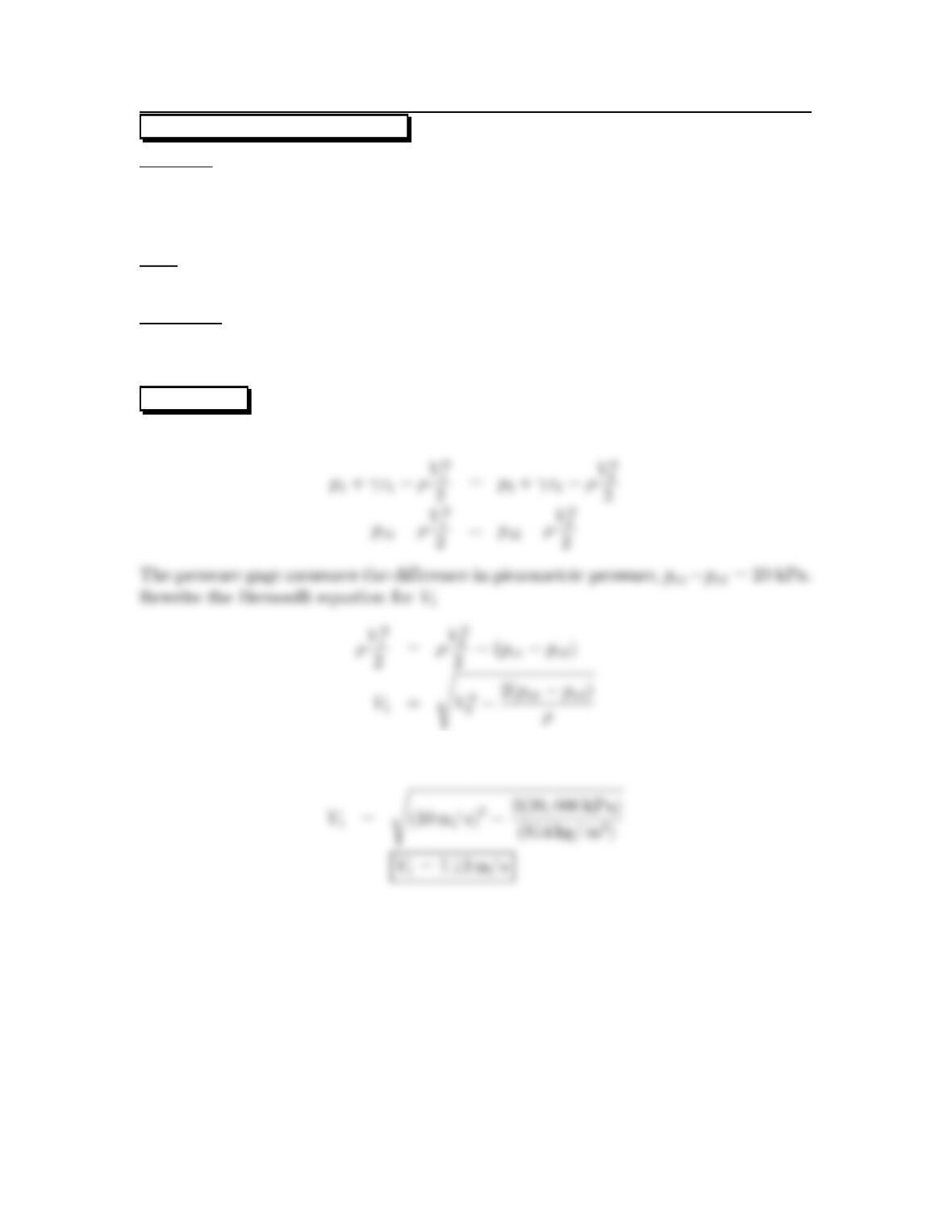
Apply the Bernoulli equation between pipe (1) and contraction section (2)
The density of kerosene at 20oCis814kg/m
3.Solving for V1
52
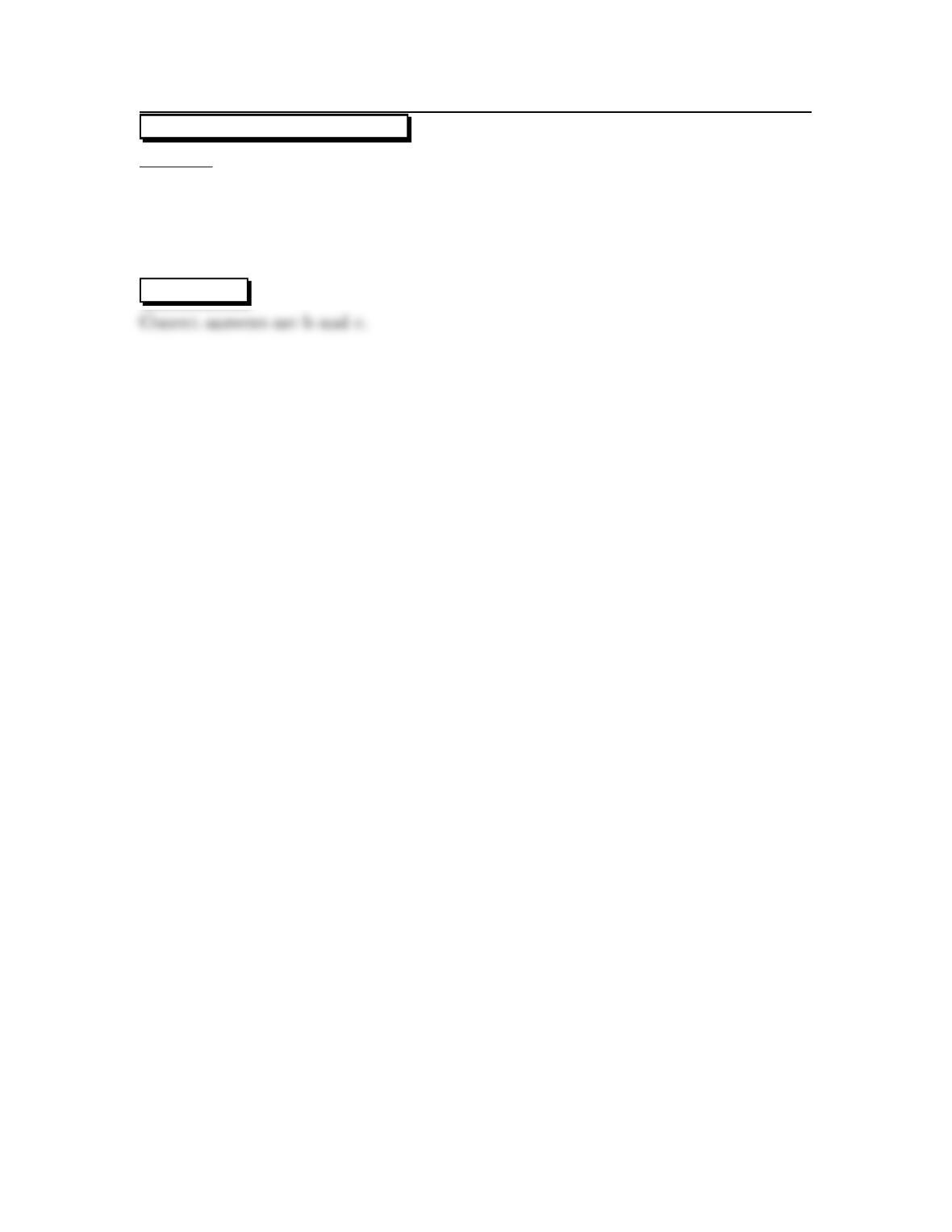
4.53: PROBLEM DEFINITION
Situation:
Astagnationtubeplacedinariver(selectallthatapply)
a. can be used to determine air pressure
b. can be used to determine fluid velocity
c. measures kinetic pressure
SOLUTION
53
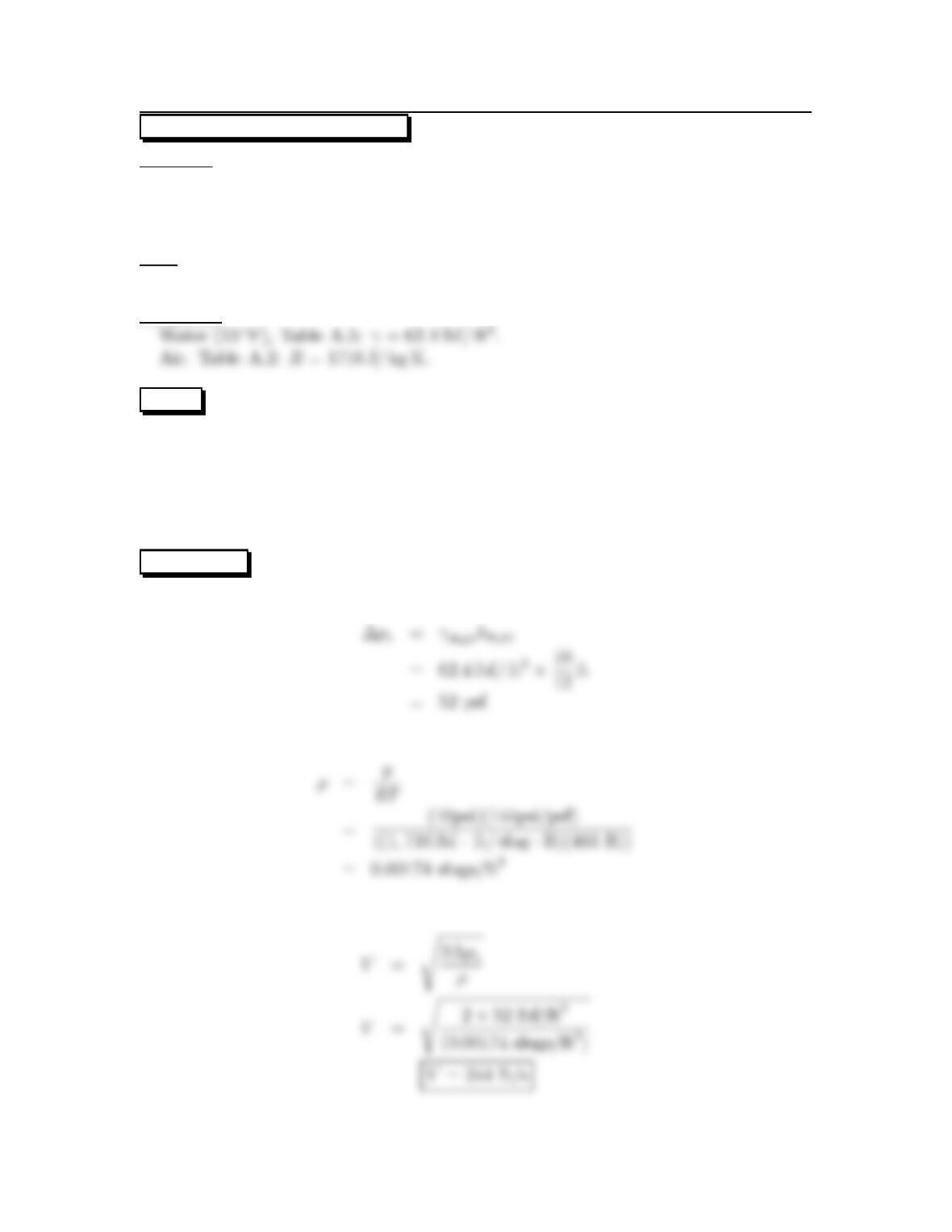
4.54: PROBLEM DEFINITION
Situation:
A Pitot tube on an airplane is used to measure airspeed
z2= 10000 ft,hH2O=10in.
T=23◦F,p=10psia.
Find:
Airspeed ( ft/s).
Properties:
PLAN
Since the airspeed can be found by applying the Pitot-static tube equation, the steps
to reach the goal are:
1. Find ∆pzby using the hydrostatic equation.
2. Find density by applying the ideal gas law.
3. Substitute values into the Pitot-static tube equation.
SOLUTION
1. Hydrostatic equation.
2. Ideal gas law
3. Pitot-Static Tube equation.
54
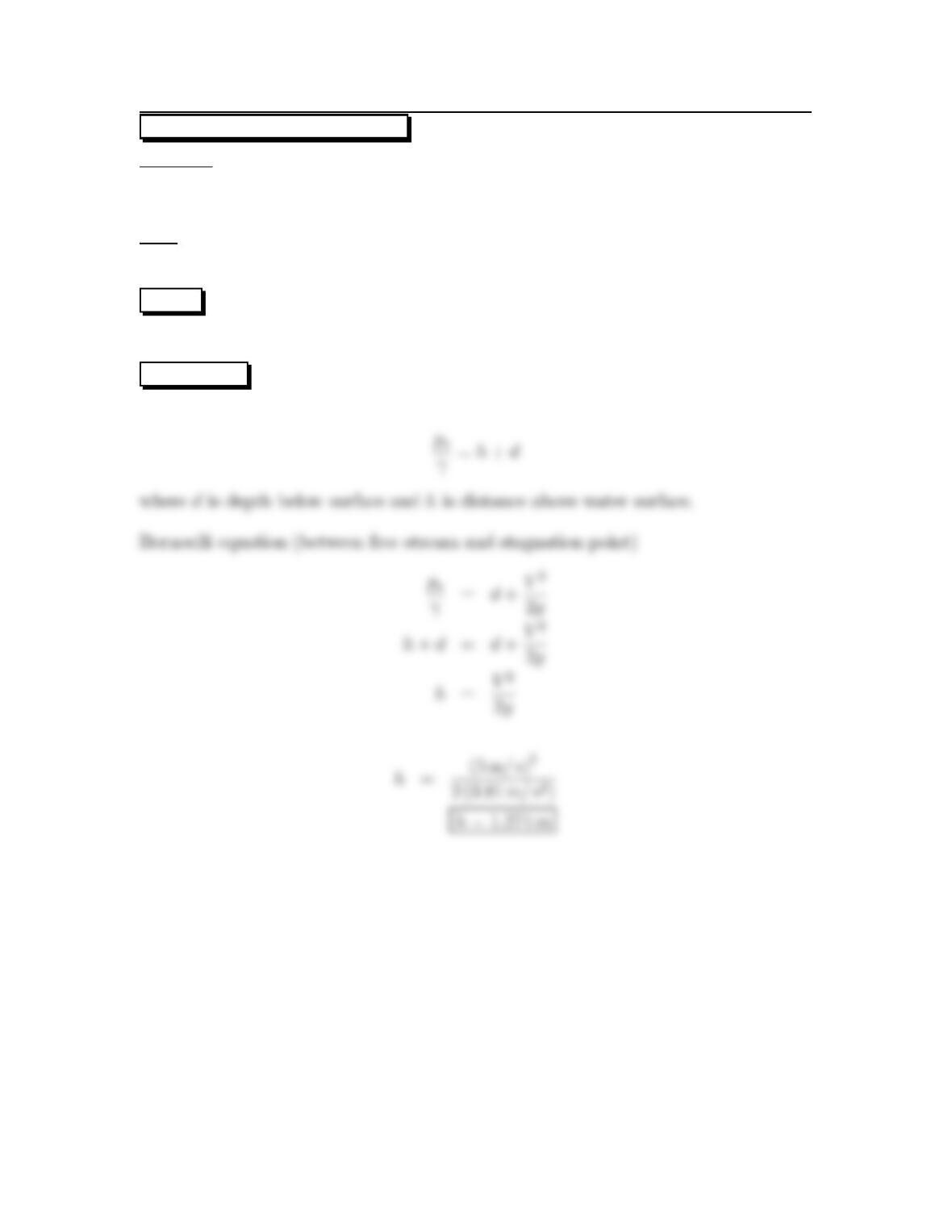
4.55: PROBLEM DEFINITION
Situation:
A glass tube with 90obend inserted into a stream of water.
V=5m/s.
Find:
Rise in vertical leg above water surface (m).
PLAN
Apply the Bernoulli equation.
SOLUTION
Hydrostatic equation (between stagnation point and water surface in tube)
55
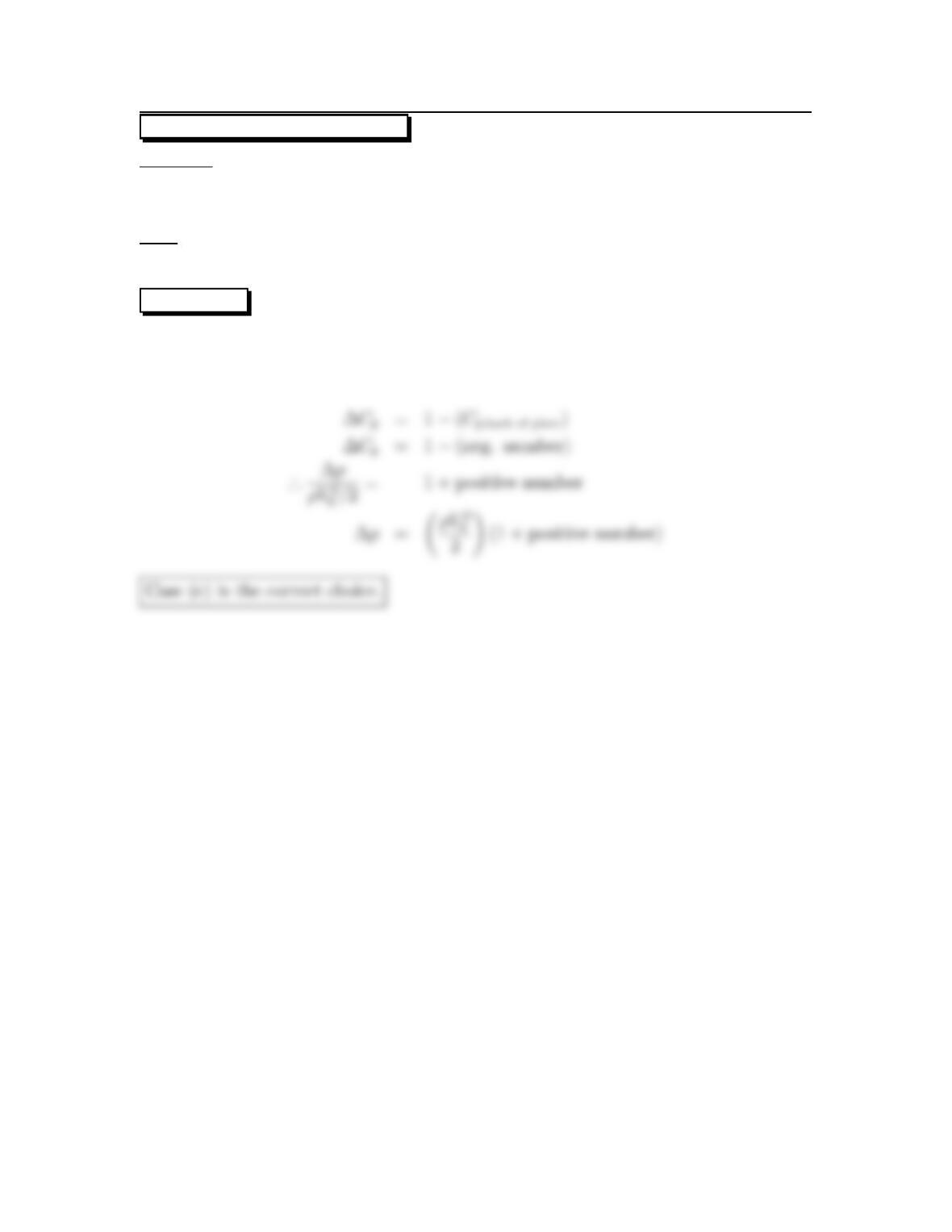
4.56: PROBLEM DEFINITION
Situation:
A Bourdon tube gage attached to plate in an air stream.
D=1ft,V0=40ft/s.
Find:
Pressure read by gage (>,=,<)ρV 2
0/2.
SOLUTION
Because it is a Bourdon tube gage, the difference in pressure that is sensed will be
between the stagnation point and the separation zone downstream of the plate.
Therefore
56
4.57: PROBLEM DEFINITION
Situation:
An air-water manometer is connected to a Pitot-static tube to measure air velocity.
T=60◦F,∆h=2in.
Find:
Velo city ( ft/s).
Properties:
Table A.2: R=1716J/kg K.
Water (60 ◦F,15 psia), Table A.5: γ=62.4lbf/ft3.
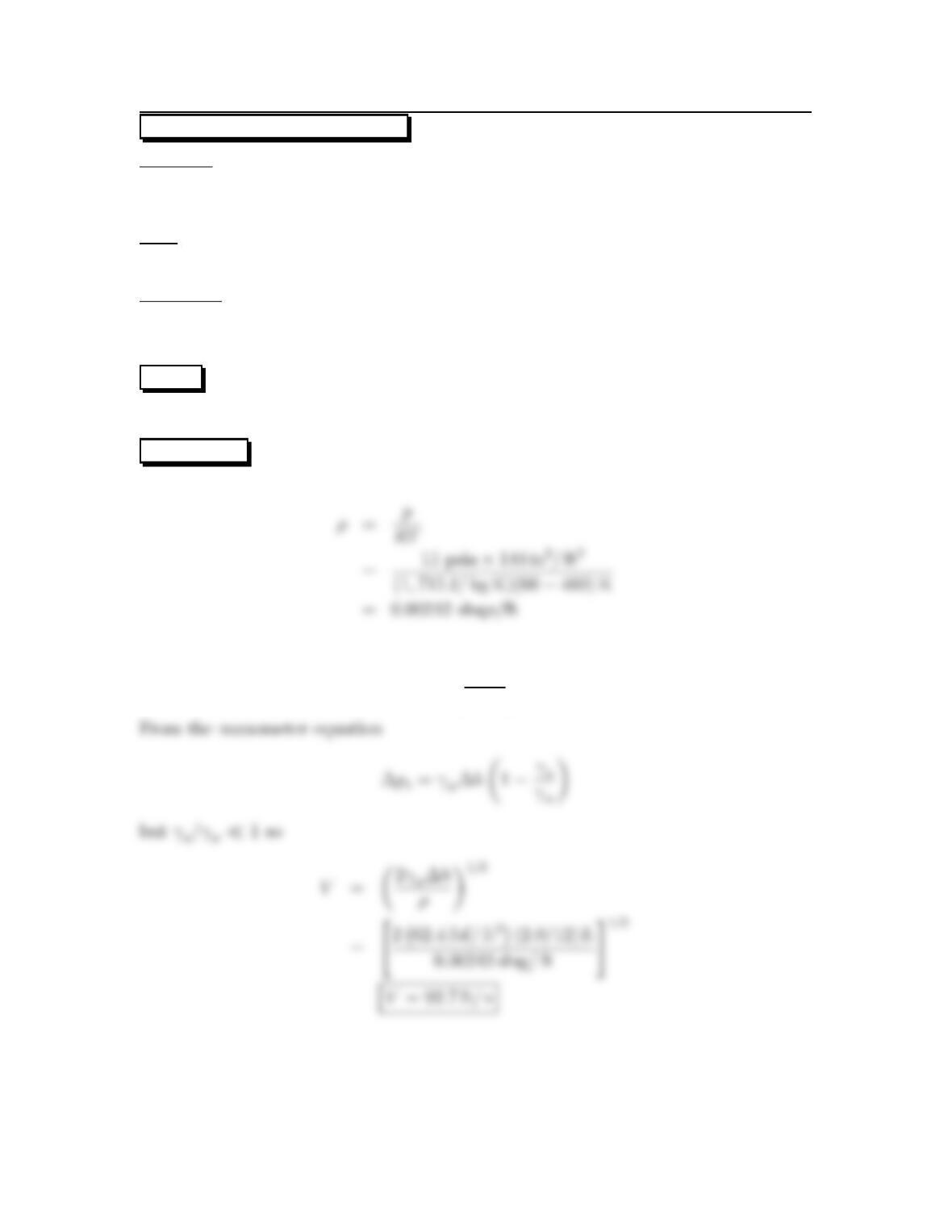
PLAN Apply the Pitot tube equation calculate velocity. Apply the ideal gas law
to solve for density.
SOLUTION Ideal gas law
Pitot tube equation
V=µ2∆pz
ρ¶1/2
57
4.58: PROBLEM DEFINITION
Situation:
Aflow-metering device is described in the problem.
V2=1.5V1,∆h=10cm.
Find:
Velocity at station 2 ( m/s).
Properties:
ρ=1.2kg/m3.
PLAN
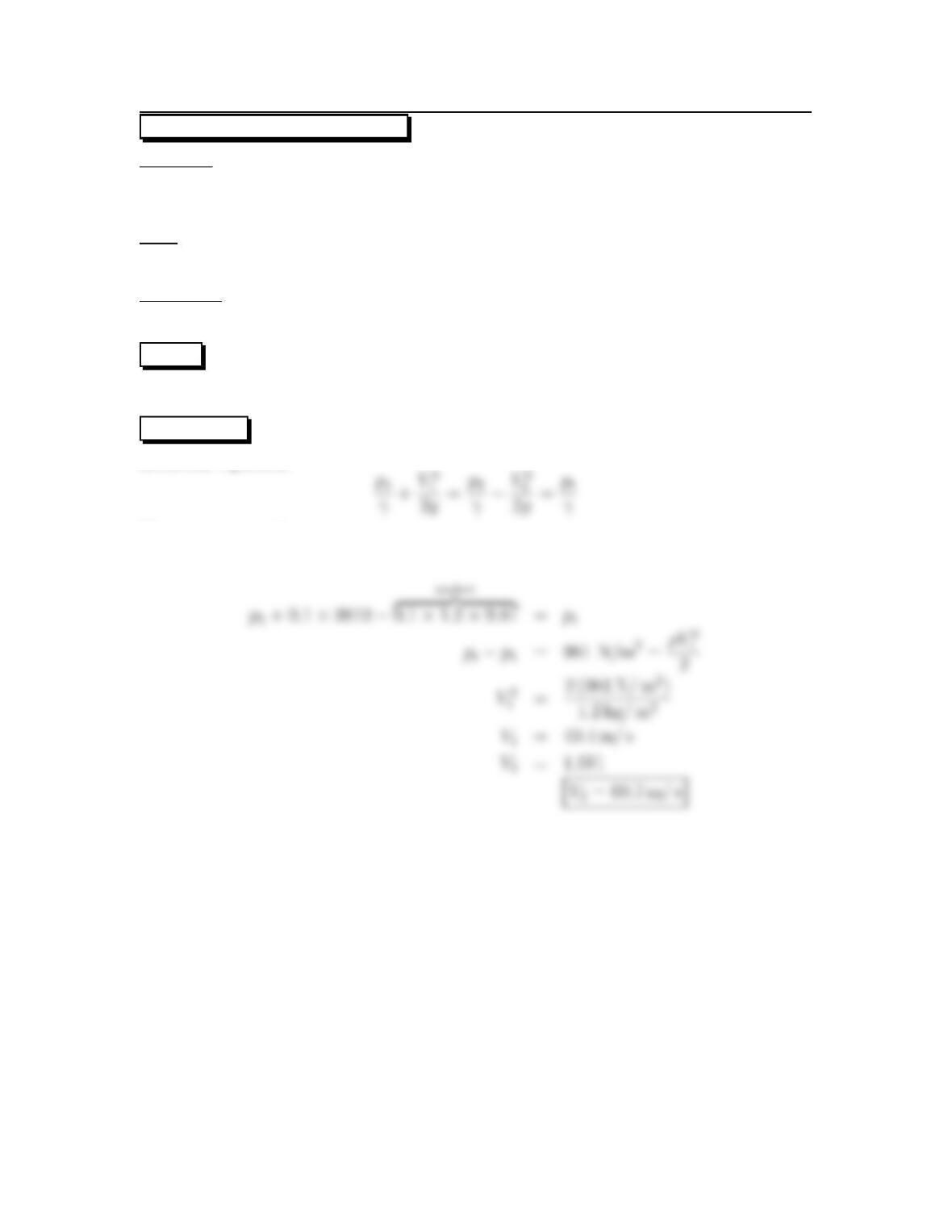
Apply the Bernoulli equation and the manometer equation.
SOLUTION
Bernoulli equation
Manometer equation
58
4.59: PROBLEM DEFINITION
Situation:
AsphericalPitottubeisusedtomeasuretheflow velocity in water.
V2=1.5V0,∆h=10cm.
Find:
Free stream velocity ( m/s).
Properties:
ρ=1000kg/m3,∆p=2kPa.
PLAN
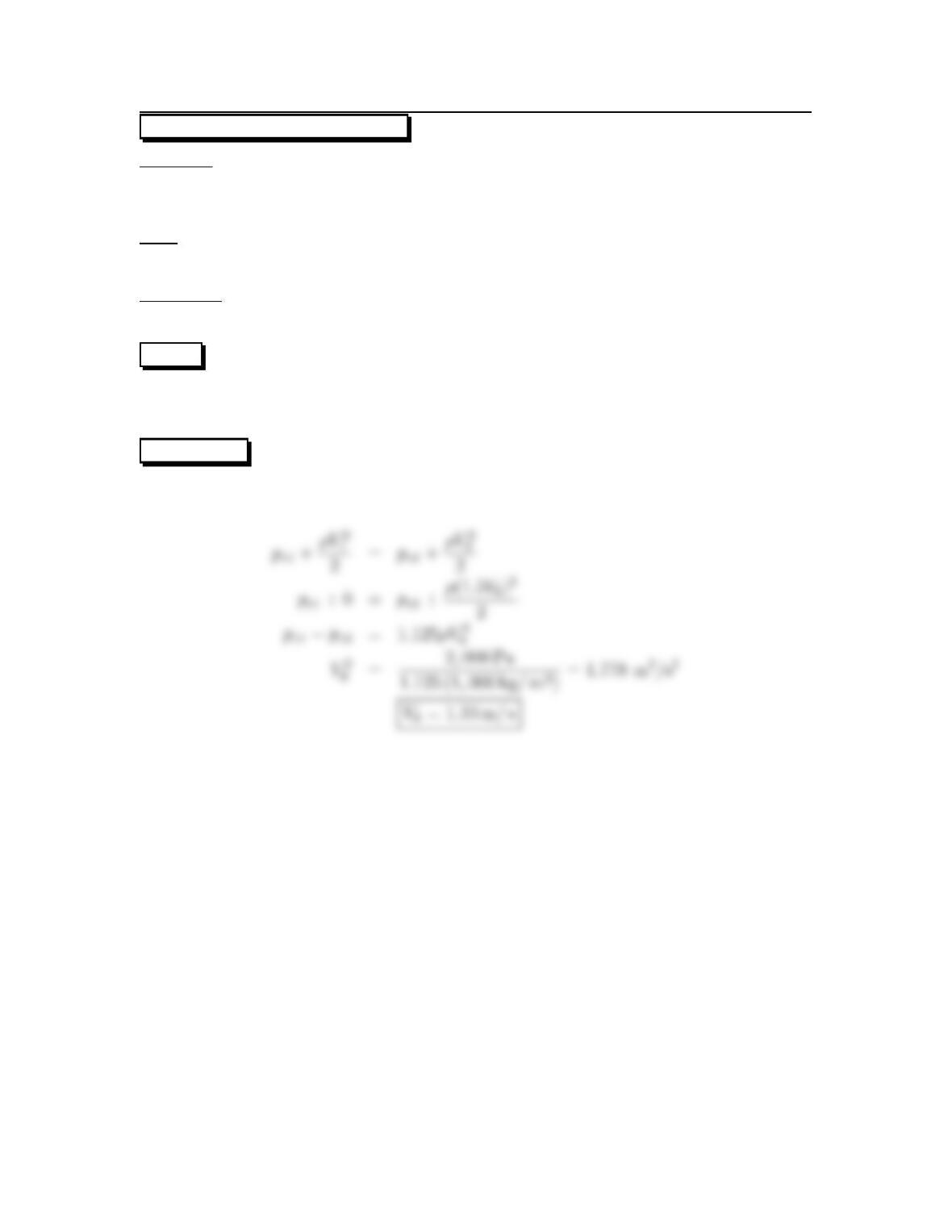
Apply the Bernoulli equation between the two points. Let point 1 be the stagnation
point and point 2 at 90◦around the sphere.
SOLUTION
Bernoulli equation
59
4.60: PROBLEM DEFINITION
Situation:
A device for measuring the water velocity in a pipe consists of a cylinder with
pressure taps at forward stagnation point and at the back on the cylinder.
ρ=1000kg/m3,∆p=500Pa, Pressure Coefficient is -0.3.
Find:
Water velo city (m/s).
PLAN
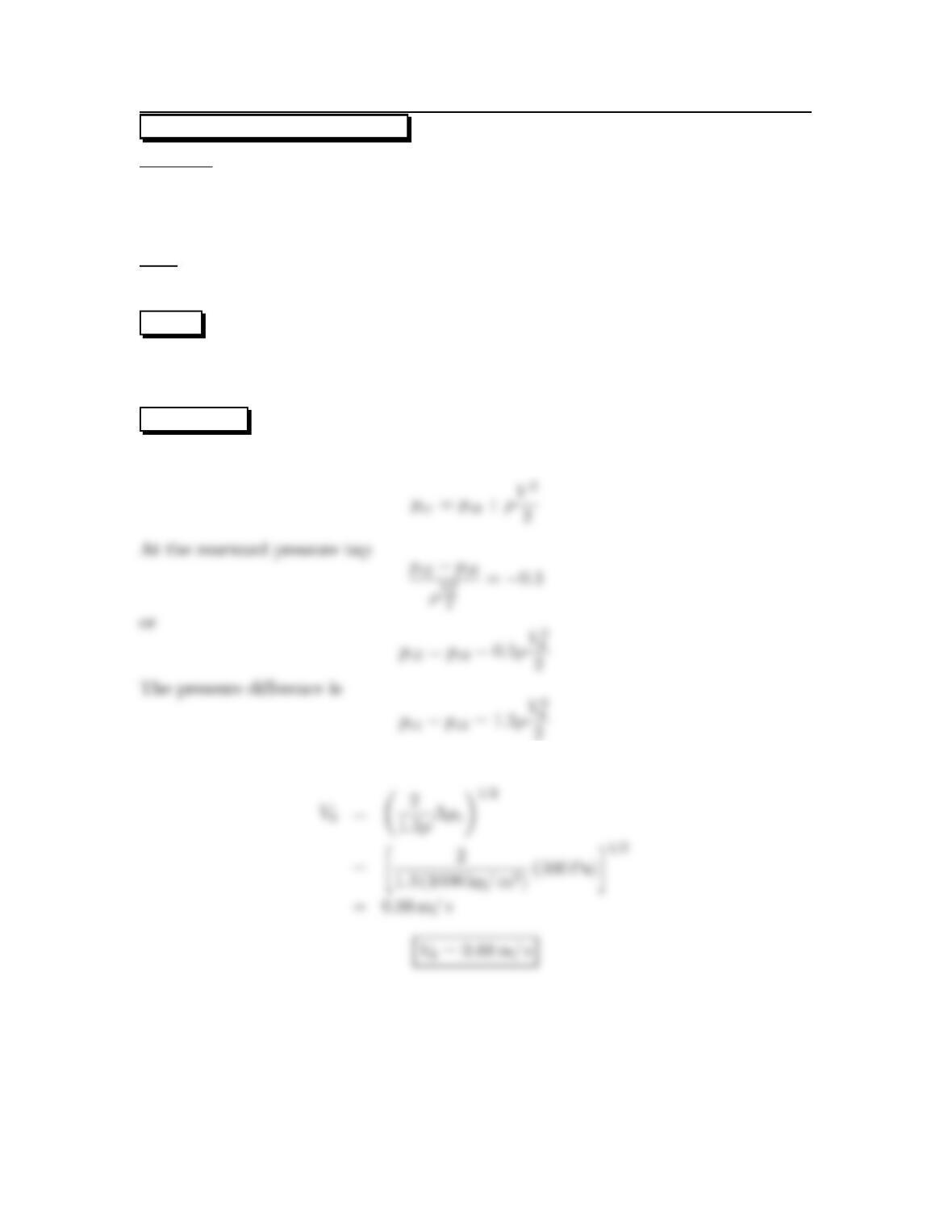
Apply the Bernoulli equation between the location of the two pressure taps. Let point
1 be the forward stagnation point and point 2 in the wake of the cylinder.
SOLUTION
The piezometric pressure at the forward pressure tap (stagnation point, Cp=1)is
The pressure gage records the difference in piezometric pressure so
60