4.97: PROBLEM DEFINITION
Situation:
Stirring a liquid in a cup.
Find:
Report on the contour of the surface. Provide an explanation for the observed
shape.
SOLUTION
Stirring the cup of liquid creates a surface depressed at the center and higher at the
101
4.98: PROBLEM DEFINITION
Situation:
A closed tank filled with water is rotated about a vertical axis.
D=4ft,ω=10rad/s.
Find:
Pressure at bottom center of tank (psig).
Properties:
ρ=62.4lbm/ft3=1.94 slug/ft3,γ=62.4lbf/ft3.
PLAN
Apply the equation for pressure variation equation- rotating flow.
SOLUTION
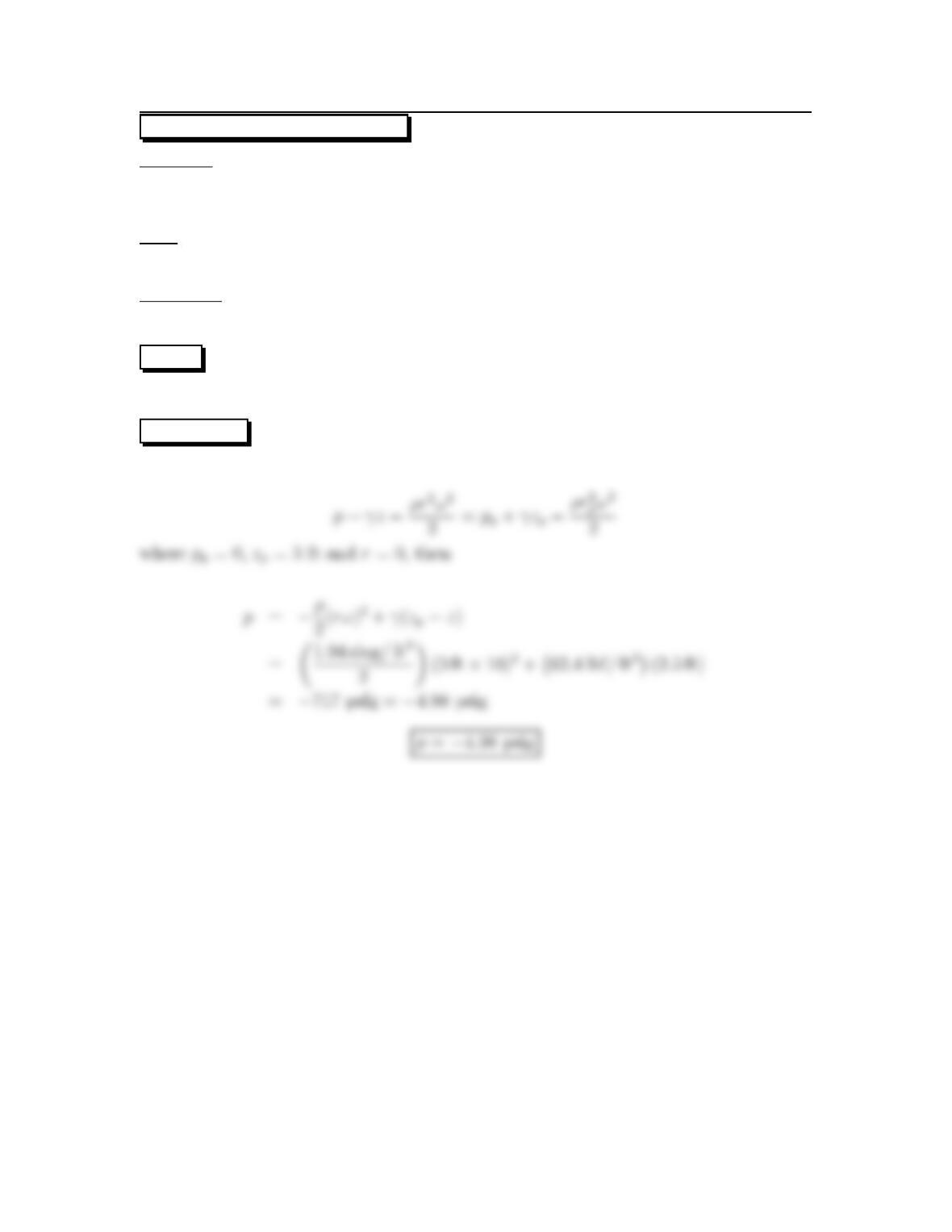
Pressure variation equation- rotating flow
102
4.99: PROBLEM DEFINITION
Situation:
A tank of liquid is rotated on an arm.
S=0.80,D=1ft.
h=1ft,r=2ft.
VA=20ft/s,pA=25psf.
Find:
Pressure at B (psf).
Properties:
ρ=62.4lbm/ft3=1.94 slug/ft3,γ=62.4lbf/ft3.
PLAN
Apply the pressure variation equation- rotating flow from point Ato point B.
SOLUTION
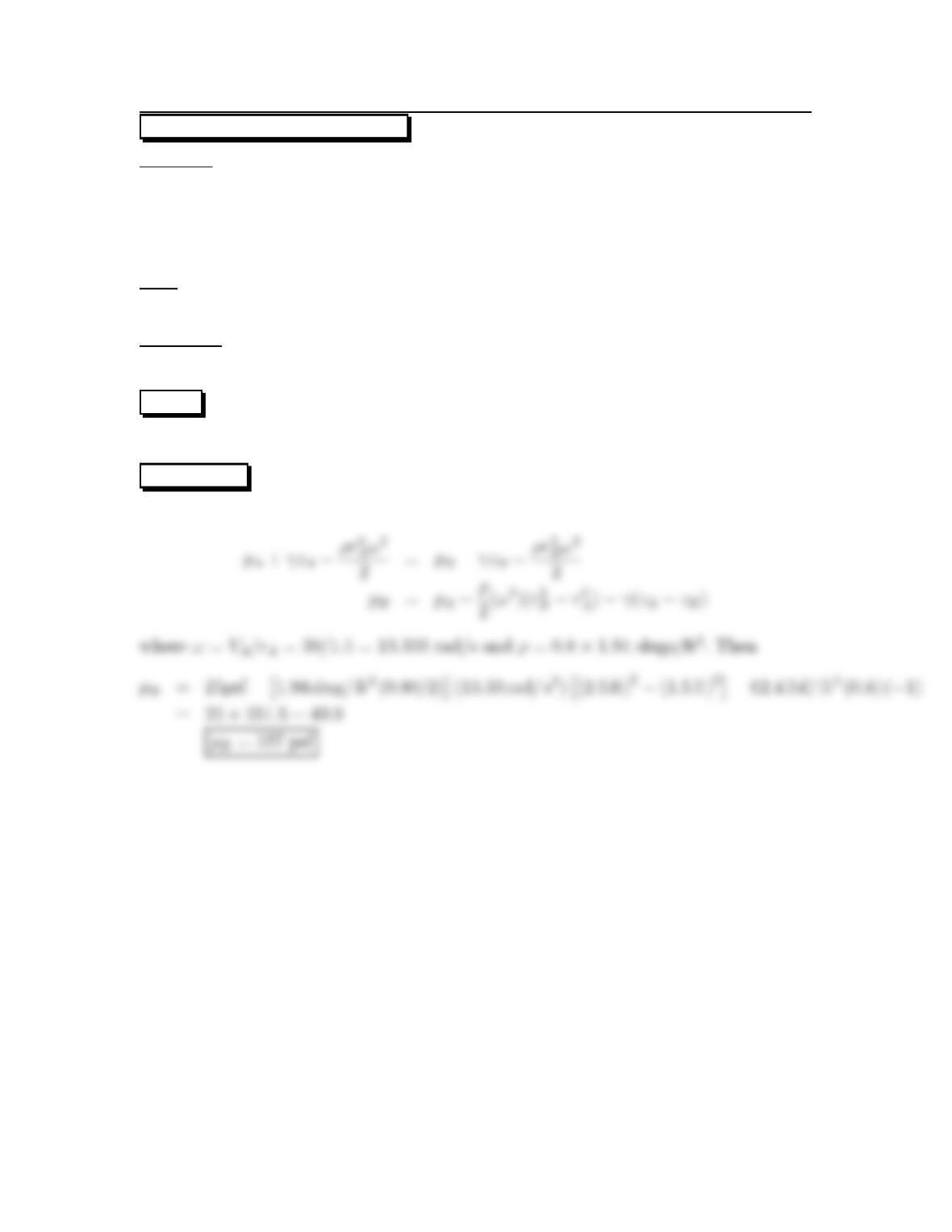
Pressure variation equation- rotating flow
103
4.100: PROBLEM DEFINITION
Situation:
A cream separator is in operation.
D=20cm,f=9000rpm.
Find:
Centripetal acceleration (m/s2).
RCF.
SOLUTION
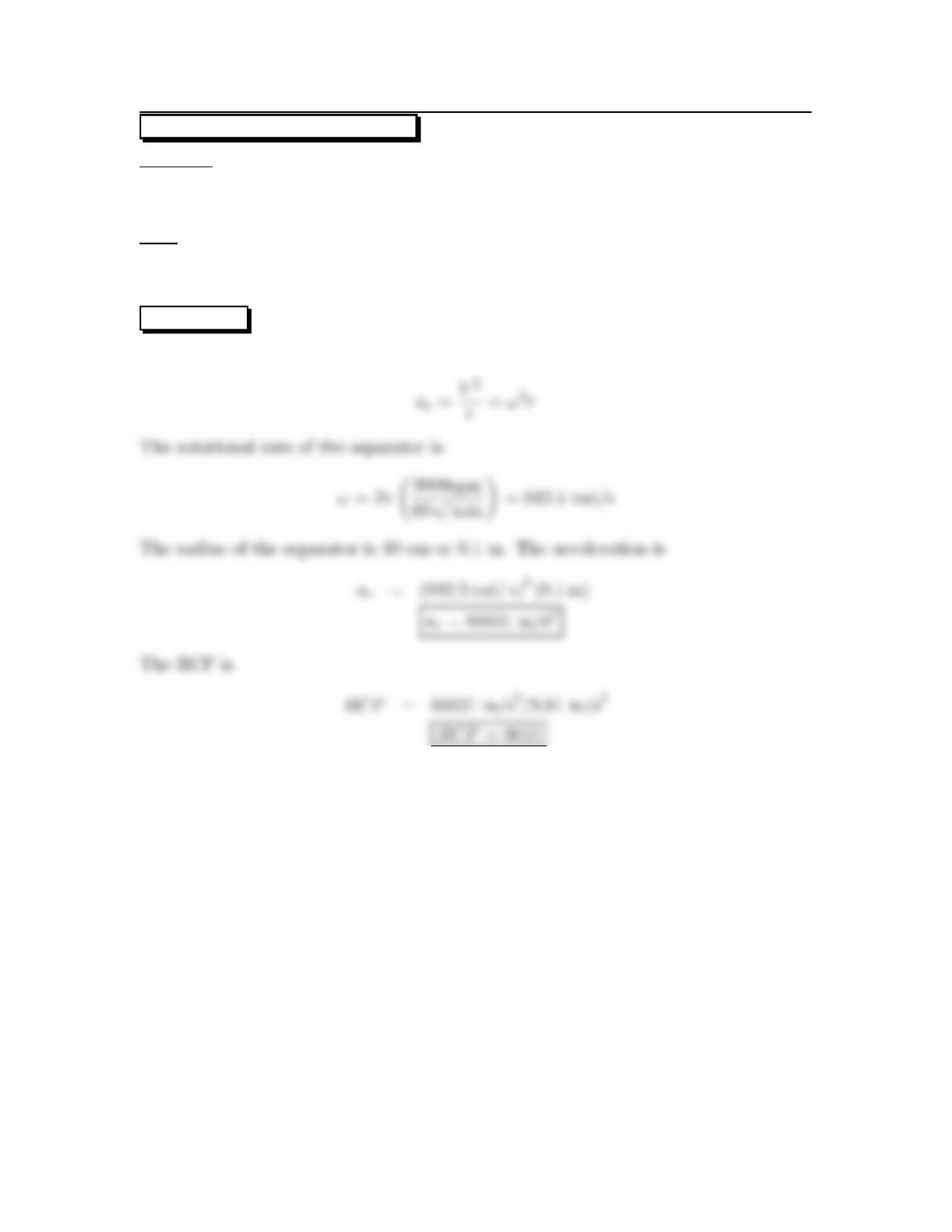
The centripetal acceleration is
104
4.101: PROBLEM DEFINITION
Situation:
A closed tank with liquid is rotated about the vertical axis.
ω=10rad/s, rB=0.5m,az=4m/s2.
Find:
Difference in pressure between points Aand B(kPa).
Properties:
ρ=1000kg/m3,S=1.2.
PLAN
Apply the pressure variation equation for rotating flow between points B&C.Let
point Cbe at the center bottom of the tank.
SOLUTION
Pressure variation equation- rotating flow
Then
4.102: PROBLEM DEFINITION
r1=0.5m,z1=0.5m.
z2=0m,r
2=0m.
Find:
Maximum rotational speed so that no liquid escapes from the leg on the left side
(rad/s).
PLAN
Since the fluid is in rigid body rotation, apply the pressure variation equation for
rotating flow. At the condition of imminent spilling, the liquid will be to the top of
theleftlegandatthebottomoftherightleg. Thus,locatepoint1beattopofthe
left (outside) leg. Locate point 2 at the bottom of the right (inside) leg.
SOLUTION
Pressure variation equation- rotating flow
Term-by-term analysis
Substitute values into Eq. 1.
106
4.103: PROBLEM DEFINITION
Situation:
A stagnation tube in a tank is rotated.
ω=100rad/ s,r=20cm,γ= 10000 N/m3.
Find:
Location of liquid surface in central tube.
PLAN
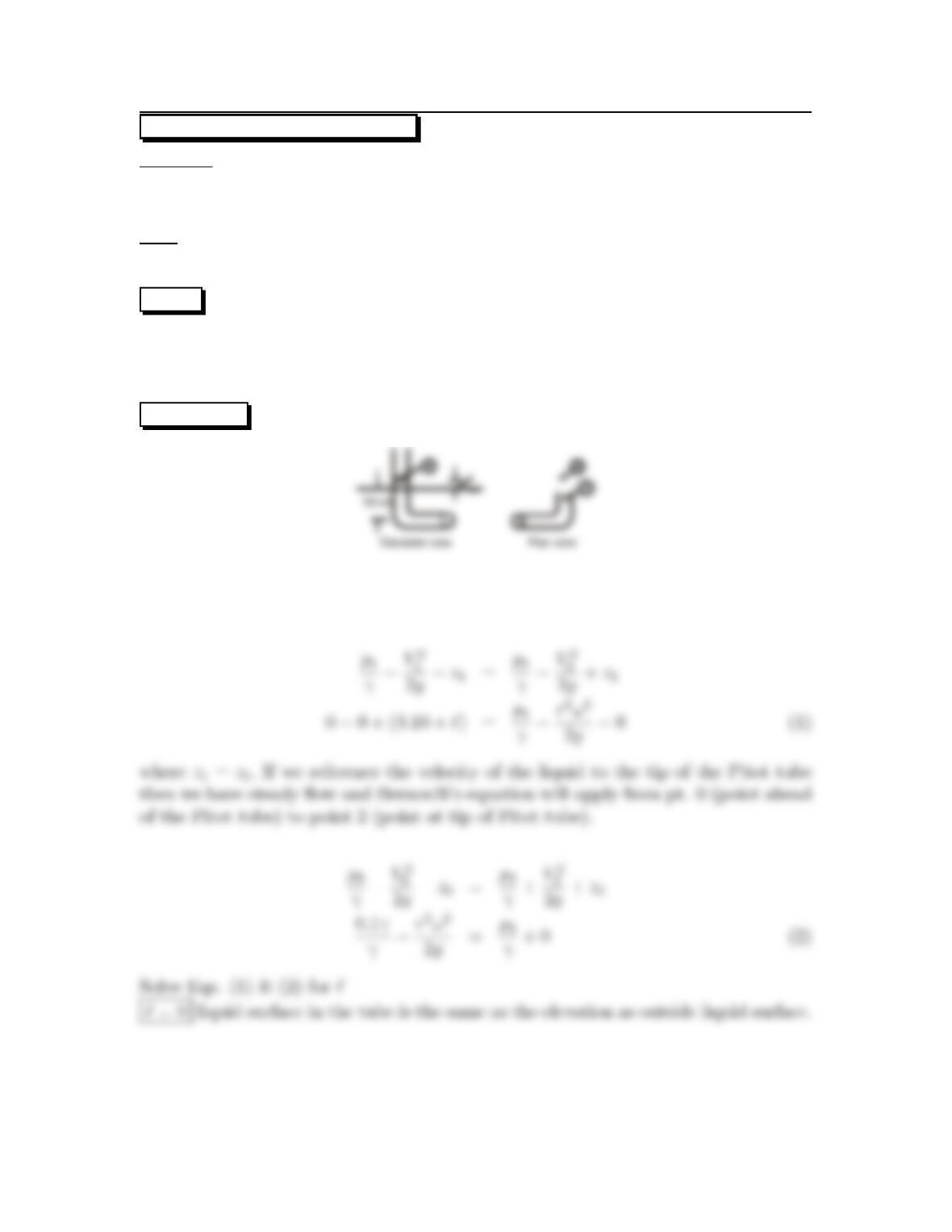
Pressure variation equation for rotating flow from pt. 1 to pt. 2 where pt. 1 is at
liquid surface in vertical part of tube and pt. 2 is just inside the open end of the
Pitot tube.
SOLUTION
Pressure variation equation- rotating flow
107
4.104: PROBLEM DEFINITION
Situation:
A U-tube partially full of liquid is rotating about one leg.
f=50rpm,S=3.0,r1=1ft.
Find:
Specific gravity of other fluid.
PLAN
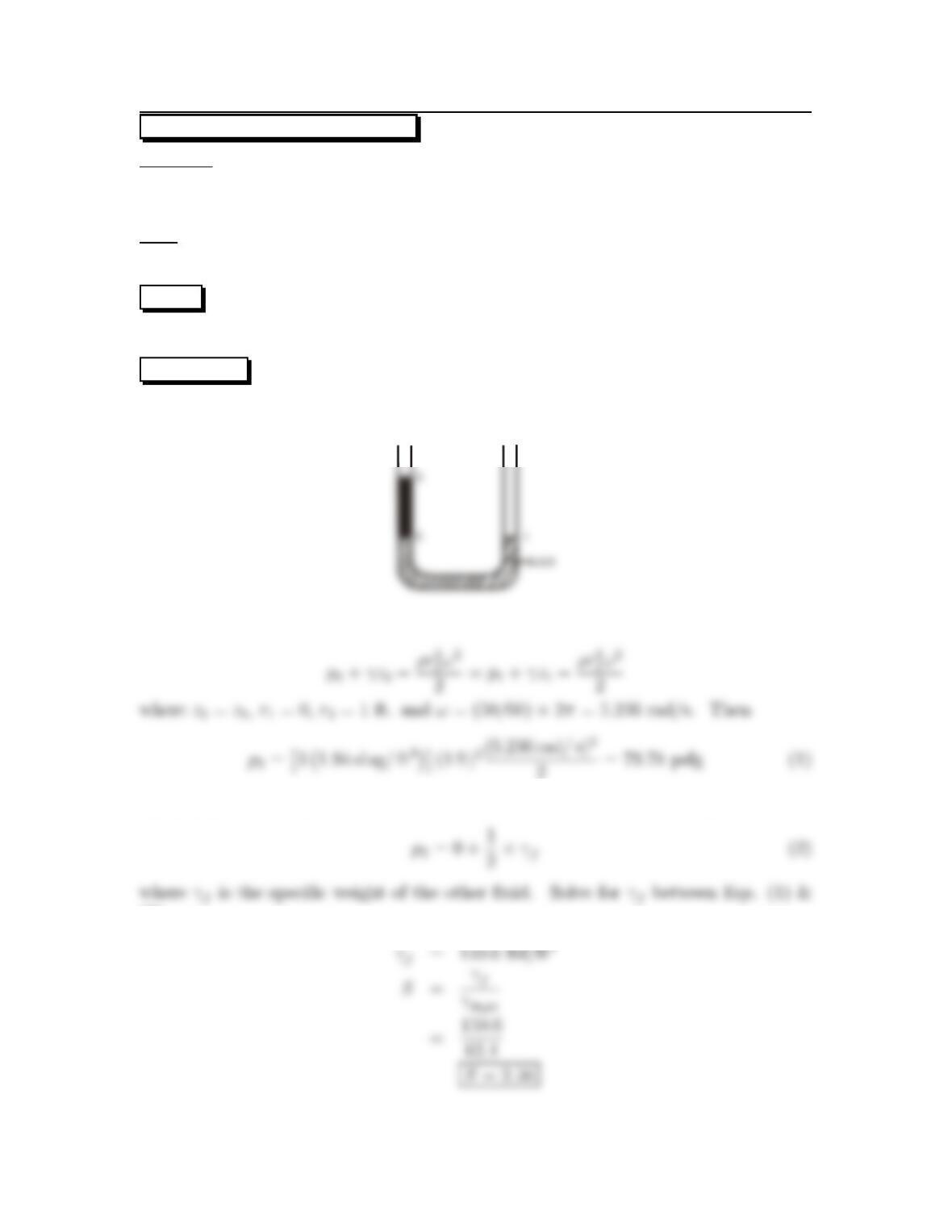
Apply the pressure variation equation for rotating flow between points 1 & 2.
SOLUTION
Pressure variation equation- rotating flow
Also, by hydrostatics, because there is no acceleration in the vertical direction
(2)
108
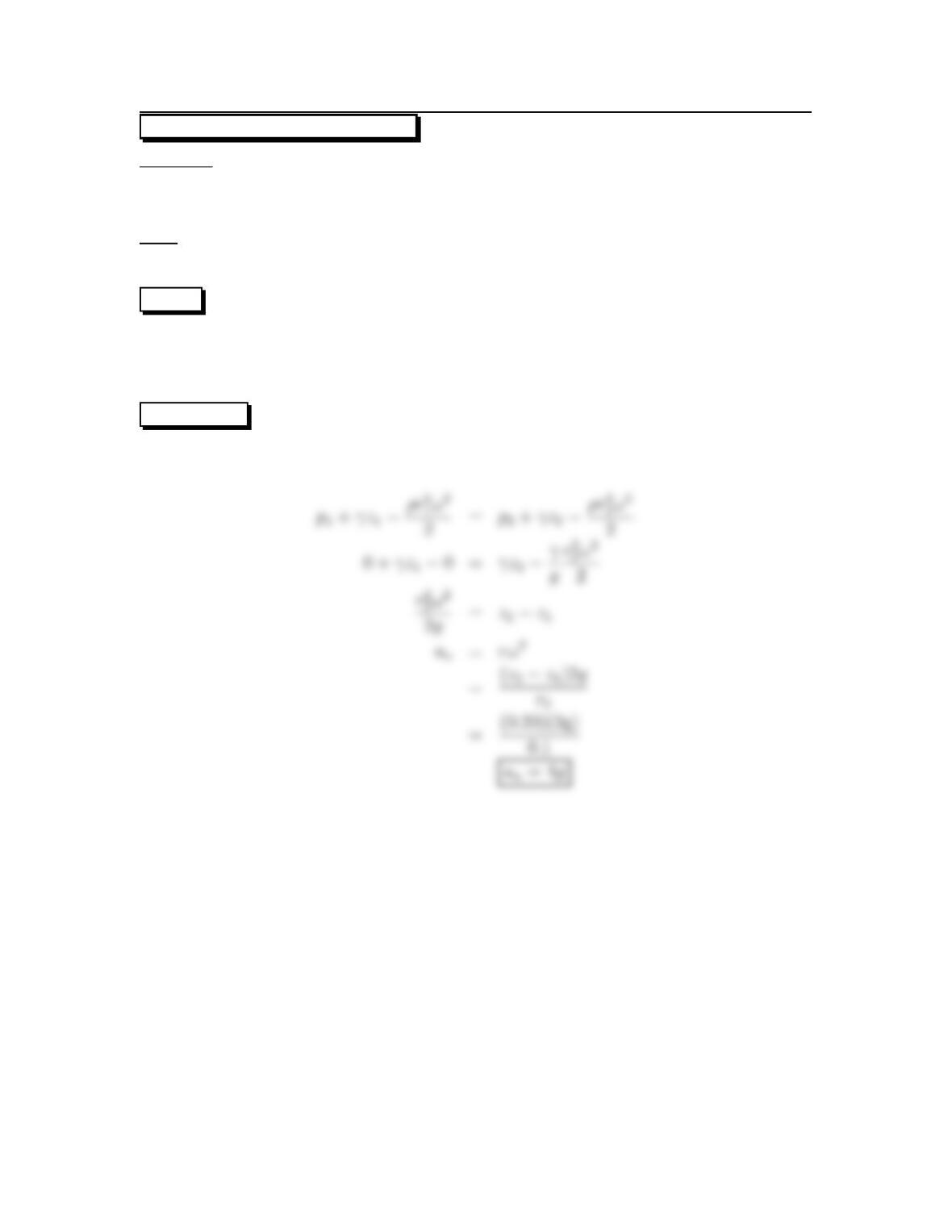
4.105: PROBLEM DEFINITION
Situation:
A manometer is rotated about one leg.
∆z=20cm,r=10cm,S=0.8.
Find:
Acceleration in g’s in leg with greatest amount of oil.
PLAN
Apply the pressure variation equation for rotating flow between the liquid surfaces of
1&2Letleg1bethelegontheaxisofrotation. Letleg2betheotherlegofthe
manometer.
SOLUTION
Pressure variation equation- rotating flow
109
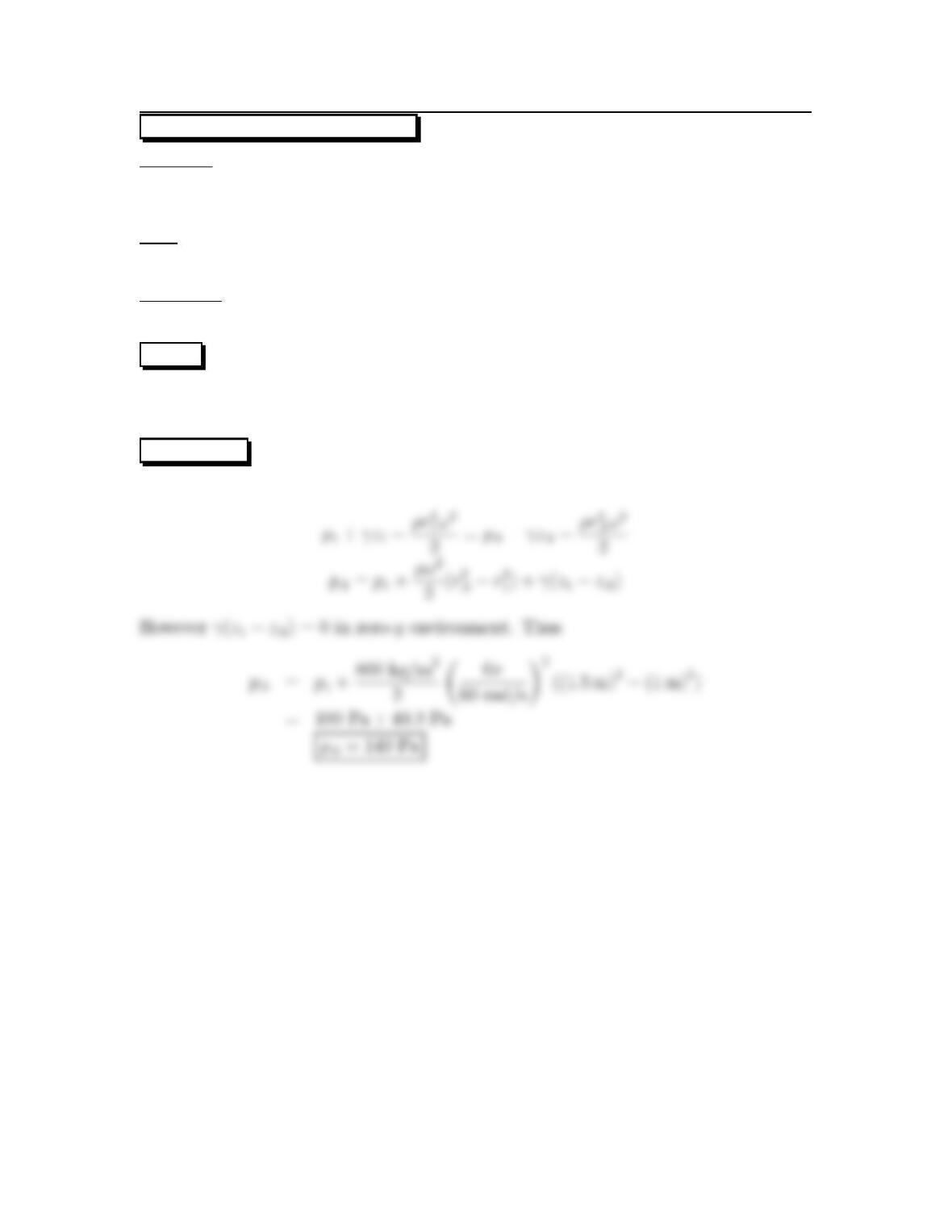
4.106: PROBLEM DEFINITION
Situation:
A fuel tank rotated in zero-gravity environment.
f=3rpm, r1=1.5m,zA=1m.
Find:
Pressure at exit (Pa).
Properties:
ρ=800kg/m3,p1=0.1kPa.
PLAN
Apply the pressure variation equation for rotating flow from liquid surface to point
A. Call the liquid surface point 1.
SOLUTION
Pressure variation equation- rotating flow
110
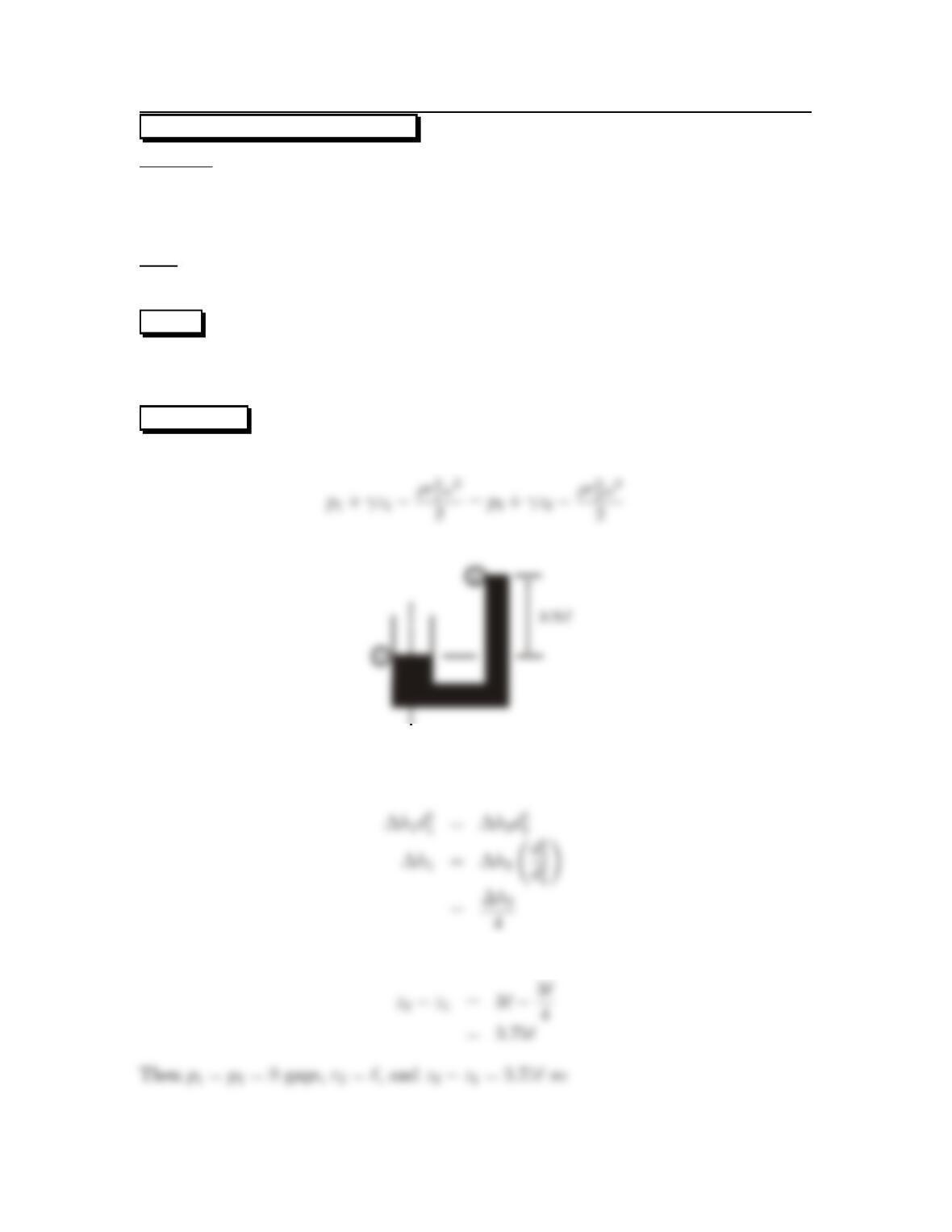
4.107: PROBLEM DEFINITION
Situation:
A rotating set of tubes has liquid in the bottom of it.
D1=2d,D2=d.
r2=,z2=4.
Find:
Derive a formula for the angular speed when the water will begin to spill.
PLAN
Start with pressure variation equation for rotating flow. Let point 1 be at the liquid
surface in the large tube and point 2 be at the liquid surface in the small tube.
SOLUTION
Pressure variation equation- rotating flow
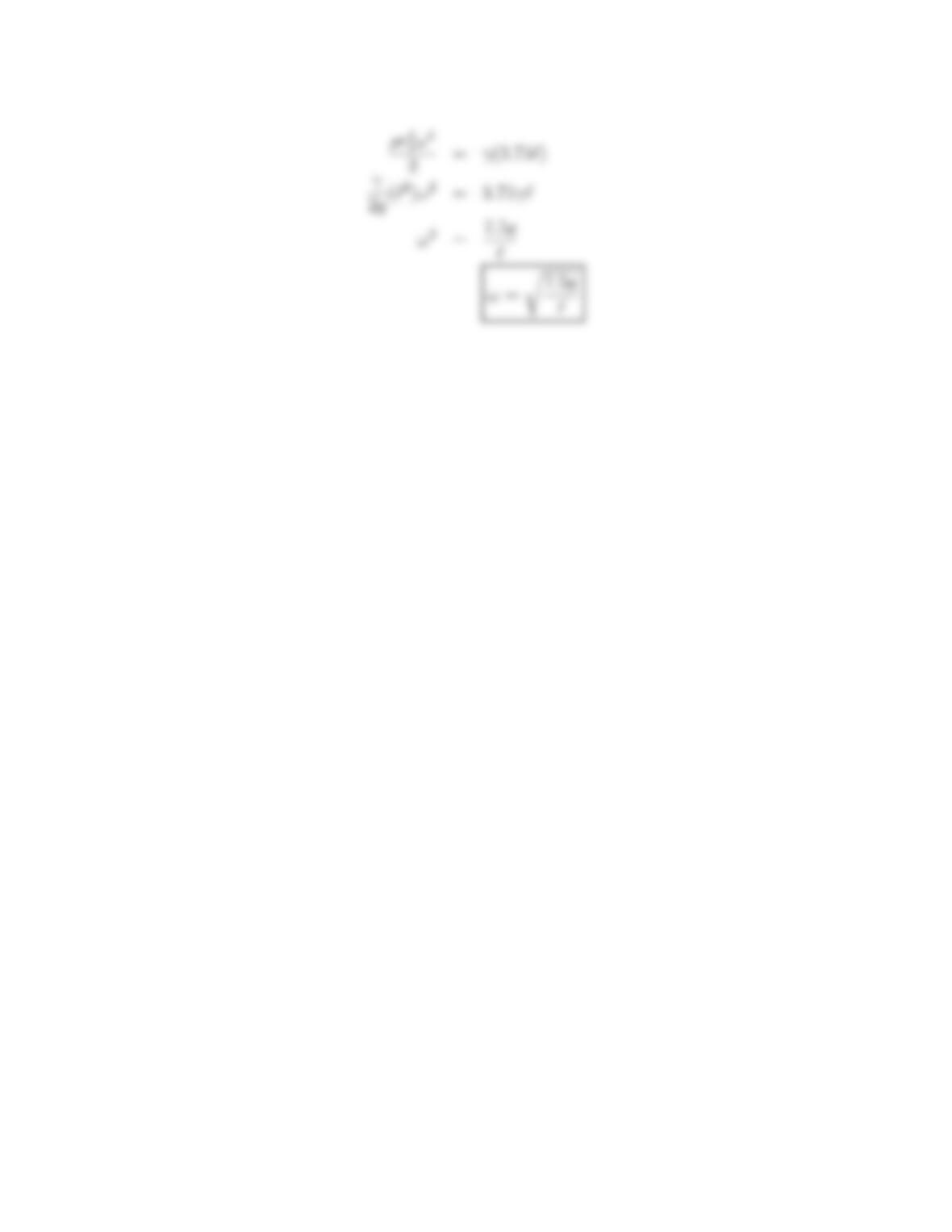
Thechangeinvolumeinleg1hastobethesameasleg2.So
The elevation difference between 1 and 2 will be
111
112
4.108: PROBLEM DEFINITION
Situation:
Water fills a tube that is closed at one end.
D=1cm,r=40cm,ω=50rad/s.
Find:
Force exerted on closed end (N).
Properties:
ρ=1000kg/m3
PLAN
Apply the pressure variation equation for rotating flow from the open end of the tube
to the closed end.
SOLUTION
Pressure variation equation- rotating flow
Then
113
4.109: PROBLEM DEFINITION
Situation:
Water sits in a U-tube that is closed at one end.
D=1cm,=2cm.
Find:
Rotational speed when water will begin to spill from open tube (rad/s).
Properties:
ρ=1000kg/m3,γ=9810N/m3.
PLAN
Apply the pressure variation equation for rotating flow between water surface in leg
A-A to water surface in open leg after rotation.
SOLUTION
When the water is on the verge of spilling from the open tube, the air volume in the
closed part of the tube will have doubled. Therefore, we can get the pressure in the
Pressure variation equation- rotating flow
114
4.110: PROBLEM DEFINITION
Situation:
Water is pumped from a reservoir by a centrifugal pump consisting of a disk with
radial ports.
r=5cm,f=3000rpm, z1=0m.
Find:
Maximum operational height (m).
PLAN
Apply the pressure variation equation for rotating flow
Locate point 1 at the liquid surface where z=0.
Locate point 2 at the outer edge of the rotating disk.
SOLUTION
Pressure variation equation
Rotational Rate
115
4.111: PROBLEM DEFINITION
Situation:
A tank rotated about the horizontal axis and water in tank rotates as a solid body.
V=rω,z=−1,0,+1 m,ω=5rad/ s.
Find:
Pressure gradient each value of z (kPa/m).
Properties:
ρ=1000kg/m3.
PLAN
Apply the pressure variation equation for rotating flow.
SOLUTION
Pressure variation equation- rotating flow.
when z=−1m
when z=+1m
116

117
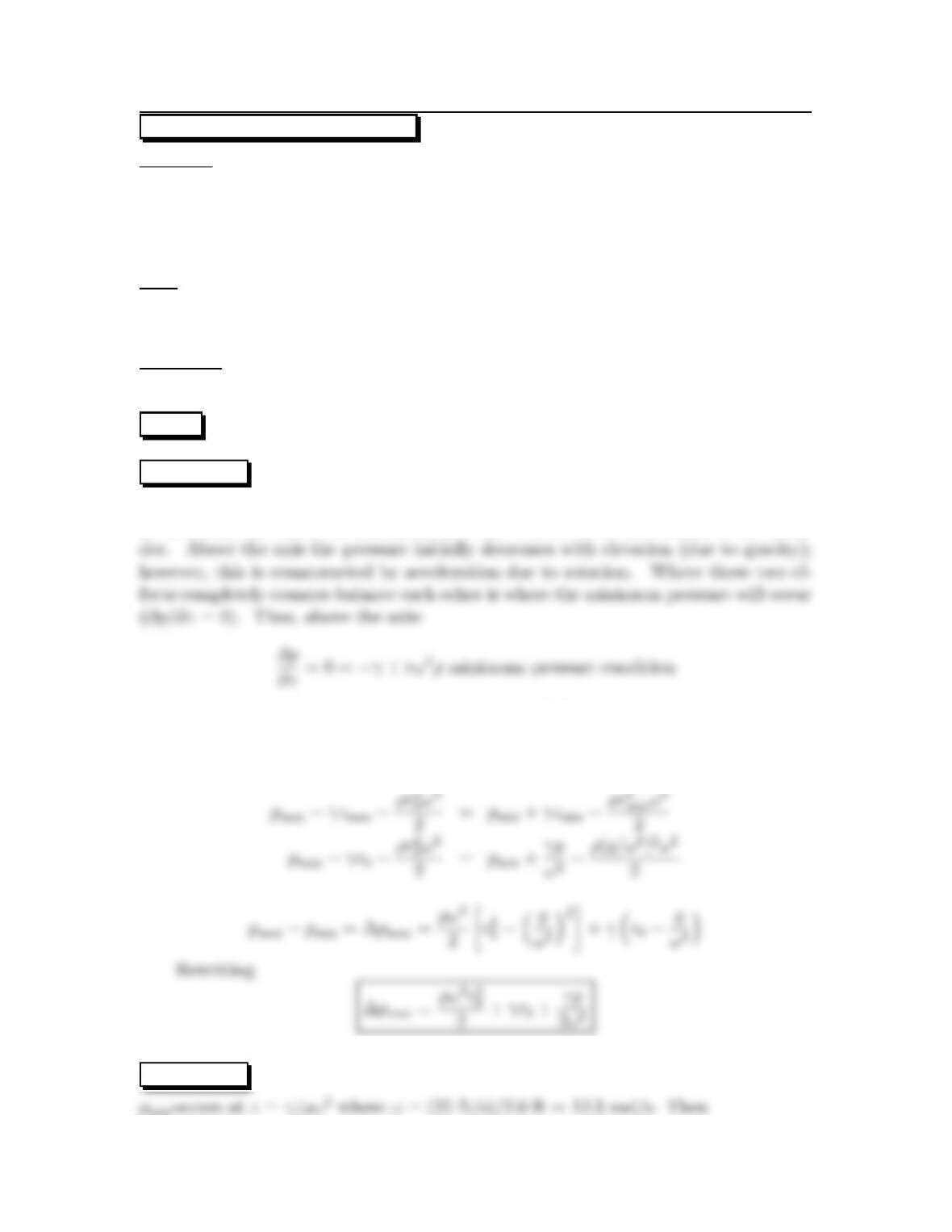
4.112: PROBLEM DEFINITION
Situation:
A tank 4 ft in diameter and 12 feet long rotated about horizontal axis and water
in tank rotates as a solid body. Maximum velocity is 25 ft/s.
V=rω,Vmax =25 ft/s.
D=4ft,L=12ft.
Find:
Maximum pressure difference in tank (psf).
Point of minimum pressure (ft).
Properties:
ρ=62.4lbm/ft3=1.94 slug/ft3,γ=62.4lbf/ft3.
PLAN
SOLUTION
Below the axis both gravity and acceleration cause pressure to increase with decrease
in elevation; therefore, the maximum pressure will occur at the bottom of the cylin-
Solving: r=γ/ρω2;pmin occurs at zmin =+g/ω2.Using the equation for pressure
variation in rotating flows between the tank bottom where the pressure is a maximum
(zmax =−r0)and the point of minimum pressure.
SOLUTION
118
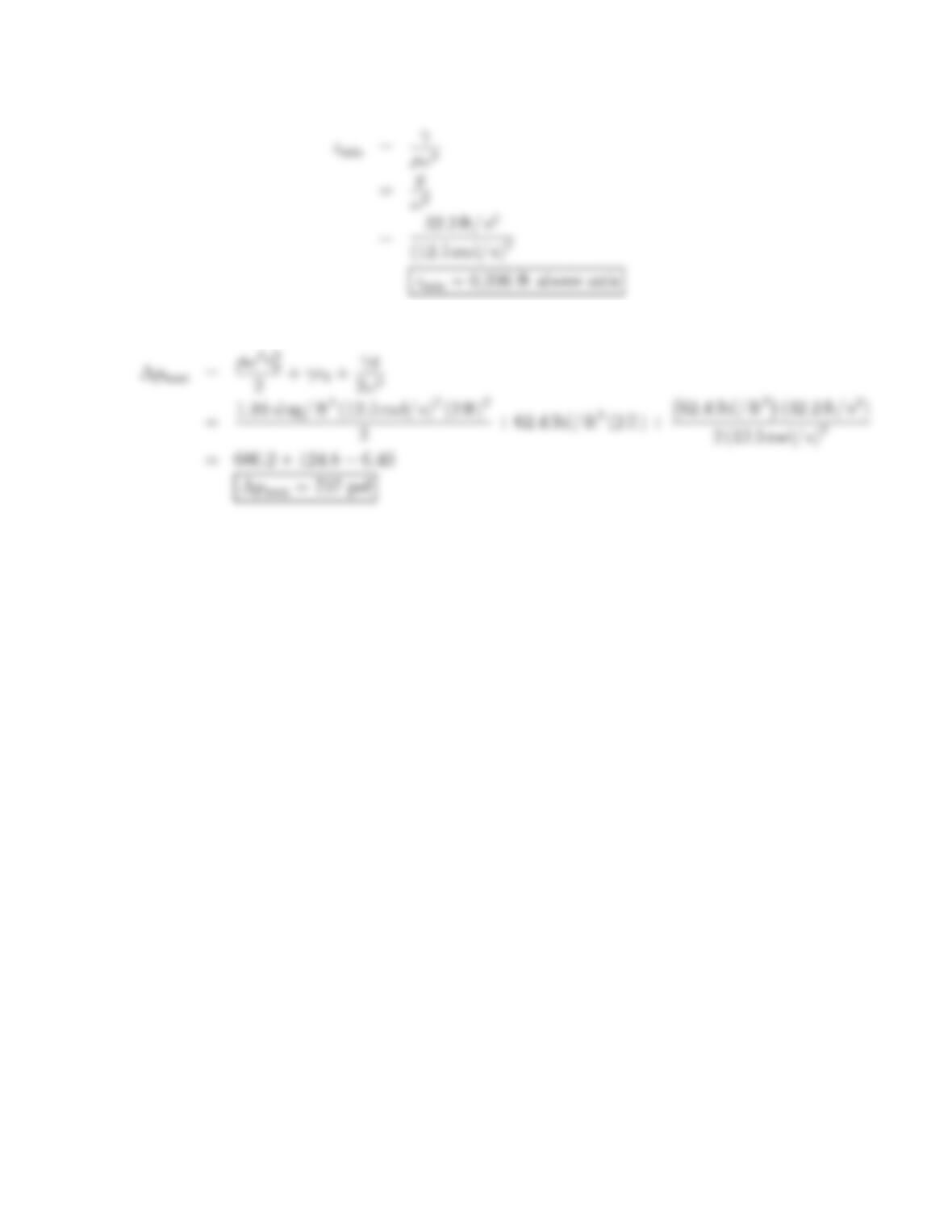
From the analysis section above,
119