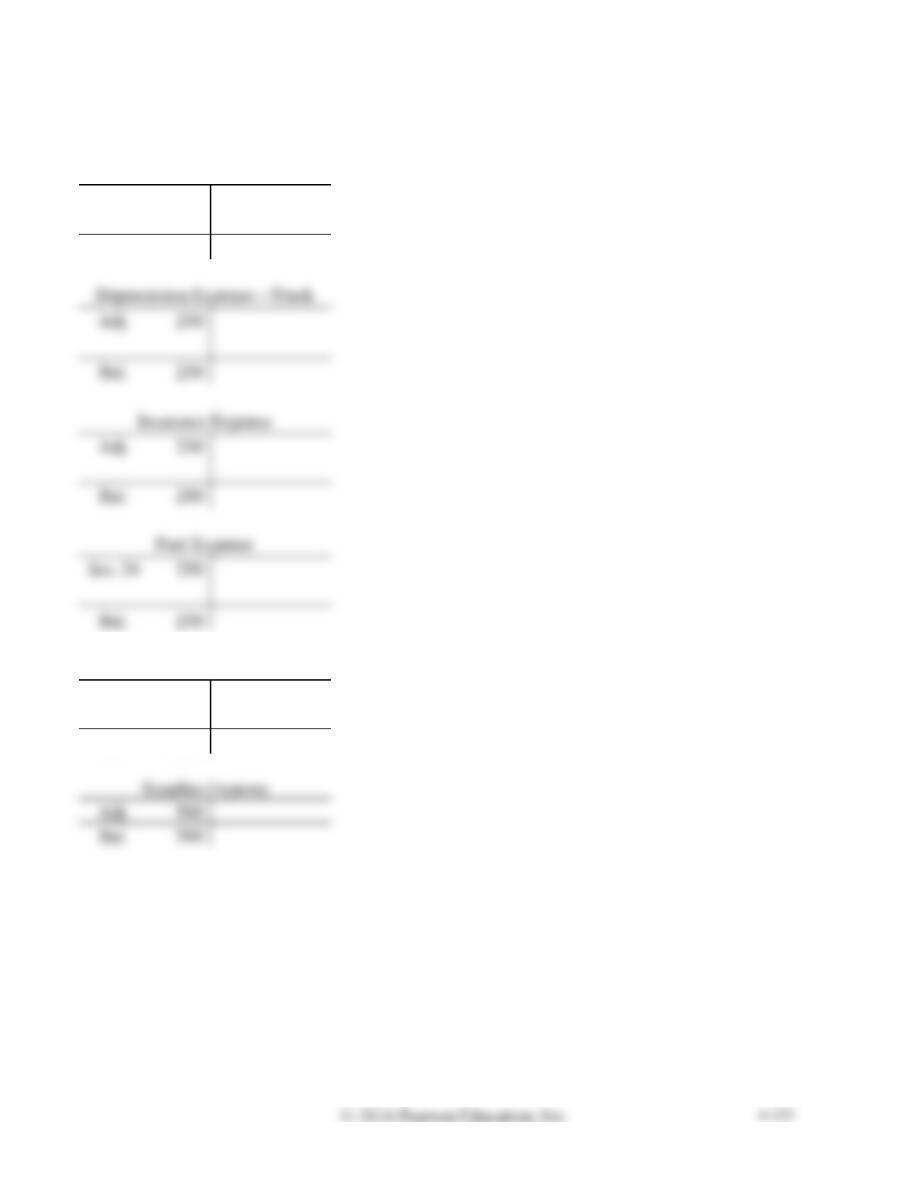
Comprehensive Problem 2, cont.
Requirement 2, 5, cont.
Salaries Expense
Jan. 15
1,500
Adj.
1,000
Bal.
2,500
250
250
Jan. 24
Bal.
Rent Expense
Jan. 28
1,600
Bal.
1,600
Bal.
Comprehensive Problem 2, cont.
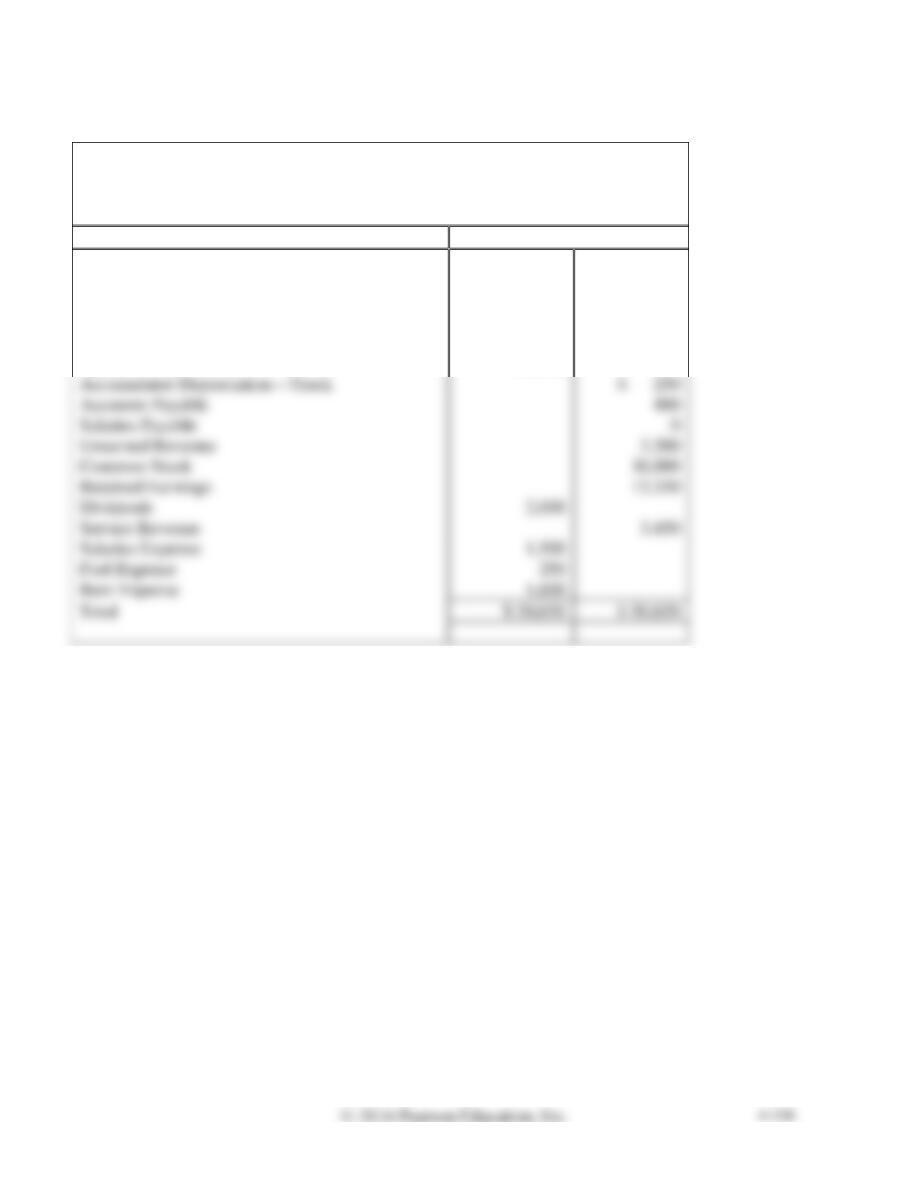
Requirement 3
MILLER DELIVERY SERVICE
Unadjusted Trial Balance
January 31, 2017
Account Title
Balance
Debit
Credit
Cash
$ 22,550
Accounts Receivable
1,300
Office Supplies
700
Prepaid Insurance
750
Truck
20,000
Accumulated Depreciation—Truck
Accounts Payable
Salaries Payable
Unearned Revenue
Common Stock
Retained Earnings
Dividends
2,000
1,500
250
1,600
$ 50,650
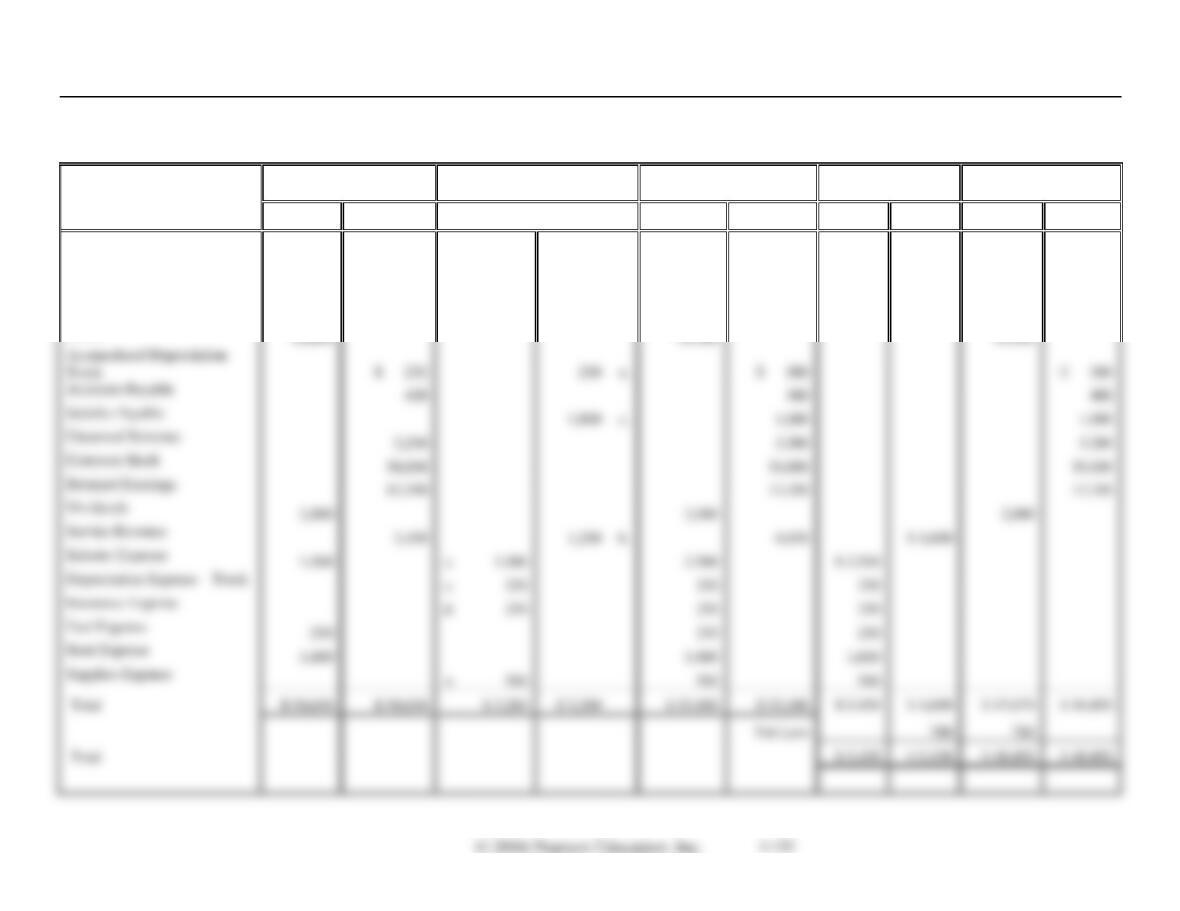
Comprehensive Problem 2, cont., Requirement 4
MILLER DELIVERY SERVICE
Worksheet
January 31, 2017
Account Names
Unadjusted Trial
Balance
Adjustments
Adjusted Trial Balance
Income Statement
Balance Sheet
Debit
Credit
Debit
Credit
Debit
Credit
Debit
Credit
Debit
Credit
Cash
$ 22,550
$ 22,550
$ 22,550
Accounts Receivable
1,300
b.
$ 1,200
2,500
2,500
Office Supplies
700
$ 580
a.
120
120
Prepaid Insurance
750
250
d.
500
500
Truck
250
e.
$ 500
Accounts Payable
400
c.
Unearned Revenue
Common Stock
Retained Earnings
13,350
Dividends
2,000
2,000
Service Revenue
b.
Salaries Expense
1,500
2,500
Depreciation Expense—Truck
250
Insurance Expense
d.
250
Fuel Expense
250
Rent Expense
Supplies Expense
580
$ 50,650
$ 3,280
$ 3,280
$ 53,100
$ 4,650
$ 48,450
Net Loss
780
Comprehensive Problem 2, cont.
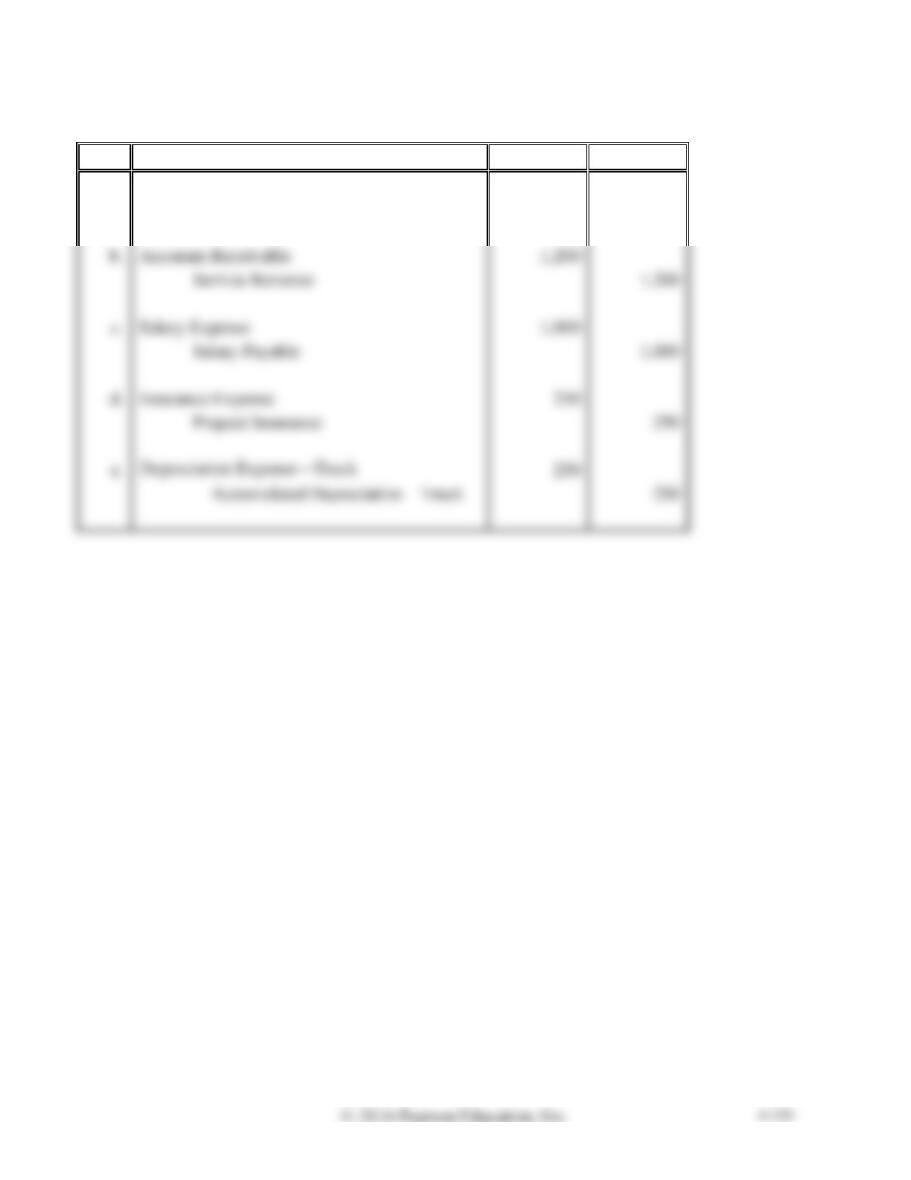
Requirement 5
Date
Accounts
Debit
Credit
a.
Supplies Expense
580
Office Supplies
580
Accounts Receivable
Service Revenue
c.
Salary Expense
Salary Payable
Insurance Expense
250
e.
250
Accumulated Depreciation—Truck
250
Comprehensive Problem 2, cont.
Requirement 6
MILLERS DELIVERY SERVICE
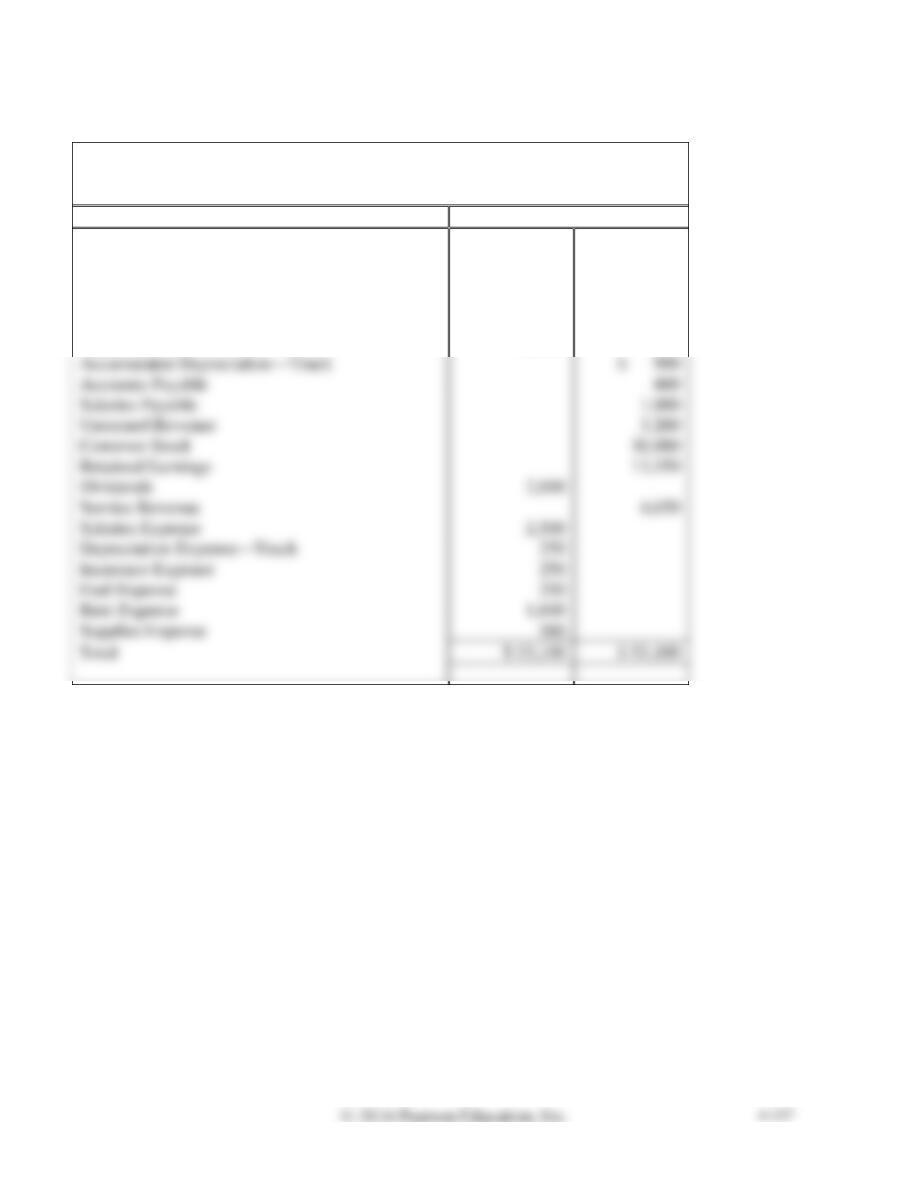
Adjusted Trial Balance
January 31, 2017
Account Title
Balance
Debit
Credit
Cash
$ 22,550
Accounts Receivable
2,500
Office Supplies
120
Prepaid Insurance
500
Truck
20,000
Accumulated Depreciation—Truck
Accounts Payable
Salaries Payable
Unearned Revenue
Common Stock
Retained Earnings
Dividends
2,000
Service Revenue
Salaries Expense
2,500
Depreciation Expense—Truck
250
Insurance Expense
250
Fuel Expense
250
Rent Expense
1,600
Supplies Expense
580
Total
$ 53,100
Comprehensive Problem 2, cont.
Requirement 7
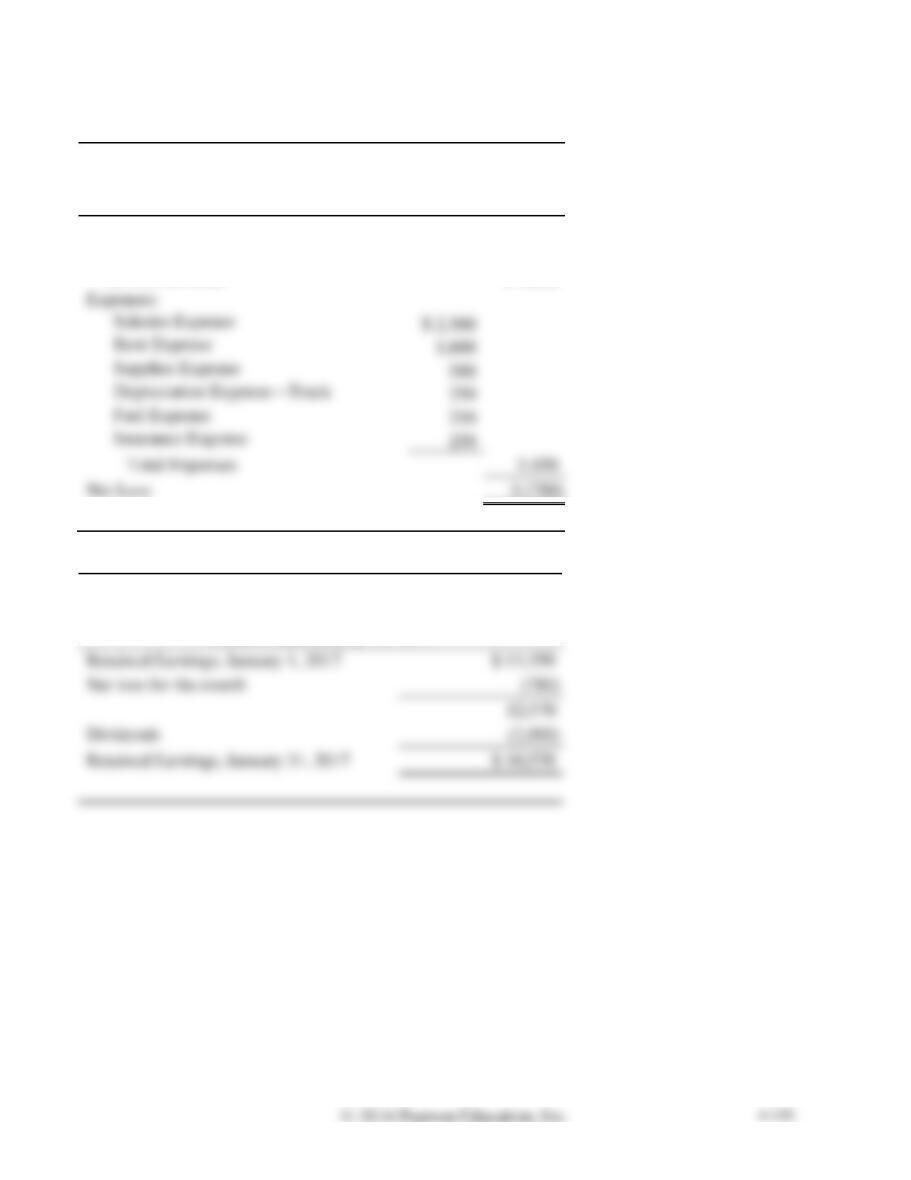
MILLER DELIVERY SERVICE
Income Statement
Month Ended January 31, 2017
Revenues:
Service Revenue
$ 4,650
Expenses:
Total Expenses
MILLER DELIVERY SERVICE
Statement of Retained Earnings
Month Ended January 31, 2017
Retained Earnings, January 1, 2017
Comprehensive Problem 2, cont.
Requirement 7, cont.
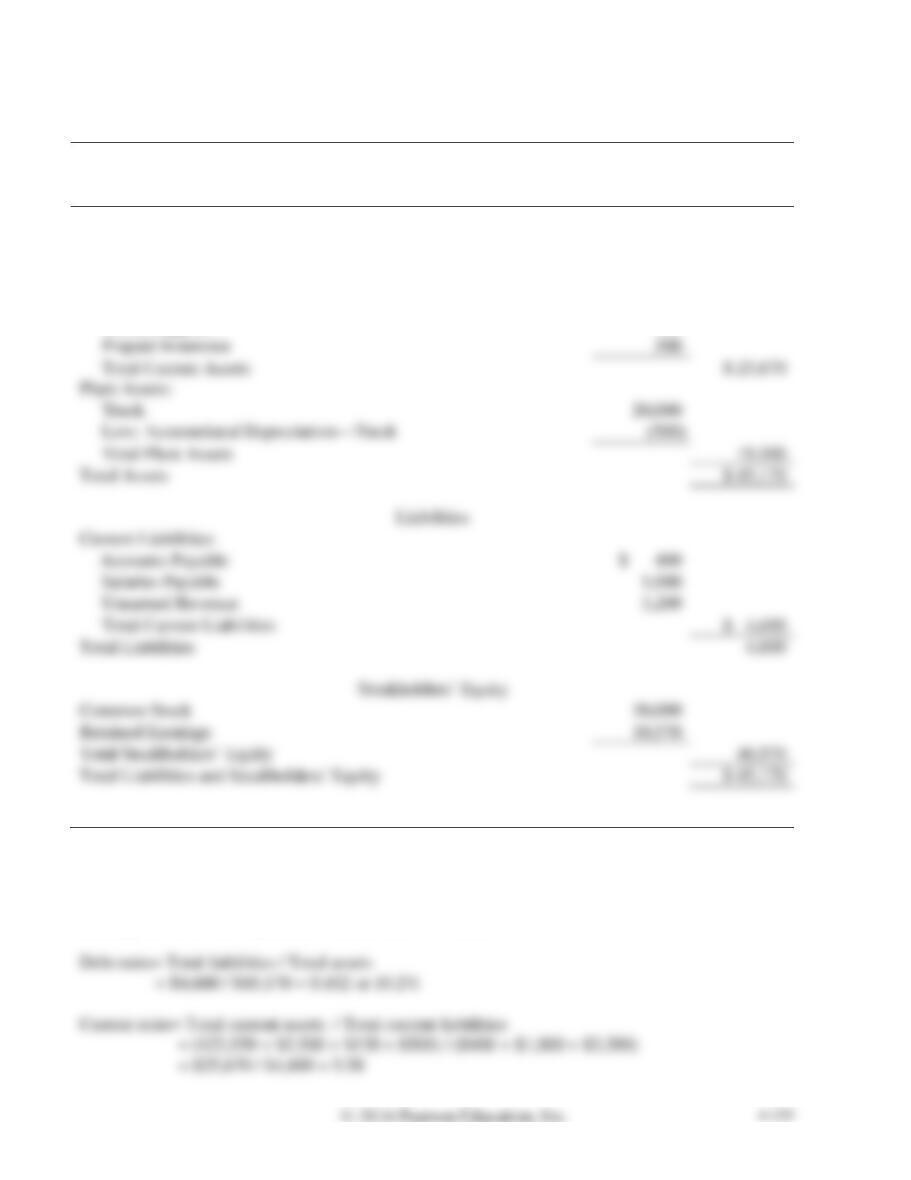
MILLER DELIVERY SERVICE
Balance Sheet
January 31, 2017
Assets
Current Assets:
Cash
$ 22,550
Accounts Receivable
2,500
Office Supplies
120
Prepaid Insurance
500
Plant Assets:
Truck
Less: Accumulated Depreciation—Truck
Total Plant Assets
Total Assets
Current Liabilities:
$ 400
Salaries Payable
1,000
Unearned Revenue
3,200
Total Current Liabilities
Total Liabilities
Common Stock
Retained Earnings
Total Liabilities and Stockholders’ Equity
Requirement 8
Return On Assets = Net income / Average total assets
= $(780) / $45,010 = (1.7%)
Average Total Assets = ($44,850 + $45,170) / 2 = $45,010
Critical Thinking
Ethical Issue 4-1
Grant Film Productions wishes to expand and has borrowed $100,000. As a condition for making this
loan, the bank requires that the business maintain a current ratio of at least 1.50.
Business has been good but not great. Expansion costs have brought the current ratio down to 1.40 on
December 15. Rita Grant, owner of the business, is considering what might happen if she reports a
current ratio of 1.40 to the bank. One course of action for Grant is to record in December $10,000 of
revenue that the business will earn in January of next year. The contract for this job has been signed.
Requirements
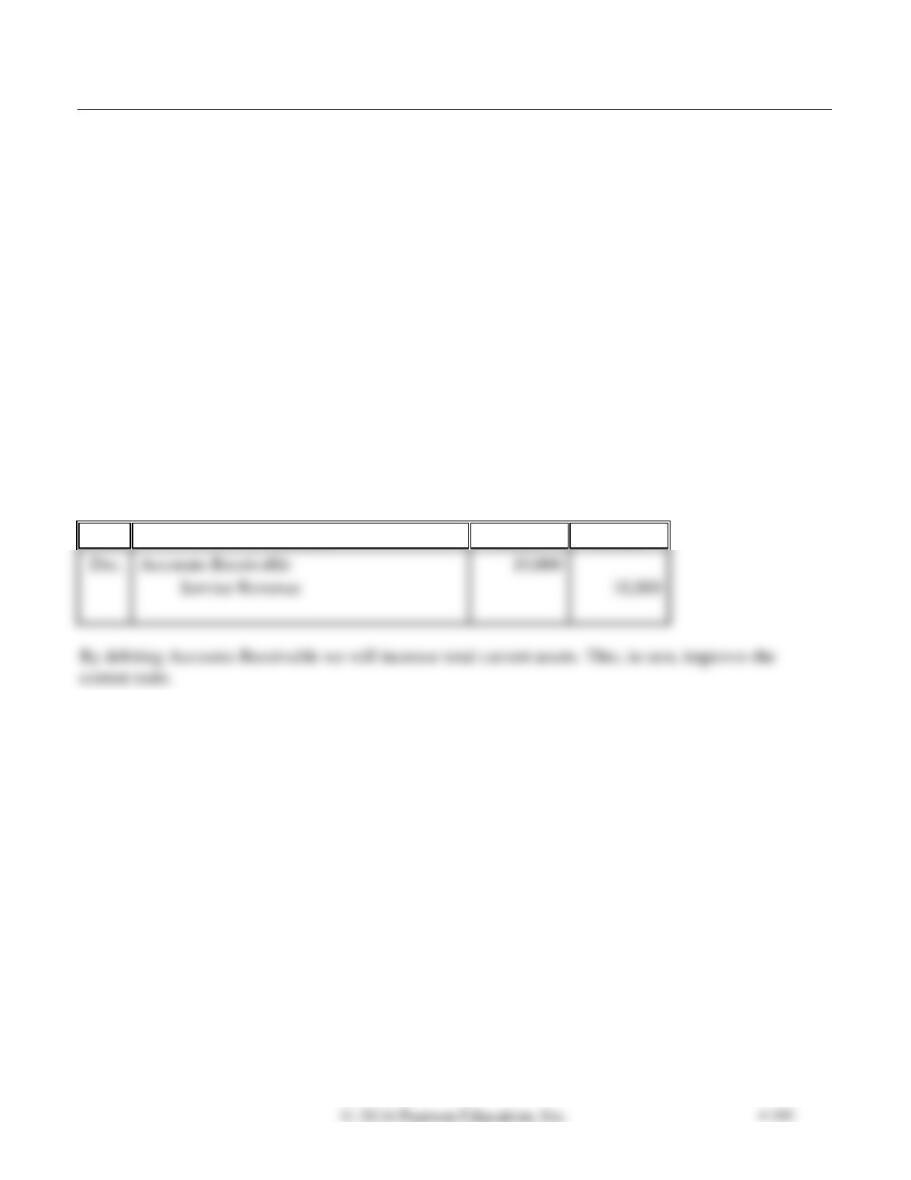
1. Journalize the revenue transaction, and indicate how recording this revenue in
December would affect the current ratio.
2. Discuss whether it is ethical to record the revenue transaction in December. Identify the accounting
principle relevant to this situation, and give the reasons underlying your conclusion.
SOLUTION
Requirement 1
Date
Accounts
Debit
Credit
Requirement 2
Recording this transaction in December violates the revenue recognition principle, which states that
revenue should be recorded when it is earned. On December 31, the business has not performed the
service for the client, and therefore has not earned the revenue. Recording the transaction in December is
unethical because it deliberately misrepresents the facts.
Fraud Case 4-1
Arthur Chen, a newly minted CPA, was on his second audit job in the Midwest with a new client called
Parson Farm Products. He was looking through the past four years of financials and doing a few ratios
when he noticed something odd. The current ratio went from 1.9 in 2016 down to 0.3 in 2017, despite
the fact that 2017 had record income. He decided to sample a few transactions from December 2017. He
found that many of Parson’s customers had returned products to the company because of substandard
quality. Chen discovered that the company was clearing the receivables (i.e., crediting Accounts
Receivable) but “stashing” the debits in an obscure long–term asset account called “grain reserves”
rather than debiting Sales Returns and Allowances to keep the company’s income “in the black” (i.e.,
positive income).
Requirements
1. How did the fraudulent accounting just described affect the current ratio?
2. Can you think of any reasons why someone in the company would want to take this kind of action?
SOLUTION
Requirement 1
This transaction should decrease the current ratio, because Accounts Receivable decreases by the retail
Financial Statement Case 4-1
This case, based on the balance sheet of Starbucks Corporation, will familiarize you with some of the
assets and liabilities of that company. Visit http://www.pearsonhighered.com/Horngren to view a link
to the Starbucks Corporation Fiscal 2013 Annual Report. Use the Starbucks Corporation balance sheet
to answer the following questions.
Requirements
1. Which balance sheet format does Starbucks use?
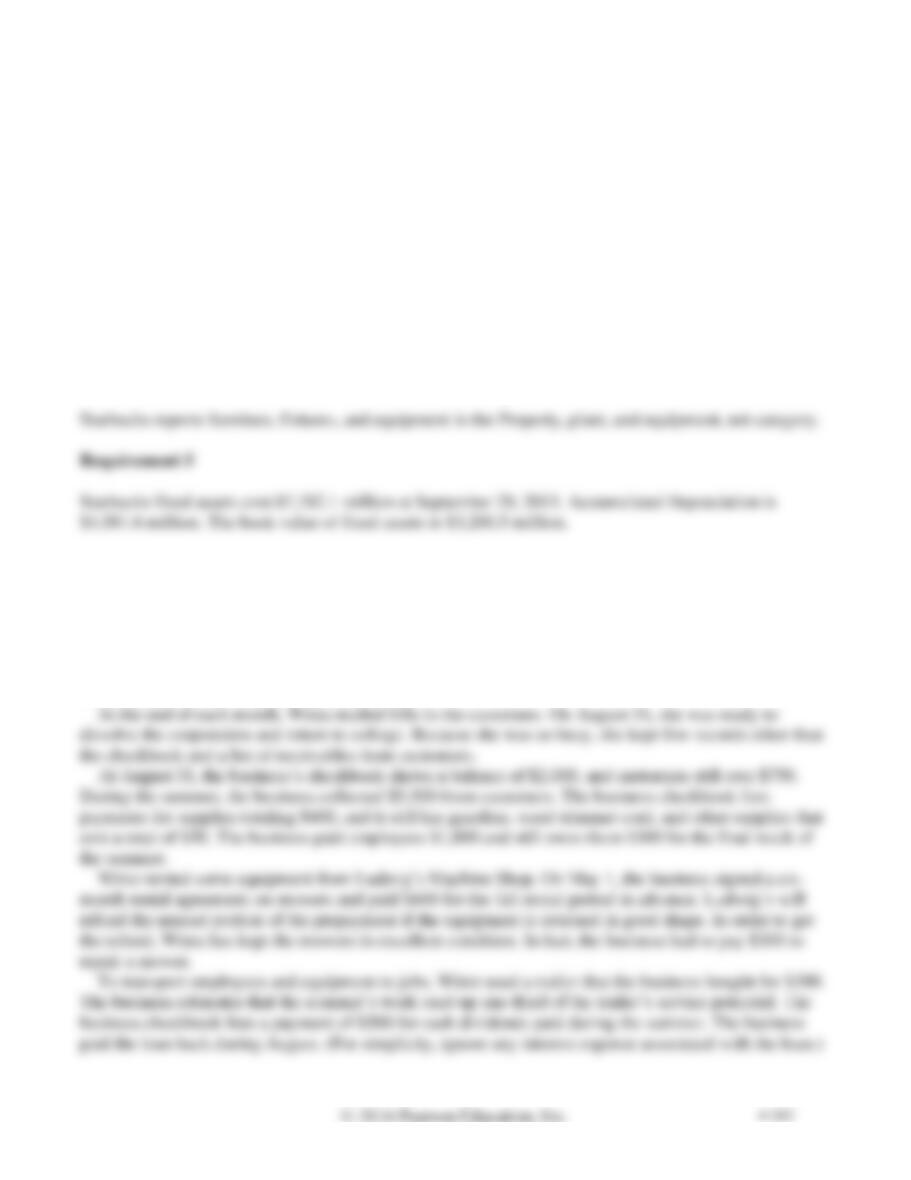
2. Name the company’s largest current asset and largest current liability at September 29, 2013.
3. Compute Starbucks’s current ratios at September 29, 2013, and September 30, 2012. Did the current
ratio improve, worsen, or hold steady?
4. Under what category does Starbucks report furniture, fixtures, and equipment?
5. What was the cost of the company’s fixed assets at September 29, 2013? What was the amount of
accumulated depreciation? What was the book value of the fixed assets? See Note 7 for the data.
SOLUTION
Requirement 1
Financial Statement Case 4-1, cont.
Requirement 3
September 29, 2013
Current ratio = Total current assets / Total current liabilities
= $5,471.4 million / $5,377.3 million = 1.02
September 30, 2012
Current ratio = Total current assets / Total current liabilities
= $4,199.6 million / $2,209.8 million = 1.9
The ratio worsened from 2012 to 2013.
Requirement 4
Team Project 4-1
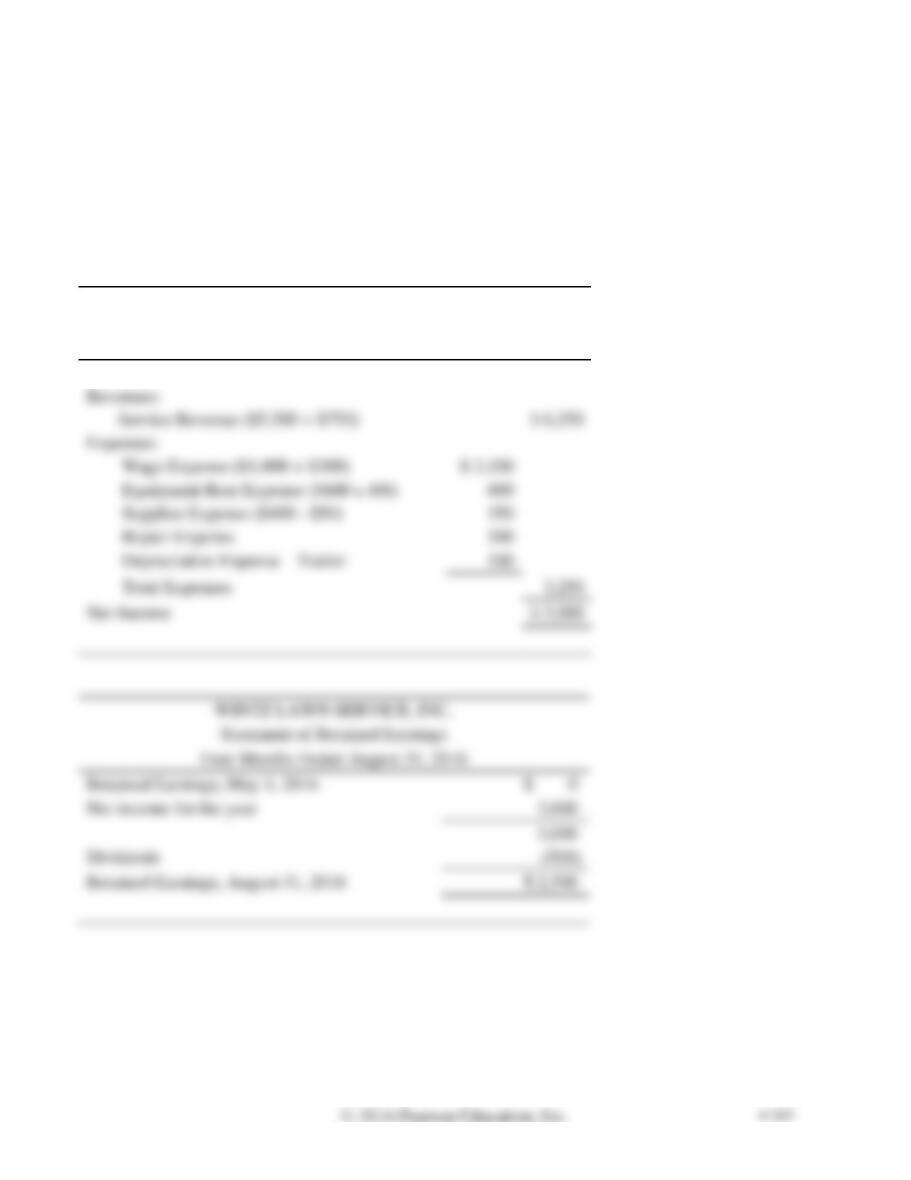
Kathy Wintz formed a lawn service business as a summer job. To start the corporation on May 1, 2016,
she deposited $1,000 in a new bank account in the name of the business. The $1,000 consisted of a $600
loan from Bank One to her company, Wintz Lawn Service, and $400 of her own money. The company
issued $400 of common stock to Wintz. Wintz rented lawn equipment, purchased supplies, and hired
other students to mow and trim customers’ lawns.
Requirements
1. As a team, prepare the income statement and the statement of retained earnings of Wintz Lawn
Service for the four months May 1 through August 31, 2016.
2. Prepare the classified balance sheet (report form) of Wintz Lawn Service at August 31, 2016.
3. Was Wintz’s summer work successful? Give your team’s reason for your answer.
SOLUTION
Requirement 1
WINTZ LAWN SERVICE, INC.
Income Statement
Four Months Ended August 31, 2016
Revenues:
Service Revenue ($5,500 + $750)
$ 6,250
Retained Earnings, May 1, 2016
Dividends
Team Project 4-1, cont.
Requirement 2
WINTZ LAWN SERVICE, INC.
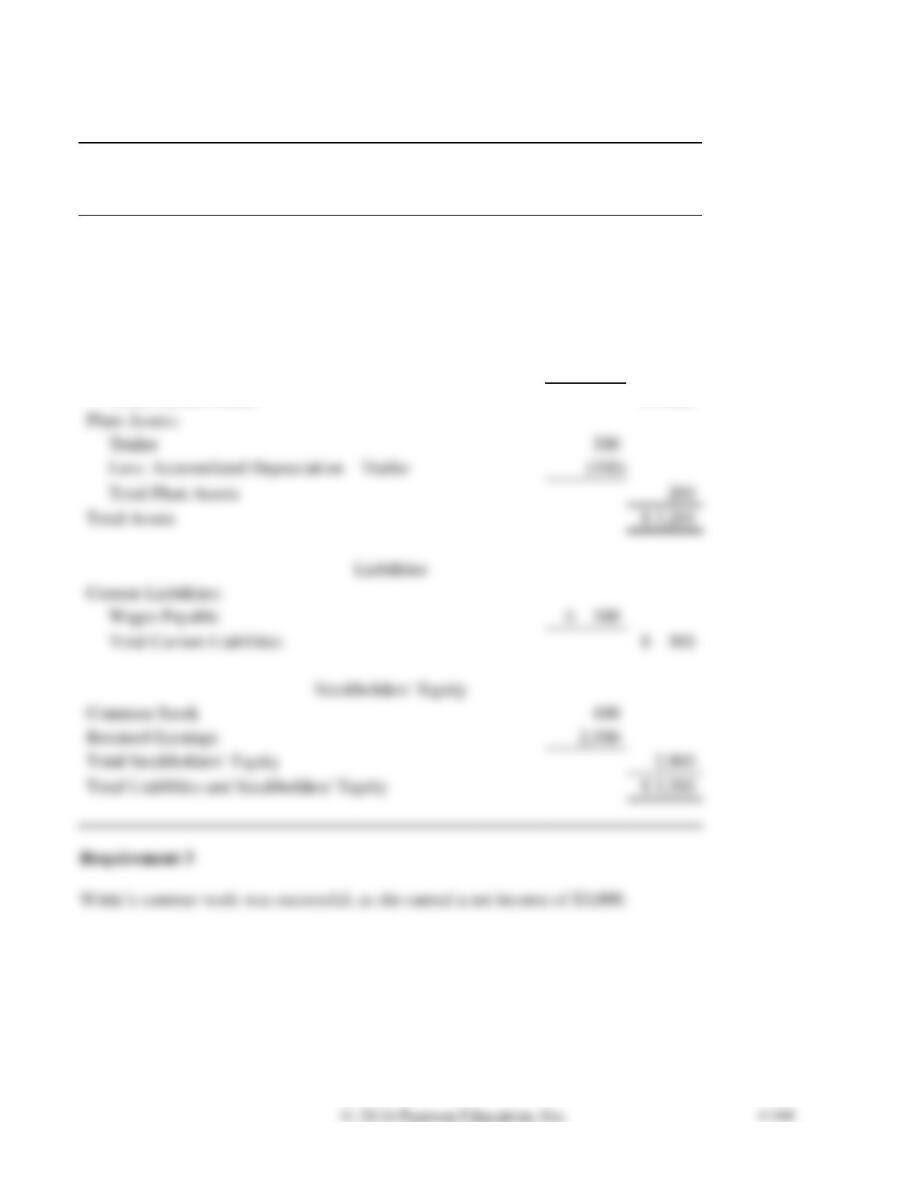
Balance Sheet
August 31, 2016
Assets
Current Assets:
Cash
$ 2,000
Accounts Receivable
750
Prepaid Equipment Rent
200
Supplies
50
Total Current Assets
$ 3,000
Plant Assets:
Trailer
Less: Accumulated Depreciation—Trailer
Total Plant Assets
Total Assets
$ 3,200
Current Liabilities:
Total Current Liabilities
$ 300
Common Stock
Retained Earnings
Total Liabilities and Stockholders’ Equity
$ 3,200