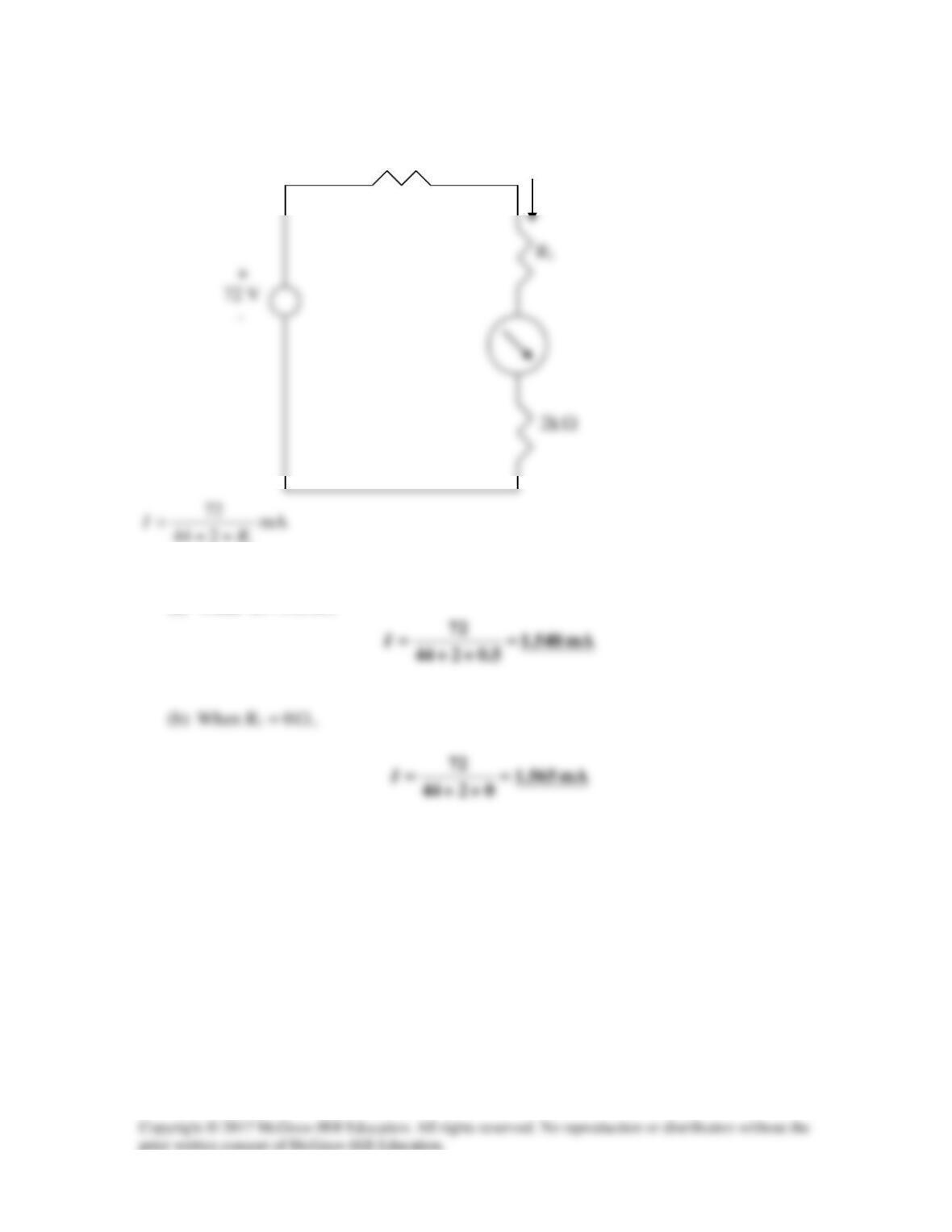
The Thevenin equivalent circuit is shown below.
44k
Ω
I
Ω
i
assuming Ri is in k-ohm.
(a) When Ri =500
Ω
,
Solution 4.89
It is easy to solve this problem using Pspice.
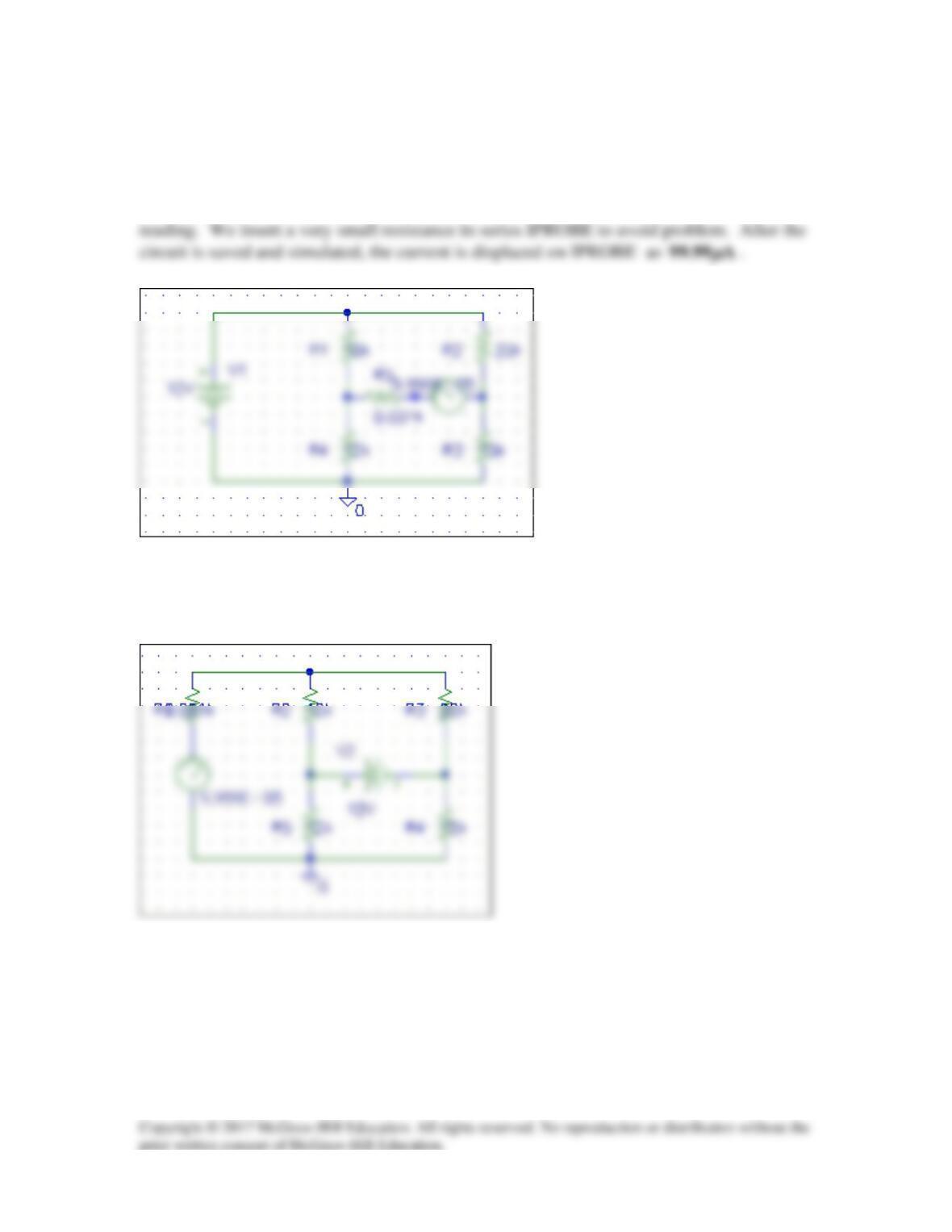
(a) The schematic is shown below. We insert IPROBE to measure the desired ammeter
(b) By interchanging the ammeter and the 12-V voltage source, the schematic is shown
below. We obtain exactly the same result as in part (a).

Solution 4.90
Solution 4.91
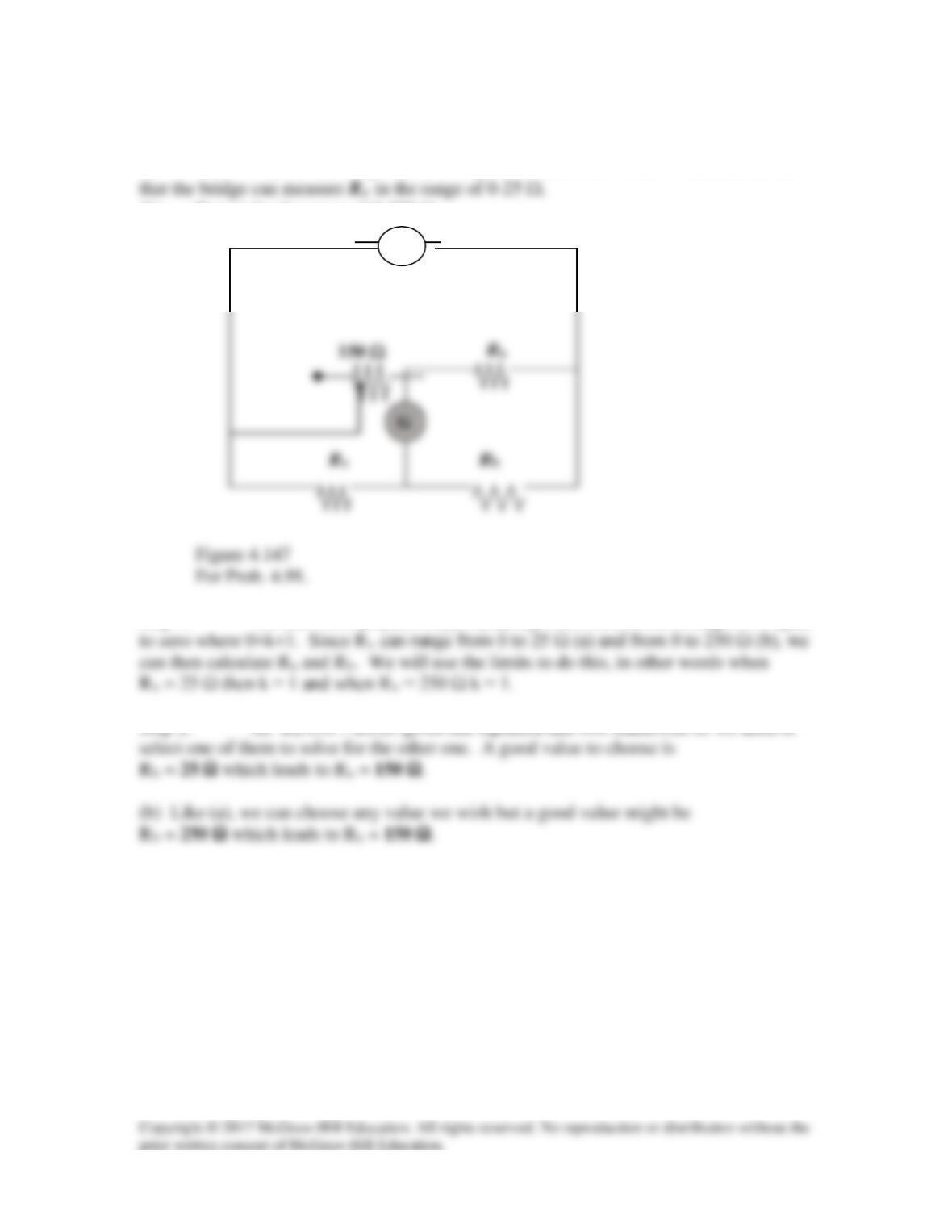
(a) In the Wheatstone bridge circuit of Fig. 4.147 select the values of Ra and Rb such
(b) Repeat for the range of 0-250 Ω.
Step 1. We start from [Ra/(k(150))] = [Rb/Rx] when the current through G is equal
Step 2. (a) Ra/150 = Rb/25 gives one equation and two unknowns so we need to
+ −
V
Solution 4.92
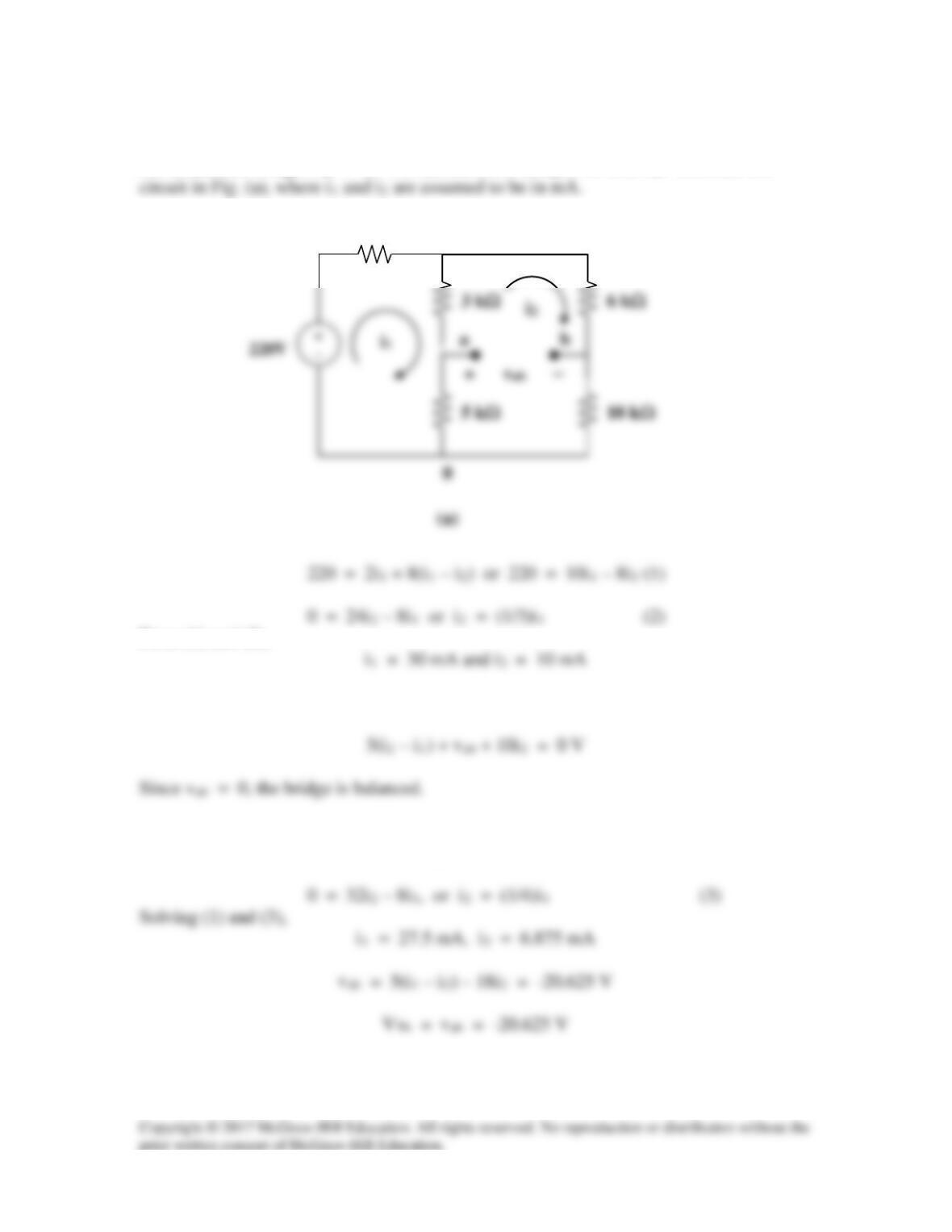
For a balanced bridge, vab = 0. We can use mesh analysis to find vab. Consider the
From (1) and (2),
Applying KVL to loop 0ab0 gives
When the 10 k ohm resistor is replaced by the 18 k ohm resistor, the bridge becomes
unbalanced. (1) remains the same but (2) becomes
2 kΩ
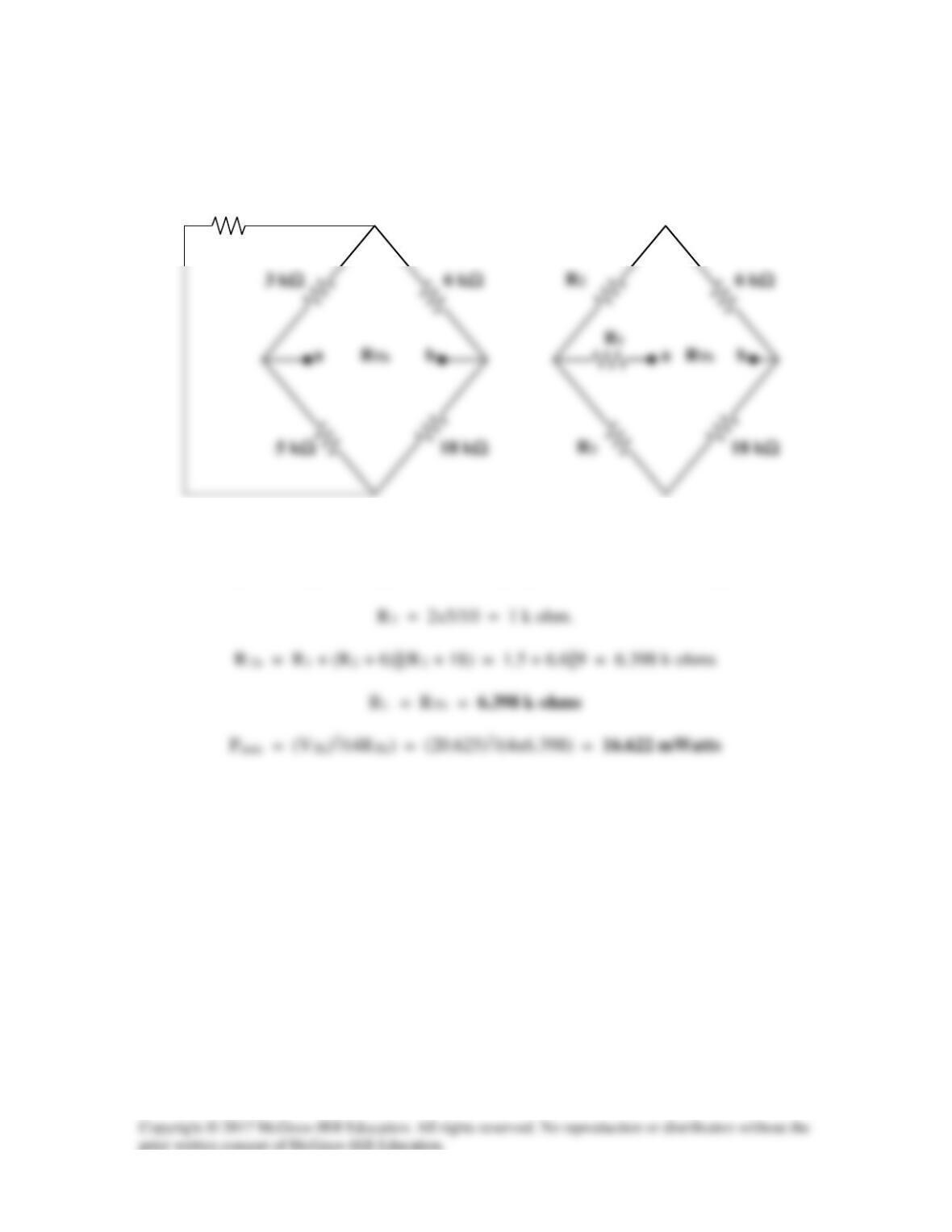
To obtain RTh, we convert the delta connection in Fig. (b) to a wye connection shown in
Fig. (c).
R1 = 3×5/(2 + 3 + 5) = 1.5 k ohms, R2 = 2×3/10 = 600 ohms,
2 kΩ
(b)
(c)
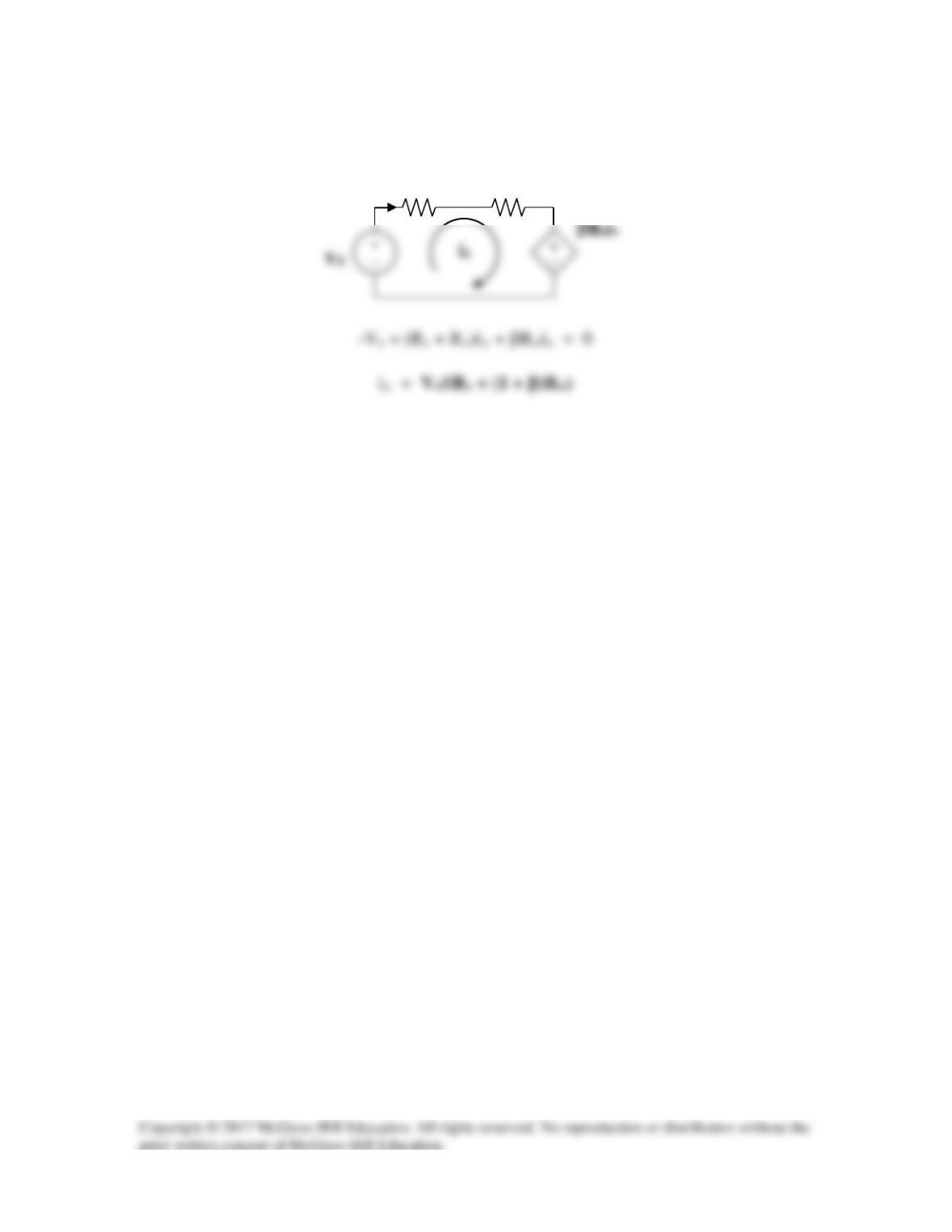
Solution 4.93
Ro
Rs
ix
Solution 4.94
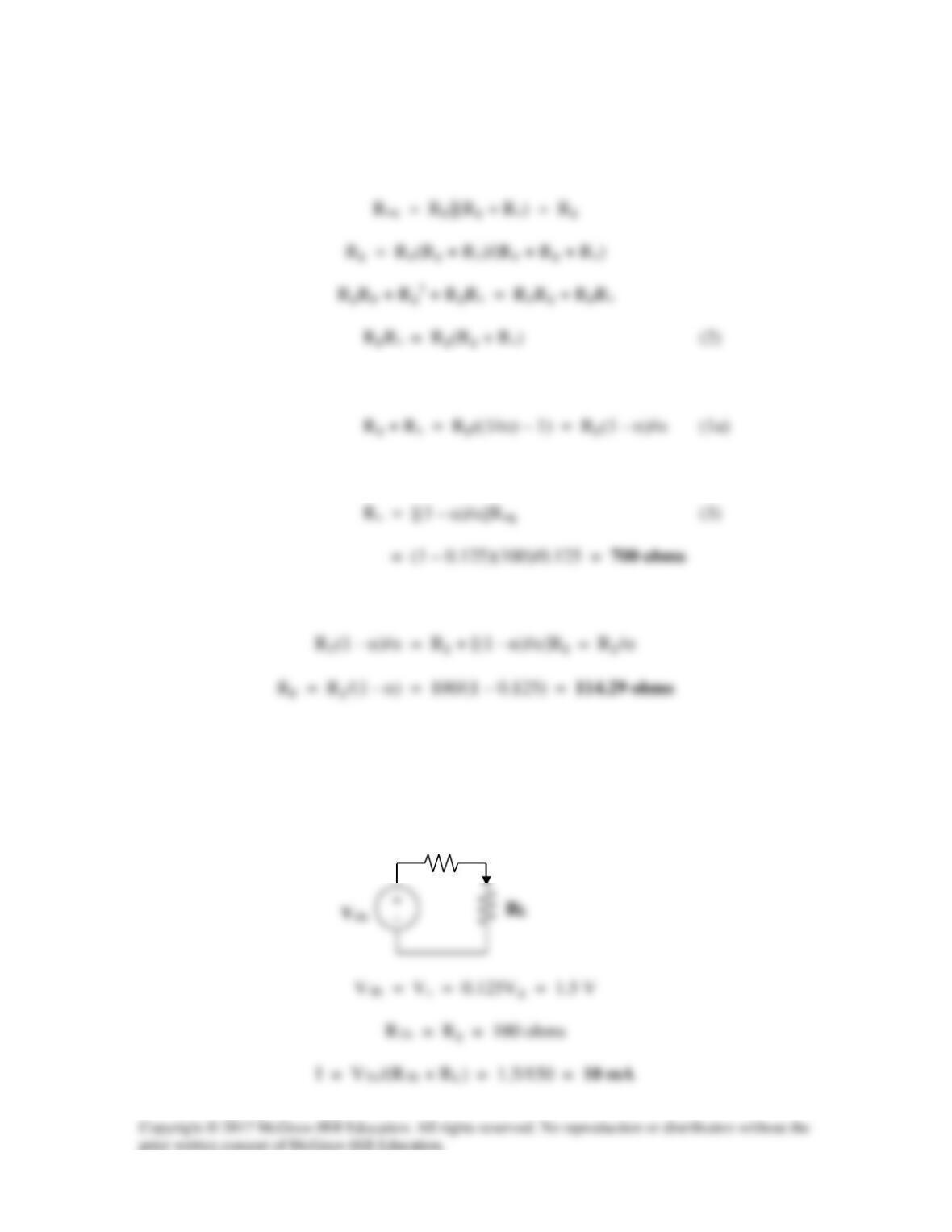
(a) Vo/Vg = Rp/(Rg + Rs + Rp) (1)
From (1), Rp/α = Rg + Rs + Rp
Combining (2) and (1a) gives,
From (3) and (1a),
(b)
R
Th
I
Solution 4.95
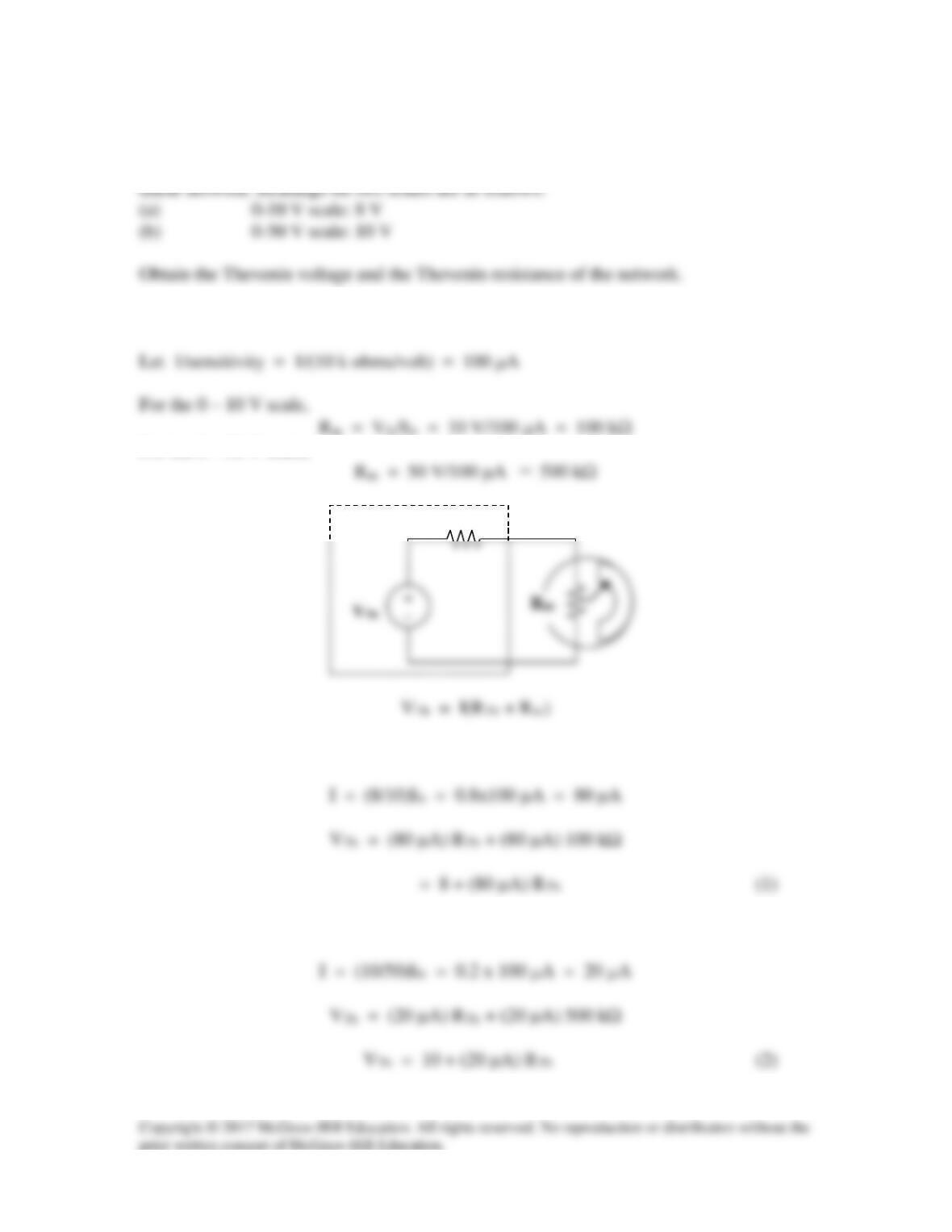
A dc voltmeter with a sensitivity of 10 kΩ/V is used to find the Thevenin equivalent of a
Solution
For the 0 – 50 V scale,
(a) A 8 V reading corresponds to
(b) A 10 V reading corresponds to
RTh

From (1) – (2)
Solution 4.96
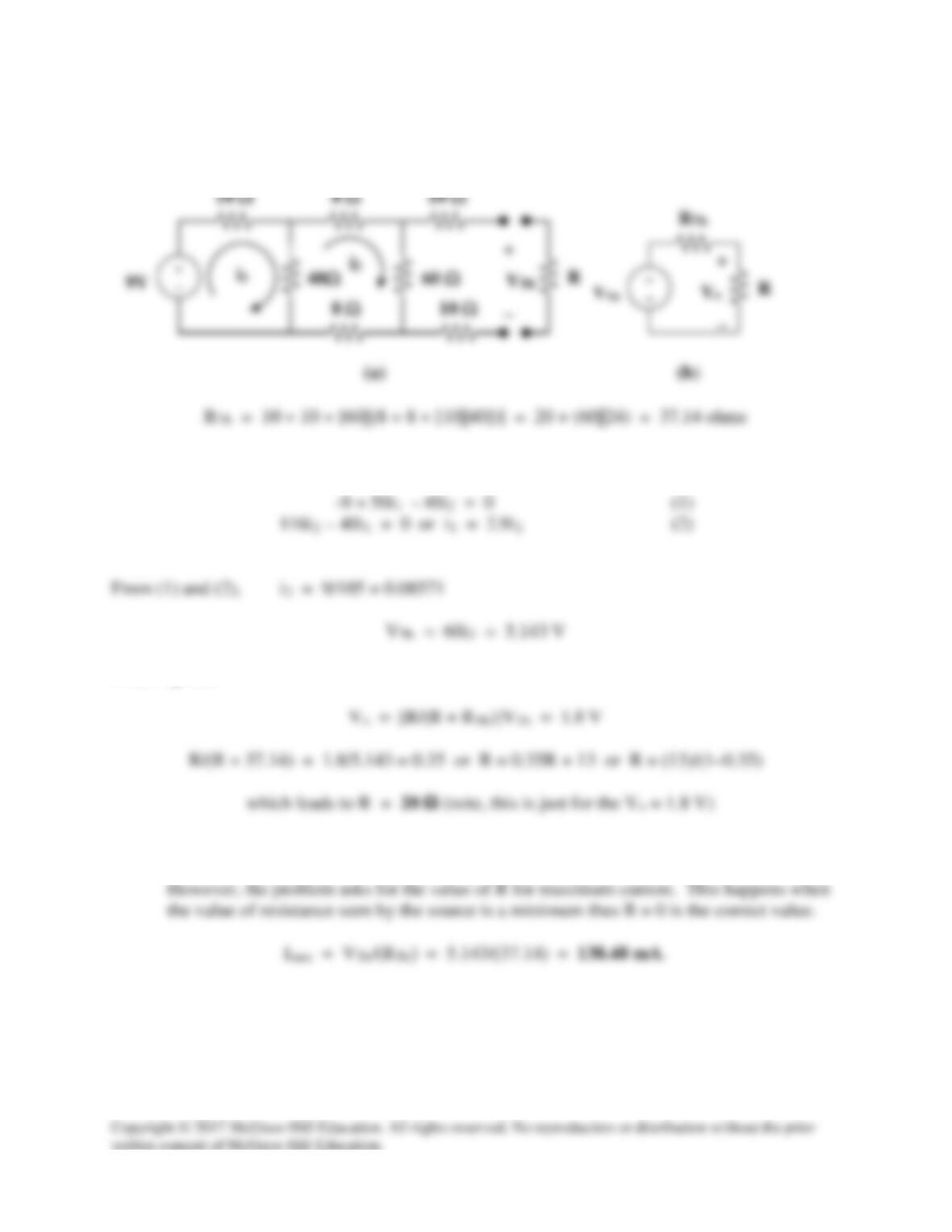
(a) The resistance network can be redrawn as shown in Fig. (a),
Using mesh analysis,
From Fig. (b),
(b) Asking for the value of R for maximum power would lead to R = RTh = 37.14 Ω.
Solution 4.97
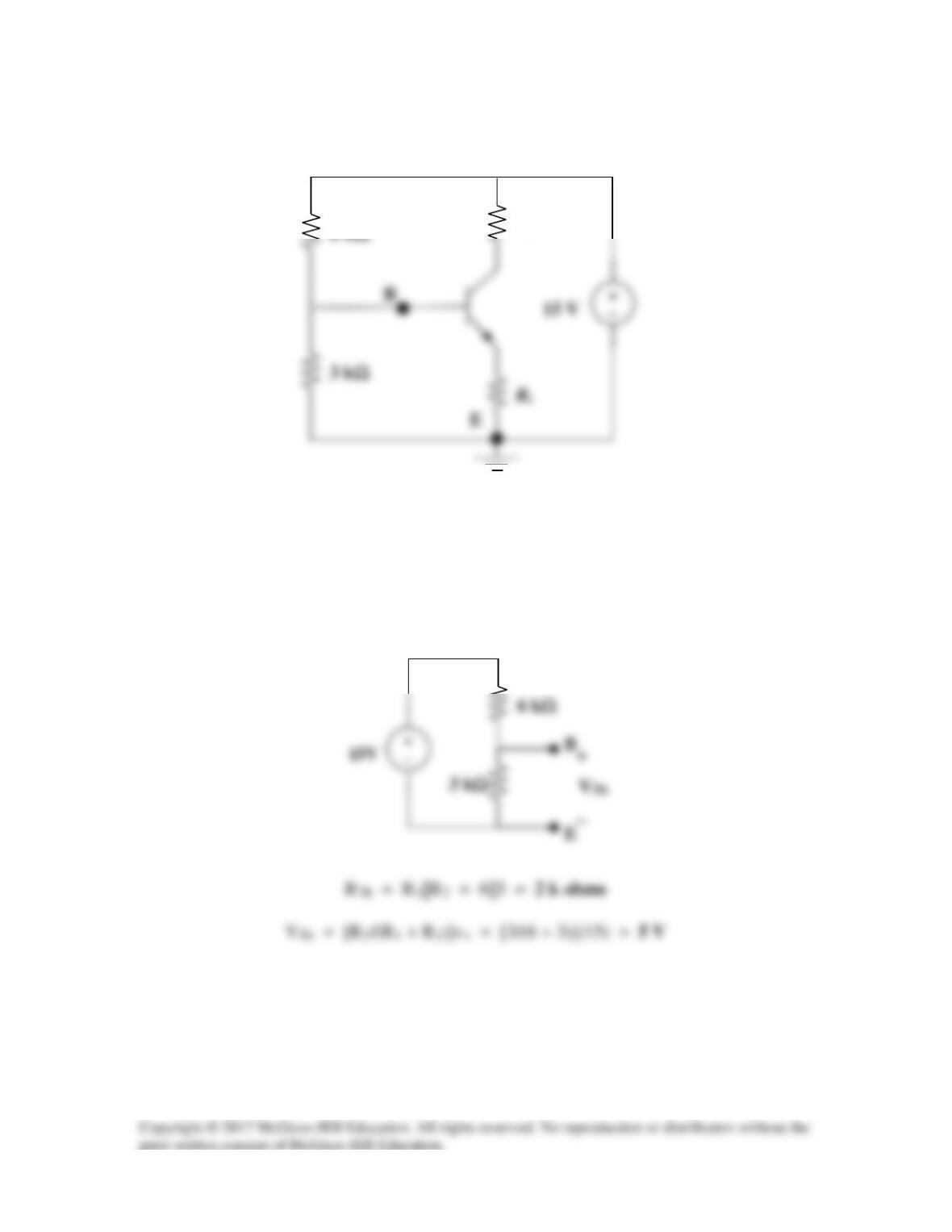
A common-emitter amplifier circuit is shown in Fig. 4.152. Obtain the Thevenin
equivalent to the left of points B and E.
Figure 4.152
For Prob. 4.97.
Solution
RL
Solution 4.98
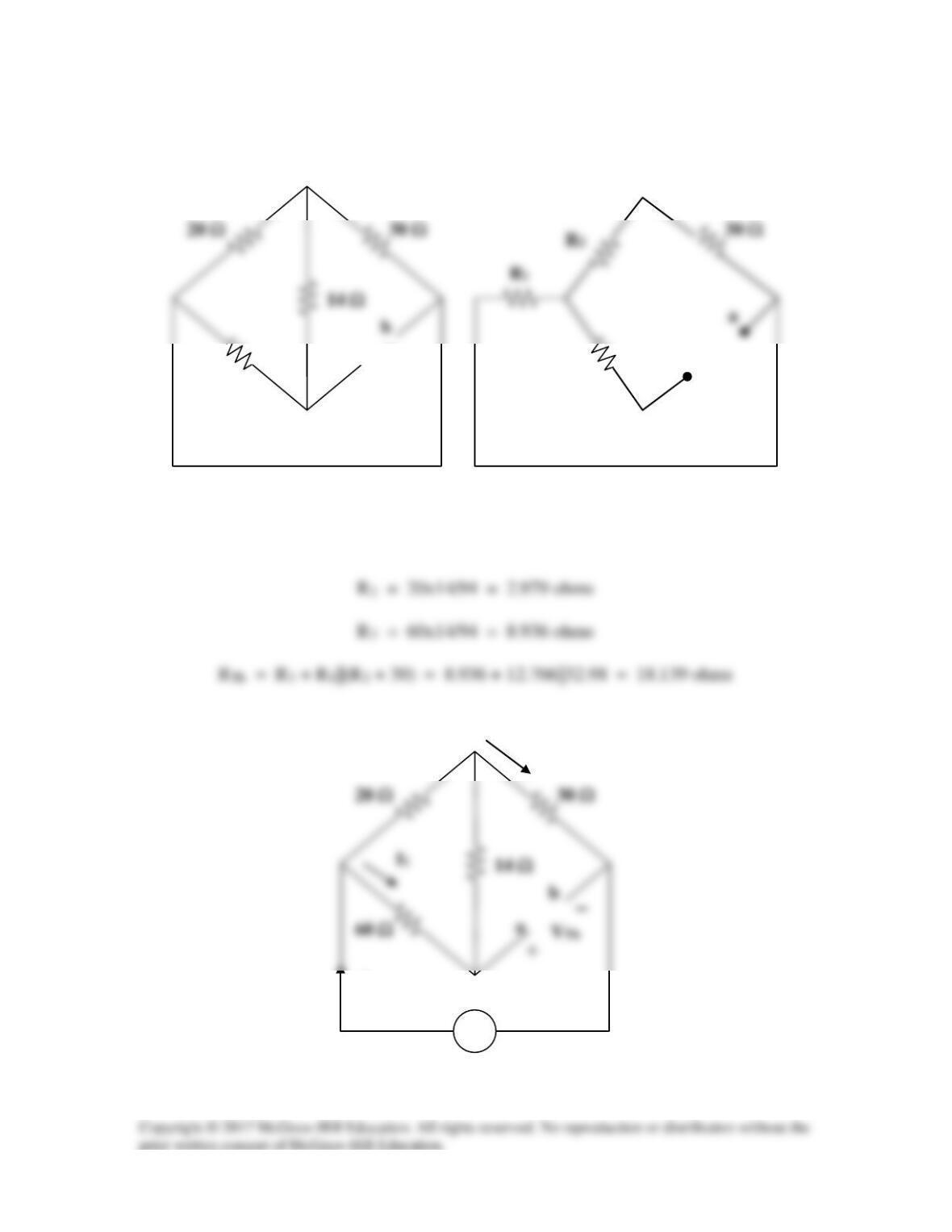
The 20-ohm, 60-ohm, and 14-ohm resistors form a delta connection which needs to be
connected to the wye connection as shown in Fig. (b),
30 Ω
20 Ω
b
R1
30 Ω
R2
a
R1 = 20×60/(20 + 60 + 14) = 1200/94 = 12.766 ohms
To find VTh, consider the circuit in Fig. (c).
60 Ω
(a)
RTh
a
R3
(b)
RTh
b
16 V
(c)
+ −
IT
IT
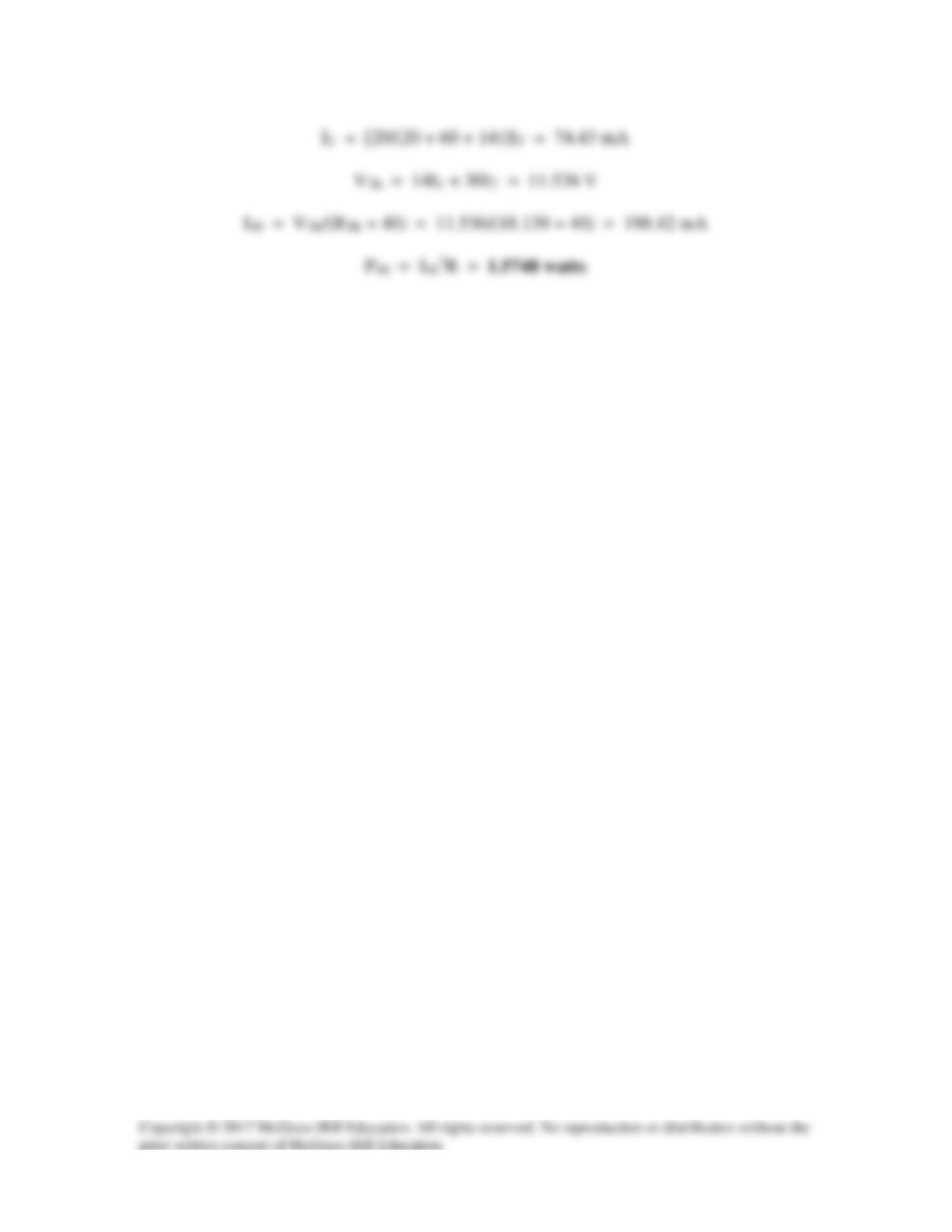
IT = 16/(30 + 15.745) = 349.8 mA