Continuing Case Solution
Chapter 4
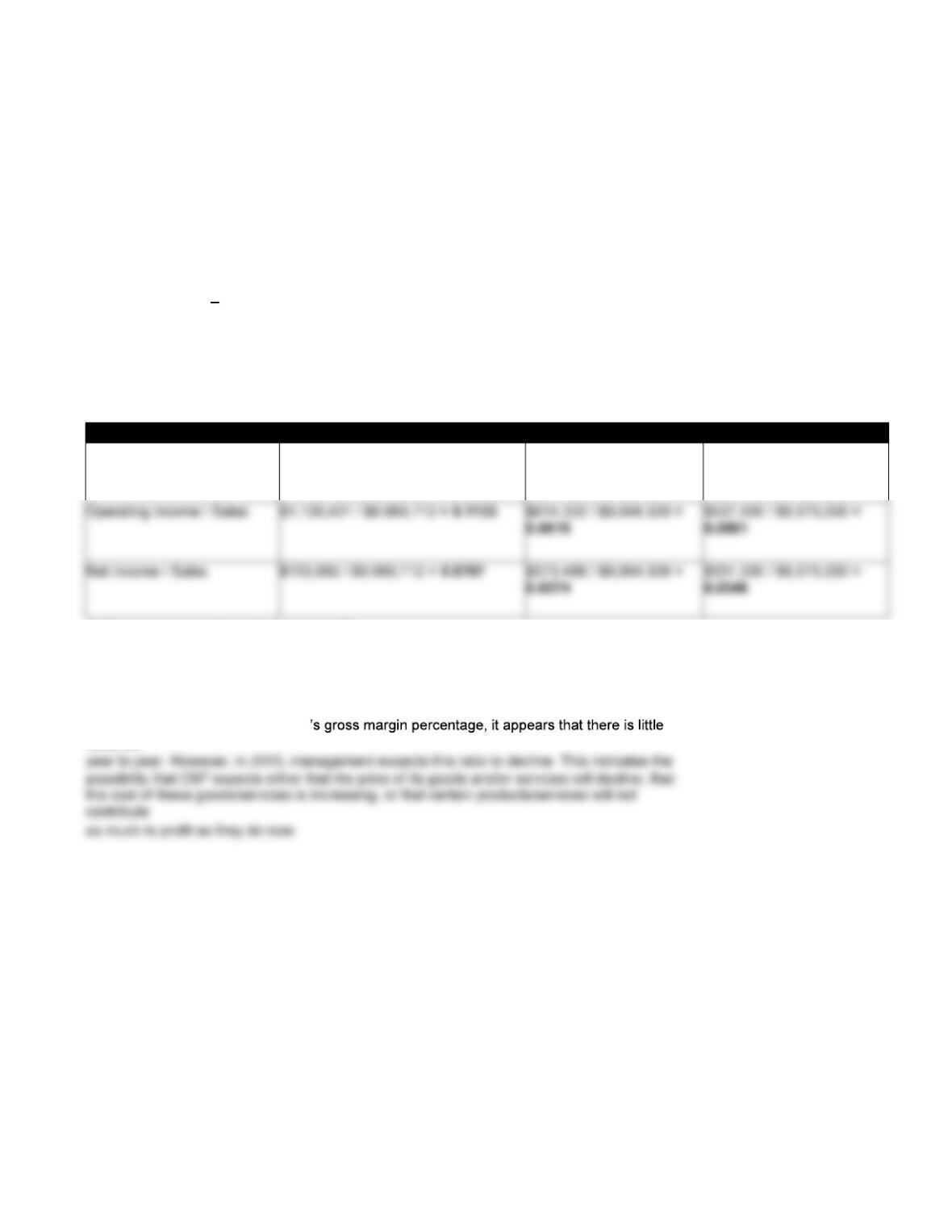
(a) Ratio Discussion
2011 2012 2013
Gross margin** / Sales $4,159,057 / $9,960,712 = 0.4176
$4,107,670 / $9,994,329 =
0.4110
$3,725,000 / $9,575,000 =
0.3890
** Gross margin is also called gross profit.
Ratio Analysis:
The gross margin ratio measures the ability of a company to buy and sell goods and/or
services at a profit. Looking at CM
2
variance

Continuing Case Solution
The relationship between operating income and sales measures the profitability of a
The Net income / Sales ratio measures the overall profitability of a firm, including all
sources of income and expenses. There is a decline from 2011 to 2012 in this ratio, and it
Continuing Case Solution
(b) Comment on Trends
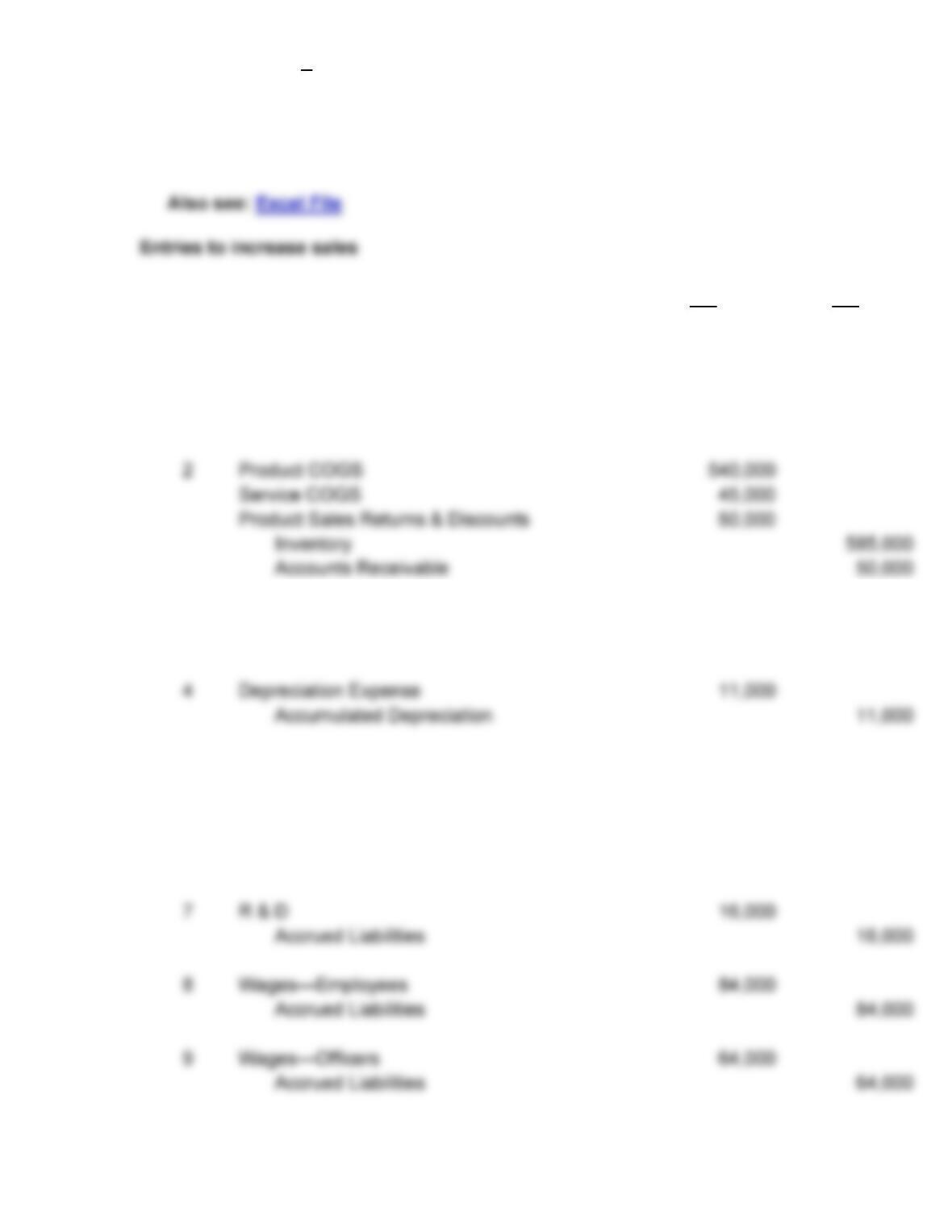
J/E # Account Name DR CR
***See note below
1 Accounts Receivable
1,007,500
Sales Revenue
910,000
Service Revenue
97,500
3 Bad Debt Expense
1,600
Allowance for Doubtful Accounts
1,600
11,000
5 Insurance
6,400
Prepaid Expenses
6,400
6 Other Operating Expenses
72,000
Accrued Liabilities
72,000
16,000
16,000
84,000
64,000
Continuing Case Solution
Assume Increase in
2013
Projections:
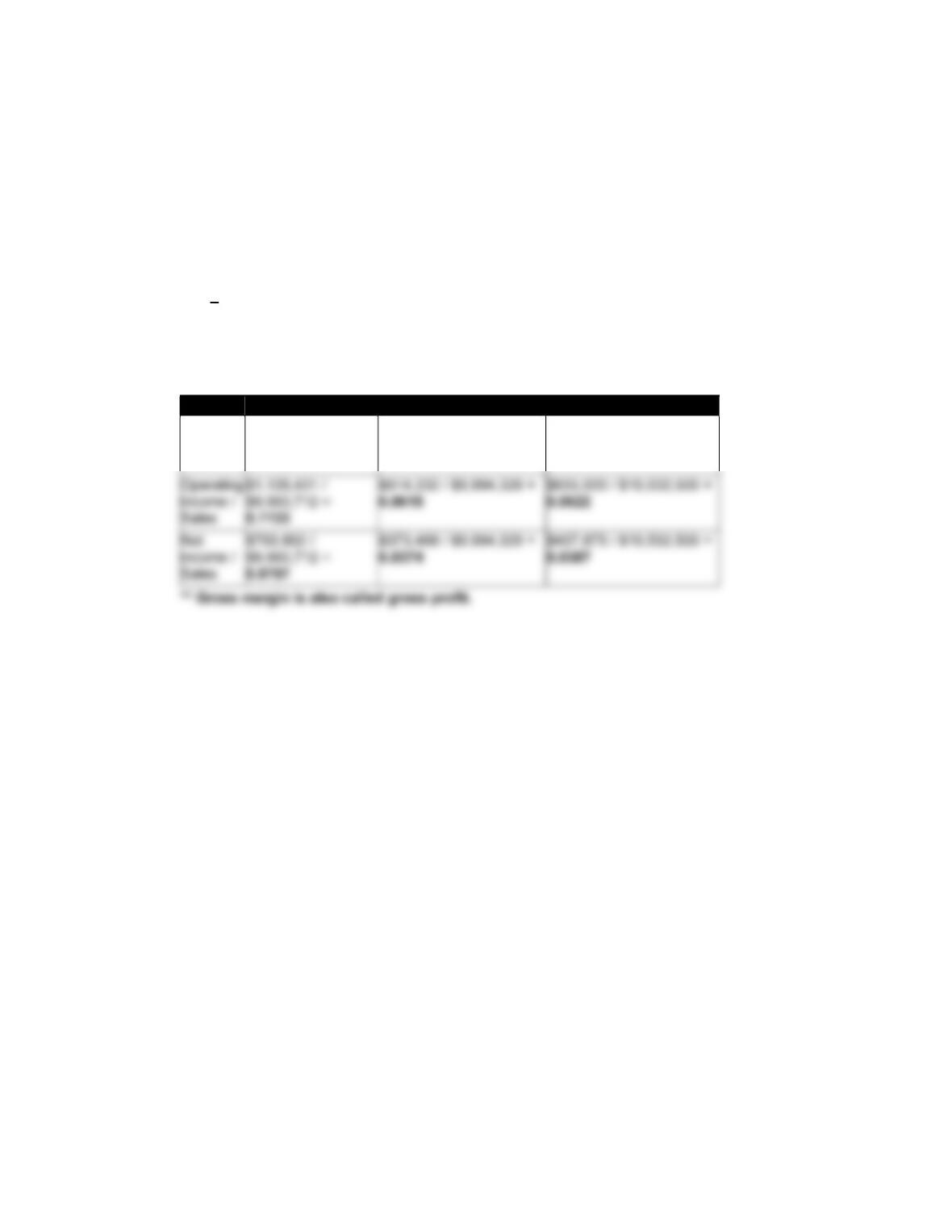
2011 2012 2013
Gross
margin** /
Sales
$4,159,057 /
$9,960,712 =
0.4176
$4,107,670 / $9,994,329
= 0.4110
$4,097,500 / $10,532,
500
= 0.3890
Operating
=
=
Continuing Case Solution
The gross margin ratio is the same as before, which would be expected since
the
relationship between sales revenue and the cost of the product remains the
same. The
The overall trend, however, from 2011 to 2013 is still in decline.
(c) Comment on Trends
Entries to decrease sales
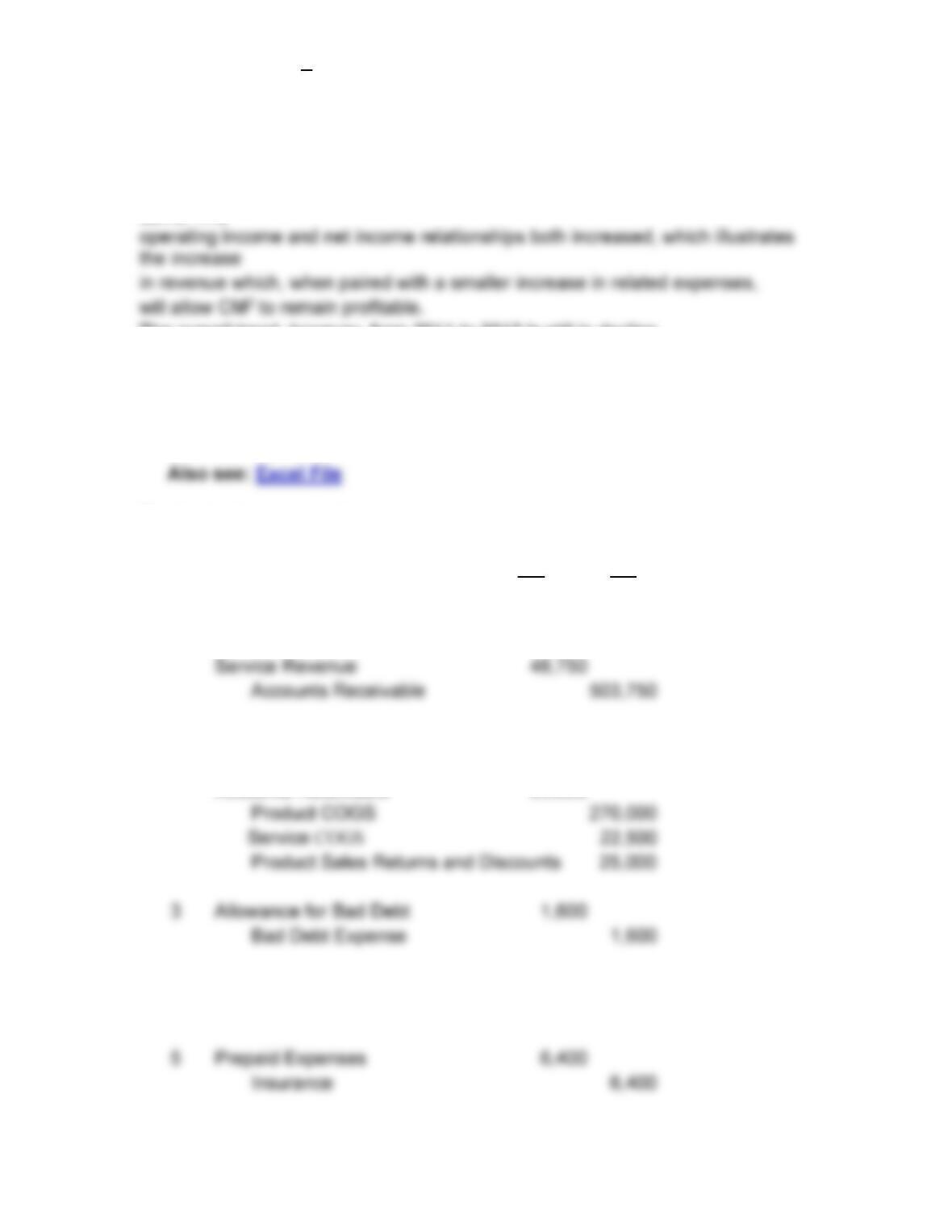
J/E # Account Name DR CR
***See note below
1 Sales Revenue
455,000
48,750
503,750
2 Inventory 292,
500
Accounts Receivable 25,000
500
1,600
1,600
4 Accumulated Depreciation
11,000
Depreciation Expense
11,000
6,400
6,400
Continuing Case Solution
6 Accrued Liabilities
72,000
Other Operating Expenses
72,000
7 Accrued Liabilities
16,000
R & D
16,000
84,000
84,000
64,000
Continuing Case Solution
Assume
Decrease
in
2013
Projections:
2011 2012 2013
Gross margin** / Sales
$4,159,057
/
$9,960,712
$4,107,670
/
$9,994,329
$3,538,
750
/
$9,096,
250
$1,128,431
$9,994,329
250
Continuing Case Solution
The gross margin ratio is the same as before, which would be expected since the
relationship between sales revenue and the cost of the product remains the
same.
Decreasing revenues by 5% while decreasing operating expenses by 8% actually
(d) The memo should discuss the following points:
A discontinued operation occurs when two things happen: (a) a company eliminates the
results of operations and cash flows of a component from its ongoing operations, and (b)
there is no significant continuing involvement in that component after the disposal
transaction.
Companies report as discontinued operations (in a separate income statement category)
the gain or loss from disposal of a component of a business. In addition, companies
report the results of operations of a component that has been or will be disposed
Restructuring charges, relate to a major reorganization of company affairs, (e.g., costs
associated with employee layoffs, plant closing costs, write-offs of assets, and so on). A
company should not report a restructuring charge as an extraordinary item, because
In dealing with events that are either unusual or nonrecurring but not both, the
profession attempted to prevent a practice that many believed was misleading.
Companies often reported such transactions on a net-of-tax basis and prominently
projections. In spite of lower revenues, it appears that lowering operating