7-1
Berkshire Threaded Fasteners Company
Teaching Commentary
OVERVIEW
This case is an updated version of one that goes back at least as far as the 1950s, written by Professor J. P. Culliton
of Harvard Business School. It exists today in many versions under many names. Its durability results from its
TEACHING STRATEGY
We use the case on day two of the required managerial accounting course. Our students already have had a heavy
dose of “marginal cost” logic from earlier courses in economics, marketing, and finance. We don’t have to spend
ANSWERS TO ASSIGNMENT QUESTIONS
Question 1
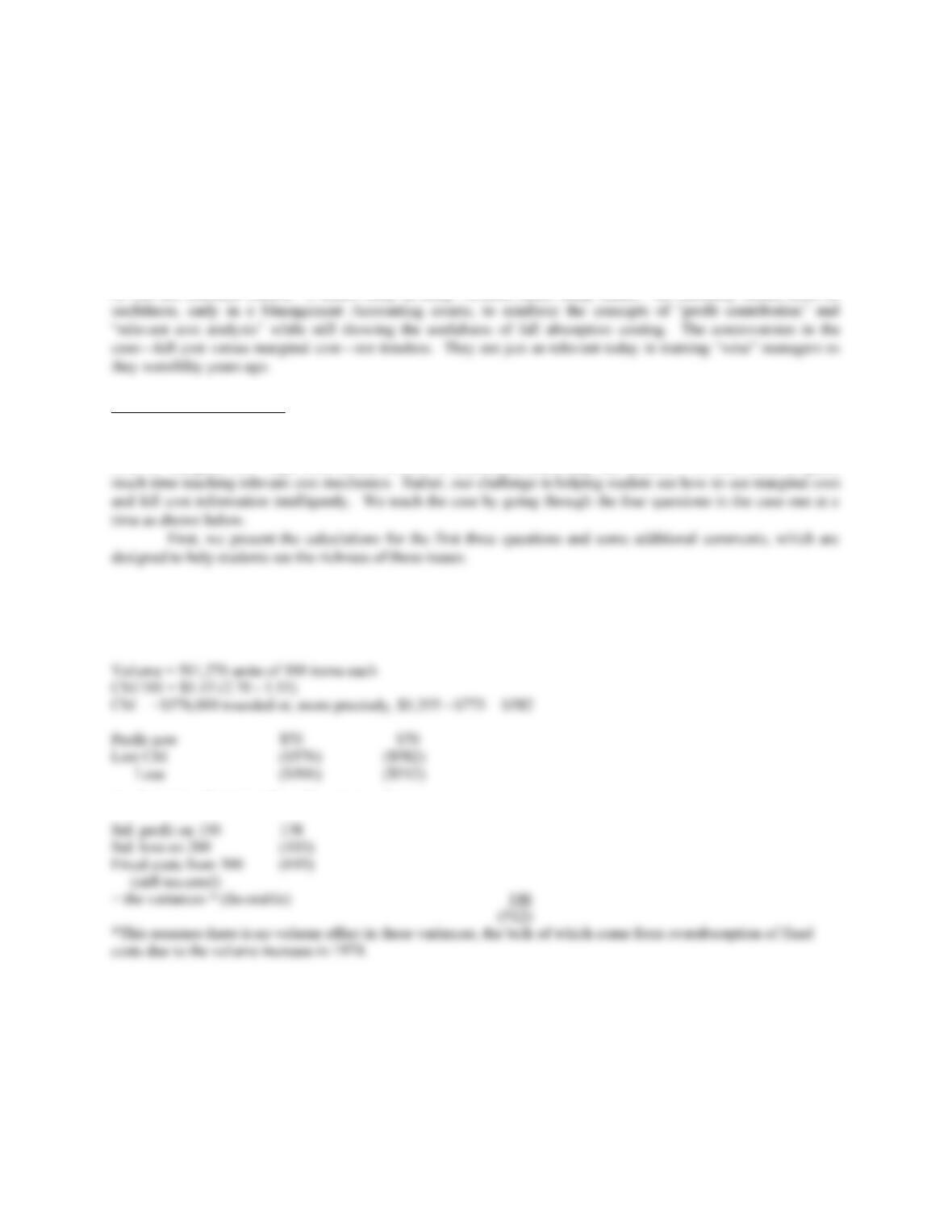
Drop 300 as of 1/1/74?
An alternative format to show the same result is:
7-2
Other Issues for Discussion in Conjunction with Question 1
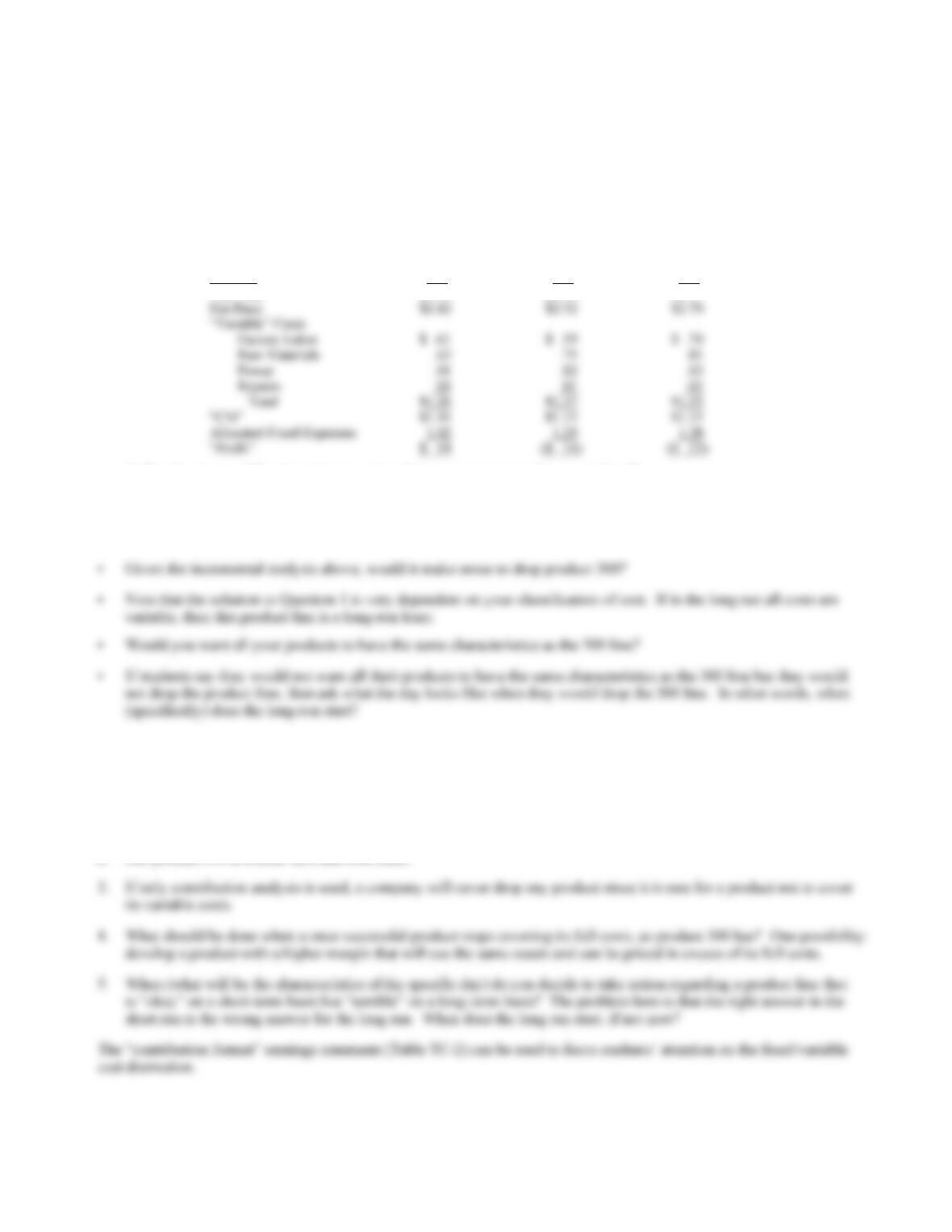
• Define variable cost. The following table (TC-1) is a useful summary.
TC-1
Berkshire Fasteners
Contribution Margin by Product
Per Unit #100 #200 #300
List Price $2.45 $2.58 $2.75
• Define fixed cost. What does it mean when the accountant states the cost is fixed?
• Should labor be considered variable? In many foreign countries and many leading U.S. firms (IBM, Hallmark,
DEC) this cost is considered fixed. When labor is treated as “variable” cost, the behavioral implications regarding
motivation and commitment can be serious management problems.
• Is the problem insufficient volume? Can you reasonably expect to get more? (A commodity product in a down
market and in an industry in long-term decline.)
Management Inferences Regarding the Decision to Drop 300
1. The firm would incur a loss of $512K instead of a small profit of $70K if product line 300 were dropped.
2. But product 300 is a loser on a full-cost basis.
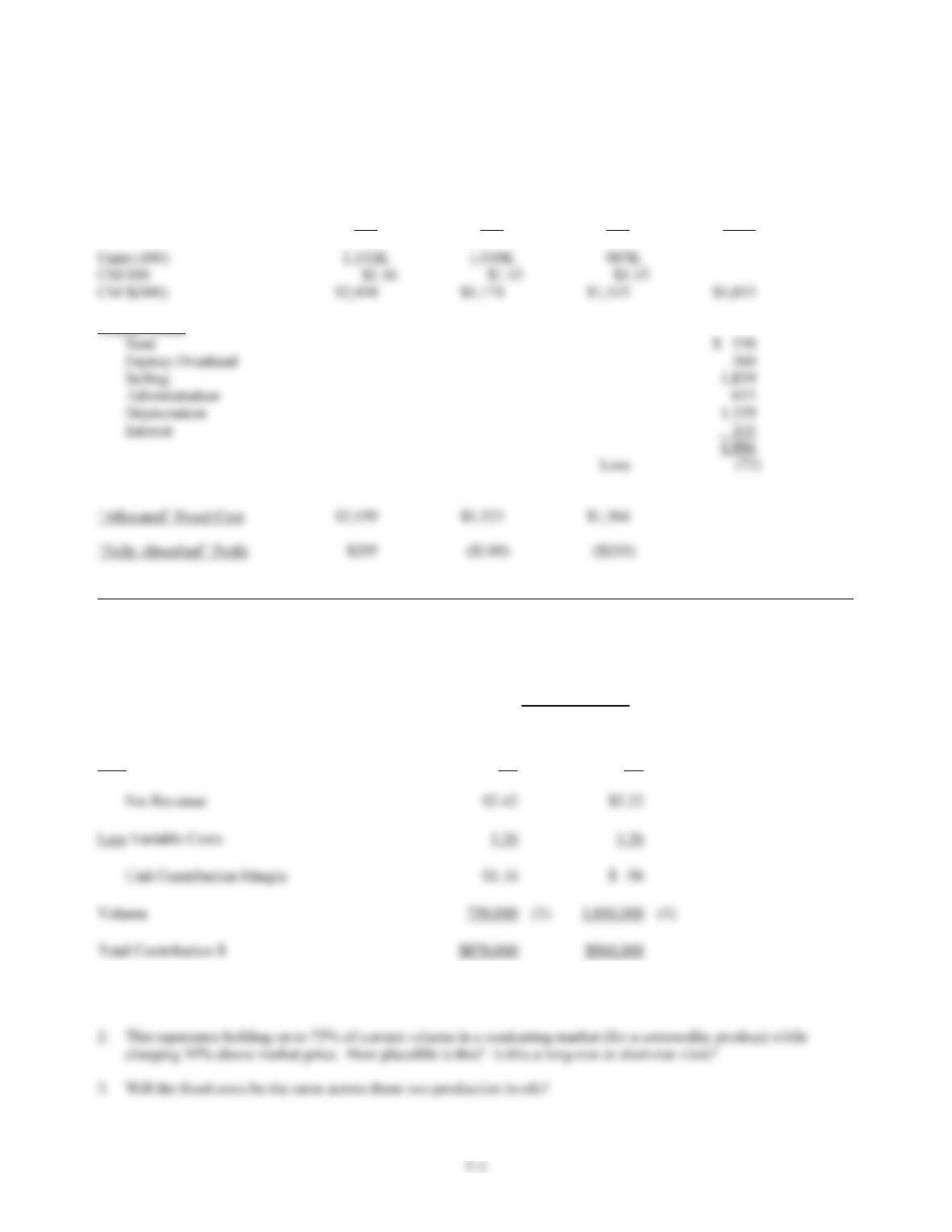
TC-2
Berkshire—1973
Earning Statement— “Contribution Format”
#100 #200 #300 Total
“Fixed” Costs
QUESTION 2
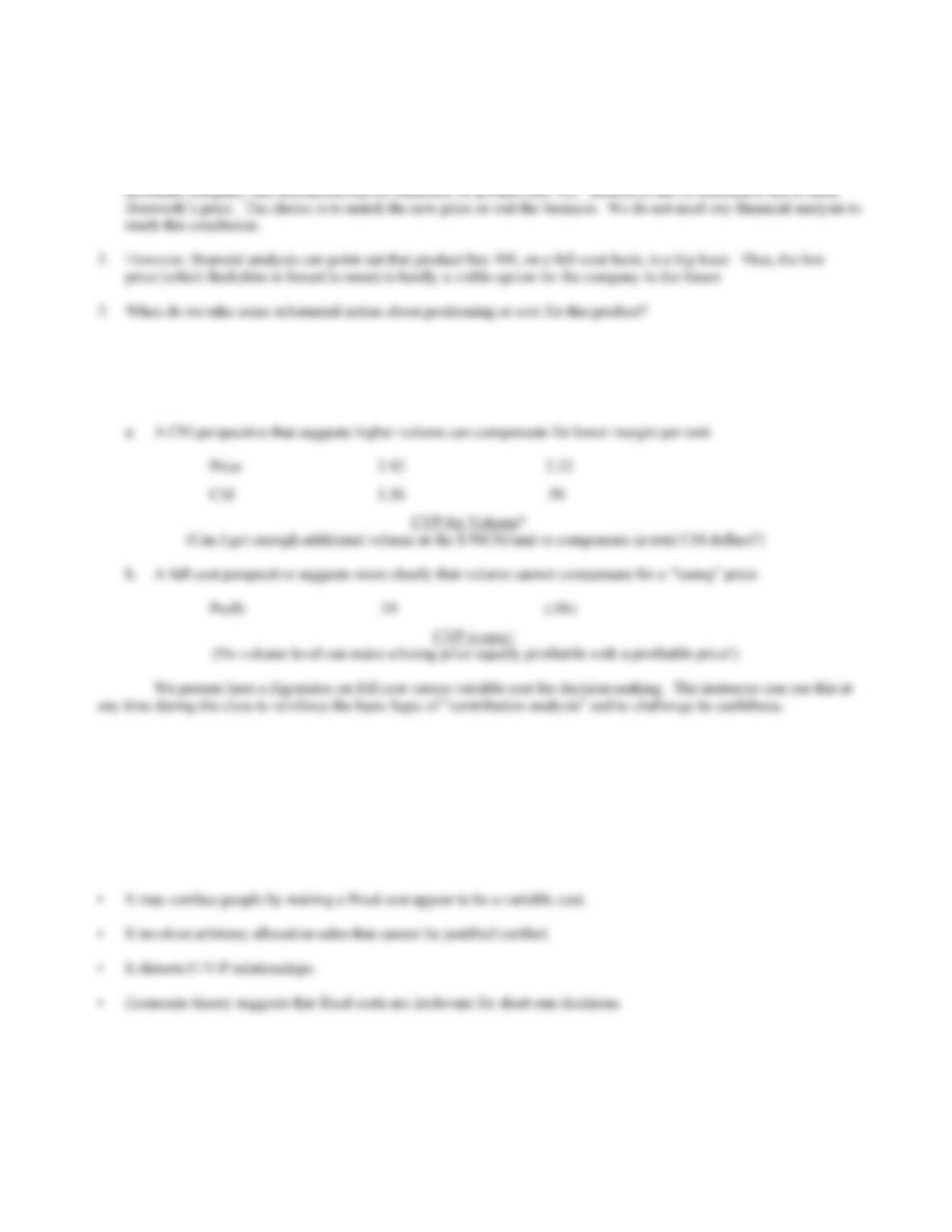
Here is the conventional relevant cost analysis for the pricing choice:
Pricing Decision
Price $2.45 $2.25
Less Cash Discount .03 .03
1. This represents holding on to current volume levels. How likely is this when the overall market is weakening and
we are matching industry price?
7-4
Management Inferences Regarding the Pricing Decision
1. Berkshire sells a commodity product in an industry where several of its competitors are much larger. Bosworth, the
4. The contribution margin approach to this question provides a rationale for cutting the price. This can be interpreted
as saying that the lower price is “more profitable.” Actually, the lower price is not viable, long run, although it
results in a lower loss! Is contribution margin thinking helpful here? Or, is it a trap that camouflages the long-run
loss position?
The “Managerial” view on “Fixed” Costs
One view:
Incorporating fixed costs while making decisions is clearly suspect because:
• The resulting per-unit amount is only accurate at one particular volume level.
7-5
Counterview
• Economic theory suggests that fixed costs are relevant in the long run.
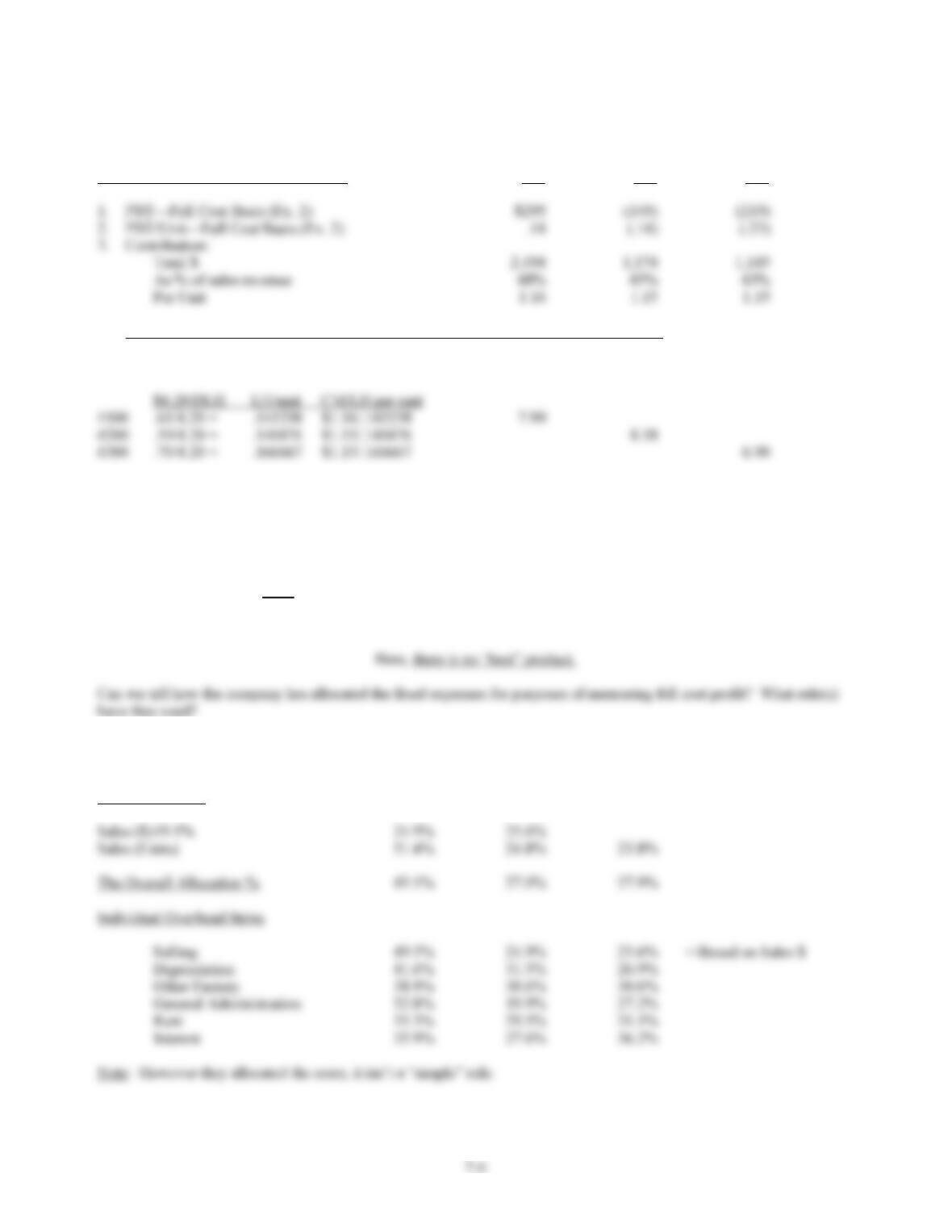
The “Braniff Fallacy”
Are the fixed costs “Relevant for Decision Making Regarding Pricing”?
In Cost Driven Businesses
In “Imperfect” Competition
QUESTION 3: Which is Berkshire’s most profitable product?
Some Possible Measures of Profitability #100 #200 #300
4. Assume Labor is the scarce resource. The idea here is CM per unit of scarce resource.
Contribution per DL Hour
5. Contribution per machine hour?
6. Value added:
Sales Price – (Raw Material + Power) 1.78 1.75 1.86
7. Other Measures… ?
[Note: Each of the three products excels on at least one measure.]
WHICH IS MOST PROFITABLE?? IT DEPENDS!!
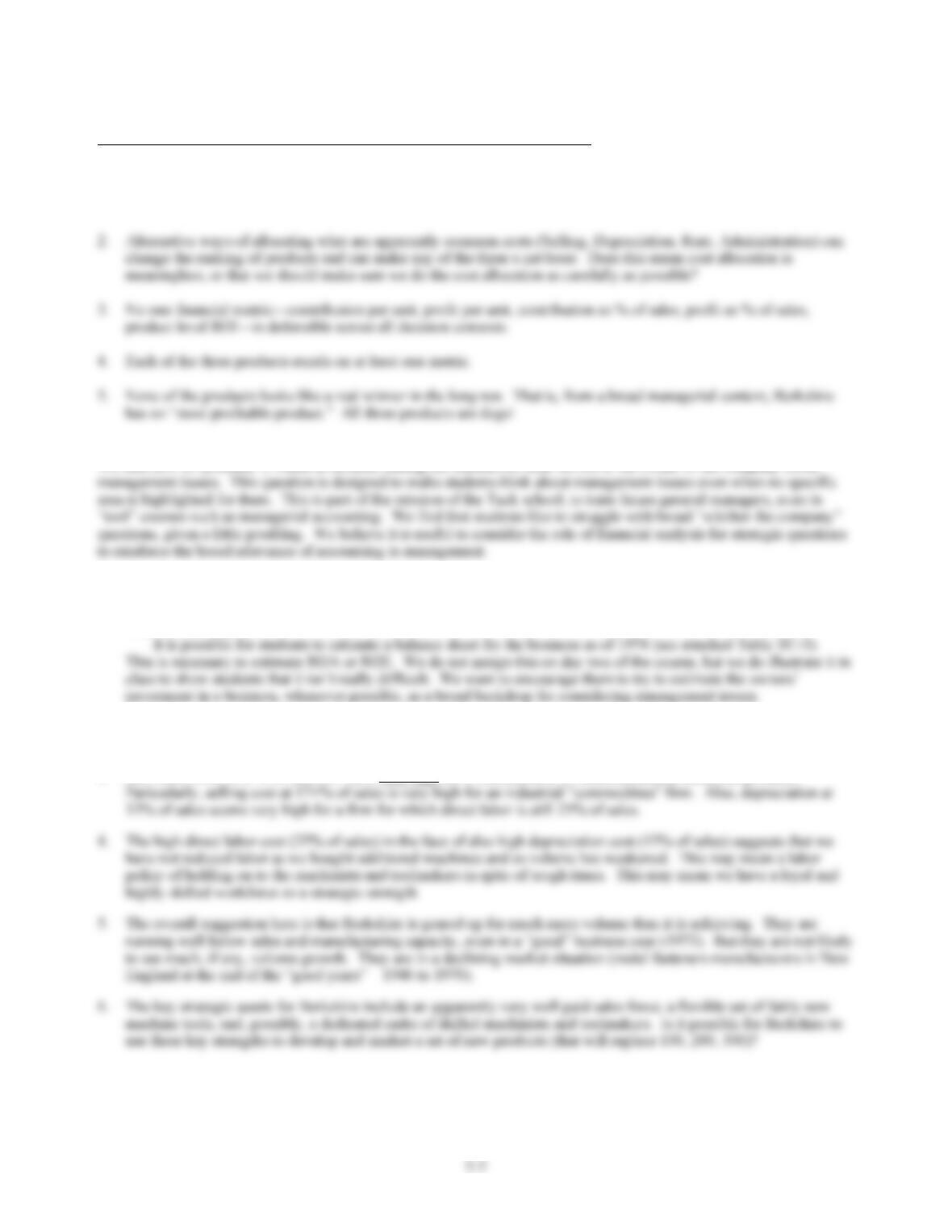
Fixed Overhead Allocations—1973
(percent of total)
Product Volumes 100 200 300
Some Observations about The Comparative Product Profitability Analysis
1. Other than selling expense, which is clearly allocated on the basis of sales revenue, the other allocations are
somewhat puzzling and seem to favor product 100 (50% of sales but only 45% of overhead) and penalize product
200 and product 300 (25% of sales and 28% of overhead).
We turn now to Question 4, which is broader, asking the students to offer advice to the owner of the company about
Current Conditions at Berkshire
1. Berkshire is currently earning very poor returns as a business (pretax ROA of only ~1%, annualized, for 1974).
What should they do?
2. Profit contribution is more than 40% of the sales price for all three products, which is not bad for industrial
“commodity” products.
3. But, fixed costs as a % of sales (47%) is very high for a manufacturer of undifferentiated industrial products.
7-8
TC-3
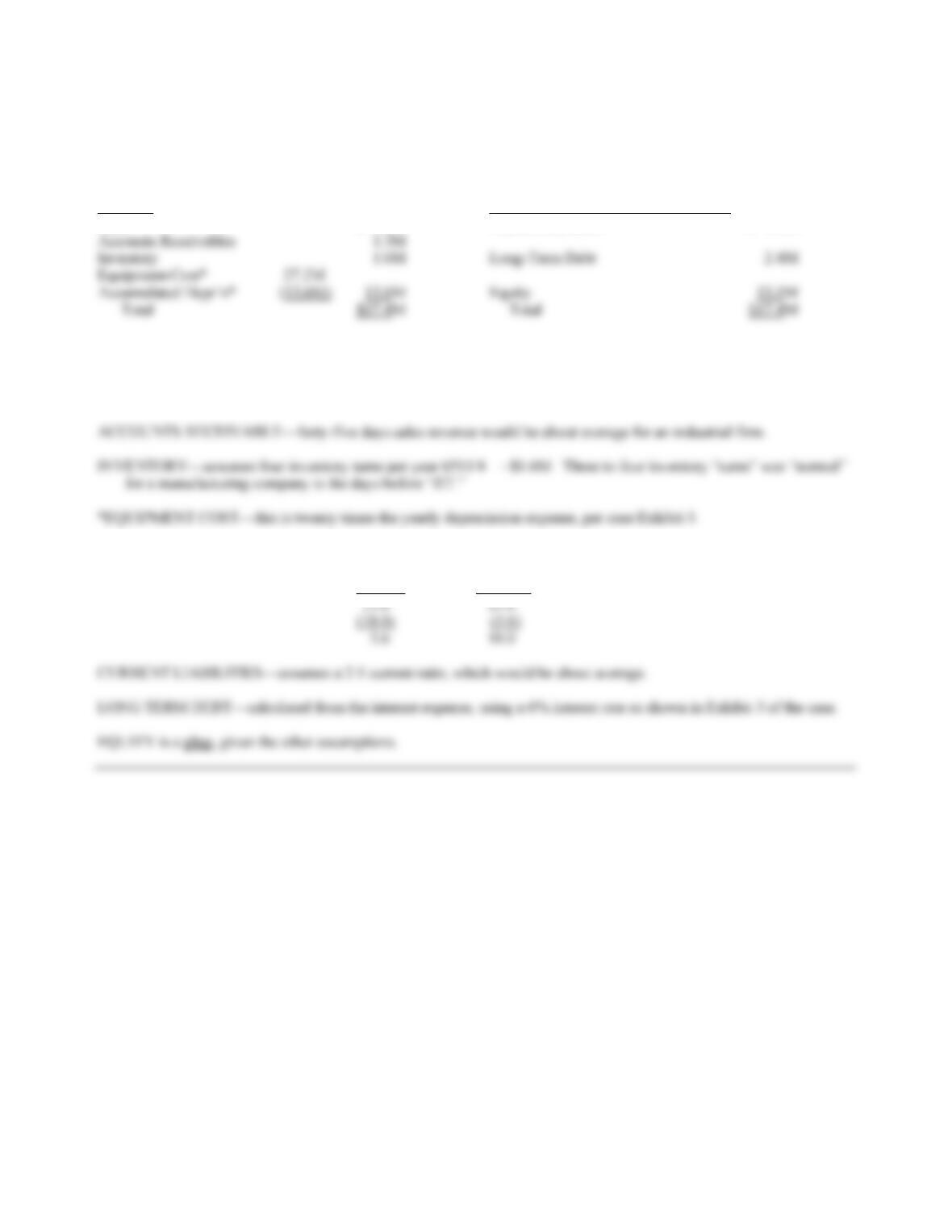
An Approximate Balance Sheet
ASSETS LIABILITIES & OWNERS’ EQUITY
Cash $ 0.9M Current Liabilities $ 1.9M
Assumptions
CASH—only a minimal amount kept on hand. One month’s revenue is equal to about $.9M.
ACCUMULATED DEPRECIATION—assumes that equipment is 1/2 depreciated, on average.
“Older” “Newer”
7-9
The Strategic Position?
Berkshire does not achieve product differentiation.
Berkshire does not achieve low cost leadership.
Me Too/Mir Auch/Moi Aussi
Berkshire is “stuck in the middle” in a seriously declining industry.
Given this assessment of the current position of Berkshire, what choices do they have? The list below (Table TC-4)
TC-4
BERKSHIRE FASTENERS—BASIC STRATEGIC OPTIONS
I. Change the Product Mix
But note that no “mix” of three losing products can gain real success.
IV. New Products
V. Sell the Company Quick!!
To whom? Why?
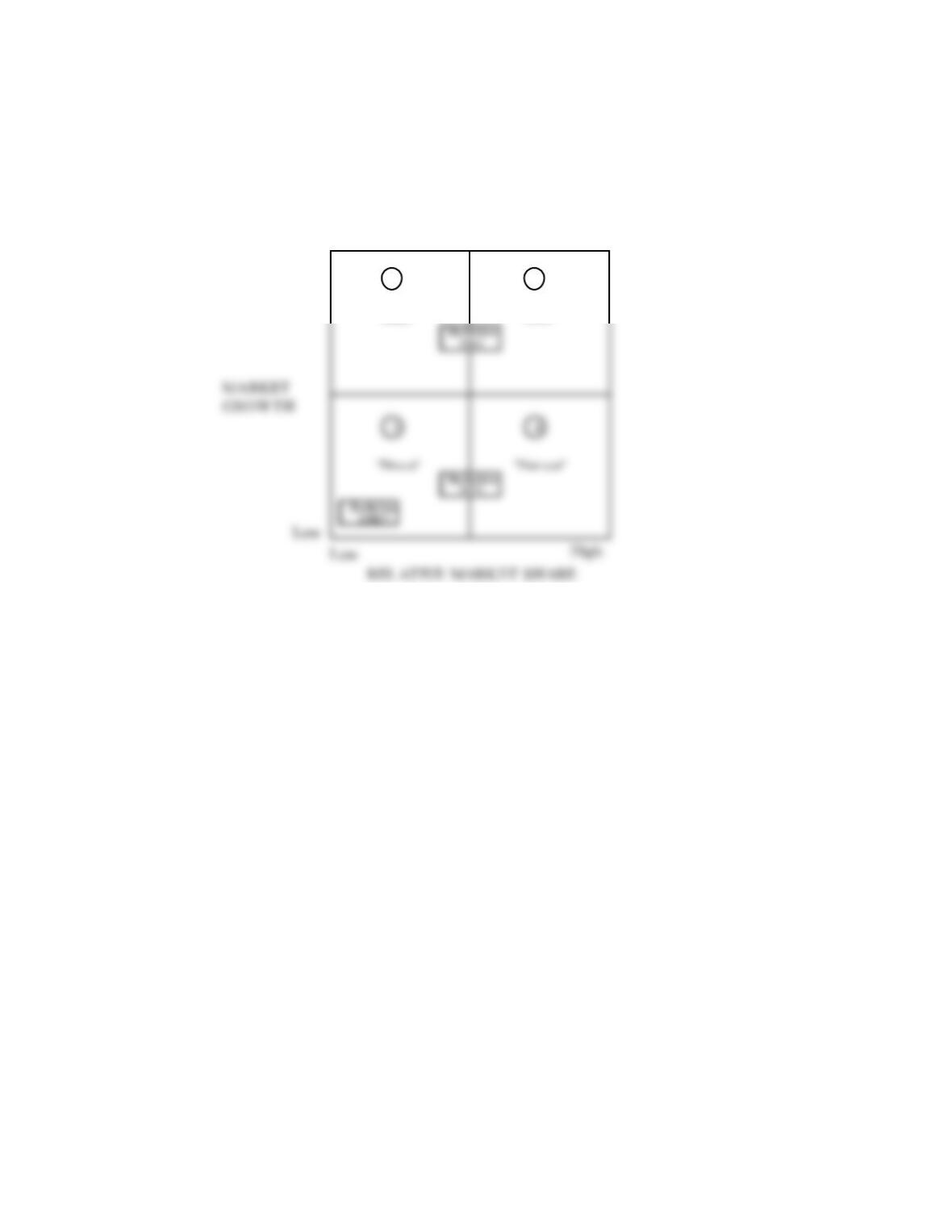
In 1960, there were more than 100 threaded fasteners (nuts and bolts) manufacturers in the United States. Only
7-10
one U.S. manufacturer was left in 1985. The situation over the years can be represented on a Porter style
“growth/share matrix.”
Market Growth/Share Matrix
High
1
“Build”
2
“Hold “