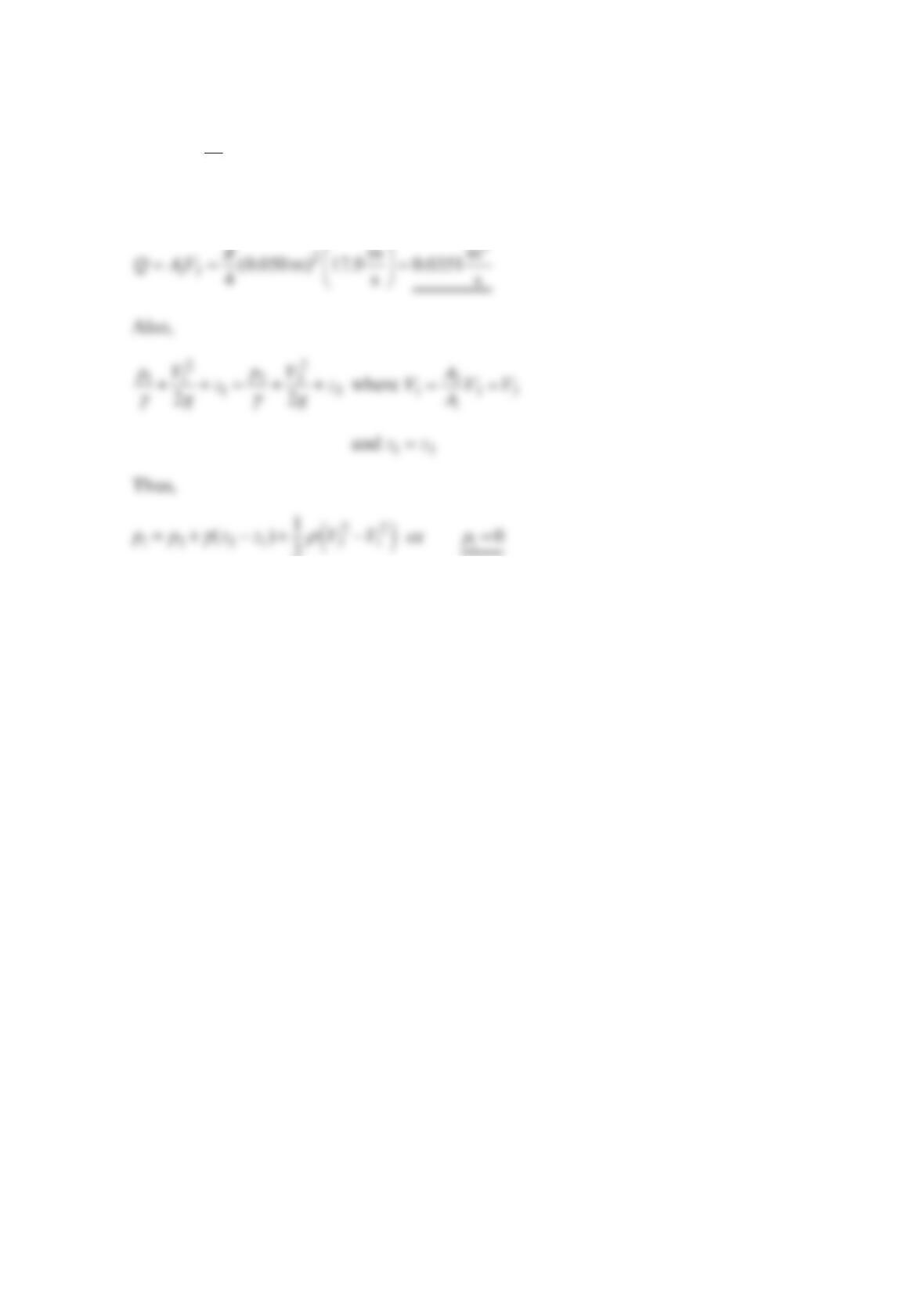
or
3
m
17.9 s
V=
Thus,
Problem 3.82
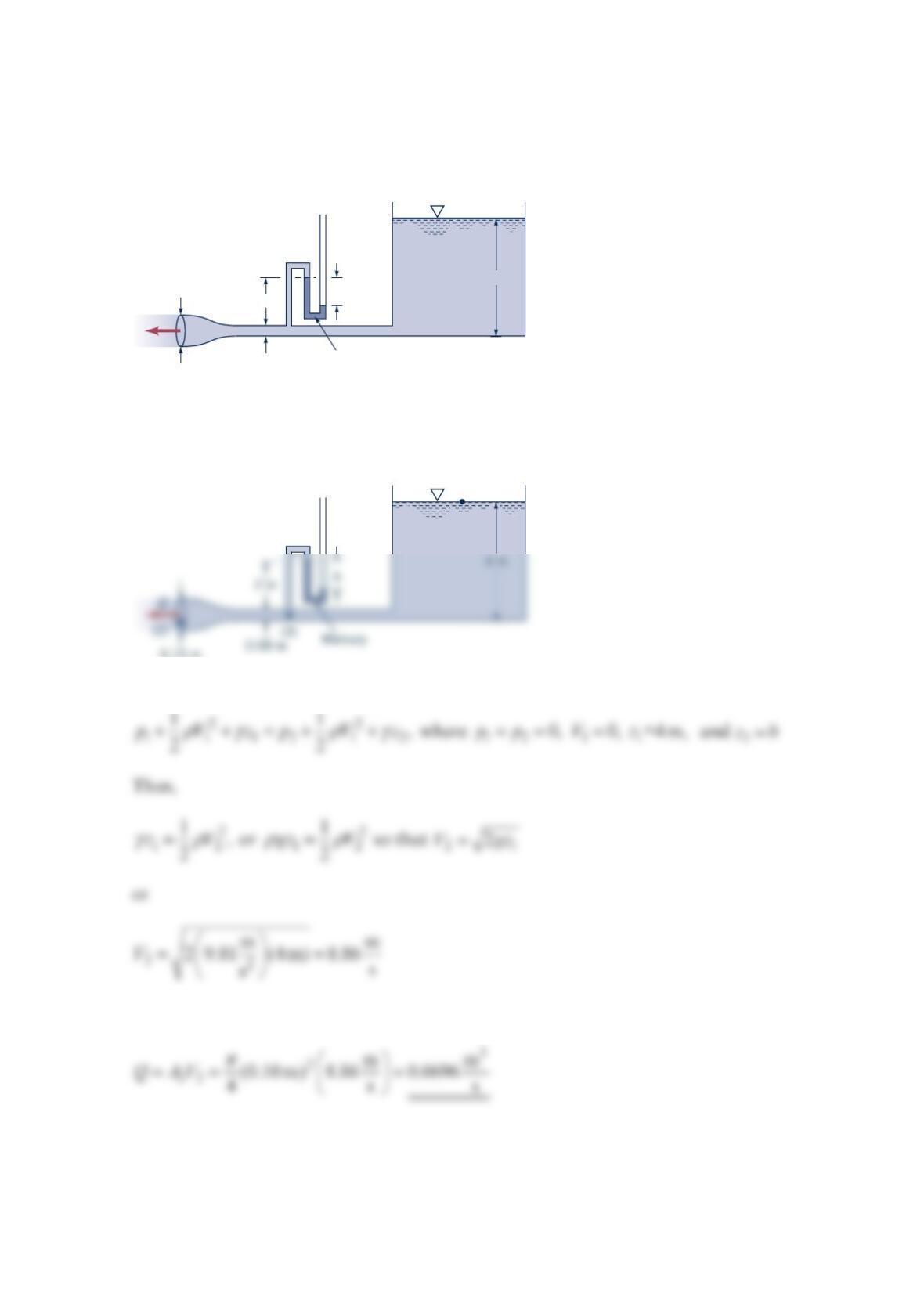
Water flows steadily from the large open tank shown in the figure below. If viscous effects
are negligible, determine (a) the flowrate, Q, and (b) the manometer reading, h.
Solution 3.82
(a) From the Bernoulli’s equation,
Hence,
0.10 m 0.08 m
2 m
4 m
Q
h
Mercury
0.10 m 0.08 m
(1)
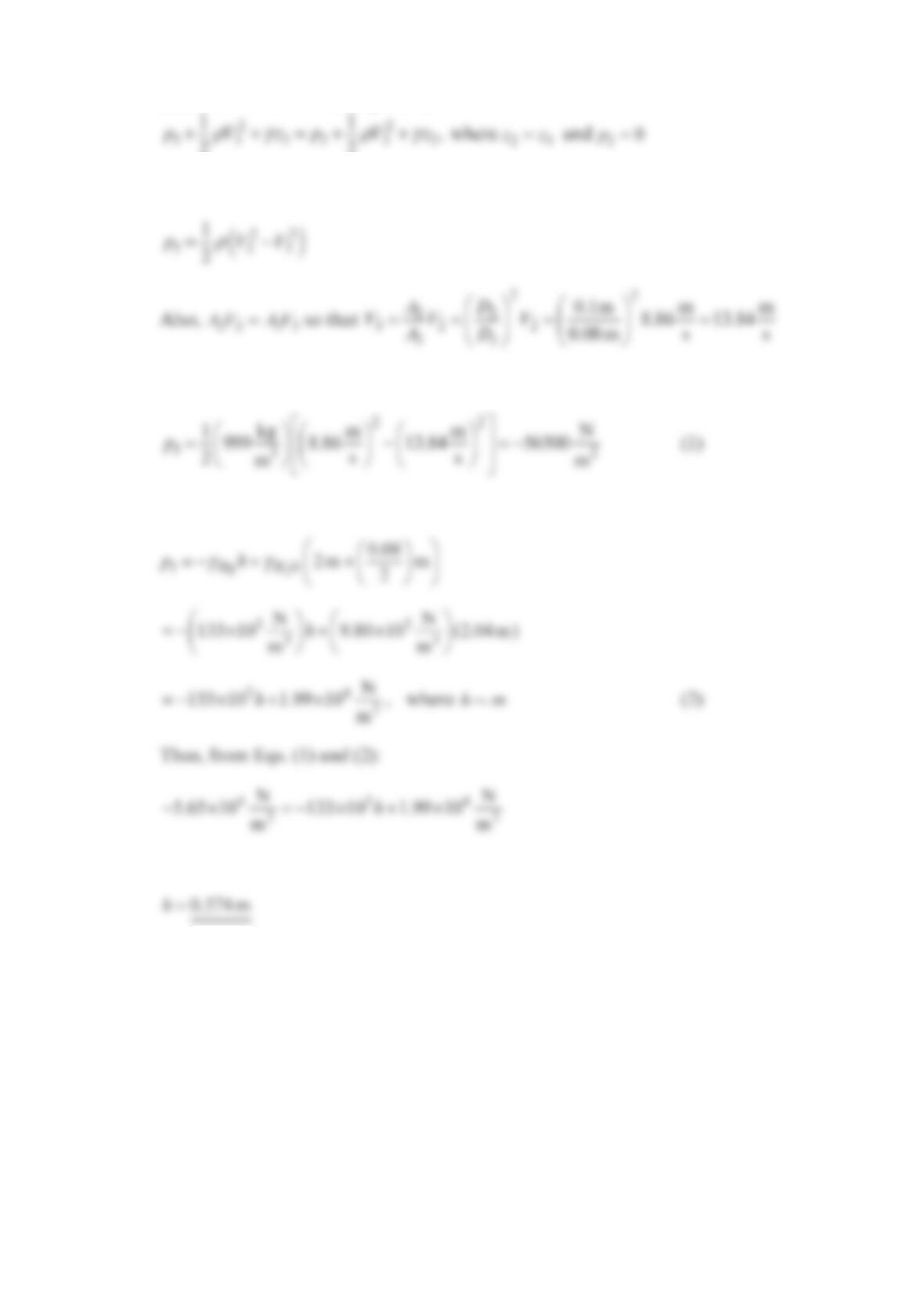
(b) From the Bernoulli’s equation,
22
so that
Hence,
Also, from the manometer,
or
Problem 3.83
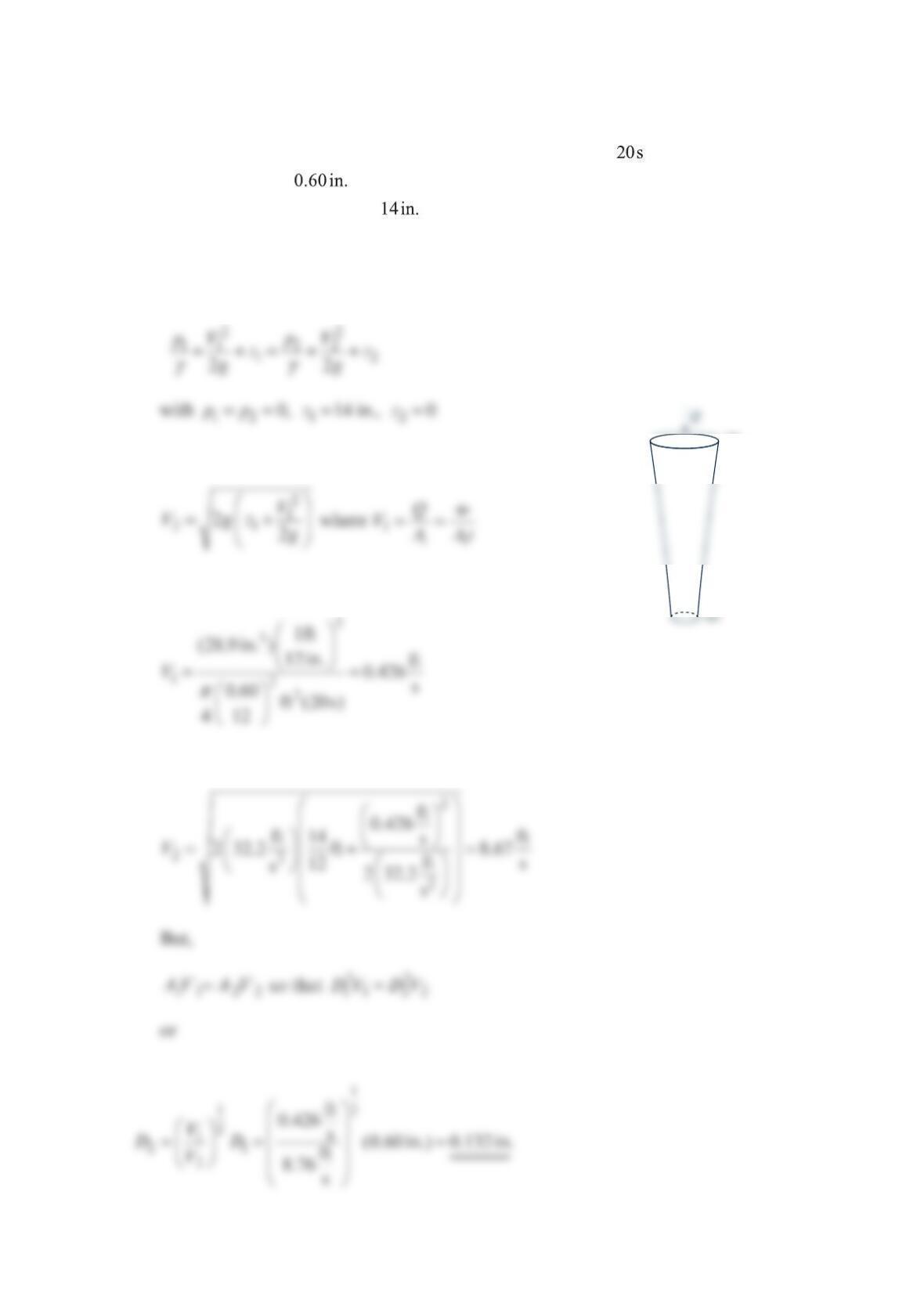
Water from a faucet fills a 16-o
z
glass (volume = 3
28.9 in. ) in . If the diameter of the jet
leaving the faucet is , what is the diameter of the jet when it strikes the water surface
in the glass which is positioned below the faucet?
Solution 3.83
Thus,
or
Hence,
(1)
D
1
= 0.60 in.
Problem 3.84
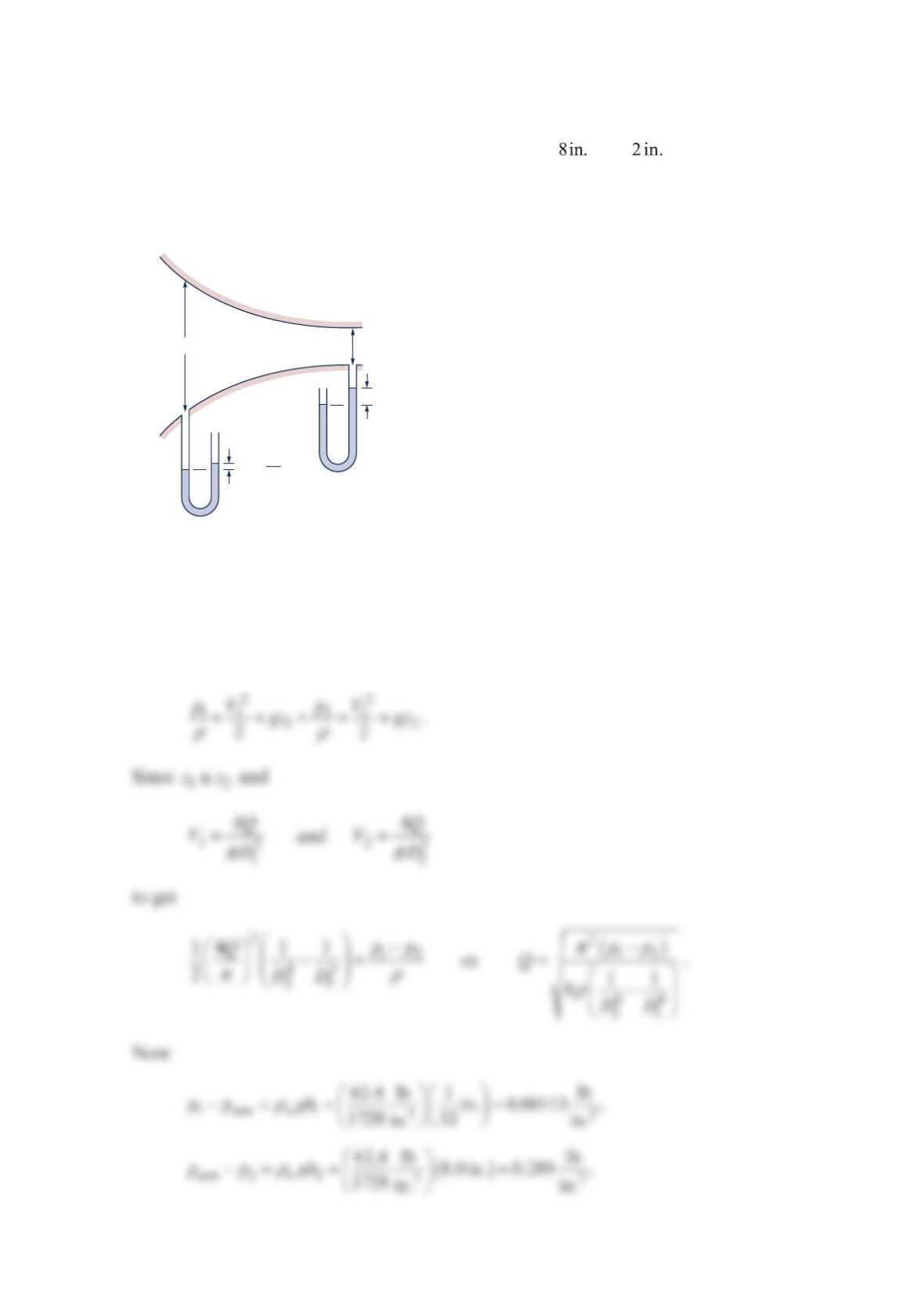
The nozzle shown in the figure below has two water manometers to indicate the static pres-
sures at sections 1 and 2. The diameters 1
D
and 2
D
are and , respectively. Air flows
through the nozzle, and the air and water temperatures are 60
F
°. Find the air volume flow
rate. Assume constant density and inviscid flow. Neglect elevation changes.
Solution 3.84
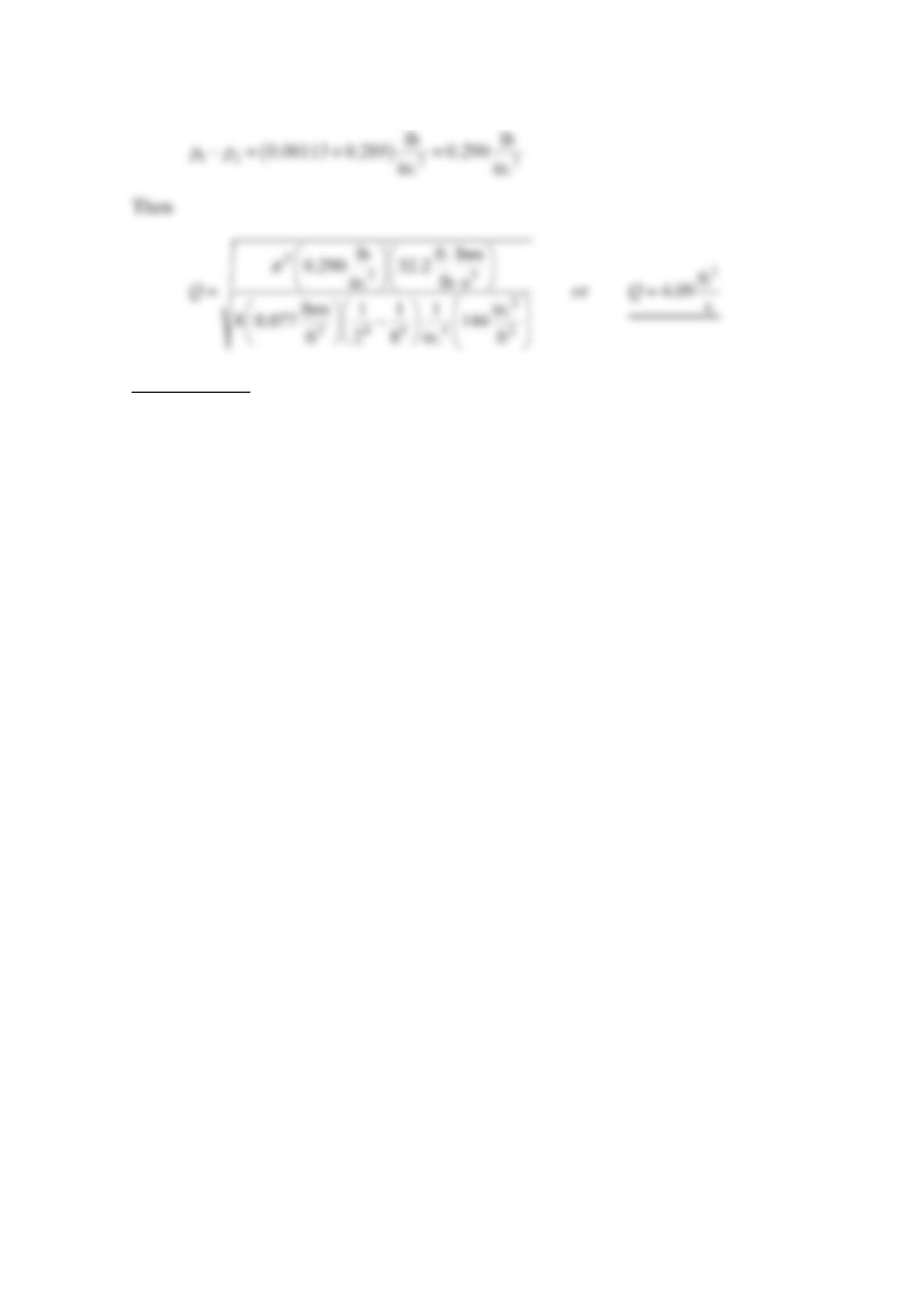
Apply Bernoulli’s equation to a streamline connecting cross section 1 and cross section 2.
D
2
D
1
h
2
= 8.0 in.
h
1
= in.
p
atm
= 14.7 psia
1
32
and
DISCUSSION You might be tempted to write Bernoulli’s equation from the atmosphere
(V = 0) to cross section 1. This is not valid since the pressure at cross section 1 is greater
than the atmospheric pressure, which indicates that a fan was used to put energy into the
flow. Bernoulli’s equation does not apply to a flow stream with a fan or a turbine or other
device that changes its energy.
Problem 3.85
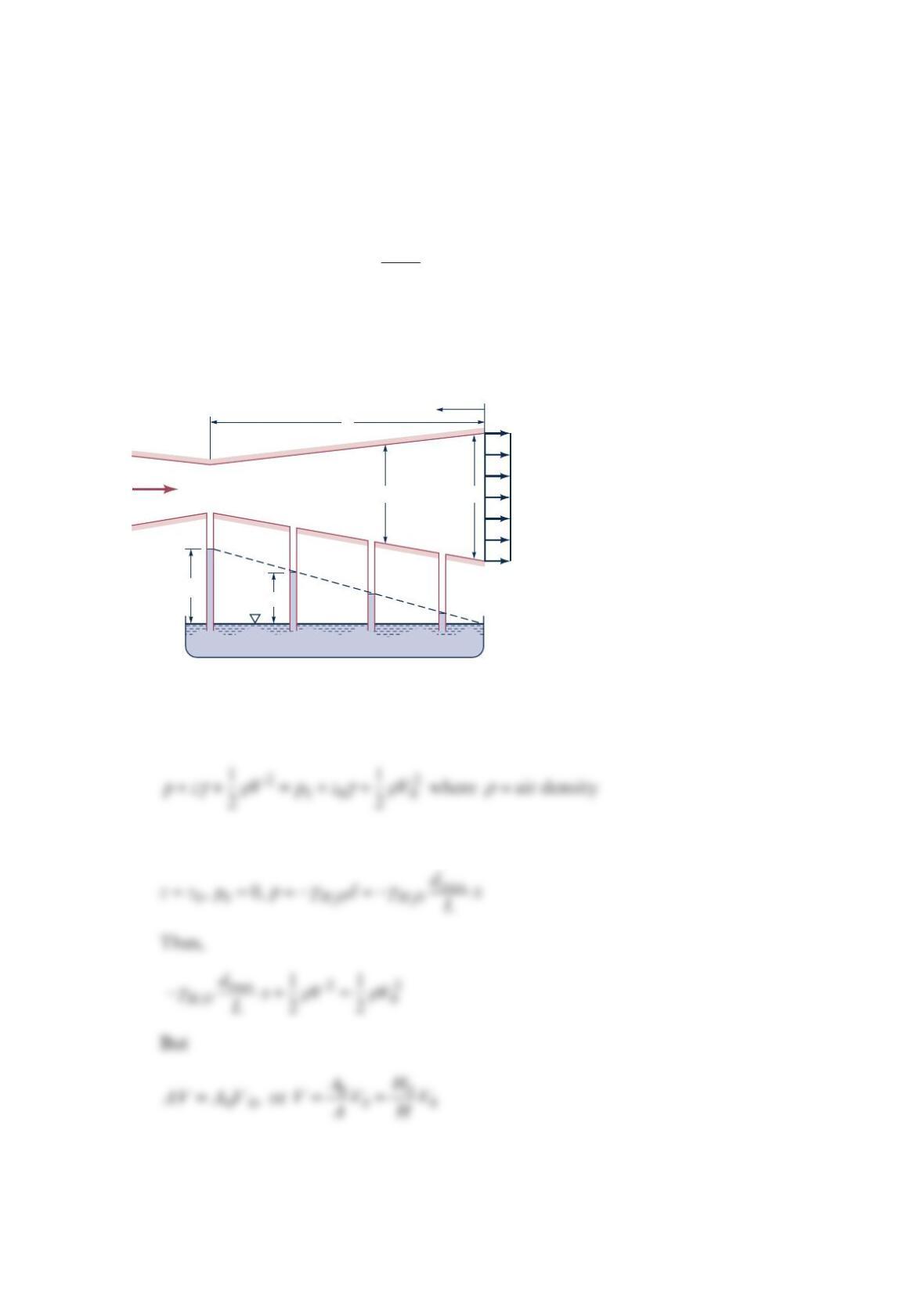
Air flows steadily through a converging–diverging rectangular channel of constant width as
shown in the figure below. The height of the channel at the exit and the exit velocity are 0
H
and 0
V
respectively. The channel is to be shaped so that the distance, d, that water is drawn
up into tubes attached to static pressure taps along the channel wall is linear with distance
along the channel. That is max
d
dx
L
=
, where
L
is the channel length and max
d is the max-
imum water depth (at the minimum channel height: x
L
=). Determine the height, ()Hx, as
a function of x and the other important parameters.
Solution 3.85
where
Water
dmax d
Q
Air H(x)H0
x = 0
x = L
V0
L
x
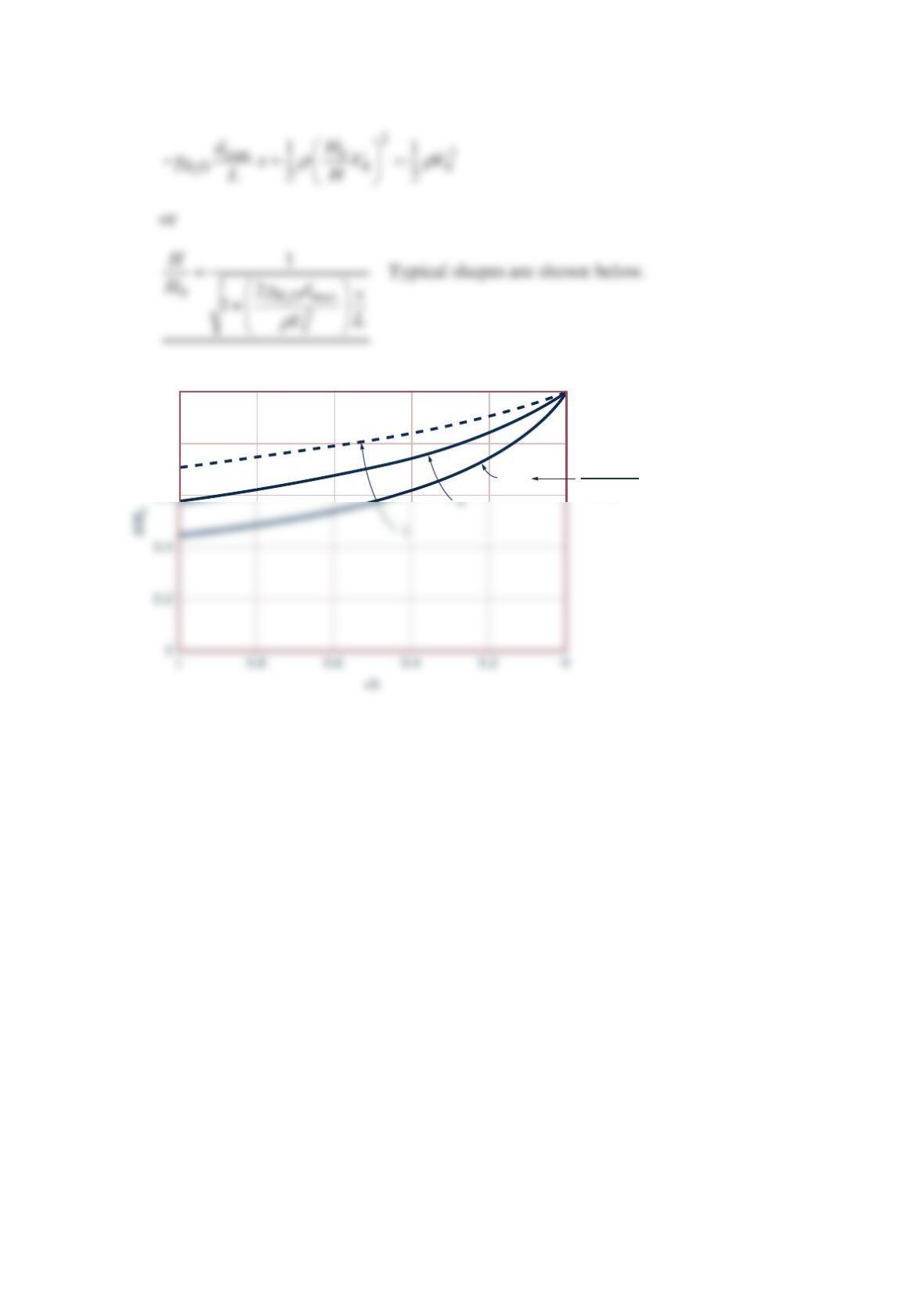
so that
1
0.8
0.6
H
/H0 vs
x
/L
4
H
2
O
2
γ
d
max
V0
2
ρ
Problem 3.86
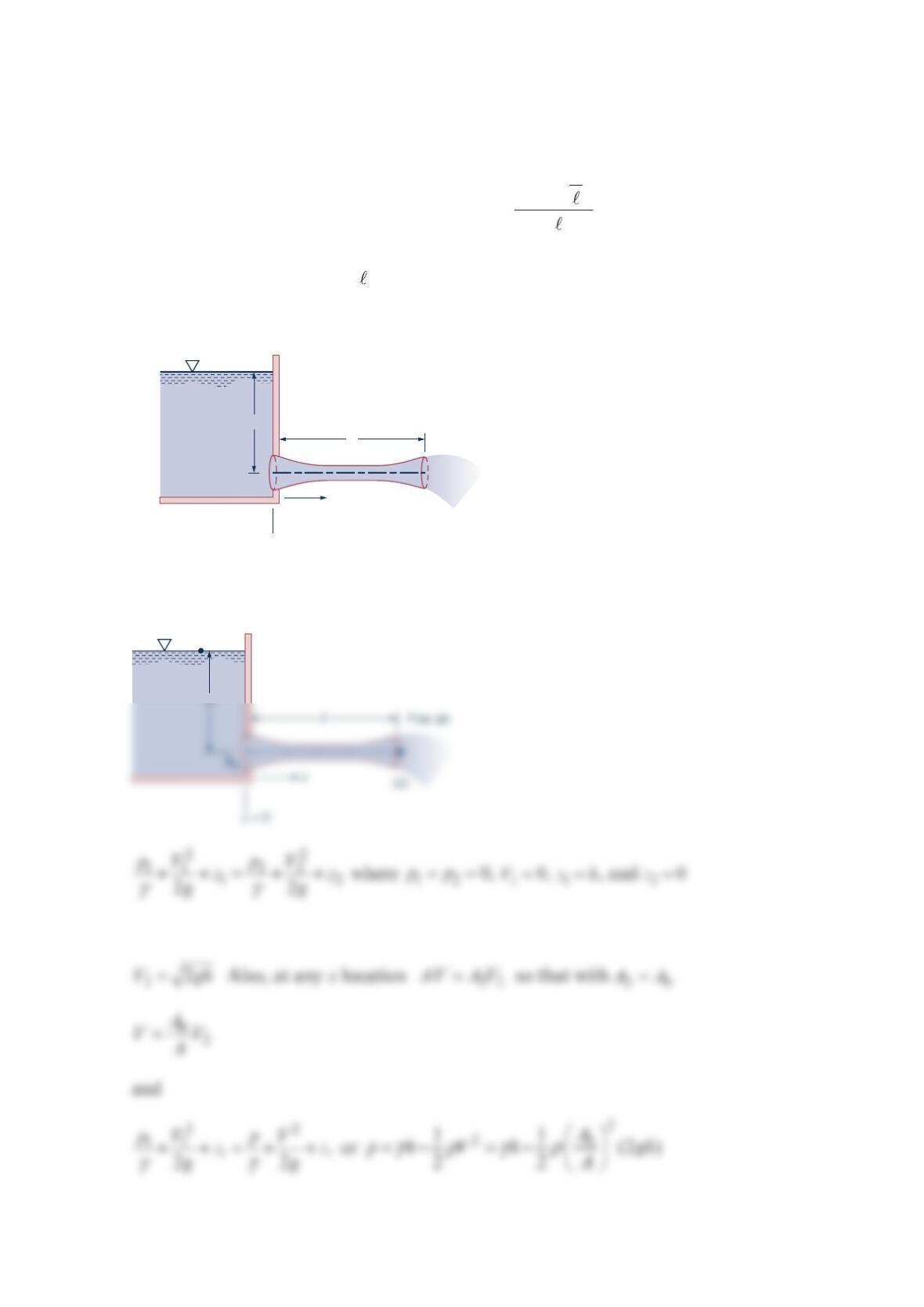
Water flows from a large tank and through a pipe of variable area as shown in the figure
below. The area of the pipe is given by 0
11
2
x
AA
−−
=
, where A0 is the area at the be-
ginning (0
)
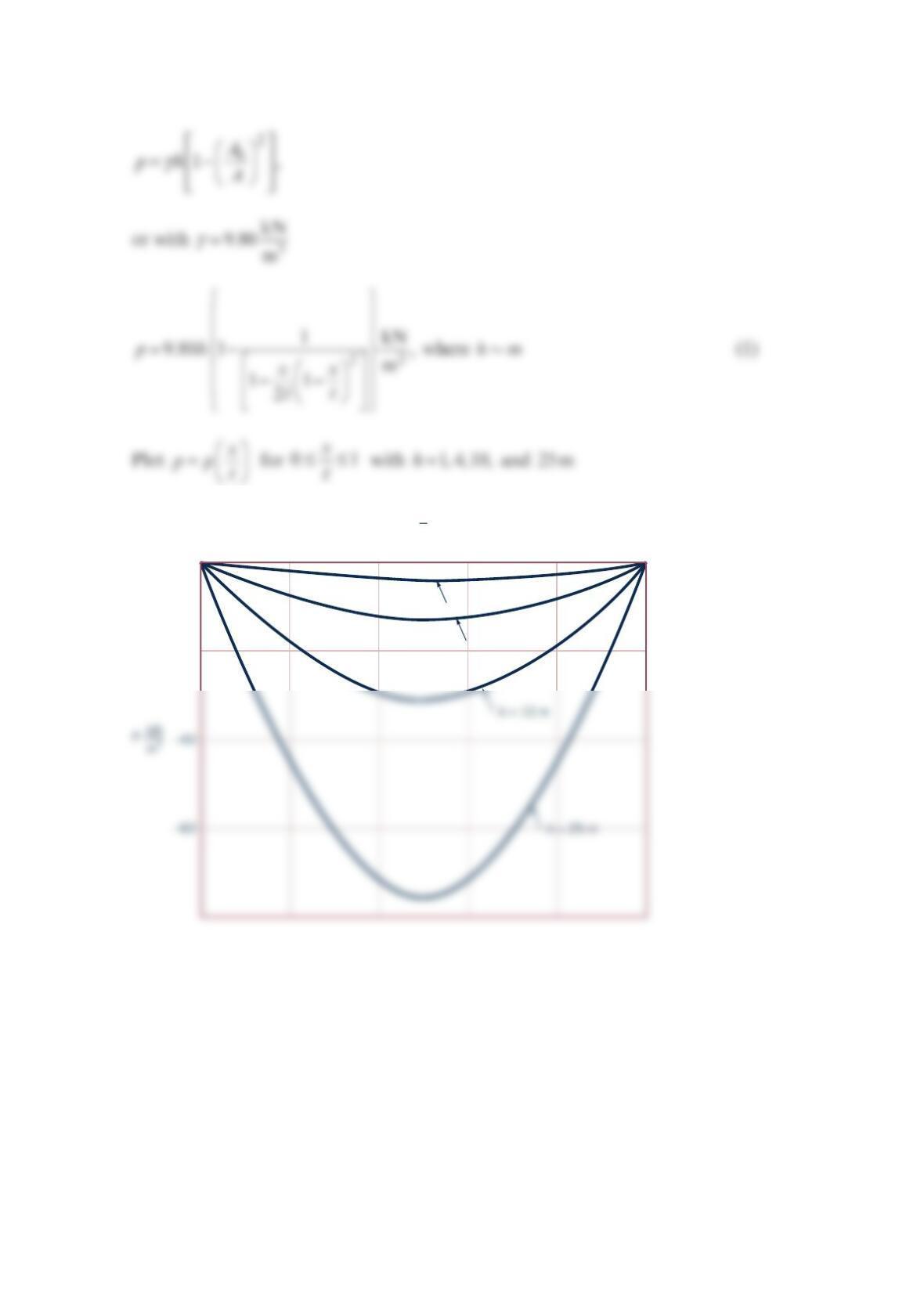
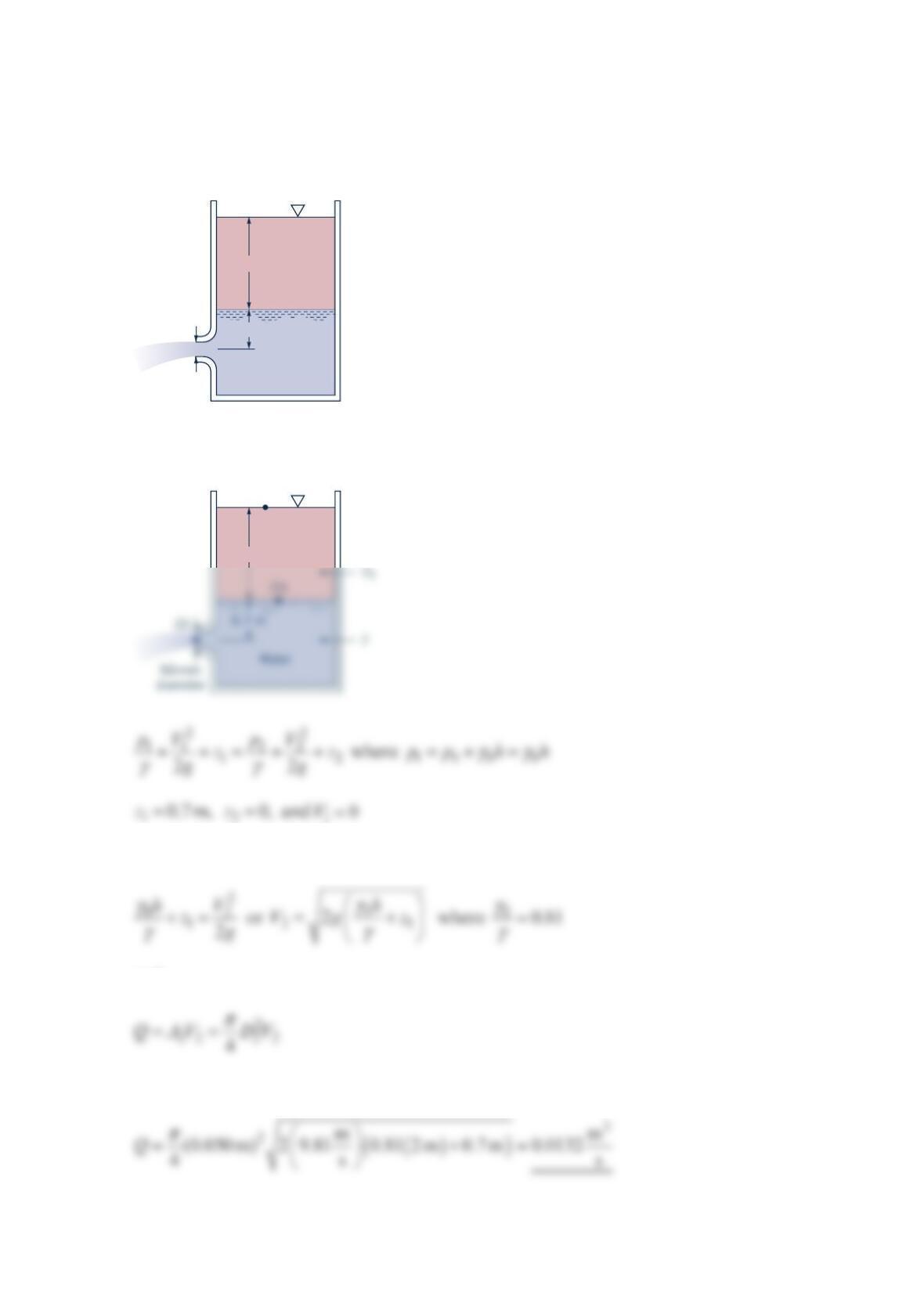
x= and end ()x= of the pipe. Plot graphs of the pressure within the pipe as a
function of distance along the pipe for water depths of 1, 4, 10, 25 m.h=
Solution 3.86
Thus,
Free jet
h
x
x
=
0
ℓ
(1)
Thus,
00 0.2 0.4 0.6 0.8 1.0
–20
h
=
1 m
h
=
4 m
x
ℓ
Problem 3.87
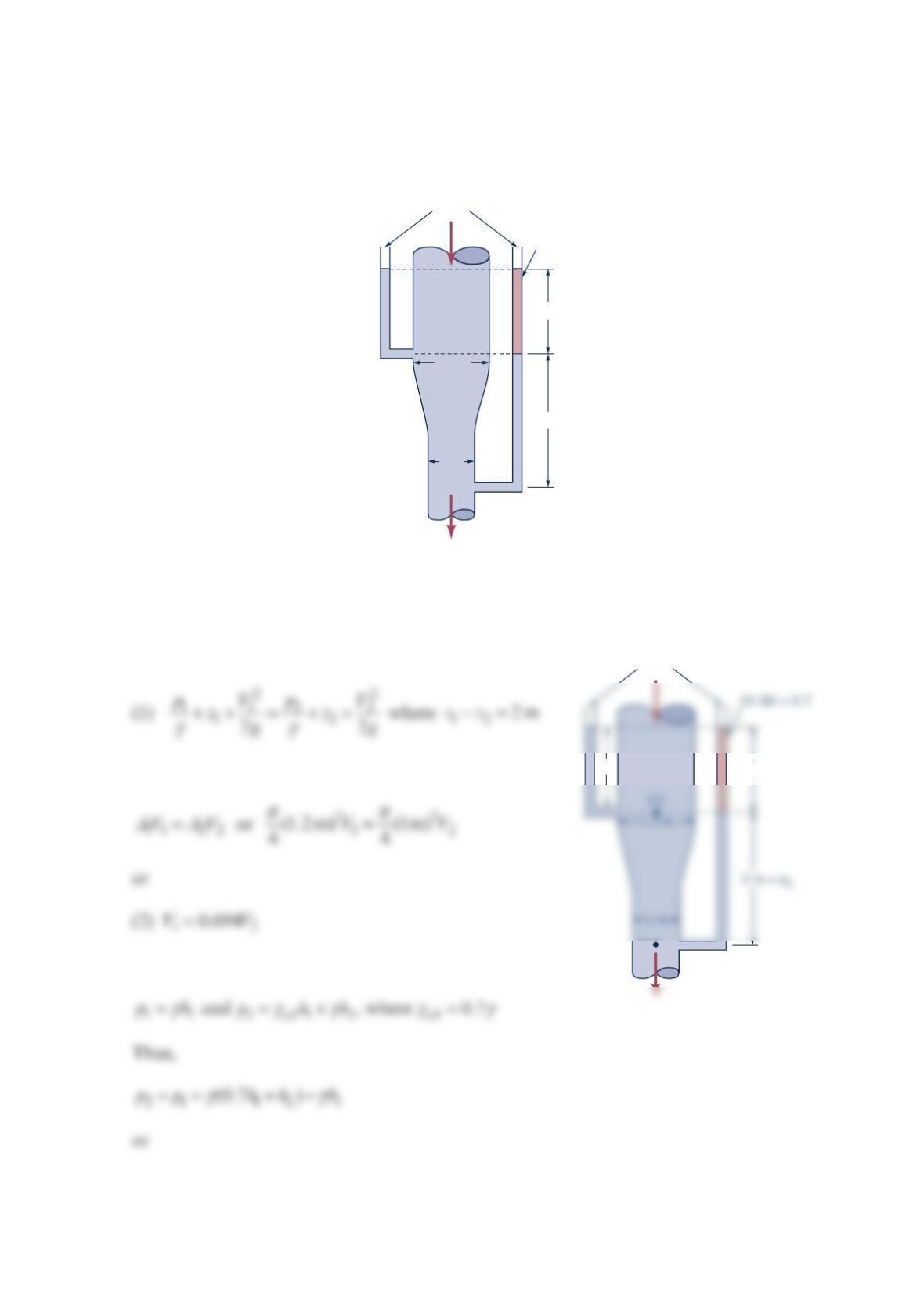
If viscous effects are neglected and the tank is large, determine the flowrate from the tank
shown in the figure below.
Solution 3.87
Thus,
and
Thus,
Water
Oil,
SG
= 0.81
2 m
0.7 m
50-mm
diameter
Oil,
SG = 0.81
(0)
h
= 2 m
Problem 3.88
Water flows steadily downward in the pipe shown in the figure below with negligible losses.
Determine the flowrate.
Solution 3.88
From the Bernoulli’s equation,
and
Also, from the manometers,
Oil
SG
= 0.7
Open
1.2 m
1 m
1.5 m
2 m
Open
1.5 m = h
1
(2)
h
1
γ
(3) 21 21
0.3 2 m 0.3(1.5 m) 1.55 m
pphh
γ
−=− = − =
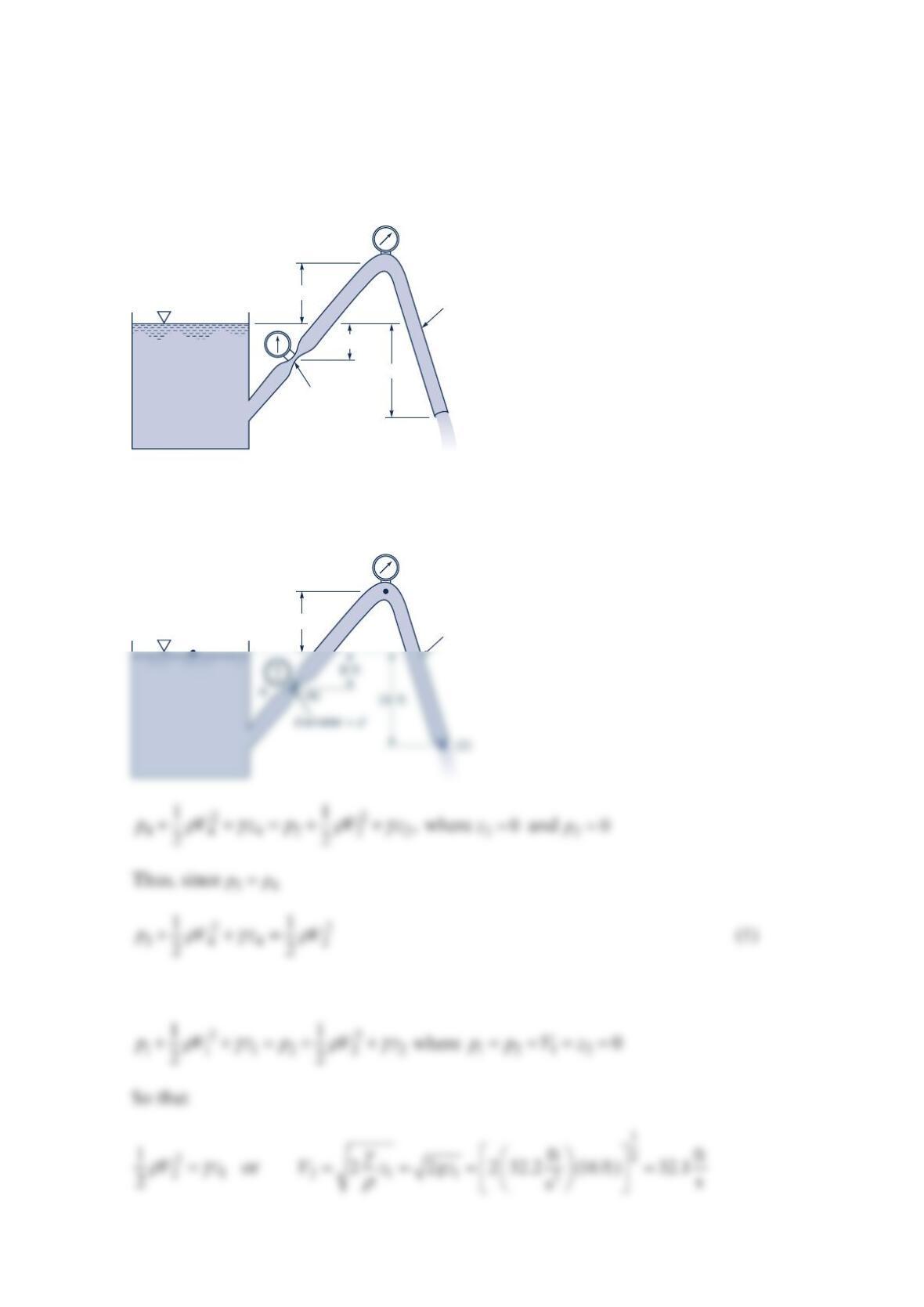
Now, from Eq. (1),
Problem 3.89
Water flows steadily from a large open tank and discharges into the atmosphere through a
3-in.-diameter pipe as shown in the figure below. Determine the diameter, d, in the narrowed
section of the pipe at A if the pressure gages at A and B indicate the same pressure.
Solution 3.89
However,
9 ft
8 ft
16 ft
3-in. diameter
diameter =
d
A
B
9 ft
3-in. diameter
B
(1)
(3)
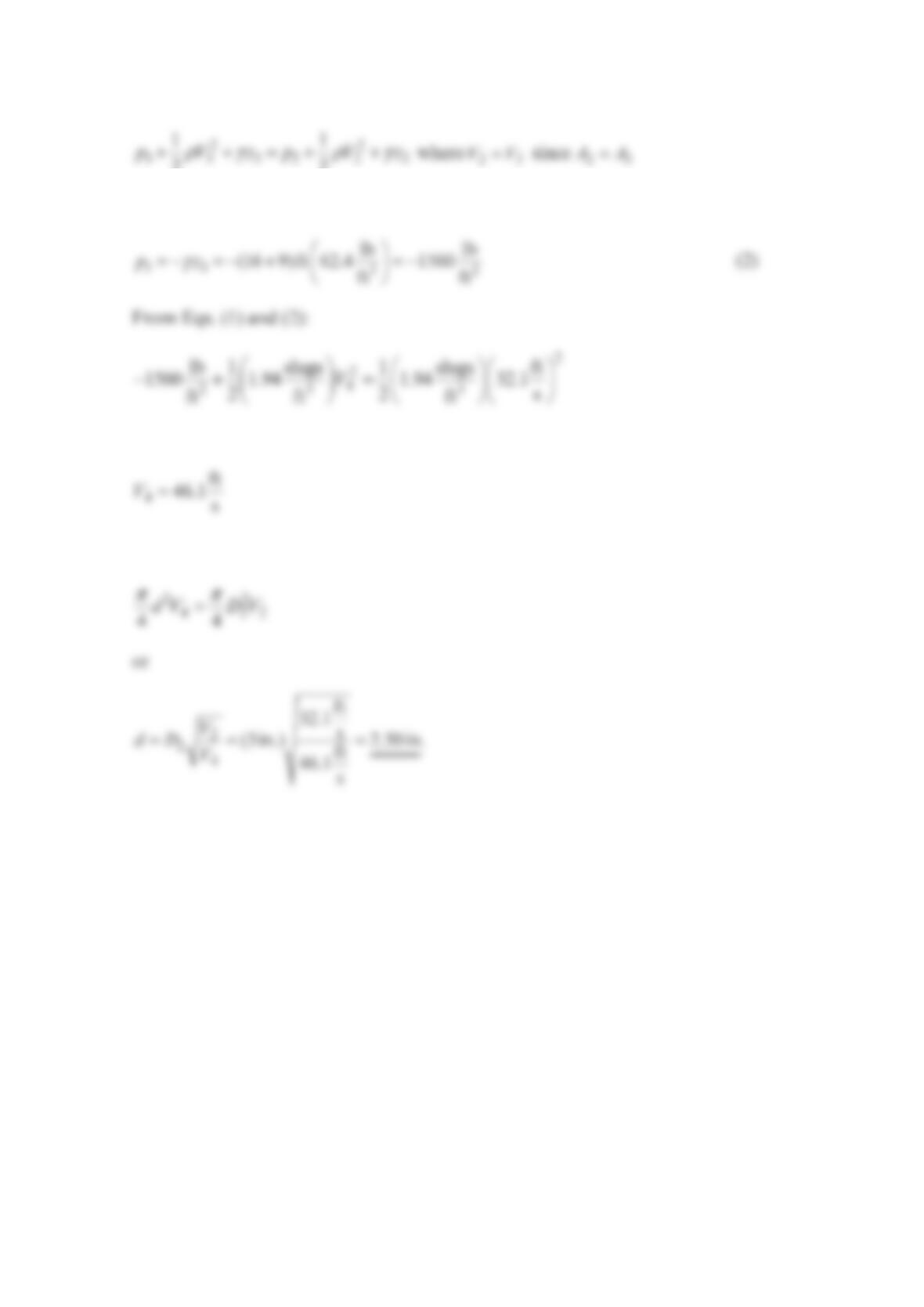
But
22
Thus,
or
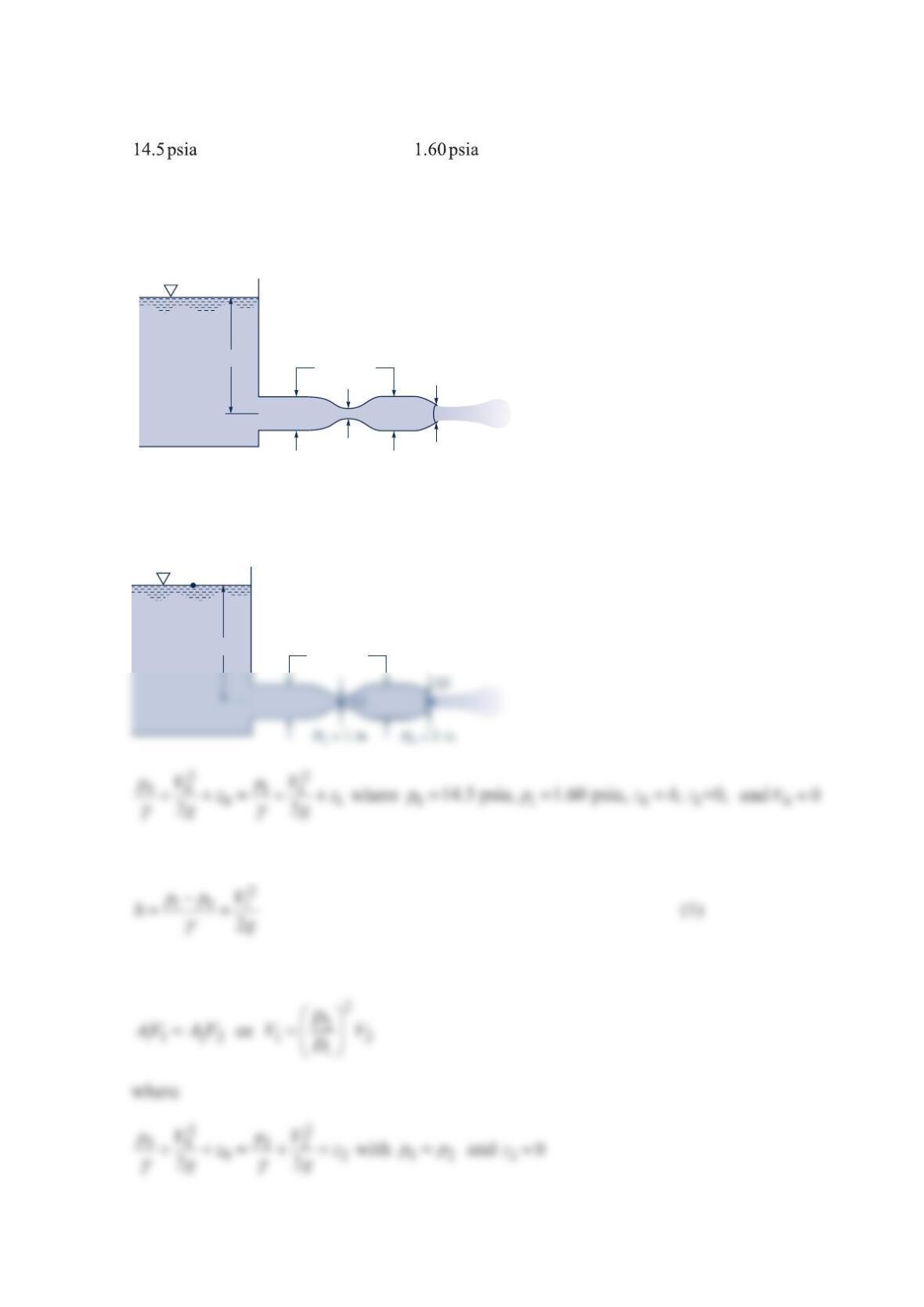
Since 44 22
AV AV= it follows that
Problem 3.90
Water flows from a large tank as shown in the figure below. Atmospheric pressure is
, and the vapor pressure is . If viscous effects are neglected, at what
height, h, will cavitation begin? To avoid cavitation, should the value of 1
D
be increased or
decreased? To avoid cavitation, should the value of 2
D
be increased or decreased? Explain.
Solution 3.90
Thus,
However,
D
3 = 4 in.
D
1 = 1 in.
D
2 = 2 in.
h
D
3 = 4 in.
h
(0)
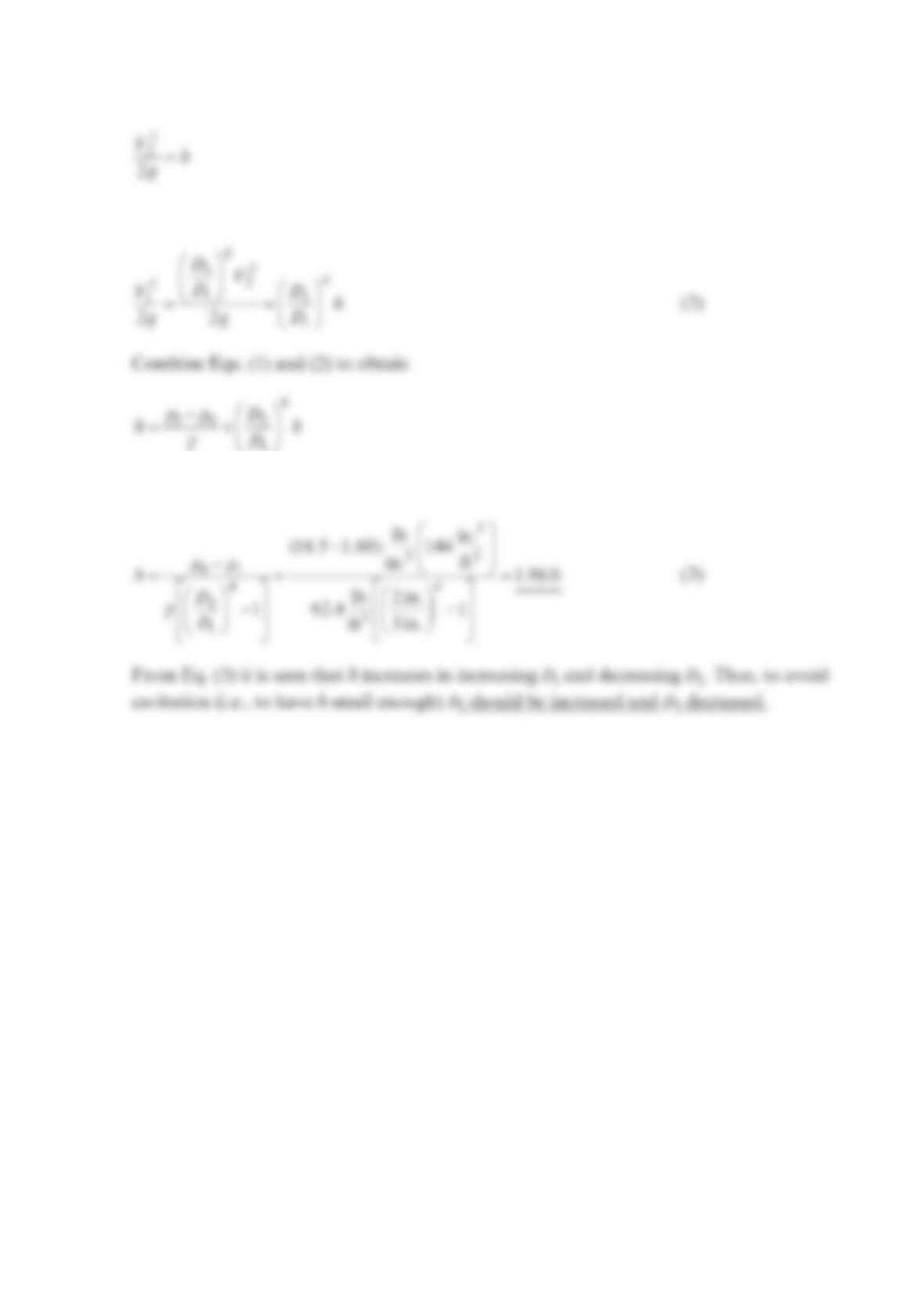
Thus,
so that
1
or
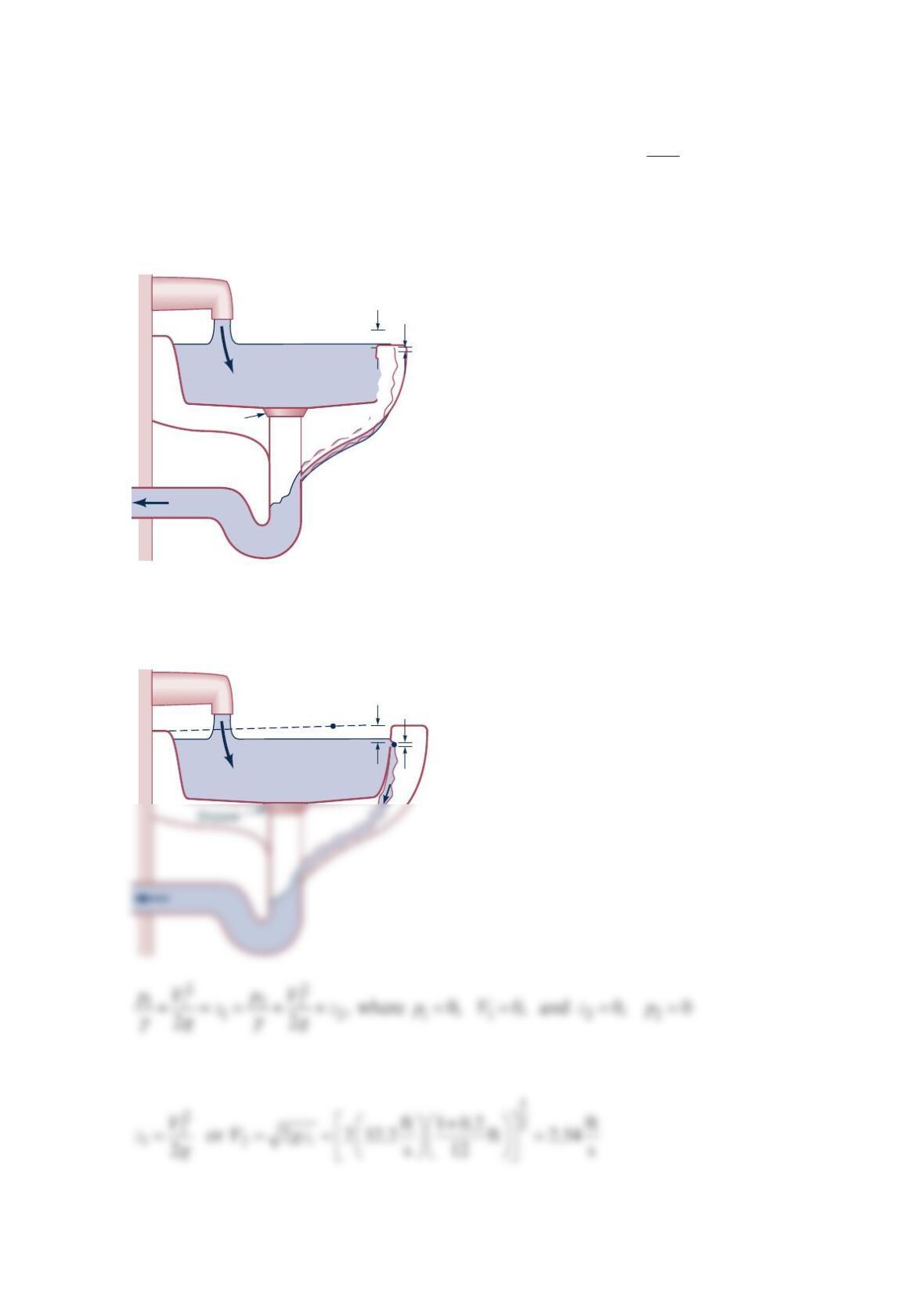
Problem 3.91
Water flows into the sink shown in the figure below at a rate of gal
2
min. If the drain is closed,
the water will eventually flow through the overflow drain holes rather than over the edge of
the sink. How many 0.4-in.-diameter drain holes are needed to ensure that the water does
not overflow the sink? Neglect viscous effects.
Solution 3.91
Thus,
Q
= 2 gal/min
1 in.
0.4-in.-diameter
holes
Stopper
Q
= 2 gal/min
1 in.
0.4-in.-diameter
holes
(1)
(2)
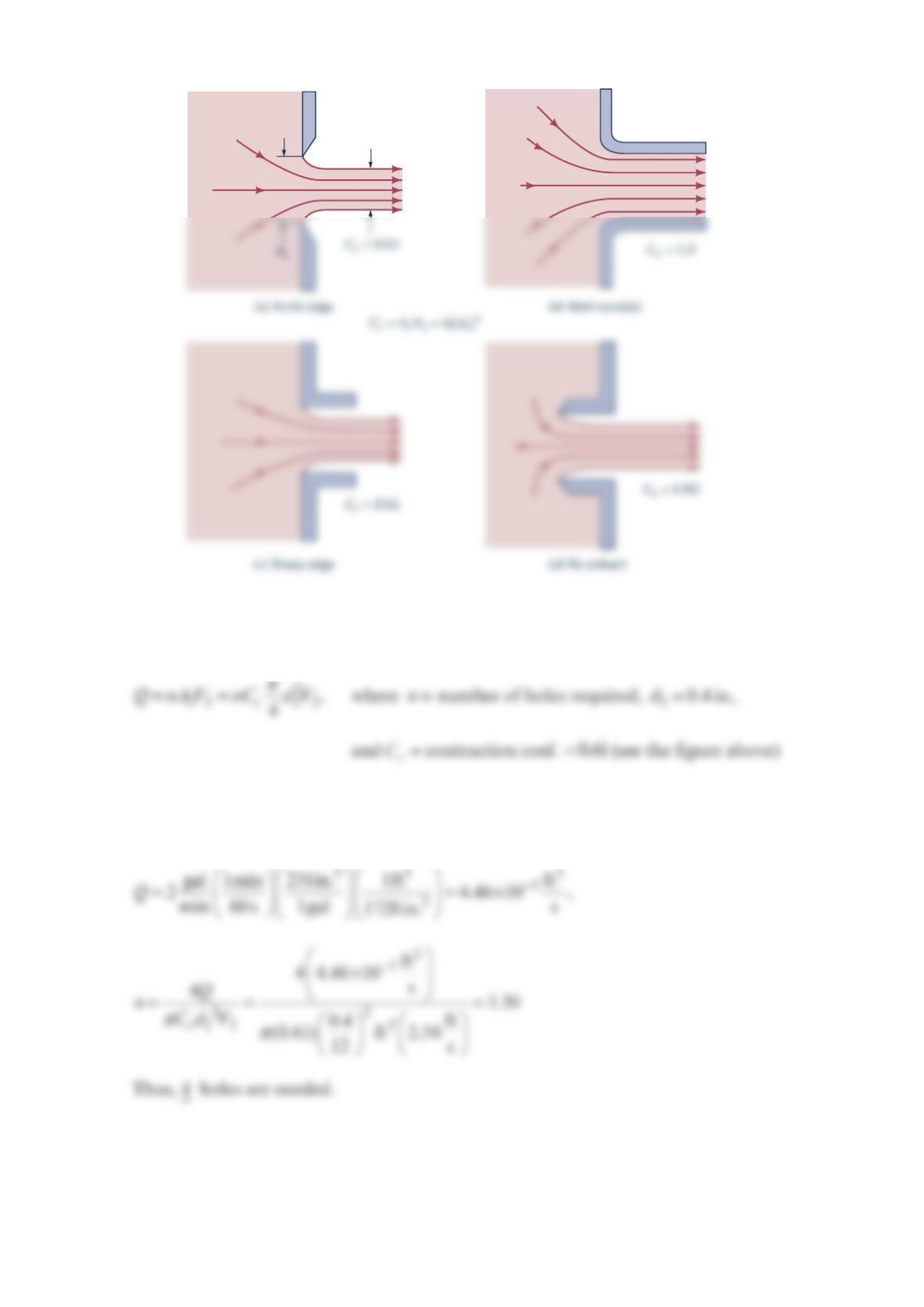
Also,
Thus, with
d
j
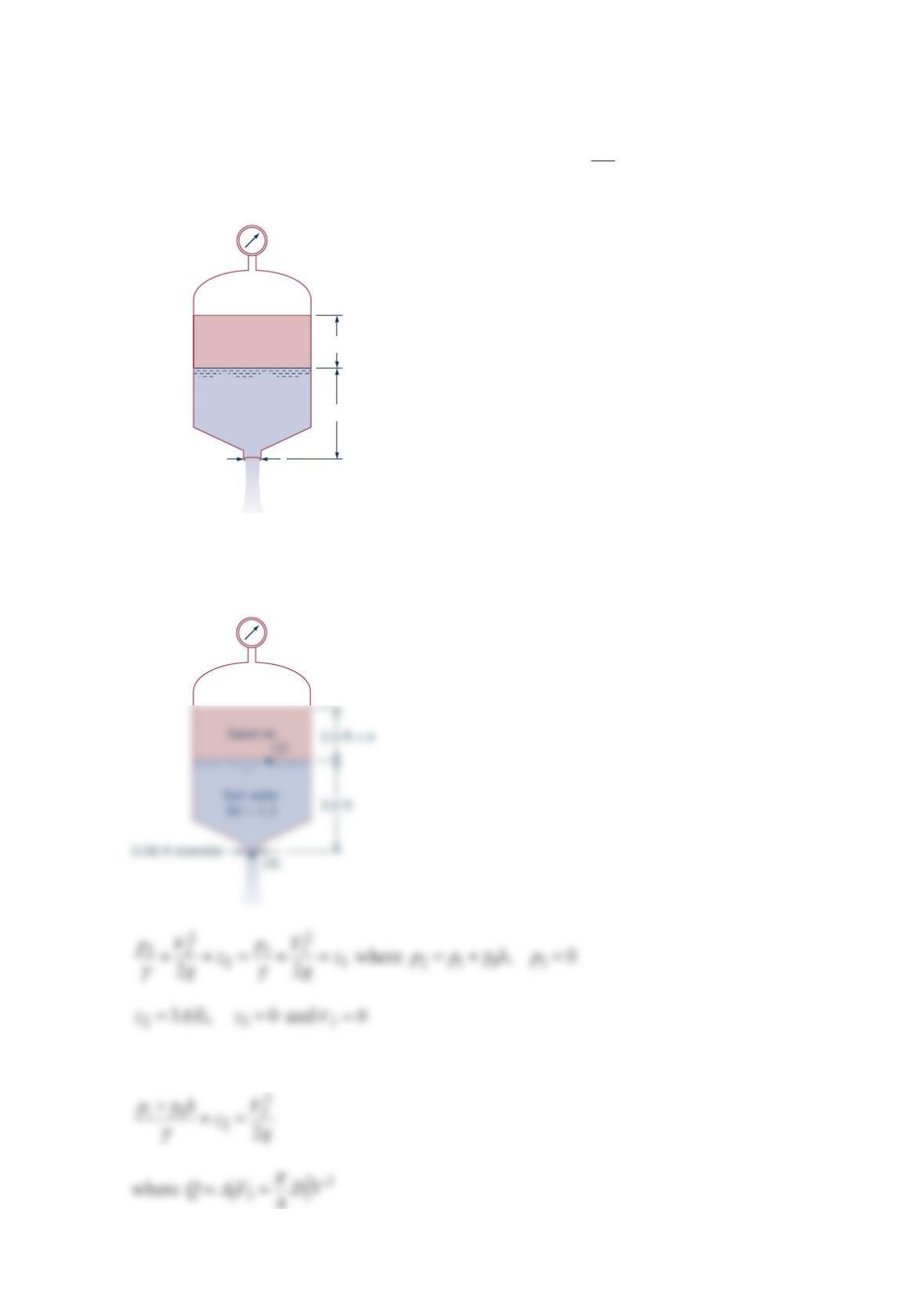
Problem 3.92
What pressure, 1
p
, is needed to produce a flowrate of
3
ft
0.09 s from the tank shown in the
figure below?
Solution 3.92
Thus,
Air
p1
Gasoline
Salt water
SG = 1.1
0.06-ft diameter
3.6 ft
2.0 ft
Air
p
1