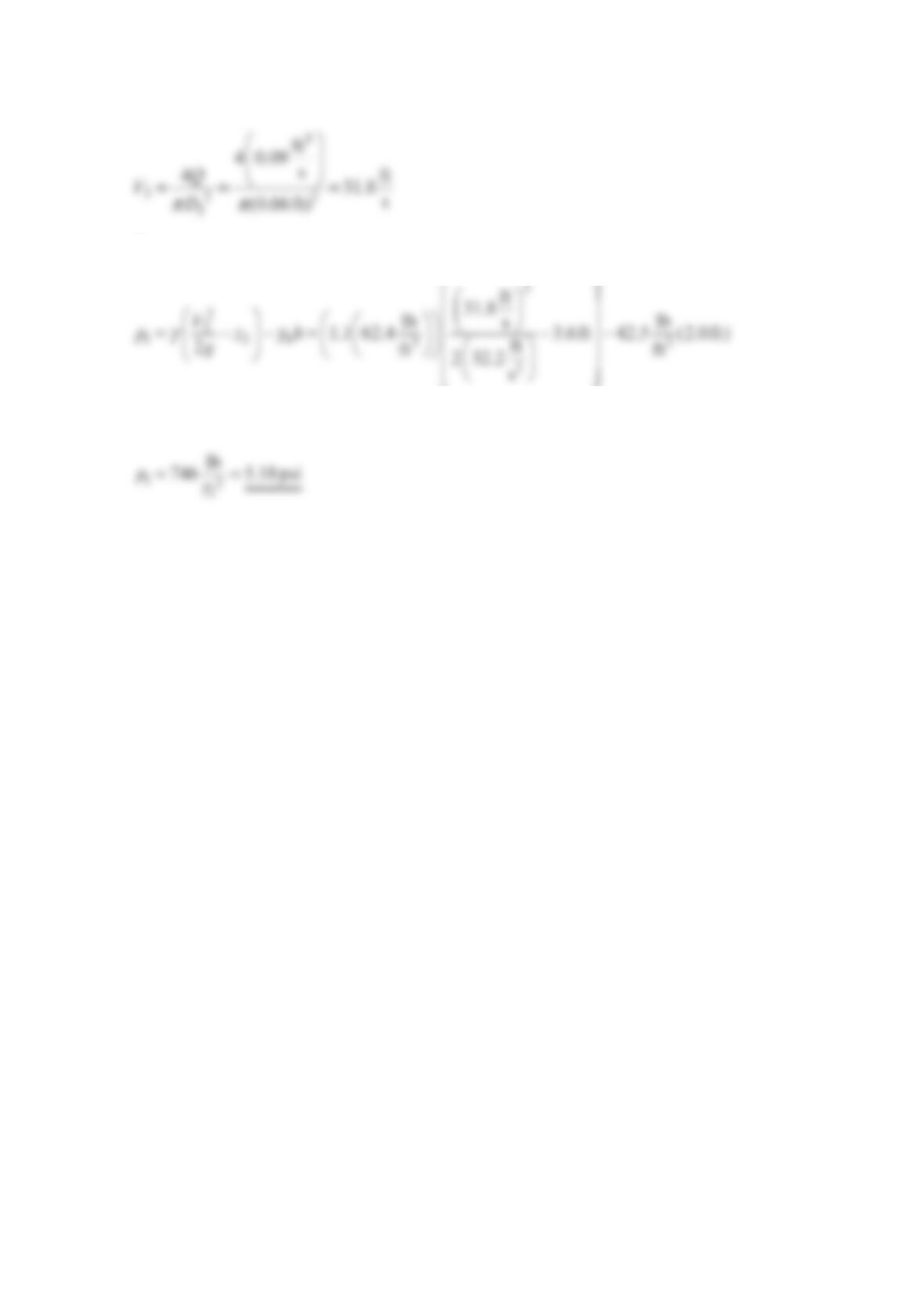
or
Thus,
or
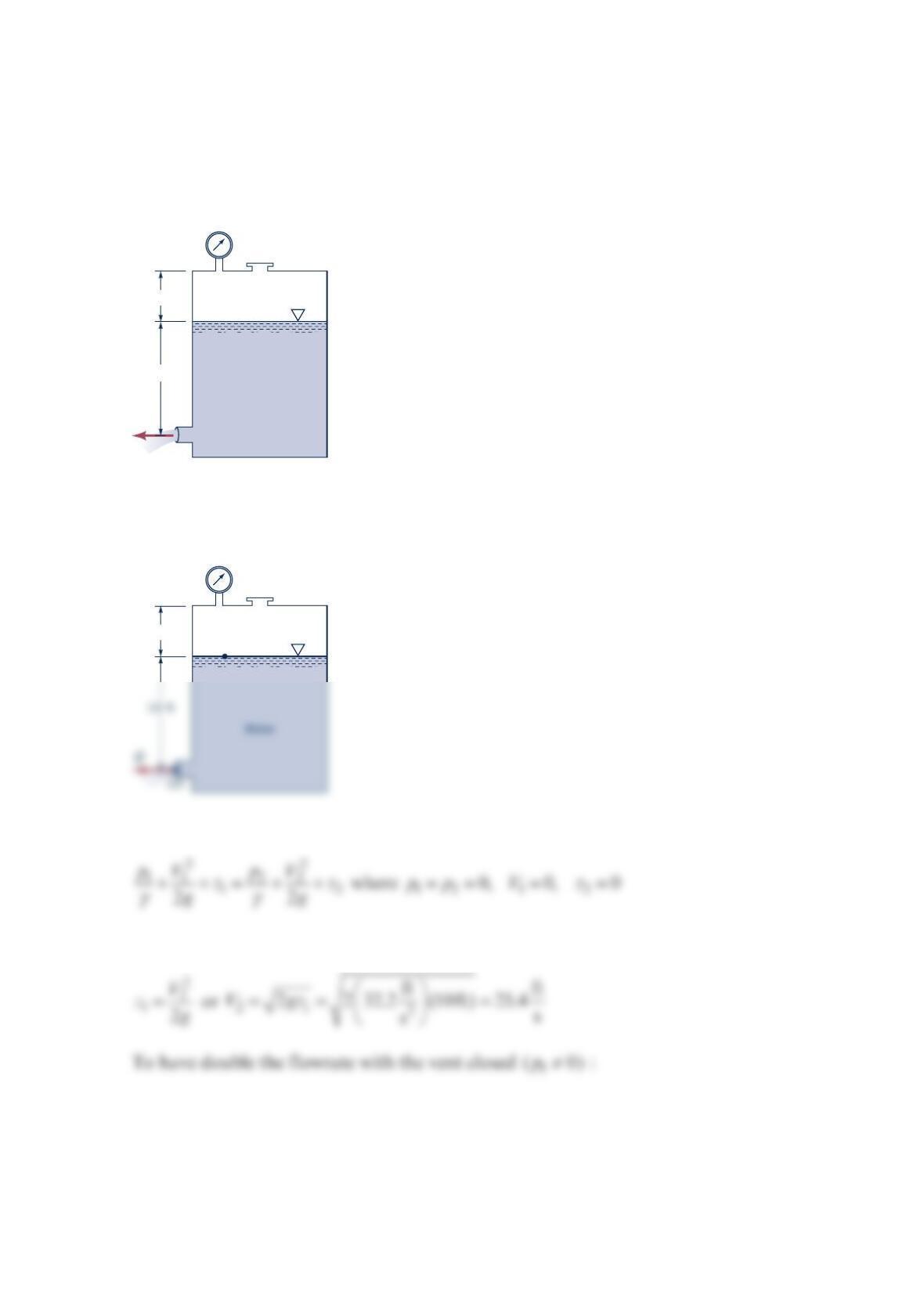
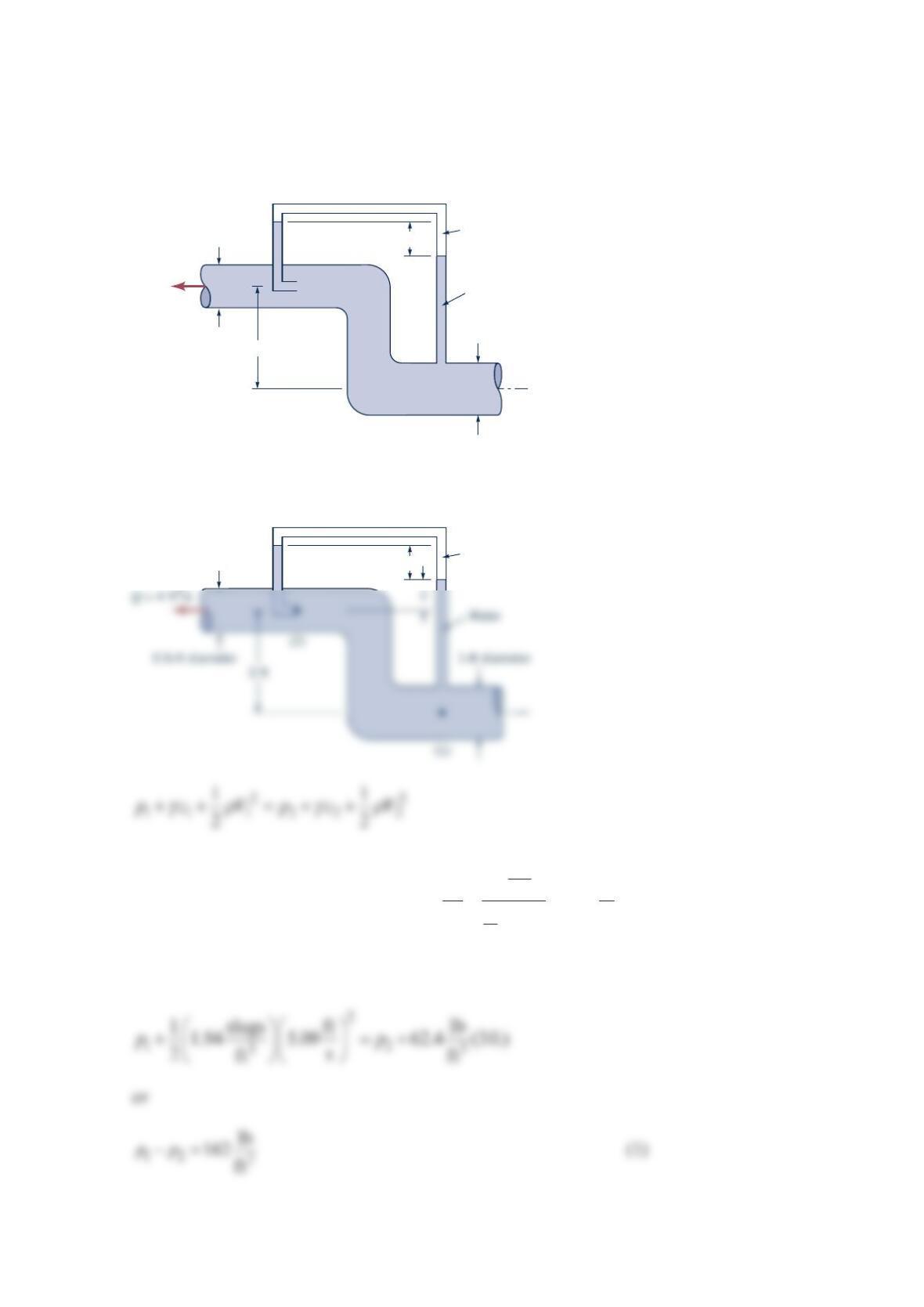
Problem 3.93
The vent on the tank shown in the figure below is closed and the tank pressurized to in-
crease the flowrate. What pressure, 1
p
, is needed to produce twice the flowrate of that when
the vent is open?
Solution 3.93
With the vent open:
Thus,
4 ft Air
Vent
Water
10 ft
Q
p
1
4 ft Air
Vent
p
1
(1)
2
12
12
p
V
zg
γ
+= where for this case 2
ft ft
2 25.4 50.8
ss
V
==
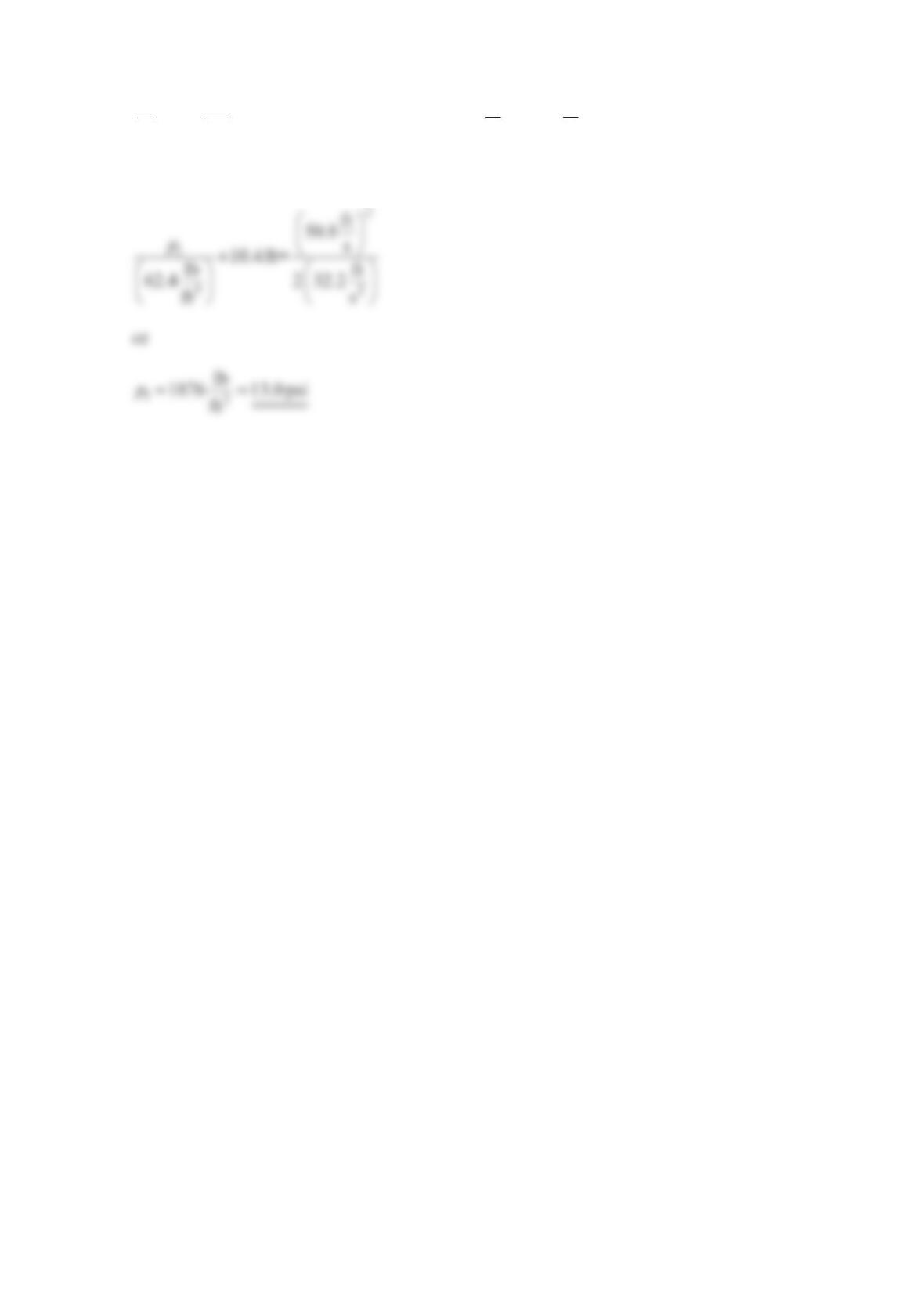
Thus,
Problem 3.94
A sump pump is submerged in 60
F
°ordinary water that vaporizes at a pressure of 0.256 psia.
The pump inlet has an inside diameter of
2
.067 in. and is
1
5ft below the water surface. Find
the maximum possible flow rate before cavitation (vaporization) occurs.
Solution 3.94
Assume inviscid flow and constant water density and apply Bernoulli’s equation between
points
1
and
2
.
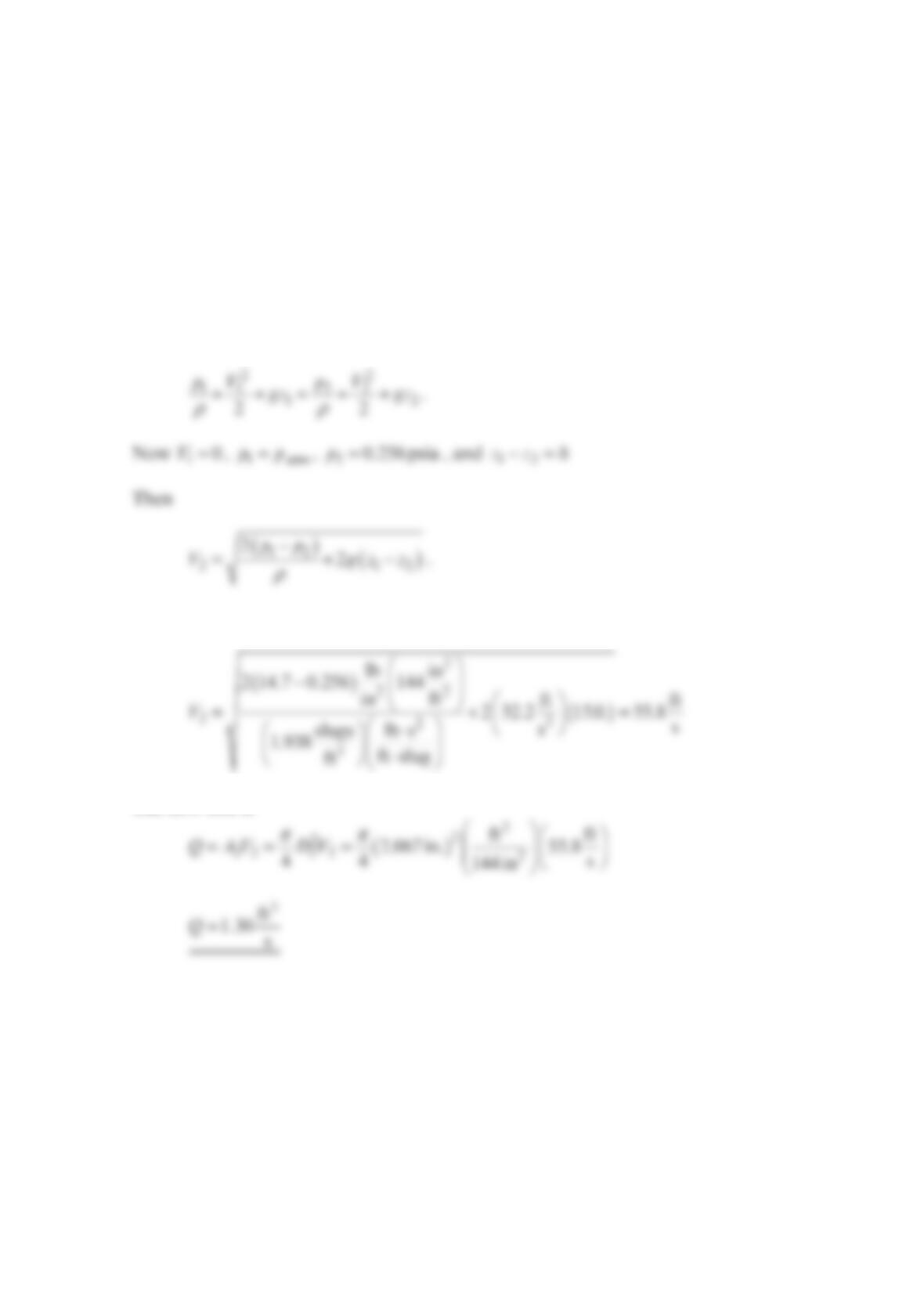
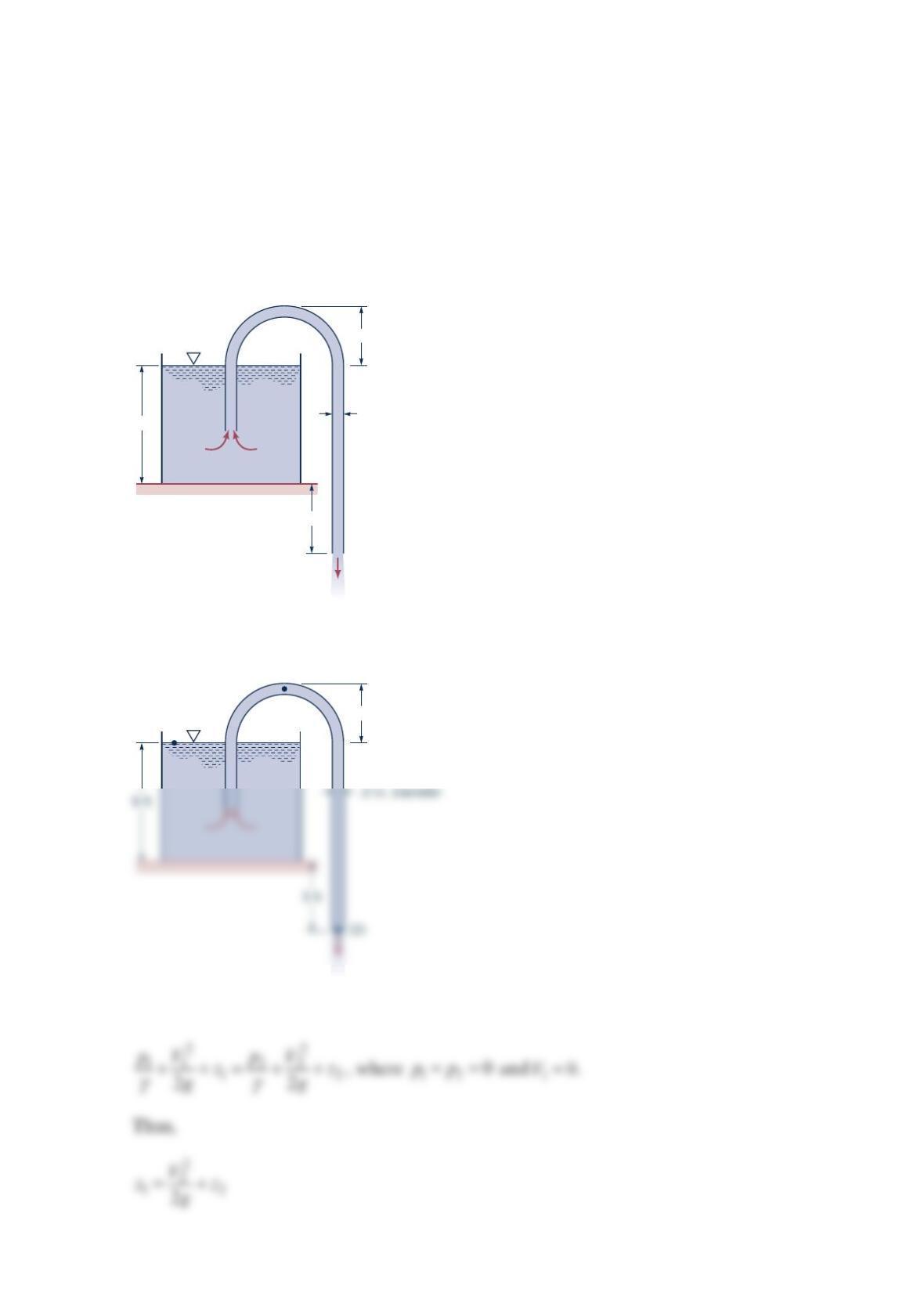
The numerical values give
The flow rate is
Problem 3.95
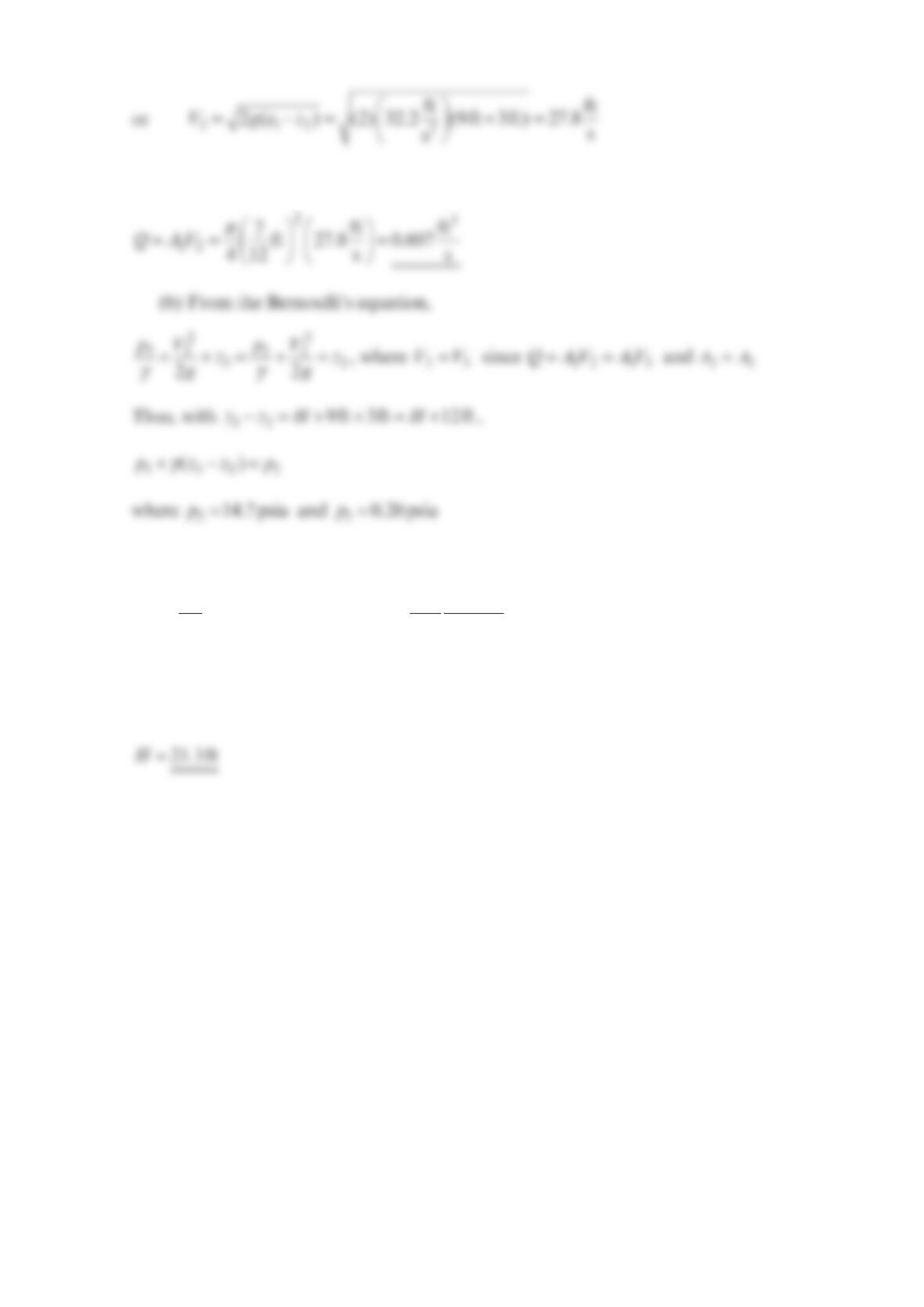
Water is siphoned from a large tank and discharges into the atmosphere through a
2-in.-diameter tube as shown in the figure below. The end of the tube is 3 ft below the tank
bottom, and viscous effects are negligible. (a) Determine the volume flowrate from the
tank. (b) Determine the maximum height, H, over which the water can be siphoned without
cavitation occurring. Atmospheric pressure is 14.7 psia, and the water vapor pressure is
0.26 psia.
Solution 3.95
(a) From the Bernoulli’s equation,
H
2-in. diameter
9 ft
3 ft
H
(1)
(3)
Hence,
Hence,
()
2
322
lb lb 144 in.
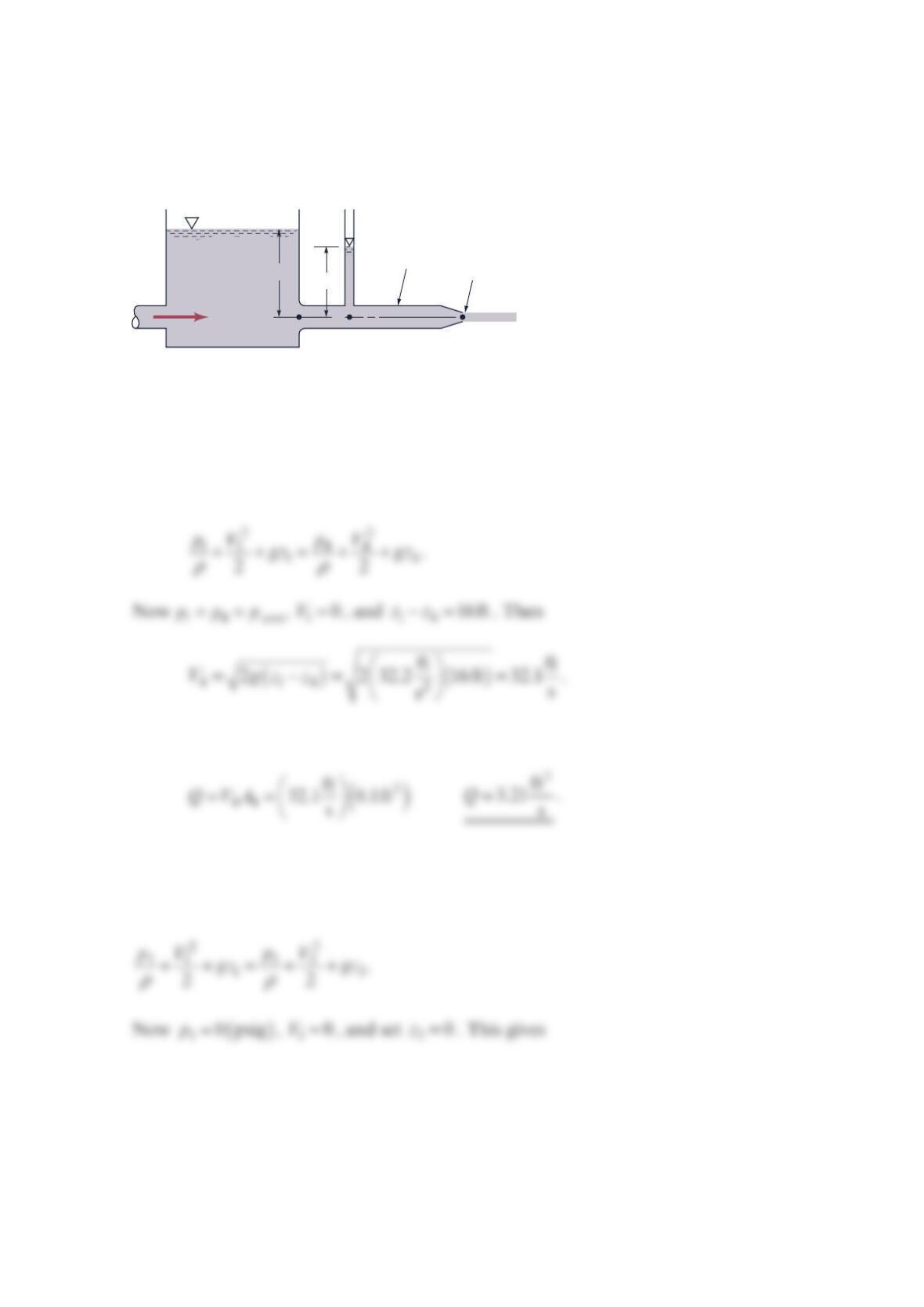
62.4 12 ft (14.7 0.26)
ft in. ft
H
+=−
or
Problem 3.96
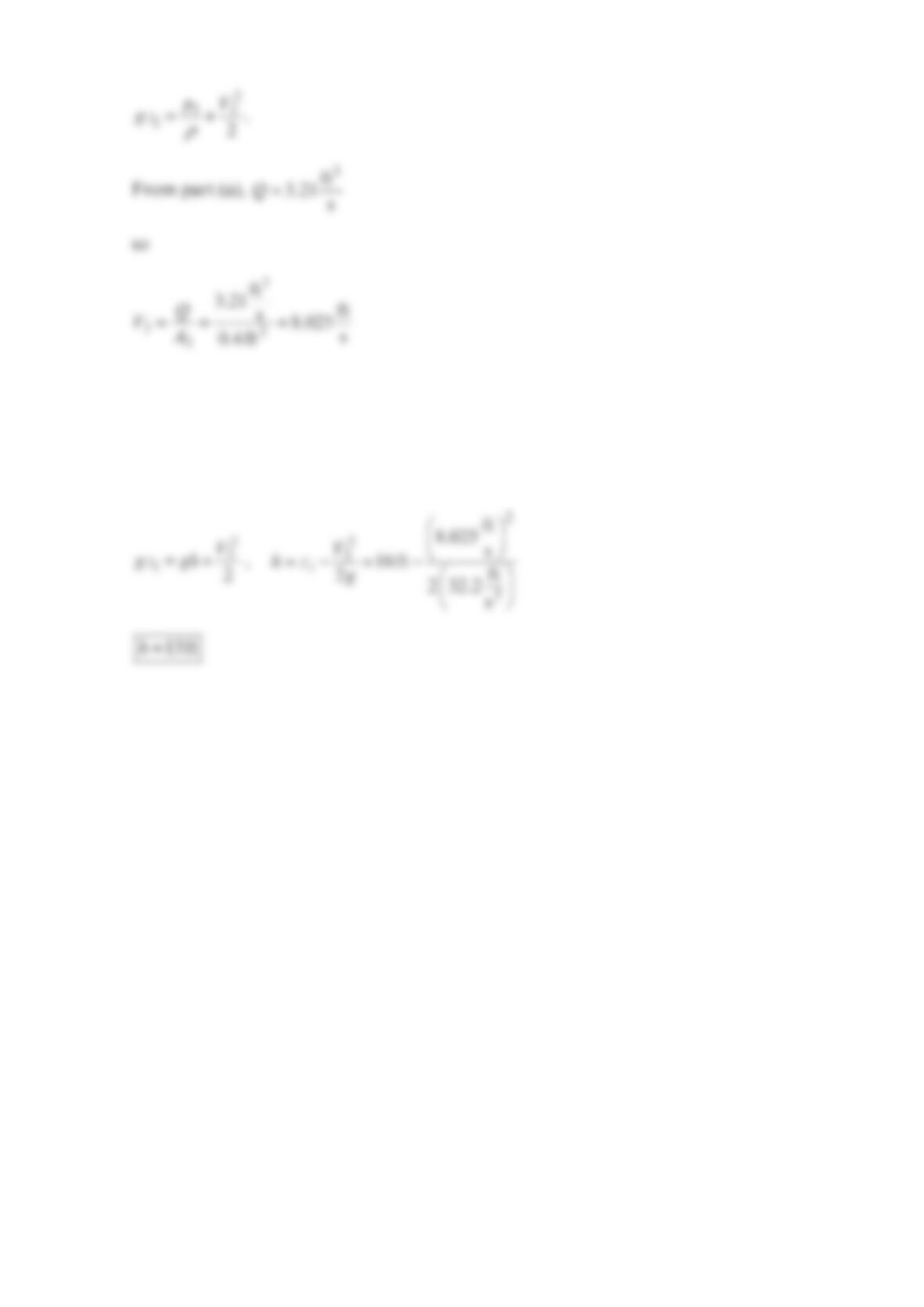
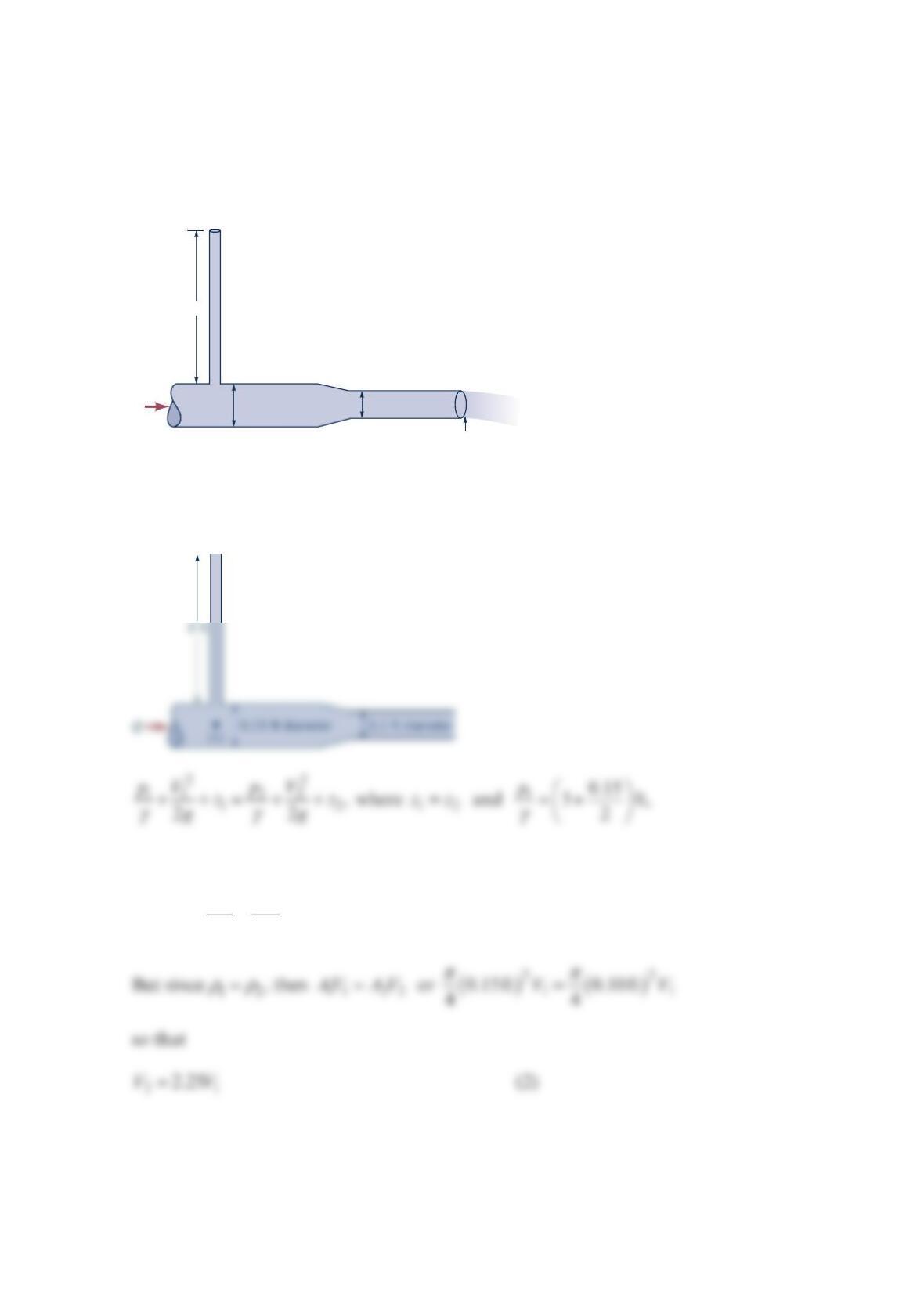
Water flows in the system shown in the figure below. Assume frictionless flow. (a) Calculate
the rate Q at which water must be added at the inlet to maintain the
1
6-ft height.
(b) Calculate the height h in feet of water in the static-pressure tube.
Solution 3.96
(a) Assume constant fluid density and apply Bernoulli’s equation from the free surface 1 to
the jet discharge 4.
To maintain the constant water depth, 44
Qin out
QQVA=== so
(b) Assume constant water density and apply Bernoulli’s equation between the free water
surface 1 and points 3.
Q
A
= 0.4 ft
2
A
= 0.1 ft
2
3
24
1
16 ft
h
The pressure 3
p
is found from the monometer rule,
3
p
gh
ρ
=
so Bernoulli’s equation gives
Problem 3.97
Water flows steadily from the pipe shown in the figure below with negligible viscous effects.
Determine the maximum flowrate if the water is not to flow from the open vertical tube
at
A
.
Solution 3.97
Thus,
22
12
3.075ft 22
VV
gg
+= (1)
A
0.15-ft diameter 0.1-ft diameter
End of pipe
Q
3 ft
A
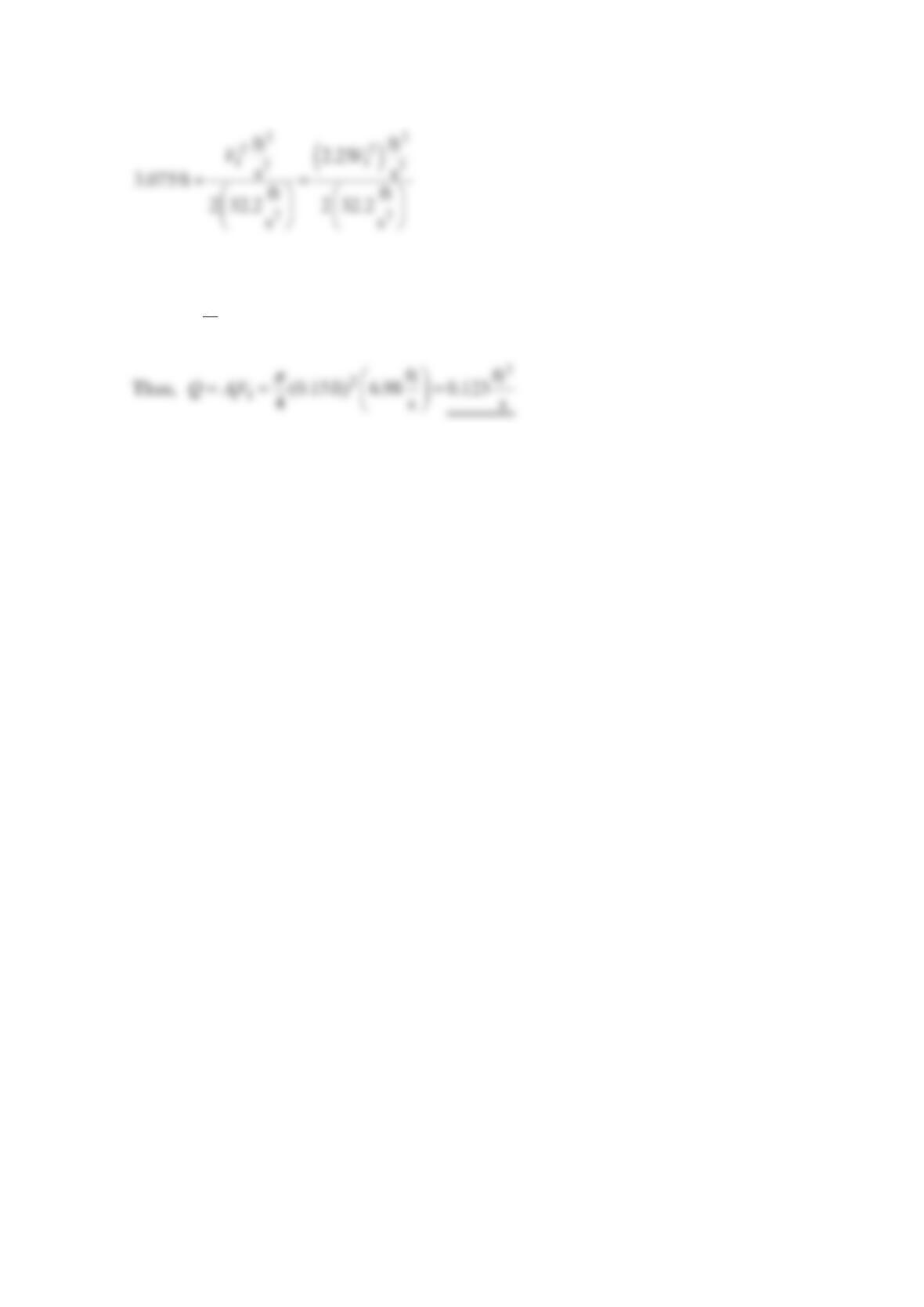
By combining Eqs.(1) and (2),
or
1
ft
6.98 s
V=
Problem 3.98
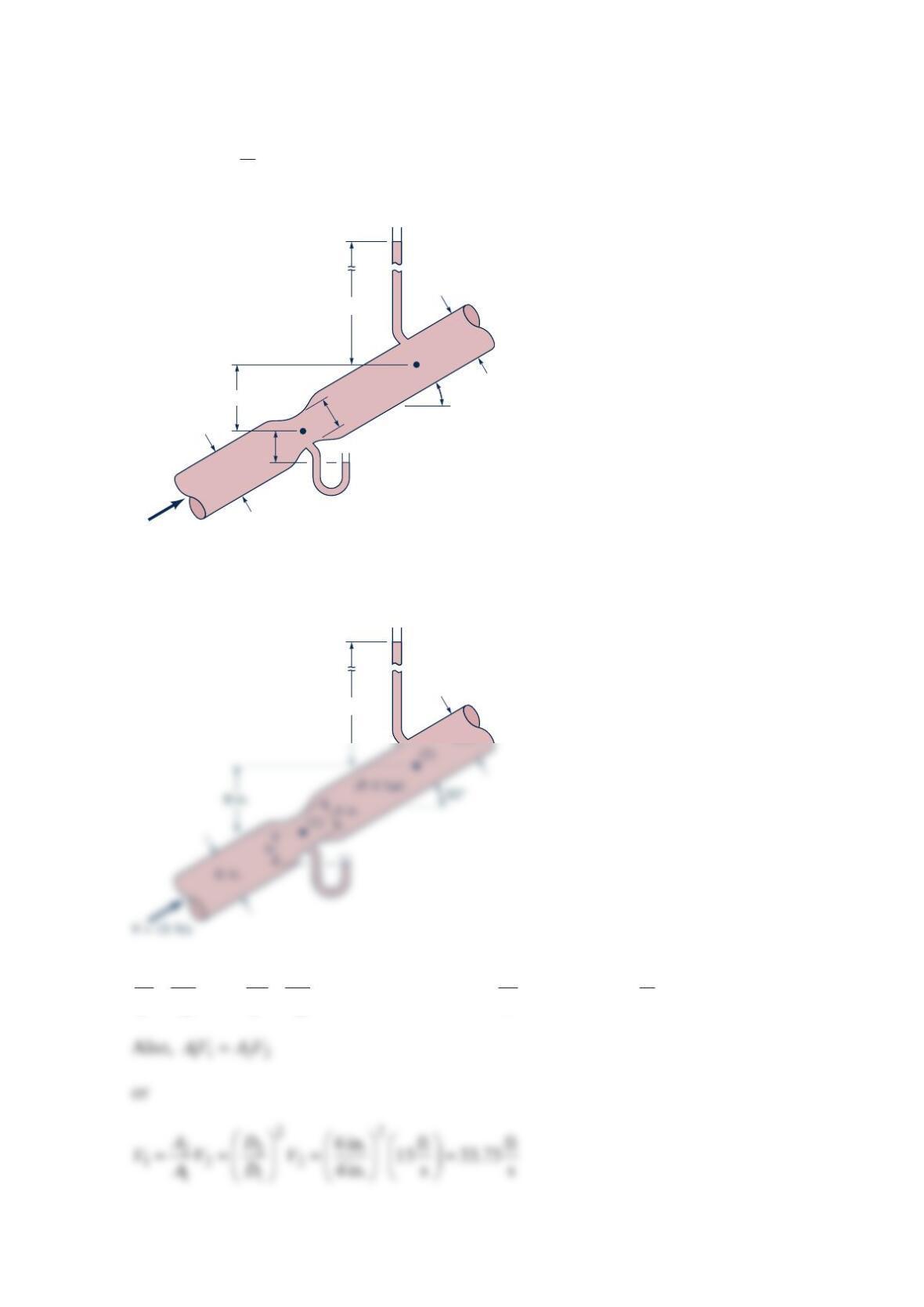
JP-4 fuel (SG = 0.77) flows through the Venturi meter shown in the figure below with a
velocity of ft
1
5s in the 6-in. pipe. If viscous effects are negligible, determine the elevation, h,
of the fuel in the open tube connected to the throat of the Venturi meter.
Solution 3.98
22
11 2 2
12
,
22
pV p V
zz
gg
γγ
++=++ where 10,z=2
8ft,
12
z= and 2
ft
15 s
V= (1)
V
= 15 ft/s
h
6 in.
8 in.
4 in.
JP-4 fuel
6 ft
6 in.
20°
6 ft
6 in.
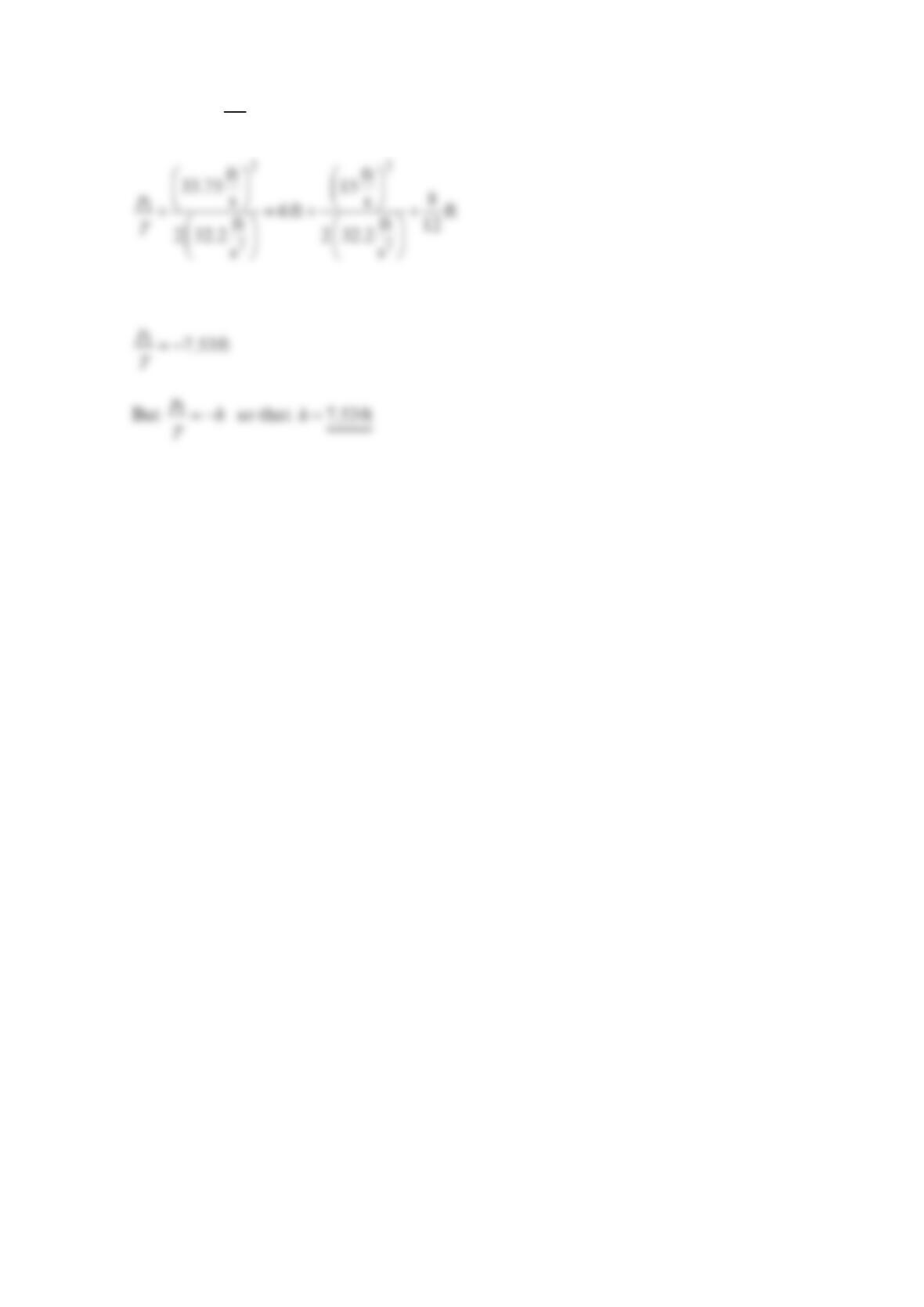
Thus, with 26ft
p
γ
= Eq. (1) becomes
or
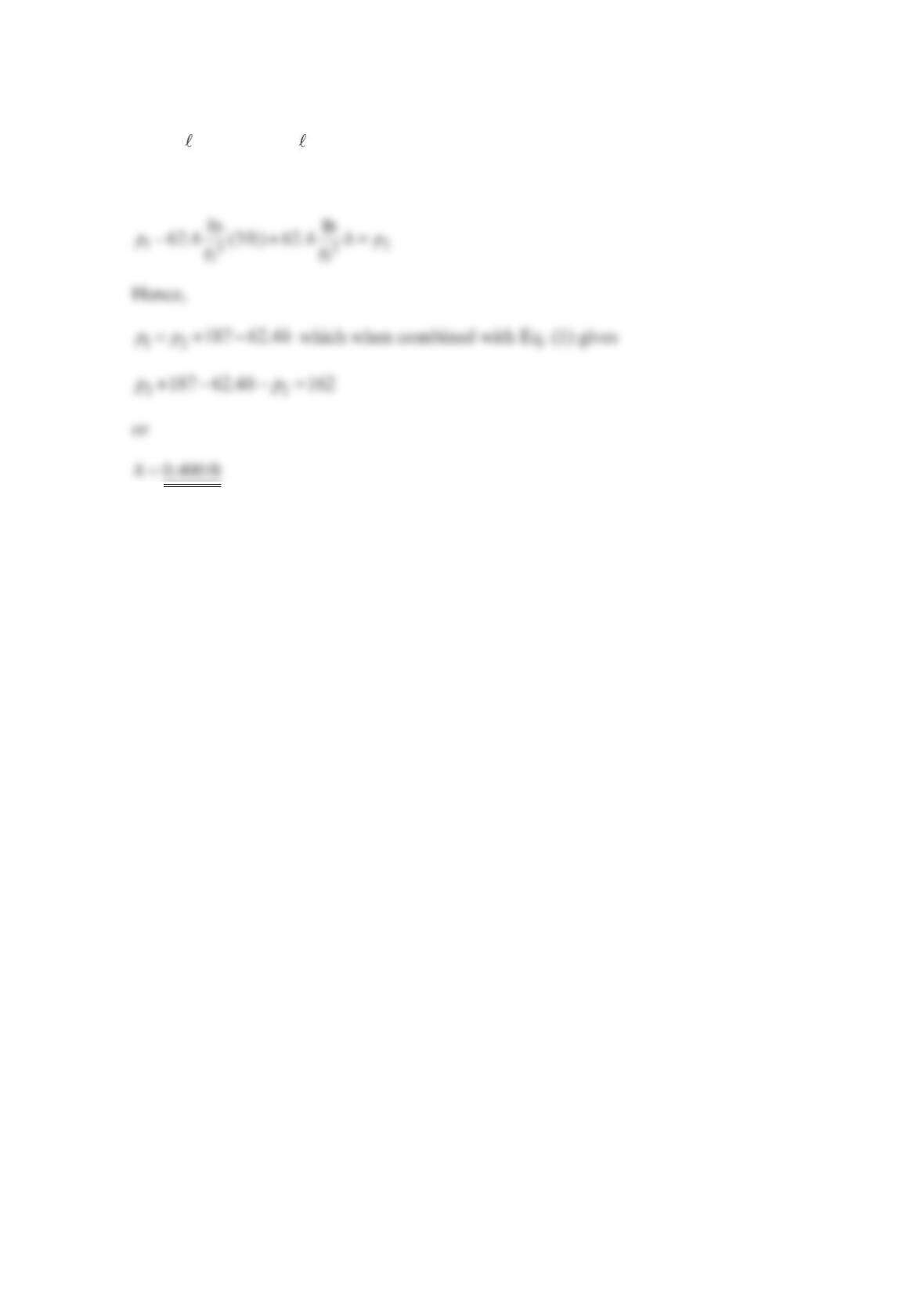
Problem 3.99
Water, considered an inviscid, incompressible fluid, flows steadily as shown in the figure
below. Determine h.
Solution 3.99
where 10z=, 23ftz=, 20
V
=, and
()
3
12
1
ft
4ft
s5.09 s
1ft
4
Q
VA
π
== =
Thus,
0.5-ft diameter 1-ft diameter
Q
= 4 ft3/s
3 ft
Water
Air
h
Air
h
But from the manometer,
12
(3ft)( )
p
hp
γγ
−+ ++=
or
p
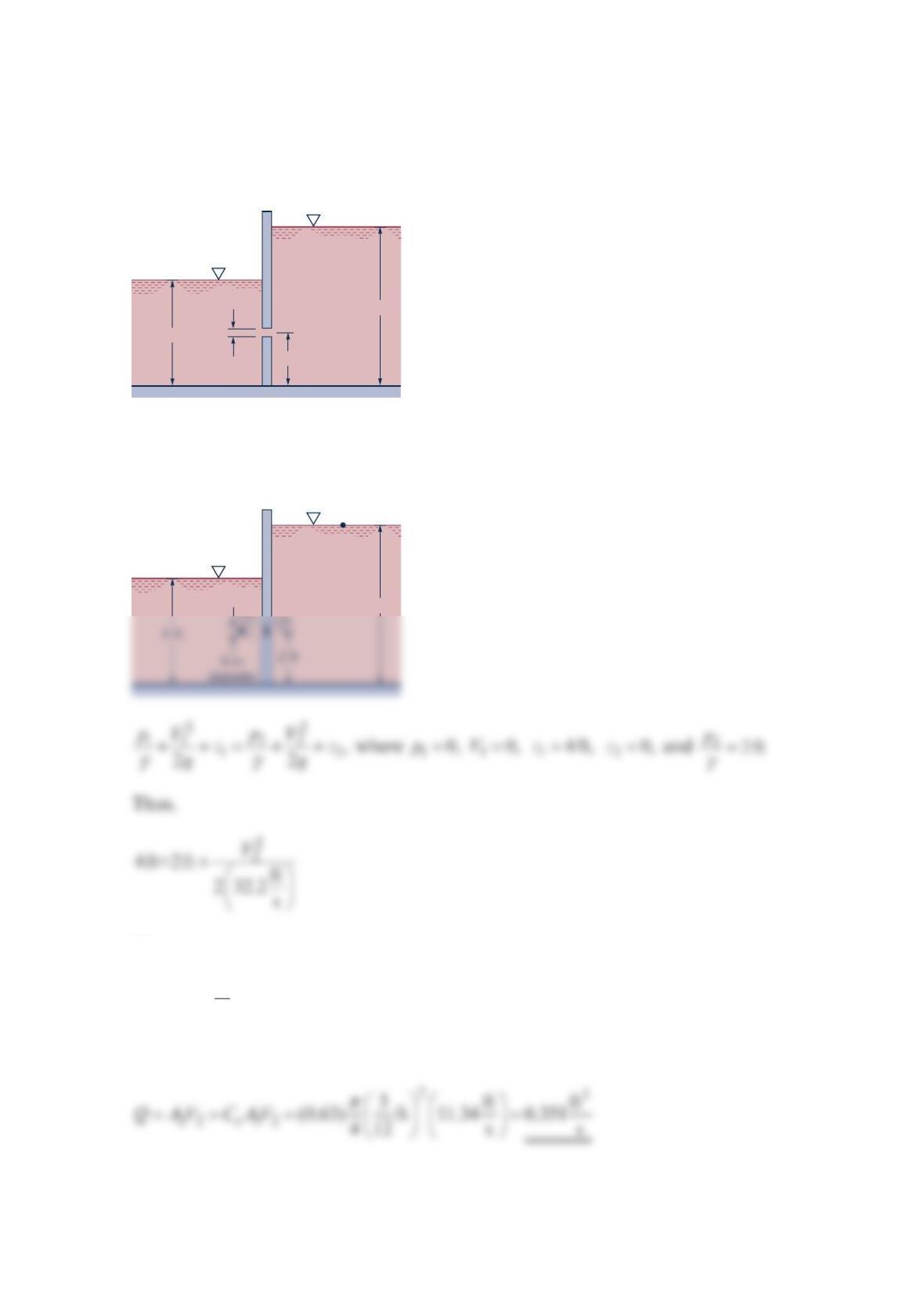
Problem 3.100
Determine the flowrate through the submerged orifice shown in the figure below if the con-
traction coefficient is 0.63
c
C=.
Solution 3.100
or
2
ft
11.34 s
V=
so that
2 ft
6 ft
4 ft
3-in.
diameter
6 ft
(1)
Problem 3.101
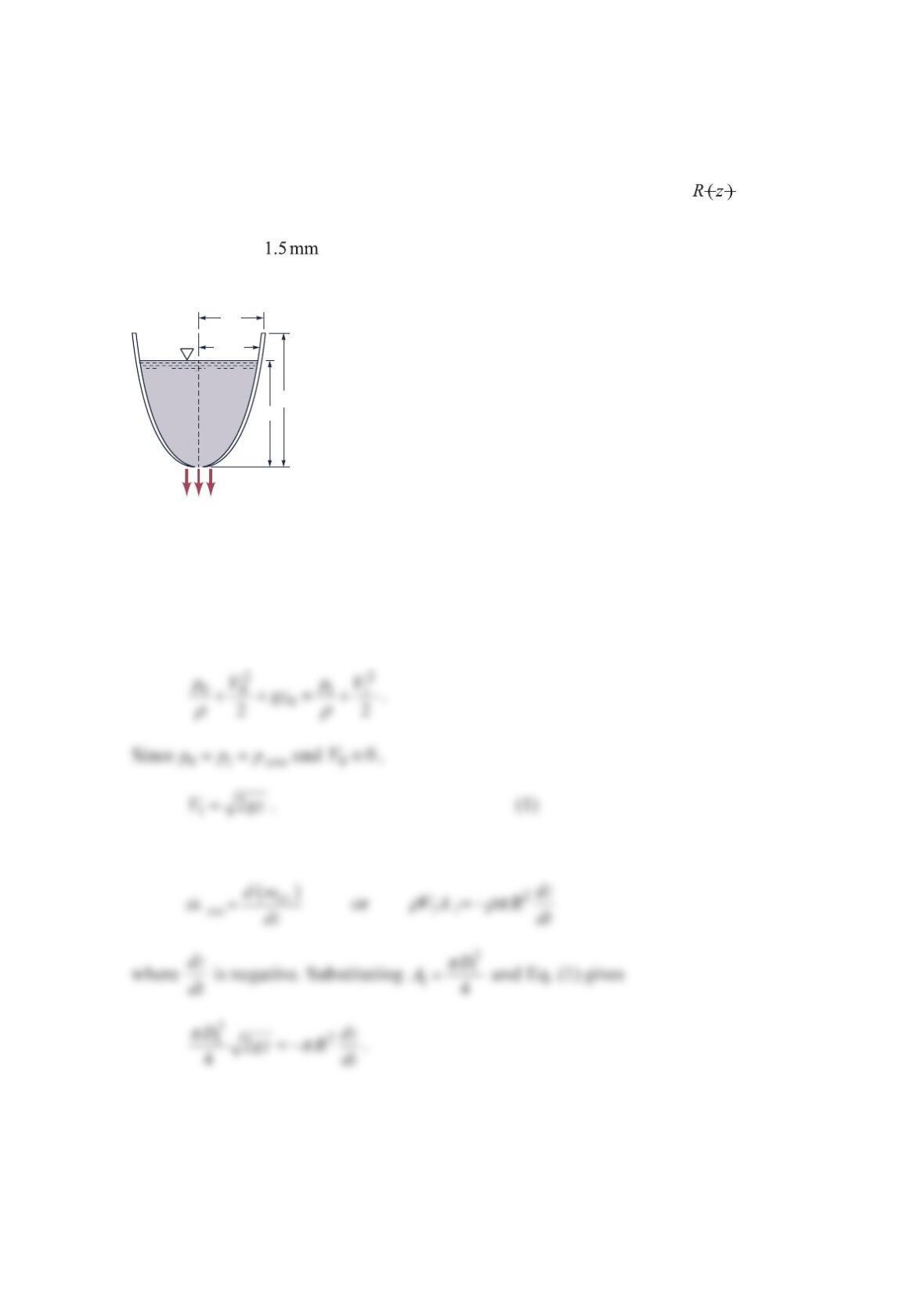
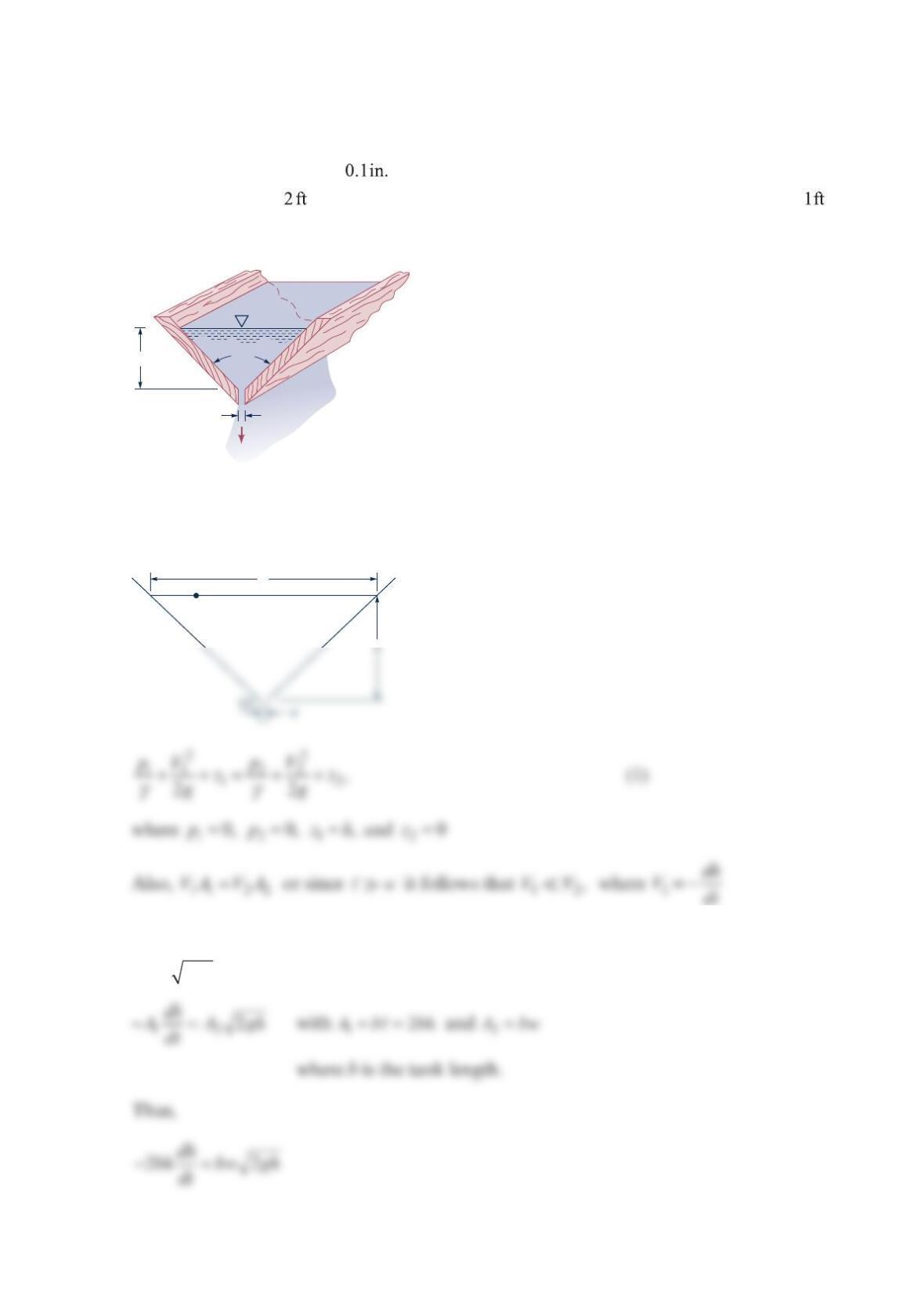
The water clock (clepsydra) shown in the figure below is an ancient device for measuring
time by the falling water level in a large glass container. The water slowly drains out
through a small hole in the bottom. Determine the approximate shape of a container
of circular cross section required for the water level to fall at a constant rate of 5cm/ hr if
the drain hole is in diameter. What size container ( 0
and hR
) permits the clock to
run for
2
4hr without refilling?
Solution 3.101
Assume constant fluid density and inviscid flow and apply Bernoulli’s equation between the
surface (0) and the exit hole (
1
) where 10z=.
Applying the continuity equation. to the clepsydra gives
R
(
z
)
Water
level
zh
R
0
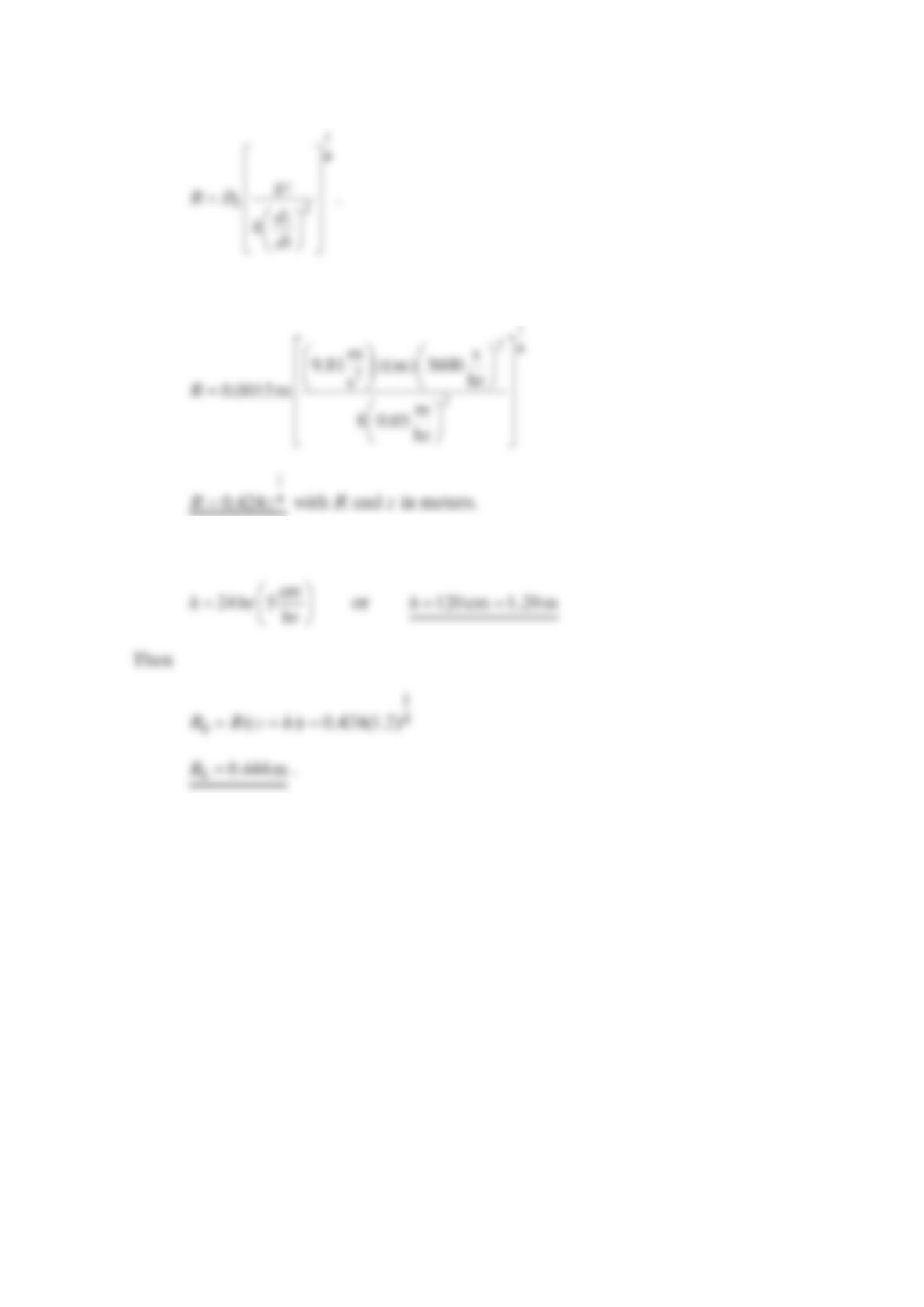
Solving for
R
gives
Substituting the known numerical values,
The depth of the clepsydra to run 24 hours is
Problem 3.102
A long water trough of triangular cross section is formed from two planks as is shown in
the figure below. A gap of remains at the junction of the two planks. If the water
depth initially was , how long a time does it take for the water depth to reduce to ?
Solution 3.102
Thus, Eq. (1) gives
22Vgh= so that
2 ft
0.1 in.
90°
(1)
ℓ
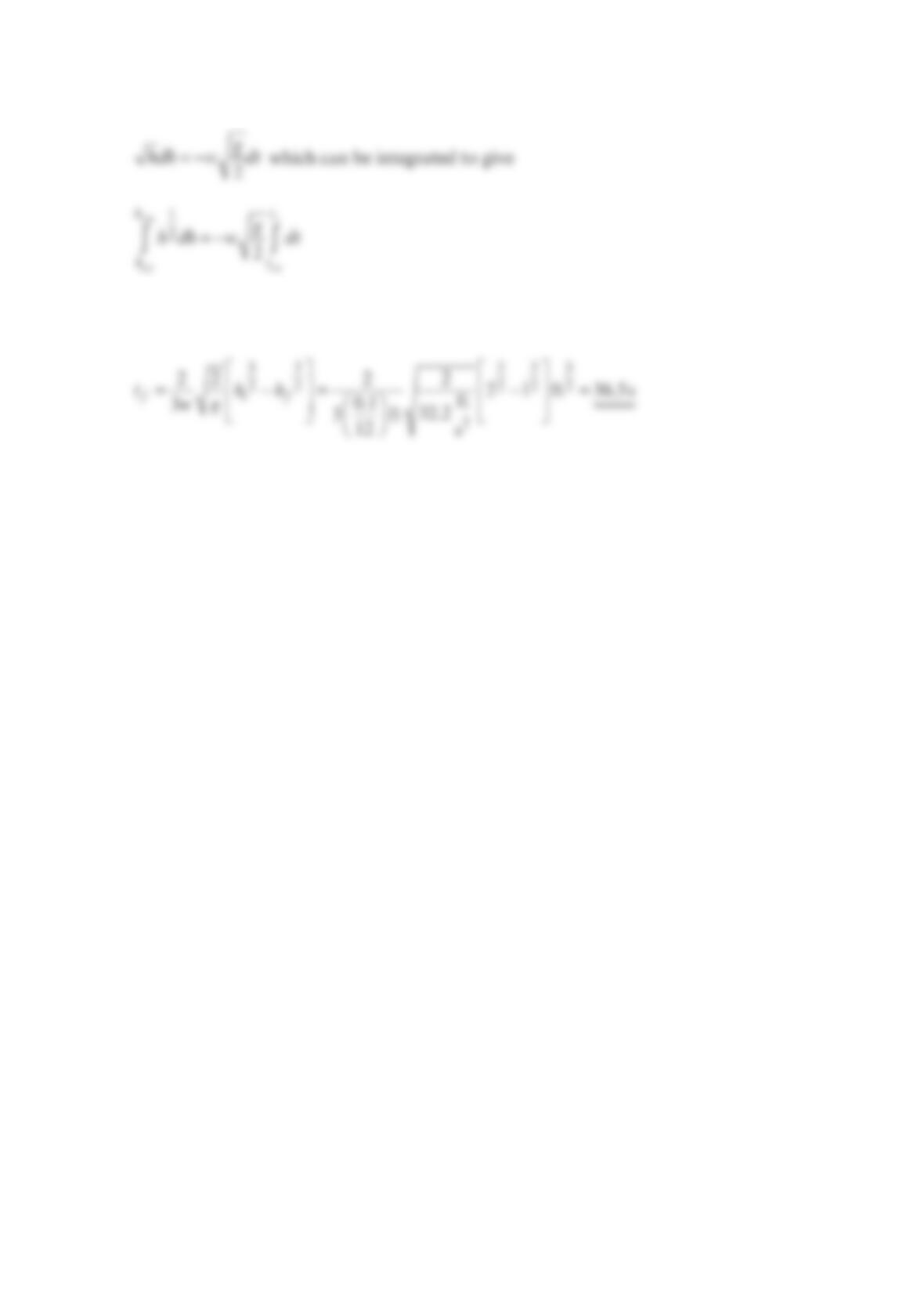
or
or
Problem 3.103
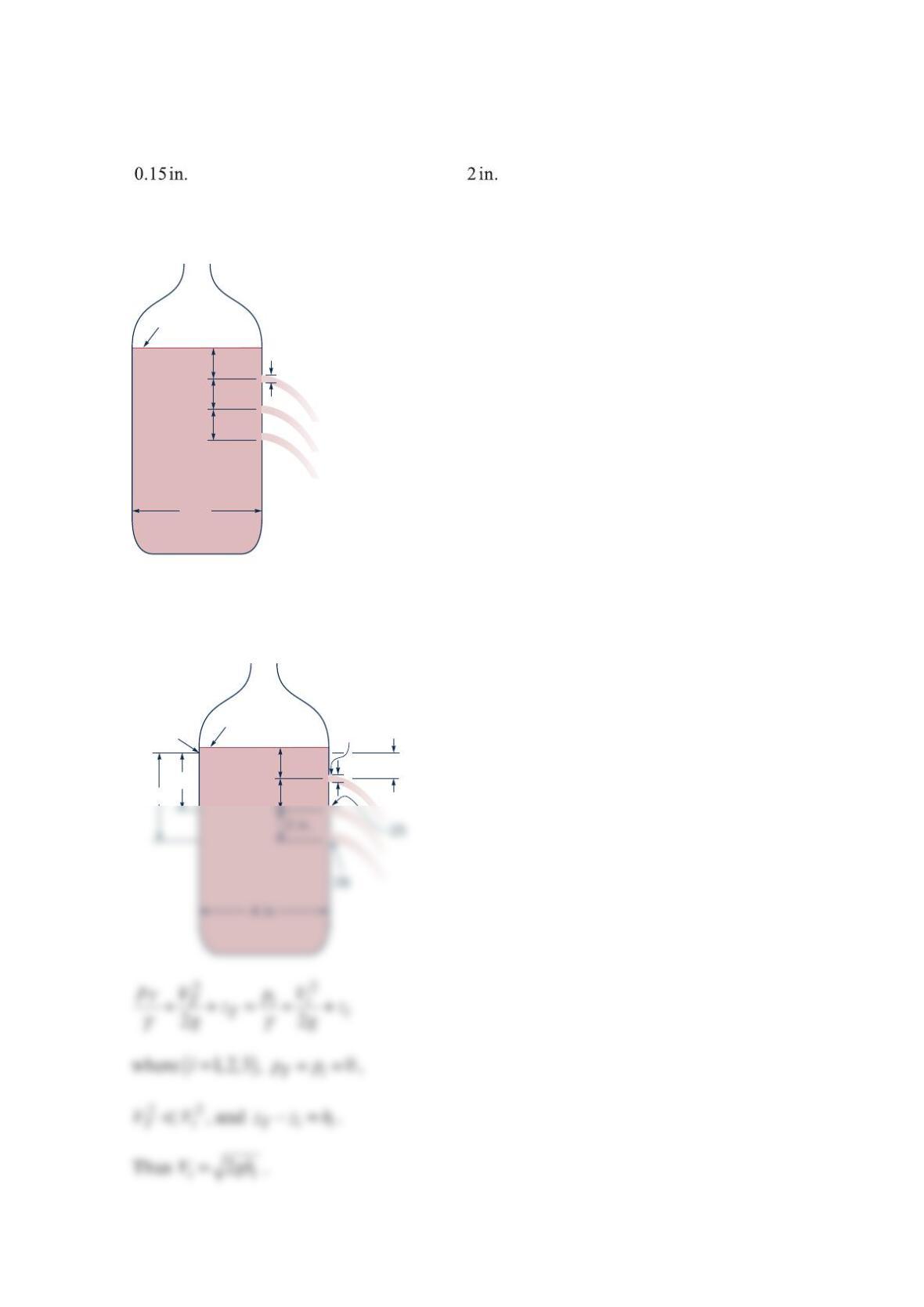
Pop (with the same properties as water) flows from a 4-in.-diameter pop container that
contains three holes as shown in the figure below. The diameter of each fluid stream is
, and the distance between holes is If viscous effects are negligible and quasi-
steady conditions are assumed, determine the time at which the pop stops draining from the
top hole. Assume the pop surface is 2in. above the top hole when
0
t=.
Solution 3.103
Surface at
t
= 0
2 in. 0.15 in.
2 in.
4 in.
2 in.
Surface at t = 0
Surface
at t > 0
2 in. 0.15 in.
2 in.
h
1
=
h
(1)
h
2
h
3