where 22 55
AV AV=
Thus,
From Eq. (1) with 3i=,
2
33
03
2
pV
zz
g
γ
=+ +
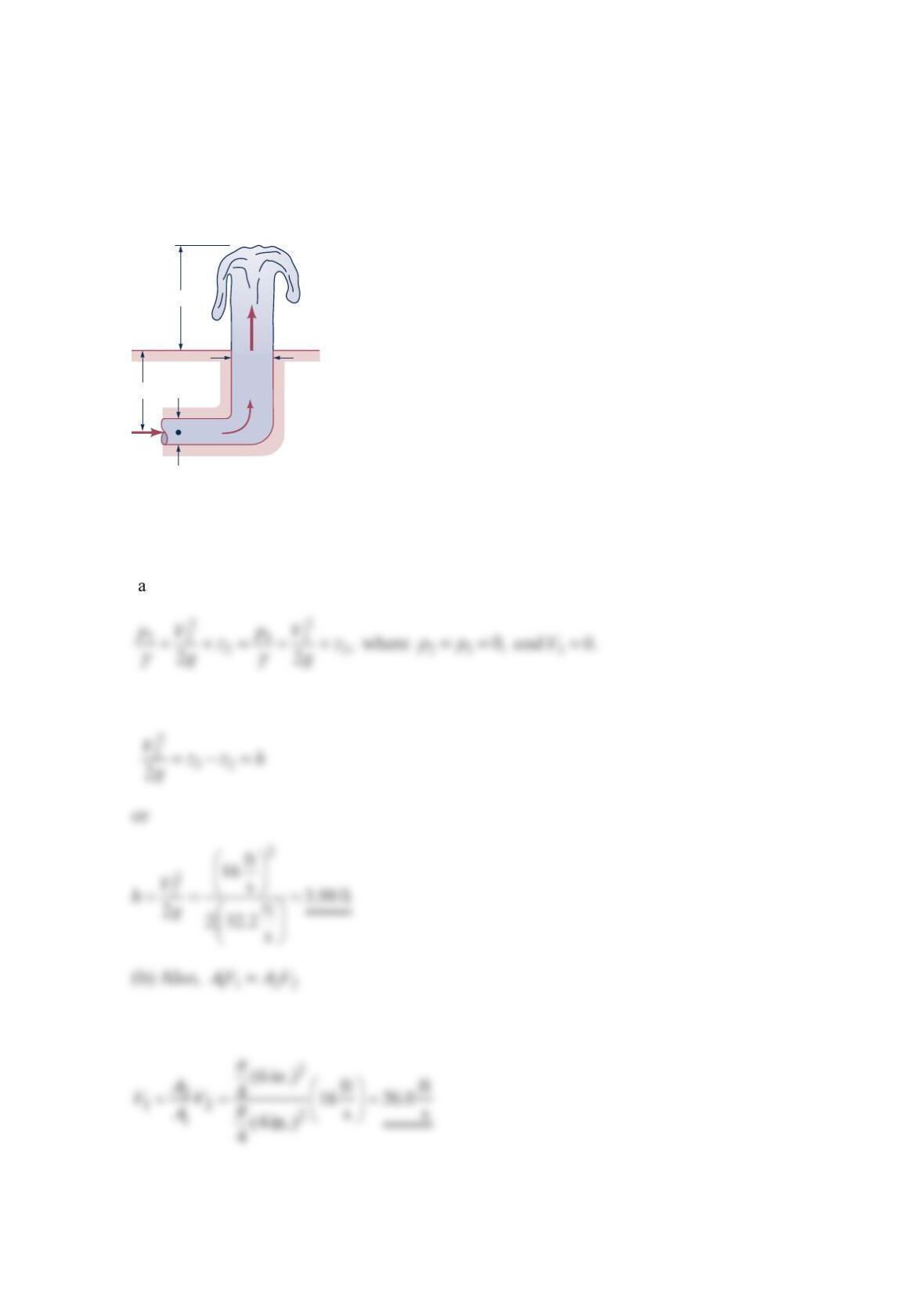
Problem 3.71
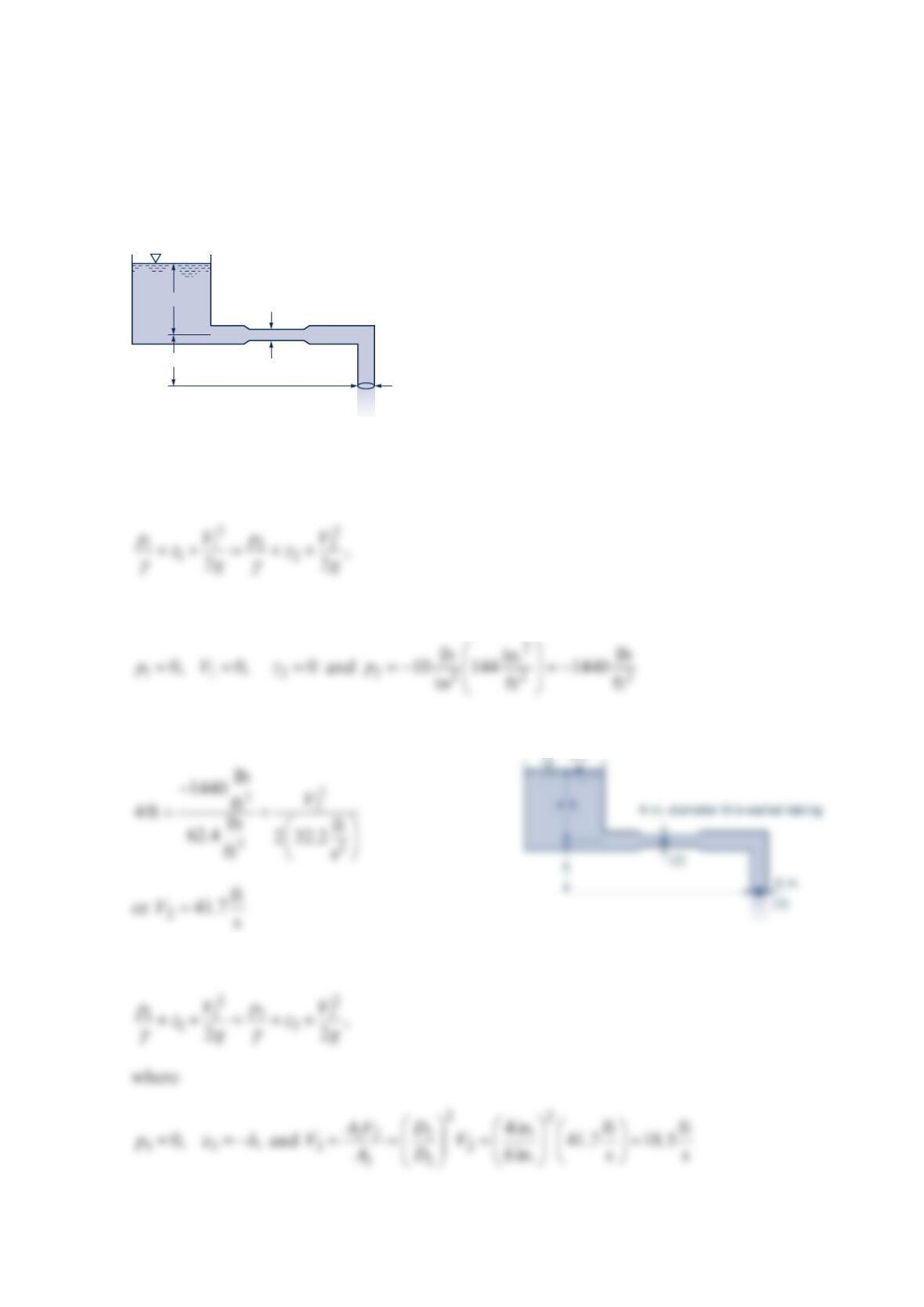
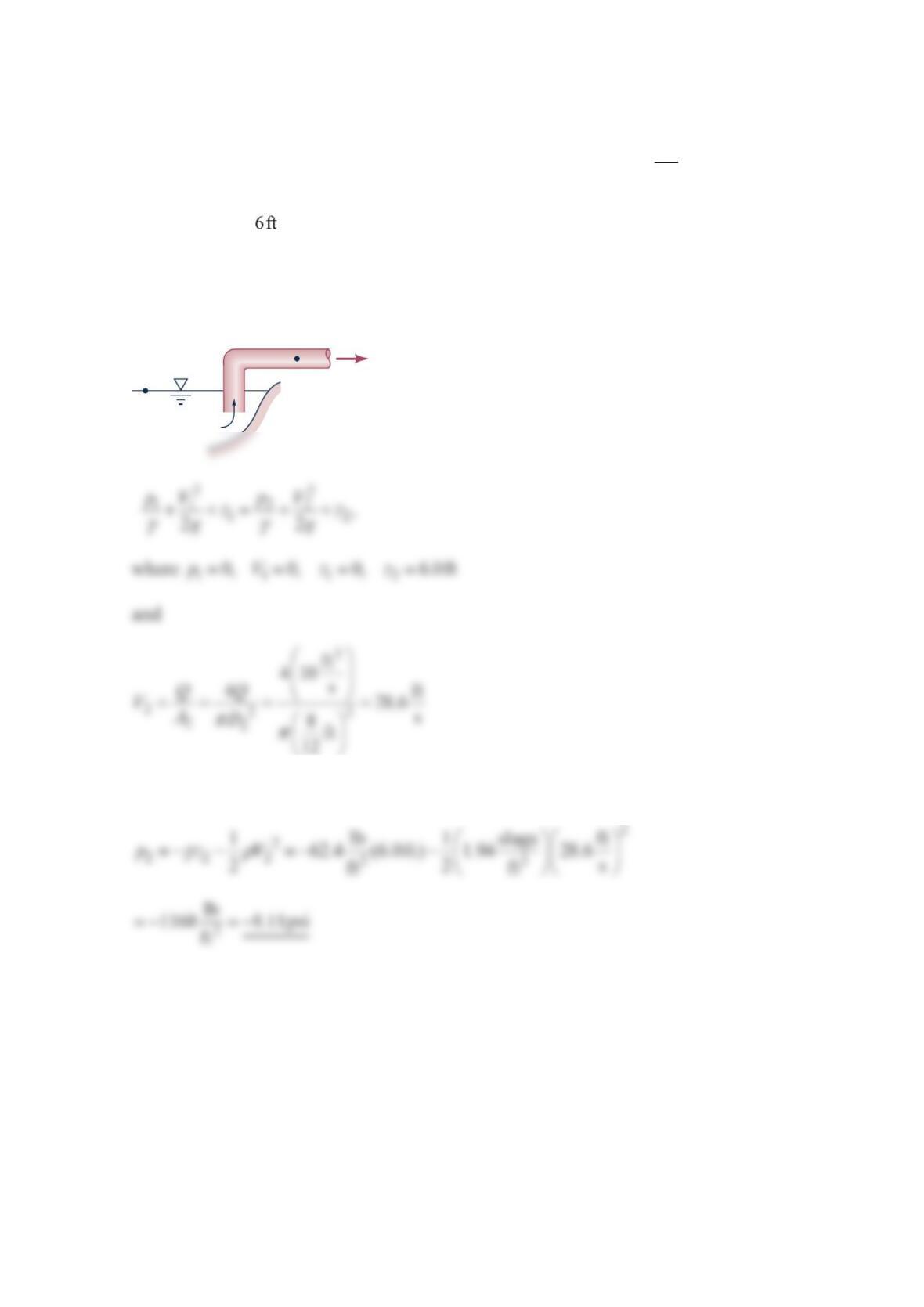
Water exits a pipe as a free jet and flows to a height h above the exit plane as shown in the
figure below. The flow is steady, incompressible, and frictionless. (a) Determine the height h
(b) Determine the velocity and pressure at section (1).
Solution 3.71
() From the Bernoulli’s equation,
Thus,
or
8 ft
6-in. diameter
4-in. diameter
(1)
h
V
= 16 ft/s
From the Bernoulli’s equation,
Thus,
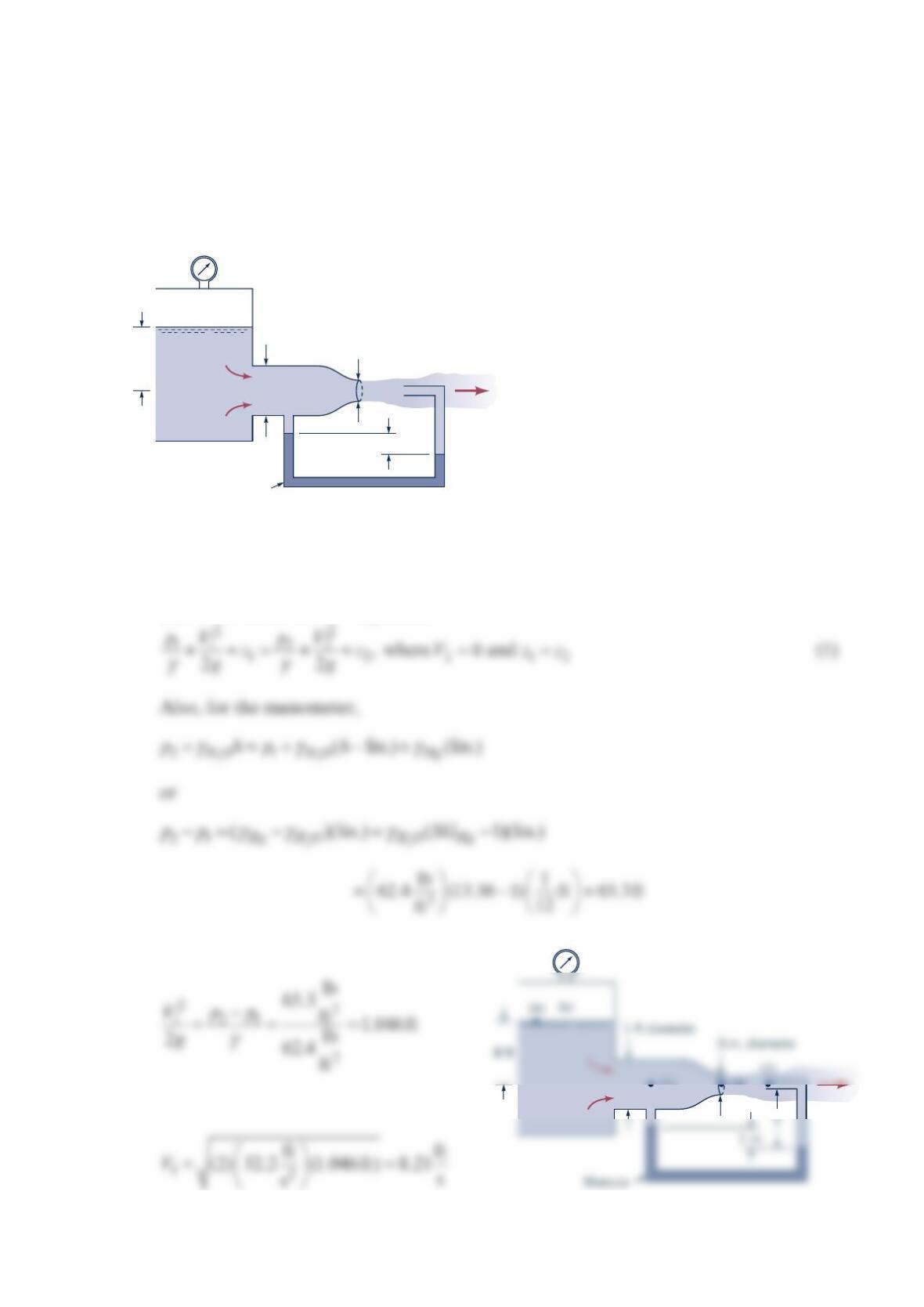
Problem 3.72
Water flows steadily from a large, closed tank as shown in the figure below. The deflection
in the mercury manometer is
1
in
.
and viscous effects are negligible. (a) Determine the vol-
ume flowrate. (b) Determine the air pressure in the space above the surface of the water in
the tank.
Solution 3.72
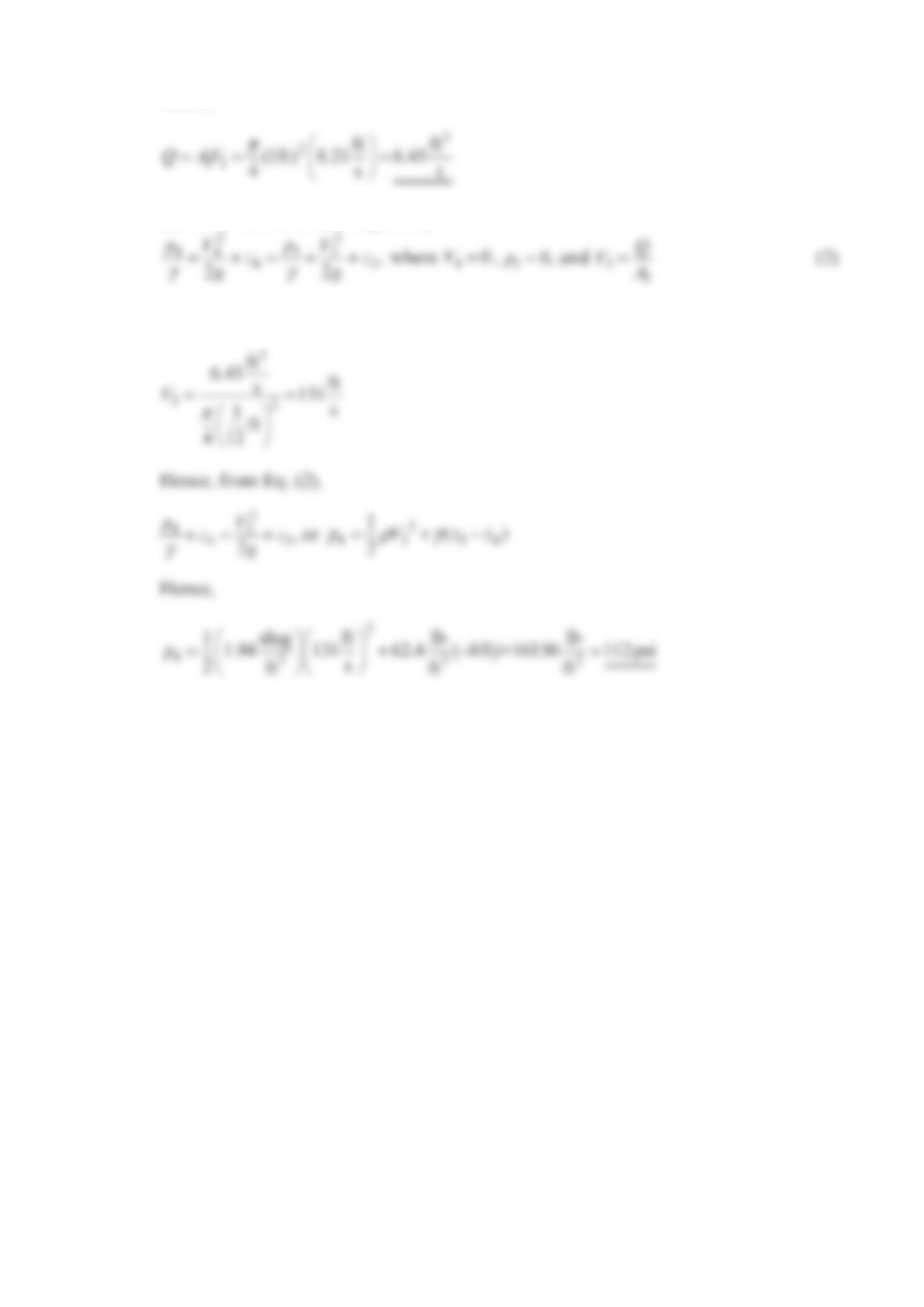
(a) From the Bernoulli’s equation,
Thus, from Eq. (1),
so that
8 ft 3-in. diameter
1-ft diameter
Mercury
1 in.
Air
(1) (3)
Hence,
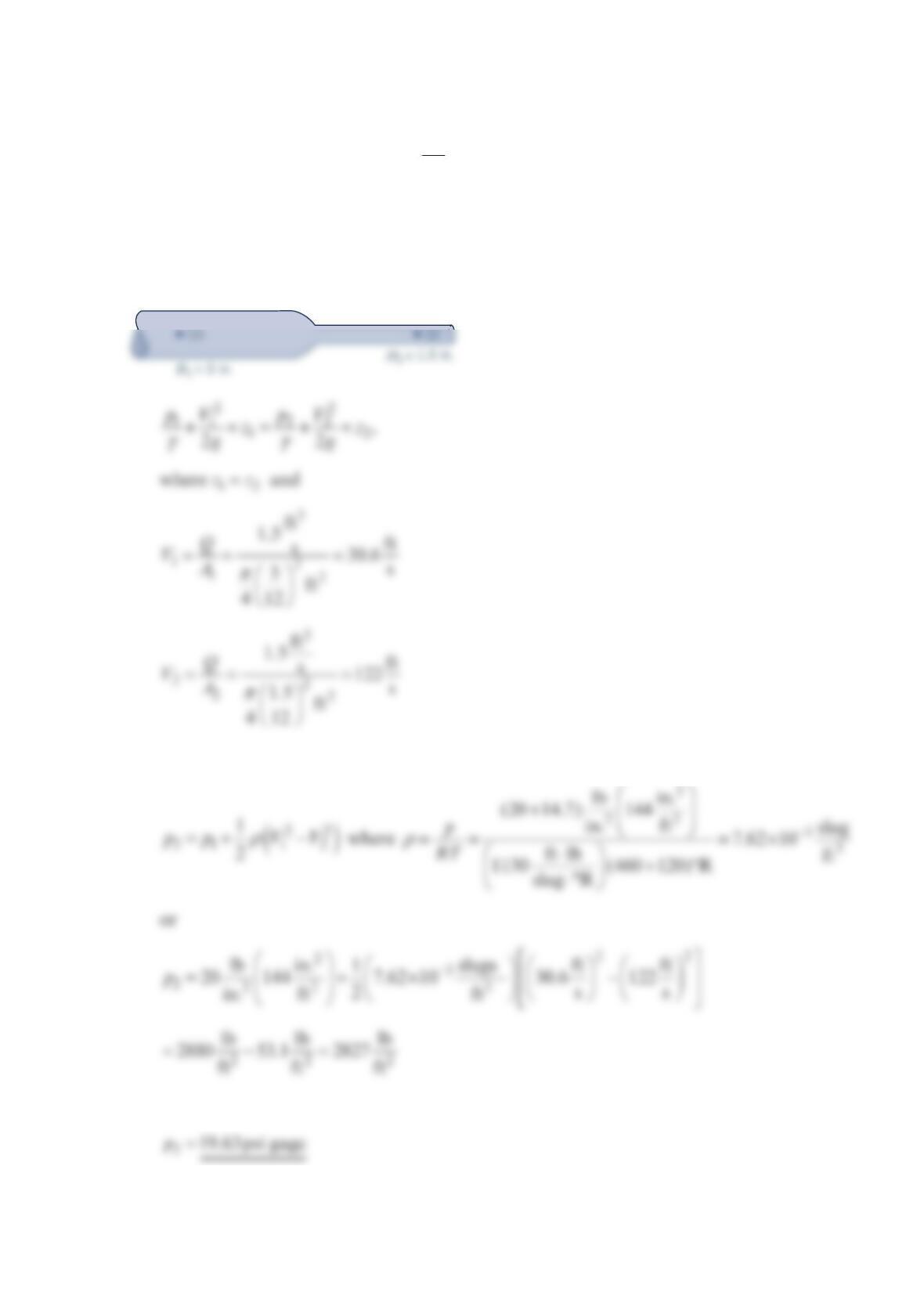
(b) From the Bernoulli’s equation,
Thus,
Problem 3.73
Carbon dioxide flows at a rate of
3
ft
1
.5 s from a 3-in. pipe in which the pressure and temper-
ature are
2
0 psi (gage) and 120°F into a
1
.5-in. pipe. If viscous effects are neglected and in-
compressible conditions are assumed, determine the pressure in the smaller pipe.
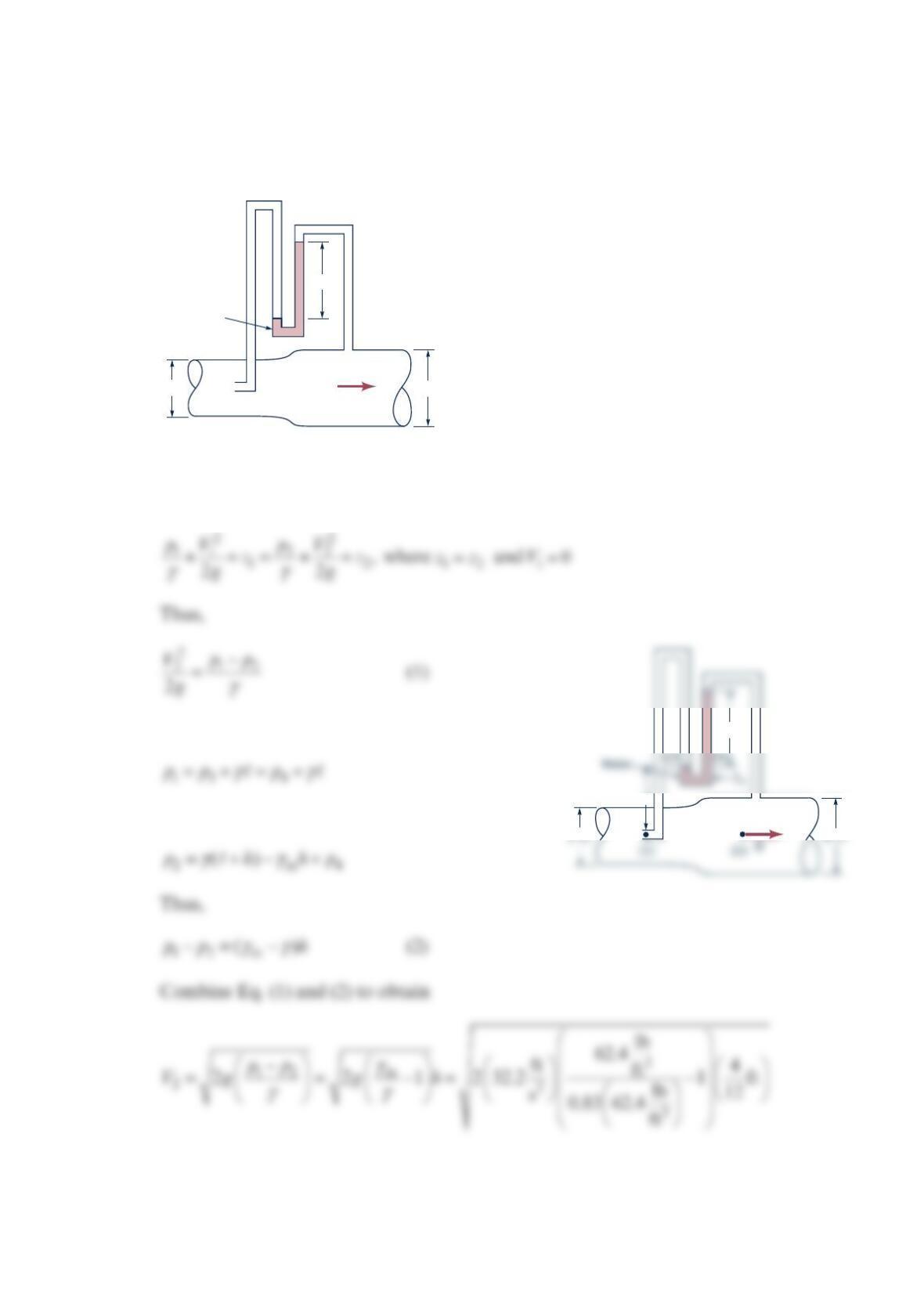
Solution 3.73
Thus,
or
Problem 3.74
Oil of specific gravity 0.83 flows in the pipe shown in the figure below. If viscous effects are
neglected, what is the flowrate?
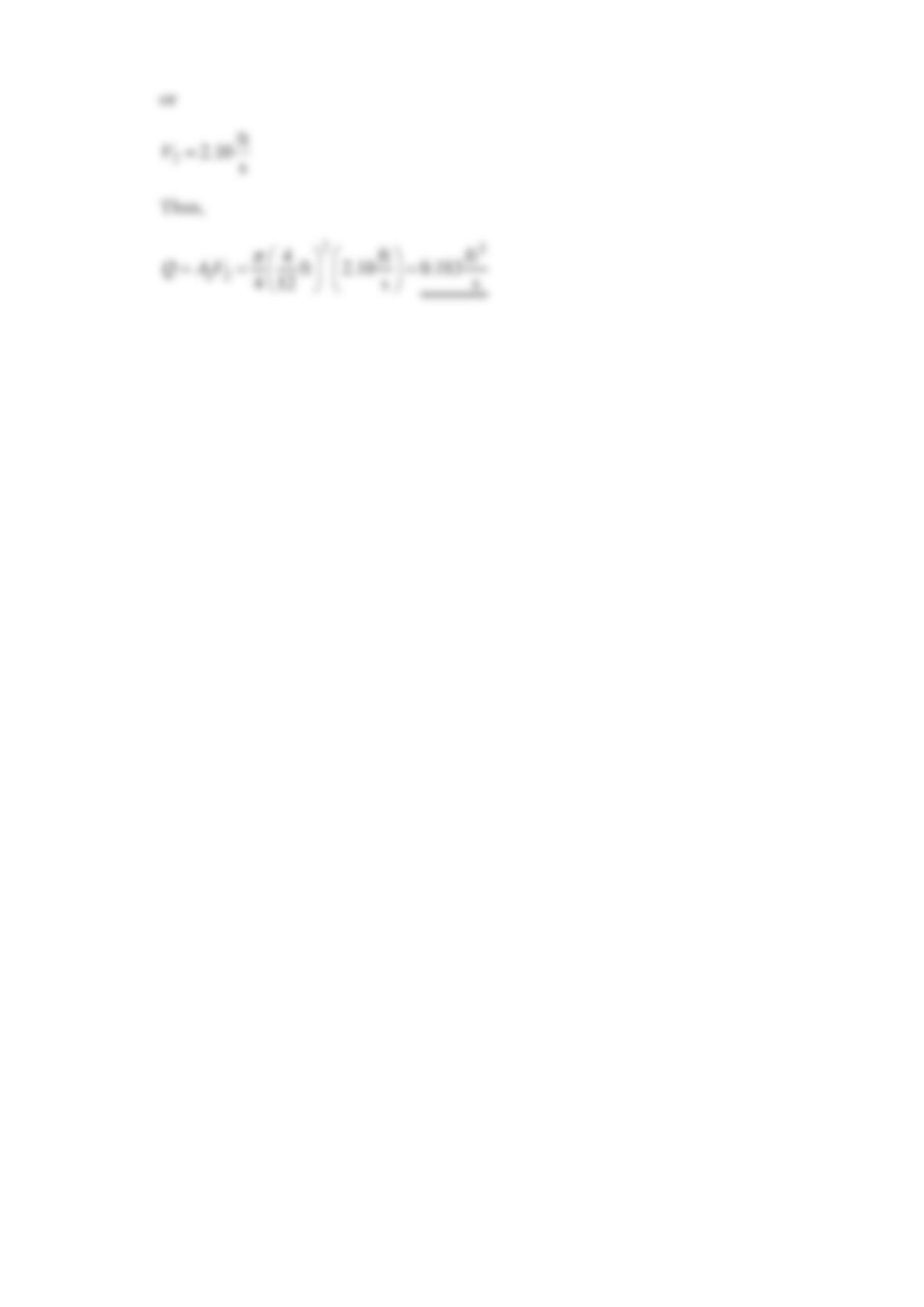
Solution 3.74
but
and
Q
3 in. 4 in.
4 in.
Water
SG
= 0.83
4 in.
SG
= 0.83
γ
h
=
ℓ
Problem 3.75
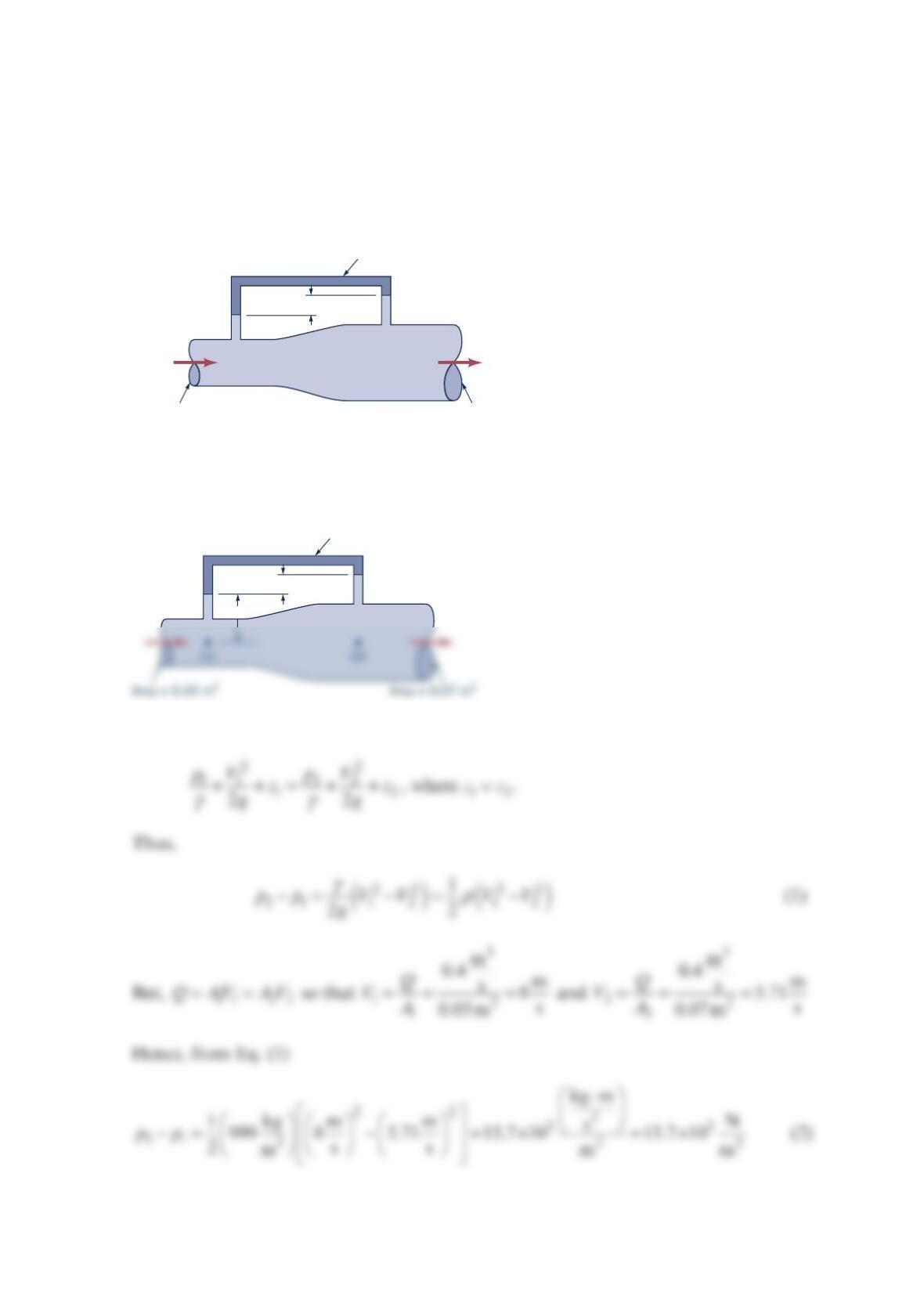
Water flows steadily through the variable area pipe shown in the figure below with negligi-
ble viscous effects. Determine the manometer reading, H, if the flowrate is 3
0.4 m / s and
the density of the manometer fluid is 3
500 kg / m .
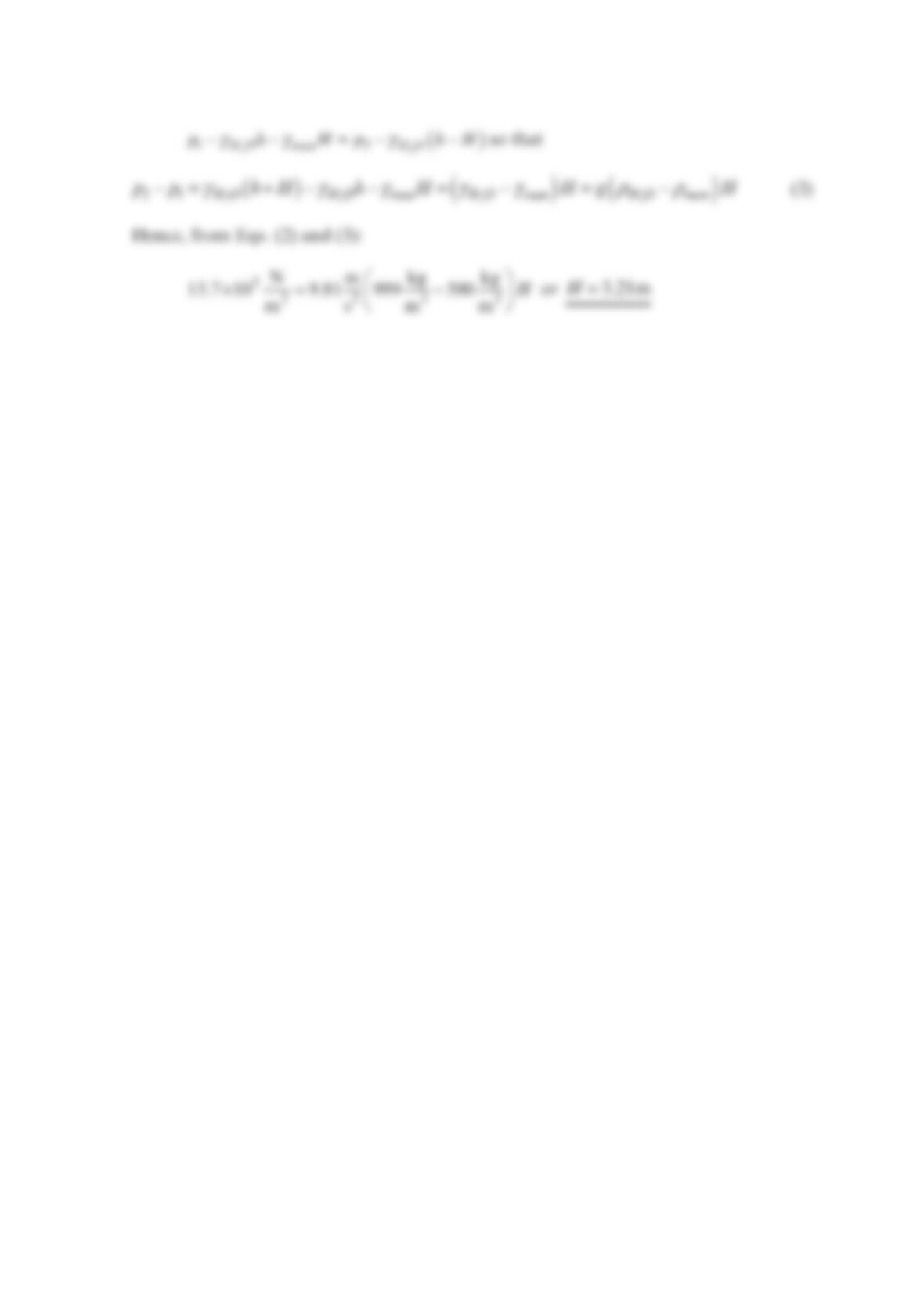
Solution 3.75
From the Bernoulli’s equation,
H
Area = 0.05 m
2
Area = 0.07 m
2
Density = 500 kg/m
3
H
Density = 500 kg/m
3
h
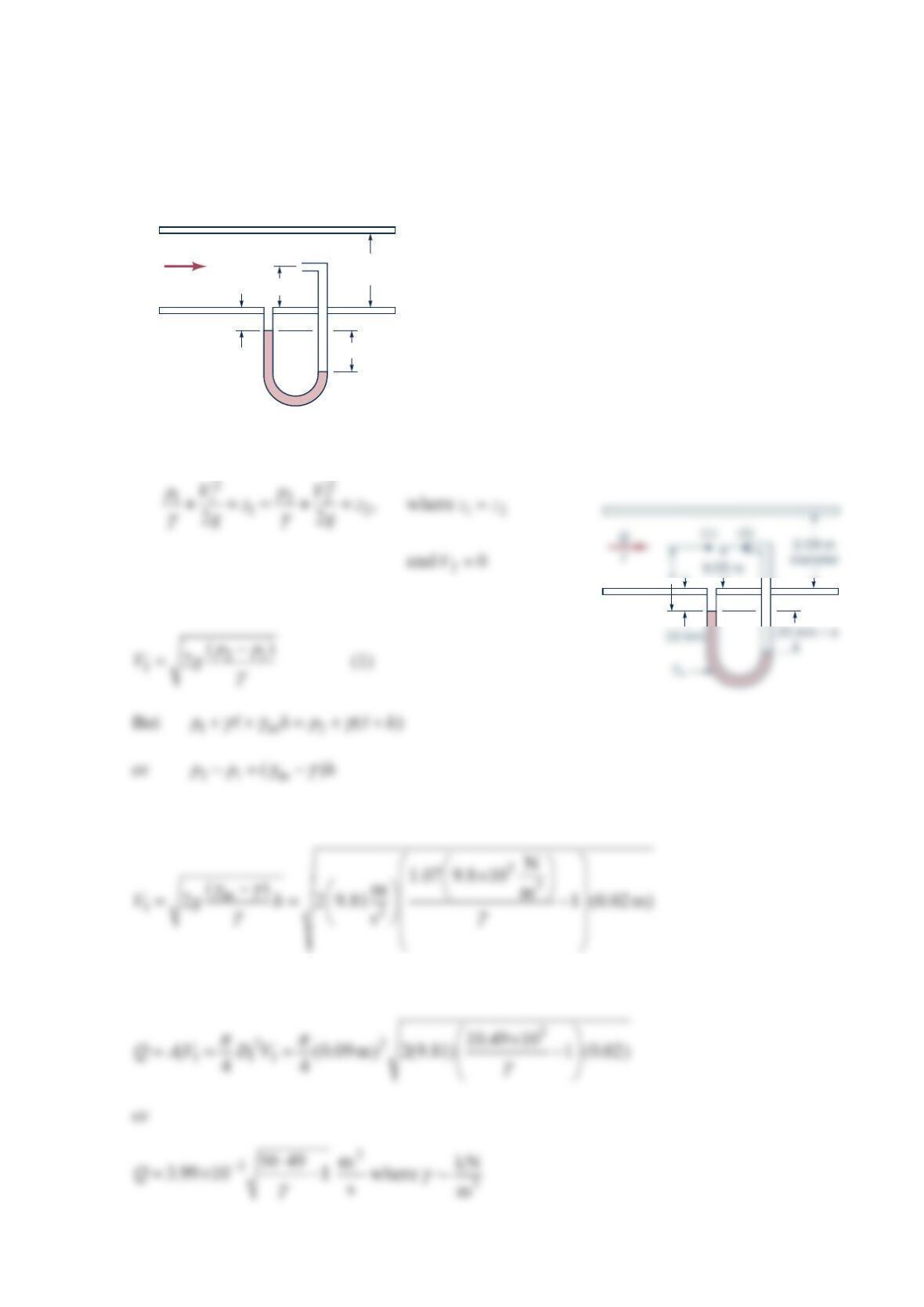
For the manometer,
Problem 3.76
The specific gravity of the manometer fluid shown in the figure below is
1
.07. Determine
the volume flowrate, Q, if the flow is inviscid and incompressible and the flowing fluid is
(a) water, (b) gasoline, or (c) air at standard conditions.
Solution 3.76
Thus,
so that Eq. (1) becomes
Thus,
Q
20 mm
0.09-m
diameter
0.05 m
10 mm
ℓ
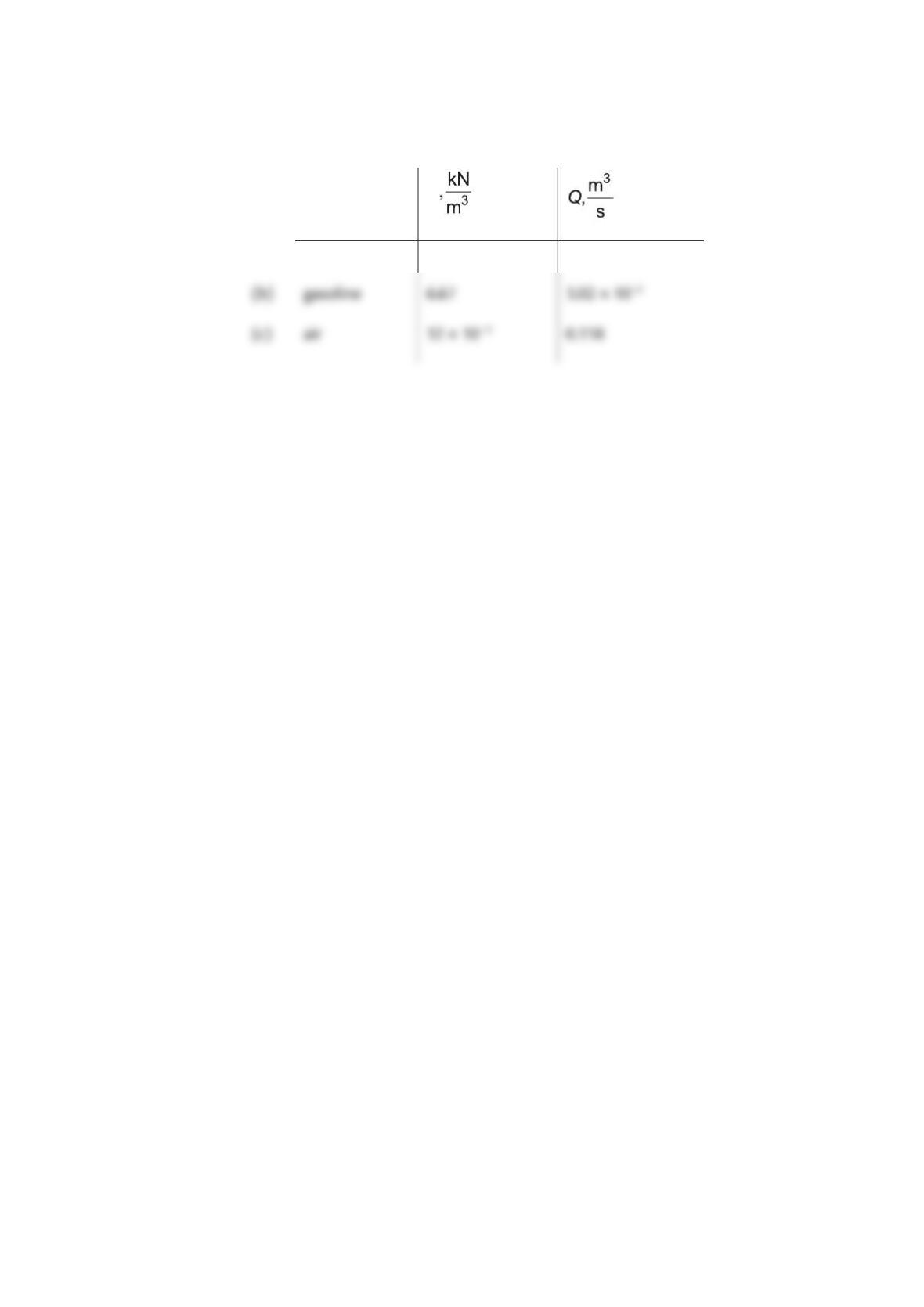
For the given fluids this gives:
fluid
γ
(a) water 9.80 1.06 × 10−3
=========
Problem 3.77
Water flows steadily with negligible viscous effects through the pipe shown in the figure be-
low. It is known that the 4-in. diameter section of thin-walled tubing will collapse if the
pressure within it becomes less than
1
0 psi below atmospheric pressure. Determine the max-
imum value that h can have without causing collapse of the tubing.
Solution 3.77
where
Thus, with 14ftz=
Also,
4-in.-diameter thin-walled tubing
6 in.
h
4 ft
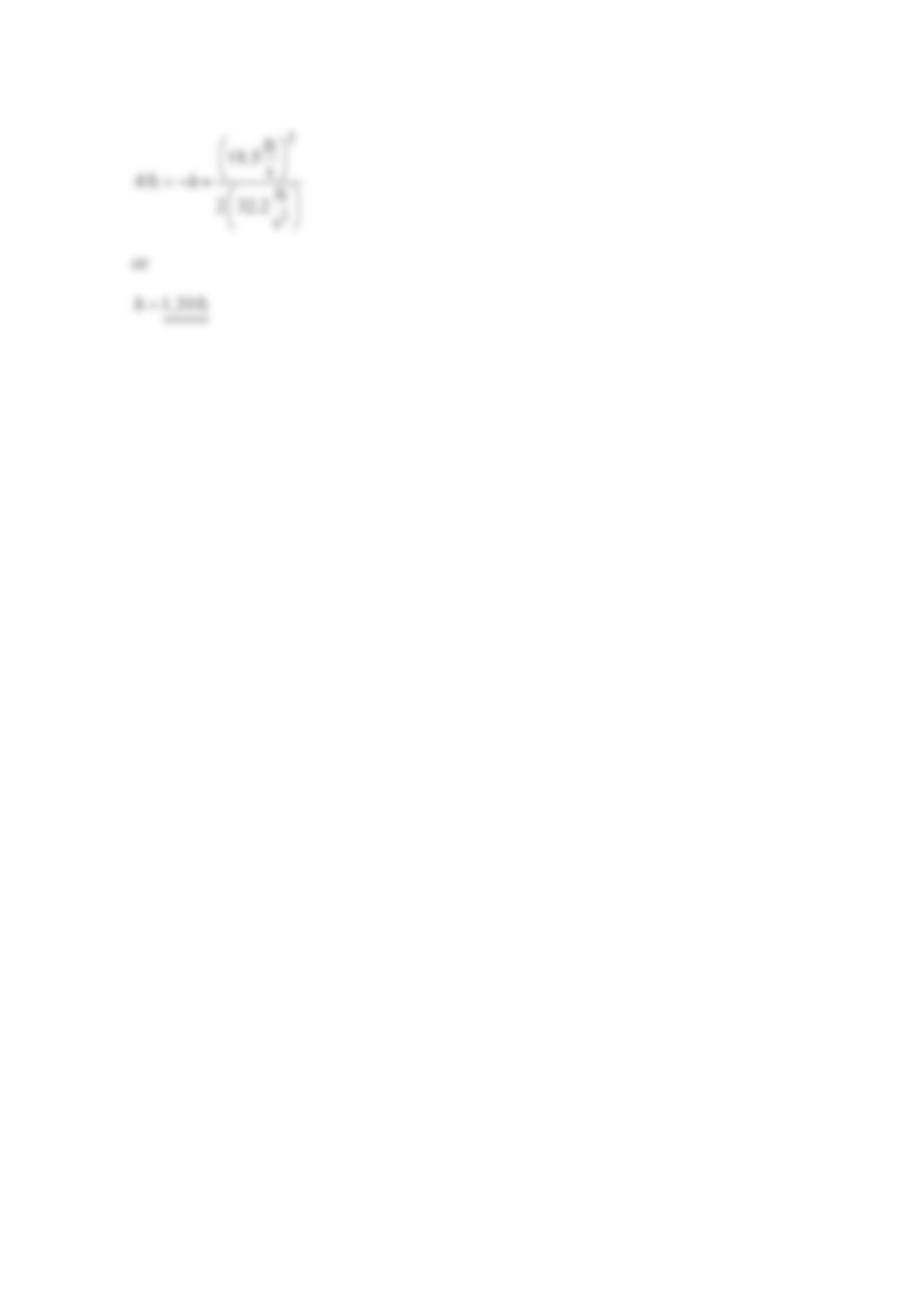
Thus,
Problem 3.78
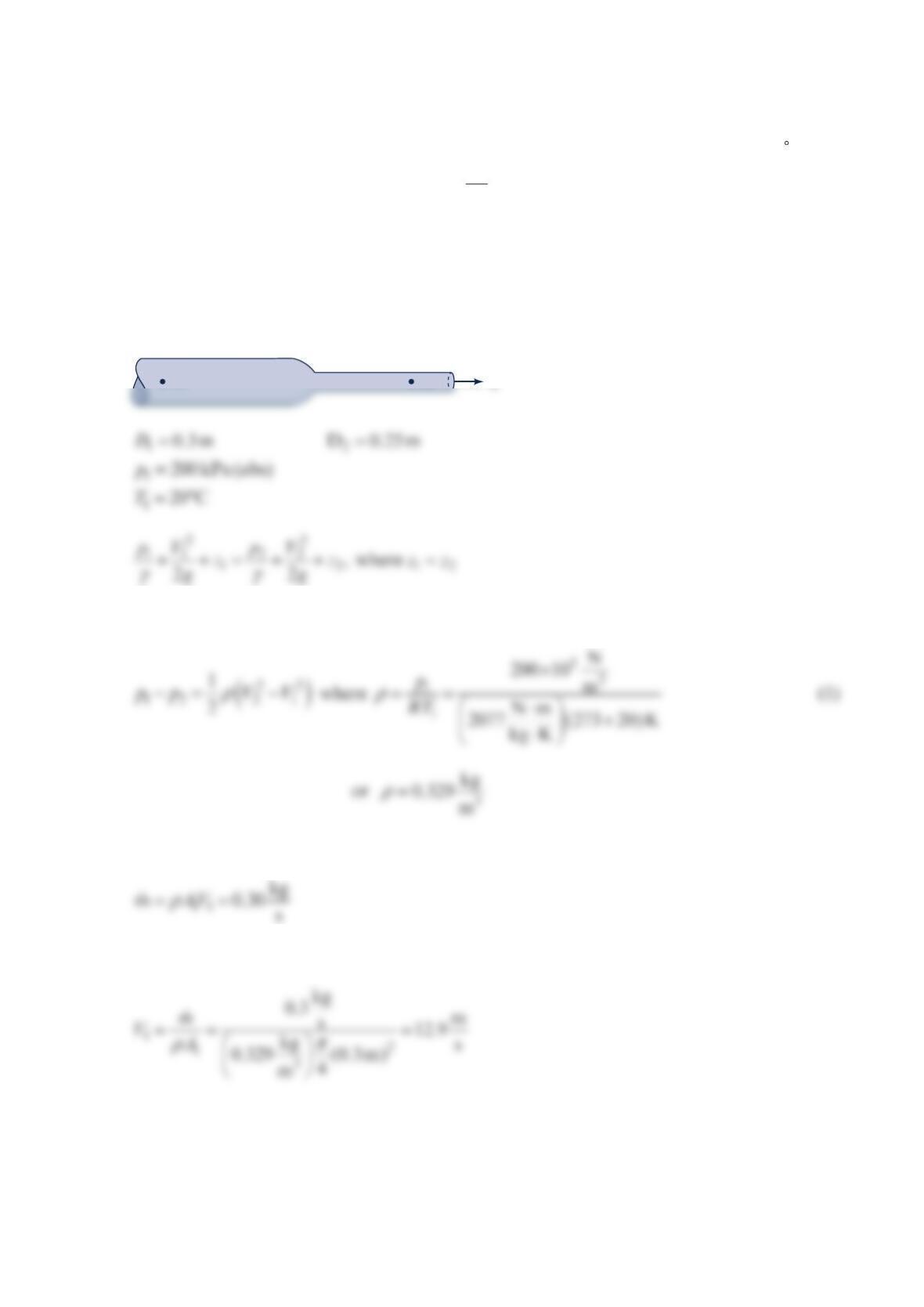
Helium flows through a 0.30-m- diameter horizontal pipe with a temperature of
2
0C
and a
pressure of 200 kPa (abs) at a rate of kg
0.30 s. If the pipe reduces to 0.25-m-diameter, de-
termine the pressure difference between these two sections. Assume incompressible,
inviscid flow.
Solution 3.78
Thus,
Also,
so that
(2)(1)
Q
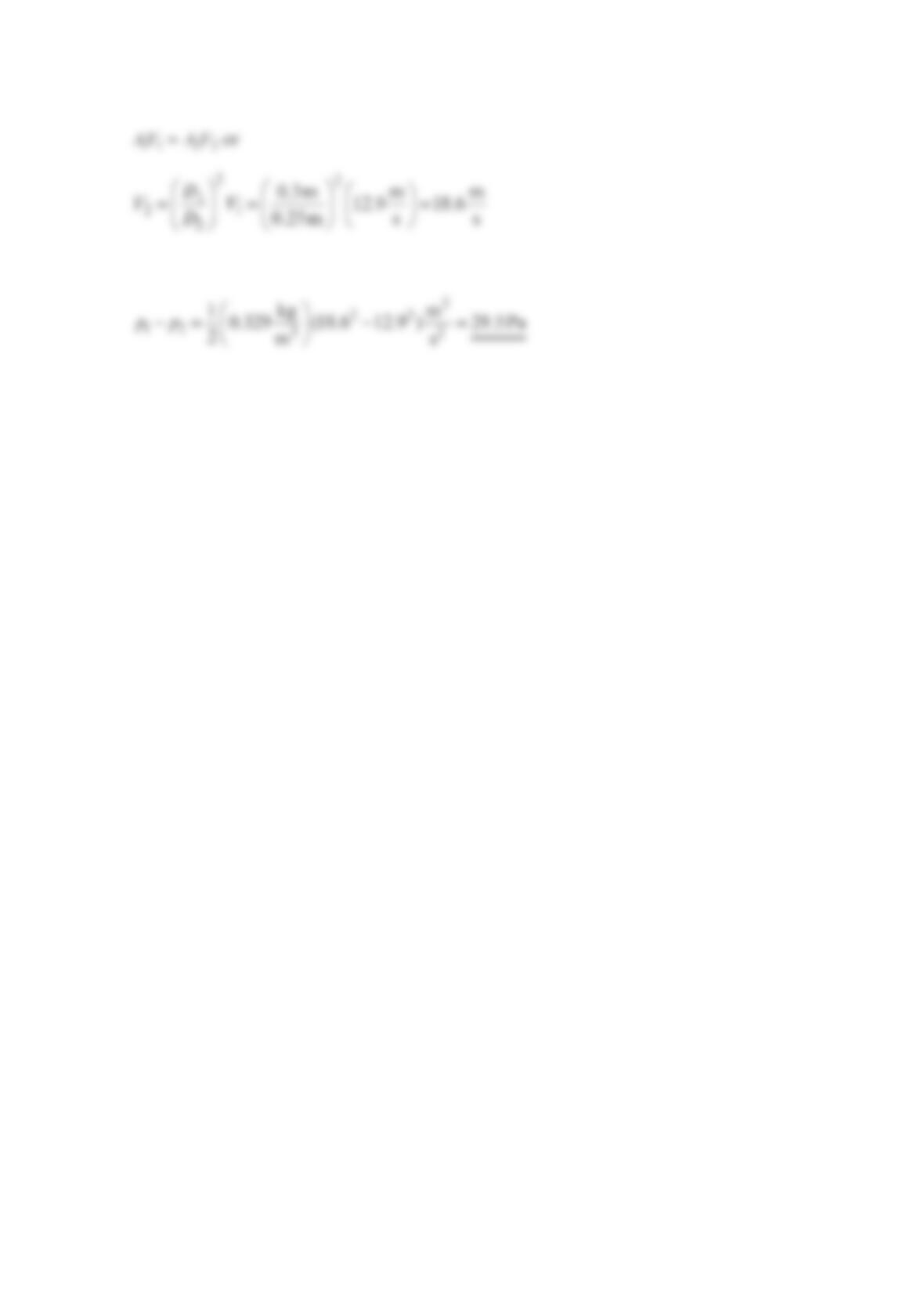
and
Thus, from Eq. (1):
Problem 3.79
Water is pumped from a lake through an 8-in. pipe at a rate of
3
ft
10 s. If viscous effects are
negligible, what is the pressure in the suction pipe (the pipe between the lake and the pump)
at an elevation above the lake?
Solution 3.79
Thus,
Q
(1)
(2)
Problem 3.80
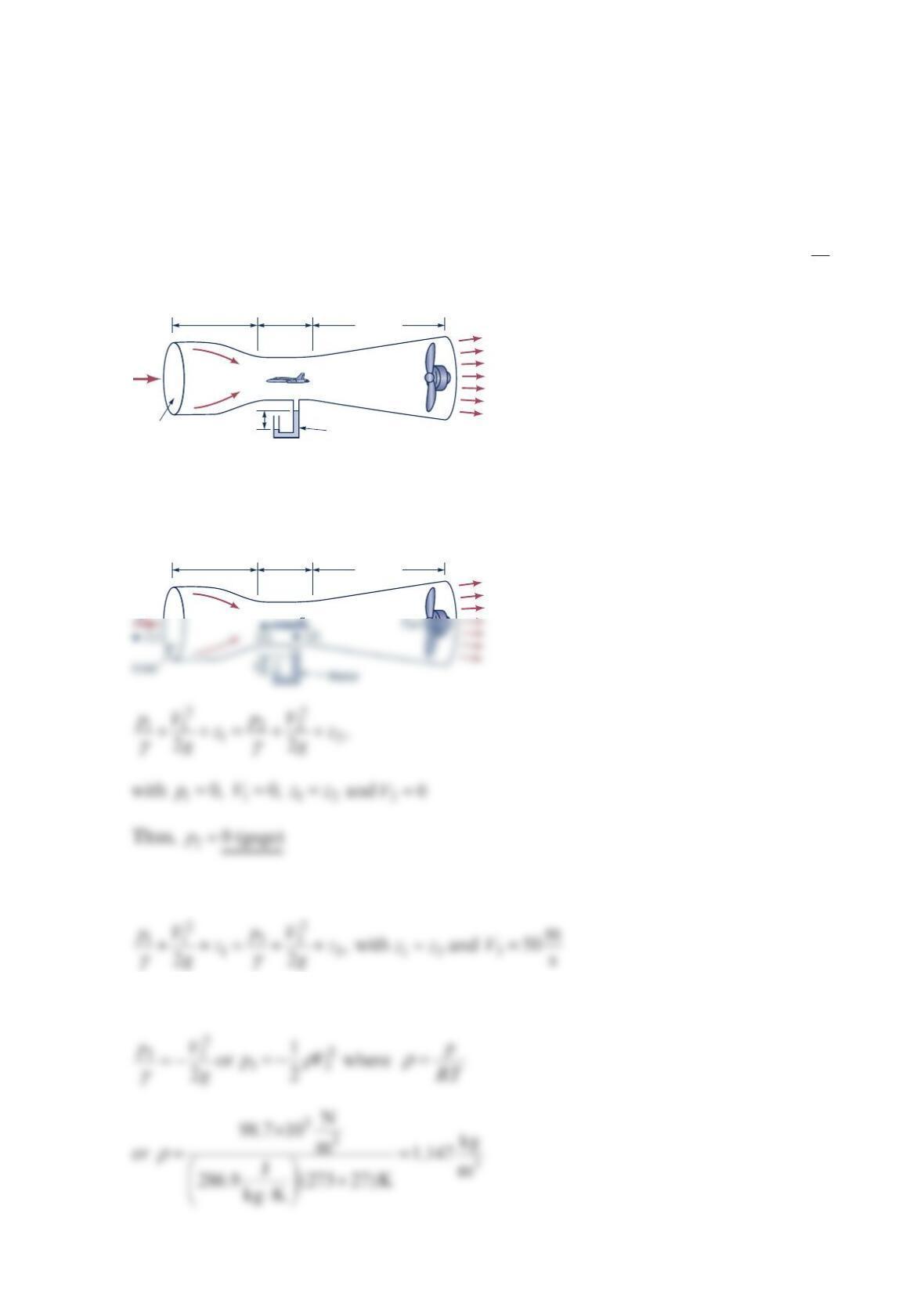
Air is drawn into a small open-circuit wind tunnel as shown in the figure below. Atmos-
pheric pressure is
9
8.7 kPa (abs) and the temperature is 27°C. If viscous effects are
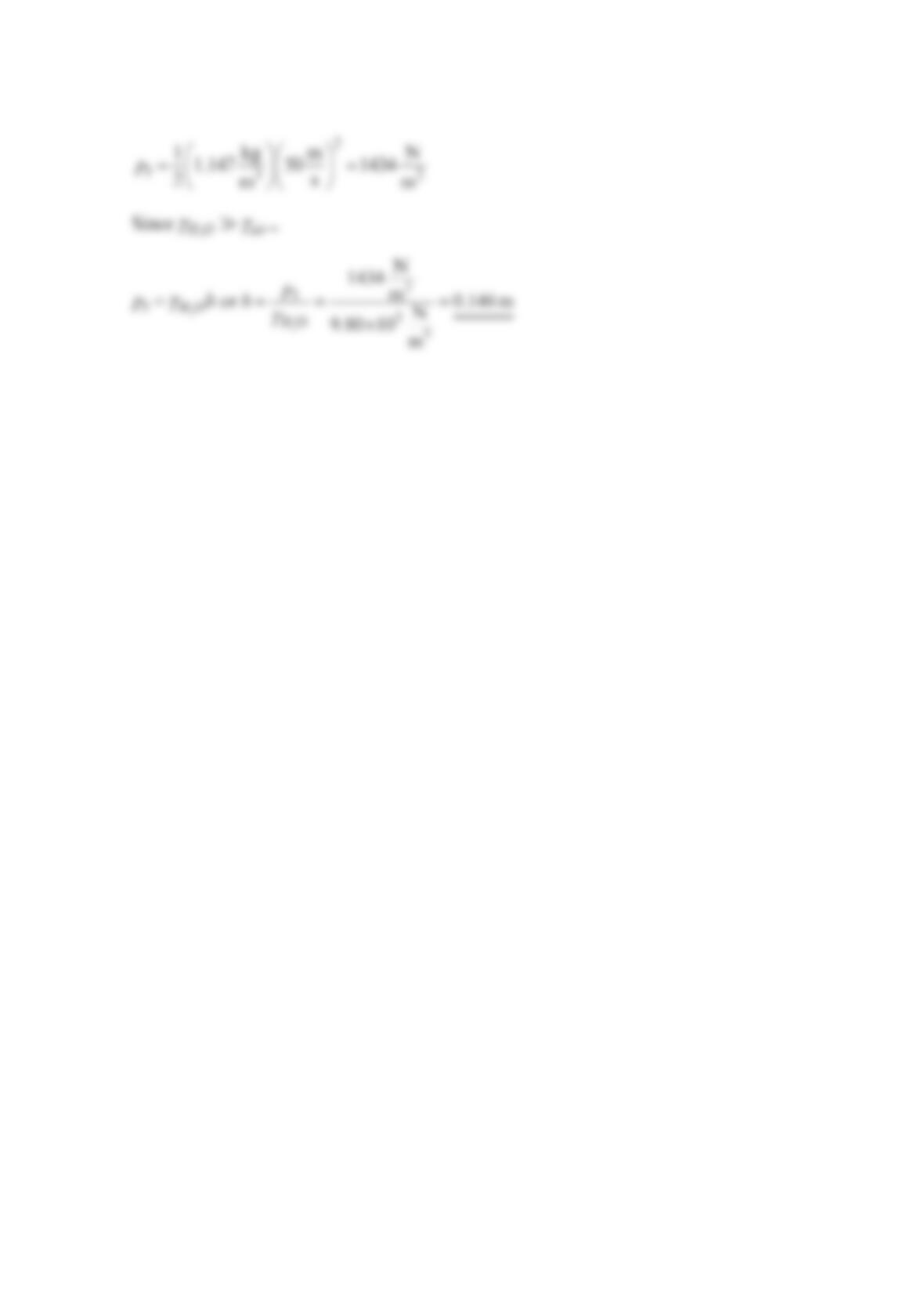
negligible, determine the pressure at the stagnation point on the nose of the airplane. Also
determine the manometer reading, h, for the manometer attached to the static pressure tap
within the test section of the wind tunnel if the air velocity within the test section is m
50 s.
Solution 3.80
Also,
Thus,
Q
Inlet nozzle
Test
section Diffuser
Water
Fan
Inlet h
Q
Inlet nozzle
Test
section Diffuser
Hence,
Problem 3.81
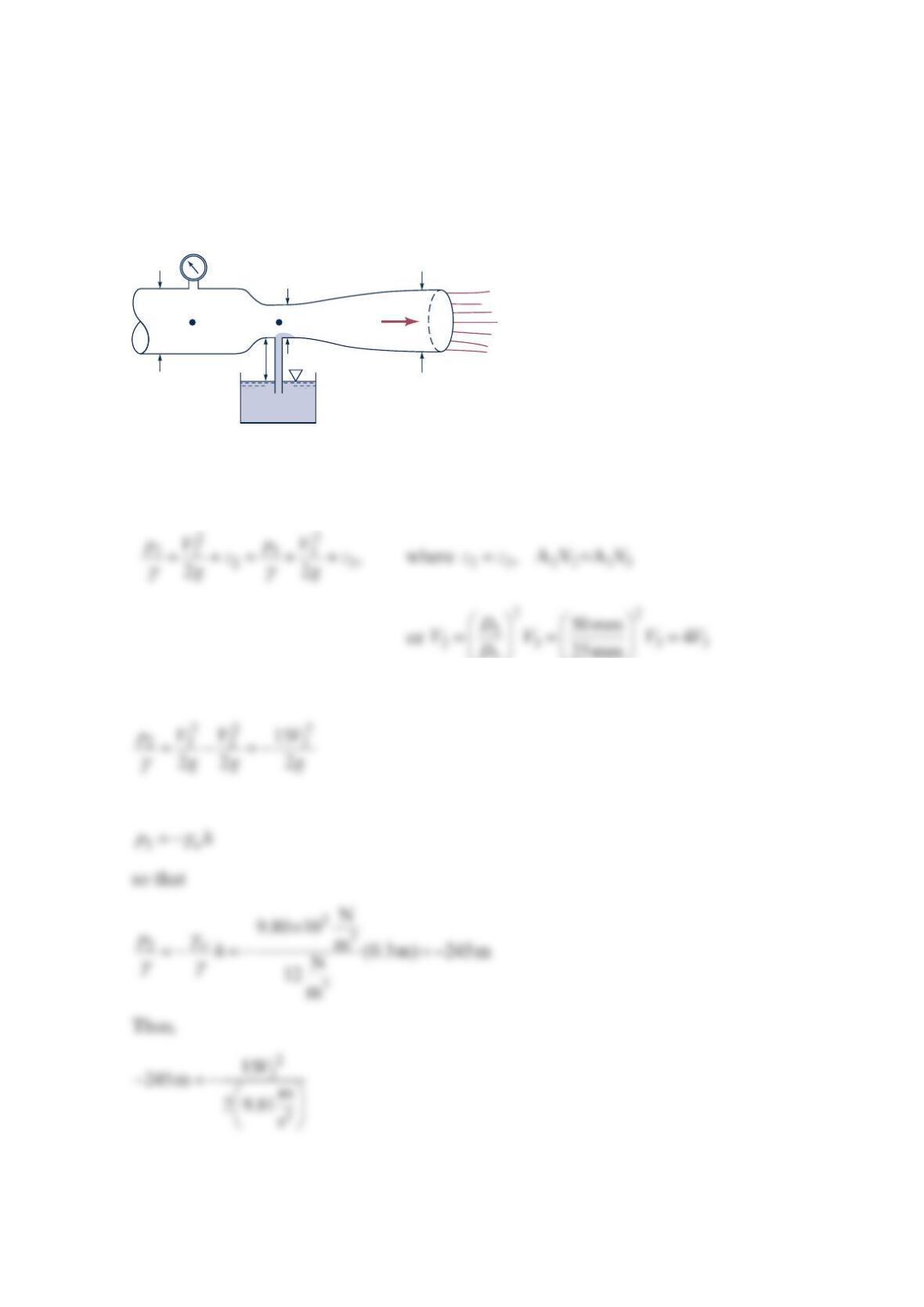
Air flows through the device shown in the figure below. If the flowrate is large enough, the
pressure within the constriction will be low enough to draw the water up into the tube. De-
termine the flowrate, Q, and the pressure needed at section (1) to draw the water into sec-
tion (2). Neglect compressibility and viscous effects.
Solution 3.81
2
Thus, since 30
p
=
But
Q
50 mm
Water
Air
Free jet
25 mm
50 mm
0.3 m
(1) (2)