3.82: PROBLEM DEFINITION
Situation:
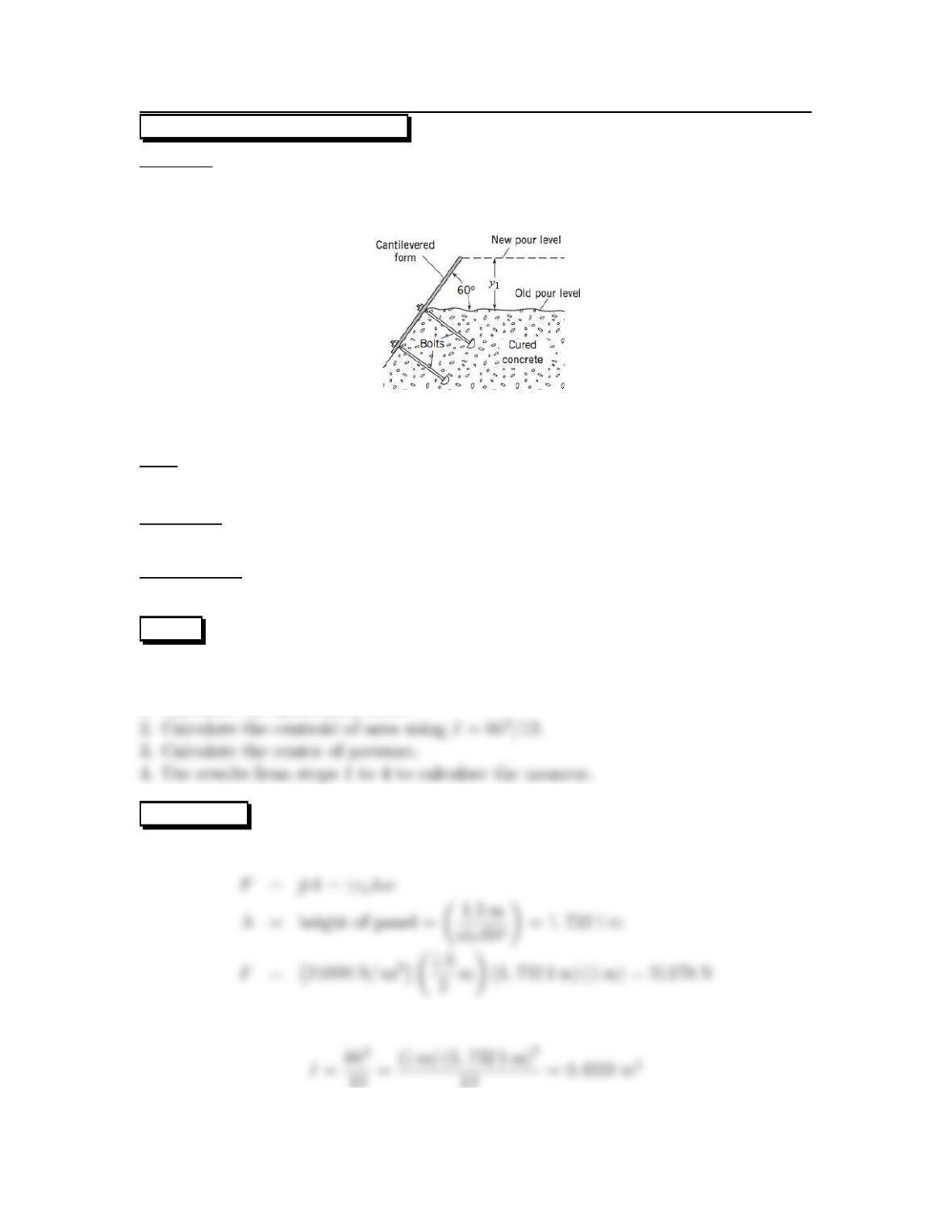
A concrete form is described in the problem statement.
y1=1.5m,θ=60◦.
Find:
Moment at base of form per meter of length (kN·m/m).
Properties:
Concrete, γ=24kN/m3.
Assumptions:
Assume that the form has a length of w=1meterintothepaper.
PLAN
Find the moment by muliplying the hydrostatic force by its moment arm. The plan
for reaching the goal is:
1. Calculate the hydrostatic force.
SOLUTION
1. Hydrostatic force
2. Centroid of area
3. Center of pressure
121
4. Moment at base
122
3.83: PROBLEM DEFINITION
Situation:
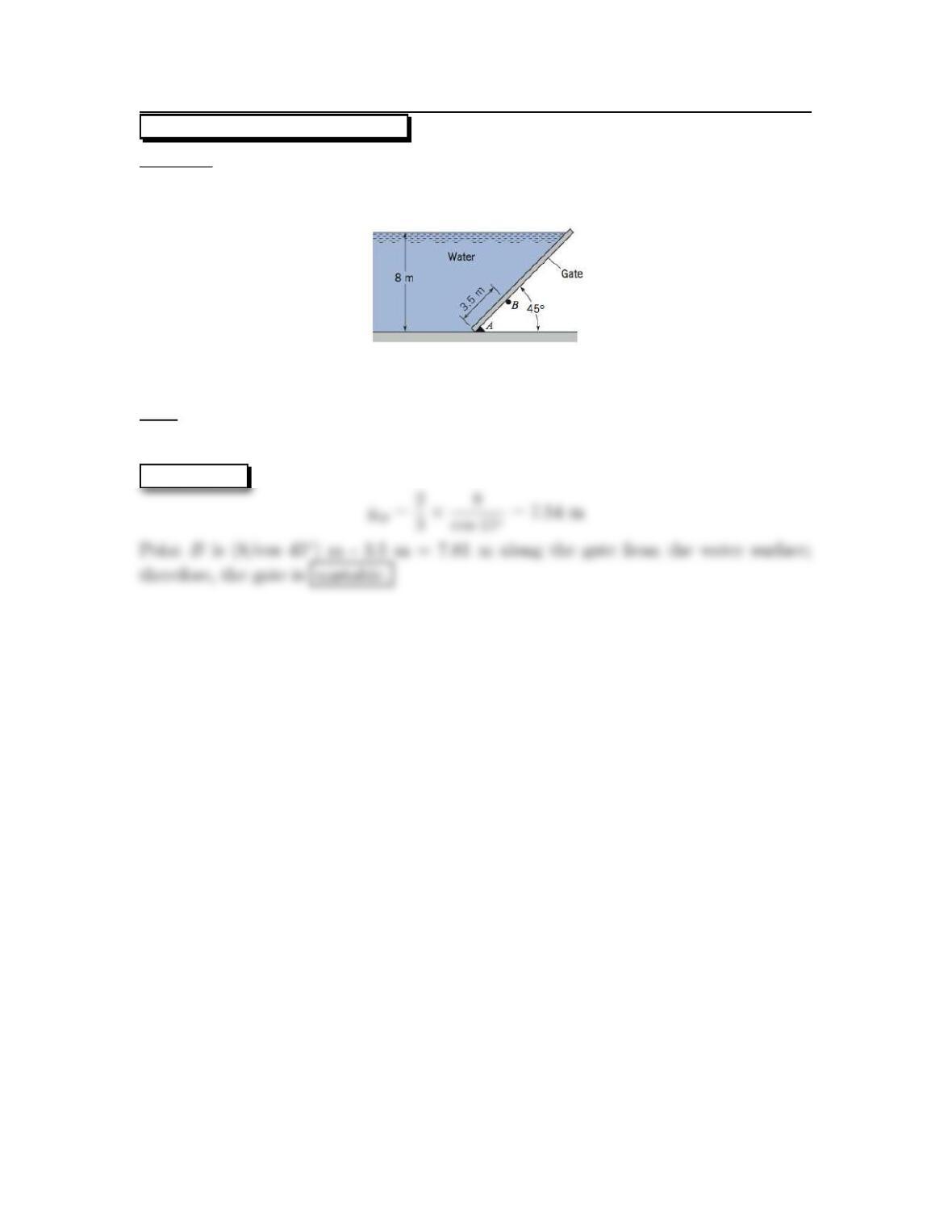
A submerged gate is described in the problem statement.
θ=45◦.
Find:
Isthegatestableorunstable.
SOLUTION
123
3.84: PROBLEM DEFINITION
Situation:
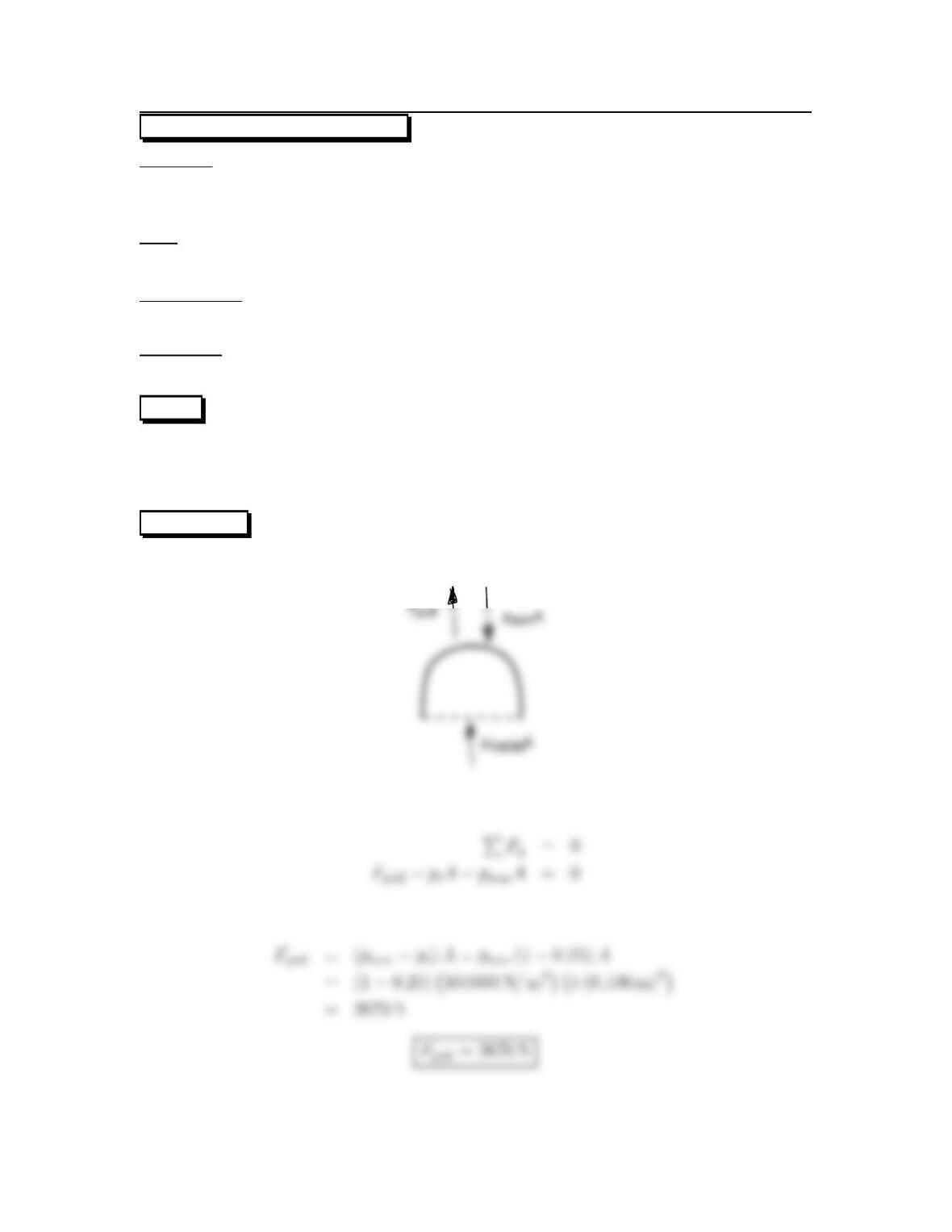
Two hemispherical shells are sealed together.
ro=10.5cm,ri=10.75 cm.
Find:
Force required to separate the two shells.
Assumptions:
The pressure seal is at the average radius (r=10.6cm)
Properties:
patm = 101.3kPa,pi=0.25patm.
PLAN
1. Apply equilibrium to a freebody comprised of the top half of the shell plus the air
inside.
2. Calculate the force.
SOLUTION
1. Equilibrium.
2. Force to separate shells.
124
3.85: PROBLEM DEFINITION
Situation:
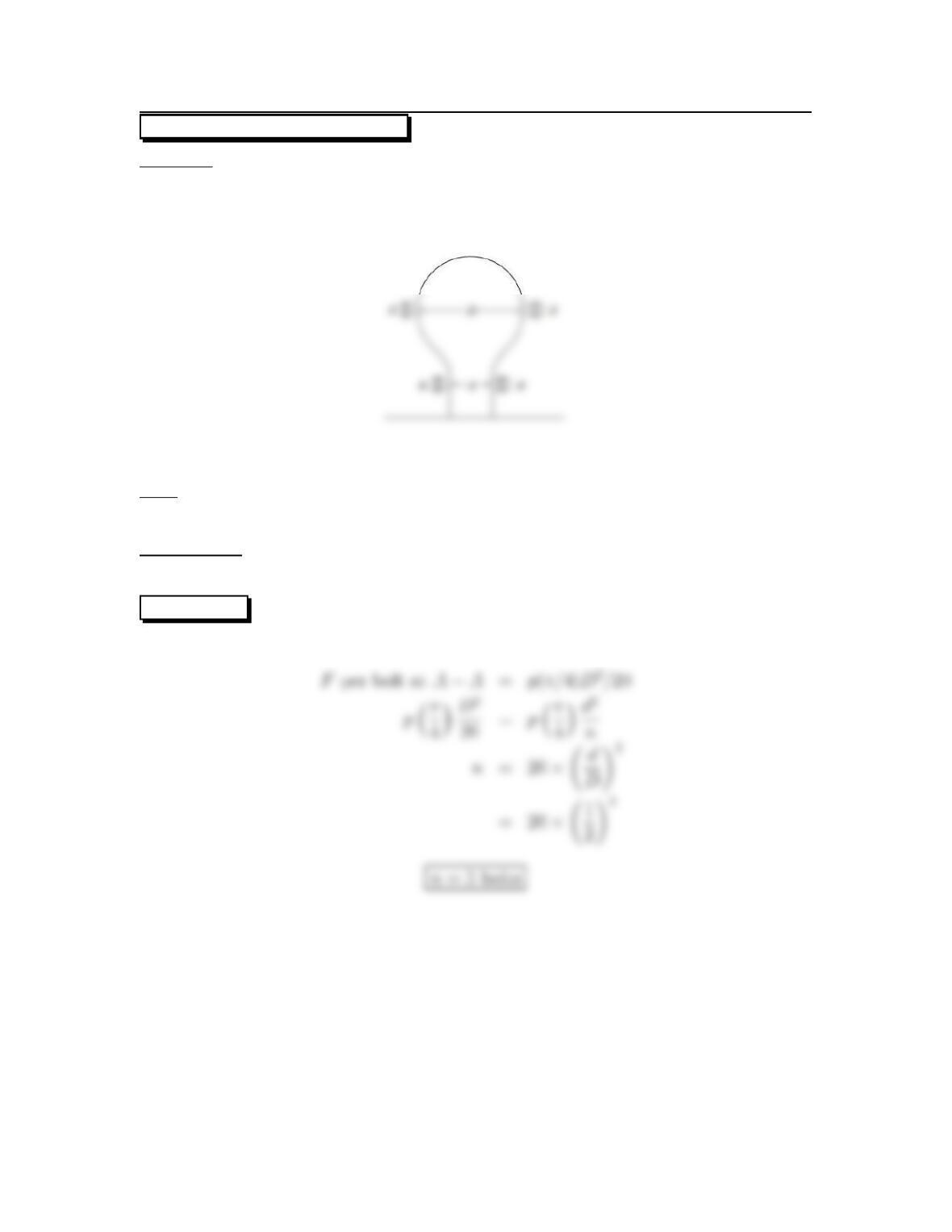
An air chamber is held together by bolts.
d=20cm,D=40cm.
A-A: 20 bolts, Dbolt =2.5cm.
Find:
Number of bolts required at section B-B.
Assumptions:
Same force per bolt at B-B.
SOLUTION
Hydrostatic force
125
3.86: PROBLEM DEFINITION
Situation:
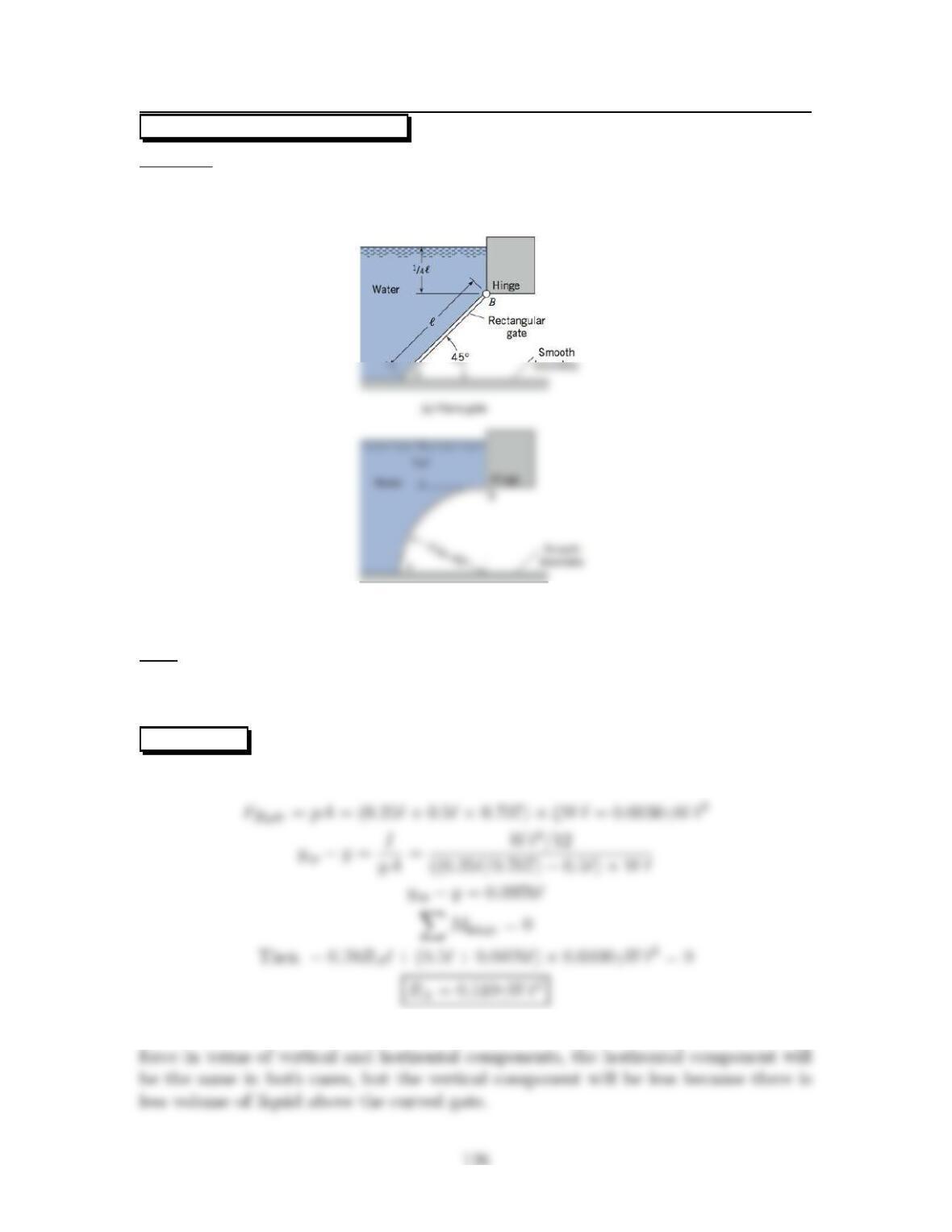
Submerged rectangular and curved gates.
¯y=0.25.
Find:
Magnitude of reaction at A.
Comparison to that for a plane gate.
SOLUTION
a)
b) The reaction here will be less because if one thinks of the applied hydrostatic
3.87: PROBLEM DEFINITION
Situation:
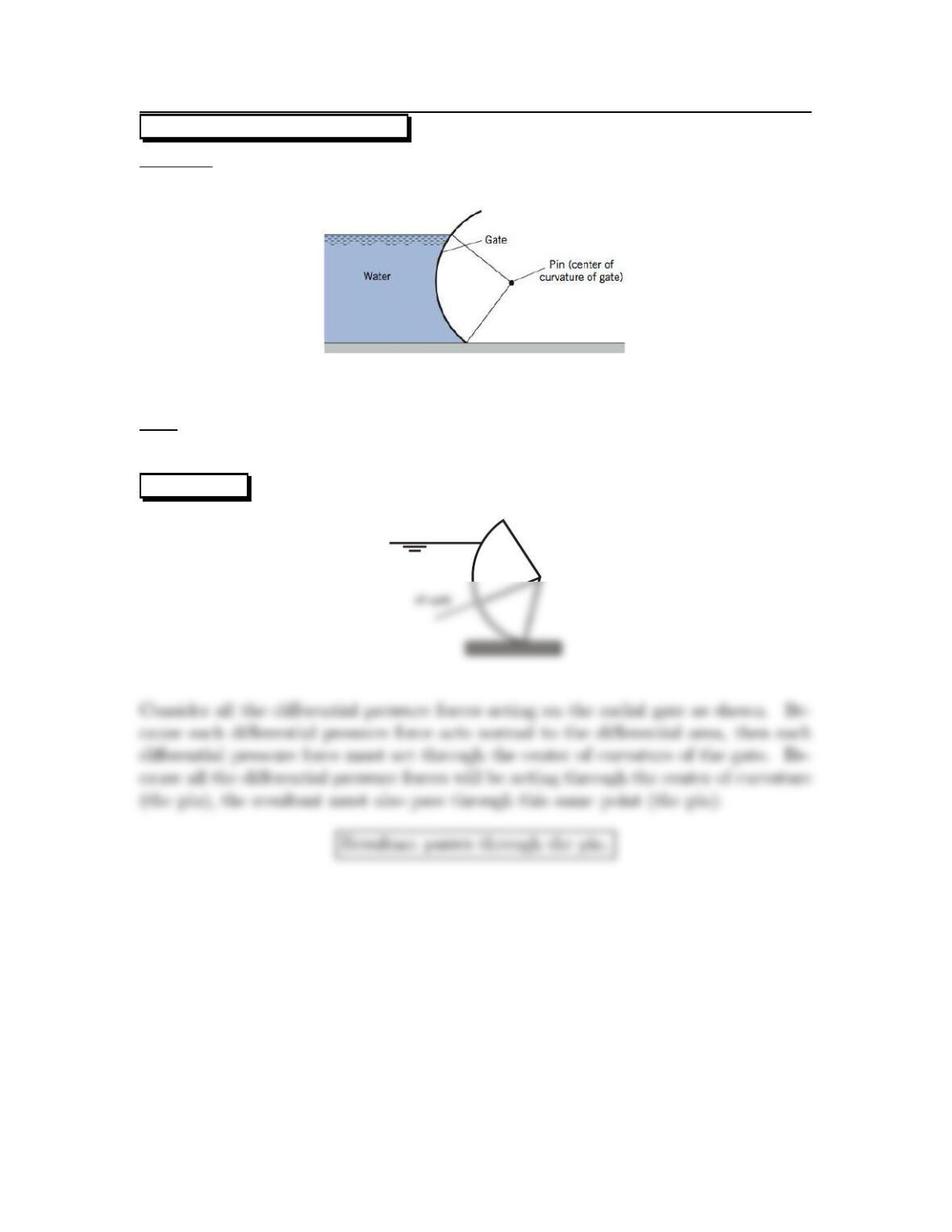
A radial gate holds back water.
Find:
Where the resultant of the pressure force acts.
SOLUTION
127
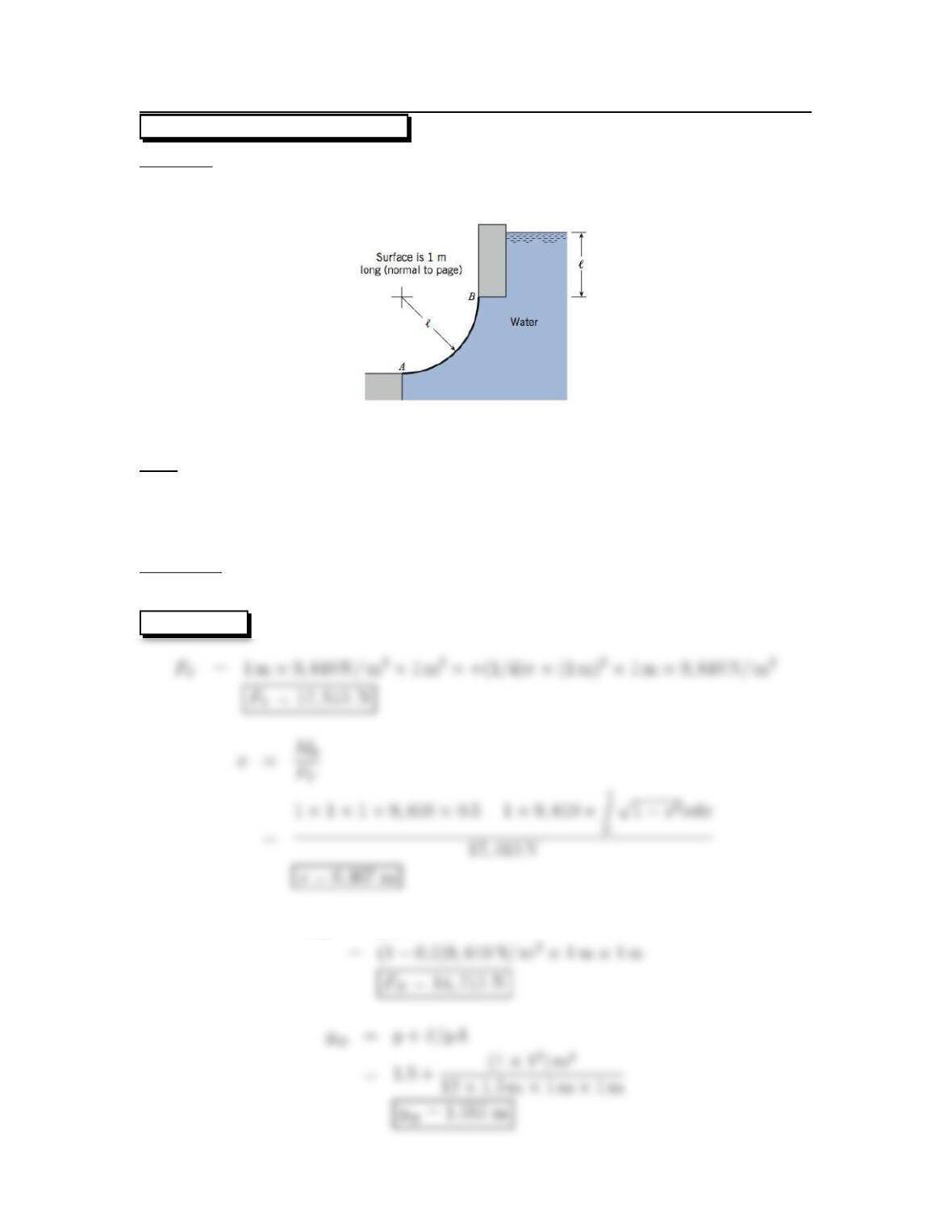
3.88: PROBLEM DEFINITION
Situation:
A curved surface is described in the problem statement.
=1m.
Find:
(a) Vertical hydrostatic force.
(b) Horizontal hydrostatic force.
(c) Resultant force.
Properties:
Water, Table A.5: γ=9810N/m3.
SOLUTION
FH=¯pA
128
129
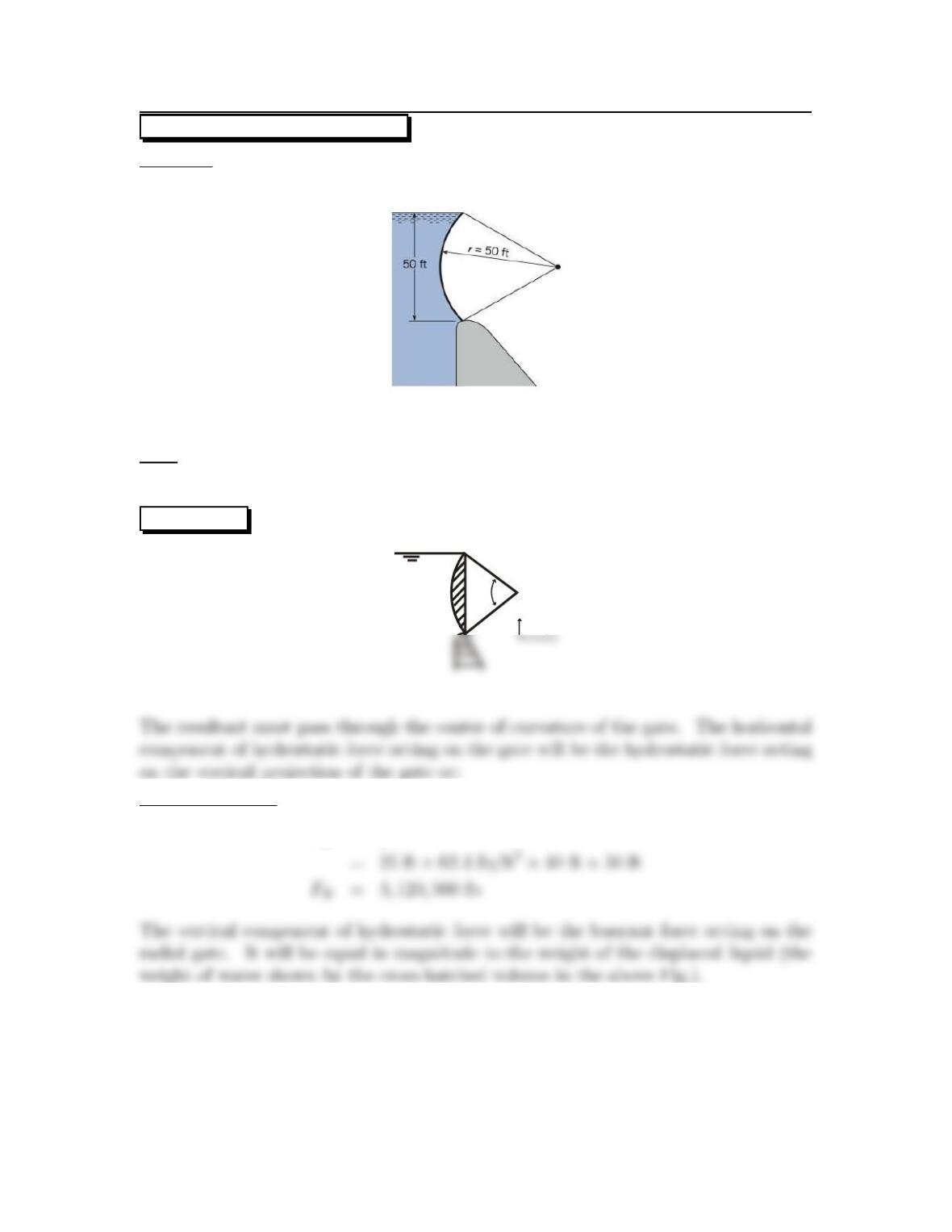
3.89: PROBLEM DEFINITION
Situation:
A radial gate is described in the problem statement.
Find:
Hydrostatic force acting on gate.
SOLUTION
y
60
o
Hydrostatic force
FH=¯pA
130
Thus,
FV=γV
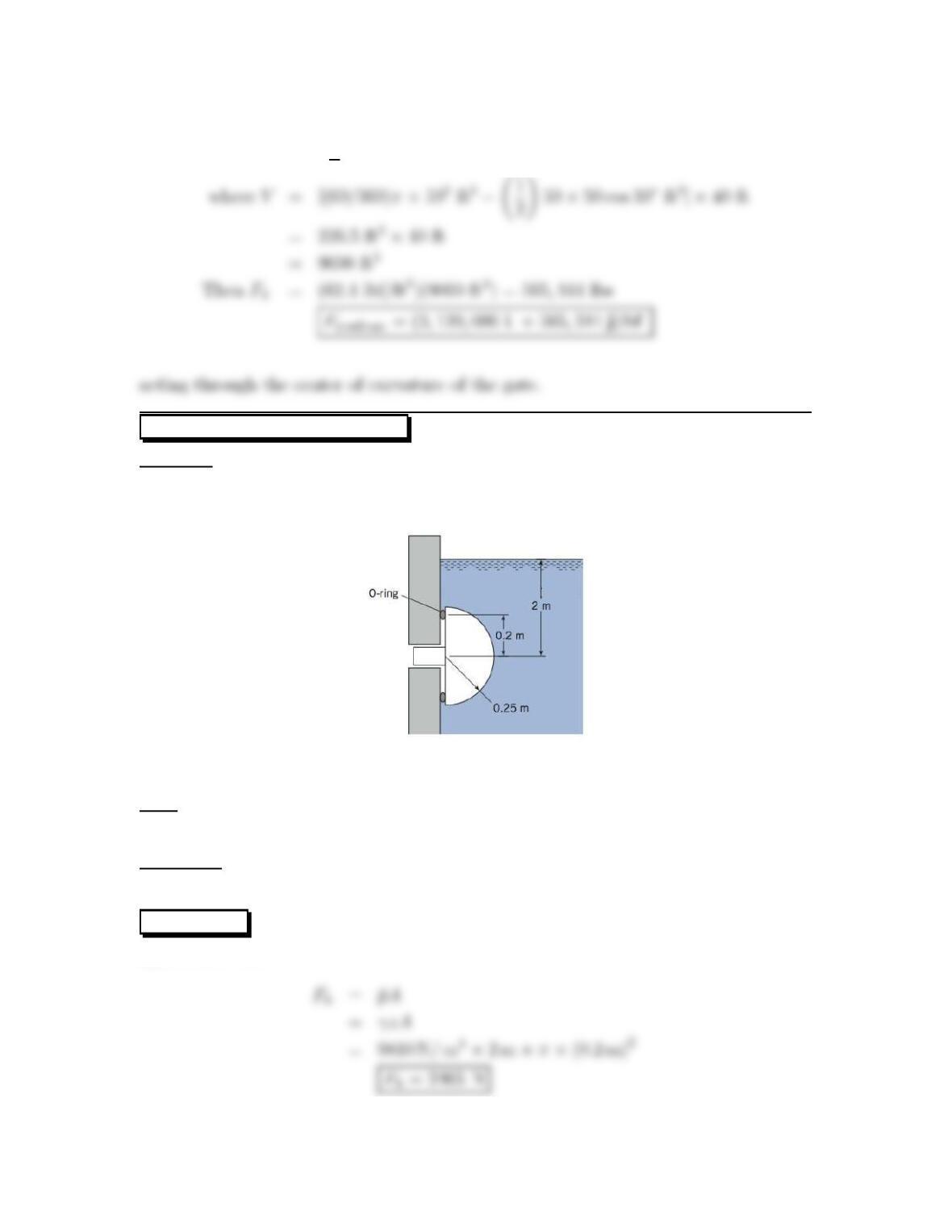
3.90: PROBLEM DEFINITION
Situation:
A plug sits in a hole in the side of a tank.
z=2m,ro−ring =0.2m,rplug =0.25 m.
Find:
Horizontal and vertical forces on plug.
Properties:
Water, Table A.5: γ=9810N/m3.
SOLUTION
Hydrostatic force
131
The vertical force is simply the buoyant force.
132
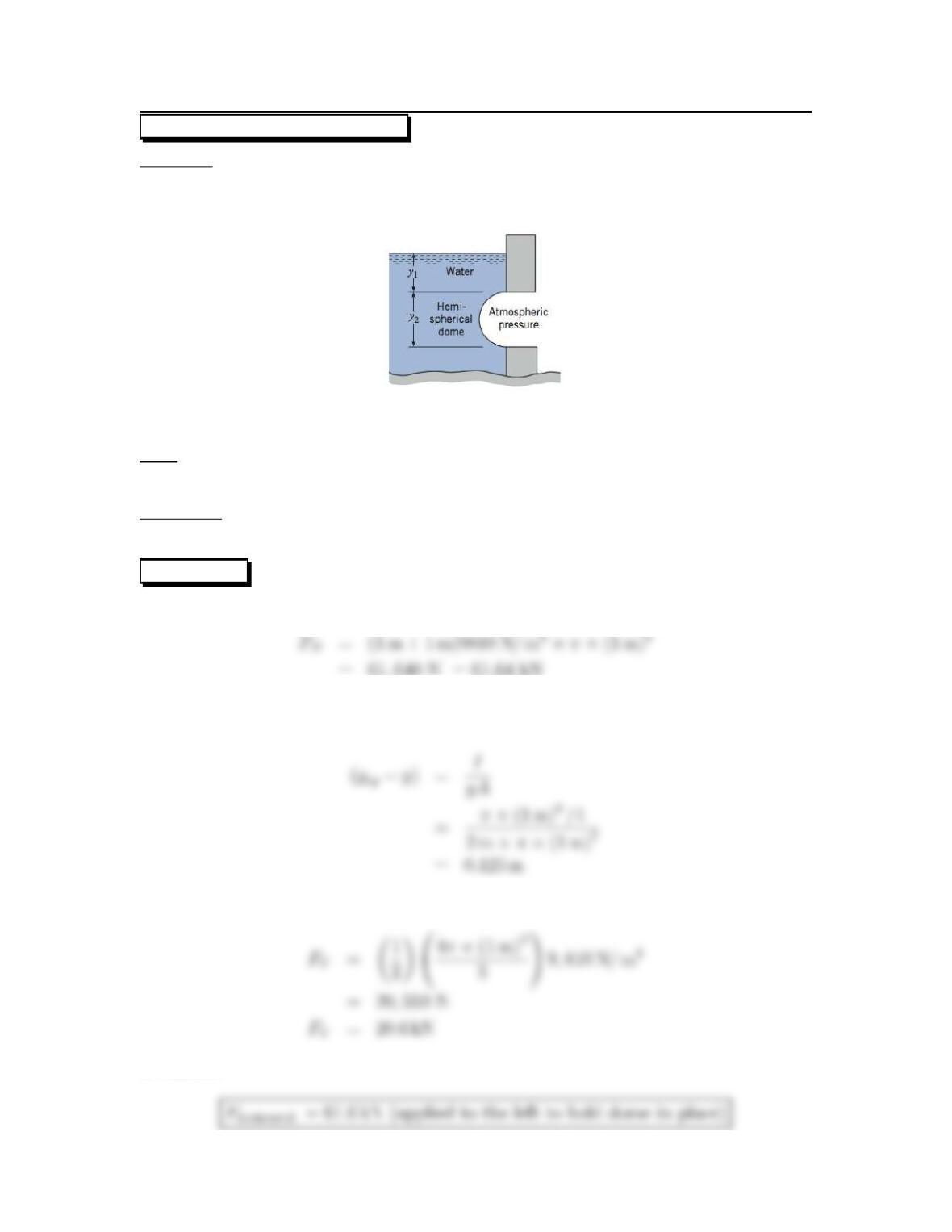
3.91: PROBLEM DEFINITION
Situation:
A dome below the water surface is described in the problem statement.
y1=1m,y2=2m.
Find:
Magnitude and direction of force to hold dome in place.
Properties:
Water (10 ◦C), Table A.5: γ=9810N/m3.
SOLUTION
1. Horizontal component of force.
2. Center of pressure.
3. Vertical component of force
4. Answer
133
134
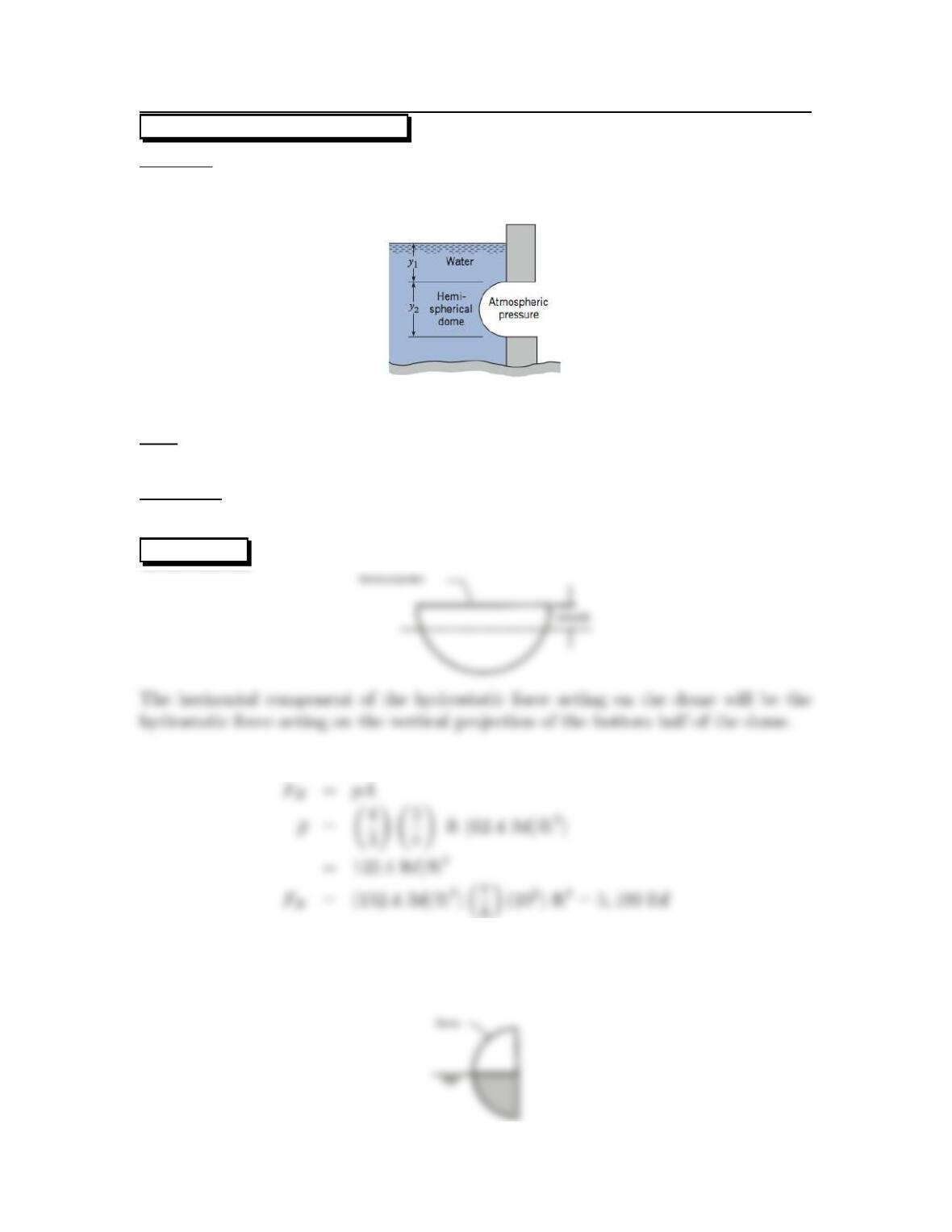
3.92: PROBLEM DEFINITION
Situation:
A dome below the water surface.
d=10ft
Find:
Force on the dome.
Properties:
Water, Table A.5: γ=62.4lbf/ft3.
SOLUTION
Hydrostatic force
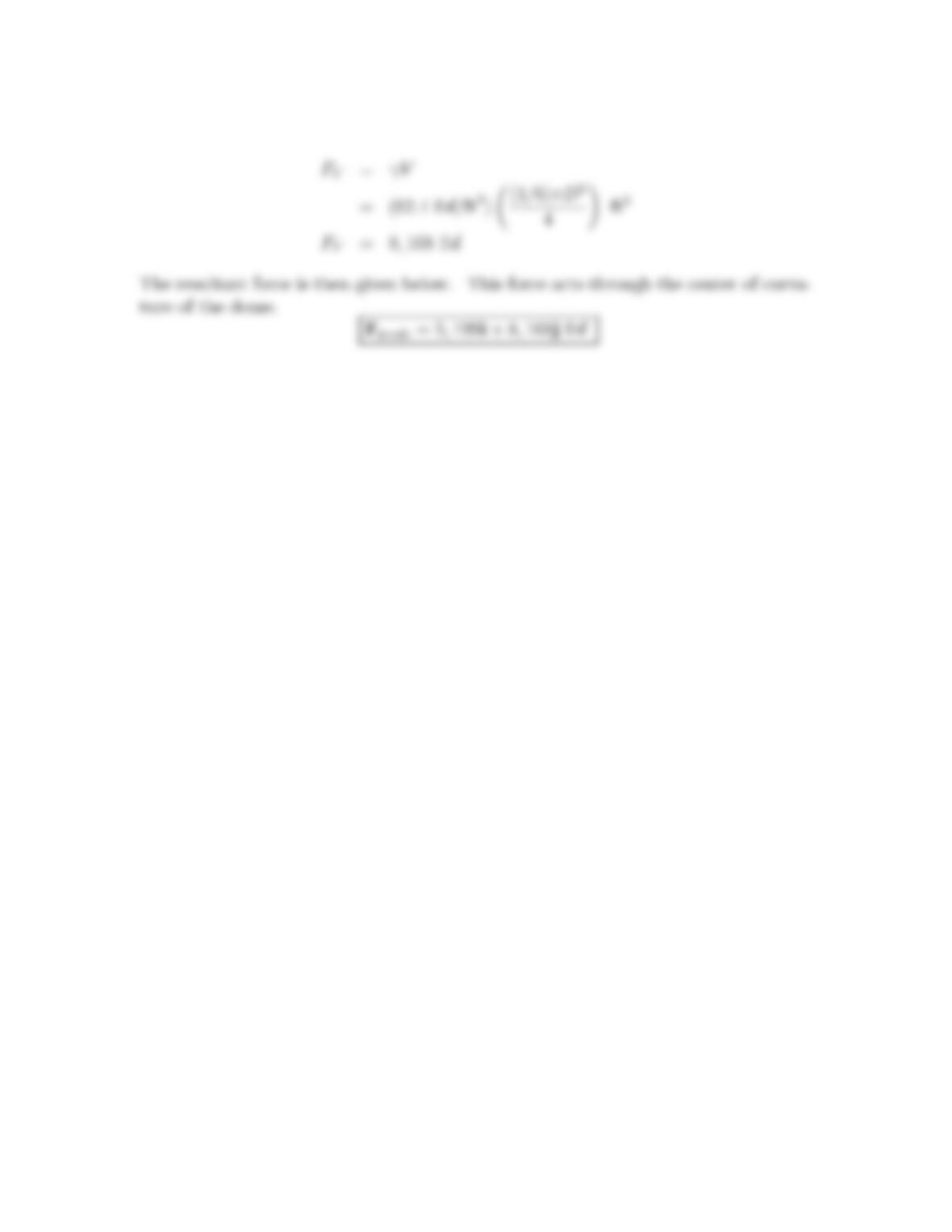
8´(102)ft2=5,199 lbf
The vertical component of force will be the buoyant force acting on the dome. It
will be the weight of water represented by the cross-hatched region shown in the Fig.
(below).
135
Thus,
136
Problem 3.93
Apply the grid method to each situation described below. Note: Unit cancellations
are not shown in this solution.
a.)
Situation:
A basketball floating in a lake.
Find:
Find buoyant force (N).
Assumptions:
m=596g.
Solution:
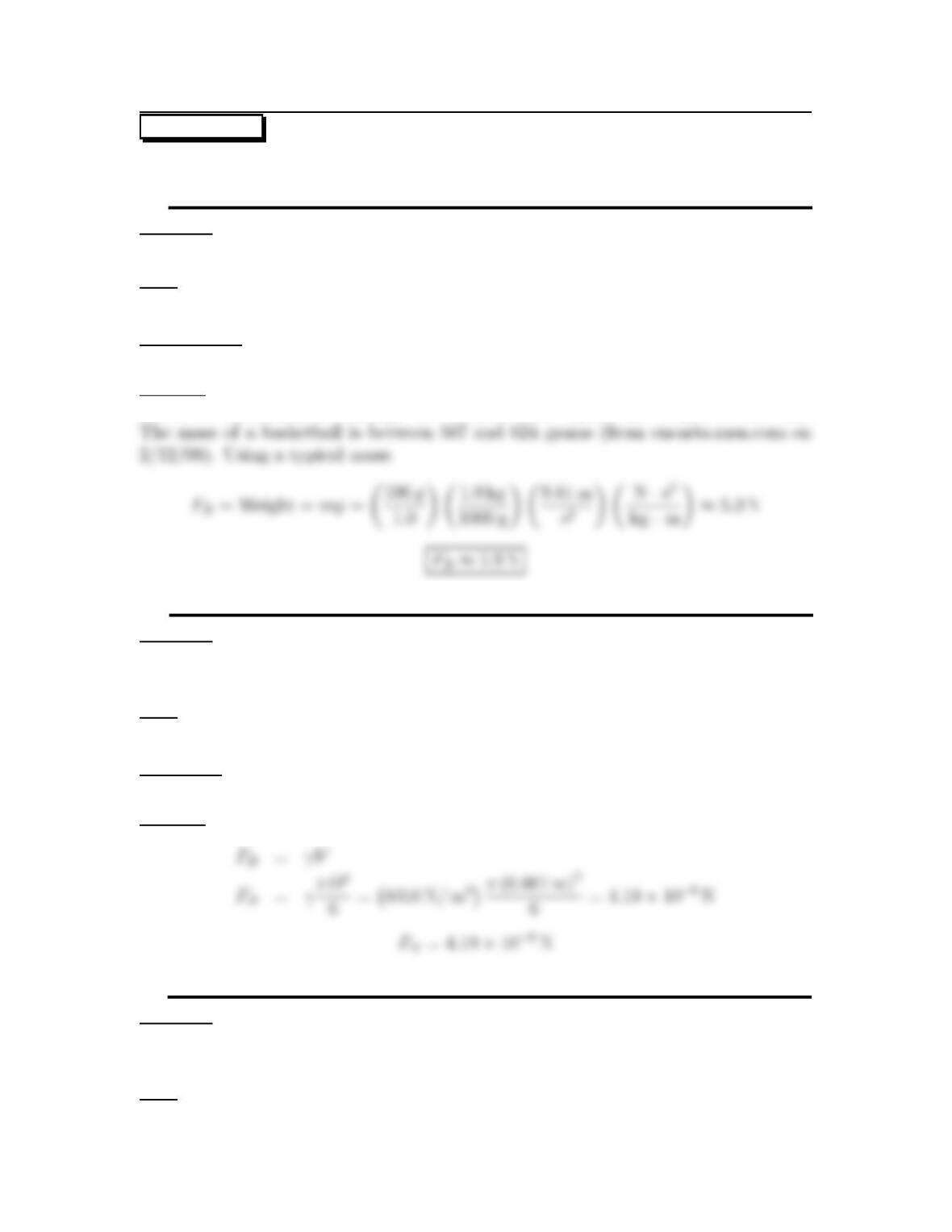
Since the basketball is floating, the buoyant force equals the weight of the ball.
b.)
Situation:
Copper sphere in kerosene.
D=1mm.
Find:
Find buoyant force (N).
Properties:
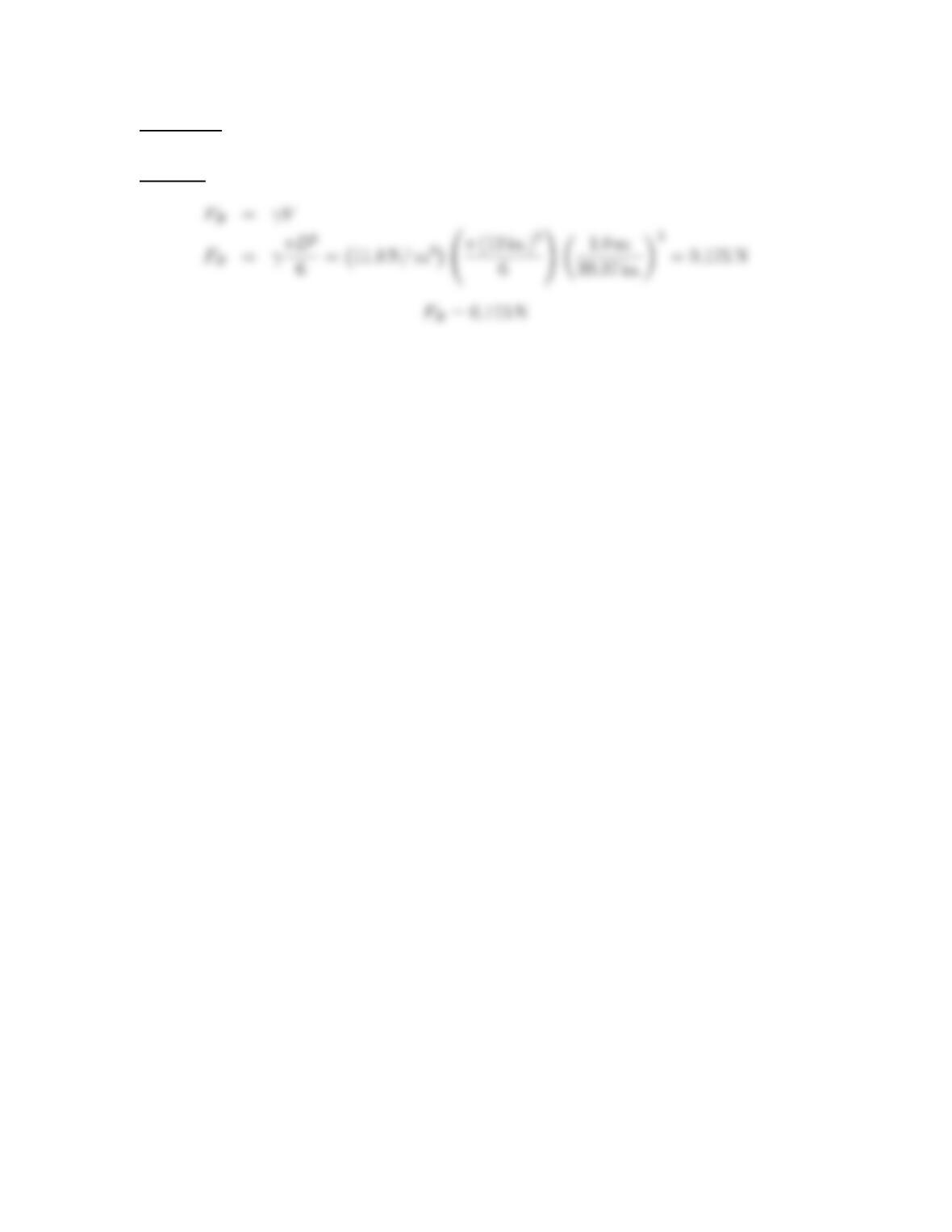
Kerosene (20 ◦C),Table A.4,γ=8010N/m3.
Solution:
c.)
Situation:
Helium balloon in air.
D=12in.
Find:
Find buoyant force (N).
137
Properties:
Air (20 ◦C), Table A.3, γ=11.8N/m3.
Solution:
138
Problem 3.94
Using Section 3.6 and other resources, answer the questions below. Strive for depth,
clarity, and accuracy while also combining sketches, words and equations in ways that
enhance the effectiveness of your communication.
a. Why learn about buoyancy? That is, what are important technical problems that
involve buoyant forces?
•boiling heat transfer—vapor bubbles are acted on by buoyant force.
b. For a buoyant force, where is the center of pressure? Line of action?
•The buoyant force acts through an imaginary point called the center of pressure.
c. What is displaced volume? Why is it important?
•When the object is placed into a fluid, it move fluid away. This volume of this
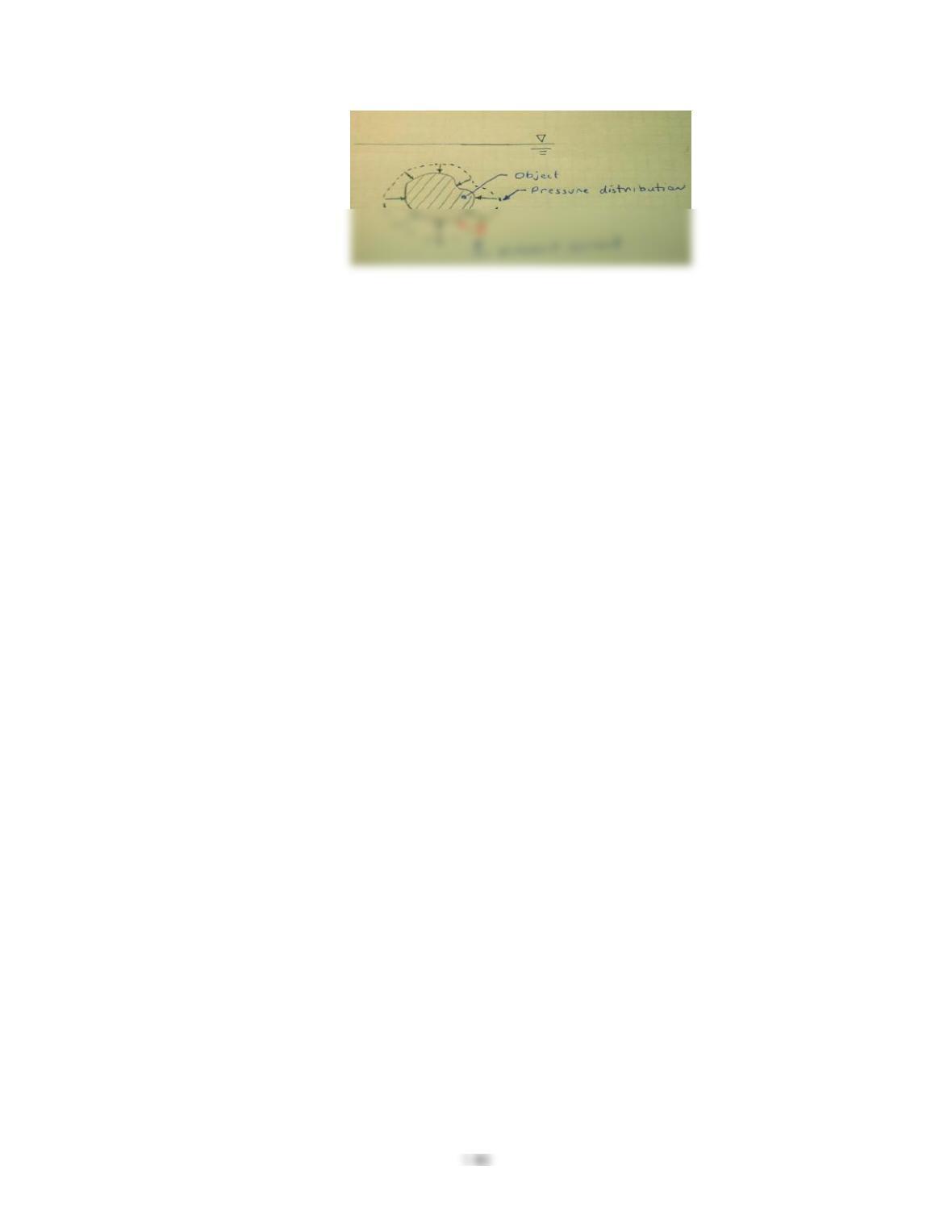
d. What is the relationship between pressure distribution and buoyant force?