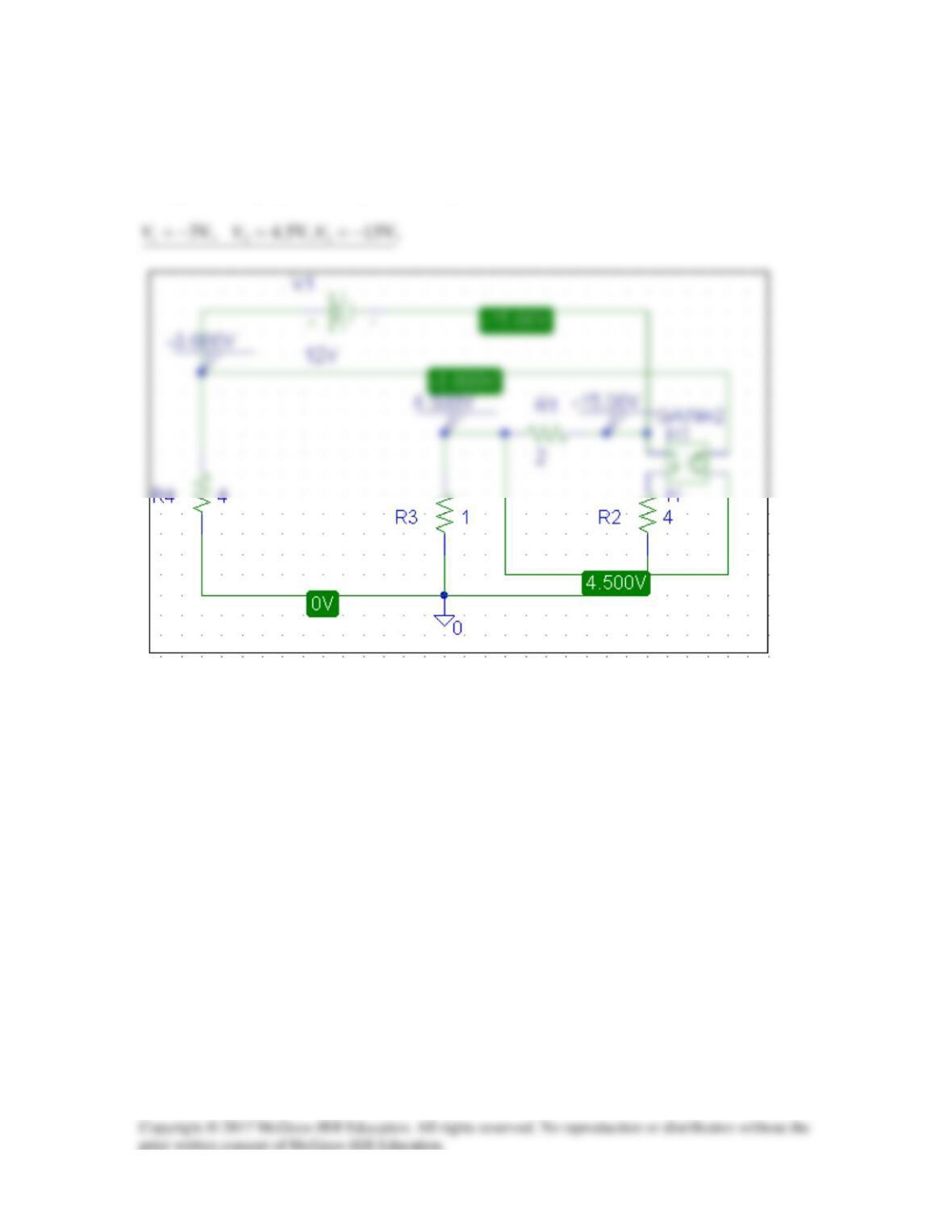
Solution 3.78
The schematic is shown below. When the circuit is saved and simulated the node
voltages are displayed on the pseudo components as shown. Thus,
.
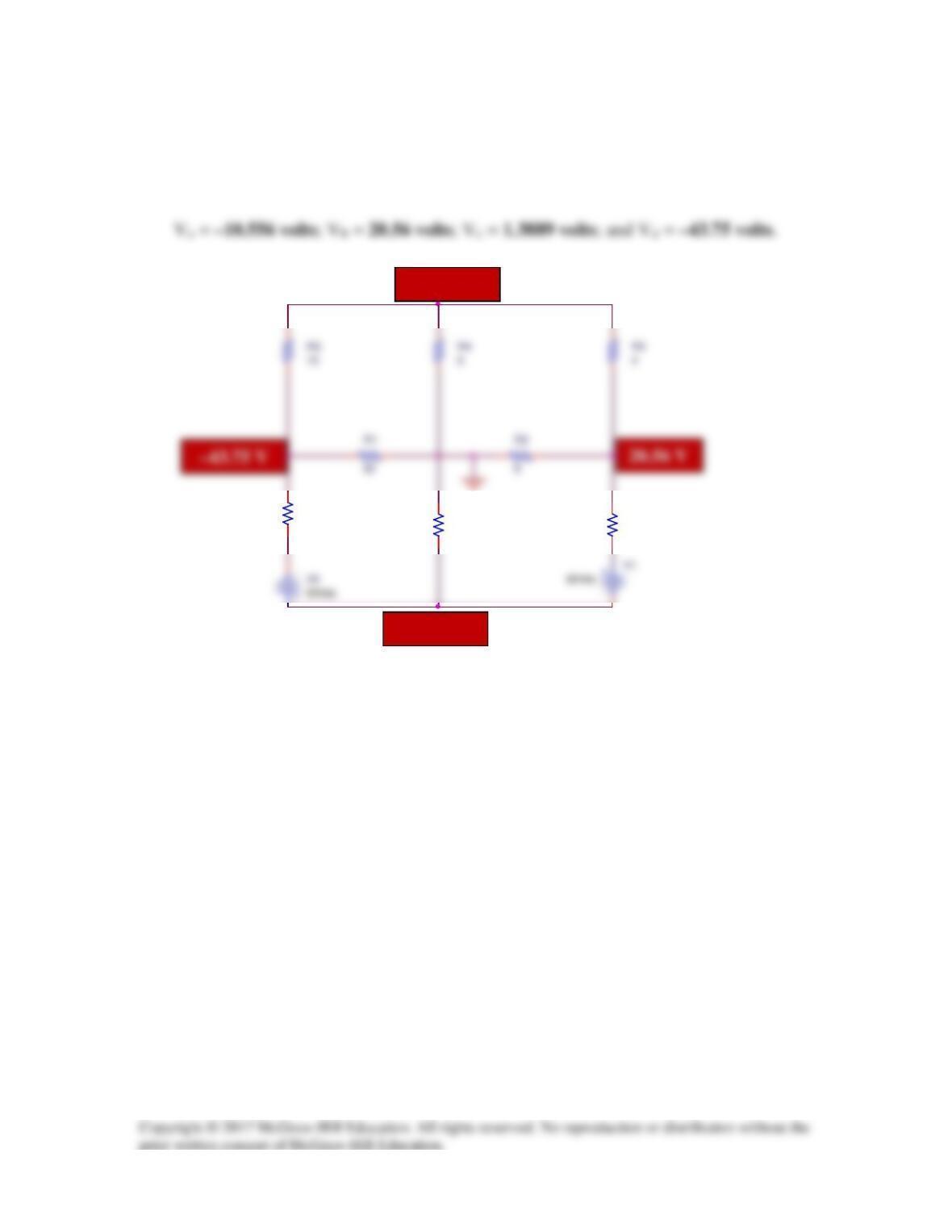
Solution 3.79
The schematic is shown below. When the circuit is saved and simulated, we obtain the
node voltages as displayed. Thus,
–43.75 V
20.56 V
R6
4R7
16
R8
8
1.3889 V
–10.556 V
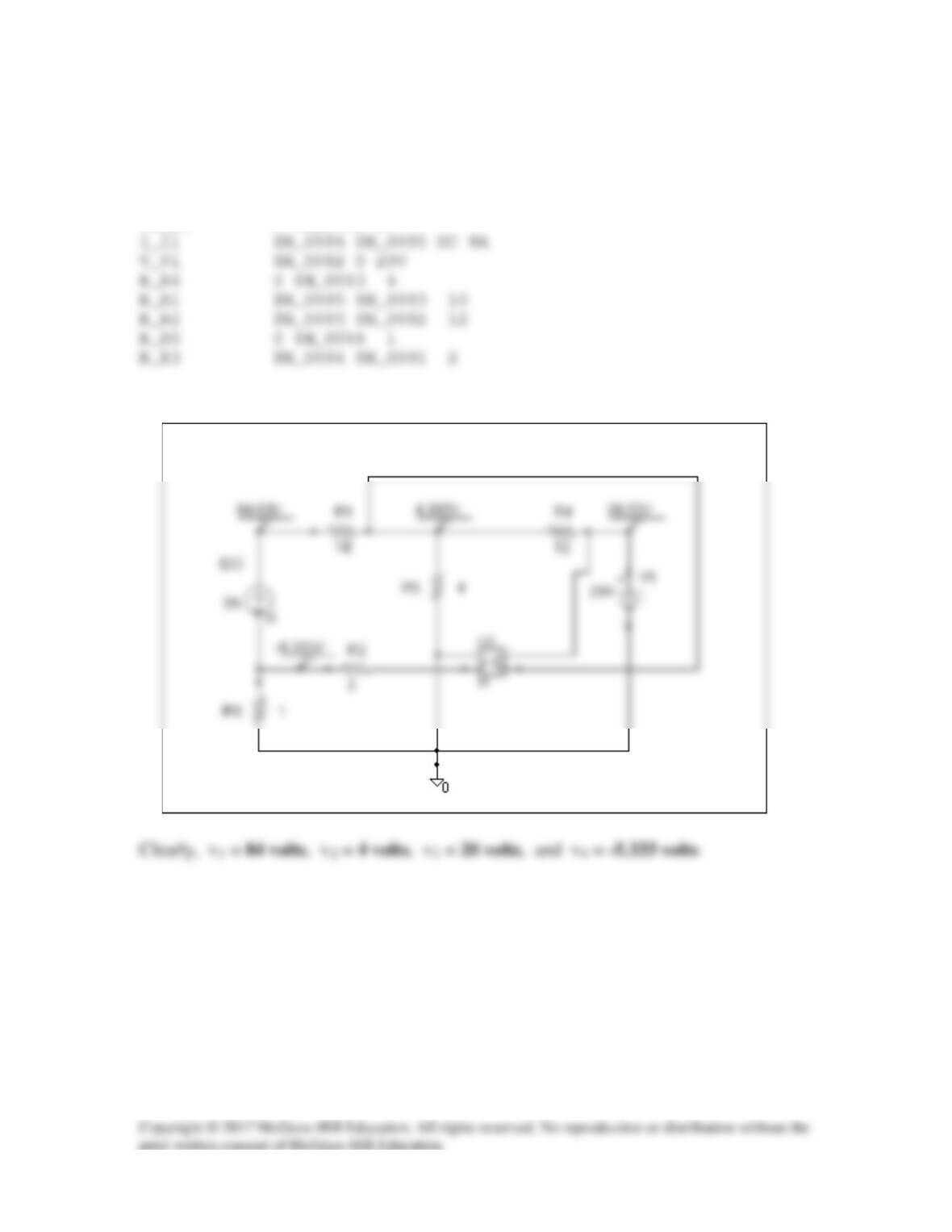
Solution 3.80
* Schematics Netlist *
H_H1 $N_0002 $N_0003 VH_H1 6
VH_H1 0 $N_0001 0V
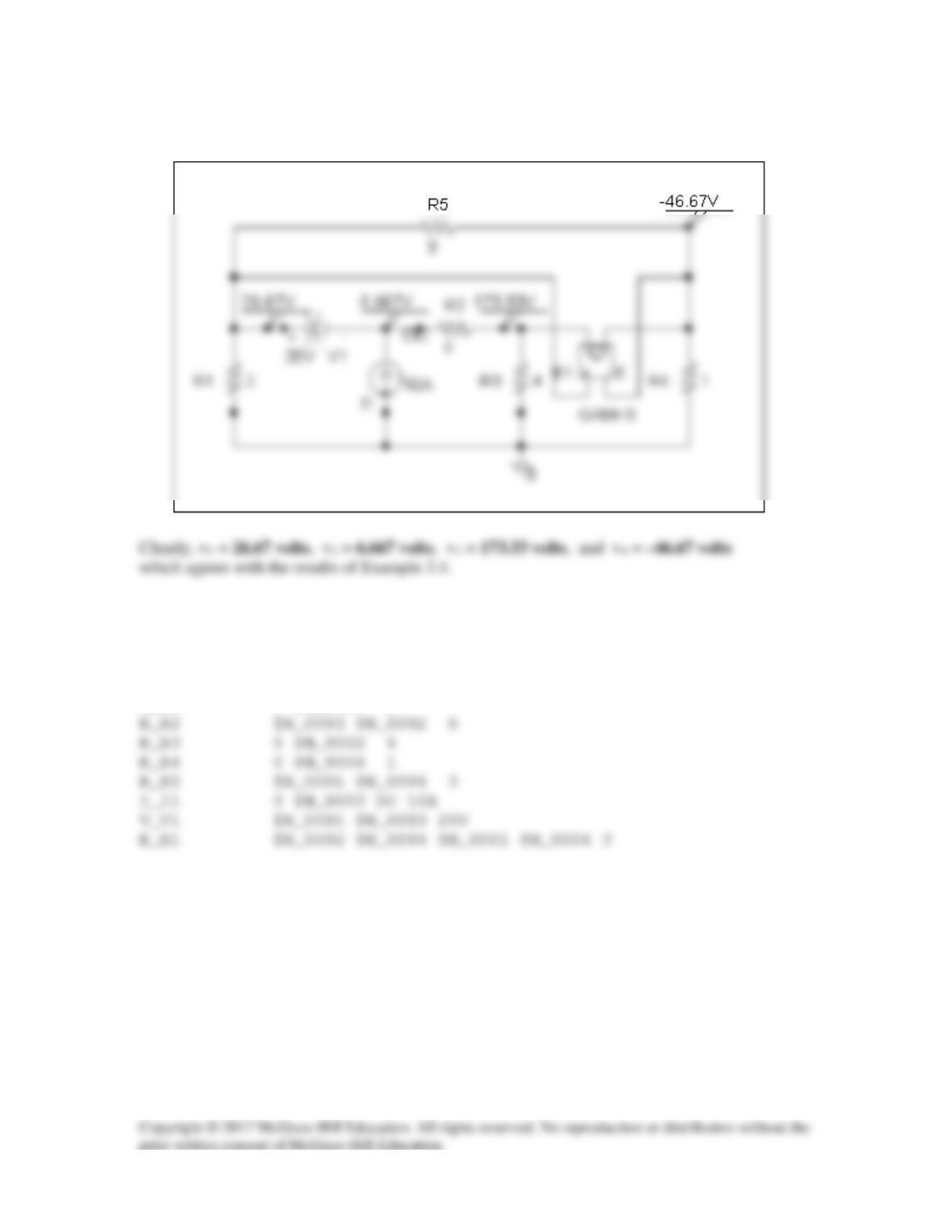
Solution 3.81
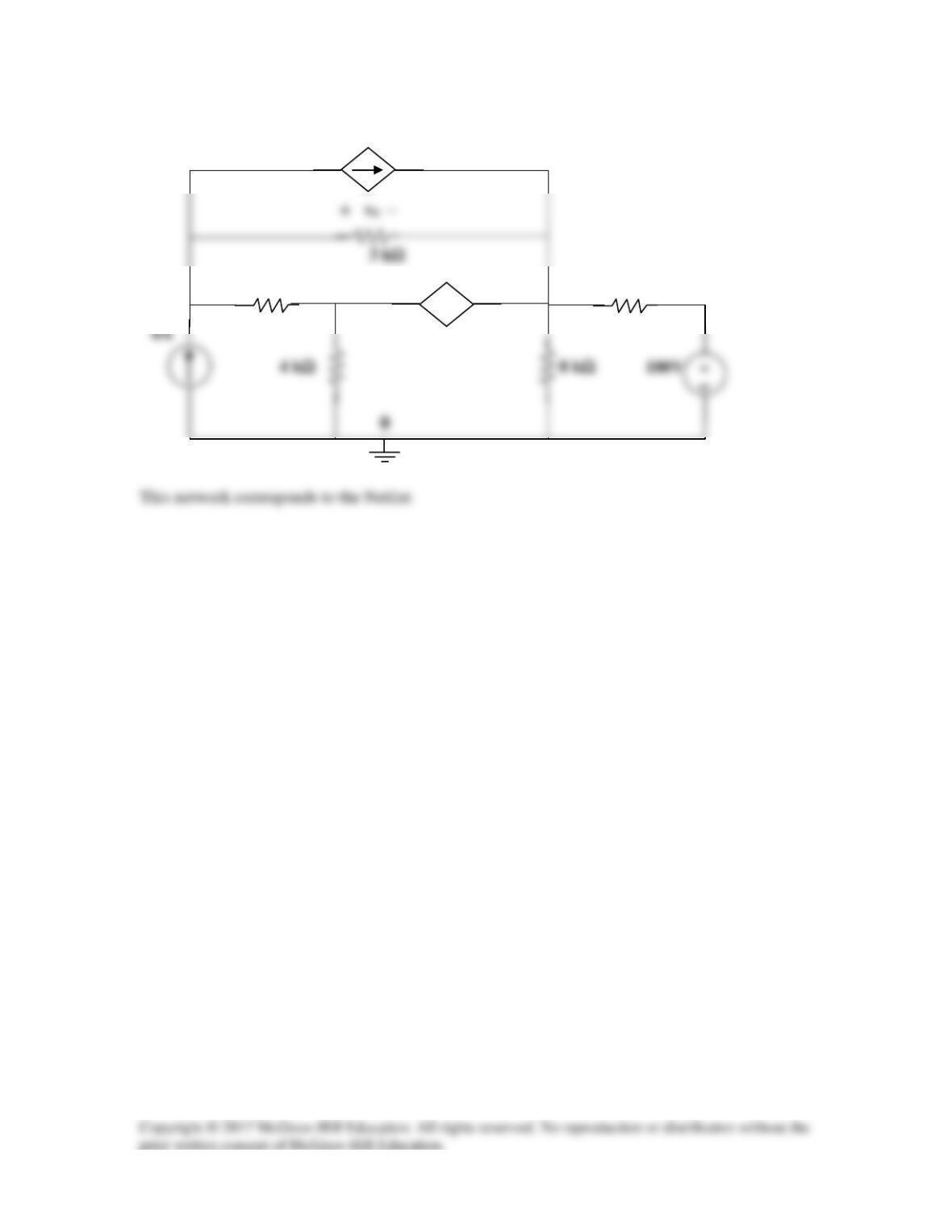
This is the netlist for this circuit.
* Schematics Netlist *
R_R1 0 $N_0001 2
Solution 3.82
3 kΩ
4 kΩ
8 kΩ
100V
0
4
2 kΩ
6 kΩ
+
2i0
3v
0
3
2
1
Solution 3.83
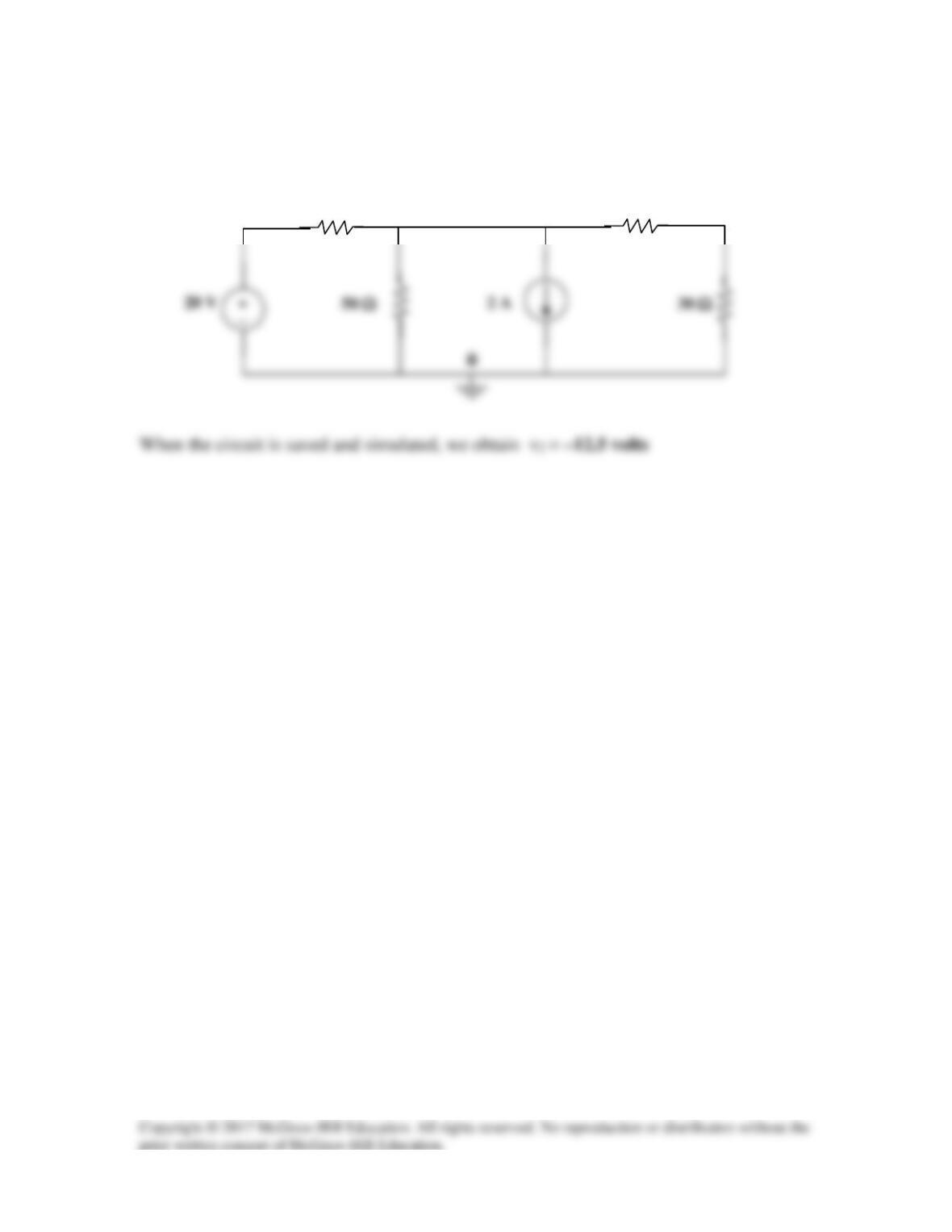
The circuit is shown below.
0
30 Ω
50 Ω
3
2
1
70 Ω
20 Ω
Solution 3.84
Solution 3.85
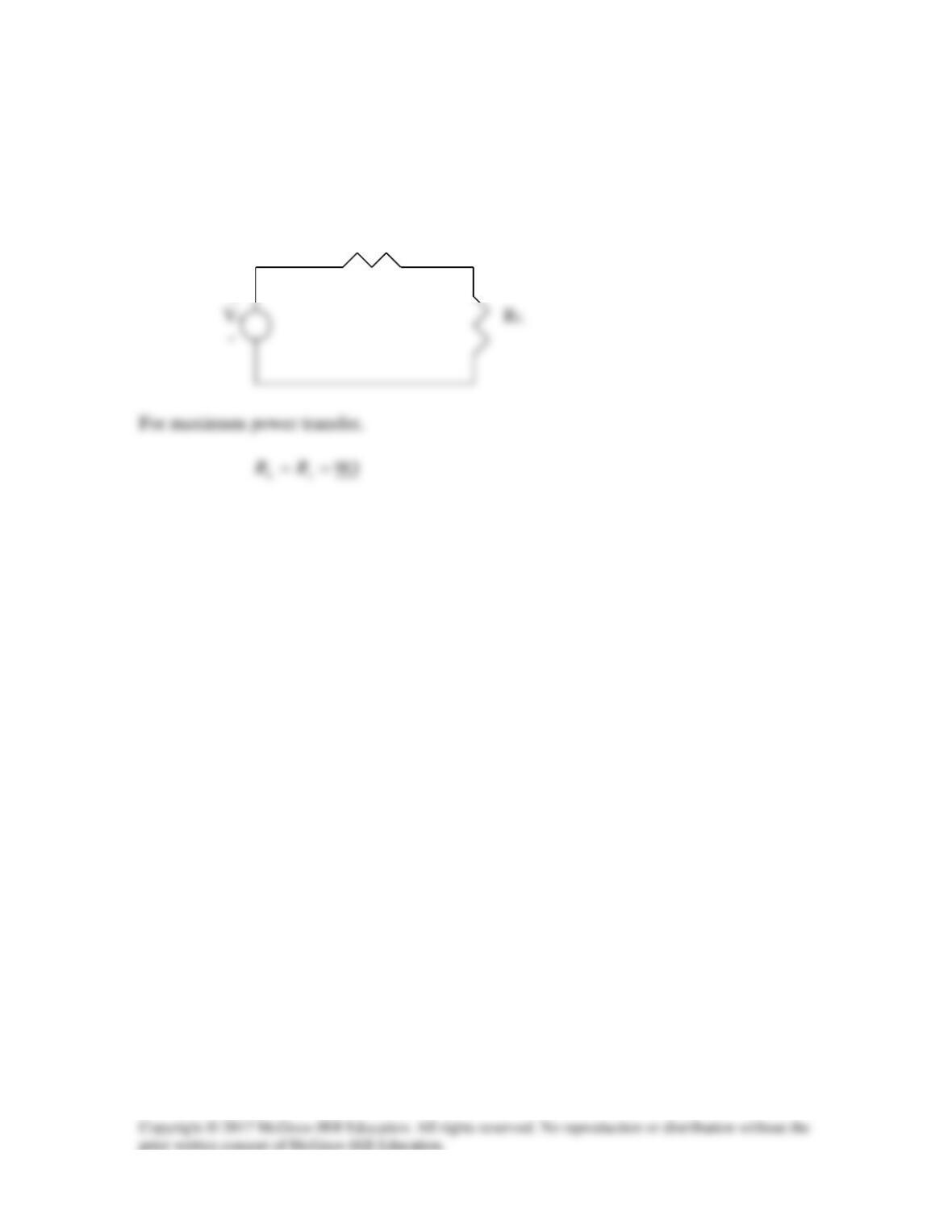
The amplifier acts as a source.
Rs
+
Solution 3.86
Let v1 be the potential across the 2 k-ohm resistor with plus being on top. Then,
Solution 3.87
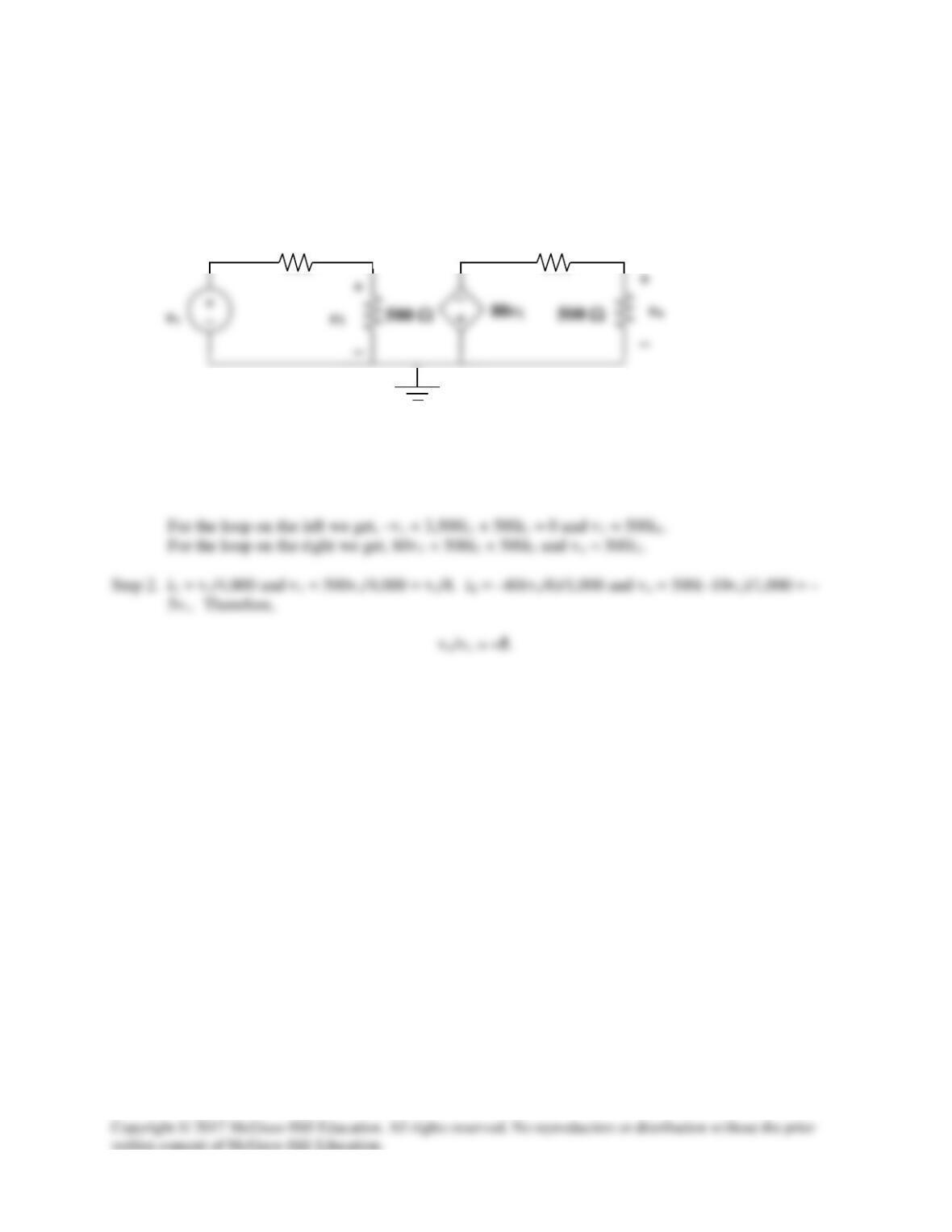
For the circuit in Fig. 3.123, find the gain vo/vs.
500 Ω
500 Ω
Figure 3.123
For Prob. 3.87.
Step 1. We can solve this using mesh analysis with two unknown mesh currents.
500 Ω
3.5 kΩ
Solution 3.88
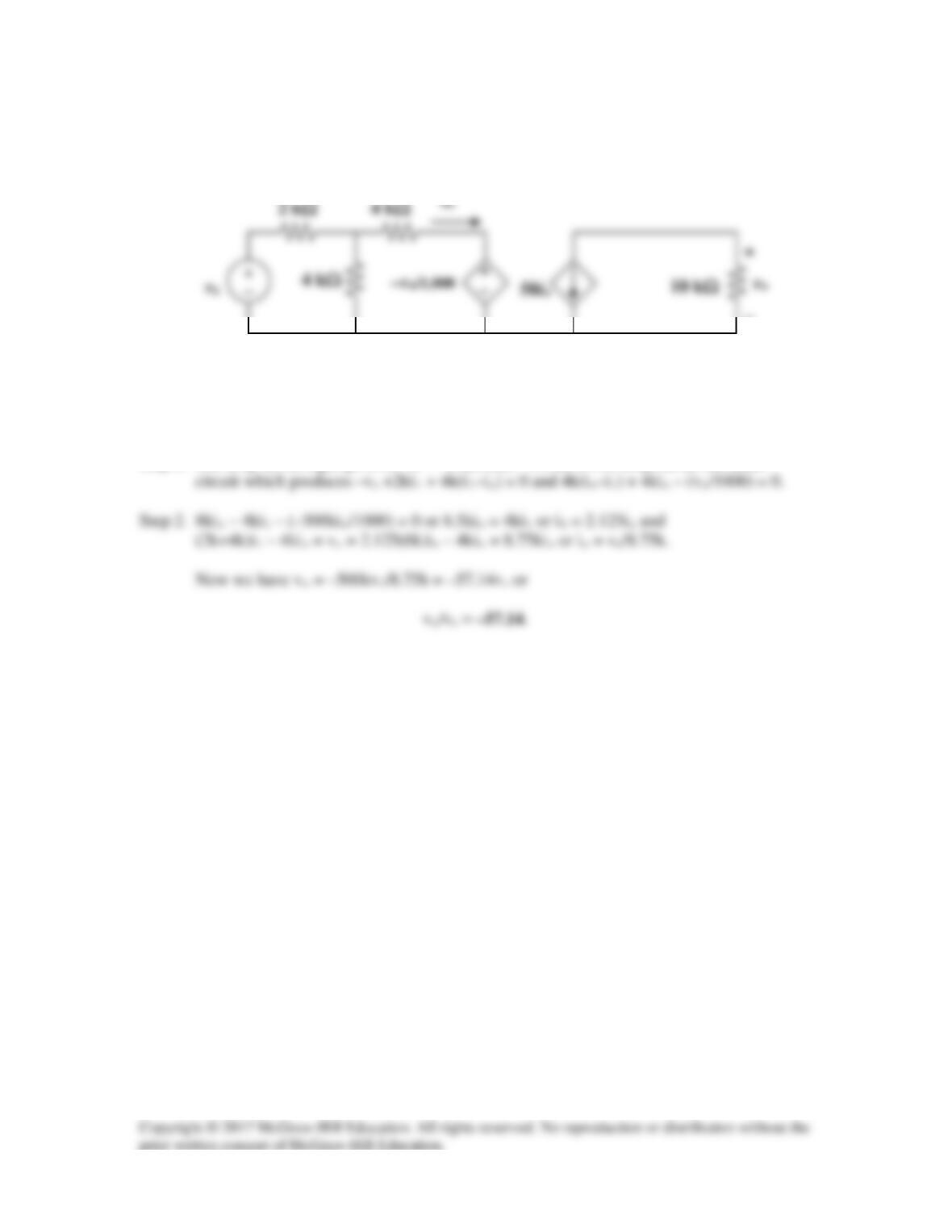
Determine the gain vo/vs of the transistor amplifier circuit in Fig. 3.124.
Figure 3.124
For Prob. 3.88.
Solution
Step 1. The loop on the right gives us vo = –10k(50io). We have two loops in the left hand
−
Solution 3.89
Consider the circuit below.
For the left loop, applying KVL gives
E
Solution 3.90
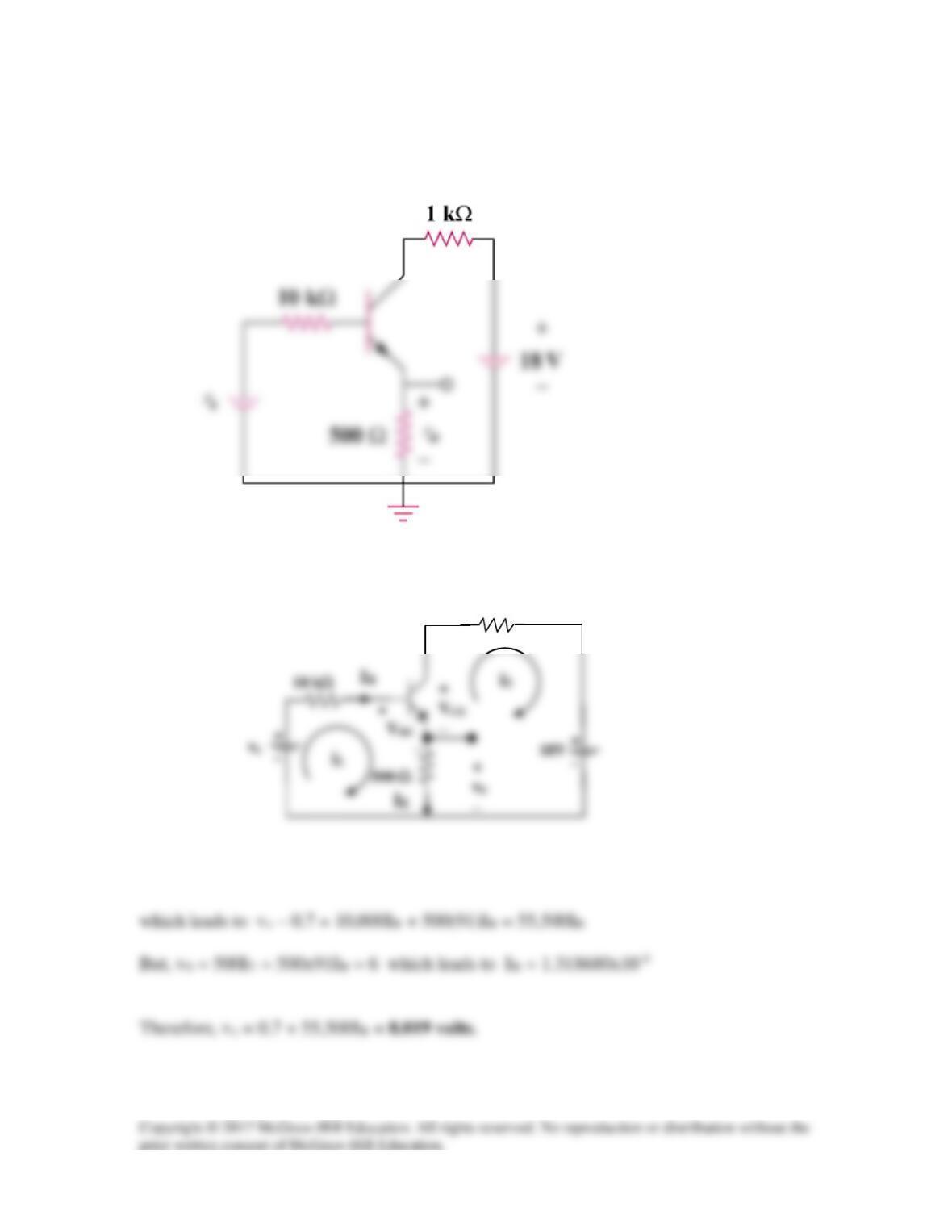
Calculate vs for the transistor in Fig. 3.126, given that vo = 6 V,
β
= 90, VBE = 0.7V.
Figure 3.126
For Prob. 3.90.
10 kΩ
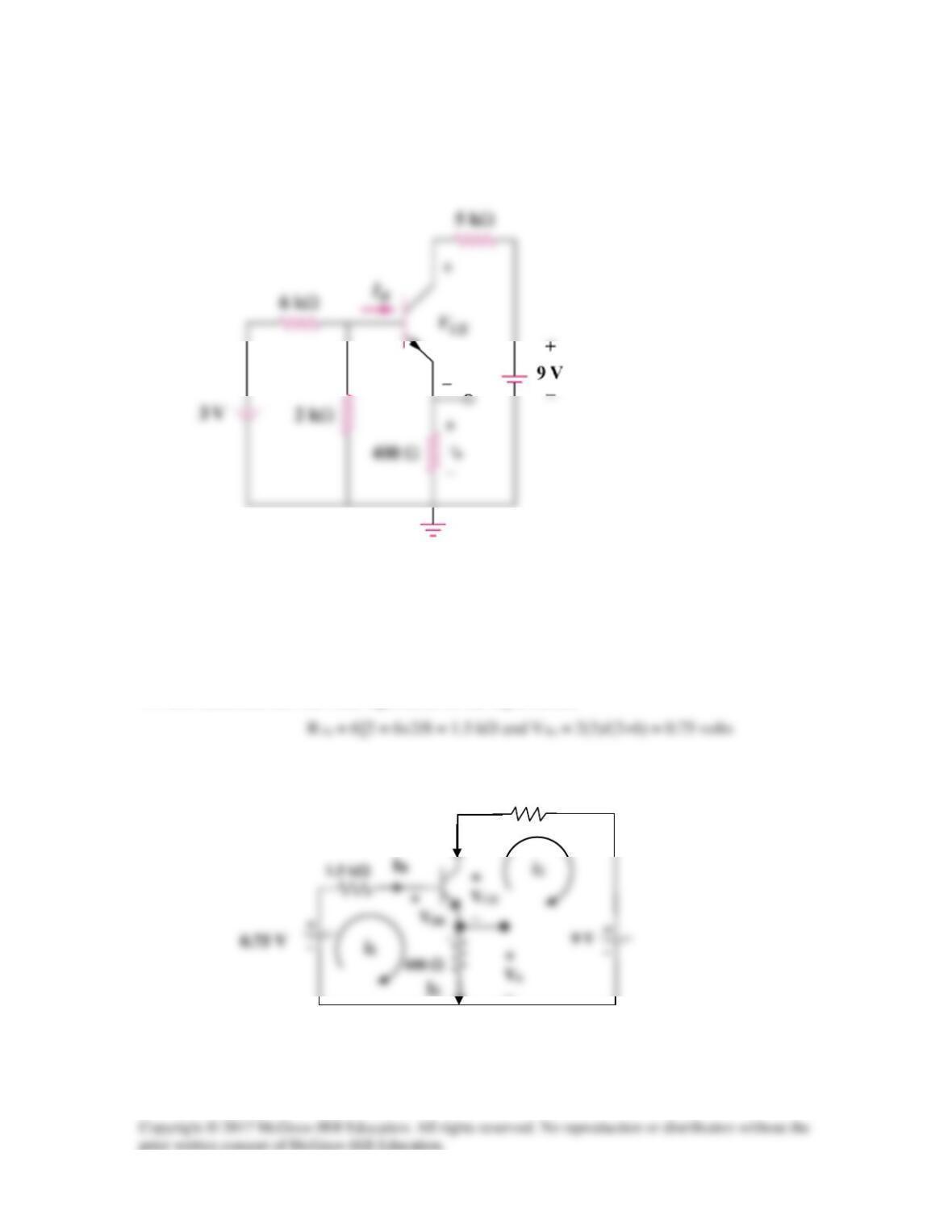
For loop 1, –vs + 10k(IB) + VBE + IE (500) = 0 = –vs + 0.7 + 10,000IB + 500(1 + β)IB
1 kΩ
Solution 3.91
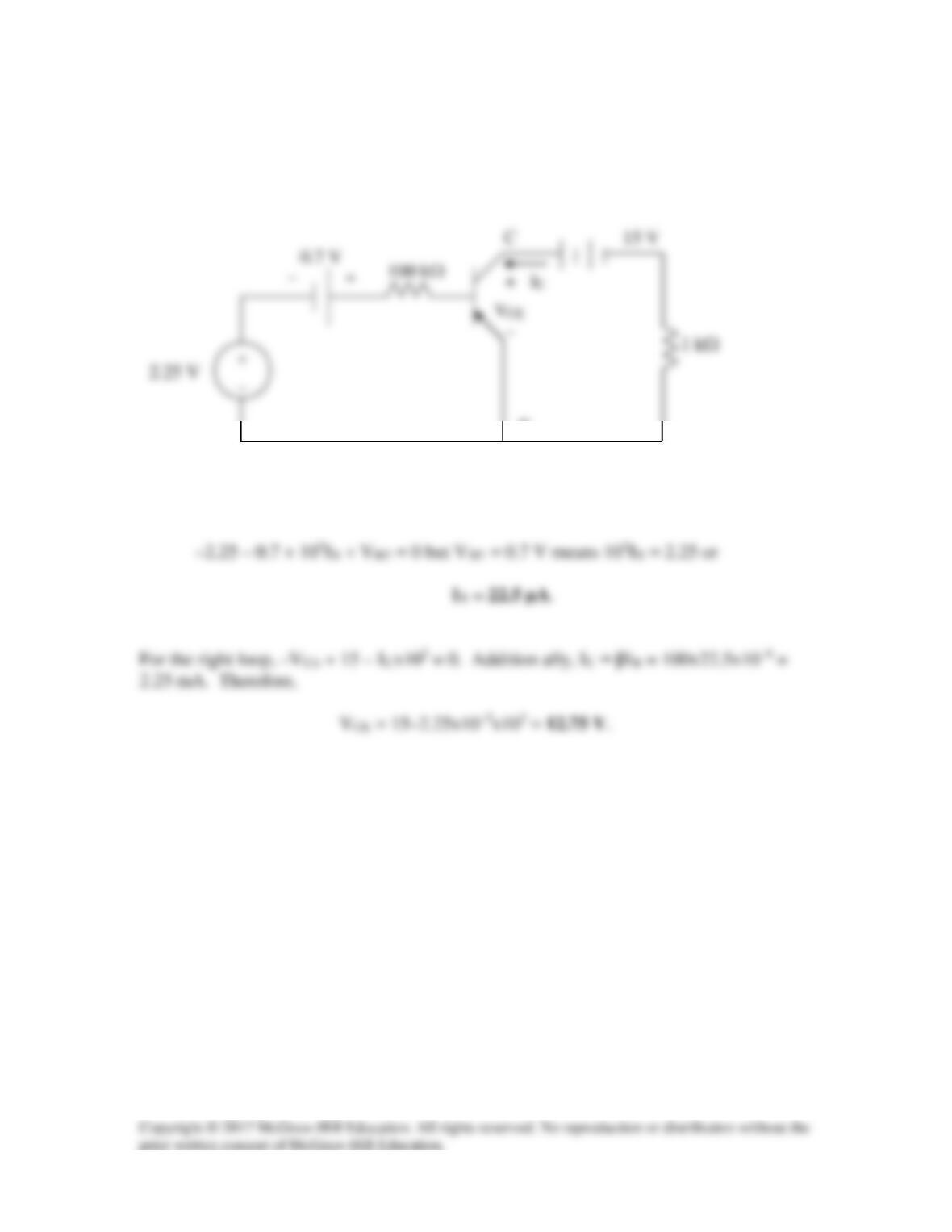
For the transistor circuit of Fig. 3.127, find IB, VCE , and vo. Take
β
= 150, VBE = 0.7V.
Figure 3.127
For Prob. 3.91.
Solution
We first determine the Thevenin equivalent for the input circuit.
–
1.5 kΩ
–
5 kΩ
I
C
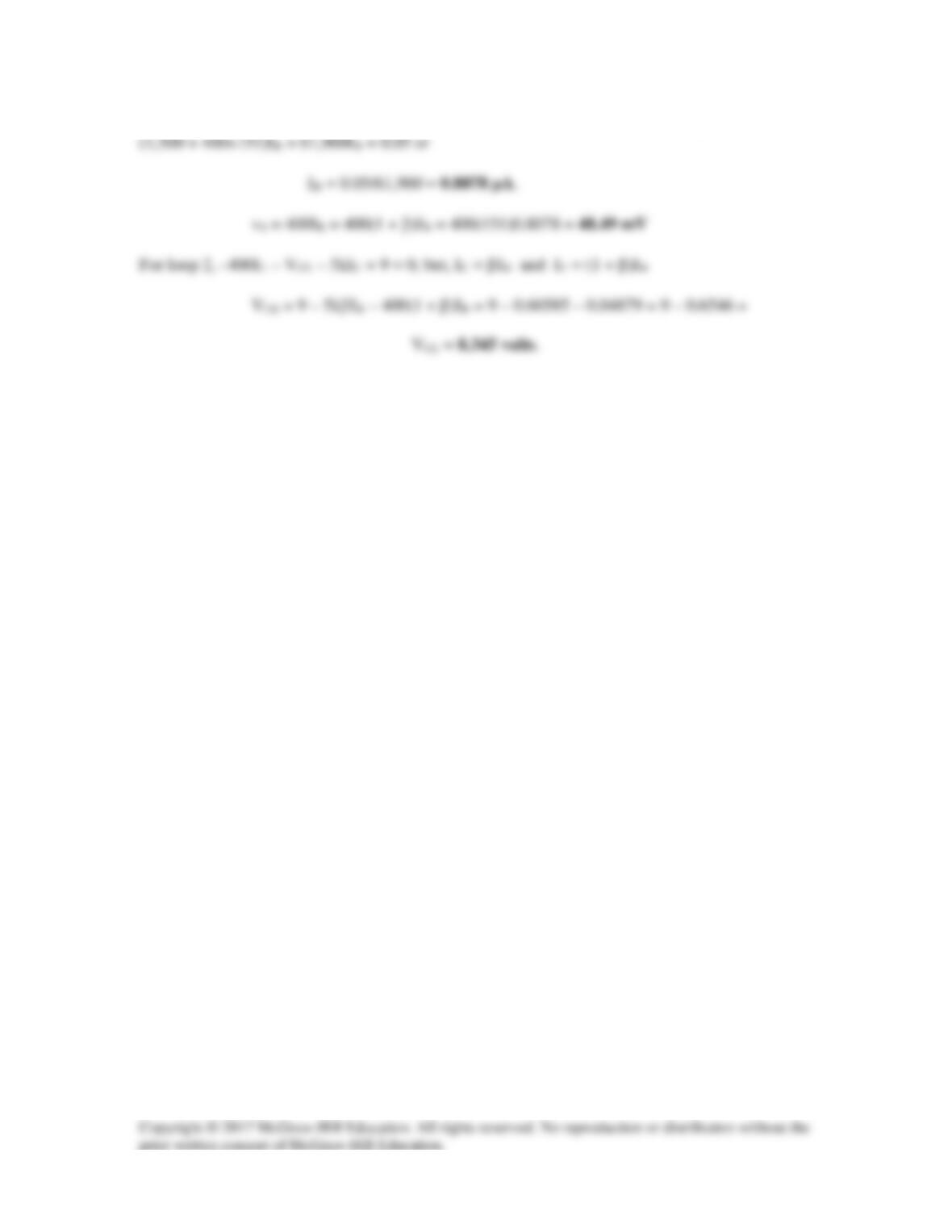
For loop 1, –0.75 + 1.5kIB + VBE + 400IE = 0 = –0.75 + 0.7 + 1,500IB + 400(1 + β)IB or
Solution 3.92
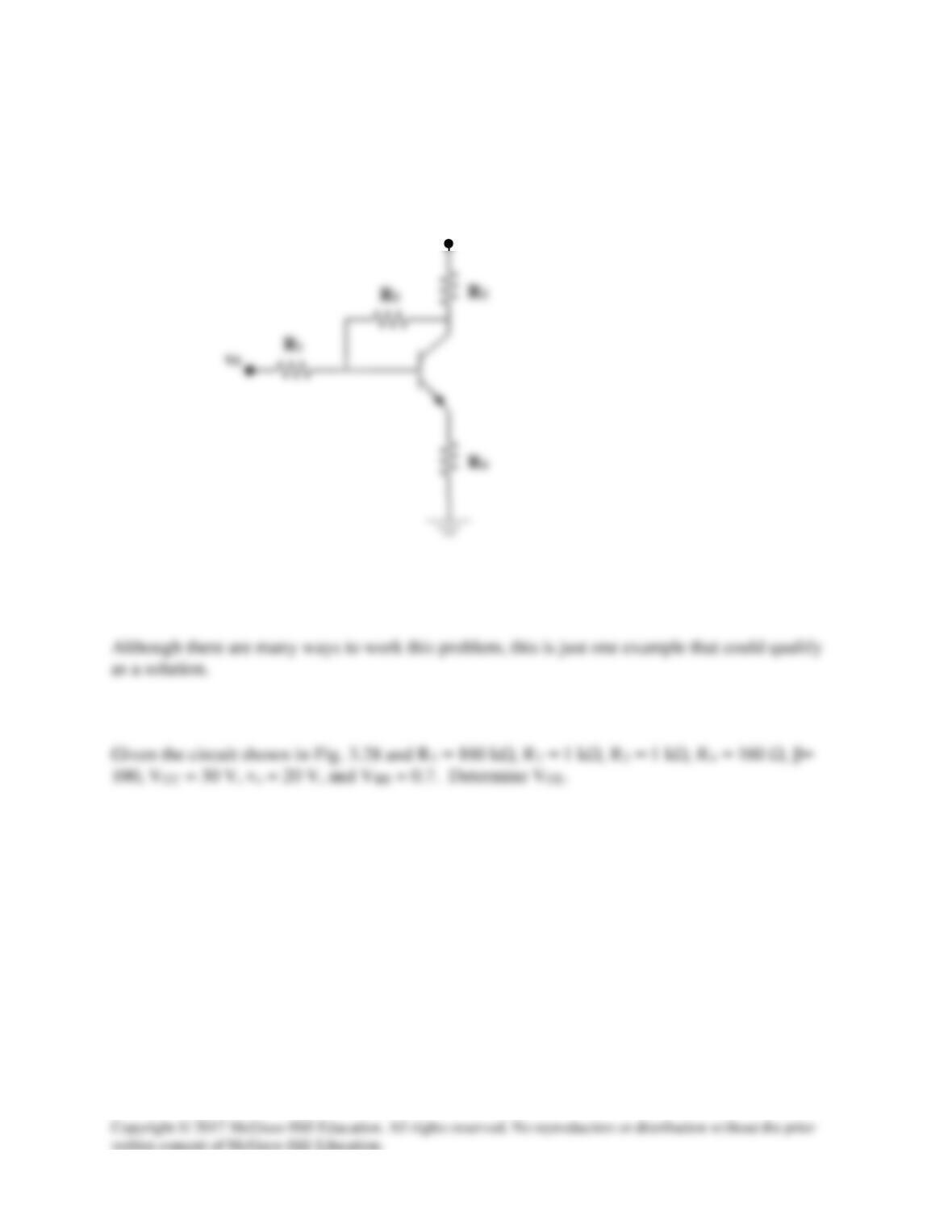
Using Fig. 3.28, design a problem to help other students better understand transistors. Make sure
you use reasonable numbers!
Figure 3.28
For Prob. 3.92.
Problem
Solution continued on the next page…
VCC
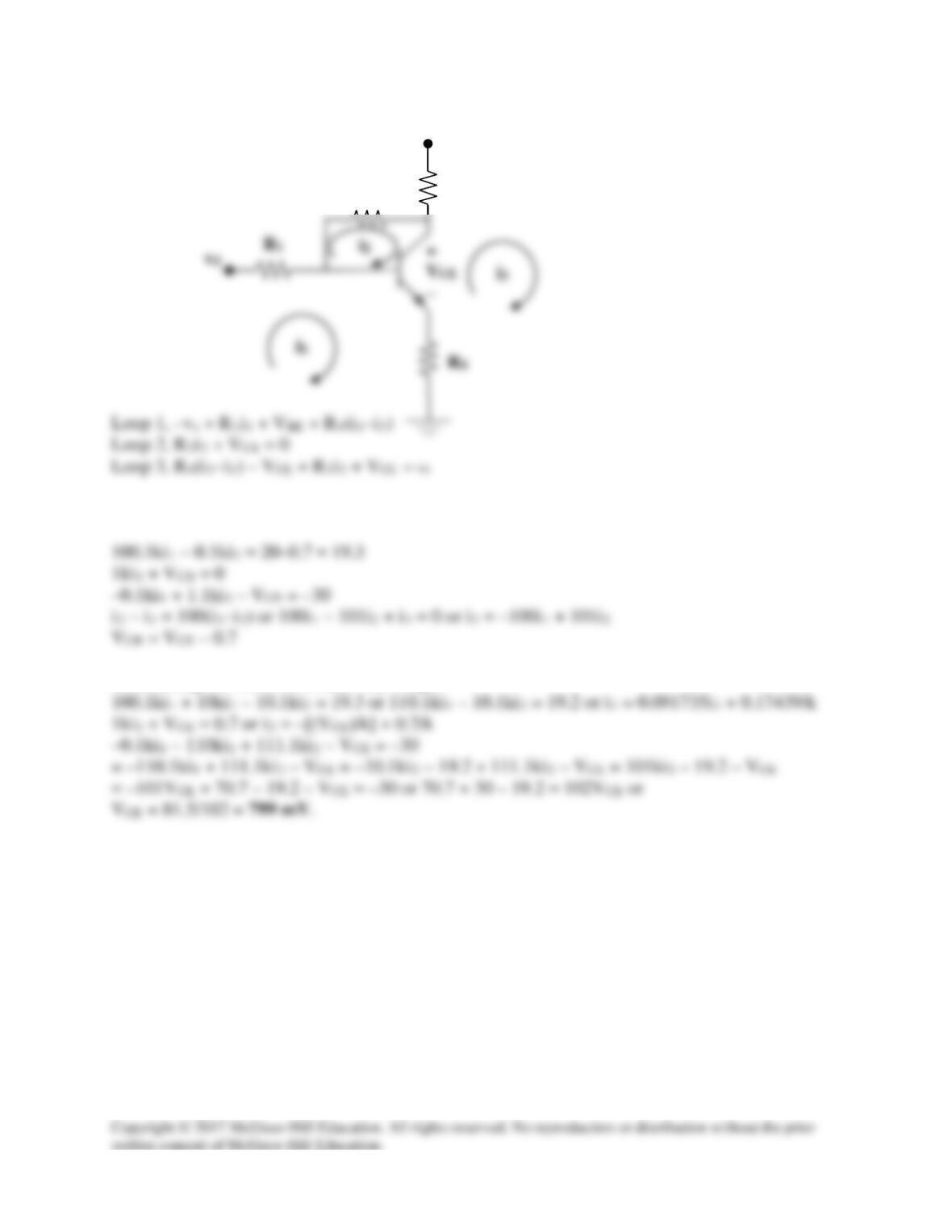
Solution
R4
We also have some constraint equations, IB = i1 – i2, IC = i2 – i3 = βIB, and VCE = VBE + VCB.
Substituting for values of i3 and VCB we get
Solution continued on the next page…
R
2
VCC
R3
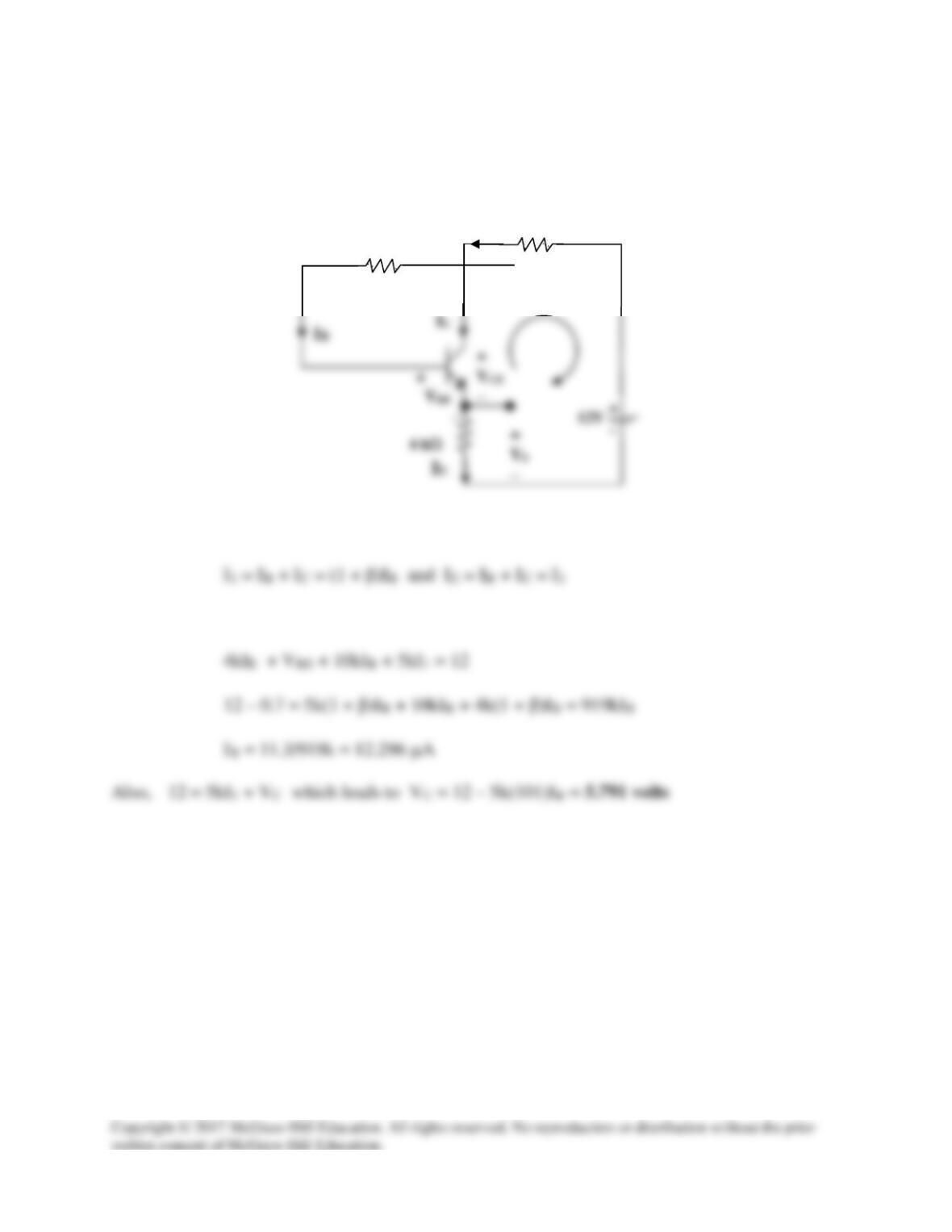
4 kΩ
IB
Applying KVL around the outer loop,
10 kΩ
5 kΩ
V
C
I1
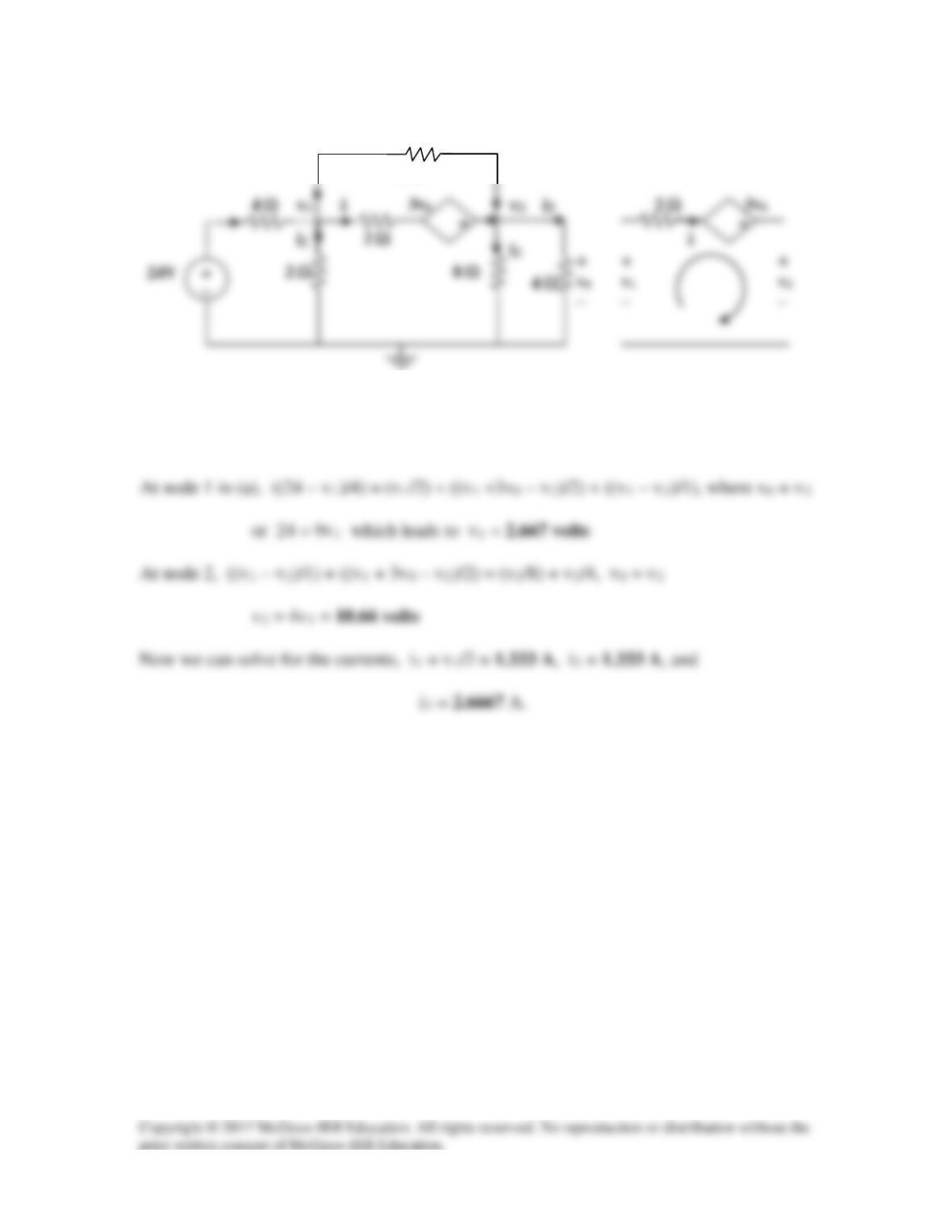
Solution 3.93
8 Ω
2 Ω
4 Ω
From (b), -v1 + 2i – 3v0 + v2 = 0 which leads to i = (v1 + 3v0 – v2)/2
(b)
(a)
1 Ω