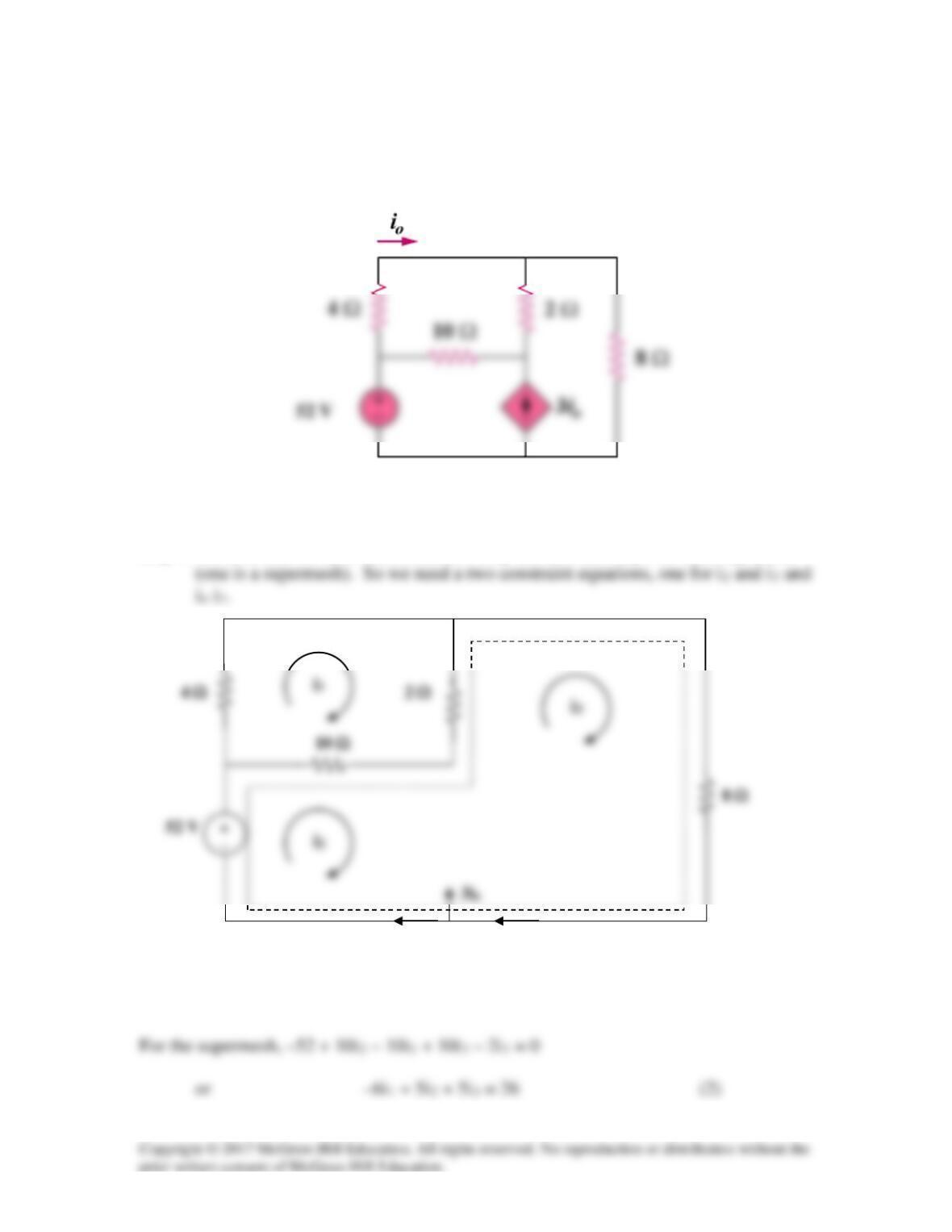
Solution 3.50
Use mesh analysis to find the current io in the circuit in Fig. 3.95.
Figure 3.95
For Prob. 3.50.
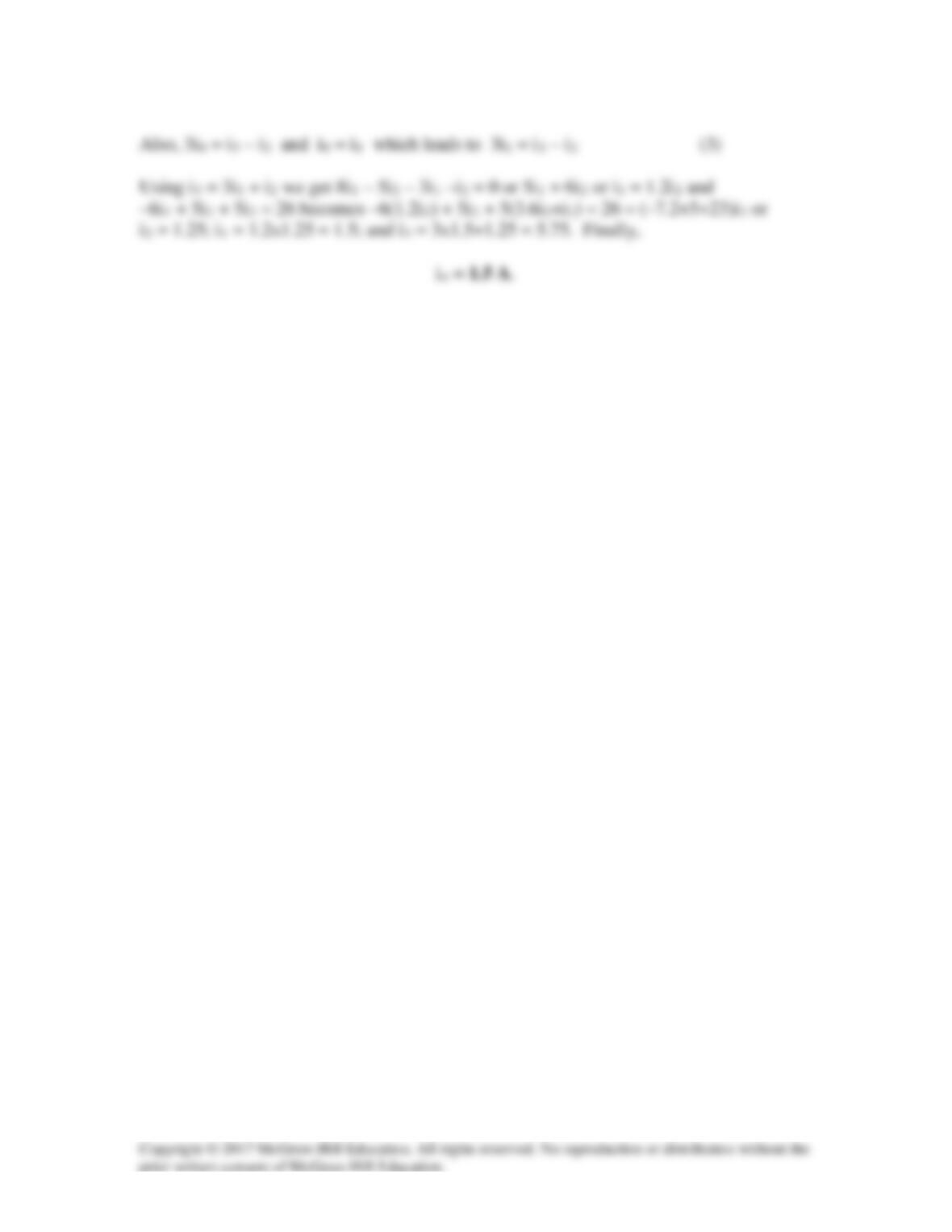
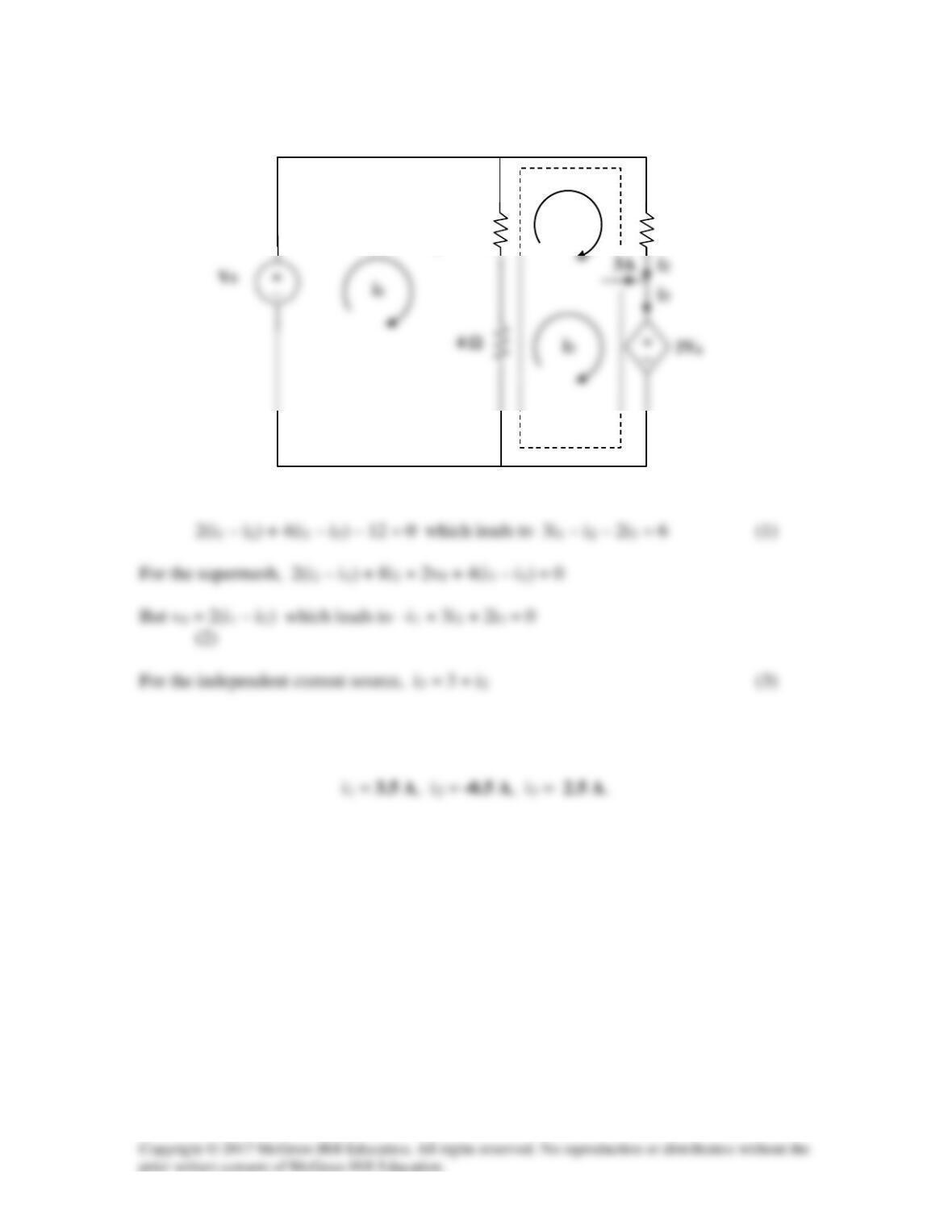
Step 1. We note that we have three unknown loop currents but only two mesh equations
For loop 1, 16i1 – 10i2 – 2i3 = 0 which leads to 8i1 – 5i2 – i3 = 0 (1)
i
2
i
3
Solution 3.51
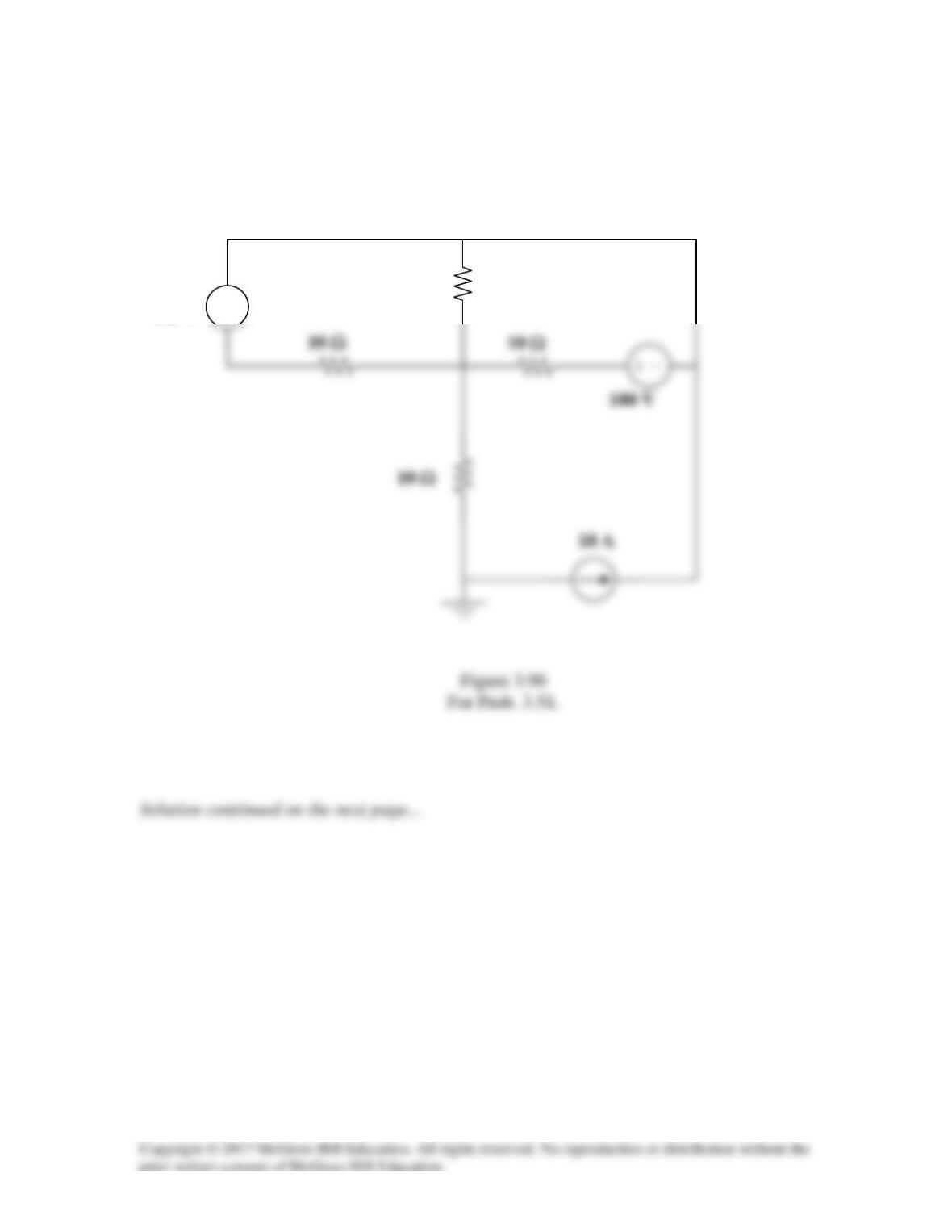
Apply mesh analysis to find vo in the circuit in Fig. 3.96.
10 Ω
10 Ω
vo
400 V
+
−
10 Ω
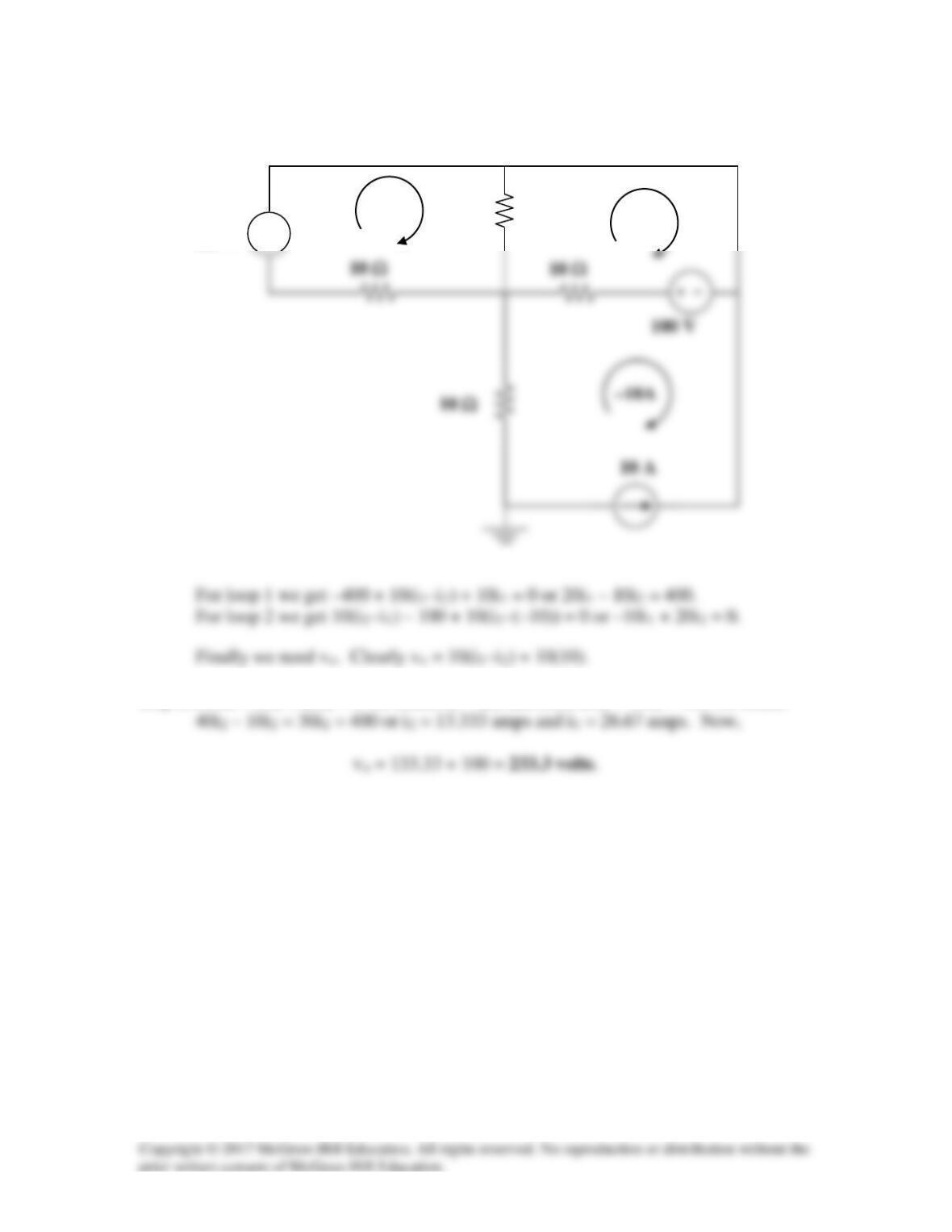
Step 1. First we identify the unknown loop currents and write the mesh equations.
10 Ω
10 A
Step 2. From –10i1 + 20i2 = 0 we obtain i1 = 2i2 and from 20i1 – 10i2 = 400 we obtain
vo
400 V
+
−
10 Ω
i1
i2
Solution 3.52
i1
i3
4 Ω
For mesh 1,
Solving (1), (2), and (3), we obtain,
+
v0
–
i2
8 Ω
2 Ω
Solution 3.53
Applying mesh analysis leads to;
–12 + 4kI1 – 3kI2 – 1kI3 = 0 (1)
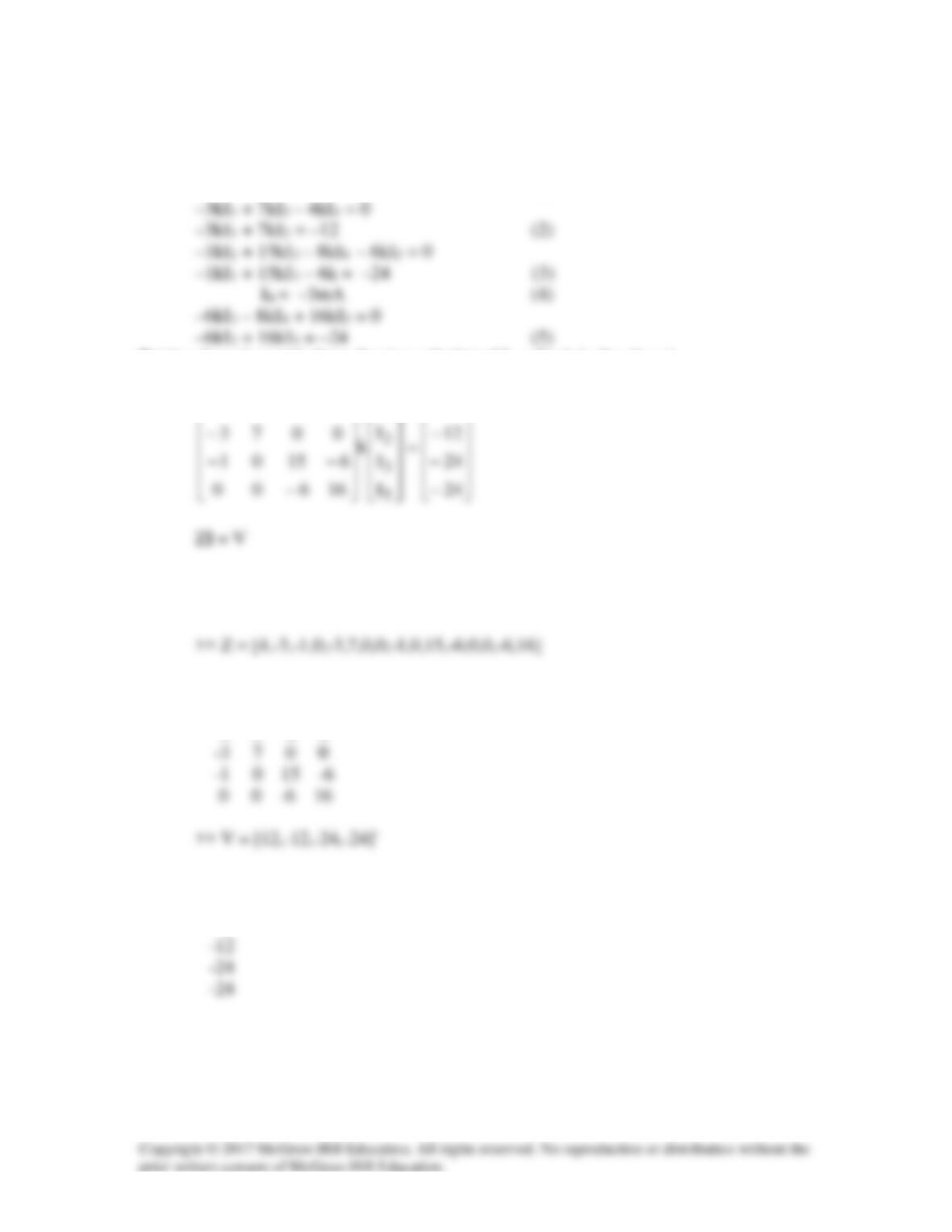
Putting these in matrix form (having substituted I4 = 3mA in the above),
−−
12
I
0134
1
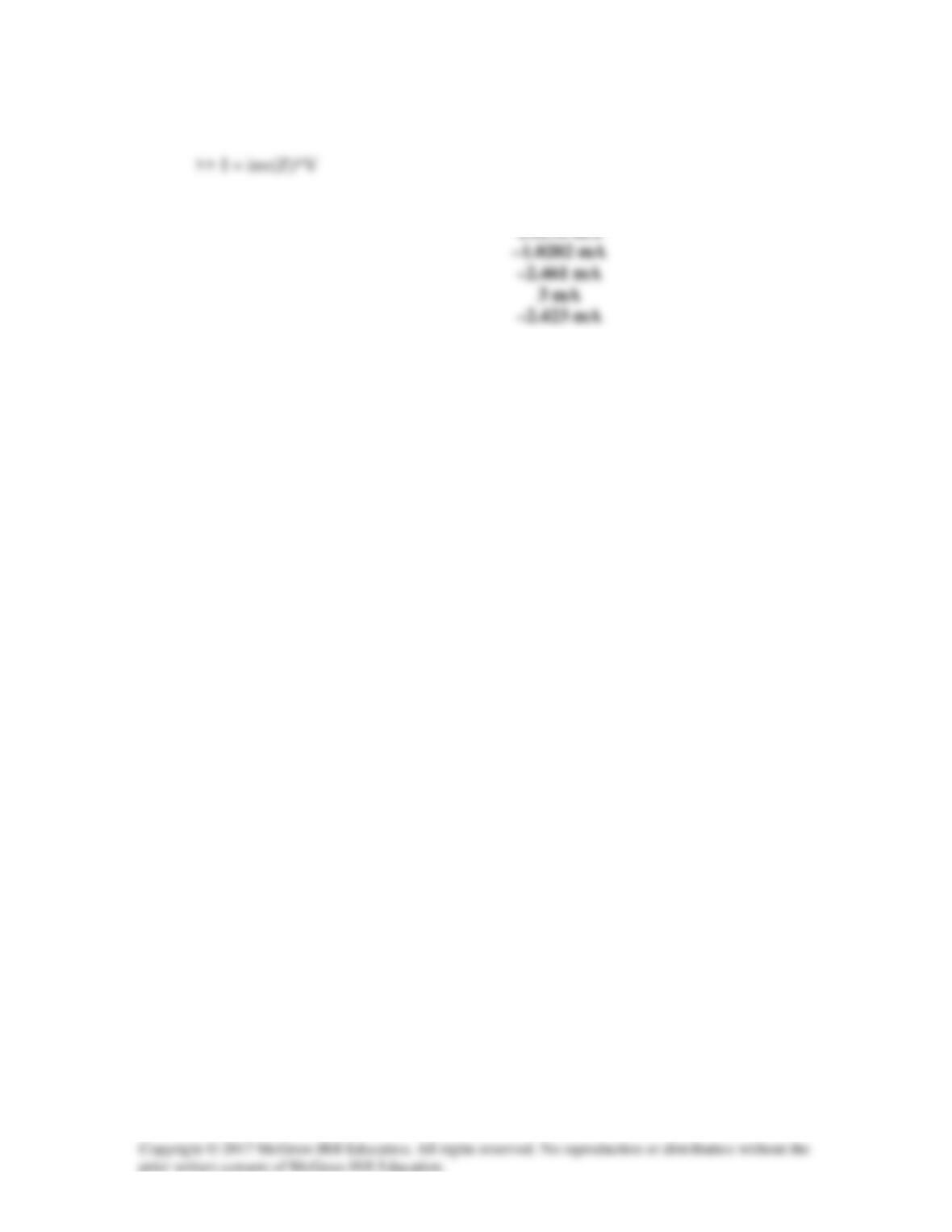
Using MATLAB,
Z =
4 -3 -1 0
V =
12
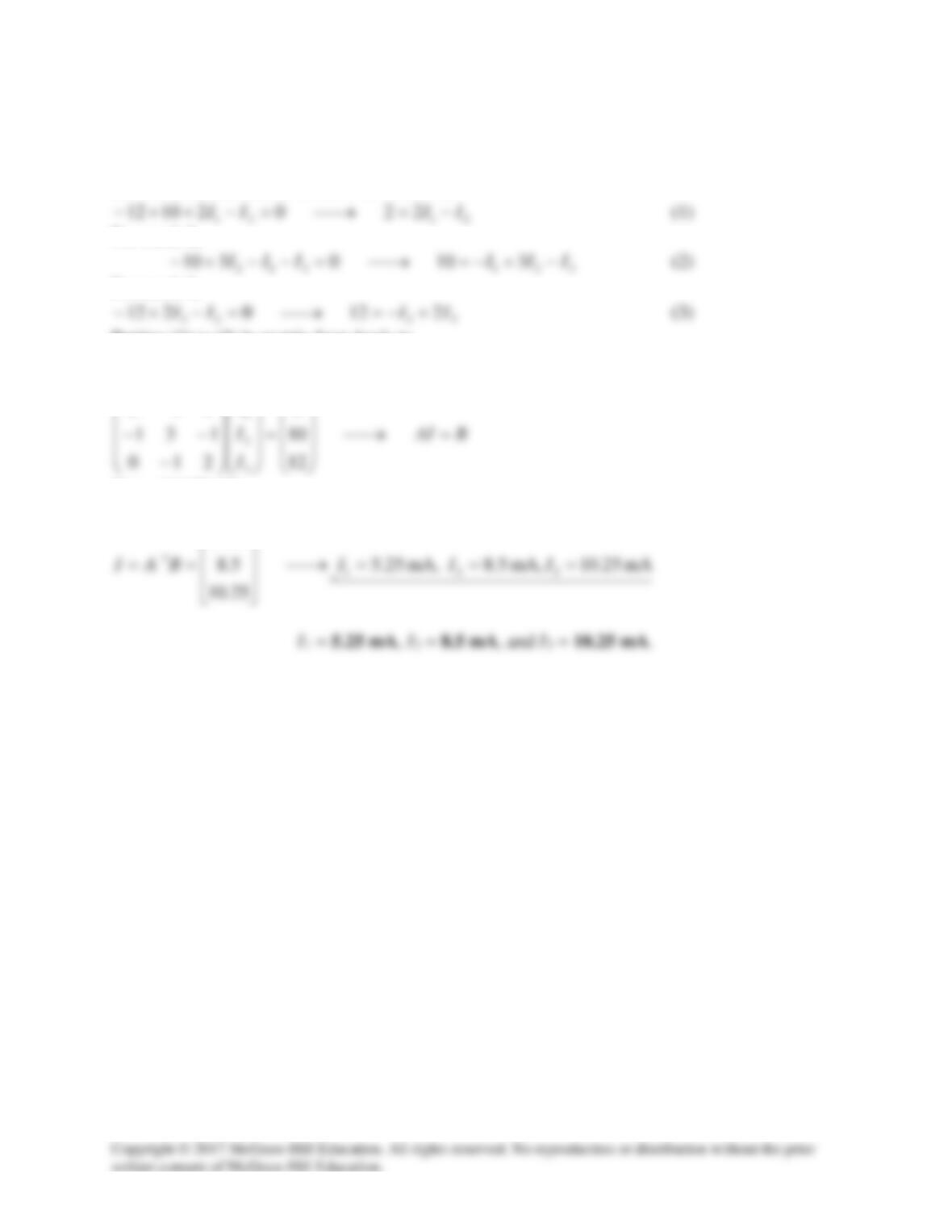
We obtain,
I =
1.6196 mA
Solution 3.54
Let the mesh currents be in mA. For mesh 1,
For mesh 2,
For mesh 3,
Putting (1) to (3) in matrix form leads to
I
−
2
012
Using MATLAB,
25.5
Solution 3.55
d
I1
I3
I4
I3
1A
4A
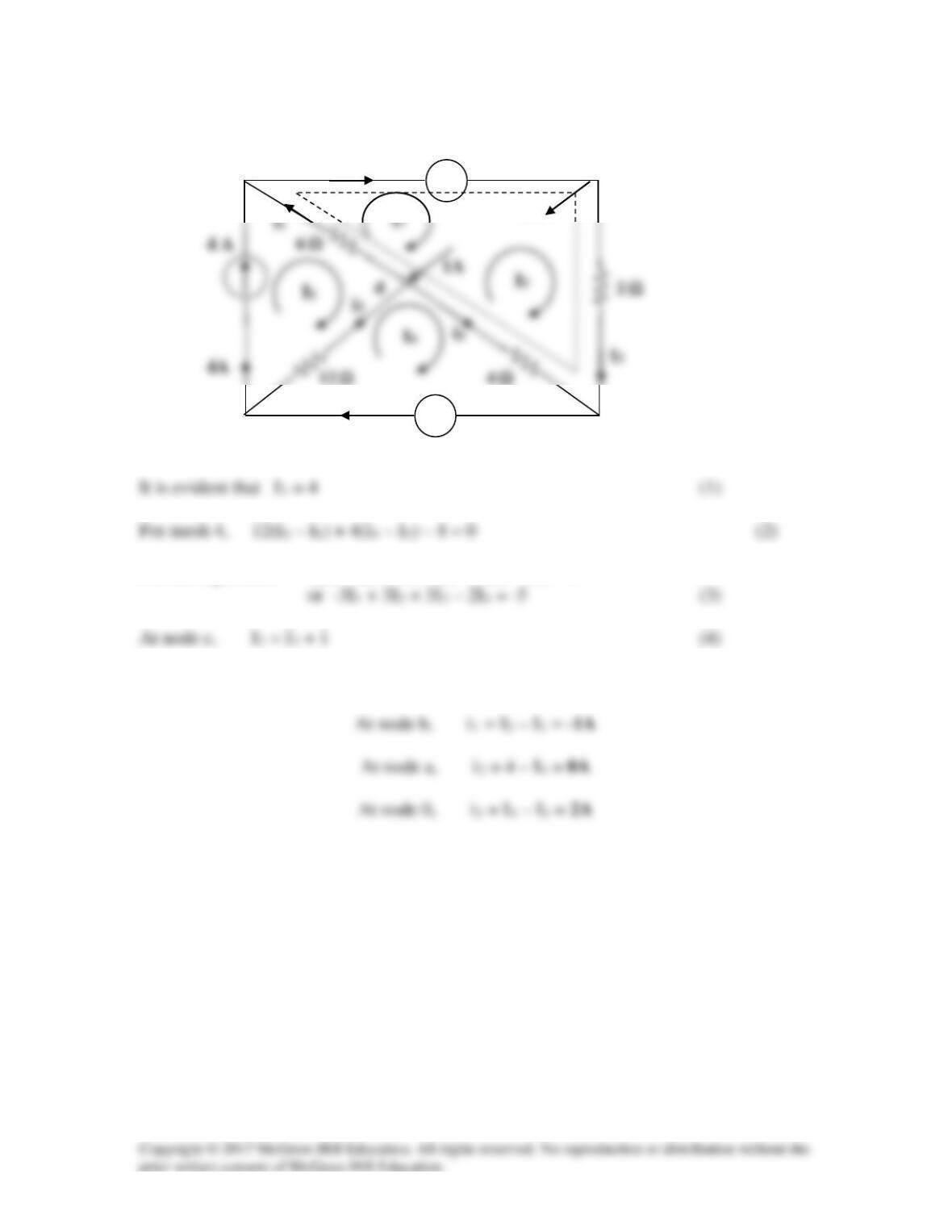
For the supermesh 6(I2 – I1) + 10 + 2I3 + 4(I3 – I4) = 0
Solving (1), (2), (3), and (4) yields, I1 = 4A, I2 = 3A, I3 = 2A, and I4 = 4A
+ –
+
10 V
8 V
I2
I4
1A
c
b
0
a
Solution 3.56
Determine v1 and v2 in the circuit of Fig. 3.101.
20 Ω
10 Ω
+
−
Figure 3.101
For Prob. 3.56.
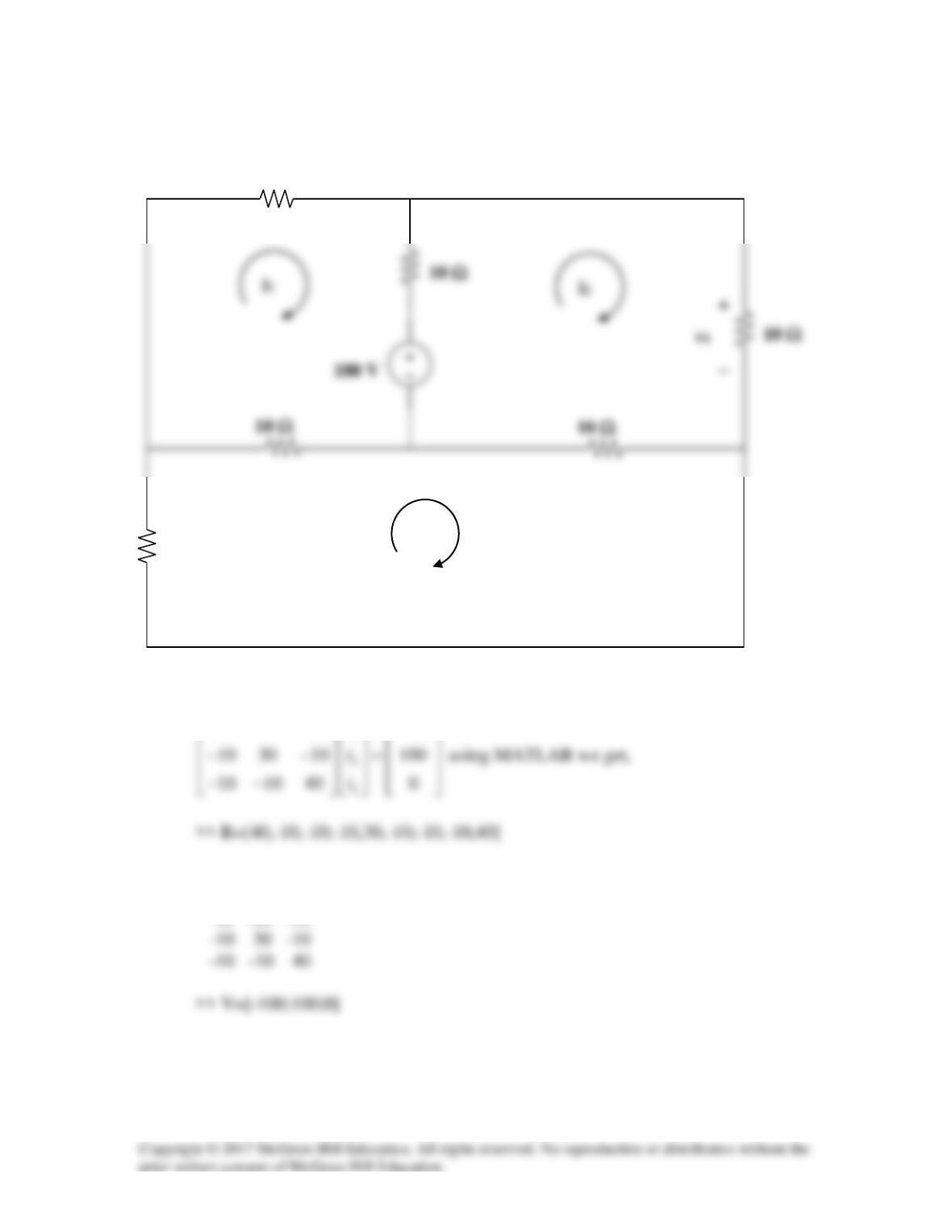
Step 1. First we redraw the circuit and establish the unknown loop currents. Next we
write the three mesh equations and put them into matrix form.
100 V
+
−
20 Ω
10 Ω
+
v1
−
10 Ω
10 Ω
+
−
Step 2.
1
40 10 10 100
i
−− −
R =
20 Ω
20 Ω
+
v2
−
i3
V =
I =
-1.7143
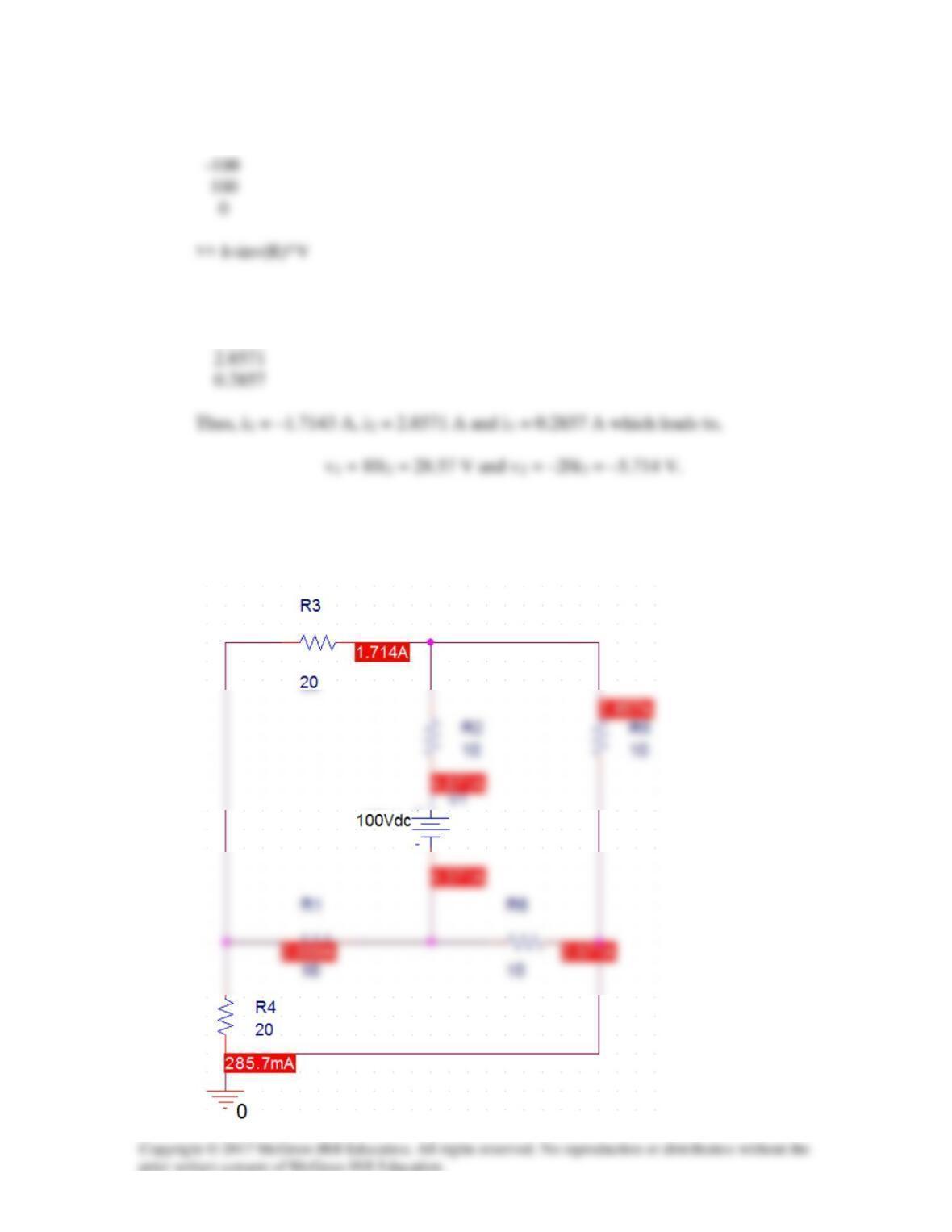
Checking with PSpice we get,
Solution 3.57
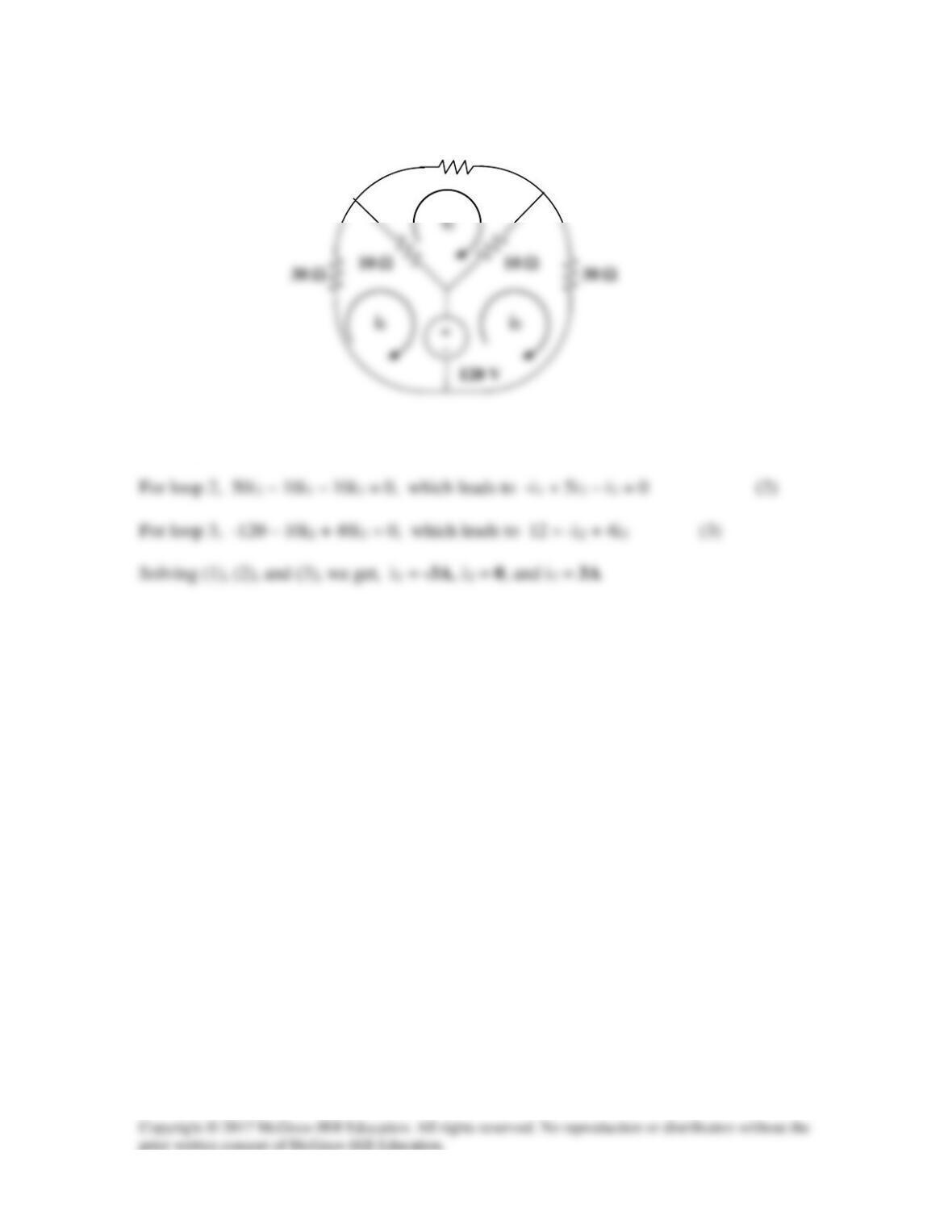
In the circuit in Fig. 3.102, find the values of R, V1, and V2 given that io = 20 mA.
Figure 3.102
For Prob. 3.57.
Step 1. Since io = 0.02 A, V1 = 6,000×0.02. By current division we get V2/R =
Step 2. 400 = 200 + 120 + 120R/(6k+R) or R/(6k+R) = 80/120 = (2/3) or
+
V1
6 kΩ
Solution 3.58
30 Ω
10 Ω
30 Ω
10 Ω
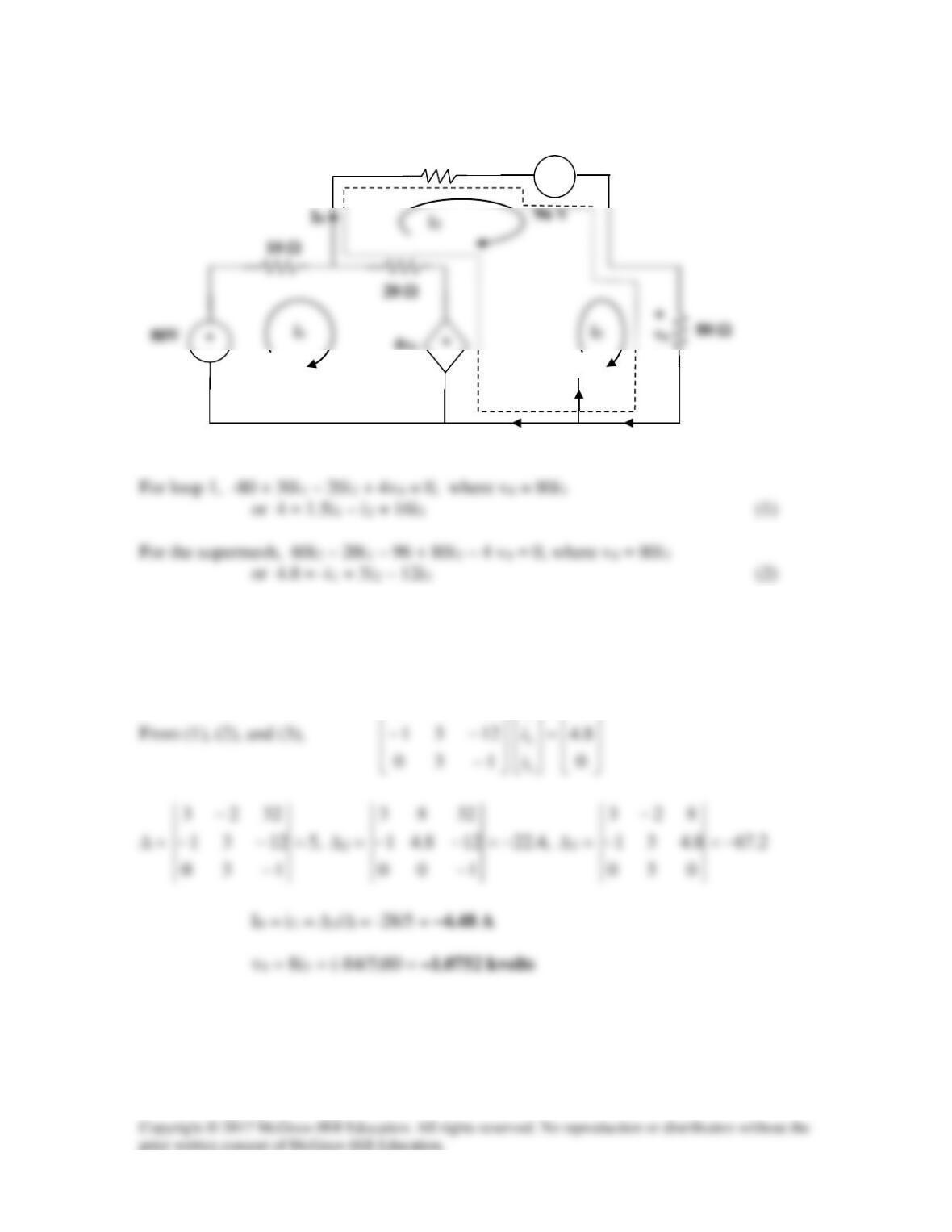
For loop 1, 120 + 40i1 – 10i2 = 0, which leads to -12 = 4i1 – i2 (1)
30 Ω
Solution 3.59
i3
20 Ω
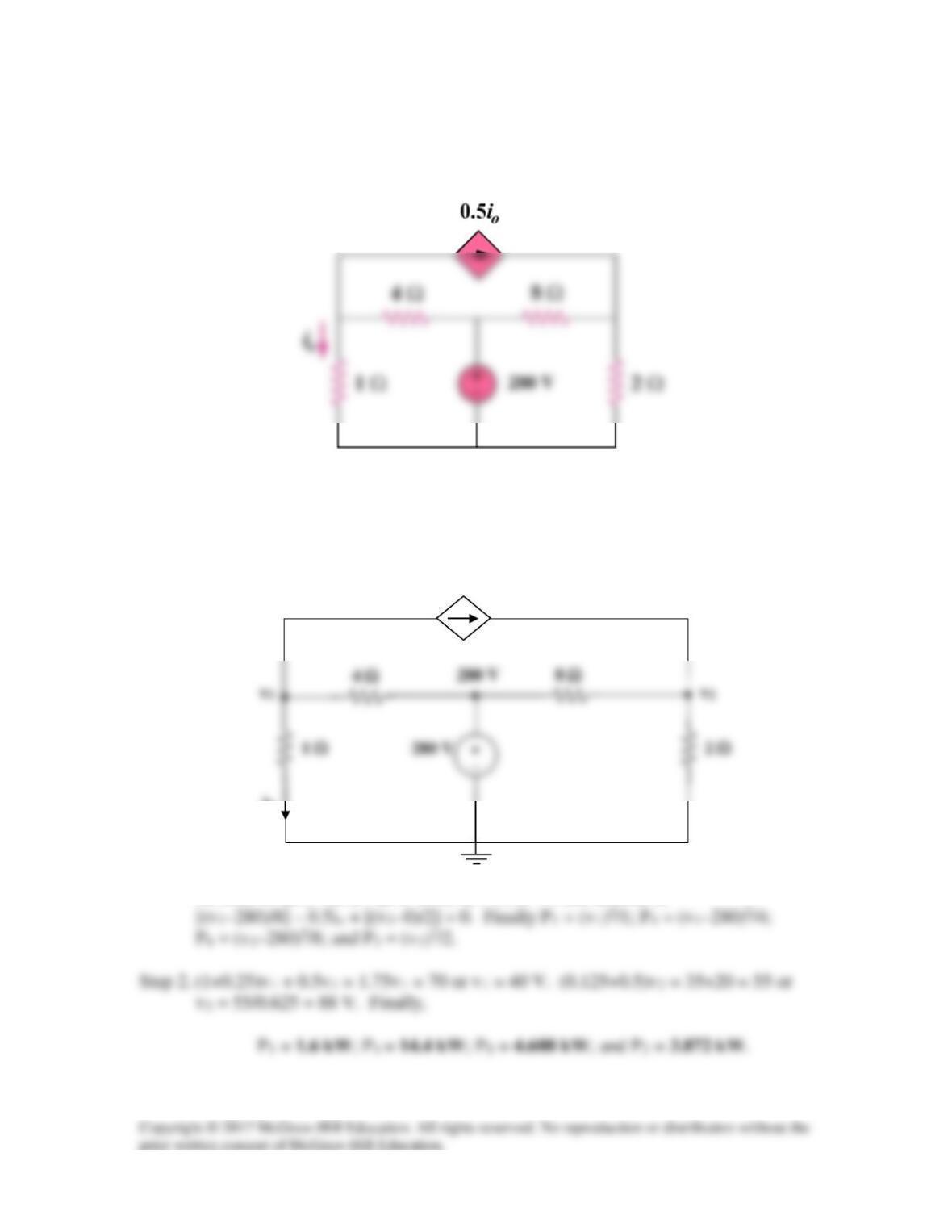
Also, 2I0 = i3 – i2 and I0 = i2, hence, 3i2 = i3
(3)
−
3223
8
1
i
–
– +
–
–
40 Ω
i2
i3
2I0
Solution 3.60
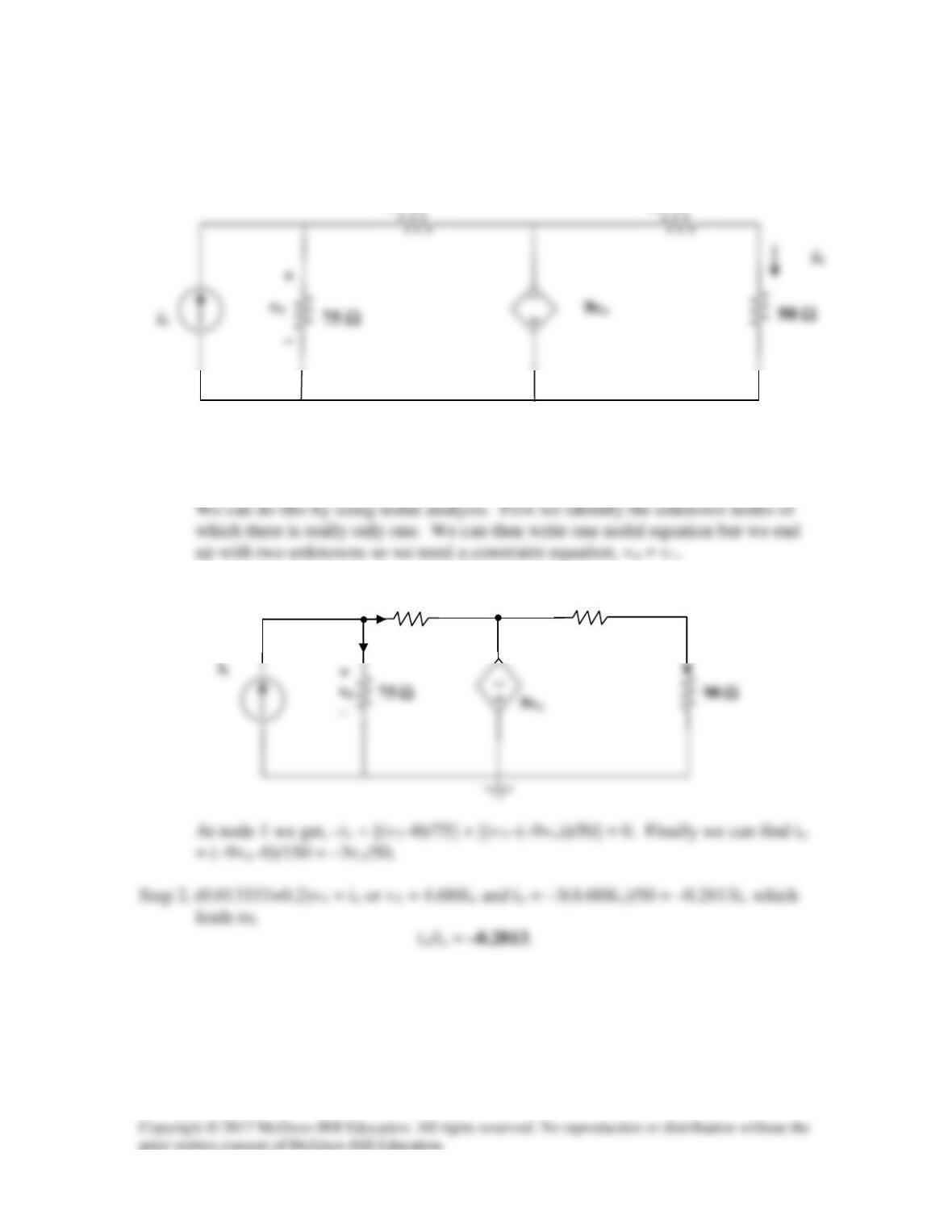
Calculate the power dissipated in each resistor in the circuit in Fig. 3.104.
Figure 3.104
For Prob. 3.60.
Step 1. First we identify all of the unknown nodes of which we find two. Next we write
two nodal equations. Since we have three unknowns but only two equations we
need a constraint equation, io = (v1–0)/1 = v1.
At node 1, [(v1–0)/1] + [(v1–280)/4] + 0.5io = 0 and at node 2,
0.5i0
i0
Solution 3.61
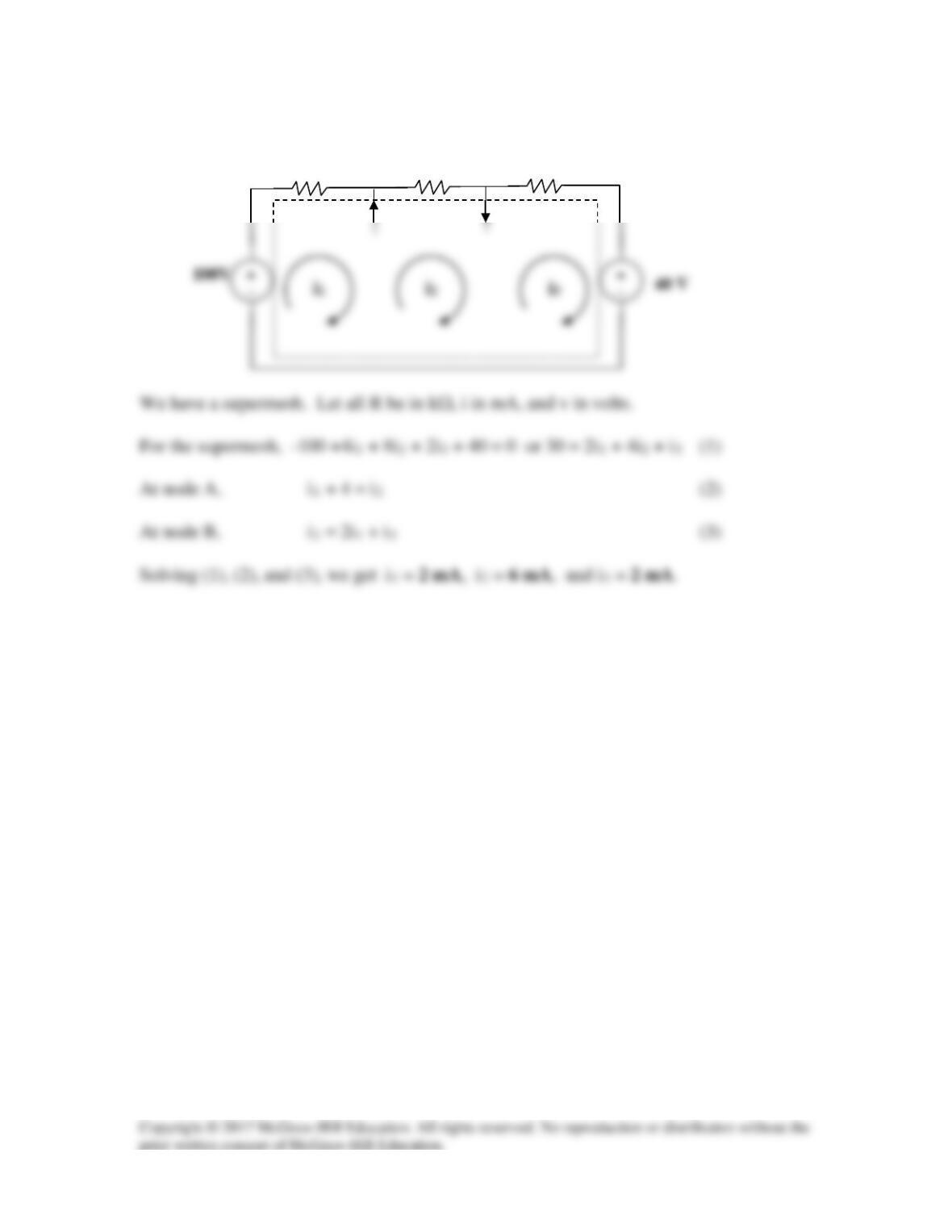
Calculate the current gain io/is in the circuit of Fig. 3.105.
75 Ω
Figure 3.105
For Prob. 3.61.
Step 1. Since we wish to calculate the gain of this circuit we need to find io in terms of is.
75 Ω
90 Ω
50 Ω
–9vo
v1
60 Ω
i
0
60 Ω
50 Ω
Solution 3.62
40 V
B
4 kΩ
8 kΩ
2 kΩ
A
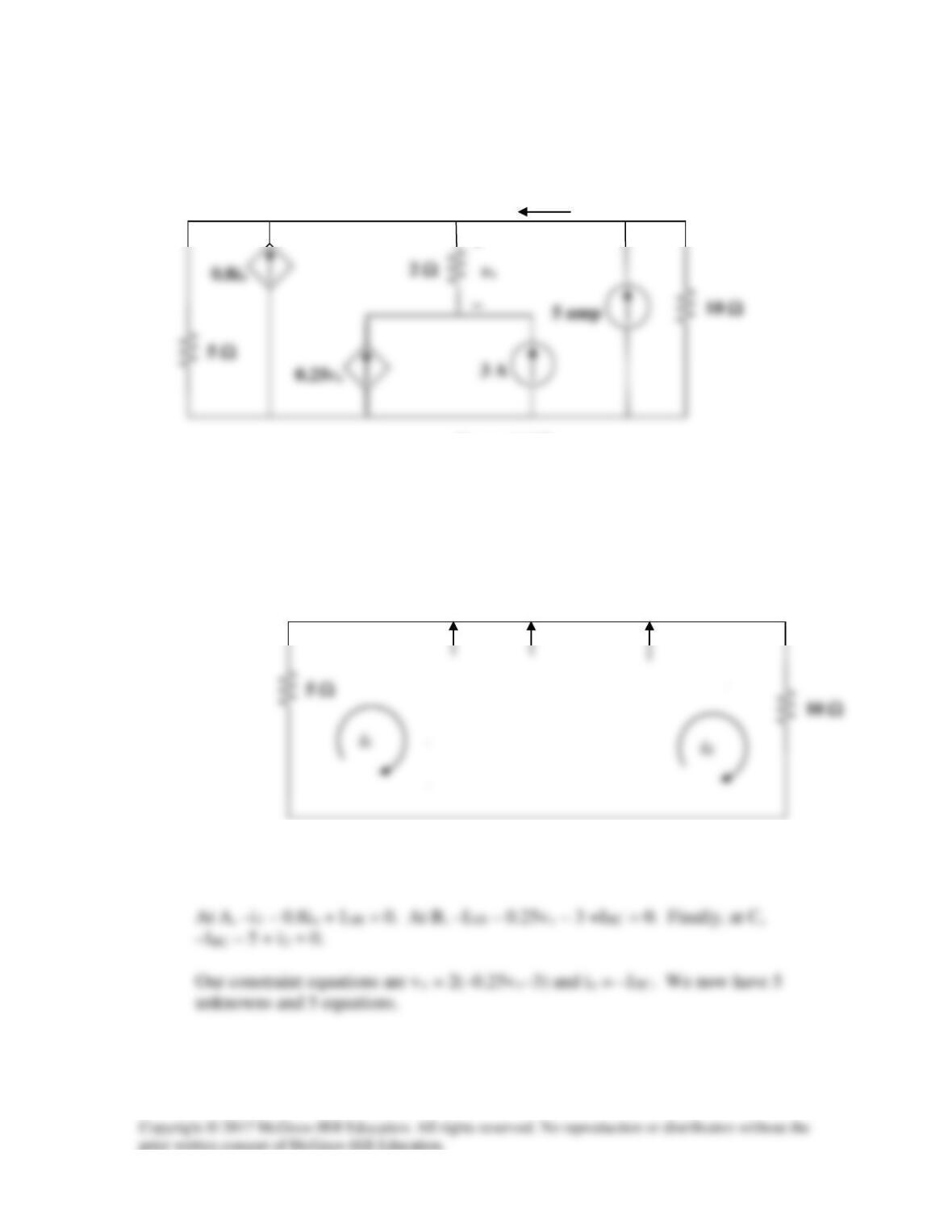
Solution 3.63
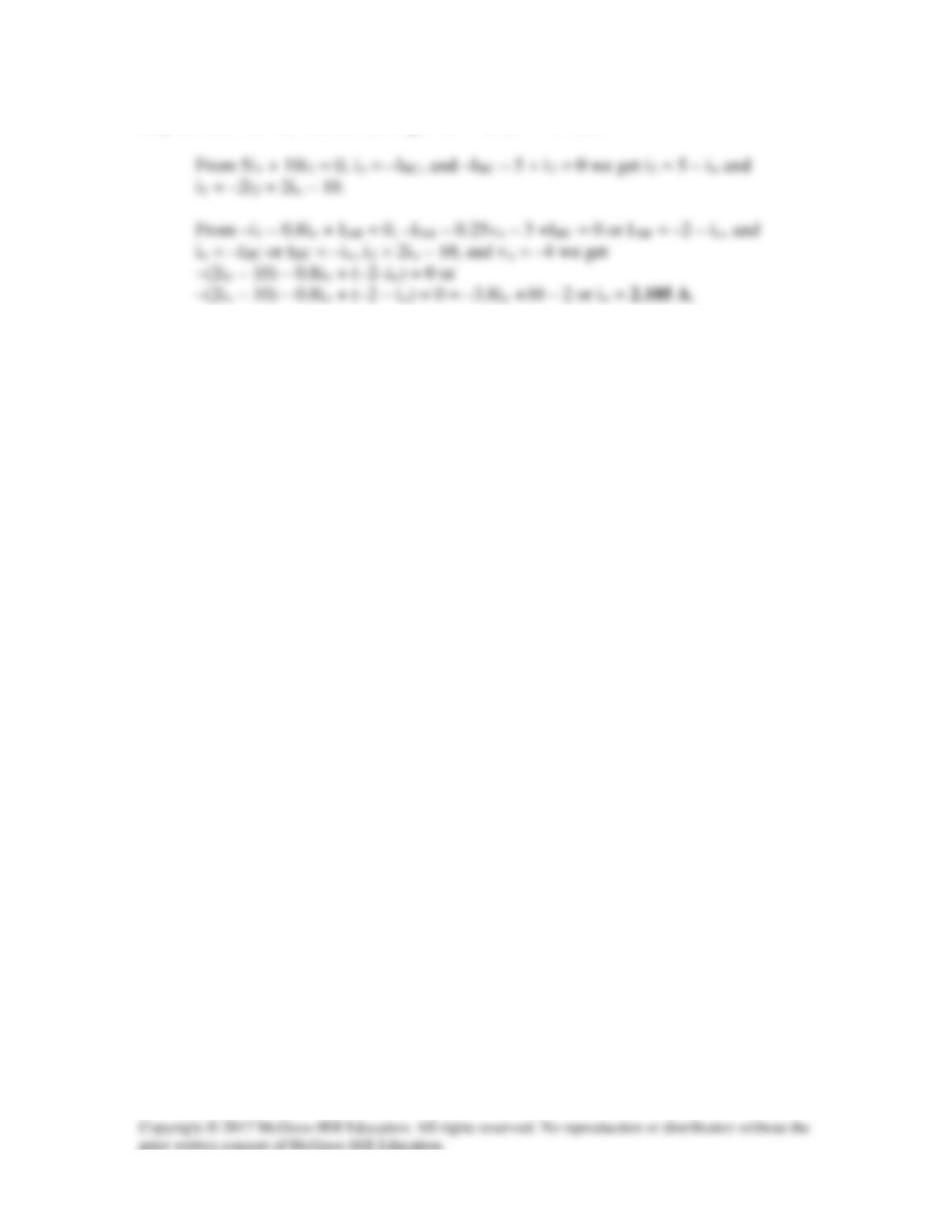
Find vx, and io in the circuit shown in Fig. 3.107.
Figure 3.107
For Prob. 3.63.
Solution
Step 1. First we need to redraw the circuit to reflect the unknown currents.
For the supermesh, 5i1 + 10i2 = 0.
+
io
A
B
C
Step 2. From vx = 2(–0.25vx–3) we get vx = –6/1,5 = –4 volts.