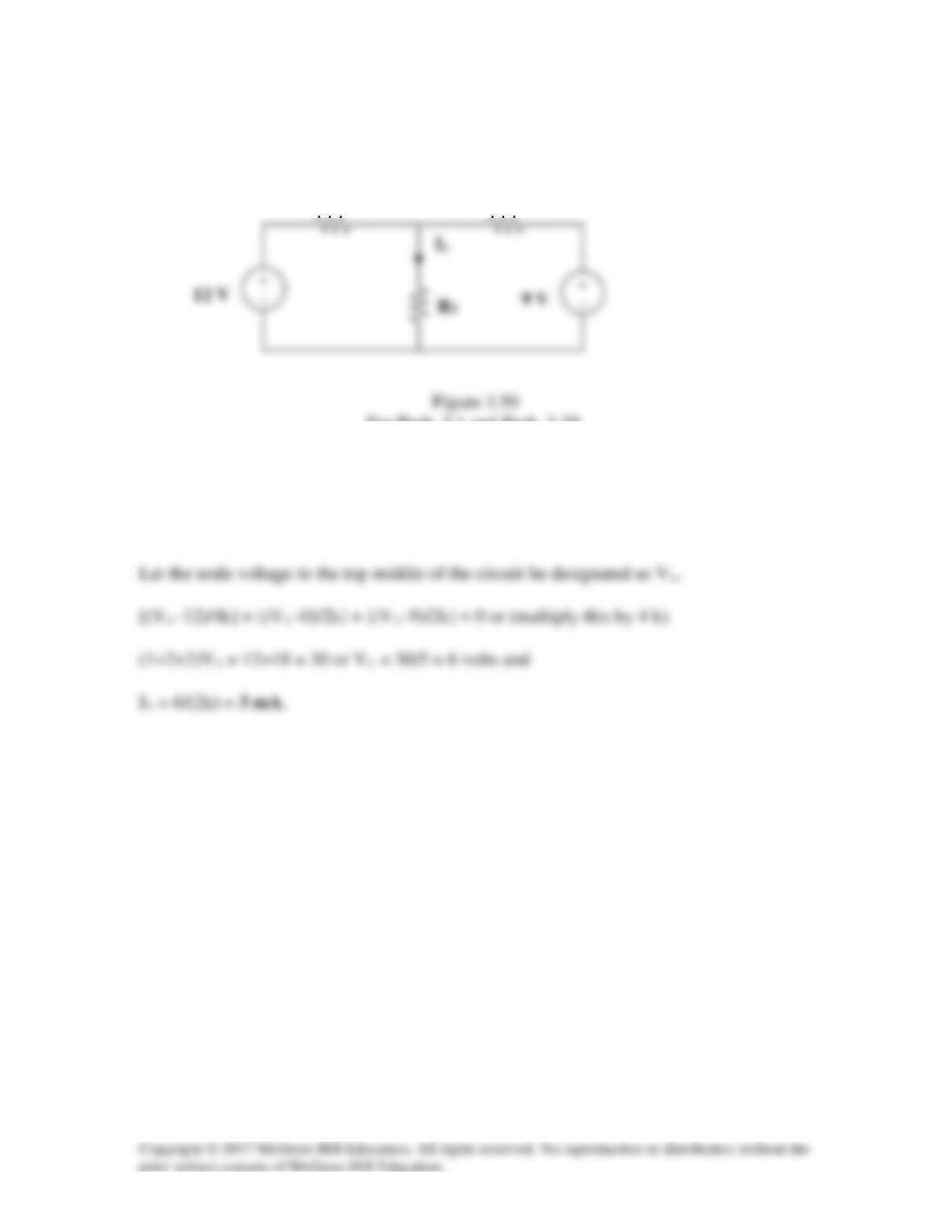
Solution 3.1
Using Fig. 3.50, design a problem to help other students to better understand nodal
analysis.
For Prob. 3.1 and Prob. 3.39.
Solution
Given R1 = 4 kΩ, R2 = 2 kΩ, and R3 = 2 kΩ, determine the value of Ix using nodal
analysis.
R1
R2
Solution 3.2
At node 1,
Solution 3.3
Applying KCL to the upper node,
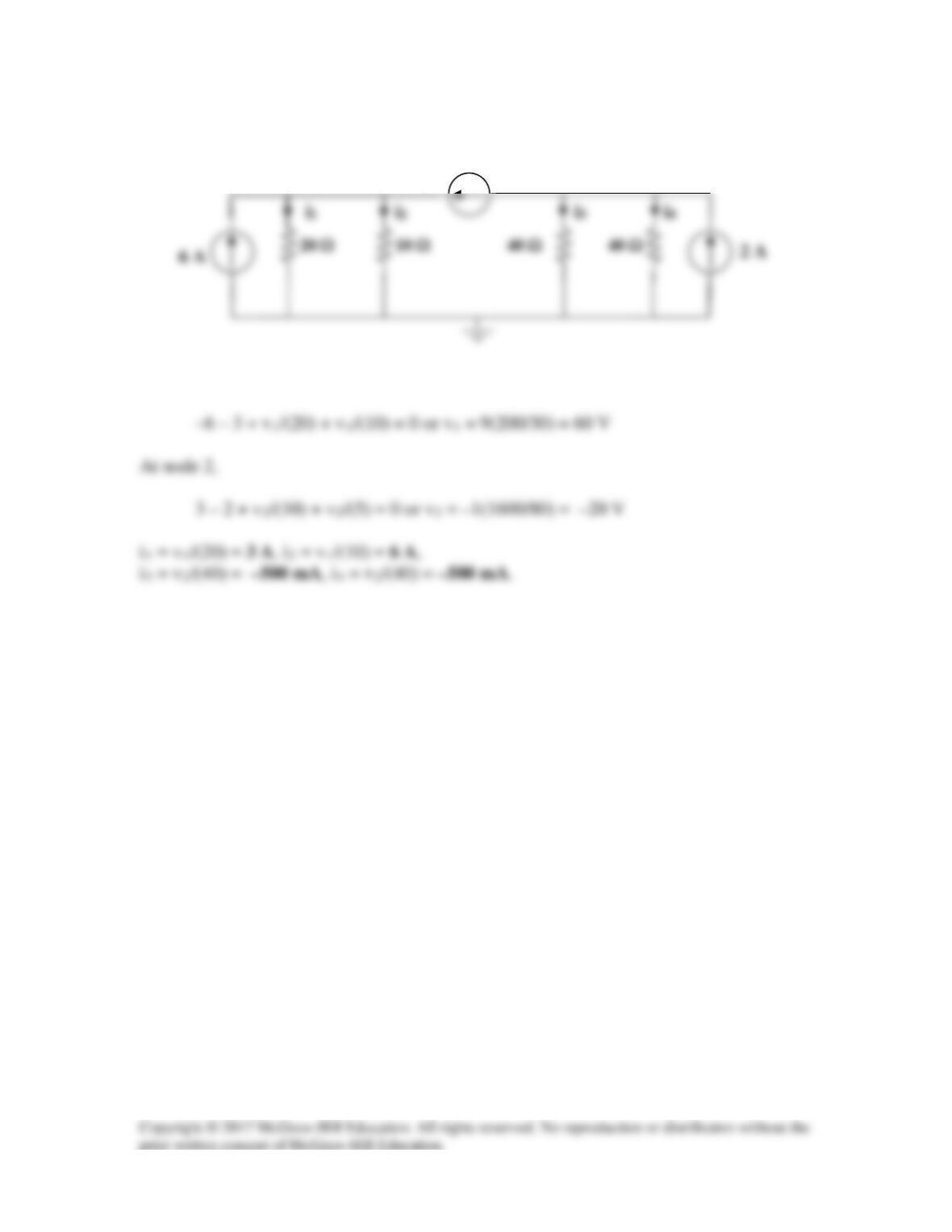
Solution 3.4
i
i
i
i
At node 1,
v2
v1
3A
Solution 3.5
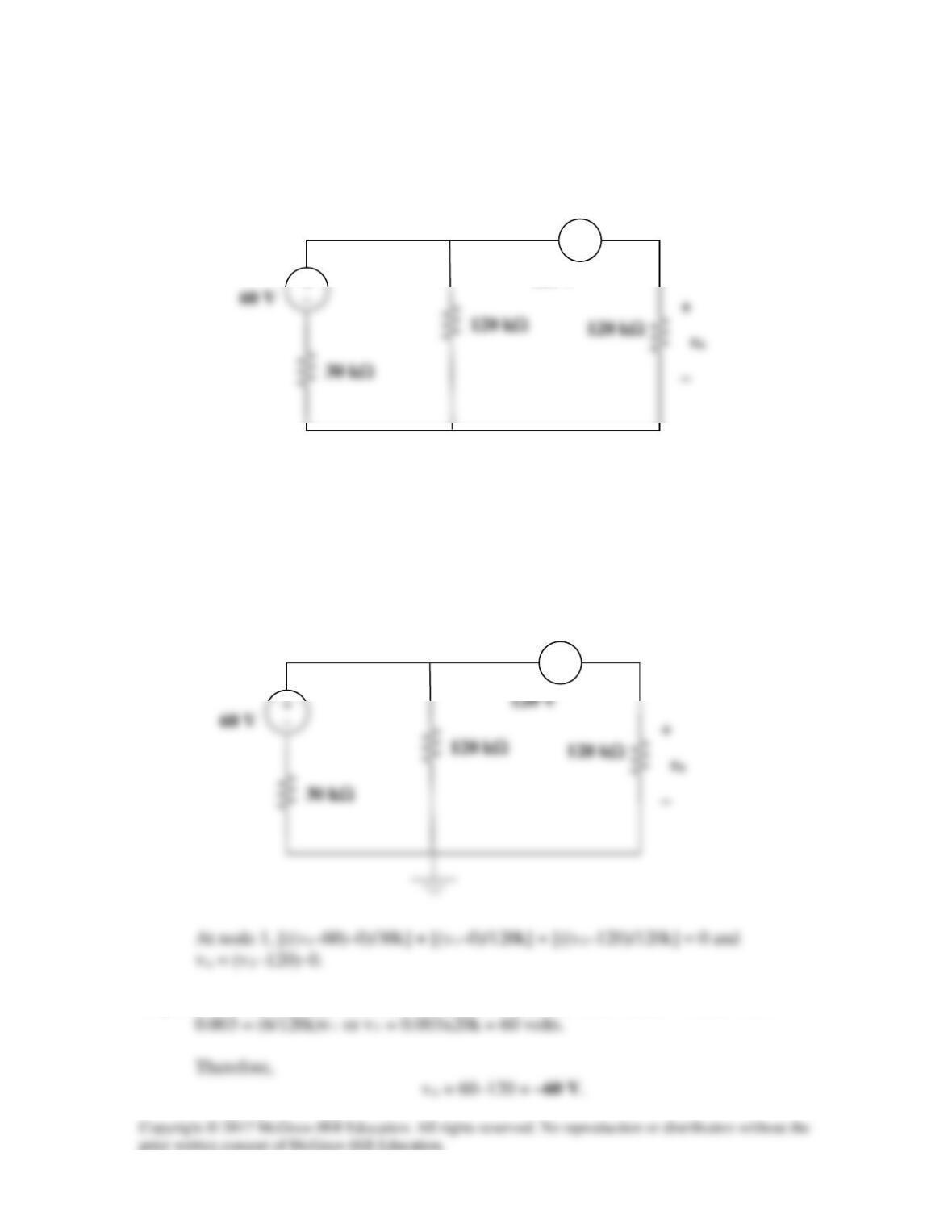
Obtain vo in the circuit of Fig. 3.54.
Figure 3.54
For Prob. 3.5.
Step 1. First you need to pick a reference, so we place a ground at the bottom of the
circuit. Then we identify the unknown node and then write our nodal equations.
Next we apply a constraint equation to solve for vo.
60 V
Step 2. [(1/30k)+(1/120k)+(1/120k)]v1 = (60/30k)+(120/120k) = 0.002+0.001 =
+ −
v
1
+
+ −
120 V
Solution 3.6
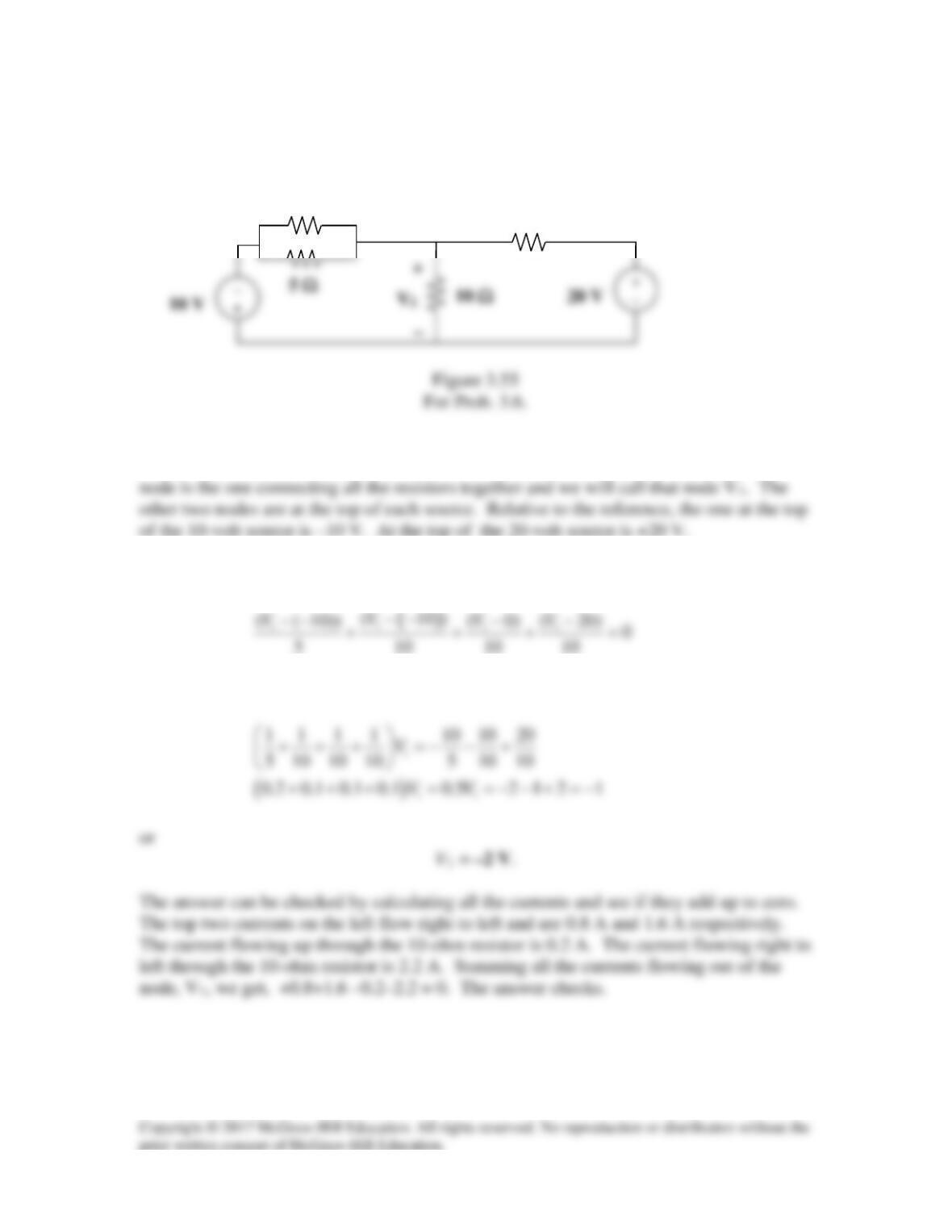
Solve for V1 using nodal analysis.
Step 1. The first thing to do is to select a reference node and to identify all the unknown
nodes. We select the bottom of the circuit as the reference node. The only unknown
Step 2. Setup the nodal equation (there is only one since there is only one
unknown).
Step 3. Simplify and solve.
10 Ω
10 Ω
Solution 3.7
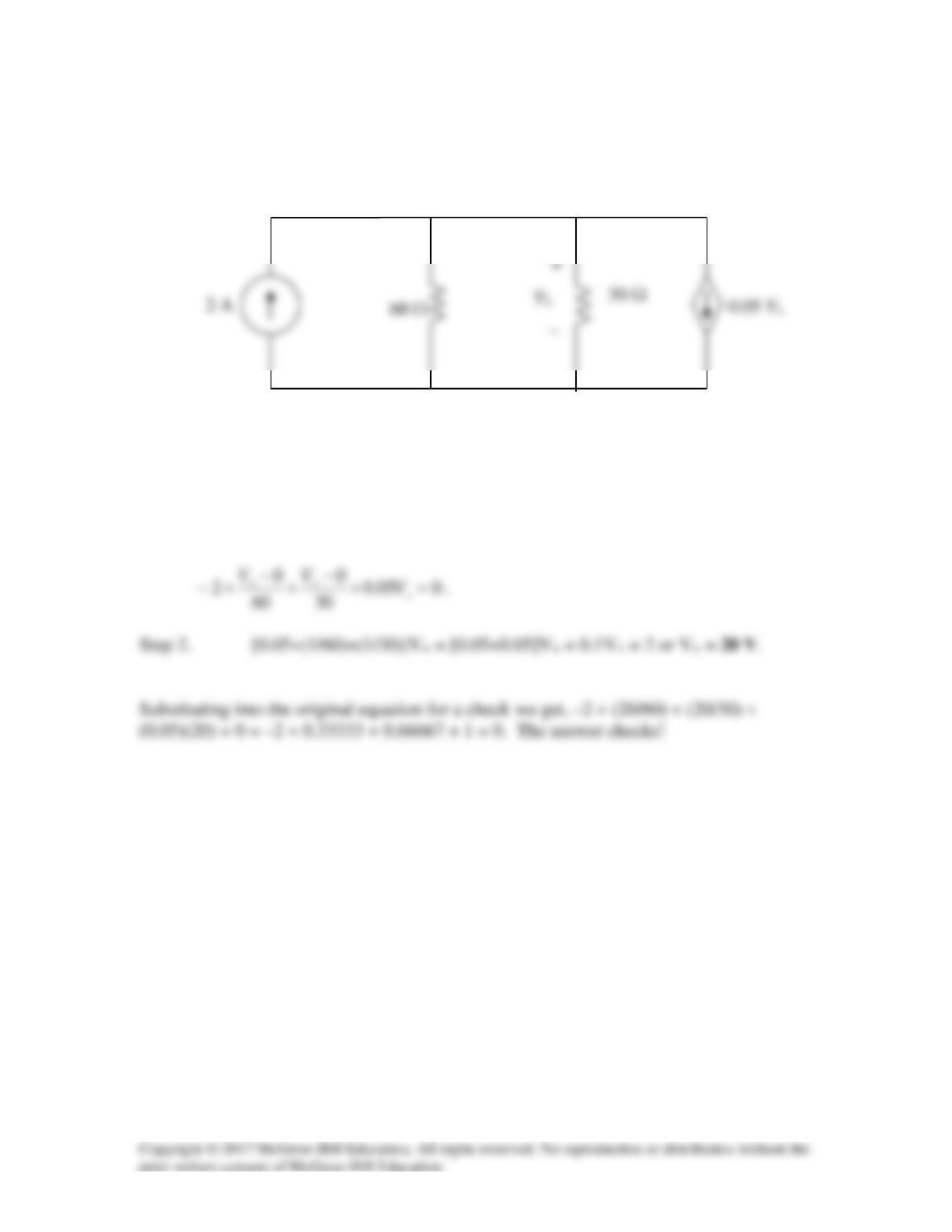
Apply nodal analysis to solve for Vx in the circuit in Fig. 3.56.
Figure 3.56
For Prob. 3.7.
Step 1. First we identify all of the unknown nodes and in this case, we only have
one and that is Vx. Next we write one nodal equation.
Solution 3.8
4 Ω
i2
v5v
0)60v(
v01
11 =
−
−−
i1
6 Ω
20
i
3
v1
Solution 3.9
Let V1 be the unknown node voltage to the right of the 250-Ω resistor. Let the ground
reference be placed at the bottom of the 50-Ω resistor. This leads to the following nodal
equation:
0I60V
0V
24V
b1
11
−−
−
−
But
250
V24
I
1
b
−
=
. Substituting this into the nodal equation leads to
Solution 3.10
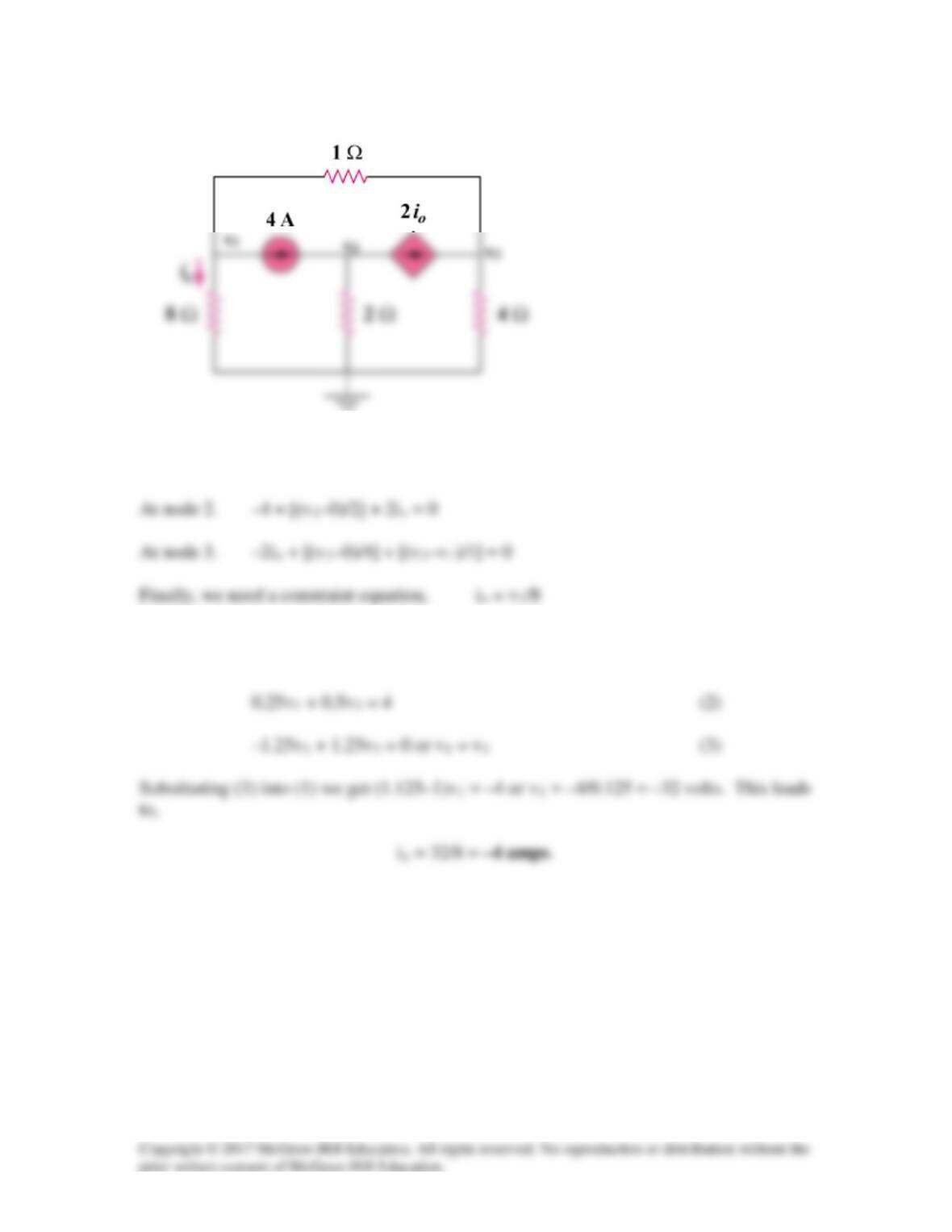
At node 1. [(v1–0)/8] + [(v1–v3)/1] + 4 = 0
This produces,
1.125v1 – v3 = –4 (1)
Solution 3.11
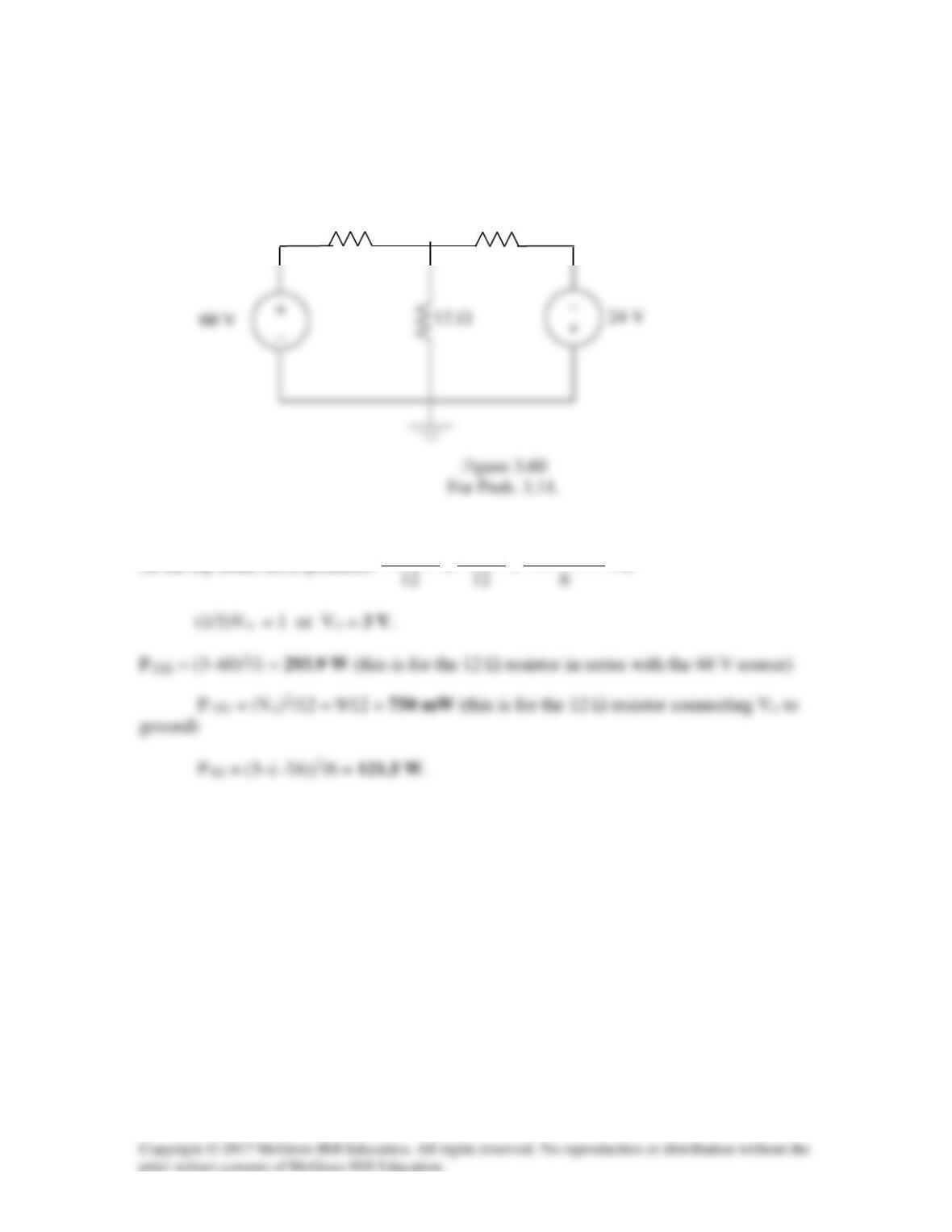
Find Vo and the power absorbed by all the resistors in the circuit of Fig. 3.60.
Solution
At the top node, KCL produces
)24(V
0V
60V ooo =
−−
−
−
6 Ω
12 Ω
V
o
Solution 3.12
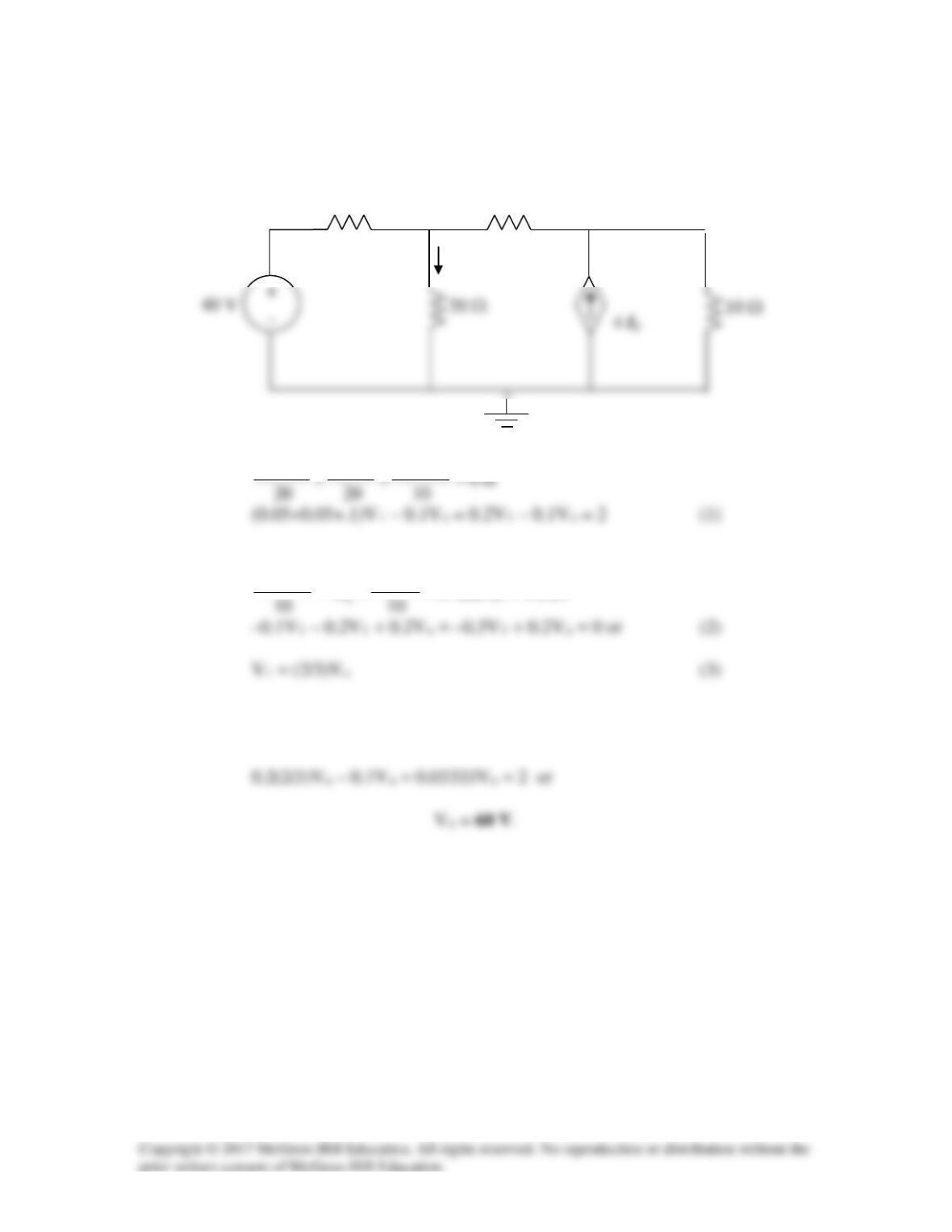
There are two unknown nodes, as shown in the circuit below.
20 Ω
10 Ω
At node 1,
VV
0V
40V
o1
11
−
−
−
At node o,
0
0V
I4
VV o
1o =
−
+−
−
and Ix = V1/20
Substituting (3) into (1),
20 Ω
10 Ω
V
o
V
1
Ix
Solution 3.13
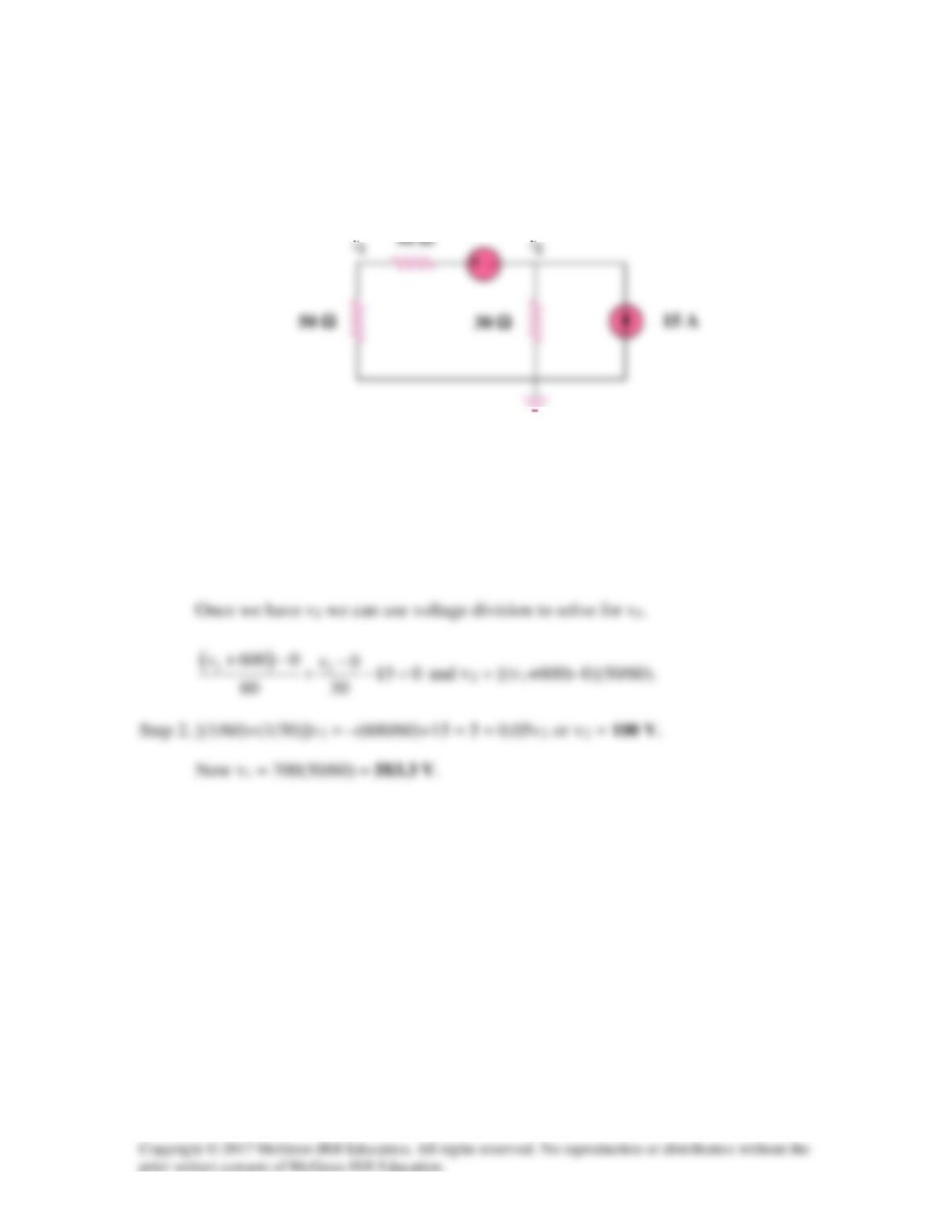
Calculate v1 and v2 in the circuit of Fig. 3.62 using nodal analysis.
15 A
Figure 3.62
For Prob. 3.13.
Solution
Step 1. We note that the 10 ohm resistor is in series with the 50 ohm resistor which can
be replaced by a 60 ohm resistor. The then gives us a circuit with one unknown
node and we can write one nodal equation to let us solve for v2.
600 V
Solution 3.14
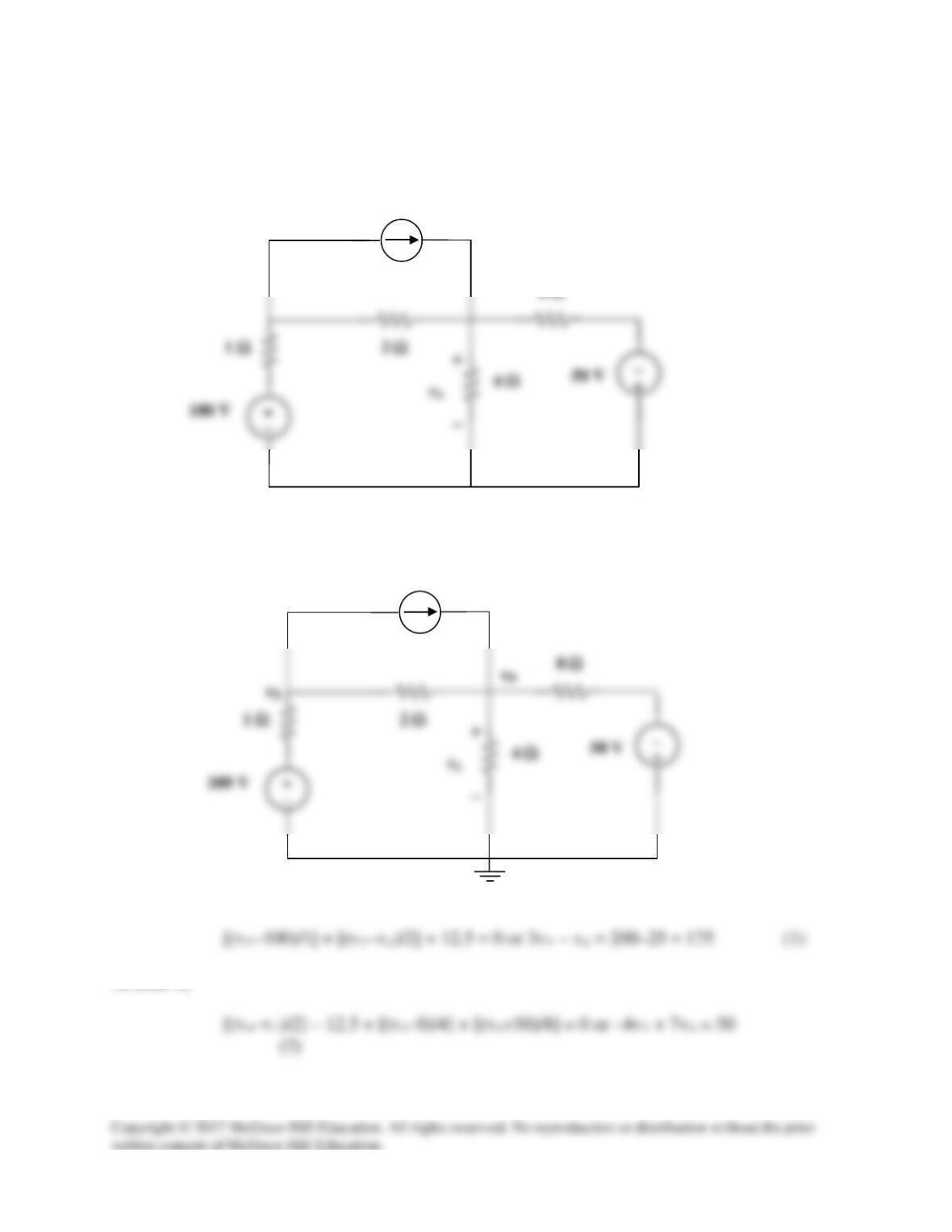
Using nodal analysis, find vo in the circuit of Fig. 3.63.
50 V
Figure 3.63
For Prob. 3.14.
Solution
50 V
100 V
At node 1,
At node o,
12.5 A
12.5 A
Adding 4x(1) to 3x(2) yields,
At node 1,
At node o,
Solution 3.15
4 Ω
2 Ω
1 Ω
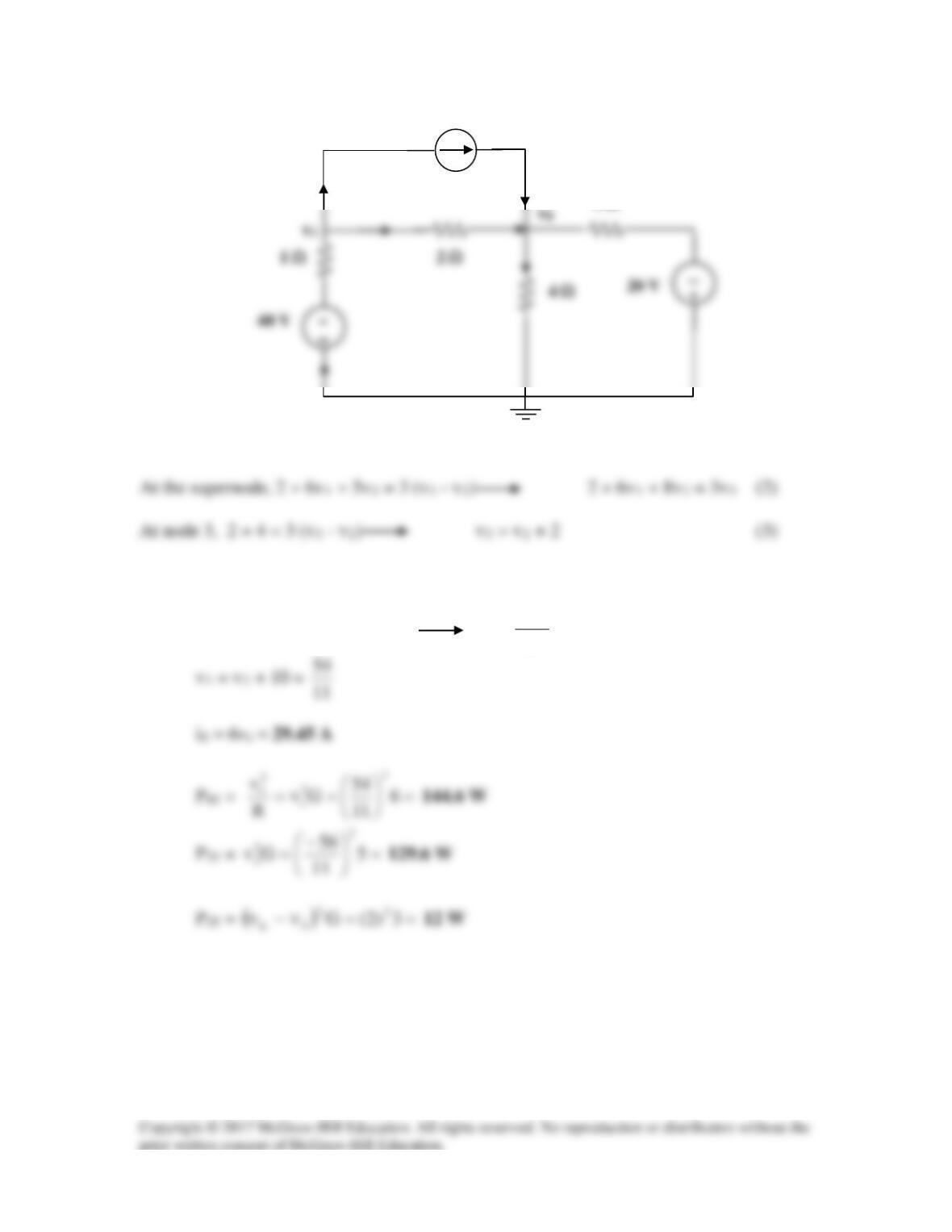
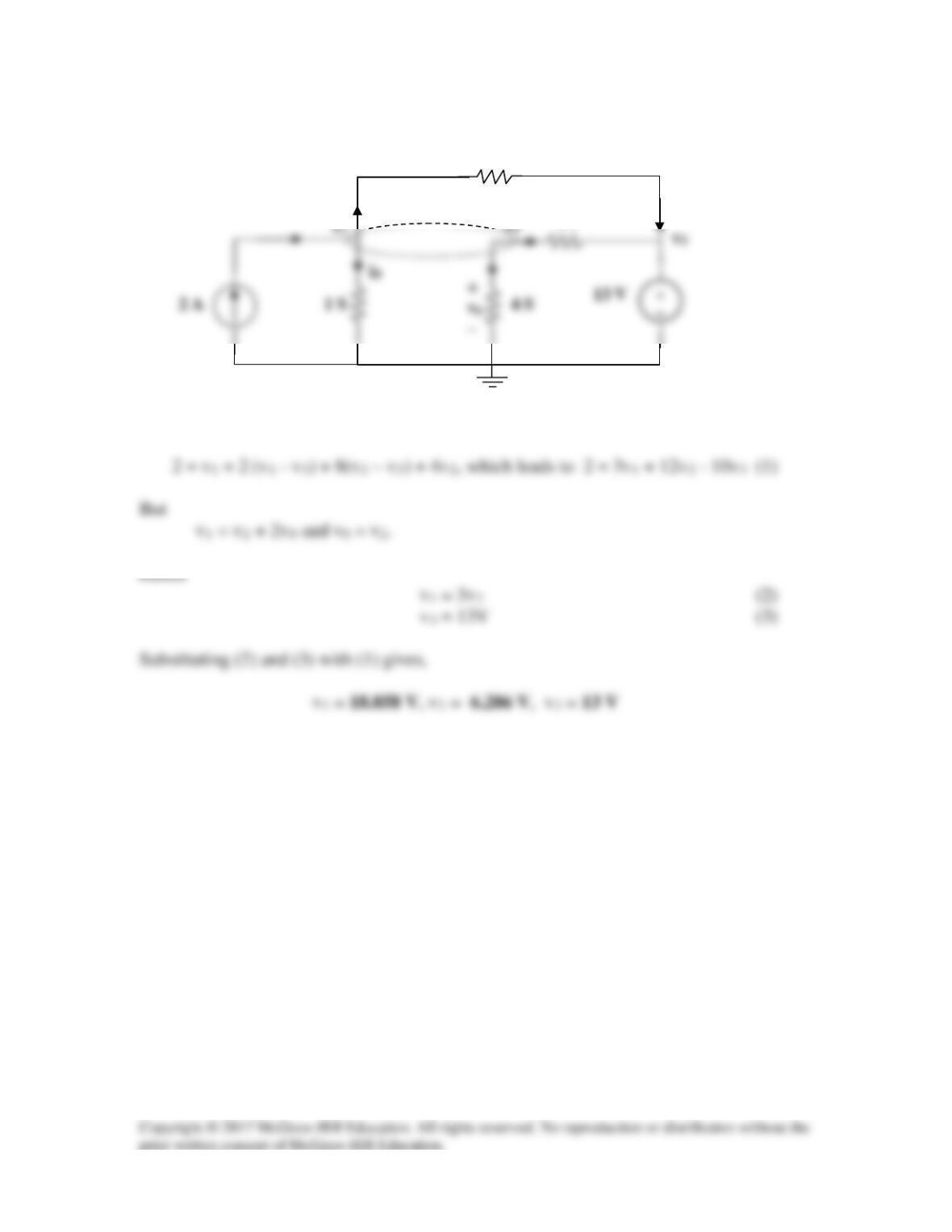
Nodes 1 and 2 form a supernode so that v1 = v2 + 10 (1)
Substituting (1) and (3) into (2),
2 + 6v2 + 60 + 8v2 = 3v2 + 6 v2 =
11
56−
8 Ω
5 A
Solution 3.16
2 A
4 S
1 S
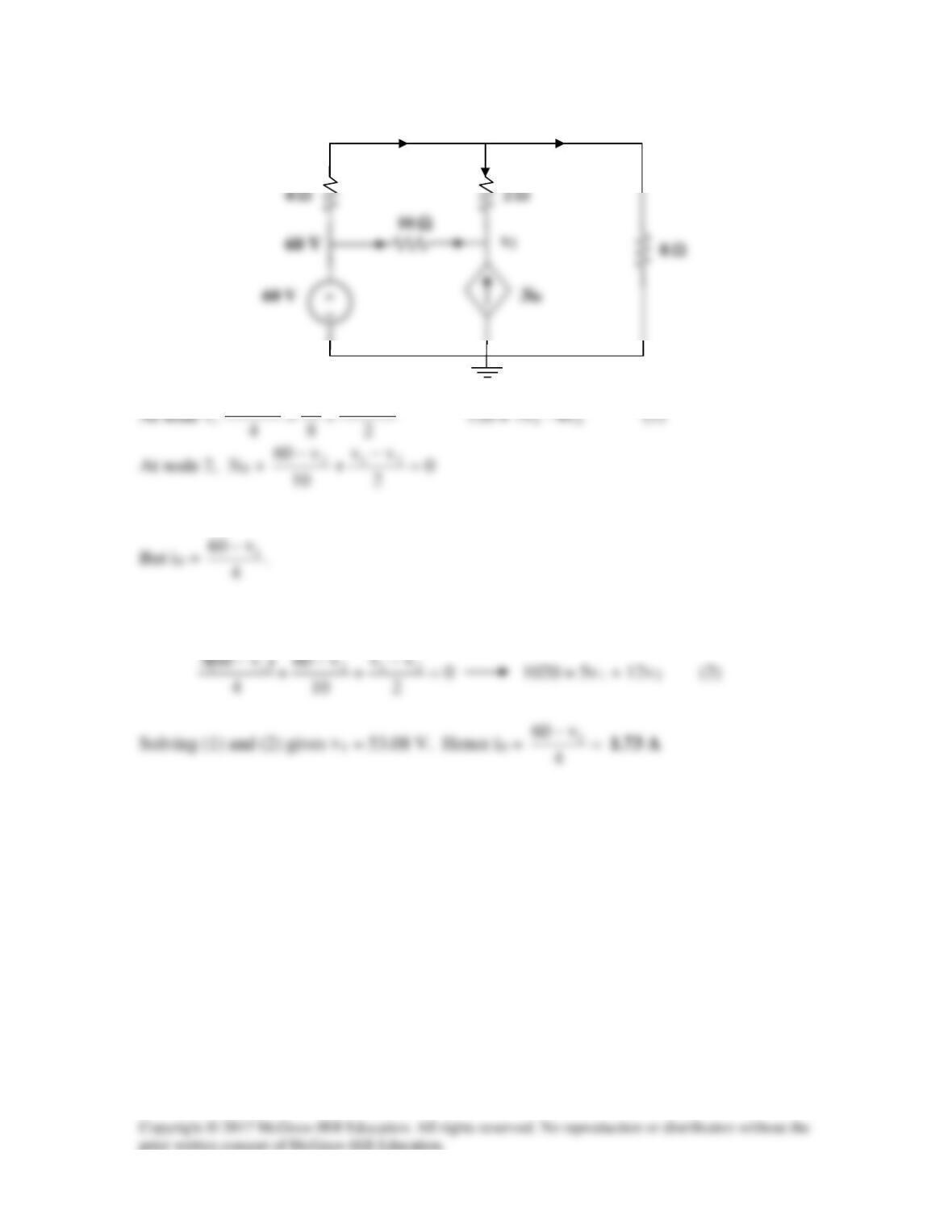
At the supernode,
8 S
2 S
Solution 3.17
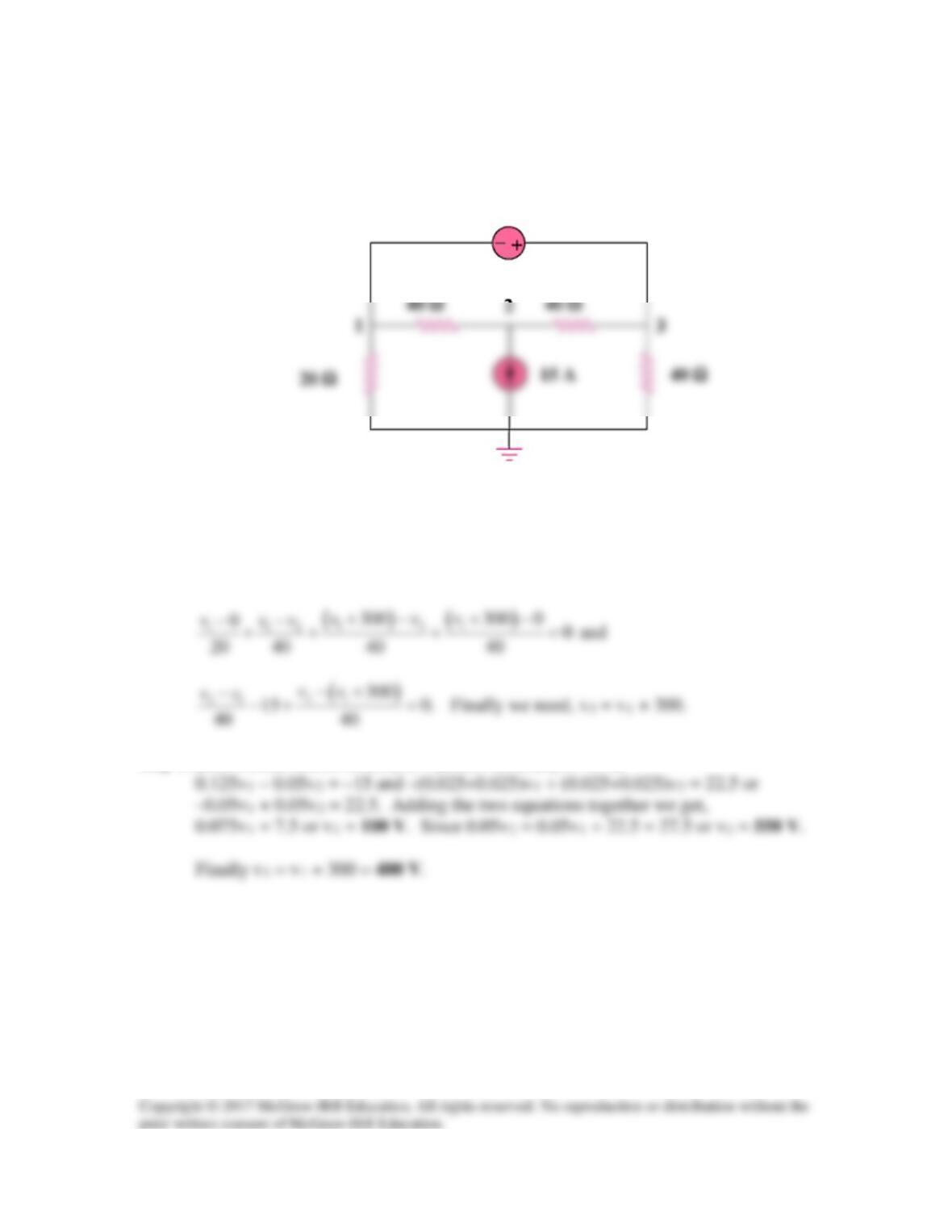
3i0
v2
vv
v
v60
2111
−
−
Hence
i0
v1
Solution 3.18
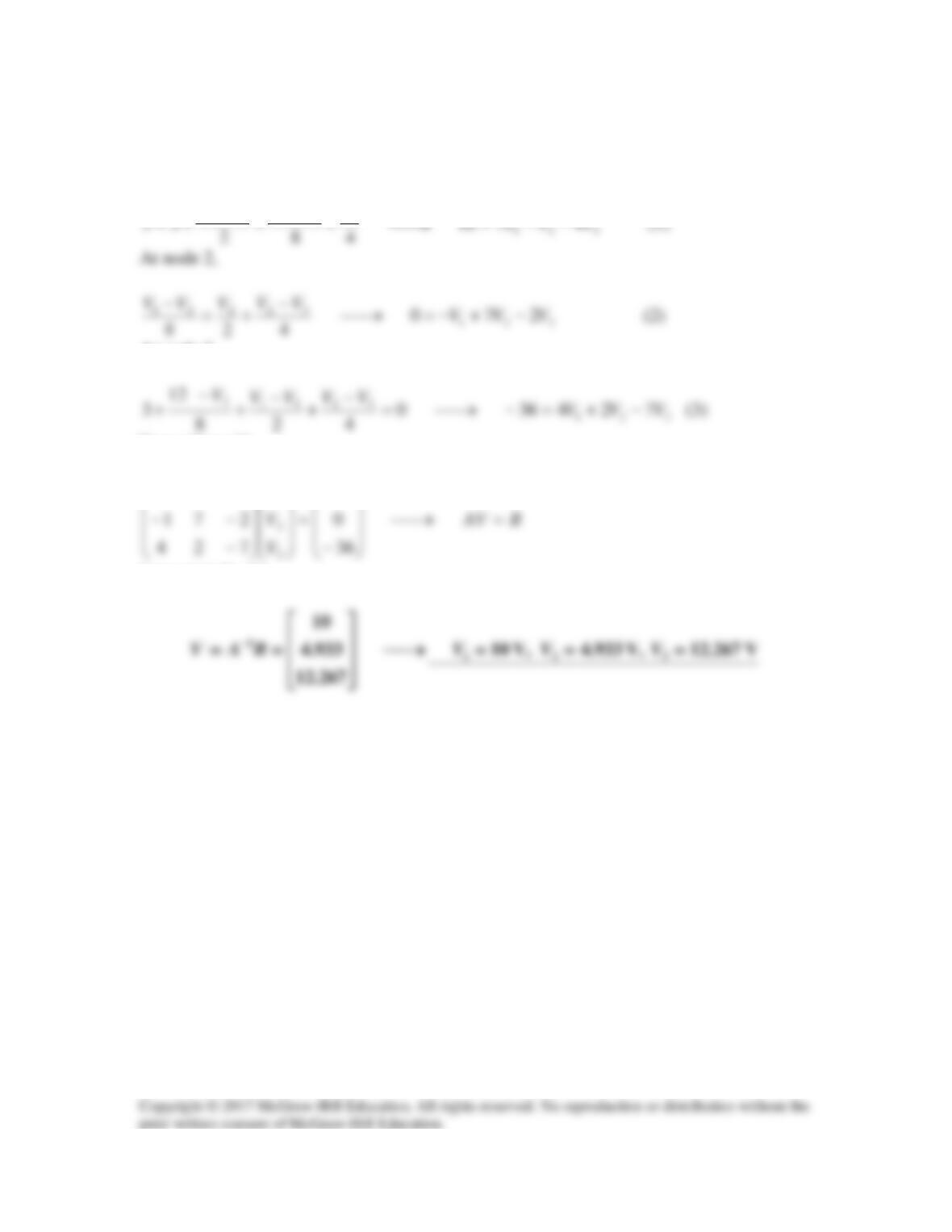
Determine the node voltages in the circuit in Fig. 3.67 using nodal analysis.
15 A
Figure 3.67
For Prob. 3.18.
Step 1. First we identify the unknown nodes and find that there really are only two
unknown nodes, v1 and v2 since v3 = v1 + 300 V (essentially a supernode).
Step 2. (0.05+0.025+0.025+0.025)v1 – (0.025+0.025)v2 = –15 or
300 V
Solution 3.19
At node 1,
121
31
VVV
VV −−=→+
−
−
At node 3,
From (1) to (3),
V
−−
16
417
1
Using MATLAB,