CHAPTER 3
The Accounting Information System
ASSIGNMENT CLASSIFICATION TABLE (BY TOPIC)
Topics
Questions
Brief
Exercises
Exercises
Problems
1.
Transaction identification.
1, 2, 3, 5,
6, 7, 8
1, 2
1, 2, 3, 4, 17
1
Nominal accounts.
4, 7
Trial balance.
6, 10
2, 3, 4
1, 2
8, 9, 10
9, 10, 20
5, 6, 7, 8,
9, 10, 12
5.
Financial statements.
11, 12, 15,
1, 2, 4, 6
22, 23
6.
Closing.
12
11
13, 14, 16
1, 4, 9,
10, 12
7.
Inventory and cost
of goods sold.
9
14, 15
8.
Comprehensive
accounting cycle.
1, 2, 6, 12
Cash vs. accrual Basis.
15, 16, 17
18, 19
Reversing entries.
Worksheet.
21, 22, 23
ASSIGNMENT CLASSIFICATION TABLE (BY LEARNING OBJECTIVE)
Learning Objectives
Questions
Brief
Exercises
Exercises
Problems
1. Understand basic accounting
terminology.
1, 2, 4,
7
2. Explain double-entry rules.
1, 2, 3,
4, 5, 7
2, 3
4. Record transactions in journals, post
to ledger accounts, and prepare a trial
balance.
6, 10
1, 2, 3, 4,
5, 6, 7
1, 2, 3,
4, 17
1, 4, 9, 10
5. Explain the reasons for preparing
adjusting entries and identify major
types of adjusting entries.
11, 16
3, 4, 5, 6,
7,
8, 9, 10
5, 6, 7, 8,
9, 10, 20
2, 3, 4, 5,
6, 7, 8, 9,
10, 12
6. Prepare financial statements from the
adjusted trail balance.
10
11, 12
1, 2, 4, 6,
7, 8, 9,
10, 12
7. Prepare closing entries.
8, 12,
13, 14
13, 14, 16
1, 4, 9,
10, 12
8. Prepare financial statements for a
merchandising company.
9
13, 14, 15
4, 10
*9. Differentiate the cash basis of
accounting from the accrual basis of
accounting.
15, 17
12
18, 19
11
reversed.
21, 22, 23
ASSIGNMENT CHARACTERISTICS TABLE
Item
Description
Level of
Difficulty
Time
(minutes)
E3-1
Transaction analysis–service company.
Simple
15–20
E3-2
Corrected trial balance.
Simple
10–15
E3-3
Corrected trial balance.
Simple
15–20
E3-4
Corrected trial balance.
Simple
10–15
E3-5
Adjusting entries.
Moderate
10–15
E3-6
Adjusting entries.
Moderate
10–15
E3-7
Analyze adjusted data.
15–20
E3-8
Adjusting entries.
Moderate
10–15
E3-9
Adjusting entries.
Moderate
15–20
E3–10
Adjusting entries.
Complex
25–30
E3–11
Prepare financial statements.
Moderate
20–25
E3–12
Prepare financial statements.
Moderate
20–25
E3–13
Closing entries.
Simple
10–15
E3–14
Closing entries.
Moderate
10–15
E3–15
Missing amounts.
Simple
10–15
E3–16
Closing entries for a corporation.
Moderate
10–15
Transactions of a corporation, including investment
and dividend.
Cash to accrual basis.
Moderate
15–20
Cash and accrual basis.
Moderate
10–15
Adjusting and reversing entries.
20–25
Worksheet.
Simple
10–15
Worksheet and balance sheet presentation.
Moderate
20–25
Partial worksheet preparation.
Moderate
10–15
P3-1
Transactions, financial statements–service company.
Moderate
25–35
P3-2
Adjusting entries and financial statements.
Moderate
35–40
P3-3
Adjusting entries.
Moderate
25–30
P3-4
Financial statements, adjusting and closing entries.
Moderate
40–50
P3-5
Adjusting entries.
Moderate
15–20
P3-6
Adjusting entries and financial statements.
Moderate
25–35
P3-7
Adjusting entries and financial statements.
Moderate
25–35
P3-8
Adjusting entries and financial statements.
Moderate
25–35
Adjusting and closing.
Moderate
30–40
Adjusting and closing.
30–35
Cash and accrual basis.
Moderate
35–40
Worksheet, balance sheet, adjusting and closing entries.
40–50
ANSWERS TO QUESTIONS
1. Examples are:
(a) Payment of an accounts payable.
(b) Collection of an accounts receivable from a customer.
(c) Transfer of an accounts payable to a note payable.
2. Transactions (a), (b), (d) are considered business transactions and are recorded in the accounting
records because a change in assets, liabilities, or owners’/stockholders’ equity has been effected
3. Transaction (a): Accounts Receivable (debit), Service Revenue (credit).
4. Revenue and expense accounts are referred to as temporary or nominal accounts because each
5. Andrea is not correct. The double-entry system means that for every debit amount there must be a
credit amount and vice-versa. At least two accounts are affected and debits must equal credits. It
does not mean that each transaction must be recorded twice.
6. Although it is not absolutely necessary that a trial balance be taken periodically, it is customary
and desirable. The trial balance accomplishes two principal purposes:
7. (a) Real account; balance sheet.
(b) Real account; balance sheet.
(c) Inventory is generally considered a real account appearing on the balance sheet. (Note:
8. At December 31, the three days’ wages due to the employees represent a current liability. The
related expense must be recorded in this period to properly reflect the expense incurred.
9. (a) In a service company, revenues are service revenues and expenses are operating expenses.
In a merchandising company, revenues are sales revenues and expenses consist of cost of
Questions Chapter 3 (Continued)
10. (a) No change.
(b) Before closing, balances exist in these accounts; after closing, no balances exist.
11. Adjusting entries are prepared prior to the preparation of financial statements in order to bring the
accounts up to date and are necessary (1) to achieve a proper recognition of revenues and
expenses in measuring income and (2) to achieve an accurate presentation of assets, liabilities
and stockholders’ equity.
12. Closing entries are prepared to transfer the balances of nominal accounts to capital (retained
13. Cost – Salvage Value = Depreciable Cost: $4,000 – $0 = $4,000. Depreciable Cost ÷ Useful Life =
14.
December 31
Interest Receivable ……………………………………………………………………………………
10,000
Interest Revenue ……………………………………………………………………………………
10,000
(To record accrued interest revenue on loan)
Accrued expenses result from the same causes as accrued revenues. In fact, an accrued expense
on the books of one company is an accrued revenue to another company.
*15. Under the cash basis of accounting, revenue is recorded only when cash is received and
expenses are recorded only when paid. Under the accrual basis of accounting, revenue is
recognized when a performance obligation is met expenses are recognized when incurred, without
*16. Salaries and wages paid during the year will include the payment of any wages attributable to the
prior year but unpaid at the end of the prior year. This amount is an expense of the prior year and
*17. Although similar to the strict cash basis, the modified cash basis of accounting requires that
expenditures for capital items be charged against income over all the periods to be benefited. This
Questions Chapter 3 (Continued)
*18. Reversing entries are made at the beginning of the period to reverse accruals and some deferrals.
*19. Disagree. A worksheet is not a permanent accounting record and its use is not required in the ac–
counting cycle. The worksheet is an informal device for accumulating and sorting information
needed for the financial statements. Its use is optional in helping to prepare financial statements.
SOLUTIONS TO BRIEF EXERCISES
BRIEF EXERCISE 3-1
May
1
Cash ……………………………………………………….
4,000
Common Stock ……………………………………………………….
4,000
3
Equipment ……………………………………………………….
1,100
Accounts Payable …………………………..
1,100
Rent Expense ……………………………………………………….
Cash ……………………………………………………….
Accounts Receivable ……………………………………………………….
Service Revenue ……………………………………………………….
BRIEF EXERCISE 3-2
Aug.
2
Cash ……………………………………………………….
12,000
Equipment ……………………………………………………….
2,500
Owner’s Capital ……………………………………………………….
14,500
7
Accounts Payable……………………………………………………….
Cash ……………………………………………………….
1,300
Accounts Receivable ……………………………………………………….
Service Revenue ……………………………………………………….
1,970
Rent Expense ……………………………………………………….
Cash ……………………………………………………….
Supplies Expense ……………………………………………………….
Supplies ($500 – $270) …………………………..
BRIEF EXERCISE 3-3
July
1
Prepaid Insurance ……………………………………………………….
15,000
Cash……………………………………………………….
15,000
Dec.
Insurance Expense …………………………..…………………………..
Prepaid Insurance
($15,000 X 1/2 X 1/3) …………………………..
BRIEF EXERCISE 3-4
July
1
Cash ……………………………………………………….
15,000
Unearned Service Revenue …………………………..
15,000
Dec.
Unearned Service Revenue …………………………..
Service Revenue
($15,000 X 1/2 X 1/3) …………………………..
BRIEF EXERCISE 3-5
Feb.
1
Prepaid Insurance ……………………………………………………….
720,000
Cash……………………………………………………….
720,000
June
Insurance Expense …………………………..…………………………..
150,000
Prepaid Insurance
($720,000 X 5/24) …………………………..
BRIEF EXERCISE 3-6
Nov.
1
Cash ……………………………………………………….
2,400
Unearned Rent Revenue …………………………..
2,400
Dec.
Unearned Rent Revenue …………………………..
1,600
Rent Revenue
($2,400 X 2/3) ……………………………………………………….
BRIEF EXERCISE 3-7
Dec.
31
Salaries and Wages Expense…………………………..
4,800
Salaries and Wages Payable
($8,000 X 3/5) ……………………………………………………….
4,800
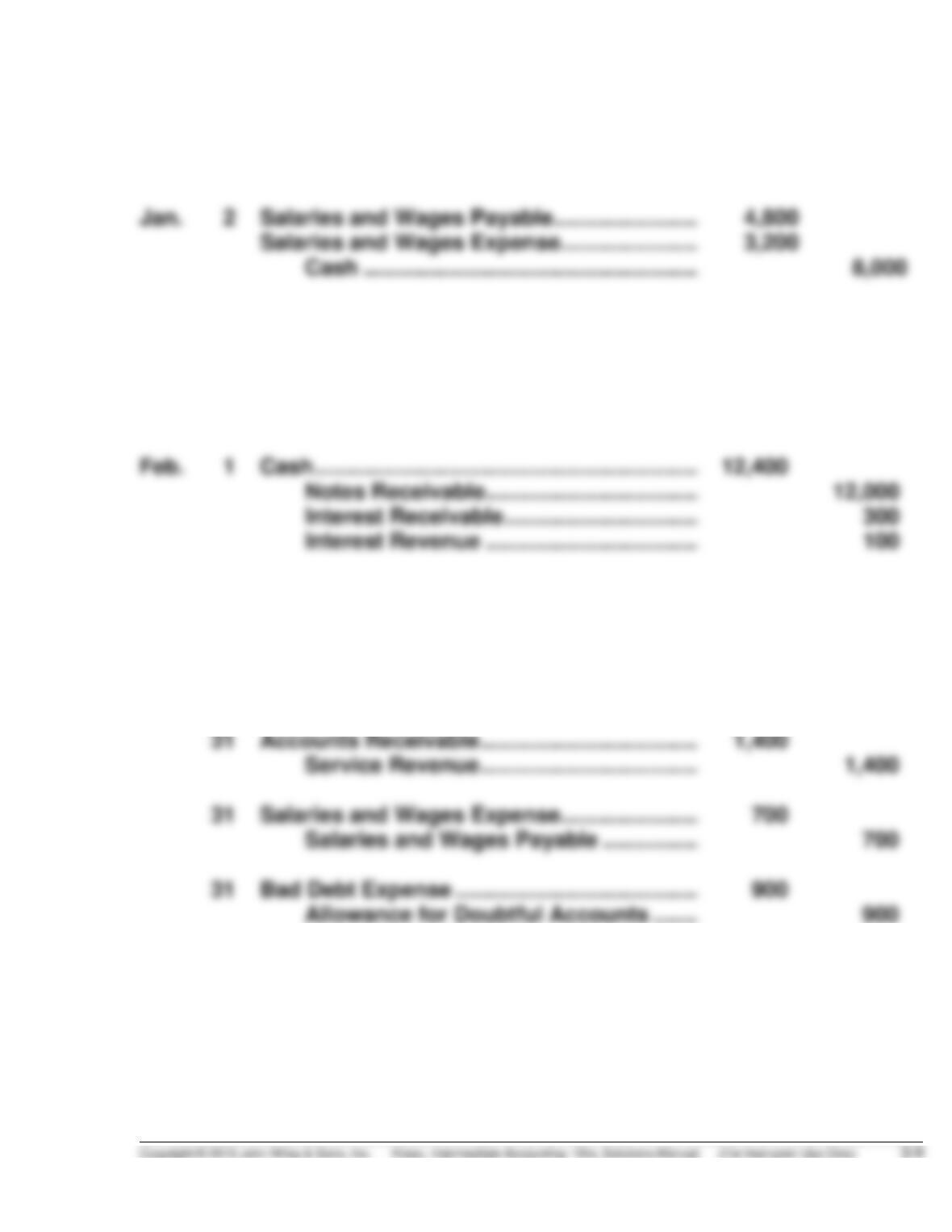
Jan.
Salaries and Wages Payable …………………………..
Salaries and Wages Expense…………………………..
3,200
Cash ……………………………………………………….
BRIEF EXERCISE 3-8
Dec.
31
Interest Receivable ……………………………………………………….
300
Interest Revenue ……………………………………………………….
300
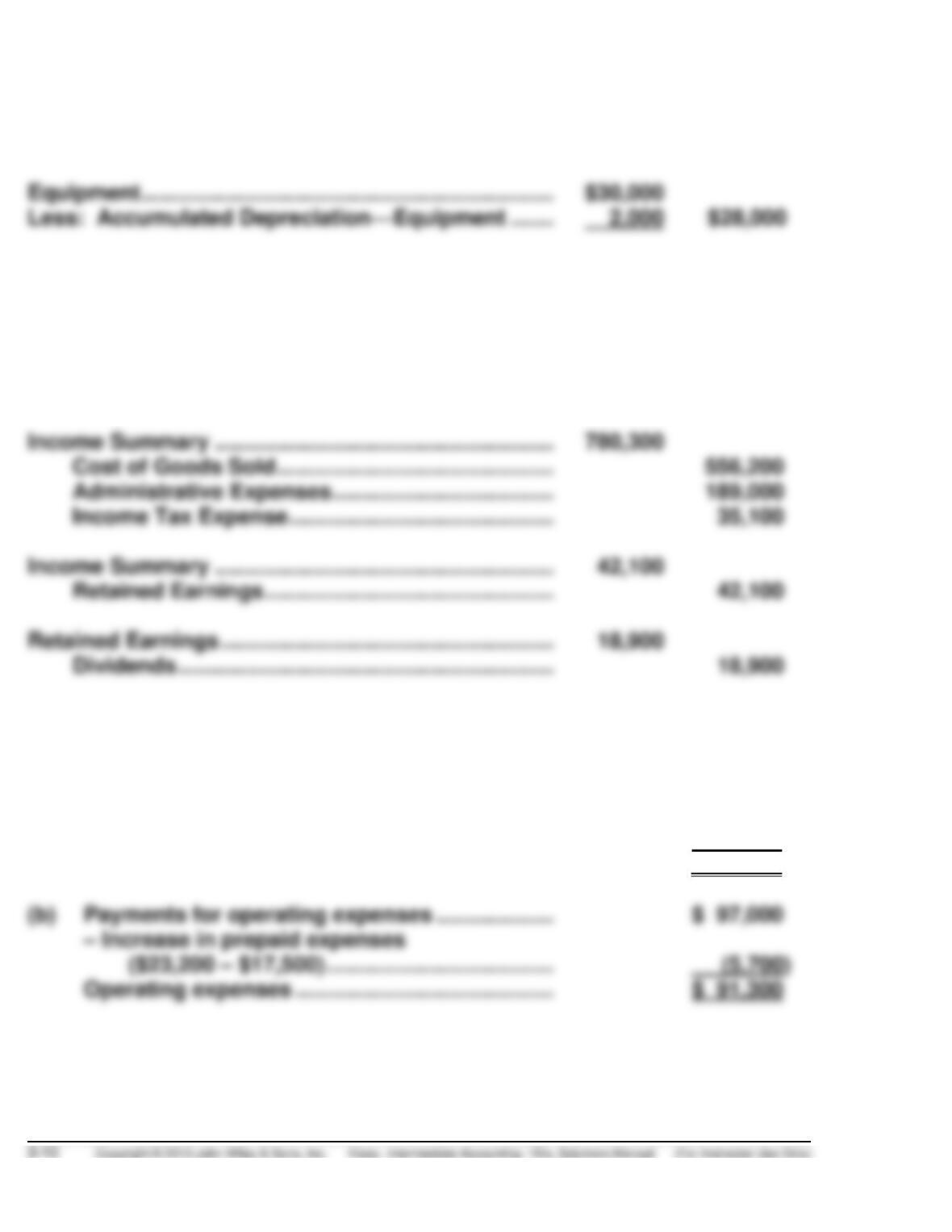
Feb.
Cash ……………………………………………………….
Notes Receivable ……………………………………………………….
Interest Receivable …………………………..
300
Interest Revenue ……………………………………………………….
100
BRIEF EXERCISE 3-9
Aug.
31
Interest Expense ……………………………………………………….
300
Interest Payable ……………………………………………………….
300
31
Accounts Receivable ……………………………………………………….
Service Revenue ……………………………………………………….
31
Salaries and Wages Expense…………………………..
700
Salaries and Wages Payable …………………………..
700
31
Bad Debt Expense ……………………………………………………….
900
Allowance for Doubtful Accounts …………………………..
900
BRIEF EXERCISE 3-10
Depreciation Expense ……………………………………………………….
2,000
Accumulated Depreciation—Equipment …………………………..
2,000
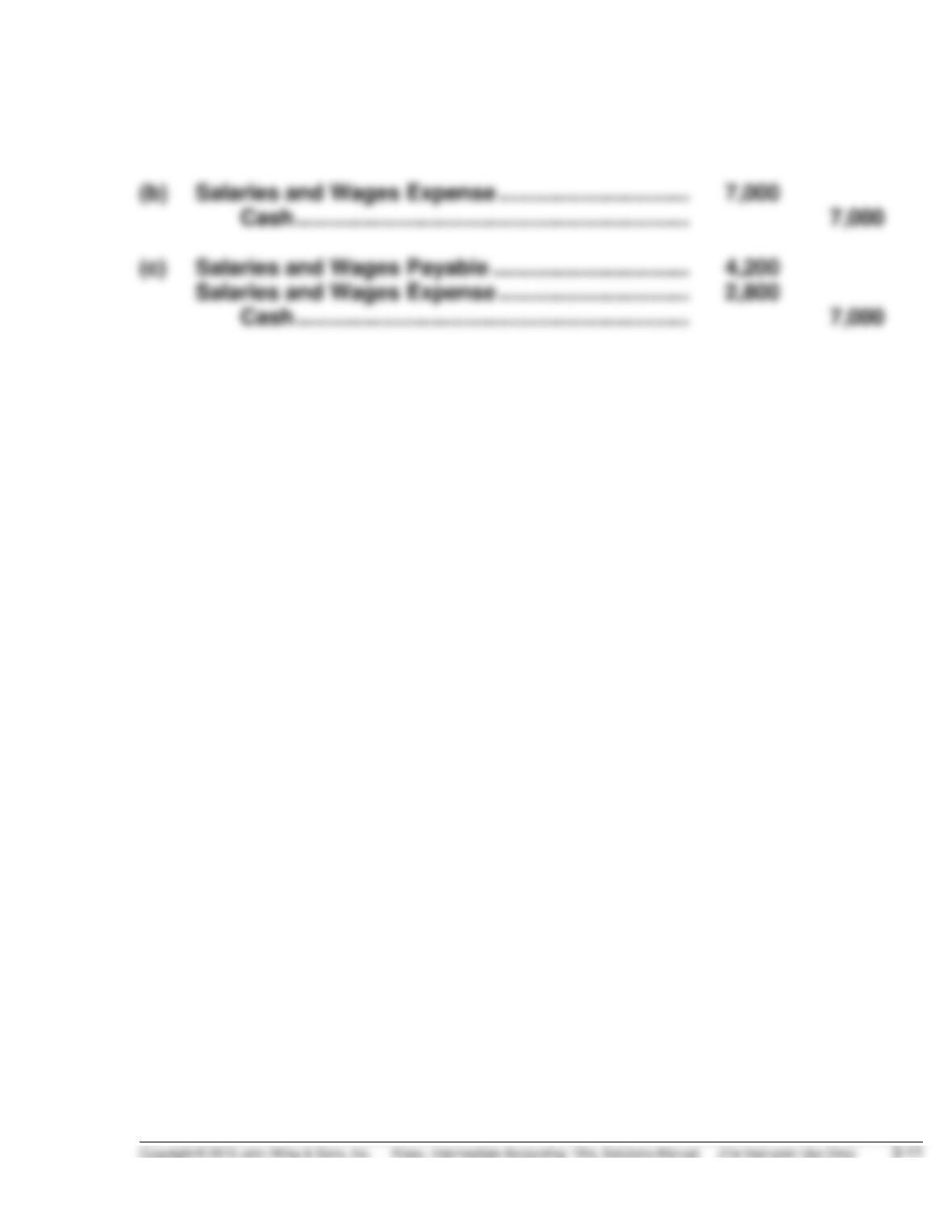
Equipment ………………………………………………………………………………
$30,000
Less: Accumulated Depreciation—Equipment …………………………
2,000
BRIEF EXERCISE 3-11
Sales Revenue ……………………………………………………….
808,900
Interest Revenue ……………………………………………………….
13,500
Income Summary ……………………………………………………….
822,400
Income Summary ……………………………………………………….
780,300
Cost of Goods Sold …………………………..…………………………..
556,200
Administrative Expenses …………………………………………………..
Income Tax Expense ……………………………………………………….
35,100
Income Summary ……………………………………………………….
42,100
Retained Earnings ……………………………………………………….
42,100
Retained Earnings ……………………………………………………….
Dividends …………………………..…………………………..
18,900
*BRIEF EXERCISE 3-12
(a)
Cash receipts ……………………………………………………….
$142,000
+ Increase in accounts receivable
($18,600 – $13,000) ……………………………………………………….
5,600
Service revenue ……………………………………………………….
$147,600
(b)
Payments for operating expenses …………………………..
$ 97,000
($23,200 – $17,500) ……………………………………………………….
Operating expenses …………………………..…………………………..
*BRIEF EXERCISE 3-13
(a)
Salaries and Wages Payable …………………………..
4,200
Salaries and Wages Expense …………………………..
4,200
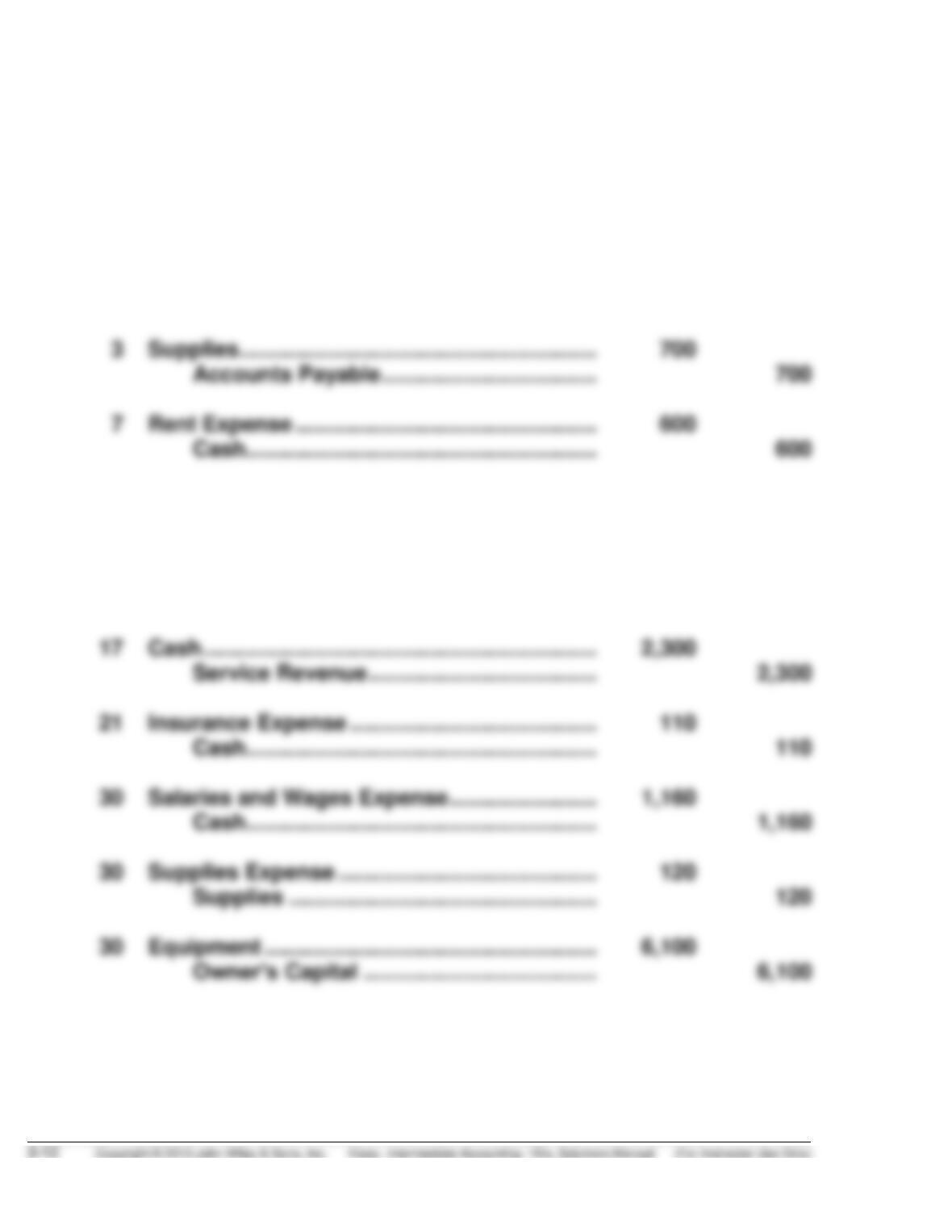
(b)
Salaries and Wages Expense …………………………..
Cash ……………………………………………………….
7,000
(c)
Salaries and Wages Payable …………………………..
Salaries and Wages Expense …………………………..
Cash ……………………………………………………….
SOLUTIONS TO EXERCISES
EXERCISE 3-1 (15–20 minutes)
Apr.
2
Cash …………………………..…………………………..
32,000
Equipment ……………………………………………………….
14,000
Owner’s Capital ……………………………………………………….
46,000
2
No entry—not a transaction.
3
Supplies ……………………………………………………….
Accounts Payable ……………………………………………………….
7
Rent Expense ……………………………………………………….
Cash……………………………………………………….
11
Accounts Receivable ……………………………………………………….
1,100
Service Revenue ……………………………………………………….
1,100
12
Cash …………………………..…………………………..
3,200
Unearned Service Revenue …………………………..
3,200
17
Cash …………………………..…………………………..
2,300
Service Revenue ……………………………………………………….
2,300
21
Insurance Expense …………………………..…………………………..
Cash……………………………………………………….
30
Salaries and Wages Expense …………………………..
1,160
Cash……………………………………………………….
1,160
30
Supplies Expense ……………………………………………………….
Supplies ……………………………………………………….
30
Equipment ……………………………………………………….
6,100
6,100
EXERCISE 3-2 (10–15 minutes)
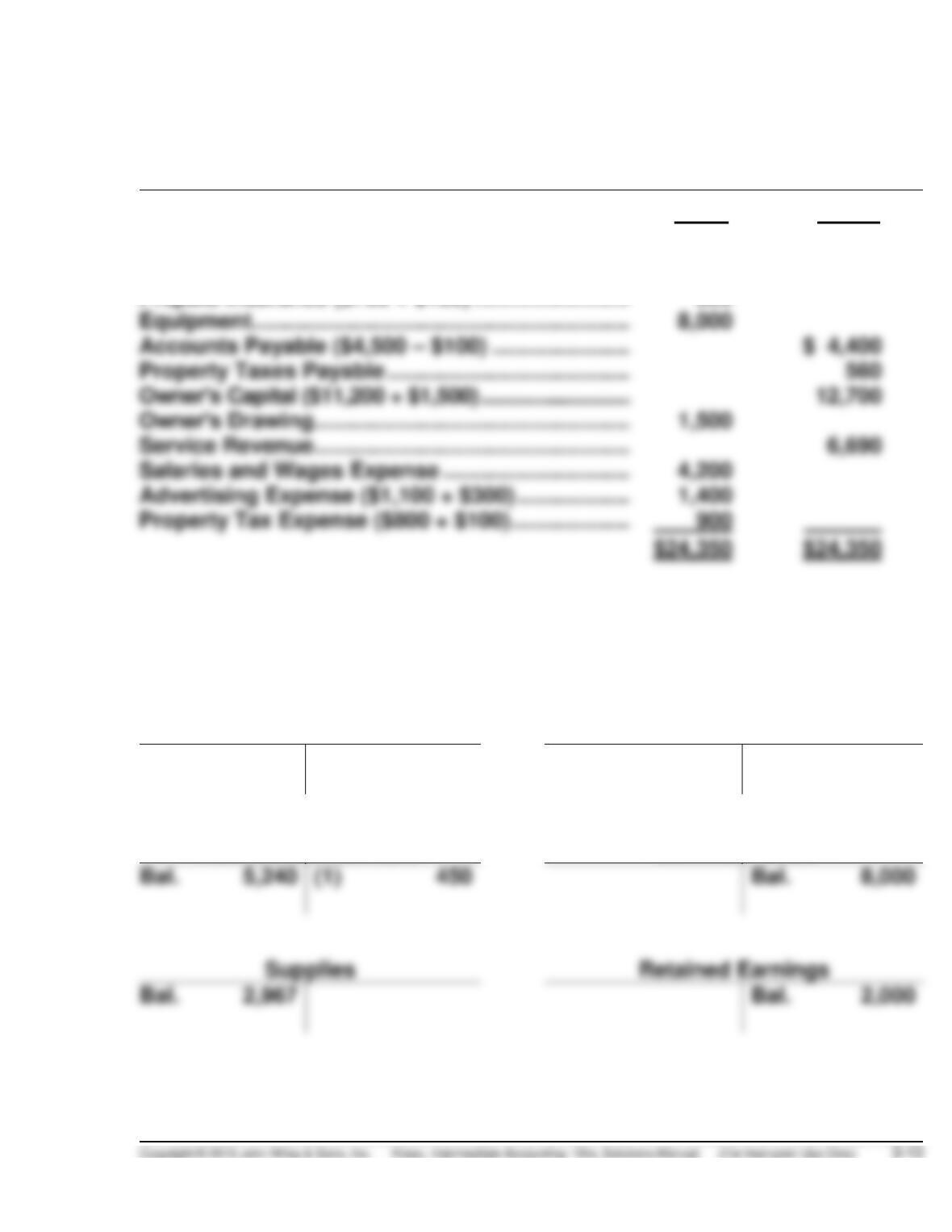
Wanda Landowska Company
Trial Balance
April 30, 2014
Debit
Credit
Cash ………………………………………………………………
$ 4,800
Accounts Receivable ………………………………………
2,750
Prepaid Insurance ($700 + $100) ………………………
800
Accounts Payable ($4,500 – $100) ……………………
Property Taxes Payable …………………………………..
1,500
Service Revenue ……………………………………………..
Advertising Expense ($1,100 + $300) ………………..
1,400
EXERCISE 3-3 (15–20 minutes)
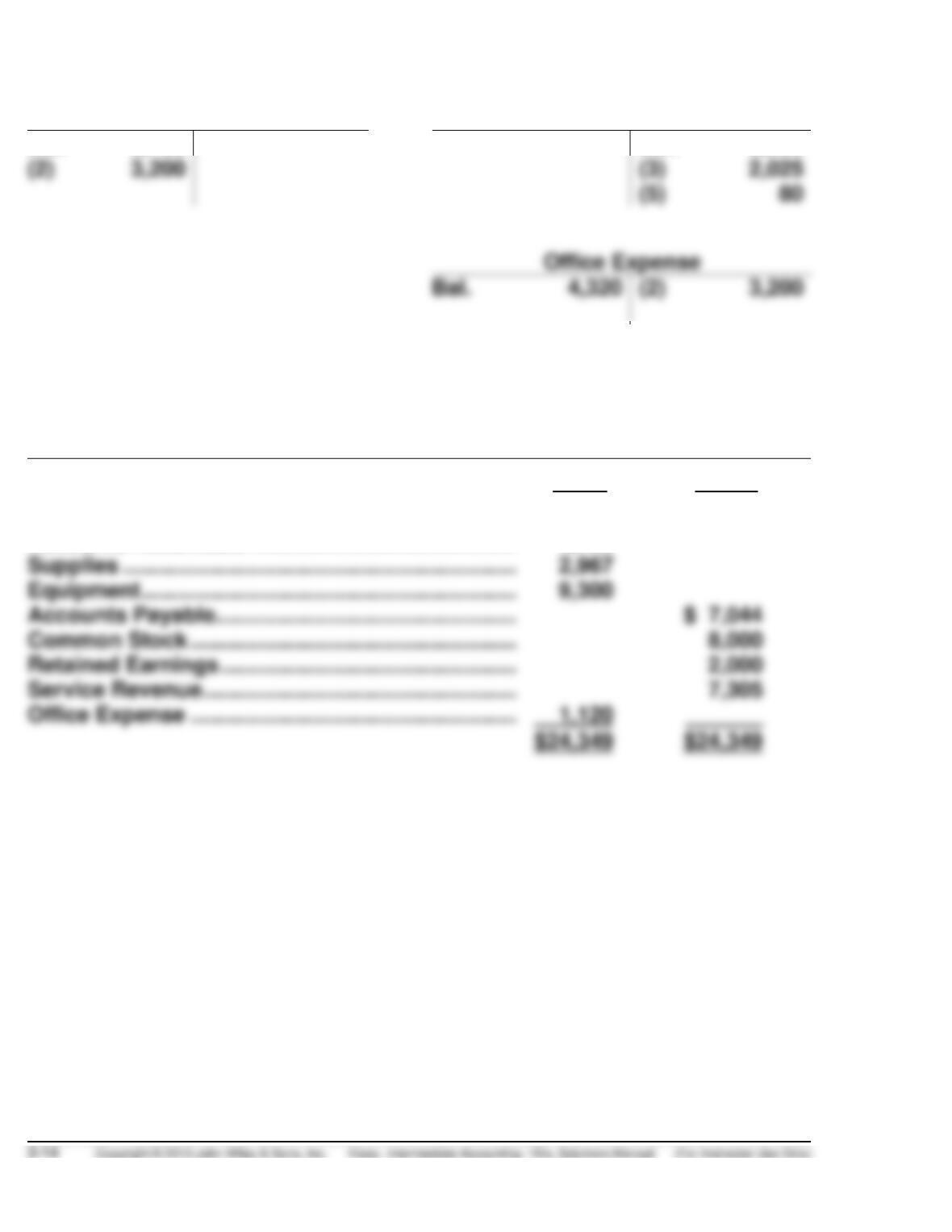
The ledger accounts are reproduced below, and corrections are shown in
the accounts.
Cash
Accounts Payable
Bal.
5,912
(4)
190
Bal.
7,044
(1)
450
Accounts Receivable
Common Stock
(1)
Bal.
Bal.
2,967
Bal.
2,000
EXERCISE 3-3 (Continued)
Equipment
Service Revenue
Bal.
6,100
Bal.
5,200
Blues Traveler Corporation
Trial Balance (corrected)
April 30, 2014
Debit
Credit
Cash ……………………………………………………………….
$ 6,172
Accounts Receivable …………………………..…………..
4,790
Accounts Payable…………………………………………….
Service Revenue …………………………..………………….
EXERCISE 3-4 (10–15 minutes)
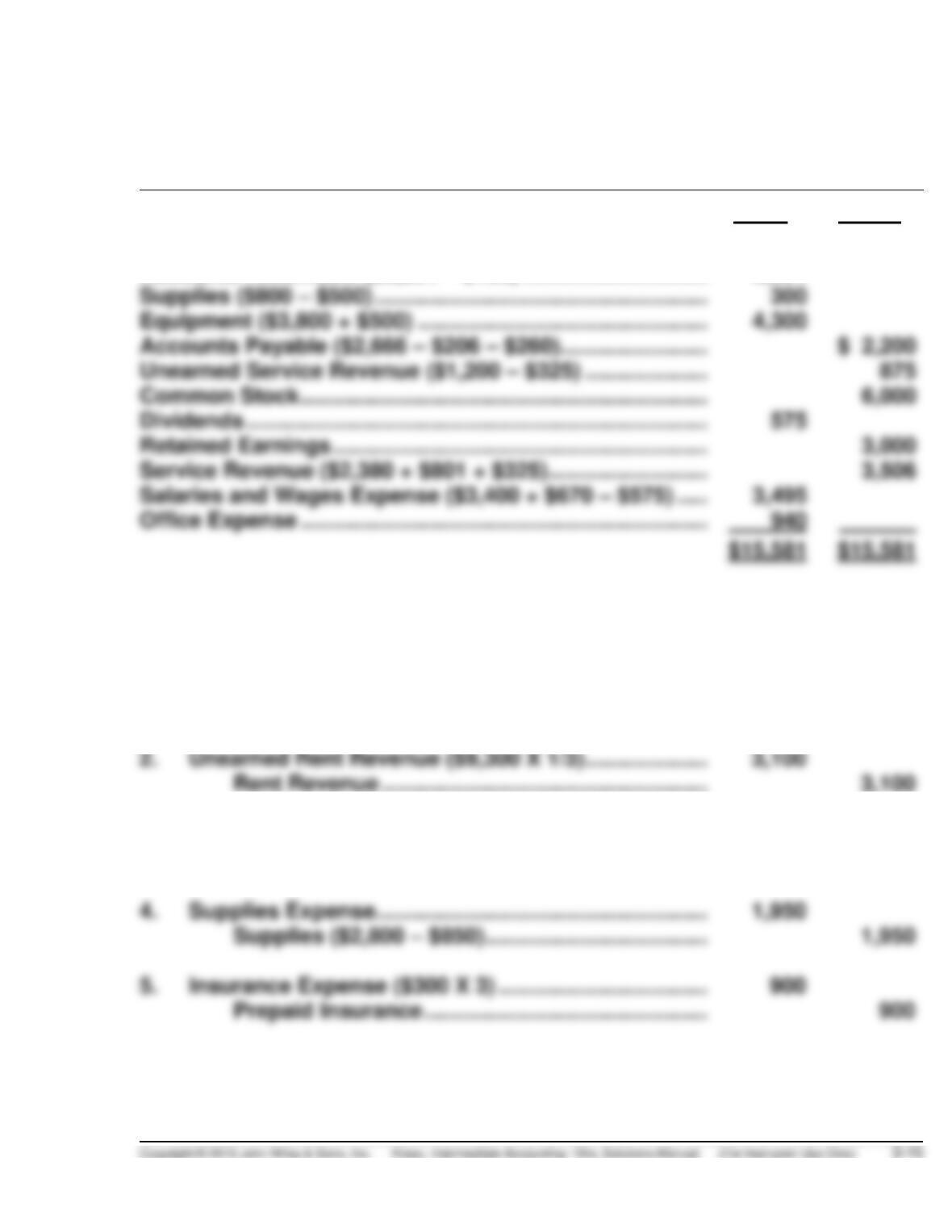
Watteau Co.
Trial Balance
June 30, 2014
Debit
Credit
Cash ($2,870 + $180 – $65 – $65) …………………………………….
$ 2,920
Accounts Receivable ($3,231 – $180) …………………………..
3,051
Supplies ($800 – $500) ……………………………………………………
Accounts Payable ($2,666 – $206 – $260) …………………………
Unearned Service Revenue ($1,200 – $325) ……………………..
875
Dividends …………………………..………………………………………….
Retained Earnings ……………………………………………………….
3,000
Salaries and Wages Expense ($3,400 + $670 – $575) ………..
3,495
EXERCISE 3-5 (10–15 minutes)
1.
Depreciation Expense ($250 X 3) …………………………..
750
Accumulated Depreciation—Equipment …………………………..
750
2.
Unearned Rent Revenue ($9,300 X 1/3) …………………………..
Rent Revenue ……………………………………………………….
3,100
3.
Interest Expense……………………………………………………….
500
Interest Payable ……………………………………………………….
500
Supplies Expense ……………………………………………………….
Supplies ($2,800 – $850) ……………………………………………………
Insurance Expense ($300 X 3) ………………………………………………….
Prepaid Insurance ……………………………………………………….
900
EXERCISE 3-6 (10–15 minutes)
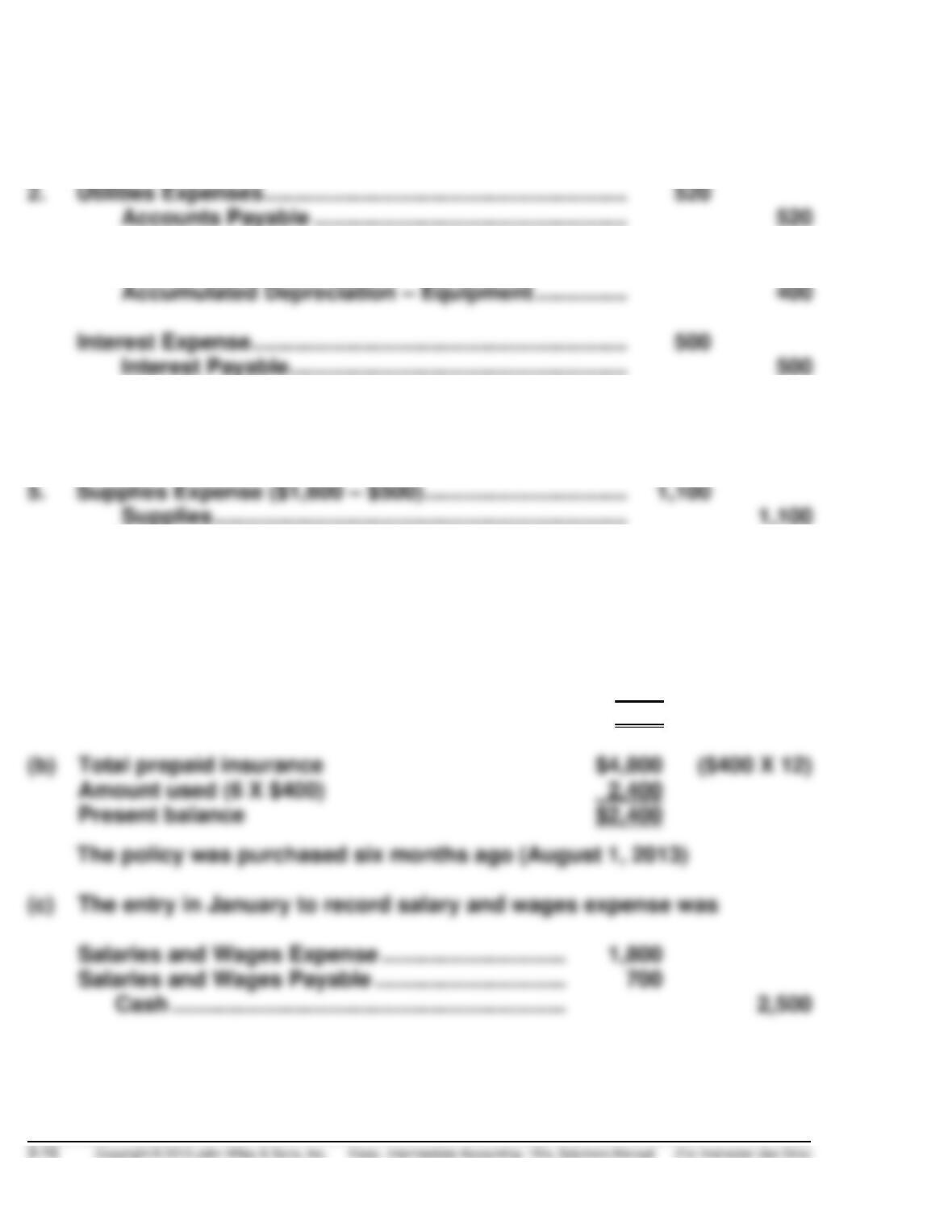
1.
Accounts Receivable ……………………………………………………….
750
Service Revenue ……………………………………………………….
750
2.
Utilities Expenses ……………………………………………………….
520
Accounts Payable ……………………………………………………….
520
3.
Depreciation Expense ……………………………………………………….
400
Accumulated Depreciation – Equipment …………………………..
400
Interest Expense ……………………………………………………….
500
Interest Payable ……………………………………………………….
500
4.
Insurance Expense ($12,000 X 1/12) …………………………..
1,000
Prepaid Insurance …………………………..…………………………..
1,000
5.
Supplies Expense ($1,600 – $500) …………………………………………….
1,100
Supplies …………………………………………………………………………..
1,100
EXERCISE 3-7 (15–20 minutes)
(a)
Ending balance of supplies
$700
Add: Adjusting entry
950
Deduct: Purchases
850
Beginning balance of supplies
$800
(b)
Total prepaid insurance
Amount used (6 X $400)
(c)
The entry in January to record salary and wages expense was
Salaries and Wages Expense …………………………..
Salaries and Wages Payable …………………………..
Cash ……………………………………………………….
EXERCISE 3-7 (Continued)
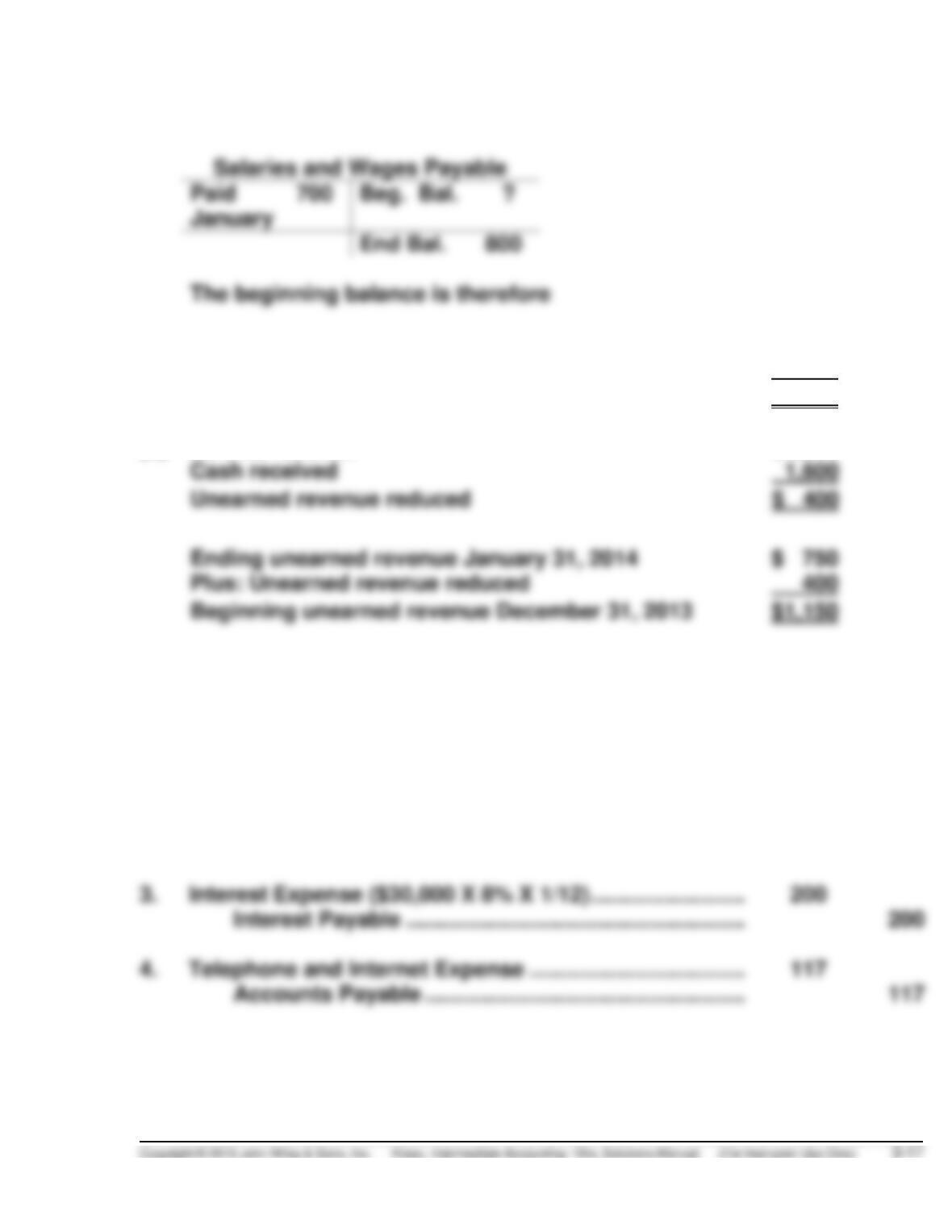
The “T” account for salaries payable is
Paid
700
Beg. Bal.
January
End Bal.
800
The beginning balance is therefore
Ending balance of salaries and wages payable
$ 800
Plus: Reduction of salaries and wages payable
700
Beginning balance of salaries and wages payable
$1,500
(d)
Service revenue
$2,000
Cash received
Ending unearned revenue January 31, 2014
Plus: Unearned revenue reduced
EXERCISE 3-8 (10–15 minutes)
1.
Salaries and Wages Expense …………………………………………………..
1,900
Salaries and Wages Payable ……………………………………………..
1,900
2.
Utilities Expense……………………………………………………….
600
Accounts Payable ……………………………………………………….
600
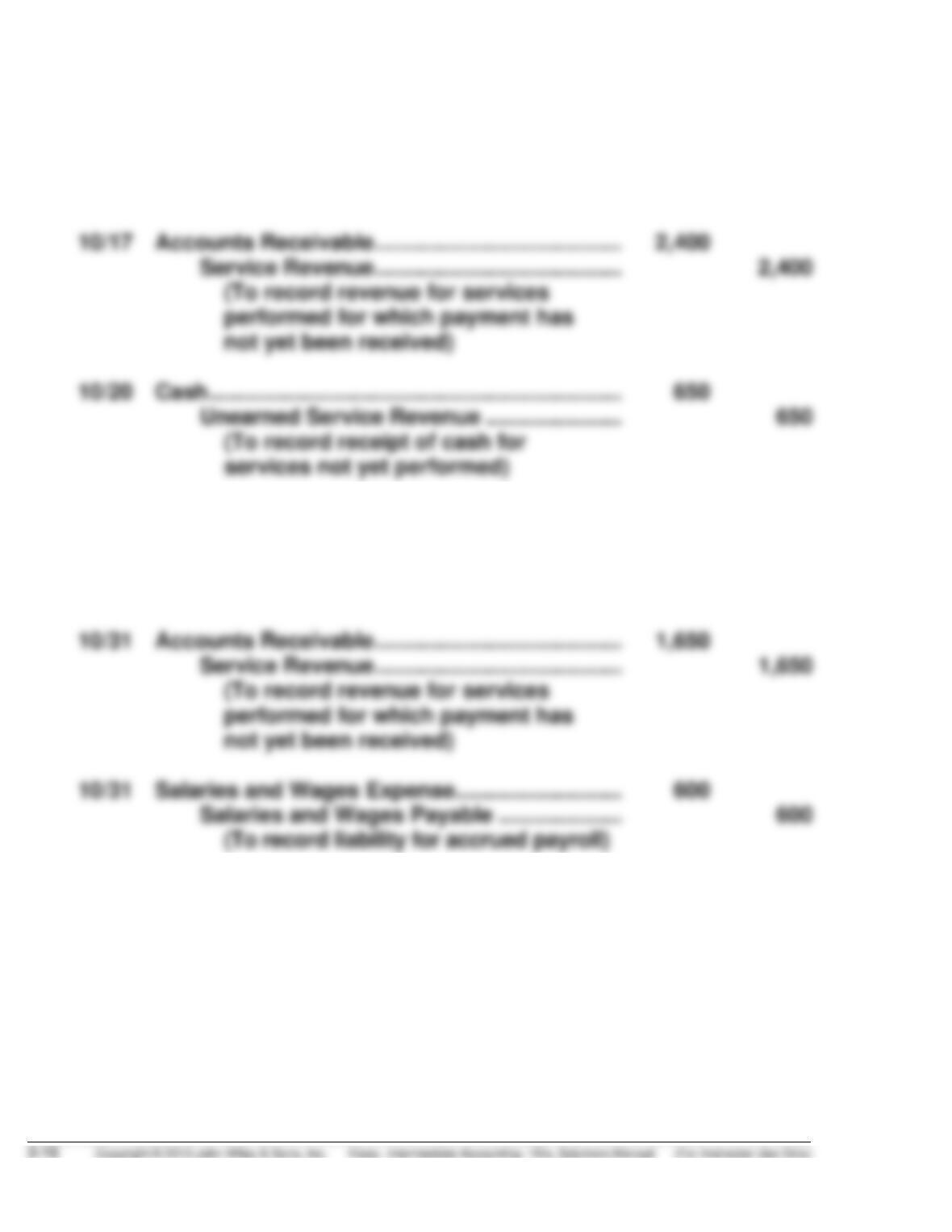
3.
Interest Expense ($30,000 X 8% X 1/12) …………………………..
200
Interest Payable ……………………………………………………….
200
4.
Telephone and Internet Expense ……………………………………………..
117
Accounts Payable ……………………………………………………….
117
EXERCISE 3-9 (15–20 minutes)
(a)
10/15
Salaries and Wages Expense …………………………..
800
Cash ……………………………………………………….
800
(To record payment of October 15
payroll)
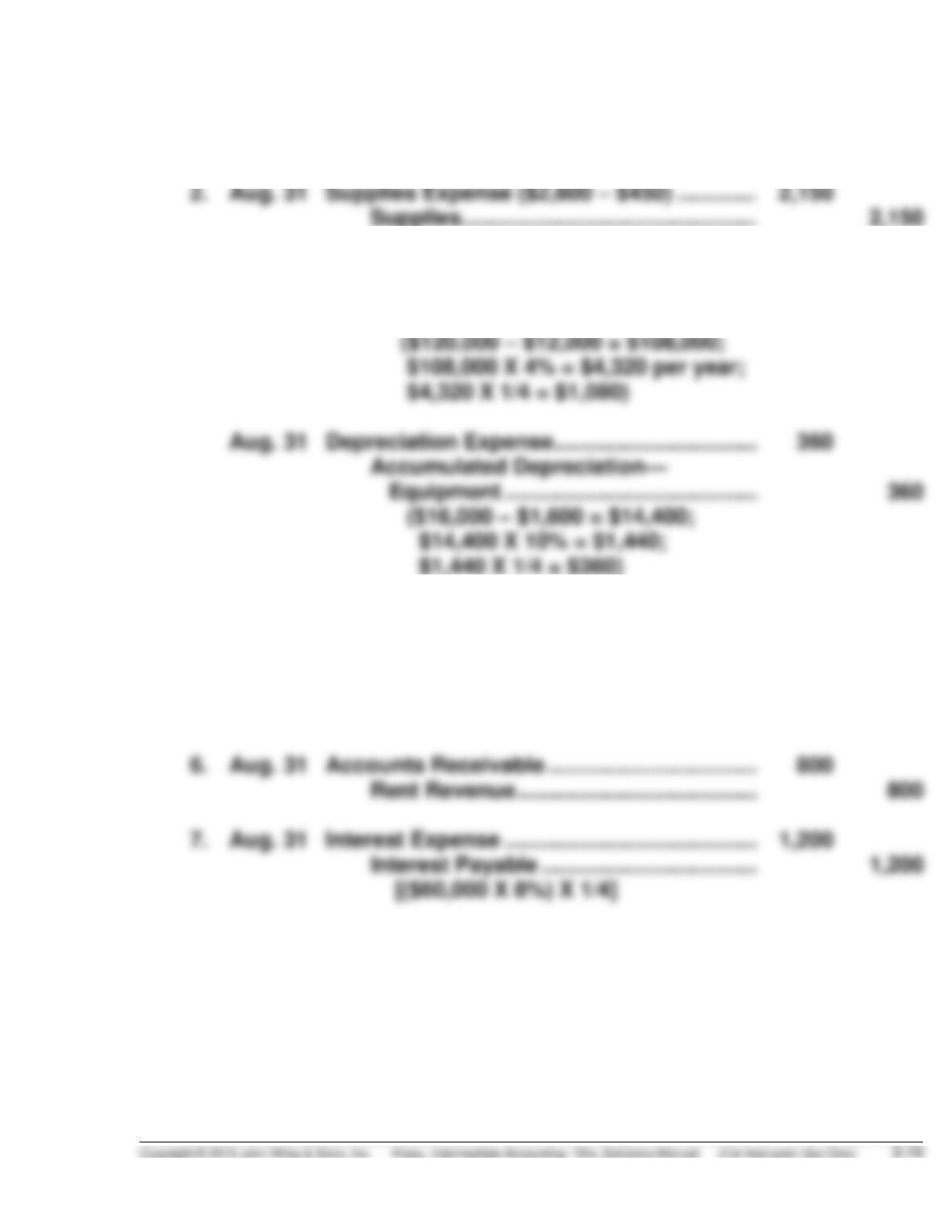
10/17
Accounts Receivable ……………………………………………………….
Service Revenue ……………………………………………………….
(To record revenue for services
10/20
Cash ……………………………………………………………………………………
Unearned Service Revenue …………………………..
650
(To record receipt of cash for
(b)
10/31
Supplies Expense ……………………………………………………….
470
Supplies ……………………………………………………….
470
(To record the use of supplies during
October)
10/31
Accounts Receivable ……………………………………………………….
Service Revenue ……………………………………………………….
(To record revenue for services
10/31
Salaries and Wages Expense …………………………..
600
Salaries and Wages Payable …………………………..
600
(To record liability for accrued payroll)
10/31
Unearned Service Revenue …………………………..
400
Service Revenue ……………………………………………………….
400
(To reduce the Unearned Service
Revenue account for service that
has been performed)
EXERCISE 3-10 (25–30 minutes)
(a)
1.
Aug. 31
Insurance Expense ($4,500 X 3/12) …………………………..
1,125
Prepaid Insurance …………………………..
1,125
2.
Aug. 31
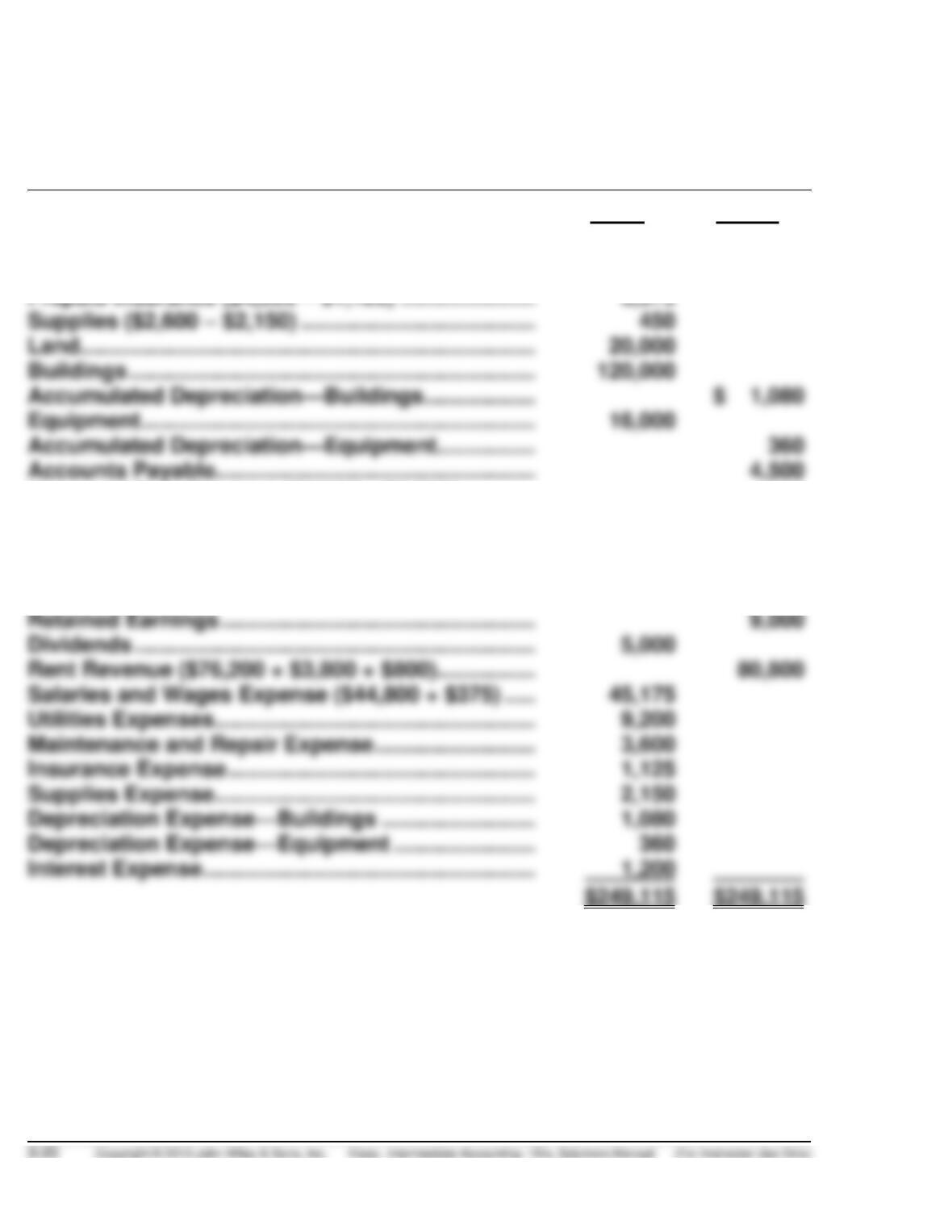
Supplies Expense ($2,600 – $450) …………………………..
2,150
Supplies ……………………………………………………….
2,150
3.
Aug. 31
Depreciation Expense ……………………………………………………….
1,080
Accumulated Depreciation—
Buildings ……………………………………………………….
1,080
$4,320 X 1/4 = $1,080)
Aug. 31
Depreciation Expense ……………………………………………………….
Accumulated Depreciation—
4.
Aug. 31
Unearned Rent Revenue …………………………..
3,800
Rent Revenue ……………………………………………………….
3,800
5.
Aug. 31
Salaries and Wages Expense …………………………..
375
Salaries and Wages Payable …………………………..
375
6.
Aug. 31
Accounts Receivable ……………………………………………………….
800
Rent Revenue ……………………………………………………….
800
7.
Aug. 31
Interest Expense ……………………………………………………….
1,200
Interest Payable ……………………………………………………….
1,200
[($60,000 X 8%) X 1/4]
EXERCISE 3-10 (Continued)
(b) Greco Resort
Adjusted Trial Balance
August 31, 2014
Debit
Credit
Cash ……………………………………………………………….
$ 19,600
Accounts Receivable …………………………..…………..
800
Prepaid Insurance ($4,500 – $1,125) ………………….
Supplies ($2,600 – $2,150) ………………………………..
Buildings …………………………………………………………
Accumulated Depreciation—Buildings ………………
Equipment ……………………………………………………….
Accumulated Depreciation—Equipment …………….
360
Accounts Payable…………………………………………….
4,500
Unearned Rent Revenue ($4,600 – $3,800) …………
800
Salaries and Wages Payable …………………………….
375
Interest Payable ……………………………………………….
1,200
Mortgage Payable …………………………………………….
60,000
Common Stock ………………………………………………..
91,000
Retained Earnings ……………………………………………
9,000
Dividends ………………………………………………………..
Rent Revenue ($76,200 + $3,800 + $800)…………….
80,800
Salaries and Wages Expense ($44,800 + $375) …..
Utilities Expenses …………………………………………….
Maintenance and Repair Expense ……………………..
Insurance Expense …………………………………………..
Supplies Expense …………………………………………….
Depreciation Expense—Buildings …………………….
Depreciation Expense—Equipment …………………..