Problem 3.56
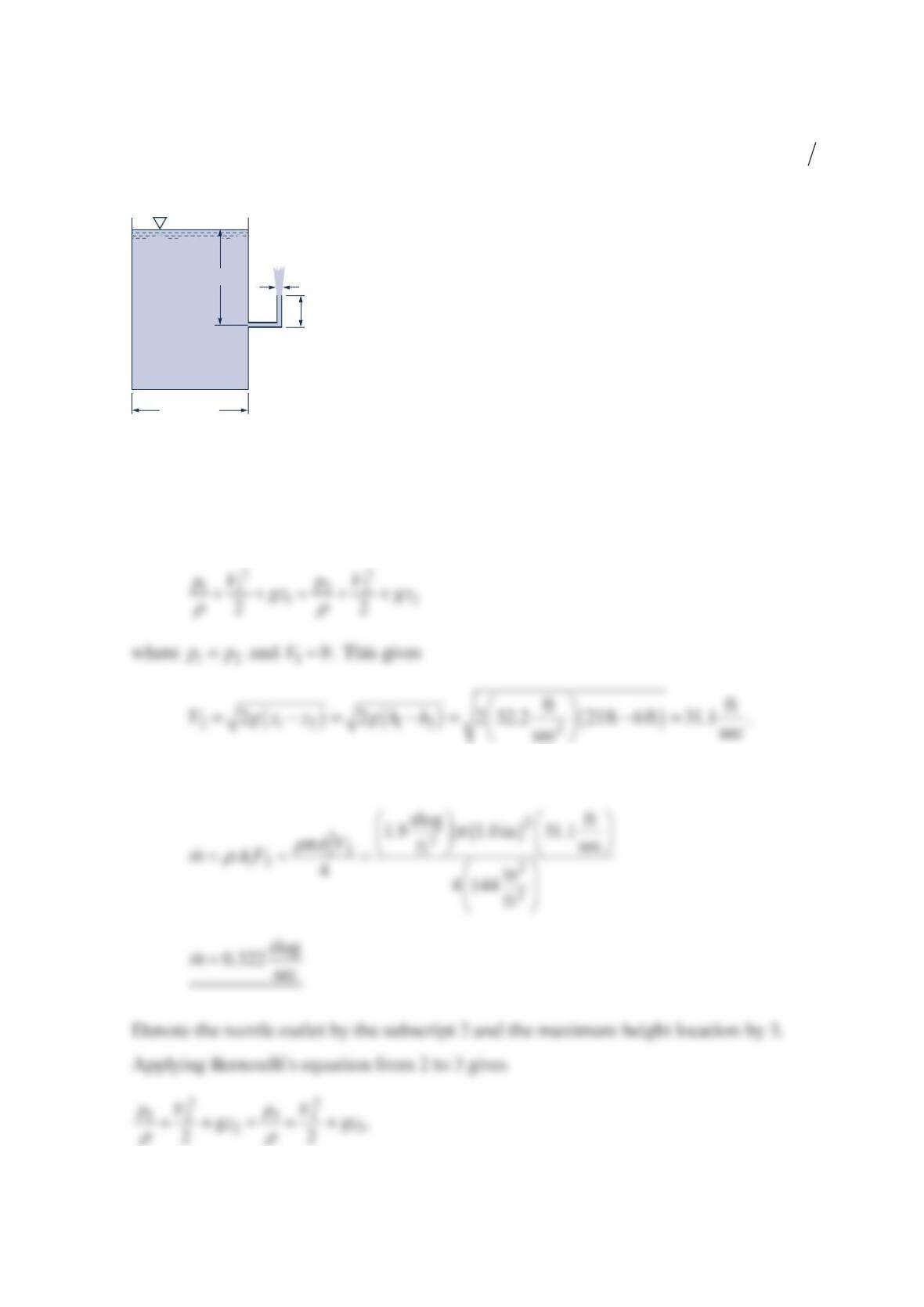
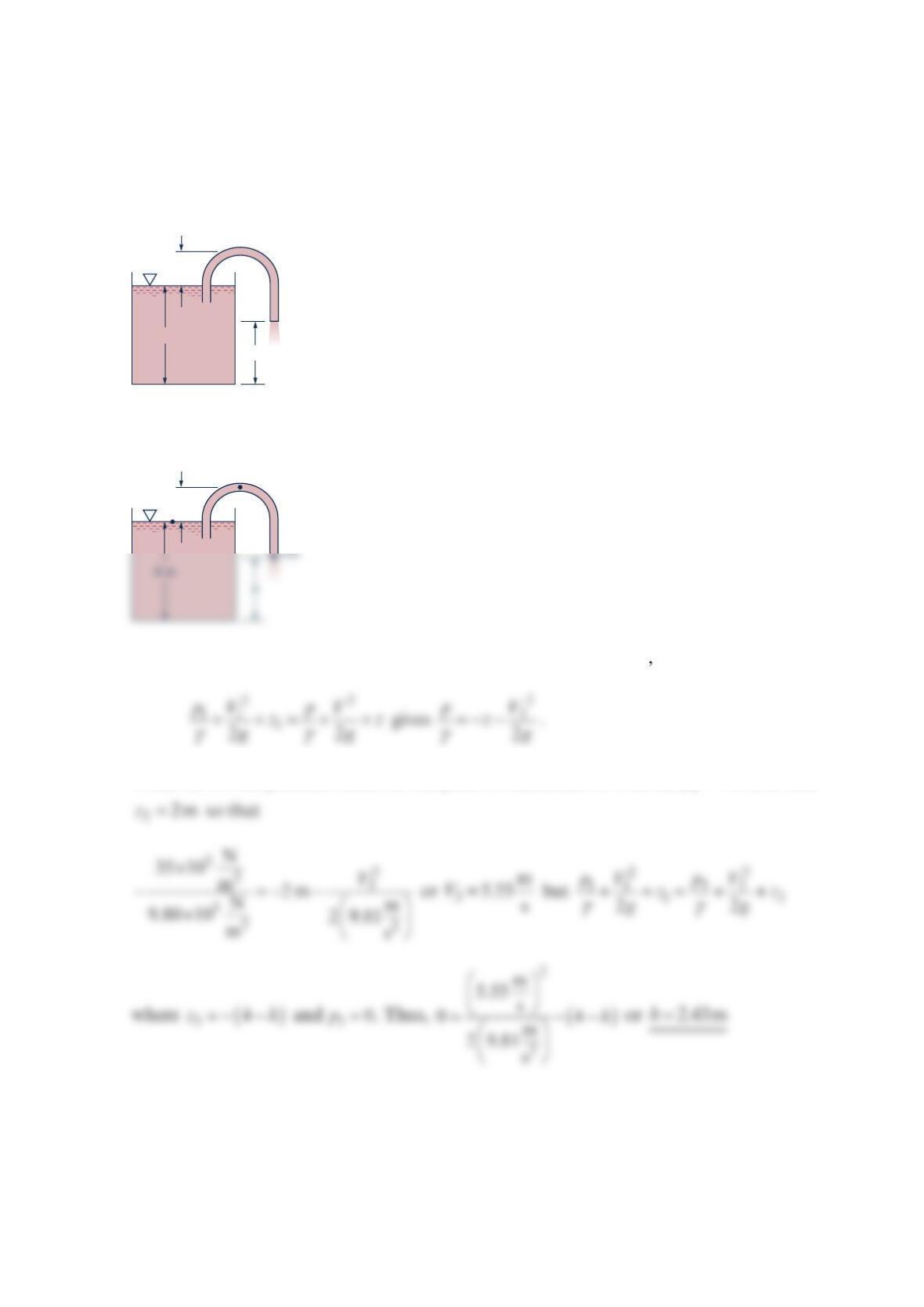
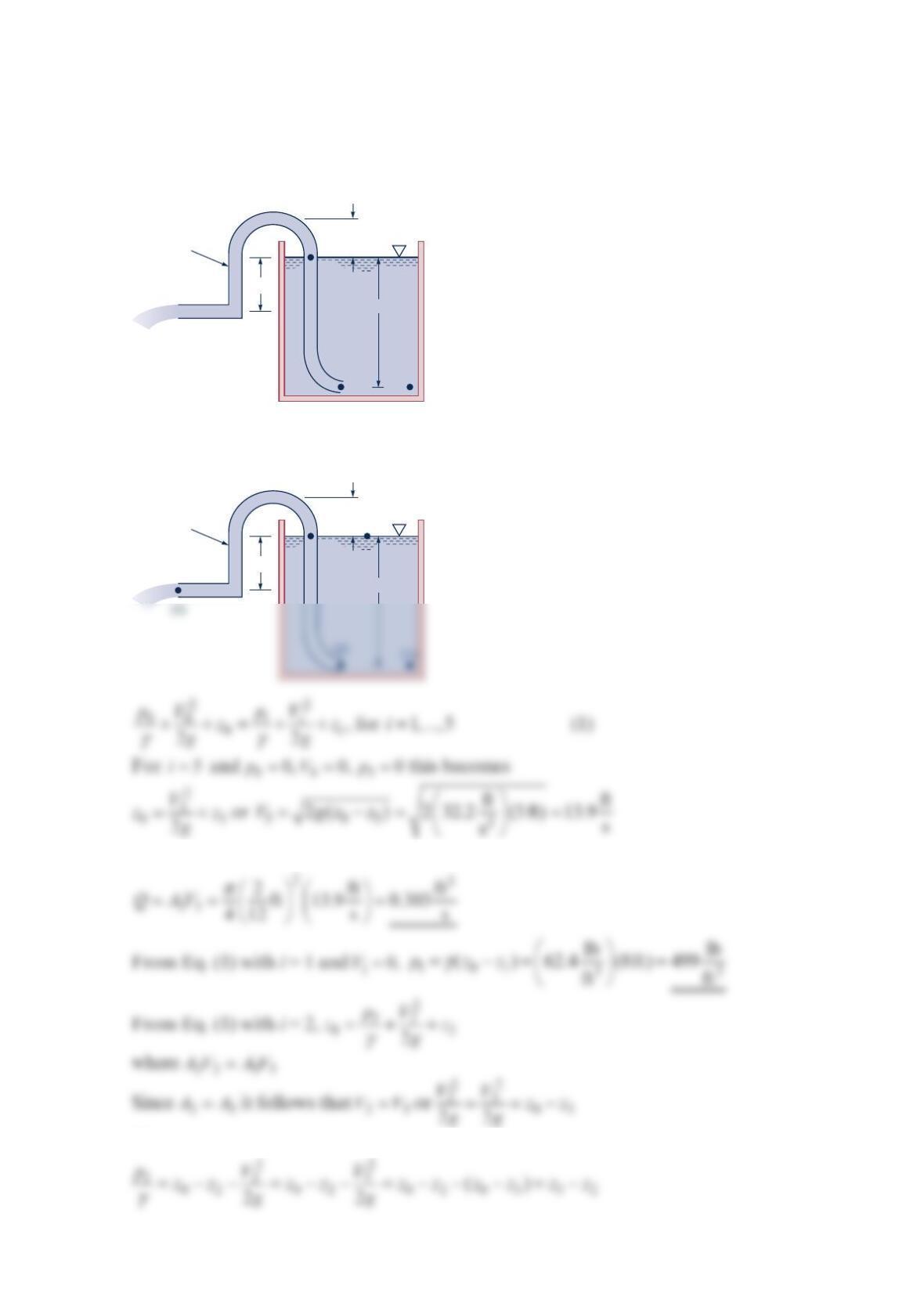
Find the water mass flow rate at the nozzle outlet O shown in the figure below, and calculate
the maximum height to which the water stream will rise. The water density is 3
1.9slugs ft ,
and the flow is inviscid.
Solution 3.56
Denote the tank free surface by the subscript
1
and the nozzle outlet by the subscript
2
.
Applying Bernoulli’s equation from
1
to
2
gives
The water mass flow rate is
d = 1.0 in.
O
h
1
= 21 ft
h
2
= 6 ft
A = 20 ft
2
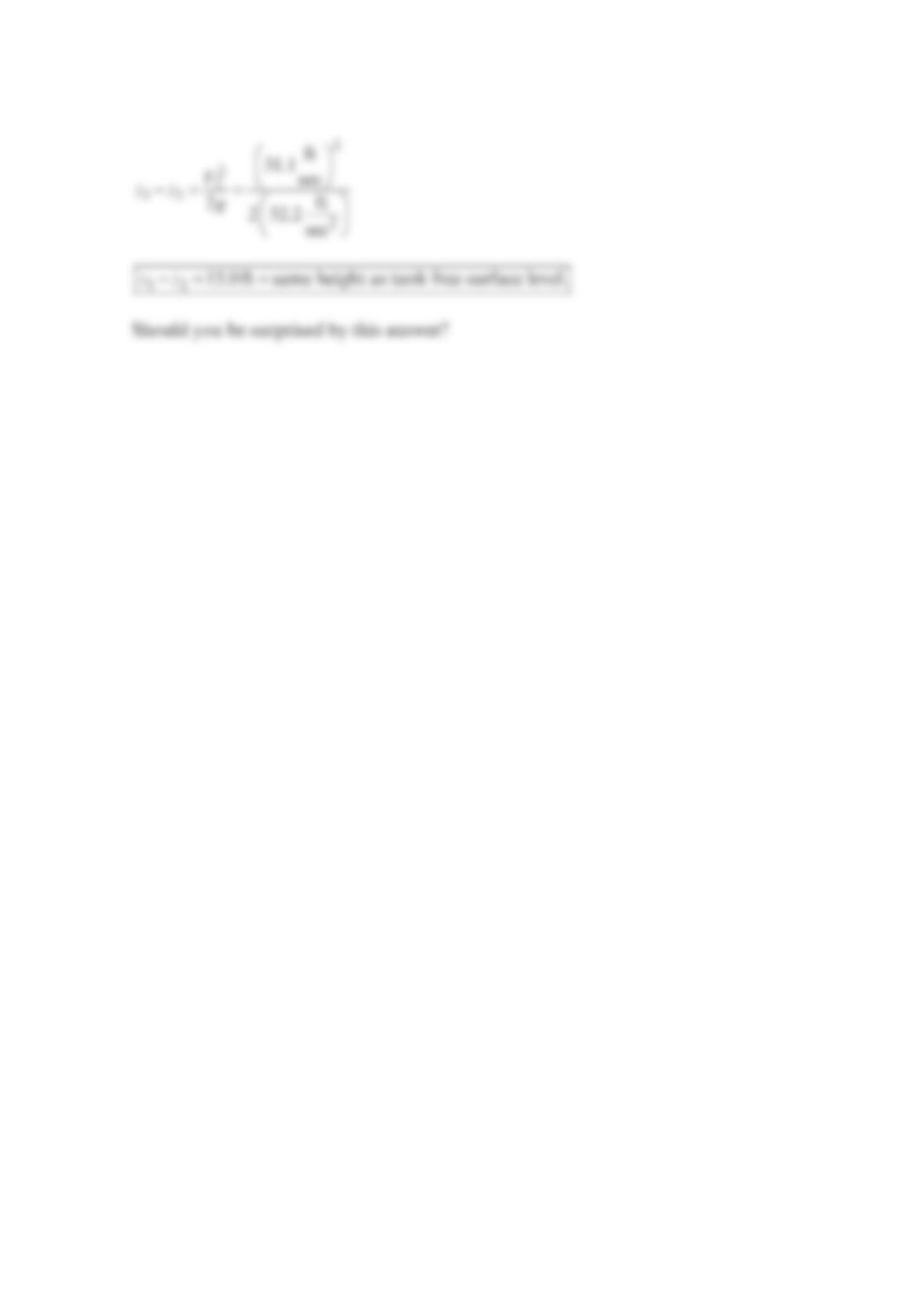
Now 23
p
p= and 30V= at the maximum height location. Therefore,
Problem 3.57
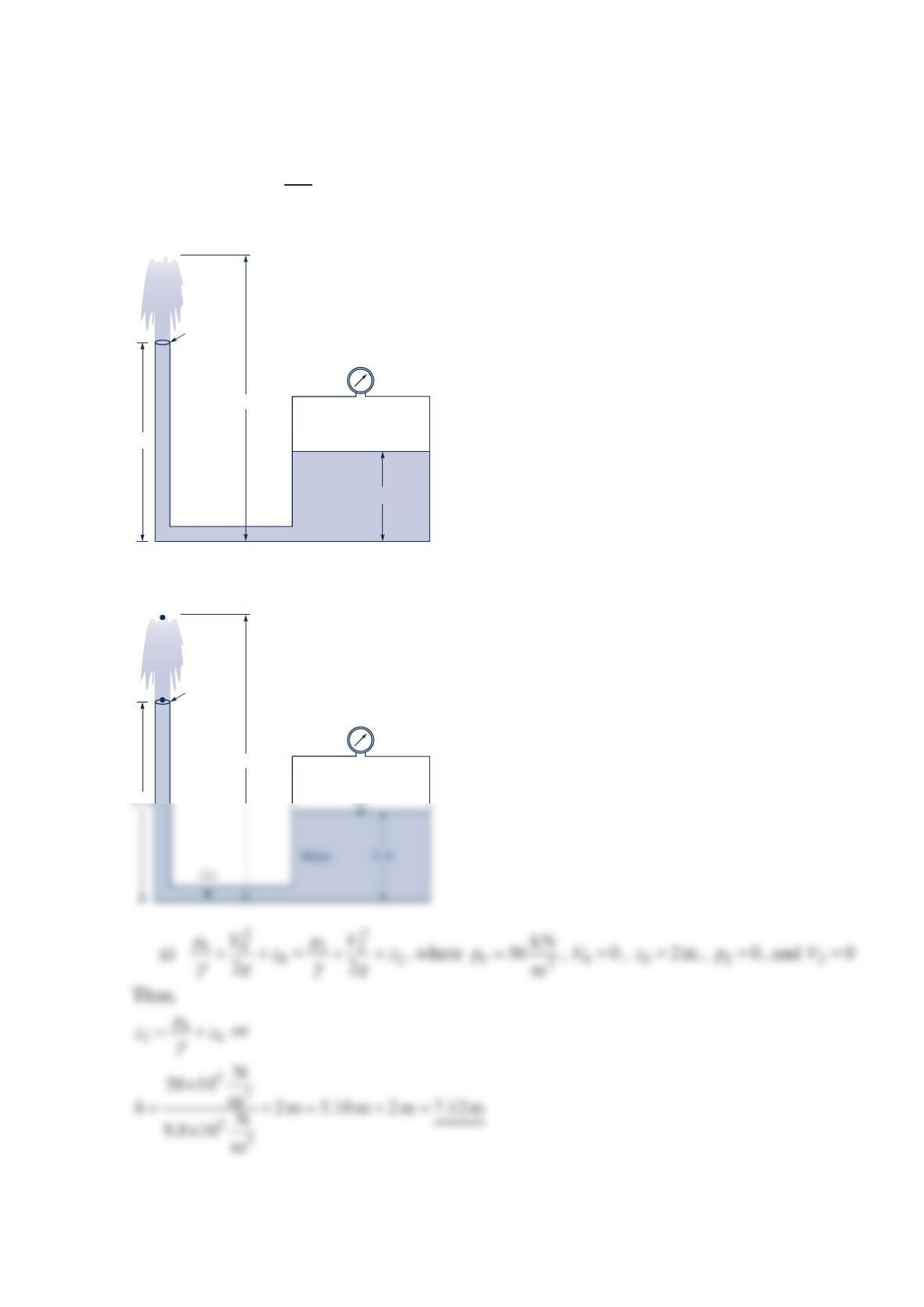
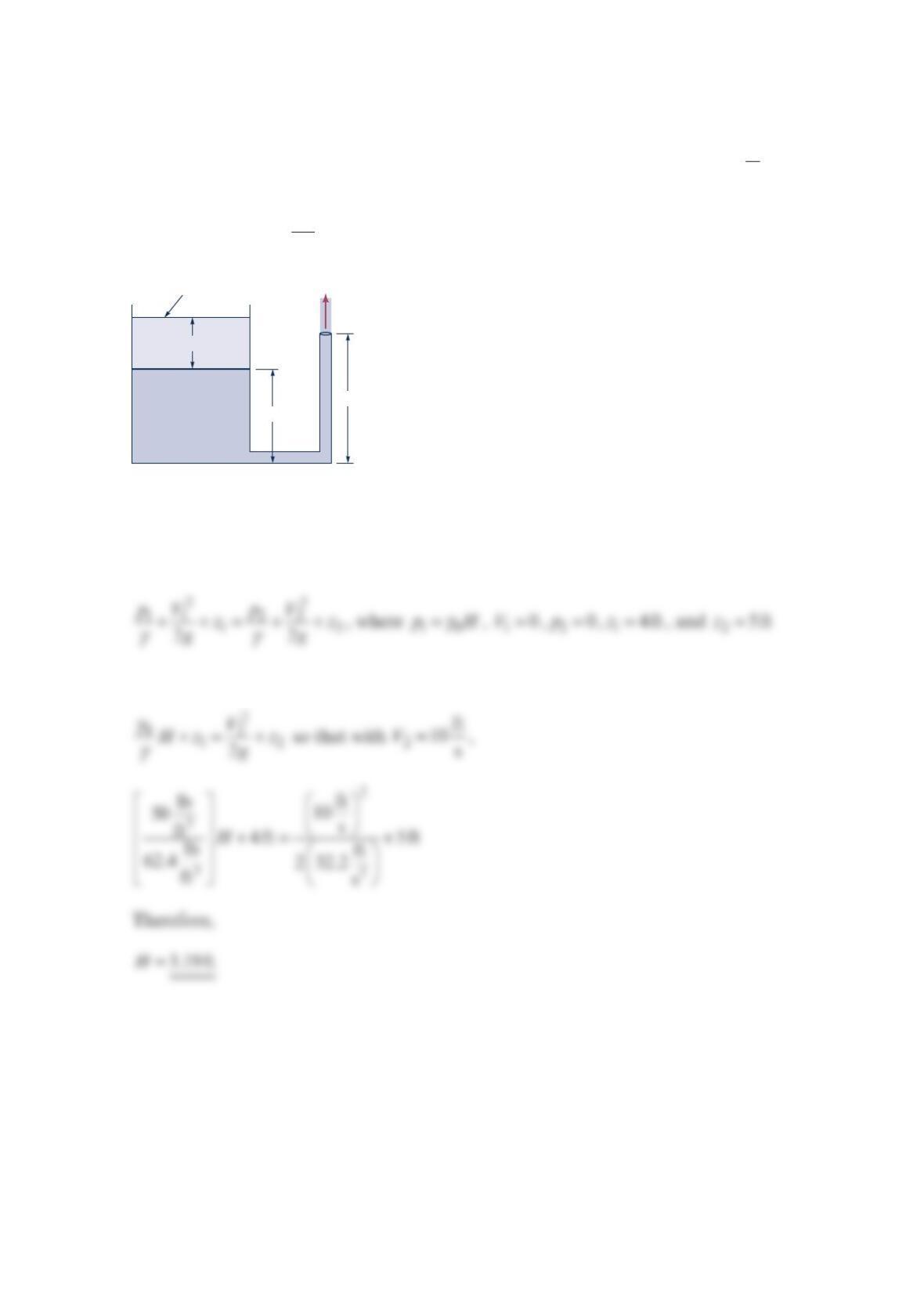
Water (assumed frictionless and incompressible) flows steadily from a large tank and exits
through a vertical, constant diameter pipe as shown in the figure below. The air in the tank
is pressurized to 2
kN
50 m. Determine (a) the height
h
, to which the water rises, (b) the water
velocity in the pipe, and (c) the pressure in the horizontal part of the pipe.
Solution 3.57
Air
Water
50 kN/m
2
Pipe
exit
h
4 m
2 m
Air
50 kN/m
2
Pipe
exit
h
(3)
(2)
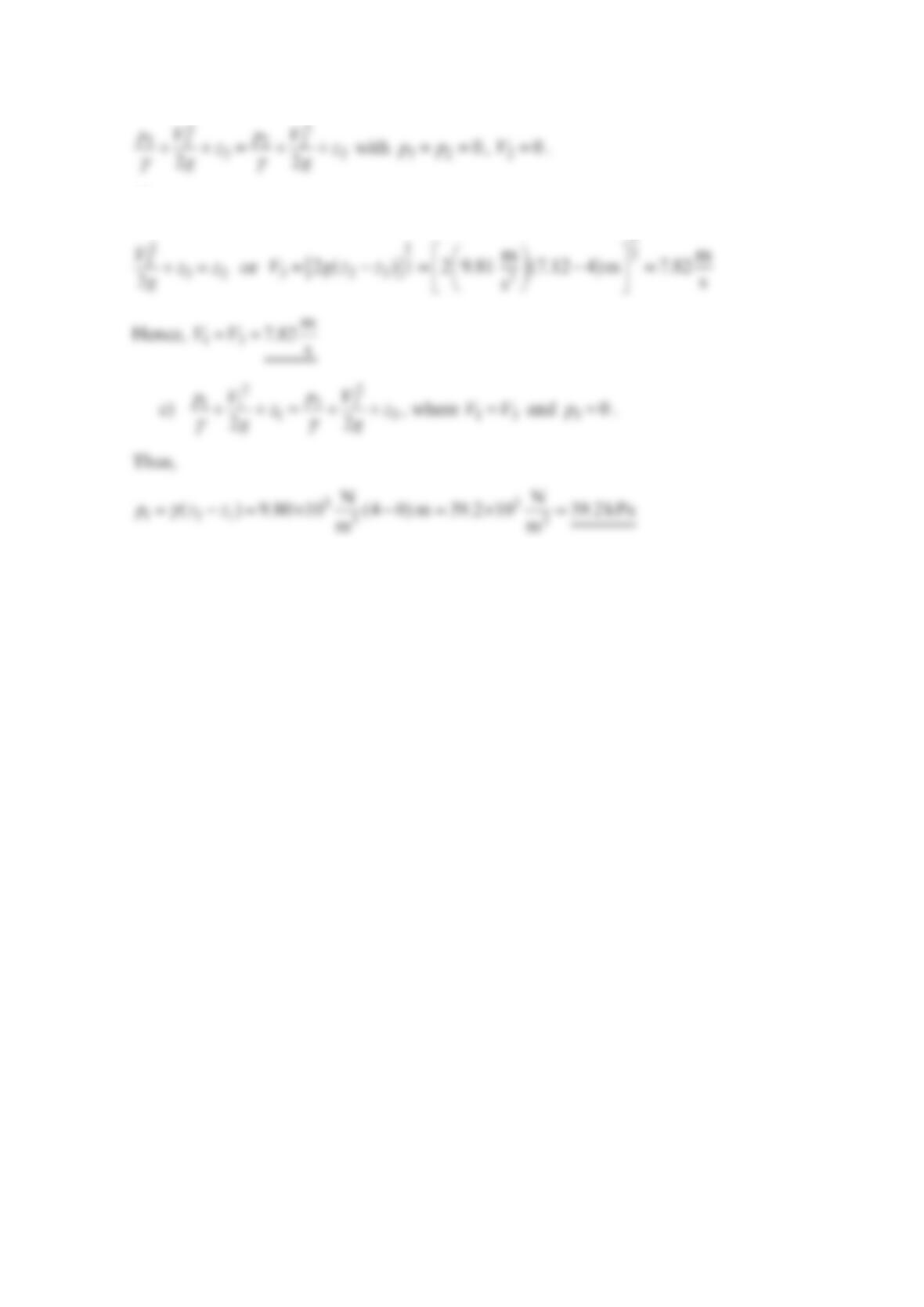
b) Since 11 3 3
AV AV= and 13
AA=, then 13
VV= where
Thus,
Problem 3.58
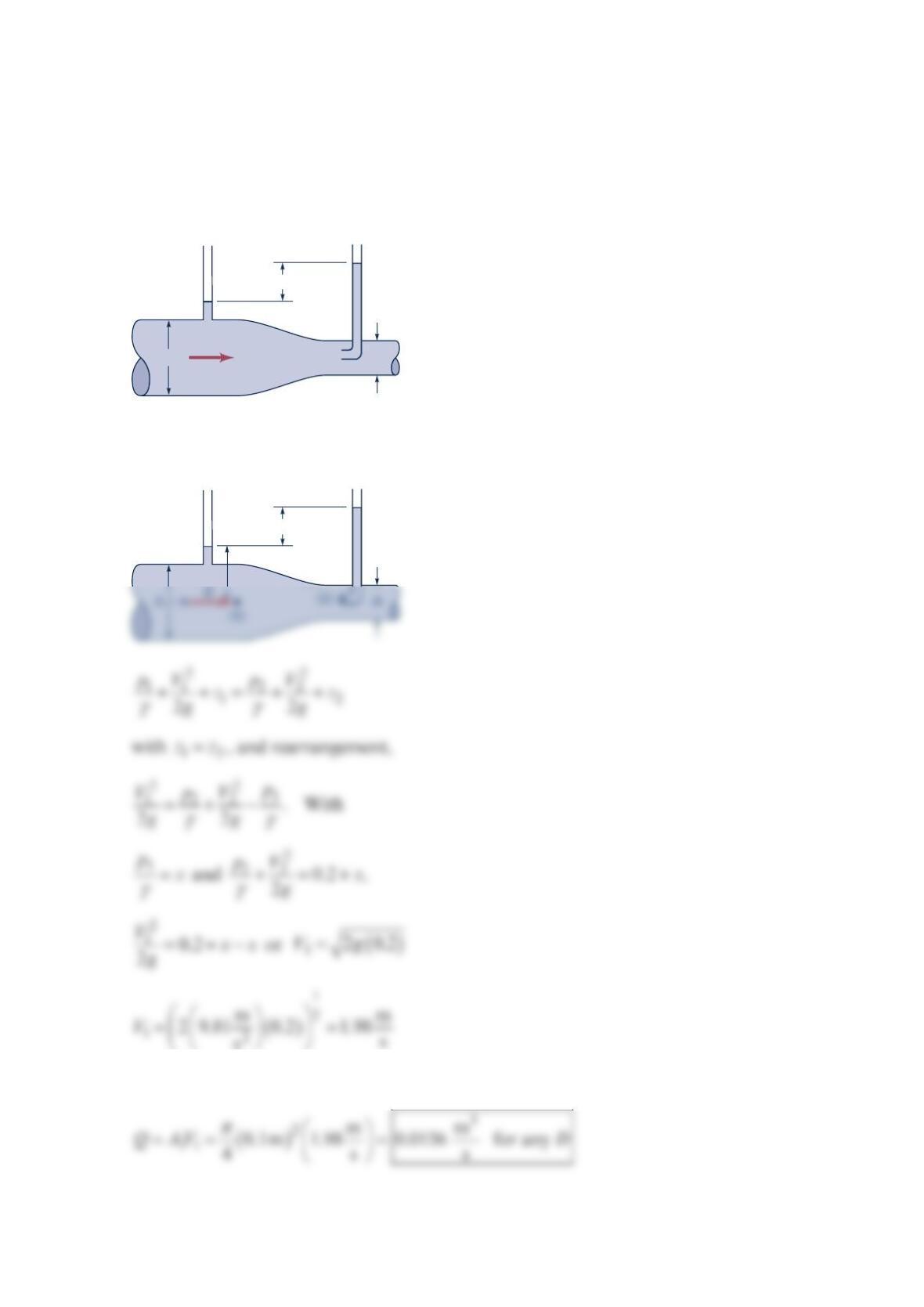
Water (assumed inviscid and incompressible) flows steadily with a speed of ft
1
0s from the
large tank shown in the figure below. Determine the depth, H, of the layer of light liquid
(specific weight 3
lb
50 ft
=
) that covers the water in the tank.
Solution 3.58
From Bernoulli’s equation,
Thus,
50 lb/ft
3
4 ft
5 ft
10 ft/s
Water
H
Problem 3.59
Water flows through the pipe contraction shown in the figure below. For the given 0.2-m
difference in the manometer level, determine the flowrate as a function of the diameter of
the small pipe,
D
.
Solution 3.59
s
Thus,
Q
0.1 m
0.2 m
D
0.2 m
X
Problem 3.60
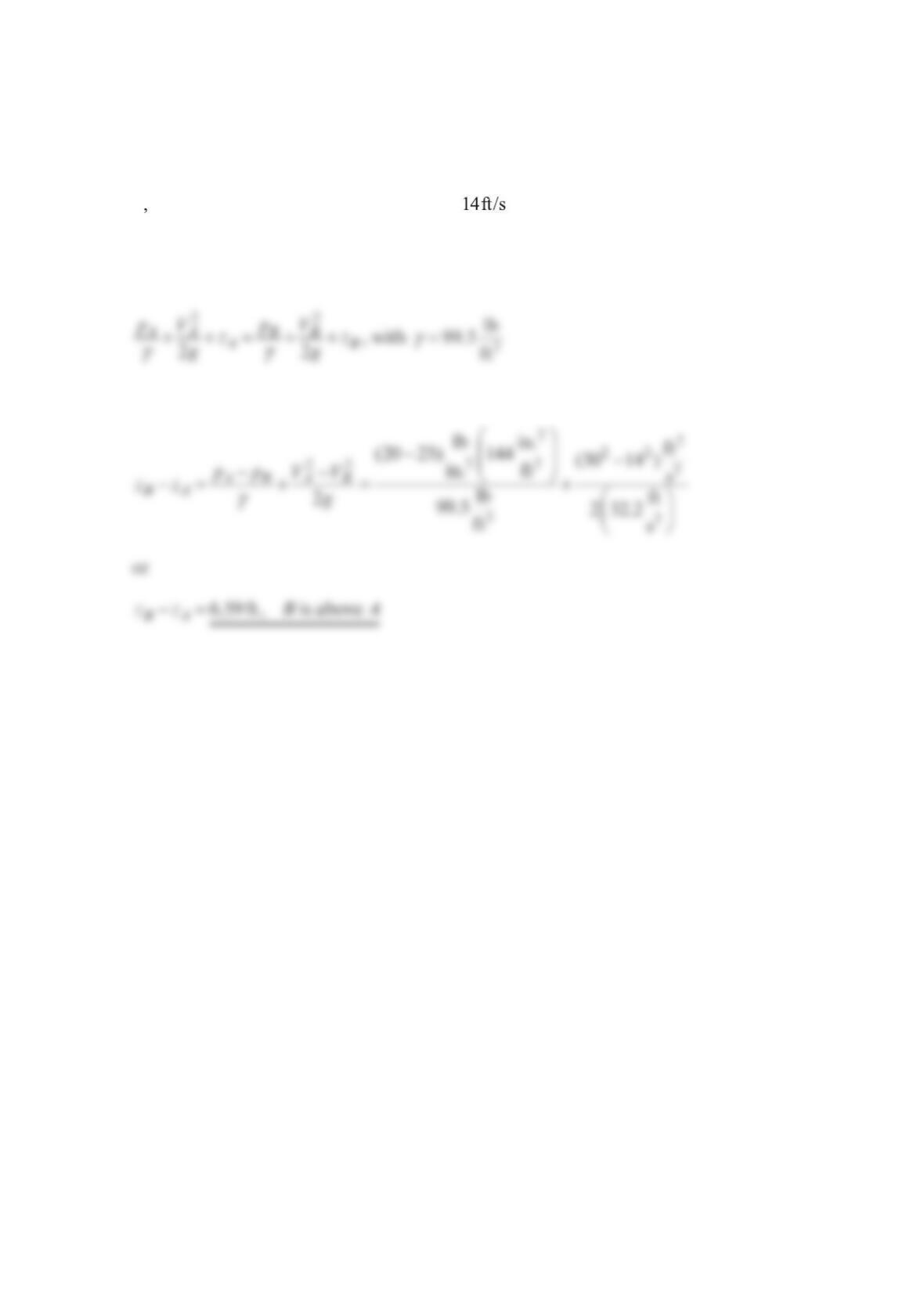
Carbon tetrachloride flows in a pipe of variable diameter with negligible viscous effects. At
point
A
in the pipe, the pressure and velocity are psi20 and
3
0ft/s
, respectively. At location
B
the pressure and velocity are psi23 and . Which point is at the higher elevation and
by how much?
Solution 3.60
or
Problem 3.61
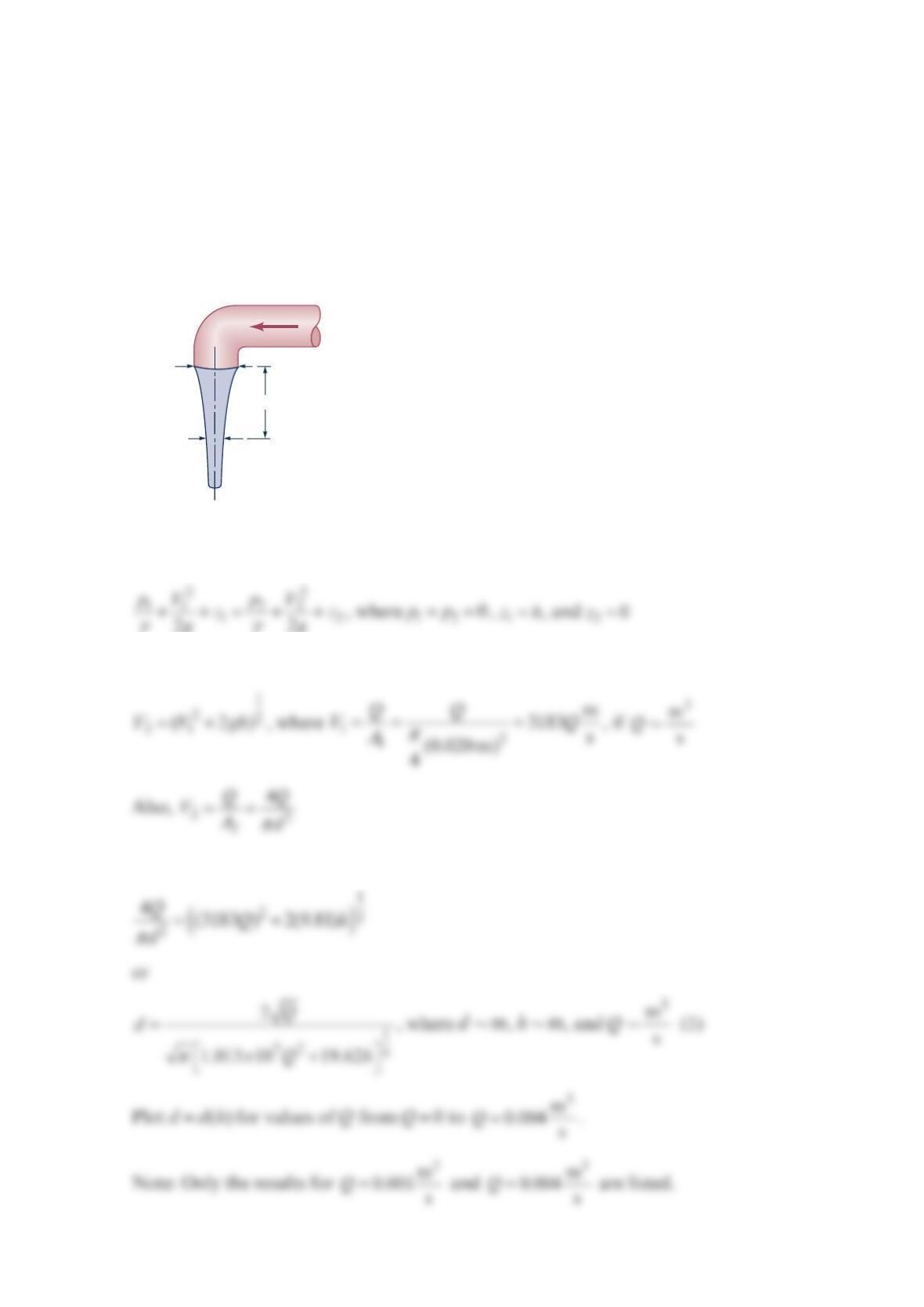
Water flows from a 20-mm-diameter pipe with a flowrate Q as shown in the figure below.
Plot the diameter of the water stream, d, as a function of distance below the faucet, h, for
values of 01mh≤≤ and 3
00.004m/sQ≤≤ . Discuss the validity of the one-dimensional
assumption used to calculate ()ddh=, noting, in particular, the conditions of small h and
small Q.
Solution 3.61
Thus,
So that
h
20 mm
d
Q
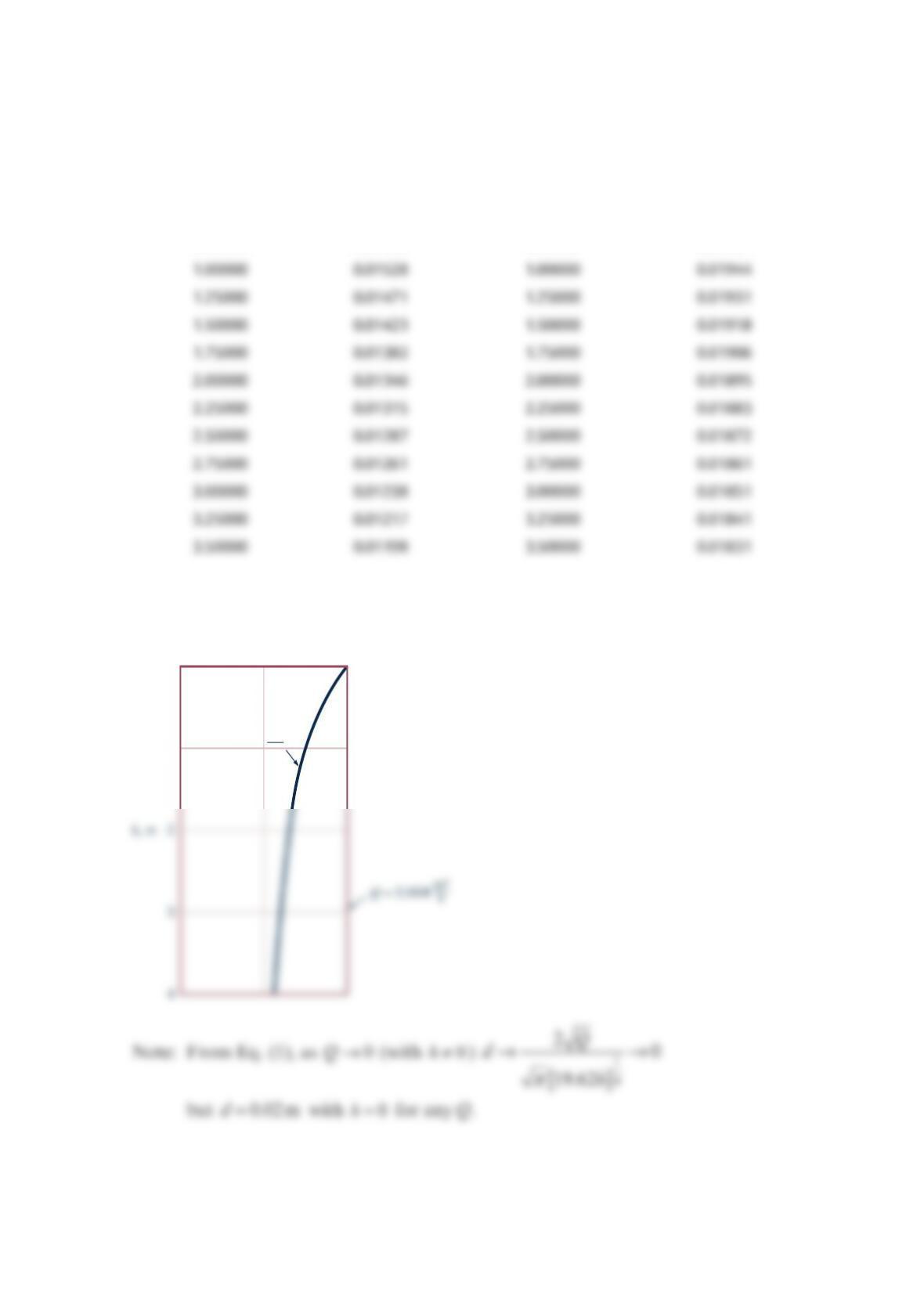
For Q = 0.00100 m3/s For Q = 0.00400 m3/s
h, m d, m h, m d, m
0.00000 0.02000 0.00000 0.02000
0.25000 0.01812 0.25000 0.01985
0.50000 0.01689 0.50000 0.01971
0.75000 0.01598 0.75000 0.01957
00 0.01 0.02
1
d
, m
Q
= 0.001 s
m
3
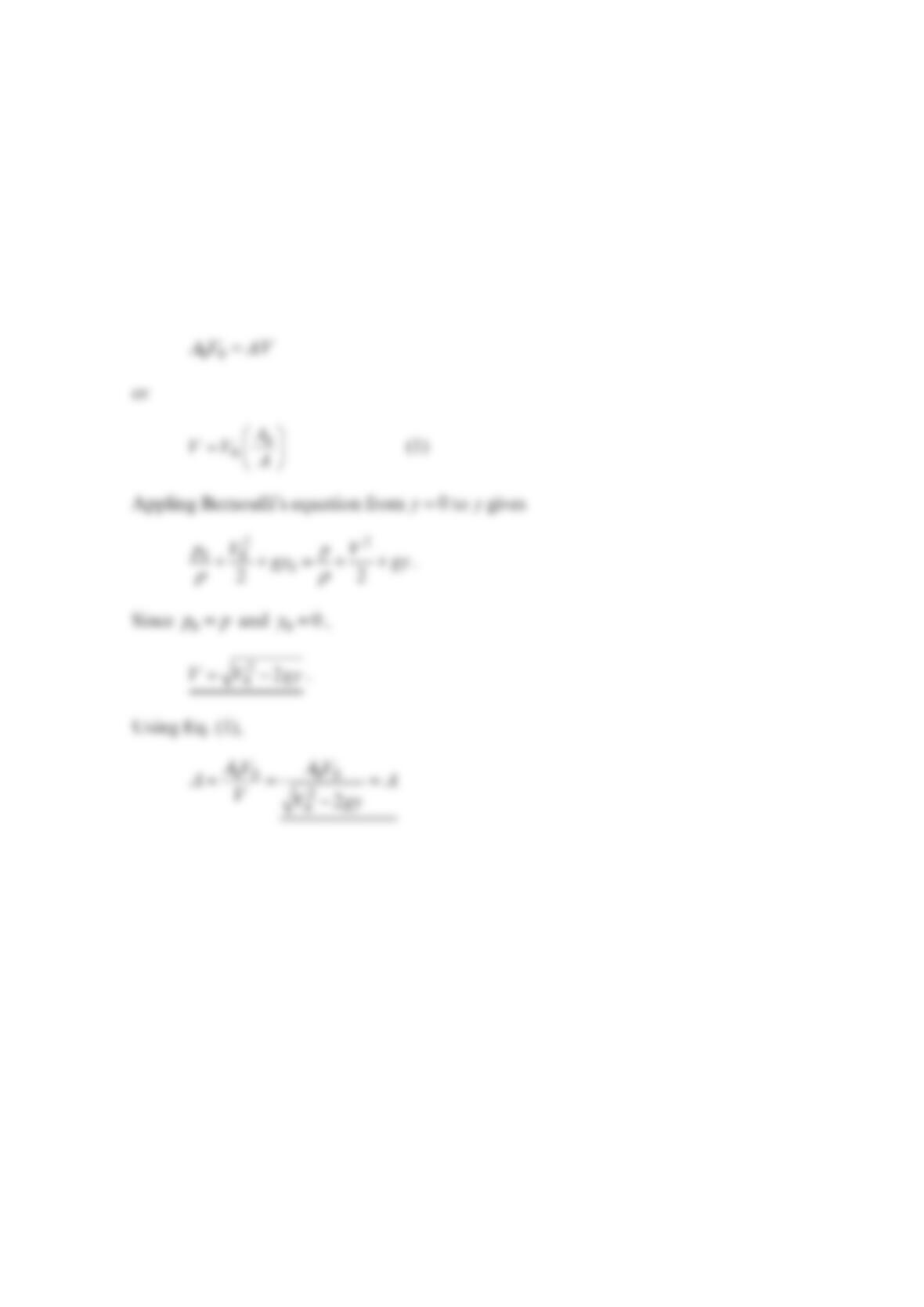
Problem 3.62
A liquid stream directed vertically upward leaves a nozzle with a steady velocity 0
V
and
cross-sectional area 0
A
. Find the velocity
V
and cross-sectional area
A
as a function of the
vertical position z.
Solution 3.62
Apply the continuity equation to a control volume enclosing the stream. Assuming constant
fluid density
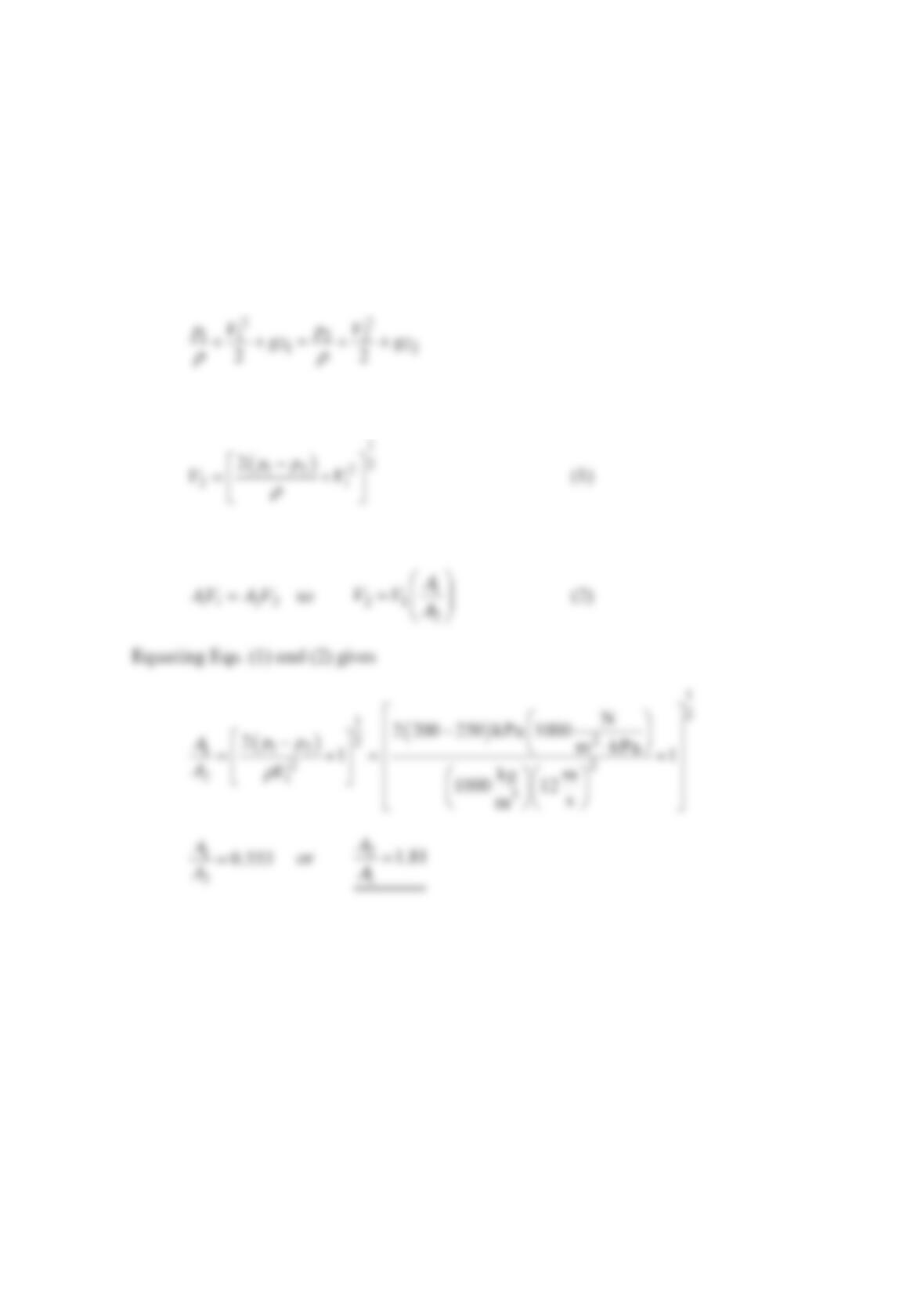
Problem 3.63
Water leaves a pump at 200 kPa and a velocity of 12 m / s . It then enters a diffuser to
increase its pressure to 250 kPa . What must be the ratio of the outlet area to the inlet area
of the diffuser?
Solution 3.63
Assume constant density and apply Bernoulli’s equation between
1
and
2
to get
Assume 12
zz≈. This gives
The continuity equation gives
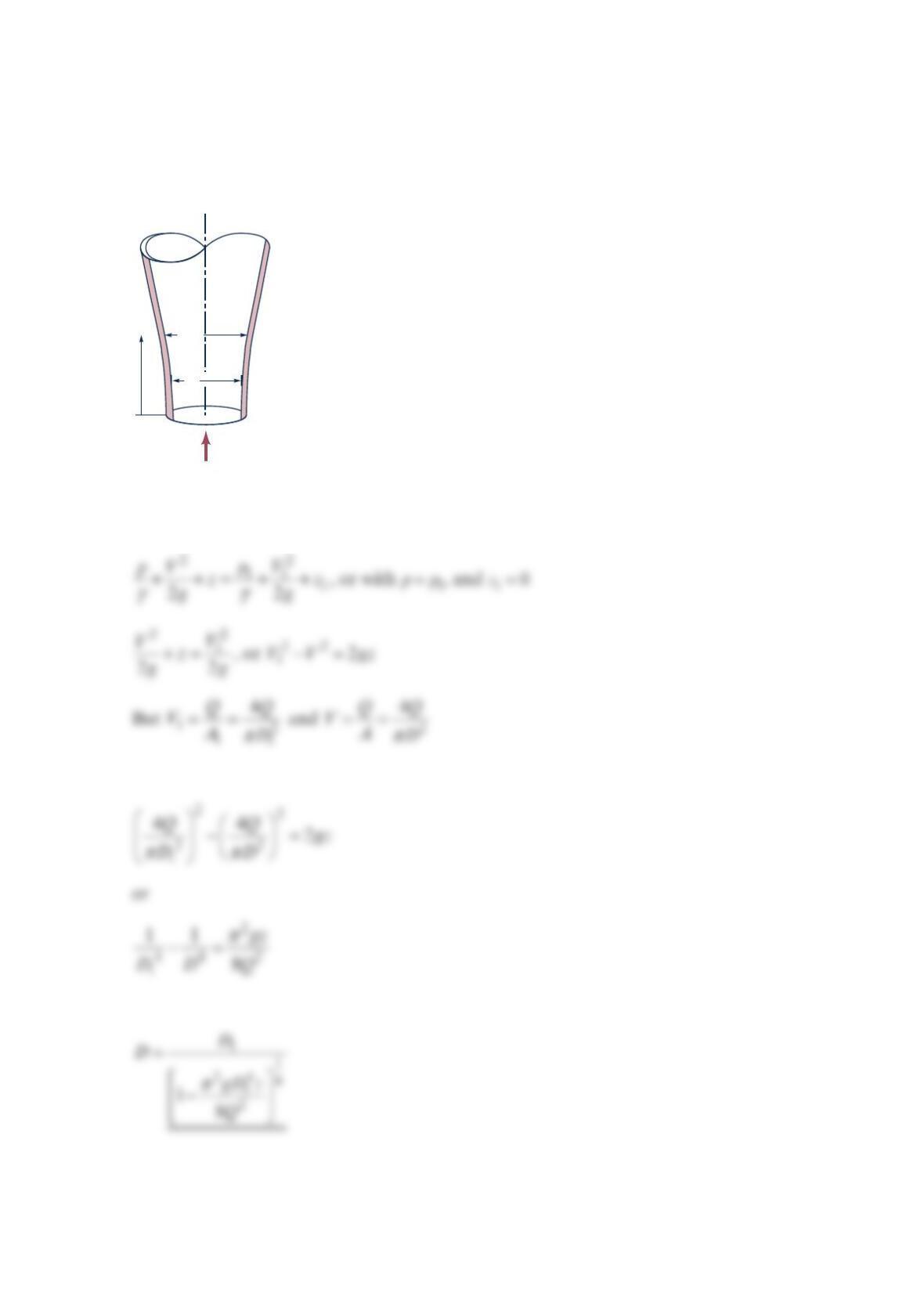
Problem 3.64
Water flows upward through a variable area pipe with a constant flowrate, Q, as shown in
the figure below. If viscous effects are negligible, determine the diameter, ()
D
z, in terms of
1
D
if the pressure is to remain constant throughout the pipe. That is, 1
()
p
zp=.
Solution 3.64
Thus,
Thus,
D(z)
z
D
1
Q
(1)
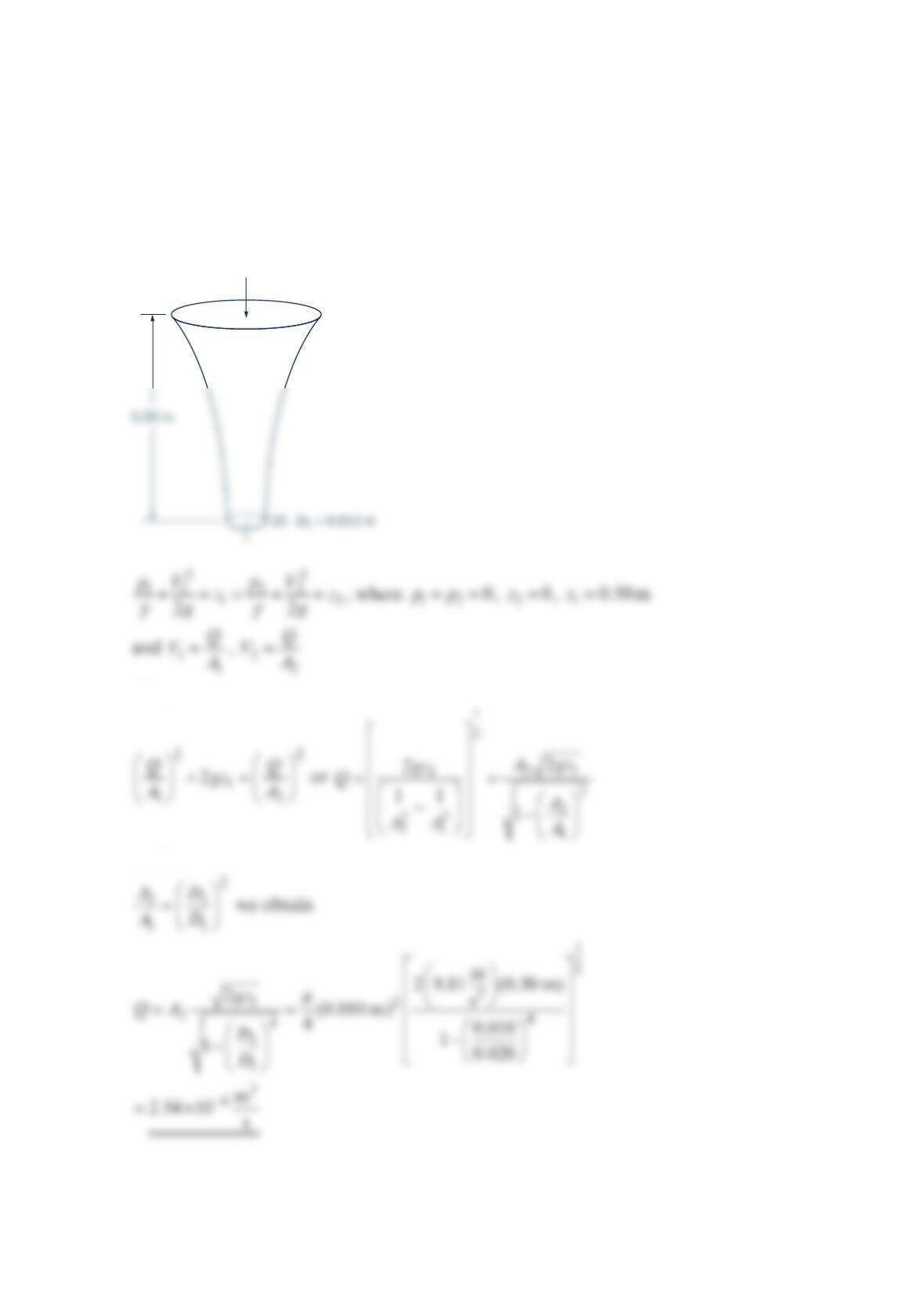
Problem 3.65
The circular stream of water from a faucet is observed to taper from a diameter of 20 mm
to 10 mm in a distance of 50 cm. Determine the flowrate.
Solution 3.65
Thus,
or since
Q
(1)
D
1
= 0.020 m
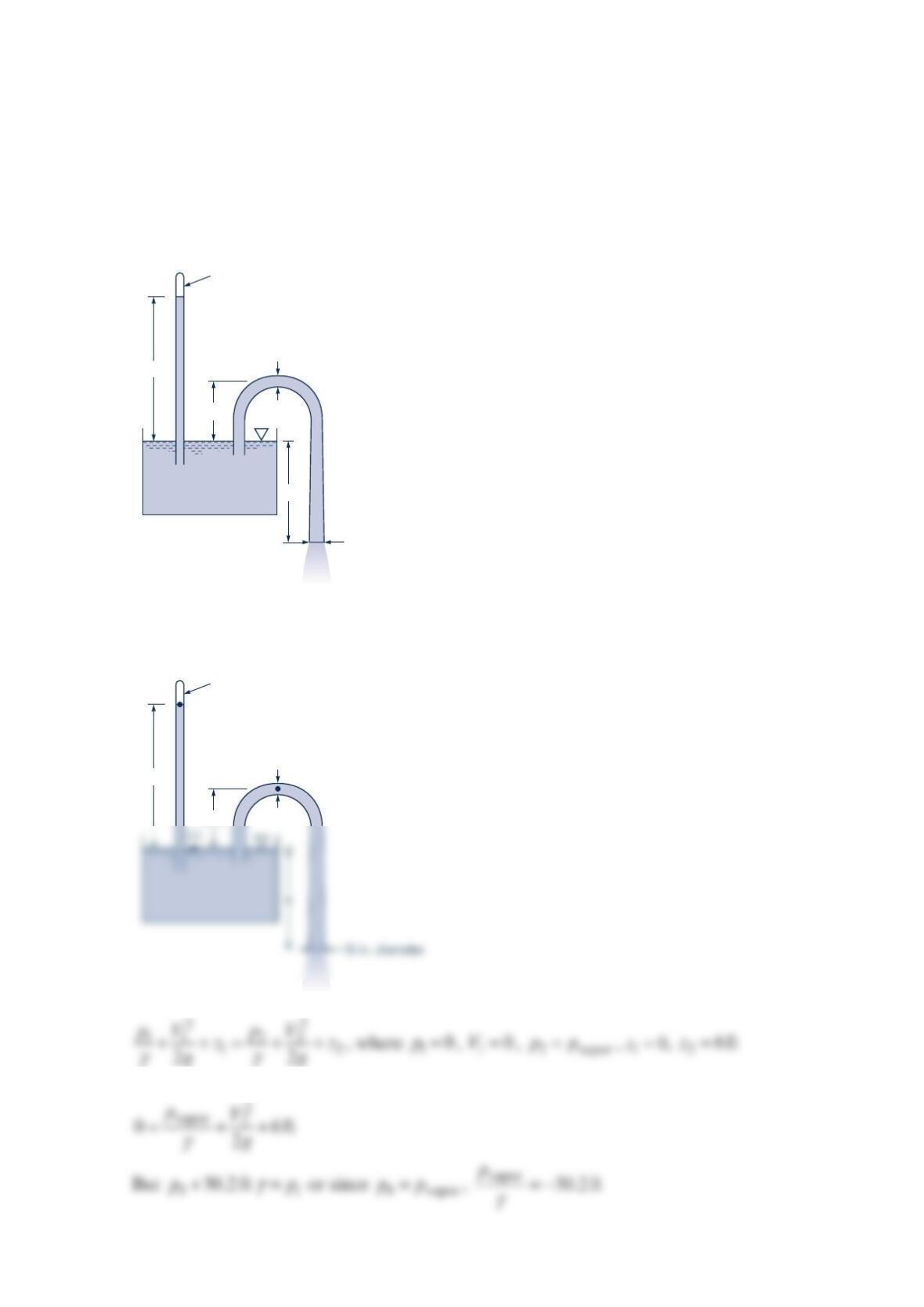
Problem 3.66
Water is siphoned from the tank shown in the figure below. The water barometer indicates
a reading of 30.2 ft. Determine the maximum value of h allowed without cavitation
occurring. Note that the pressure of the vapor in the closed end of the barometer equals the
vapor pressure.
Solution 3.66
Thus,
30.2 ft
6 ft
3-in.
diameter
h
Closed end
5-in. diameter
30.2 ft
6 ft
3-in.
diameter
Closed end
(0)
(2)
Hence,
Thus,
33
or
3
ft
14.2 s
V=
However,
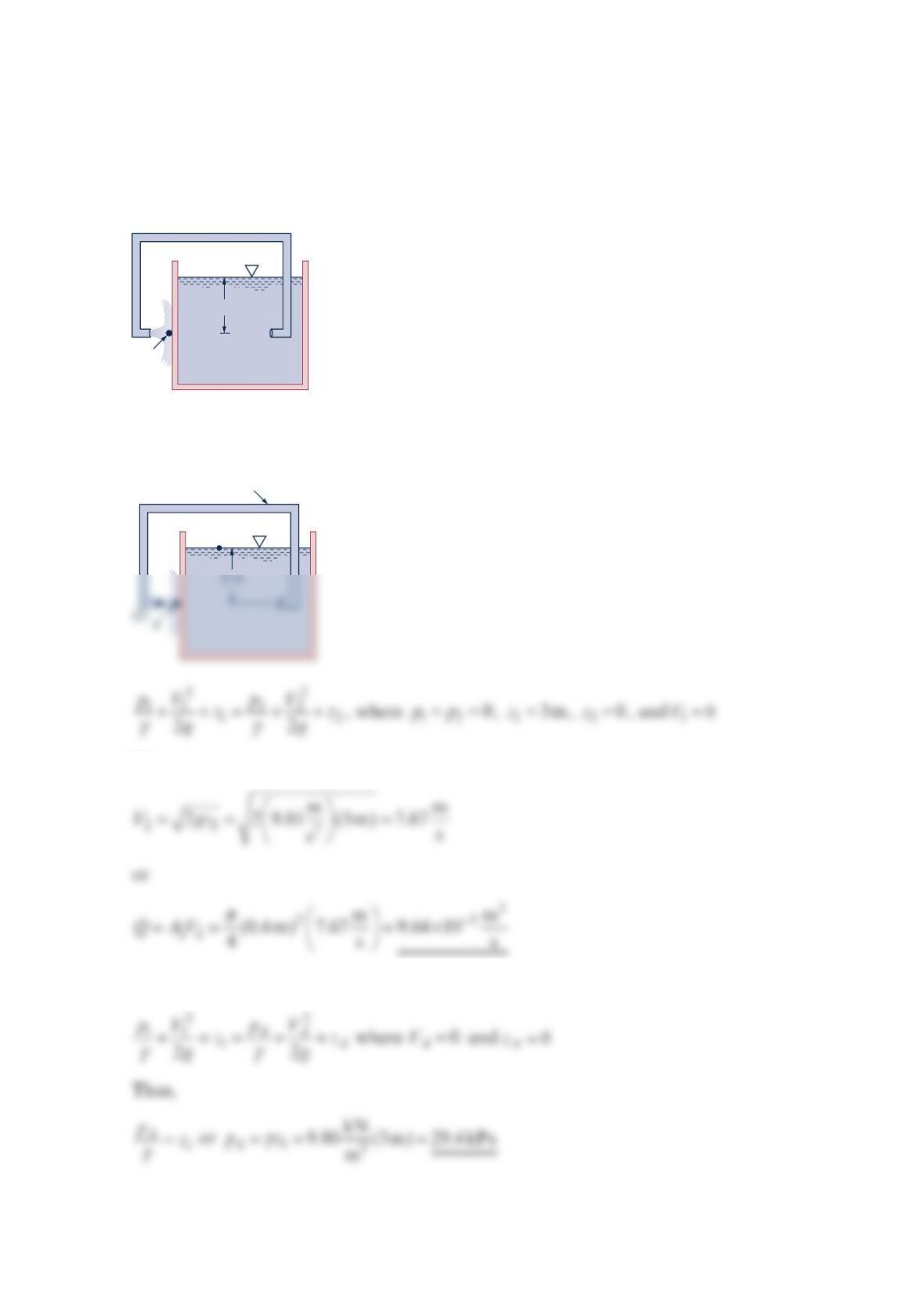
Problem 3.67
Water is siphoned from a tank as shown in the figure below. Determine the flowrate and
the pressure at point
A
, a stagnation point.
Solution 3.67
Thus,
Also,
3 m
A
0.04-m diameter
0.04 m diameter
(1)
Problem 3.68
A 50-mm -diameter plastic tube is used to siphon water from the large tank shown in the
figure below. If the pressure on the outside of the tube is more than 35 kPa greater than the
pressure within the tube, the tube will collapse and siphon will stop. If viscous effects are
negligible, determine the minimum value of h allowed without the siphon stopping.
Solution 3.68
At any location within the tube 3
VV= so that with 10V=, 10p= and 10z=
Thus, the lowest pressure occurs at the point of maximum z. That is, 235kPap=− and
4 m
2 m
h
2 m
(1)
(2)
Problem 3.69
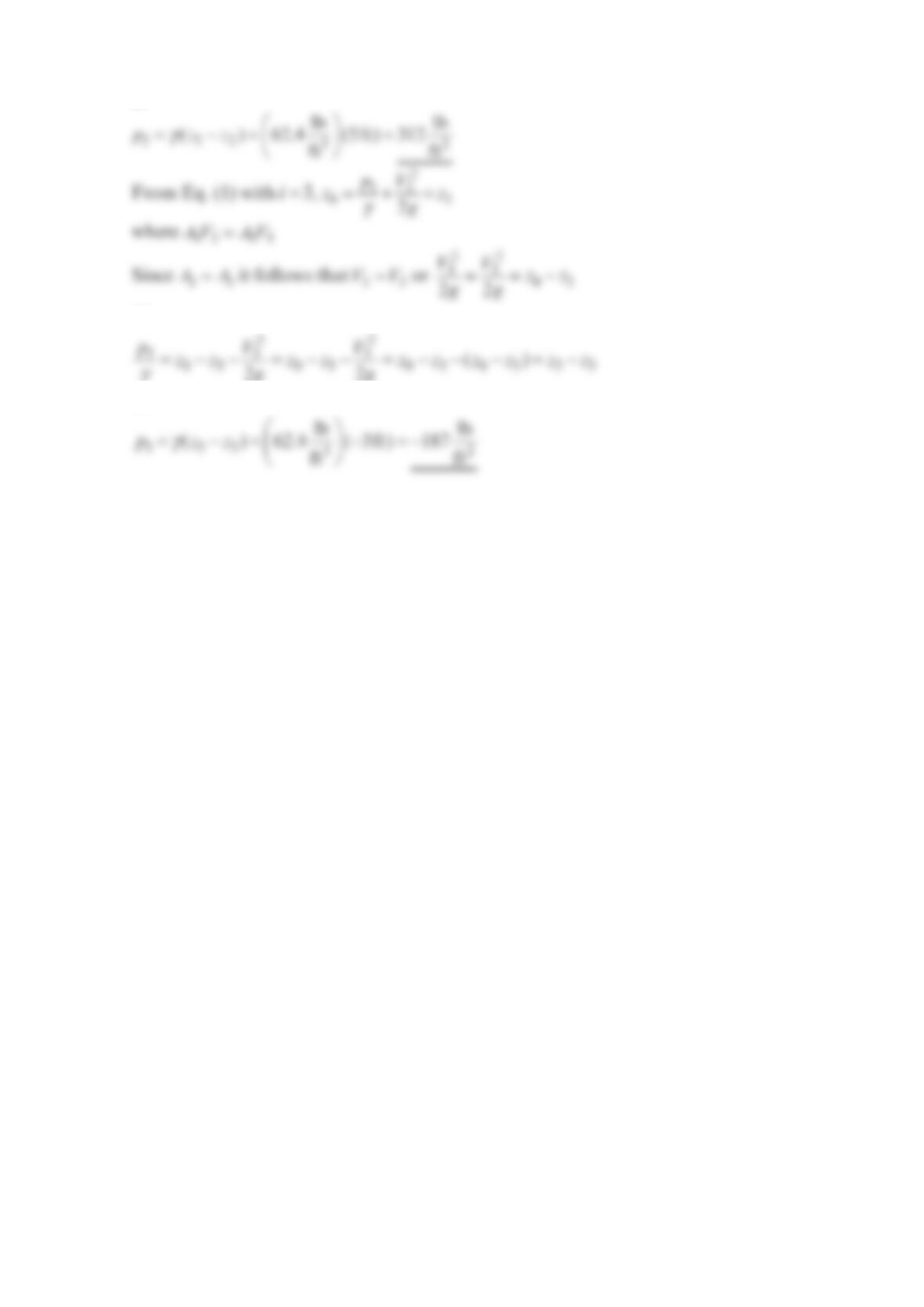
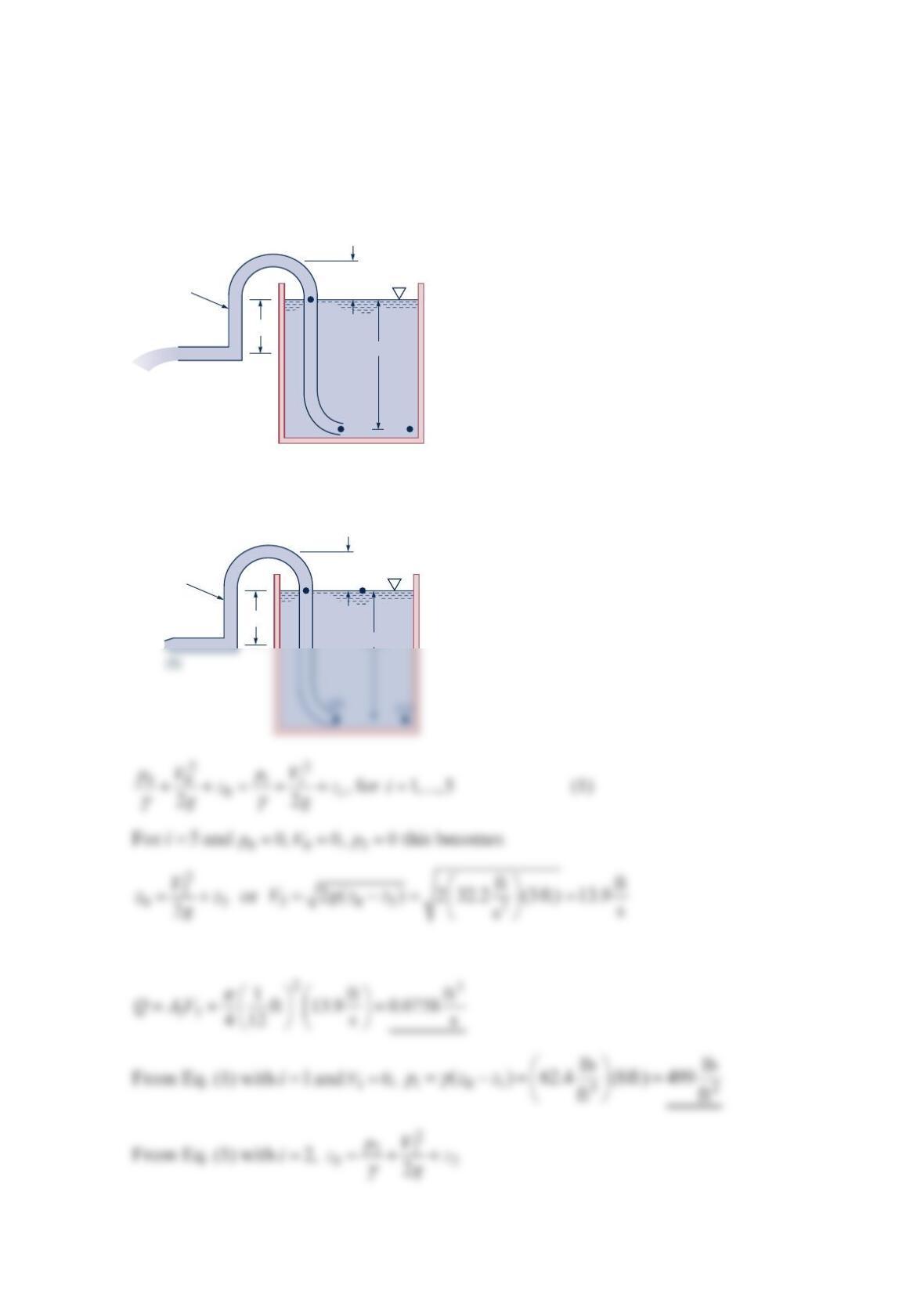
Water is siphoned from the tank shown in the figure below. Determine the flowrate from
the tank and the pressure at points (1), (2), and (3) if viscous effects are negligible.
Solution 3.69
Thus,
Thus,
3 ft
2 ft
8 ft
(1)
(2)
(3)
2-in.-diameter
hose
3 ft
2 ft
8 ft
(0)
(3)
2-in.-diameter
hose
or
Thus,
or
Problem 3.70
Water is siphoned from the tank shown in the figure below. A -in.1-diameter nozzle is
placed at the end of the tube. Determine the flowrate from the tank and the pressure at
points (1), (2), and (3) if viscous effects are negligible.
Solution 3.70
Thus,
3 ft
2 ft
8 ft
(1)
(2)
(3)
2-in.-diameter
hose
3 ft
2 ft
8 ft
(3)
2-in.-diameter
hose (0)