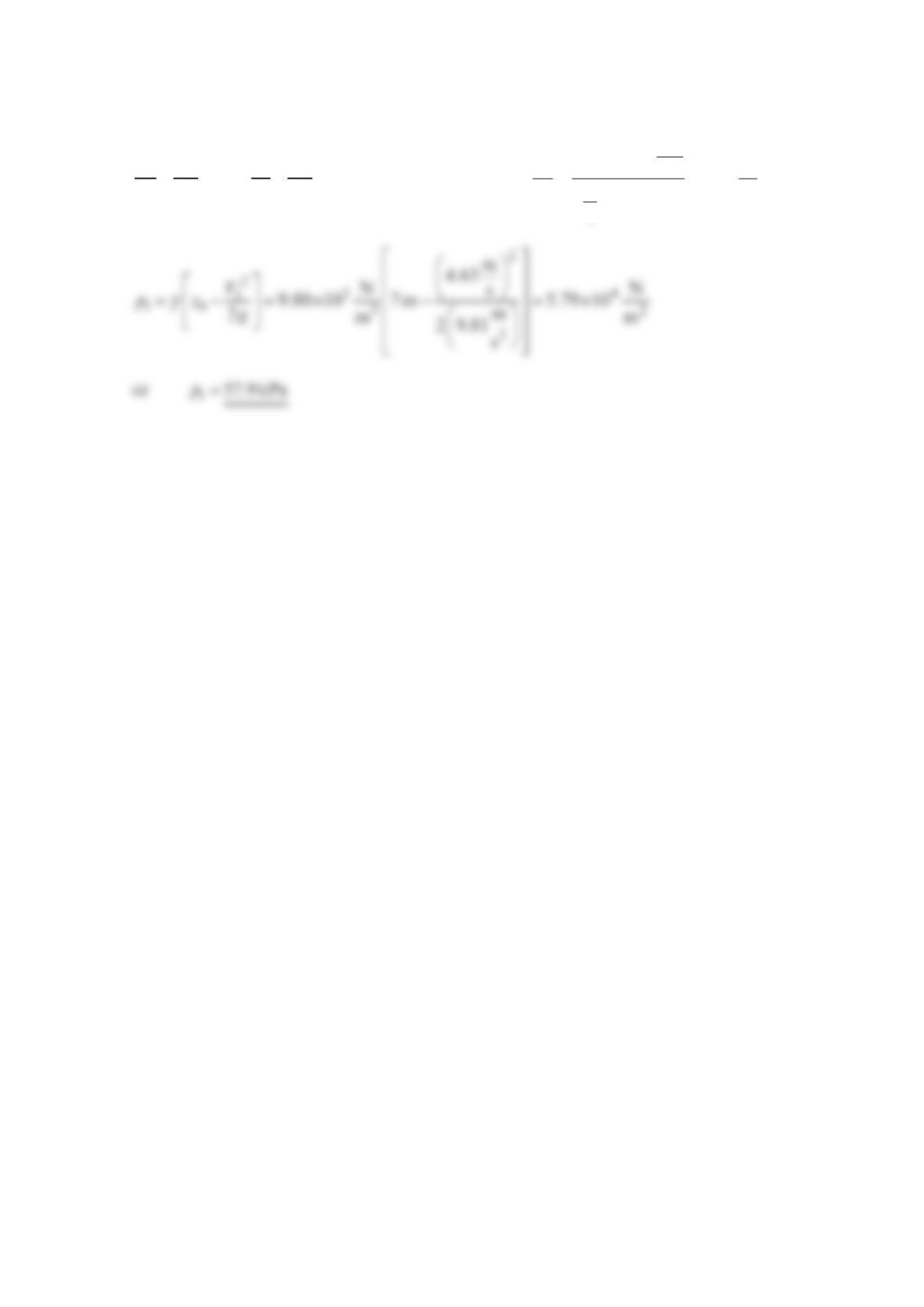
Also,
22
00 11
01
22
pV pV
zz
gg
γγ
++=++ where 10z= and
()
3
3
12
1
m
9.10 10 m
s4.63 s
0.05 m
4
Q
VA
π
−
×
== =
Problem 3.114
A gutter running along the side of a house is 6in. wide and 40ft long. During a hard
downpour, water is 1in. deep in the gutter. The gutter has only one down spout, and it is
3in. in diameter. What is the velocity of the water entering the downspout? The pressure at
the downspout entrance is atmospheric pressure.
Solution 3.114
Use the following sketch.
Now apply Bernoulli’s equation from point ()g to point ()d.
h
= 1.0″
gd
V
g
Control
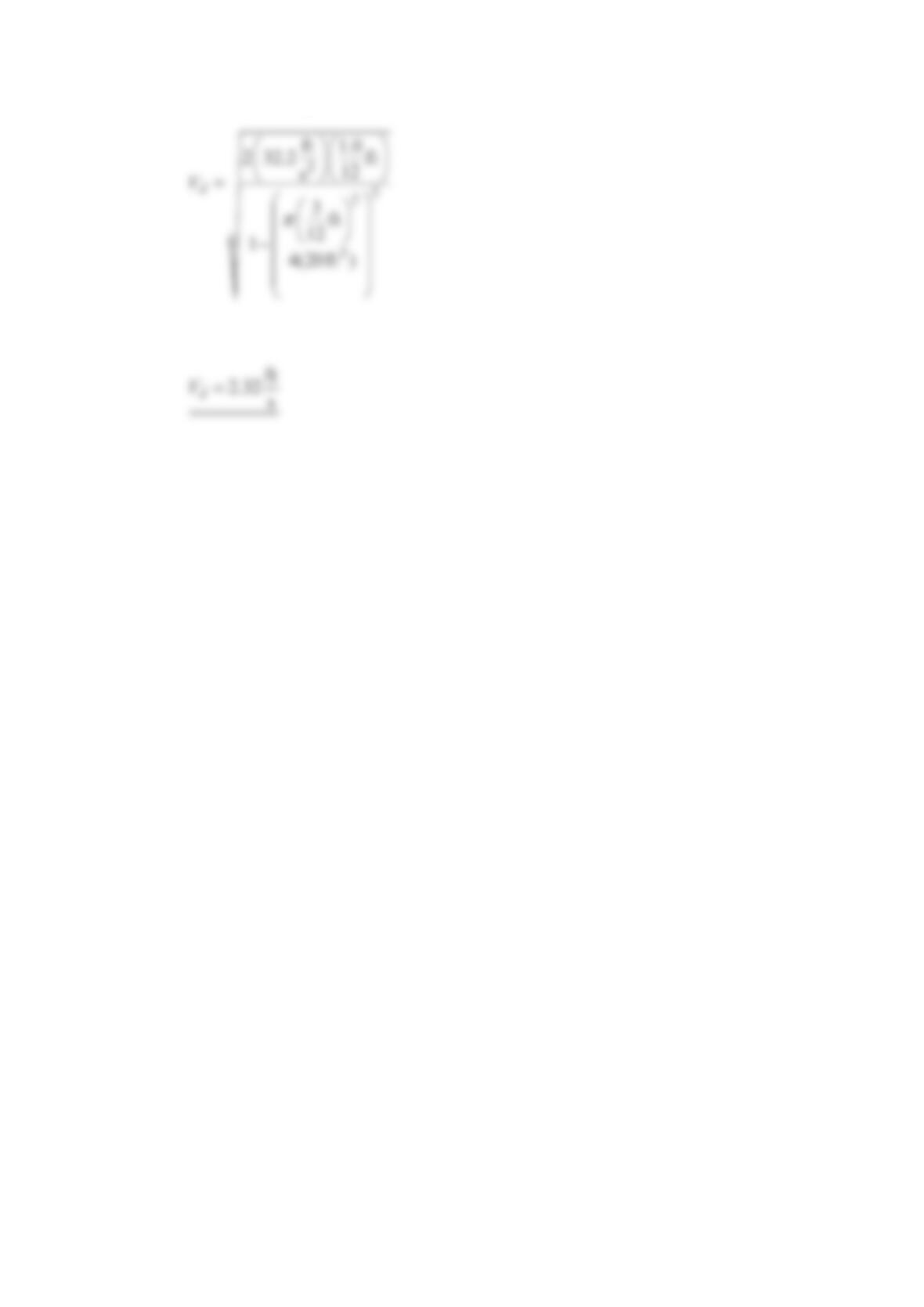
The numerical values give
or
Problem 3.115
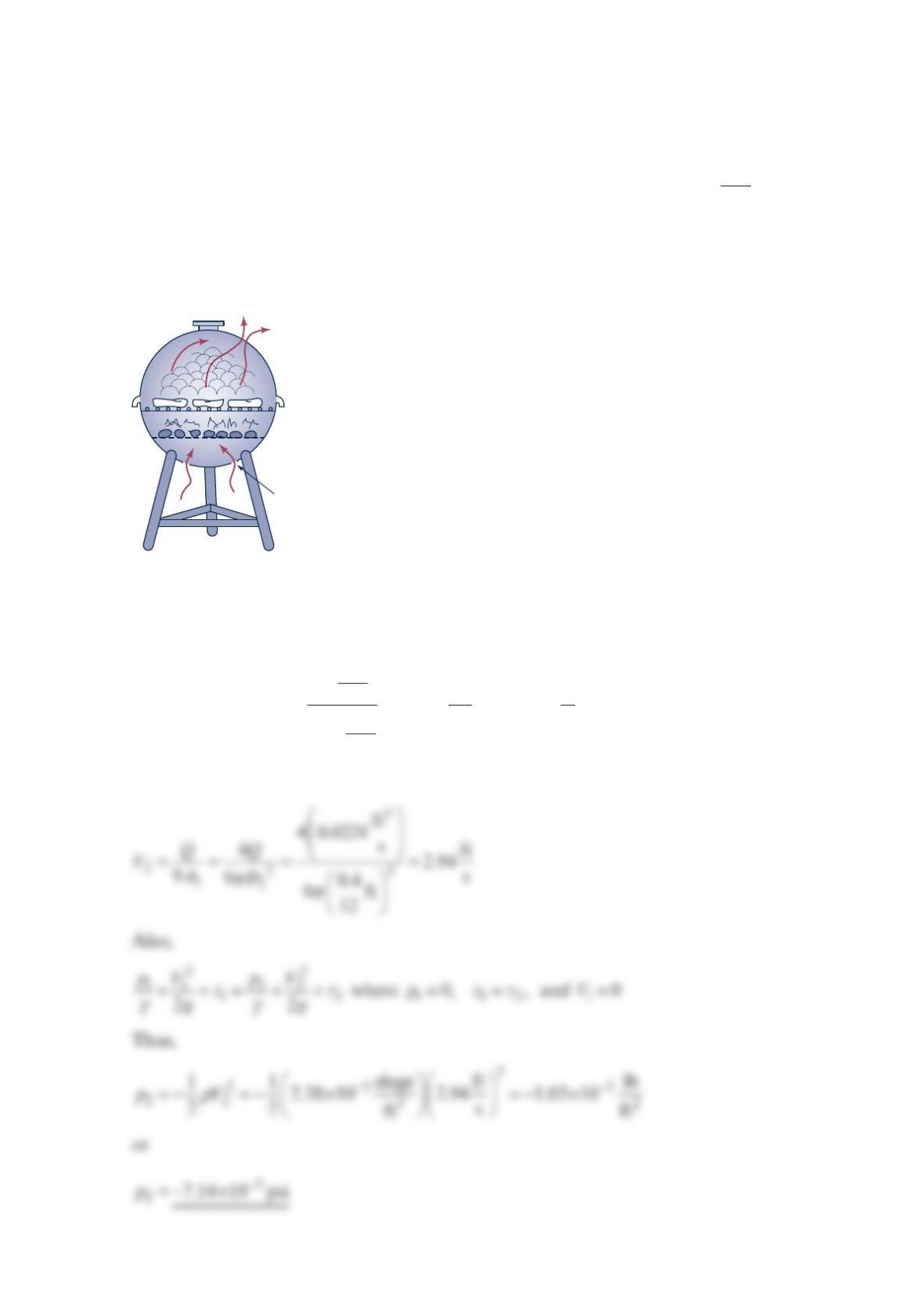
Air, assumed incompressible and inviscid, flows into the outdoor cooking grill through nine
holes of 0.40-in. diameter as shown in the figure below. If a flowrate of
3
in.
40 s into the grill
is required to maintain the correct cooking conditions, determine the pressure within the
grill near the holes.
Solution 3.115
22
9QAV= where
3
3
3
3
in.
40 ft
s0.0231 s
in.
1728 ft
Q== and 2
22
4
AD
π
=
Thus,
9 holes, each
0.40-in. diameter
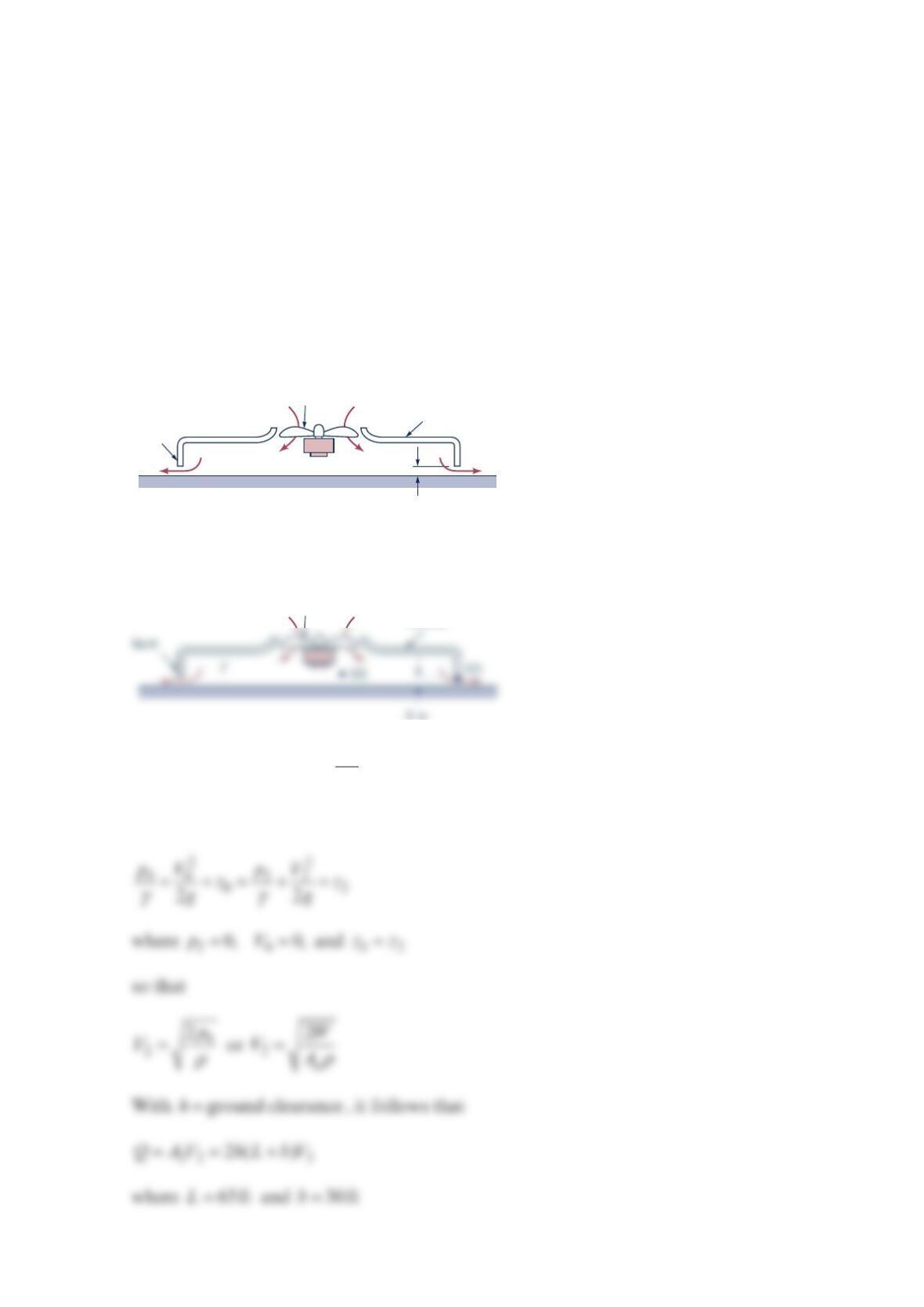
Problem 3.116
An air cushion vehicle is supported by forcing air into the chamber created by a skirt
around the periphery of the vehicle as shown in the figure below. The air escapes through
the 3-in. clearance between the lower end of the skirt and the ground (or water). Assume
the vehicle weighs 10,000 lb and is essentially rectangular in shape, 30 by 65ft . The volume
of the chamber is large enough so that the kinetic energy of the air within the chamber is
negligible. Determine the flowrate, Q, needed to support the vehicle. If the ground clear-
ance were reduced to 2in., what flowrate would be needed? If the vehicle weight were re-
duced to 5000 lb and the ground clearance maintained at 3in., what flowrate would be
needed?
Solution 3.116
To support the load 0
0
W
pA
= where vehicle weightW= and 2
0(30ft)(65ft) 1950ftA==
Also,
Skirt
Fan
Vehicle
3 in.
Q
Fan
Vehicle
3 in.
Q
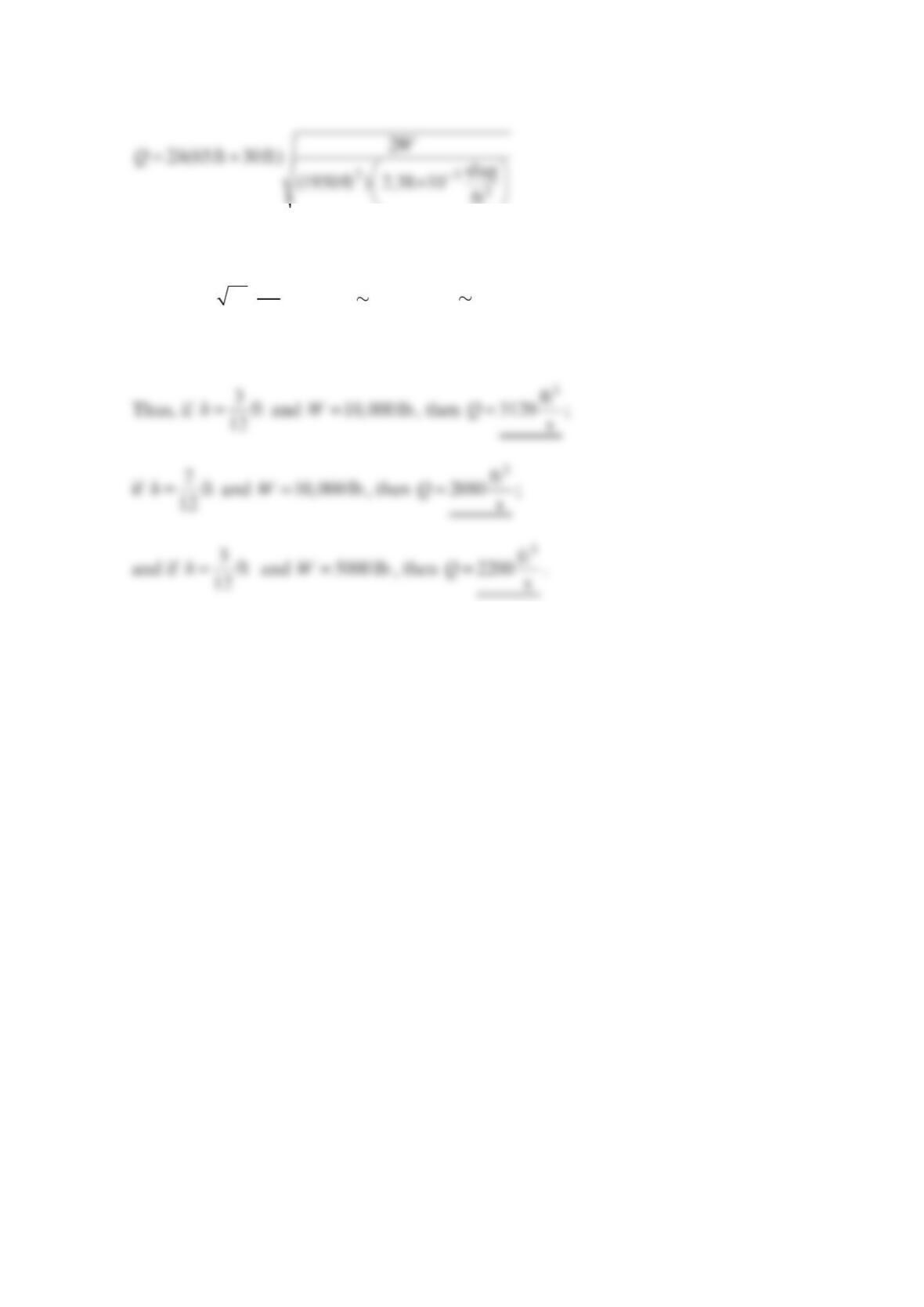
Thus,
or
3
ft
124.7 s
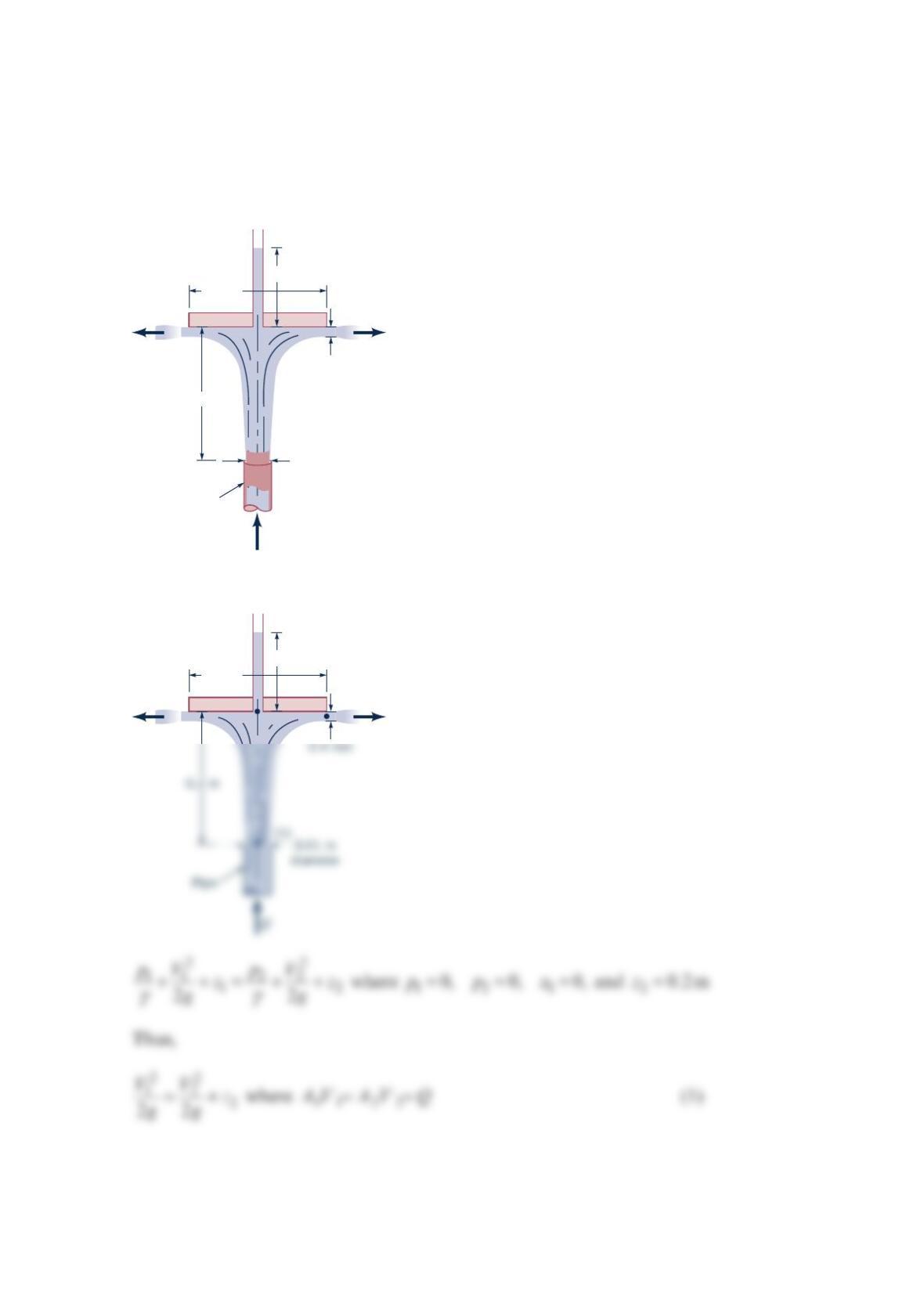
QhW= where fth and lbW
Problem 3.117
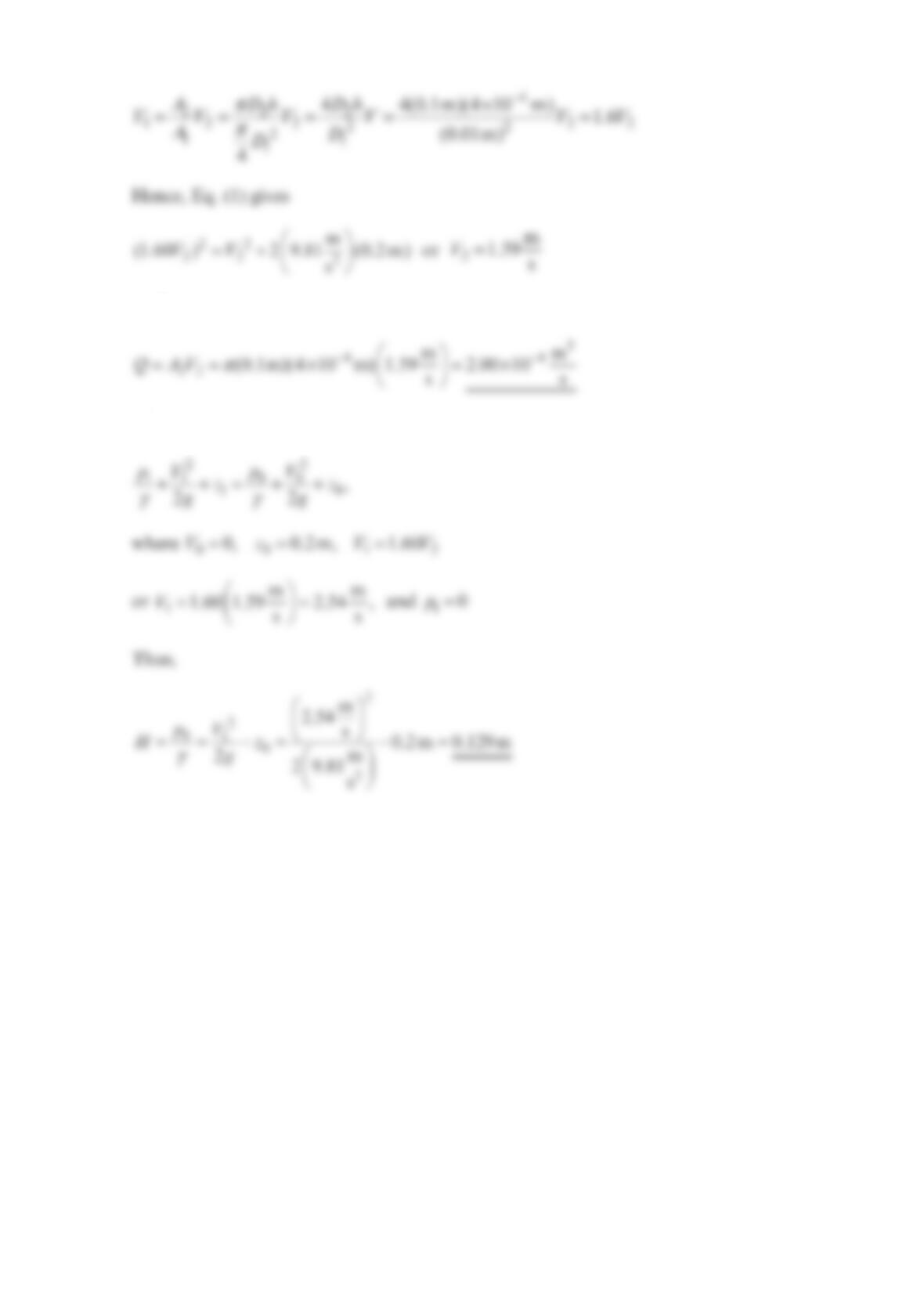
Water flows from the pipe shown in the figure below as a free jet and strikes a circular flat
plate. The flow geometry shown is axisymmetrical. Determine the flowrate and the manom-
eter reading, H.
Solution 3.117
or
V
0.2 m
0.01-m
diameter
0.4 mm
0.1-m
diameter
H
Q
Pipe
V
0.1 m
diameter
H
(2)
(0)
so that
Also,
Problem 3.118
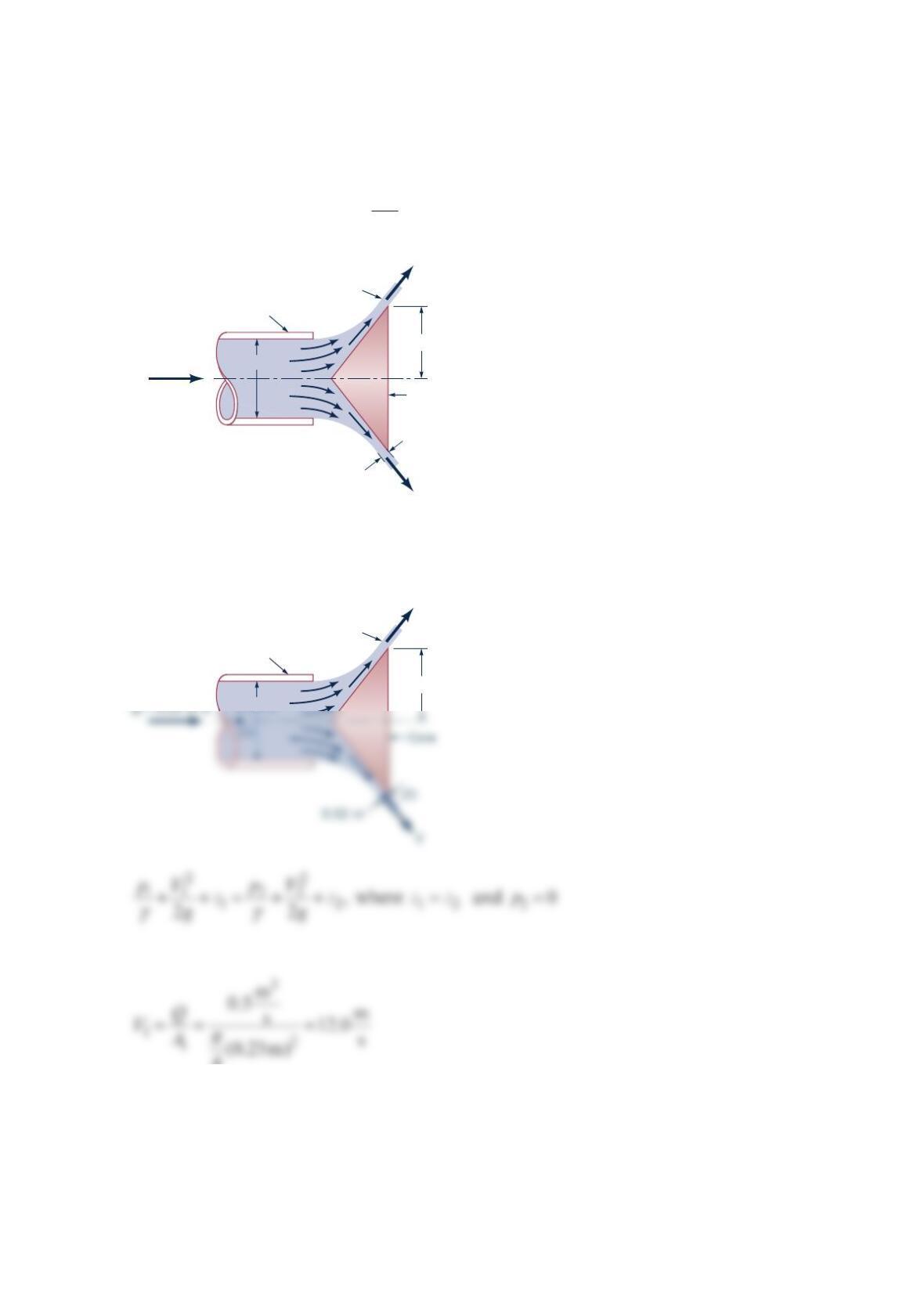
A conical plug is used to regulate the airflow from the pipe shown in the figure below. The
air leaves the edge of the cone with a uniform thickness of 0.02 m. If viscous effects are neg-
ligible and the flowrate is
3
m
0.50 s, determine the pressure within the pipe.
Solution 3.118
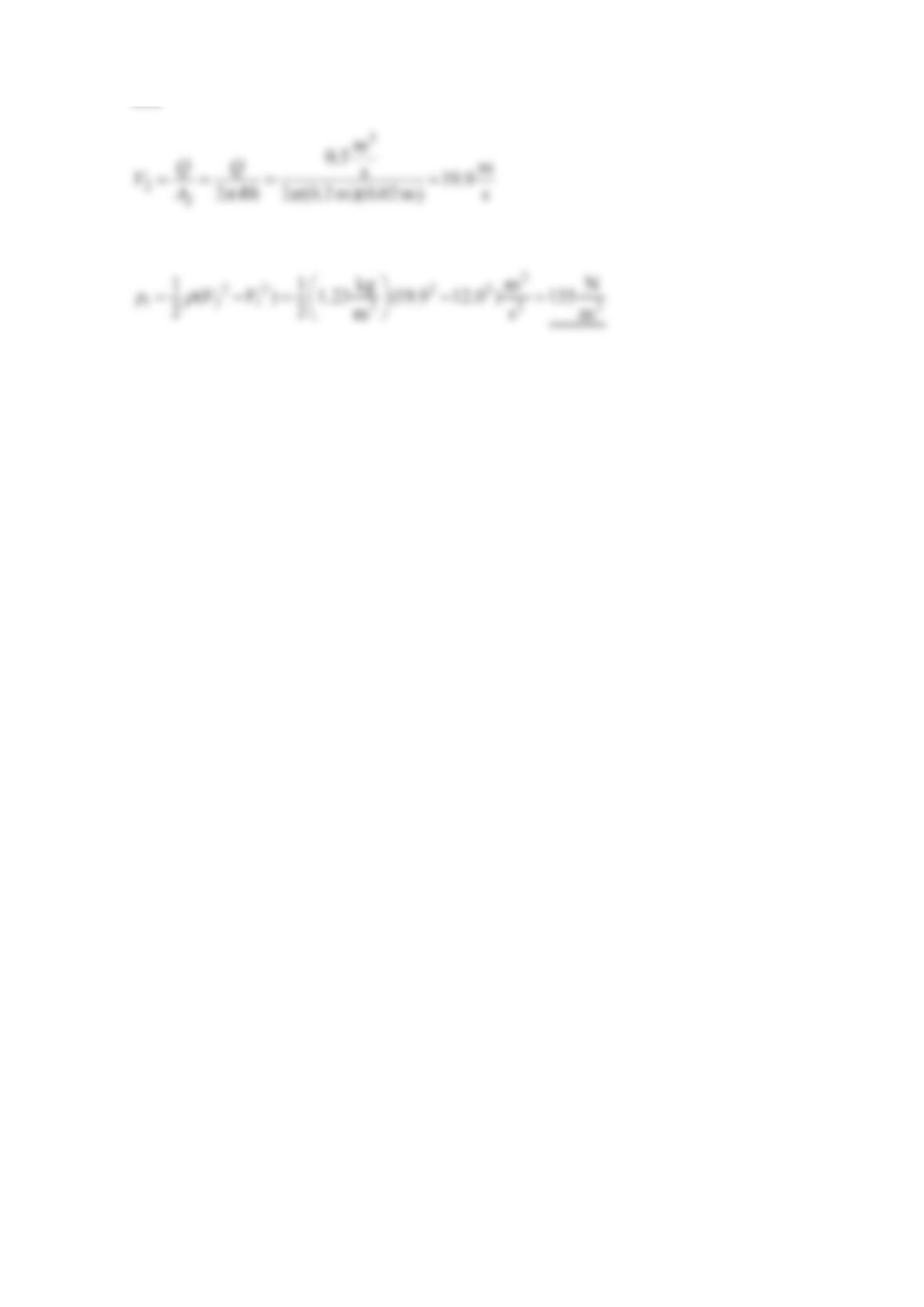
Also,
4
0.23 m
Q
= 0.50 m
3
/s
Pipe
Free jet
0.20 m
V
V
0.02 m
Cone
0.23 m
3
Pipe
Free jet
0.20 m
V
and
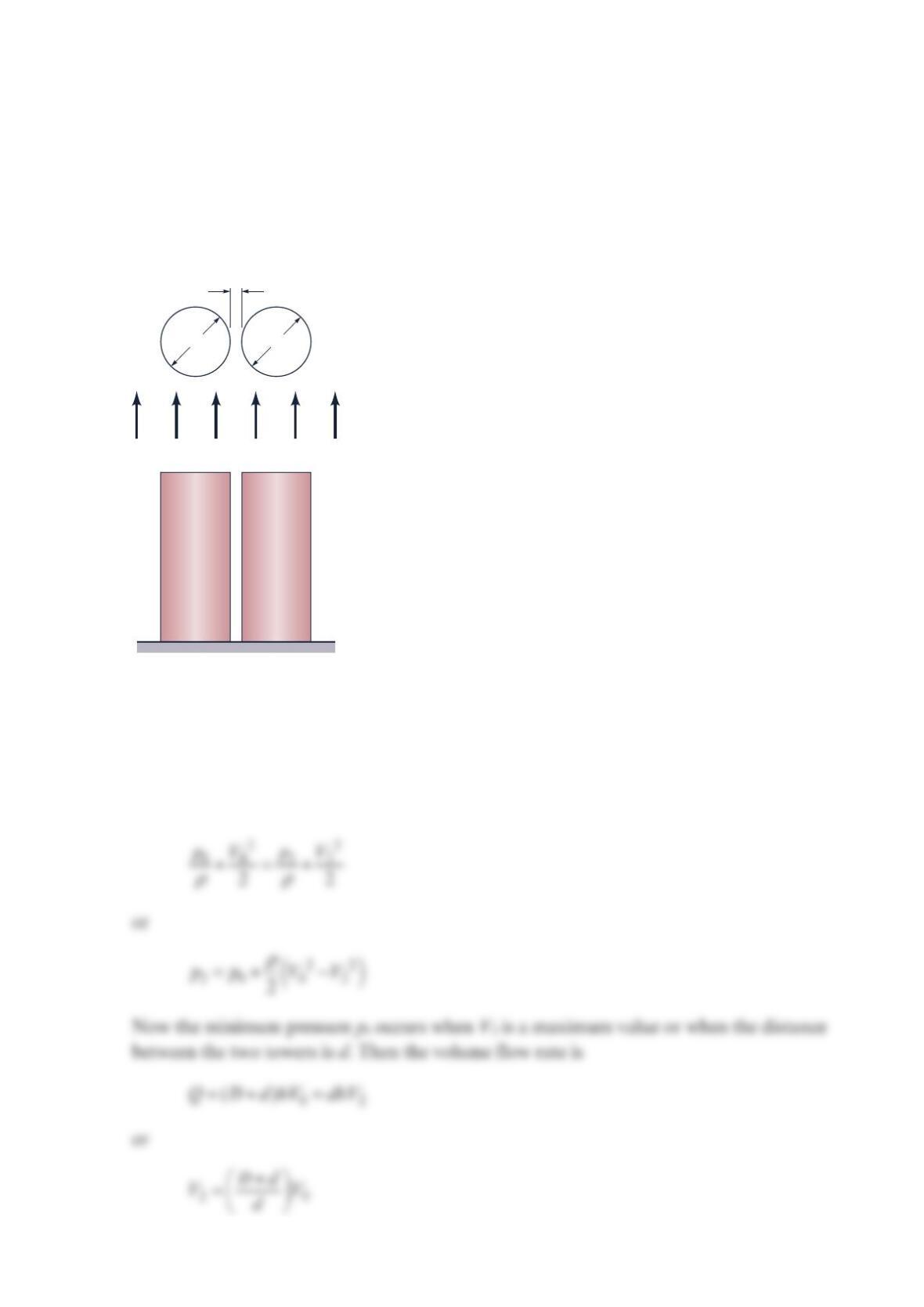
Thus,
Problem 3.119
The figure below shows two tall towers. Air at 10 C° is blowing toward the two towers at
030 km / hrV=. If the two towers are 10 m apart and half the air flow approaching the two
towers passes between them, find the minimum air pressure between the two towers. As-
sume constant air density, inviscid flow, and steady-state conditions. The atmospheric pres-
sure is 101kPa .
Solution 3.119
Apply Bernoulli’s equation to a streamline connecting the approach velocity V0 conditions
and a point between the cylinders (2, V2, p2). Assuming 02
zz=,
D = 60 m D = 60 m
d = 10 m
Top view
Elevation view
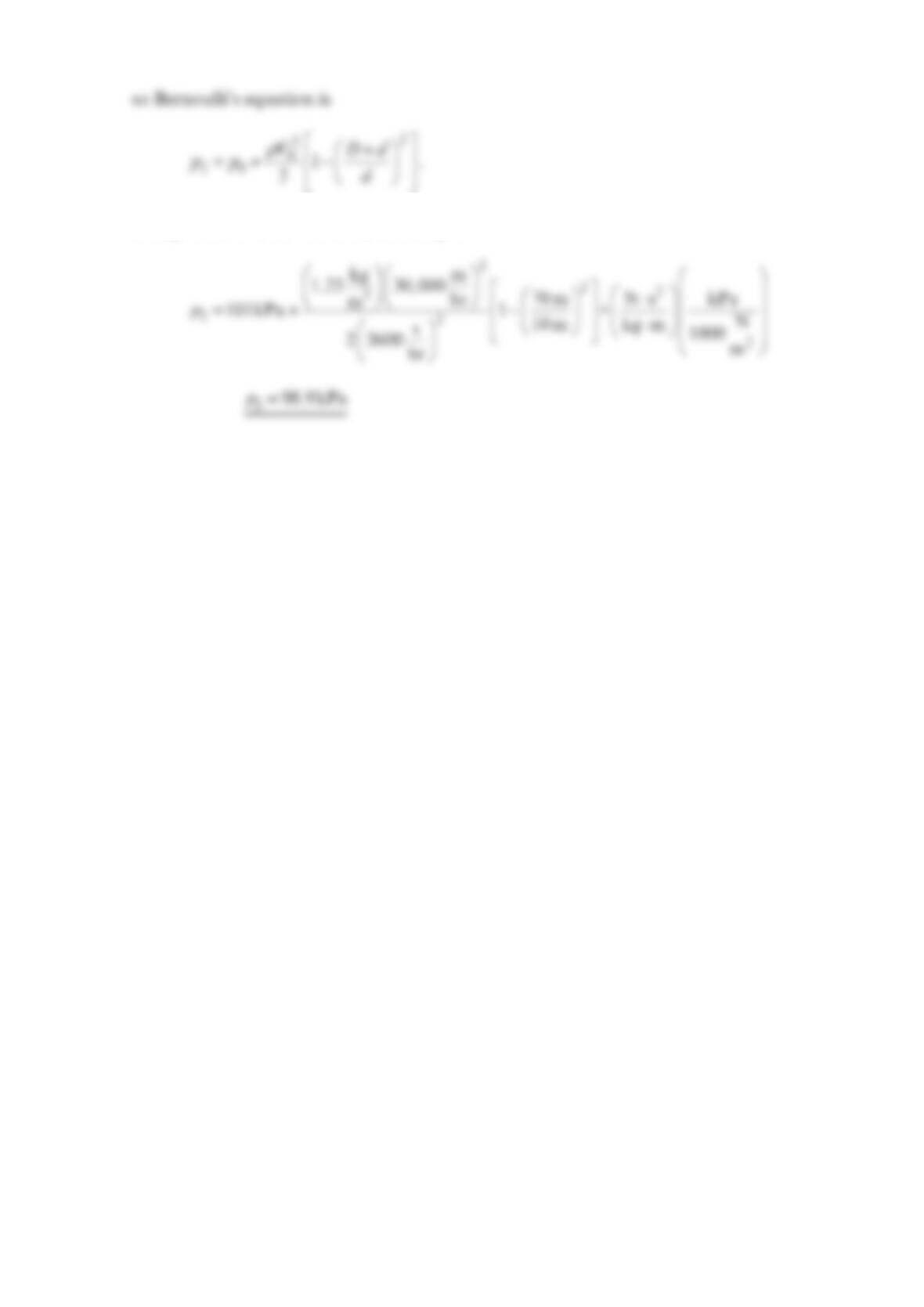
Using Table B.4, the numerical values give
Problem 3.120
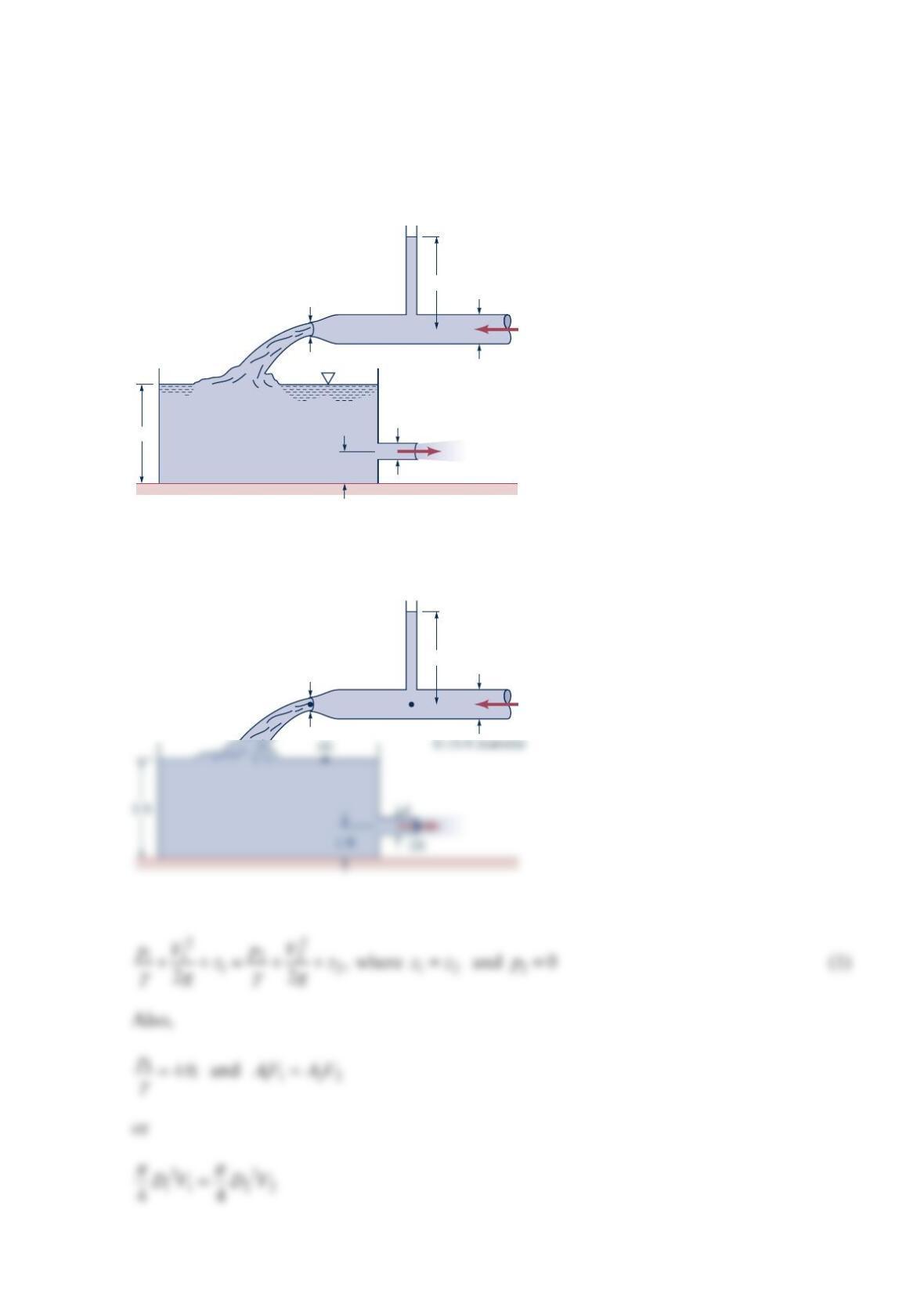
Water flows steadily from a nozzle into a large tank as shown in the figure below. The
water then flows from the tank as a jet of diameter d. Determine the value of d if the water
level in the tank remains constant. Viscous effects are negligible.
Solution 3.120
From the Bernoulli’s equation,
1 ft
3 ft
4 ft
d
0.15-ft diameter
0.1-ft diameter
4 ft
0.1-ft diameter
(2) (1)
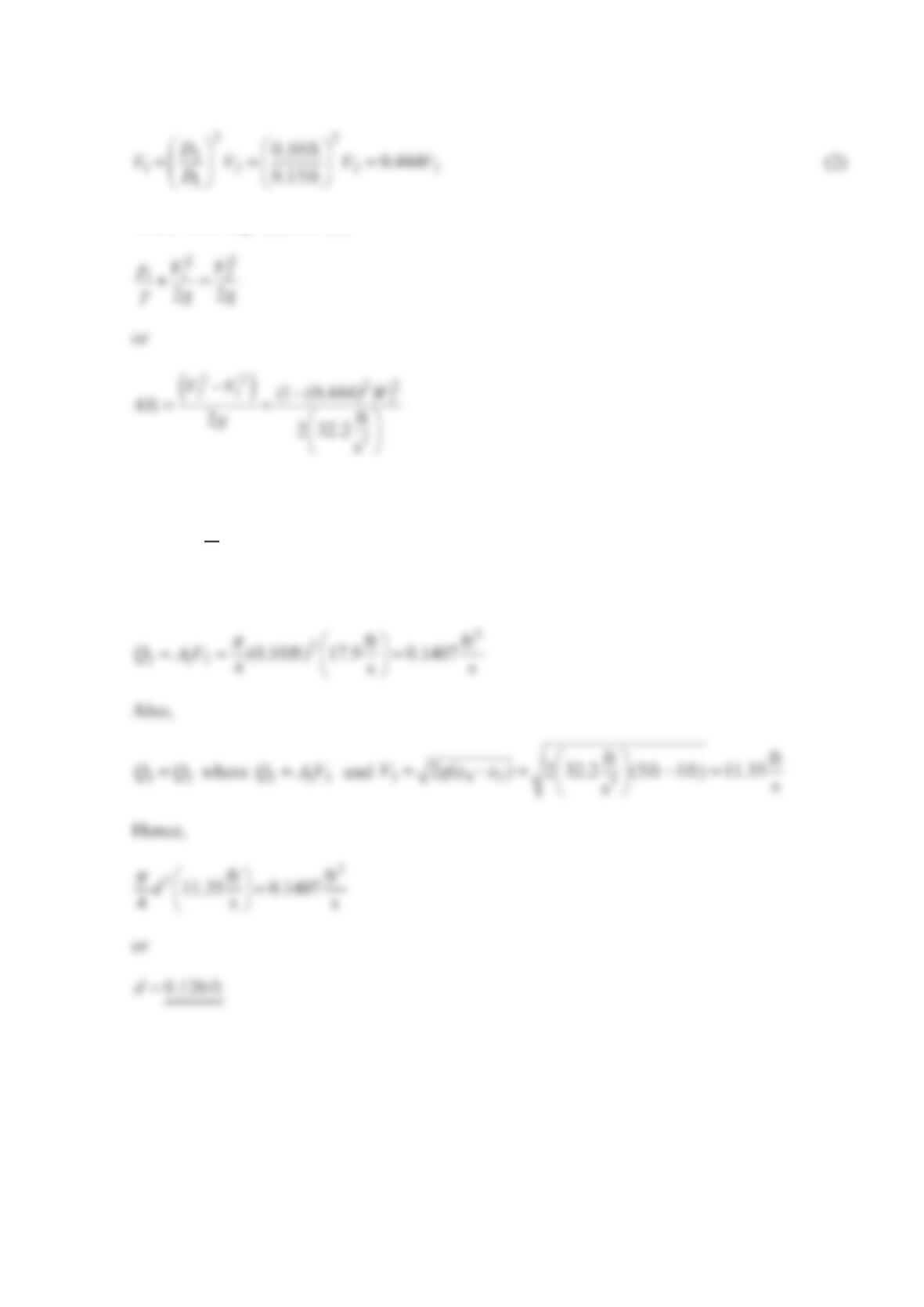
so that
Thus, from Eqs. (1) and (2),
Hence,
2
ft
17.9 s
V=
so that
Problem 3.121
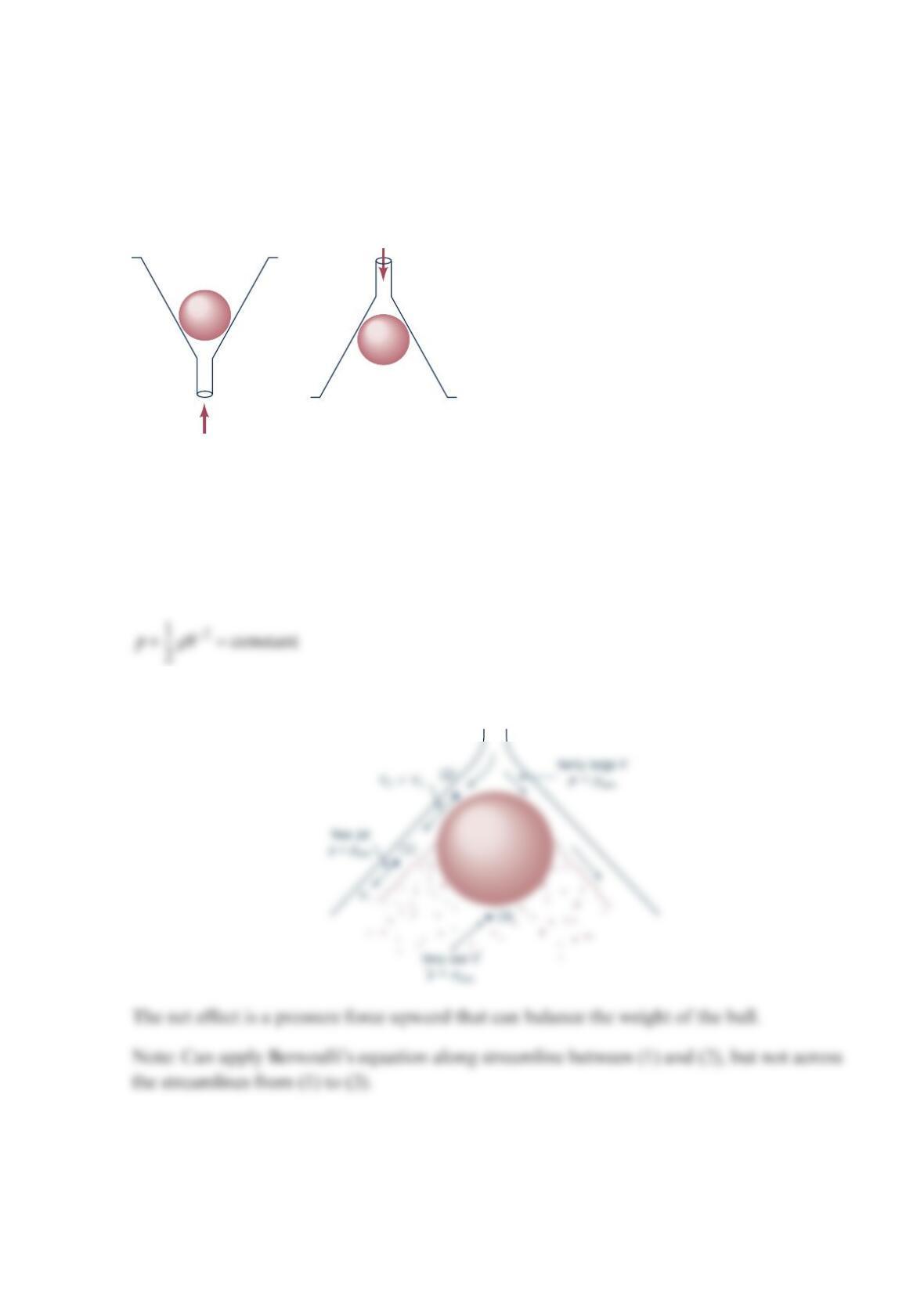
A small card is placed on top of a spool as shown in the figure below. It is not possible to
blow the card off the spool by blowing air through the hole in the center of the spool. The
harder one blows, the harder the card “sticks” to the spool. In fact by blowing hard
enough, it is possible to keep the card against the spool with the spool turned upside down.
Give this experiment a try. (Note: It may be necessary to use a thumb tack to prevent the
card from sliding from the spool.) Explain this phenomenon.
Solution 3.121
As the air flows radially outward in the gap between the card and the spool, it slows down
since the flow area increases with r, the radial distance from the center.
Q
Card
Spool
Problem 3.122
Observations show that it is not possible to blow the table tennis ball from the funnel
shown in figure (a) below. In fact, the ball can be kept in an inverted funnel, figure (b) be-
low, by blowing through it. The harder one blows through the funnel, the harder the ball is
held within the funnel. Try this experiment on your own. Explain this phenomenon.
Solution 3.122
From Bernoulli’s equation with negligible gravity,
Thus, large V means small p. In general, the flow field around the ball is as indicated.
(
a
)(
b
)
Q
Q
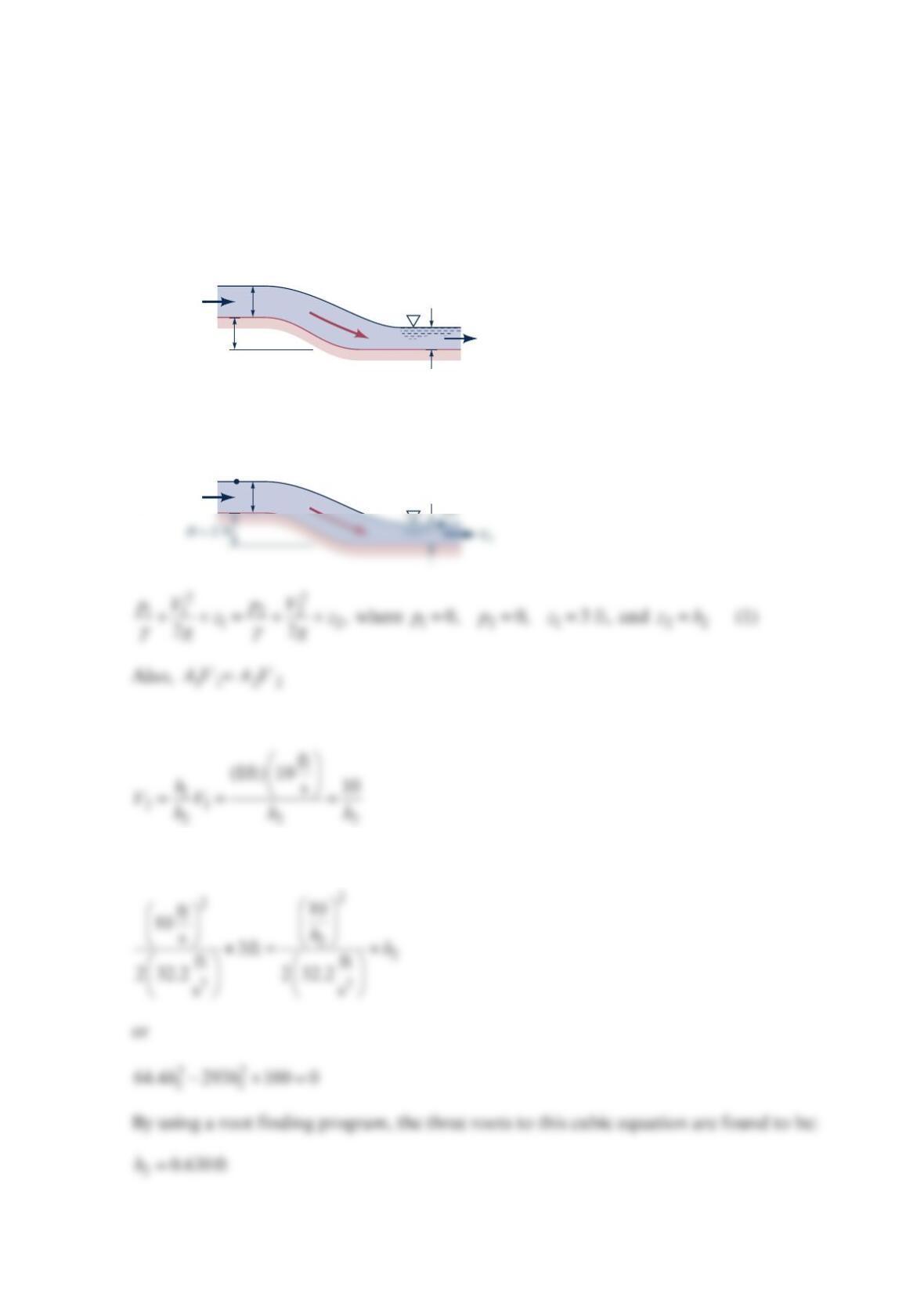
Problem 3.123
Water flows down the sloping ramp shown in the figure below with negligible viscous ef-
fects. The flow is uniform at sections (1) and (2). For the conditions given, show that three
solutions for the downstream depth, 2
h, are obtained by use of the Bernoulli and continuity
equations. However, show that only two of these solutions are realistic. Determine these
values.
Solution 3.123
or
Thus, Eq. (1) becomes
V1 = 10 ft/s h1 = 1 ft h2
H = 2 ft V2
V
1 = 10 ft/s
h
1 = 1 ft
h
2
(1)