CHAPTER 26
Planning for Capital Investments
ASSIGNMENT CLASSIFICATION TABLE
Learning Objectives
Questions
Brief
Exercises
Do It!
Exercises
A
Problems
1. Describe capital budgeting
inputs and apply the cash
payback technique.
1, 2, 3
1
1
1, 2, 6, 9,
10, 11
1A, 2A
4, 5, 6, 7
2, 3, 4, 5
1, 2, 3, 4
10, 11
1A, 2A, 3A,
4A, 5A
3. Identify capital budgeting
8, 9, 10, 11
4, 5, 6
3
4
3A , 4A, 5A
12, 13, 16
5, 6, 7
3A, 5A
3, 14, 15
9
8, 9, 10, 11
1A, 2A
ASSIGNMENT CHARACTERISTICS TABLE
Problem
Number
Description
Difficulty
Level
Time
Allotted (min.)
1A
Compute annual rate of return, cash payback, and net
present value.
Moderate
30–40
2A
Compute annual rate of return, cash payback, and net
present value.
3A
Compute net present value, profitability index, and
internal rate of return.
Moderate
5A
Compute net present value and internal rate of return
with sensitivity analysis.
Moderate

BLOOM’ S TAXONOMY TABLE
Correlation Chart between Bloom’s Taxonomy, Learning Objectives and End–of-Chapter Exercises and Problems
Learning Objective
Knowledge
Comprehension
Application
Analysis
Synthesis
Evaluation
1. Describe capital budgeting inputs and
apply the cash payback technique.
Q26-1
Q26-2
Q26-3
BE26-1
DI26-1
E26-9
E26–10
E26–11
E26-1
E26-2
E26-6
P26–1A
P26–2A
3. Identify capital budgeting challenges
and refinements.
Q26-9
Q26–11
Q26-8
Q26–10
DI26-3
BE26-4
BE26-5
BE26-6
E26-4
P26–3A
P26–4A
P26–5A
E26-6
BYP26-3
BYP26-1
BYP26-7
BYP26-2
BYP26-6
P26–2A
ANSWERS TO QUESTIONS
1. The screening of proposed capital expenditures may be done by a capital budgeting committee
4. The two tables are:
7. The following simplifying assumptions were made:
Questions Chapter 26 (Continued)
12. When the net annual cash flows are equal each year, the steps are:
SOLUTIONS TO BRIEF EXERCISES
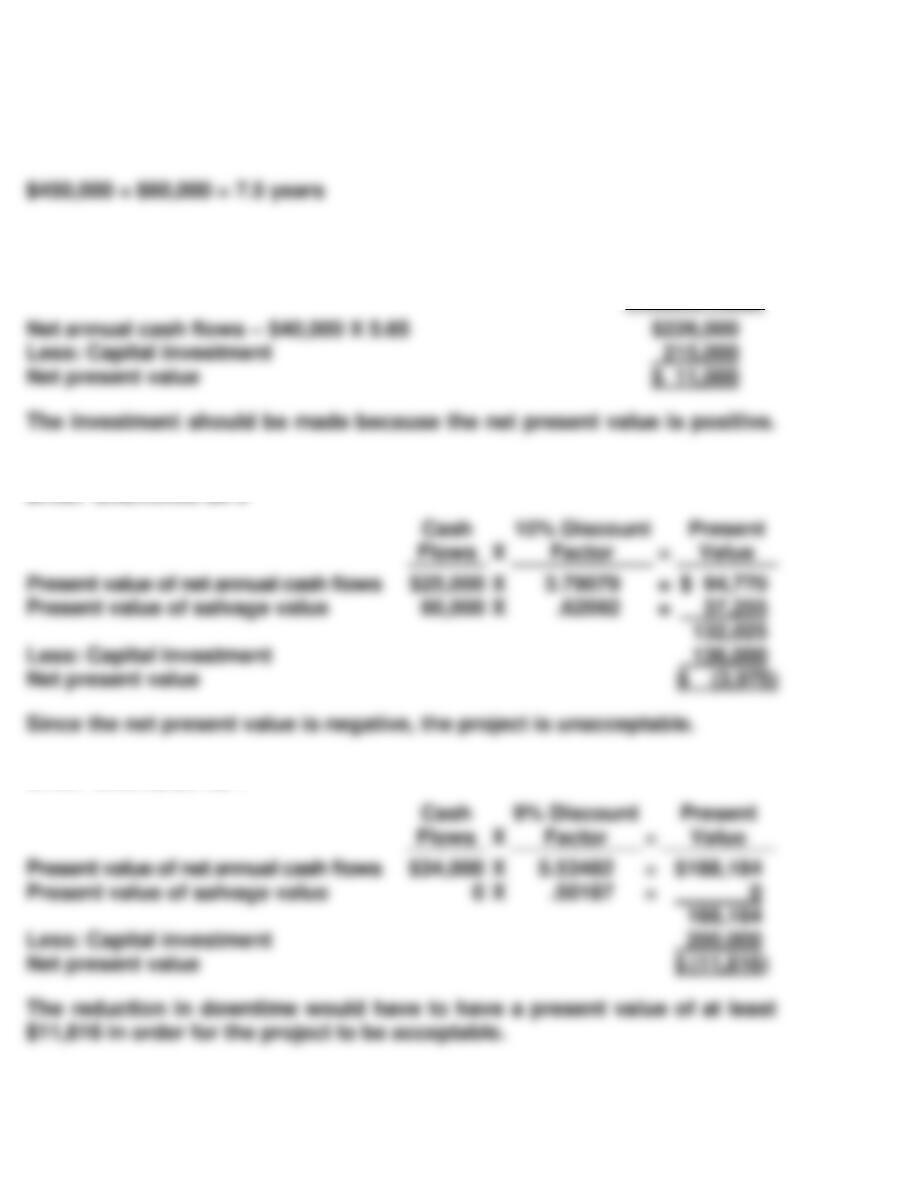
BRIEF EXERCISE 26-1
BRIEF EXERCISE 26-2
Present Value
Net present value
BRIEF EXERCISE 26-3
Net present value
BRIEF EXERCISE 26-4
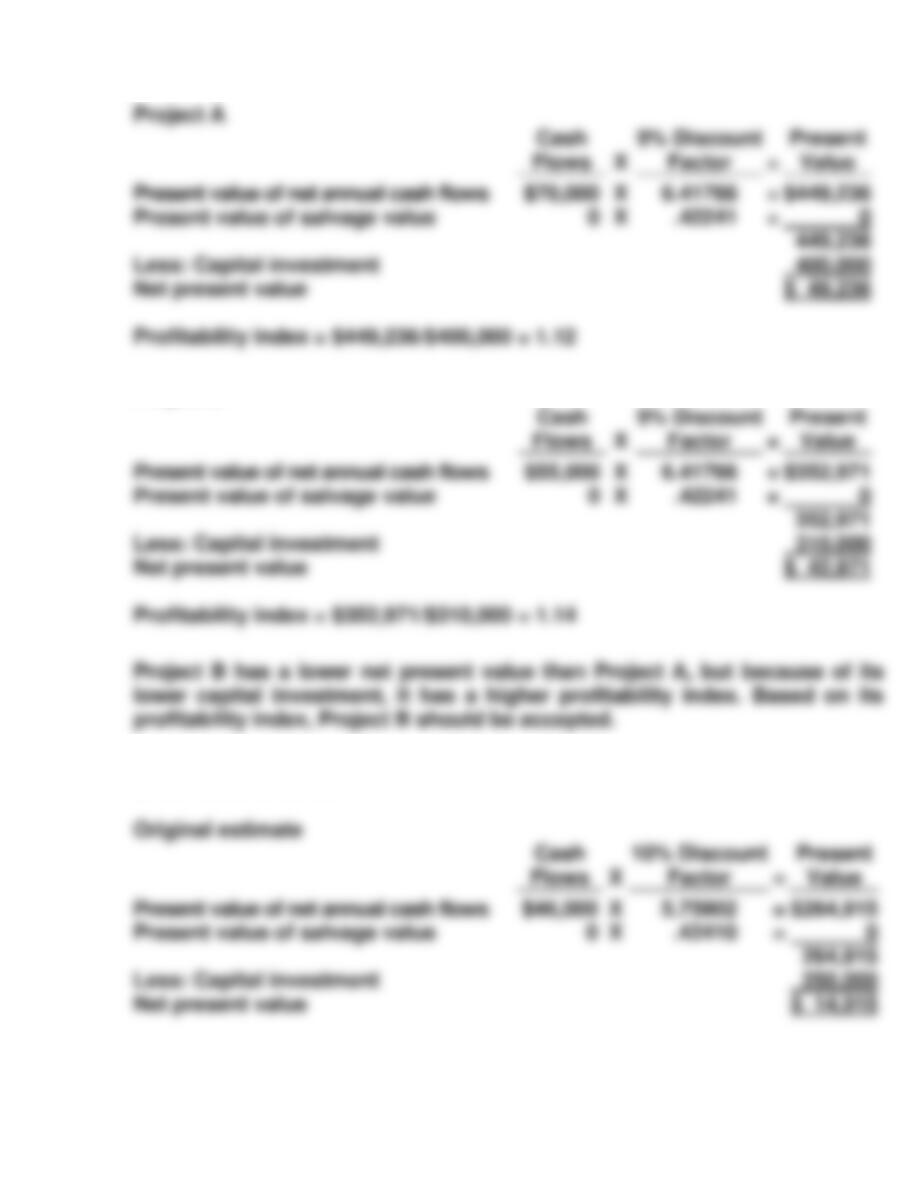
BRIEF EXERCISE 26-5
Project B
BRIEF EXERCISE 26-6
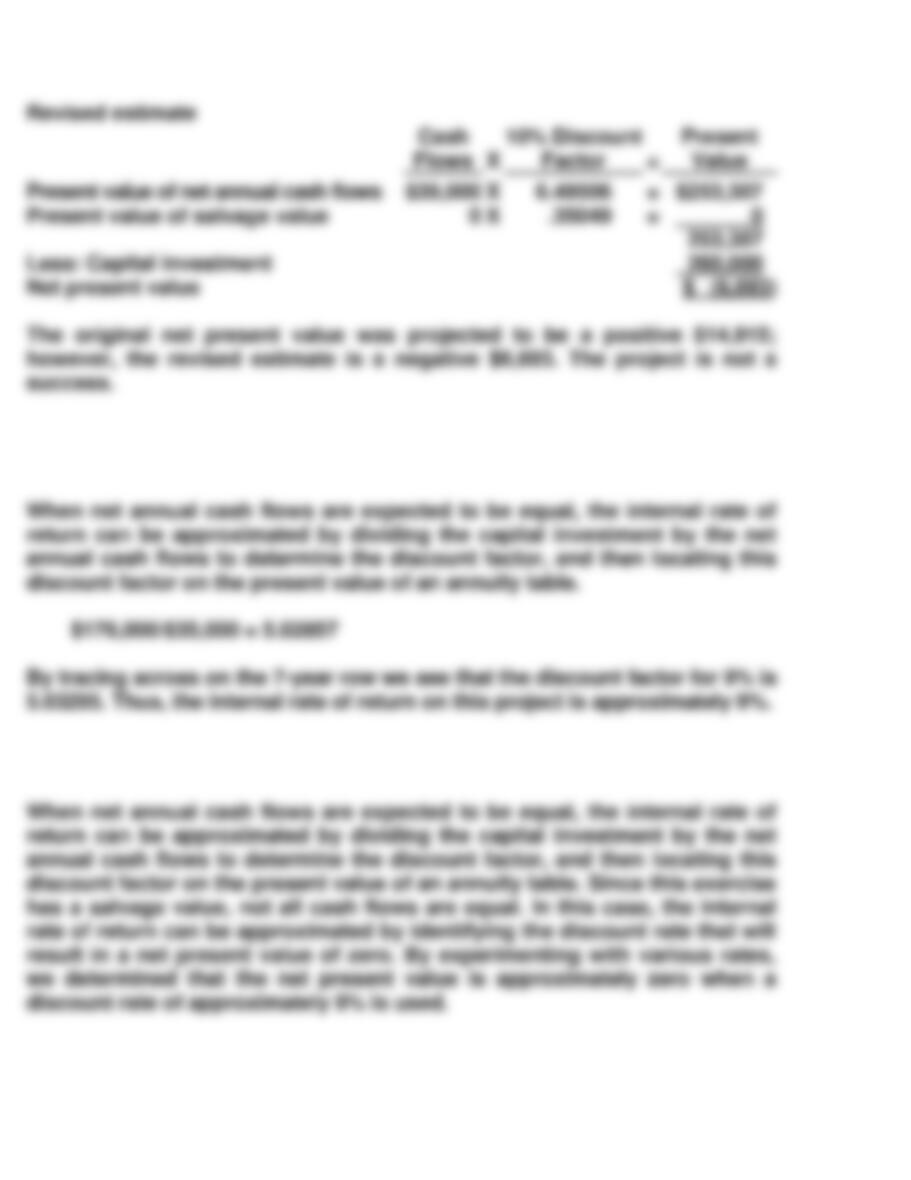
BRIEF EXERCISE 26-6 (Continued)
BRIEF EXERCISE 26-7
BRIEF EXERCISE 26-8
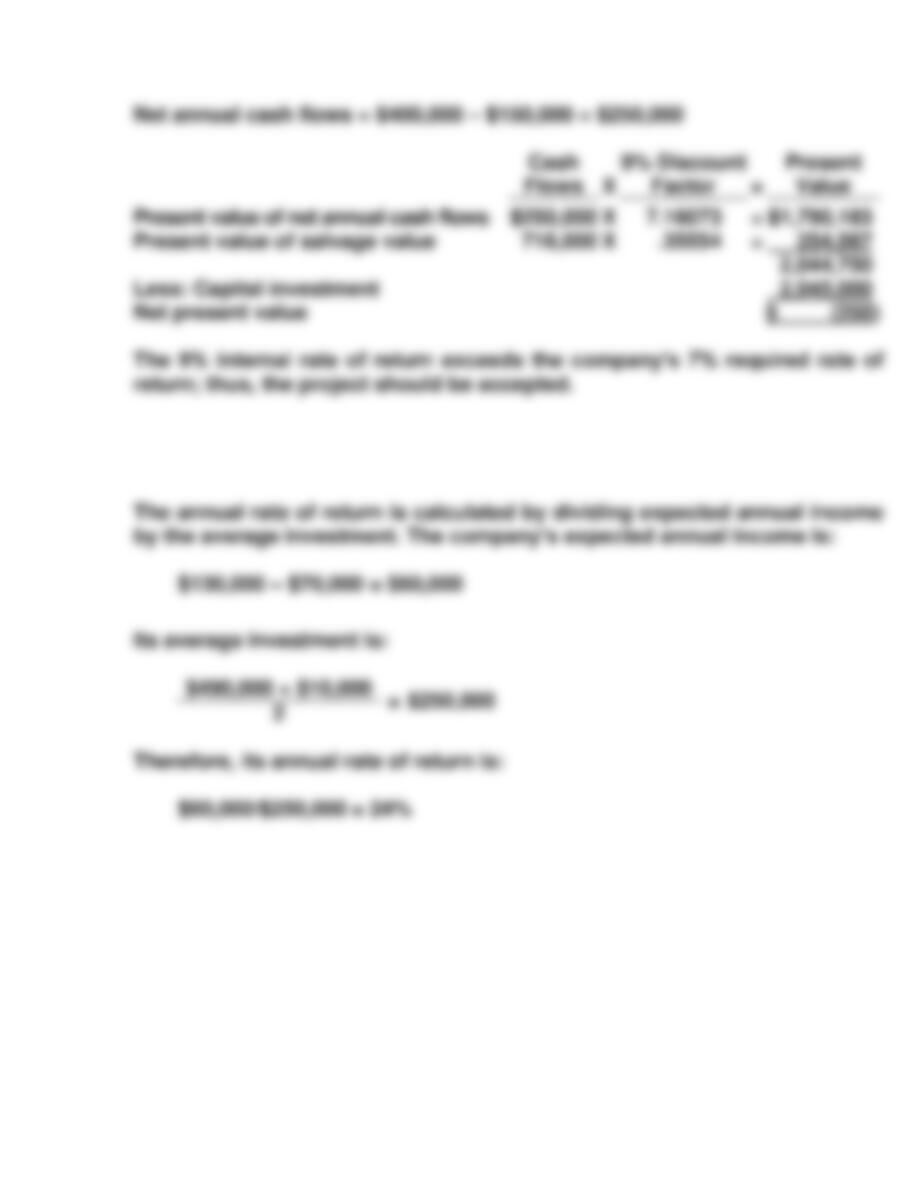
BRIEF EXERCISE 26-8 (Continued)
BRIEF EXERCISE 26-9
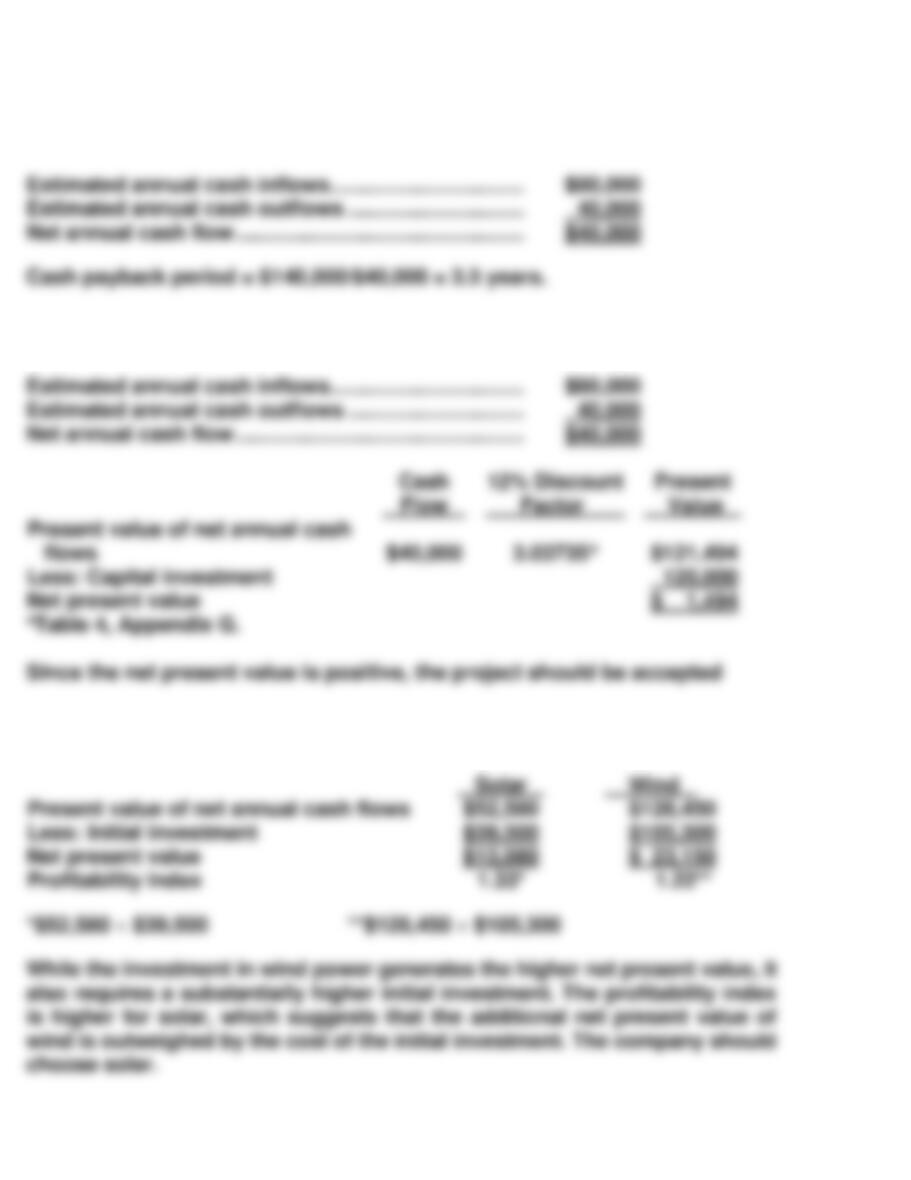
SOLUTIONS FOR DO IT! REVIEW EXERCISES
DO IT! 26-1
DO IT! 26-2
DO IT! 26-3
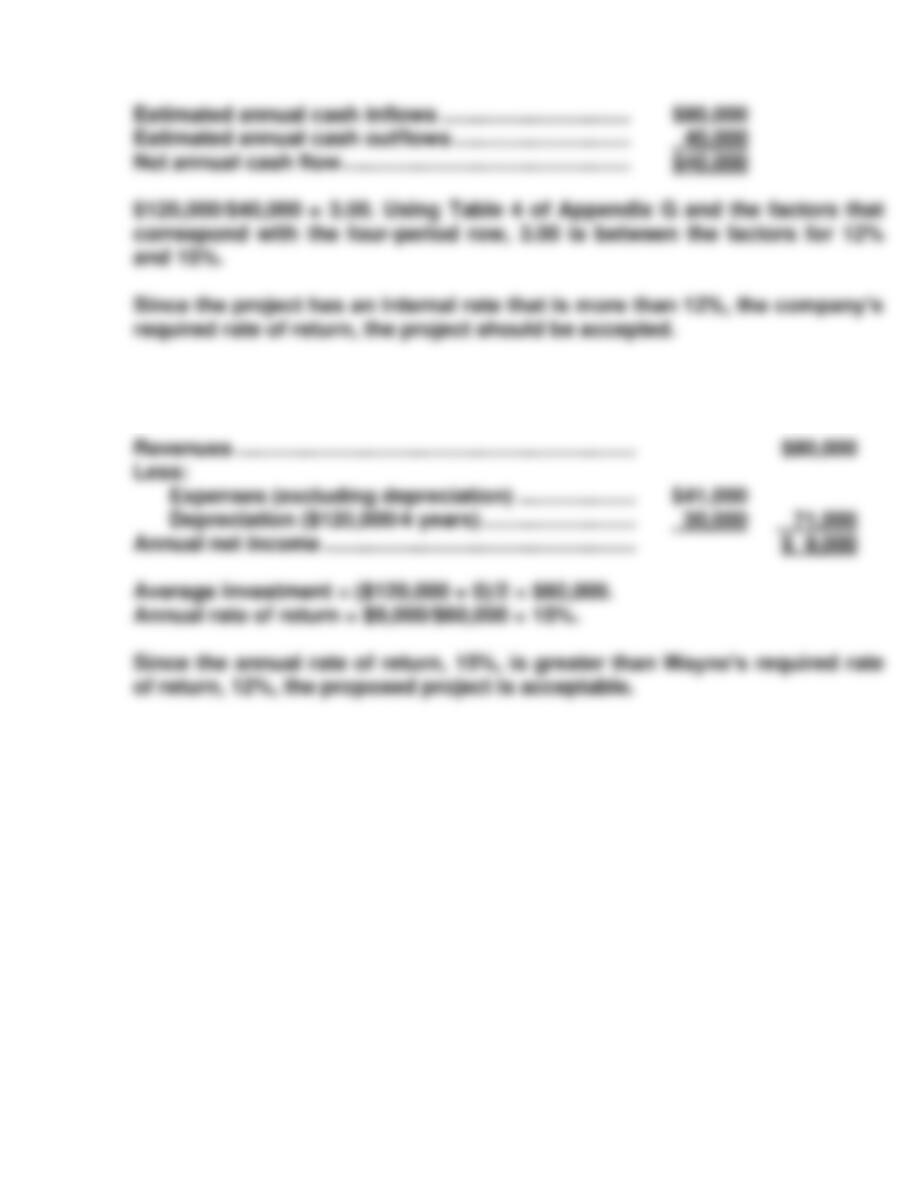
DO IT! 26-4
DO IT! 26-5
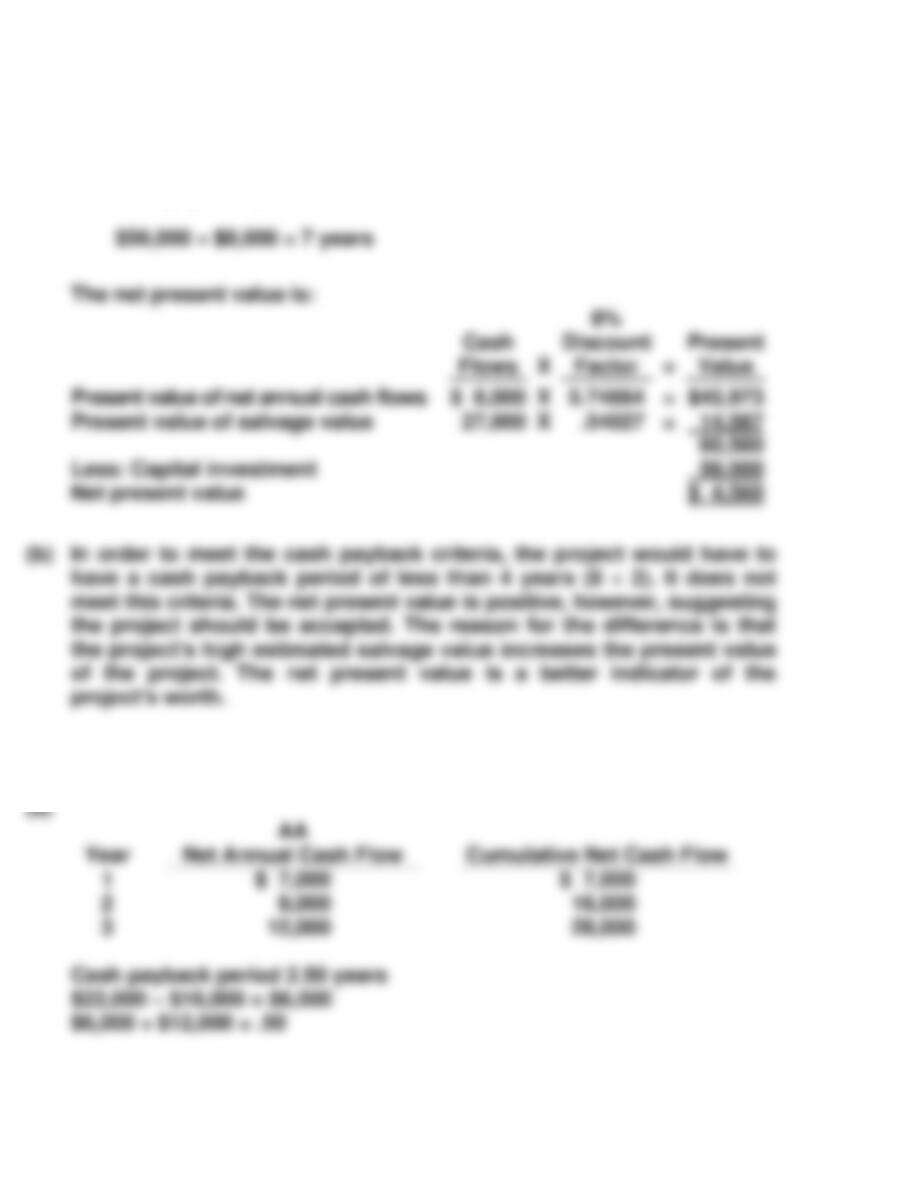
SOLUTIONS TO EXERCISES
EXERCISE 26-1
(a) The cash payback period is:
EXERCISE 26-2
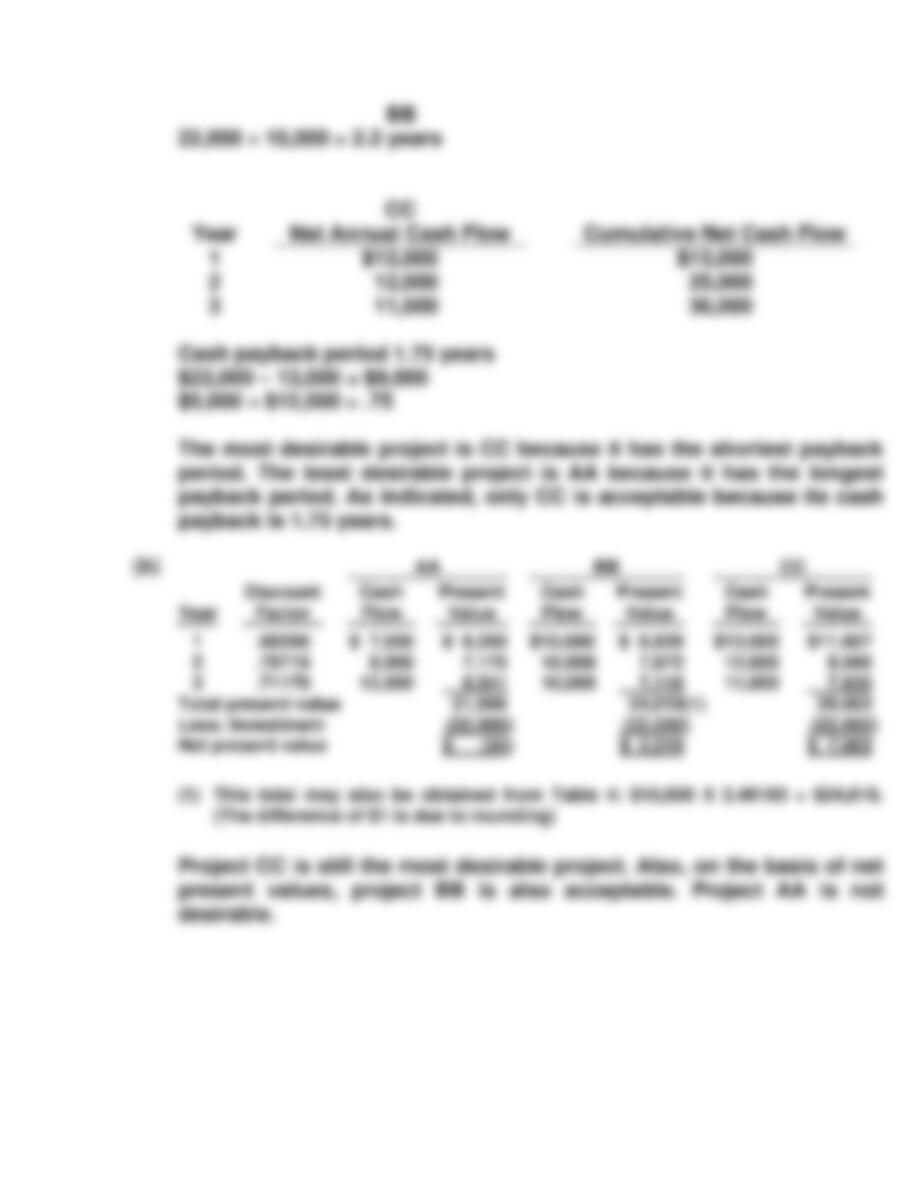
EXERCISE 26-2 (Continued)
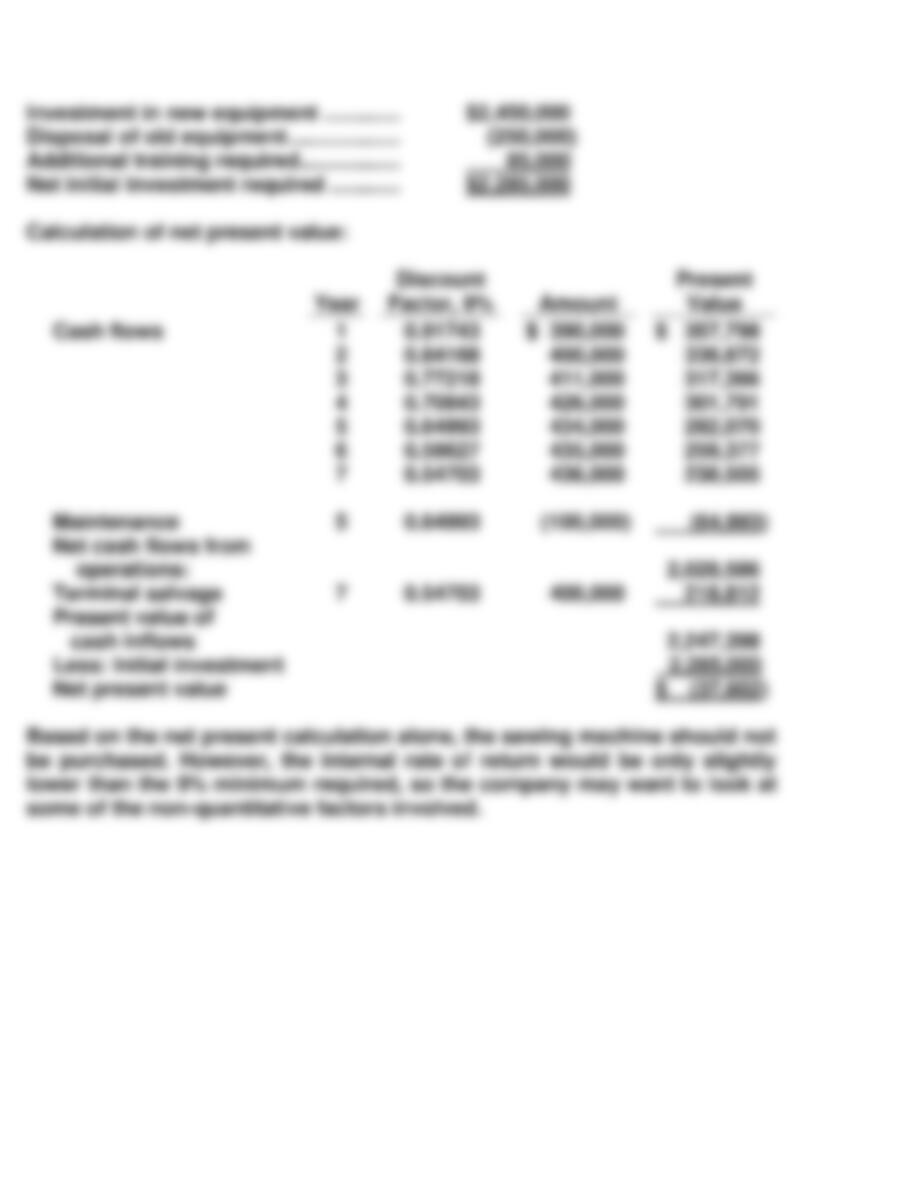
EXERCISE 26–3
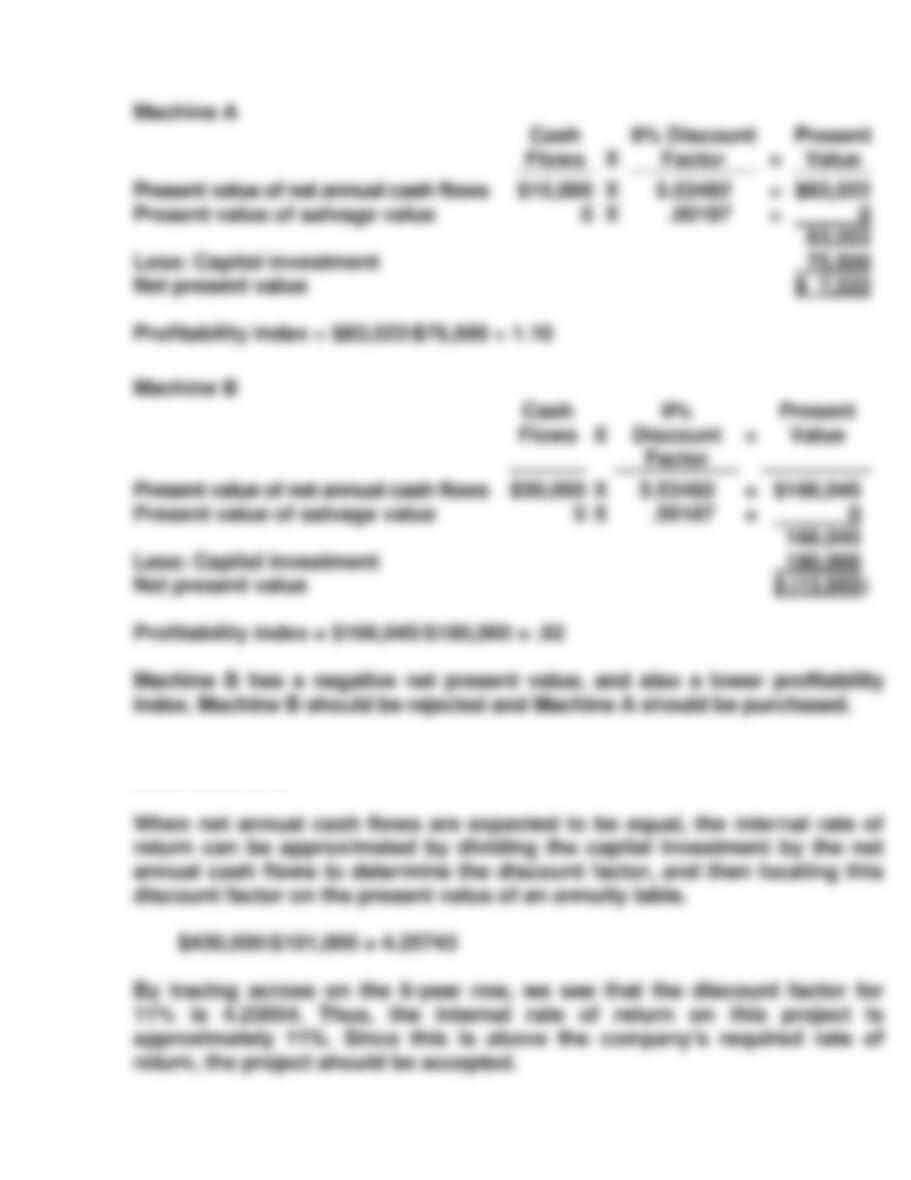
EXERCISE 26-4
EXERCISE 26-5
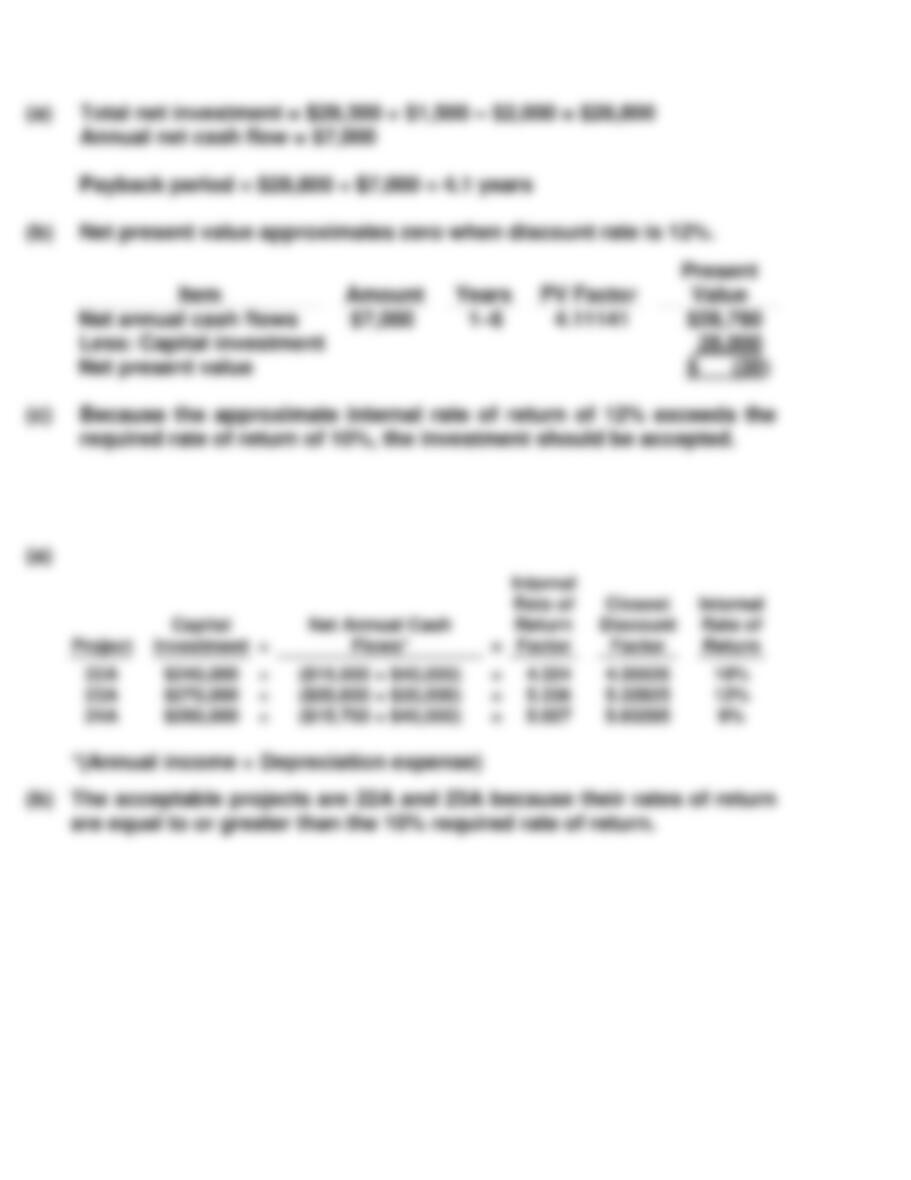
EXERCISE 26-6
EXERCISE 26-7
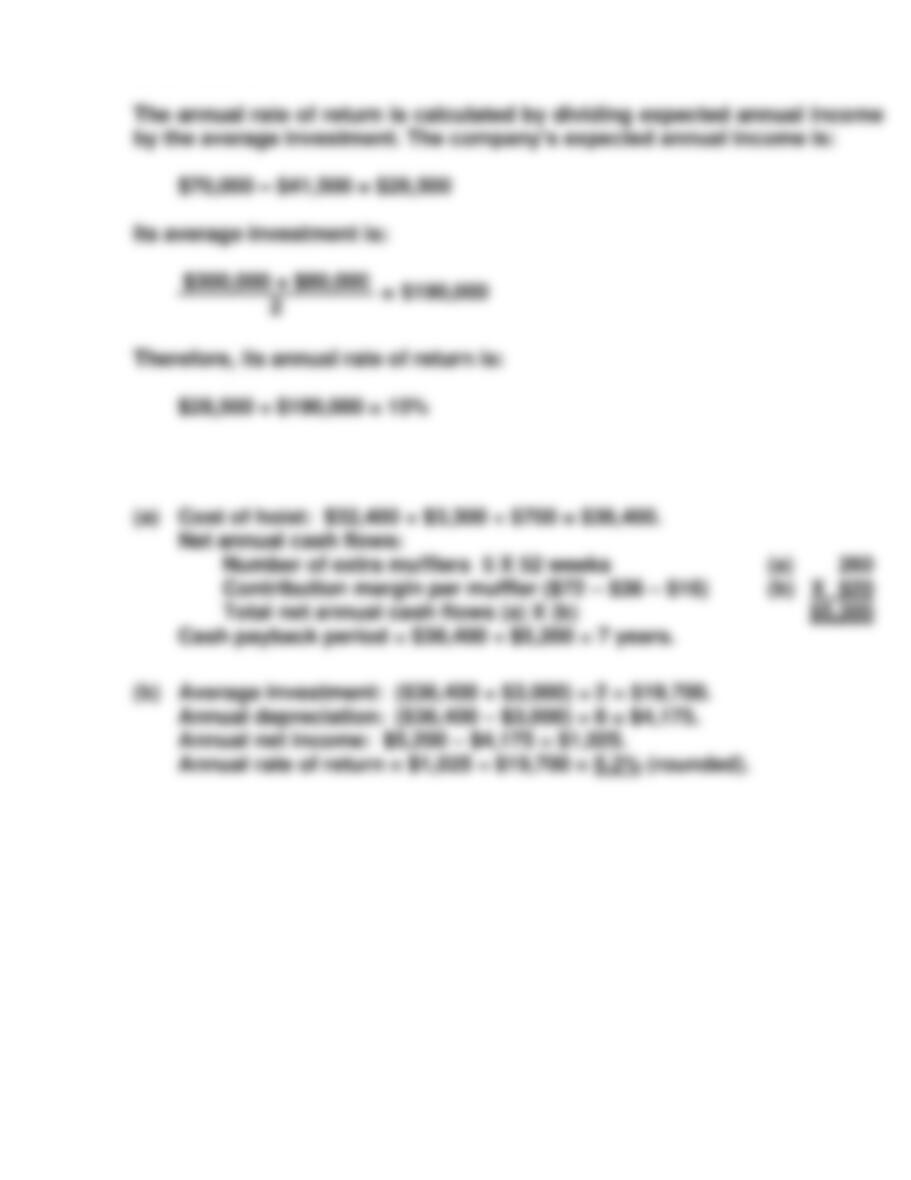
EXERCISE 26-8
EXERCISE 26-9
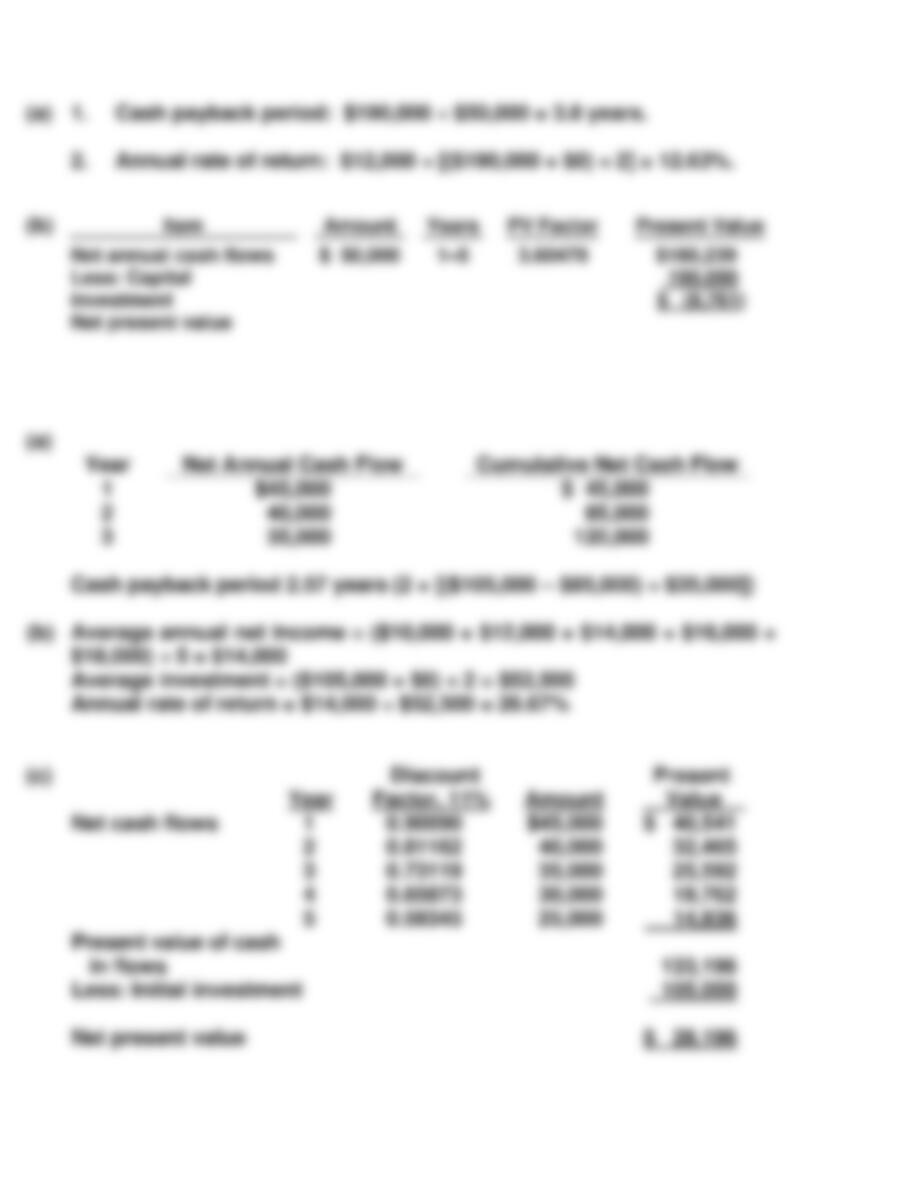
EXERCISE 26–10
EXERCISE 26–11
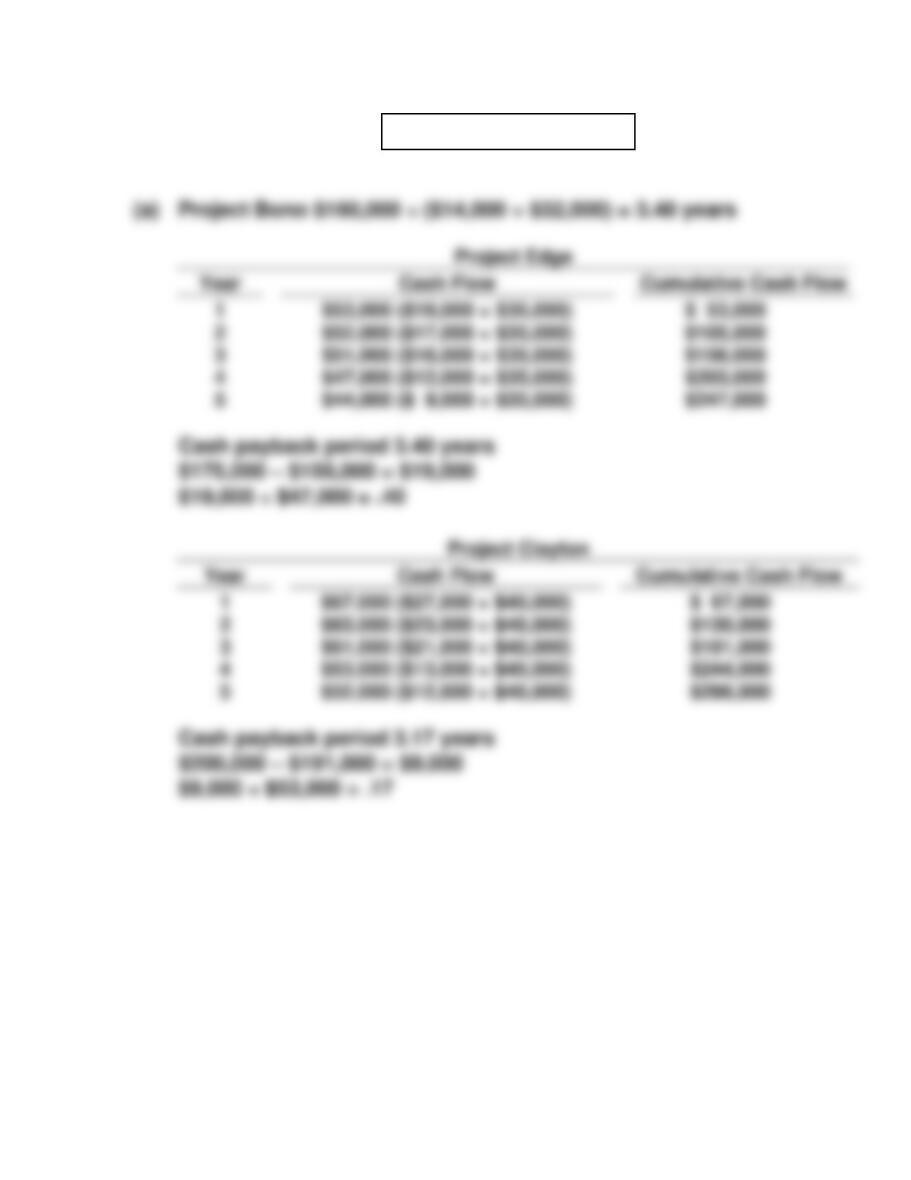
SOLUTIONS TO PROBLEMS
PROBLEM 26–1A
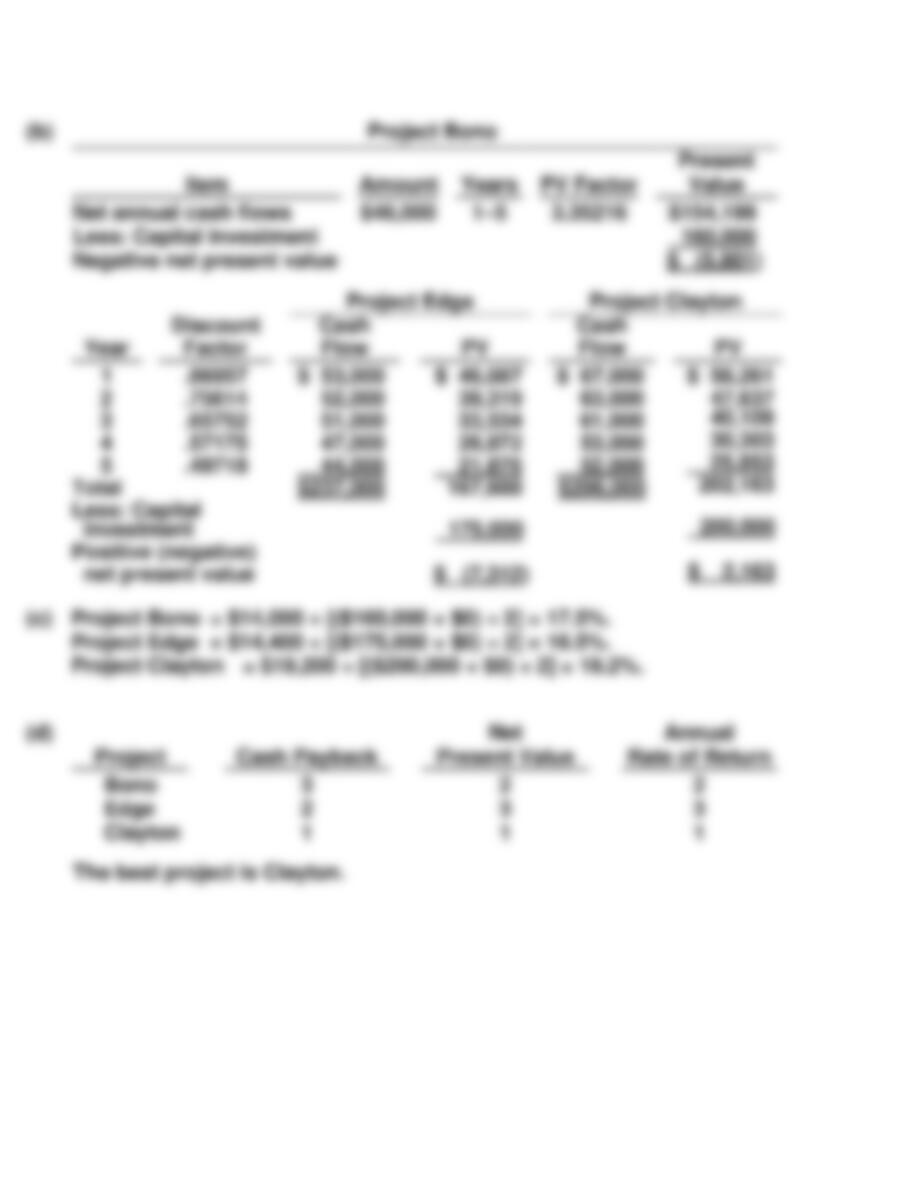
PROBLEM 26-1A (Continued)
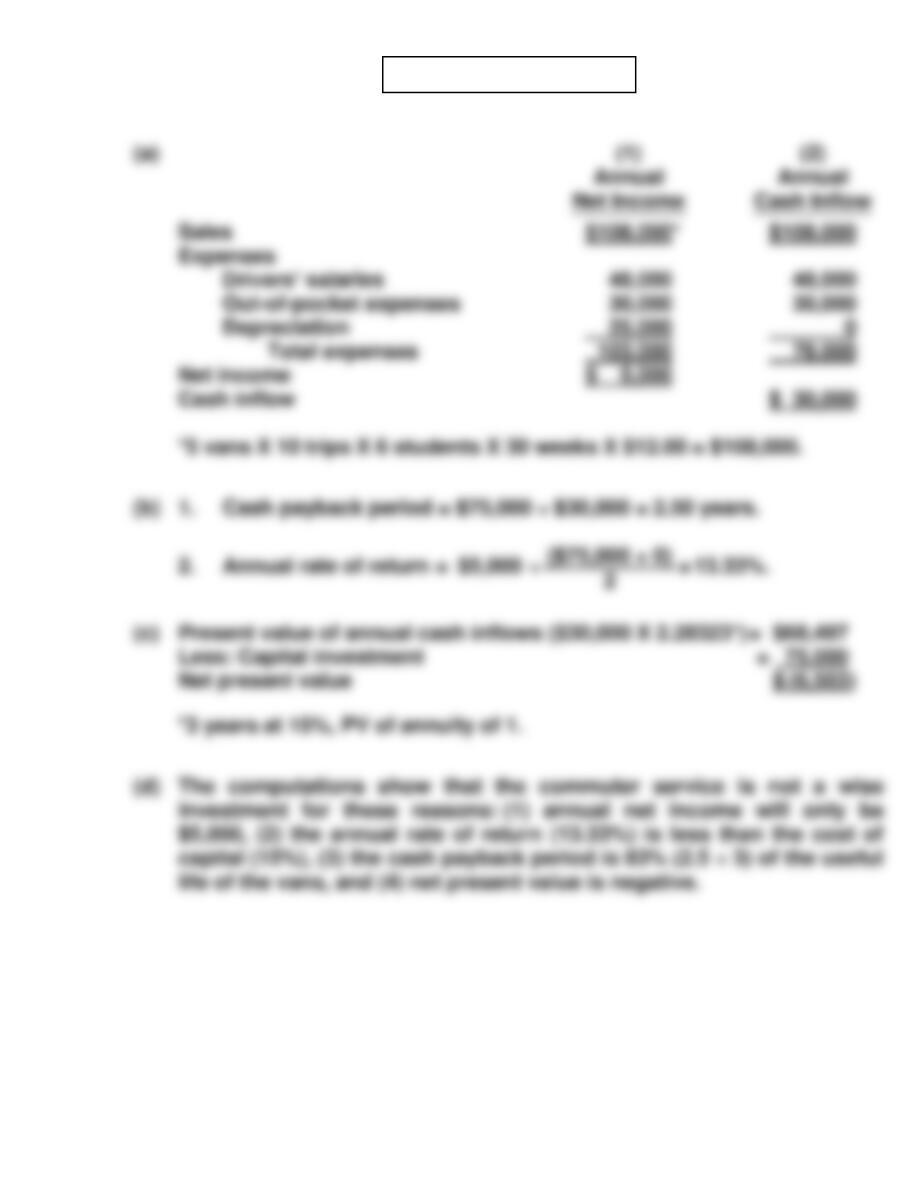
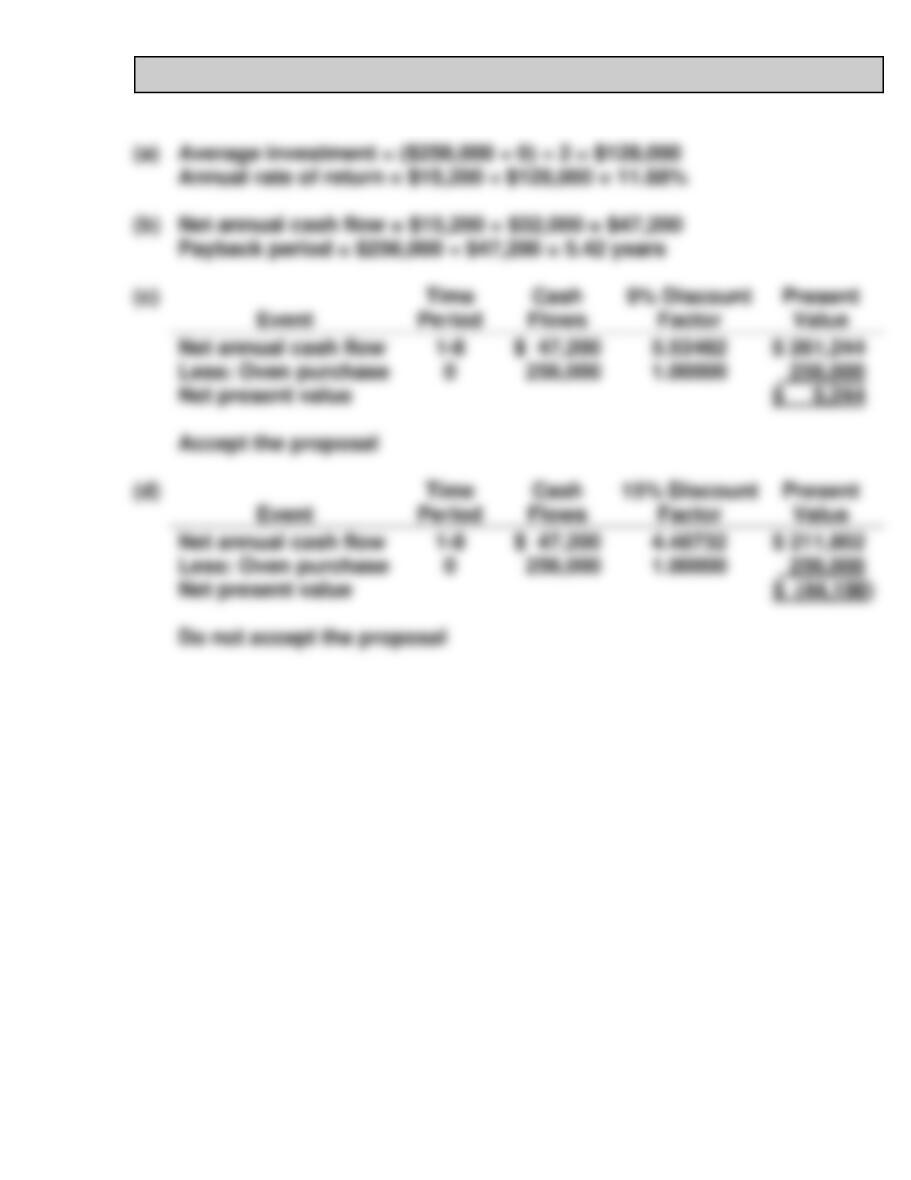
PROBLEM 26–2A
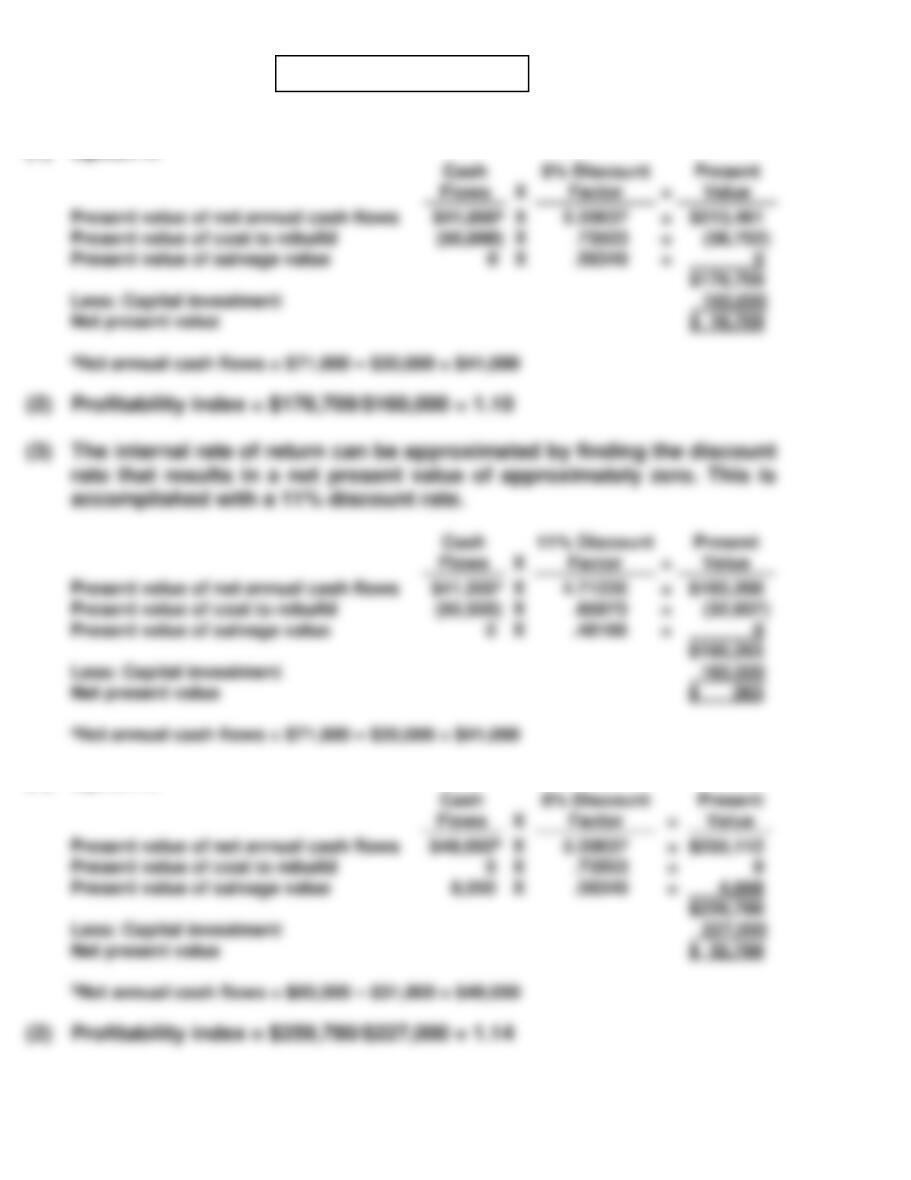
PROBLEM 26–3A
(a)
(1) Option A
(1) Option B
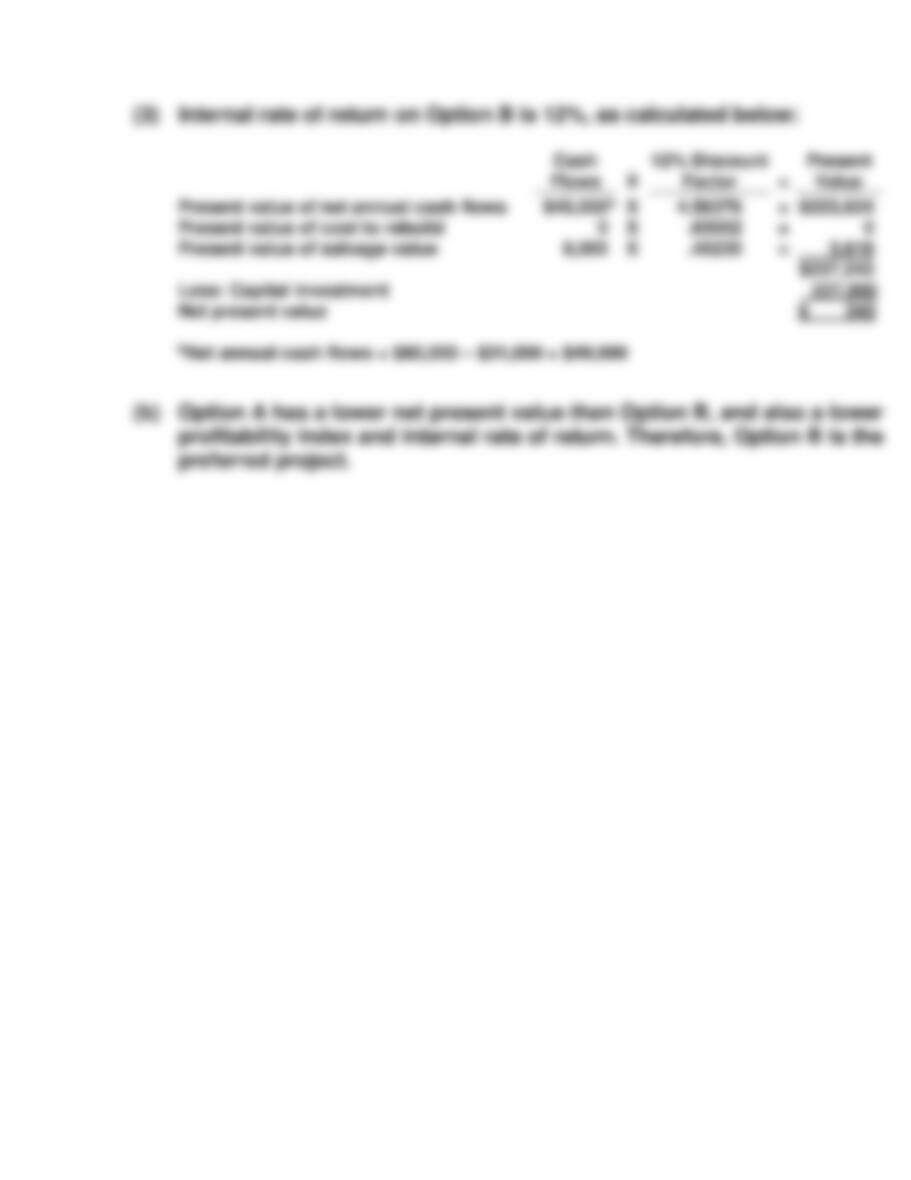
PROBLEM 26-3A (Continued)
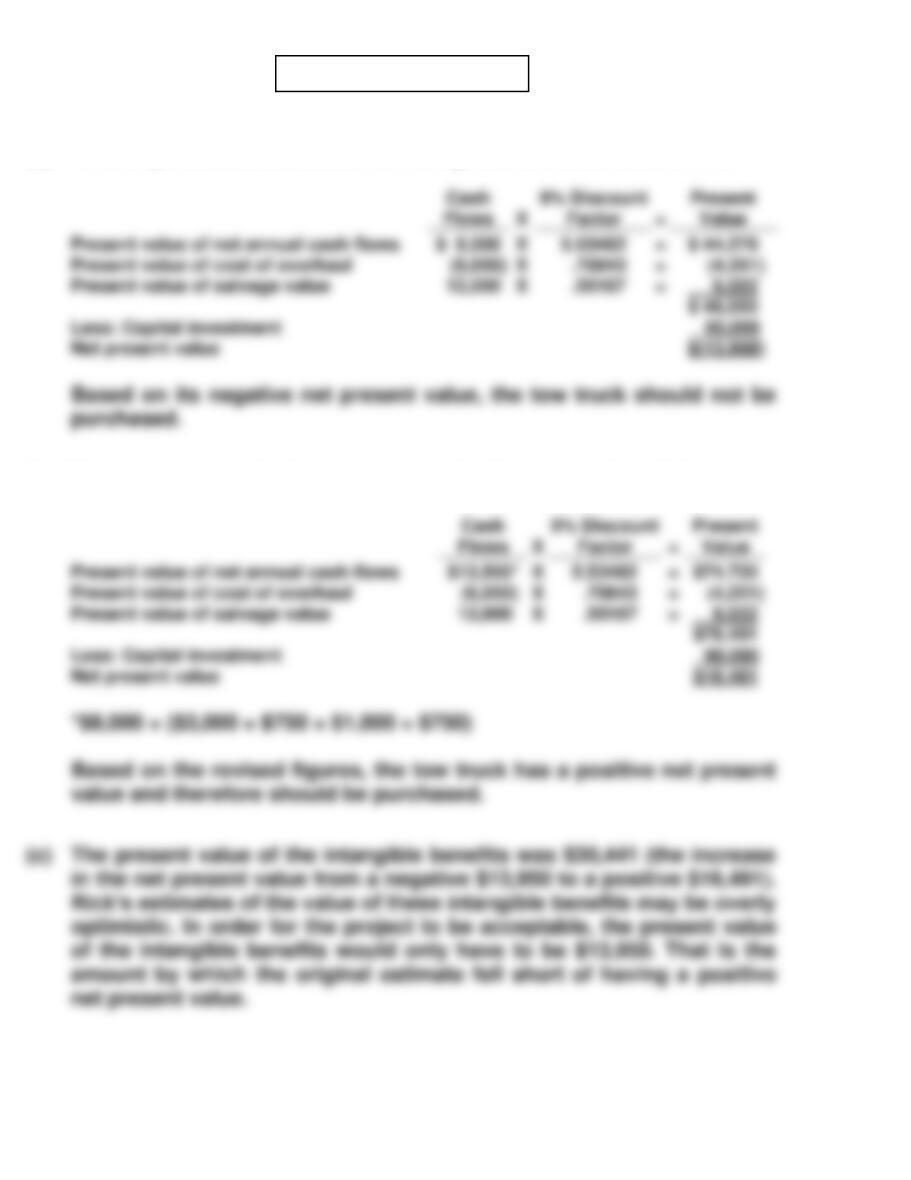
PROBLEM 26–4A
(a) The net present value based on the original estimates is as follows:
(b) The net present value based on the revised estimates is as follows:
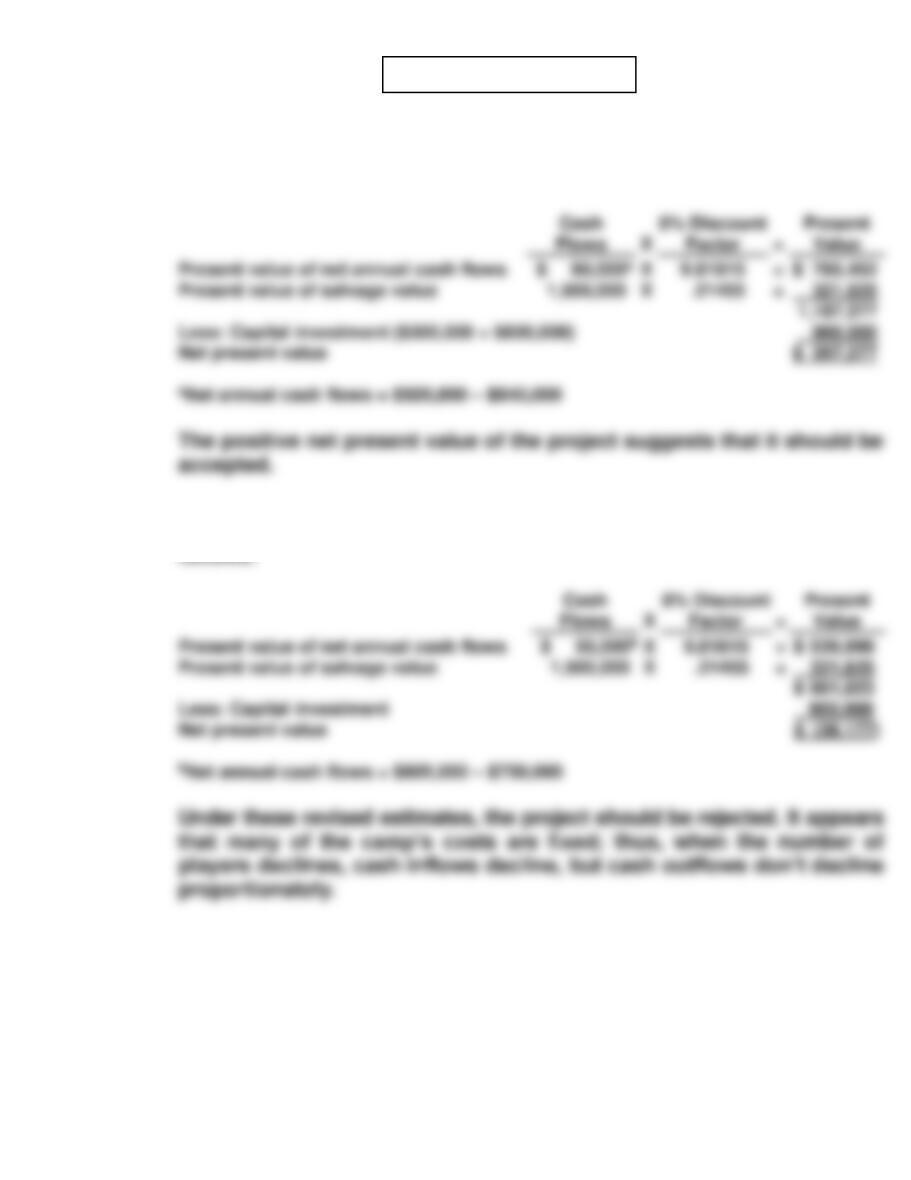
PROBLEM 26–5A
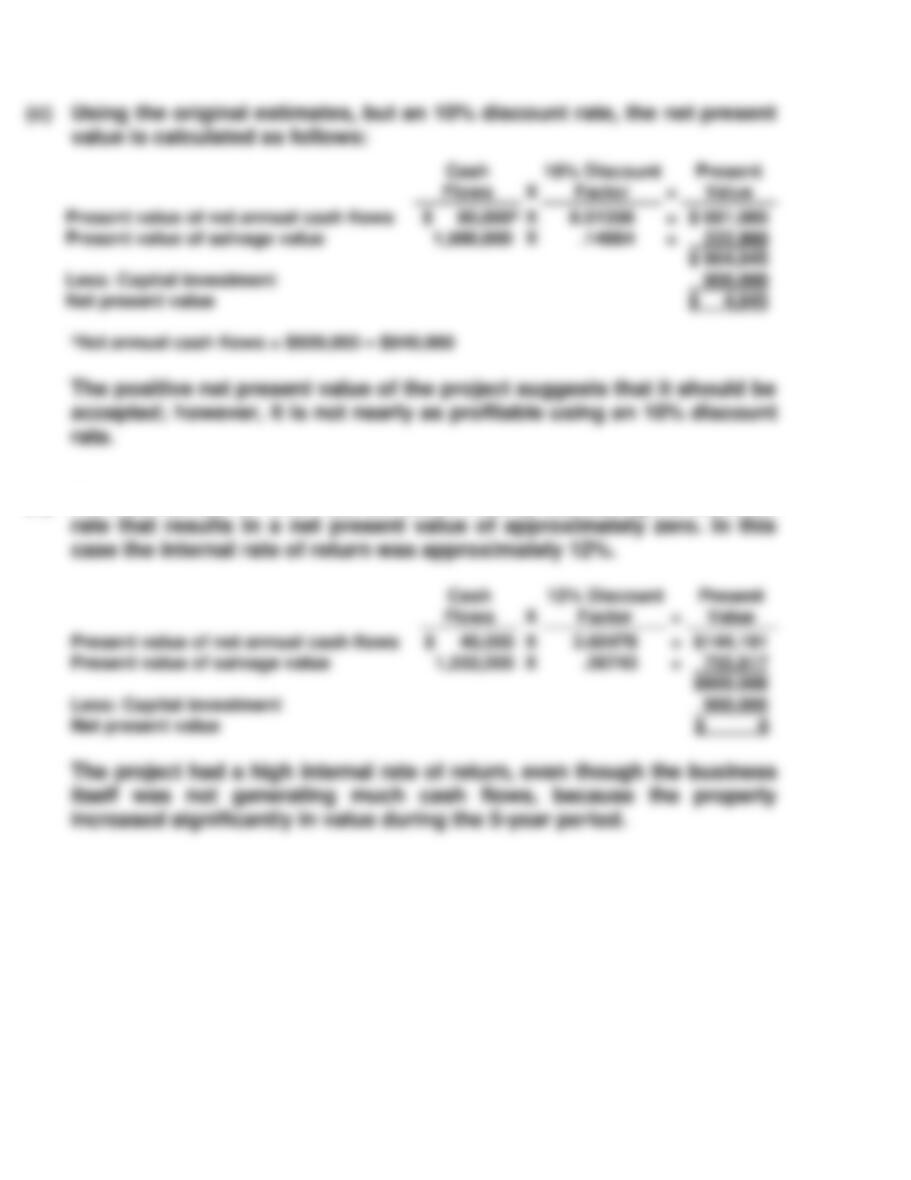
(a) Using the original estimates, the net present value is calculated as
follows:
(b) Using the revised estimates, the net present value is calculated as
PROBLEM 26-5A (Continued)
(d) The internal rate of return can be determined by calculating the discount
CD26 CURRENT DESIGNS
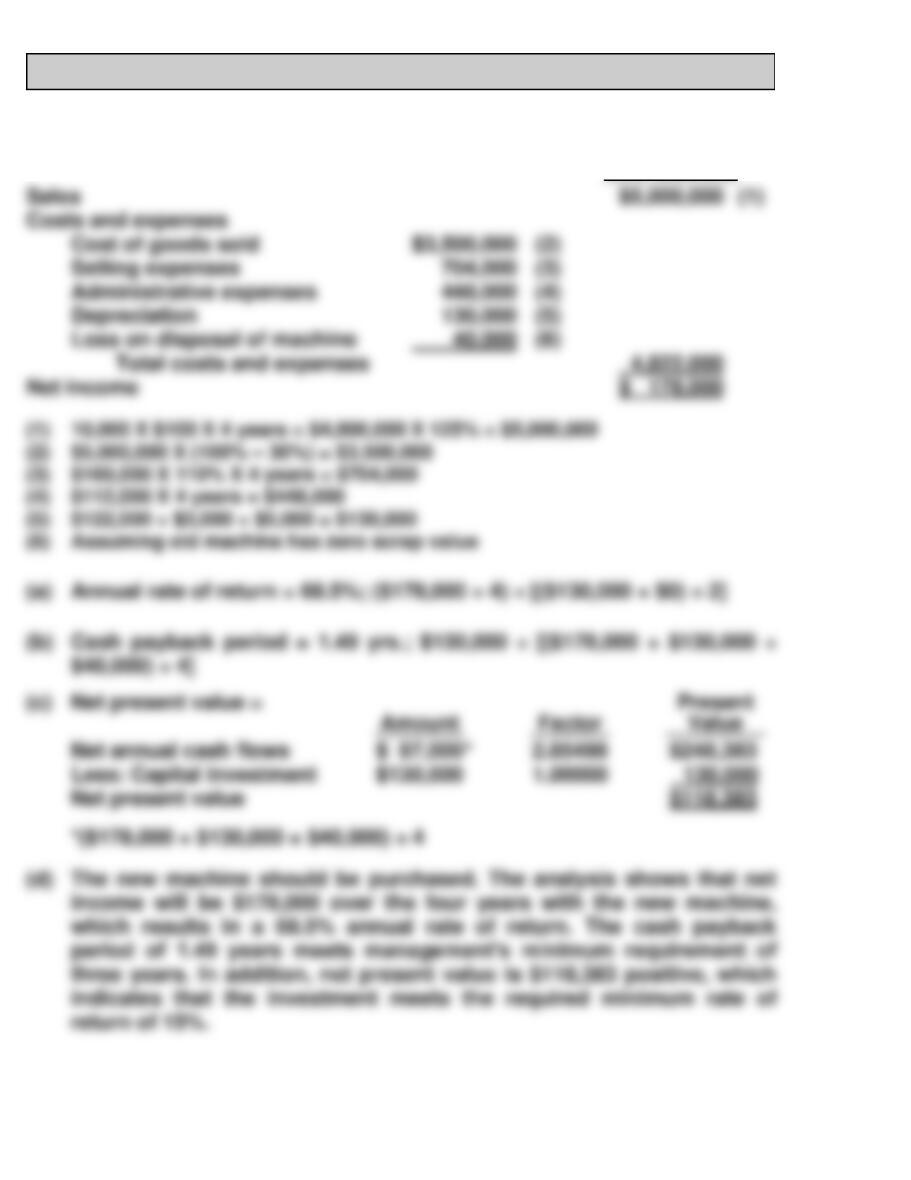
BYP 26-1 DECISION-MAKING ACROSS THE ORGANIZATION
Purchase
New Machine
(c)
Net present value =
BYP 26-2 MANAGERIAL ANALYSIS
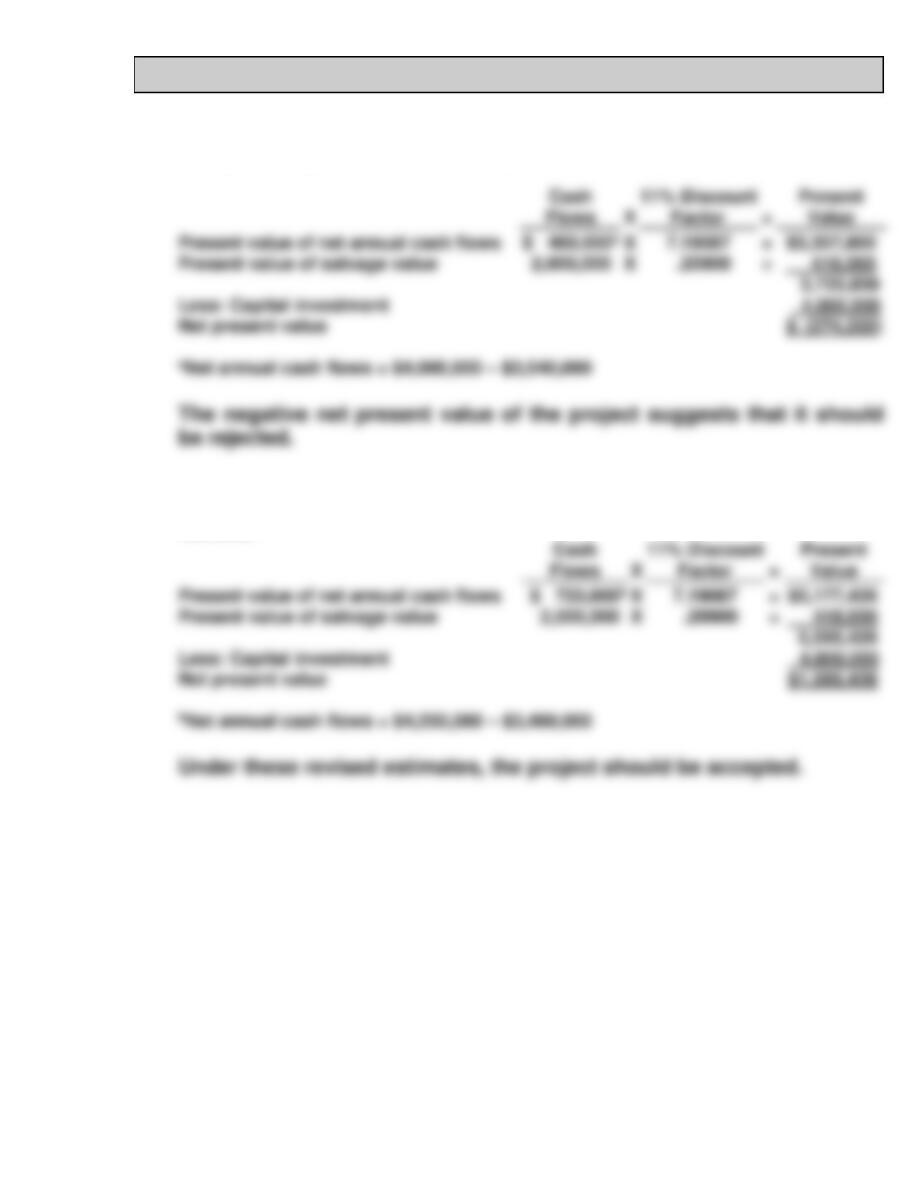
(a) Using the original estimates, the present value is calculated as follows:
(b) Using the revised estimates, the net present value is calculated as
follows:
BYP 26–2 (Continued)
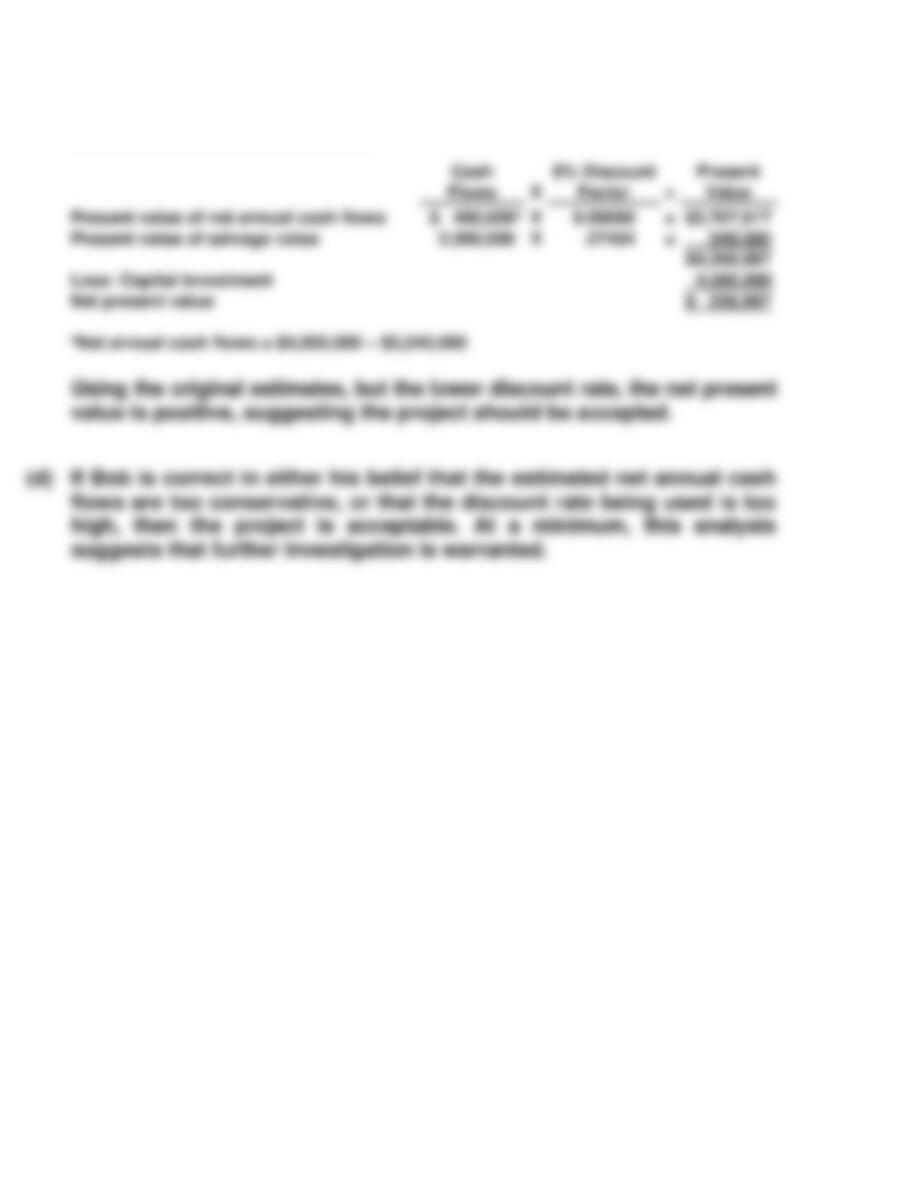
(c) Using the original estimates, but a 9% discount rate, the net present
value is calculated as follows:
BYP 26-3 REAL-WORLD FOCUS
BYP 26-4 REAL-WORLD FOCUS
BYP 26-5 COMMUNICATION ACTIVITY
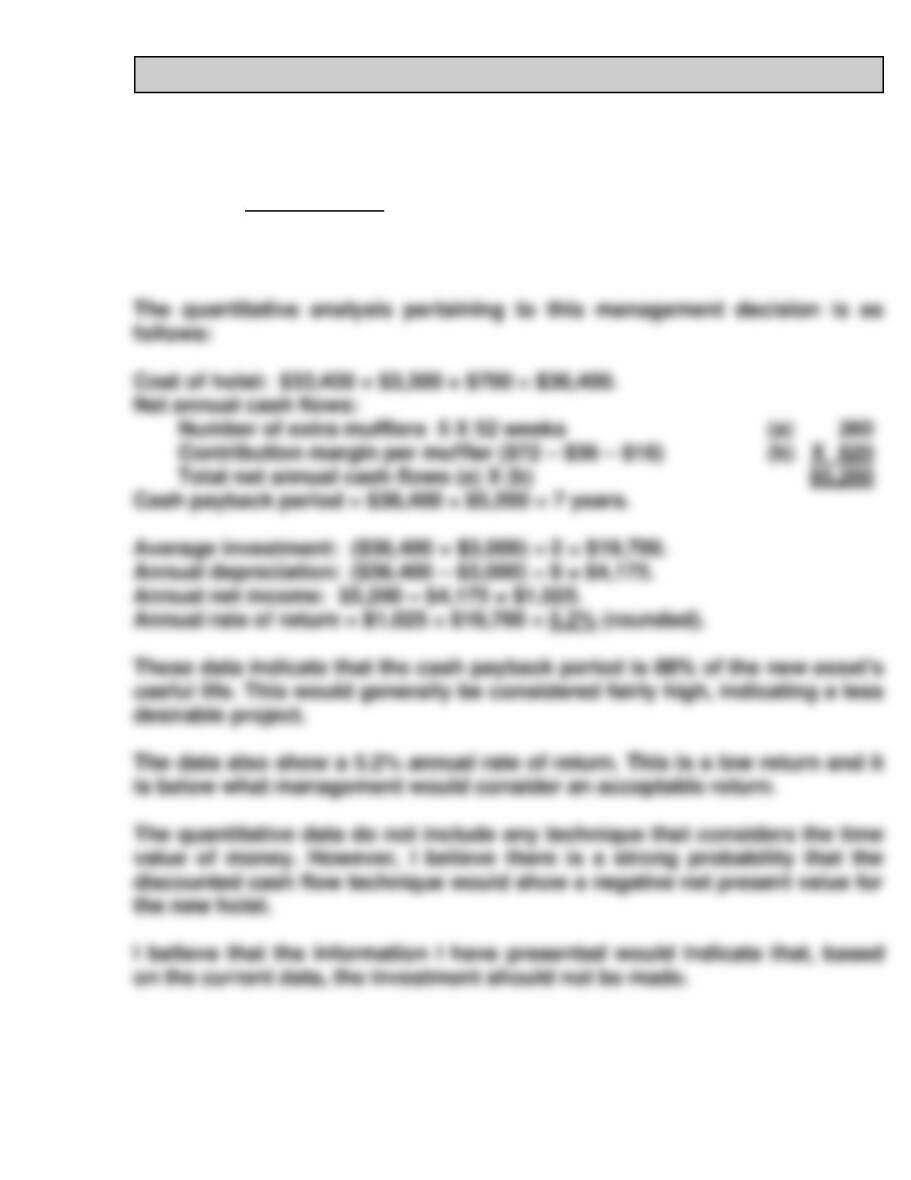
To: Maria Fierro, Supervisor
From: , Assistant Chief Accountant
Subject: Recommendation for New Hoist
BYP 26-6 ETHICS CASE
(a) The stakeholders are:

BYP 26-7 ALL ABOUT YOU
BYP 26-8 CONSIDERING YOUR COSTS AND BENEFITS
(c) The net present value of the project using the total cost is: