PROBLEM 22-5 (Continued)
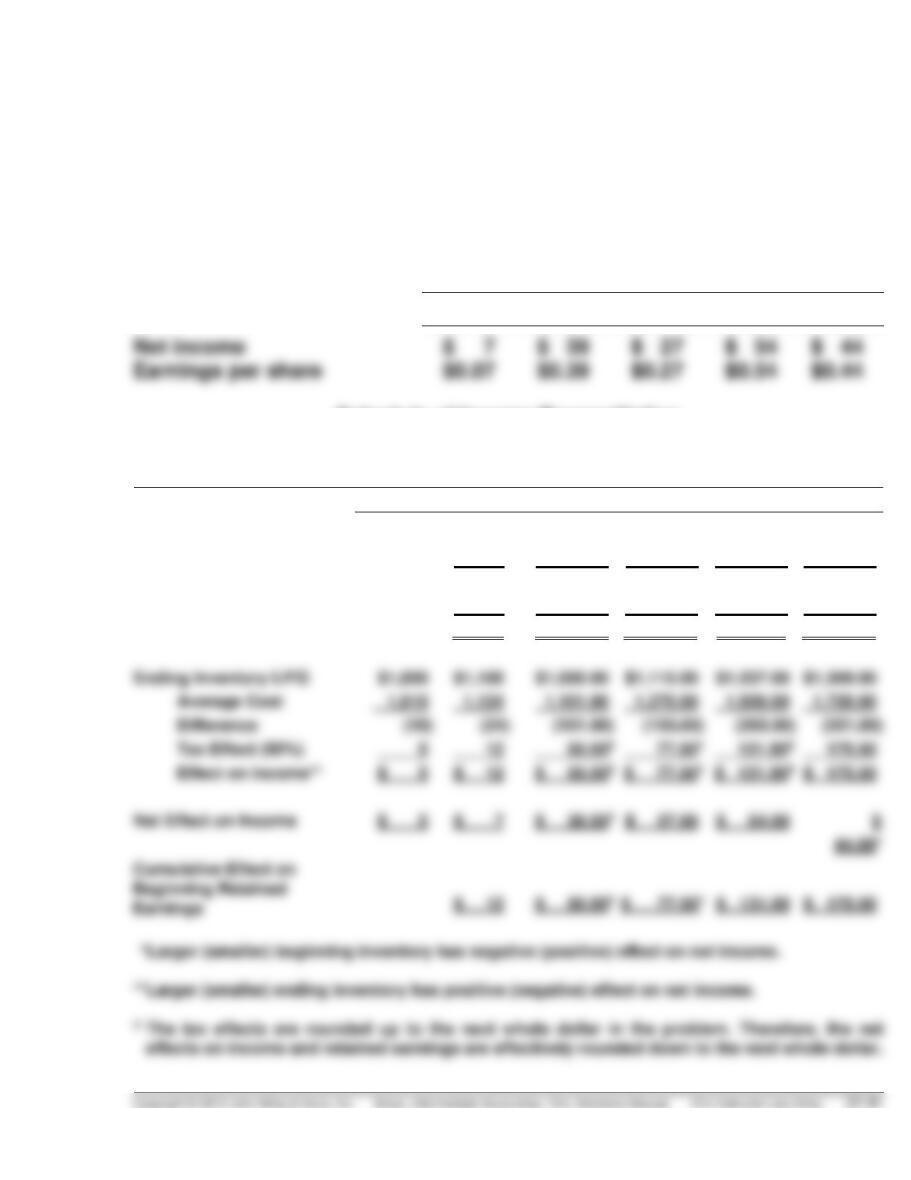
In 2014, the Company changed its method of pricing inventory from the
last-in, first out (LIFO) to the average cost method in order to more fairly
present the financial operations of the company. The financial statements
for prior years have been restated to retrospectively reflect this change,
resulting in the following effects on net income and related per share
amounts:
Increase in
2010
2011
2012
2013
2014
Schedule of Income Reconciliation
and Retained Earnings Adjustments
2010–2014
2009
2010
2011
2012
2013
2014
Beginning Inventory LIFO
$1,000
$1,100.00
$1,000.00
$1,115.00
$1,237.00
Average Cost
1,010
1,124.00
1,101.00
1,270.00
1,500.00
Difference
(10)
(24.00)
(101.00)
(155.00)
(263.00)
Tax Effect (50%)
5
12.00
50.50†
77.50†
131.50†
Effect on Income*
$ (5)
$ (12.00)
$ (50.50)†
$ (77.50)†
$ (131.50)
Ending Inventory LIFO
$1,100
$1,000.00
Average Cost
1,124
1,101.00
1,270.00
1,720.00
Difference
(351.00)
Tax Effect (50%)
12
77.50†
131.50†
Effect on Income**
$ 12
$ 77.50†
$ 131.50†
PROBLEM 22-6
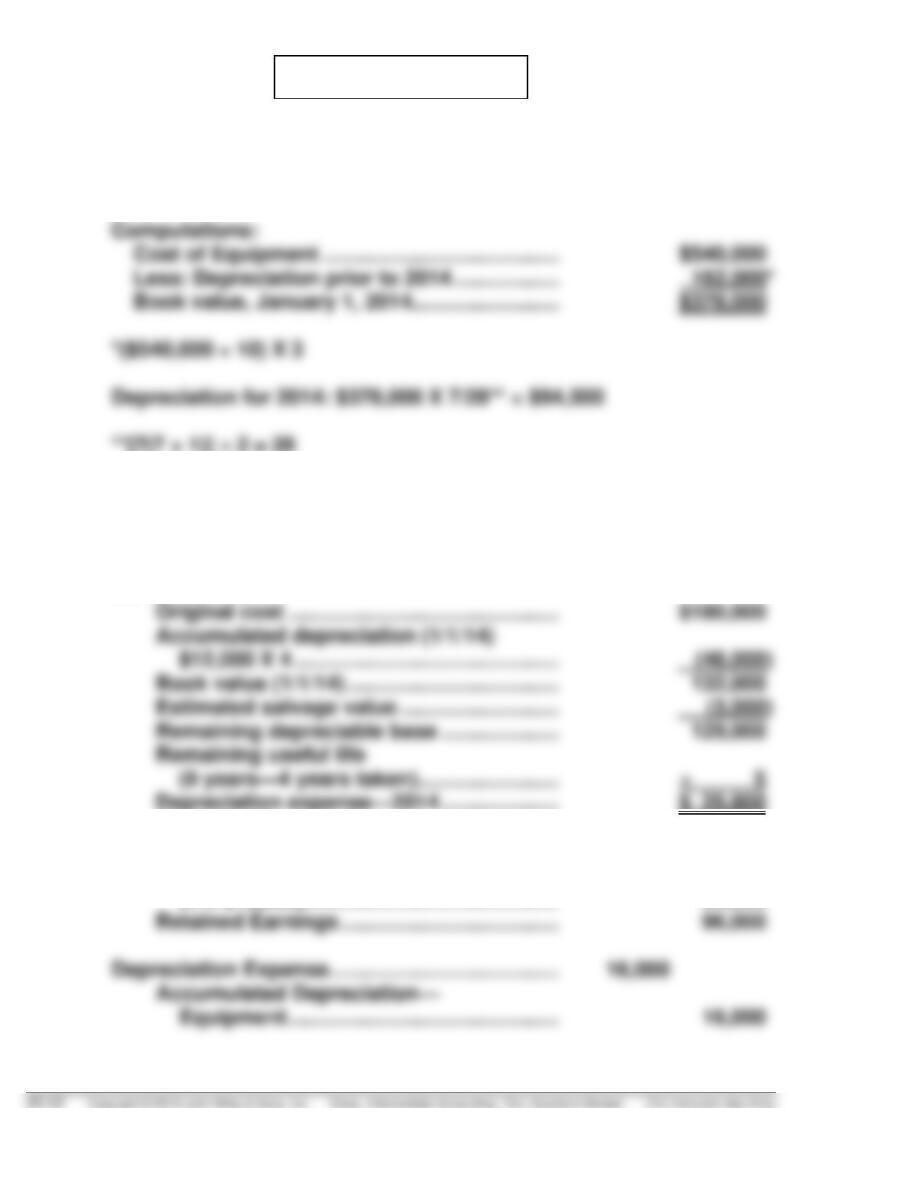
(a) 1. Depreciation Expense ………………………………… 94,500
Accumulated Depreciation—Equipment .. 94,500
2. Depreciation Expense ………………………………… 25,800
Accumulated Depreciation—
Equipment ………………………………………. 25,800
Computations:
3. Equipment (Asset C) ………………………………….. 160,000
Accumulated Depreciation—Equipment
(4 X $16,000) ……………………………………. 64,000
PROBLEM 22-6 (Continued)
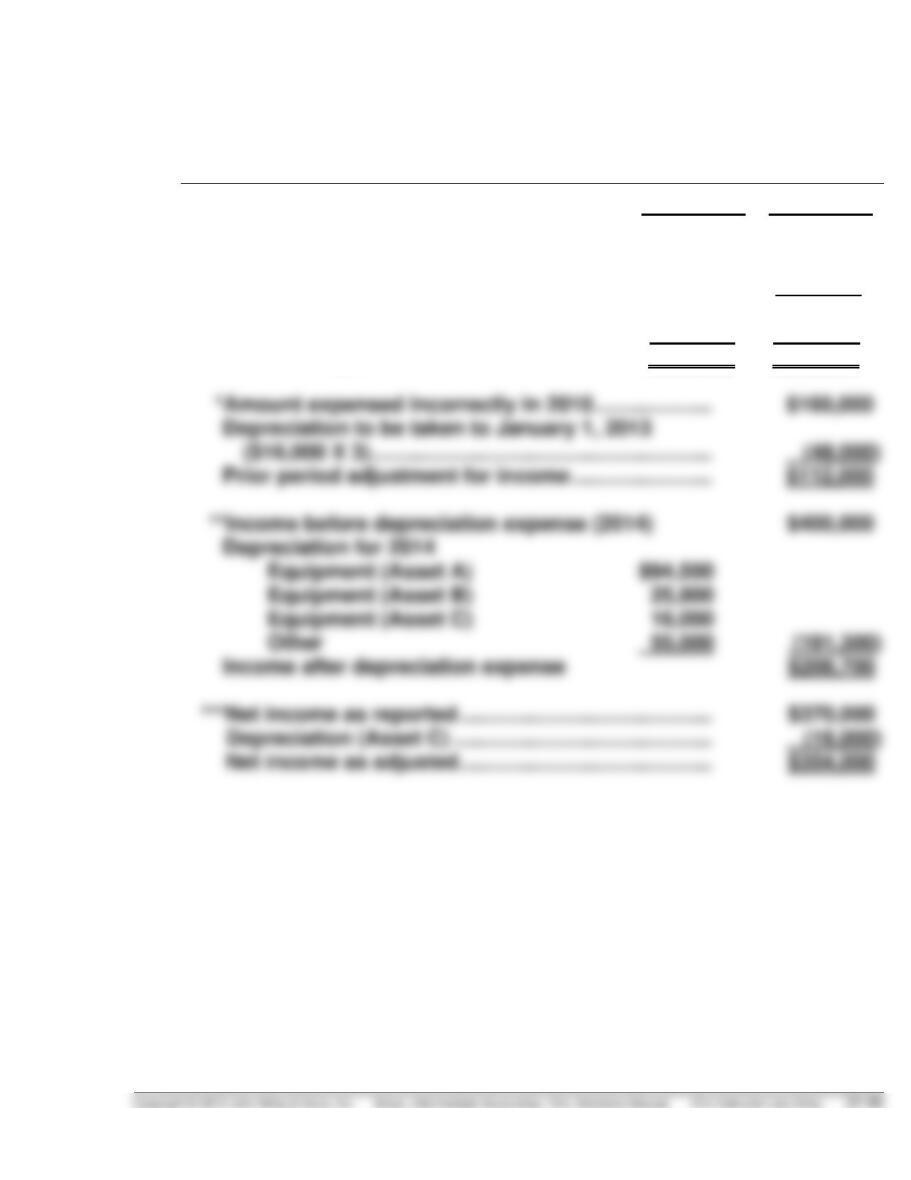
(b) MADRASA INC.
Comparative Retained Earnings Statements
For the Years Ended
2014
2013
Retained earnings, January 1, as previously
reported
$200,000
Add: Error in recording equipment (Asset C)
112,000*
Retained earnings, January 1, as adjusted
$666,000
312,000
Add: Net income
208,700**
354,000***
Retained earnings, December 31
$874,700
$666,000
PROBLEM 22-7
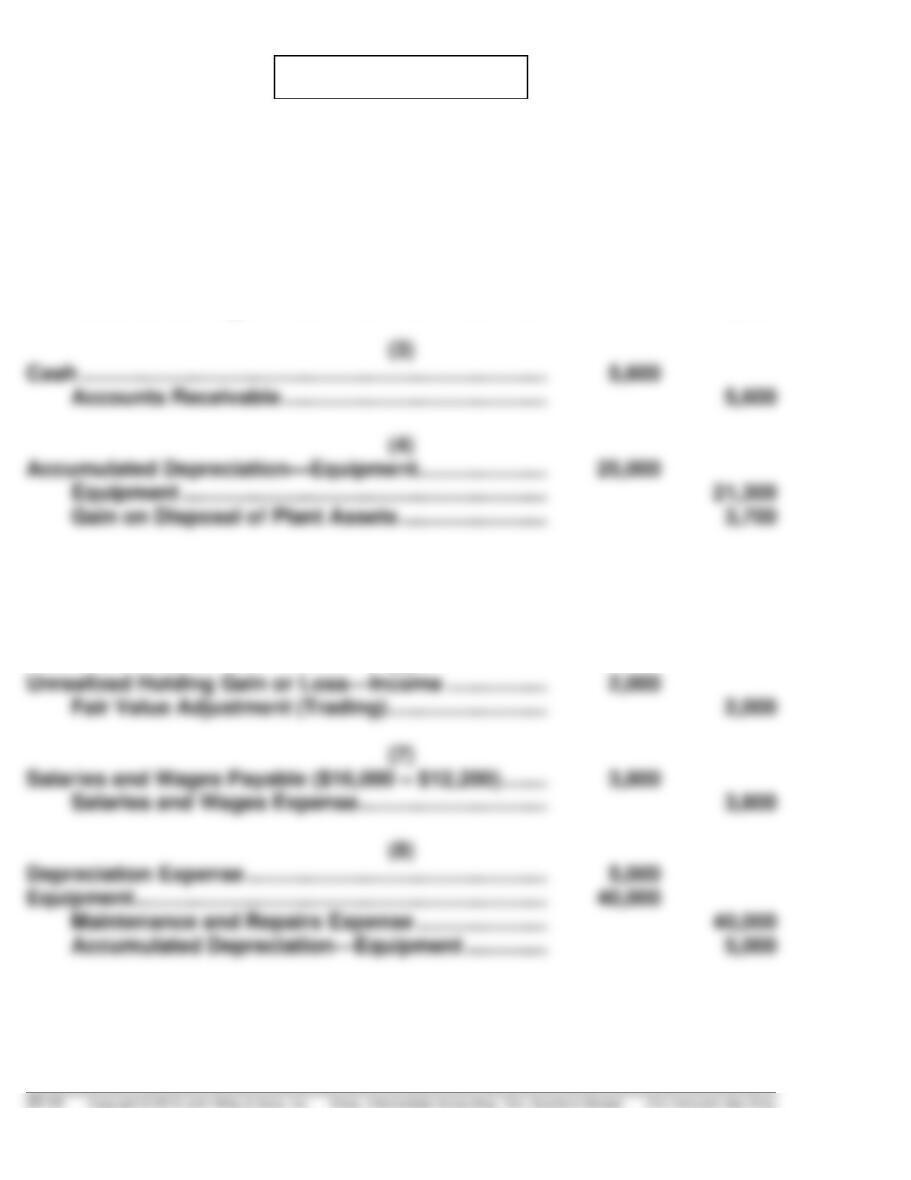
(1)
Depreciation Expense …………………………………………… 3,200
Accumulated Depreciation—Equipment ………….. 3,200
(2)
Cost of Goods Sold ………………………………………………. 19,000
Retained Earnings …………………………………………. 19,000
(5)
Lawsuit Loss ………………………………………………………… 125,000
Lawsuit Liability …………………………………………….. 125,000
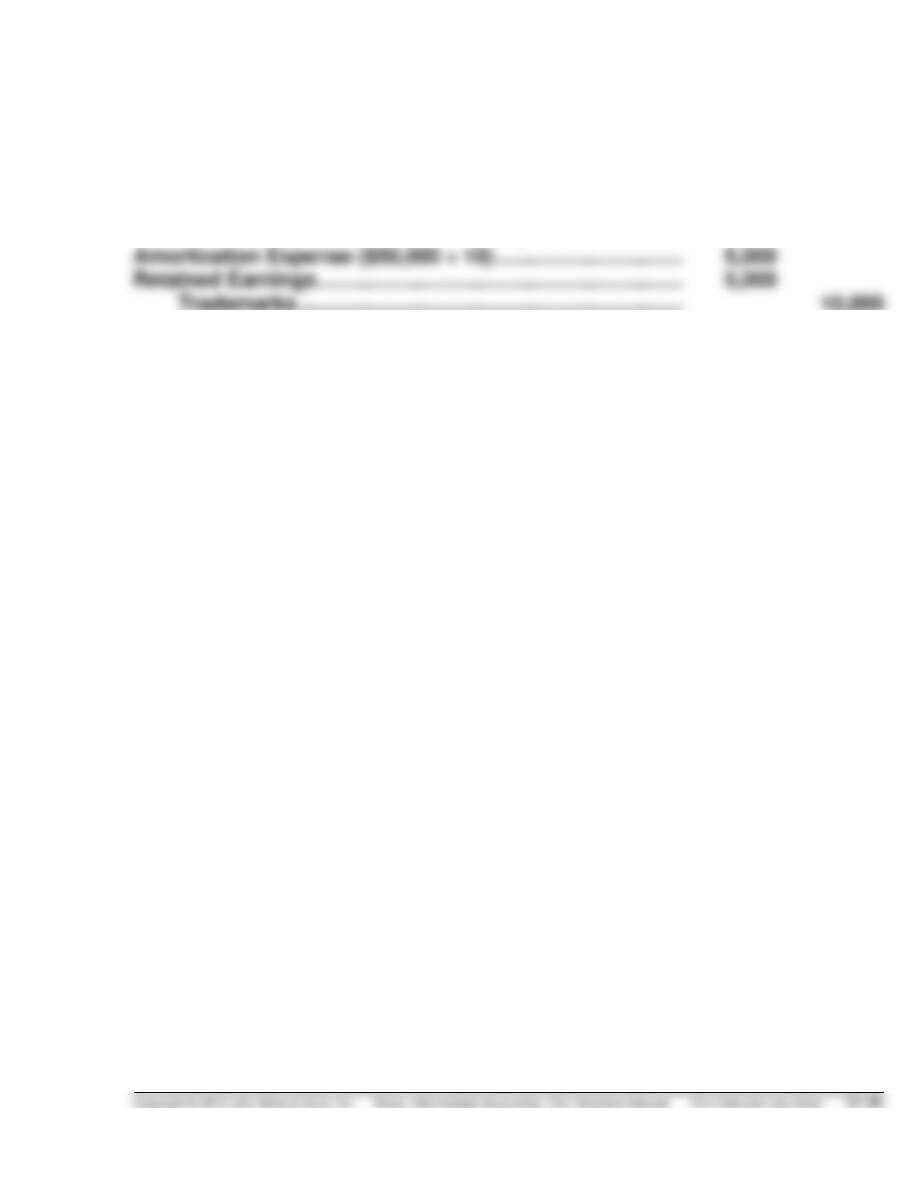
(6)
PROBLEM 22-7 (Continued)
(9)
Insurance Expense ($12,000 ÷ 3) ………………………………… 4,000
Prepaid Insurance …………………………………………………….. 6,000
Retained Earnings ……………………………………………… 10,000
(10)
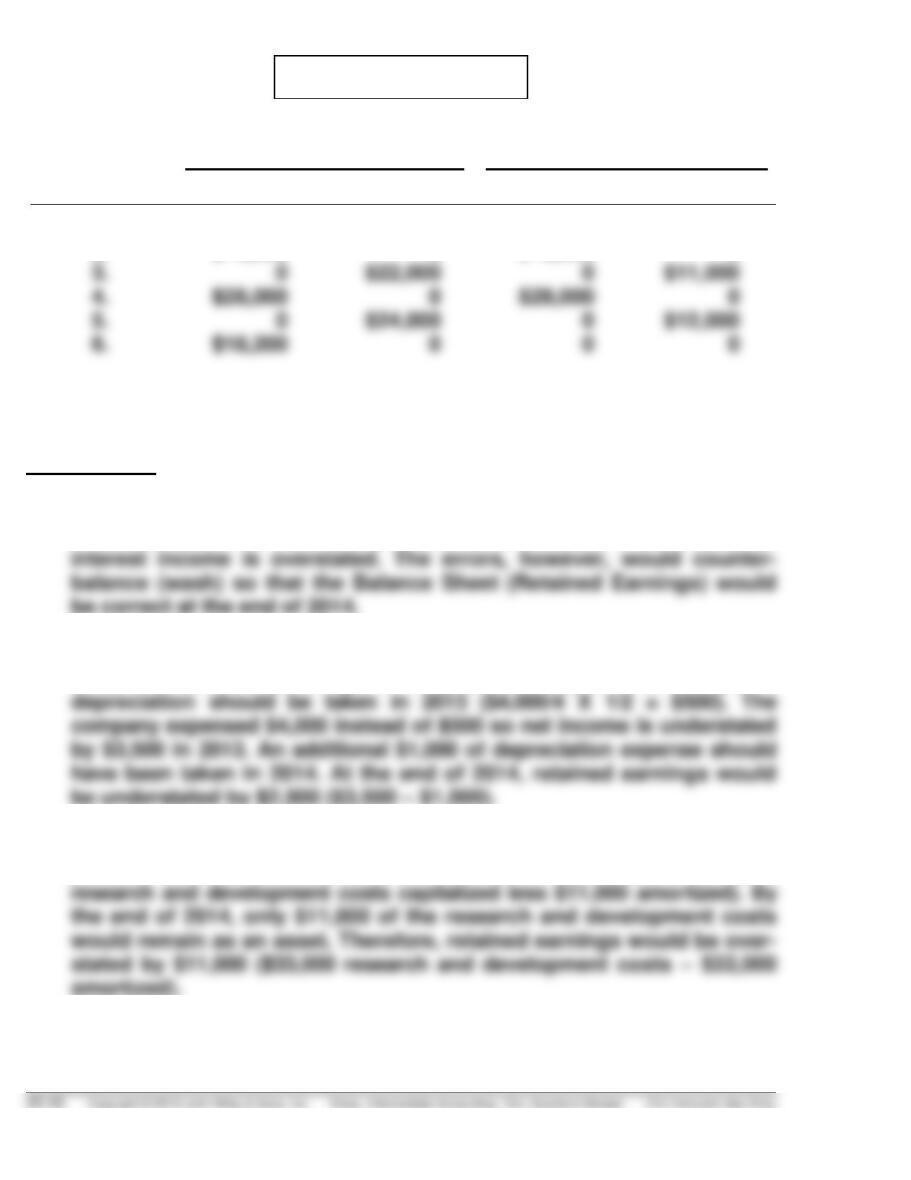
PROBLEM 22-8
Net Income for 2013
Retained Earnings 12/31/14
Item
Understated
Overstated
Understated
Overstated
1.
$14,100
0
0
0
2.
$ 3,500
0
$ 2,500
0
3.
0
$22,000
0
4.
$28,000
0
$28,000
0
5.
0
$24,000
0
6.
$18,200
0
0
0
Although explanations were not required in answering the question, they
are included below for your interest.
Explanations:
1. The net income would be understated in 2013 because interest income
is understated. The net income would be overstated in 2014 because
2. The depreciation expense in 2013 should be $500 for this machine.
Since the machine was bought on July 1, 2013, only one-half of a year’s
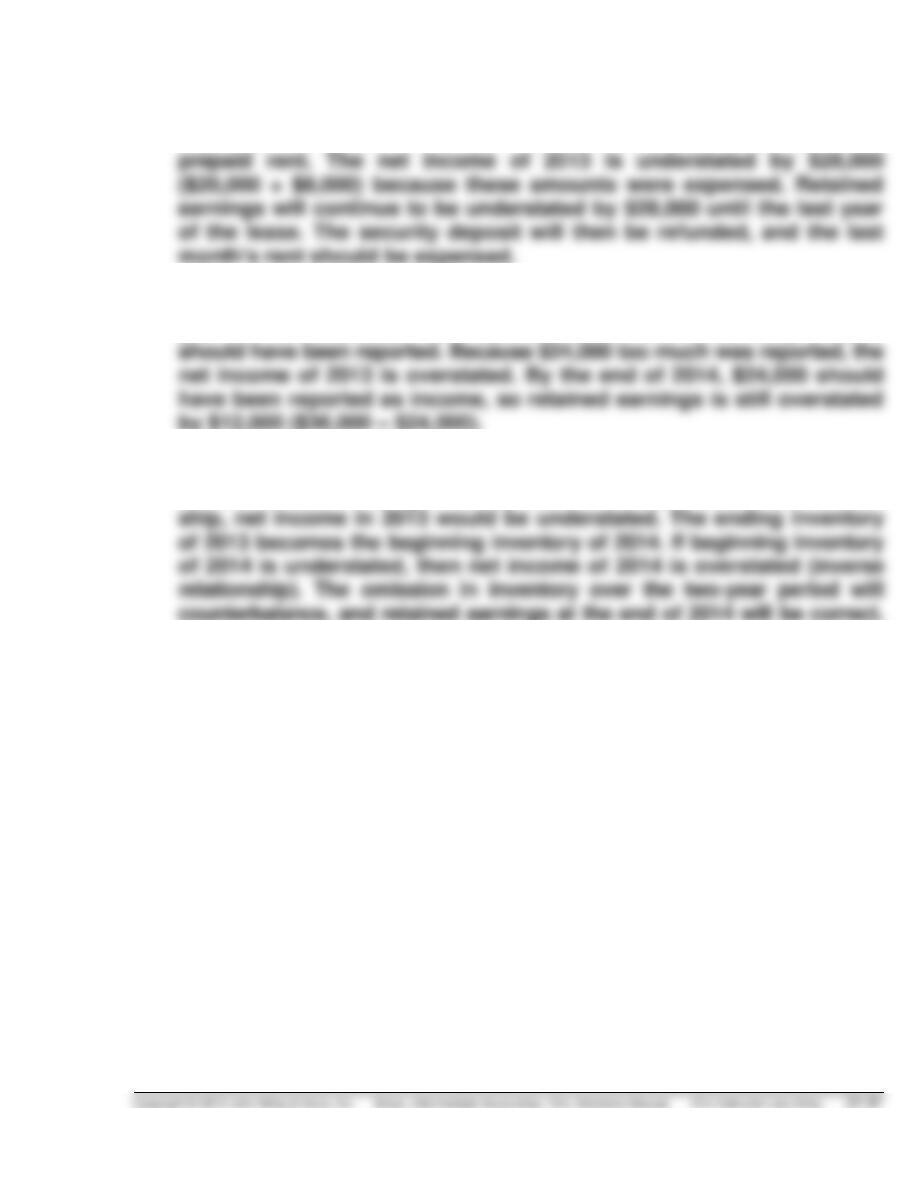
3. GAAP requires that all research and development costs should be ex–
pensed when incurred. Net income in 2013 is overstated $22,000 ($33,000
PROBLEM 22-8 (Continued)
4. The security deposit should be a long-term asset, called refundable
deposits. The $8,000 of the last month’s rent is also an asset, called
5. $12,000 or one-third of $36,000 should be reported as income each
year. In 2013, $36,000 was reported as income when only $12,000
6. The ending inventory would be understated since the merchandise was
omitted. Because ending inventory and net income have a direct relation-
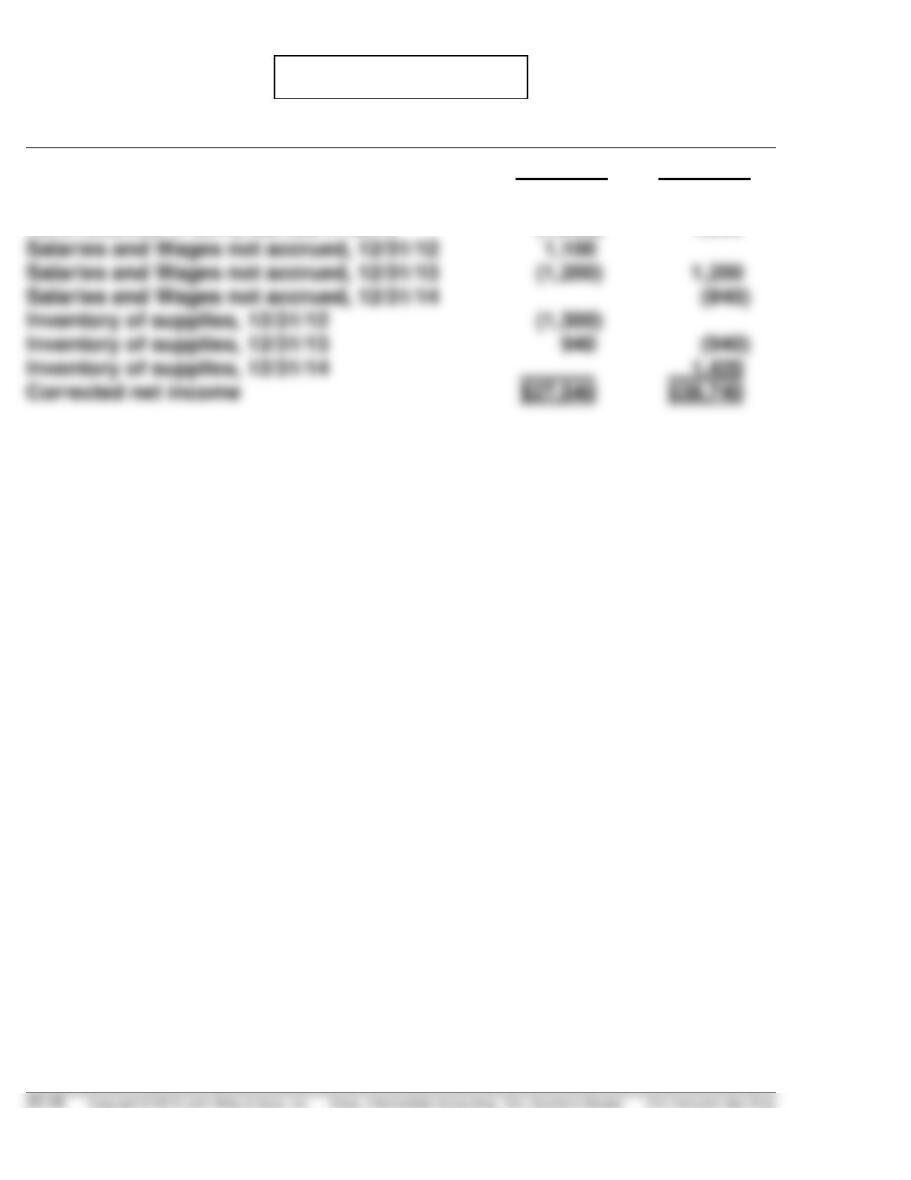
PROBLEM 22-9
2013
2014
Net income, as reported
$29,000
$37,000
Rent received in 2013, earned in 2014
(1,000)
1,000
Salaries and Wages not accrued, 12/31/12
Salaries and Wages not accrued, 12/31/13
Salaries and Wages not accrued, 12/31/14
Inventory of supplies, 12/31/12
(1,300)
Inventory of supplies, 12/31/13
Inventory of supplies, 12/31/14
Corrected net income
Profit error
$ 1,300
$ 1,300
$ 1,118
(1,300)
1,300
3. To correct C.O.D. sale
6,100
4. Adjustment of warranty expense:
Sales per books
$940,000
Correction for consignments
Correction for C.O.D. sale
6,100
Corrected sales
$933,500
Normal warranty expense, one-half of 1%
$ 4,668
$ 5,113
$ 8,917
Less costs charged to expense
760
1,670
3,850
Additional expense
$ 3,908
$ 3,443
$ 5,067
(3,908)
(3,443)
Copyright © 2013 John Wiley & Sons, Inc. Kieso, Intermediate Accounting, 15/e, Solutions Manual (For Instructor Use Only) 22–49
(a) ROBERTS COMPANY
Schedule of Revised Net Income
For the Years Ended March 31, 2011, 2012, and 2013
COMPUTATIONS
SUMMARY
Increases (Decreases) in Income
2013
2014
2015
2013
2014
2015
1. Income before income taxes, as reported
$71,600
$111,400
$103,580
2. Elimination of profit on consignments:
Billed
$ 6,500
$ 5,590
at 125% of cost
÷ 125%
÷ 125%
Cost
5,200
4,472
5. Bad debt adjustments:
Normal bad debt expense, one-quarter of
1% of sales
$ 2,334
$ 2,557
$ 4,458
Less previous write-offs
750
1,320
3,850
Additional expense
$ 1,584
$ 1,237
$ 608
(1,584)
(1,237)
(608)
6. Adjustment for contract financing
3,000
3,900
5,100
7. Adjustment for commissions
(1,400)
500*
(220)**
Income before income taxes
$65,744
$117,335
$ 94,611
PROBLEM 22-10 (Continued)
(b) Sales Revenue …………………………………………………. 5,590
Inventory on Consignment ………………………………… 4,472
Cost of Goods Sold …………………………..……….. 4,472
Accounts Receivable …………………………………. 5,590
Retained Earnings ($1,584 + $1,237) ………………….. 2,821
Bad Debt Expense ……………………………………………. 608
Allowance for Doubtful Accounts ……………….. 3,429
(To set up allowance for uncollectible
accounts)
*PROBLEM 22-11
(a) MILLAY INC.
Schedule of Income or Loss from Investment
For Year Ending December 31, 2014
(b) MILLAY INC.
Schedule of Income or Loss from Investment
For Years Ending December 31, 2015 and 2014
2015
2014
Income from investment in Genso
(Schedule 1)
$170,000
$55,000
Schedule 1 Millay’s Share of Investee’s Income
Income for 2014 ($550,000 X 10%)
First half ($300,000* X 10%)
*PROBLEM 22-12
January 3, 2013
Equity Investments (Available-for-sale) ………………….. 500,000
Cash ……………………………………………………………… 500,000
(To record the purchase of a 10% interest in
Renner Corp.)
December 31, 2013
Fair Value Adjustment (Available-for-Sale) …………….. 60,000
Unrealized Holding Gain or Loss—Equity ……….. 60,000
(To recognize as part of stockholders’ equity
the increase in fair value of available-for-sale
securities)
December 31, 2014
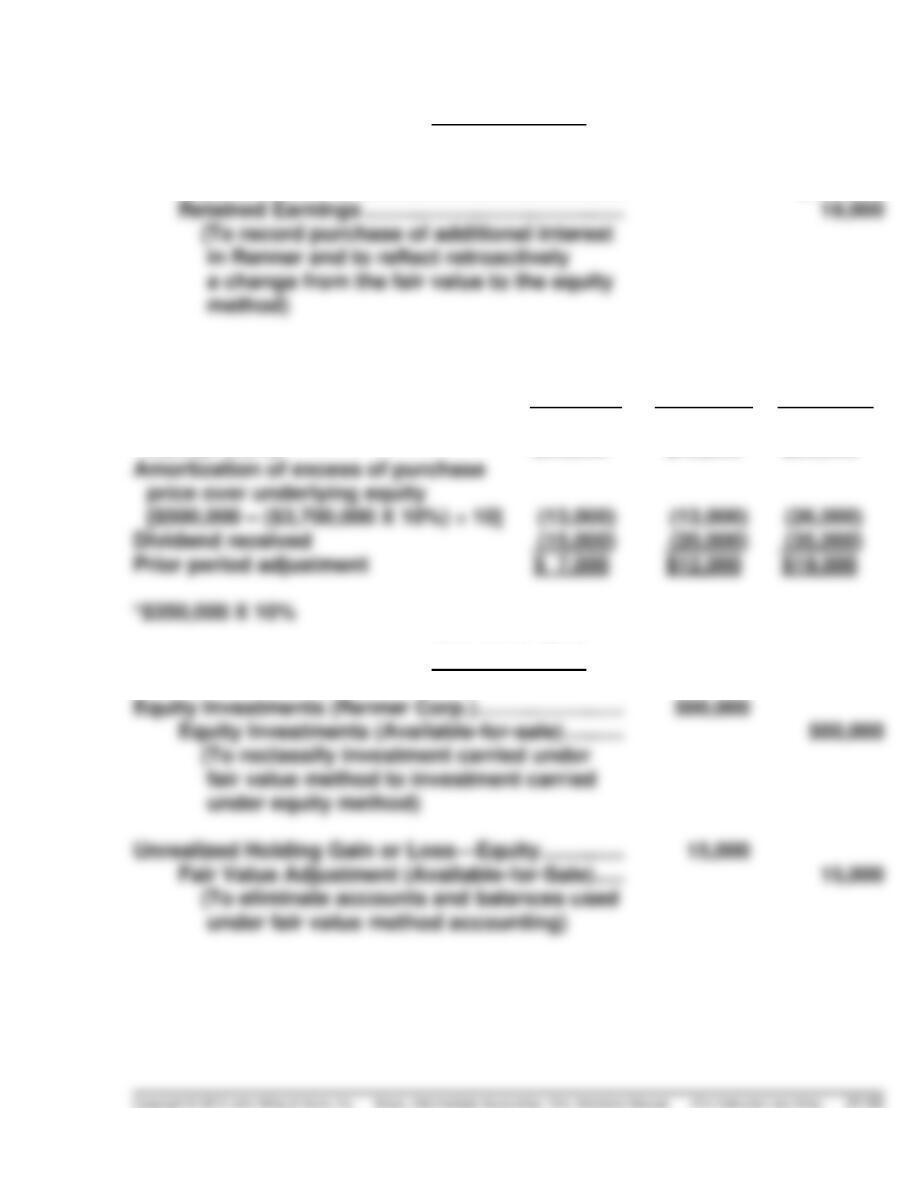
*PROBLEM 22-12 (Continued)
January 2, 2015
Equity Investments (Renner Corp.) ……………………. 1,564,000
Cash …………………………………………………………. 1,545,000
Computation of Prior Period Adjustment
2013
2014
Total
Martin equity in earnings of
Renner (10%)
$35,000*
$45,000
$80,000
January 2, 2015
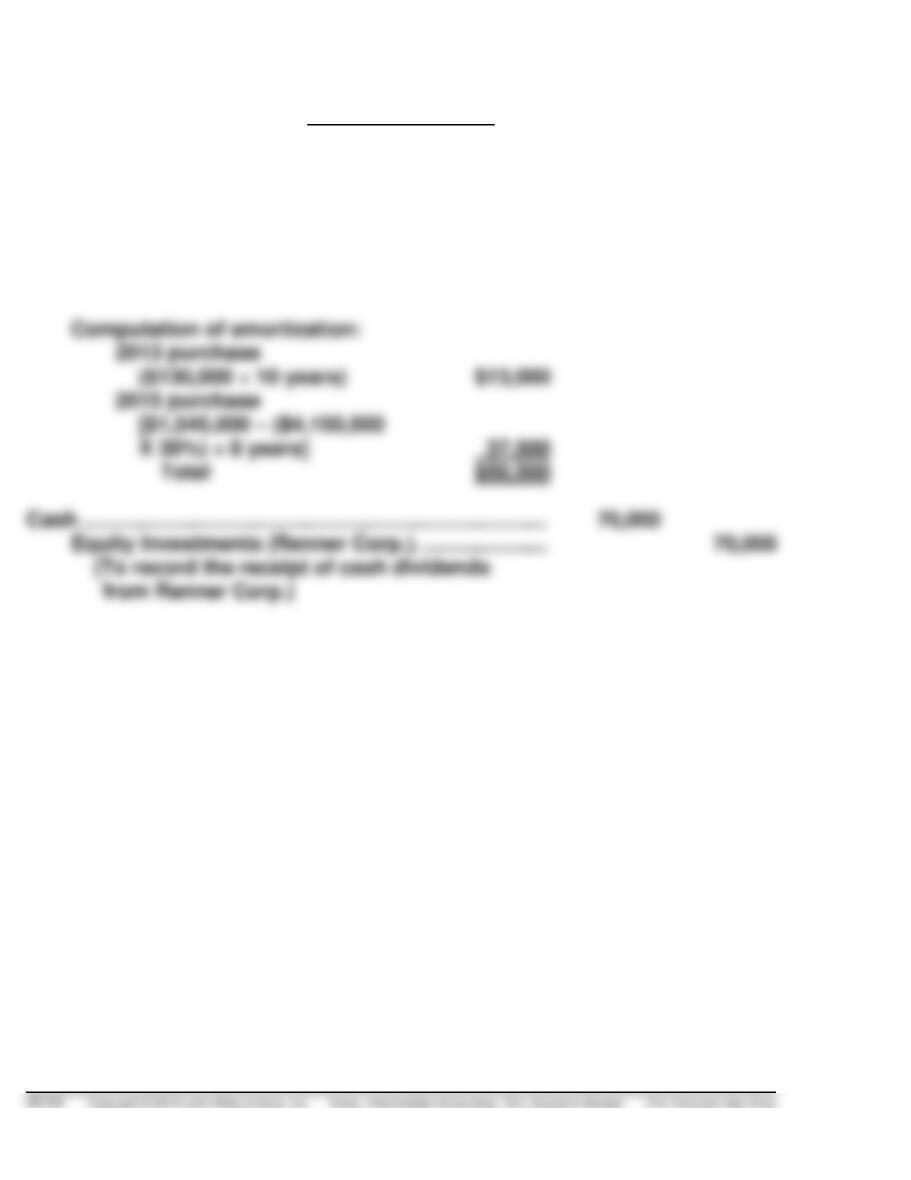
*PROBLEM 22-12 (Continued)
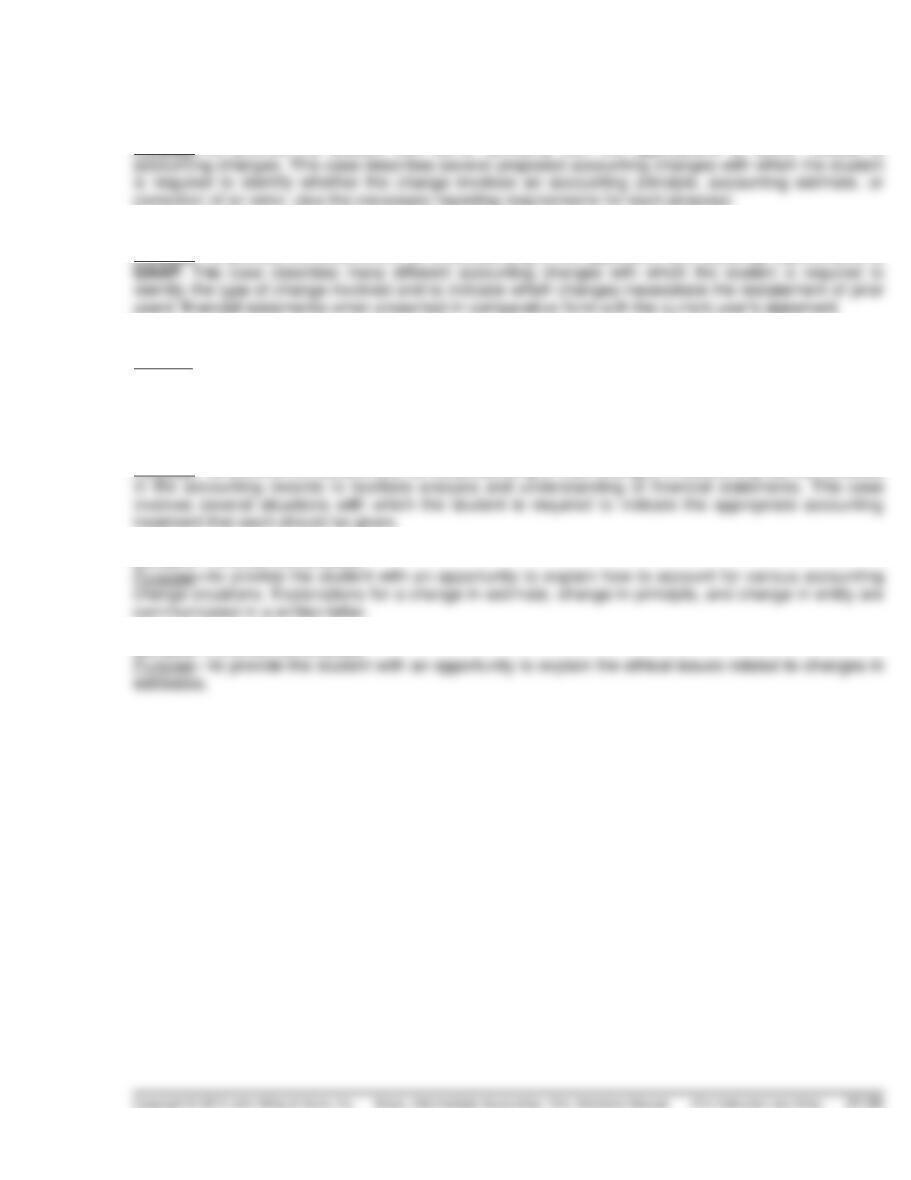
December 31, 2015
Equity Investments (Renner Corp.). ……………………….. 169,500
Investment Revenue ……………………………………… 169,500
(To record equity in net income of
Renner—40% of $550,000 less $50,500
amortization of excess cost over
underlying equity)
TIME AND PURPOSE OF CONCEPTS FOR ANALYSIS
CA 22-1 (Time 25–35 minutes)
Purpose—to provide the student with some familiarity with the applications of GAAP related to
CA 22-2 (Time 20–30 minutes)
Purpose—to provide the student with an understanding of the application and reporting requirements of
CA 22-3 (Time 30–35 minutes)
Purpose—to provide the student with an understanding of GAAP and its respective applications. This case
describes three independent situations with which the student is required to identify the type of
accounting change involved, the reporting which is necessitated under current generally accepted
accounting principles, and the effects of each change on the financial statements.
CA 22-4 (Time 20–30 minutes)
Purpose—to provide the student with an understanding of how changes in accounting can be reflected
CA 22-5 (Time 20–30 minutes)
CA 22-6 (Time 20–30 minutes)
SOLUTIONS TO CONCEPTS FOR ANALYSIS
CA 22-1
2. Depreciation.
3. Mathematical Error. This is a correction of an error and prior period treatment would be in
order.
4. Preproduction Costs—Furniture Division. This should probably be construed as an
inseparability situation in that the change in accounting estimate (period benefited by
5. FIFO to LIFO Change. This is a change in accounting principle. Restatement of December 31,
6. Percentage of Completion. This is a change in accounting principle. Retained earnings
should be adjusted.
CA 22-2
Item
Change
Type of Change
Should Prior
Years’ Statements
Be Retrospectively
Applied or Restated?
1.
A change in accounting principle.
Yes
2.
A change in an accounting estimate.
No
3.
An accounting change involving both a change in accounting
principle and a change in accounting estimate. Referred to as an
change in accounting estimate effected by a change in principle.
Handle as a change in estimate.
No
4.
Not an accounting change but rather a change in classification.
Yes
5.
An error correction not involving a change in accounting principle.
Yes
An accounting change involving a change in the reporting entity
which is a special type of change in accounting principle.
Not a change in accounting principle. Simply, a change in tax
accounting.
An accounting change from one generally accepted accounting
principle to another generally accepted accounting principle.
*Generally impracticable to determine what LIFO inventory would
be in prior periods.
CA 22-3
Situation 1.
(a) A change from an accounting principle not generally accepted to one generally accepted is a
correction of an error.
(b) When comparative statements are presented, net income, components of net income, retained
earnings, and any other affected balances for all periods presented should be restated to correct
CA 22-3 (Continued)
Situation 2.
(a) The change in method of inventory pricing represents a change in accounting principle, as
defined by GAAP.
Situation 3.
(a) A change in the depreciable lives of fixed assets is a change in accounting estimate.
CA 22-4
1. This situation is a change in estimate. Whenever it is impossible to determine whether a change
in principle or a change in estimate has occurred, the change should be considered a change in
estimate. This is often referred to as a change in accounting estimate effected by a change in
accounting principle. A change in estimate employs the current and prospective approach by:
(a) Reporting current and future financial statements on the new basis.
2. This situation is considered a change in estimate because new events have occurred which call
for a change in estimate. The accounting should be the same as discussed in 1.
3. This situation is considered a correction of an error. The general rule is that careful estimates
CA 22-4 (Continued)
(b) Correcting all prior period statements presented in comparative financial statements. The
4. No adjustment is necessary—a change in accounting principle is not considered to have happened
if a new principle is adopted in recognition of events that have occurred for the first time.
6. This situation is considered a change in accounting principle. A change in accounting principle
should employ the retrospective approach by:
CA 22-5
Mr. Joe Davison, CEO Sports-Pro Athletics, Inc.
Dear Mr. Davison:
You recently contacted me about several accounting changes made at Sports-Pro Athletics, Inc. in
2014. This letter details how you should account for each change.
Your change from one method of depreciation to another constitutes a change in accounting estimate
effected by a change in accounting principle. A change in estimate employs the prospective approach
by reporting current and future financial statements on the new basis. Prior periods financial statements
CA 22-6
(a) The ethical issues are the honesty and integrity of Frost’s financial reporting practices versus the
Corporation’s and the accounting manager’s profit motives. Shortening the life of fixed assets
from 10 to 6 years may be evidence that depreciation expense during the first five years were