E22A-34 Preparing an operating budget—selling and administrative expense budget
Learning Objective 6
Appendix 22A
Qtr. ended Mar. 31 total S&A exp. $21,700
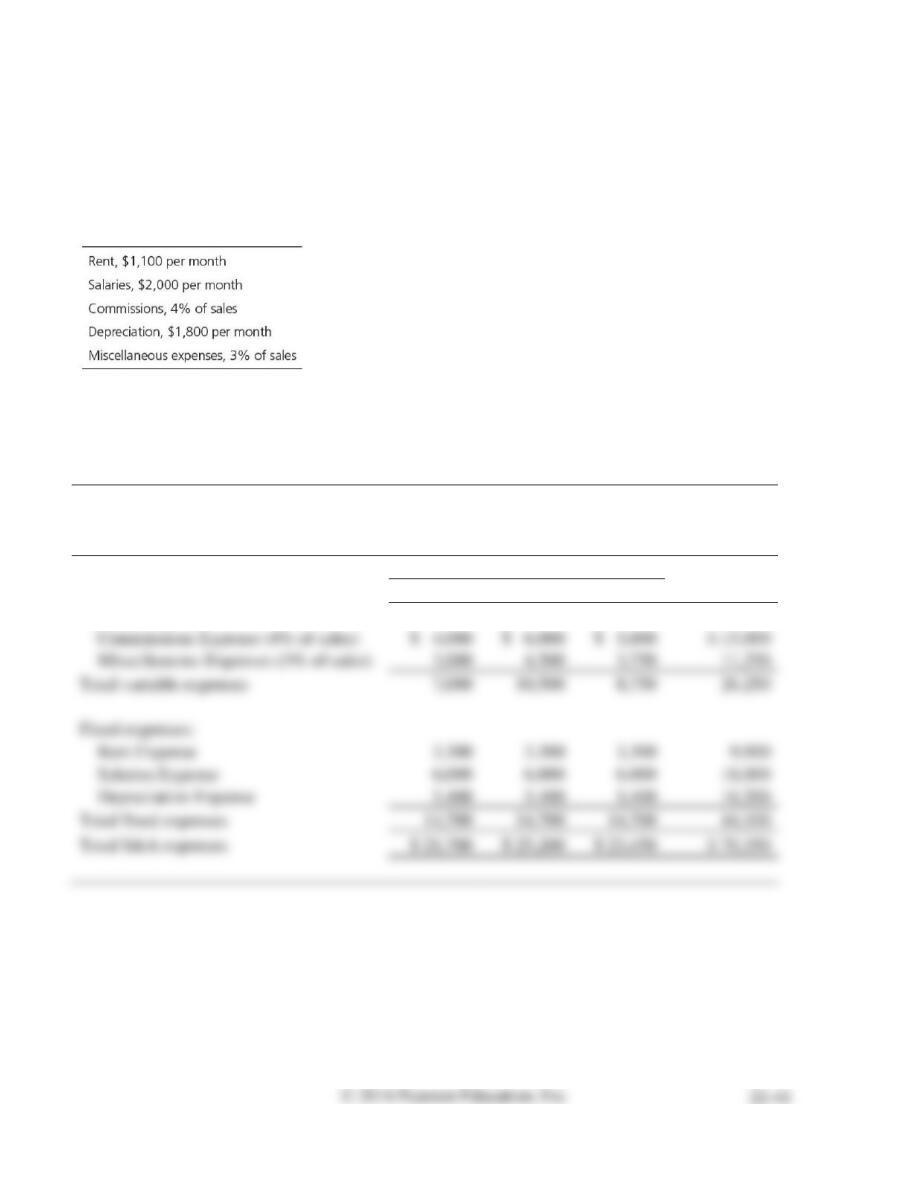
Consider the sales budget presented in Exercise E22A-33. Stewart’s selling and administrative expenses
include the following:
Prepare a selling and administrative expense budget for each of the three quarters of 2016 and totals for
the nine-month period.
SOLUTION
STEWART, INC.
Selling and Administrative Expense Budget
Nine Months Ended September 30, 2016
Quarter Ended
Nine-Month
Mar. 31
Jun. 30
Sep. 30
Total
Variable expenses:
E22A-35 Preparing a financial budget—schedule of cash receipts and schedule of cash payments
Learning Objective 7
Appendix 22A
b. Sep. cash recpts. $119,795
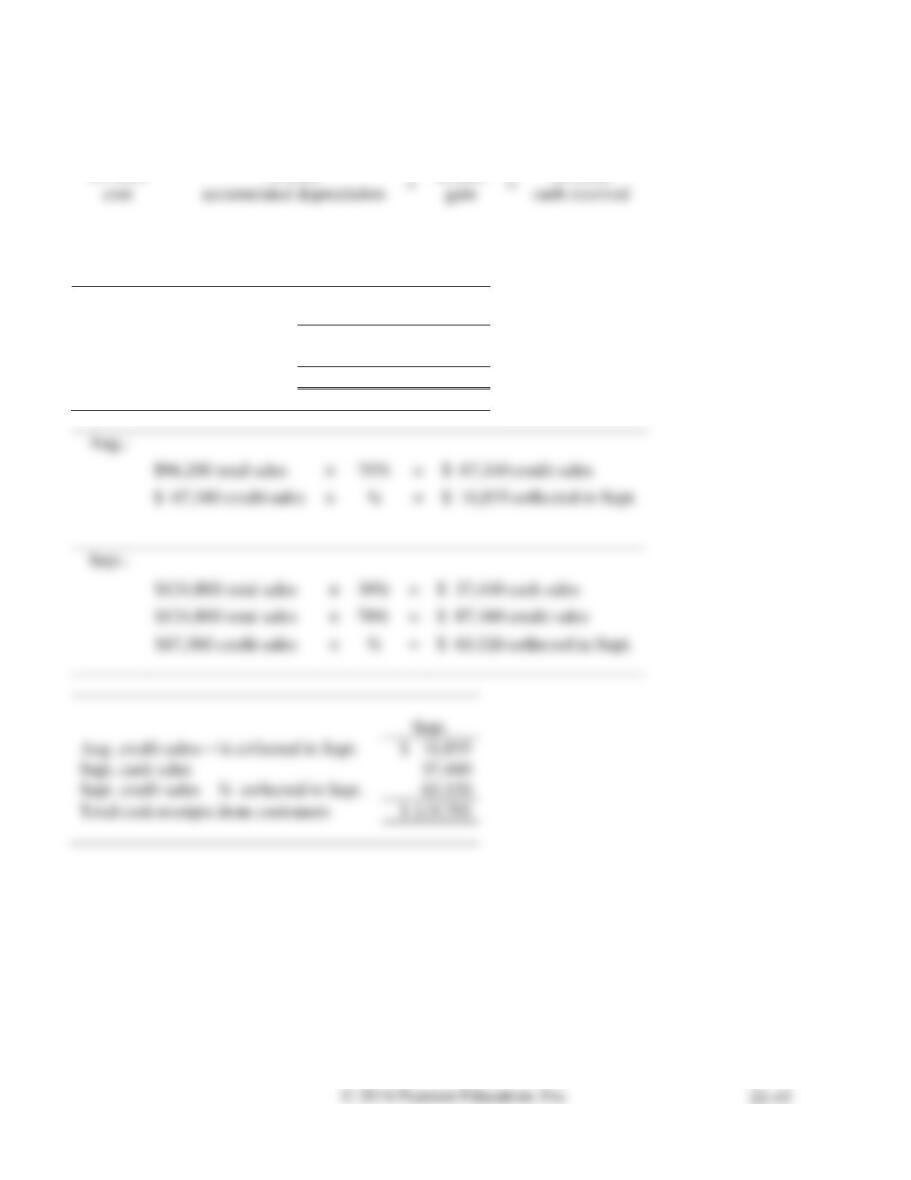
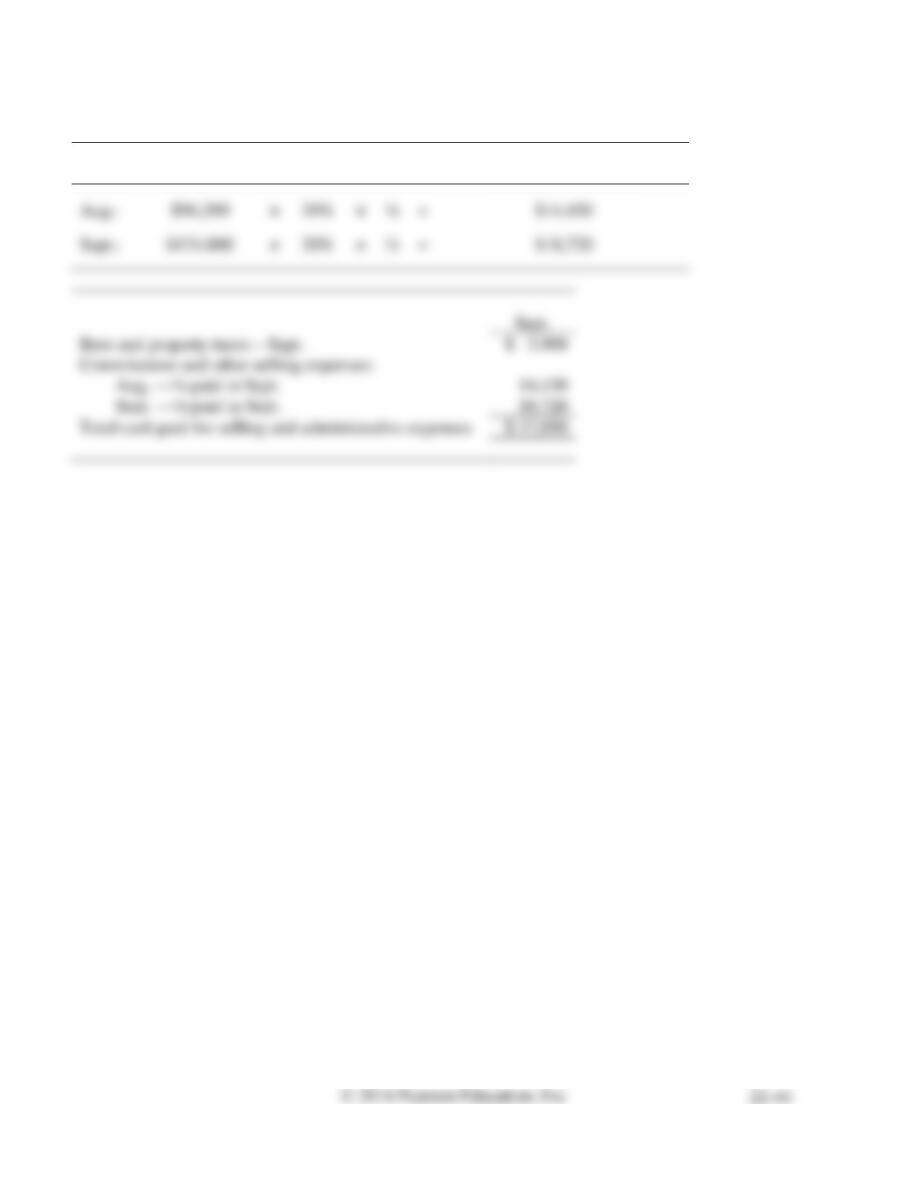
Agua Frio is a distributor of bottled water. For each of the items, compute the amount of cash receipts or
payments Agua Frio will budget for September. The solution to one item may depend on the answer to
an earlier item.
SOLUTION
Part a
cash received
$17,000
$7,000
$3,000
$13,000
Part b
Aug.
Sept.
Budgeted cases to be sold
7,400
9,600
Sales price per case
× $13
× $13
Total sales
$ 96,200
$ 124,800
Aug.:
$96,200 total sales
$ 67,340 credit sales
$ 67,340 credit sales
$ 16,835 collected in Sept.
Sept.:
$124,800 total sales
30%
$ 37,440 cash sales
$87,360 credit sales
¾
$ 65,520 collected in Sept.
Sept.
Aug. credit sales—¼ collected in Sept.
$ 16,835
Sept. cash sales
37,440
Sept. credit sales—¾ collected in Sept.
Total cash receipts from customers
$ 119,795
E22A-35, cont.
Part c
Total sales
(from part b)
×
30%
×
½
=
Commissions and other selling
expenses paid in Sept.
Rent and property taxes – Sept.
Aug. —½ paid in Sept.
Sept. —½ paid in Sept.
Total cash paid for selling and administrative expenses
E22A-36 Preparing a financial budget—cash budget, sensitivity analysis
Learning Objectives 5, 7
Appendix 22A
1. Feb. ending cash bal. $10,400
Linstead Auto Parts, a family-owned auto parts store, began January with $10,400 cash. Management
forecasts that collections from credit customers will be $11,500 in January and $15,500 in February. The
store is scheduled to receive $4,500 cash on a business note receivable in January. Projected cash
payments include inventory purchases ($12,900 in January and $14,600 in February) and selling and
administrative expenses ($2,500 each month).
Linstead Auto Parts’s bank requires a $10,000 minimum balance in the store’s checking account. At
the end of any month when the account balance falls below $10,000, the bank automatically extends
credit to the store in multiples of $1,000. Linstead Auto Parts borrows as little as possible and pays back
loans in quarterly installments of $1,500, plus 3% APR interest on the entire unpaid principal. The first
payment occurs three months after the loan.
Requirements
1. Prepare Linstead Auto Parts’s cash budget for January and February.
2. How much cash will Linstead Auto Parts borrow in February if collections from customers that
month total $14,500 instead of $15,500?
SOLUTION
Requirement 1
LINSTEAD AUTO PARTS
Cash Budget
For the Two Months Ended February 28
January
February
Total
E22A-36, cont.
Requirement 2
Linstead Auto Parts will borrow $2,000 in February if collections from customers that month total
$14,500 instead of $15,500 because the ending cash balance before financing is $1,600 less than the
$10,000 minimum required.
February
Revised
E22A-37 Preparing a financial budget—cash budget
Learning Objective 7
Appendix 22A
May ending cash bal. $20,000
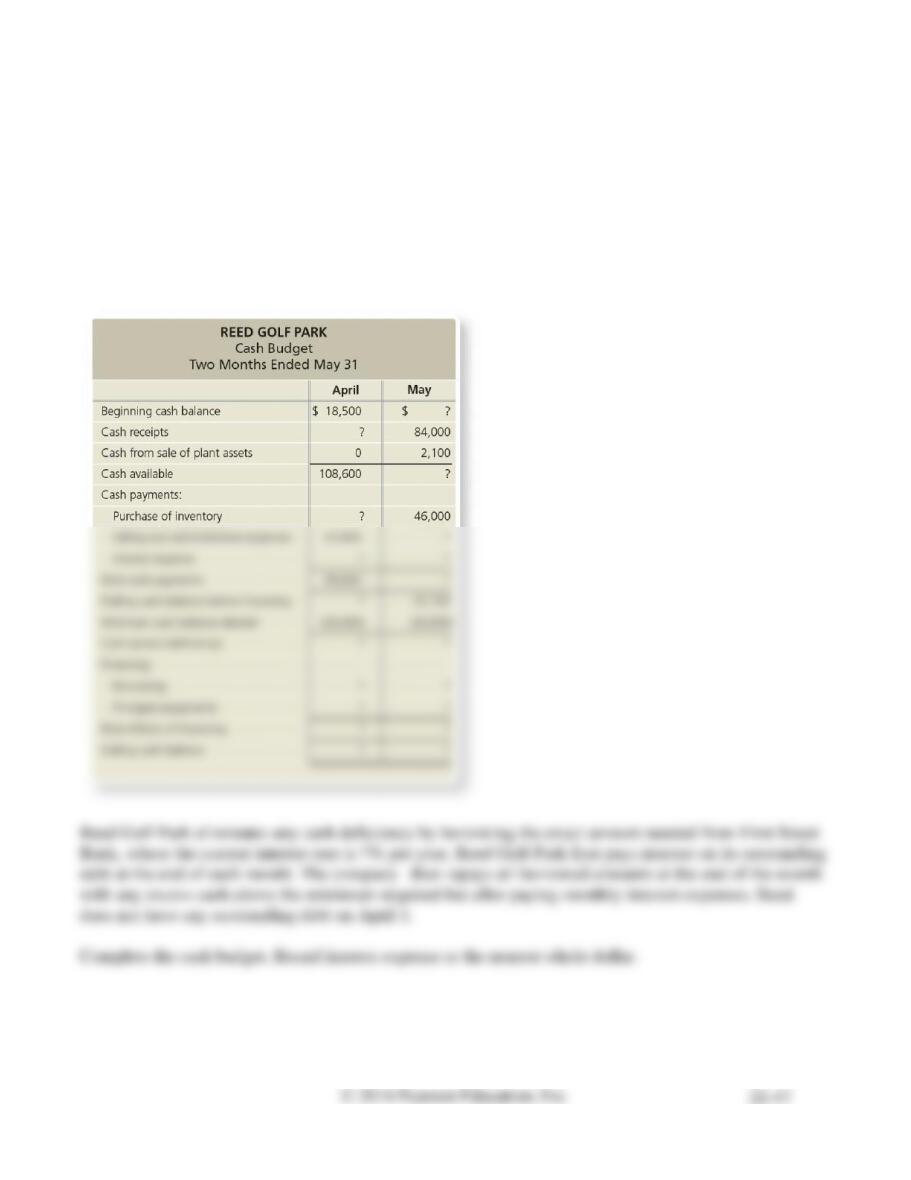
You recently began a job as an accounting intern at Reed Golf Park. Your first task was to help prepare
the cash budget for April and May. Unfortunately, the computer with the budget file crashed, and you
did not have a backup or even a paper copy. You ran a program to salvage bits of data from the budget
file. After entering the following data in the budget, you may have just enough information to
reconstruct the budget.
SOLUTION
REED GOLF PARK
Cash Budget
Two Months Ended May 31
April
May
Beginning cash balance
$18,500
$ 20,000(i)
Cash receipts
90,100(a)
84,000
Cash from sale of plant assets
0
2,100
Cash available
108,600
106,100(j)
Cash payments:
Purchase of inventory
46,000
Selling and administrative expenses
Total cash payments
84,000(l)
Ending cash balance before financing
Minimum cash balance desired
Cash excess (deficiency)
Financing:
Borrowing
11,000(f)
Principal repayments
Total effects of financing
Ending cash balance
(a)
$108,600 − $18,500 = $90,100
(b)
No outstanding debt on April 1; thus, no interest expense and/or principal repayments in
April or May related to financing prior to April.
(c)
$99,600 − $47,600 − $0 = $52,000
(d)
$108,600 − $99,600 = $9,000
(e)
$9,000 − $20,000 = ($11,000)
(f)
Amount borrowed is the cash deficiency calculated in (e)
(g)
$11,000 − $0 = $11,000
(h)
$9,000 + $11000 = $20,000
(i)
The cash balance at the beginning of May is the cash balance at the end of April.
(j)
$20,000 + $84,000 + $2,100 = $106,100
(k)
$11,000 principal borrowed in April × 7% interest rate per year × 1/12 = $64
(l)
$106,100 − $22,100 = $84,000
(m)
$84,000 − $46,000 − $64 = $37,936
(n)
$22,100 − $20,000 = $2,100
(o)
No borrowing needed in May, since the ending cash balance before financing exceeds the
minimum cash balance desired.
(p)
The principal repayment in May is the cash excess over the minimum cash balance desired.
(q)
$0 − $2,100 = $(2,100)
E22A-38 Preparing a financial budget––budgeted balance sheet
Learning Objective 7
Appendix 22A
Cash $7,500
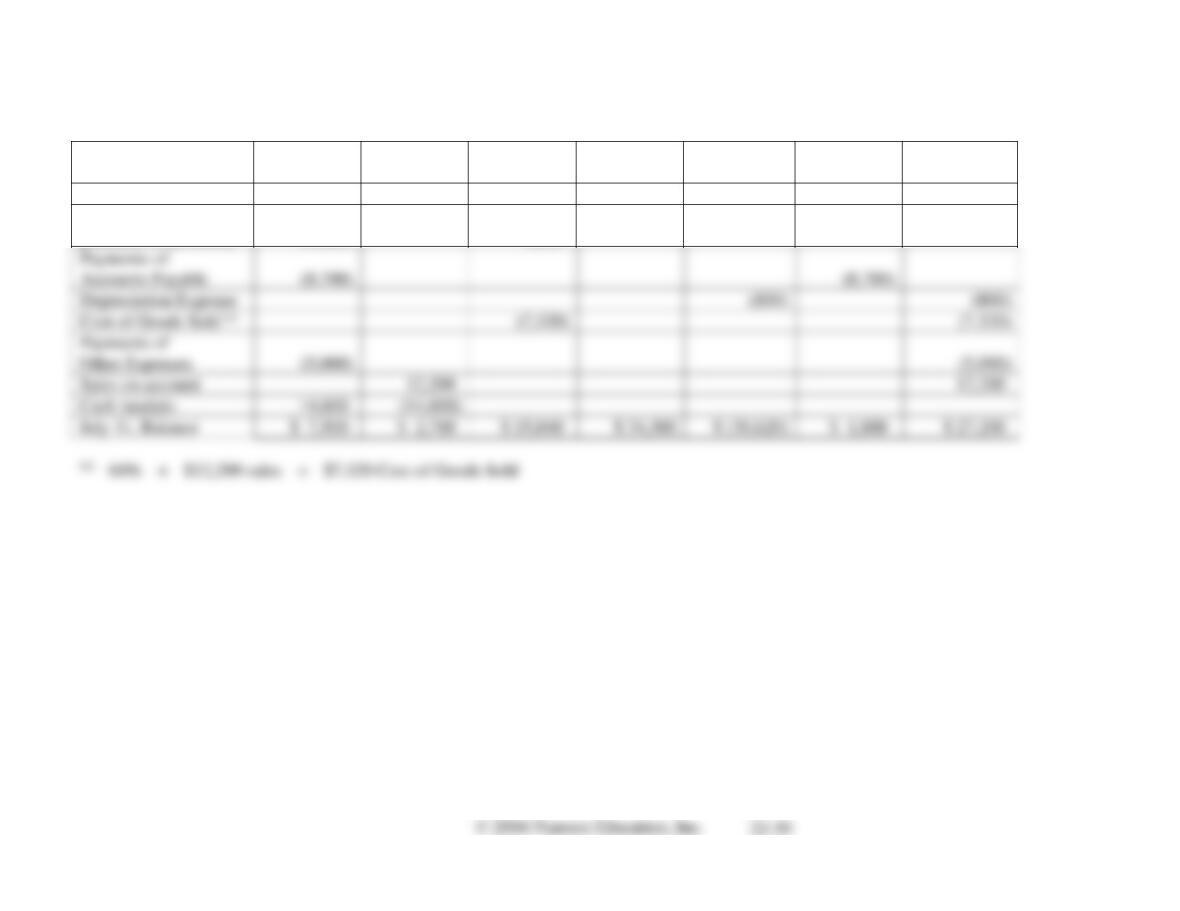
Use the following June actual ending balances and July 31, 2016, budgeted amounts for Ollies to
prepare a budgeted balance sheet for July 31, 2016.
a. June 30 Merchandise Inventory balance, $17,760
b. July purchase of Merchandise Inventory, $4,600, paid in cash
c. July payments of Accounts Payable, $8,700
d. June 30 Accounts Payable balance, $10,500
e. June 30 Furniture and Fixtures balance, $34,300; Accumulated Depreciation balance, $29,820
f. June 30 total stockholders’ equity balance, $28,120
g. July Depreciation Expense, $800
h. Cost of Goods Sold, 60% of sales
i. Other July expenses, including income tax, $5,000, paid in cash
j. June 30 Cash balance, $11,200
k. July budgeted sales, all on account, $12,200
l. June 30 Accounts Receivable balance, $5,180
m. July cash receipts from collections on account, $14,600
Hint: It may be helpful to trace the effects of each transaction on the accounting equation to determine
the ending balance of each account.
SOLUTION
OLLIES
Budgeted Balance Sheet
July 31, 2016
Assets
Current Assets:
Cash
$ 7,500
Accounts Receivable
Merchandise Inventory
Total Current Assets
$ 25,320
Property, Plant, and Equipment:
Furniture and Fixtures
Less: Accumulated Depreciation
Total Assets
$ 29,000
Current Liabilities:
Accounts Payable
$ 1,800
E22A-38, cont.
Cash
Accounts
Receivable
Merchandise
Inventory
Furniture
& Fixtures
Accumulated
Depreciation
Accounts
Payable
Stockholders’
Equity
June 30, Balance
$ 11,200
$ 5,180
$ 17,760
$ 34,300
$ (29,820)
$ 10,500
$ 28,120
Payments for
purchase of Inventory
(4,600)
4,600
Payments of
Accounts Payable
(8,700)
(8,700)
Depreciation Expense
Payments of
Other Expenses
(5,000)
Sales on account
12,200
12,200
Cash receipts
14,600
July 31, Balance
$ 7,500
$ 2,780
$ 15,040
$ 34,300
$ (30,620)
$ 1,800
$ 27,200
60%
×
$12,200 sales
=
$7,320 Cost of Goods Sold
Problems (Group A)
P22-39A Preparing an operating budget—sales, production, direct materials, direct labor,
overhead, COGS, and S&A expense budgets
Learning Objective 3
3. POHR $8
4. Adult bats COGS $60,690
The Huber Batting Company manufactures wood baseball bats. Huber’s two primary products are a
youth bat, designed for children and young teens, and an adult bat, designed for high school and college-
aged players. Huber sells the bats to sporting goods stores, and all sales are on account. The youth bat
sells for $35; the adult bat sells for $65. Huber’s highest sales volume is in the first three months of the
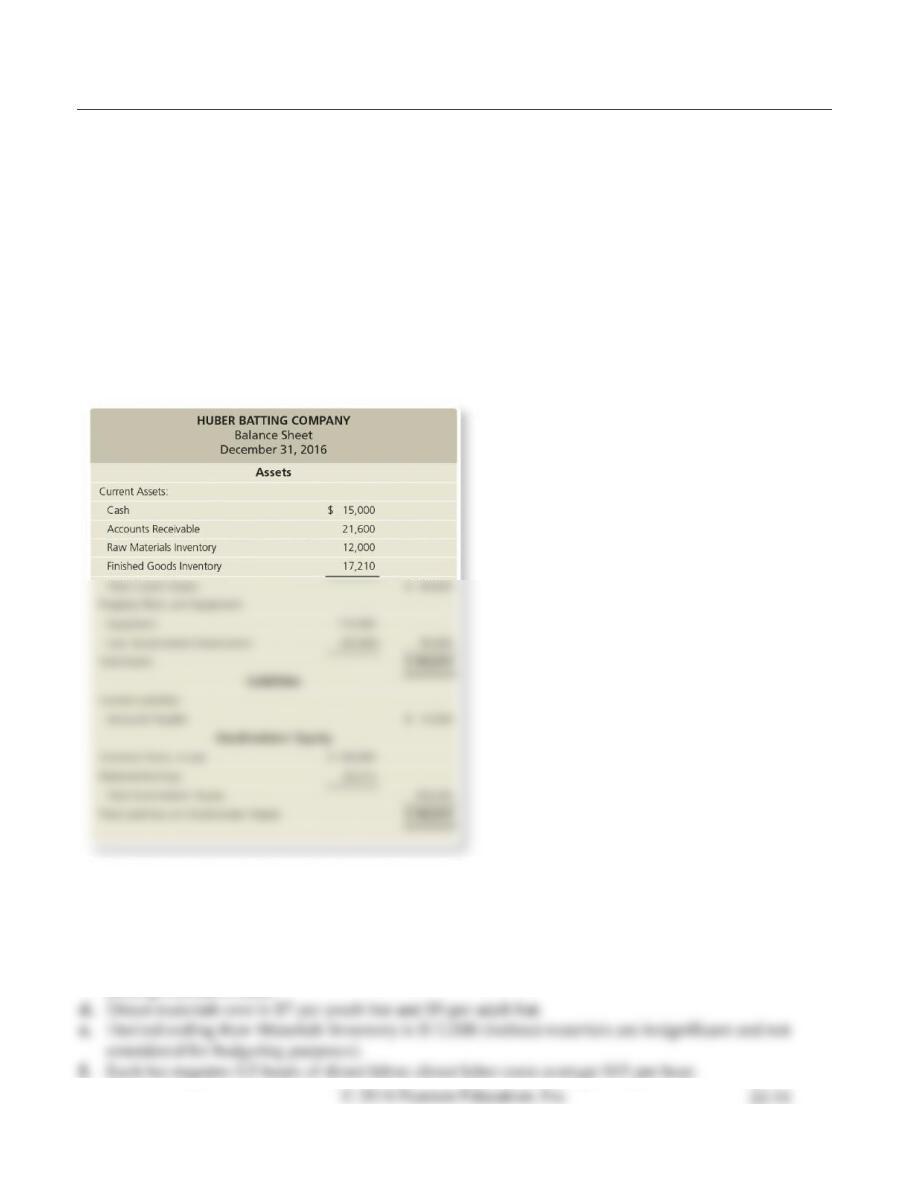
year as retailers prepare for the spring baseball season. Huber’s balance sheet for December 31, 2016,
follows:
Other data for Huber Batting Company for the first quarter of 2017:
a. Budgeted sales are 1,300 youth bats and 3,100 adult bats.
b. Finished Goods Inventory on December 31 consists of 650 youth bats at $17 each and 440 adult bats
at $14 each.
c. Desired ending Finished Goods Inventory is 100 youth bats and 550 adult bats; FIFO inventory
costing method is used.
g. Variable manufacturing overhead is $0.50 per bat.
h. Fixed manufacturing overhead includes $600 per quarter in depreciation and $13,260 per quarter for
other costs, such as insurance and property taxes.
i. Fixed selling and administrative expenses include $14,000 per quarter for salaries; $3,000 per
quarter for rent; $2,000 per quarter for insurance; and $300 per quarter for depreciation.
j. Variable selling and administrative expenses include supplies at 3% of sales.
Requirements
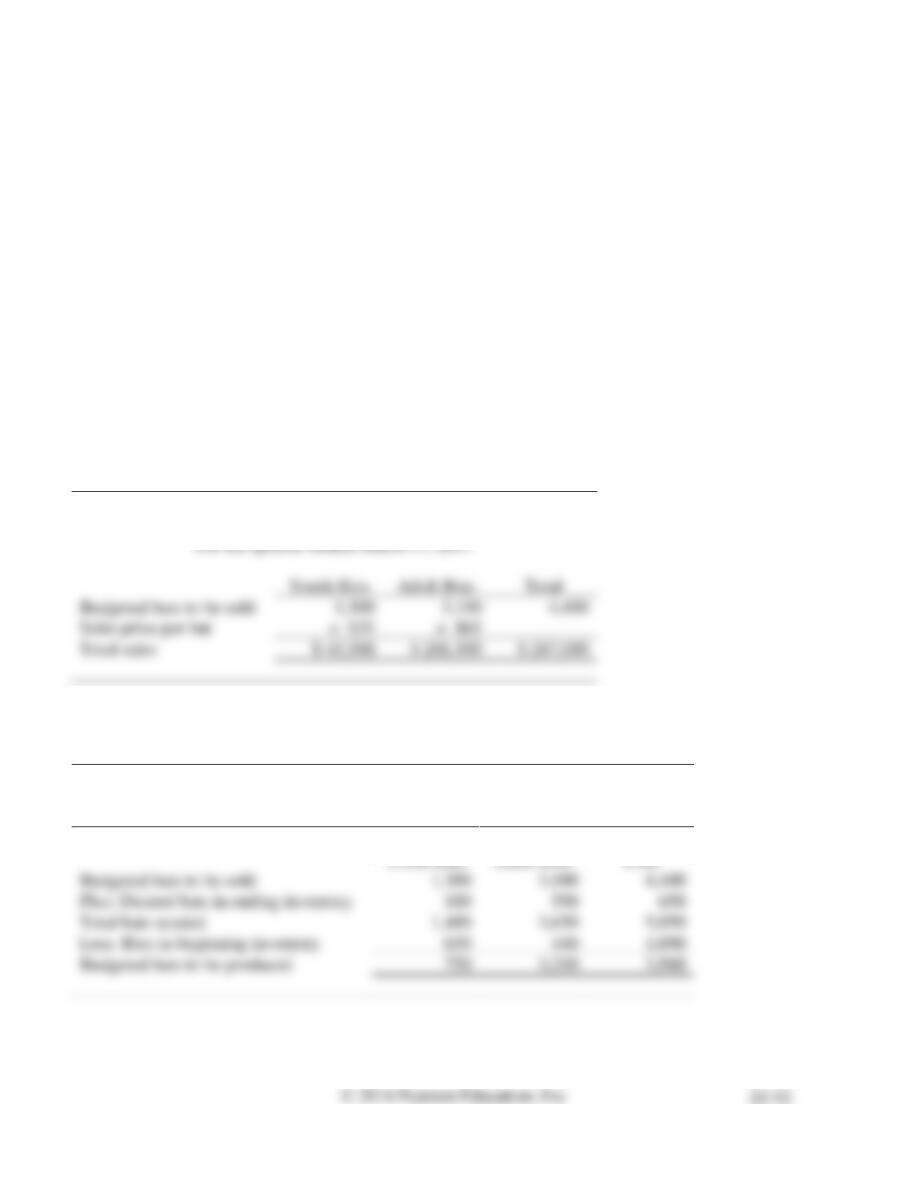
1. Prepare Huber’s sales budget for the first quarter of 2017.
2. Prepare Huber’s production budget for the first quarter of 2017.
3. Prepare Huber’s direct materials budget, direct labor budget, and manufacturing over– head budget
for the first quarter of 2017. Round the predetermined overhead allocation rate to two decimal
places. The overhead allocation base is direct labor hours.
4. Prepare Huber’s cost of goods sold budget for the first quarter of 2017.
5. Prepare Huber’s selling and administrative expense budget for the first quarter of 2017.
SOLUTION
Requirement 1
HUBER BATTING COMPANY
Sales Budget
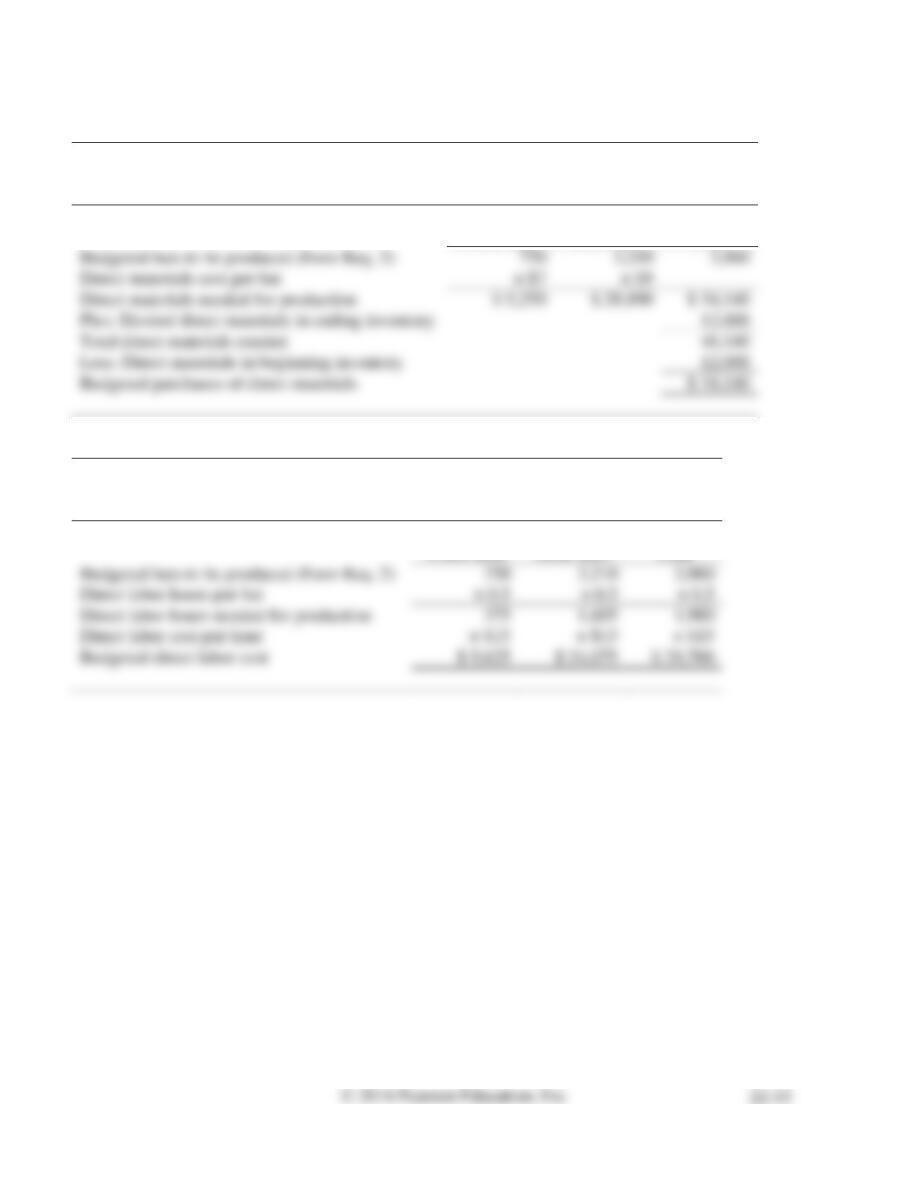
Budgeted bats to be sold
Sales price per bat
Total sales
Requirement 2
HUBER BATTING COMPANY
Production Budget
For the Quarter Ended March 31, 2017
Budgeted bats to be sold
Plus: Desired bats in ending inventory
Total bats needed
Less: Bats in beginning inventory
Budgeted bats to be produced
P22-39A, cont.
Requirement 3
HUBER BATTING COMPANY
Direct Materials Budget
For the Quarter Ended March 31, 2017
Youth Bats
Adult Bats
Total
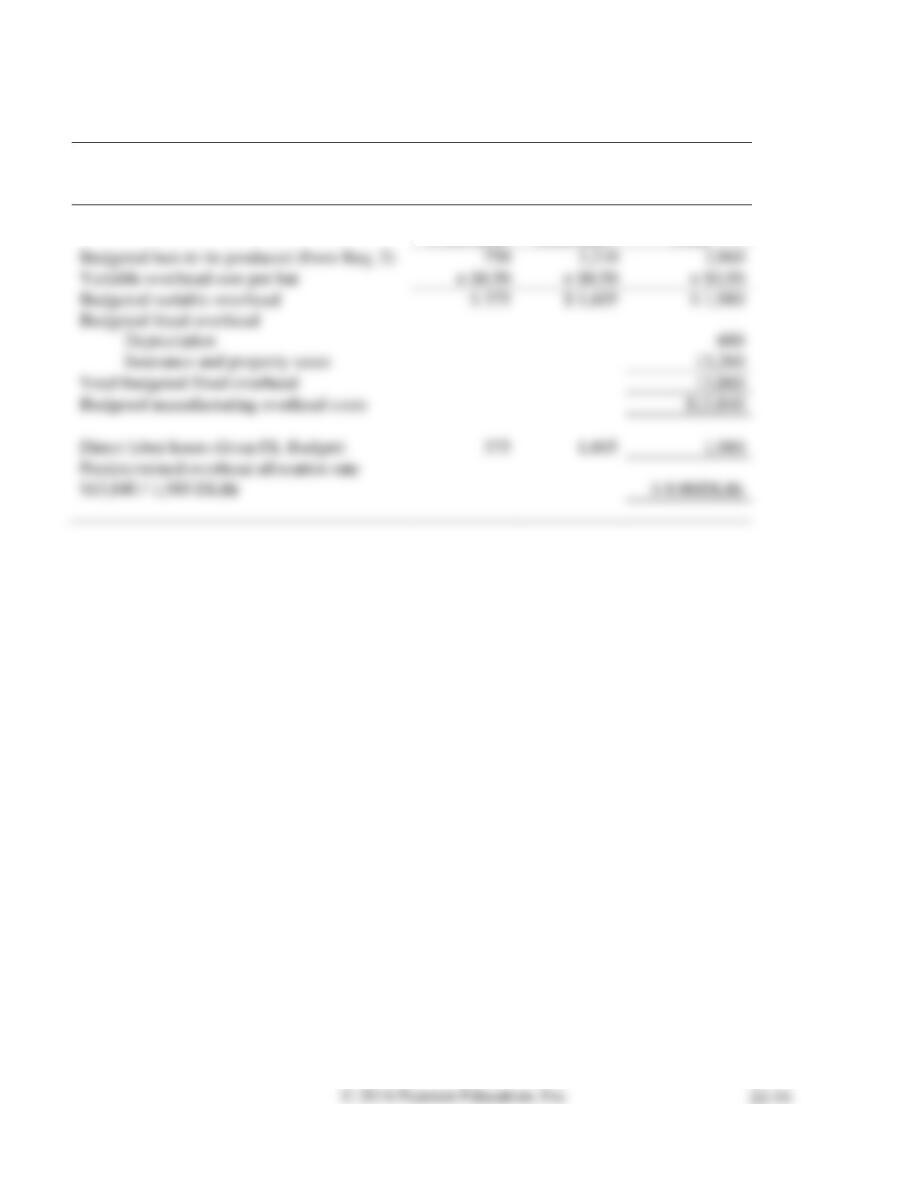
Budgeted bats to be produced (from Req. 2)
Direct materials cost per bat
Direct materials needed for production
Plus: Desired direct materials in ending inventory
Total direct materials needed
Less: Direct materials in beginning inventory
Budgeted purchases of direct materials
HUBER BATTING COMPANY
Direct Labor Budget
For the Quarter Ended March 31, 2017
Youth Bats
Adult Bats
Total
Budgeted bats to be produced (from Req. 2)
Direct labor hours per bat
Direct labor cost per hour
Budgeted direct labor cost
P22-39A, cont.
Requirement 3, cont.
HUBER BATTING COMPANY
Manufacturing Overhead Budget
For the Quarter Ended March 31, 2017
Youth Bats
Adult Bats
Total
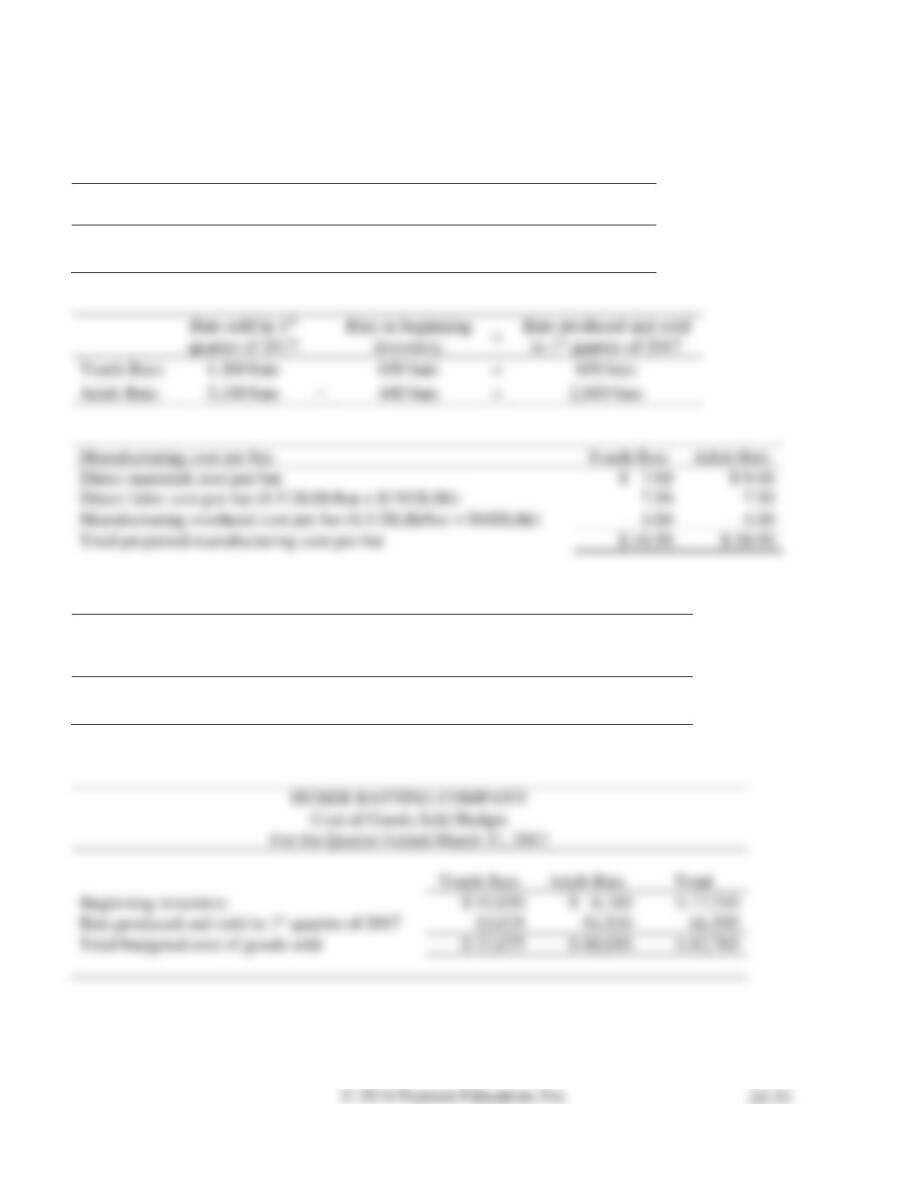
Budgeted bats to be produced (from Req. 2)
Variable overhead cost per bat
× $0.50
× $0.50
Budgeted variable overhead
Budgeted fixed overhead
Depreciation
Insurance and property taxes
Total budgeted fixed overhead
Budgeted manufacturing overhead costs
Direct labor hours (from DL Budget)
$15,840 / 1,980 DLHr
P22-39A, cont.
Requirement 4
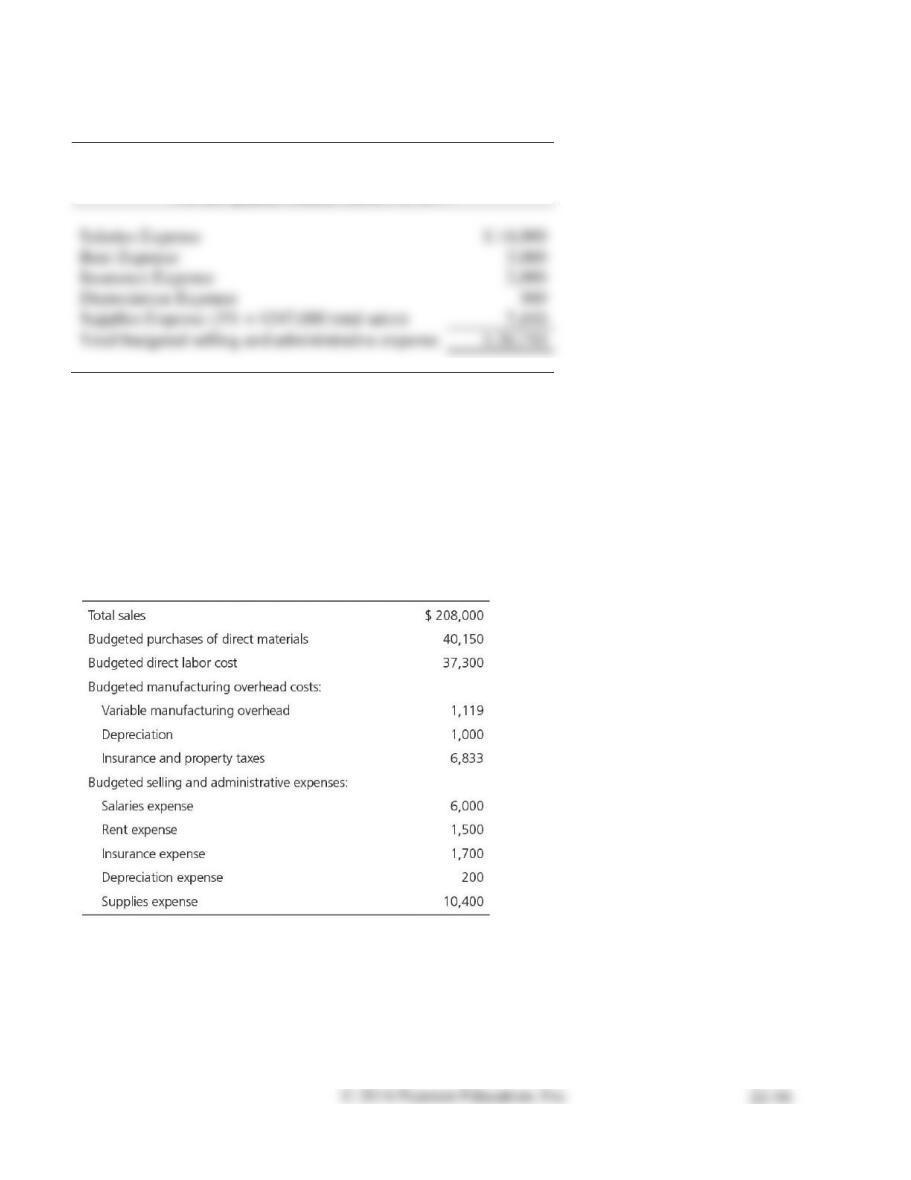
Calculations for Cost of Goods Sold Budget:
Bats in
beginning inventory
×
Cost per bat
=
Cost of bats in
beginning inventory
Youth Bats:
650 bats
×
$17 per bat
=
$ 11,050
Adult Bats:
440 bats
×
$14 per bat
=
$ 6,160
=
Youth Bats:
=
Adult Bats:
=
Manufacturing cost per bat
Direct materials cost per bat
Direct labor cost per bat (0.5 DLHr/bat × $15/DLHr)
Manufacturing overhead cost per bat (0.5 DLHr/bat × $8/DLHr)
Total projected manufacturing cost per bat
Bats produced
and sold in
1st quarter of 2017
×
Manufacturing
cost per bat
=
Cost of bats
produced and sold
in 1st quarter of 2017
Youth Bats:
650 bats
×
$18.50 per bat
=
$12,025
Adult Bats:
2,660 bats
×
$20.50 per bat
=
$54,530
Beginning inventory
Total budgeted cost of goods sold
P22-39A, cont.
Requirement 5
HUBER BATTING COMPANY
Selling and Administrative Expense Budget
For the Quarter Ended March 31, 2017
Salaries Expense
Rent Expense
Insurance Expense
Depreciation Expense
Supplies Expense (3% × $247,000 total sales)
Total budgeted selling and administrative expense
P22-40A Preparing a financial budget—schedule of cash receipts, schedule of cash payments, cash
budget
Learning Objective 4
1. Total cash pmts. $187,127
2. Ending Cash bal. $25,573
Humble Company has provided the following budget information for the first quarter of 2016:
Additional data related to the first quarter of 2016 for Humble Company:
a. Capital expenditures include $37,000 for new manufacturing equipment to be purchased and paid in
the first quarter.
b. Cash receipts are 75% of sales in the quarter of the sale and 25% in the quarter following the sale.
c. Direct materials purchases are paid 50% in the quarter purchased and 50% in the next quarter.
d. Direct labor, manufacturing overhead, and selling and administrative costs are paid in the quarter
incurred.
e. Income tax expense for the first quarter is projected at $50,000 and is paid in the quarter incurred.
f. Humble Company expects to have adequate cash funds and does not anticipate borrowing in the first
quarter.
g. The December 31, 2015, balance in Cash is $40,000, in Accounts Receivable is $16,700, and in
Accounts Payable is $15,200.
Requirements
1. Prepare Humble Company’s schedule of cash receipts from customers and schedule of cash
payments for the first quarter of 2016.
2. Prepare Humble Company’s cash budget for the first quarter of 2016.
SOLUTION
Requirement 1
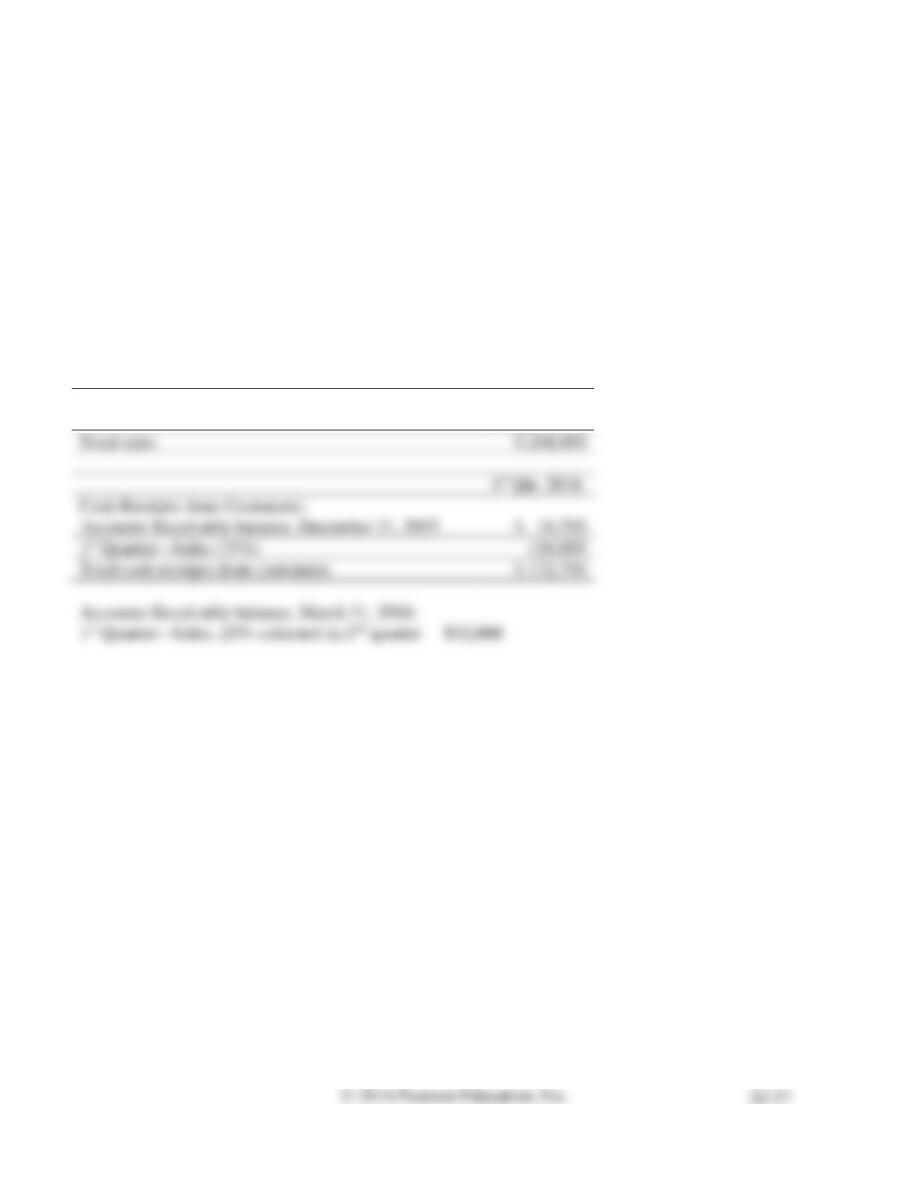
Schedule of Cash Receipts from Customers
1st Qtr. 2016
Total sales
Cash Receipts from Customers:
Accounts Receivable balance, December 31, 2015
Total cash receipts from customers
Accounts Receivable balance, March 31, 2016:
$52,000
P22-40A, cont.
Requirement 1, cont.
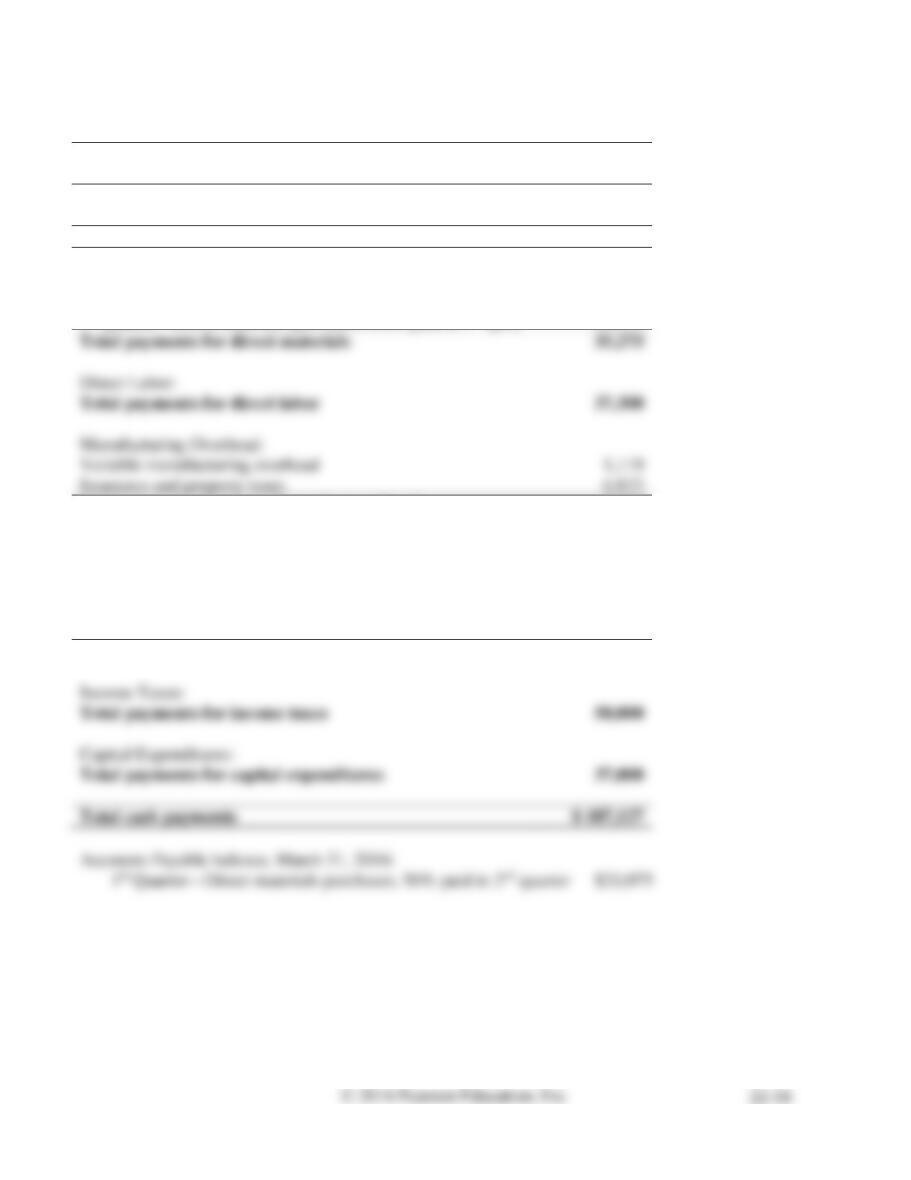
Schedule of Cash Payments
1st Qtr. 2016
Total direct materials purchases
$ 40,150
1st Qtr. 2016
Cash Payments
Direct Materials:
Accounts Payable balance, December 31, 2015
$ 15,200
1st Quarter—Direct materials purchases (50% paid in 1st Qtr.)
20,075
Total payments for direct materials
35,275
Direct Labor:
Total payments for direct labor
37,300
Manufacturing Overhead:
Variable manufacturing overhead
1,119
Insurance and property taxes
6,833
Total payments for manufacturing overhead
7,952
Selling and Administrative Expenses:
Salaries Expense
6,000
Rent Expense
1,500
Insurance Expense
1,700
Supplies Expense
10,400
Total payments for selling and administrative expenses
19,600
Income Taxes:
Total payments for income taxes
50,000
Capital Expenditures:
Total payments for capital expenditures
37,000
Total cash payments
Accounts Payable balance, March 31, 2016:
$20,075
P22-40A, cont.
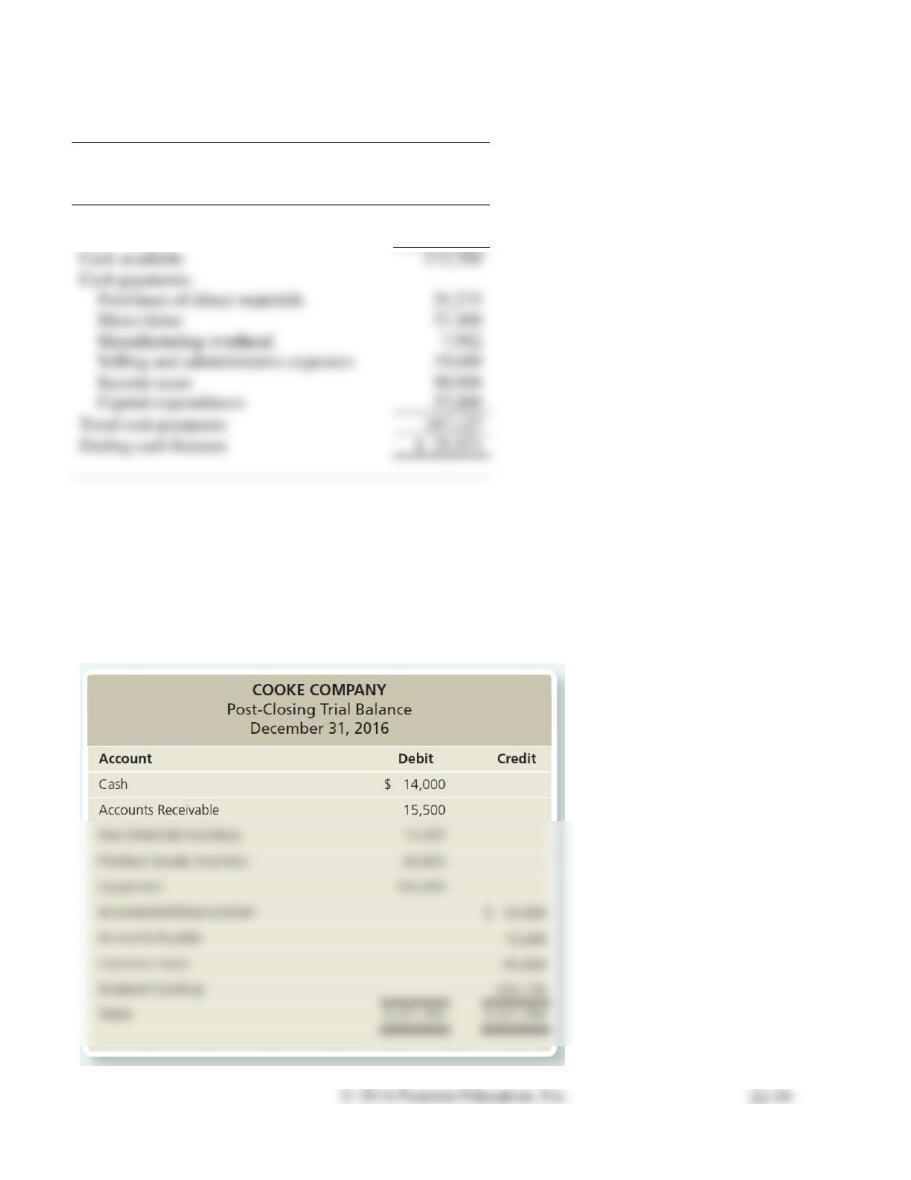
Requirement 2
HUMBLE COMPANY
Cash Budget
For the Quarter Ended March 31, 2016
Beginning cash balance
$ 40,000
Cash receipts
172,700
Cash available
212,700
Cash payments:
Purchases of direct materials
Direct labor
Manufacturing overhead
Selling and administrative expenses
Income taxes
Capital expenditures
Total cash payments
187,127
Ending cash balance
P22-41A Preparing a financial budget—budgeted income statement, balance sheet, and statement
of cash flows
Learning Objective 4
1. NI $166,300
2. FG inventory $6,650
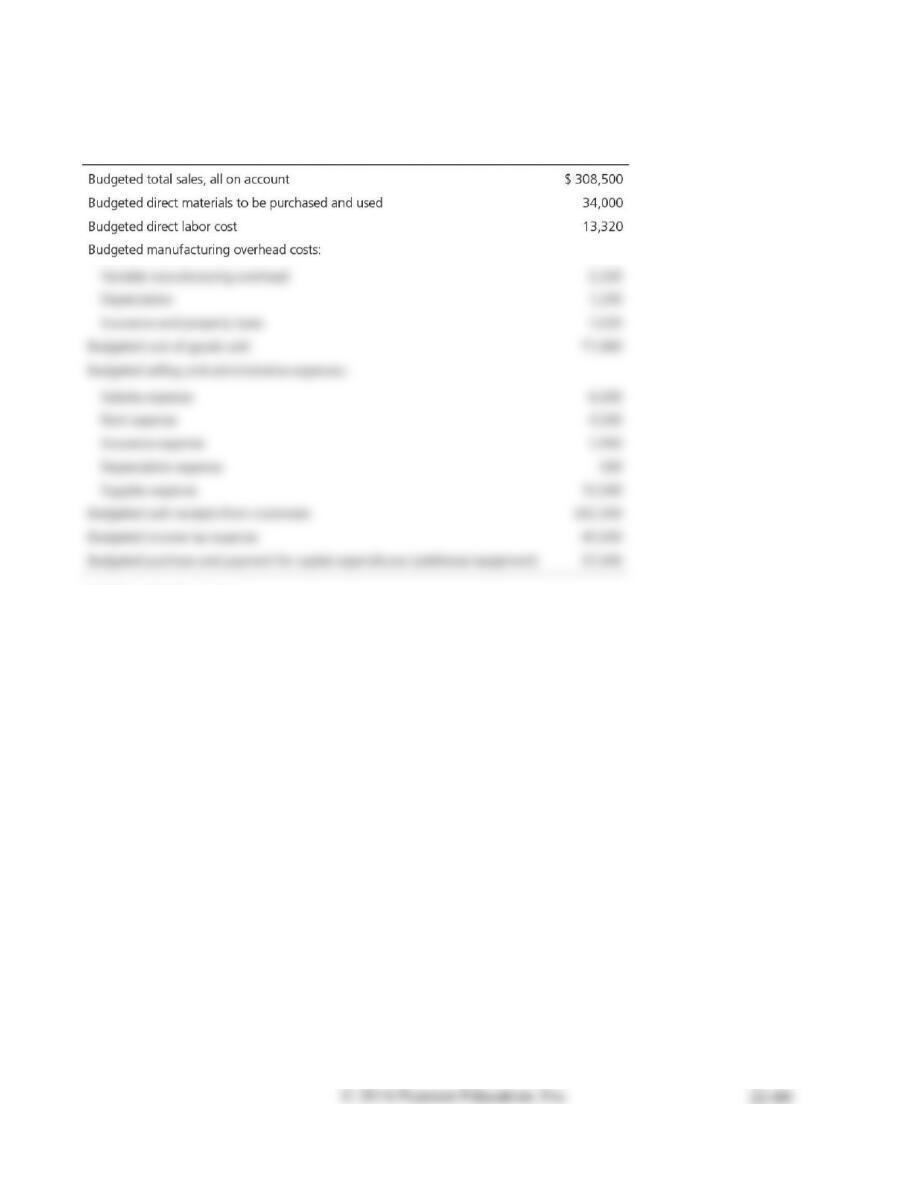
Cooke Company has the following post-closing trial balance on December 31, 2016:
The company’s accounting department has gathered the following budgeting information for the first
quarter of 2017:
Additional information:
a. Direct materials purchases are paid 60% in the quarter purchased and 40% in the next quarter.
b. Direct labor, manufacturing overhead, selling and administrative costs, and income tax expense are
paid in the quarter incurred.
Requirements
1. Prepare Cooke Company’s budgeted income statement for the first quarter of 2017.
2. Prepare Cooke Company’s budgeted balance sheet as of March 31, 2017. Hint: Use the budgeted
statement of cash flows prepared in Requirement 3 to determine the Cash balance.
3. Prepare Cooke Company’s budgeted statement of cash flows for the first quarter of 2017.