SOLUTION
Requirement 1
COOKE COMPANY
Budgeted Income Statement
For the Quarter Ended March 31, 2017
P22-41A, cont.
Requirement 2
COOKE COMPANY
Budgeted Balance Sheet
March 31, 2017
Assets
Current Assets:
Cash (from statement of cash flows)
$ 117,400
Accounts Receivable (a)
61,700
Raw Materials Inventory (b)
15,000
Finished Goods Inventory (c)
6,650
Total Current Assets
$ 200,750
Property, Plant, and Equipment:
197,000
165,300
Total Assets
$ 366,050
Liabilities
Current Liabilities:
Accounts Payable (f)
$ 13,600
Stockholders’ Equity
Common Stock
$ 80,000
Retained Earnings (g)
272,450
Total Stockholders’ Equity
352,450
Total Liabilities and Stockholders’ Equity
$366,050
(a)
Accounts Receivable: Dec. 31 balance + total sales – customer payments = $15,500 +
$308,500 – $262,300 = $61,700
(b)
(c)
$35,600 (from statement of cash flows calculations) = $13,600
(g)
P22-41A, cont.
Requirement 3
COOKE COMPANY
Budgeted Statement of Cash Flows
For the Quarter Ended March 31, 2017
Operating Activities:
Cash receipts from customers (given)
Cash payments for income taxes
Net cash provided by operating activities
$ 140,400
Investing Activities:
Cash payments for equipment purchases
Net cash used for investing activities
Financing Activities:
Net cash provided by (used for) financing activities
Net increase in cash
103,400
Cash balance, January 1, 2017
14,000
Cash balance, March 31, 2017
$ 117,400
(h)
Cash payments for operating expenses:
Direct materials payments: Dec. 31 AP balance + 60% of
1st quarter purchases = $15,200 + (60% × $34,000)
$ 35,600
Direct labor
13,320
Manufacturing overhead:
Selling and administrative expenses:
12,340
Total cash payments for operating expenses
$ 76,900
1. 3rd Qtr. DM purchases $7,380
4th Qtr. total cash pmts. (before interest) $32,998
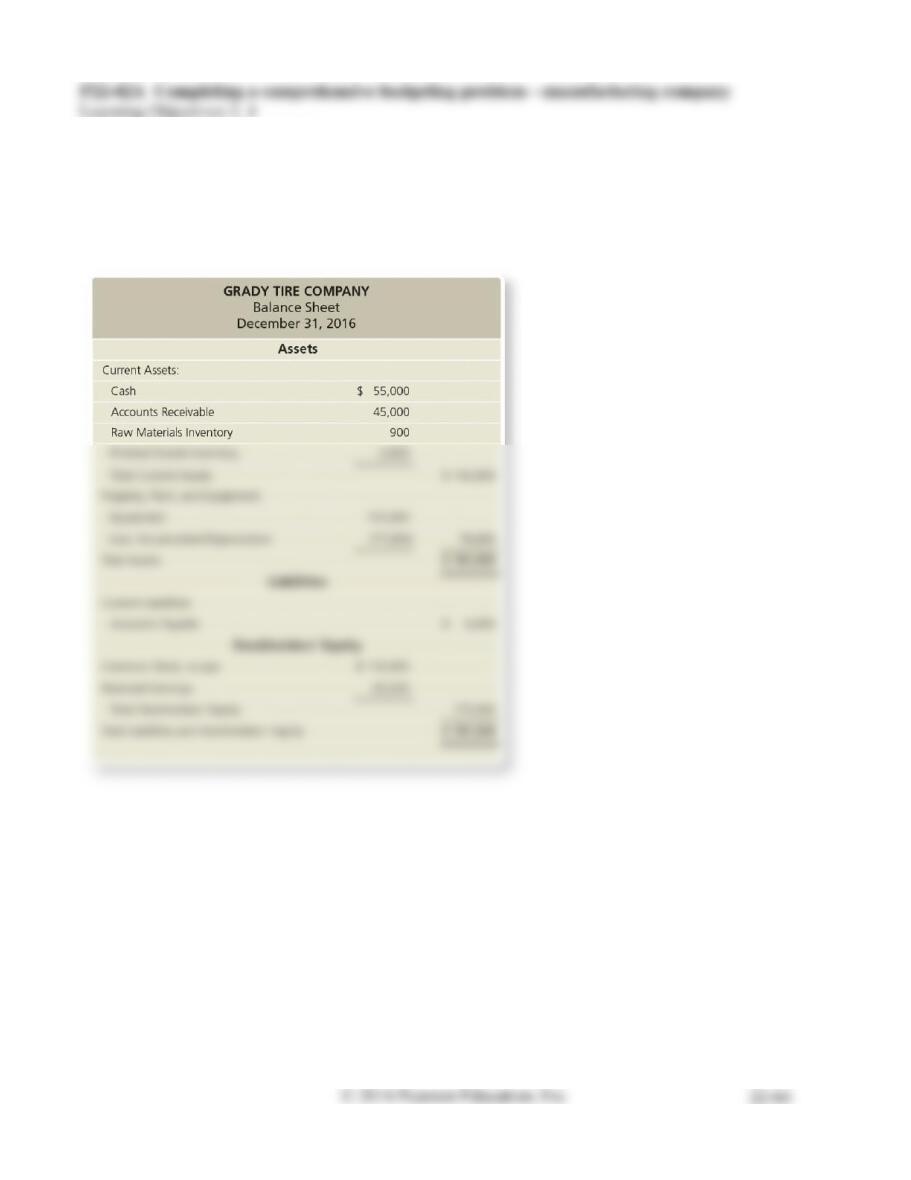
The Grady Tire Company manufactures racing tires for bicycles. Grady sells tires for $60 each. Grady is
planning for the next year by developing a master budget by quarters. Grady’s balance sheet for
December 31, 2016, follows:
d. Direct materials cost is $9 per tire.
e. Desired ending Raw Materials Inventory is 20% of the next quarter’s direct materials needed for
production; desired ending inventory for December 31 is $900; indirect materials are insignificant
and not considered for budgeting purposes.
f. Each tire requires 0.4 hours of direct labor; direct labor costs average $10 per hour.
g. Variable manufacturing overhead is $4 per tire.
h. Fixed manufacturing overhead includes $3,000 per quarter in depreciation and $1,770 per quarter for
other costs, such as utilities, insurance, and property taxes.
i. Fixed selling and administrative expenses include $7,500 per quarter for salaries; $3,000 per quarter
for rent; $1,650 per quarter for insurance; and $2,000 per quarter for depreciation.
n. Direct labor, manufacturing overhead, and selling and administrative costs are paid in the quarter
incurred.
o. Income tax expense is projected at $4,000 per quarter and is paid in the quarter incurred.
p. Grady desires to maintain a minimum cash balance of $50,000 and borrows from the local bank as
needed in increments of $1,000 at the beginning of the quarter; principal repayments are made at the
beginning of the quarter when excess funds are available and in increments of $1,000; interest is 8%
per year and paid at the beginning of the quarter based on the amount outstanding from the previous
quarter.
Requirements
1. Prepare Grady’s operating budget and cash budget for 2017 by quarter. Required schedules and
budgets include: sales budget, production budget, direct materials budget, direct labor budget,
manufacturing overhead budget, cost of goods sold budget, selling and administrative expense
SOLUTION
Requirement 1
GRADY TIRE COMPANY
Sales Budget
For the Year Ended December 31, 2017
First
Quarter
Second
Quarter
Third
Quarter
Fourth
Quarter
Total
Budgeted tires to be sold
700
750
800
850
3,100
Sales price per tire
× $60
× $60
× $60
× $60
× $60
Total sales
$ 42,000
$ 45,000
$ 48,000
$ 51,000
$ 186,000
For the Year Ended December 31, 2017
First
Quarter
Second
Quarter
Third
Quarter
Fourth
Quarter
Total
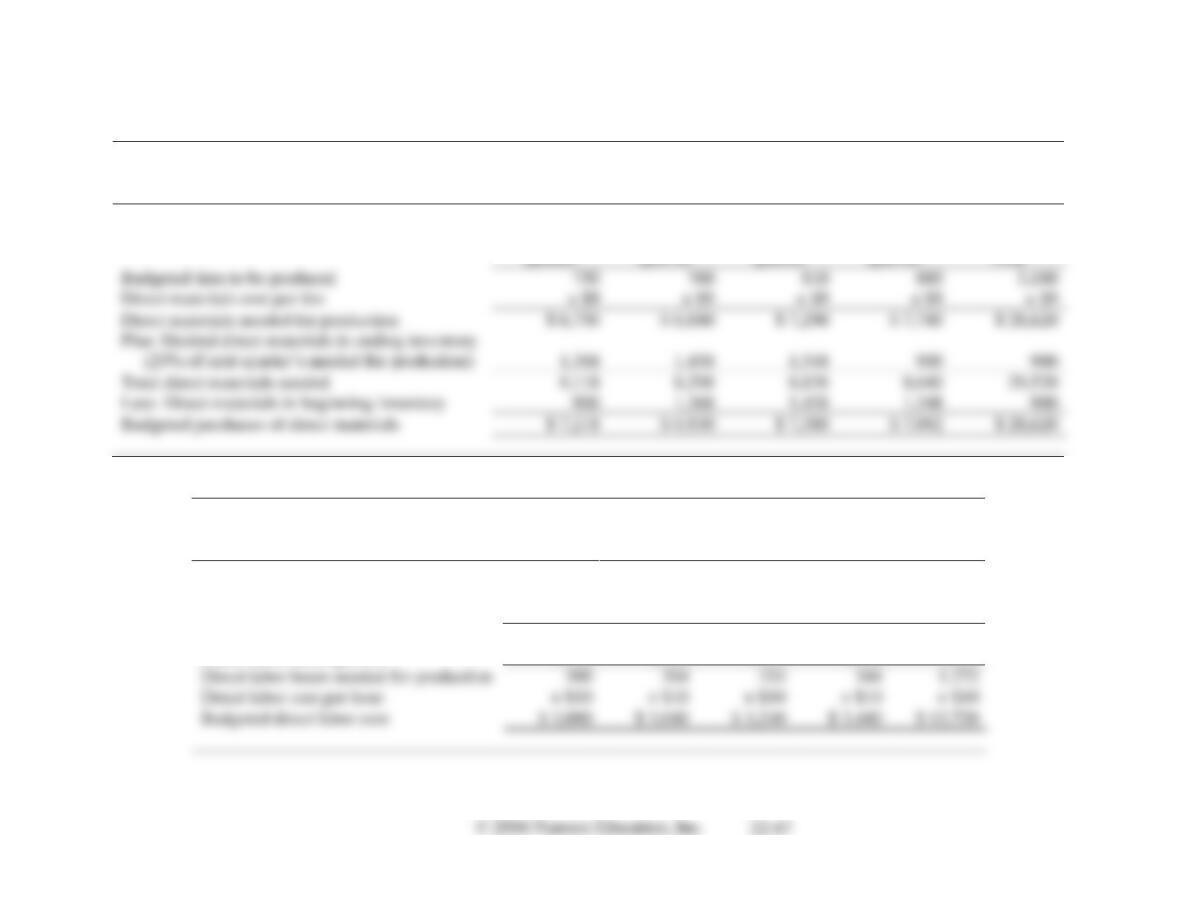
Budgeted tires to be sold
700
750
800
850
3,100
(20% of next quarter’s sales)
150
160
170
180
180
Total tires needed
850
910
970
1,030
3,280
Less: Tires in beginning inventory
100
150
160
170
100
Budgeted tires to be produced
750
760
810
860
3,180
P22-42A, cont.
Requirement 1, cont.
GRADY TIRE COMPANY
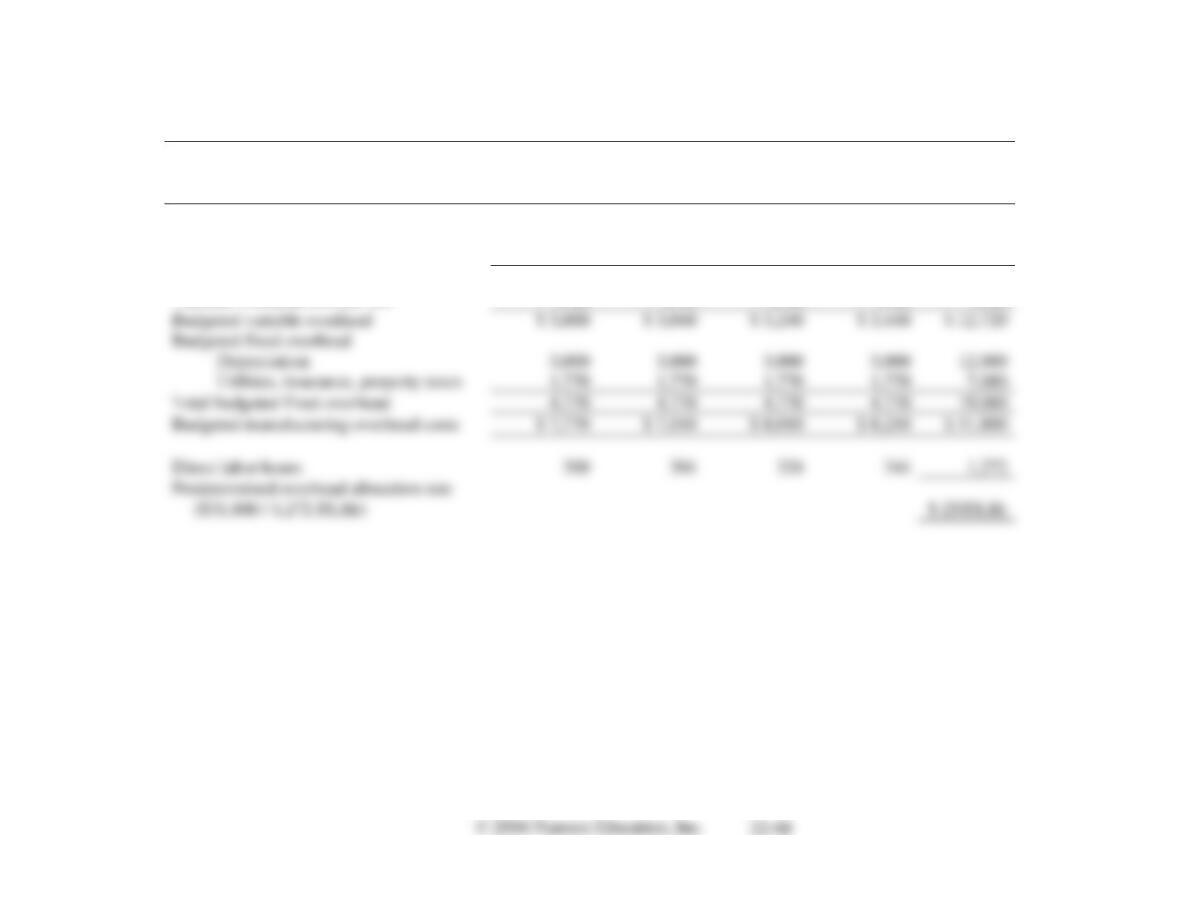
Direct Materials Budget
For the Year Ended December 31, 2017
First
Quarter
Second
Quarter
Third
Quarter
Fourth
Quarter
Total
Budgeted tires to be produced
Direct materials cost per tire
Direct materials needed for production
Plus: Desired direct materials in ending inventory
(20% of next quarter’s needed for production)
Total direct materials needed
Less: Direct materials in beginning inventory
Budgeted purchases of direct materials
GRADY TIRE COMPANY
Direct Labor Budget
For the Year Ended December 31, 2017
First
Quarter
Second
Quarter
Third
Quarter
Fourth
Quarter
Total
Budgeted tires to be produced
750
760
810
860
3,180
Direct labor hours per tire
× 0.4
× 0.4
× 0.4
× 0.4
× 0.4
Direct labor hours needed for production
300
304
324
344
1,272
Direct labor cost per hour
Budgeted direct labor cost
P22-42A, cont.
Requirement 1, cont.
GRADY TIRE COMPANY
Manufacturing Overhead Budget
For the Year Ended December 31, 2017
First
Quarter
Second
Quarter
Third
Quarter
Fourth
Quarter
Total
Budgeted tires to be produced
750
760
810
860
3,180
Variable overhead cost per tire
× $4
× $4
× $4
× $4
× $4
Budgeted variable overhead
$ 12,720
Budgeted fixed overhead
Depreciation
Utilities, insurance, property taxes
7,080
Total budgeted fixed overhead
Budgeted manufacturing overhead costs
$ 31,800
Direct labor hours
300
304
324
344
1,272
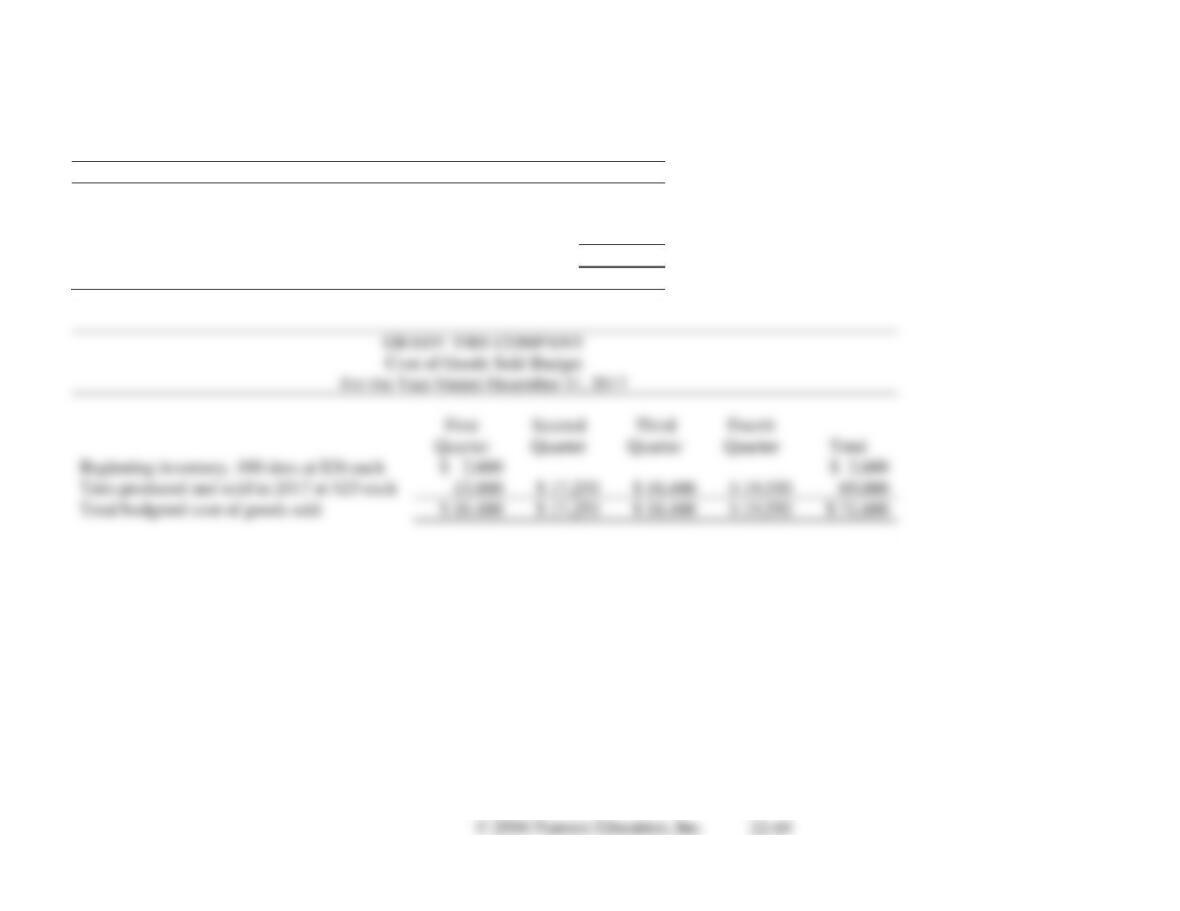
Predetermined overhead allocation rate
($31,800 / 1,272 DLHr)
P22-42A, cont.
Requirement 1, cont.
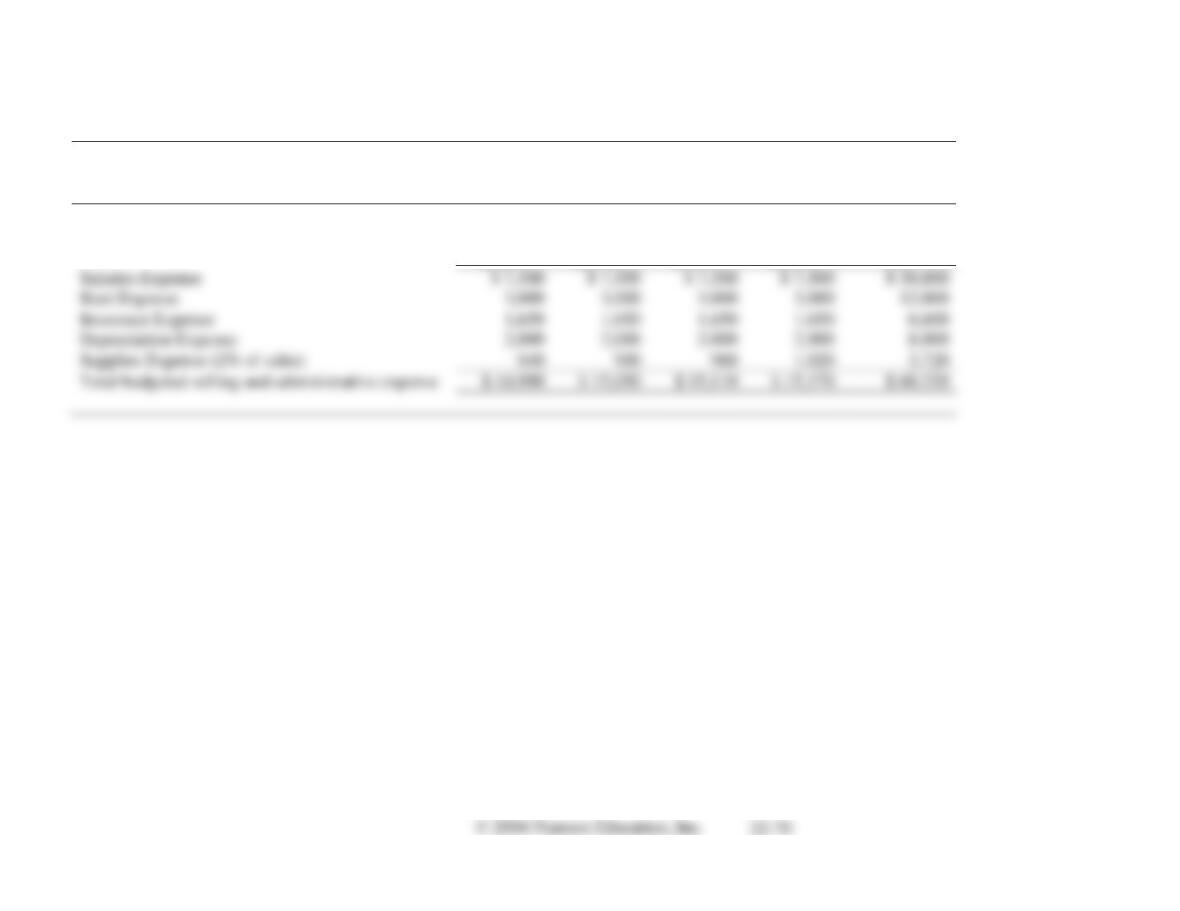
Calculations for Cost of Goods Sold Budget:
Year ended December 31, 2017:
Direct materials cost per tire
$ 9.00
Direct labor cost per tire (0.4 DLHr/tire × $10/DLHr)
4.00
Manufacturing overhead cost per tire (0.4 DLHr/tire × $25/DLHr)
10.00
Total projected manufacturing cost per tire
$ 23.00
Beginning inventory, 100 tires at $26 each
Tires produced and sold in 2017 at $23 each
Total budgeted cost of goods sold
P22-42A, cont.
Requirement 1, cont.
GRADY TIRE COMPANY
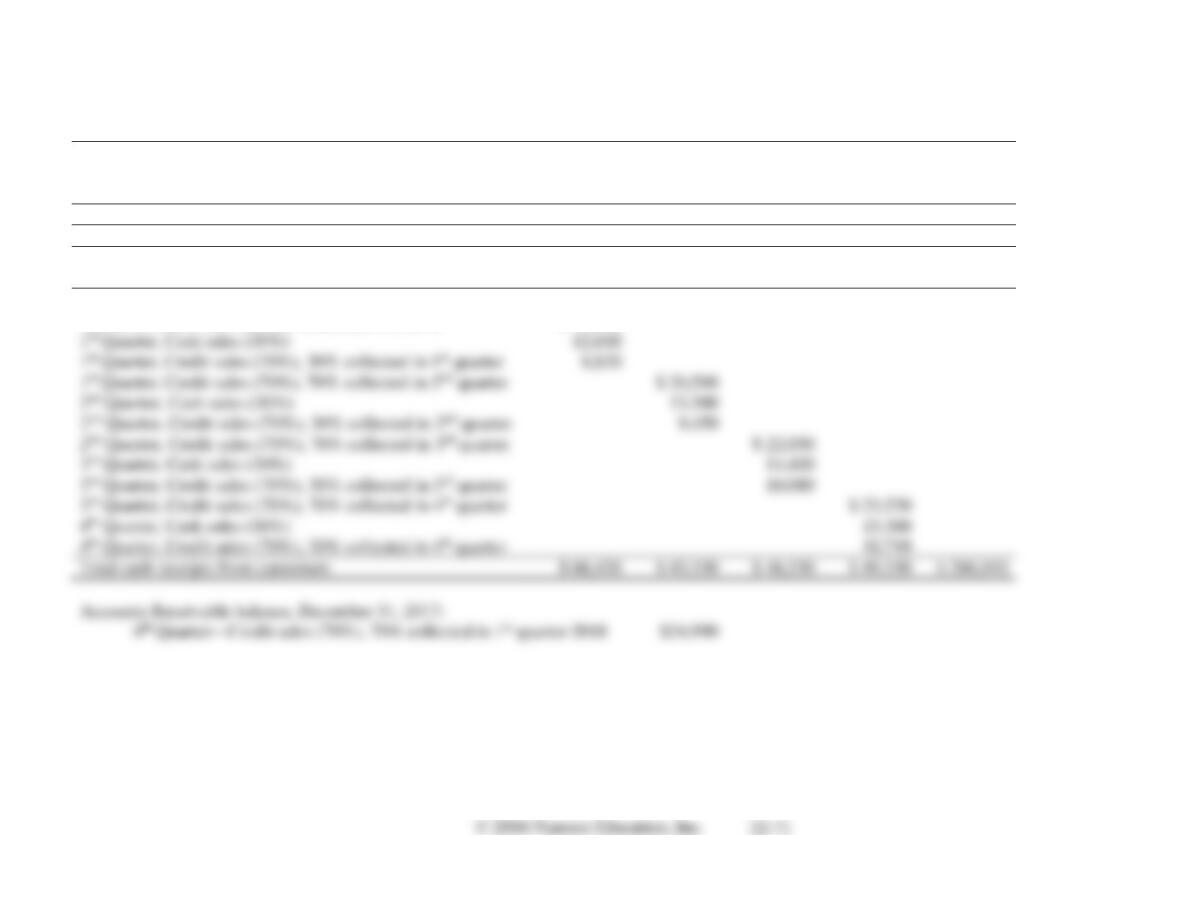
Selling and Administrative Expense Budget
For the Year Ended December 31, 2017
First
Quarter
Second
Quarter
Third
Quarter
Fourth
Quarter
Total
Salaries Expense
Rent Expense
Insurance Expense
Depreciation Expense
Supplies Expense (2% of sales)
Total budgeted selling and administrative expense
P22-42A, cont.
Requirement 1, cont.
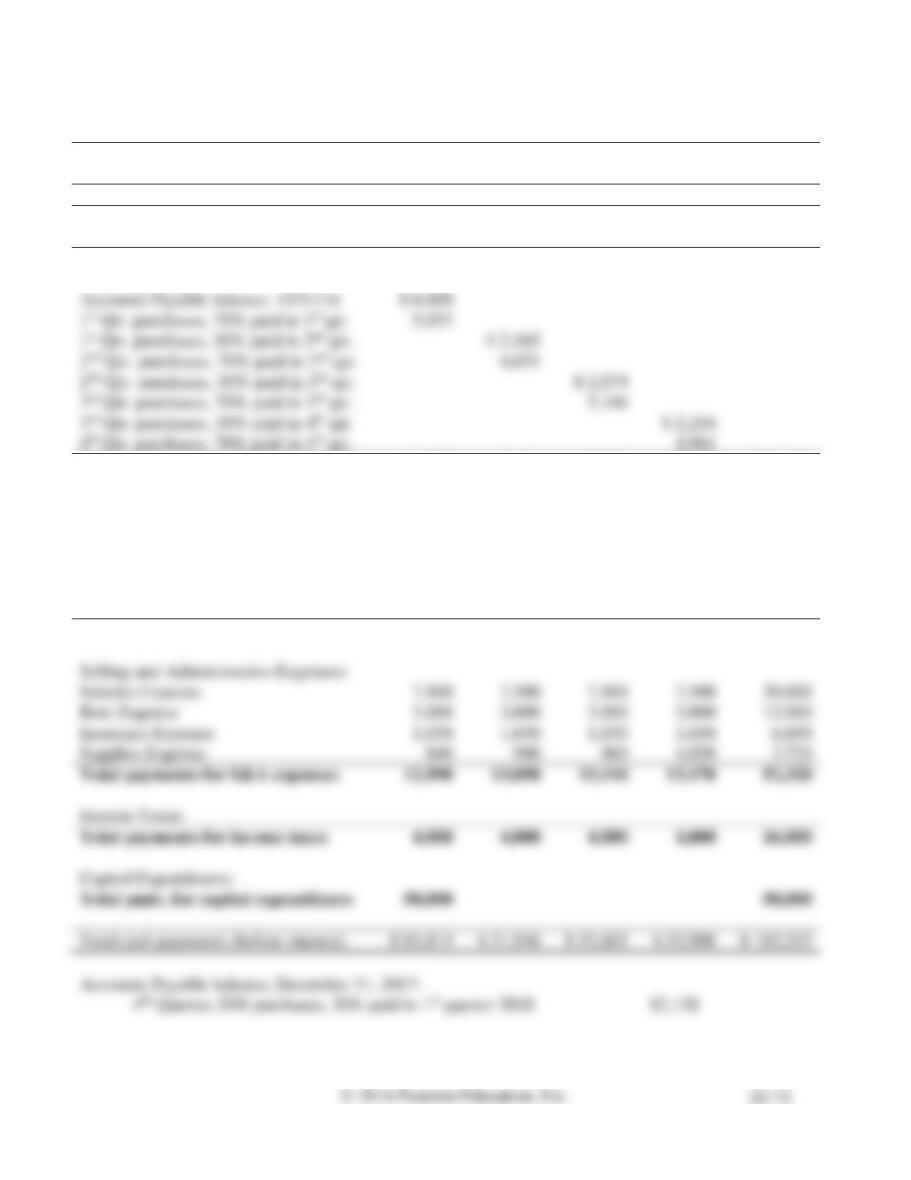
Schedule of Cash Receipts from Customers
First
Quarter
Second
Quarter
Third
Quarter
Fourth
Quarter
Total
Total sales
$ 42,000
$ 45,000
$ 48,000
$ 51,000
$ 186,000
First
Quarter
Second
Quarter
Third
Quarter
Fourth
Quarter
Total
Cash Receipts from Customers:
Accounts Receivable balance, December 31, 2016
$ 45,000
8,820
$ 20,580
9,450
$ 22,050
$ 23,520
Total cash receipts from customers
$ 66,420
$ 43,530
$ 46,530
$ 49,530
$ 206,010
Accounts Receivable balance, December 31, 2017:
P22-42A, cont.
Requirement 1, cont.
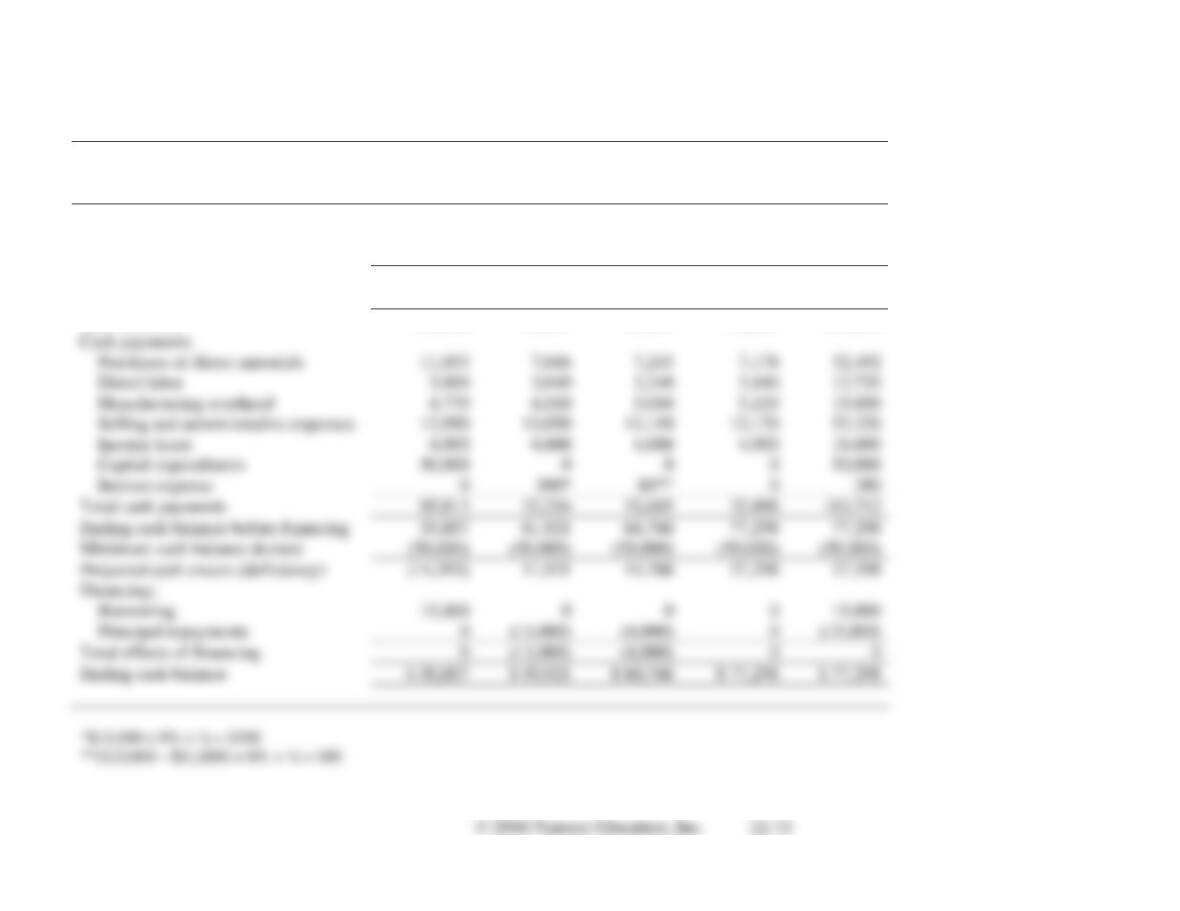
Schedule of Cash Payments
1st Qtr.
2nd Qtr.
3rd Qtr.
4th Qtr.
Total
Total direct materials purchases
$ 7,218
$ 6,930
$ 7,380
$ 7,092
$ 28,620
1st Qtr.
2nd Qtr.
3rd Qtr.
4th Qtr.
Total
Cash Payments
Direct Materials:
Accounts Payable balance, 12/31/16
$ 6,000
5,053
$ 2,165
4,851
$ 2,079
5,166
$ 2,214
4,964
Total payments for direct materials
11,053
7,016
7,245
7,178
$ 32,492
Direct Labor:
Total payments for direct labor
3,000
3,040
3,240
3,440
12,720
Manufacturing Overhead:
Variable manufacturing overhead
3,000
3,040
3,240
3,440
12,720
Utilities, insurance, property taxes
1,770
1,770
1,770
1,770
7,080
Total payments for mfg. overhead
4,770
4,810
5,010
5,210
19,800
Selling and Administrative Expenses:
Salaries Expense
7,500
7,500
7,500
7,500
30,000
Rent Expense
3,000
3,000
3,000
3,000
12,000
Insurance Expense
1,650
1,650
1,650
1,650
6,600
Supplies Expense
1,020
3,720
Total payments for S&A expenses
12,990
13,050
13,110
13,170
52,320
Income Taxes:
Total payments for income taxes
4,000
4,000
4,000
4,000
16,000
Capital Expenditures:
Total pmts. for capital expenditures
50,000
50,000
Total cash payments (before interest)
Accounts Payable balance, December 31, 2017:
$2,128
P22-42A, cont.
Requirement 1, cont.
GRADY TIRE COMPANY
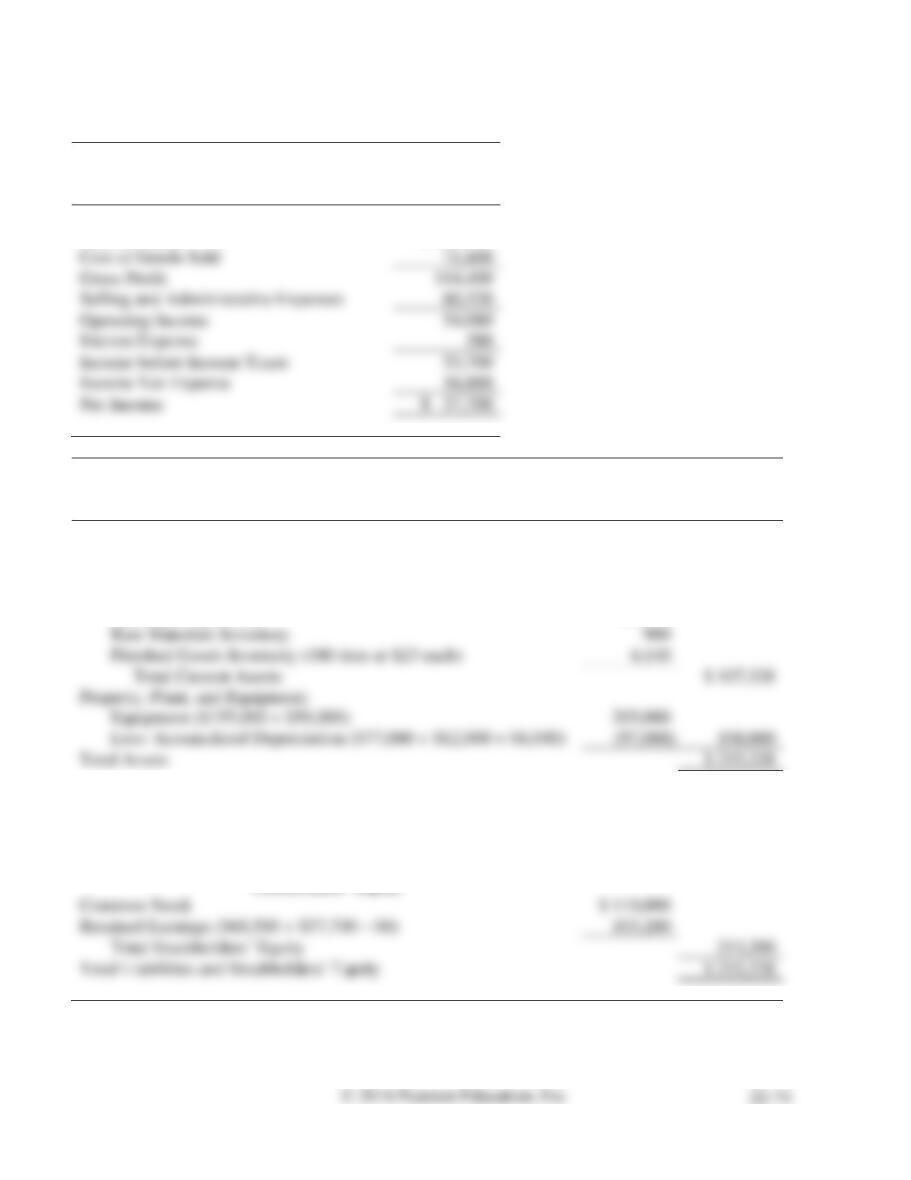
Cash Budget
For the Year Ended December 31, 2017
First
Quarter
Second
Quarter
Third
Quarter
Fourth
Quarter
Total
Beginning cash balance
$ 55,000
$ 50,607
$ 50,921
$ 60,766
$ 55,000
Cash receipts
66,420
43,530
46,530
49,530
206,010
Cash available
121,420
94,137
97,451
110,296
261,010
Cash payments:
Purchases of direct materials
11,053
32,492
Direct labor
12,720
Manufacturing overhead
19,800
Selling and administrative expenses
12,990
13,050
13,110
13,170
52,320
Income taxes
16,000
Capital expenditures
50,000
0
0
50,000
Interest expense
Total cash payments
85,813
32,216
32,685
32,998
183,712
Ending cash balance before financing
35,607
61,921
64,766
77,298
77,298
Minimum cash balance desired
(50,000)
(50,000)
Projected cash excess (deficiency)
(14,393)
11,921
14,766
27,298
27,298
Financing:
Borrowing
15,000
0
0
15,000
Principal repayments
Total effects of financing
Ending cash balance
$ 50,607
$ 50,921
$ 60,766
$ 77,298
$ 77,298
P22-42A, cont.
Requirement 2
GRADY TIRE COMPANY
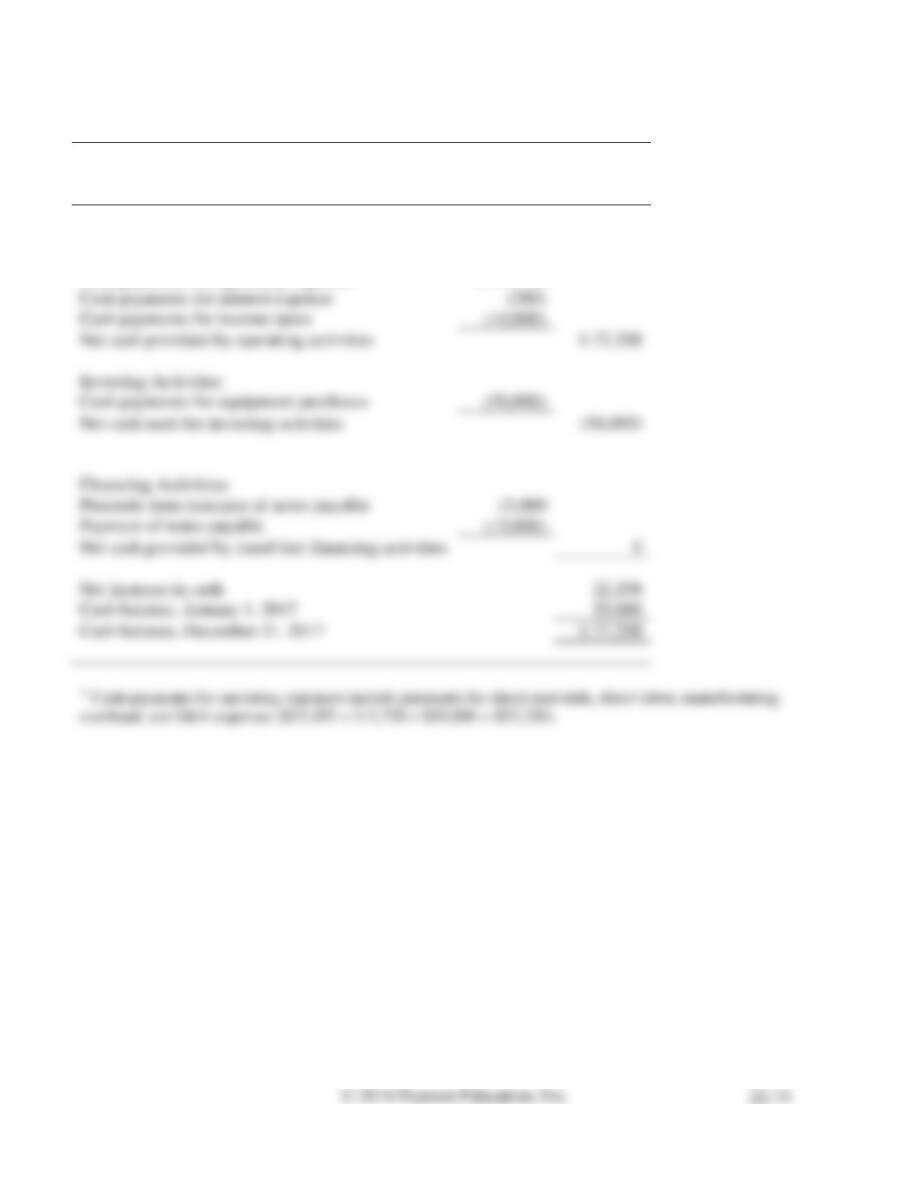
Budgeted Income Statement
For the Year Ended December 31, 2017
Sales Revenue
$ 186,000
Cost of Goods Sold
Gross Profit
Selling and Administrative Expenses
Operating Income
Interest Expense
380
Income before Income Taxes
Income Tax Expense
Net Income
$ 37,700
GRADY TIRE COMPANY
Budgeted Balance Sheet
December 31, 2017
Assets
Current Assets:
Cash
$ 77,298
Accounts Receivable
24,990
Raw Materials Inventory
Finished Goods Inventory (180 tires at $23 each)
Total Current Assets
Property, Plant, and Equipment:
Equipment ($155,000 + $50,000)
Less: Accumulated Depreciation ($77,000 + $12,000 + $8,000)
108,000
Total Assets
Liabilities
Current Liabilities:
Accounts Payable
$ 2,128
Stockholders’ Equity
Common Stock
Retained Earnings ($65,500 + $37,700 – $0)
Total Stockholders’ Equity
213,200
Total Liabilities and Stockholders’ Equity
P22-42A, cont.
Requirement 2, cont.
GRADY TIRE COMPANY
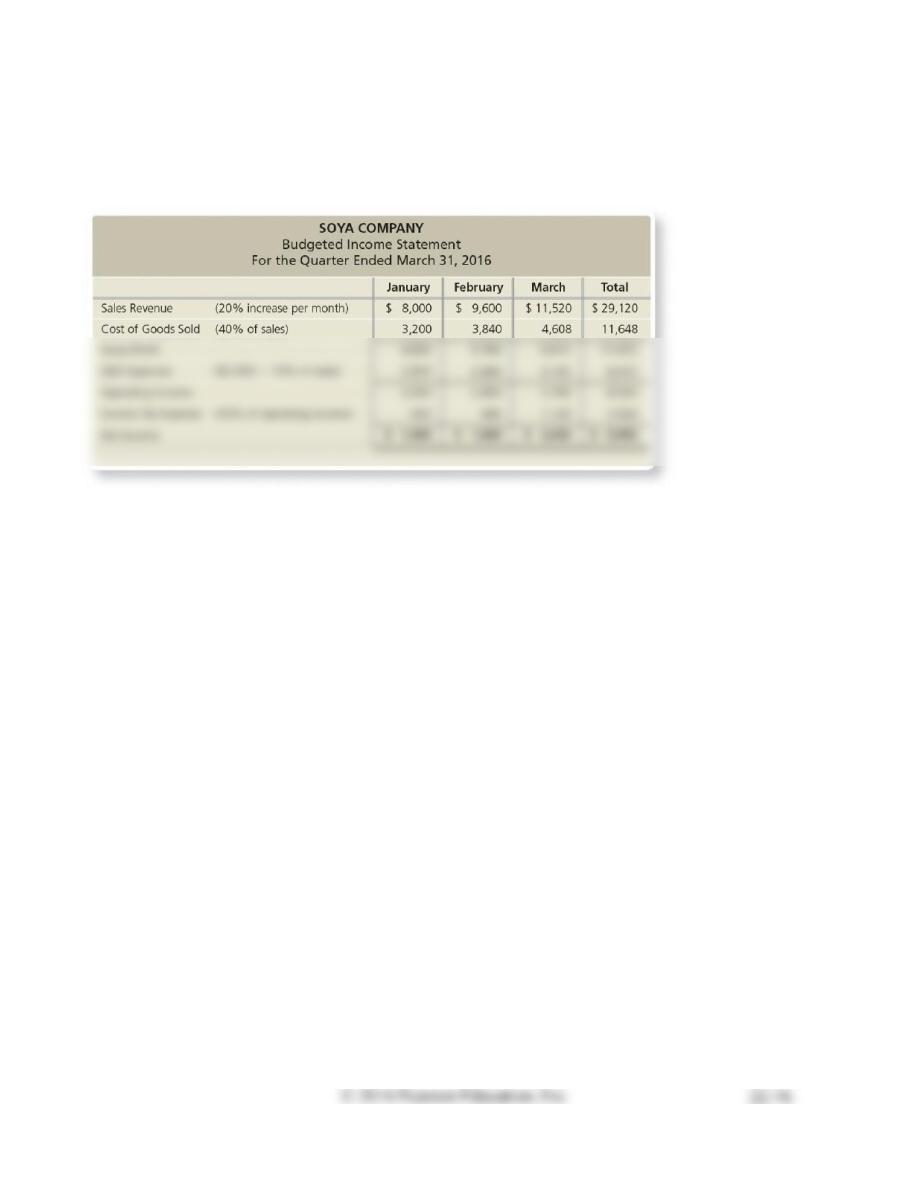
Budgeted Statement of Cash Flows
For the Year Ended December 31, 2017
Operating Activities:
Cash receipts from customers
$ 206,010
Cash payments for operating expenses*
(117,332)
Cash payments for interest expense
Cash payments for income taxes
Net cash provided by operating activities
Investing Activities:
Cash payments for equipment purchases
Net cash used for investing activities
Financing Activities:
Proceeds from issuance of notes payable
Payment of notes payable
Net cash provided by (used for) financing activities
Net increase in cash
Cash balance, January 1, 2017
Cash balance, December 31, 2017
P22-43A Using sensitivity analysis
Learning Objective 5
1. Option 2 Feb. NI $1,750
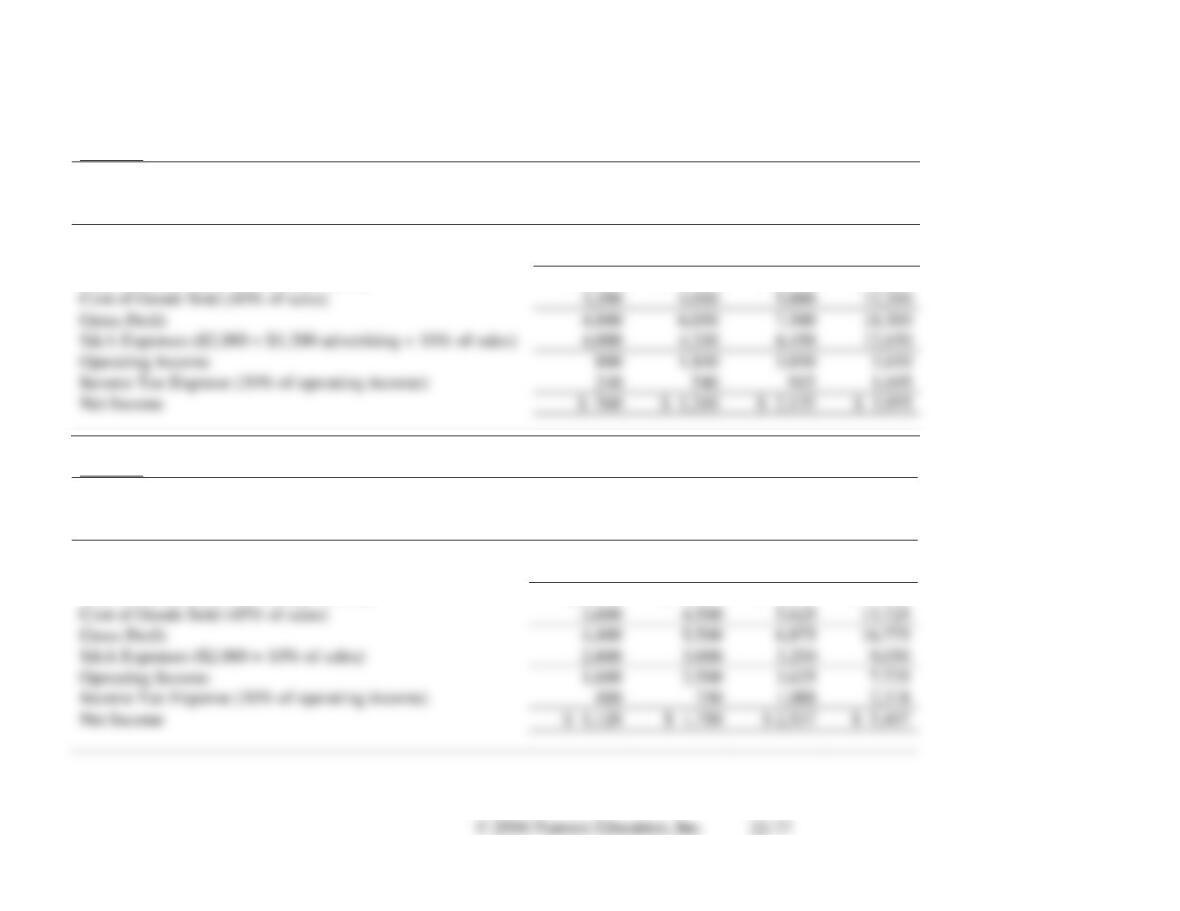
Soya Company prepared the following budgeted income statement for the first quarter of 2016:
Soya Company is considering two options. Option 1 is to increase advertising by $1,200 per month.
Option 2 is to use better-quality materials in the manufacturing process. The better materials will
increase the cost of goods sold to 45% but will provide a better product at the same sales price. The
marketing manager projects either option will result in sales increases of 25% per month rather than
20%.
Requirements
1. Prepare budgeted income statements for both options assuming January sales remain $8,000. Round
all calculations to the nearest dollar.
2. Which option should Soya choose? Explain your reasoning.
SOLUTION
Requirement 1
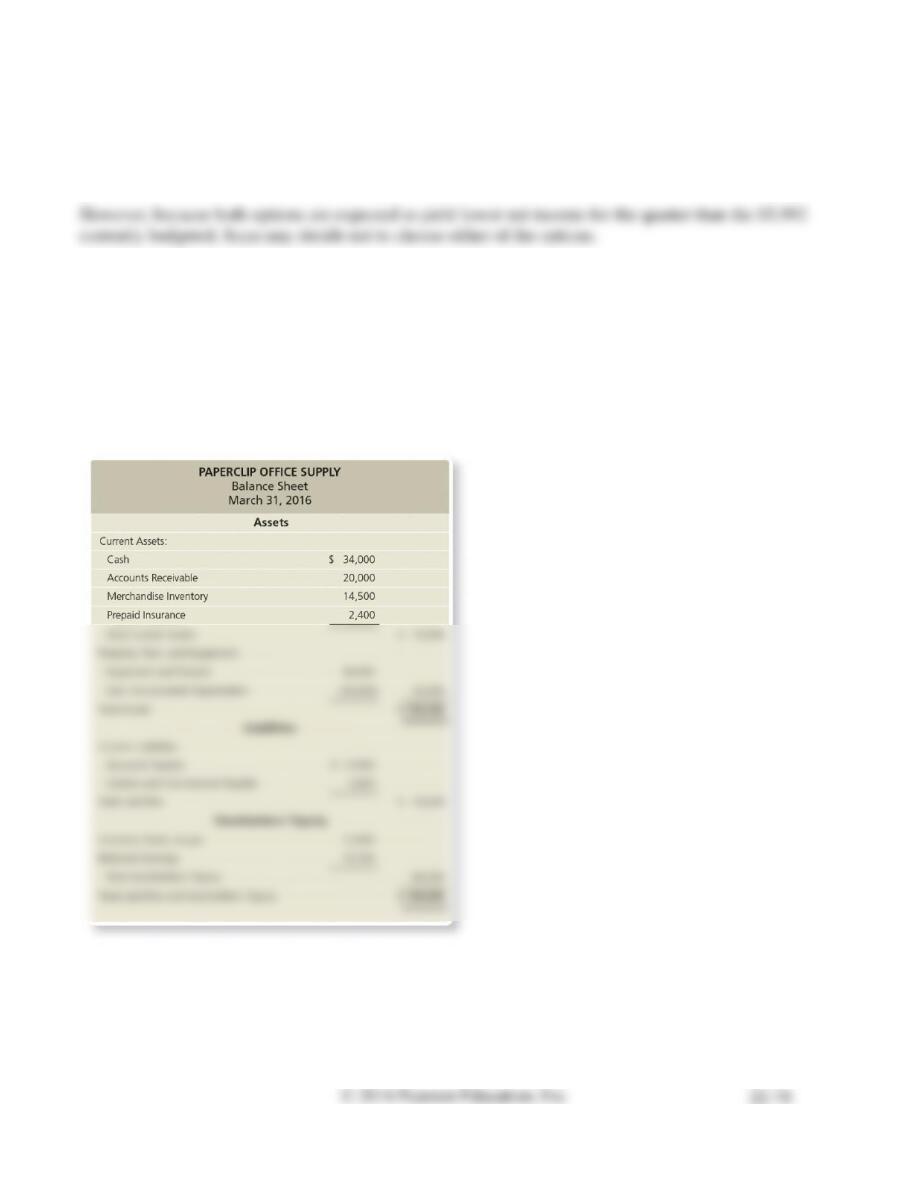
Option 1:
SOYA COMPANY
Budgeted Income Statement
For the Quarter Ended March 31, 2016
January
February
March
Total
Sales Revenue (25% increase per month)
$ 8,000
$ 10,000
$ 12,500
$ 30,500
Cost of Goods Sold (40% of sales)
12,200
Gross Profit
18,300
S&A Expenses ($2,000 + $1,200 advertising + 10% of sales)
12,650
Operating Income
Income Tax Expense (30% of operating income)
Net Income
Option 2:
SOYA COMPANY
Budgeted Income Statement
For the Quarter Ended March 31, 2016
January
February
March
Total
Sales Revenue (25% increase per month)
$ 8,000
$ 10,000
$ 12,500
$ 30,500
Cost of Goods Sold (45% of sales)
Gross Profit
S&A Expenses ($2,000 + 10% of sales)
Operating Income
Income Tax Expense (30% of operating income)
Net Income
$ 1,750
$ 5,407
P22-43A, cont.
Requirement 2
If one of the two options is chosen, it would be Option 2 because net income for the quarter is expected
to be $1,452 higher than it is in Option 1 ($5,407 for Option 2 − $3,955 for Option 1).
P22A-44A Preparing an operating budget—sales budget; inventory, purchases and COGS
budget; and S&A expense budget
Learning Objective 6
Appendix 22A
2. May purchases $30,750
3. Apr. total S&A exp. $10,900
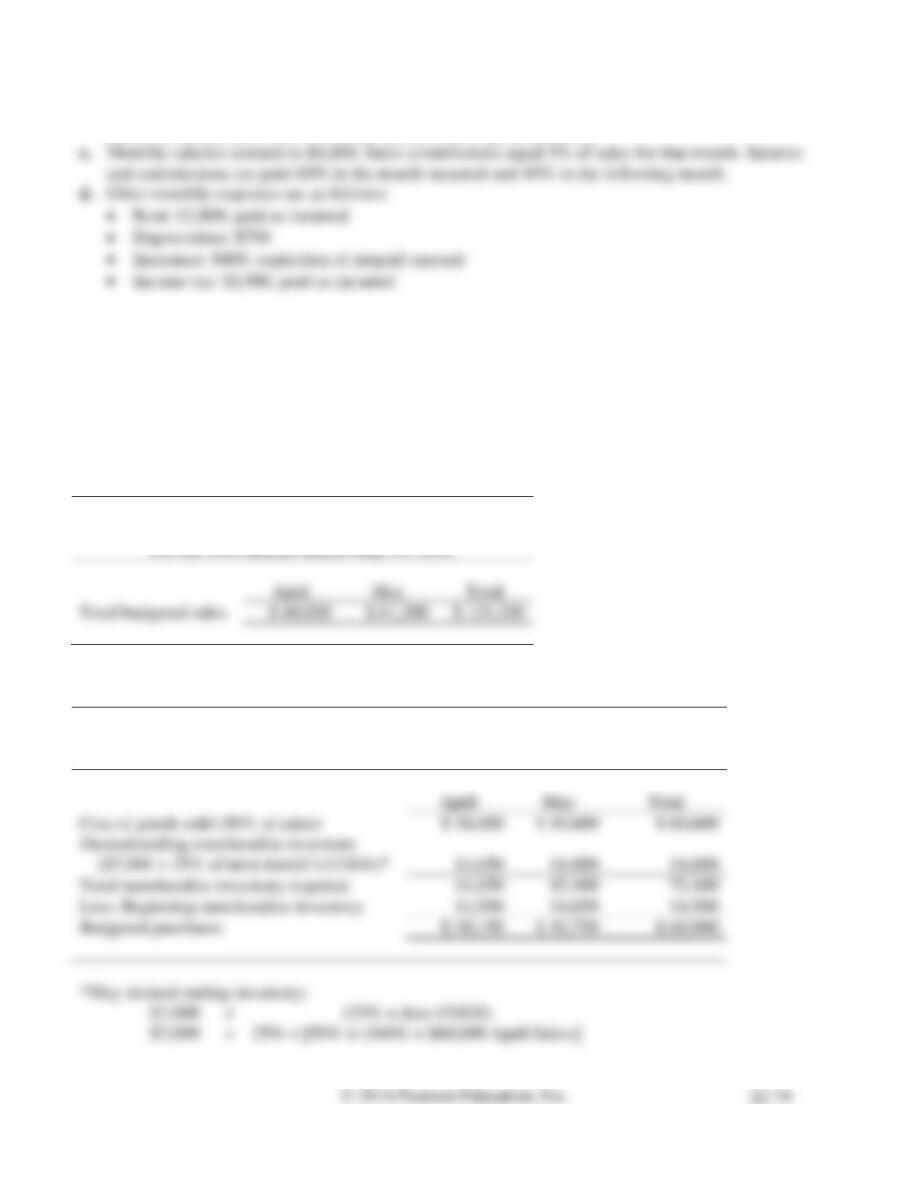
Paperclip Office Supply’s March 31, 2016, balance sheet follows:
The budget committee of Paperclip Office Supply has assembled the following data:
a. Sales in April are expected to be $60,000. Paperclip forecasts that monthly sales will increase 2%
over April sales in May. June’s sales will increase by 4% over April sales. July sales will increase
20% over April sales. Cash receipts are 80% in the month of the sale and 20% in the month
following the sale.
b. Paperclip maintains inventory of $7,000 plus 25% of the cost of goods sold budgeted for the
following month. Cost of goods sold equal 50% of sales revenue. Purchases are paid 30% in the
month of the purchase and 70% in the month following the purchase.
Requirements
1. Prepare Paperclip’s sales budget for April and May 2016. Round all amounts to the nearest dollar.
2. Prepare Paperclip’s inventory, purchases, and cost of goods sold budget for April and May.
3. Prepare Paperclip’s selling and administrative expense budget for April and May.
SOLUTION
Requirement 1
PAPERCLIP OFFICE SUPPLY
Sales Budget
Total budgeted sales
Requirement 2
PAPERCLIP OFFICE SUPPLY
Inventory, Purchases, and Cost of Goods Sold Budget
For the Two Months Ended May 31, 2016
Cost of goods sold (50% of sales)
Total merchandise inventory required
Less: Beginning merchandise inventory
Budgeted purchases
*May desired ending inventory:
+
P22A-44A, cont.
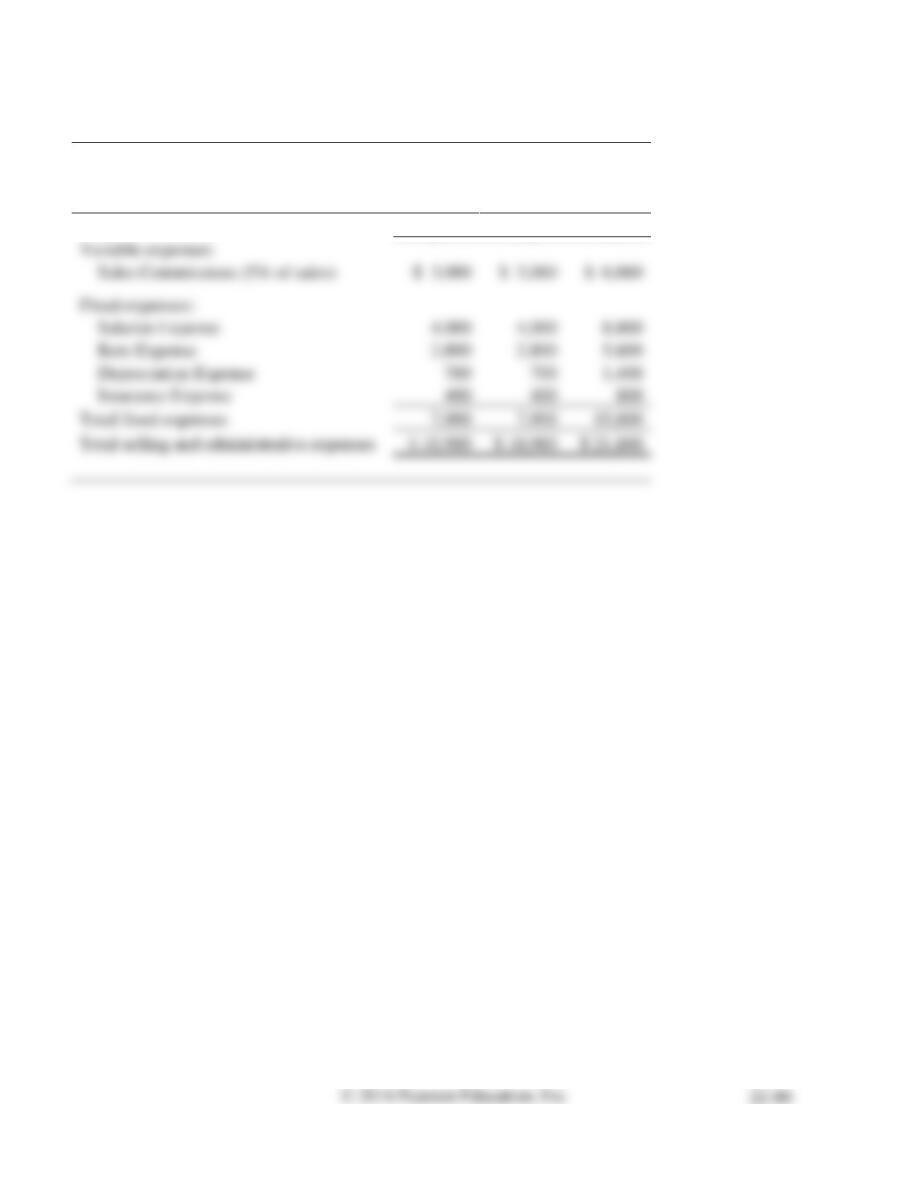
Requirement 3
PAPERCLIP OFFICE SUPPLY
Selling and Administrative Expense Budget
For the Two Months Ended May 31, 2016
April
May
Total