CHAPTER 21
Incremental Analysis
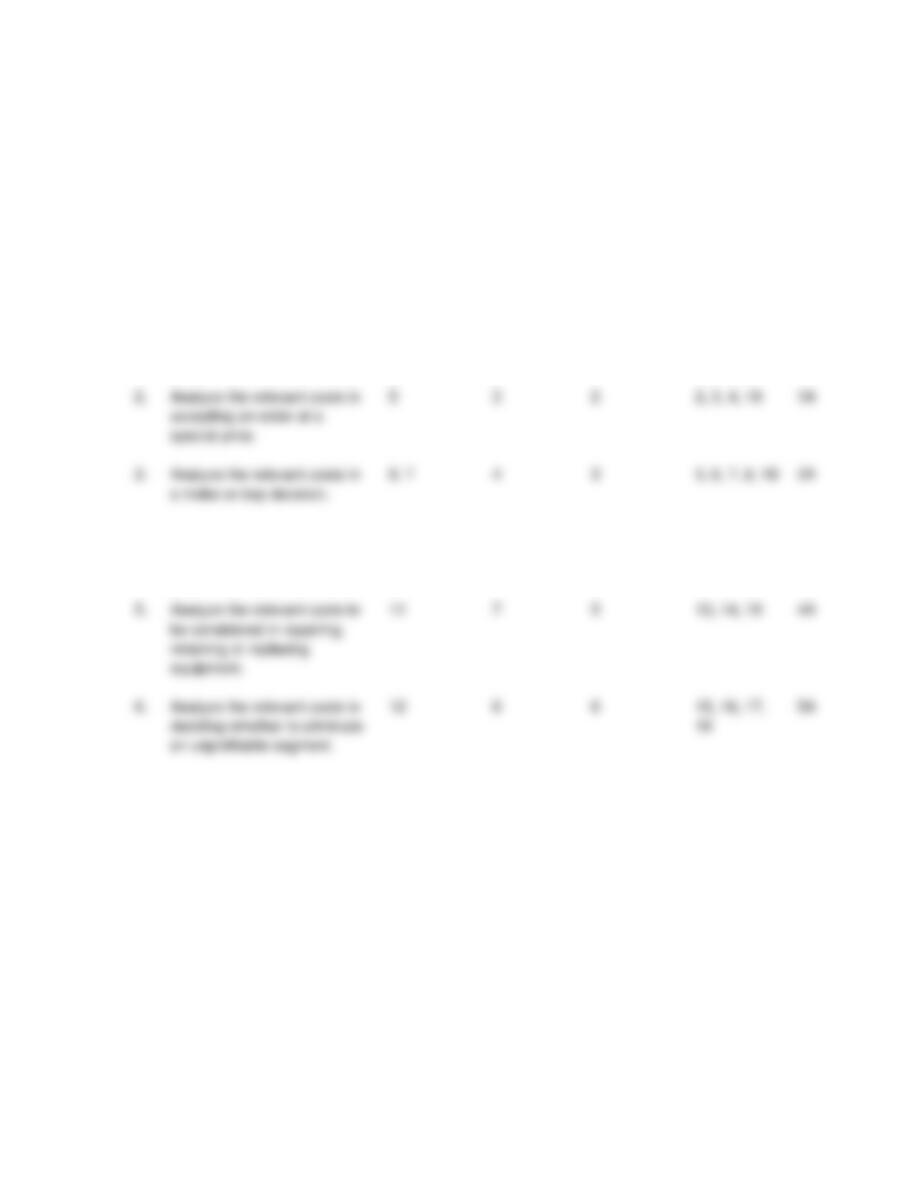
ASSIGNMENT CLASSIFICATION TABLE
Learning Objectives
Questions
Brief
Exercises
Do It!
Exercises
A
Problems
1. Describe management’s
decision-making process and
incremental analysis.
1, 2, 3, 4
1, 2
1
1, 18
4. Analyze the relevant costs in
determining whether to sell or
process materials further.
8, 9, 10
5, 6
4
9, 10, 11,
12, 18
3A
retaining or replacing
6. Analyze the relevant costs in
deciding whether to eliminate
an unprofitable segment.
12
8
6
15, 16, 17,
5A
2. Analyze the relevant costs in
accepting an order at a
5
3
2
2, 3, 4, 18
1A
4
3
5, 6, 7, 8, 18
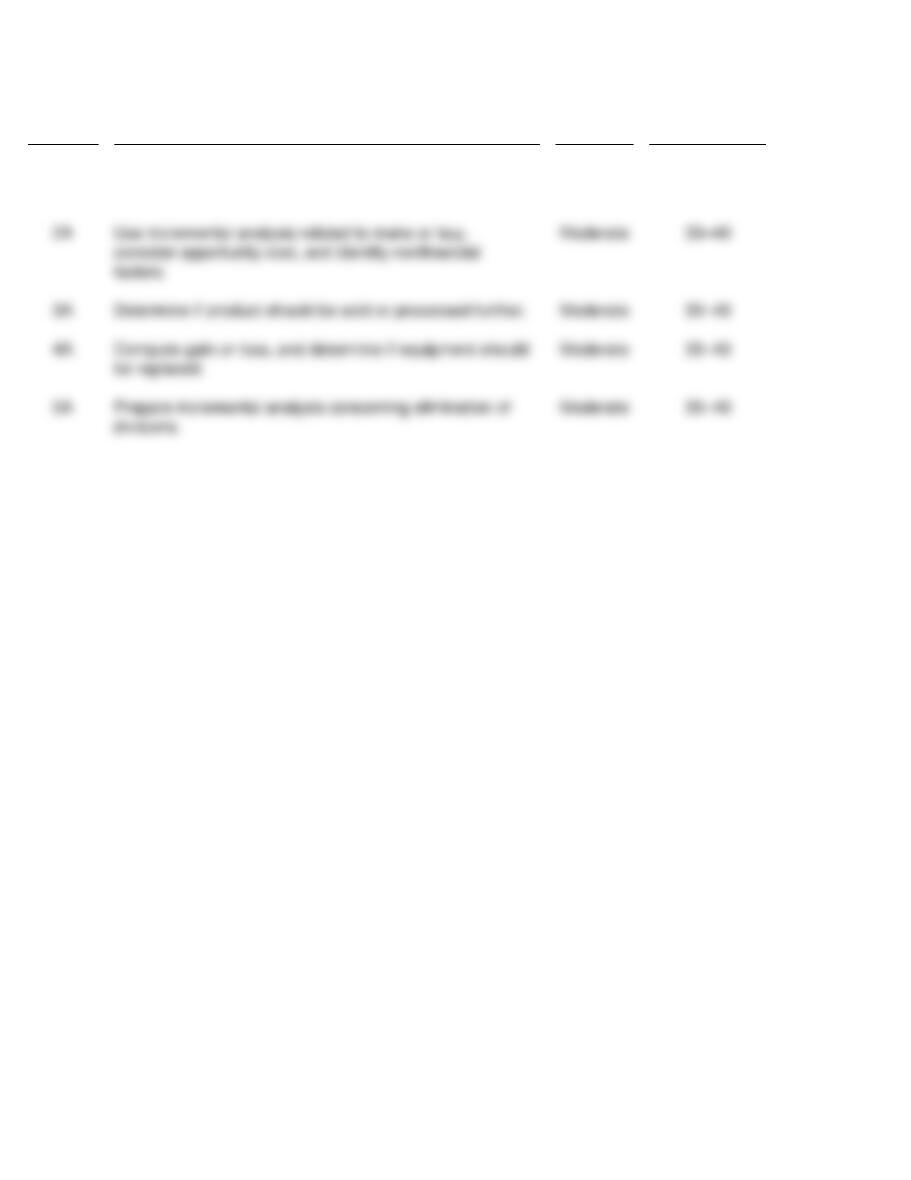
ASSIGNMENT CHARACTERISTICS TABLE
Problem
Number
Description
Difficulty
Level
Time
Allotted (min.)
1A
Use incremental analysis for special order and identify
nonfinancial factors in the decision.
Simple
20–30
consider opportunity cost, and identify nonfinancial
Determine if product should be sold or processed further.
5A
Prepare incremental analysis concerning elimination of
divisions.
30–40
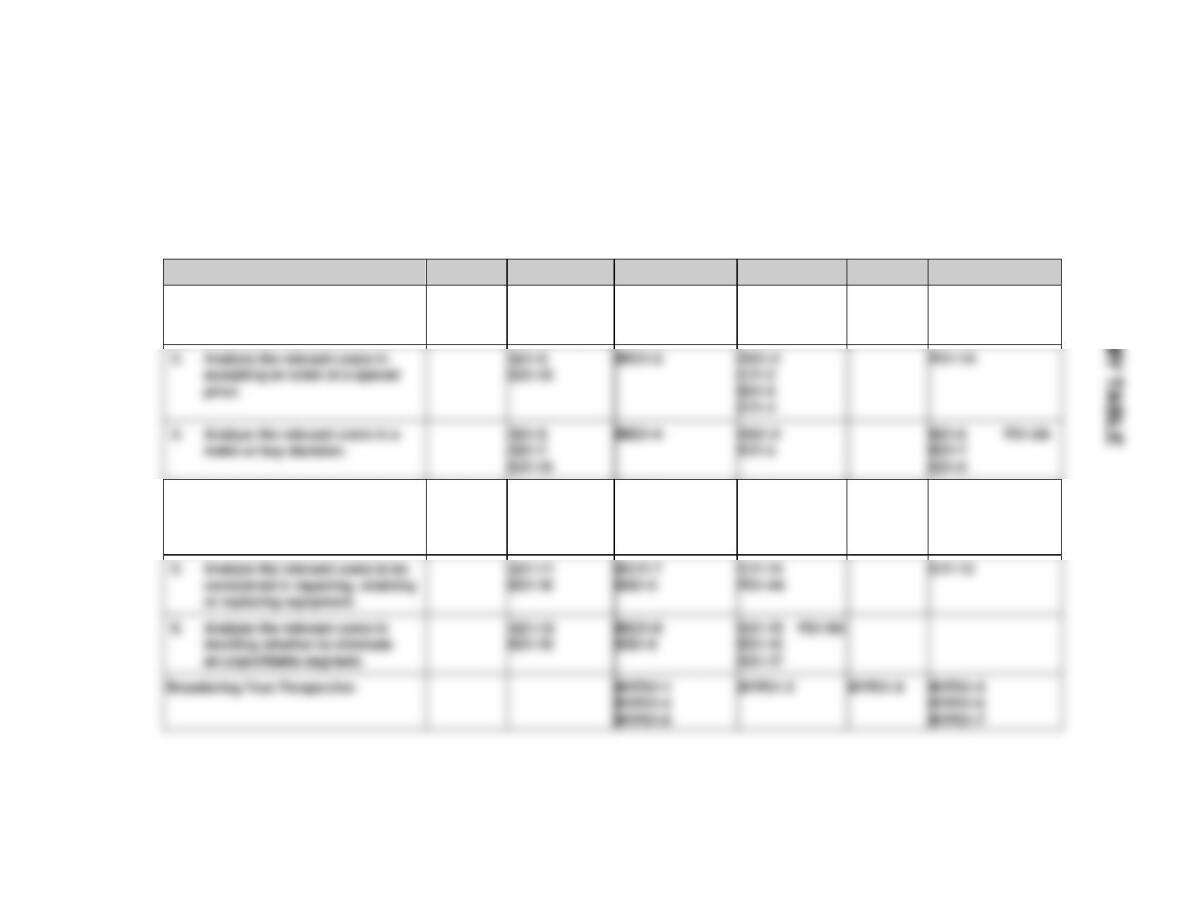
BLOOM’ S TAXONOMY TABLE
Correlation Chart between Bloom’s Taxonomy, Learning Objectives and End-of–Chapter Exercises and Problems
Learning Objective
Knowledge
Comprehension
Application
Analysis
Synthesis
Evaluation
*1. Describe management’s decision–
making process and incremental
analysis.
Q21-1
Q21-2
Q21-3
Q21-4
E21-1
E21–18
BE21-1
BE21-2
DI21-1
*4. Analyze the relevant costs in
determining whether to sell or
process materials further.
Q21-8
Q21-9
Q21–10
E21–18
BE21-5
BE21-6
DI21-4
E21-9
E21–10
E21–11
P21–3A
E21–12
considered in repairing, retaining
or replacing equipment.
BE21-7
DI21-5
E21–14
P21–4A
deciding whether to eliminate
BE21-8
DI21-6
E21–15
E21–16
P21–5A
*2. Analyze the relevant costs in
price.
Q21-5
BE21-3
E21-2
E21-3
E21-4
P21–1A
Q21-7
E21–18
BE21-4
DI21-3
E21-5
E21-7
E21-8
ANSWERS TO QUESTIONS
1. The following steps are frequently involved in management’s decision-making process:
2. My roommate is incorrect. Accounting contributes to the decision-making process at Steps 2 and 4.
Prior to the decision, accounting provides relevant revenue and cost data for each course of action.
Following the decision, internal reports are prepared to show the actual impact of the decision.
6. The manufacturing costs that are relevant in the make-or-buy decision are those that will change
if the parts are purchased.
7. Opportunity cost may be defined as the potential benefit that may be obtained by following an
alternative course of action. Opportunity cost is relevant in a make-or-buy decision when the
facilities used to make the part can be used to generate additional income.
10. Joint costs are irrelevant to a sell-or–process-further decision because they are sunk costs and
will not change whether the decision is to sell the existing product or process it further. Therefore,
joint costs are ignored in this decision.
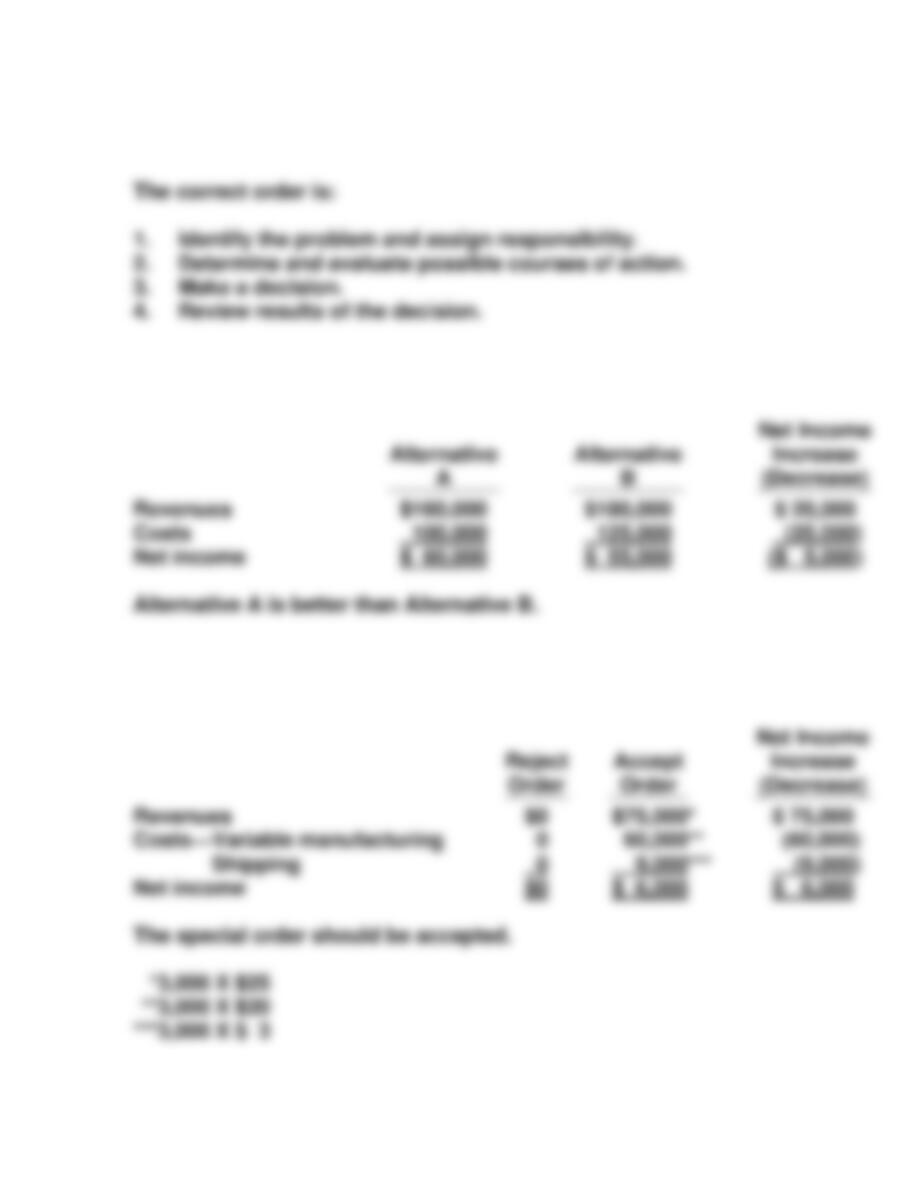
SOLUTIONS TO BRIEF EXERCISES
BRIEF EXERCISE 21-1
BRIEF EXERCISE 21-2
BRIEF EXERCISE 21-3
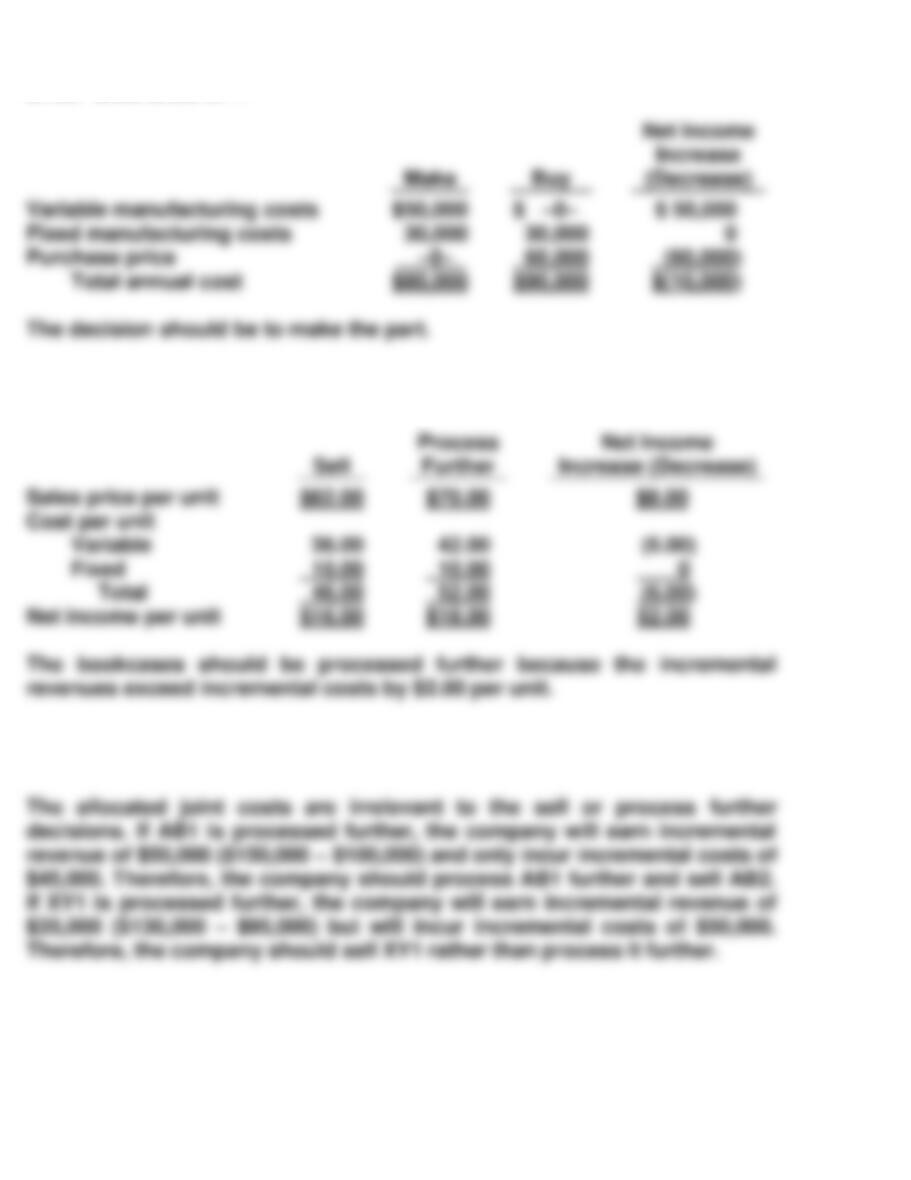
BRIEF EXERCISE 21-4
BRIEF EXERCISE 21-5
BRIEF EXERCISE 21-6
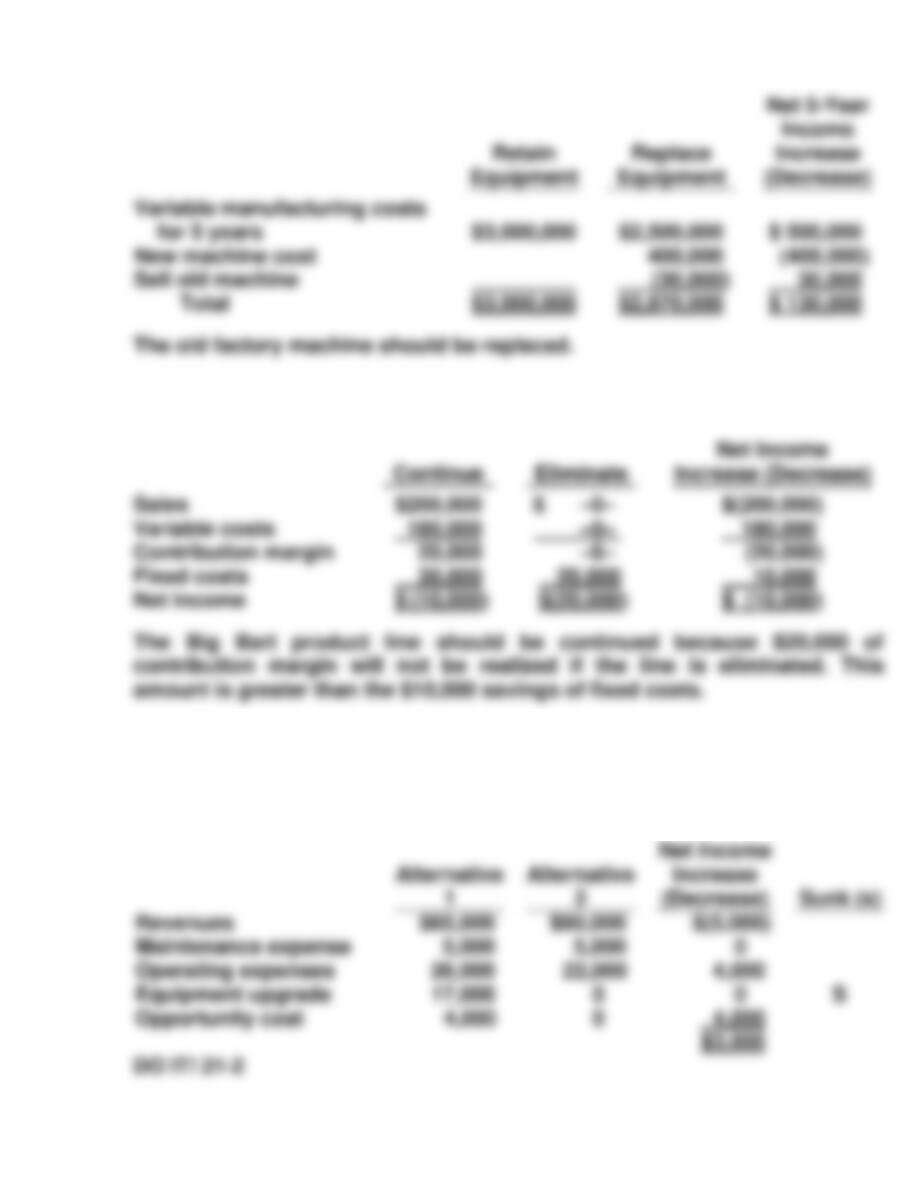
BRIEF EXERCISE 21-7
BRIEF EXERCISE 21-8
SOLUTIONS FOR DO IT! REVIEW EXERCISES
DO IT! 21-1
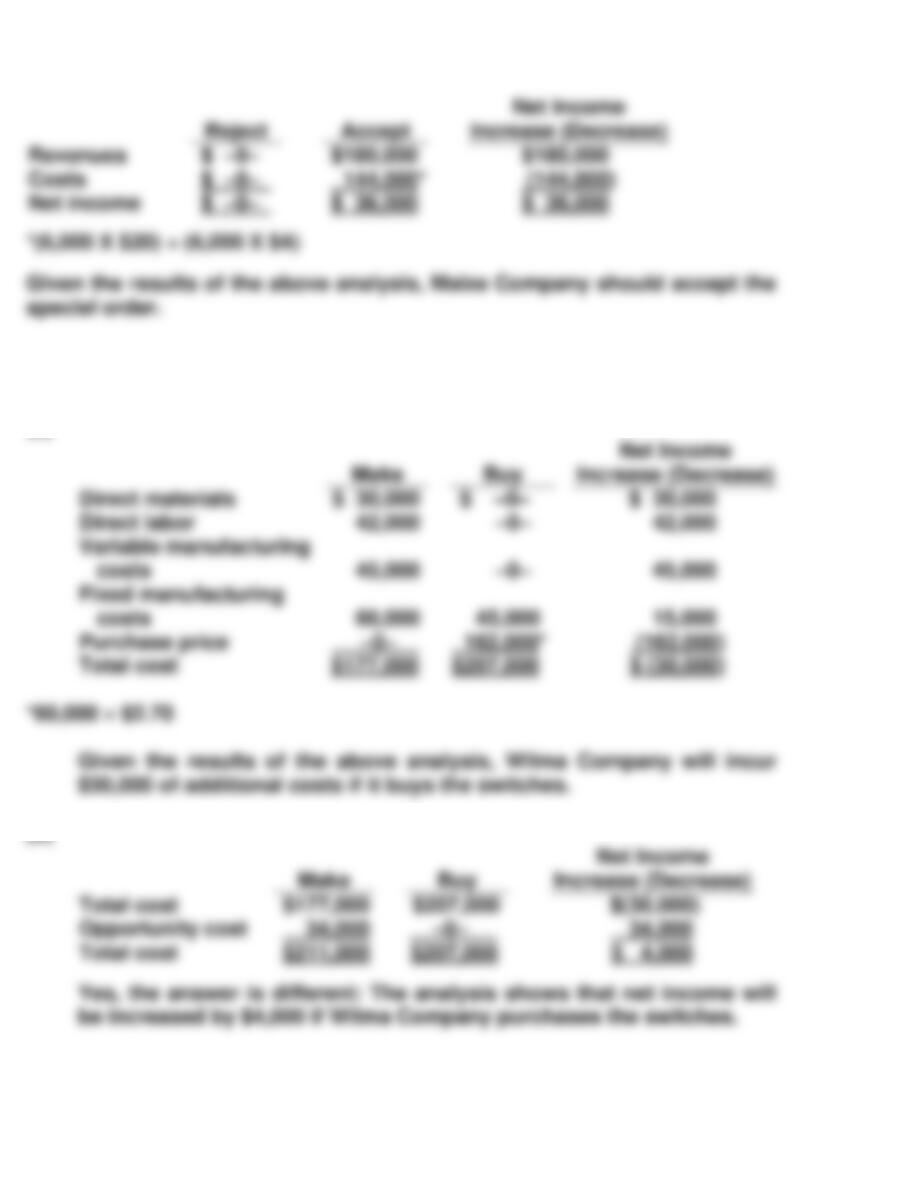
DO IT! 21-3
(a)
$177,000
$211,000
$ 36,000
DO IT! 21-4
DO IT! 21-5
DO IT! 21-6
SOLUTIONS TO EXERCISES
EXERCISE 21-1
EXERCISE 21-2
EXERCISE 21-3
EXERCISE 21-4
EXERCISE 21-5
EXERCISE 21-6
(a) 1.
Buy
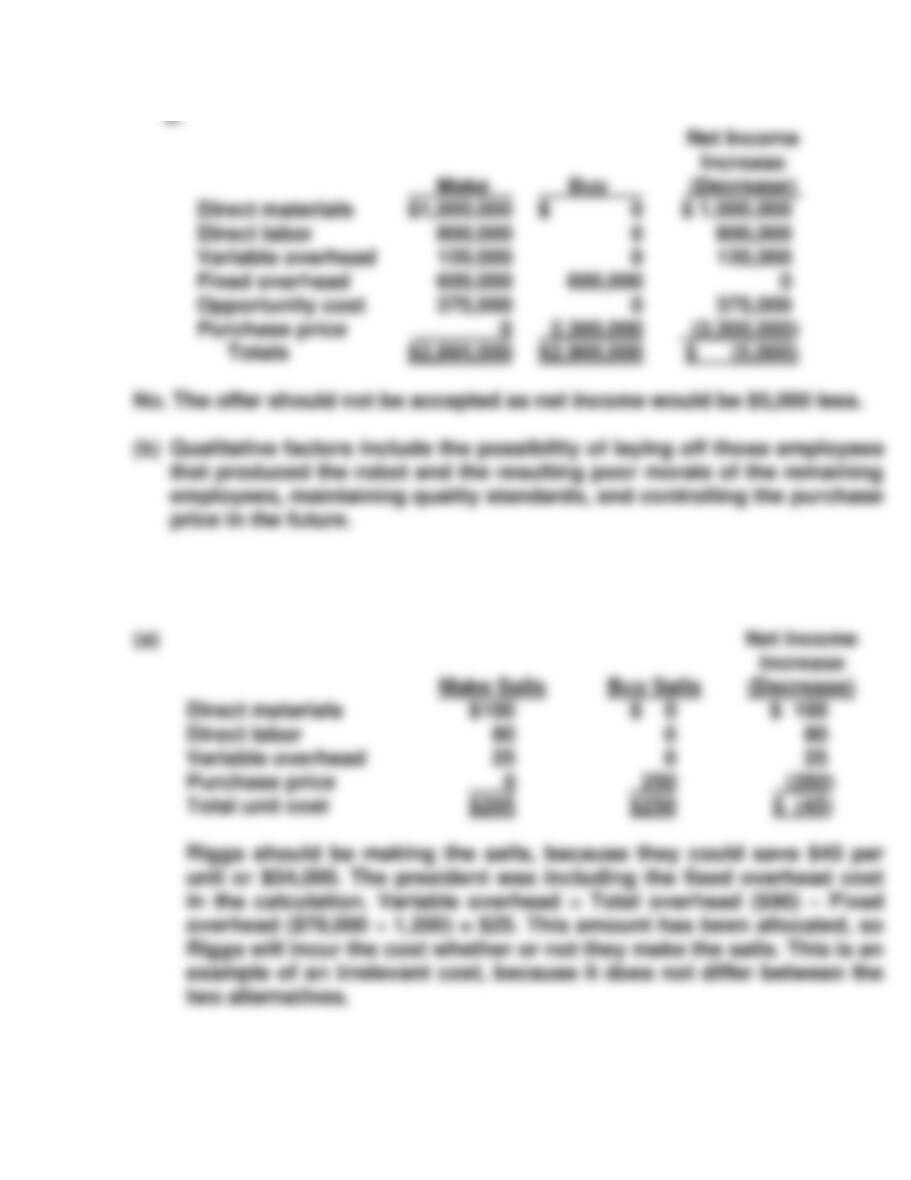
EXERCISE 21-6 (Continued)
EXERCISE 21–7
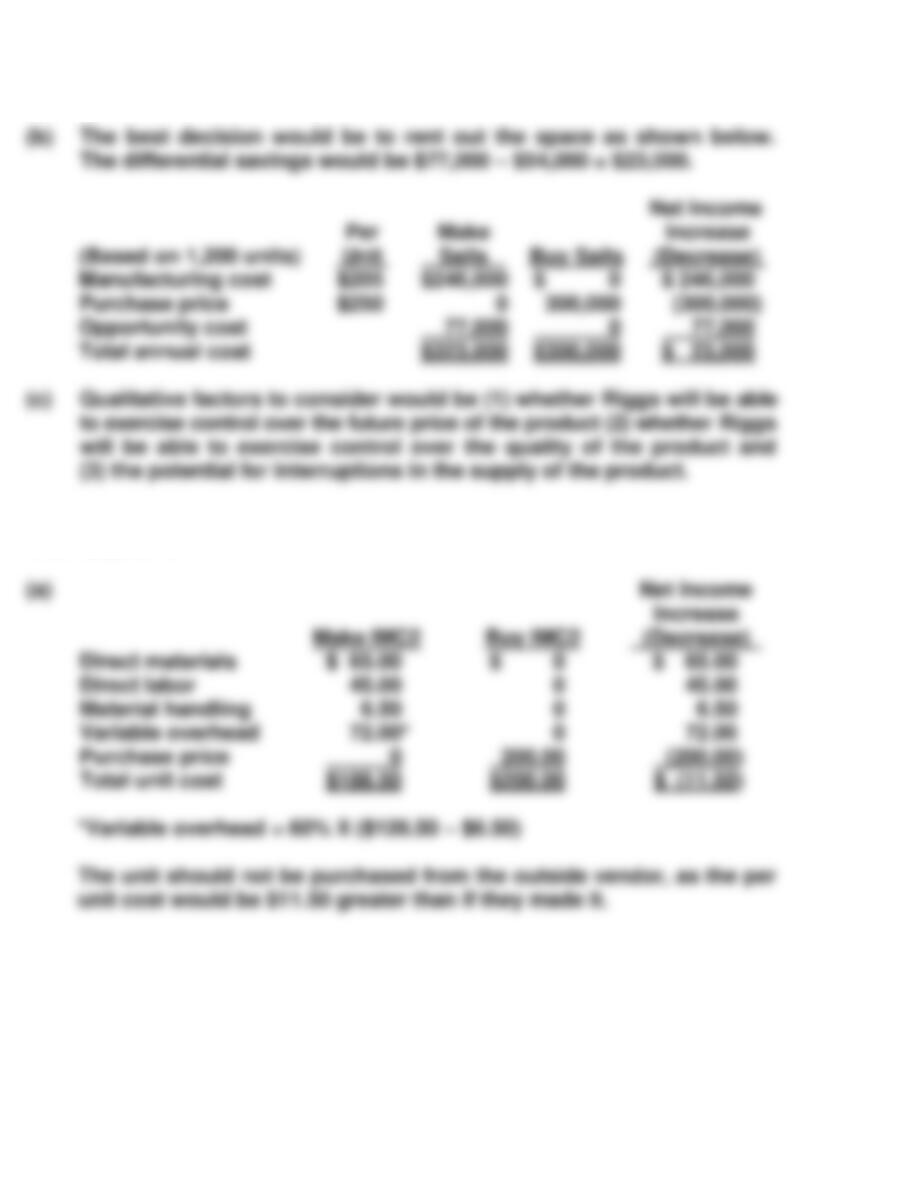
EXERCISE 21-7 (Continued)
EXERCISE 21-8
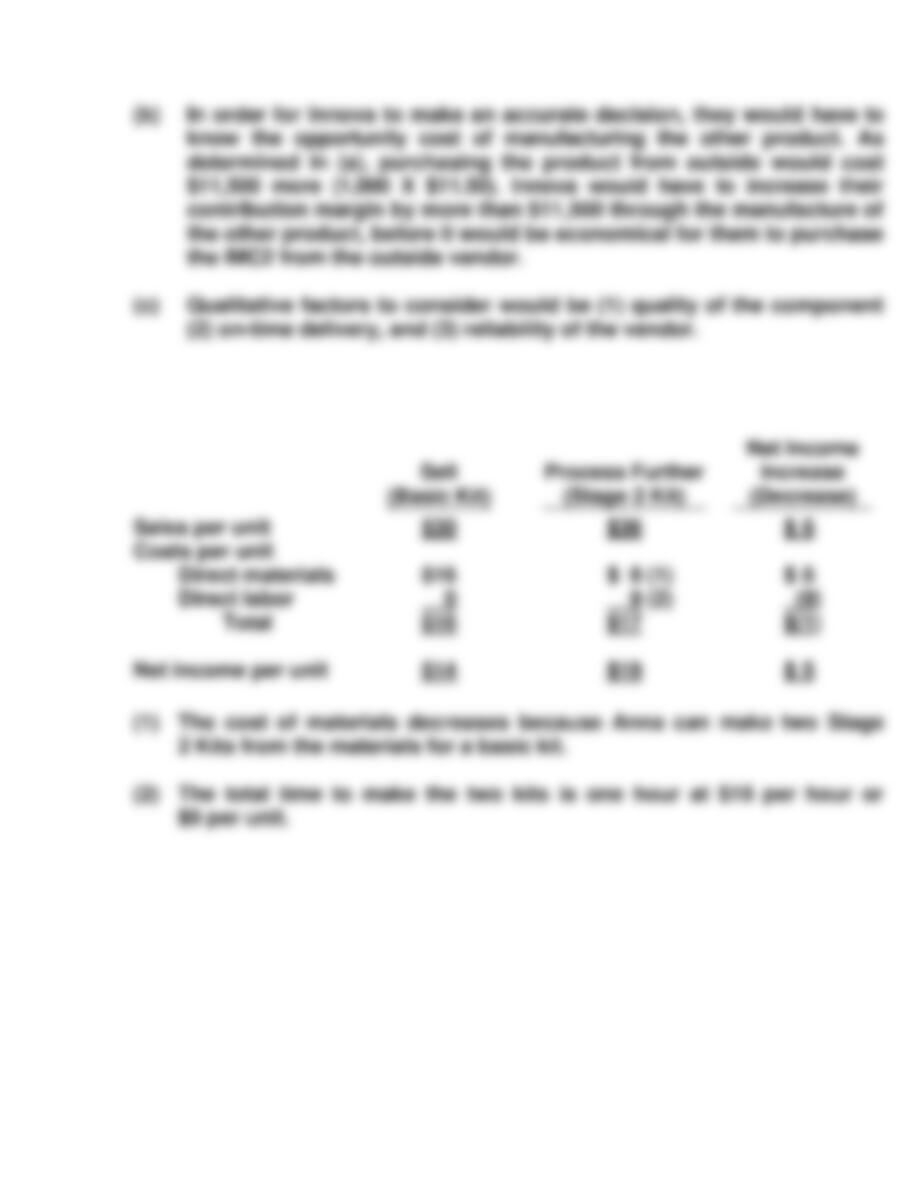
EXERCISE 21-8 (Continued)
EXERCISE 21-9
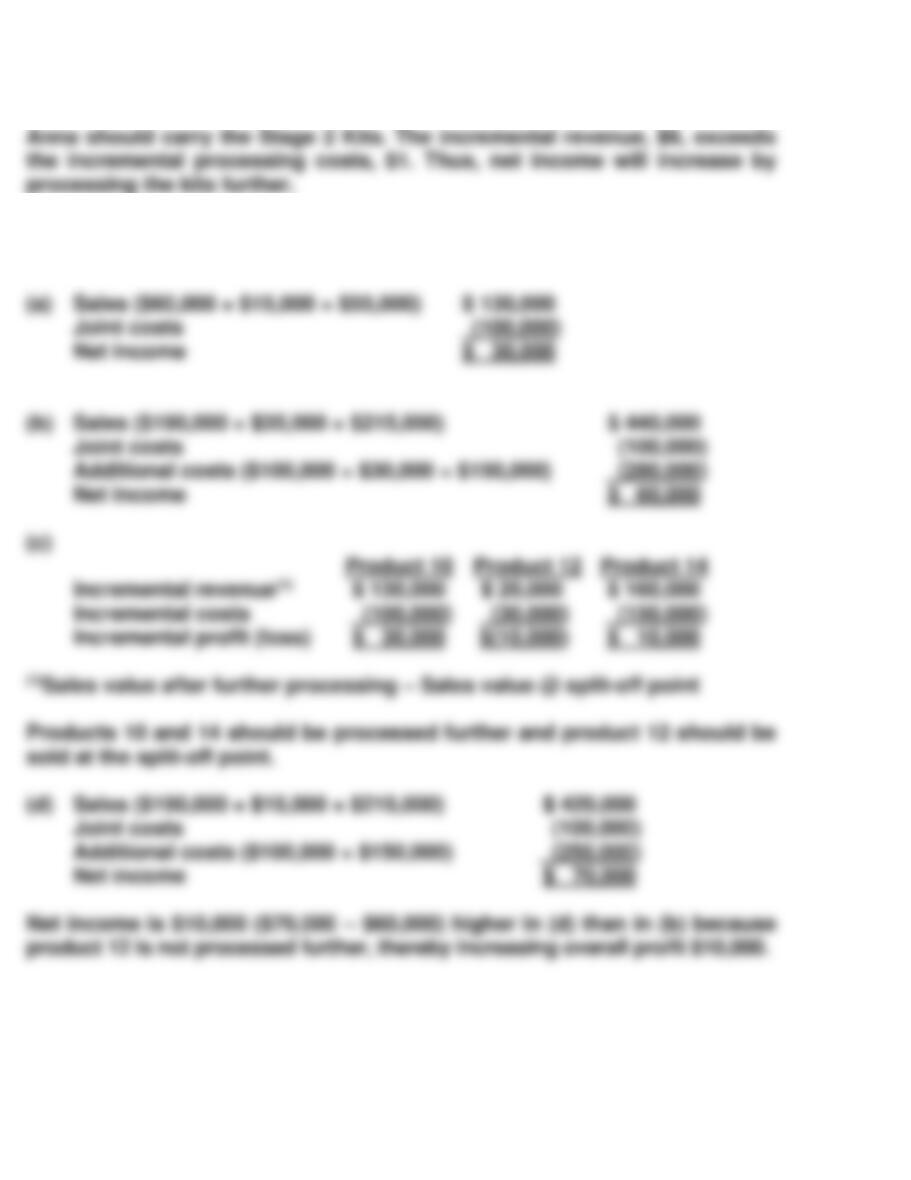
EXERCISE 21-9 (Continued)
EXERCISE 21–10
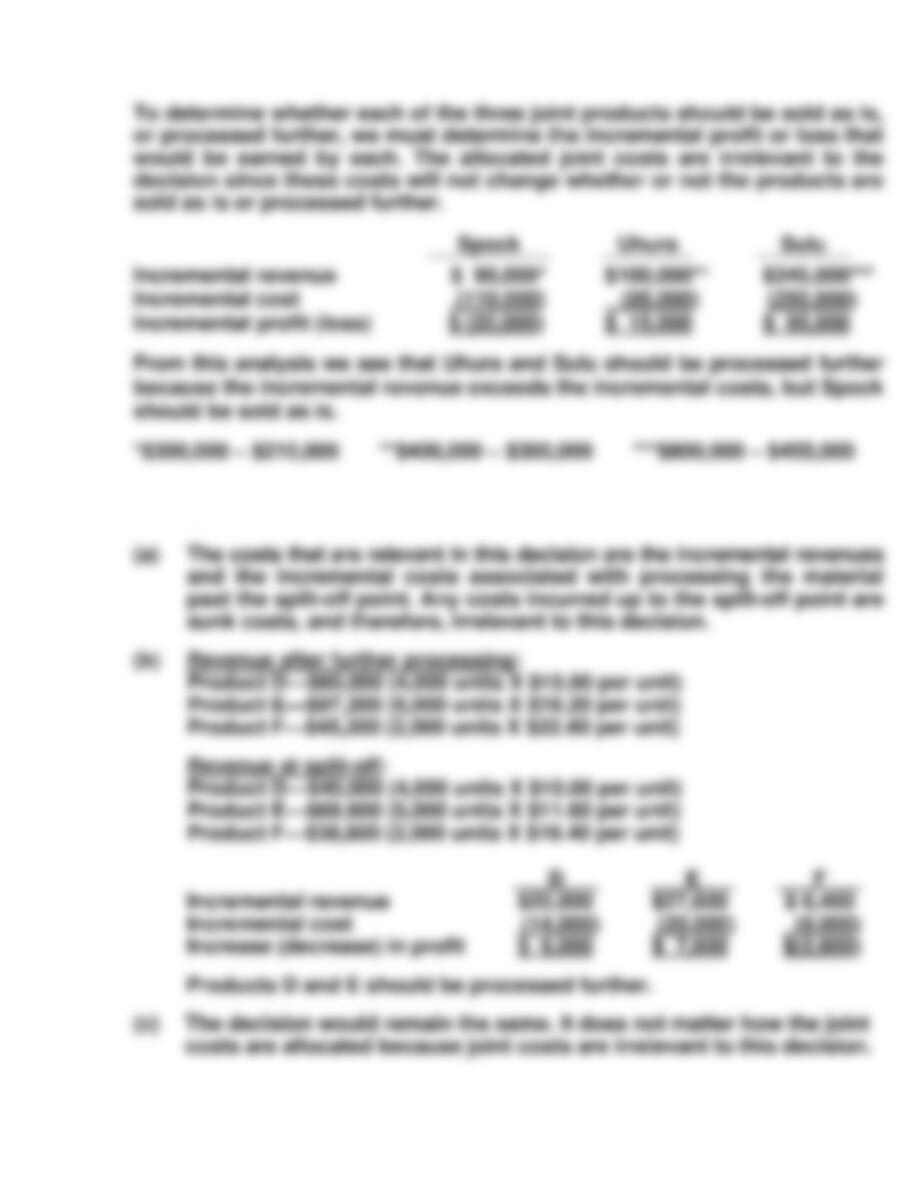
EXERCISE 21–11
EXERCISE 21-12
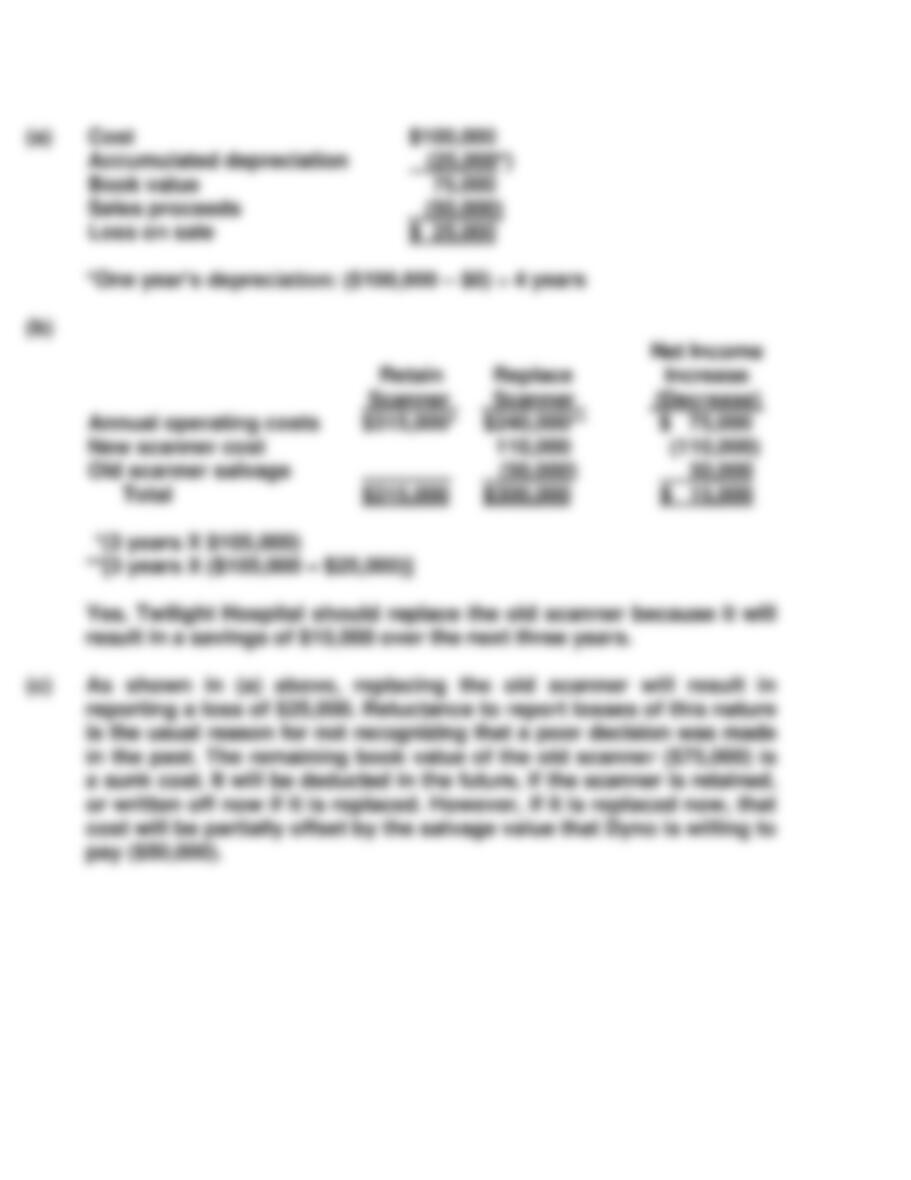
EXERCISE 21–13
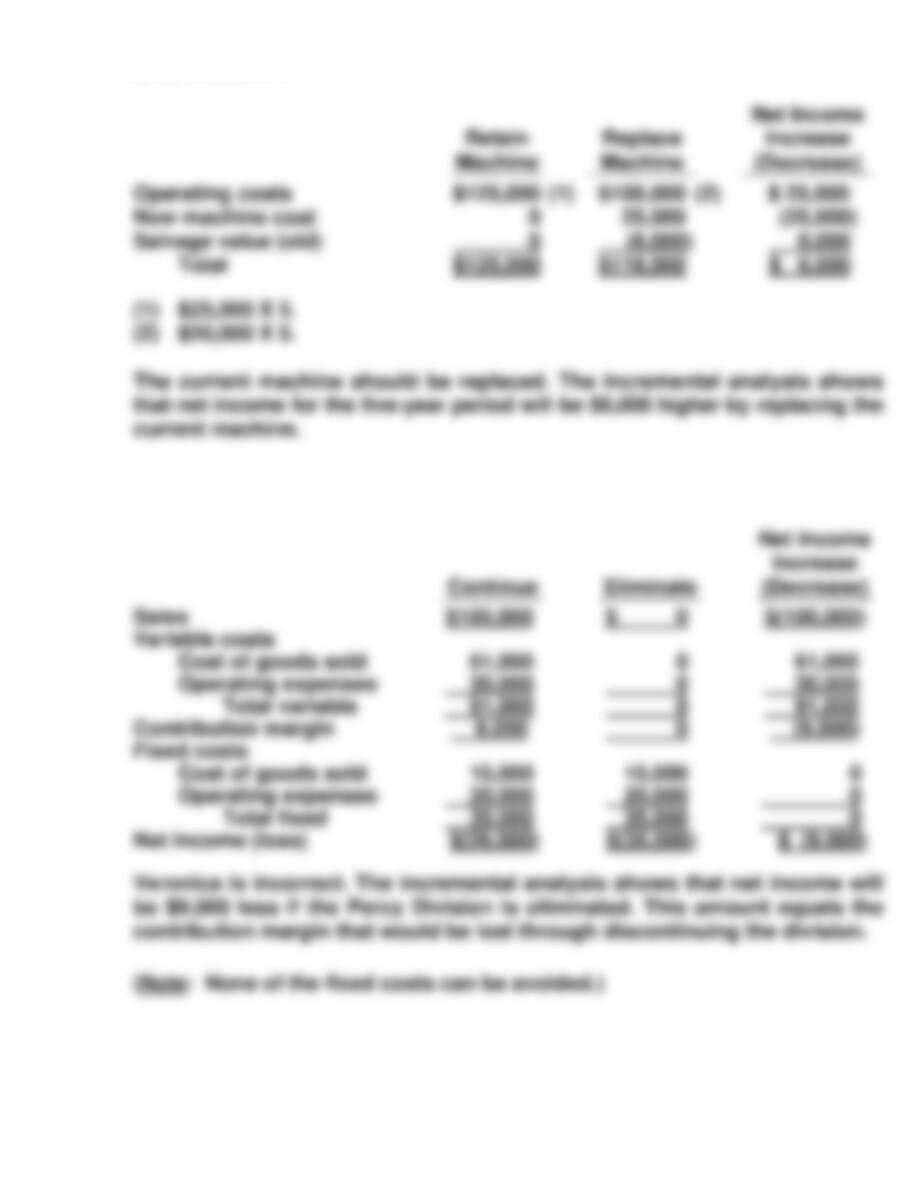
EXERCISE 21–14
EXERCISE 21–15
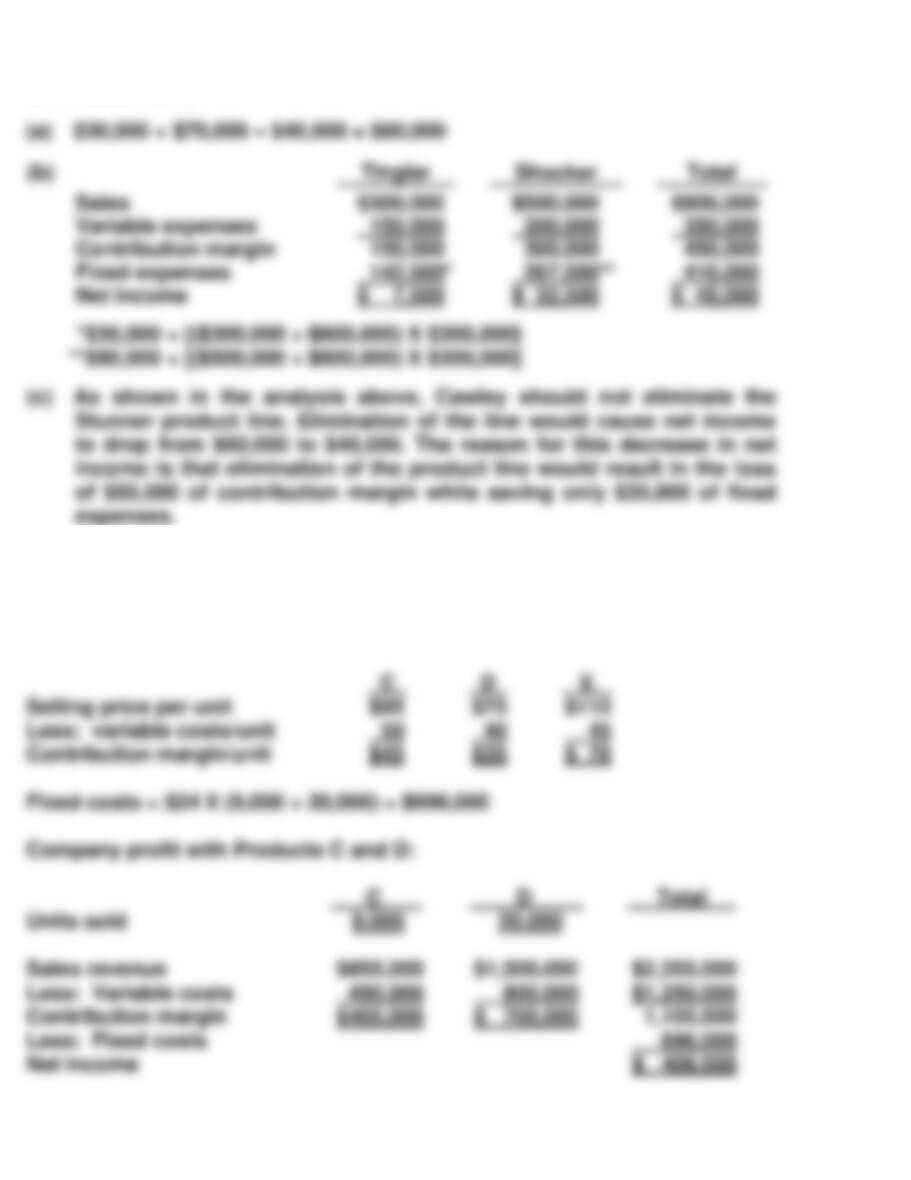
EXERCISE 21–16
EXERCISE 21–17
Calculation of contribution margin per unit:
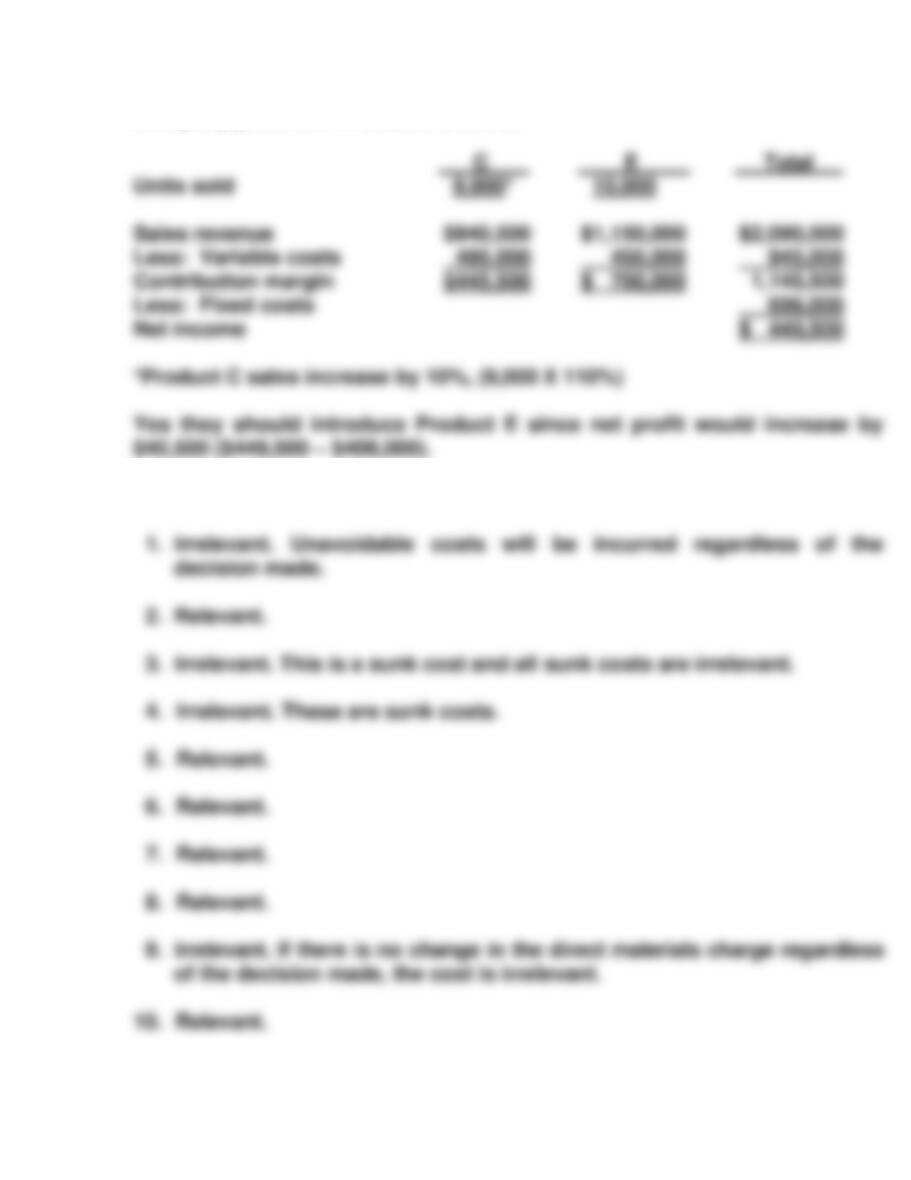
EXERCISE 21-17 (Continued)
Company profit with Products C and E:
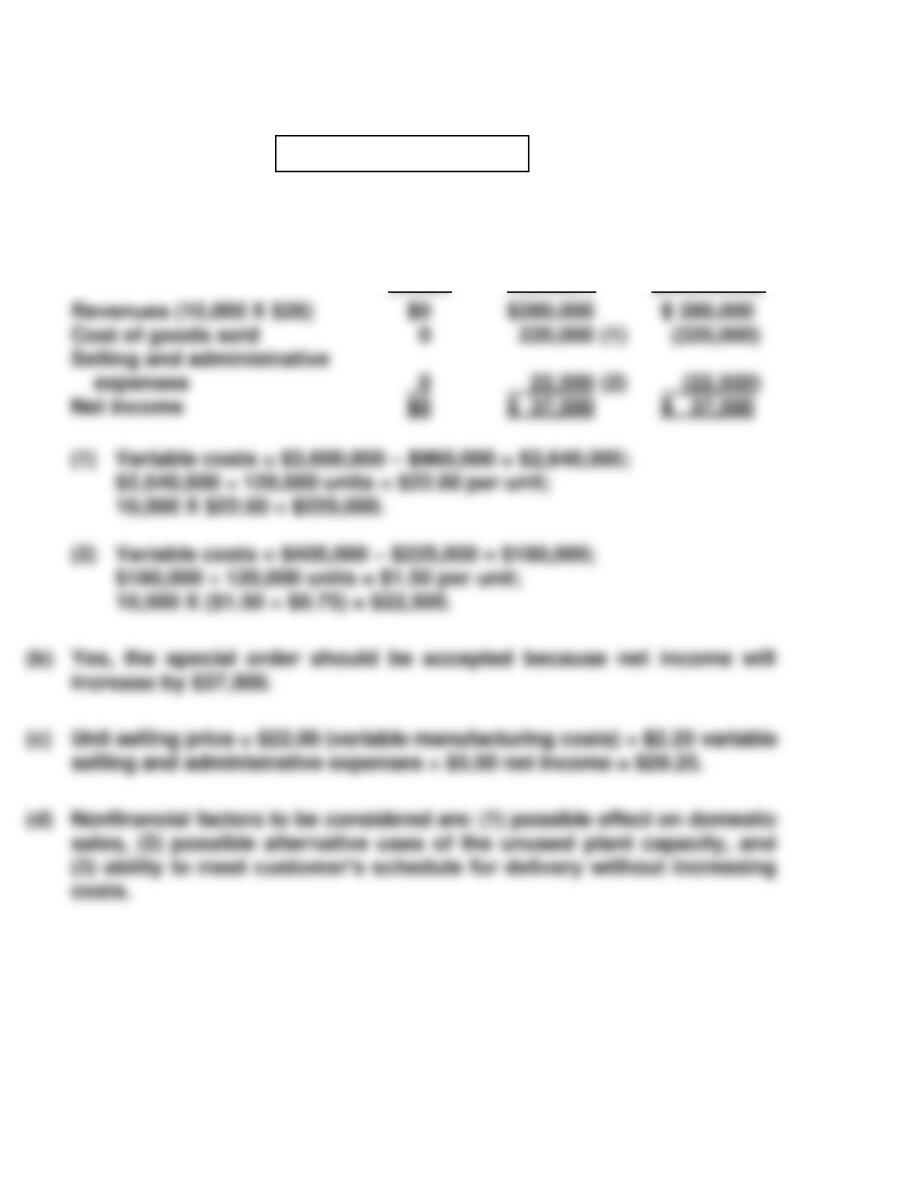
EXERCISE 21–18
SOLUTIONS TO PROBLEMS
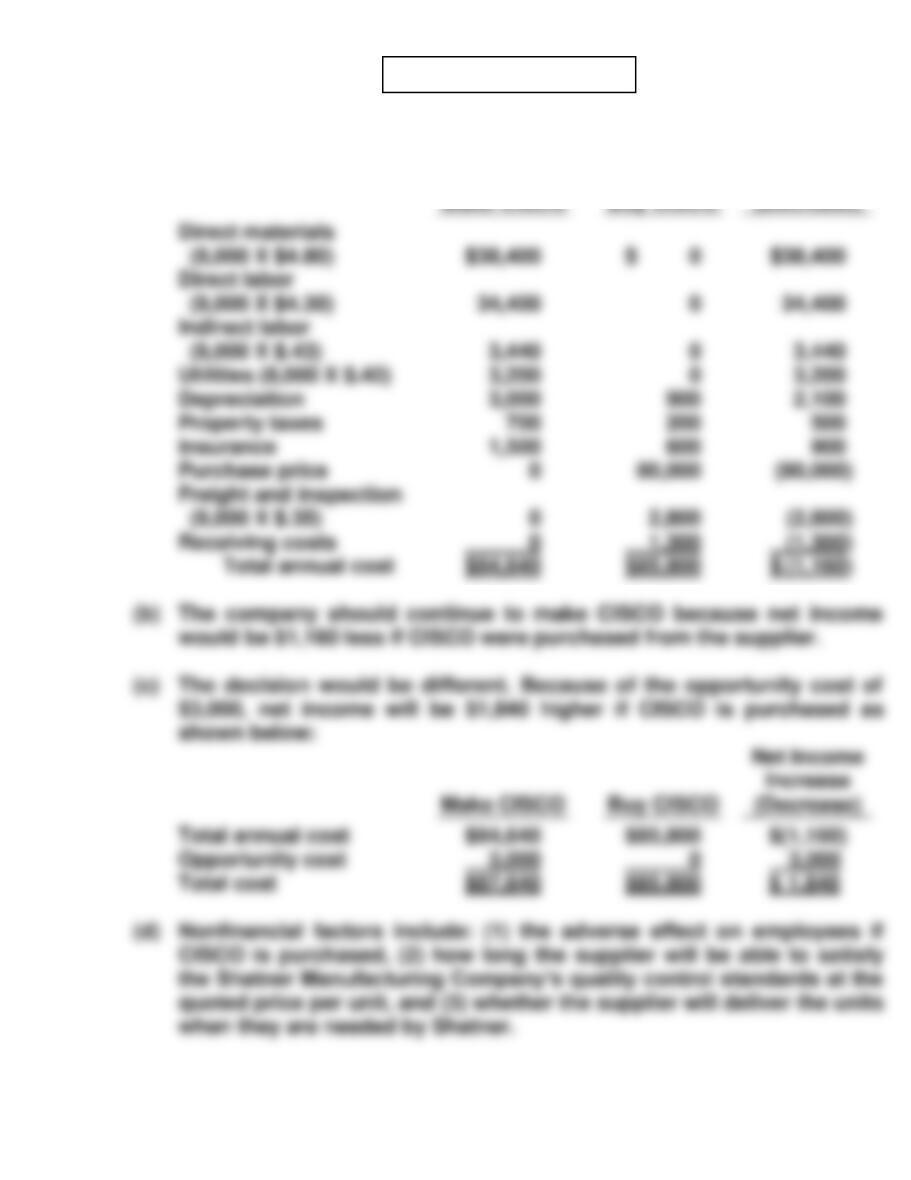
PROBLEM 21–1A
(a)
Reject
Order
Accept
Order
Net Income
Increase
(Decrease)
PROBLEM 21–2A
(a)
Net Income
Increase
Net Income
Increase
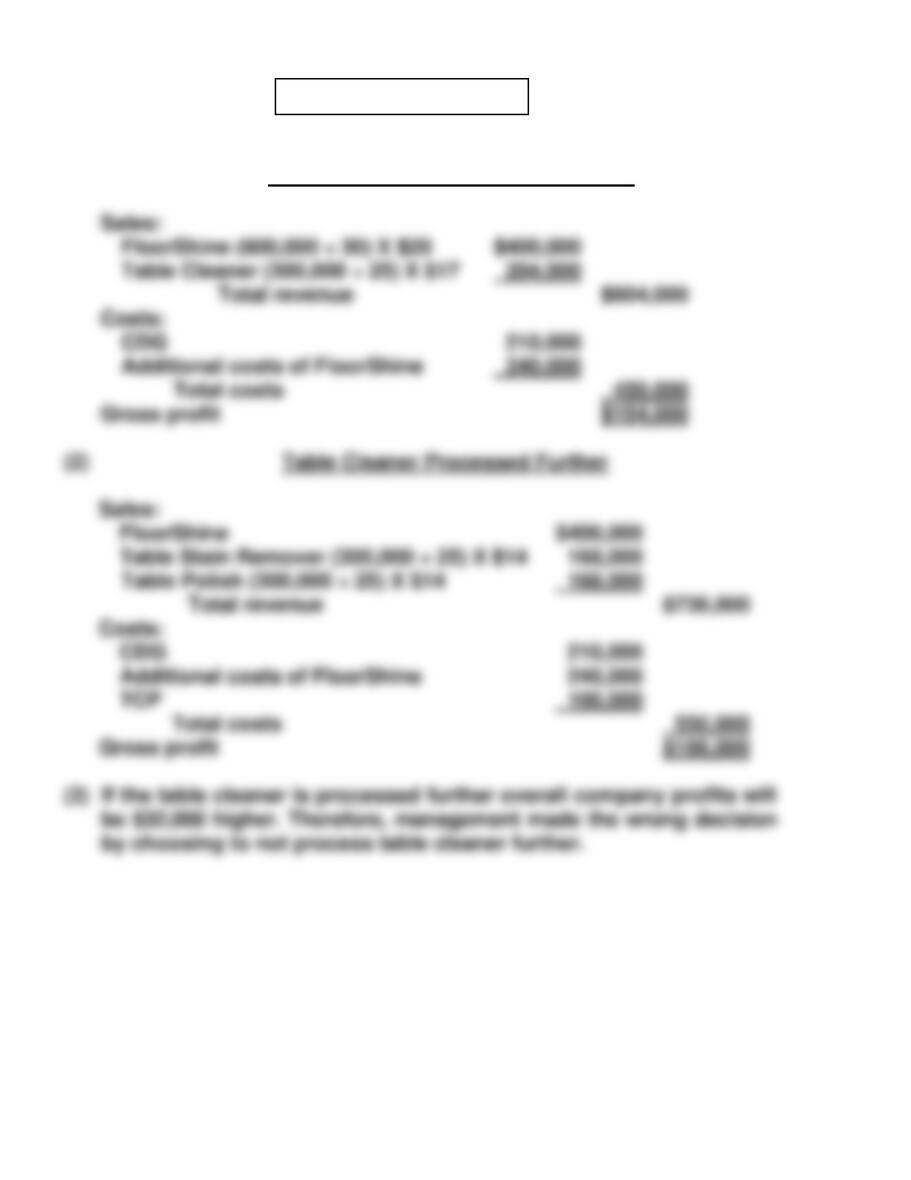
PROBLEM 21–3A
(a) (1)
Table Cleaner Not Processed Further
Costs:
Total costs
Gross profit
Total revenue
Costs:
Gross profit
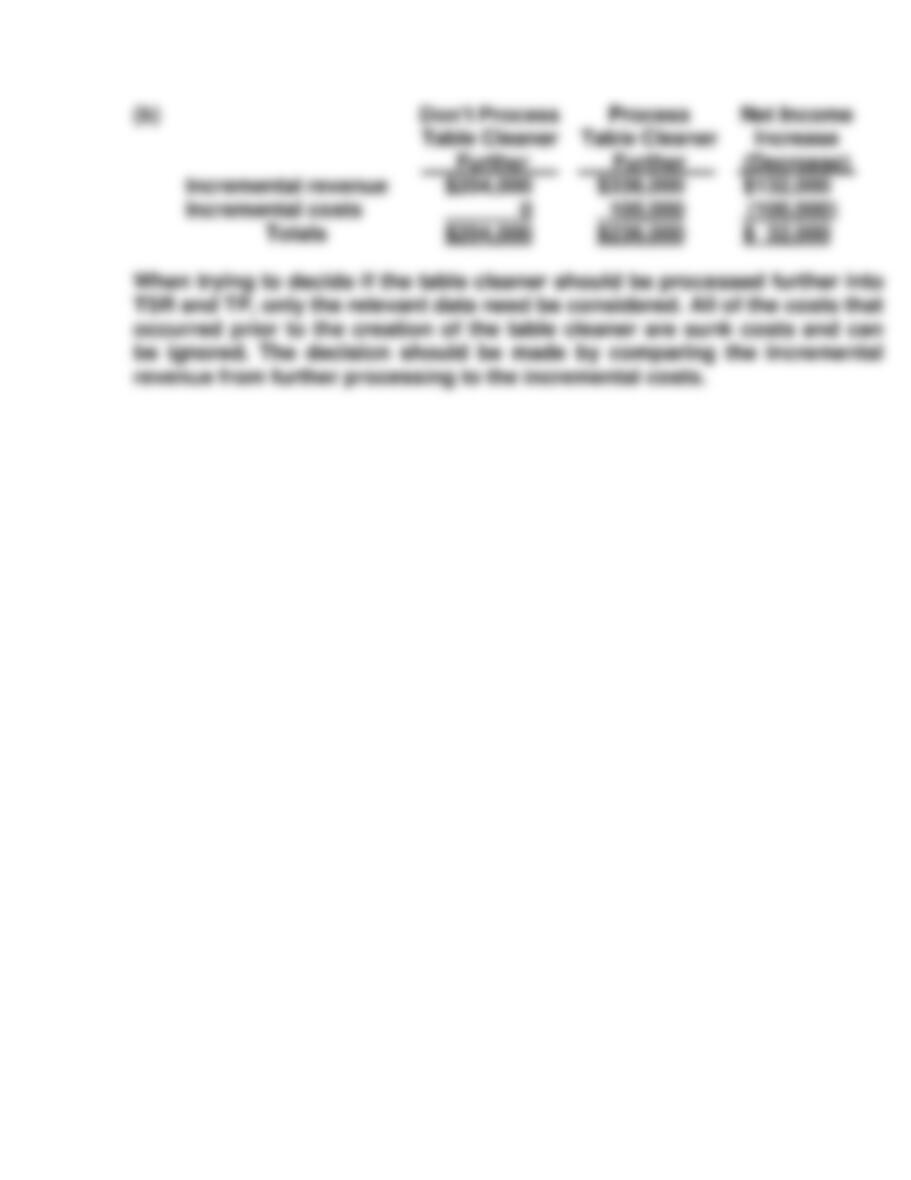
PROBLEM 21-3A (Continued)
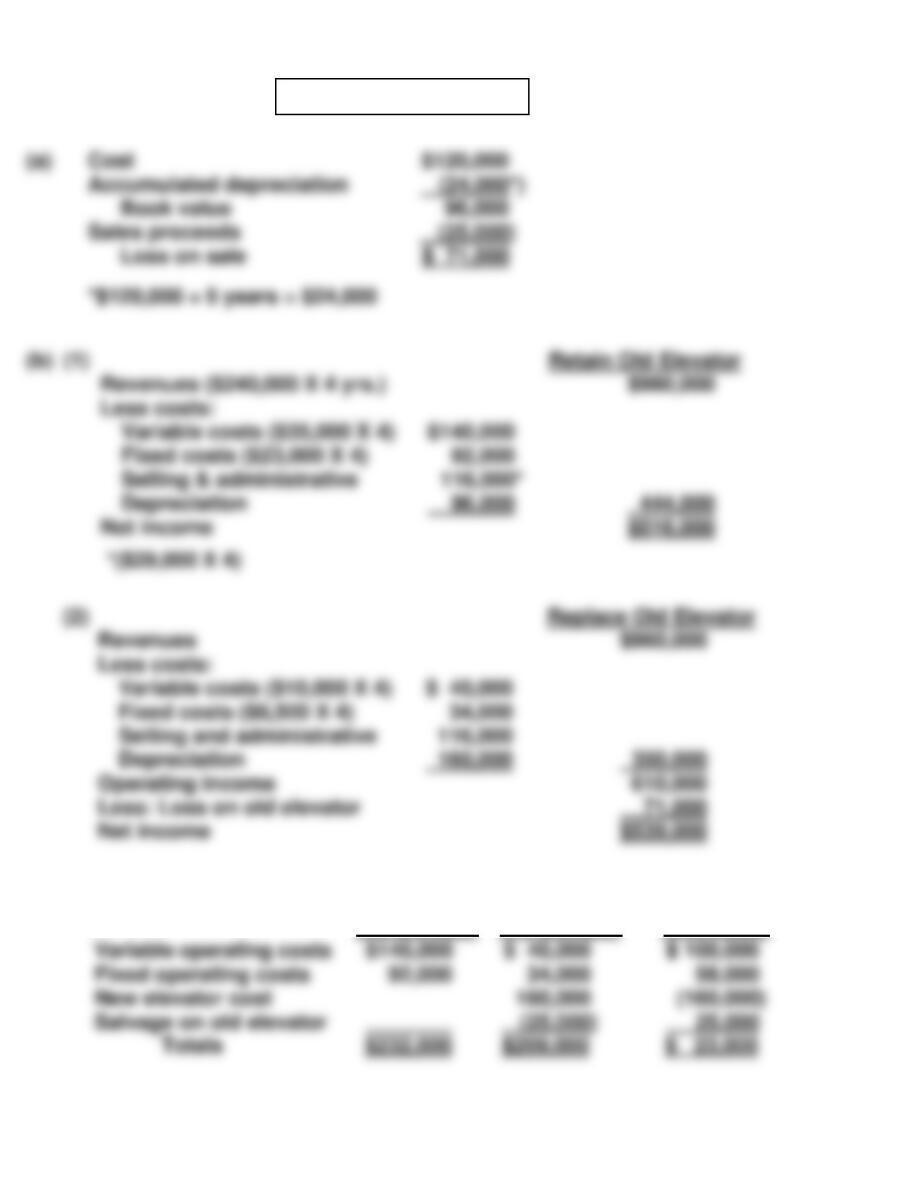
PROBLEM 21–4A
(c)
Retain
Old Elevator
Replace
Old Elevator
Net Income
Increase
(Decrease)
92,000
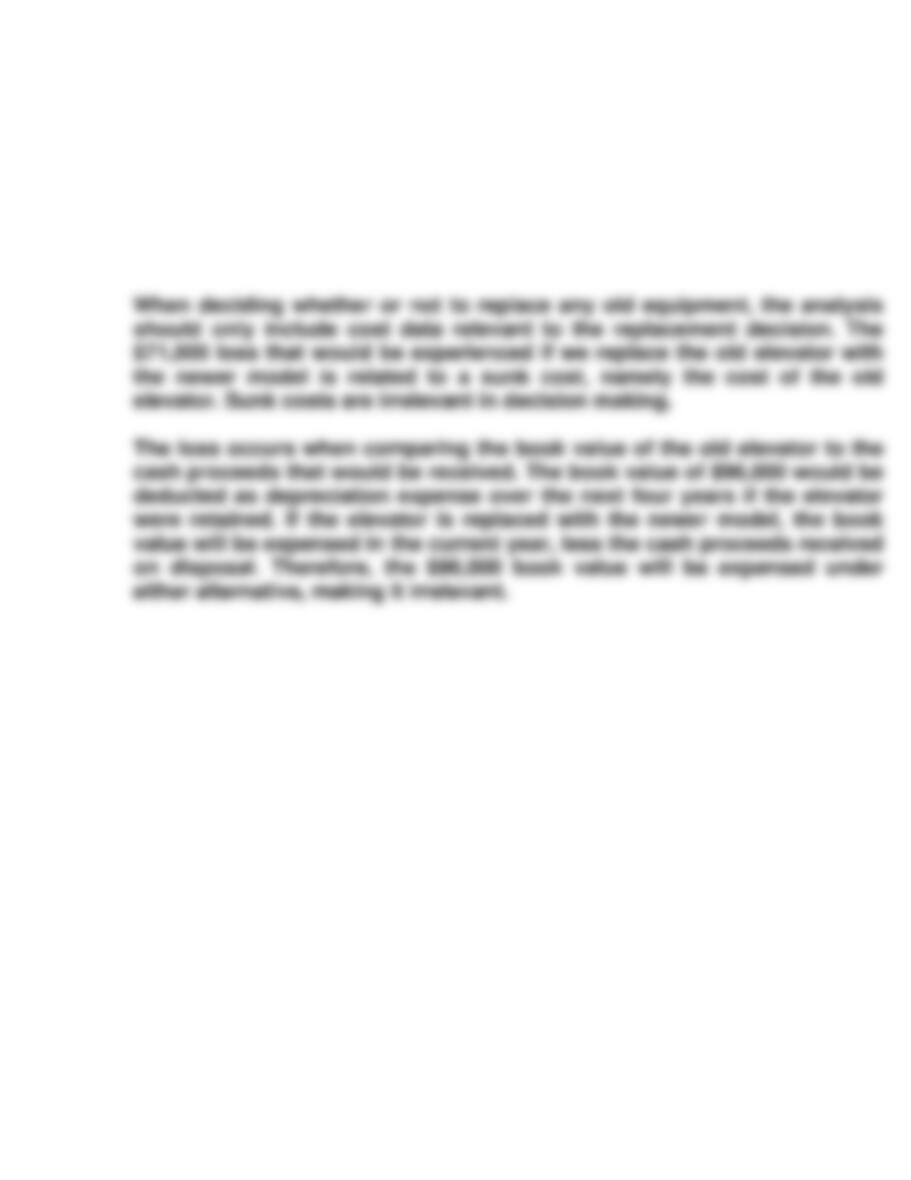
PROBLEM 21-4A (Continued)
(d) MEMO
TO: Ron Richter
FROM: Student
SUBJECT: Relevant Data for Decision to Replace Old Elevator
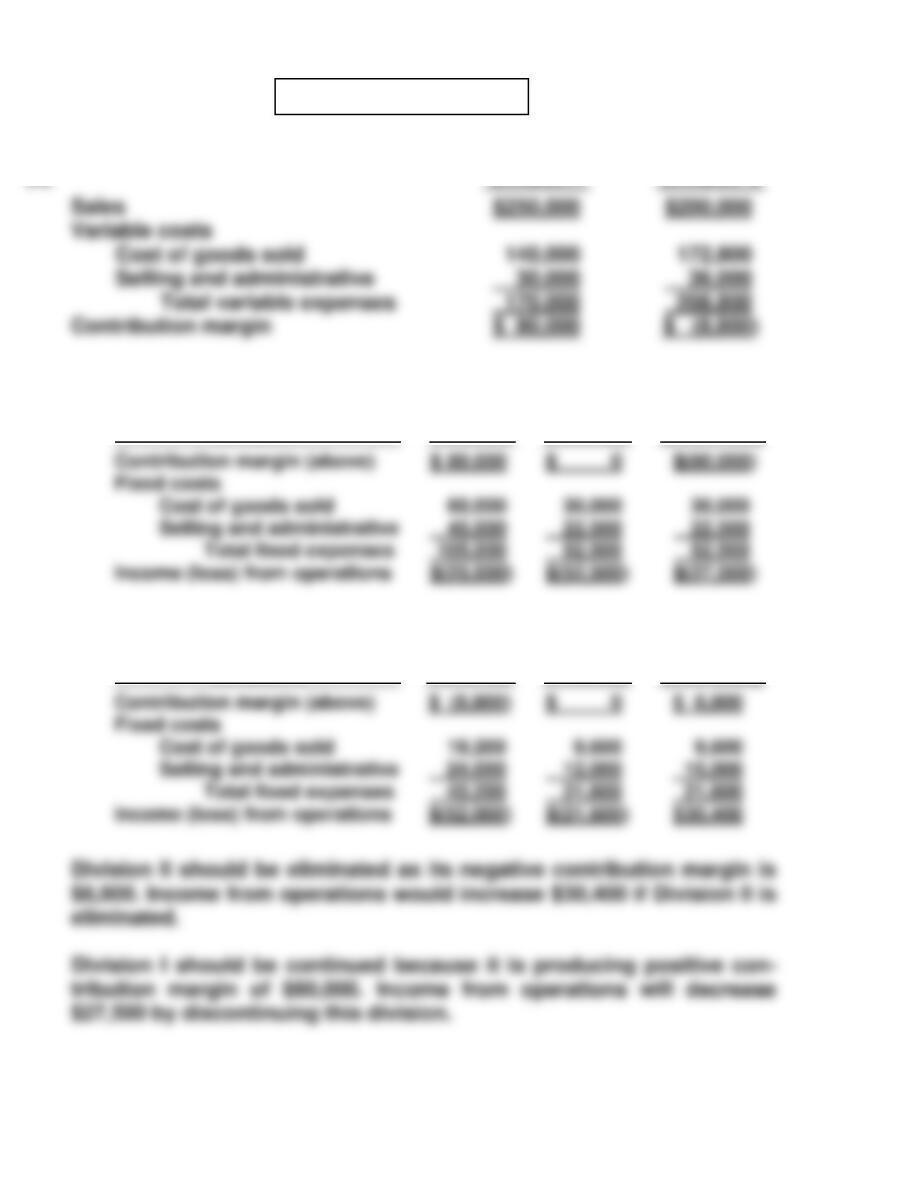
PROBLEM 21–5A
(a)
Division I
Division II
(b)
(1)
Division I
Continue
Eliminate
Net Income
Increase
(Decrease)
(2)
Division II
Continue
Eliminate
Net Income
Increase
(Decrease)
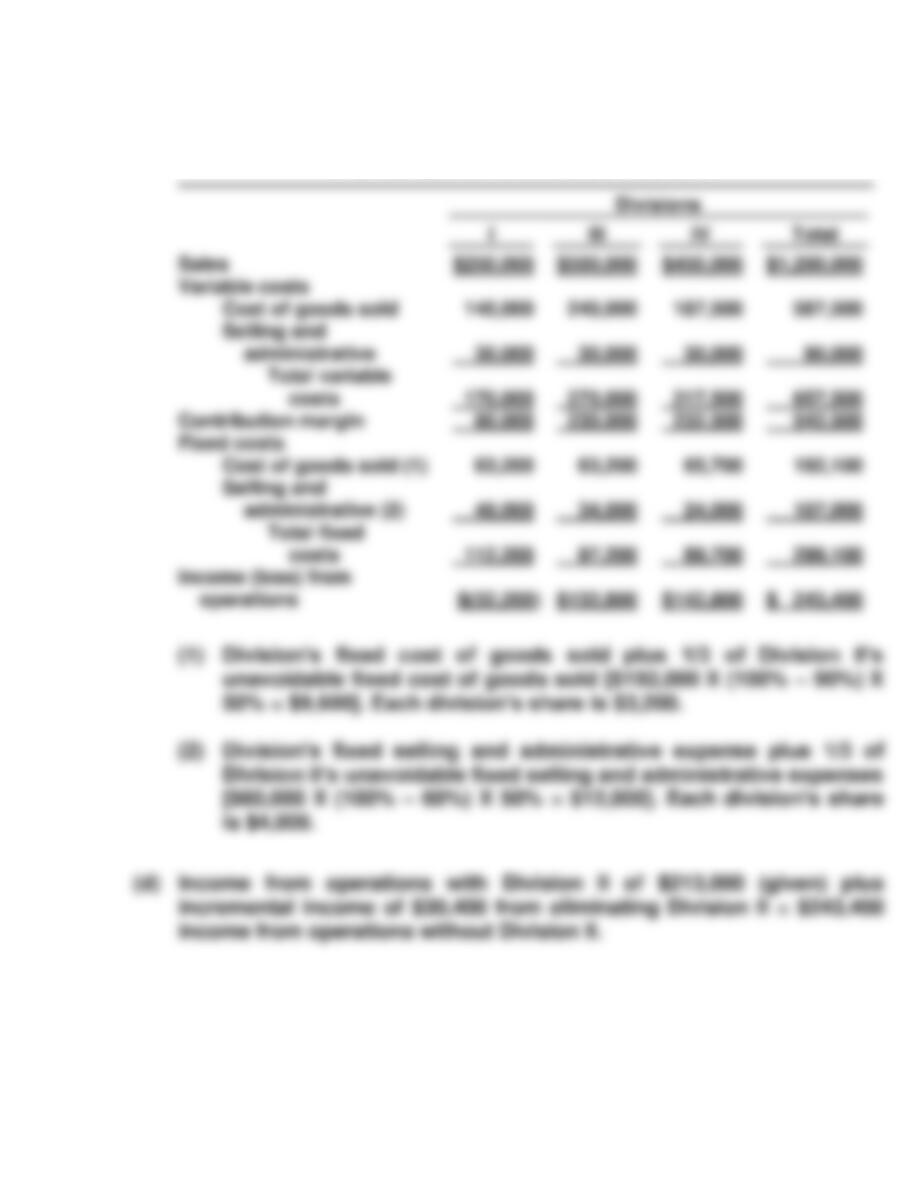
PROBLEM 21-5A (Continued)
(c) BRISLIN COMPANY
CVP Income Statement
For the Quarter Ended March 31, 2017
CD21 CURRENT DESIGNS
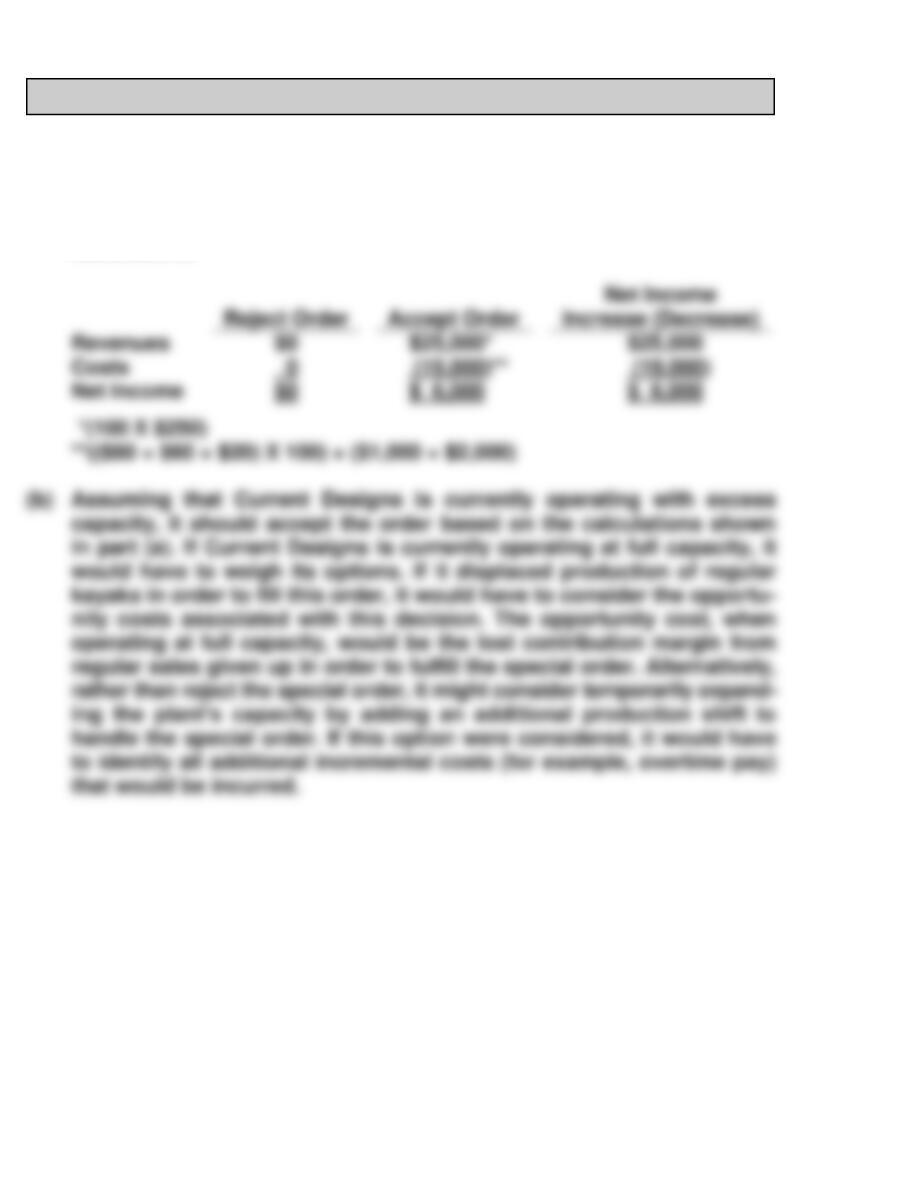
Situation #1
(a) Current Designs should accept the special order based on the following
calculations:
CD21 (Continued)
Situation #2
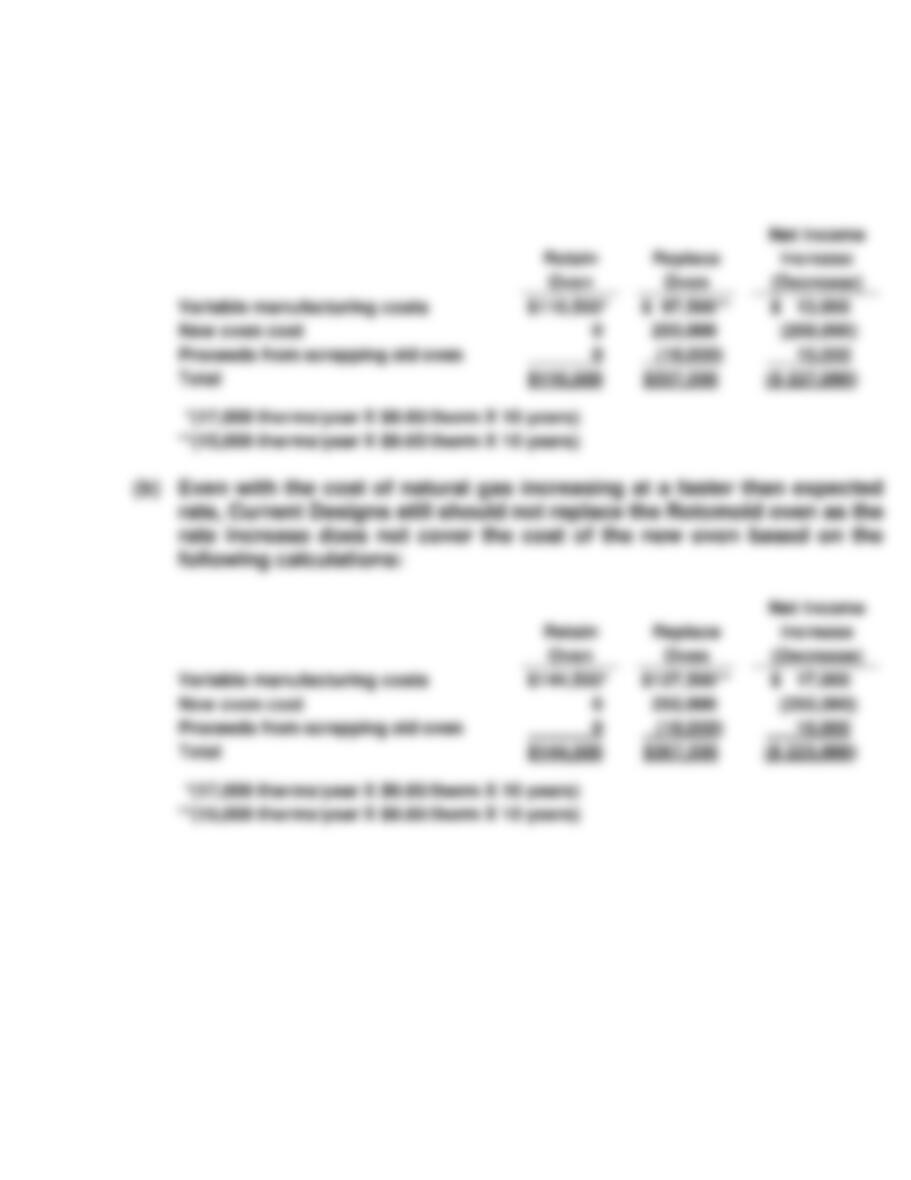
(a) Current designs should not replace the Rotomold oven based on the
following calculations:
CD21 (Continued)
Situation #3
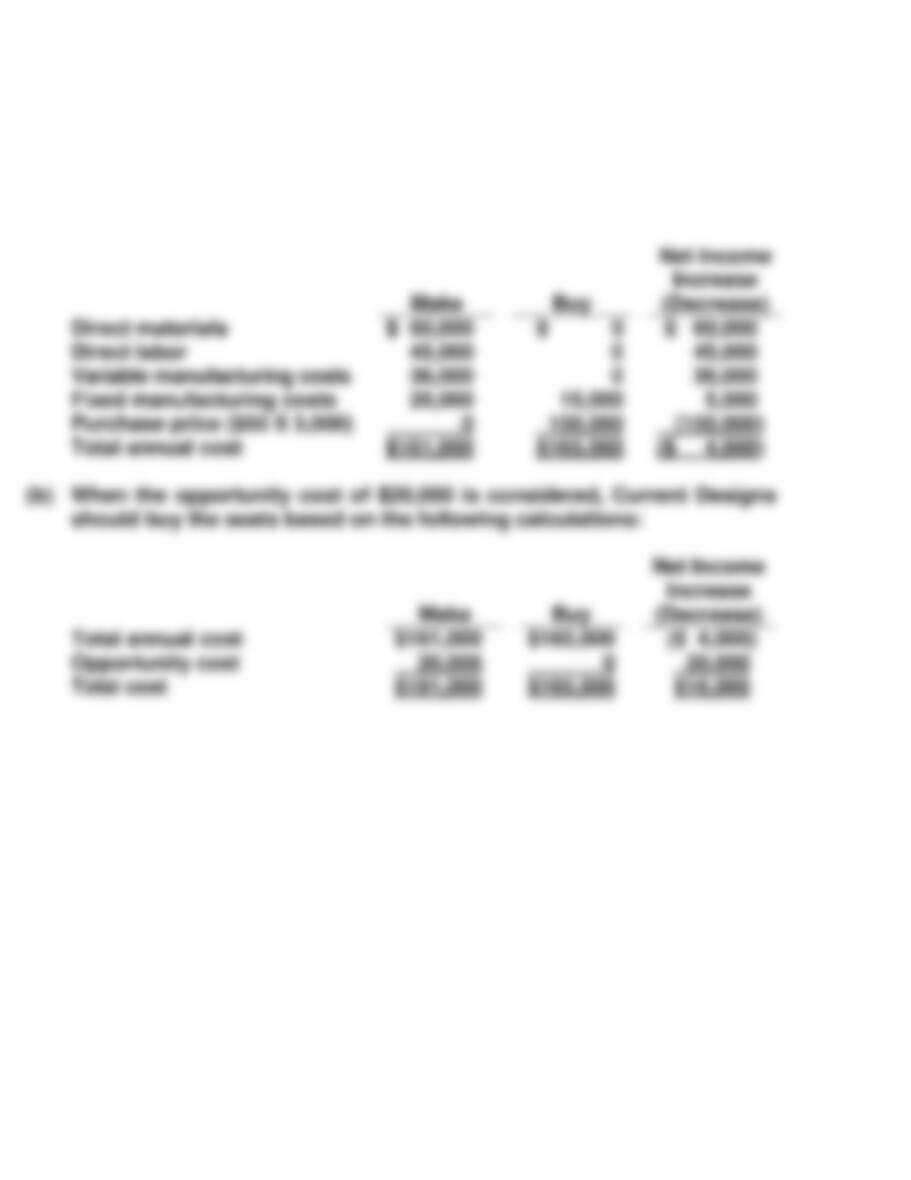
(a) Current Designs should make the seats based on the following calcu-
lations:
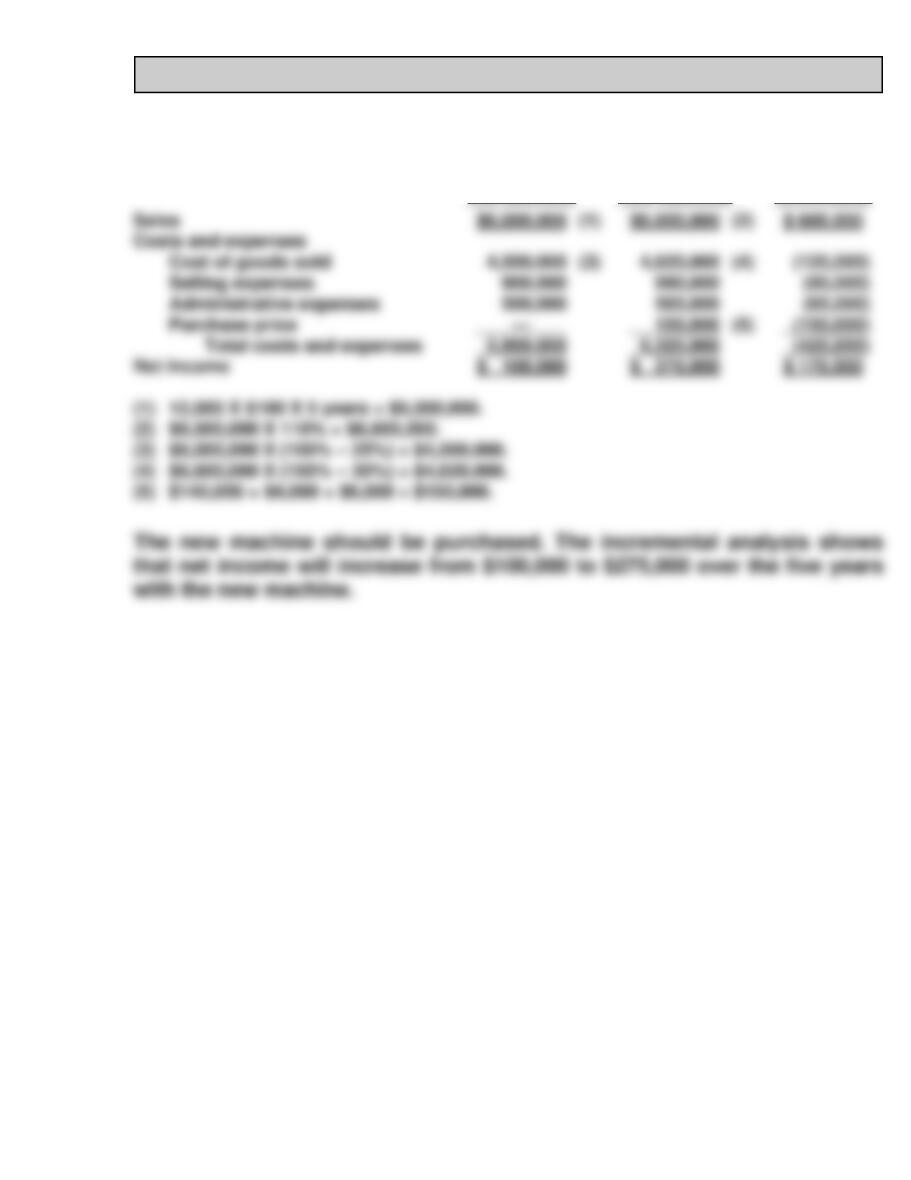
BYP 21-1 DECISION-MAKING ACROSS THE ORGANIZATION
Retain
Old Machine
Purchase
New Machine
Net Income
Increase
(Decrease)
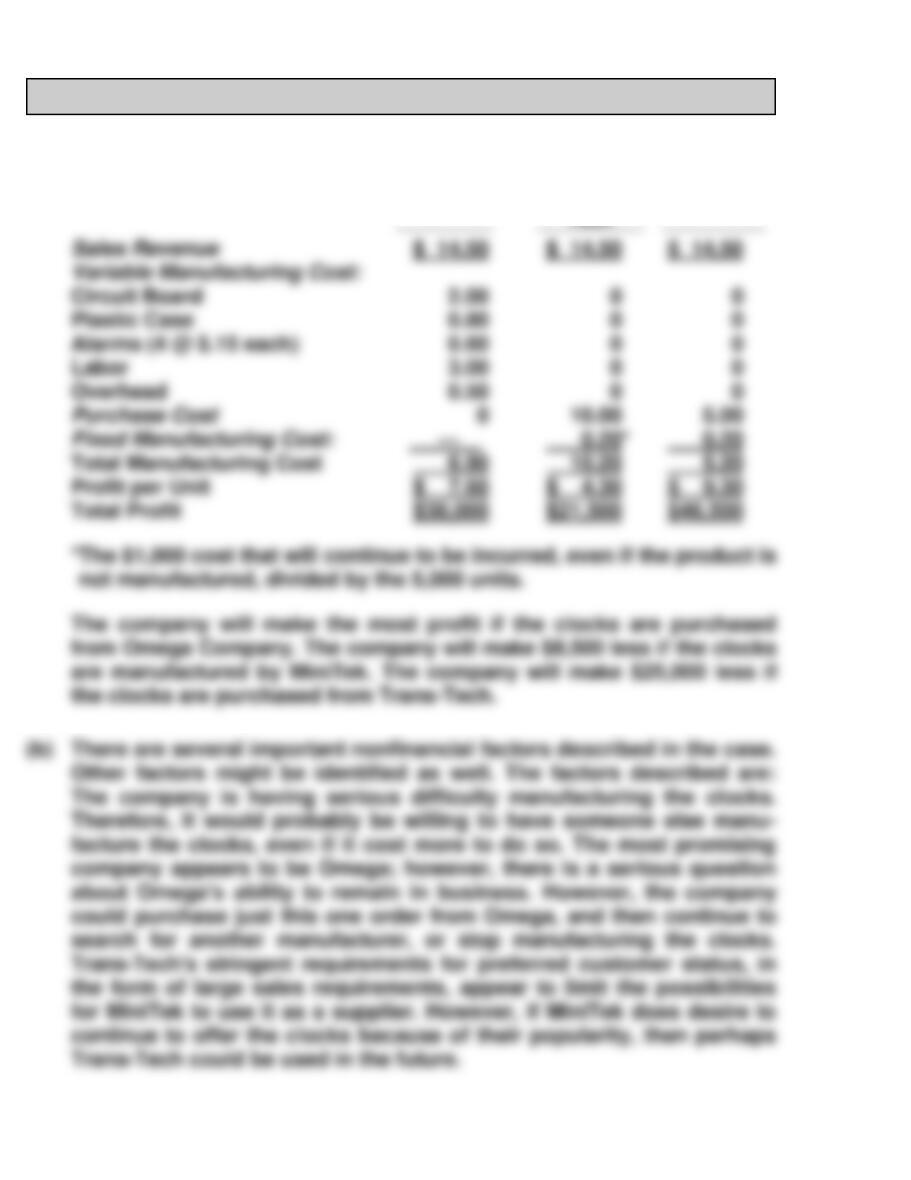
BYP 21-2 MANAGERIAL ANALYSIS
(a)
Make
Buy—
Trans-
Tech
Buy—
Omega
Total Manufacturing Cost
BYP 21–2 (Continued)
BYP 21-3 REAL-WORLD FOCUS
BYP 21-4 REAL-WORLD FOCUS
(a) The types of outsourcing services that the company provides assis-
tance on are:
BYP 21-5 COMMUNICATION ACTIVITY
To: Preston Thiese—Plant Manager
From: Hank Jewel—Production Manager
BYP 21-6 ETHICS CASE
BYP 21-7 ALL ABOUT YOU
BYP 21-8 CONSIDERING YOUR COSTS AND BENEFITS