PROBLEM 20-9
(a) See worksheet on next page.
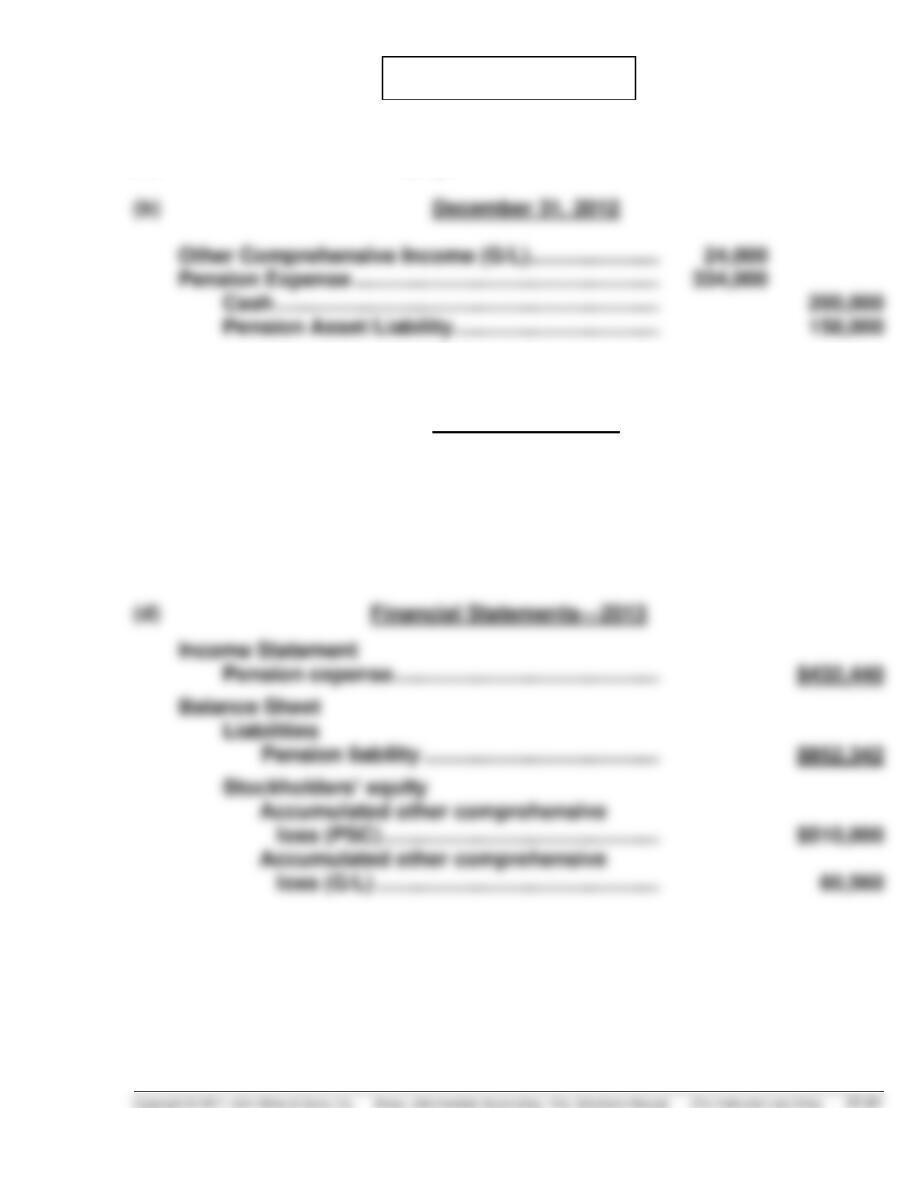
(c) See worksheet on next page. The entry is below.
December 31, 2013
Other Comprehensive Income (PSC) ……………….. 510,000
Other Comprehensive Income (G/L) …………………. 36,560
Pension Expense ……………………………………………. 432,440
Cash ……………………………………………………….. 184,658
Pension Asset/Liability …………………………….. 794,342
PROBLEM 20-9 (Continued)
20–62 Copyright © 2011 John Wiley & Sons, Inc. Kieso, Intermediate Accounting, 14/e, Solutions Manual (For Instructor Use Only)
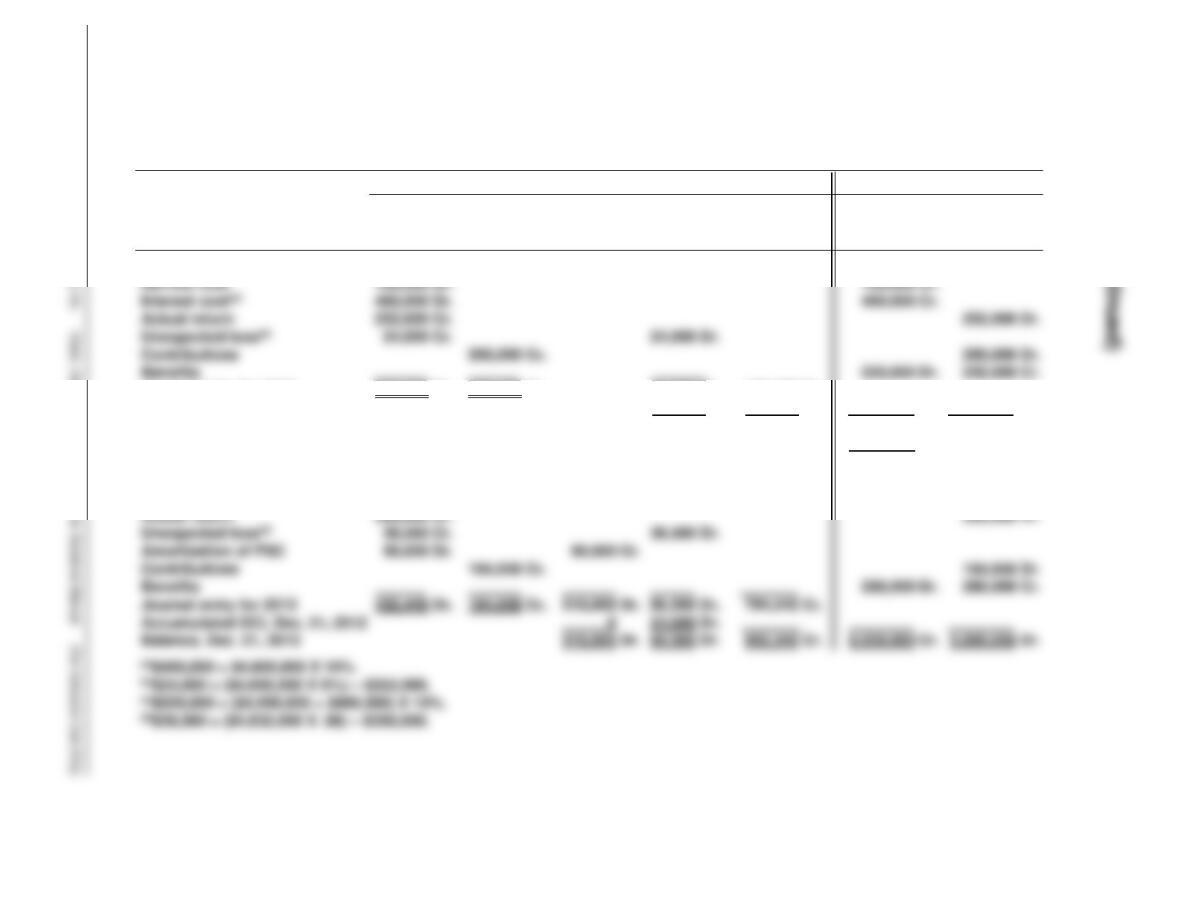
(a) HOBBS COMPANY
Pension Worksheet—2012 and 2013
General Journal Entries Memo Record
Items
Annual
Pension
Expense
Cash
OCI—Prior
Service Cost
OCI—
Gain/Loss
Pension
Asset/Liability
Projected
Benefit
Obligation
Plan
Assets
Balance, Jan. 1, 2012
4,600,000 Cr.
4,600,000 Dr.
Journal entry for 2012
334,000 Dr.
200,000 Cr.
24,000 Dr.
158,000 Cr.
Accumulated OCI Dec. 31, 2011
0
Balance, Dec. 31, 2012
24,000 Dr.
158,000 Cr.
4,990,000 Cr.
4,832,000 Dr.
Additional PSC, 1/1/2013
600,000 Dr.
600,000 Cr.
Balance, Jan. 1, 2013
5,590,000 Cr.
Service cost
170,000 Dr.
170,000 Cr.
Interest cost(c)
559,000 Dr.
559,000 Cr.
Actual return
350,000 Cr.
Unexpected loss(d)
36,560 Dr.
Amortization of PSC
Contributions
184,658 Cr.
Benefits
280,000 Dr.
Journal entry for 2013
184,658 Cr.
510,000 Dr.
794,342 Cr.
Accumulated OCI, Dec. 31, 2012
0
24,000 Dr.
Balance, Dec. 31, 2013
510,000 Dr.
60,560 Dr.
952,342 Cr.
6,039,000 Cr.
5,086,658 Dr.
Interest cost(a)
460,000 Dr.
460,000 Cr.
Actual return
252,000 Cr.
Unexpected loss(b)
24,000 Cr.
24,000 Dr.
Contributions
200,000 Cr.
Benefits
220,000 Dr.
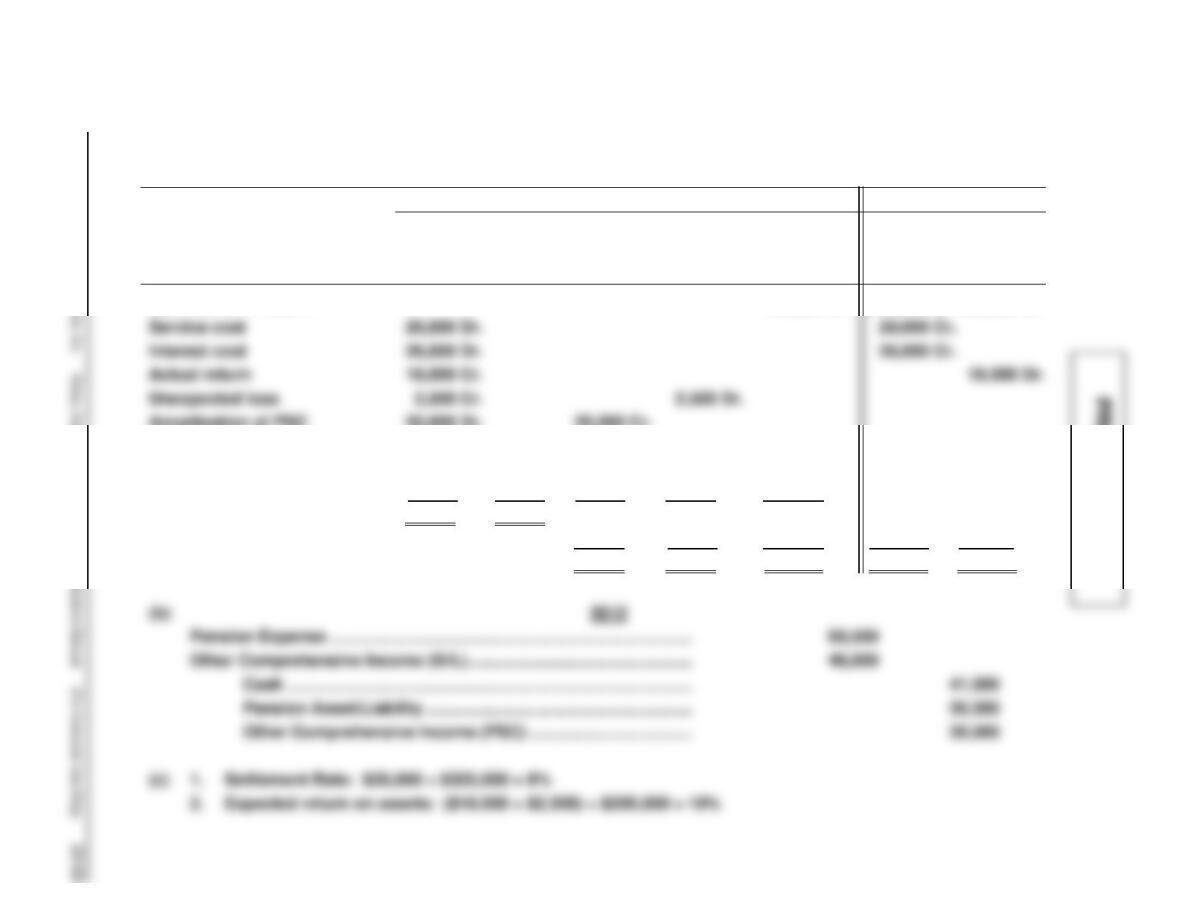
KRAMER COMPANY
(a) Completed Worksheet—2012
General Journal Entries Memo Record
Annual
Pension
Expense
Cash
OCI—Prior
Service
Cost
OCI—
Gain/Loss
Pension
Asset/Liability
Projected
Benefit
Obligation
Plan
Assets
Balance, Jan. 1, 2012
120,000 Cr.
325,000 Cr.
205,000 Dr.
Service cost
20,000 Dr.
20,000 Cr.
Interest cost
26,000 Dr.
26,000 Cr.
Actual return
18,000 Cr.
18,000 Dr.
Unexpected loss
2,500 Dr.
Amortization of PSC
35,000 Dr.
35,000 Cr.
Contributions
41,000 Cr.
41,000 Dr.
Benefits
15,000 Dr.
15,000 Cr.
Increase in PBO
43,500 Dr.
43,500 Cr.
Journal entry for 2012
60,500 Dr.
41,000 Cr.
35,000 Cr.
46,000 Dr.
30,500 Cr.
Accumulated OCI, Dec. 31, 2011
80,000 Dr.
0
Balance, Dec. 31, 2012
45,000 Dr.
46,000 Dr.
150,500 Cr.
399,500 Cr.
249,000 Dr.
Copyright © 2011 John Wiley & Sons, Inc. Kieso, Intermediate Accounting, 14/e, Solutions Manual (For Instructor Use Only) 20–63
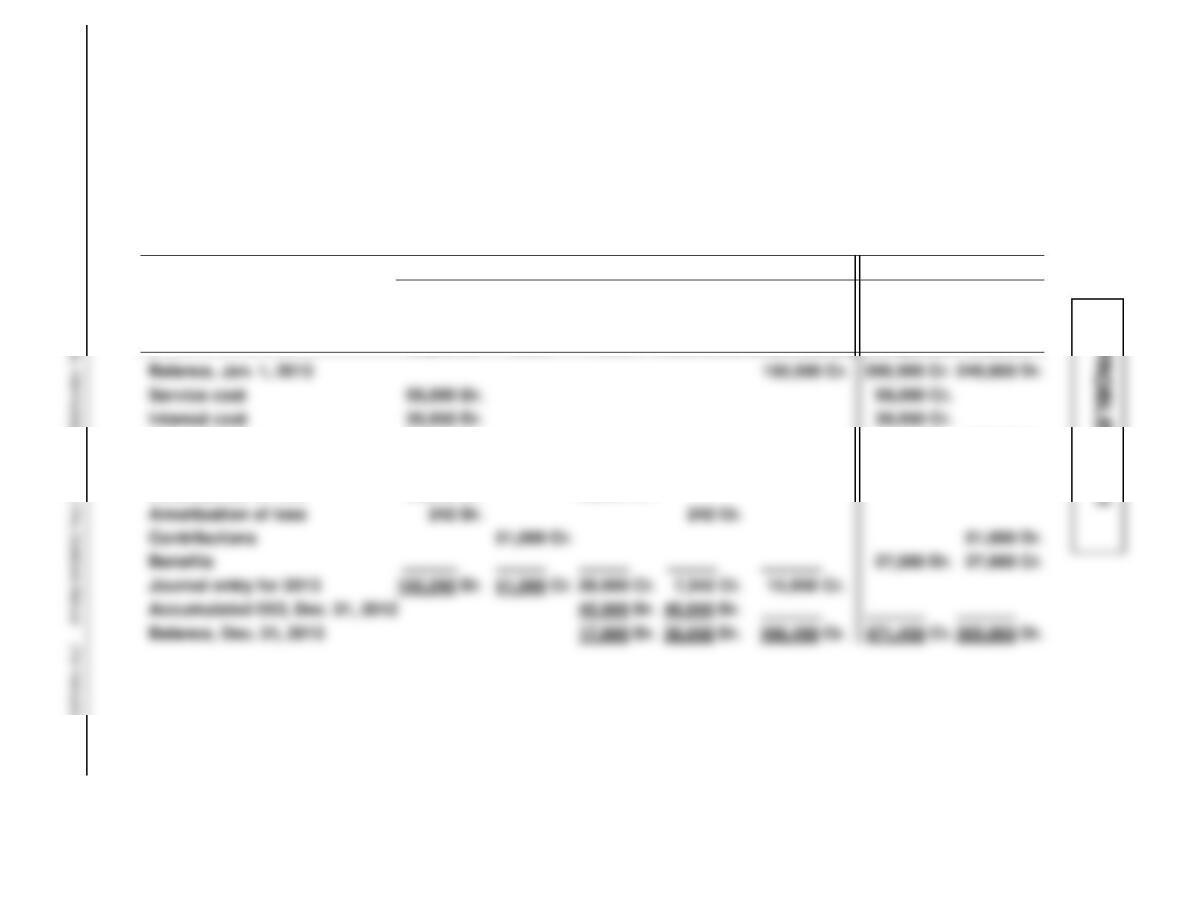
KRAMER COMPANY
(a) Completed Worksheet—2013
General Journal Entries Memo Record
Annual
Pension
Expense
Cash
OCI—Prior
Service
Cost
OCI—
Gain/Loss
Penison
Asset/Liability
Projected
Benefit
Obligation
Plan
Assets
Actual return
32,000 Cr.
32,000 Dr.
Unexpected gain
7,100 Dr.
7,100 Cr.
Amortization of PSC
28,000 Dr.
28,000 Cr.
Amortization of loss
Contributions
51,000 Cr.
Benefits
Journal entry for 2013
51,000 Cr.
Accumulated OCI, Dec. 31, 2012
Balance, Dec. 31, 2013
PROBLEM 20-11
20–64 Copyright © 2011 John Wiley & Sons, Inc. Kieso, Intermediate Accounting, 14/e, Solutions Manual (For Instructor Use Only)
Service cost
59,000 Dr.
Interest cost
39,950 Dr.
PROBLEM 20-11 (Continued)
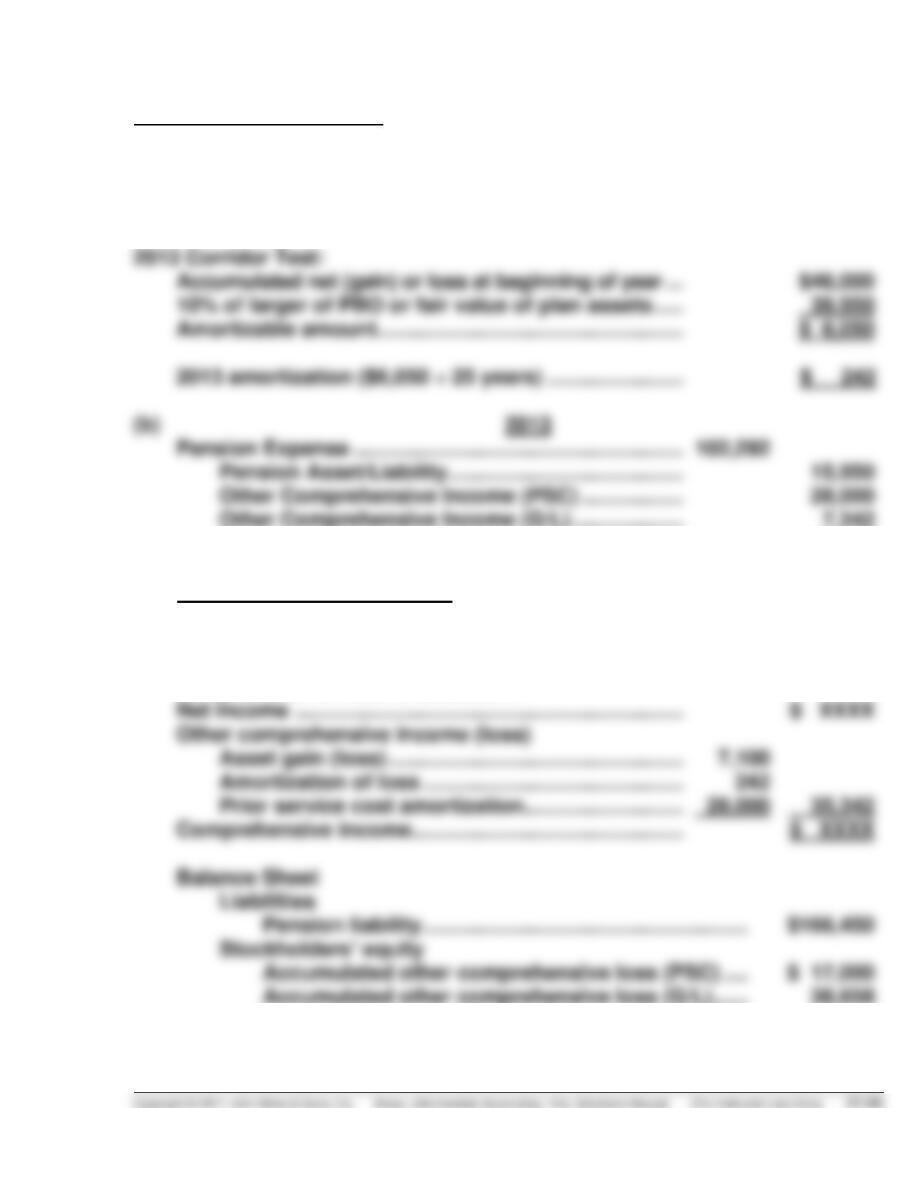
Worksheet computations:
Interest cost: $39,950 = $399,500 X 10%
Unexpected gain: $7,100 = ($249,000 X 10%) – $32,000; actual return
exceeds expected return.
Cash …………………………..……………………………….. 51,000
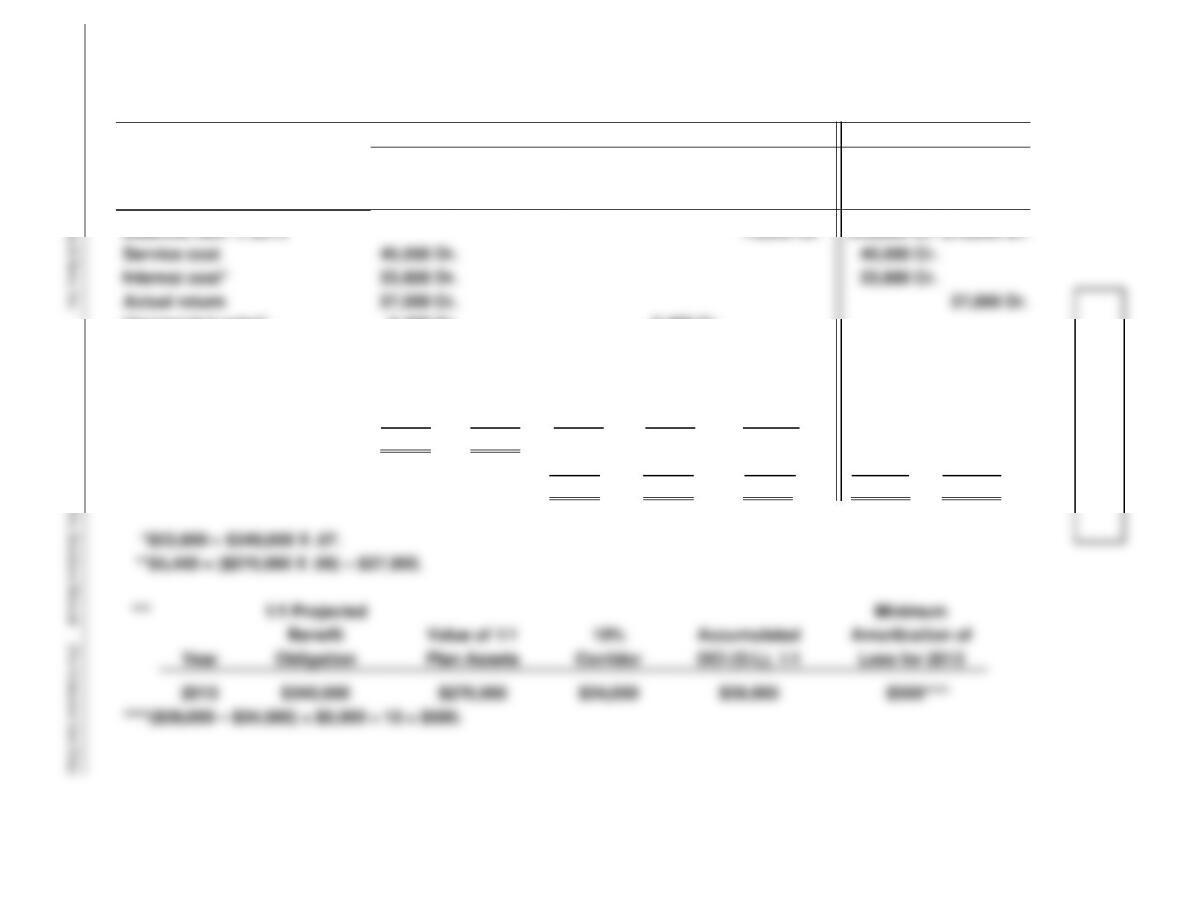
(c) Financial Statements—2013
Income Statement
Pension expense …………………………………………. $102,292
Comprehensive Income Statement
(a) LARSON CORP.
Pension Worksheet—2013
General Journal Entries Memo Record
Annual
Pension
Expense
Cash
OCI—Prior
Service
Cost
OCI—
Gain/Loss
Pension
Asset/Liability
Projected
Benefit
Obligation
Plan
Assets
Balance, Jan. 1, 2013
70,000 Cr.
340,000 Cr.
270,000 Dr.
Unexpected gain**
5,400 Dr.
5,400 Cr.
Amortization of PSC
12,000 Dr.
12,000 Cr.
Amortization of loss***
500 Dr.
500 Cr.
Contributions
65,000 Cr.
65,000 Dr.
Benefits
41,000 Dr.
41,000 Cr.
Journal entry for 2013
59,700 Dr.
65,000 Cr.
12,000 Cr.
5,900 Cr.
23,200 Dr.
Accumulated OCI, Dec. 31, 2012
90,000 Dr.
39,000 Dr.
Balance, Dec. 31, 2013
78,000 Dr.
33,100 Dr.
46,800 Cr.
367,800 Cr.
321,000 Dr.
20–66 Copyright © 2011 John Wiley & Sons, Inc. Kieso, Intermediate Accounting, 14/e, Solutions Manual (For Instructor Use Only)
PROBLEM 20-12
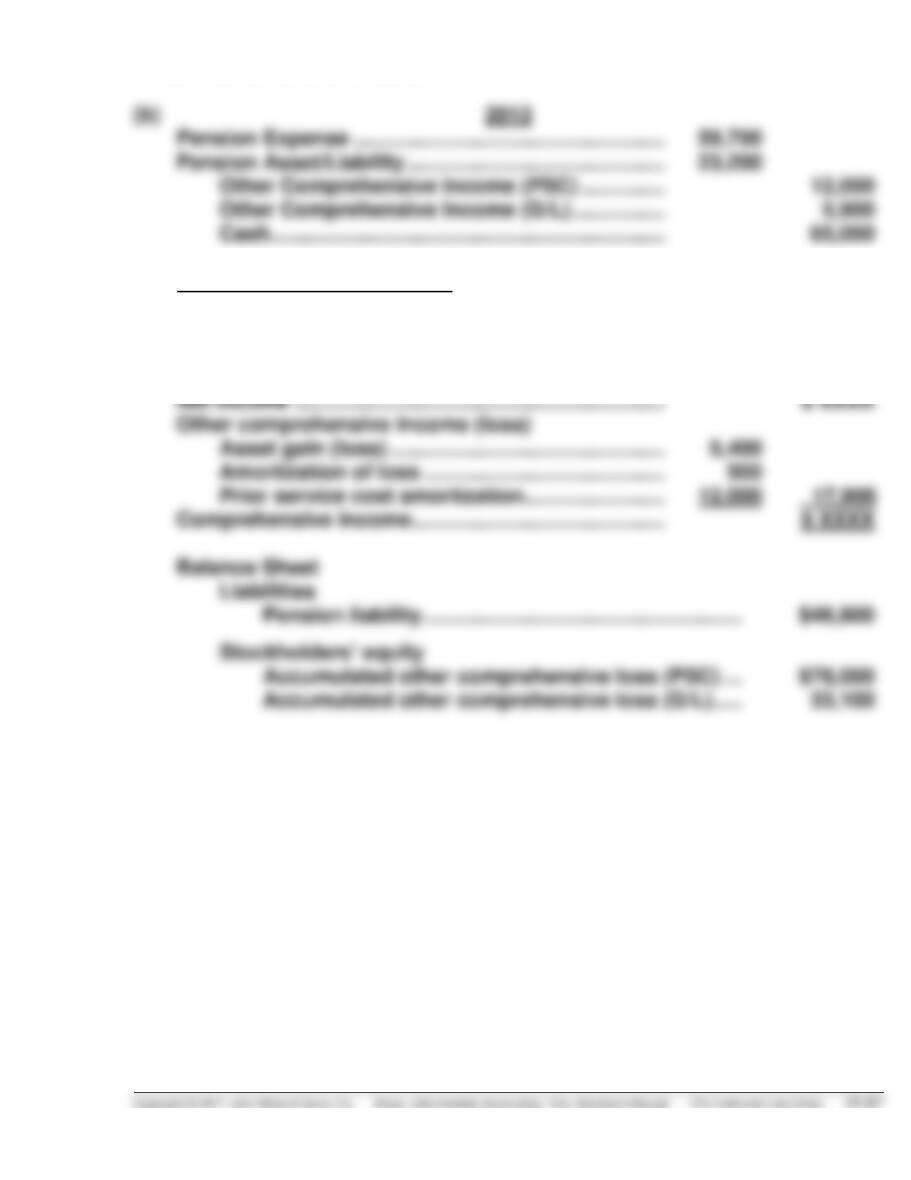
Service cost
45,000 Dr.
Interest cost*
23,800 Dr.
23,800 Cr.
Actual return
27,000 Cr.
27,000 Dr.
PROBLEM 20-12 (Continued)
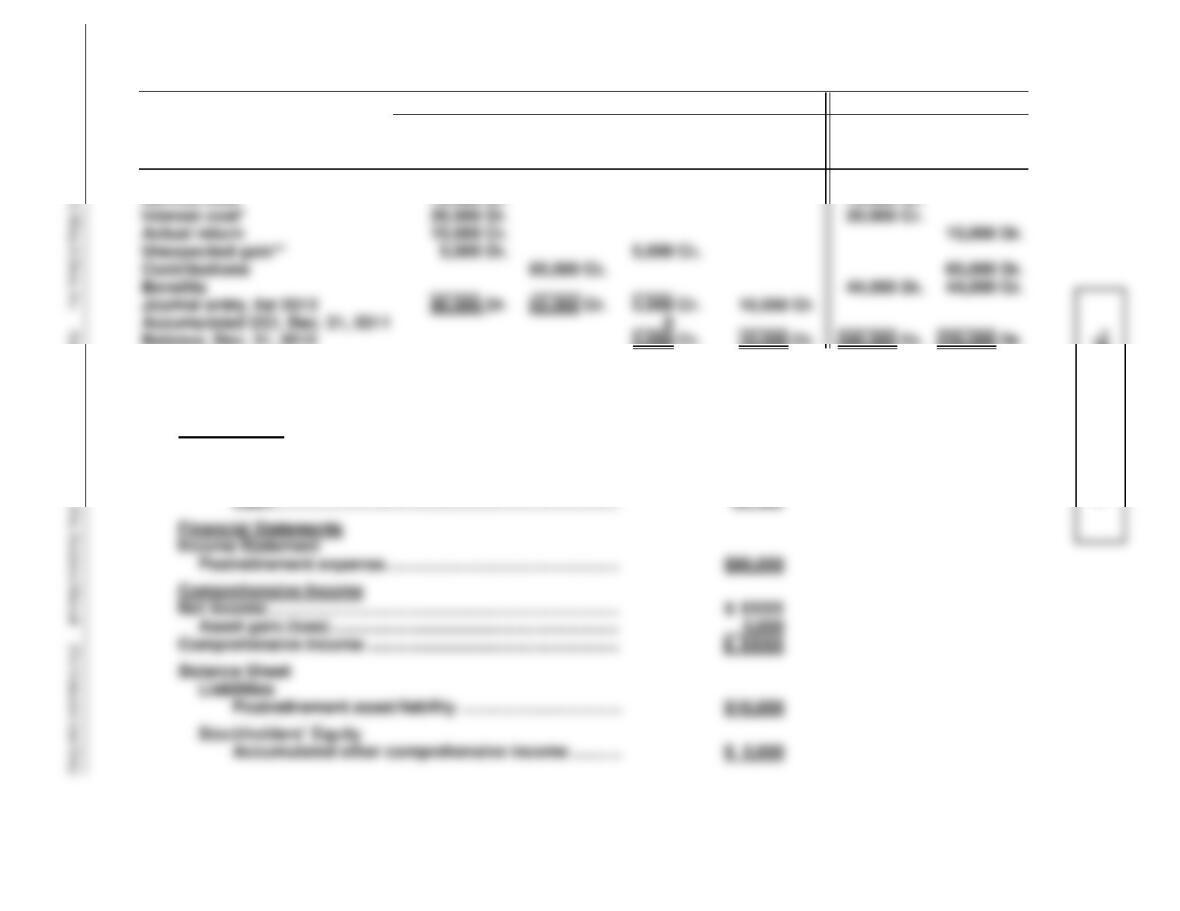
(c) Financial Statements—2013
Income Statement
Pension expense ………………………………………. $59,700
Comprehensive Income Statement
(a) HOLLENBECK FOODS INC.
Postretirement Benefit Worksheet—2012
General Journal Entries
Memo Record
Items
Annual
Postretirement
Expense
Cash
OCI—Gain/
Loss
Postretirement
Asset/Liability
APBO
Plan Assets
Balance, Jan. 1, 2012
200,000 Cr.
200,000 Dr.
Service cost
70,000 Dr.
70,000 Cr.
Balance, Dec. 31, 2012
5,000 Cr.
10,000 Cr.
246,000 Cr.
236,000 Dr.
*$200,000 X .10 = $20,000
**$15,000 – $10,000 = $5,000
(b) Journal Entry
Postretirement Expense …………………………………………. 80,000
Other Comprehensive Income (G/L) ………………….. 5,000
Postretirement Asset/Liability …………………………... 10,000
20–68 Copyright © 2011 John Wiley & Sons, Inc. Kieso, Intermediate Accounting, 14/e, Solutions Manual (For Instructor Use Only)
Interest cost*
20,000 Dr.
Actual return
15,000 Cr.
Unexpected gain**
5,000 Cr.
Contributions
Benefits
44,000 Dr.
Journal entry, for 2012
80,000 Dr.
5,000 Cr.
10,000 Cr.
Accumulated OCI, Dec. 31, 2011
0
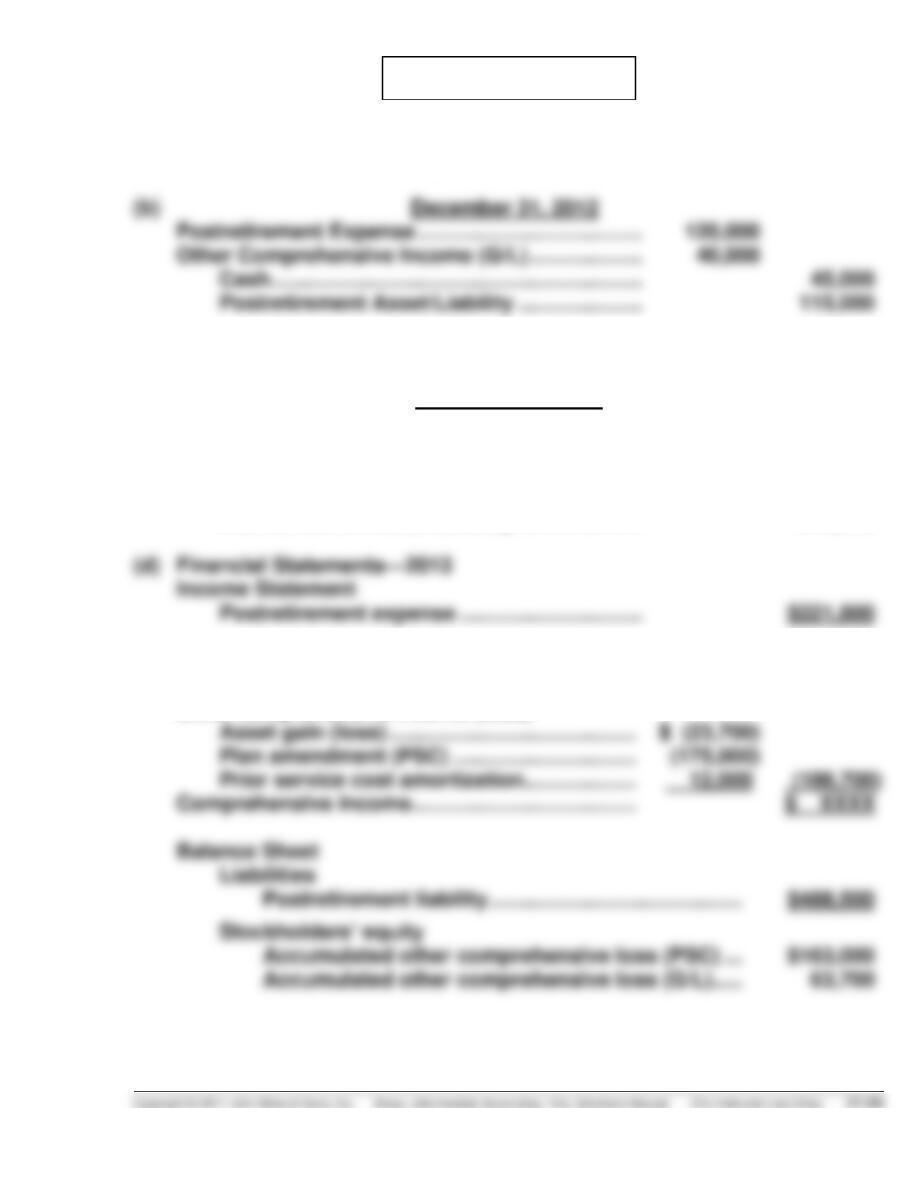
*PROBLEM 20-14
(a) See worksheet on next page.
(c) See worksheet on next page. The entry is below.
December 31, 2013
Other Comprehensive Income (PSC) ……………… 163,000
Other Comprehensive Income (G/L) ………………. 23,700
Postretirement Expense ……………………………….. 221,800
Cash …………………………..…………………………. 35,000
Postretirement Asset/Liability ………………… 373,500
Comprehensive Income Statement
Net Income …………………………………………………. $ XXXX
Other comprehensive income (loss)
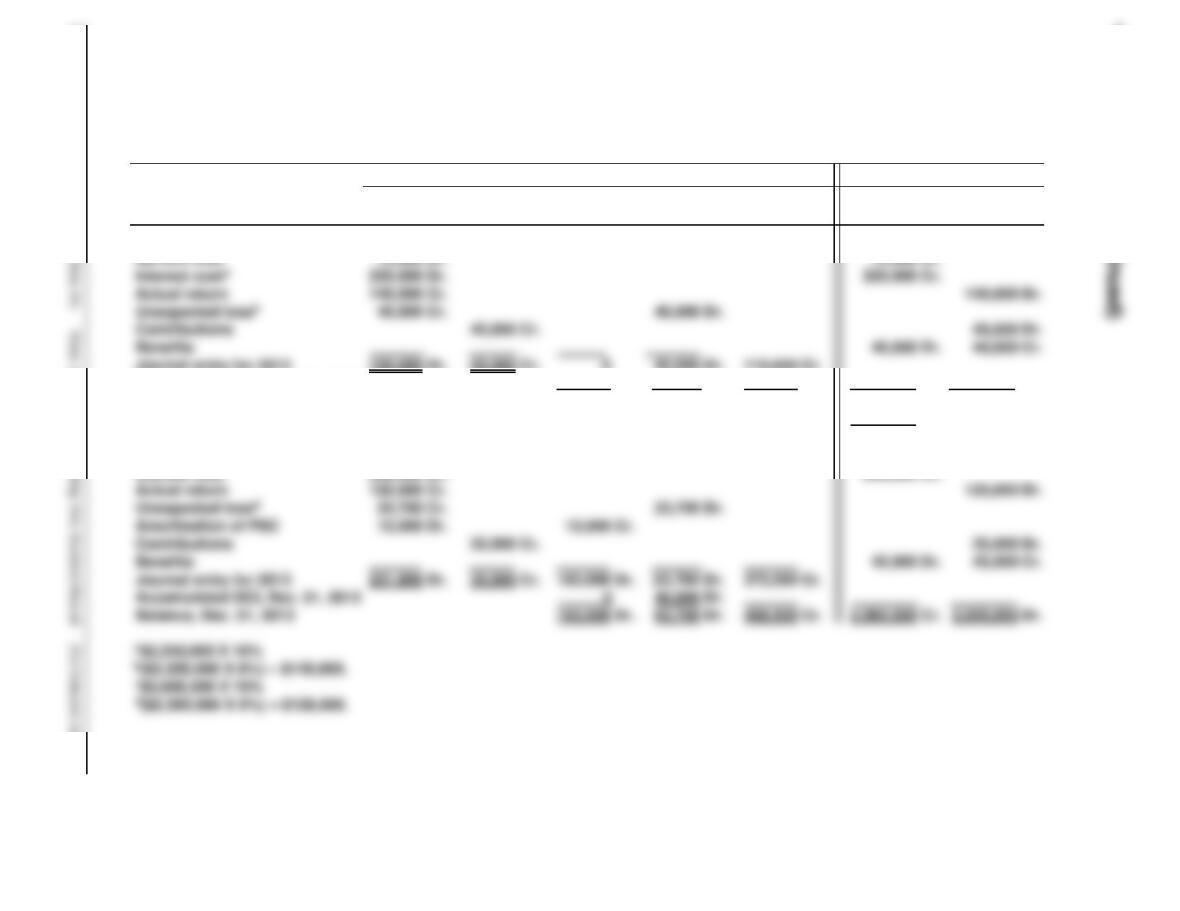
General Journal Entries Memo Record
Annual
Expense
Cash
OCI—Prior
Service Cost
OCI—
Gain/Loss
Postretirement
Asset/Liability
APBO
Plan
Assets
Balance, Jan. 1, 2012
0
2,250,000 Cr.
2,250,000 Dr.
Journal entry for 2012
120,000 Dr.
45,000 Cr.
0
40,000 Dr.
115,000 Cr.
Accumulated OCI, Dec. 31, 2011
0
0
Balance, Dec. 31, 2012
40,000 Dr.
115,000 Cr.
2,510,000 Cr.
2,395,000 Dr.
Additional PSC, 1/1/2013
175,000 Dr.
175,000 Cr.
Balance, Jan. 1, 2013
2,685,000 Cr.
Service cost
85,000 Dr.
85,000 Cr.
Interest costc
268,500 Dr.
268,500 Cr.
Actual return
120,000 Cr.
120,000 Dr.
23,700 Cr.
23,700 Dr.
Amortization of PSC
12,000 Dr.
Contributions
35,000 Cr.
Benefits
45,000 Dr.
Journal entry for 2013
221,800 Dr.
35,000 Cr.
163,000 Dr.
373,500 Cr.
Accumulated OCI, Dec. 31, 2012
0
40,000 Dr.
Balance, Dec. 31, 2013
163,000 Dr.
63,700 Dr.
488,500 Cr.
2,993,500 Cr.
2,505,000 Dr.
*PROBLEM 20-14 (Continued)
20–70 Copyright © 2011 John Wiley & Sons, Inc. Kieso, Intermediate Accounting, 14/e, Solutions Manual (For Instructor Use Only)
Service cost
75,000 Dr.
75,000 Cr.
225,000 Dr.
225,000 Cr.
Actual return
140,000 Cr.
140,000 Dr.
40,000 Cr.
40,000 Dr.
Contributions
45,000 Cr.
Benefits
40,000 Dr.

TIME AND PURPOSE OF CONCEPTS FOR ANALYSIS
CA 20-1 (Time 30–35 minutes)
Purpose—to provide the student with the opportunity to discuss some of the more traditional issues
related to pension reporting. Specifically, the student is asked to define a pension plan, distinguish between a
funded and unfunded plan, differentiate between accounting for the employer and the pension fund. In
addition, justification for accrual accounting must be developed, as well as a determination of the relative
objectivity of the accrual versus the cash basis.
CA 20-2 (Time 25–30 minutes)
Purpose—to provide the student with the opportunity to discuss the terminology employed in GAAP
related to pension accounting.
CA 20-3 (Time 20–25 minutes)
Purpose—to provide the student with the opportunity to discuss the reasons why accrual accounting is
followed for pension reporting. In addition, certain terms are required to be explained and the proper
footnote disclosures identified.
CA 20-4 (Time 30–35 minutes)
Purpose—to provide the student with the opportunity to study some of the implications of GAAP as it
related to pensions. The student is required to identify the five components of pension expense, the
major differences between the accumulated benefit obligation and the projected benefit obligation, and
how to report actuarial gains and losses.
CA 20-5 (Time 50–60 minutes)
Purpose—to provide the student with the opportunity to discuss the implications of GAAP given a number
of different factual situations related to pensions. This case is quite thought-provoking and should stimulate
a great deal of class discussion.
CA 20-6 (Time 30–40 minutes)
Purpose—to provide the student with the opportunity to explain gains and losses, including the use of
corridor amortization.
CA 20-7 (Time 20–30 minutes)
Purpose—to provide the student with the opportunity to consider the ethical implications of the impact
of pension benefits and their impact on financial statements.
SOLUTIONS TO CONCEPTS FOR ANALYSIS
CA 20-1
(a) A private pension plan is an arrangement whereby a company undertakes to provide its retired
employees with benefits that can be determined or estimated in advance from the provisions of a
document or from the company’s practices.
(c) 1. Relative to the pension fund the term “funded” refers to the relationship between pension
fund assets and the present value of expected future pension benefit payments; thus, the
pension fund may be fully funded or underfunded. Relative to the employer, the term
“funded” refers to the relationship of the contributions made by the employer to the pension
fund and the pension expense accrued by the employer; if the employer contributes
annually to the pension fund an amount equal to the pension expense, the employer is fully
funded.
(d) 1. The theoretical justification for accrual recognition of pension costs is based on the matching
concept. Pension costs are incurred during the period over which an employee renders
services to the enterprise; these costs may be paid upon the employee’s retirement, over a
period of time after retirement, as incurred through funding or insurance plans, or through
some combination of any or all of these methods.
CA 20-1 (Continued)
(e) Terms and their definitions as they apply to accounting for pension plans follow:
1. Service cost is the actuarial present value of benefits attributed by the pension benefit formula
to employee service during that period. The service cost component is a portion of the
projected benefit obligation and is unaffected by the funded status of the plan.
CA 20-2
2. Pension asset/liability in the liability section is the excess of the projected benefit obligation over
the fair value of the pension plan assets.
3. Accumulated OCI—PSC arises when an additional liability is recognized in the PBO due to prior
4. Pension expense is the amount recognized in an employer’s financial statements as the expense
for a pension plan for the period. Components of pension expense are service cost, interest cost,
CA 20-3
(a) 1. The theoretical justification for accrual recognition of pension costs is based on the matching
concept. Pension costs are incurred during the period over which an employee renders
(b) Terms and their definitions as they apply to accounting for pensions follow:
1. Market-related asset value, when based on a calculated value, is a moving average of
pension plan asset values over a period of time. Considerable flexibility is permitted in
2. The projected benefit obligation is the present value of vested and nonvested employee
benefits accrued to date based on employees’ future salary levels. This is the pension
liability required by GAAP.
(c) The following disclosures about a company’s pension plans should be made in financial
statements or their notes:
1. A description of the plan including employee groups covered, type of benefit formula,
funding policy, types of assets held, and the nature and effect of significant matters affecting
comparability of information for all periods presented.
3. A reconciliation showing how the projected benefit obligation and the fair value of the plan
assets changed from the beginning to the end of the period.
5. A table is required indicating the allocation of pension plan assets by category (equity
securities, debt securities, real estate, and other assets), and showing the percentage of
6. The company must disclose the expected benefit payments to be paid to current plan
participants for each of the next five fiscal years and in the aggregate for the five fiscal
CA 20-4
(a) Pension benefits are part of the compensation received by employees for their services. The
actual payment of these benefits is deferred until after retirement. The net periodic pension
expense measures this compensation and consists of the following five elements:
1. The service cost component is the present value of the benefits earned by the employees
during the current period.
4. When a pension plan is adopted or amended, credit is often given for employee service
rendered in prior years. This retroactive credit, or prior service cost, is charged to other
comprehensive income (PSC) in the year the plan is adopted or amended, and then is
recognized as pension expense over the time that the employees who benefited from this
credit worked.
(b) The major similarity between the accumulated benefit obligation and the projected benefit
obligation is that they both represent the present value of the benefit attributed by the pension
benefit formula to employee service rendered prior to a specific date. All things being equal,
when an employee is about to retire, the accumulated benefit obligation and the projected benefit
obligation would be the same.
(c) 1. Pension gains and losses, sometimes called actuarial gains and losses, result from changes
in the value of the projected benefit obligation or the fair value of the plan assets. These
changes arise from the deviations between the estimated conditions and the actual
experience, and from changes in assumptions. The volatility of these gains and losses may
reflect an unavoidable inability to predict compensation levels, length of employee service,
mortality, retirement ages, and other relevant events accurately for a period, or several
periods. Therefore, fully recognizing the gains or losses on the income statement may result in
volatility that does not reflect actual changes in the funded status of the plan in that period.
CA 20-5
1. This situation can exist because companies vary as to whether they are using an implicit or
explicit set of assumptions when interest rates are disclosed. In the implicit approach, two or
more assumptions do not individually represent the best estimate of the plan’s future experience
with respect to these assumptions, but the aggregate effect of their combined use is presumed to
2. This situation will occur because the net funded position of the plan is required to be reported.
That is, companies are required to report as a liability the excess of their projected benefit
obligation over the fair value of plan assets. In the past, the basic liability companies reported
was the excess of the amount expensed over the amount funded.
3. This statement is questionable. If a financial measure purports to represent a phenomenon that is
volatile, the measure must show that volatility or it will not be representationally faithful. Never–
the-less, many argue that volatility is inappropriate when dealing with such long-term measures
4. (a) In a defined-contribution plan, the amount contributed is the amount expensed. No significant
reporting problems exist here. On the other hand, defined benefit plans involve many difficult
reporting issues which may lead to additional expense and liability recognition.
Significant amendments will generally increase prior service cost which may lead to
5. The corridor method is an approach which requires that only gains and losses in excess of 10%
of the greater of the projected benefit obligation or market related plan asset value be allocated.
This excess is then amortized over the average remaining service period of current employees
expected to participate in the plan.
CA 20-6
To: Vickie Plato, Accounting Clerk
From: Good Student, Manager of Accounting
Date: January 3, 2015
Subject: Amortization of gains and losses in pension expense
If, in any given year, the gains or losses become too great, then at least a portion must be included in
pension expense so as not to understate or overstate the annual obligation. This is done through a
process called amortization.
To decide whether or not you should include gains/losses in annual pension expense, calculate 10 percent
of either the PBO or the PA (whichever is greater) as a “corridor.” Amortize the amount of any gain or
loss falling outside the corridor over the average remaining service life of the active employees. Note: these
gains/losses must exist at the beginning of the year for which amortization takes place [see (a) on the
schedule below].
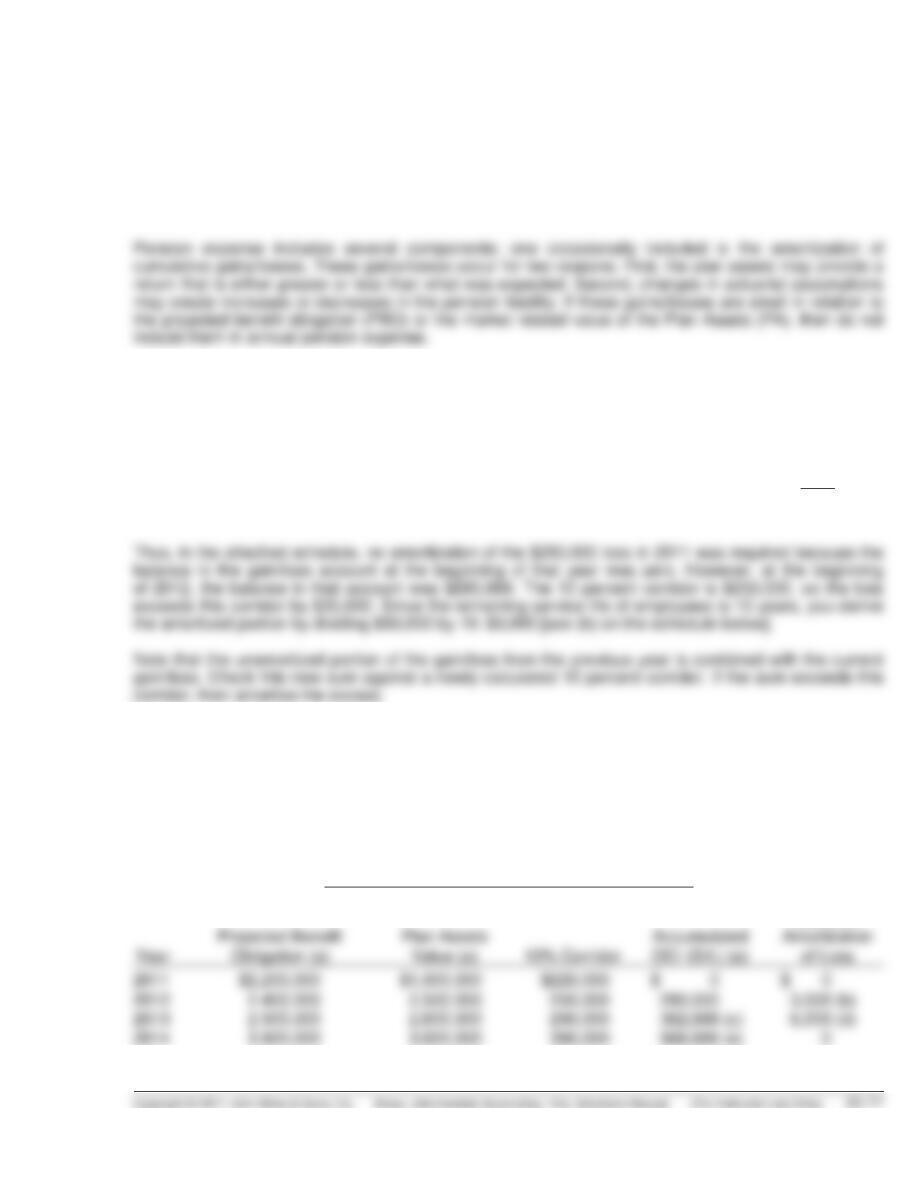
In the attached schedule, the unamortized loss from 2012 ($277,000) was added to the 2012 loss
of $85,000, resulting in a cumulative loss of $362,000 (see (c) below). This amount exceeds the new
corridor ($290,000) by $72,000. However, the remaining service life has been changed to 12 years,
resulting in annual amortization of only $6,000 [see (d) below].
Finally, if the losses from 2013 are added to the unamortized portion of the loss from prior years, the
sum ($368,000) falls within the 2014 corridor ($390,000) and does not need to be amortized at all.
Corridor and Minimum Loss Amortization Schedule
Minimum
CA 20-6 (Continued)
(a) As of the beginning of the year.
CA 20-7
While Habbe may be correct in assuming that the termination of nonvested employees would decrease its
pension-related liabilities and associated expenses, she is callous to suggest that firing employees is a
reasonable approach to correcting the underfunding of College Electronix’s pension plan. Arbitrarily dismiss–
FINANCIAL REPORTING PROBLEM
(a) P&G offers various postretirement benefits to its employees. The most
prevalent employee benefit plans offered are defined contribution plans,
which cover substantially all employees in the U.S. Under the defined
contribution plans, the company generally makes contributions to par-
(b)
2009
Pension expense
2007
Pension expense
$183,000,000
(c) In 2009, P&G reports a $3,706,000,000 Accrued Pension Cost on its
balance sheet. It reports $341,000,000 as pension expense on its income
statement. It also reports a postretirement liability of $1,516,000,000
classified as non-current. (See Note 8).