CHAPTER 20
Cost-Volume-Profit Analysis: Additional Issues
ASSIGNMENT CLASSIFICATION TABLE
Learning Objectives
Questions
Brief
Exercises
Do It!
Exercises
A
Problems
1. Apply basic CVP concepts.
1, 2, 3, 4, 5,
6
1, 2, 3, 4, 5,
6
1
1, 2, 3, 4, 5
1A, 2A, 6A
2. Explain the term sales mix and
its effects on break-even sales.
7, 8, 9
7, 8, 9, 10
2
6, 7, 8, 9, 10
3A
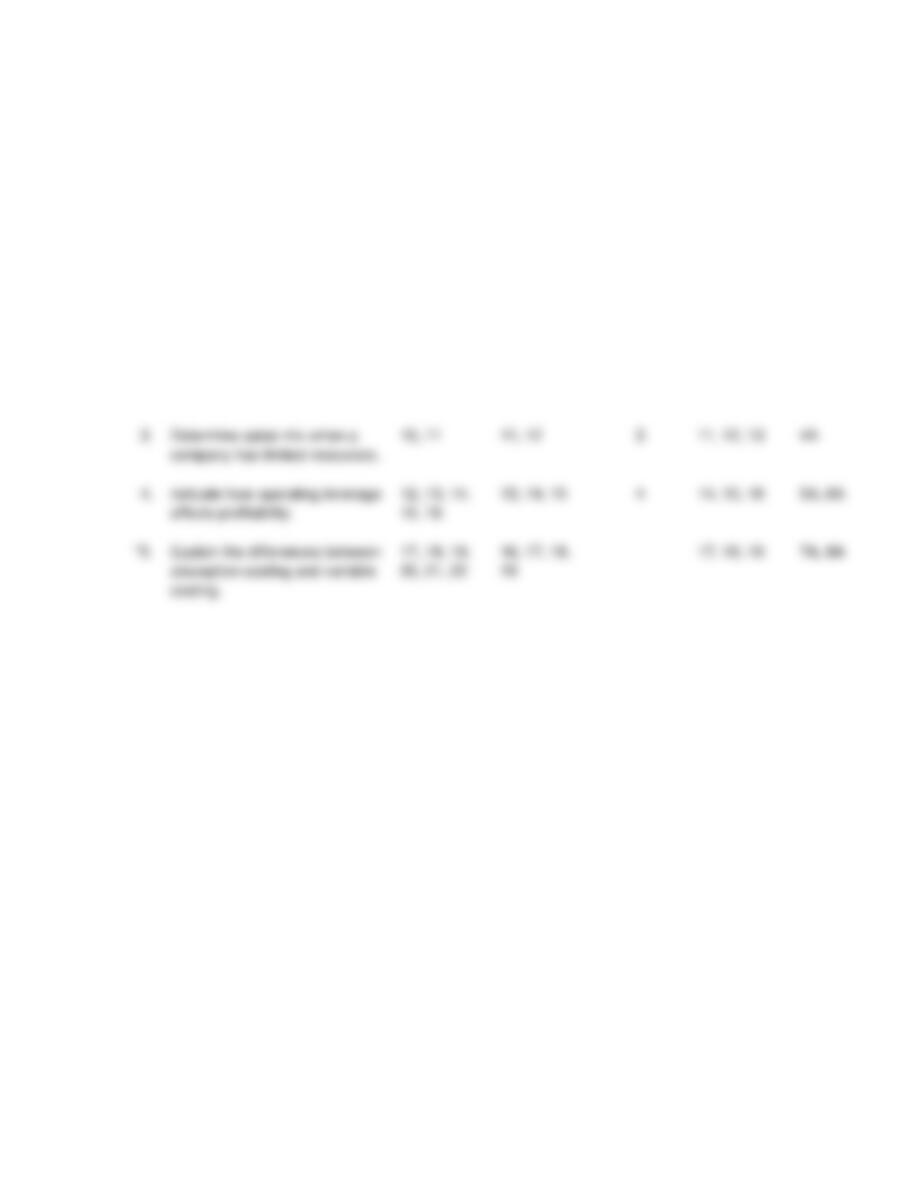
3. Determine sales mix when a
company has limited resources.
10, 11
3
11, 12, 13
4A
4. Indicate how operating leverage
affects profitability.
12, 13, 14,
15, 16
4
14, 15, 16
5A, 6A
costing.
ASSIGNMENT CHARACTERISTICS TABLE
Problem
Number
Description
Difficulty
Level
Time
Allotted (min.)
1A
Compute break-even point under alternative courses of
action.
Moderate
20–30
2A
Compute break-even point and margin of safety ratio, and
prepare a CVP income statement before and after changes
in business environment.
Moderate
20–30
3A
Determine break-even sales under alternative sales
strategies and evaluate results.
Moderate
20–30
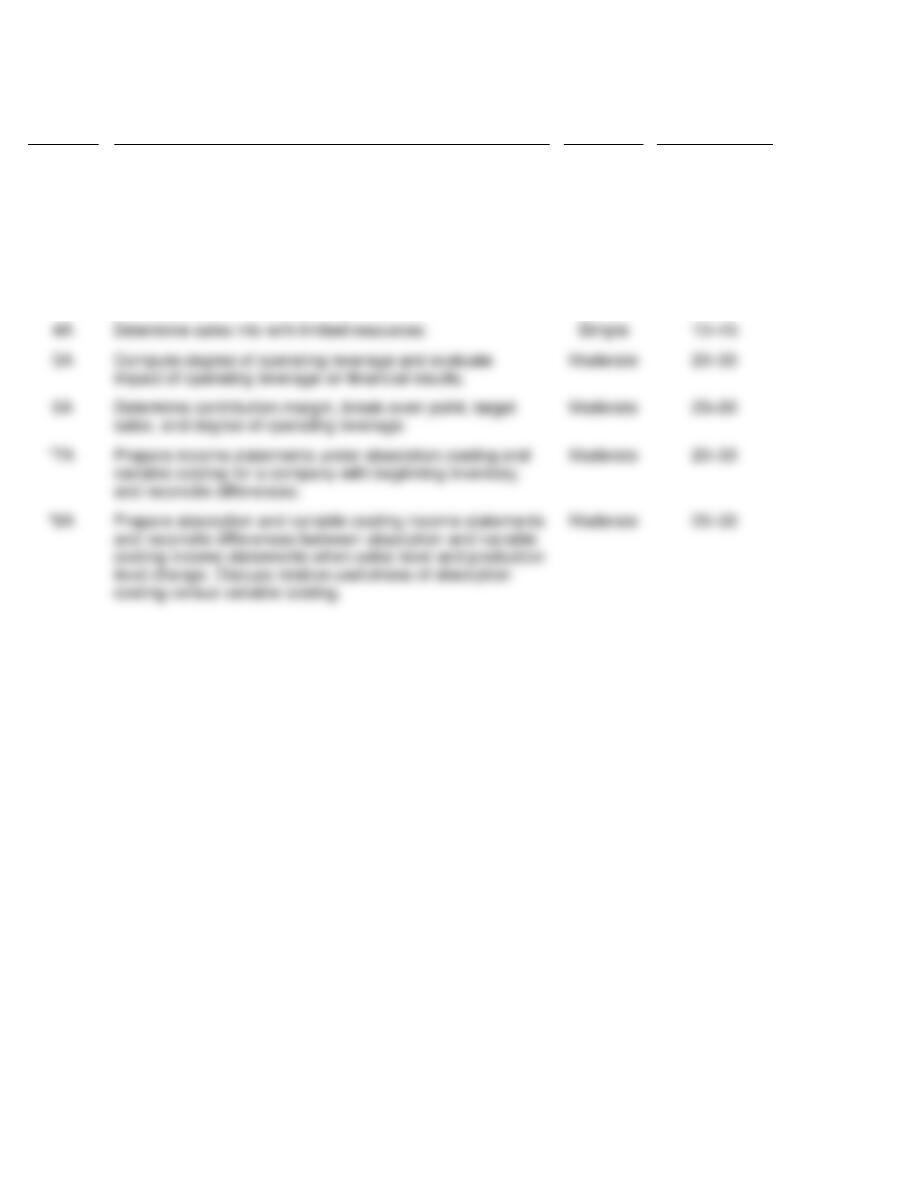
Determine sales mix with limited resources.
impact of operating leverage on financial results.
6A
Determine contribution margin, break-even point, target
sales, and degree of operating leverage.
Moderate
20–30
Prepare income statements under absorption costing and
variable costing for a company with beginning inventory,
and reconcile differences.
Moderate
20–30
costing income statements when sales level and production
level change. Discuss relative usefulness of absorption
costing versus variable costing.
BLOOM’ S TAXONOMY TABLE
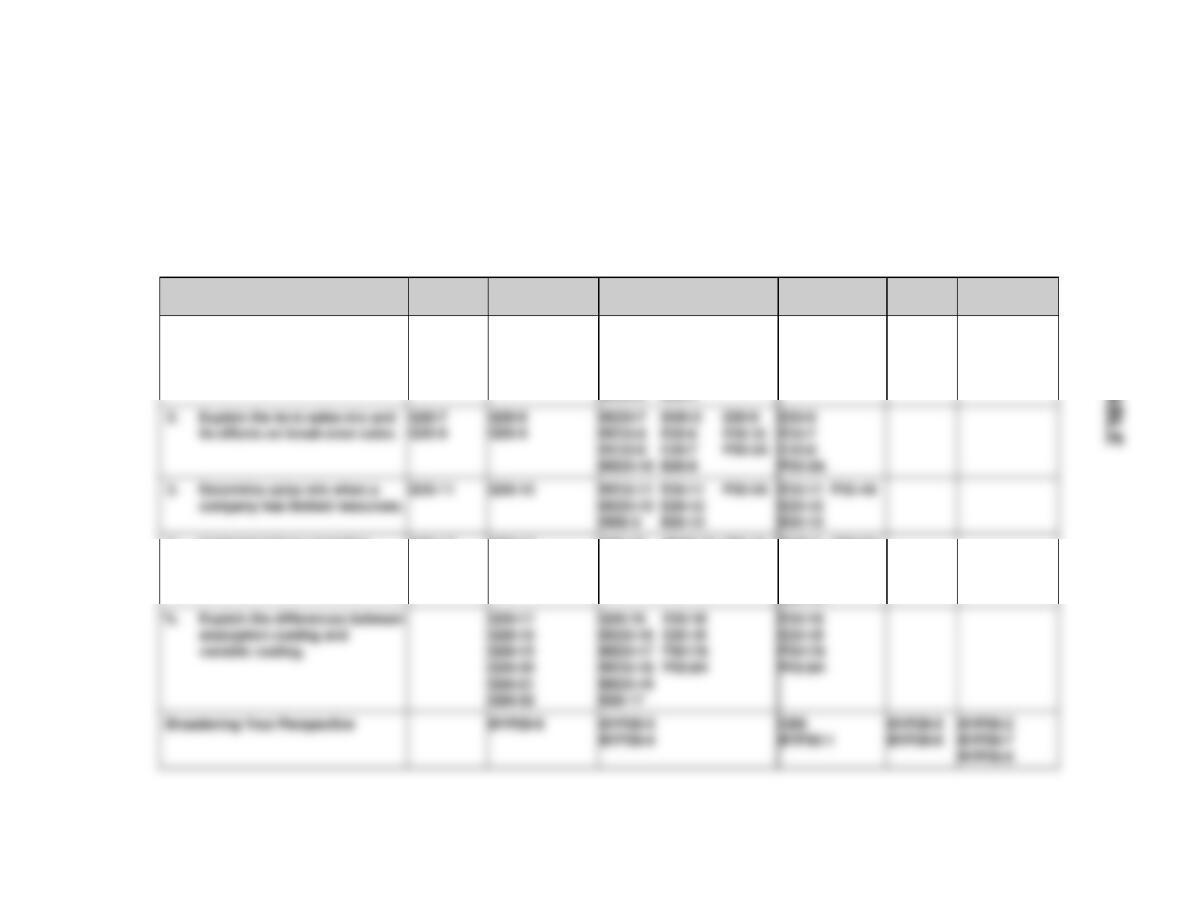
Correlation Chart between Bloom’s Taxonomy, Learning Objectives and End–of-Chapter Exercises and Problems
Learning Objective
Knowledge
Comprehension
Application
Analysis
Synthesis
Evaluation
*1. Apply basic CVP concepts.
Q20-1
Q20-3
Q20-2
Q20-4
Q20-5
Q20-6
BE20-2
BE20-3
BE20-4
BE20-5
BE20-6
DI20-1
E20-1
E20-2
E20-3
E20-4
E20-5
P20–6A
BE20-1
P20-1A
P20–2A
P20–6A
*4. Understand how operating
leverage affects profitability.
Q20–12
Q20–13
Q20–15
Q20–14
Q20–16
BE20–13
BE20–14
BE20–15
E20–14
E20-15
E20–16
P20-5A
P20-6A
DI20-4
E20–14
E20–15
E20–16
P20-5A
P20–6A
*2. Explain the term sales mix and
Q20-7
Q20-8
BE20-7
BE20-8
BE20-9
BE20–10
DI20-2
E20-6
E20-7
E20-8
E20-9
E20–10
P20–3A
E20-6
E20-7
E20-8
P20–3A
Q20–11
Q20–10
BE20–11
E20–11
P20–4A
E20–11
P20–4A
ANSWERS TO QUESTIONS
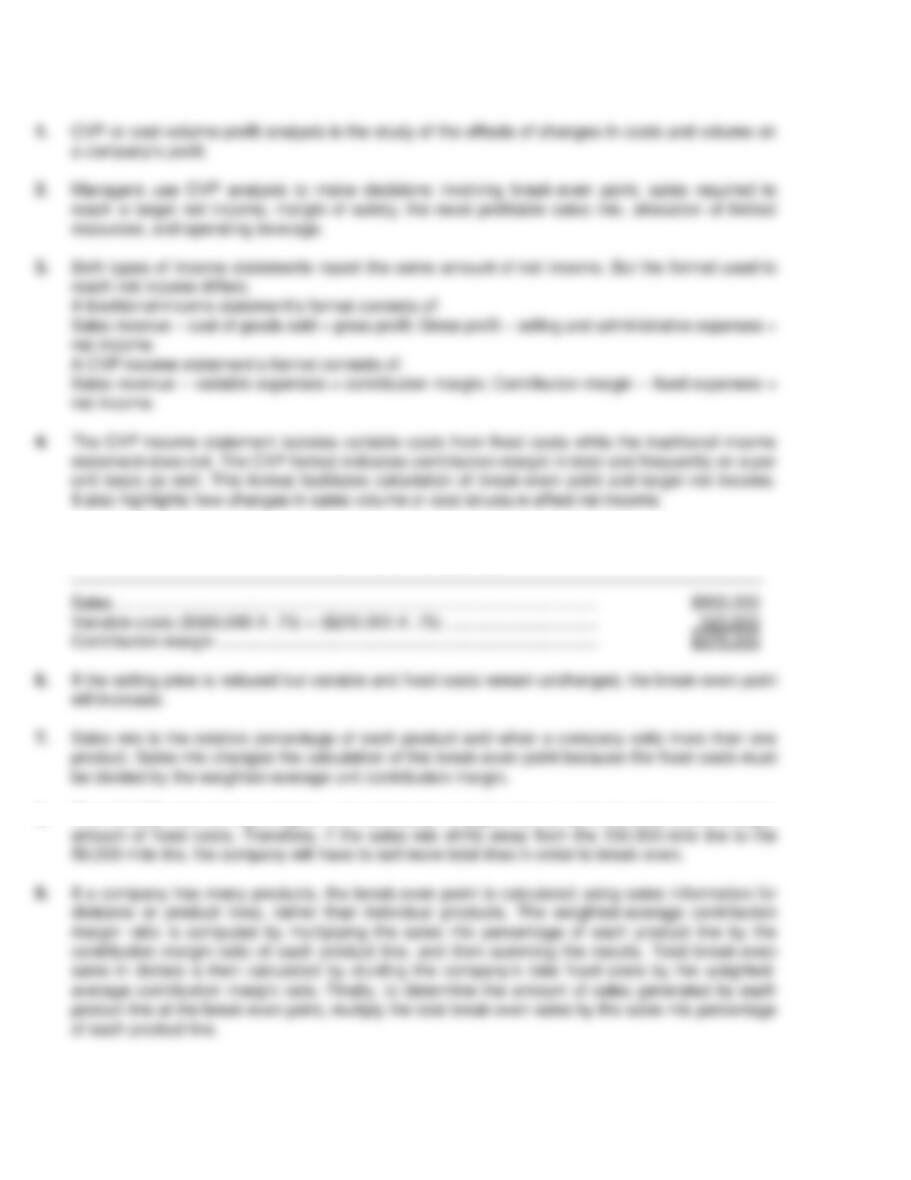
5. WHEAT COMPANY
CVP Income Statement
8. The 150,000-mile tire has a higher unit contribution margin, that is, each tire sold covers a larger
Questions Chapter 20 (Continued)
16. Pine’s degree of operating leverage of 8 versus Fir’s measure of 4 tells us that Pine will
Questions Chapter 20 (Continued)
*20. If production equals sales in any given period, the net incomes under both methods will be equal.
SOLUTIONS TO BRIEF EXERCISES
BRIEF EXERCISE 20-1
BRIEF EXERCISE 20-2
HAMBY INC.
Income Statement
For the Quarter Ended March 31, 2017
BRIEF EXERCISE 20-3
BRIEF EXERCISE 20-4
BRIEF EXERCISE 20-5
BRIEF EXERCISE 20-6
BRIEF EXERCISE 20-7
$38.50
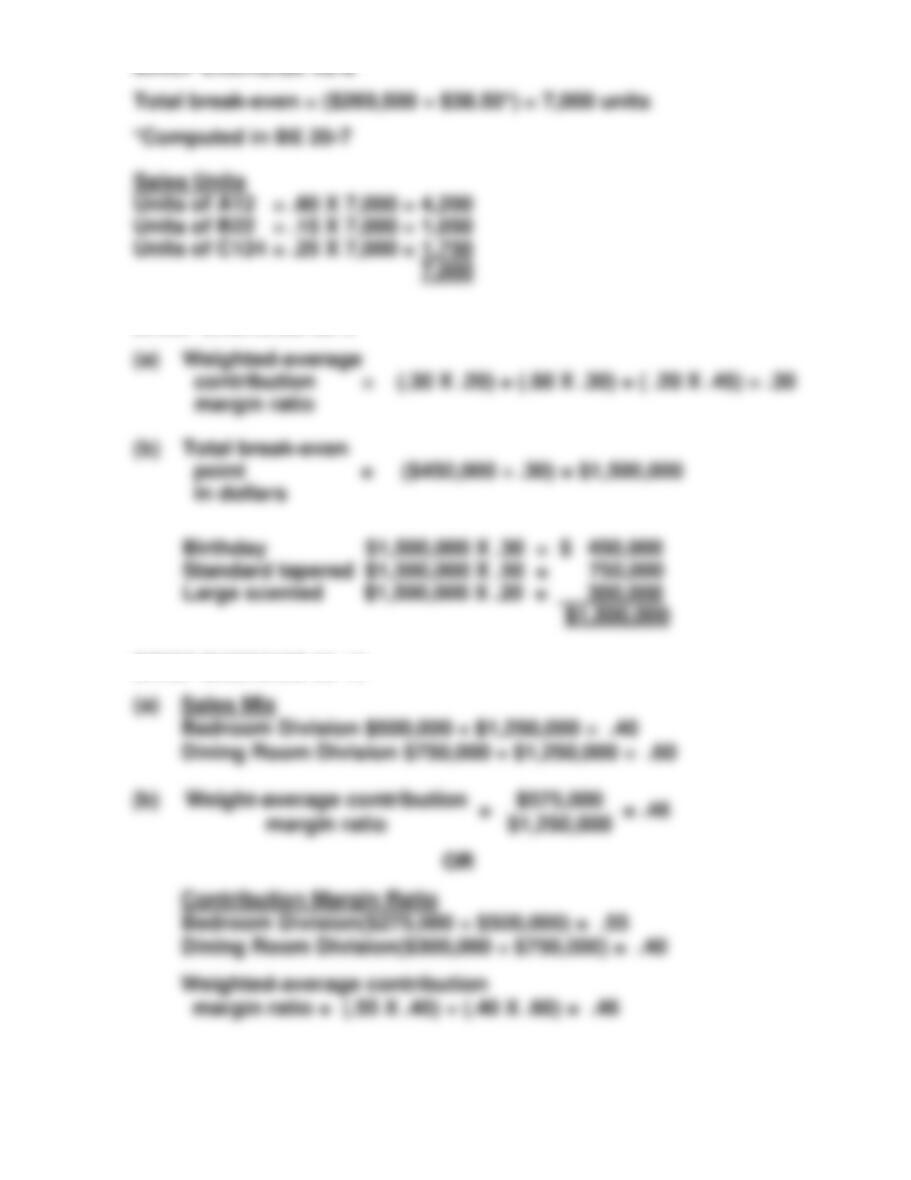
BRIEF EXERCISE 20-9
BRIEF EXERCISE 20–10
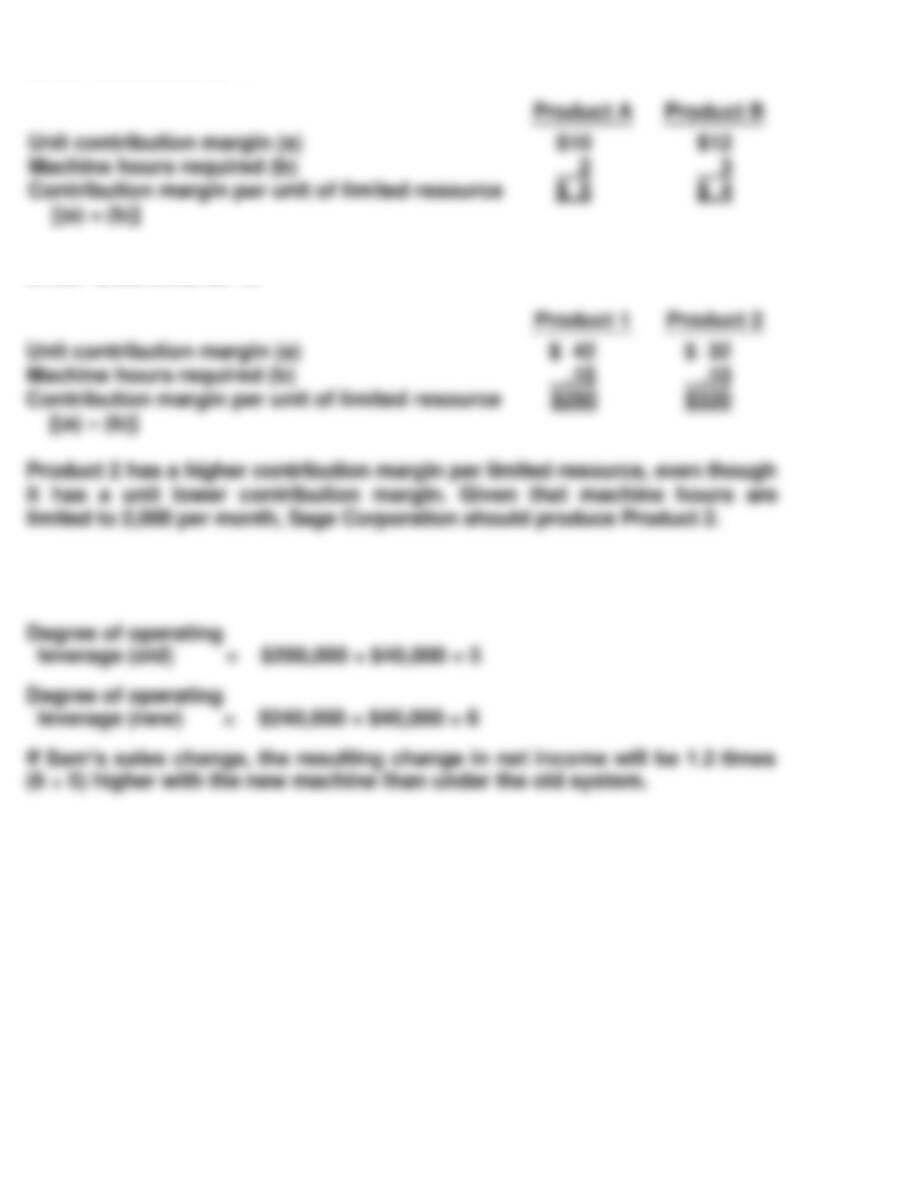
BRIEF EXERCISE 20–11
BRIEF EXERCISE 20-12
BRIEF EXERCISE 20-13
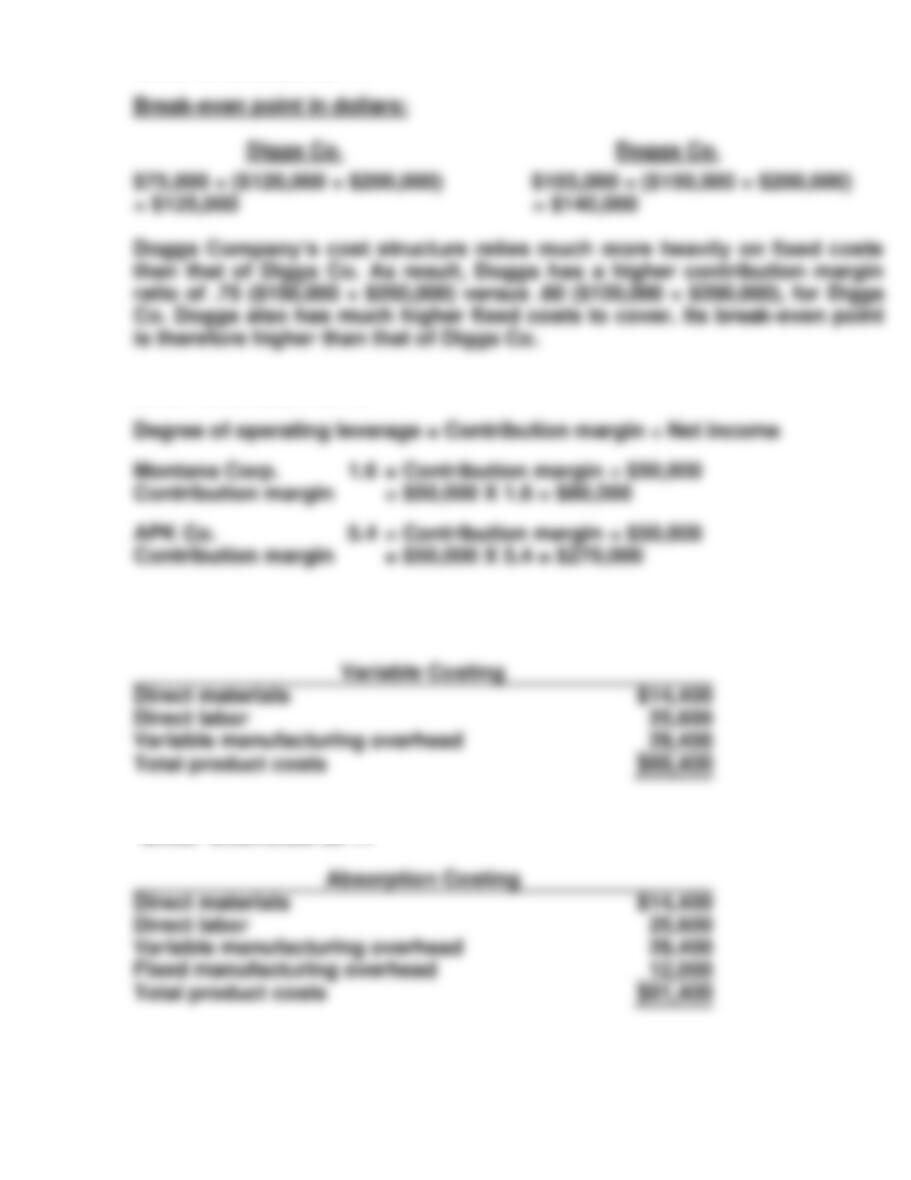
BRIEF EXERCISE 20-14
BRIEF EXERCISE 20-15
*BRIEF EXERCISE 20-16
*BRIEF EXERCISE 20-17
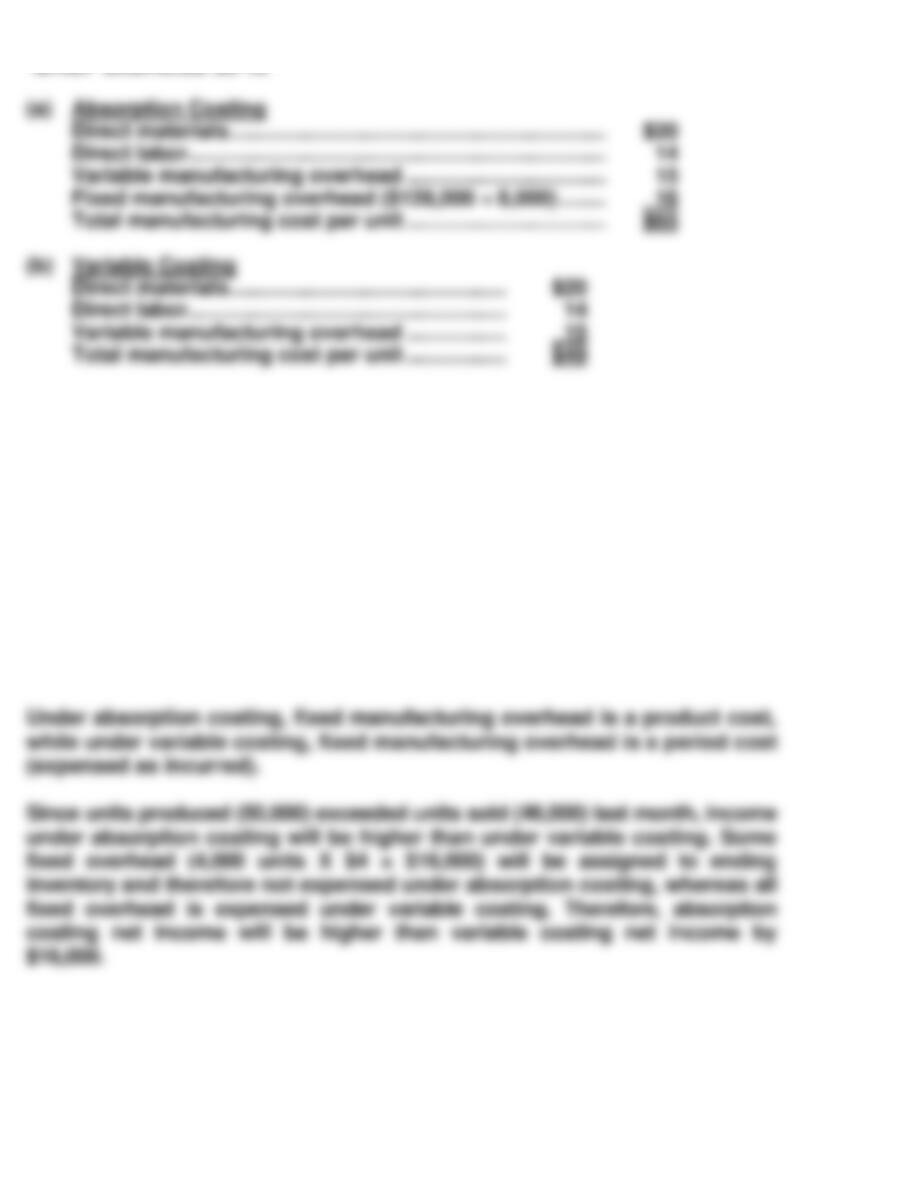
*BRIEF EXERCISE 20-18
*BRIEF EXERCISE 20-19
MEMO
To: Chief financial officer
From: Student
Re: Absorption and variable costing
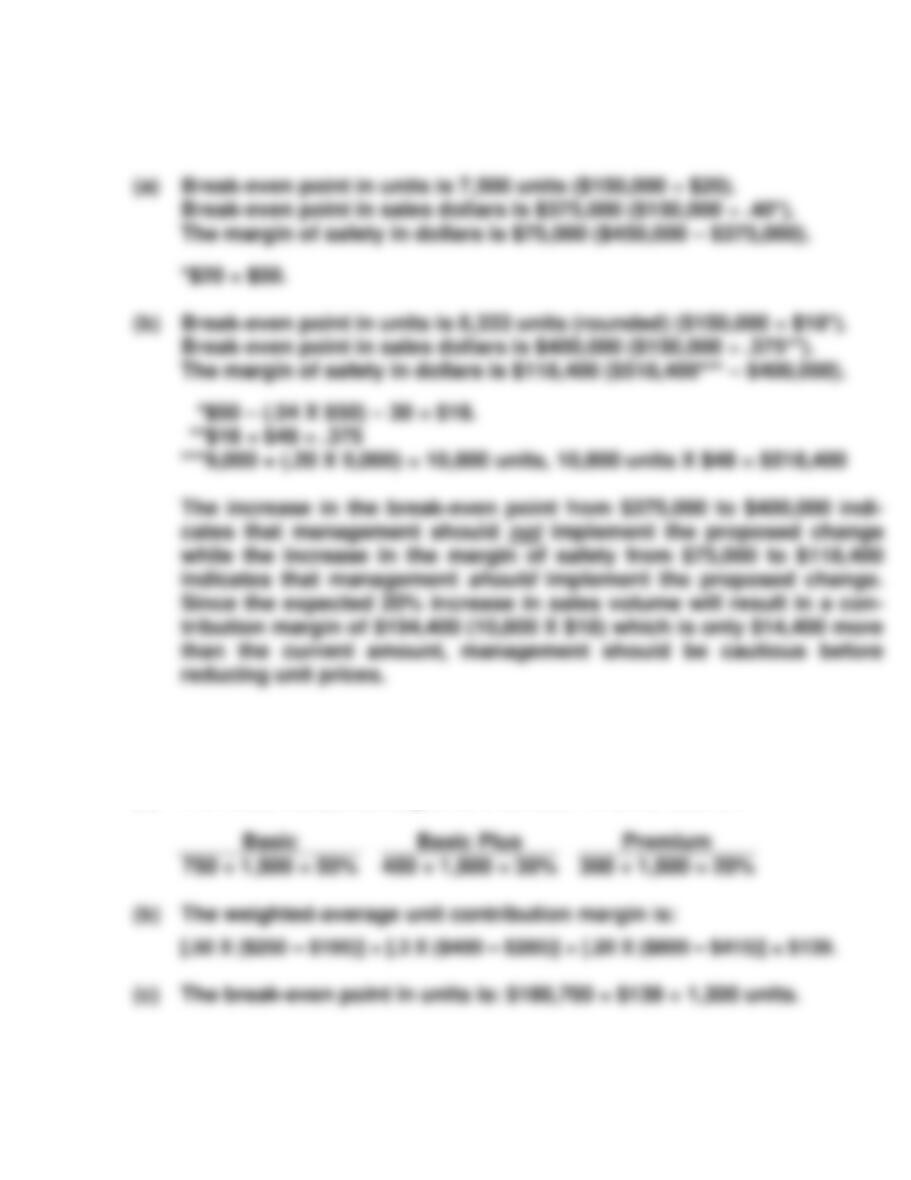
SOLUTIONS TO DO IT! REVIEW EXERCISES
DO IT! 20-1
DO IT! 20-2
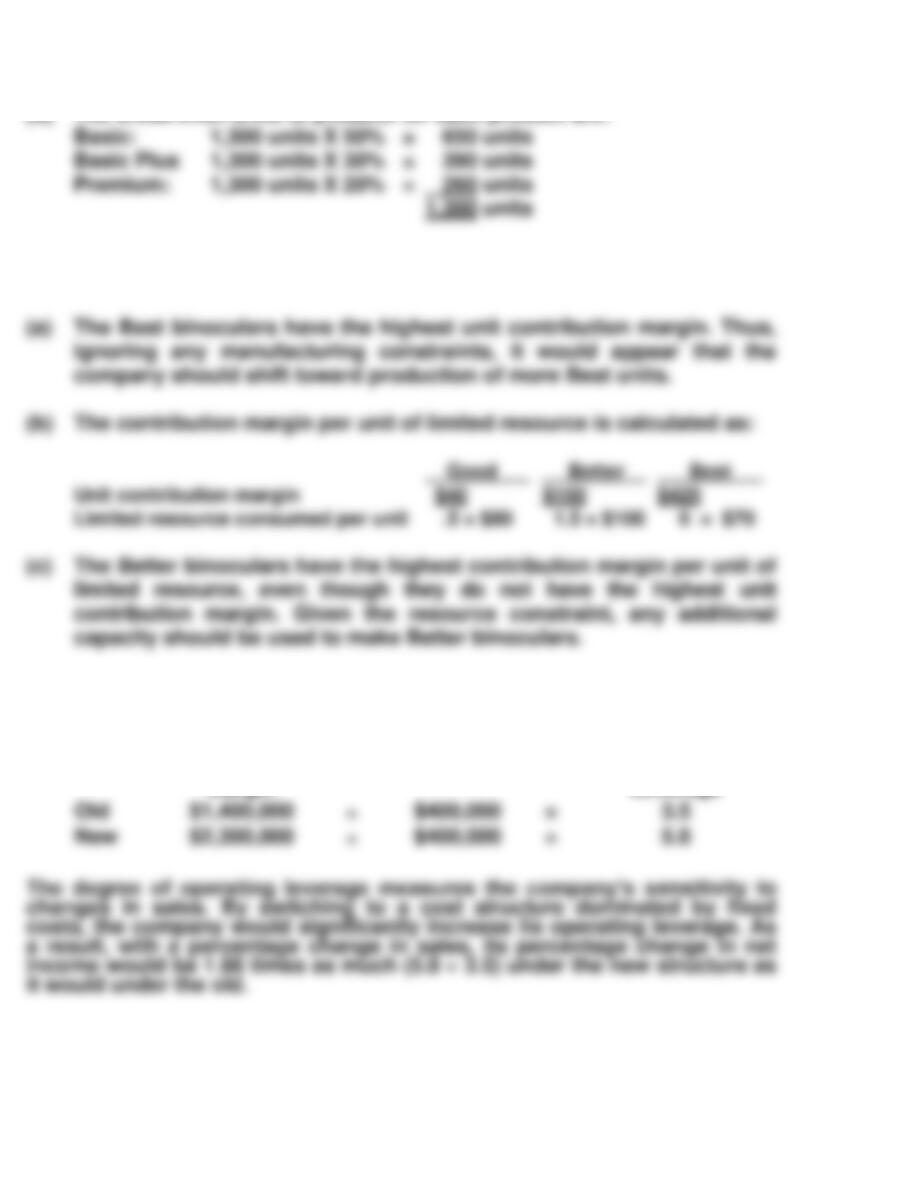
(a) The sales mix percentages as a function of units sold is:
DO IT! 20-2 (Continued)
DO IT! 20-3
DO IT! 20-4
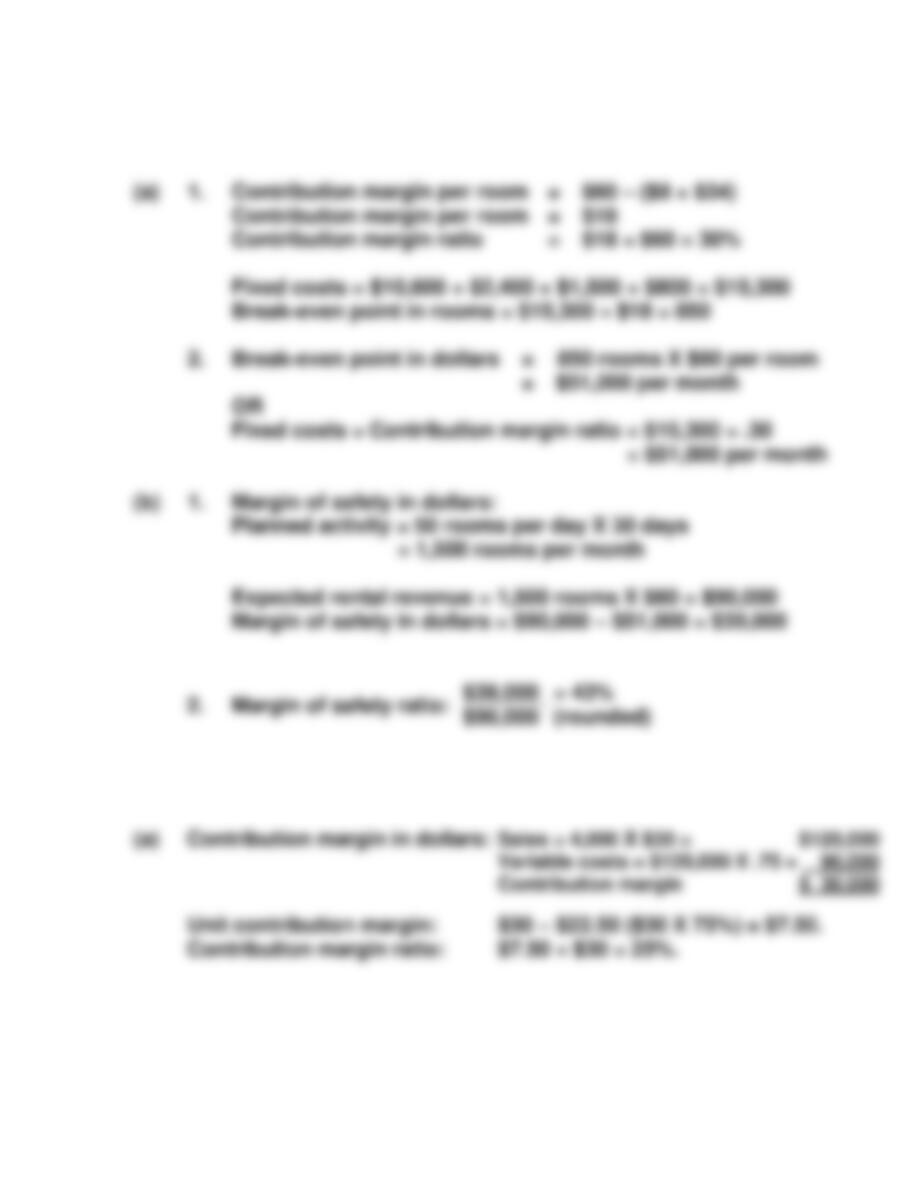
(a)
Contribution
Margin
Net Income
=
Degree of operating
Leverage
SOLUTIONS TO EXERCISES
EXERCISE 20-1
EXERCISE 20-2
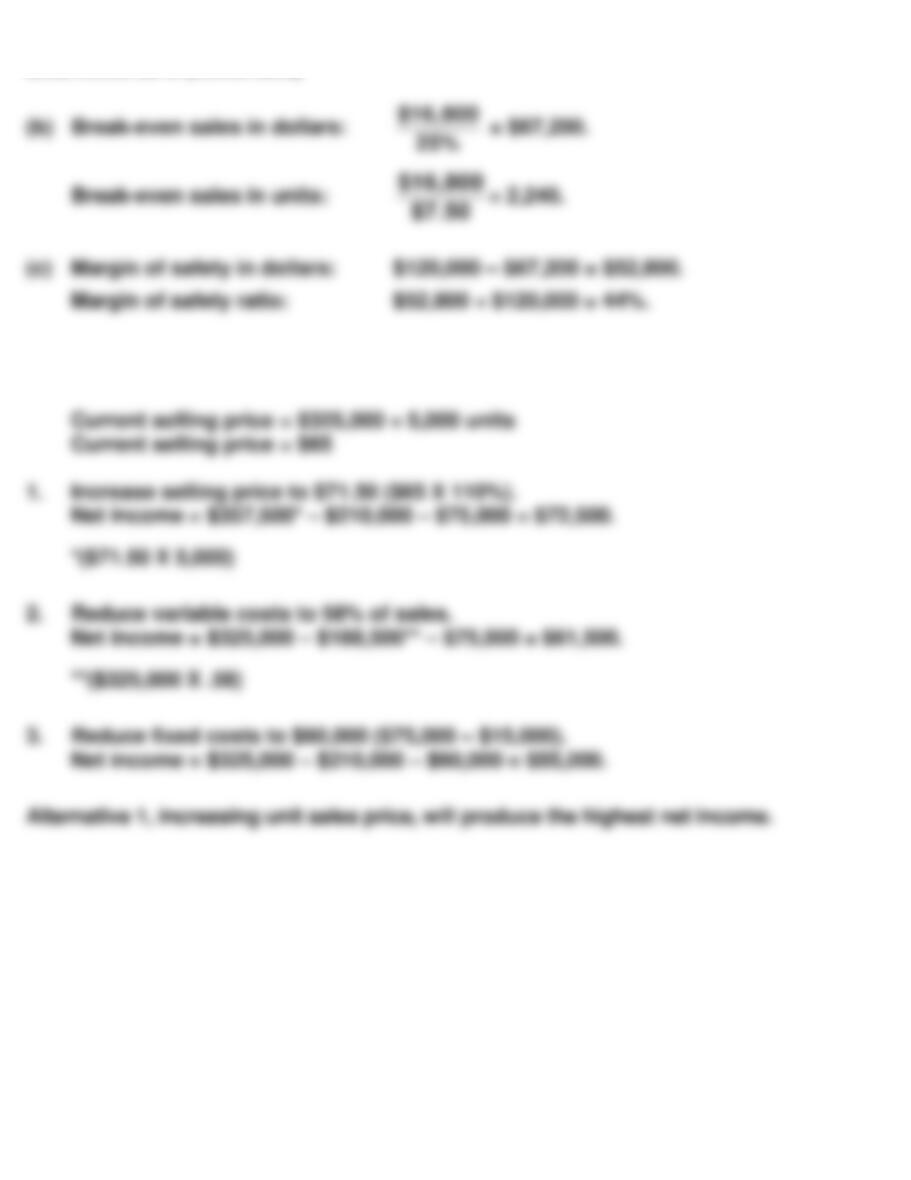
EXERCISE 20-2 (Continued)
EXERCISE 20-3
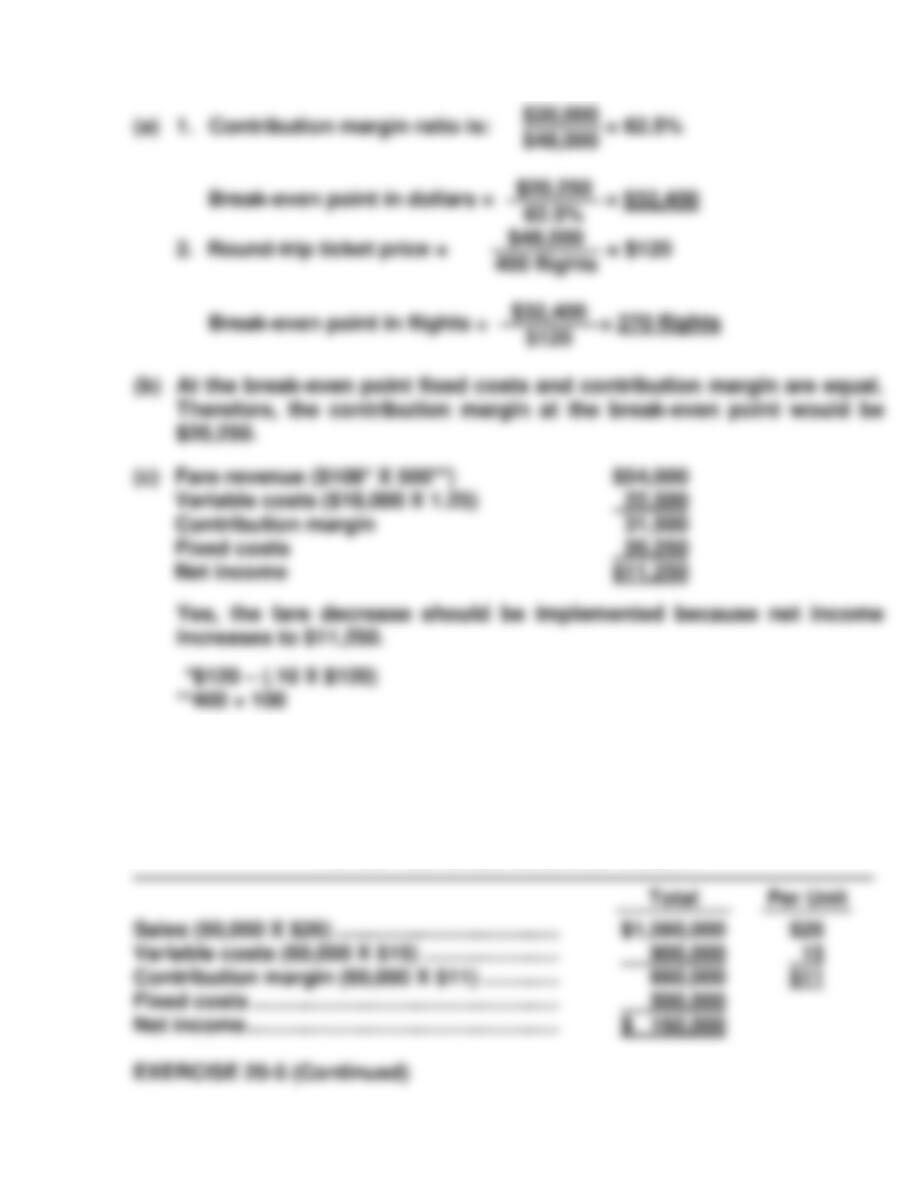
EXERCISE 20-4
EXERCISE 20-5
(a) CAREY COMPANY
CVP Income Statement
For the Year Ended December 31, 2017
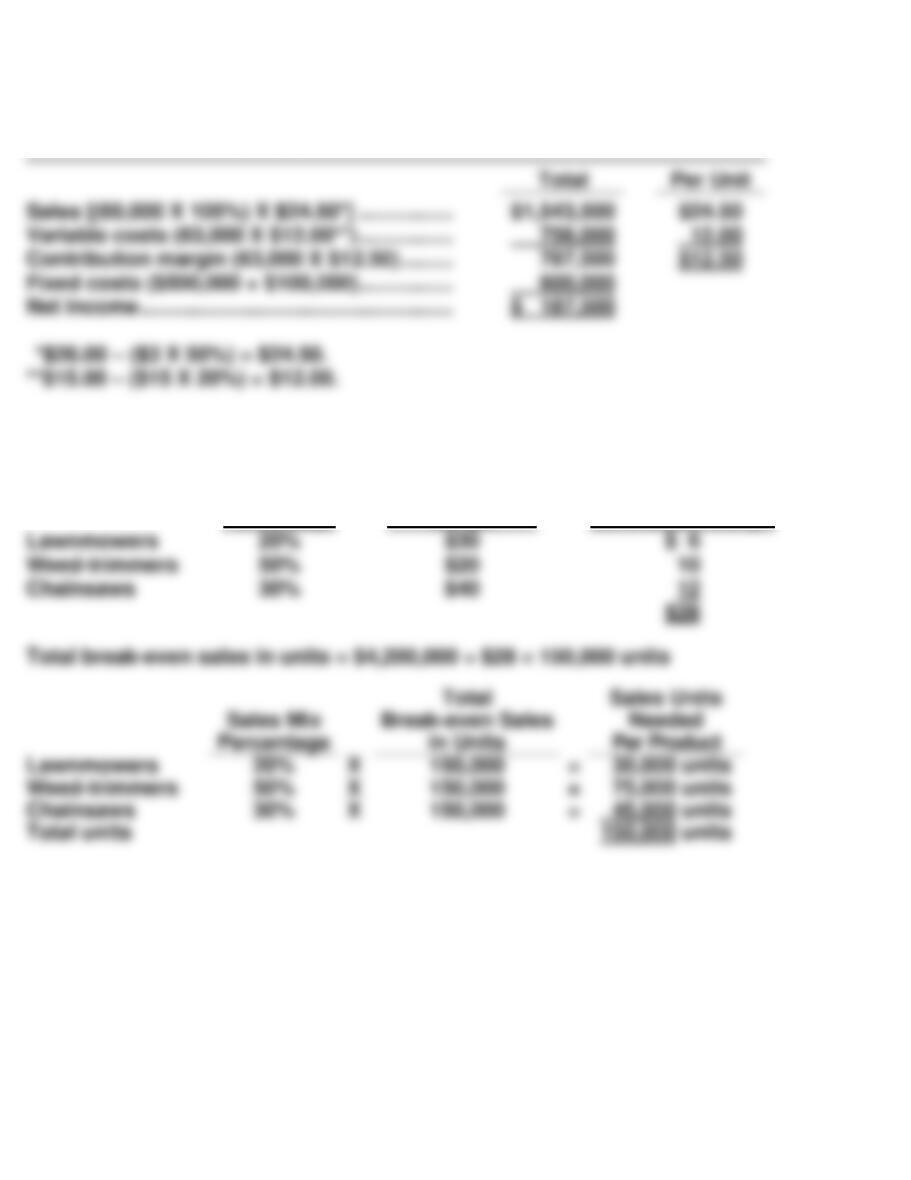
(b) CAREY COMPANY
CVP Income Statement
For the Year Ended December 31, 2017
EXERCISE 20-6
Sales Mix
Percentage
Unit contribution
Margin
Weighted-Average
Contribution Margin
$ 187,500
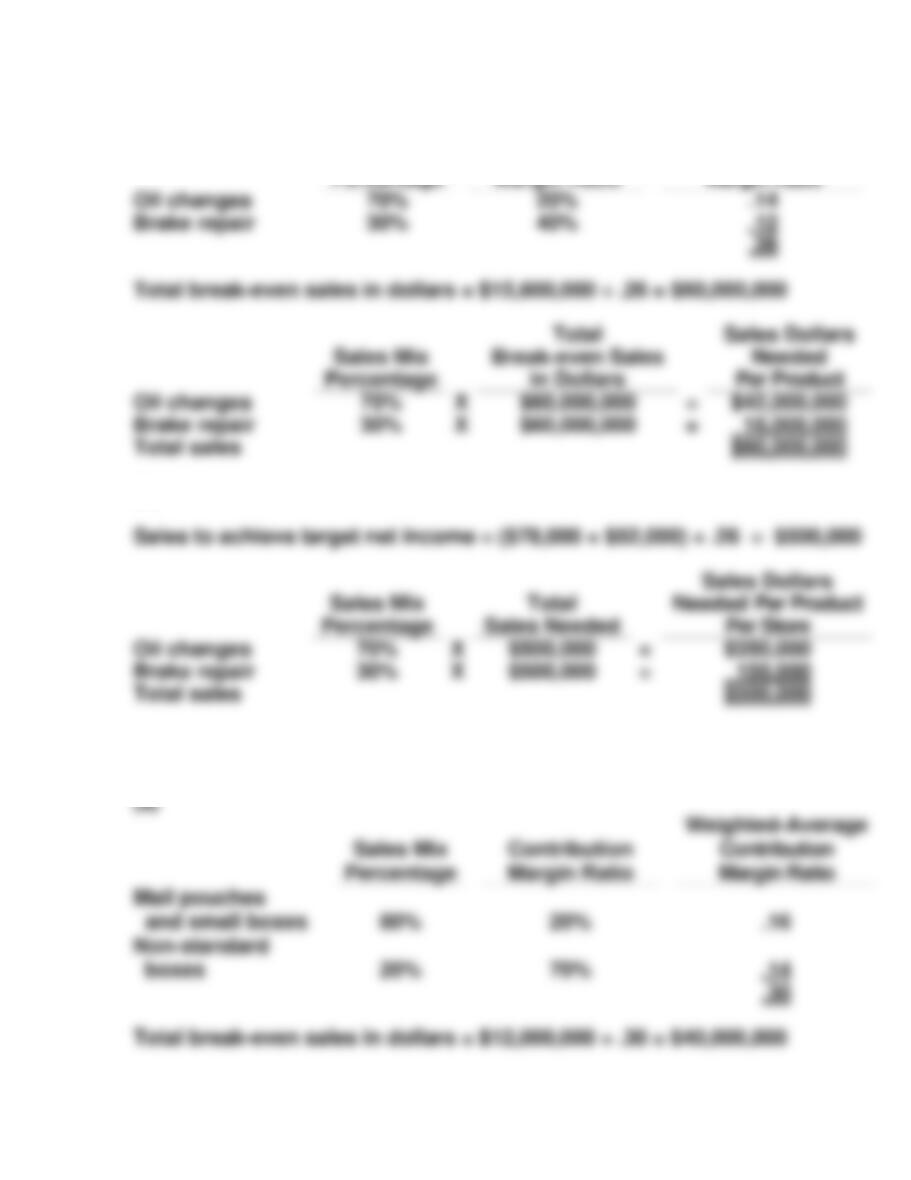
EXERCISE 20-7
(a)
Sales Mix
Contribution
Weighted-Average
Contribution
Oil changes
X
=
(b)
EXERCISE 20-8
Oil changes
Oil changes
X
=
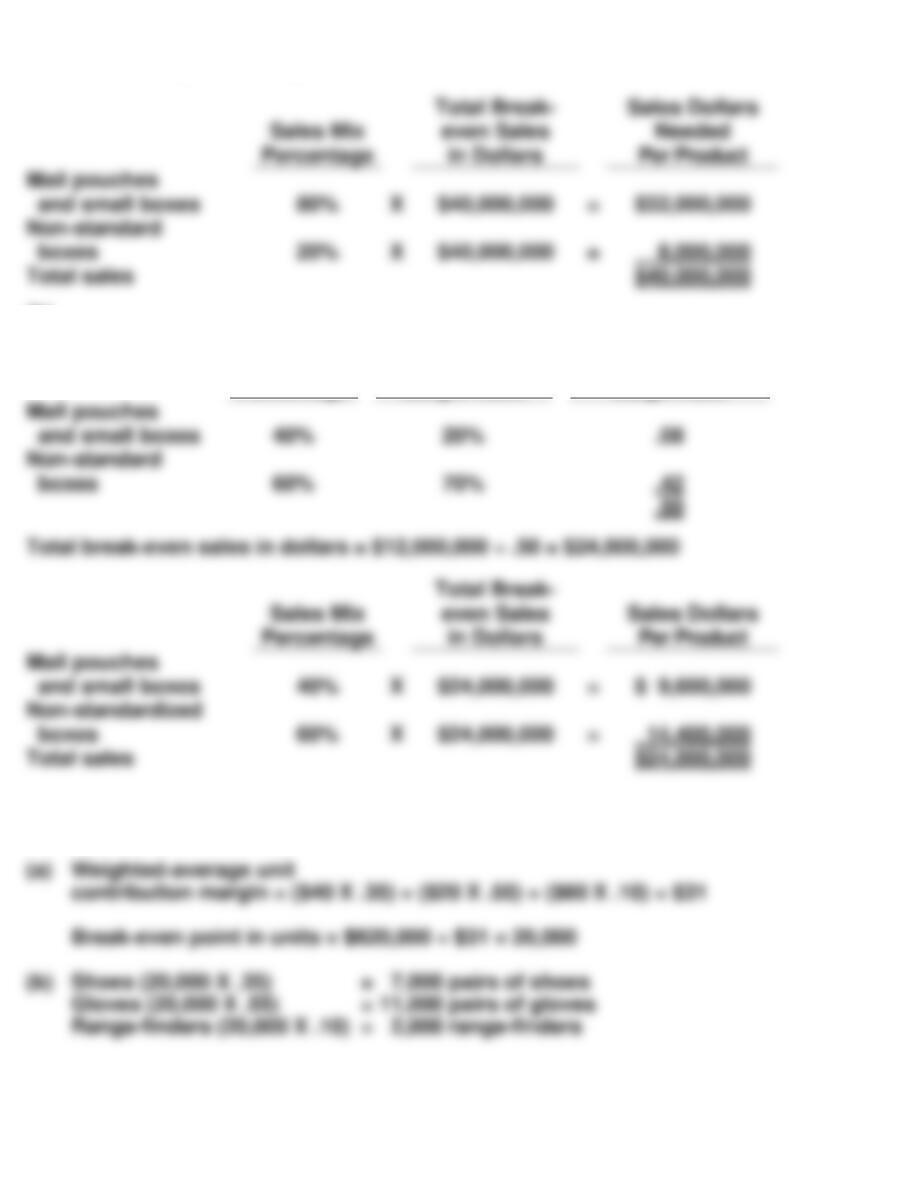
EXERCISE 20-8 (Continued)
(b)
Sales Mix
Percentage
Contribution
Margin Ratio
Weighted-Average
Contribution
Margin Ratio
Percentage
Total sales
EXERCISE 20-9
Percentage
Total sales
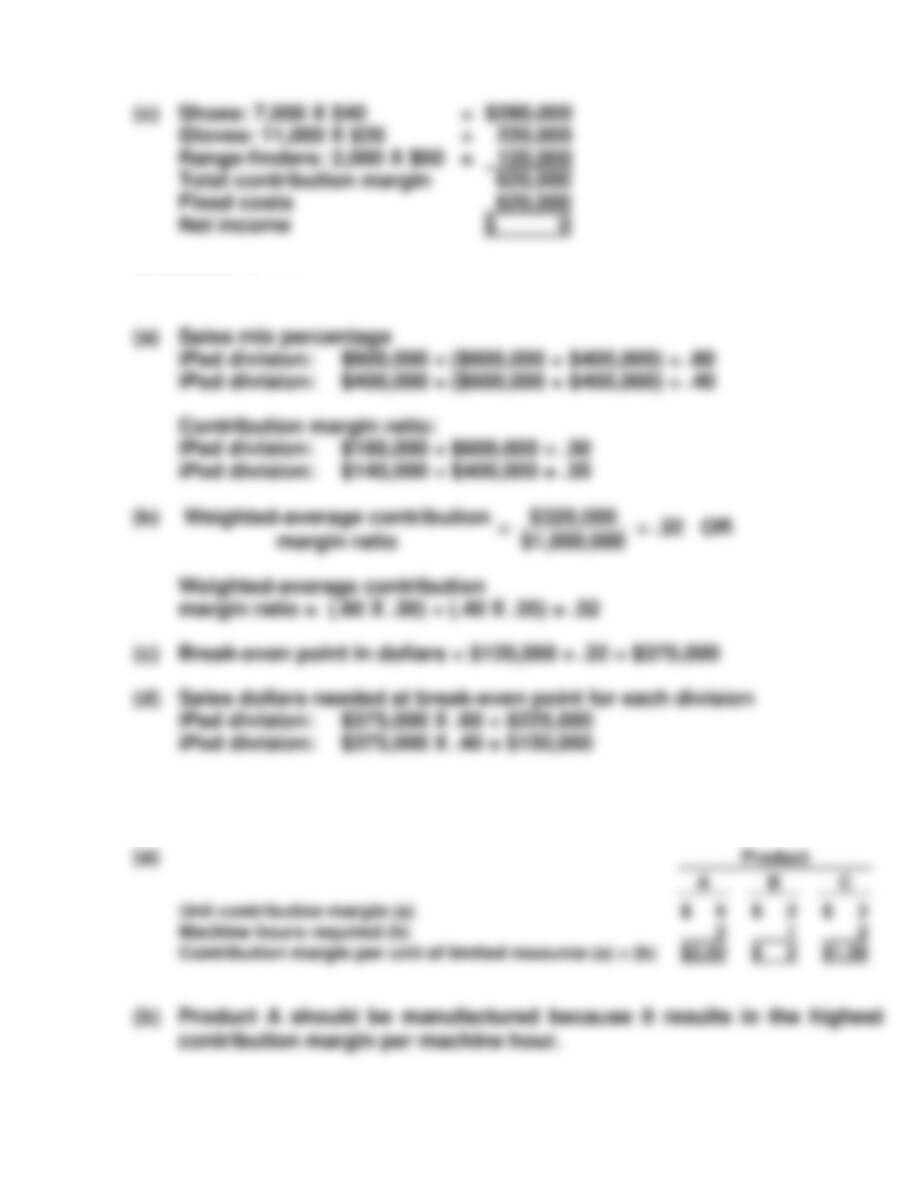
EXERCISE 20-9 (Continued)
EXERCISE 20–10
EXERCISE 20–11
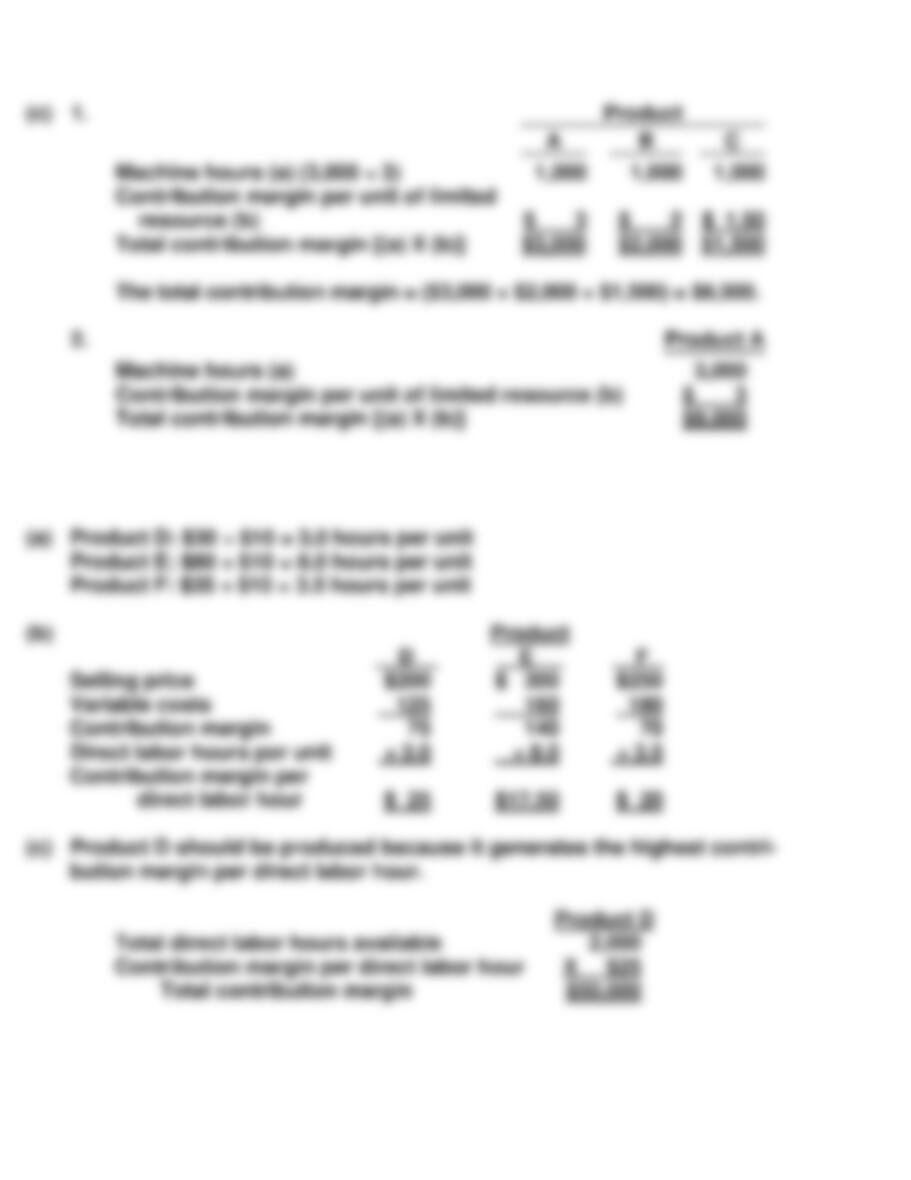
EXERCISE 20-11 (Continued)
EXERCISE 20–12
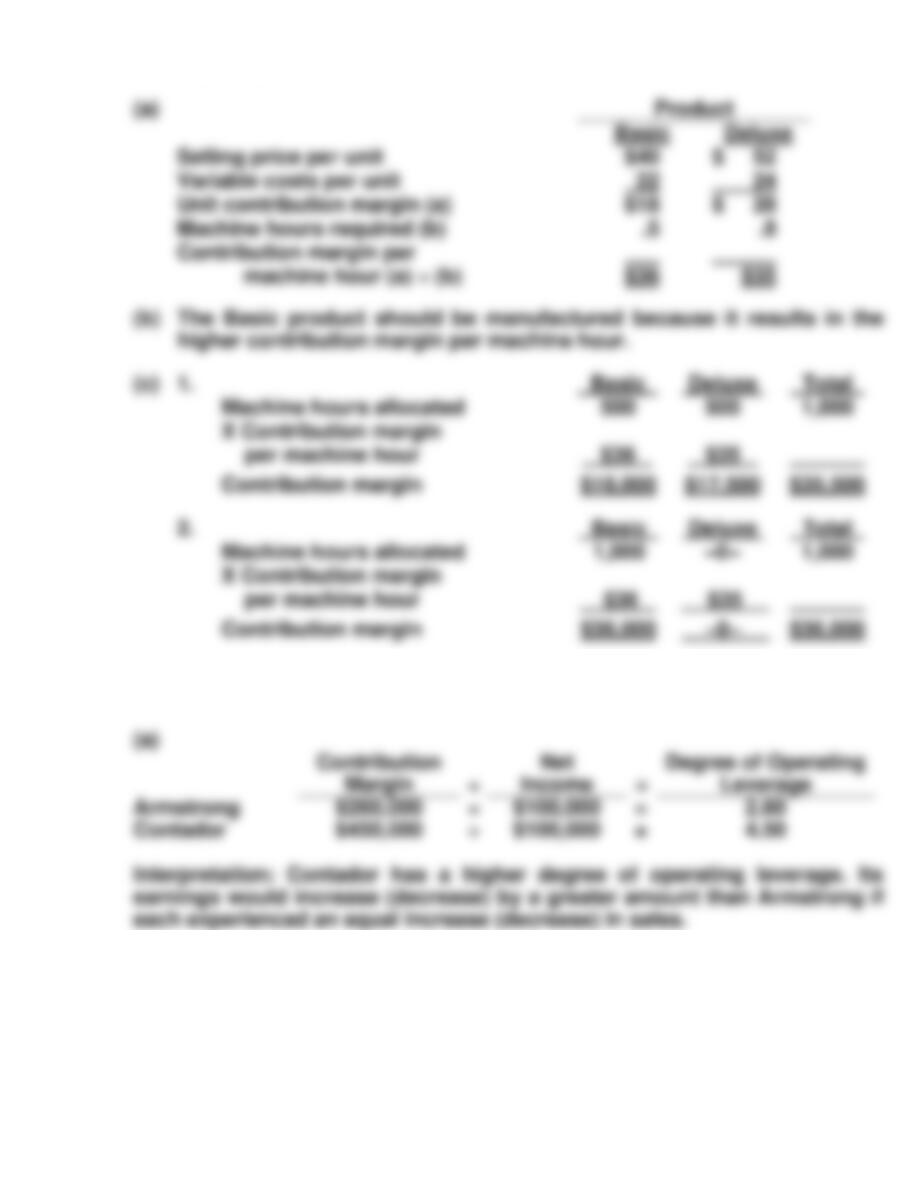
EXERCISE 20–13
EXERCISE 20–14
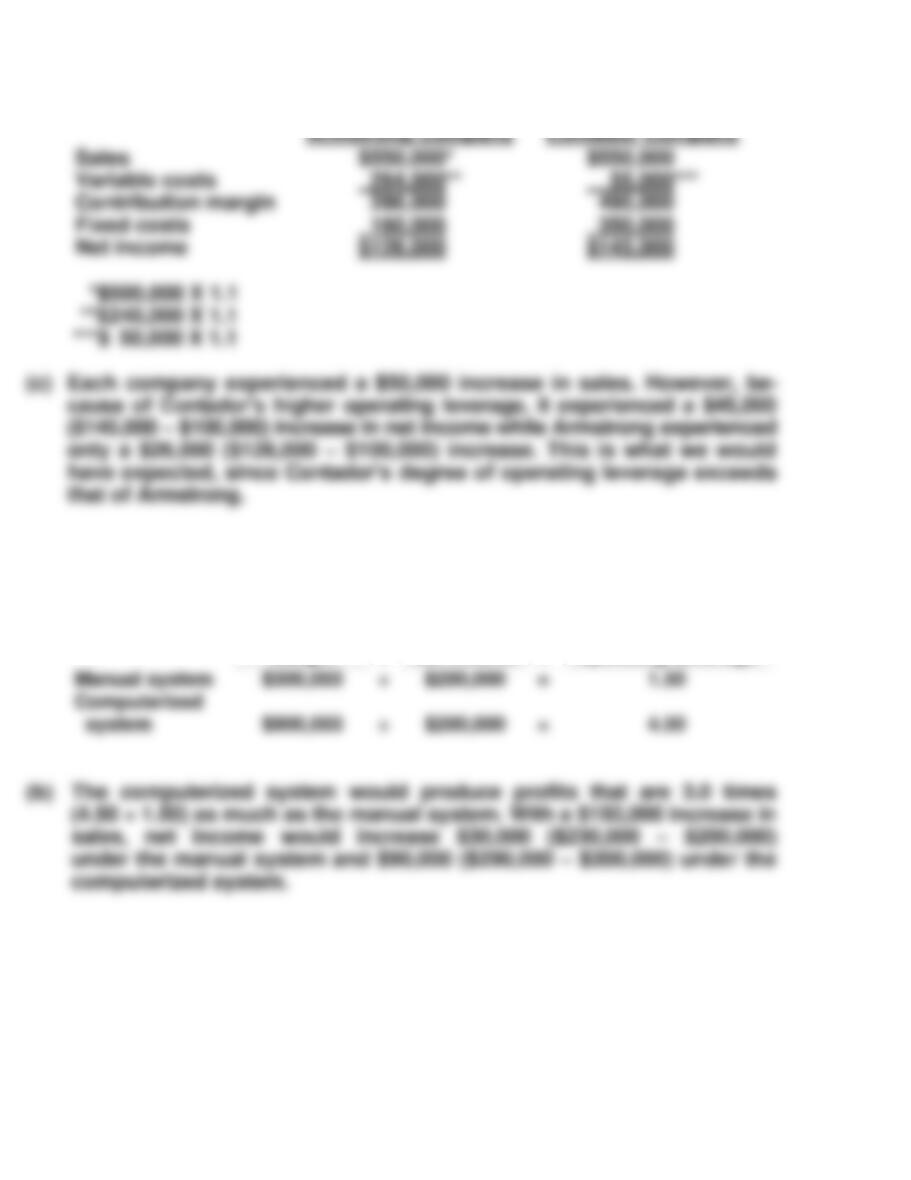
EXERCISE 20-14 (Continued)
(b)
EXERCISE 20–15
(a)
Contribution
Margin
÷
Net Income
=
Degree of
Operating Leverage
÷
=
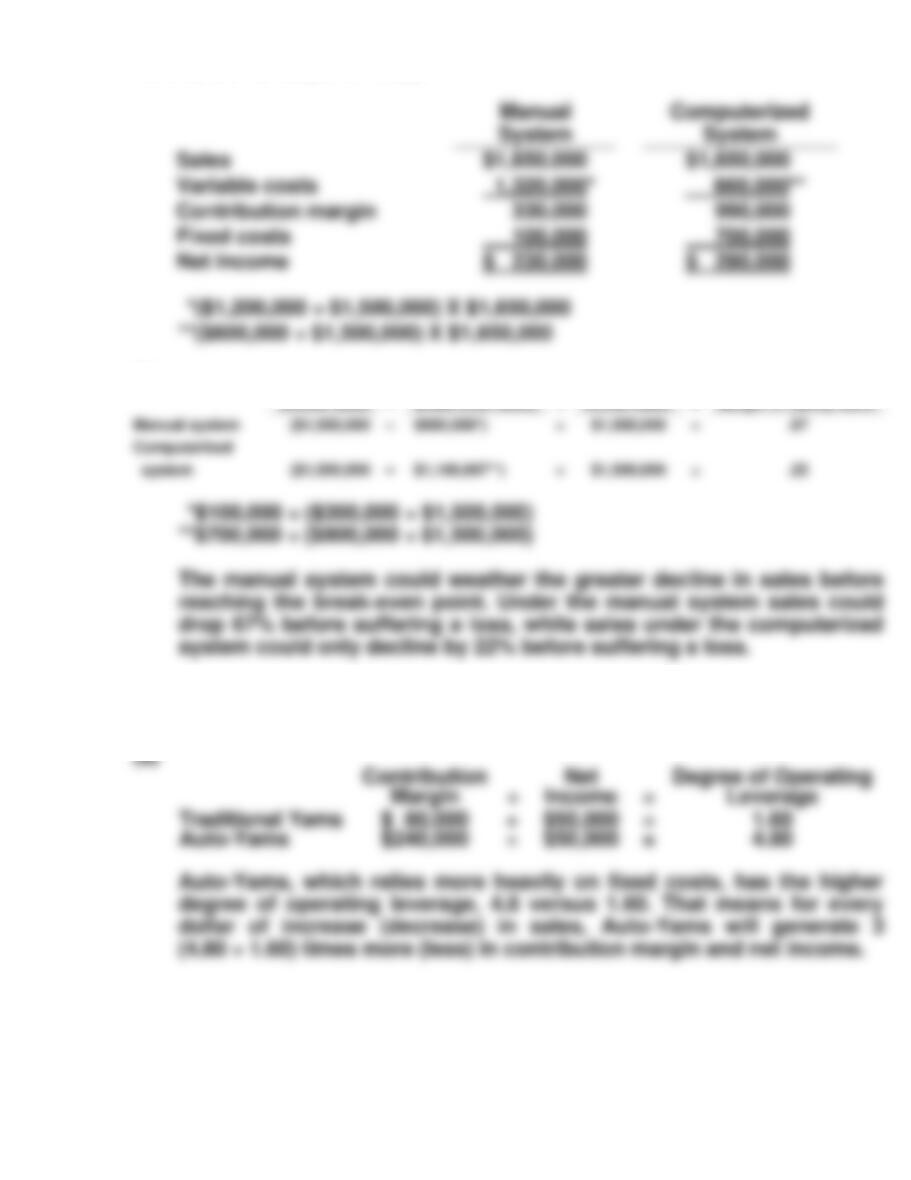
EXERCISE 20-15 (Continued)
(c)
(Actual Sales
–
Break-even Sales)
÷
Actual Sales
=
Margin of Safety Ratio
–
÷
=
*EXERCISE 20–16
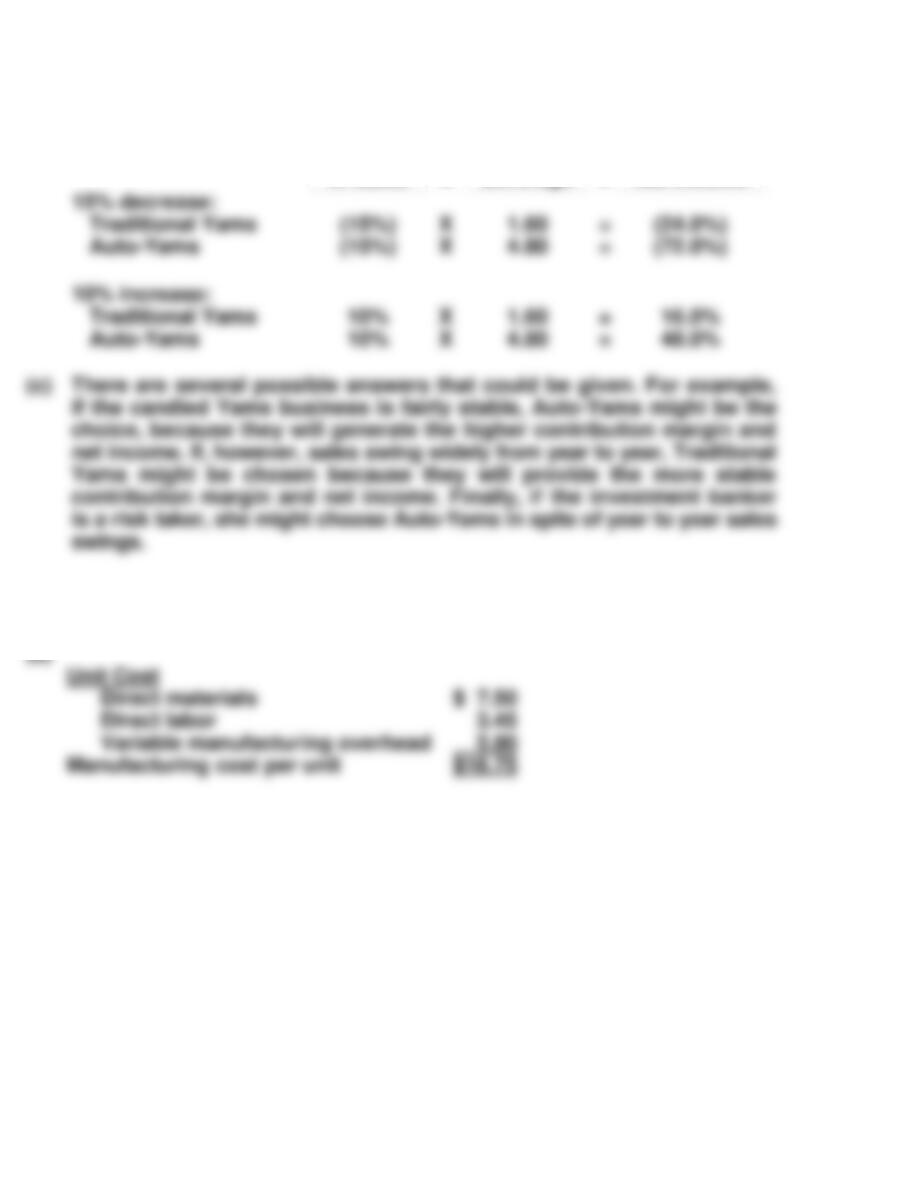
*EXERCISE 20-16 (Continued)
(b)
% Change
in Sales
X
Degree of
Operating
Leverage
=
% Change in
Net Income
*EXERCISE 20–17
15% decrease:
Traditional Yams
Auto-Yams
X
X
=
=
Traditional Yams
Auto-Yams
X
X
=
=
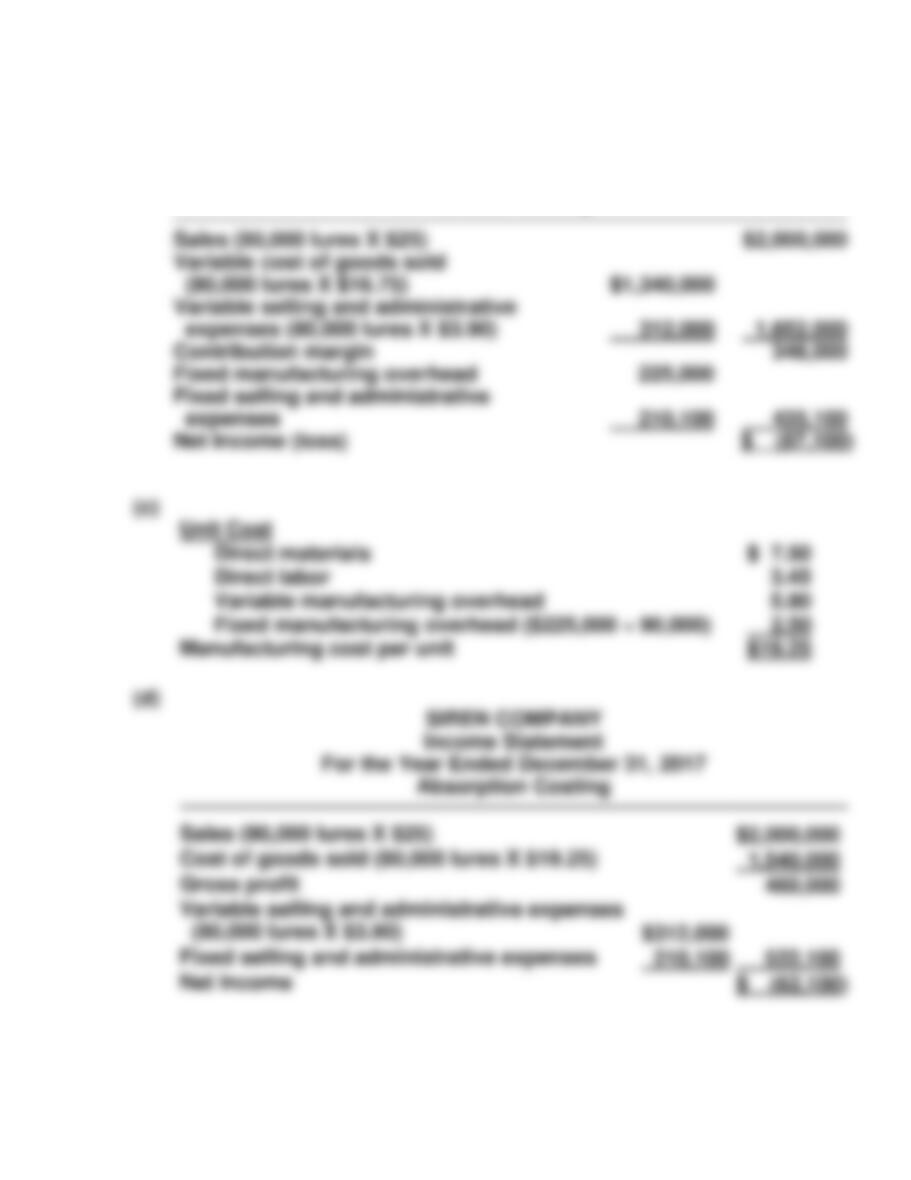
*EXERCISE 20-17 (Continued)
(b)
SIREN COMPANY
Income Statement
For the Year Ended December 31, 2017
Variable Costing
Sales (80,000 lures X $25)
Contribution margin
Fixed manufacturing overhead
Net Income (loss)
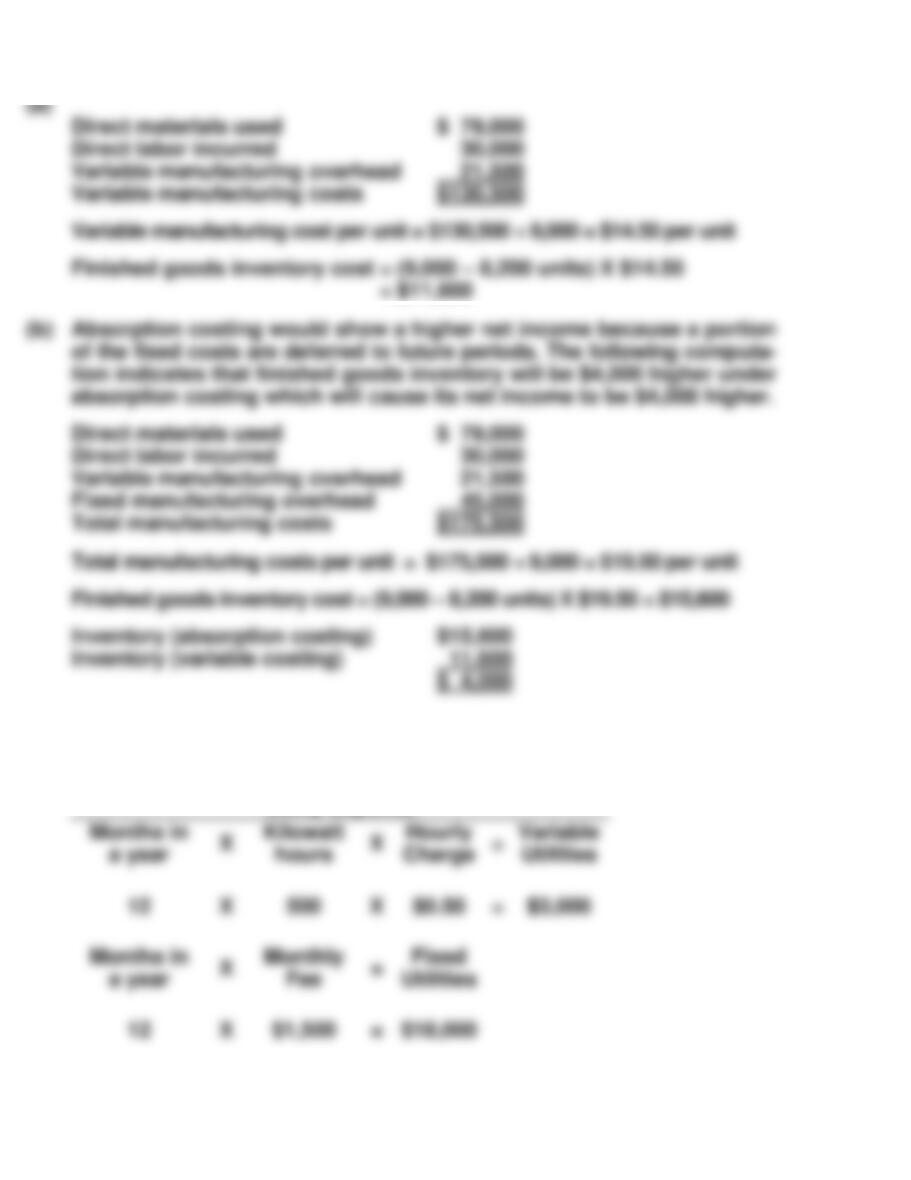
*EXERCISE 20–18
*EXERCISE 20–19
(a)
Utility Expense
*EXERCISE 20-19 (Continued)
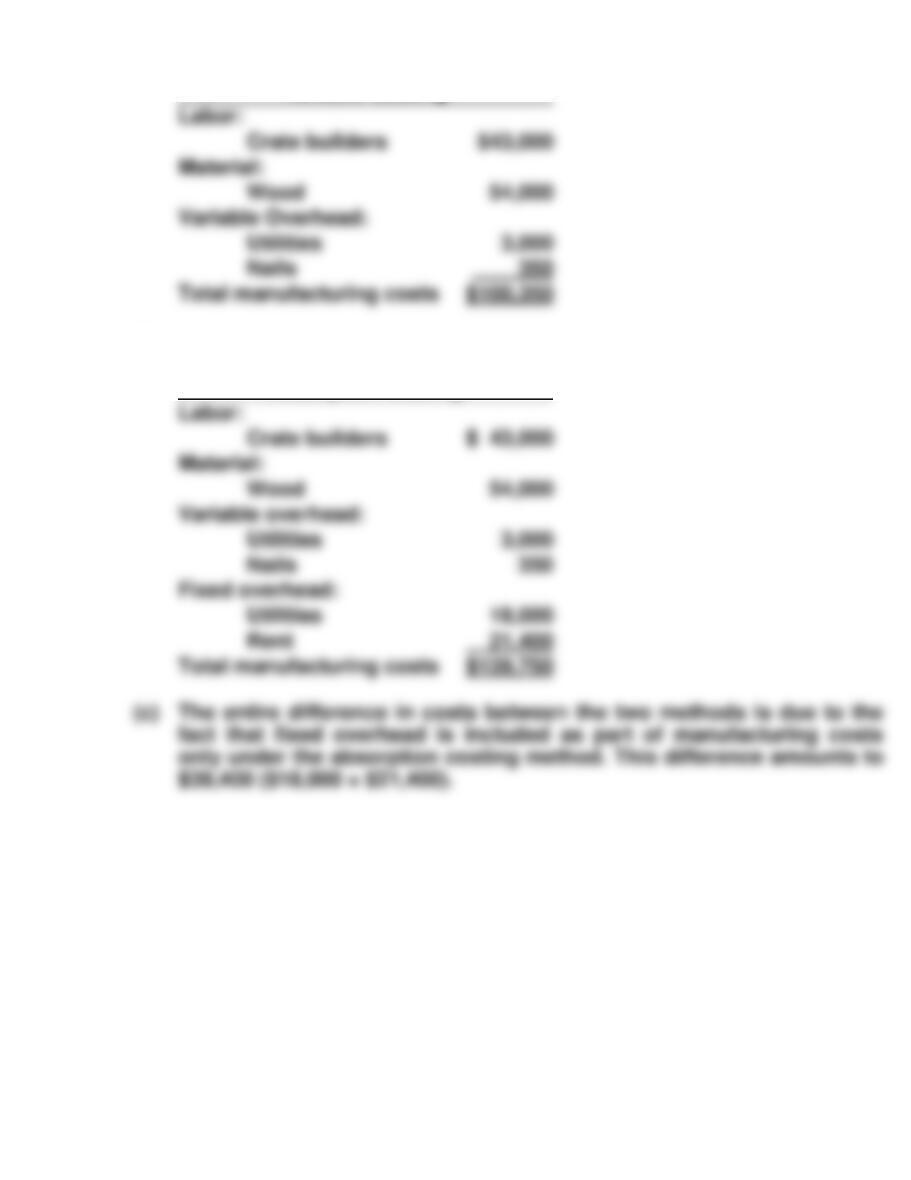
Variable Costing
(b)
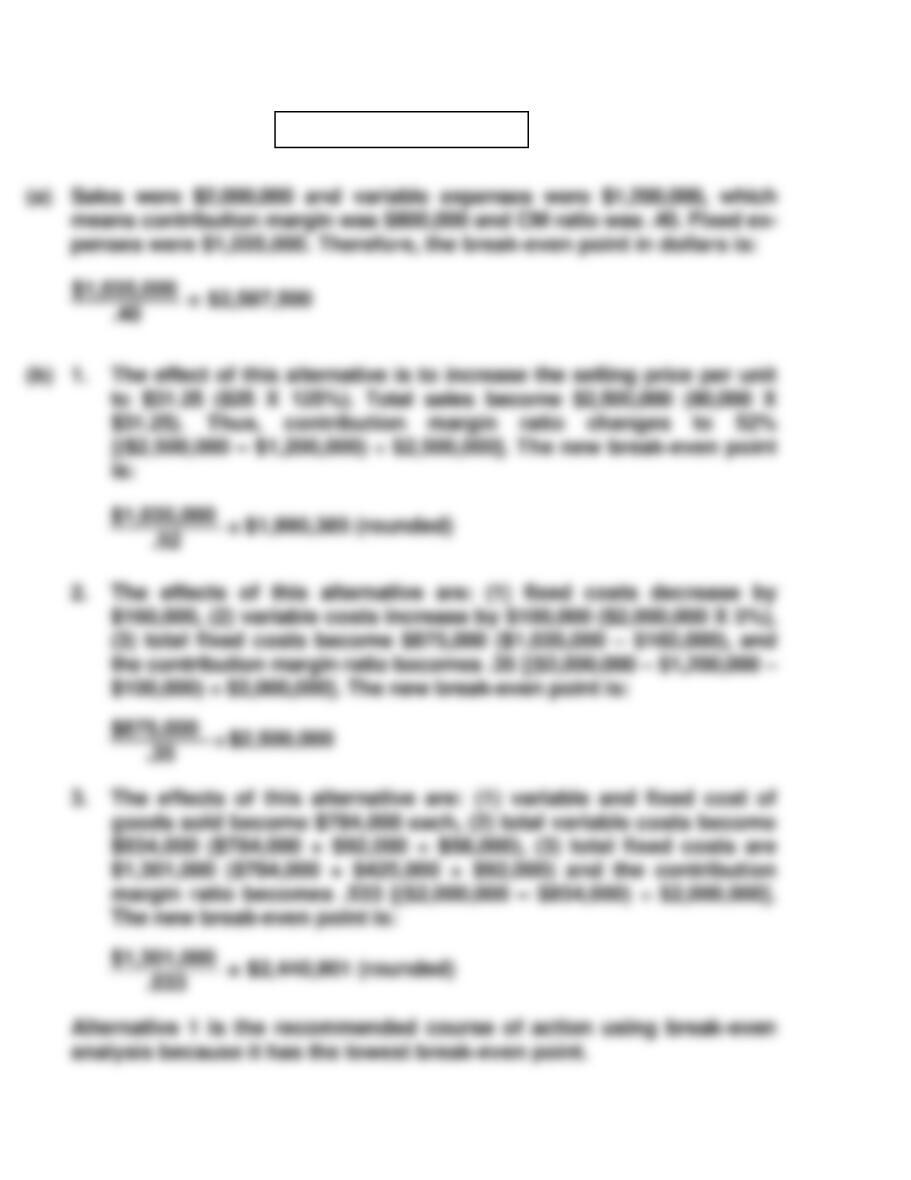
Absorption Costing
SOLUTIONS TO PROBLEMS
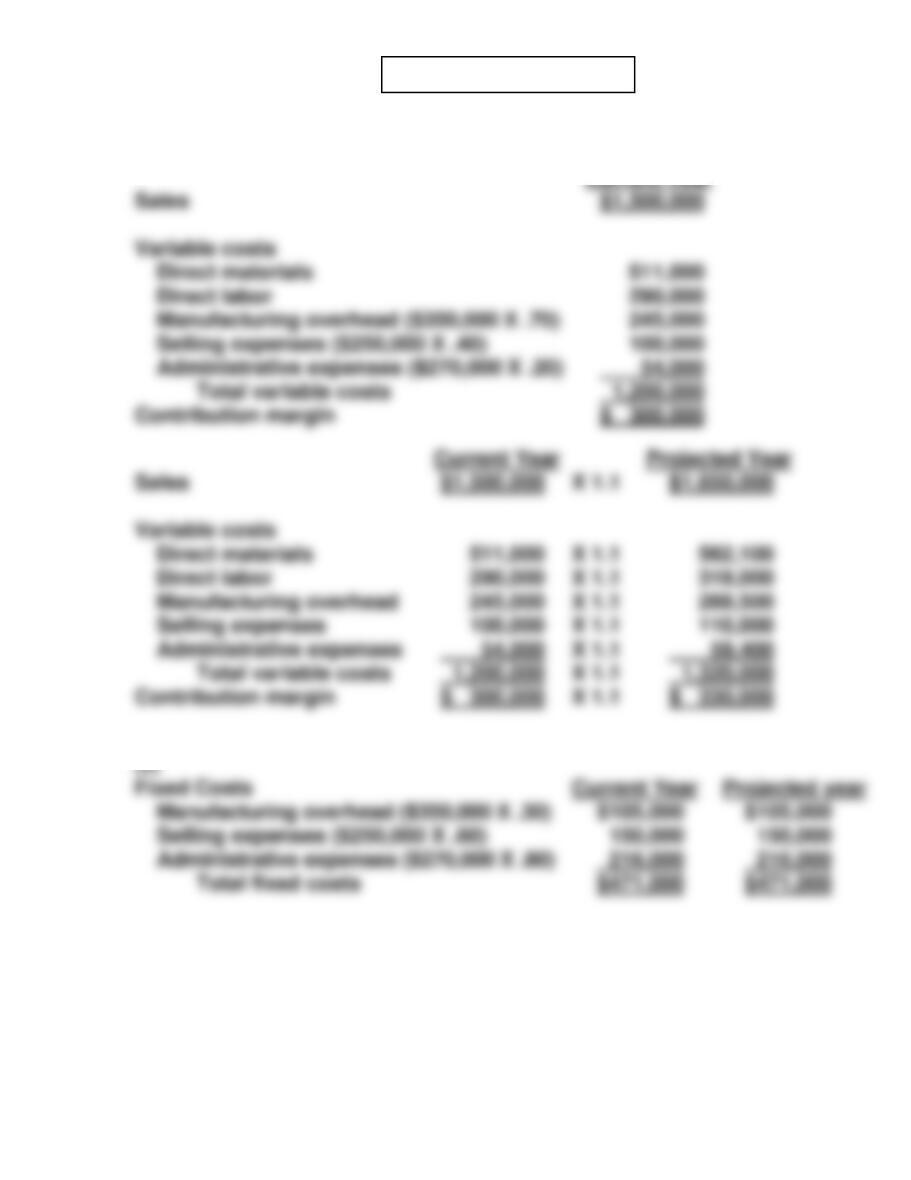
PROBLEM 20–1A
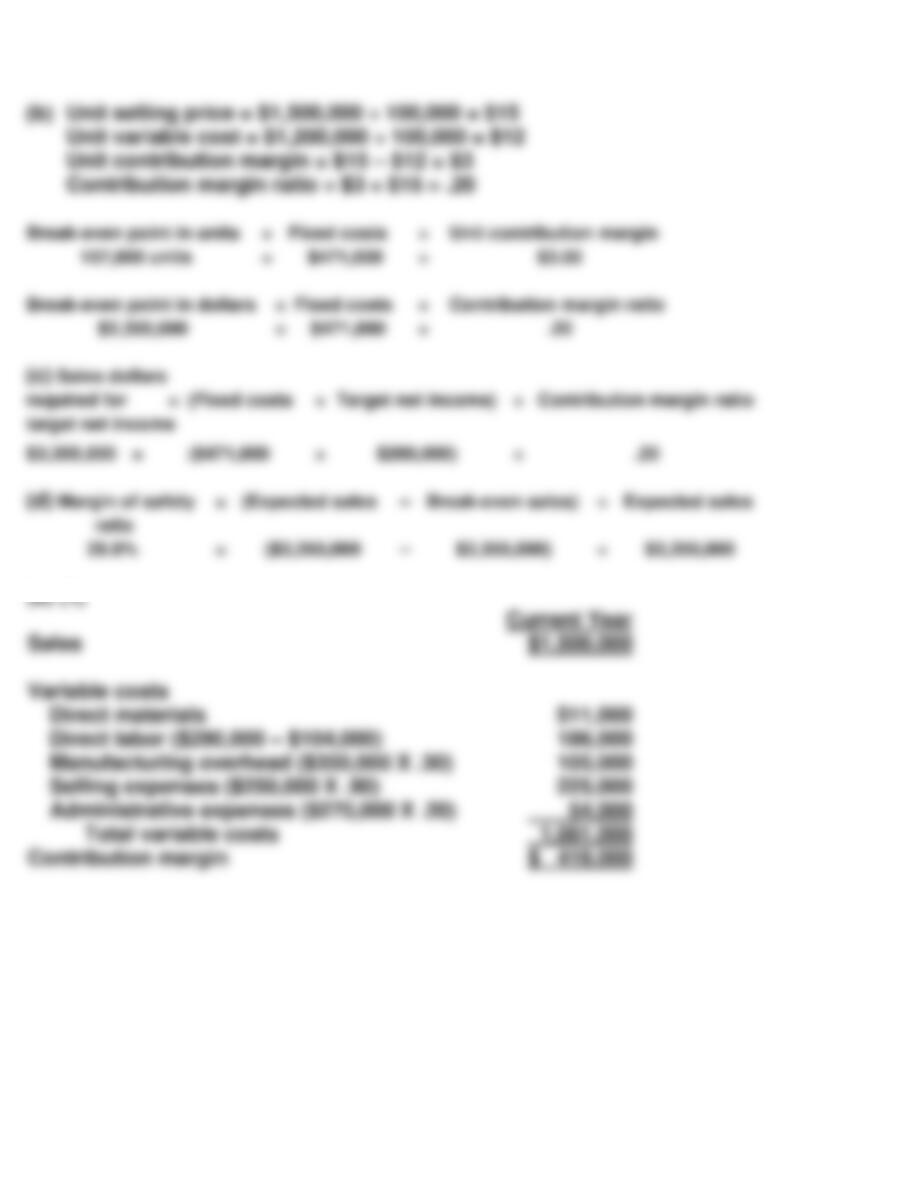
PROBLEM 20–2A
(a)
(1)
Fixed Costs
Total fixed costs
PROBLEM 20-2A (Continued)
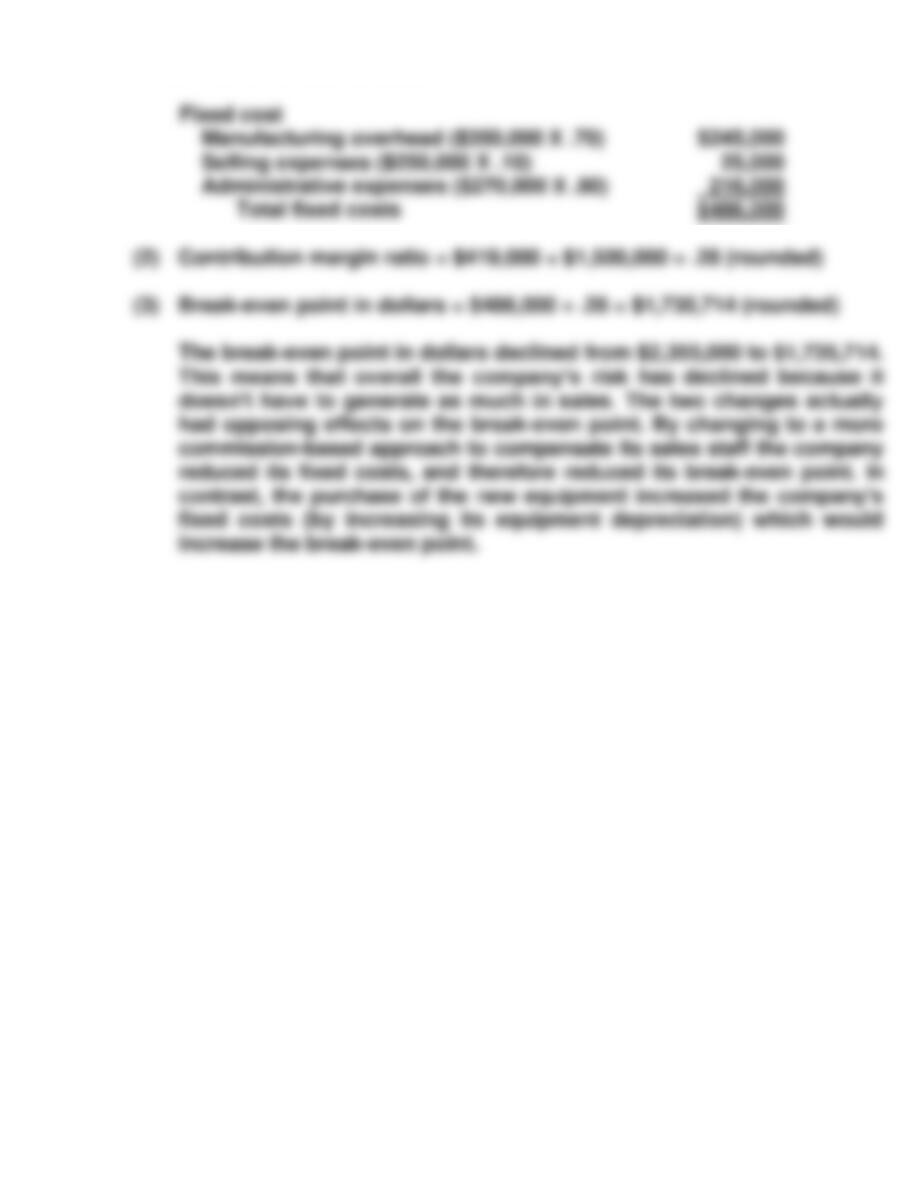
PROBLEM 20-2A (Continued)
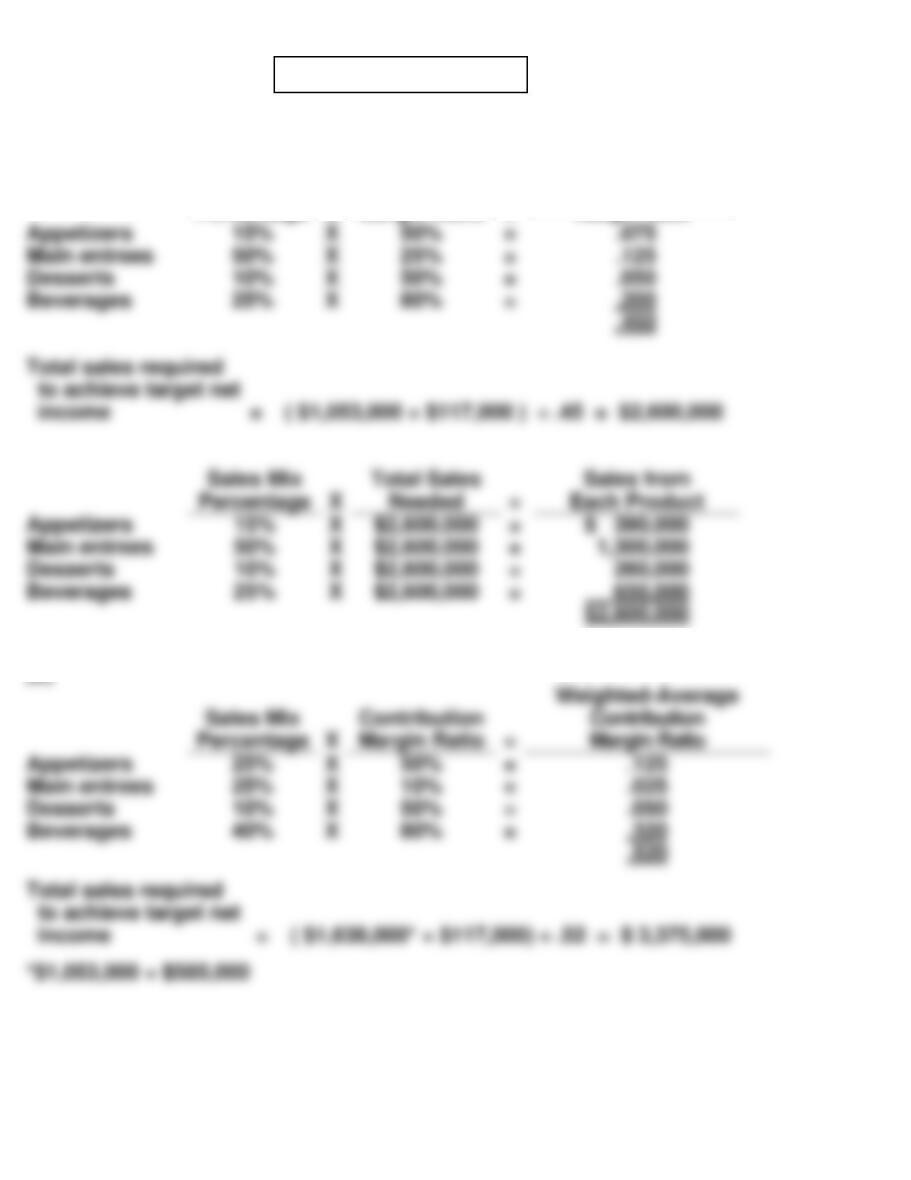
PROBLEM 20-3A
(a)
Sales Mix
Percentage
X
Contribution
Margin Ratio
=
Weighted-Average
Contribution
Margin Ratio
(b)
Sales Mix
Percentage
X
Contribution
Margin Ratio
=
Desserts
Beverages
X
X
=
=
Desserts
Beverages
X
X
=
=
X
=
Main entrees
Desserts
Beverages
X
X
X
=
=
=
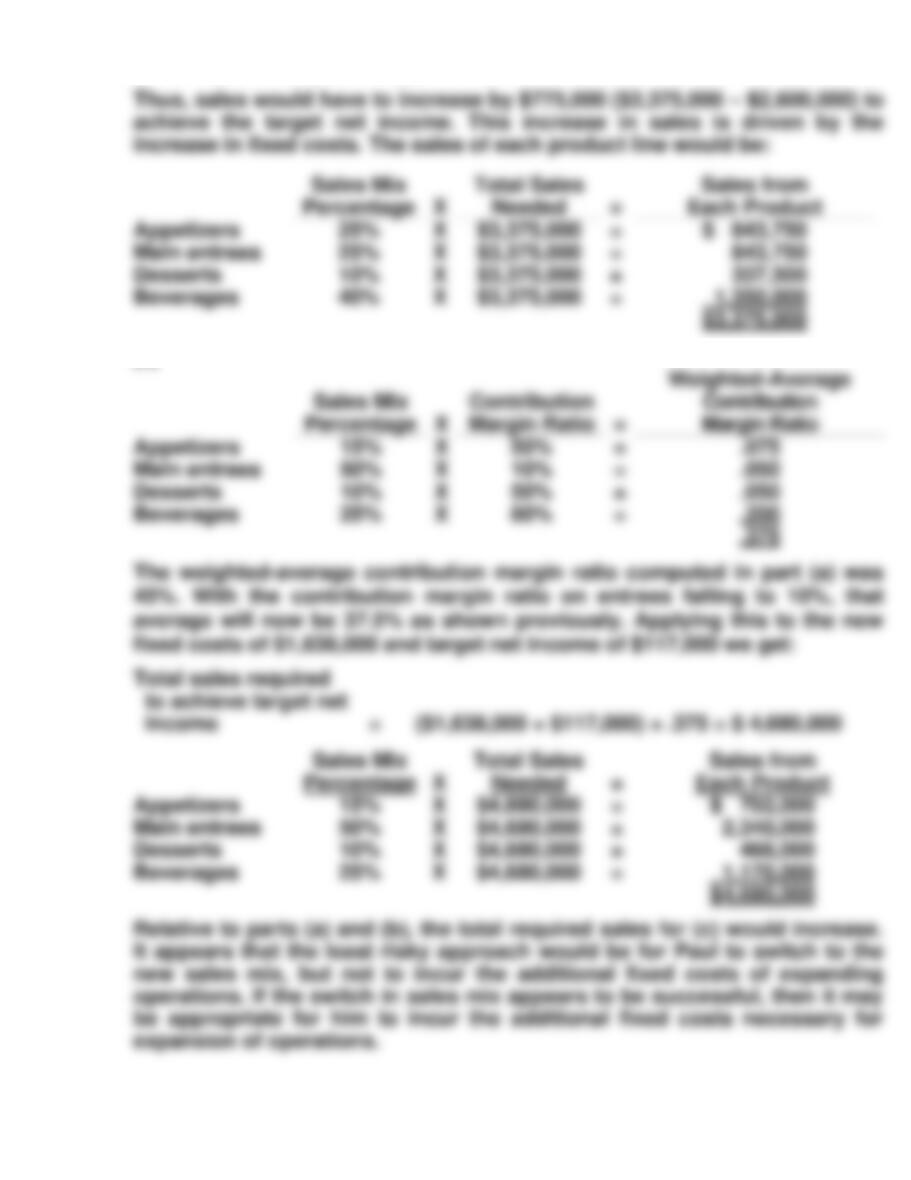
PROBLEM 20-3A (Continued)
(c)
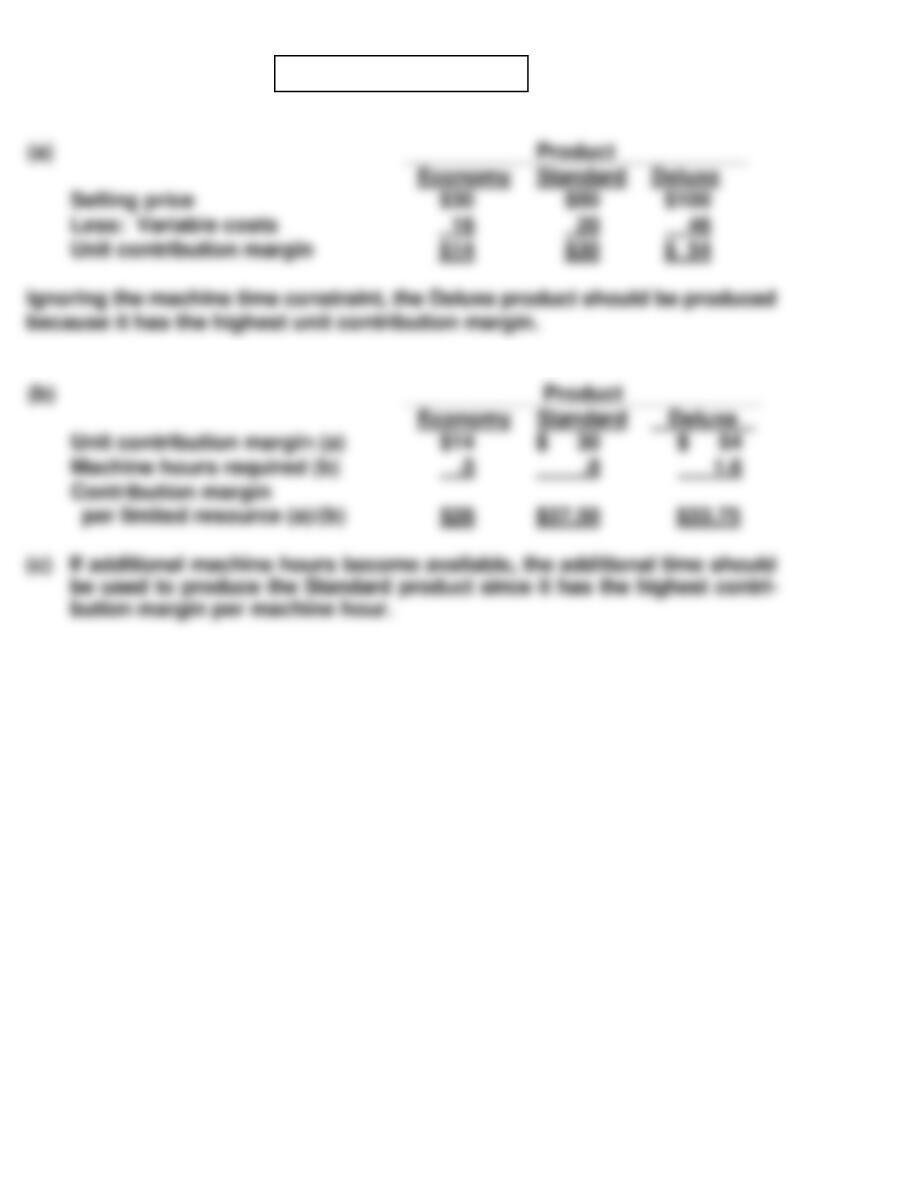
PROBLEM 20-4A
PROBLEM 20–5A
(a) To determine the break-even point in dollars we must first calculate
the contribution margin ratio for each company.
(b)
(c)
PROBLEM 20-5A (Continued)
PROBLEM 20–6A
PROBLEM 20-6A (Continued)
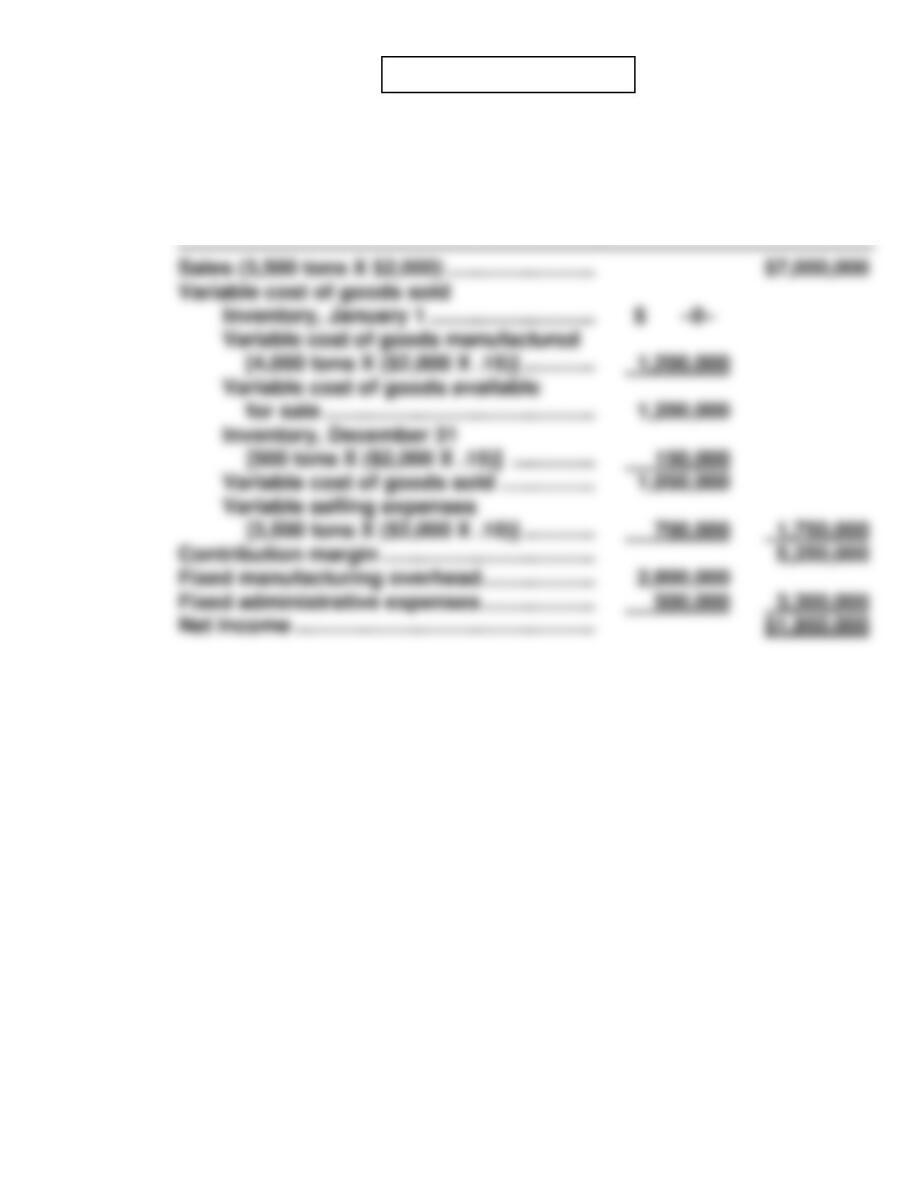
*PROBLEM 20–7A
(a) JACKSON COMPANY
Income Statement
For the Year Ended December 31, 2016
Variable Costing
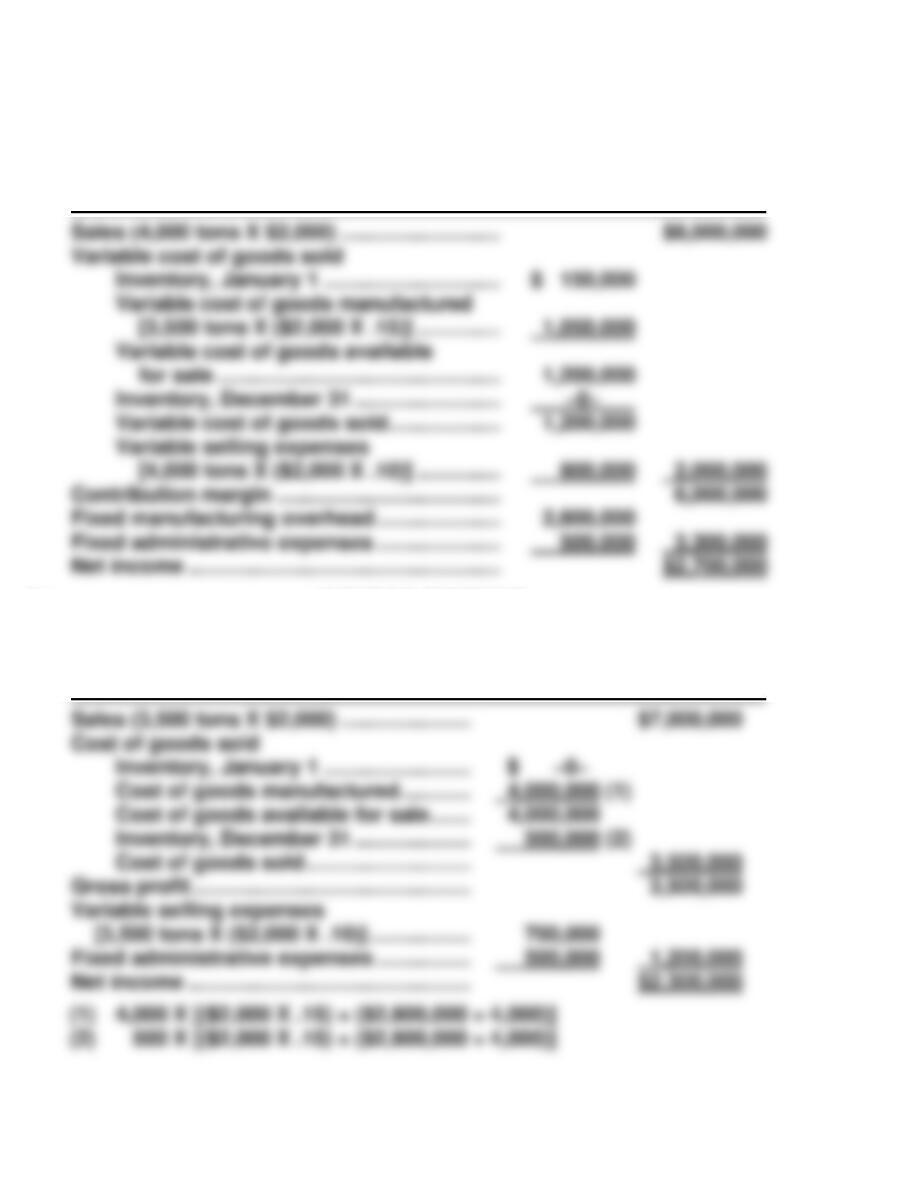
*PROBLEM 20-7A (Continued)
JACKSON COMPANY
Income Statement
For the Year Ended December 31, 2017
Variable Costing
(b) JACKSON COMPANY
Income Statement
For the Year Ended December 31, 2016
Absorption Costing
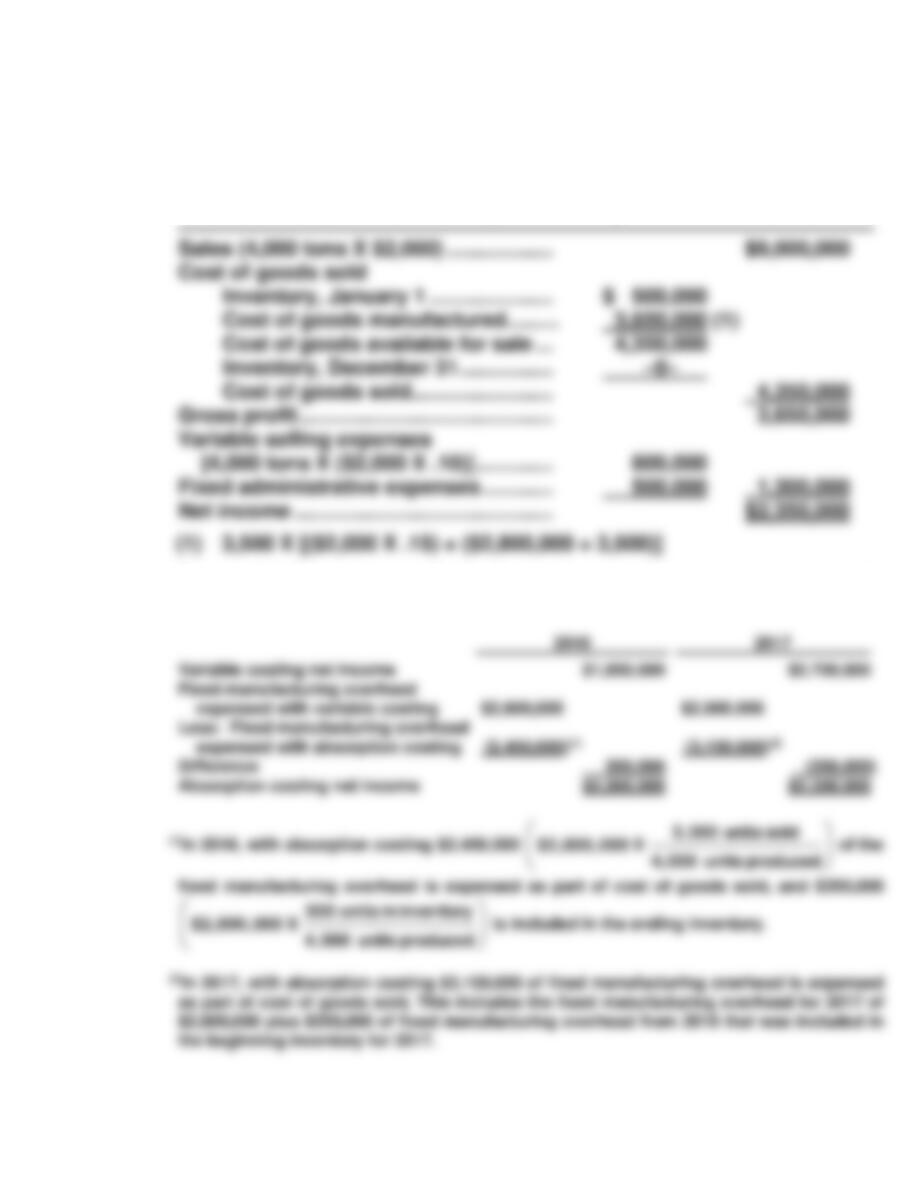
*PROBLEM 20-7A (Continued)
JACKSON COMPANY
Income Statement
For the Year Ended December 31, 2017
Absorption Costing
(c) The variable costing and the absorption costing net income can be
reconciled as follows:
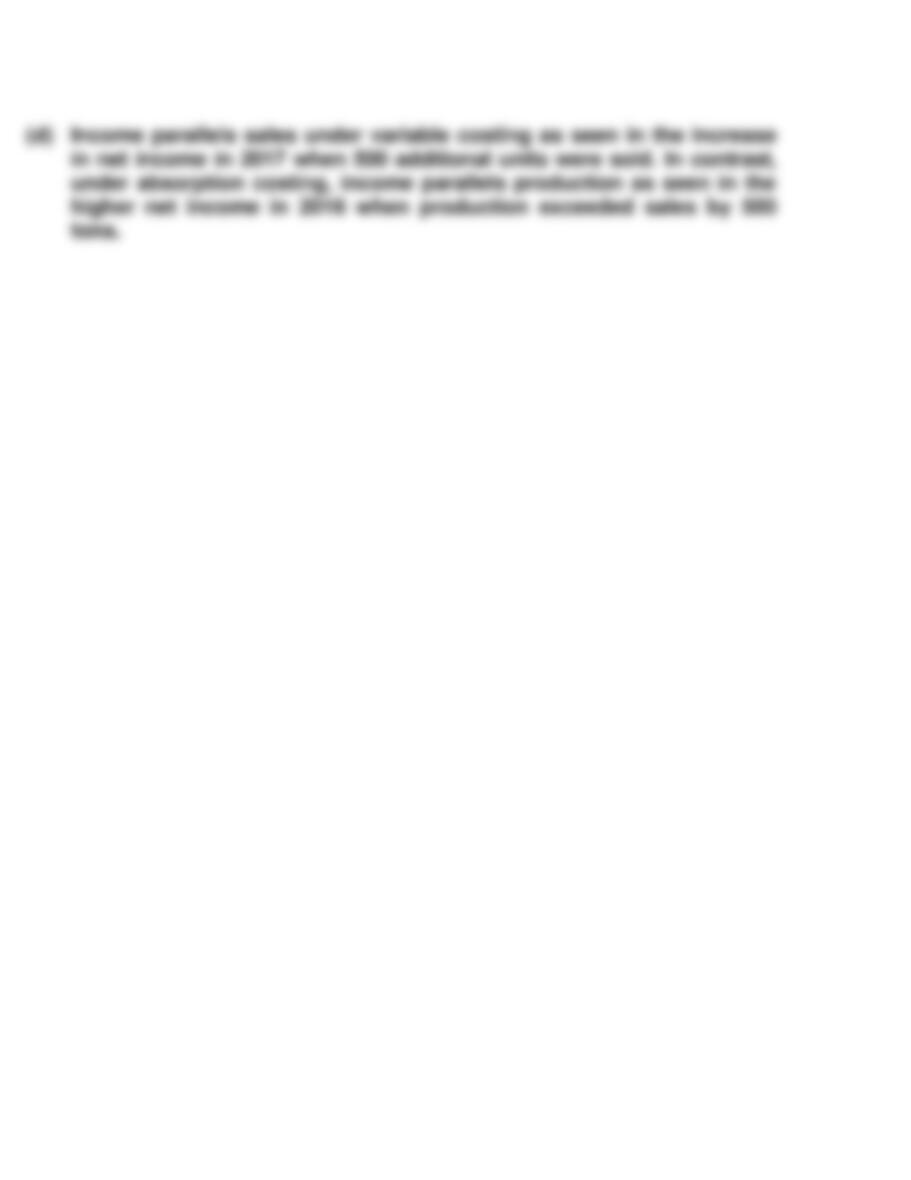
*PROBLEM 20-7A (Continued)
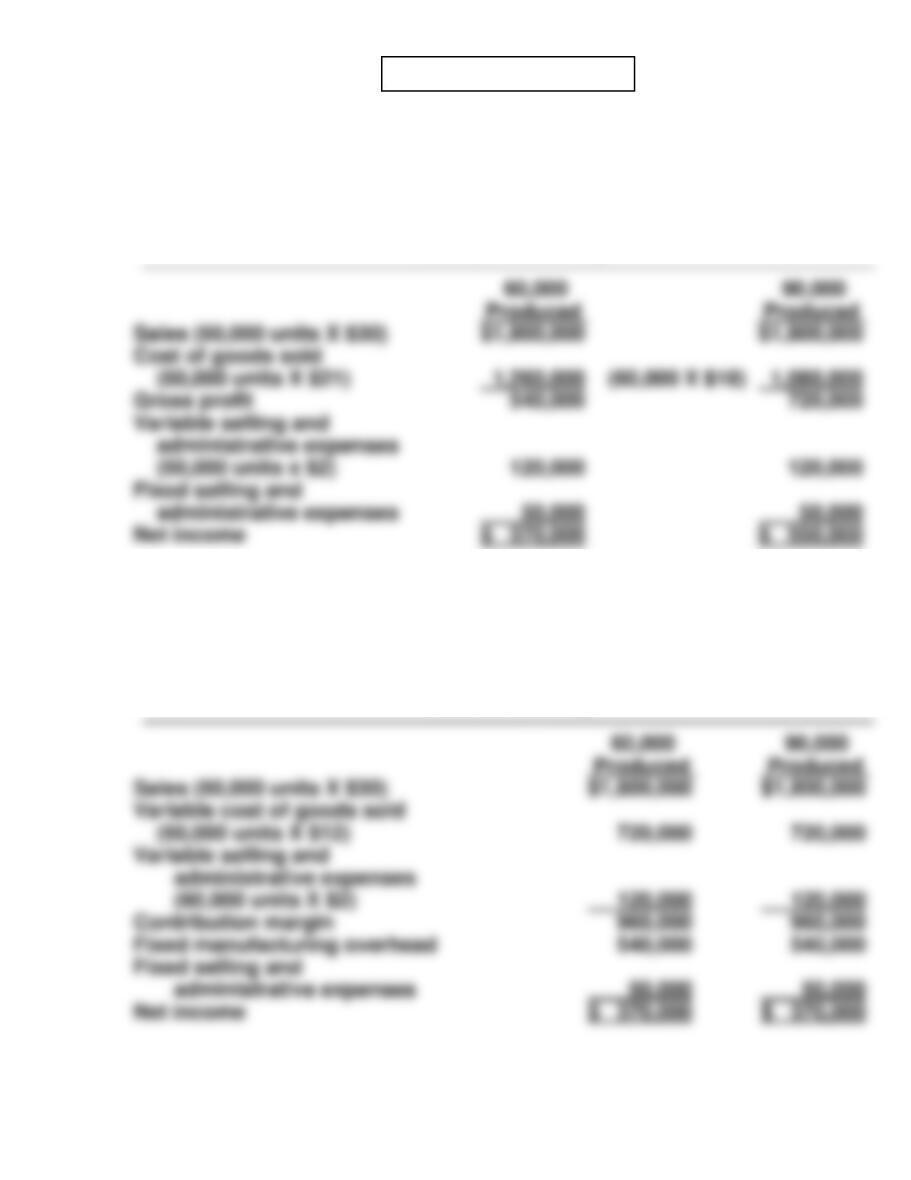
*PROBLEM 20–8A
(a)
DILITHIUM BATTERIES DIVISION
Income Statement
For the Year Ended December 31, 2017
Absorption Costing
(b)
DILITHIUM BATTERIES DIVISION
Income Statement
For the Year Ended December 31, 2017
Variable Costing
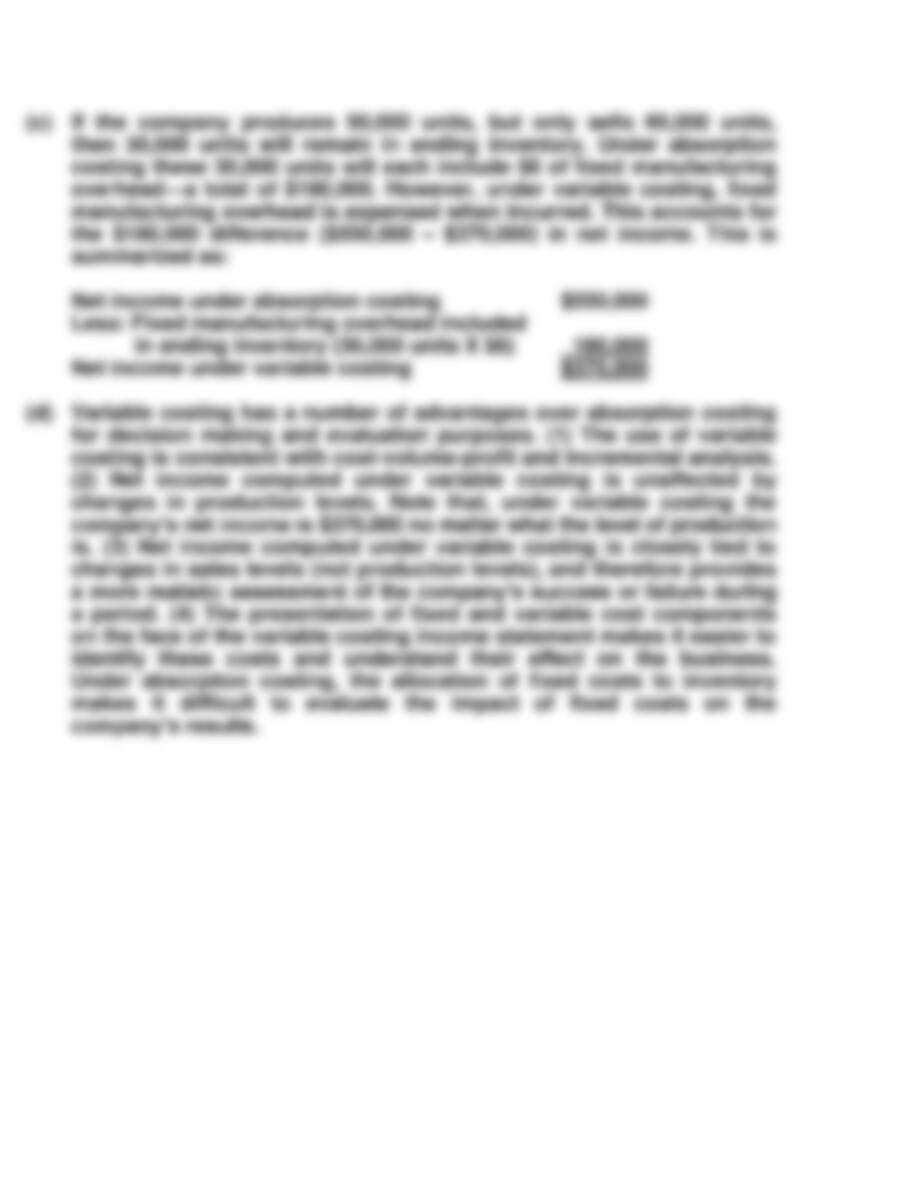
*PROBLEM 20-8A (Continued)
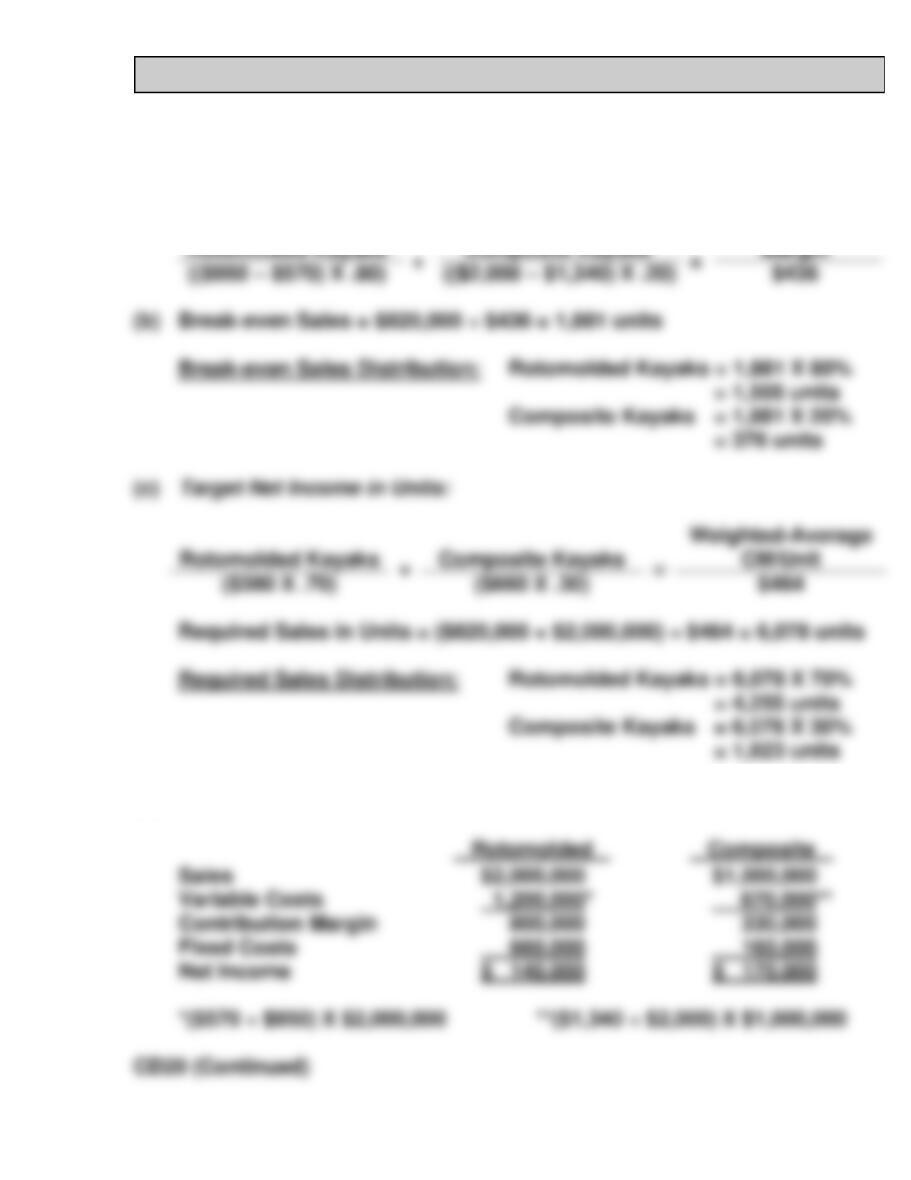
CD20 CURRENT DESIGNS
(a)
Weighted
Average Unit
Contribution
(d) CVP Income Statement
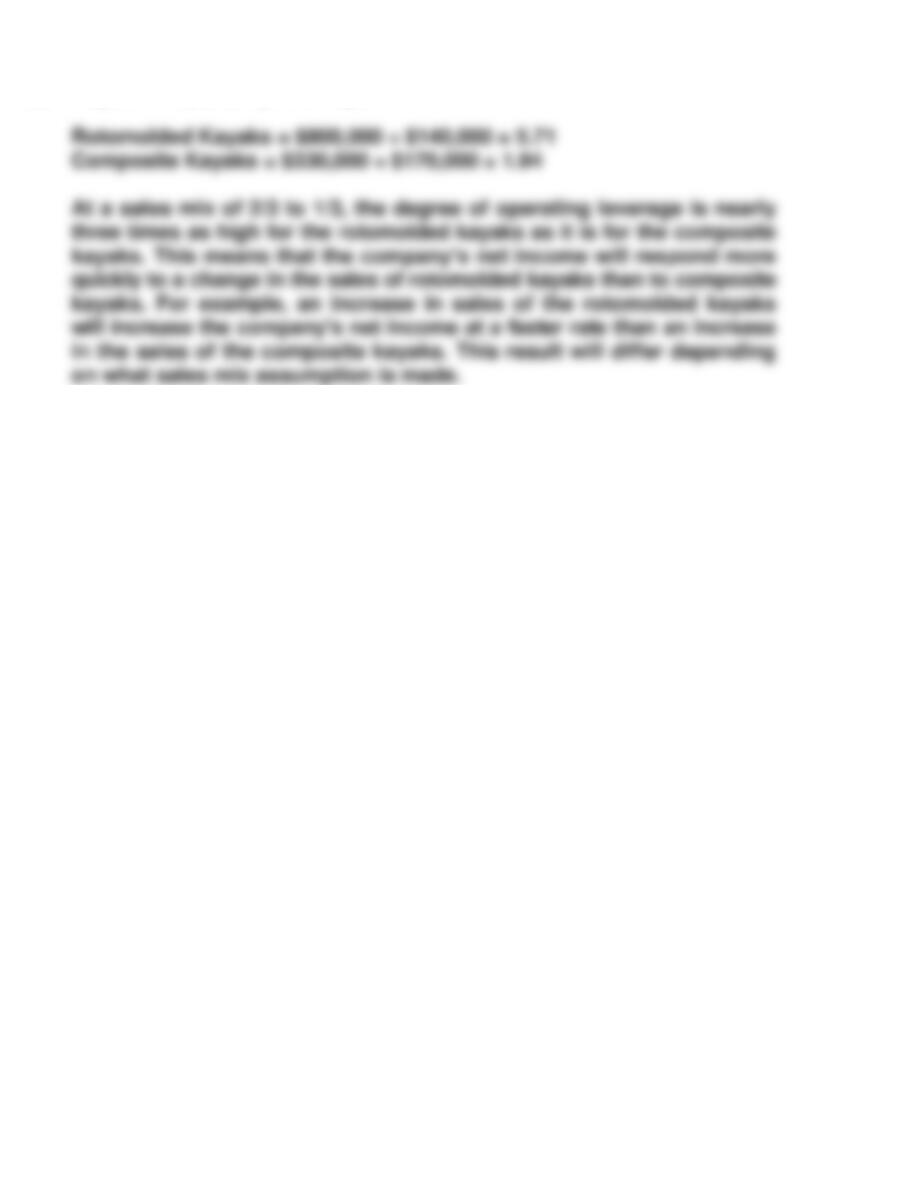
(e) Degree of Operating Leverage
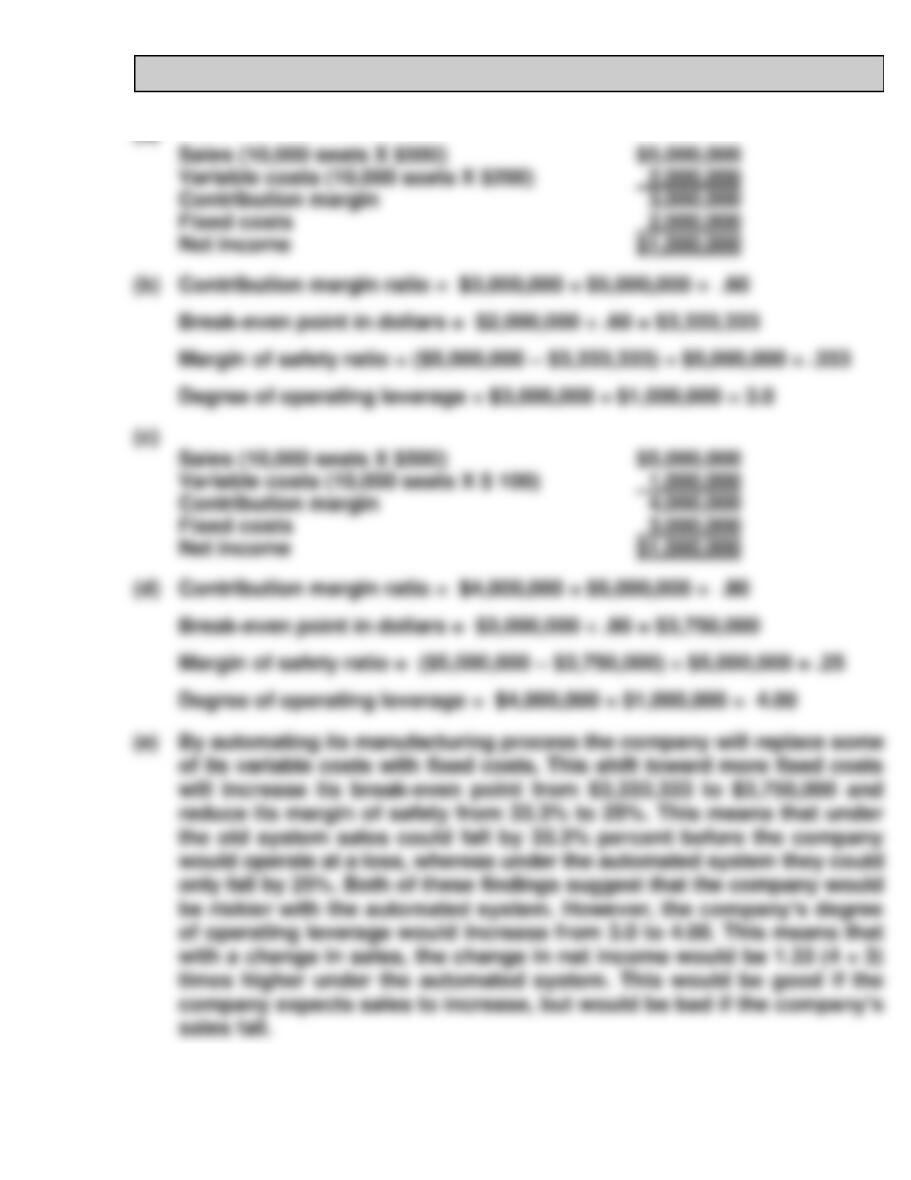
BYP 20-1 DECISION-MAKING ACROSS THE ORGANIZATION
(a) Sales (10,000 seats X $500) $5,000,000
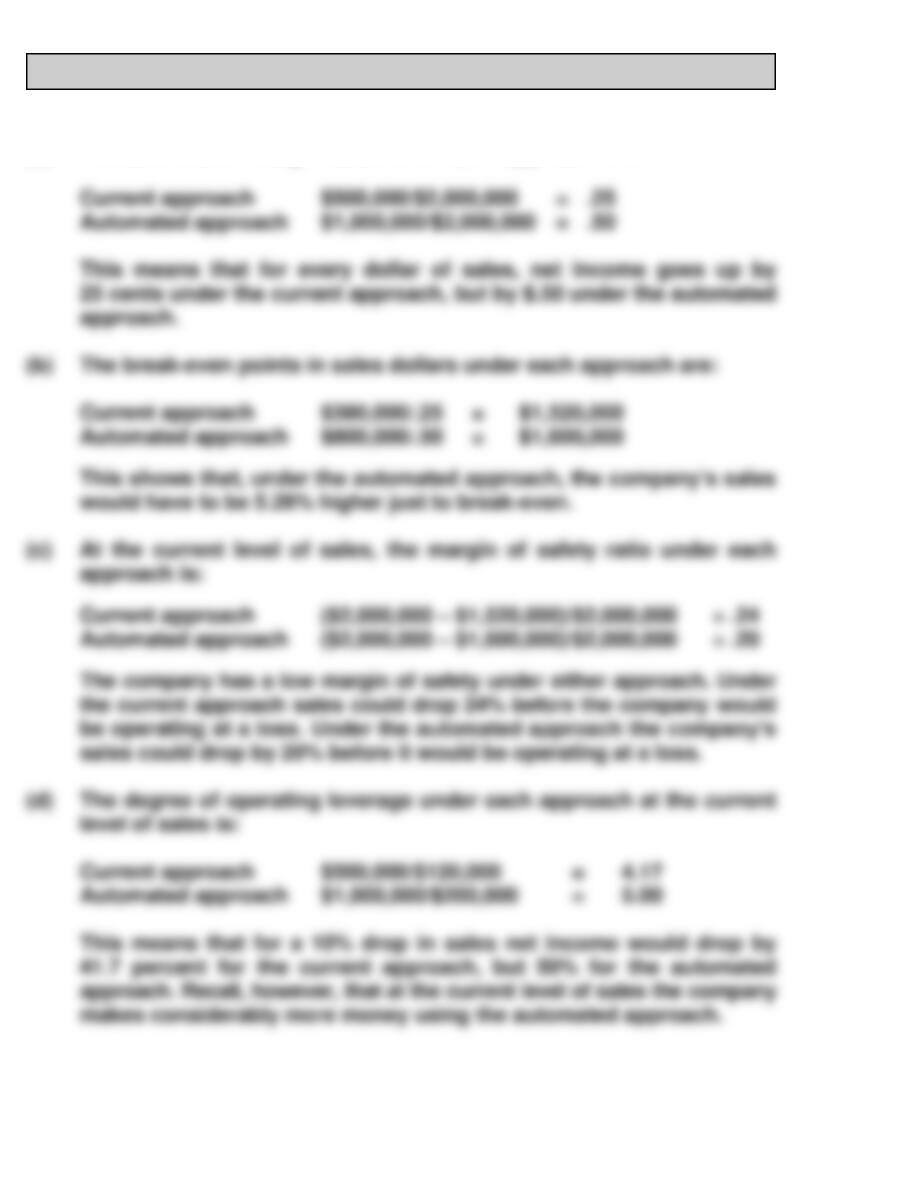
BYP 20-2 MANAGERIAL ANALYSIS
(a) The contribution margin ratios under each approach are:
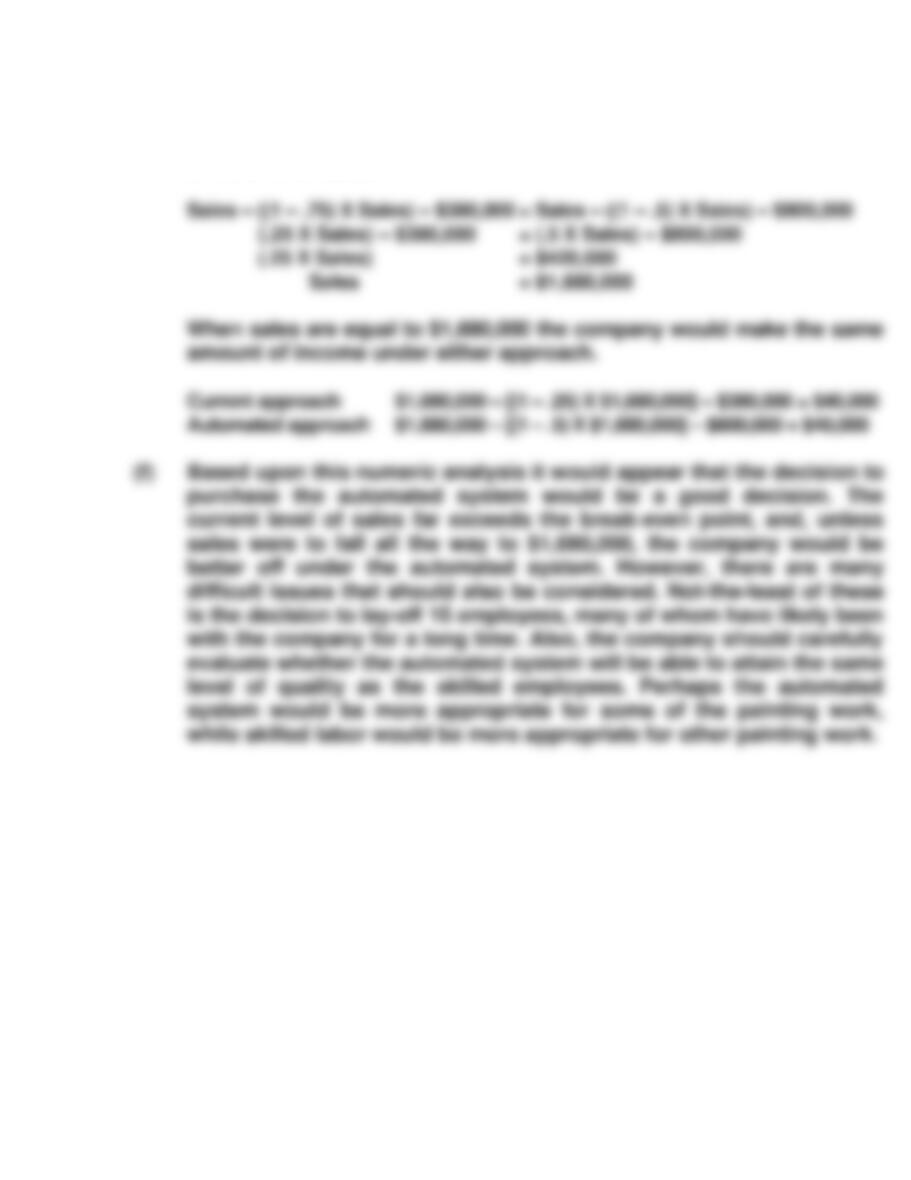
BYP 20-2 (Continued)
(e) In order to solve for the sales level where net income would be equal
under either approach, set the two CVP equations equal to each other
and solve for sales:
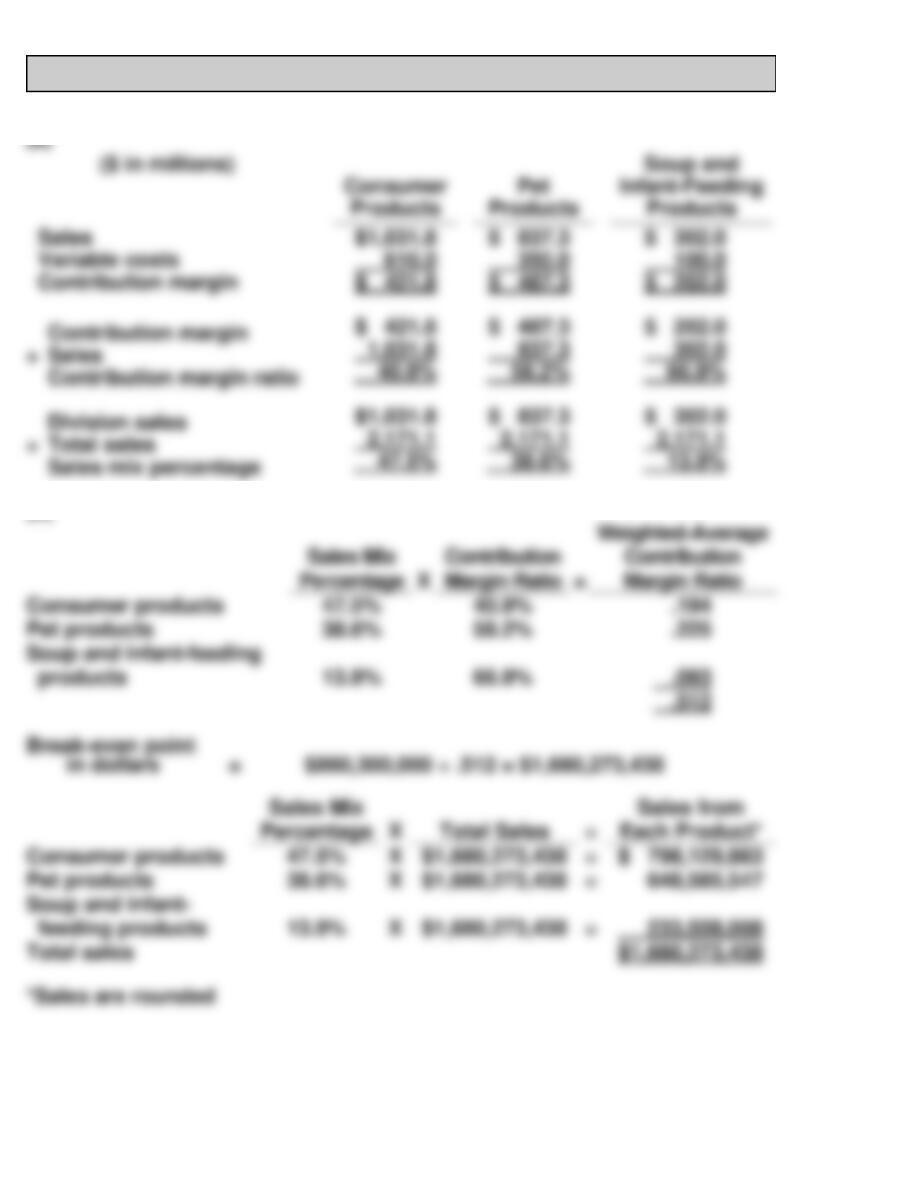
BYP 20-3 REAL-WORLD FOCUS
(b)
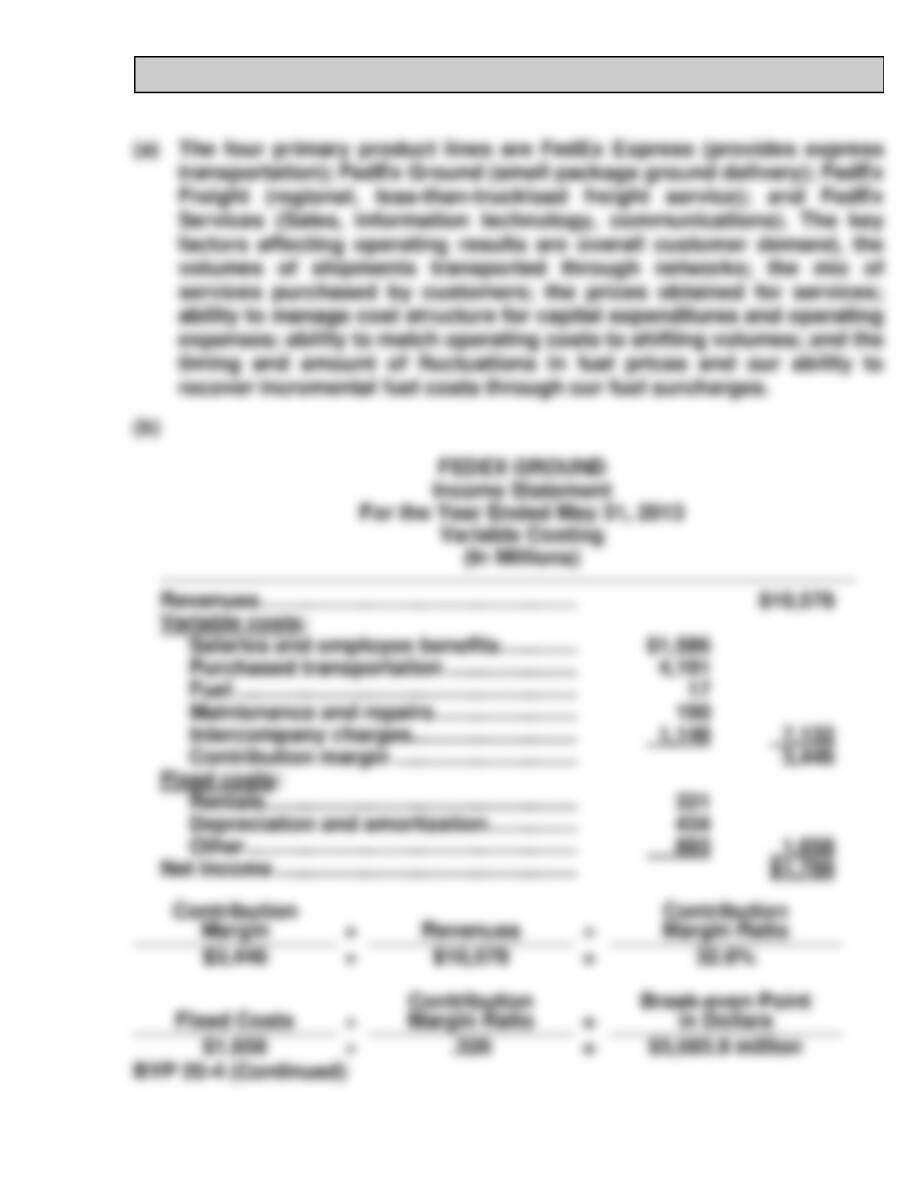
BYP 20-4 REAL-WORLD FOCUS
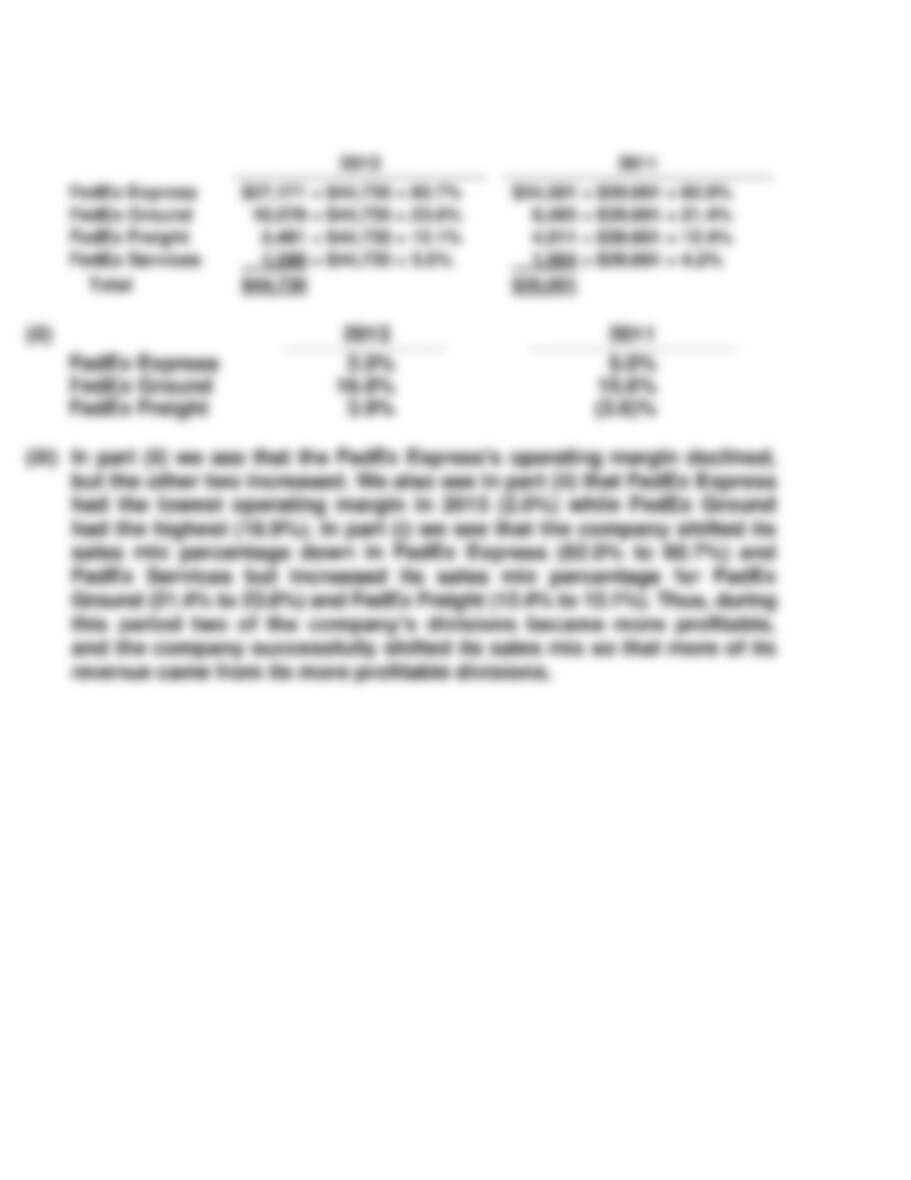
(c)
(i)
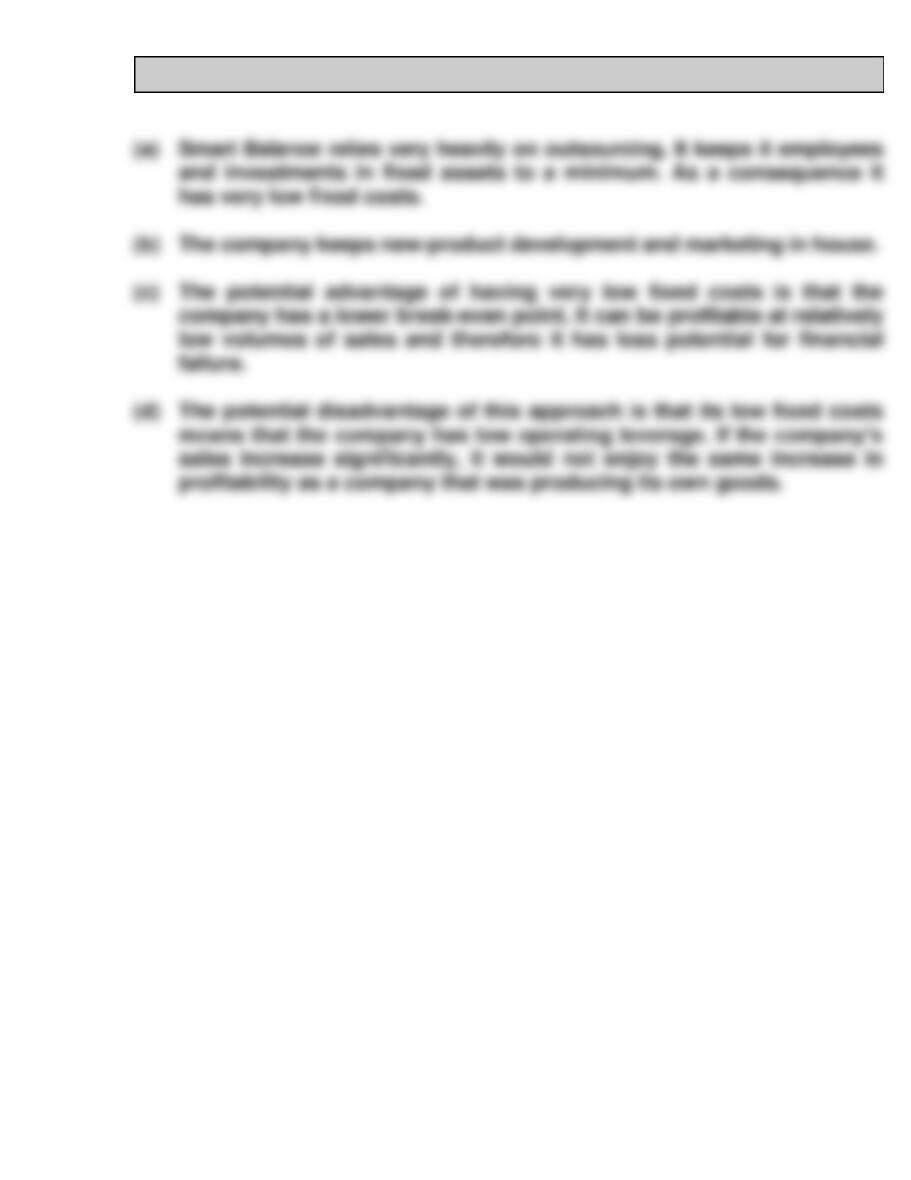
BYP 20-5 REAL-WORLD FOCUS
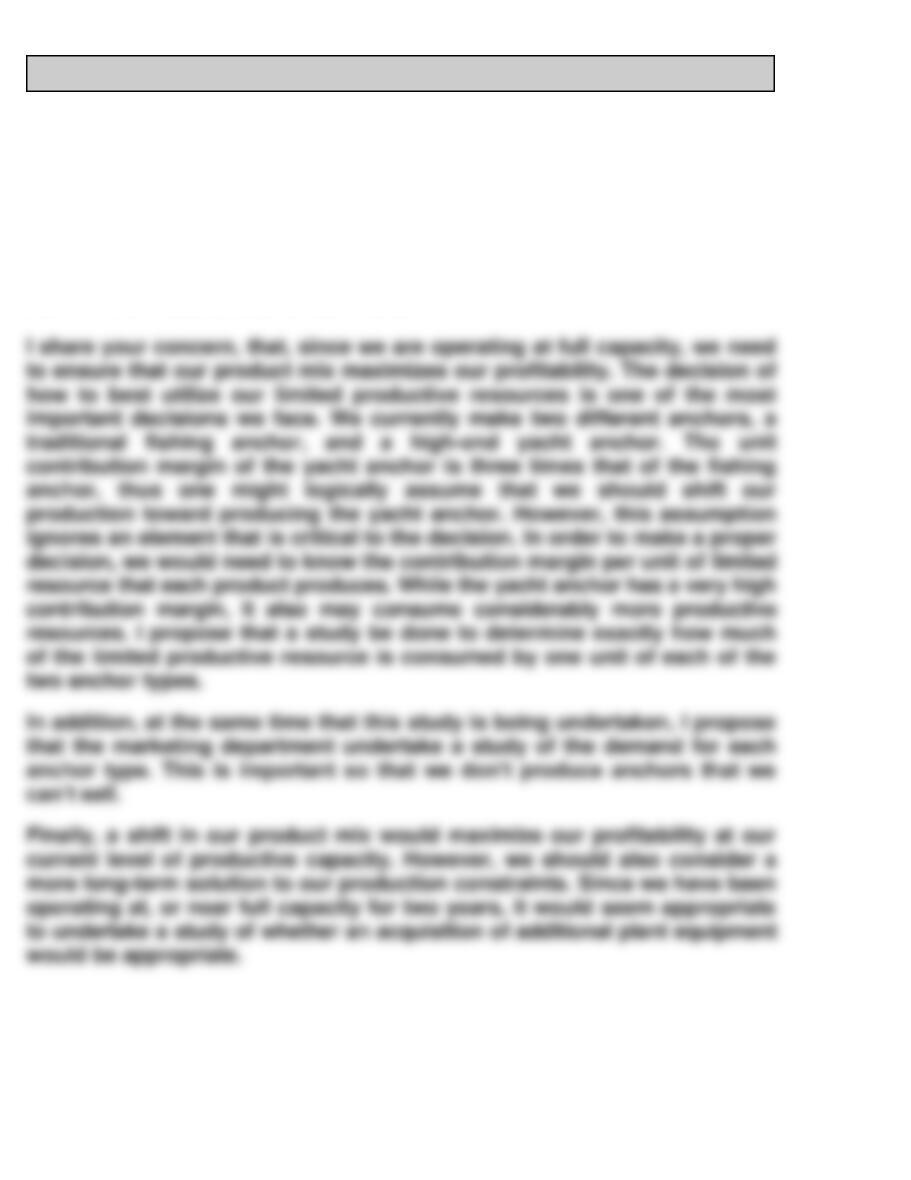
BYP 20-6 COMMUNICATION ACTIVITY
MEMO
To: Bjorn Borg—CEO
From: Student
Re: Best use of limited resources
*BYP 20-7 ETHICS CASE
BYP 20-8 ALL ABOUT YOU
BYP 20-9 CONSIDERING PEOPLE, PLANET, AND PROFIT