2.1
Situation: A system is separated from its surrounding by a
a. border
b. boundary
c. dashed line
d. dividing surface
SOLUTION
1
2.2
Find:
How are density and specific weight related?
PLAN
Consider their definitions (conceptual and mathematical)
SOLUTION
Density is a [mass]/[unit volume], and specific weight is a [weight]/[unit volume].
2
2.3
Situation:
Density is (select all that apply)
a. weight/volume
b. mass/volume
c. volume/mass
d. mass/weight
SOLUTION
3
2.4
Situation:
Which of these are units of density? (Select all that apply.)
a. kg/m3
b. mg/cm3
c. lbm/ft3
d. slug/ft3
SOLUTION
4
2.5
Situation:
Specific gravity (select all that apply)
a. can have units of N/m3
b. is dimensionless
c. increases with temperature
d. decreases with temperature
SOLUTION
Correct answers are b and d. Specific gravity is a ratio of the density of some liquid
5
2.6
Situation:
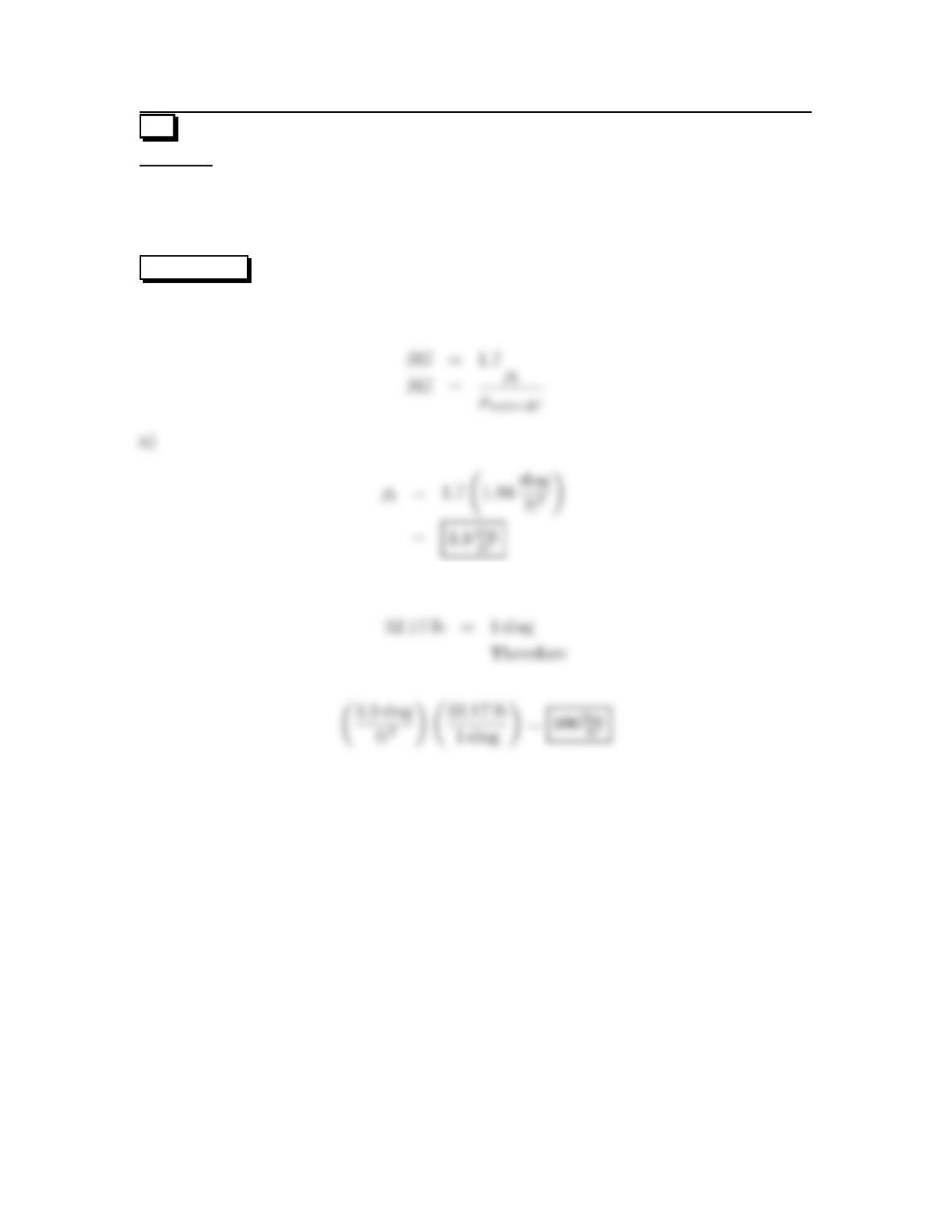
If a liquid has a specific gravity of 1.7,
a) What is the density in slugs per cubic feet?
b) What is the specific weight in lbf per cubic feet?
SOLUTION
b)
6
2.7
Situation:
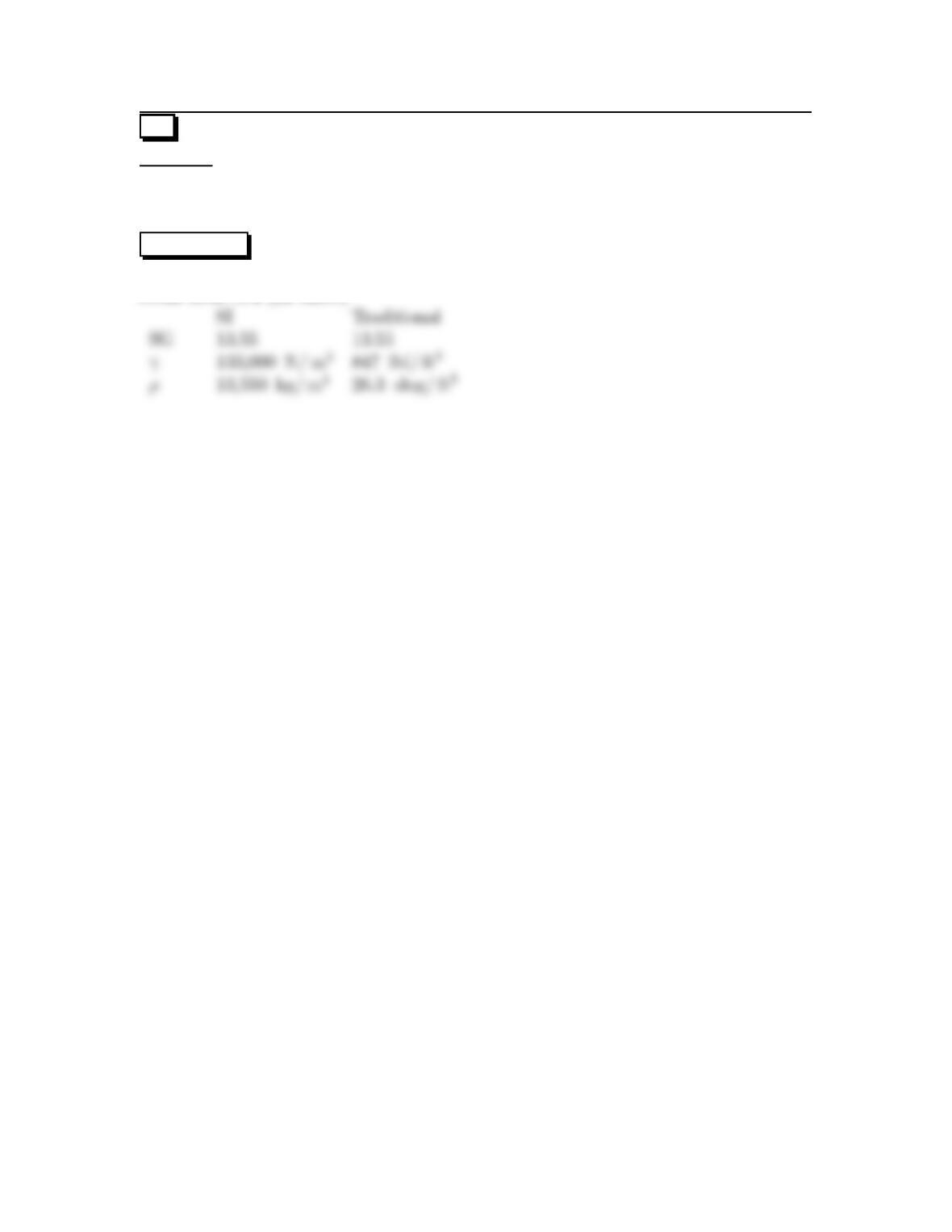
What are SG, γ,andρfor mercury?
State you answers in SI units and in traditional units.
SOLUTION
From table A.4 (EFM10e)
7
2.8
Situation:
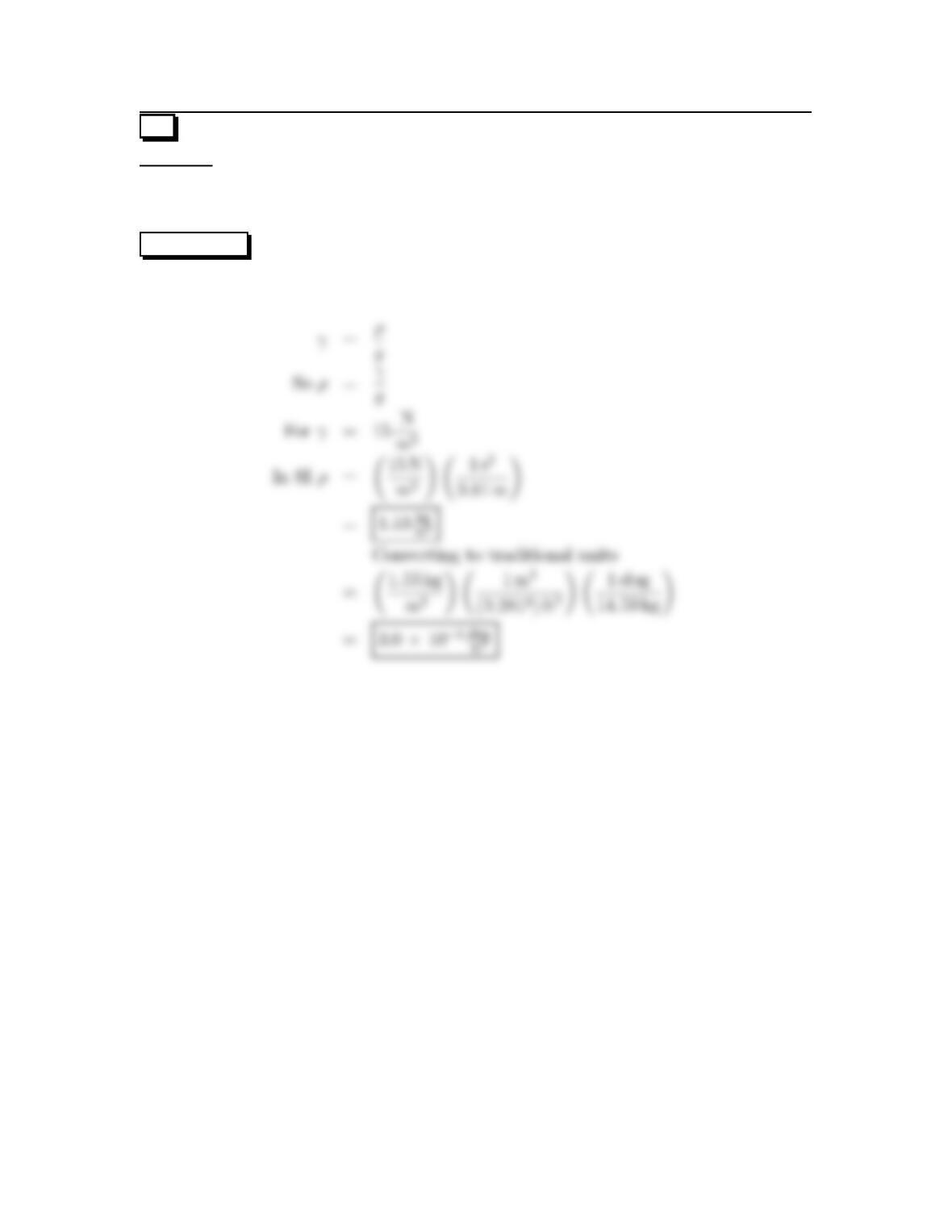
If a gas has γ=15N/m3what is its density?
State your answers in SI units and in traditional units.
SOLUTION
Density and specific seight are related according to
8
2.9
Situation:
If you have a bulk modulus of elasticity that is a very large number, then a small
change in pressure would cause
a. a very large change in volume
b. a very small change in volume
SOLUTION
9
2.10
Situation:
Dimensions of the bulk modulus of elasticity are
a. the same as the dimensions of pressure/density
b. the same as the dimensions of pressure/volume
c. the same as the dimensions of pressure
SOLUTION
10
2.11
Situation:
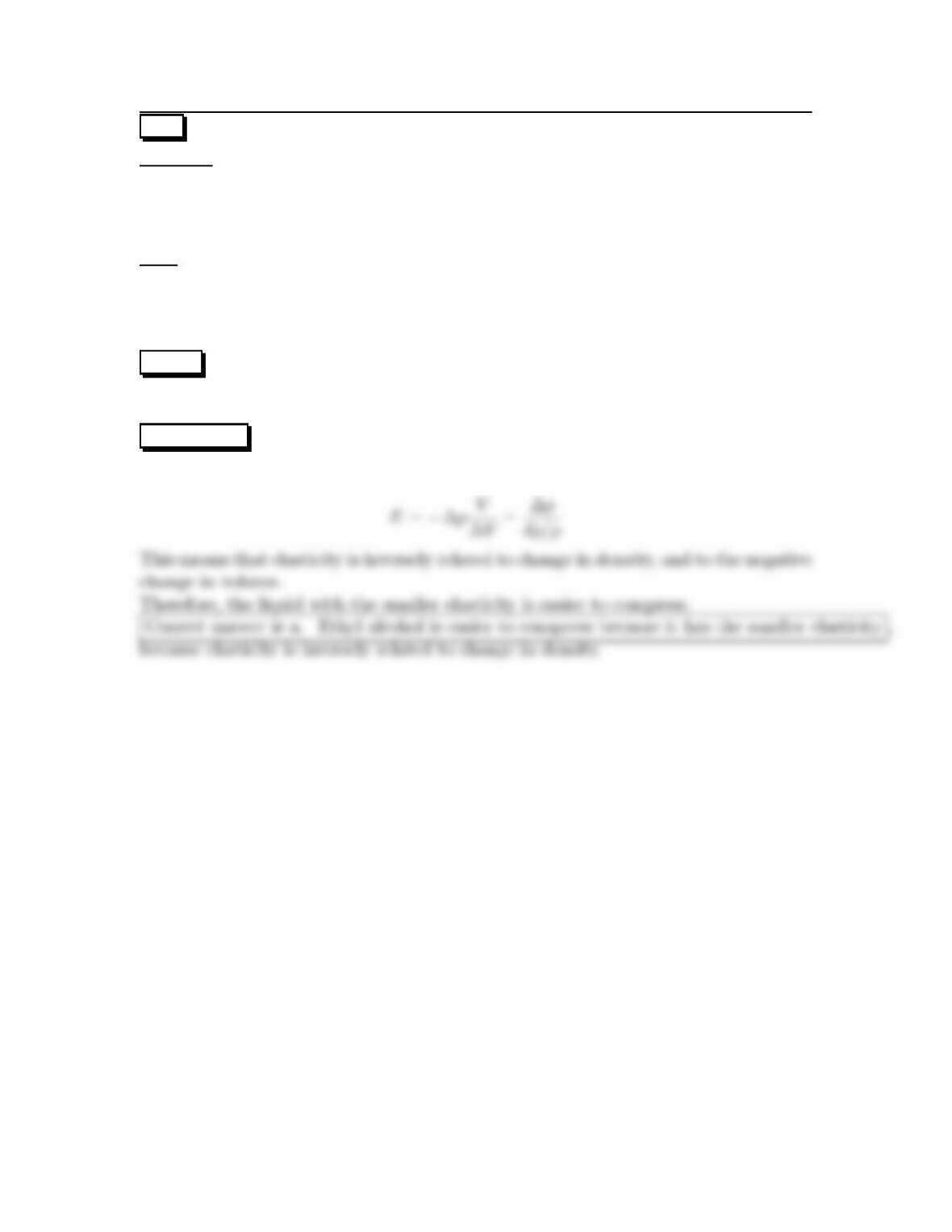
Elasticity of ethyl alcohol and water.
Eethyl =1.06 ×10⁹Pa.
Ewater =2.15 ×10⁹Pa.
Find:
Which substance is easier to compress?
a. ethyl alcohol
b. water
PLAN
Use bulk density equation.
SOLUTION
The bulk modulus of elasticity is given by:
11
2.12
Situation:
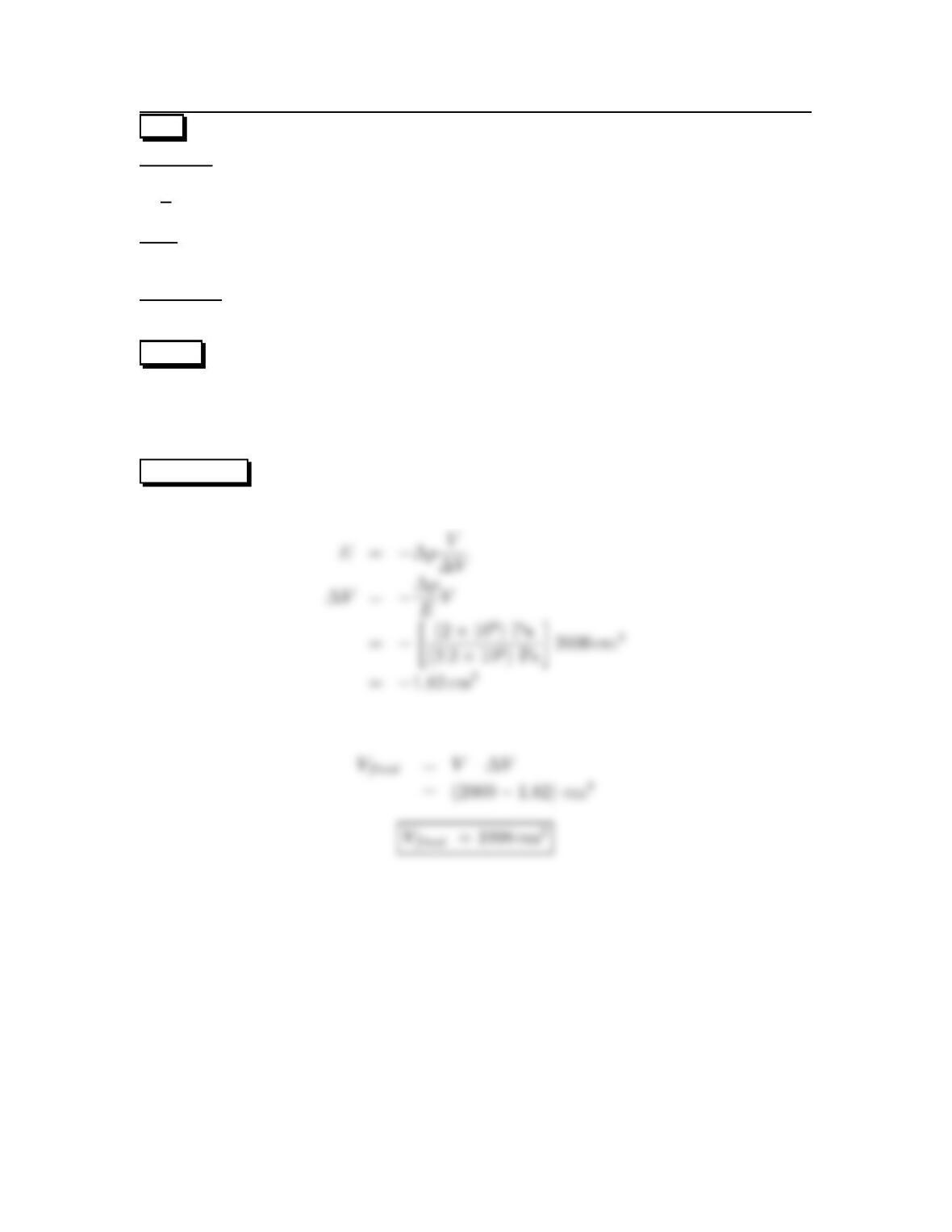
Pressure is applied to a mass of water.
V=2000cm
3,p=2×10⁶N/m2.
Find:
Volume after pressure applied (cm3).
Properties:
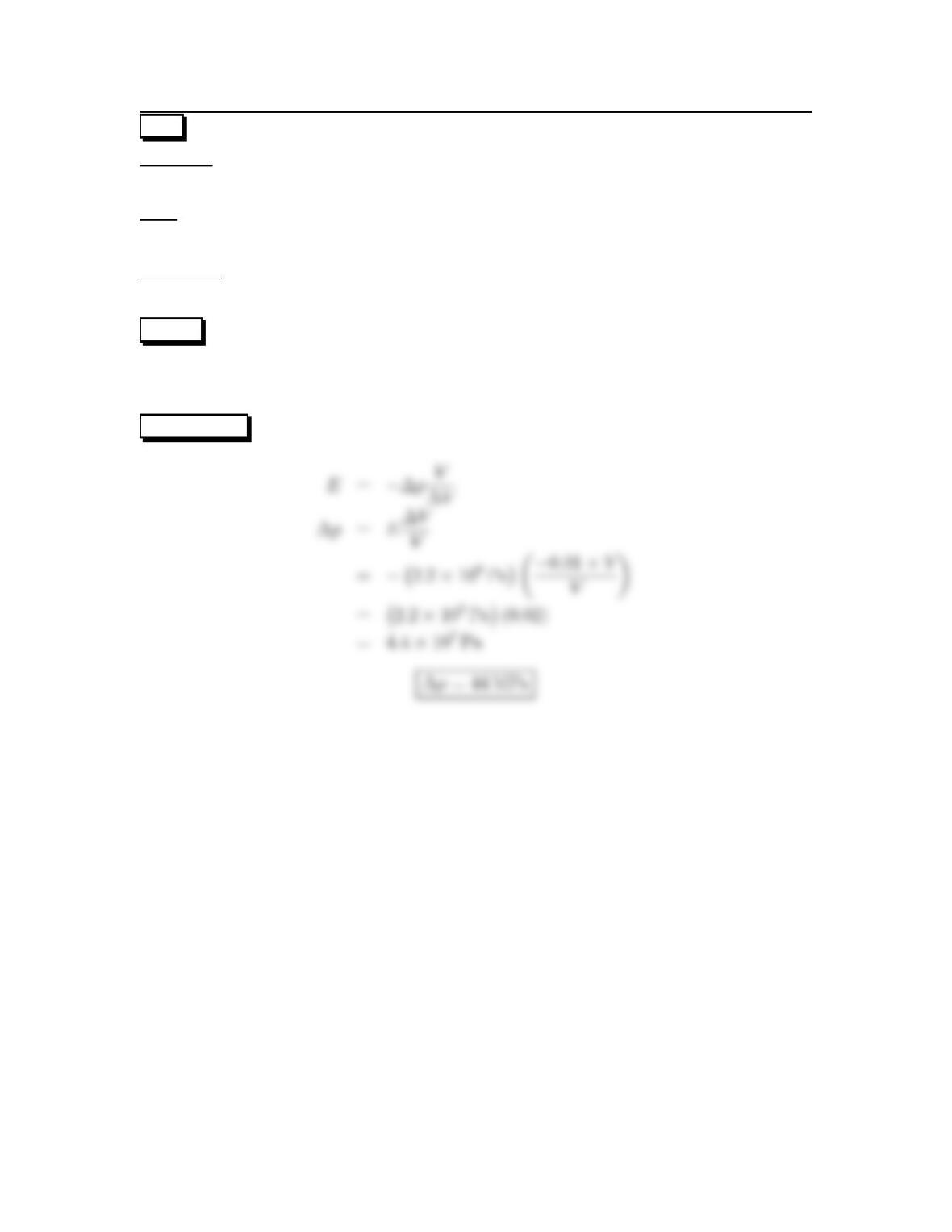
From Table A.5, E=2.2×10⁹Pa
PLAN
1. Use modulus of elasticity equation to calculate volume change resulting from
pressure change.
2. Calculate final volume based on original volume and volume change.
SOLUTION
1. Elasticity equation
2. Final volume
12
2.13
Situation:
Water is subjected to an increase in pressure.
Find:
Pressure increase needed to reduce volume by 2%.
Properties:
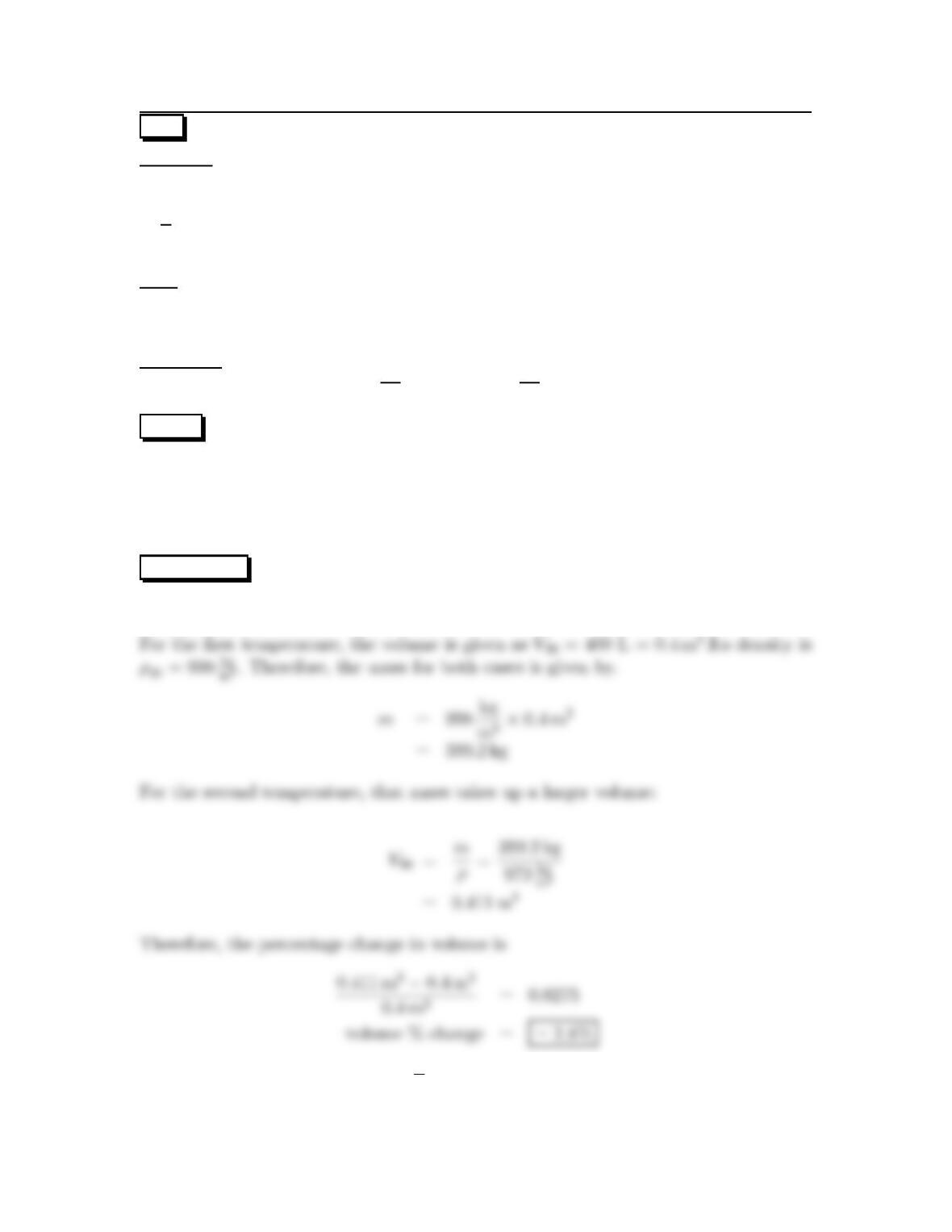
From Table A.5, E=2.2×10⁹Pa.
PLAN
Use modulus of elasticity equation to calculate pressure change required to achieve
the desired volume change.
SOLUTION Modulus of elasticity equation
13
2.14
Situation:
Open tank of water.
T20 =20◦C,T80 =80◦C.
V=400l,d=3m.
Hint: Volumechangeisduetotemperature.
Find:
Percentage change in volume.
Water level rise for given diameter.
Properties:
From Table A.5: ρ20 = 998 kg
m3,and ρ80 =972kg
m3.
PLAN
This problem is NOT solved using the elasticity equation, because the volume change
results from a change in temperature causing a density change, NOT a change in
pressure. The tank is open, so the pressure at the surface of the tank is always
atmospheric.
SOLUTION
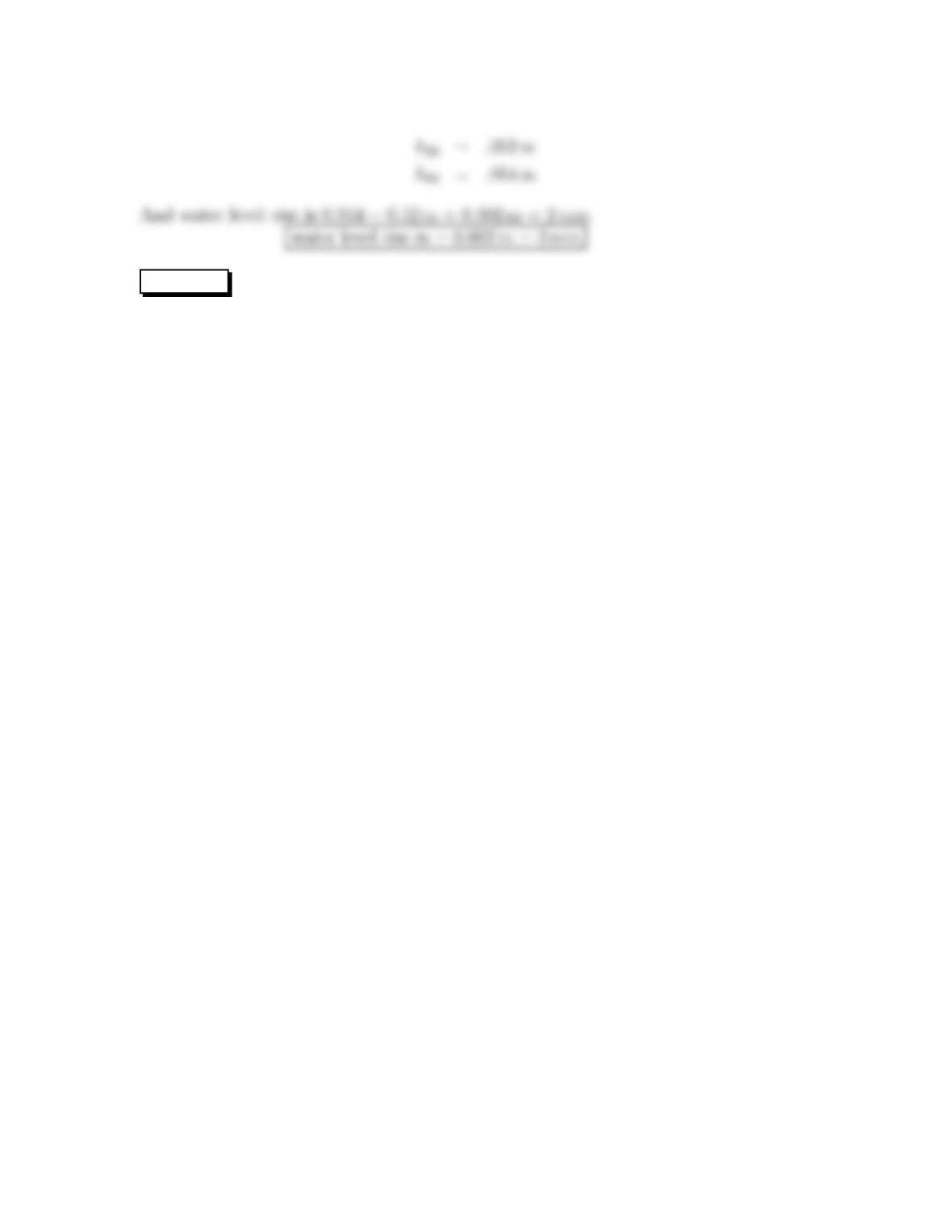
a. Percentage change in volume must be calculated for this mass of water at two
temperatures.
b. If the tank has D=3m,thenV=πr2h=7.68h.Therefore:
14
REVIEW
Density changes can result from temperature changes, as well as pressure changes.
15
2.15
Find:
Whereinthistextcanyoufind:
a. density data for such liquids as oil and mercury?
b. specific weight data for air (at standard atmospheric pressure) at different
temperatures?
c. specific gravity data for sea water and kerosene?
SOLUTION
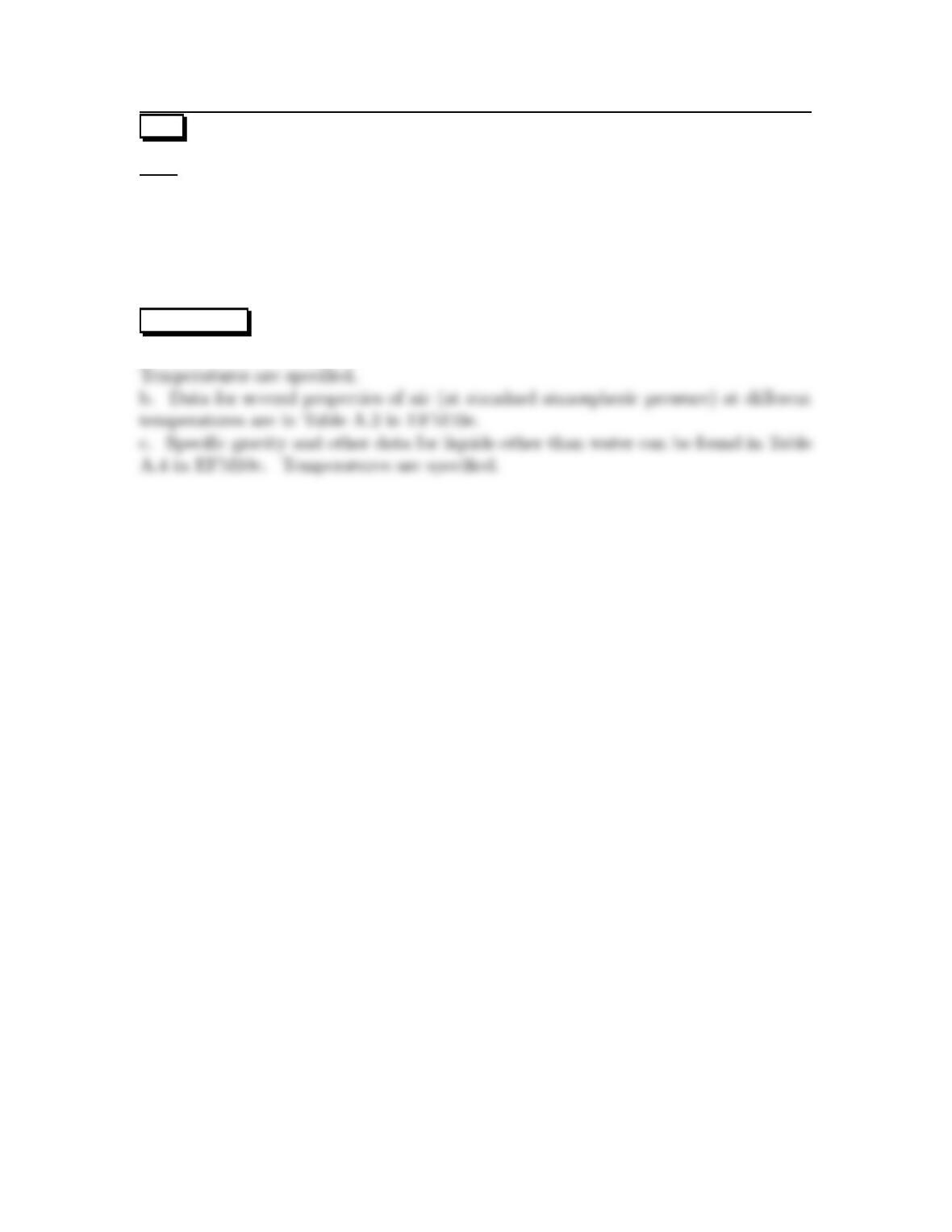
a. Density data for liquids other than water can be found in Table A.4 in EFM10e.
16
2.16
Situation:
Regarding water and seawater:
a. Which is more dense, seawater or freshwater?
b. Find (SI units) the density of seawater (10◦C, 3.3% salinity).
c. Find the same in traditional units.
d. What pressure is specified for the values in (b) and (c)?
SOLUTION
a. Seawater is more dense, because of the weight of the dissolved salt.
b. The density of seawater (10◦C, 3.3% salinity) in SI units is 1026 kg/m3, see Table
17
2.17
Situation:
If the density, ρ, of air (in an open system at atmospheric pressure) increases by a
factor of 1.4x due to a temperature change,
a. specific weight increases by 1.4x
b. specific weight increases by 13.7x
c. specific weight remains the same
SOLUTION
Since specificweightistheproductρg,ifρincreases by a factor of 1.4, then specific
18
2.18
Situation:
The following questions relate to viscosity.
Find:
(a) The primary dimensions of viscosity and five common units of viscosity.
(b) The viscosity of motor oil (in traditional units).
SOLUTION
a) Primary dimensions of viscosity are [M
LT ].
19
2.19
Situation:
Shear stress has dimensions of
a. force/area
b. dimensionless
SOLUTION
20