CHAPTER 2
REVIEW OF THE ACCOUNTING PROCESS
Overview
Chapter 1 explained that the primary means of conveying financial information to investors,
creditors, and other external users is through financial statements and related notes. The purpose of
Learning Objectives
LO2-1 Analyze routine economic events—transactions—and record their effects on a company’s
financial position using the accounting equation format.
LO2-2 Record transactions using the general journal format.
Lecture Outline
I. The Basic Model
A. External events involve an exchange between the company and another entity; internal
transactions do not involve an exchange transaction but do affect financial position.
B. The accounting equation underlies the process used to capture the effect of economic
events (transactions):
Assets = Liabilities + Owners’ equity
2-2 Intermediate Accounting, 8/e
II. The Accounting Processing Cycle
A. Step 1. Obtain information about transactions from source documents.
B. Step 2. Transaction analysis is the process of reviewing source documents to determine
the dual effect on the accounting equation and the specific elements involved.
III. Adjusting Entries (T2-7)
A. Step 6. Record adjusting entries and post to the ledger accounts.
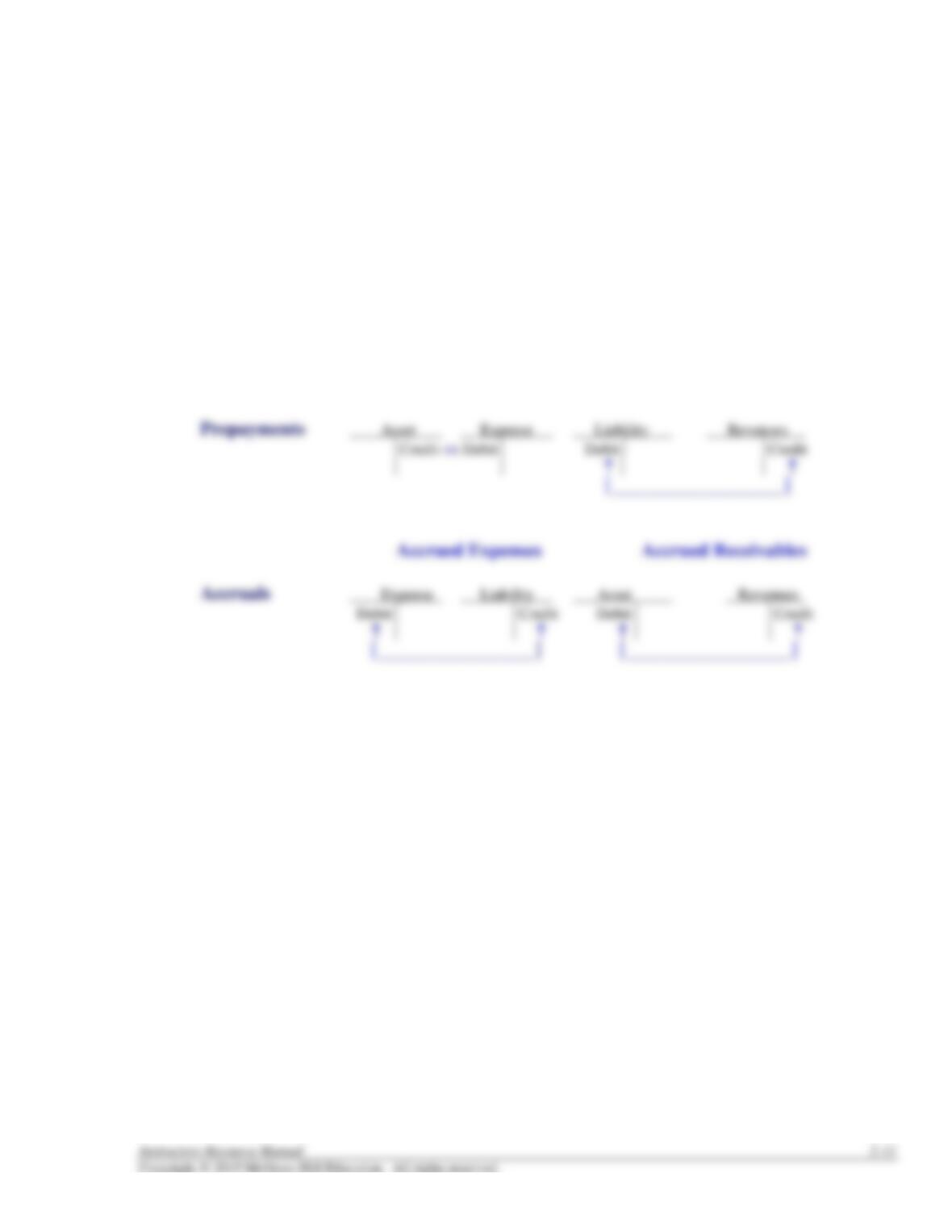
B. Prepayments are transactions in which the cash flow precedes expense of revenue
recognition. (T2-8)
C. Accruals involve transactions where the cash outflow or inflow takes place in a period
subsequent to expense or revenue recognition. (T2-9)
1. Accrued liabilities represent liabilities recorded when an expense has been incurred
D. Estimates often are made to comply with the accrual accounting model. (T2-10)
1. Most estimates involve either prepayments or accruals.
IV. Step 8. Prepare Financial Statements
A. The income statement (T2-12)
V. Step 9. Close the Temporary Accounts (T2-16)
A. Close the revenue accounts to income summary.
VI. Conversion from Cash Basis to Accrual Basis (T2-18)
A. Add (deduct) increases (decreases) in assets. For example, an increase in accounts
PowerPoint Slides
A PowerPoint presentation of the chapter is available in the Connect library.
Teaching Transparency Masters
The following can be reproduced on transparency film as they appear here, or
2-4 Intermediate Accounting, 8/e
TRANSACTION ANALYSIS
➢ Each transaction is analyzed to determine its effect on the
equation and on the specific financial position elements.
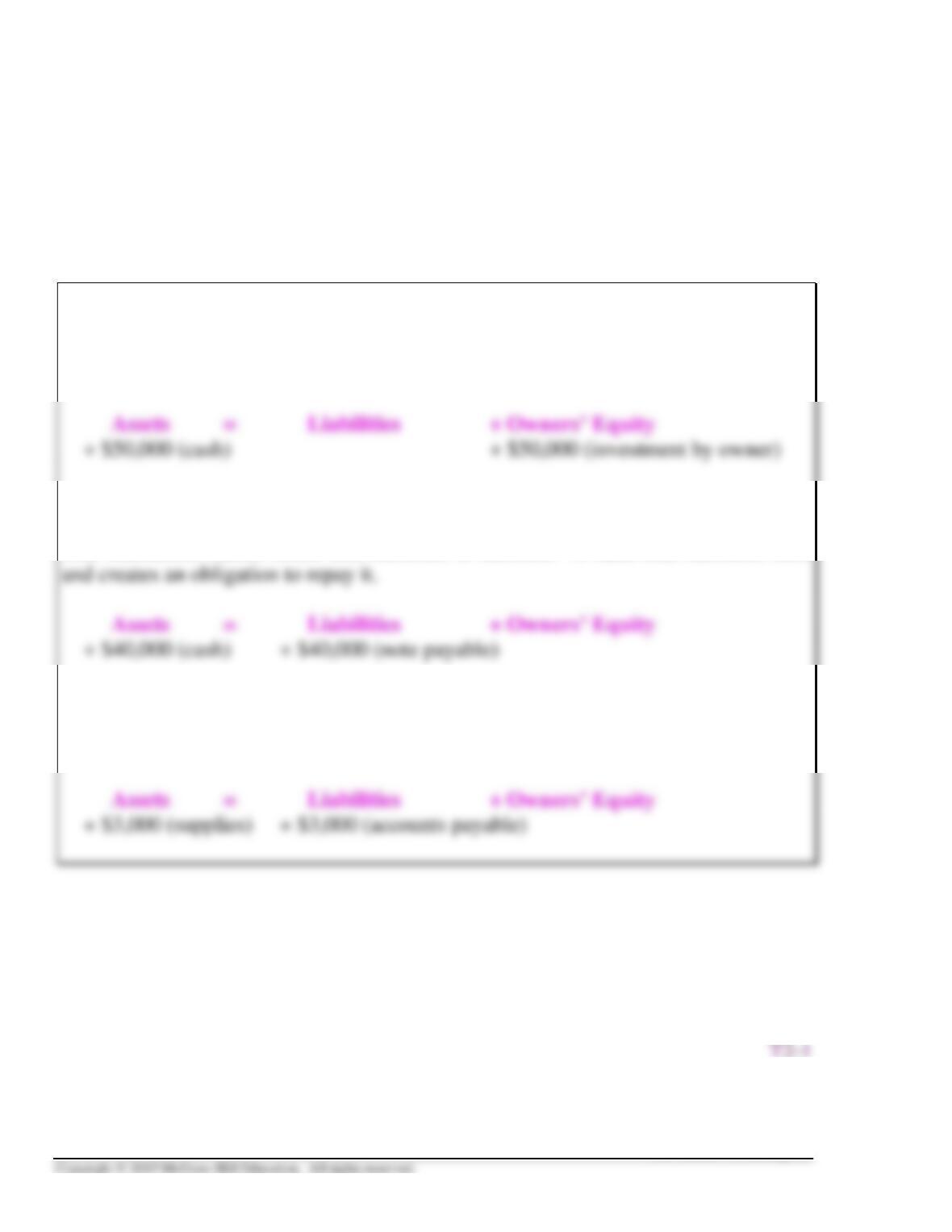
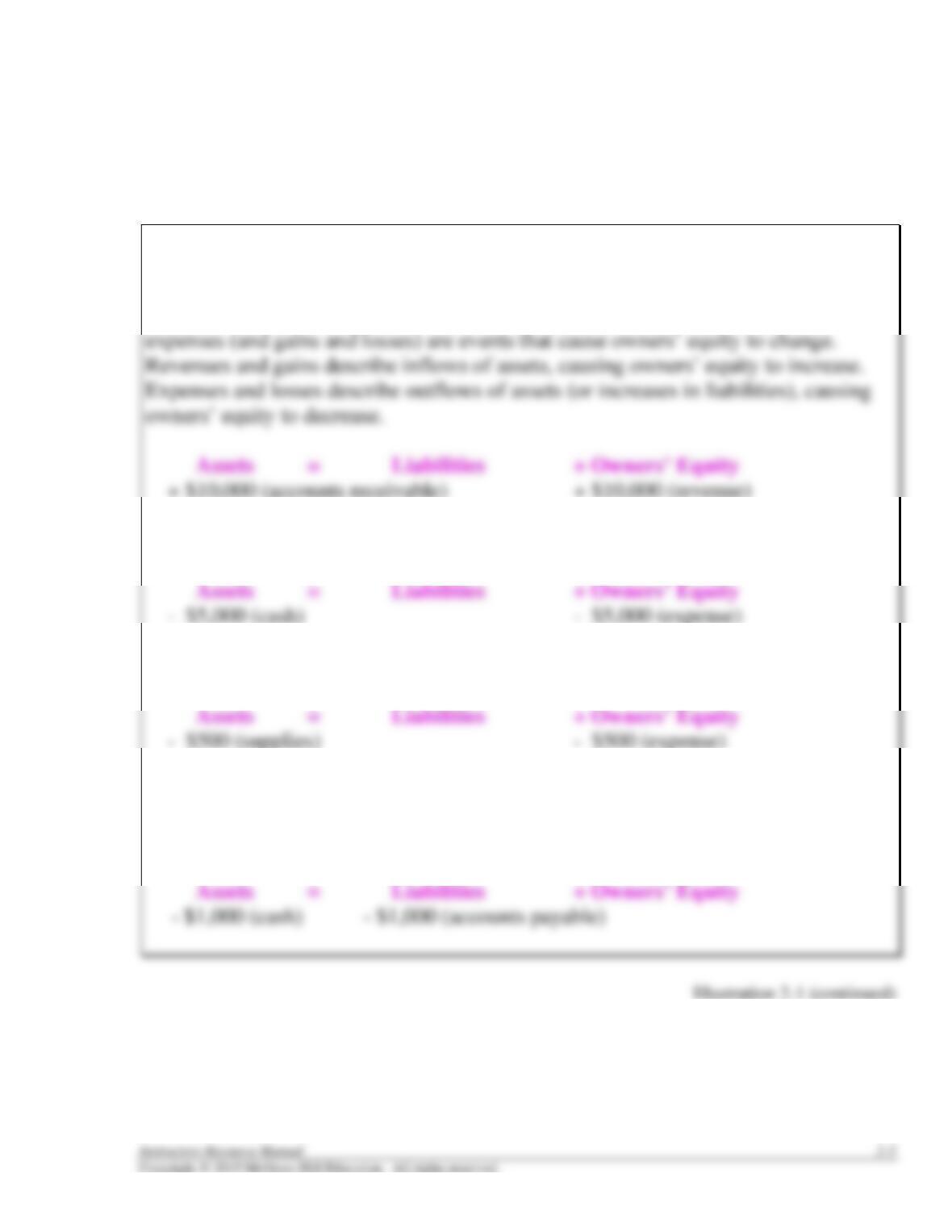
1. An attorney invested $50,000 to open a law office.
An investment by the owner causes both assets and owners’ equity to increase.
2. $40,000 was borrowed from a bank and a note payable was signed.
This transaction causes assets and liabilities to increase. A bank loan increases cash
3. Supplies costing $3,000 were purchased on account.
Buying supplies on credit also increases both assets and liabilities.
Illustration 2-1
TRANSACTION ANALYSIS
(continued)
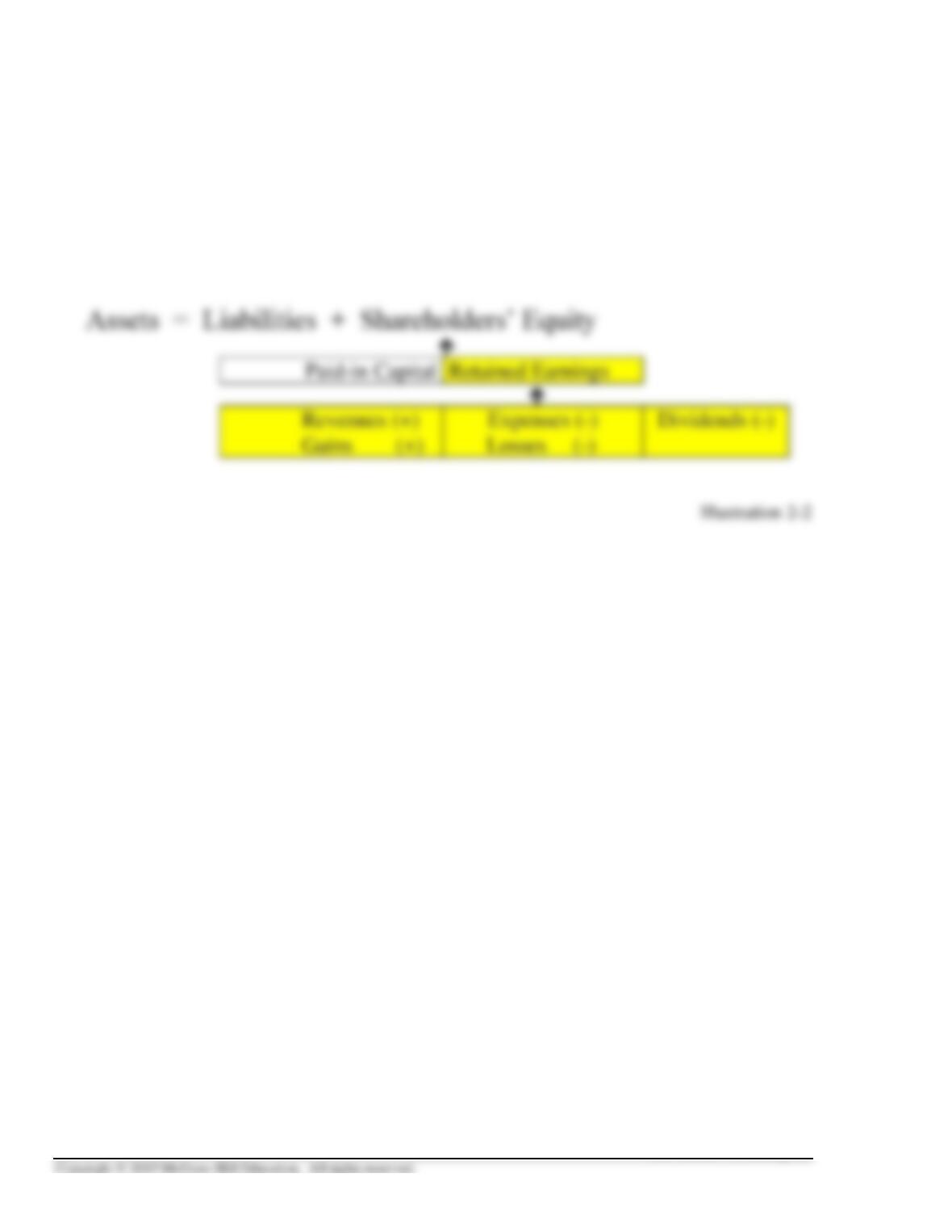
4. Services were performed on account for $10,000.
Transactions 4, 5, and 6 are revenue and expense transactions. Revenues and
5. Salaries of $5,000 were paid to employees.
6. $500 of supplies were used.
7. $1,000 was paid on account to the supplies vendor.
This transaction causes assets and liabilities to decrease.
T2-1 (continued)
2-6 Intermediate Accounting, 8/e
ACCOUNTING EQUATION FOR A CORPORATION
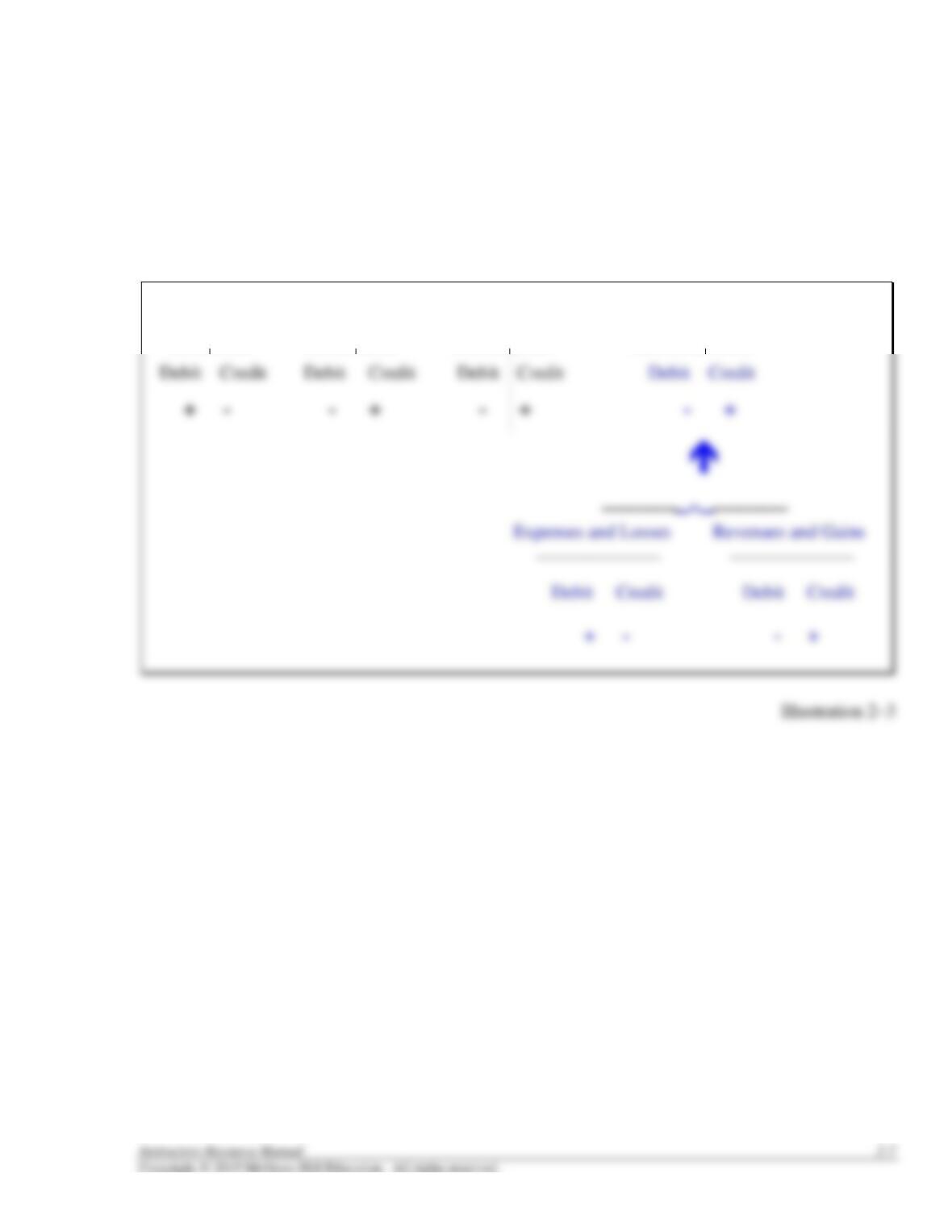
➢ Owners’ equity for a corporation, called shareholders’ equity,
is classified as either paid-in capital or retained earnings.
T2-2
ACCOUNTING EQUATION
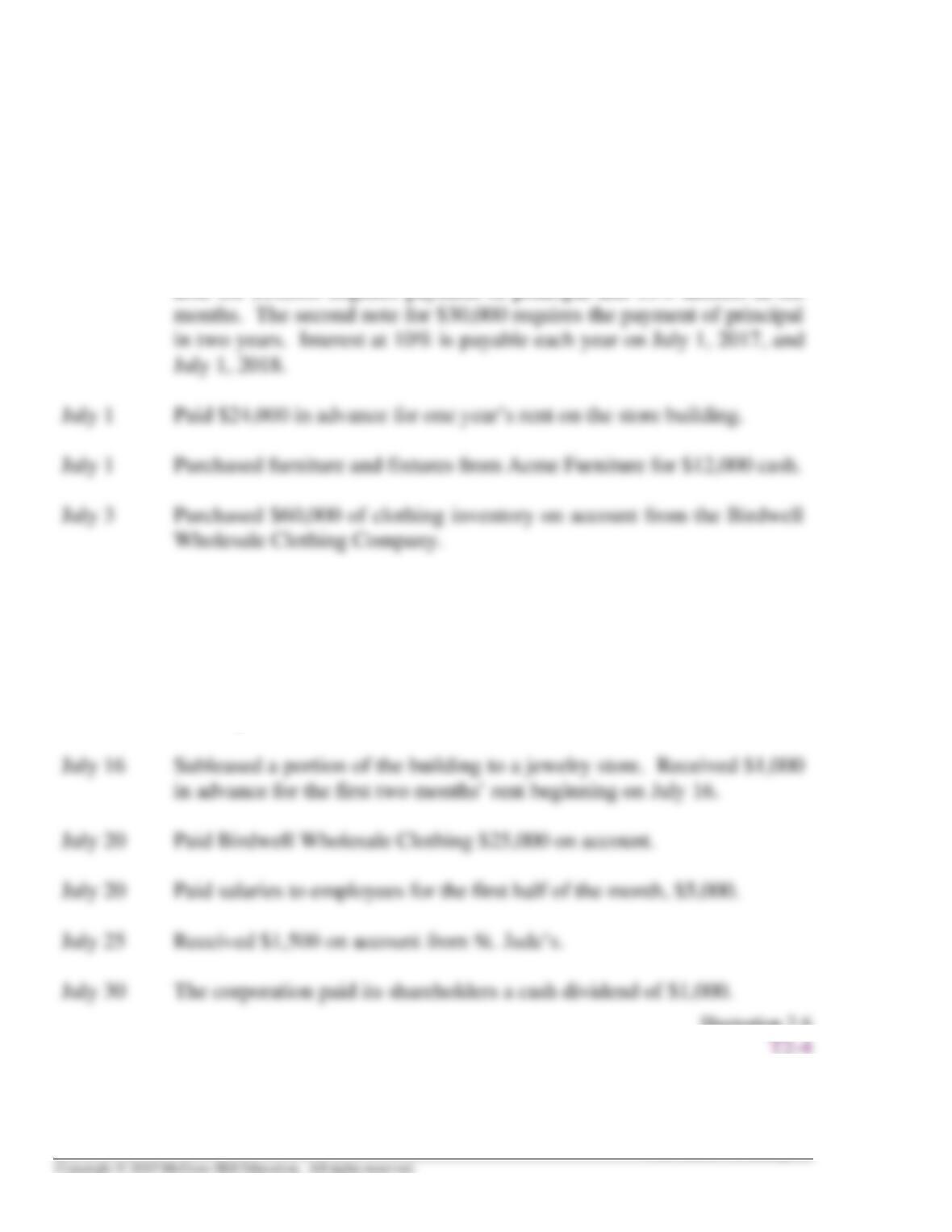
DEBITS AND CREDITS
INCREASES AND DECREASES
Assets = Liabilities + Paid-in Capital + Retained Earnings
___________ ____________ _____________ ________________
T2-3
2-8 Intermediate Accounting, 8/e
JOURNAL ENTRIES
July 1 Two individuals each invested $30,000 in the corporation. Each
investor was issued 3,000 shares of common stock.
July 1 Borrowed $40,000 from a local bank and signed two notes. The first
note for $10,000 requires payment of principal and 10% interest in six
July 6 Purchased $2,000 of supplies for cash.
July 4-31 During the month sold merchandise costing $20,000 for $35,000 cash.
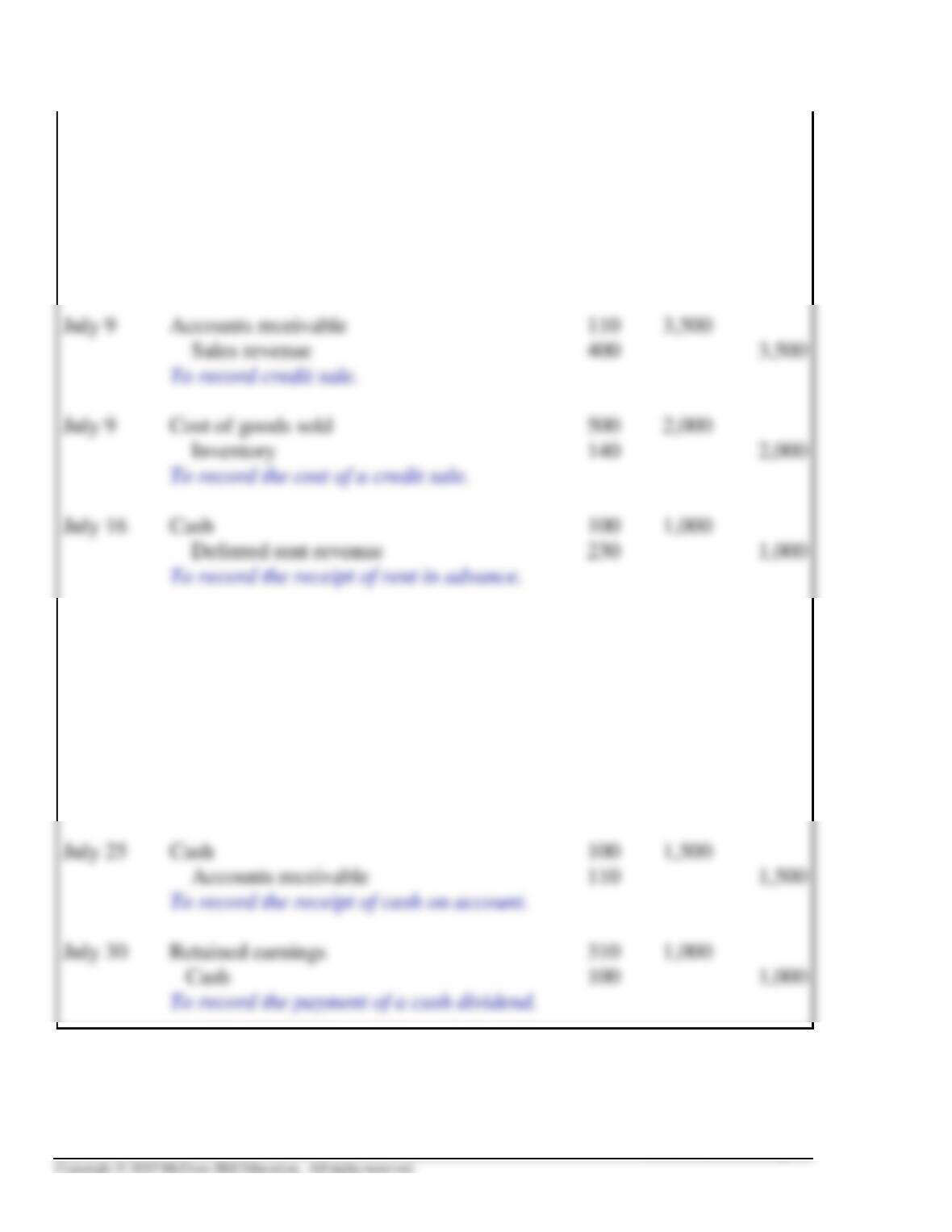
July 9 Sold clothing on account to St. Jude’s School for Girls for $3,500. The
clothing cost $2,000.
Illustration 2-6
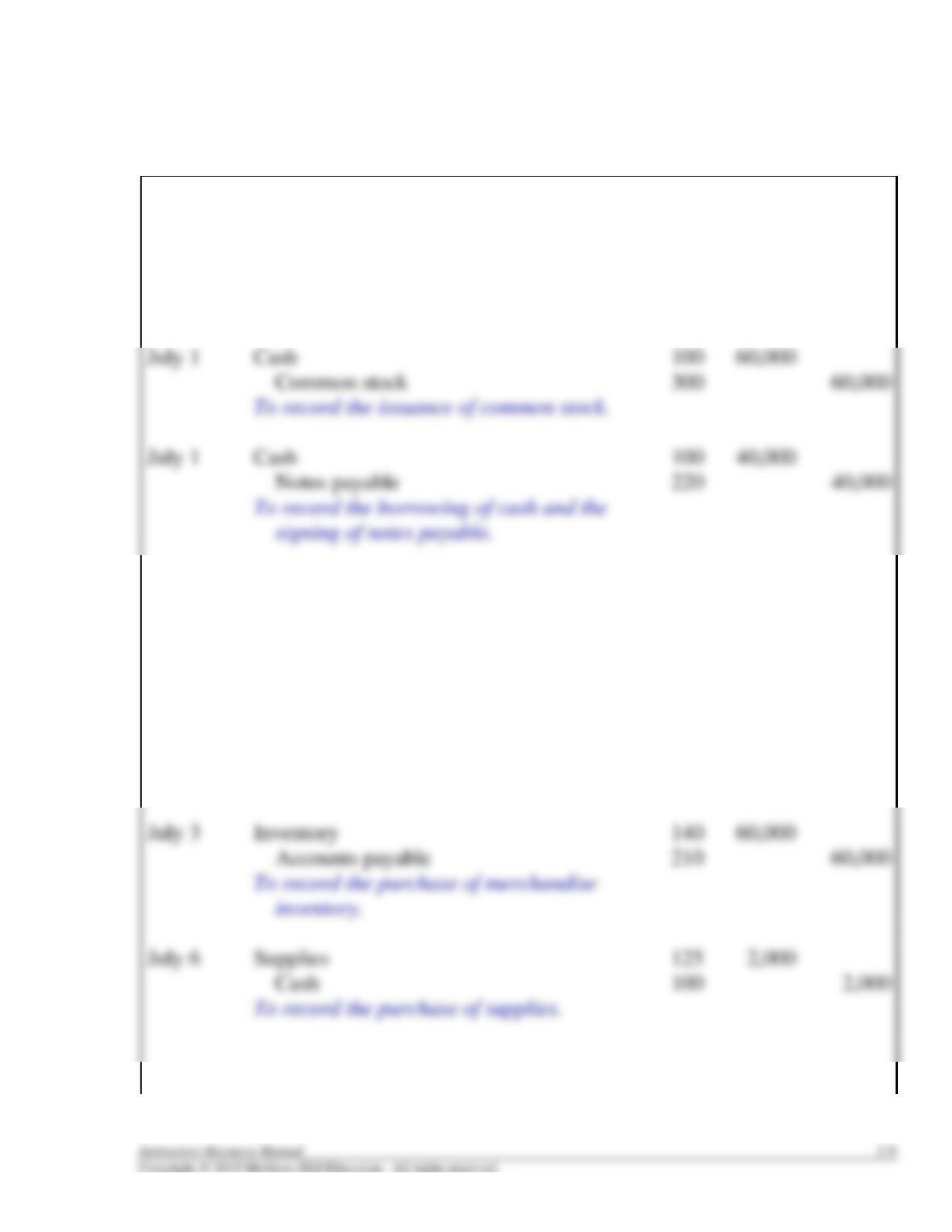
GENERAL JOURNAL
GENERAL JOURNAL
PAGE 1
Date
Account Title and Explanation
Post
Ref.
Debit
Credit
2016
July 1
Cash
Common stock
300
60,000
July 1
Cash
100
40,000
Notes payable
220
40,000
July 1
Prepaid rent
130
24,000
Cash
100
24,000
To record the payment of one year’s rent
in advance.
July 1
Furniture and fixtures
150
12,000
Cash
100
12,000
To record the purchase of furniture and
fixtures.
July 3
Inventory
Accounts payable
210
60,000
July 6
Supplies
125
2,000
Cash
100
2-10 Intermediate Accounting, 8/e
July 4-31
Cash
100
35,000
Sales revenue
400
35,000
To record cash sales for the month.
July 4-31
Cost of goods sold
500
20,000
Inventory
140
20,000
To record the cost of cash sales.
July 9
Accounts receivable
110
3,500
To record credit sale.
July 9
Cost of goods sold
500
2,000
Inventory
140
July 16
Cash
Deferred rent revenue
230
To record the receipt of rent in advance.
July 20
Accounts payable
210
25,000
Cash
100
25,000
To record the payment of accounts payable.
July 20
Salaries expense
510
5,000
Cash
100
5,000
To record the payment of salaries for the
first half of the month.
July 25
Cash
100
1,500
Accounts receivable
110
To record the receipt of cash on account.
July 30
Retained earnings
310
1,000
100
Illustration 2-7
T2-4 (continued)
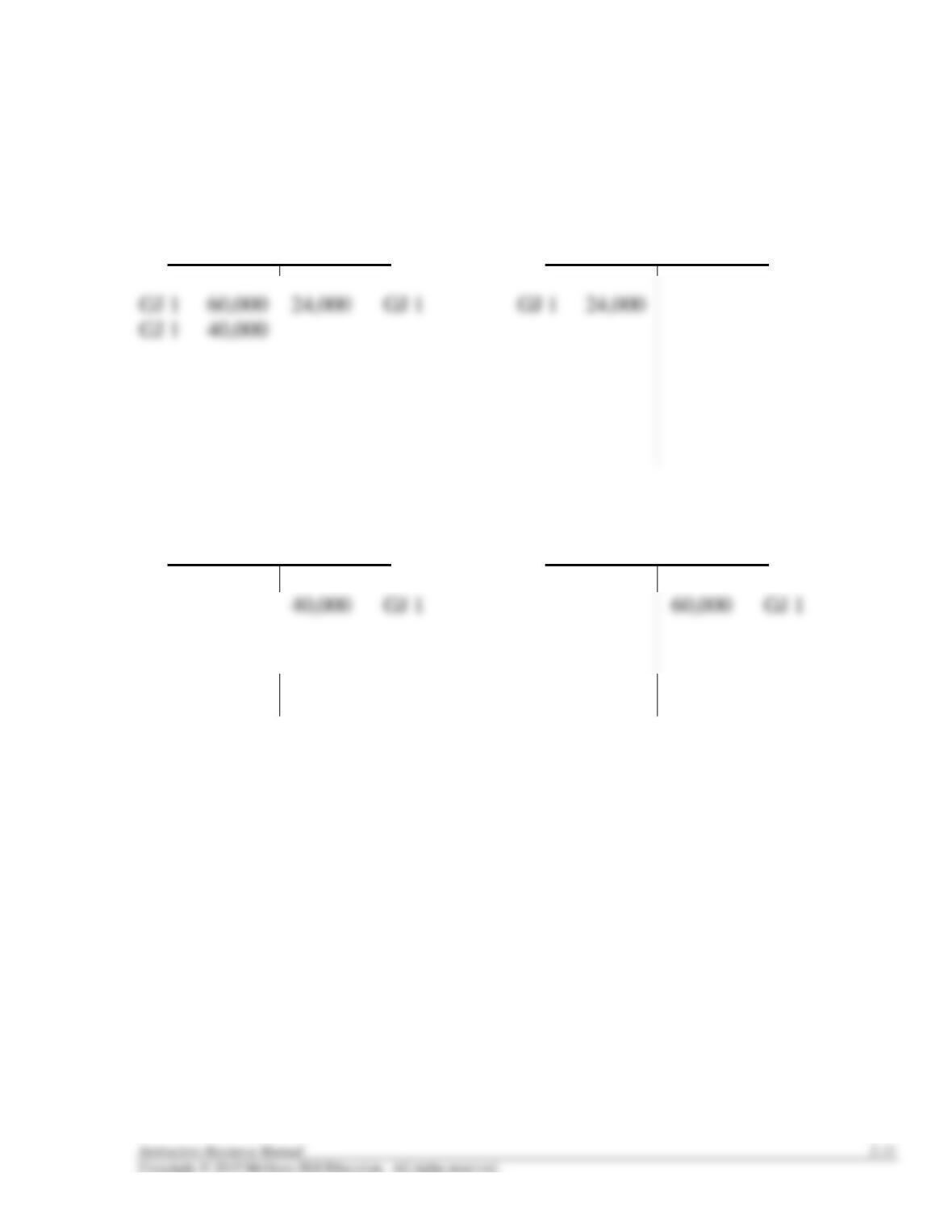
GENERAL LEDGER
Cash 100 Prepaid Rent 130
Note Payable 220 Common Stock 300
T2-5
2-12 Intermediate Accounting, 8/e
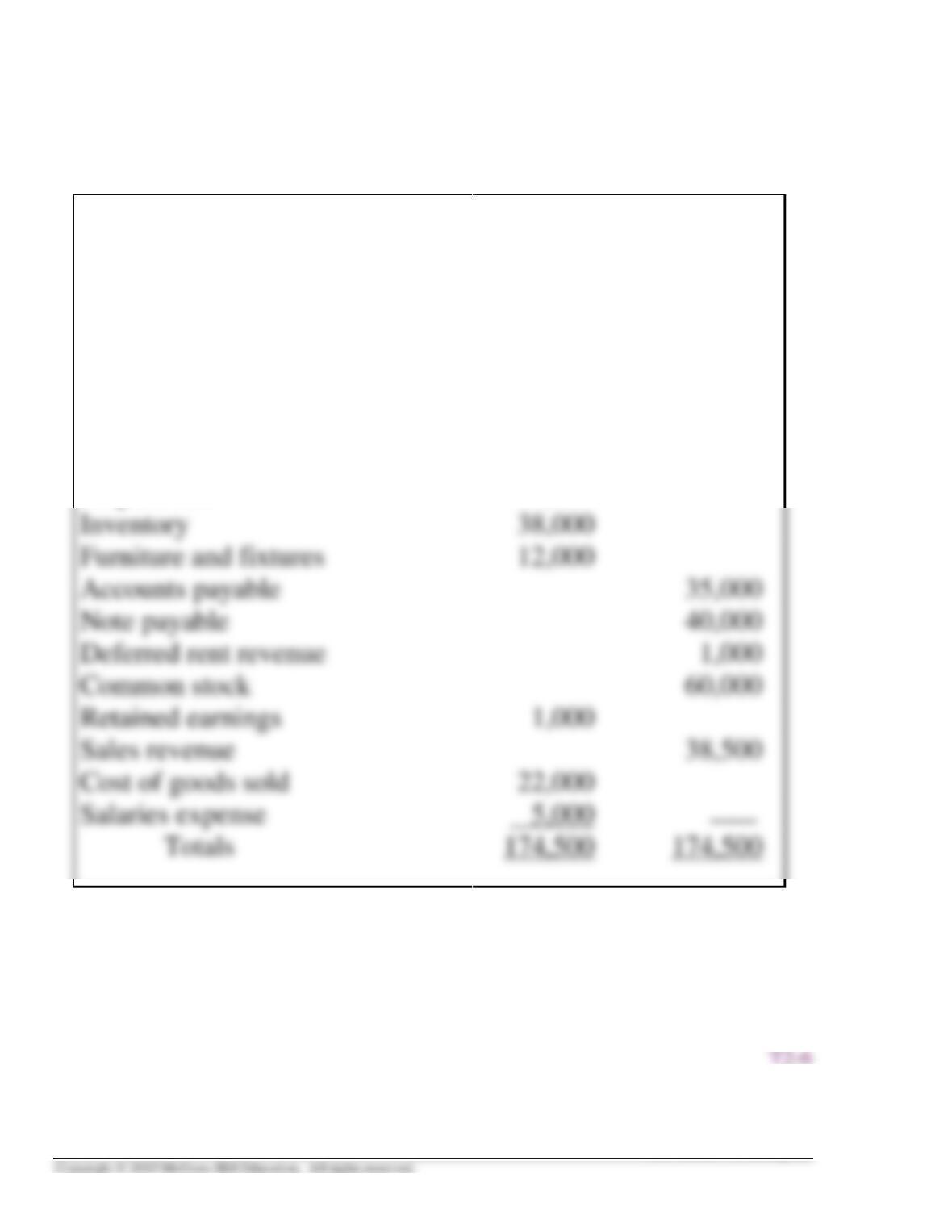
UNADJUSTED TRIAL BALANCE
DRESS RIGHT CLOTHING CORPORATION
Unadjusted Trial Balance
July 31, 2016
Account Title
Debits
Credits
Cash
68,500
Accounts receivable
2,000
Supplies
2,000
Prepaid rent
24,000
Inventory
38,000
Furniture and fixtures
12,000
Accounts payable
35,000
Note payable
40,000
Deferred rent revenue
1,000
Common stock
60,000
Retained earnings
1,000
Sales revenue
38,500
Cost of goods sold
22,000
Salaries expense
Illustration 2-9
ADJUSTING ENTRIES
➢ Even when all external transactions and events are analyzed,
journalized, and posted correctly to the appropriate ledger
accounts, some account balances will require updating.
Adjusting Entries
Prepaid Expenses Deferred Revenues
Illustration 2-10
T2-7
2-14 Intermediate Accounting, 8/e
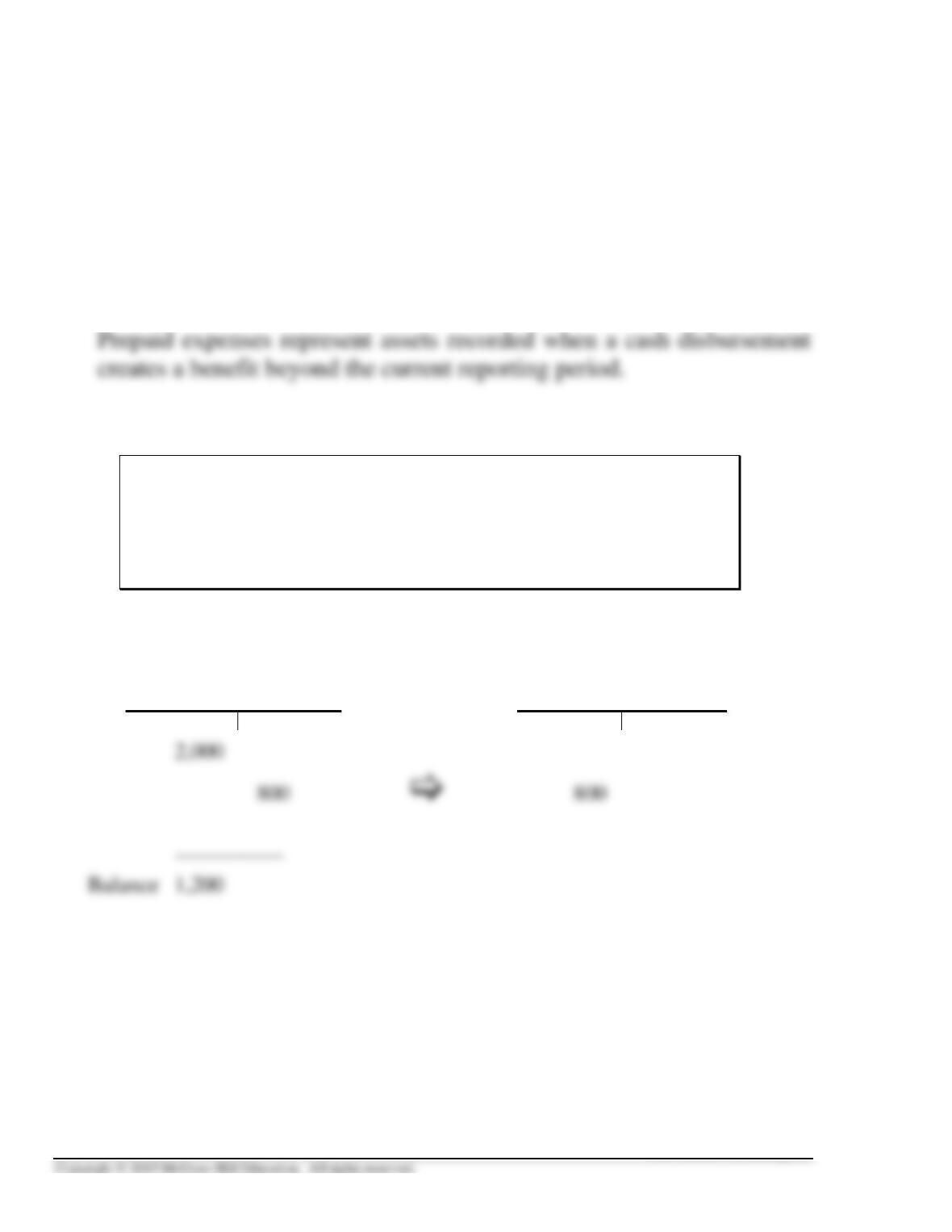
PREPAYMENTS
Prepayments occur when the cash flow precedes either
expense or revenue recognition.
➢ PREPAID EXPENSES
To record the cost of supplies used during the month of July.
July 31
Supplies expense …………………………... 800
Supplies ……………………………………. 800
Supplies Supplies expense
T2-8
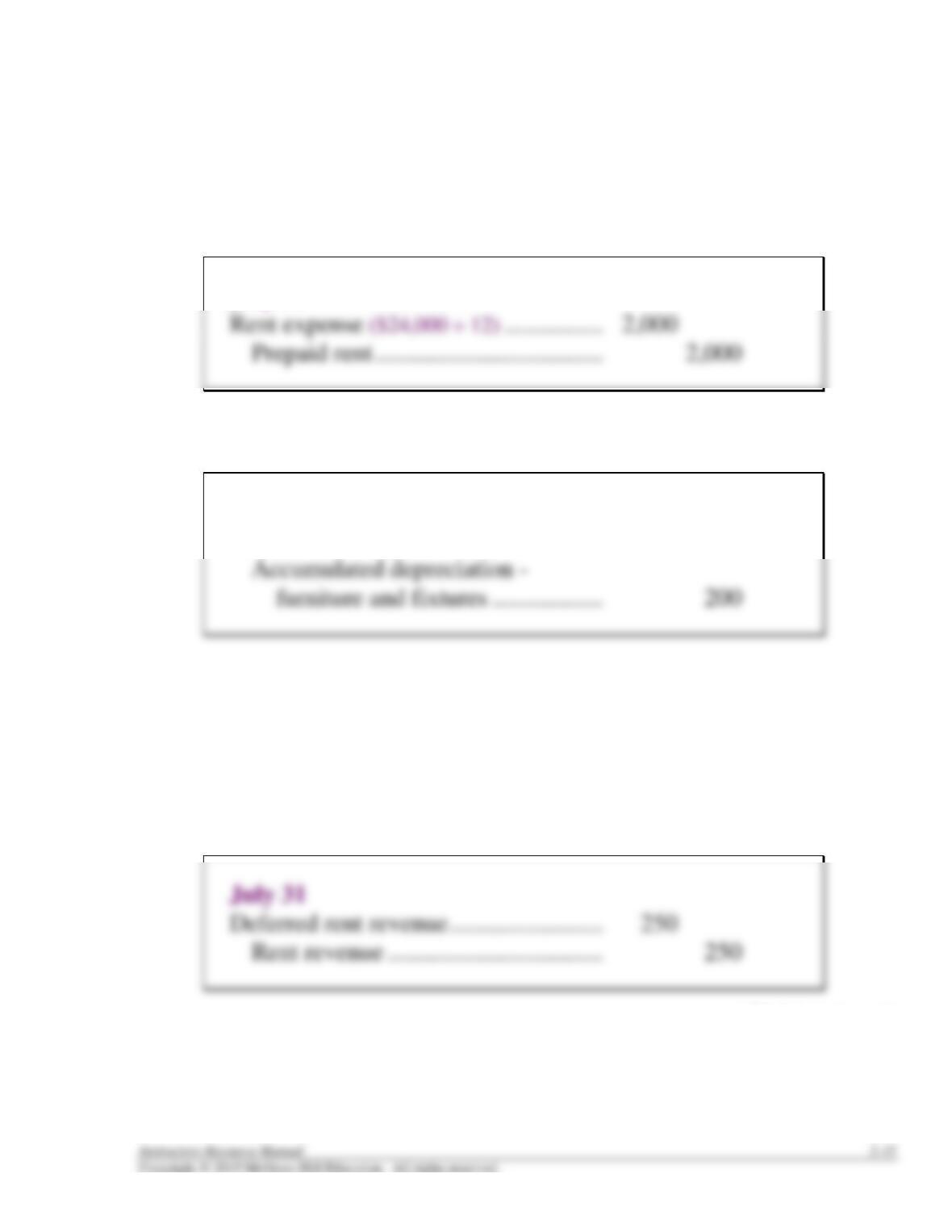
PREPAYMENTS
(continued)
To record the cost of expired rent for the month of July.
July 31
To record depreciation of furniture and fixtures for the month of July.
July 31
Depreciation expense ……………………. 200
➢ DEFERRED REVENUES
Deferred revenues represent liabilities recorded when cash is received
from customers in advance of providing a good or service.
To record the amount of deferred rent revenue recognized during July.
T2-8 (continued)