Index and Classification Properties of Soils Chapter 2
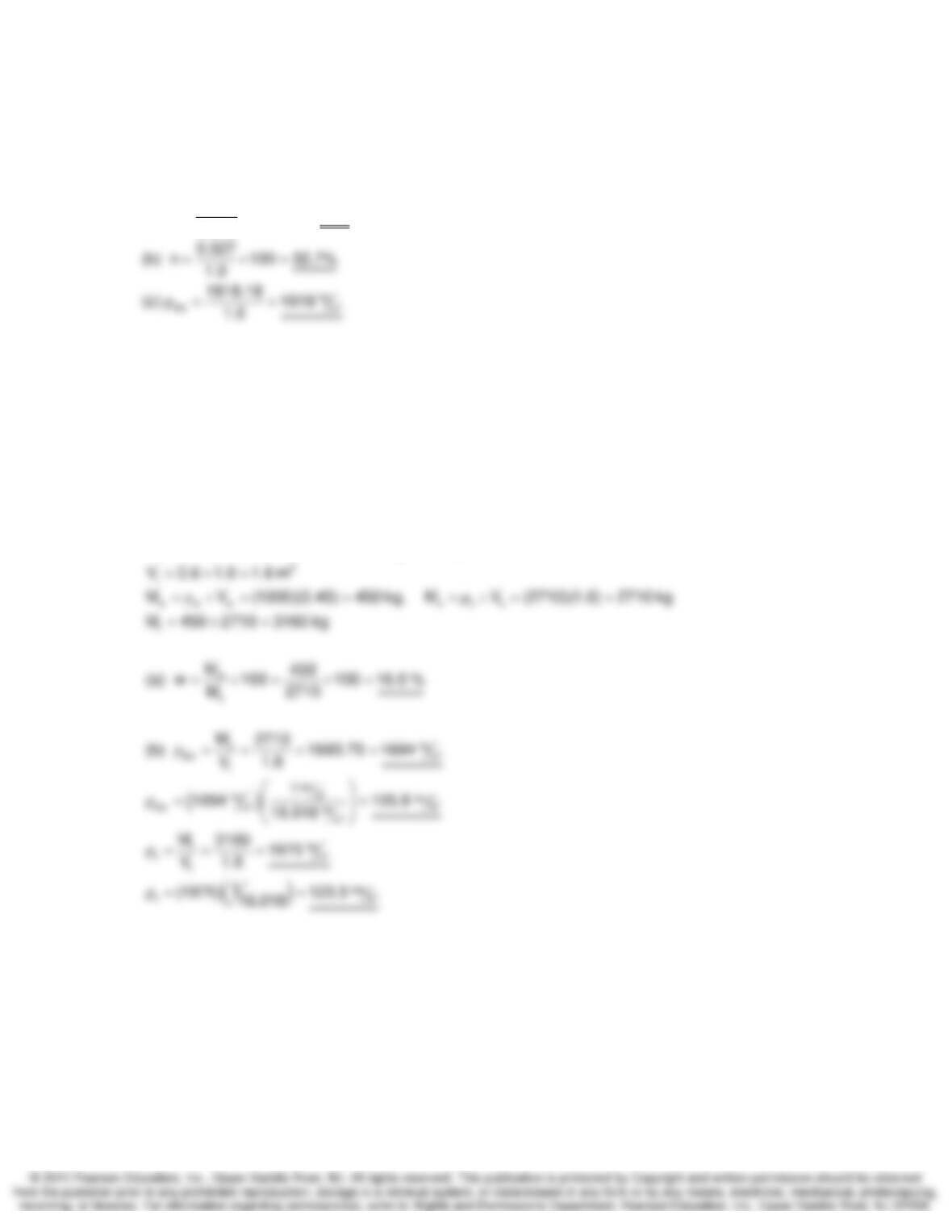
2.37. For the information given in Problem 2.36, calculate (a) the void ratio, (b) the porosity, and
(c) the dry density.
SOLUTION:
0.327
(a) e 0.4859 0.49
0.673
== =
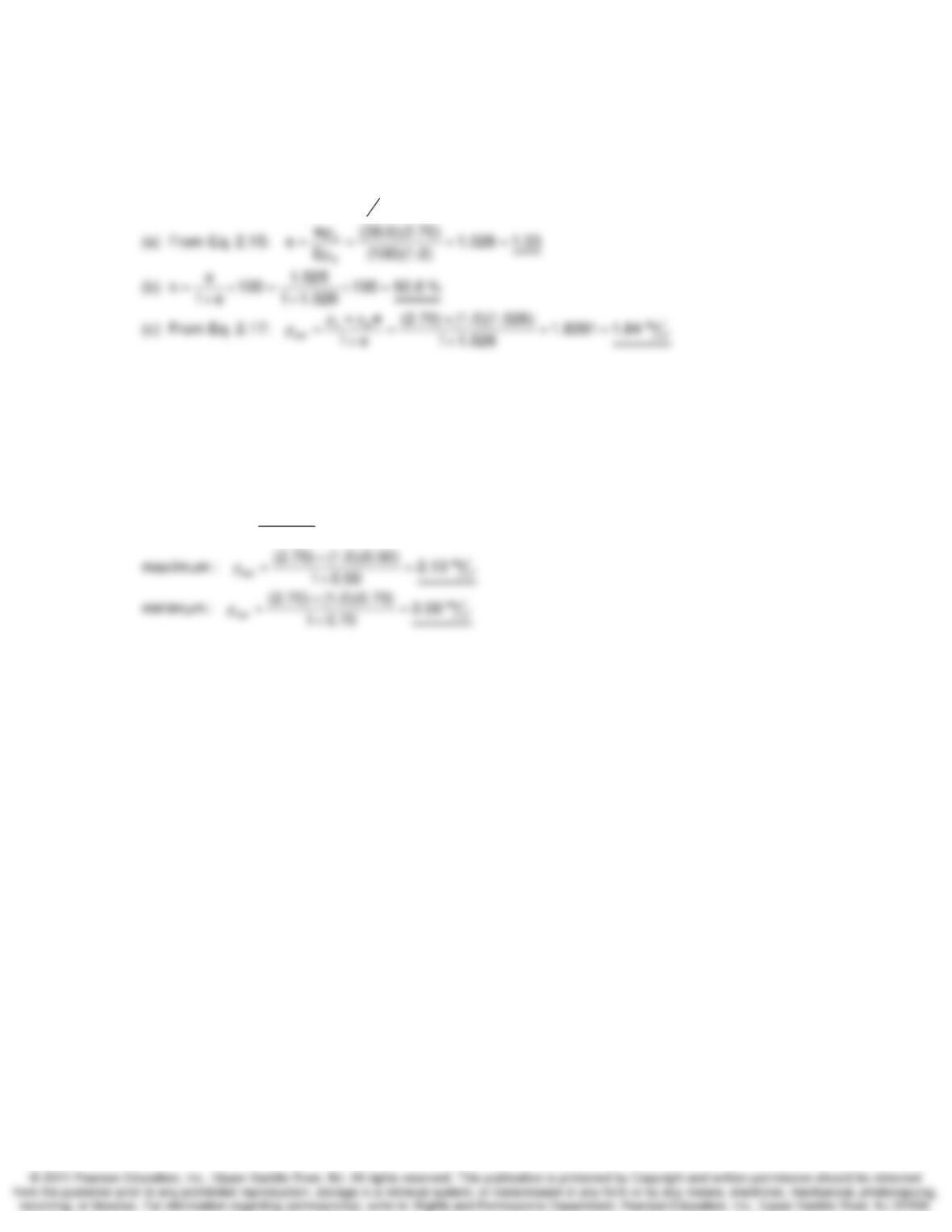
2.38. The void ratio of clay soil is 0.6 and the degree of saturation is 75%. Assuming the density
of the solids is 2710 kg/m3, compute (a) the water content and (b) dry and wet densities in both SI
and British engineering units.
SOLUTION:
3
s
33
vs w v
Assume V 1.0 m
V e V (0.6)(1.0) 0.6 m , V S V (0.75)(0.6) 0.45 m
=
=× = = =× = =
Index and Classification Properties of Soils Chapter 2
2.39. A specimen of saturated glacial clay has a water content of 38%. On the assumption that
ρ
s
= 2.70 Mg/m3, compute the void ratio, porosity, and saturated density.
SOLUTION:
3
Mg
sm
w = 38%, S = 100%, 2.70
ρ=
2.40. The values of minimum e and maximum e for a pure silica sand were found to be 0.50 and
0.70, respectively. What is the corresponding range in the saturated density in kg/m3?
SOLUTION:
sw
sat
e
Eq. 2.17: 1e
ρ+ρ
ρ= +
Index and Classification Properties of Soils Chapter 2
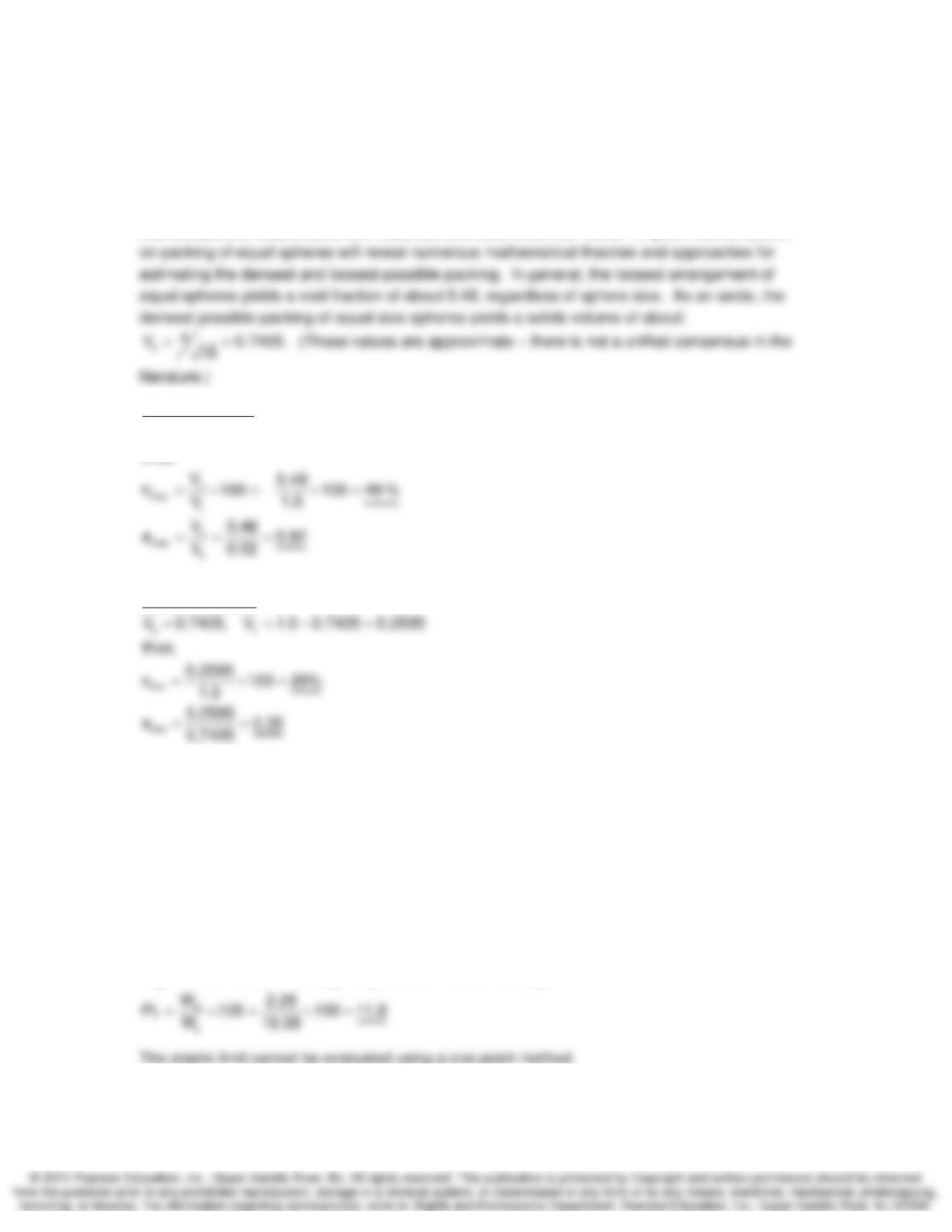
2.41. Calculate the maximum possible porosity and void ratio for a collection of (a) tennis balls
(assume they are 64.14 mm in diameter) and (b) tiny ball bearings 0.3 mm in diameter.
SOLUTION:
Three-dimensional particle arrangement of equal spheres has been studied in depth by
mathematicians, statisticians, and materials scientists since the 1600s. A quick internet search
tv s
Loosest packing
For V 1.0, V 0.48, and V 1 0.48 0.52
thus;
Densest packing (not required in problem statement)
== =−=
2.42. A plastic-limit test has the following results:
Wet weight + container = 23.12 g
Dry weight + container = 20.84 g
Container weight = 1.46 g
Compute the PL of the soil. Can the plastic limit be evaluated by a one-point method?
SOLUTION:
ws
W 23.12 20.84 2.28 g, W 20.84 1.46 19.38 g
=−= =−=
2.43. During a plastic-limit test, the following data was obtained for one of the samples:
Wet weight + container = 23.13 g
Index and Classification Properties of Soils Chapter 2
Dry weight + container = 19.12 g
Container weight = 1.50 g
What is the PL of the soil?
SOLUTION:
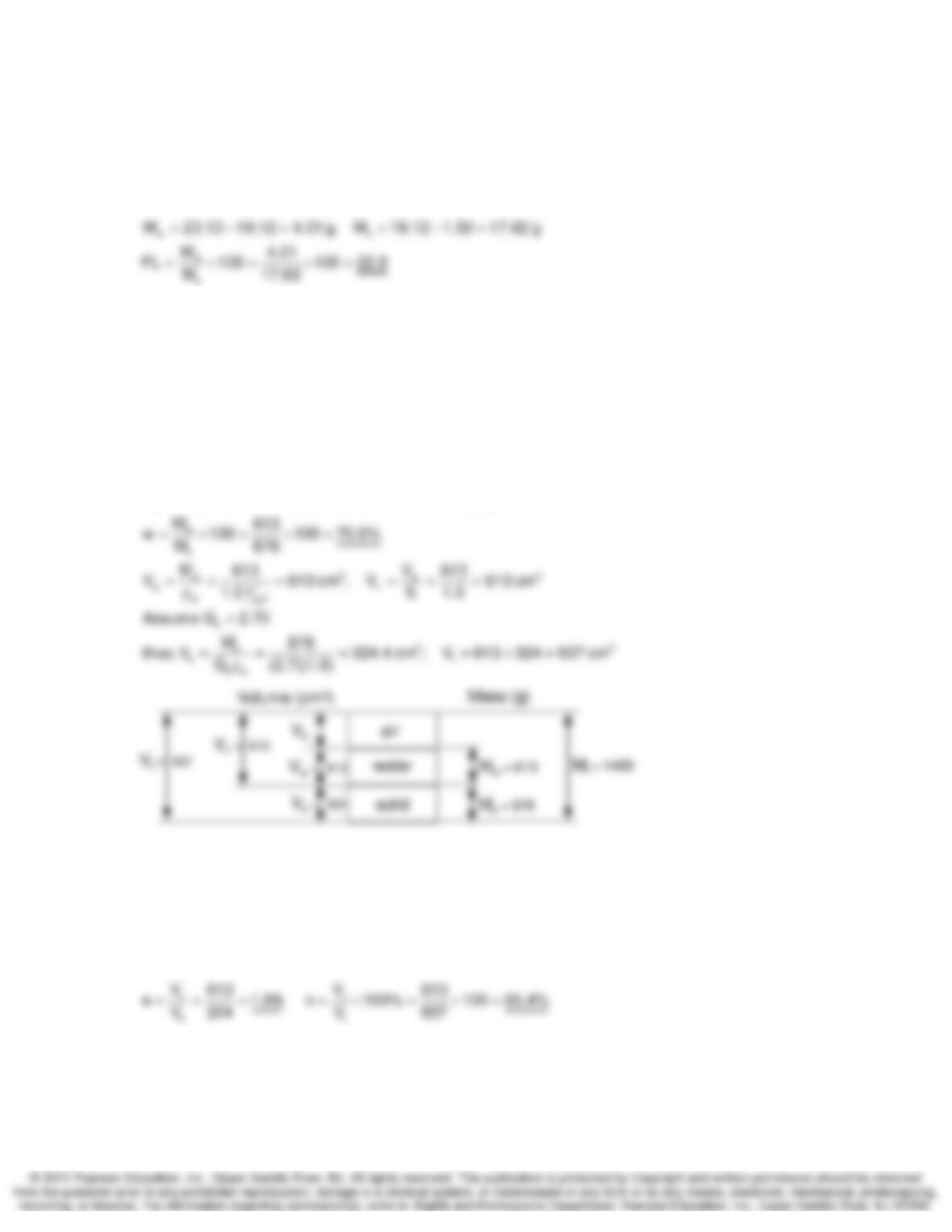
2.44. The degree of saturation of a cohesive soil is 100%. The clay when wet weighs 1489 g and
after drying weighs only 876 g. Find the water content of the soil. Draw a phase diagram and
properly label it.
SOLUTION:
ts
wt
S 100%, M 1489 g, M 876 g
M 1489 876 613 g; M 876 613 1489 g
== =
=−= =+=
2.45. For the soil in the previous problem, compute the void ratio and the porosity. Does your
answer compare with what you would expect for a saturated cohesive soil?
SOLUTION:
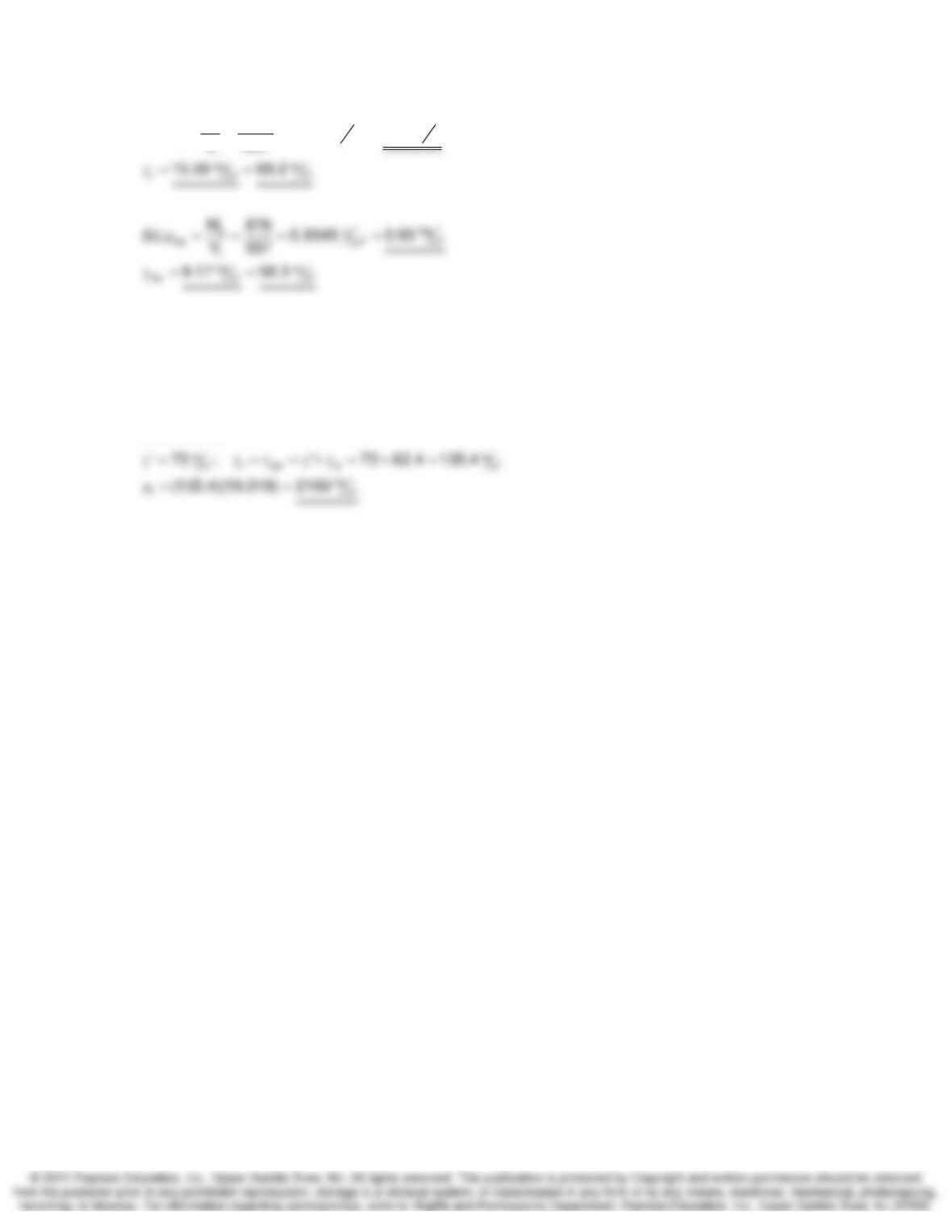
2.46. For the soil in the previous two problems, compute (a) the total or wet density and (b) the
dry density. Provide your answers in units of Mg/m3, kN/m3, and lbf/ft3.
SOLUTION:
Index and Classification Properties of Soils Chapter 2
33
tgMg
tcm m
M1489
(a) 1.5891 1.59
V 937
ρ= = = =
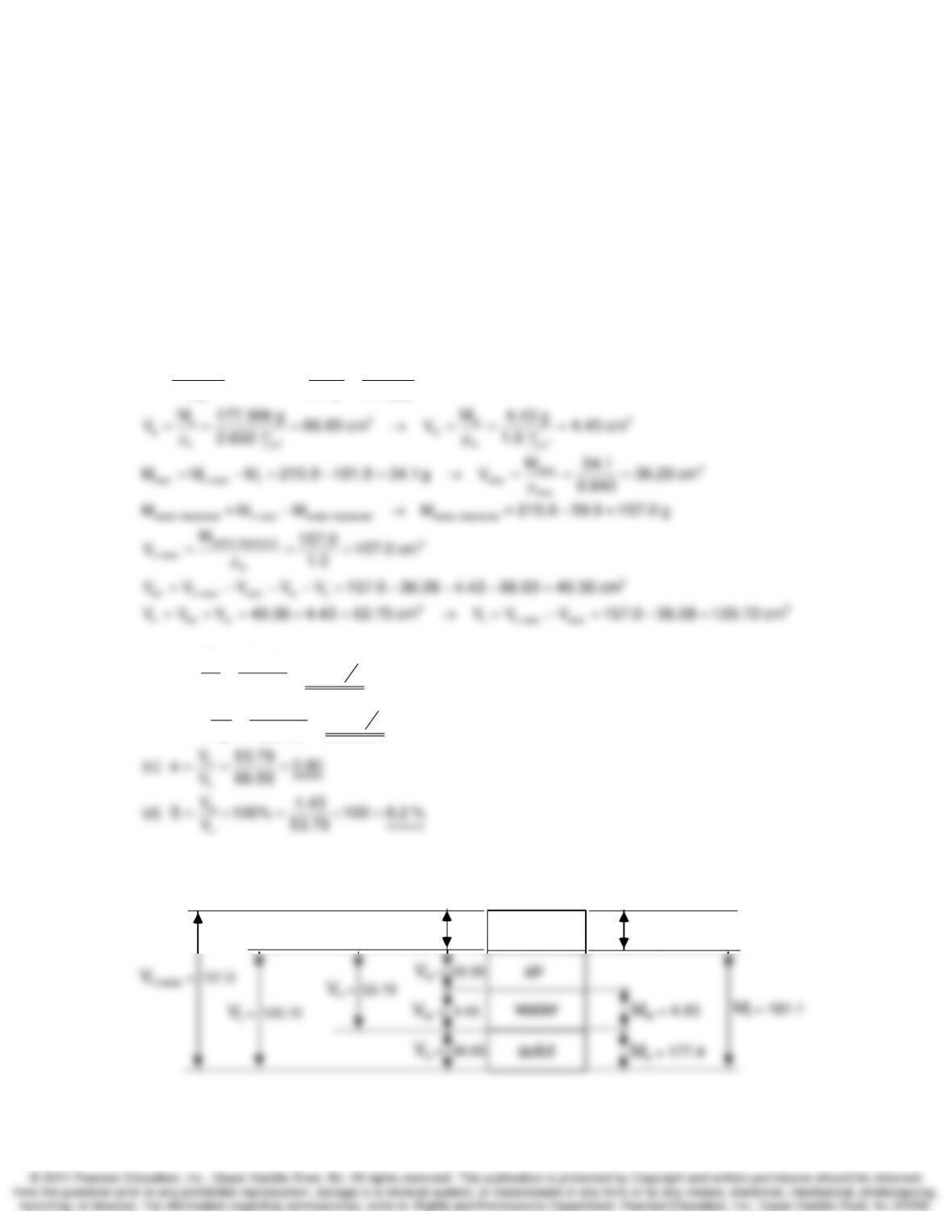
2.47. A soil specimen had a buoyant density of 73 pounds per cubic foot. Calculate its wet
density in kg/m3.
SOLUTION:
Index and Classification Properties of Soils Chapter 2
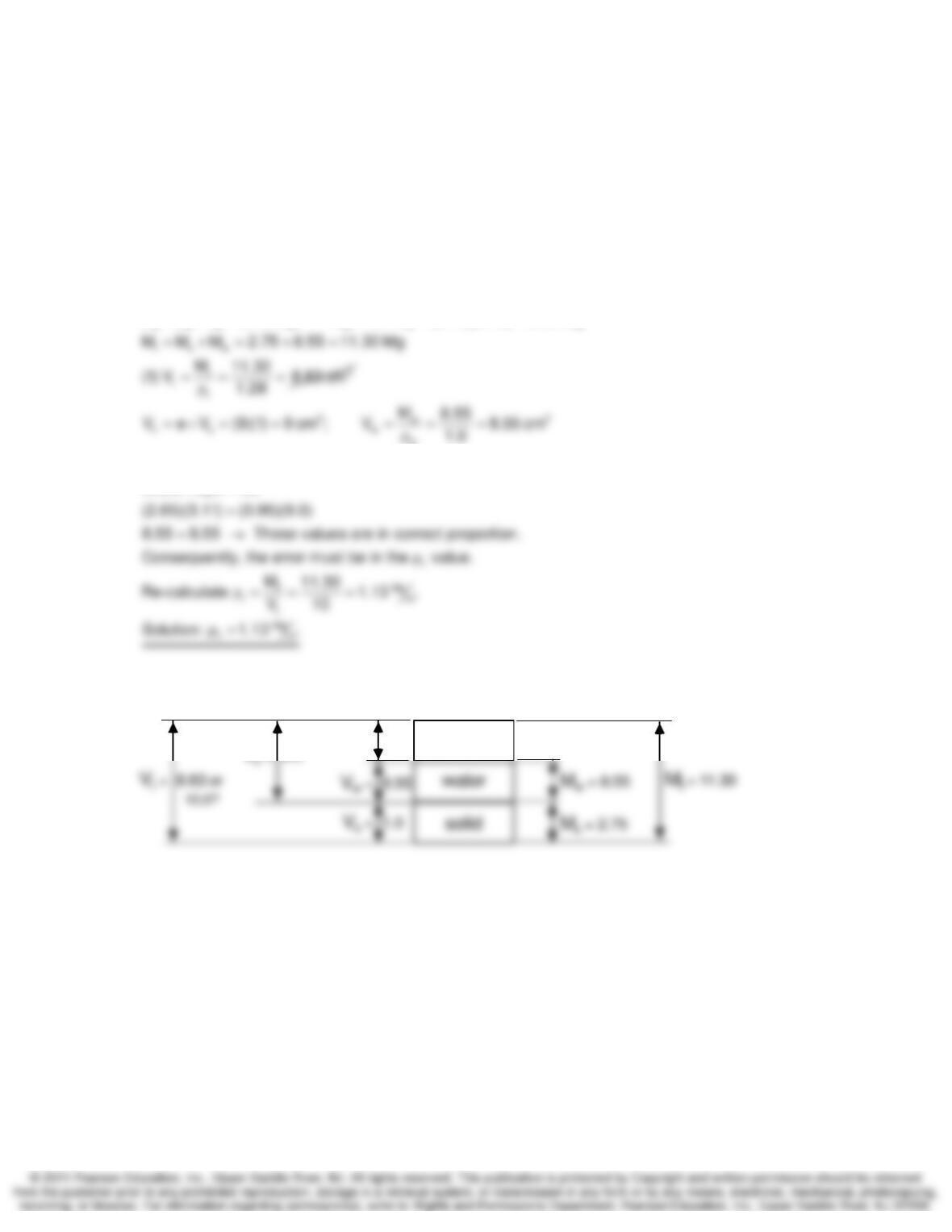
2.53. The “chunk density” method is often used to determine the unit weight of a specimen of
irregular shape. A specimen of cemented silty sand is treated in this way to obtain the “chunk
density.” From the information given below, determine the (a) wet density, (b) dry density, (c) void
ratio, and (d) degree of saturation of the sample.
Mass of specimen at natural water content in air = 181.8 g
Mass of specimen + wax coating in air = 215.9 g
Mass of specimen + wax in water = 58.9 g Natural water content = 2.5%
Soil solid density = 2650 kg/m3 Wax solid density = 940 kg/m3
SOLUTION:
ts t
swts
MM M 181.8
w M 177.366 g M M M 181.8 177.4 4.43 g
M 1 w 1 .025
−
= →== = →=−=−=
++
3
3
tMg
tm
t
sMg
dry m
t
M181.8
(a) 1.50
V120.72
M177.366
(b) 1.47
V 120.72
ρ= = =
ρ= = =
Mass (g)
Volume (cm
3
)
wax M
wax =34.1
V
wax =
36.28
Index and Classification Properties of Soils Chapter 2
2.54. A sensitive volcanic clay soil was tested in the laboratory and found to have the following
properties:
(a)
ρ
= 1.28 Mg/m3, (b) e = 0.90, (c) S = 95%, (d)
ρ
s = 2.75 Mg/m3, (e) w = 311%.
In rechecking the above values, one was found to be inconsistent with the rest. Find the
inconsistent value and report it correctly. Show all your computations and phase diagrams.
SOLUTION:
3
s
sss w s
Assume V 1 cm
M V 2.75 Mg; M w M (3.11)(2.75) 8.55 Mg
=
=ρ × = = × = =
w
33
tvs
(2) V V V 9 1 10 cm 8.83 cm
check : G w Se
=+=+= ≠
=
air
V
a
V
Mass (Mg)
Volume (m
3
)
Index and Classification Properties of Soils Chapter 2
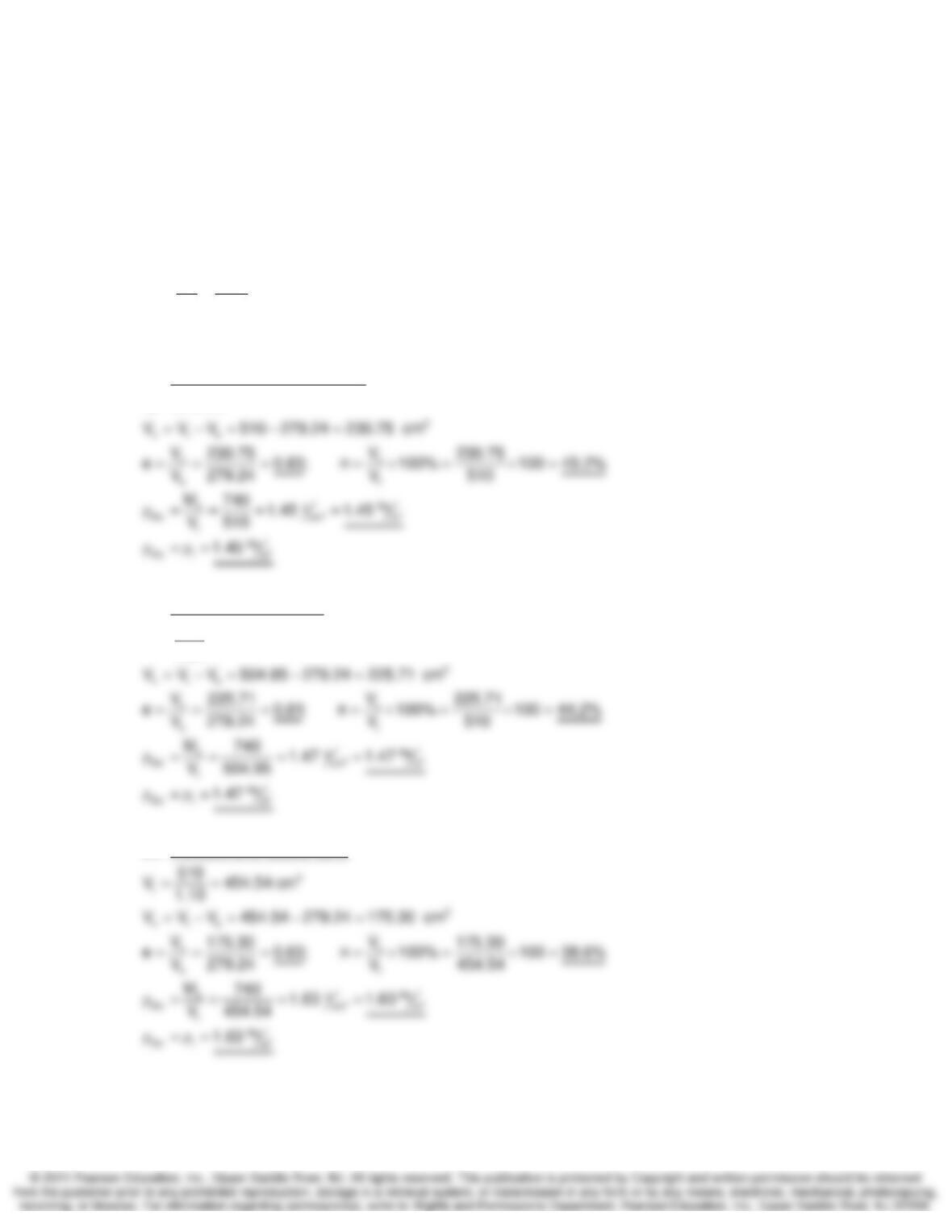
2.55. A cylinder contains 510 cm3 of loose dry sand which weighs 740 g. Under a static load of
200 kPa the volume is reduced 1%, and then by vibration it is reduced 10% of the original
volume. Assume the solid density of the sand grains is 2.65 Mg/m3. Compute the void ratio,
porosity, dry density, and total density corresponding to each of the following cases:
(a) Loose sand. (b) Sand under static load. (c) Vibrated and loaded sand.
SOLUTION:
3
s
st
s
ww
3
t
M740
V 279.24 cm ; M 740 g;
2.65
dry sand: M V 0.0
(a) Loose sand – initial condition
V 510 cm
== = =
ρ
==
=
3
t
(b) Sand under static load
510
V 504.95 cm
1.01
==
(c) Vibrated and loaded sand
Index and Classification Properties of Soils Chapter 2
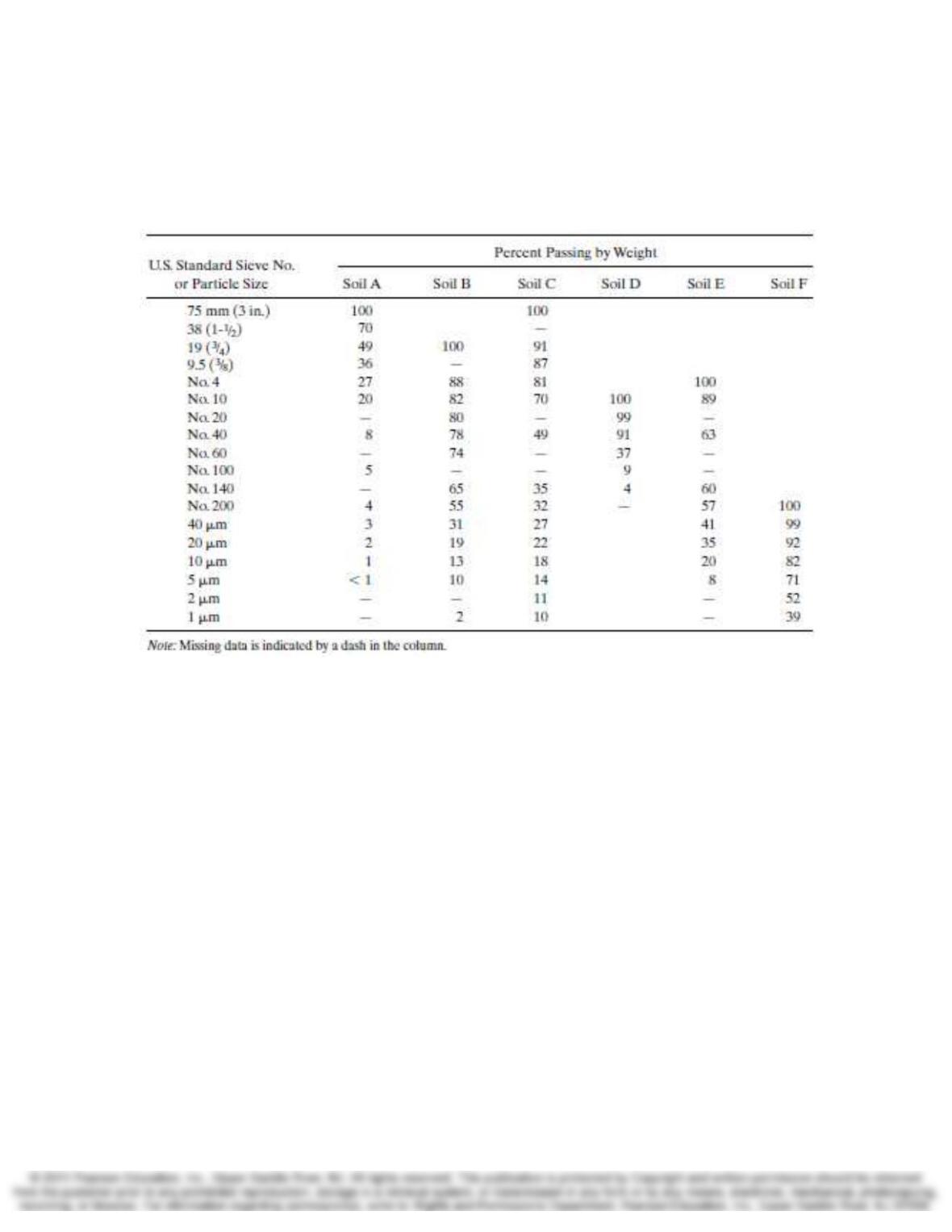
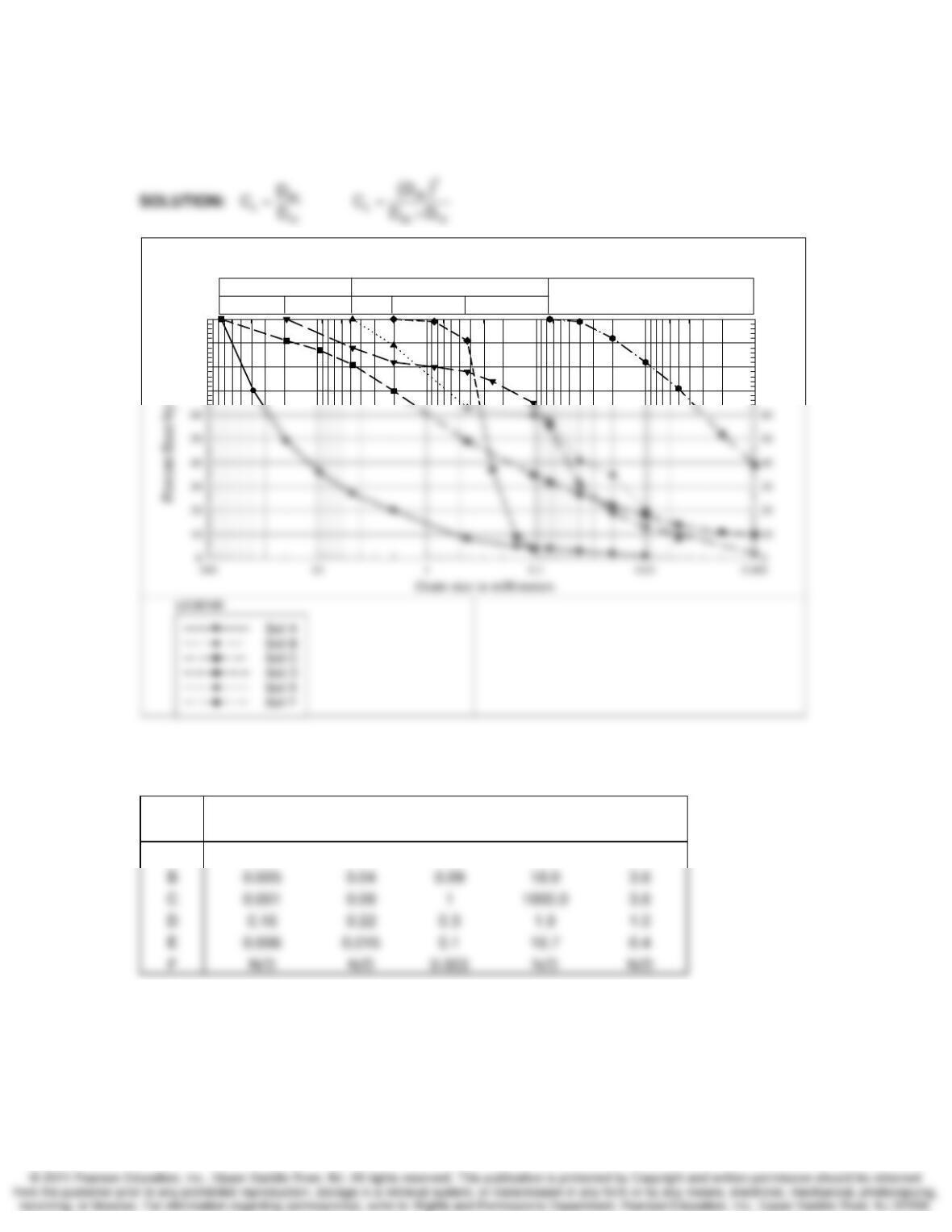
2.56. On five-cycle semilogarithmic paper, plot the grain-size distribution curves from the
following mechanical analysis data on six soils, A through F. For each soil determine the effective
size as well as the uniformity coefficient and the coefficient of curvature. Determine also the
percentages of gravel, sand silt, and clay according to (a) ASTM, (b) AASHTO, (c) USCS, and (d)
the British Standard.
continued next page
Index and Classification Properties of Soils Chapter 2
2.56. continued.
SILT or CLAY
Particle Size Distribution
70
80
90
100
70
80
90
100
SANDGRAVEL
Coarse Fine Course Medium Fine
Soil Effective Size D30 D60 CuCc
D10 (mm) (mm) (mm)
A0.6 62846.72.1
continued next page
Index and Classification Properties of Soils Chapter 2
2.56. continued.
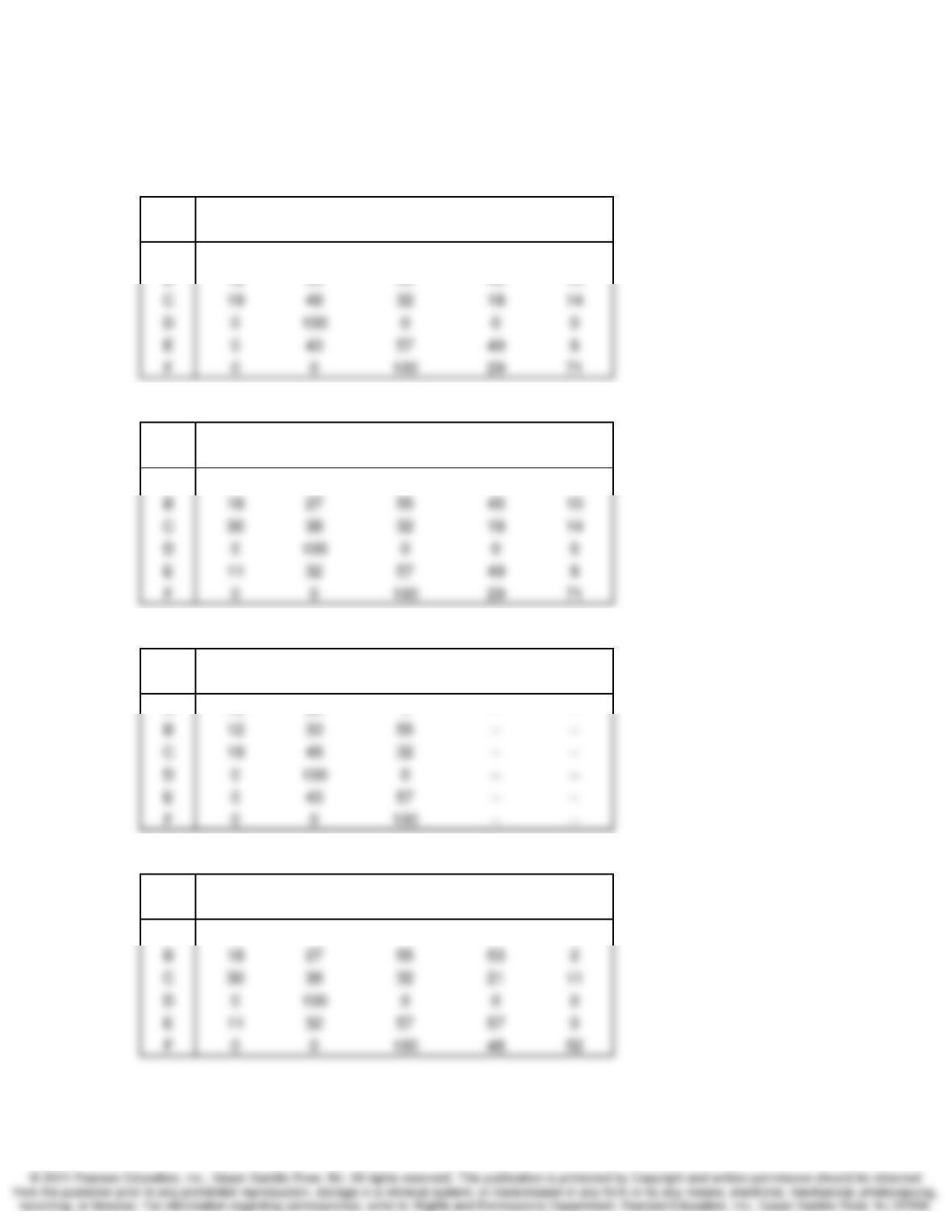
(a) Percentages according to ASTM.
Soil Gravel Sand Silt Clay
(%) (%) (%) (%)
A73 23 4 0
B12 33 45 10
(b) Percentages according to AASHTO.
Soil Gravel Sand Silt Clay
(%) (%) (%) (%)
A80 16 4 0
(c) Percentages according to USCS.
Soil Gravel Sand Silt Clay
(%) (%) (%) (%)
A73 23 –– ––
(d) Percentages according to the British Standard.
Soil Gravel Sand Silt Clay
(%) (%) (%) (%)
A80 16 4 0
Fines
(silt + clay)
4
Fines
(silt + clay)
4
Fines
(silt + clay)
4
55
Fines
(silt + clay)
4