TVM-21
PM-6
1. o
P = )
in,
o
C(P
3. deferred
P = )]
ik,
o
(P)
ik,n
o
C[(P
−
+
deferred
P = )]
5.5%i5,k
o
(P)
5.5%i13,kn
o
C[(P ==
−
==+
PM-6 (continued)
3. (continued)
PM-7
1. o
P = )
in,
o
C(P
2. d
P = )
in,
d
C(P
TVM-23
PM-7 (continued)
3. deferred
P = )]
ik,
o
(P)
ik,n
o
C[(P
−
+
or
deferred
P = )]
ik,
)(p
in,
o
C[(P
PM-8
1. o
P = )
in,
o
C(P
TVM-24
PM-8 (continued)
2. o
P = )
in,
o
C(P
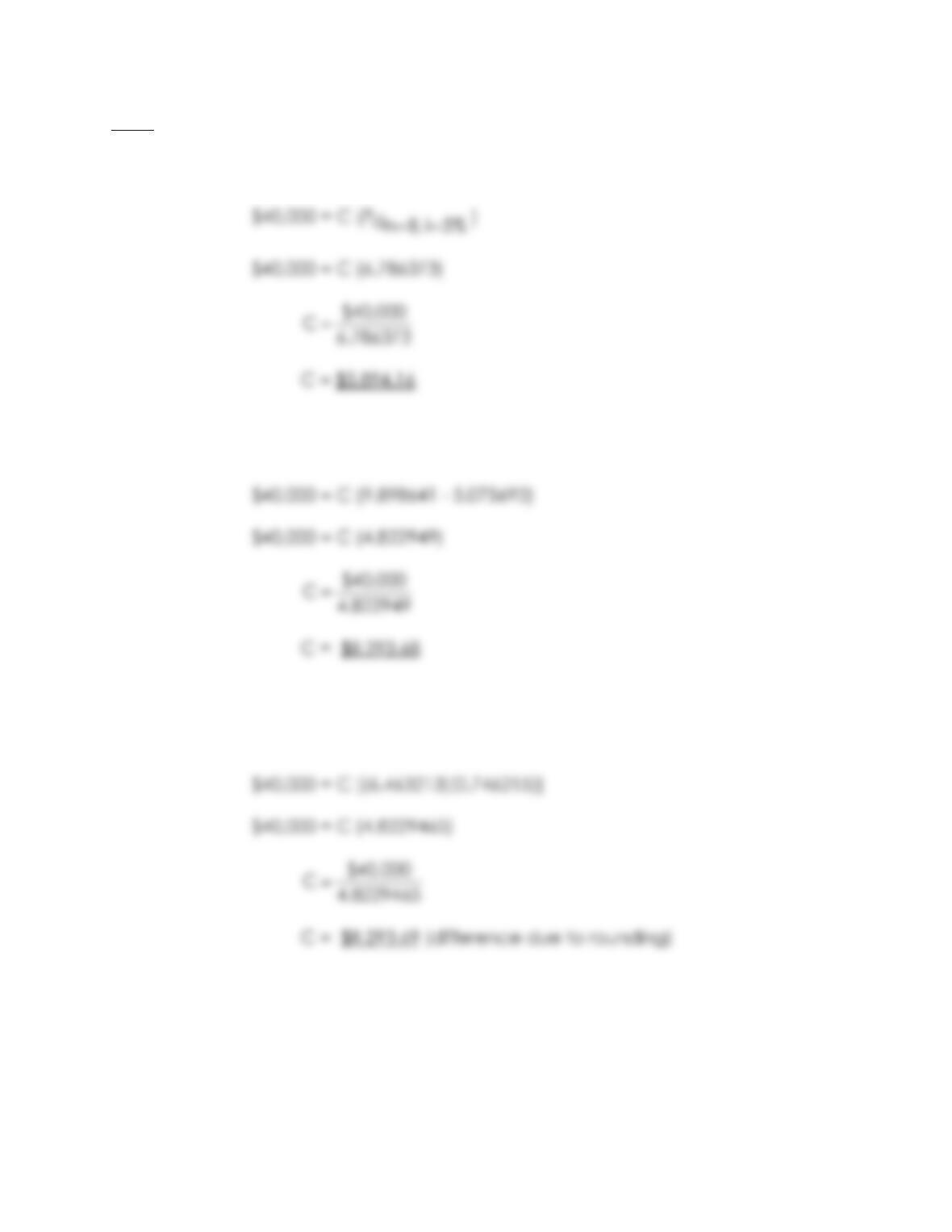
PM-9
1. o
P = )
in,
o
C(P
TVM-25
PM-9 (continued)
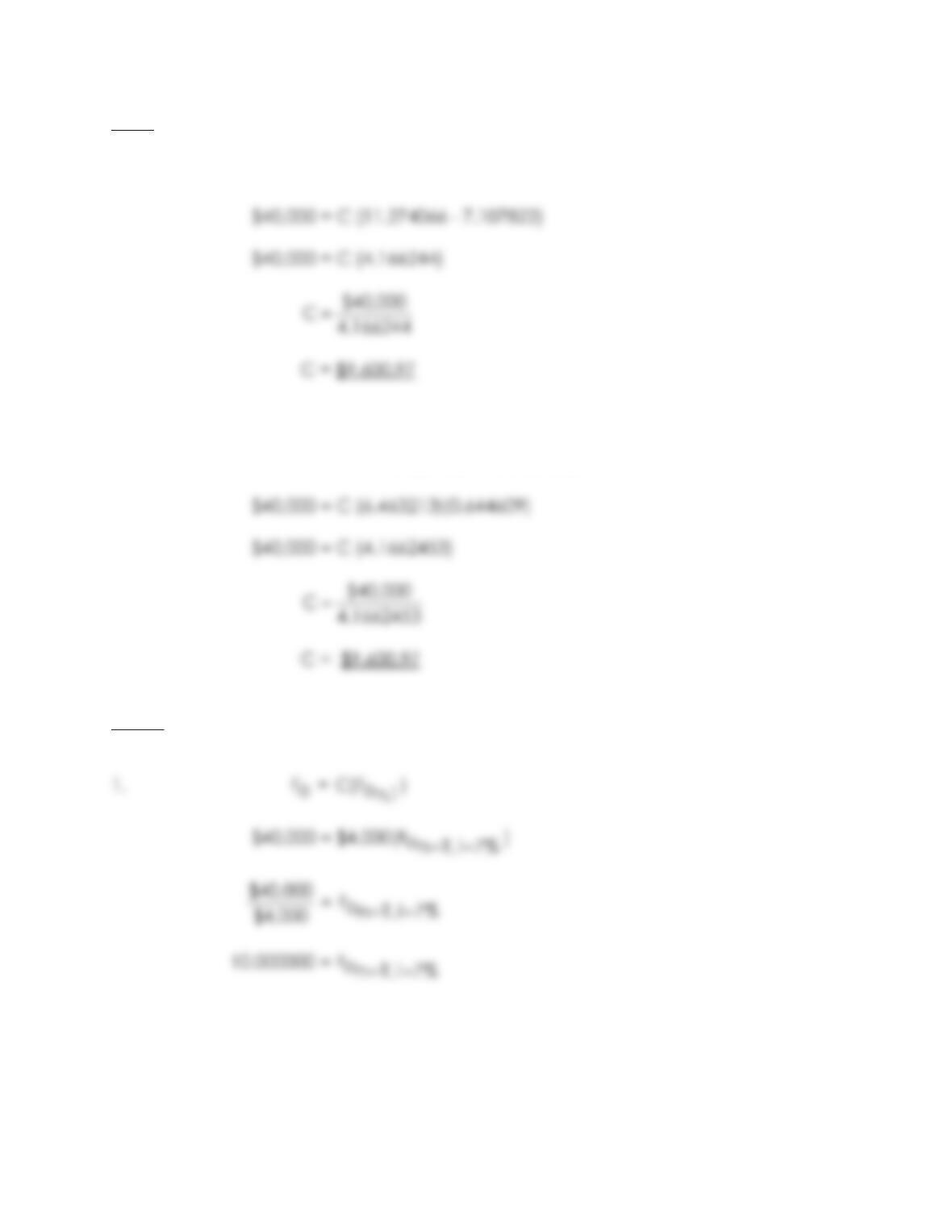
2.
d
P = )
in,
d
C(P
3. deferred
P = )]
5%i6,k
o
(P)
5%i14,kn
o
C[(P ==
−
==+
or
deferred
P = C )]
5%i6,k
)(p
5%i 8,n
o
[(P ====
TVM-26
PM-9 (continued)
4. deferred
P = )]
5%i9,k
o
(P)
5%i17,kn
o
C[(P ==
−
==+
or
deferred
P = C )]
5%i9,k
)(p
5%i 8,n
o
[(P ====
PM-10
TVM-27
PM-10 (continued)
1. (continued)
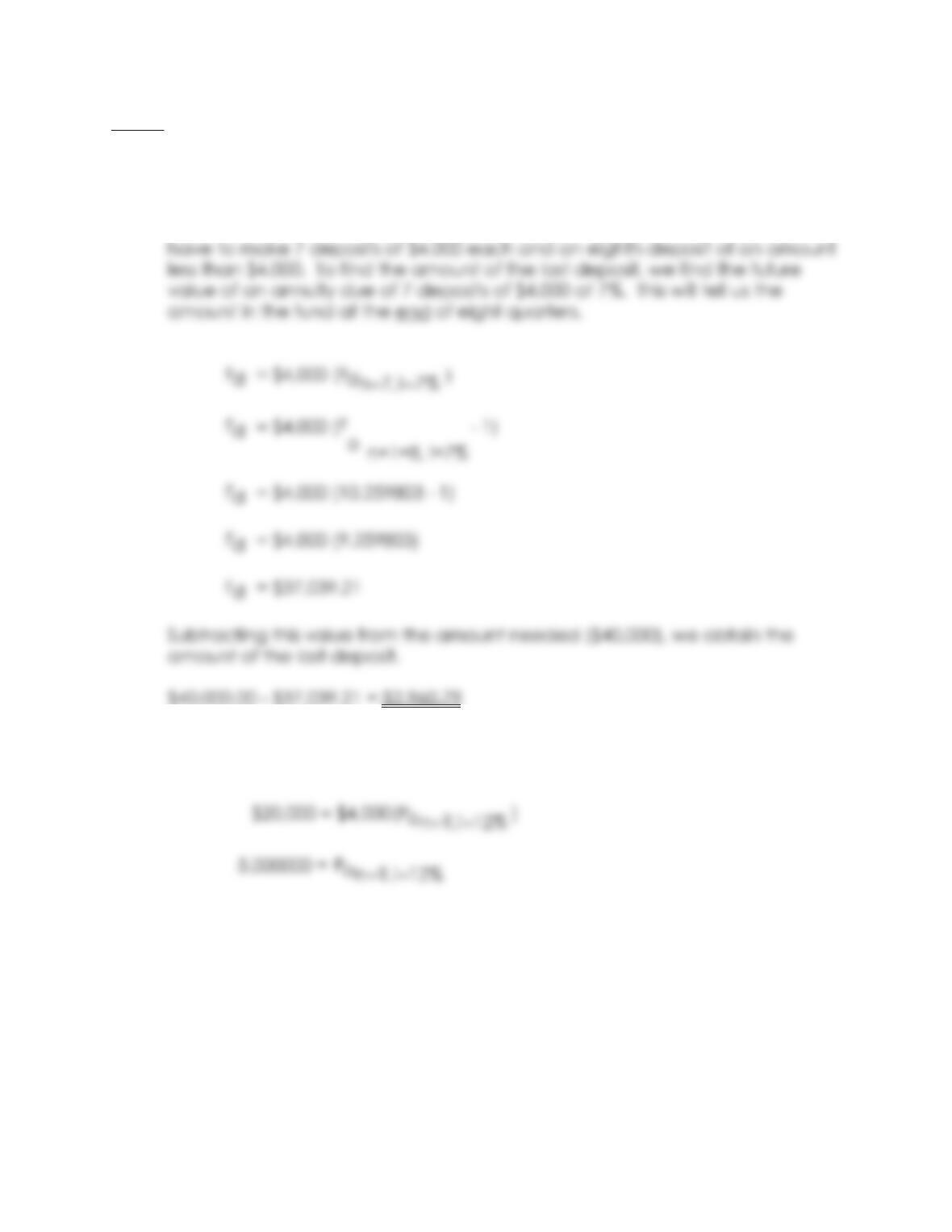
Looking down the 7% column in the table for the future value of an ordinary
annuity of 1, we see that 10.000000 is between 7 and 8 cash flows. Assuming
Houser can make no more than a $4,000 quarterly deposit, this means he will
2. o
P = )
in,
o
C(P
PM-10 (continued)
2. (continued)
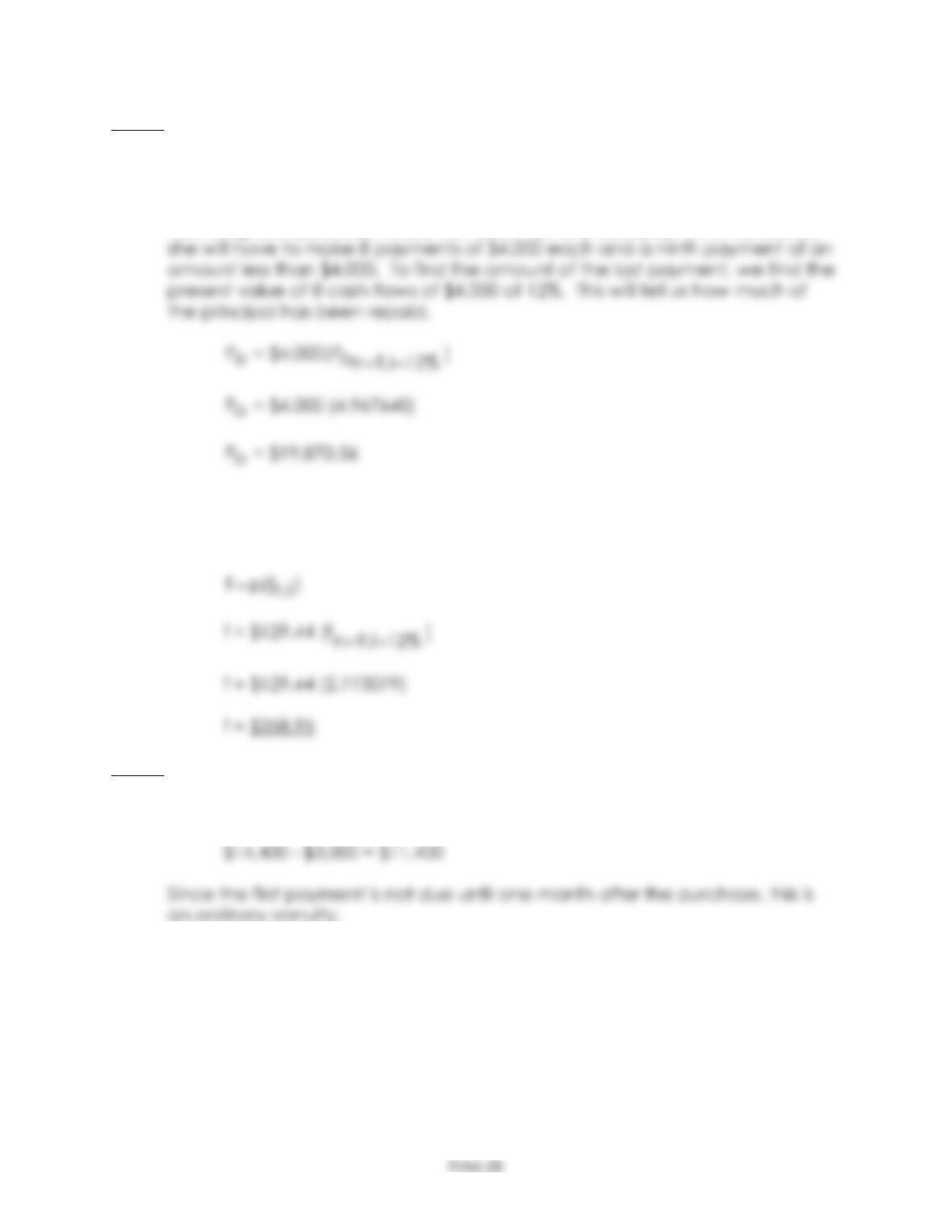
Looking down the 12% column in the table for the present value of an
ordinary annuity of 1, we see that 5.000000 is between 8 and 9 cash flows.
Assuming Campbell can make no more than a $4,000 payment, this means
Subtracting this from the original balance ($20,000), we see that $129.44 of
the original principal has not been paid. Since the $129.44 has been
accruing interest for 9 years, the amount of the last payment is
PM-11
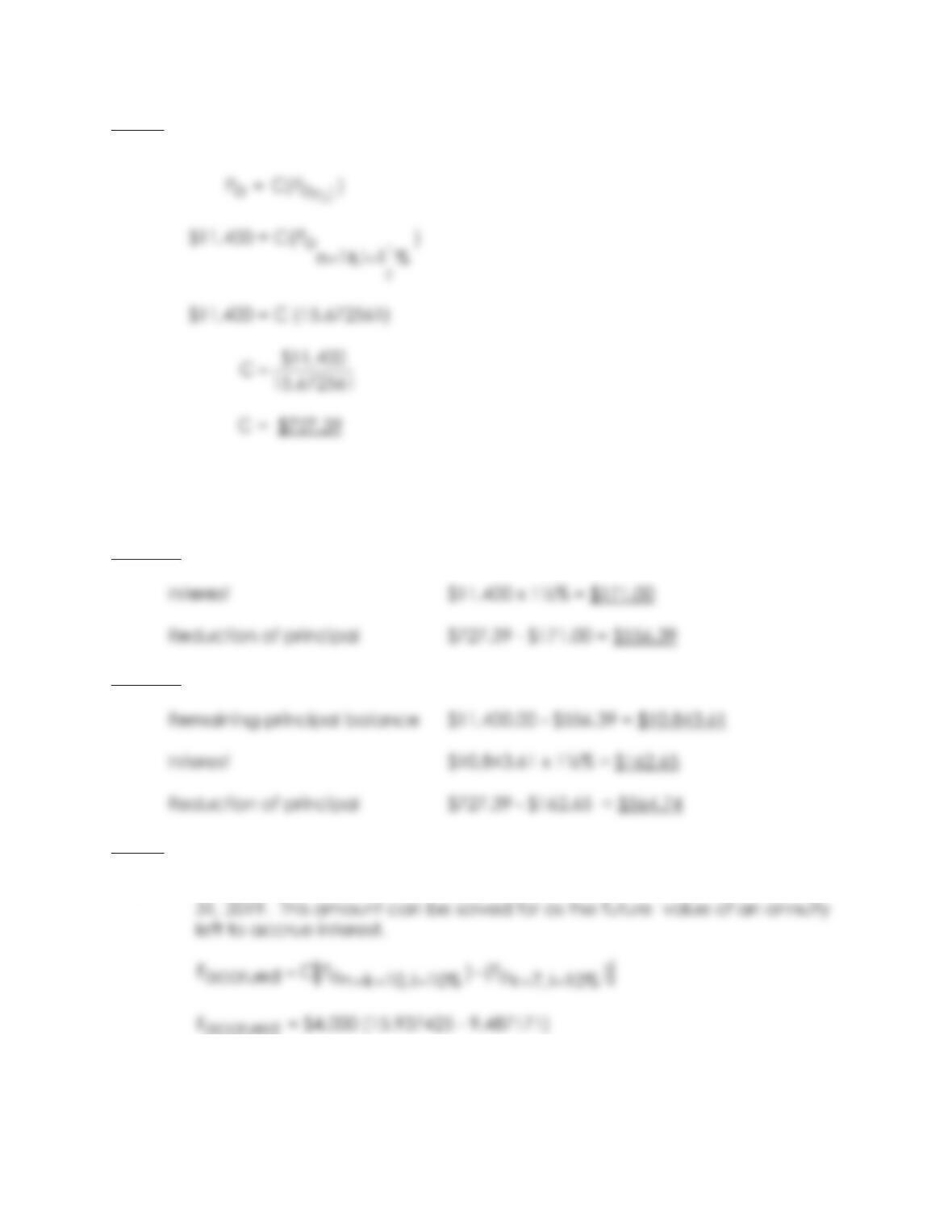
1. Present value of remaining obligation
TVM-29
PM-11 (continued)
1. (continued)
2. The amount of interest for each month is 1½% of the beginning of the month
balance. The remainder of the $727.39 payment is a reduction of the
principal.
Period 1:
Period 2:
PM-12
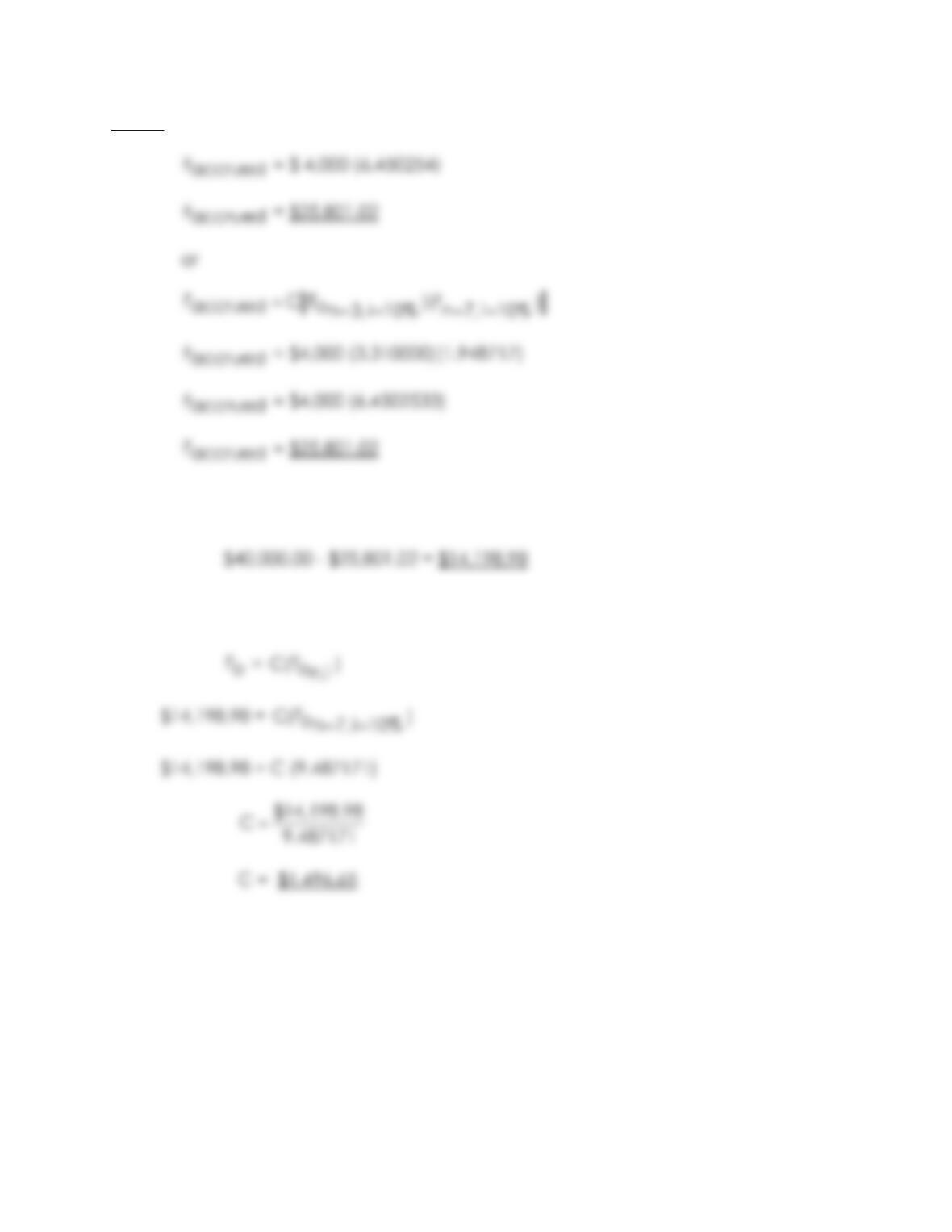
Step 1: Find out how much the three $4,000 deposits will accrue to by December
TVM-30
PM-12 (continued)
Step 2: Subtract the answer to step 1 from $40,000 to find out the additional
amount that will be needed on December 31, 2019.
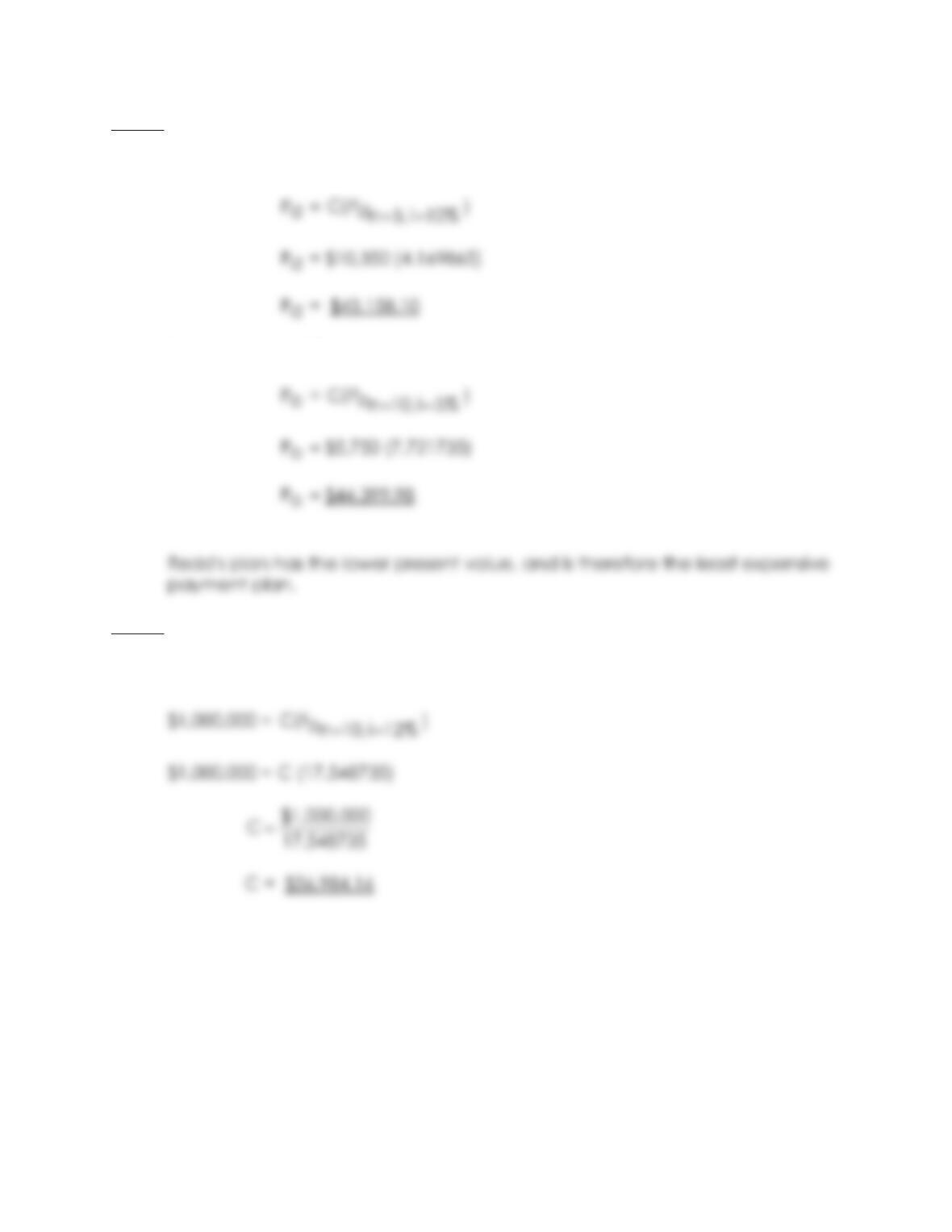
Step 3: $14,198.98 is the future value of the seven additional yearly deposits. The
amount of the yearly deposits can be solved for as an ordinary annuity.
TVM-31
PM-13
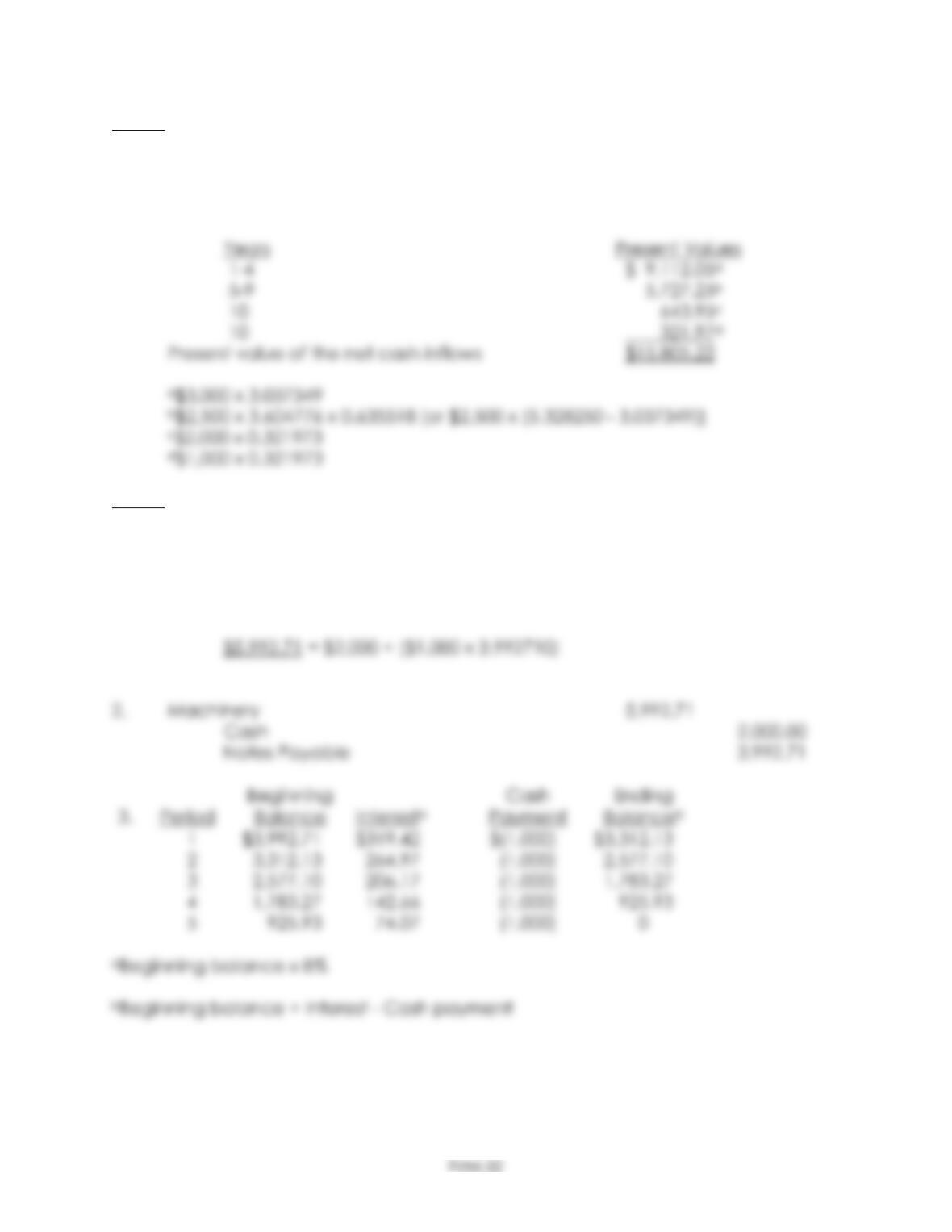
Present value of Redd’s plan:
Present value of Greene’s plan:
PM-14
o
F = )
in,
o
C(F
PM-15
The maximum amount BWP should be willing to pay is the present value of
the net cash inflows discounted at the required rate of return. In this case it is
$15,805.22, computed as follows:
PM-16
1. The cost of an asset purchased using a debt instrument is the present value of
the future cash flows. That is, the cost of the machinery is the down payment
plus the present value of $1,000 for 5 years at 8%, which is $5,992.71
computed as follows.