Solution 2.1
Design a problem, complete with a solution, to help students to better understand Ohm’s
Law. Use at least two resistors and one voltage source. Hint, you could use both
resistors at once or one at a time, it is up to you. Be creative.
Although there is no correct way to work this problem, this is an example based on the
same kind of problem asked in the third edition.
Problem
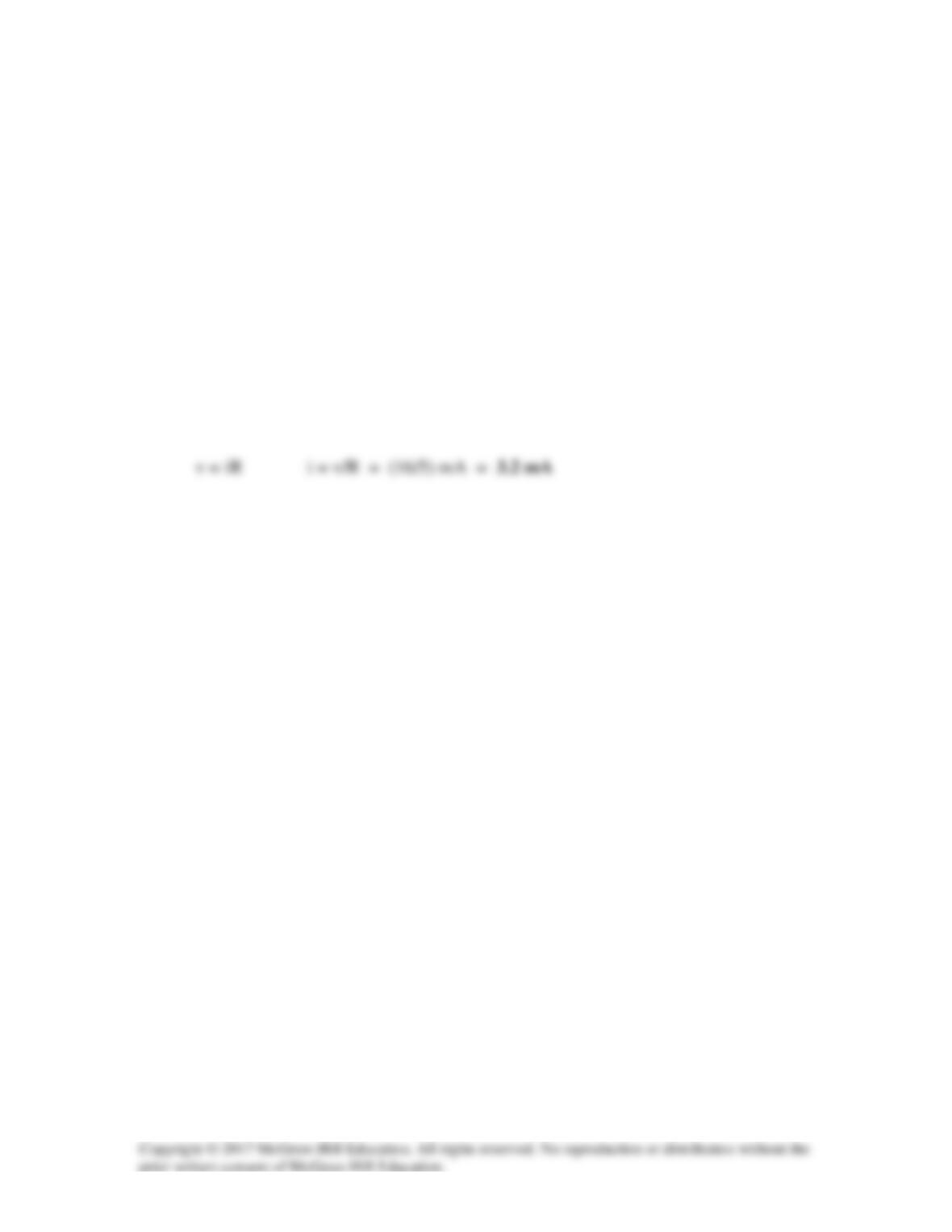
The voltage across a 5-kΩ resistor is 16 V. Find the current through the resistor.
Solution
Solution 2.2
Solution 2.3
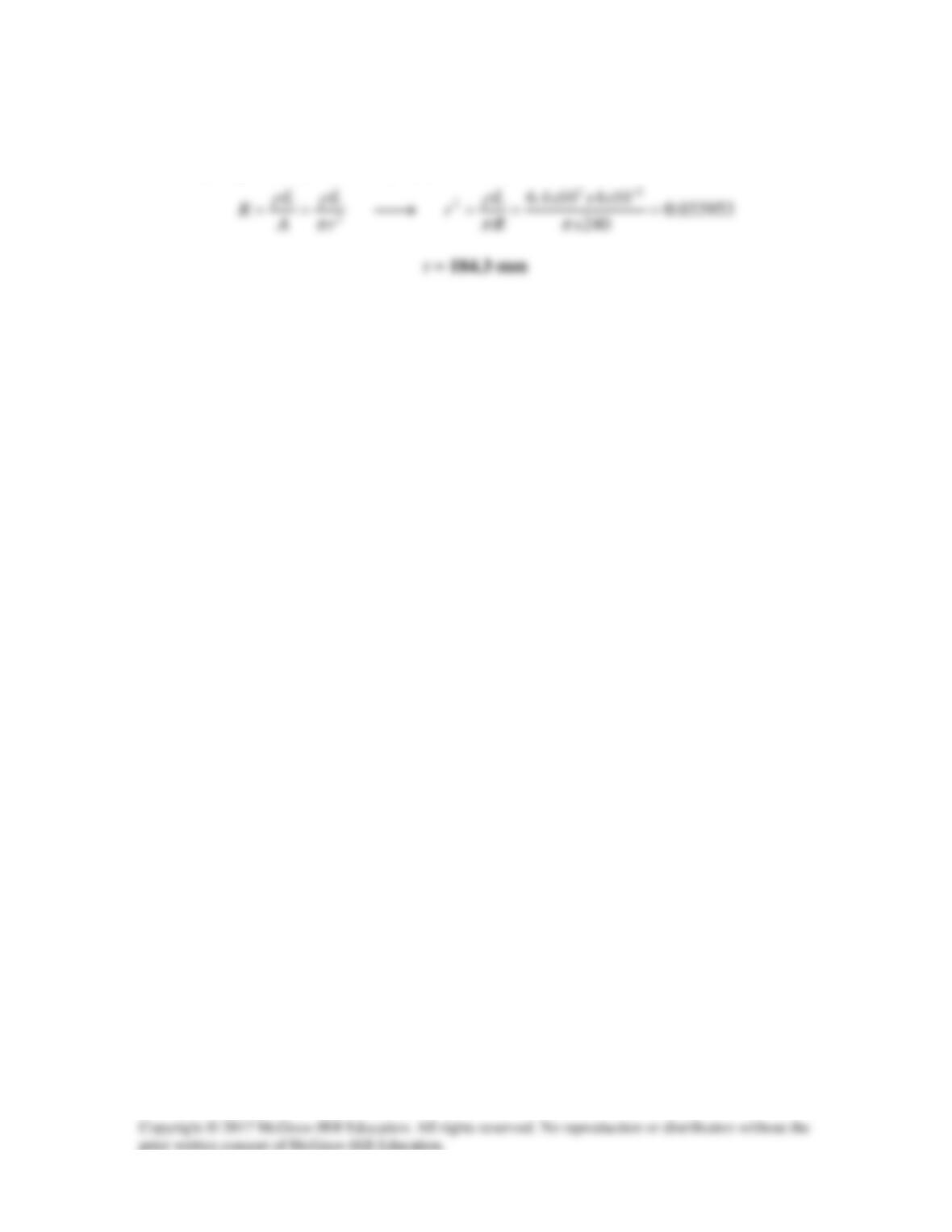
For silicon,
2
6.4 10x
ρ
=
Ω–m.
2
Ar
π
=
. Hence,
Solution 2.4
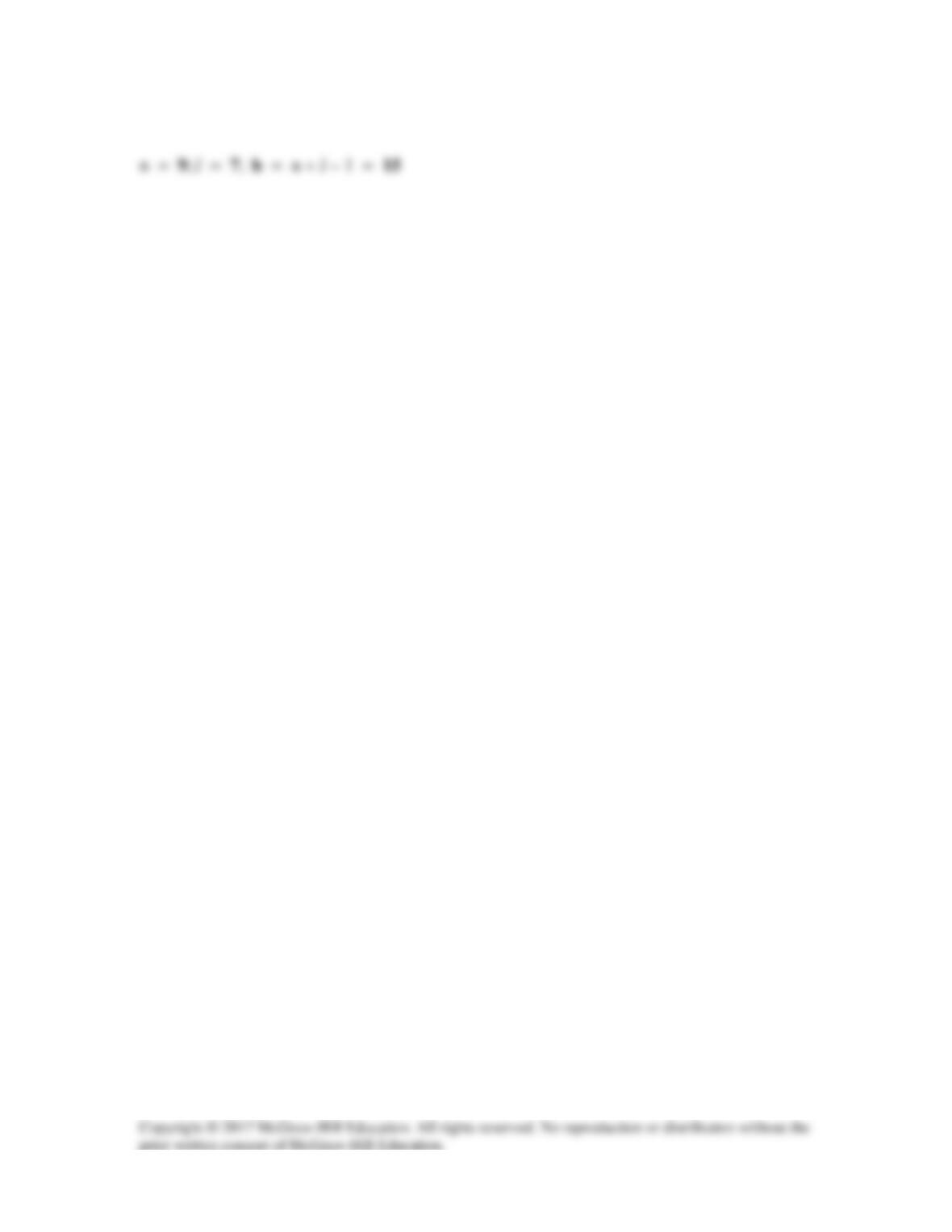
Solution 2.5
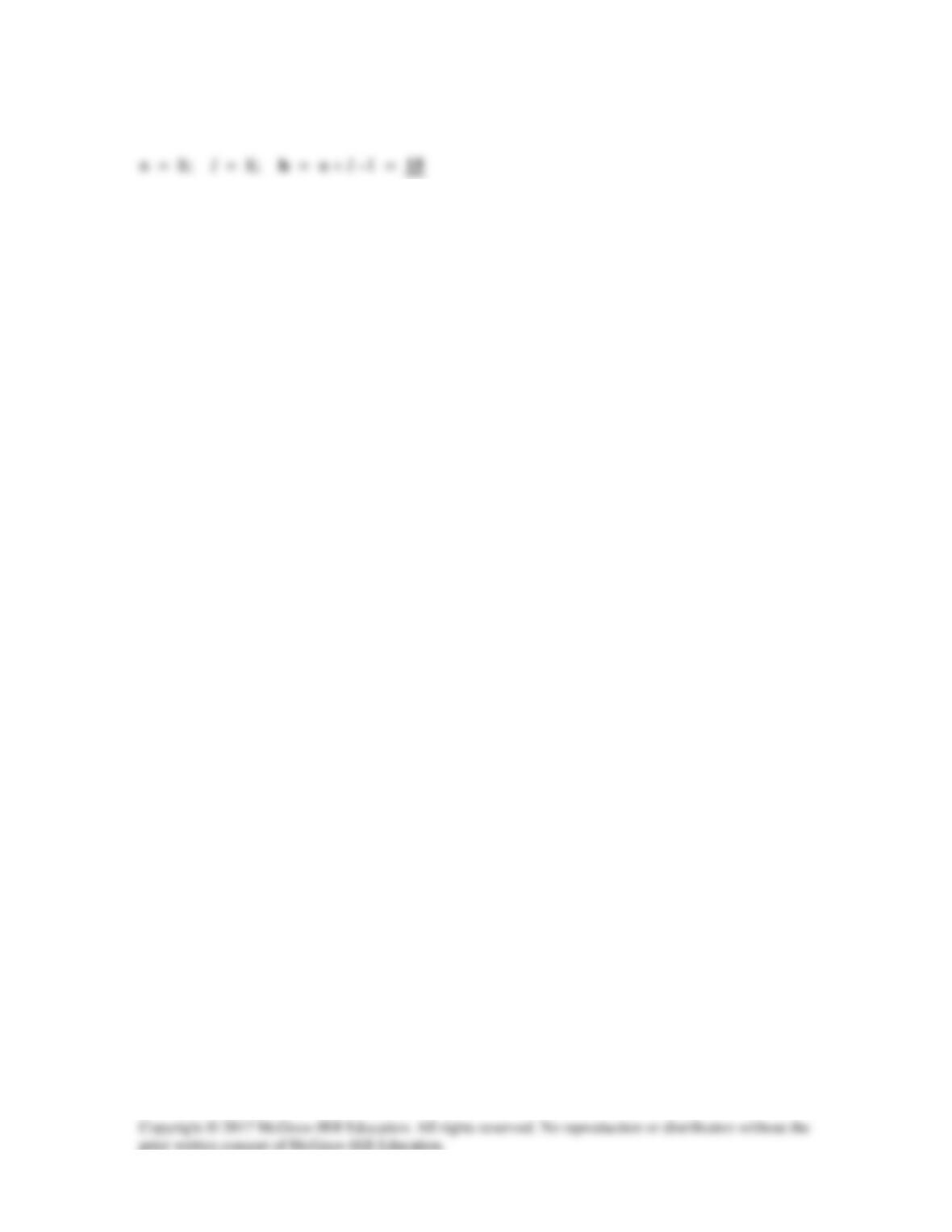
Solution 2.6
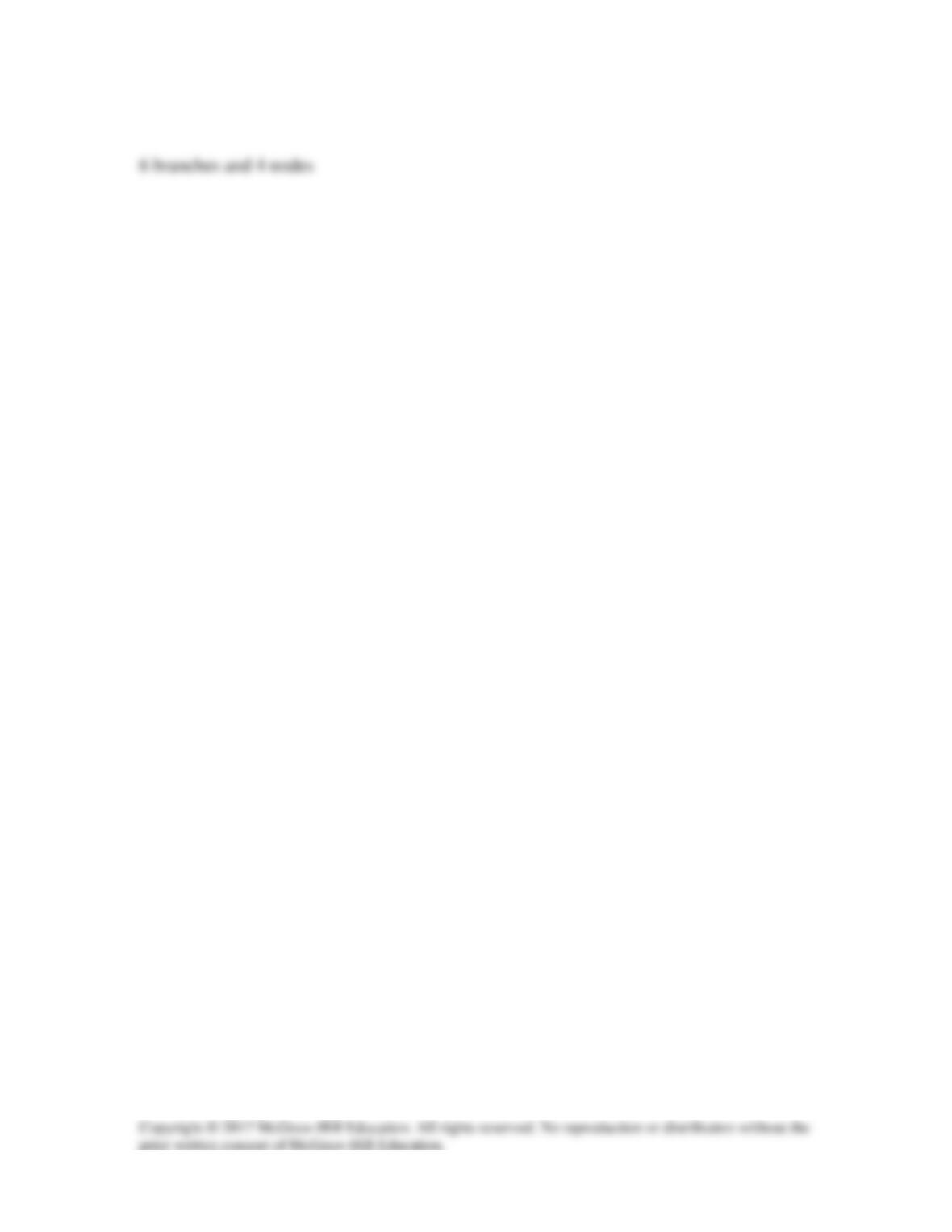
Solution 2.7
Solution 2.8
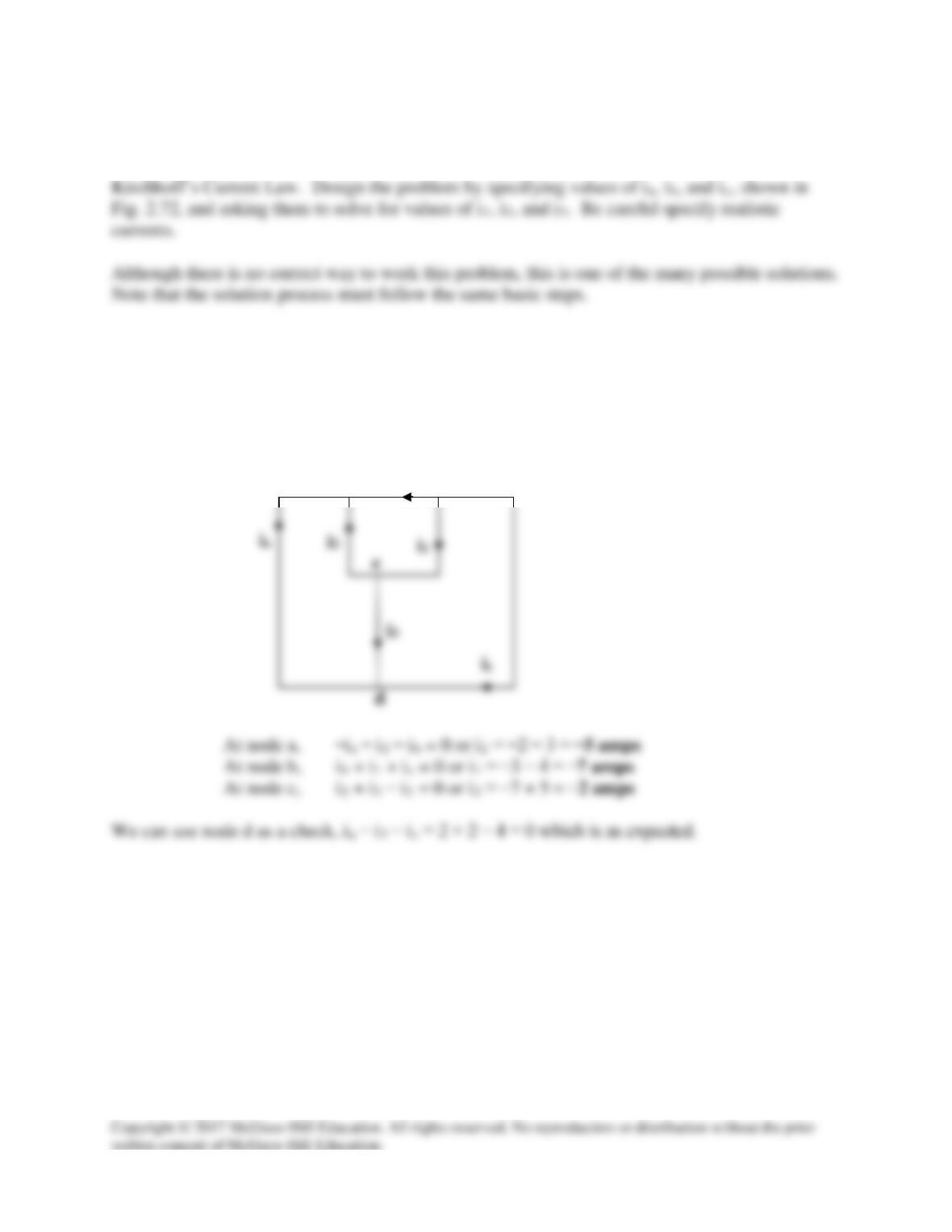
Design a problem, complete with a solution, to help other students to better understand
Problem
Use KCL to obtain currents i1, i2, and i3 in the circuit shown in Fig. 2.72 given that ia = 2 amps,
ib = 3 amps, and ic = 4 amps.
Solution
i3
c
ib
b
a
Solution 2.9
Find
12 3
, i , and ii
in Fig. 2.73.
Figure 2.73
For Prob. 2.9.
Solution
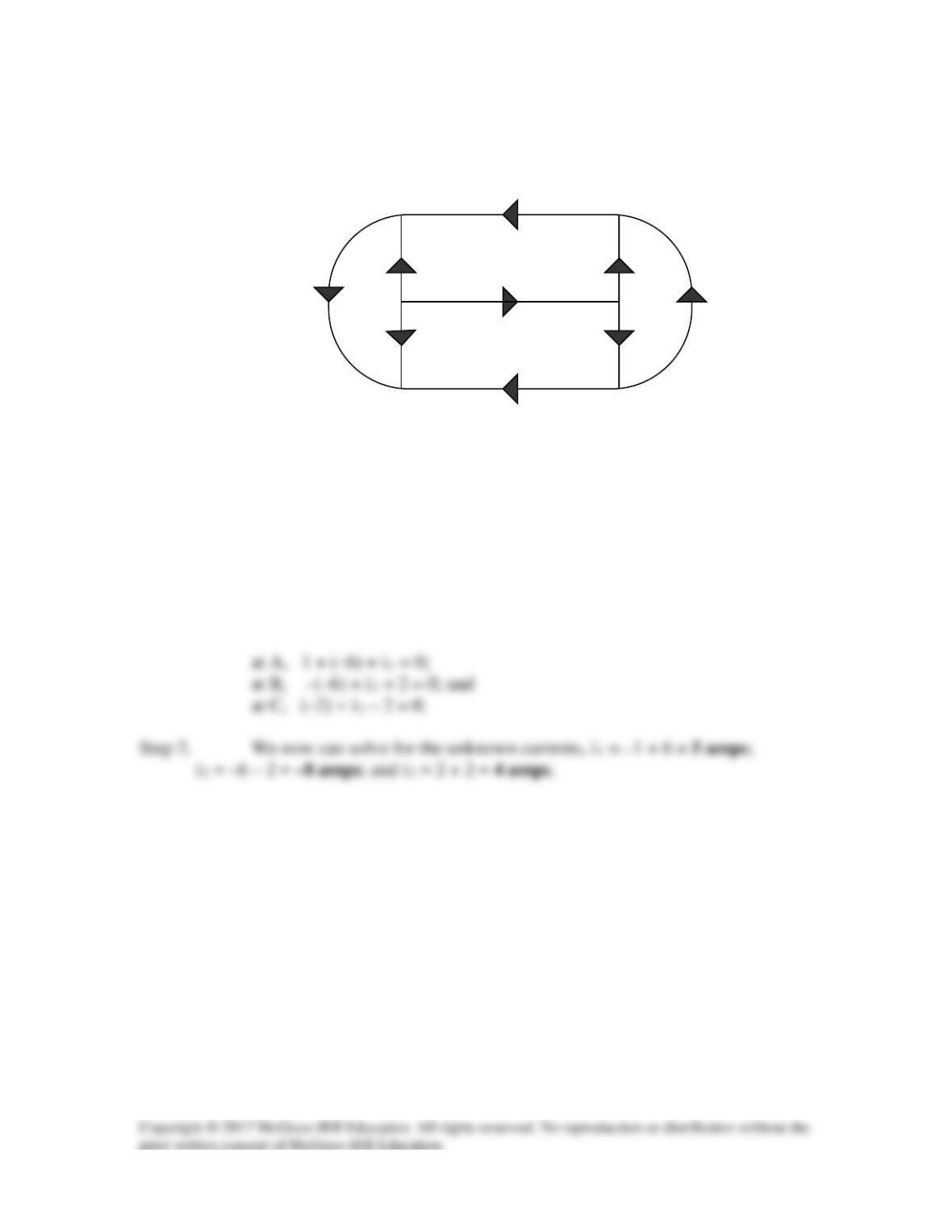
Step 1. We can apply Kirchhoff’s current law to solve for the unknown currents.
Summing all of the currents flowing out of nodes A, B, and C we get,
–2 A
–4 A
i
3
A
–6 A
2A
B
C
i
1
–3 A
1 A
i
2
Solution 2.10
1
–6A
3
–8A
4A
2
Solution 2.11
Solution 2.12
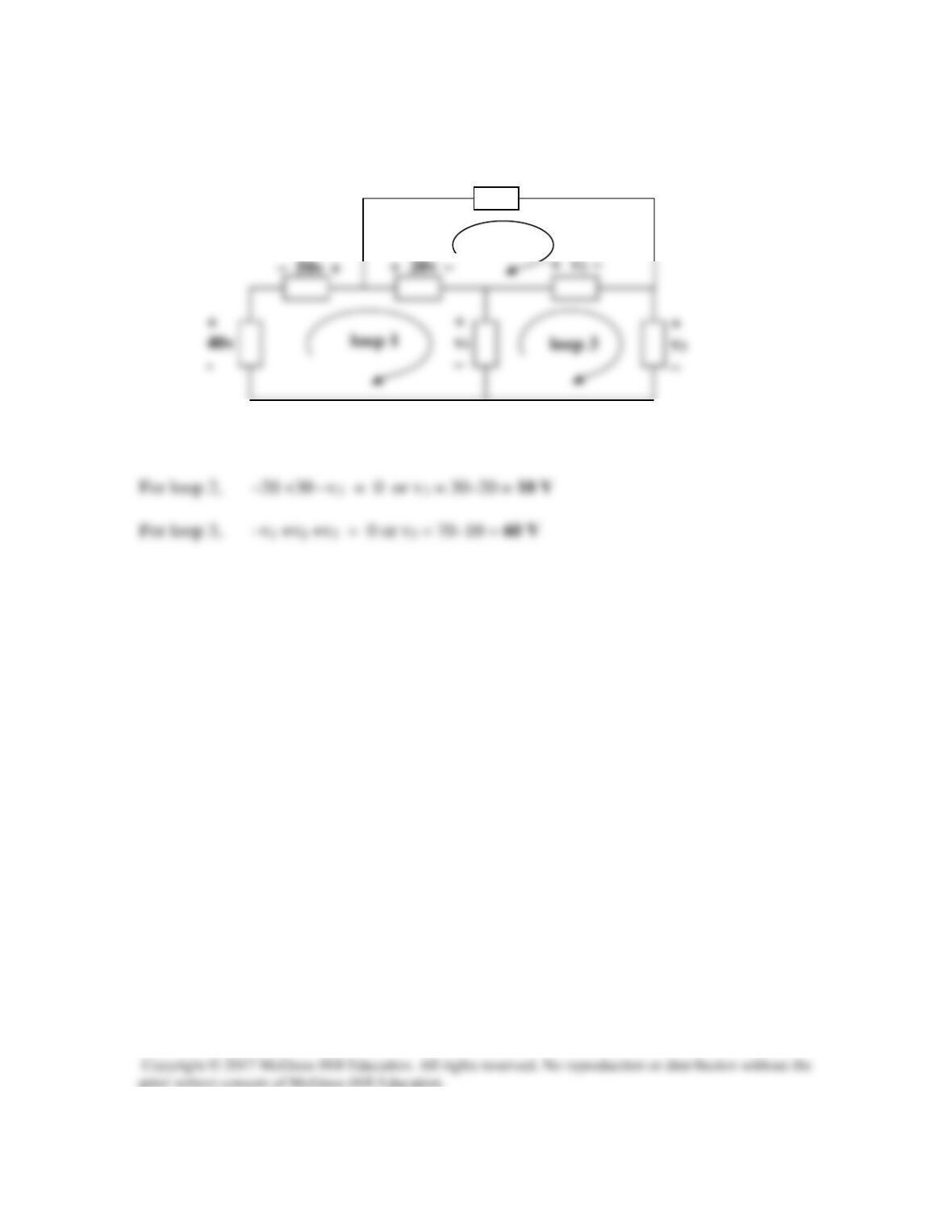
For loop 1, –40 –50 +20 + v1 = 0 or v1 = 40+50–20 = 70 V
+ 30v –
loop 2
– 50v +
loop 3
Solution 2.13
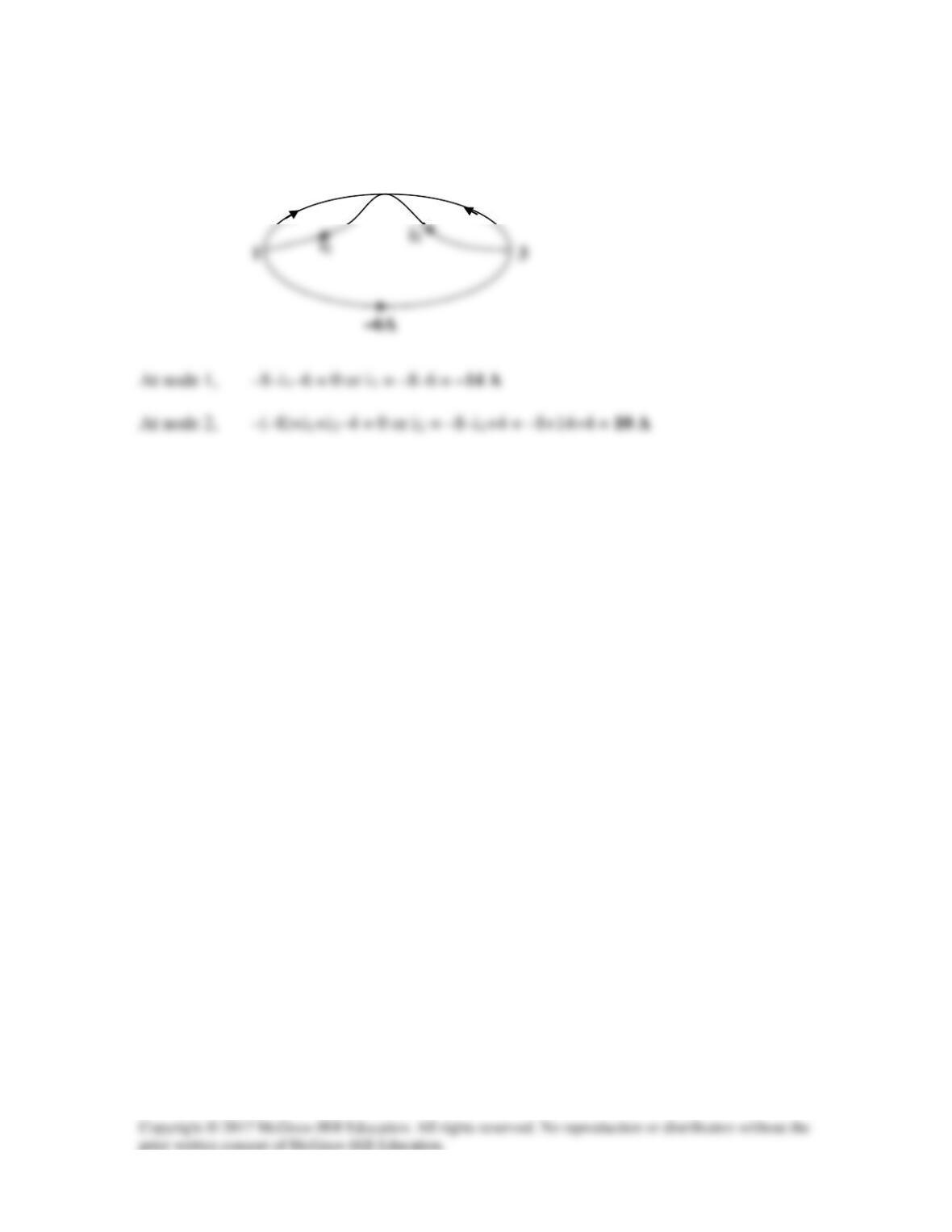
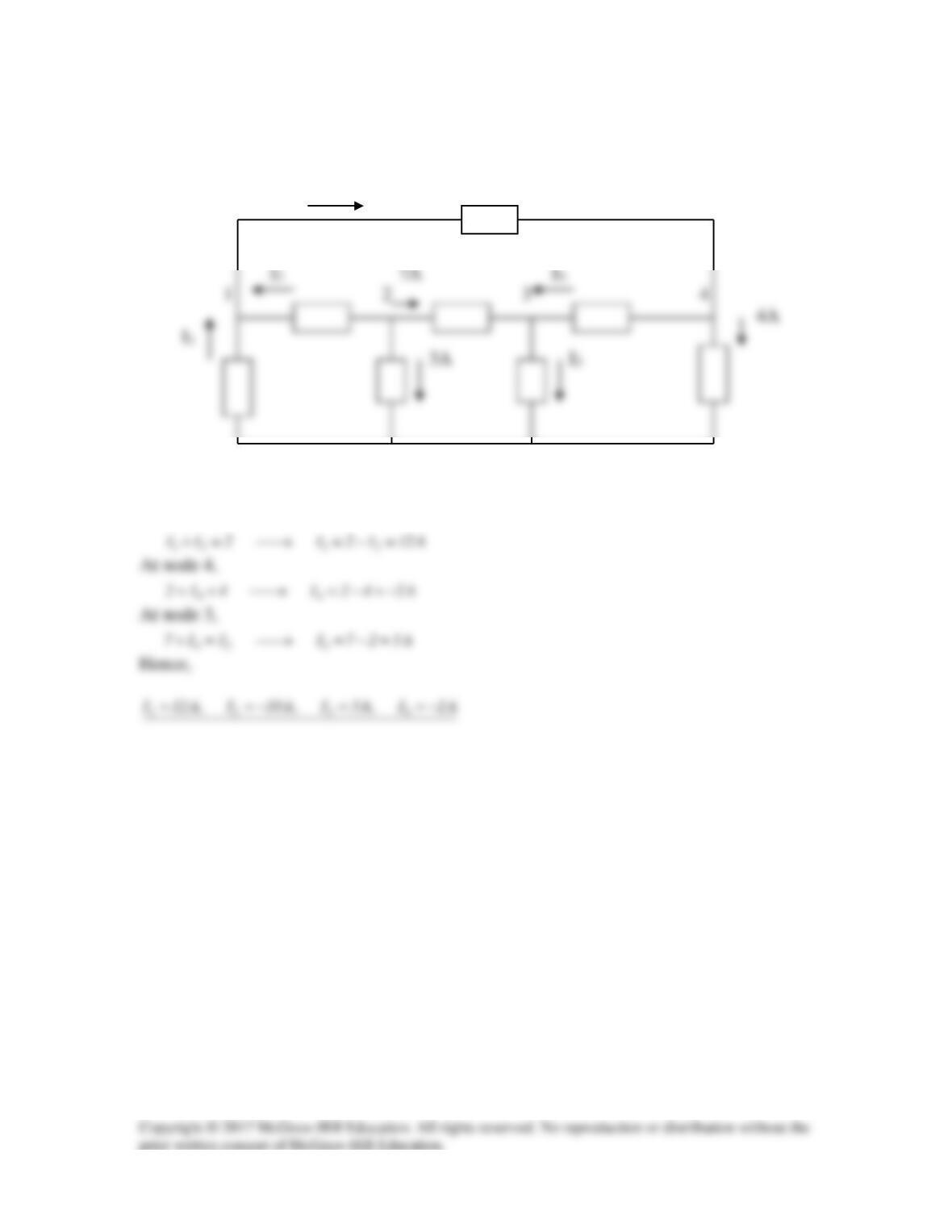
At node 2,
3 7 0 10
2 2
+ + = → = −
I I A
At node 1,
2A
Solution 2.14
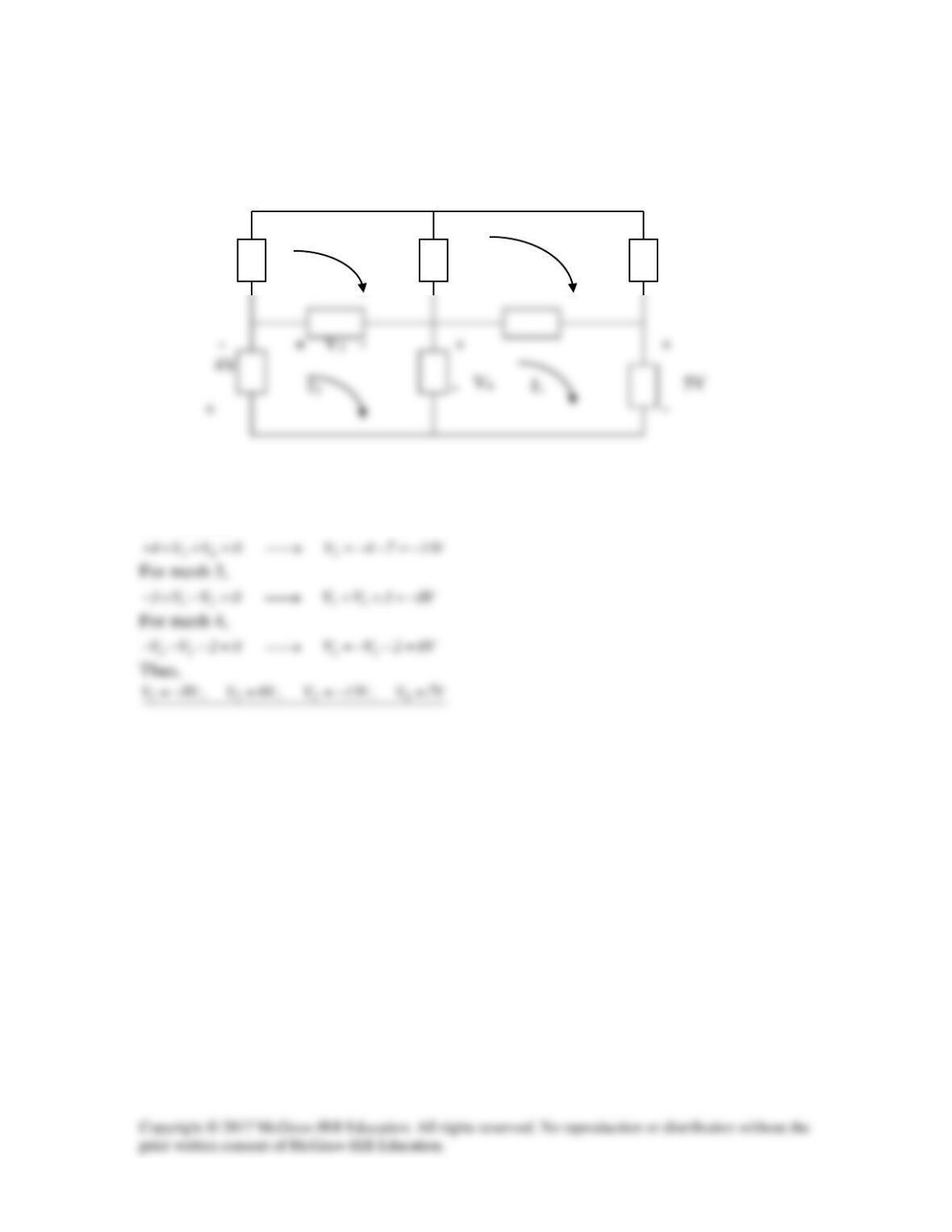
+ + –
3V V1 I4 V2
– I3 – + 2V – +
For mesh 1,
− + + = → =
V V V
4 4
2 5 0 7
For mesh 2,
Solution 2.15
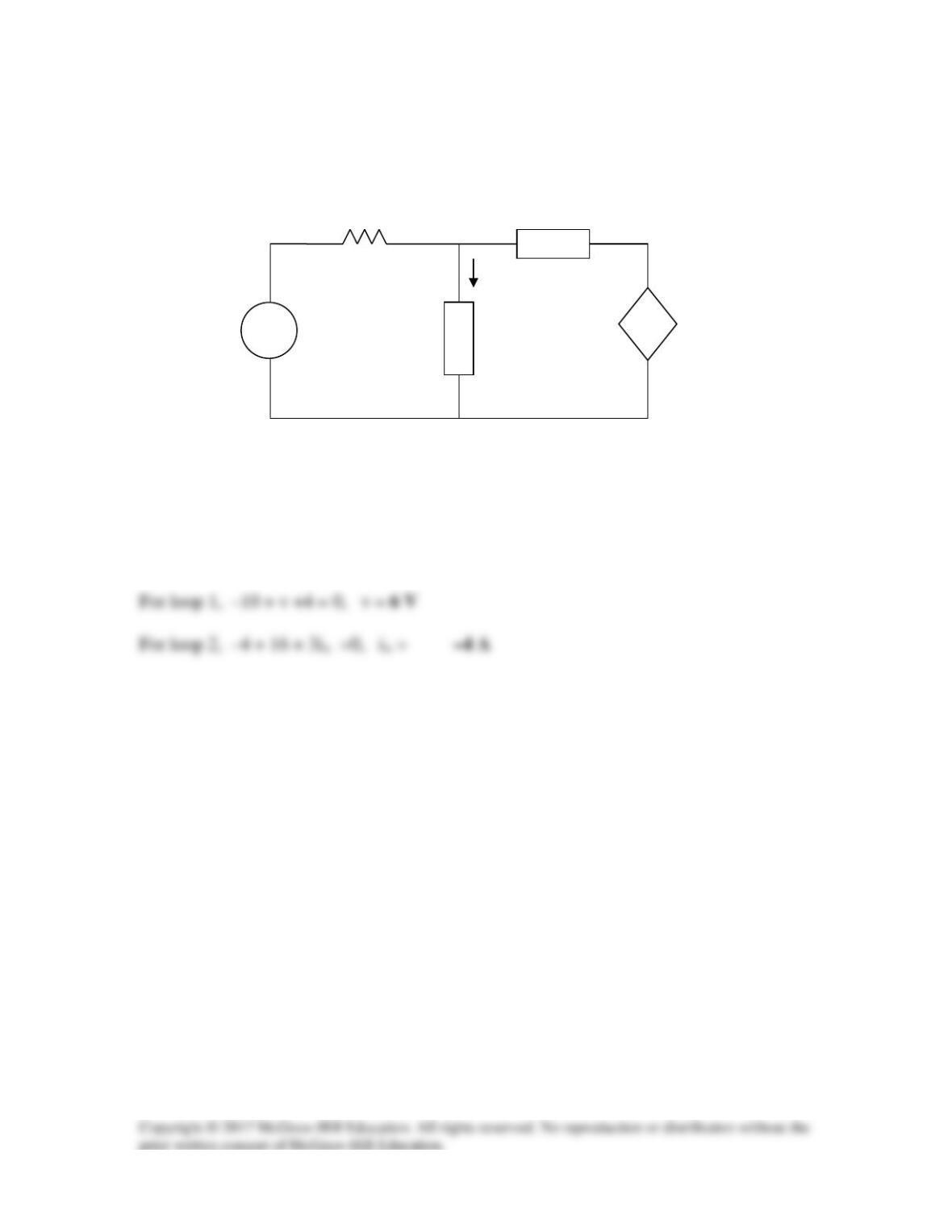
Calculate v and ix in the circuit of Fig. 2.79.
Figure 2.79
For Prob. 2.15.
Solution
+
10 V
3 i
x
+
4 V
_
+
v
–
16 V
–
12 Ω
+
_
i
x
+
_
Solution 2.16
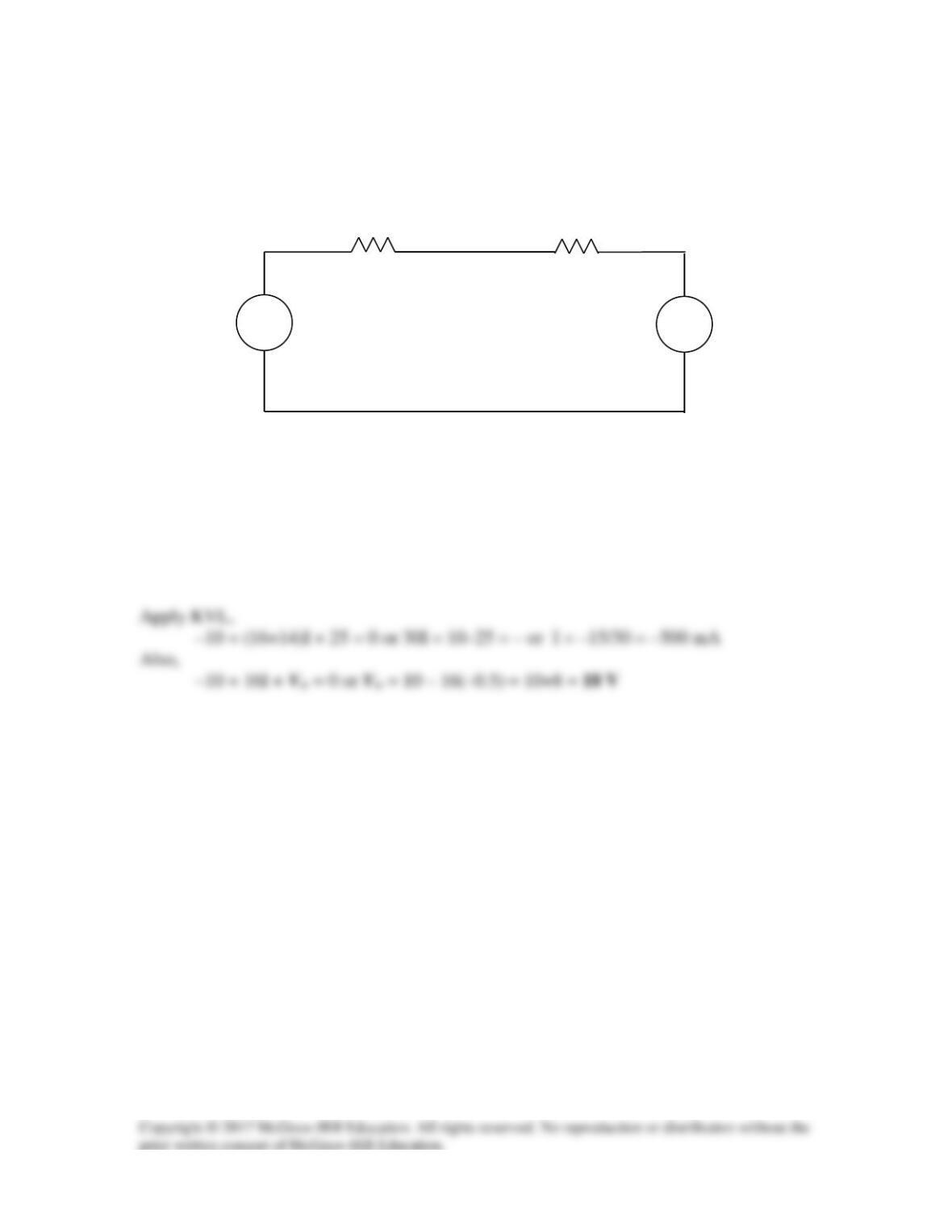
Determine Vo in the circuit in Fig. 2.80.
Figure 2.80
For Prob. 2.16.
Solution
16 Ω
14 Ω
+
_
+
_
+
_
V
o
10 V
25 V
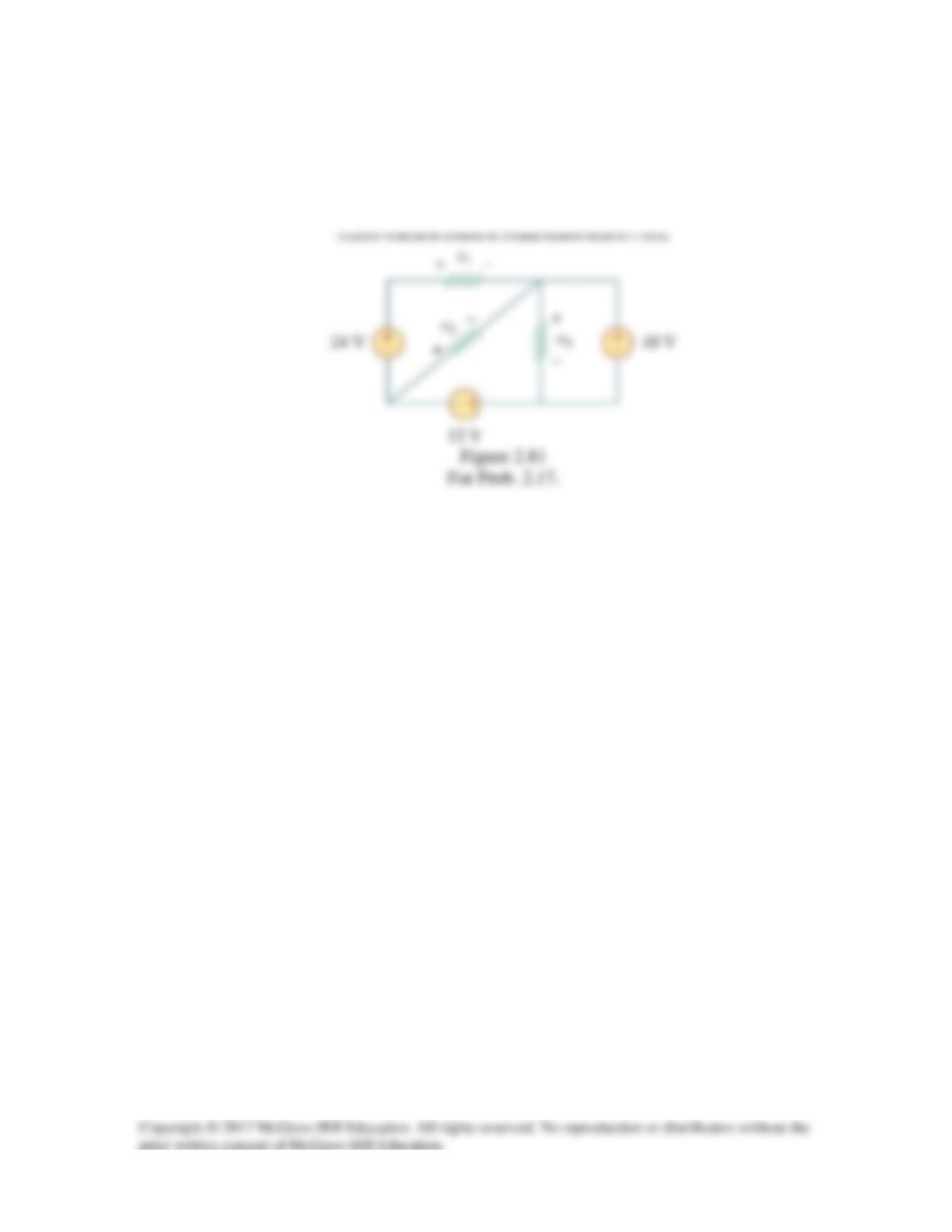
Problem 2.17
Obtain v1 through v3 in the circuit in Fig. 2.81.
Solution 2.18
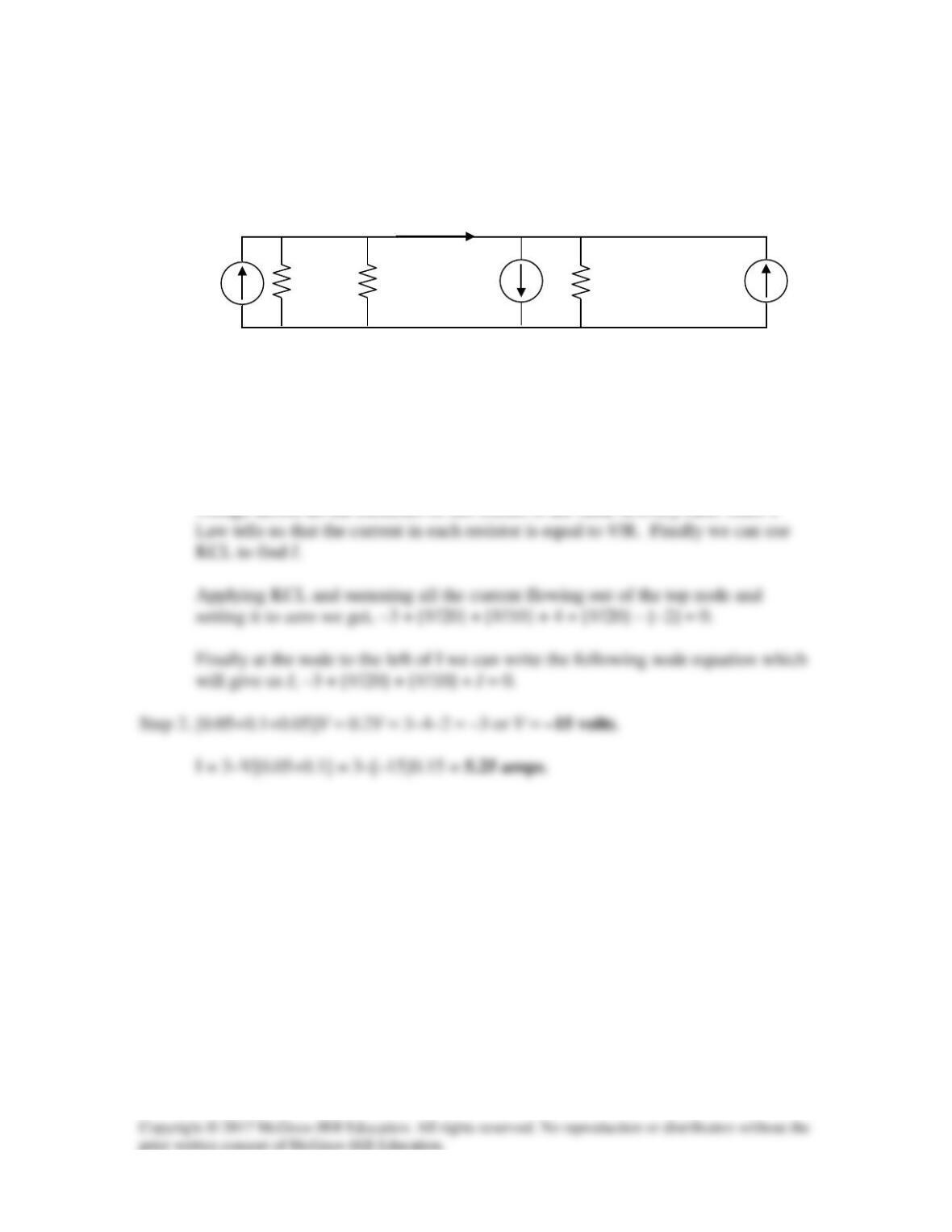
Find I and V in the circuit of Fig. 2.82.
Figure 2.82
For Prob. 2.18.
Solution.
Step 1. We can make use of both Kirchhoff’s KVL and KCL. KVL tells us that the
+
V
−
20 Ω
–2 amp
10 Ω
20 Ω
3 amp
4 amp
I
Solution 2.19
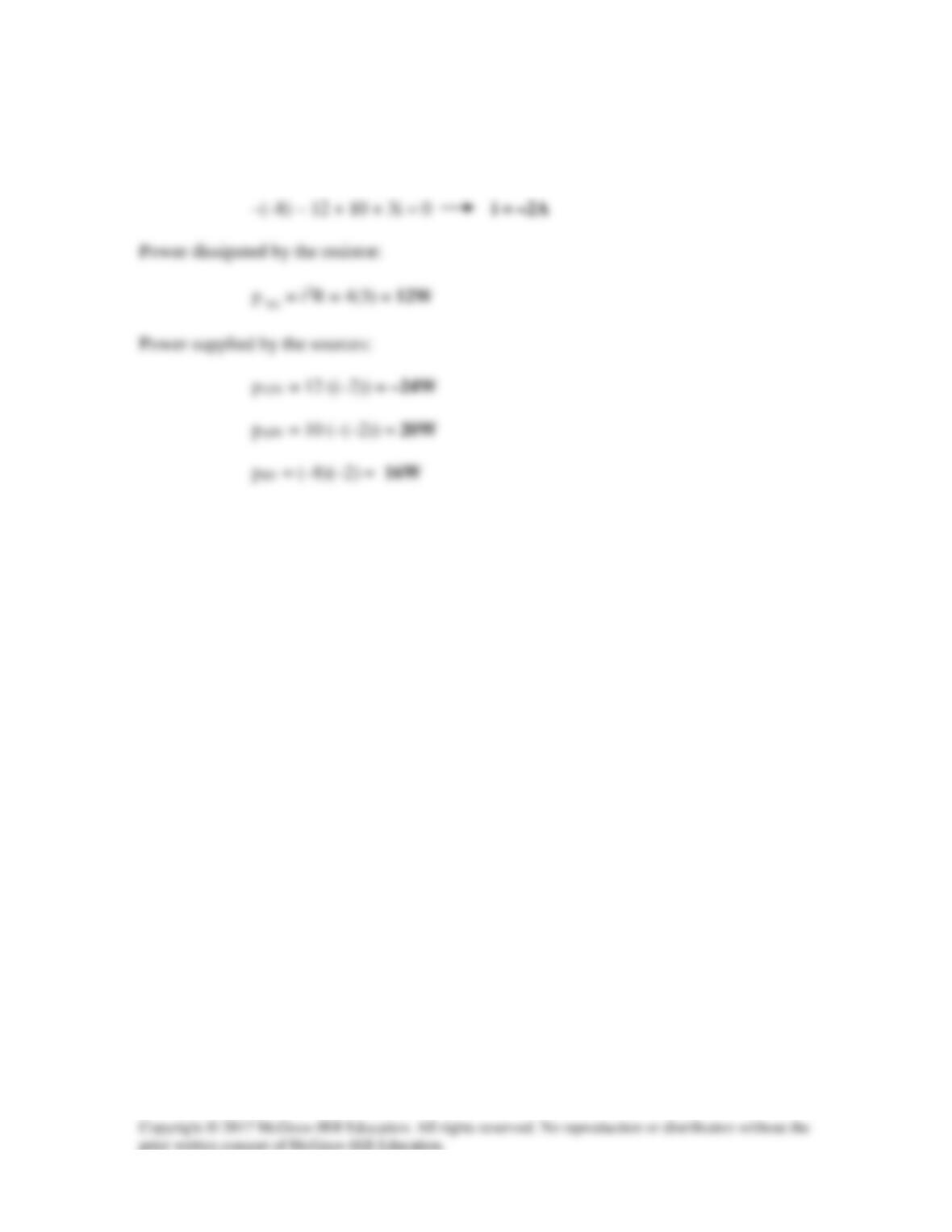
Applying KVL around the loop, we obtain
Solution 2.20
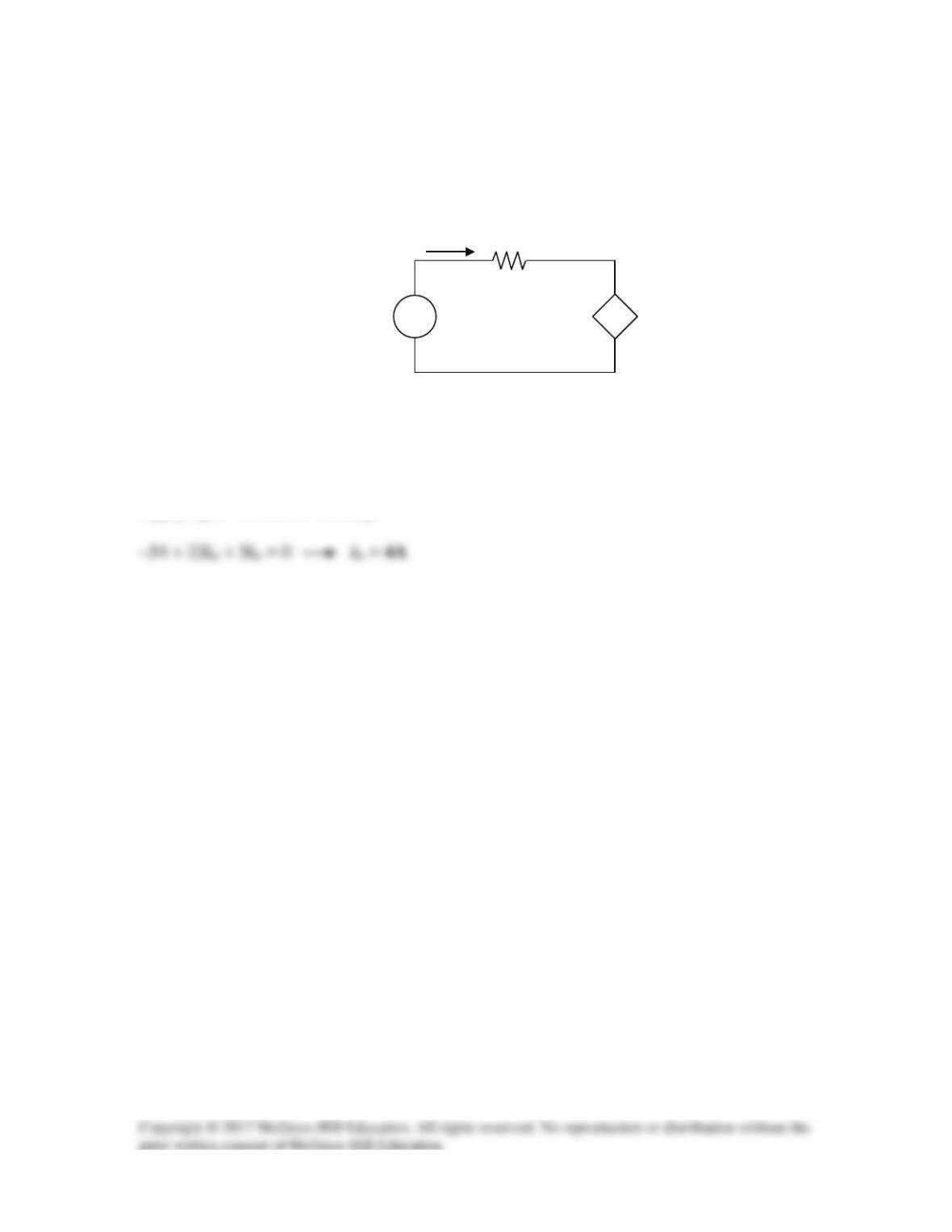
Determine io in the circuit of Fig. 2.84.
Figure 2.84
For Prob. 2.20
Solution
Applying KVL around the loop,
54V
+
−
22 Ω
io
+
–
5io