Solution 2.21
Applying KVL,
Solution 2.22
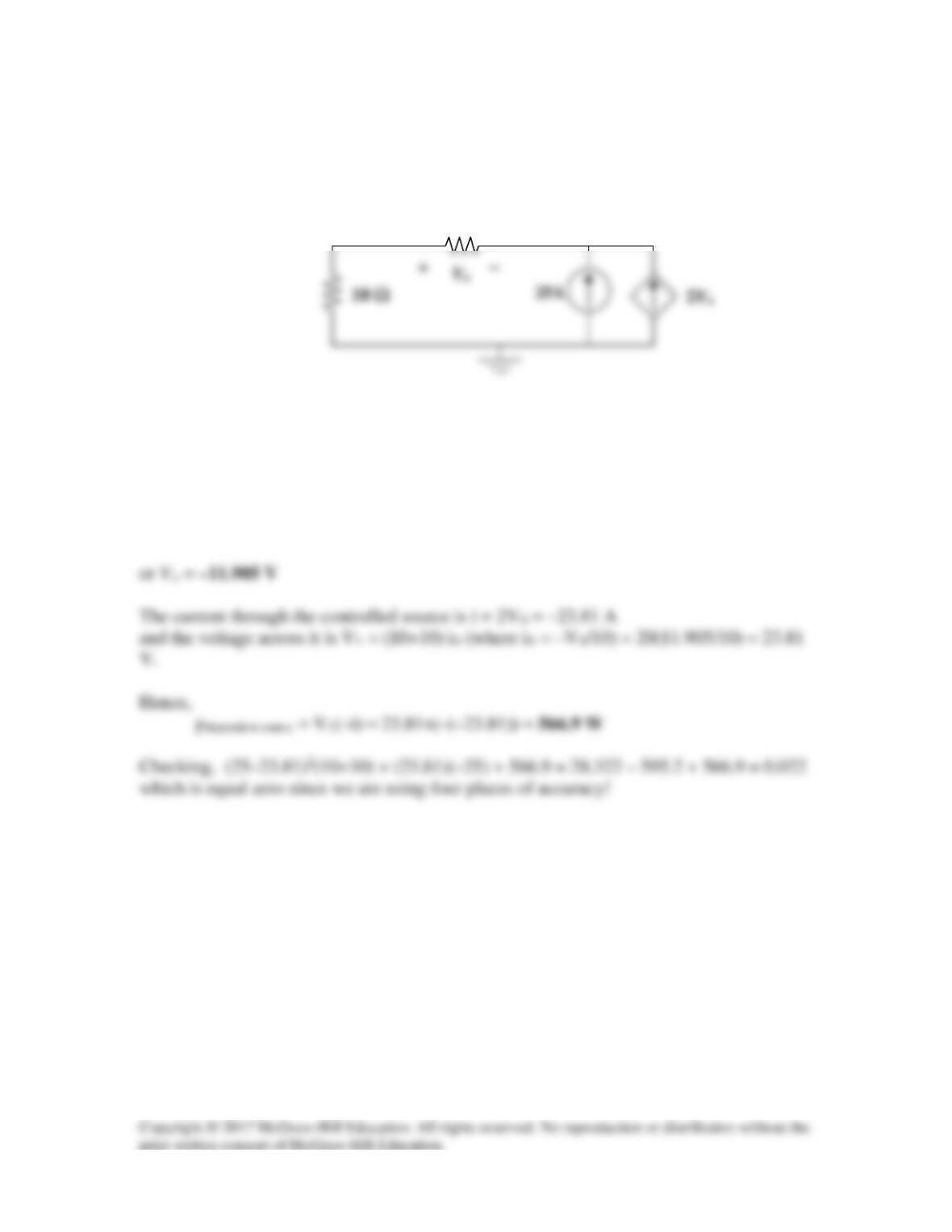
Find Vo in the circuit in Fig. 2.86 and the power absorbed by the dependent source.
Figure 2.86
For Prob. 2.22
Solution
At the node, KCL requires that [–Vo/10]+[–25]+[–2Vo] = 0 or 2.1Vo = –25
10 Ω
V1
Solution 2.23
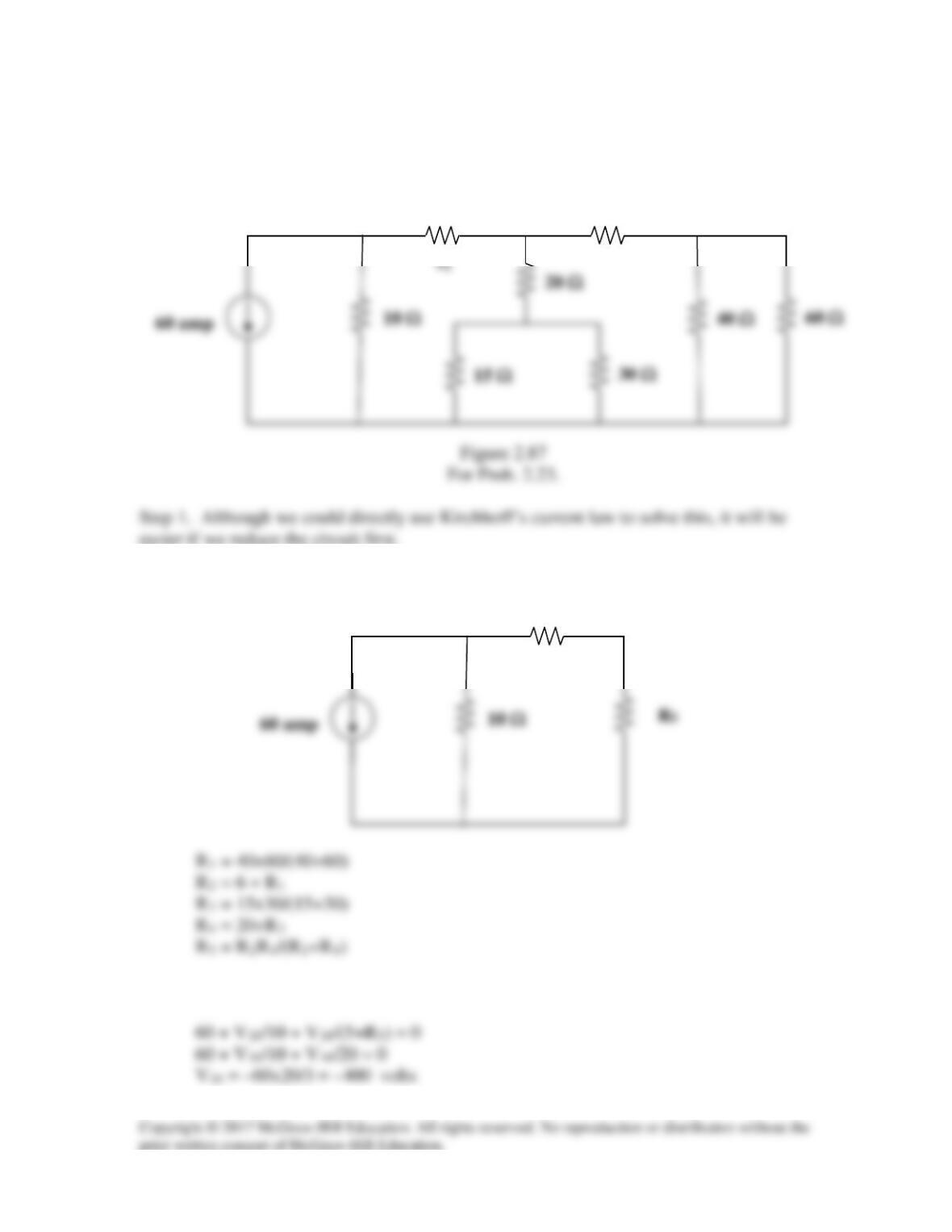
In the circuit shown in Fig. 2.87, determine vx and the power absorbed by the 60-Ω
resistor.
20 Ω
10 Ω
60 Ω
40 Ω
15 Ω
30 Ω
easier if we reduce the circuit first.
The reduced circuit looks like this,
10 Ω
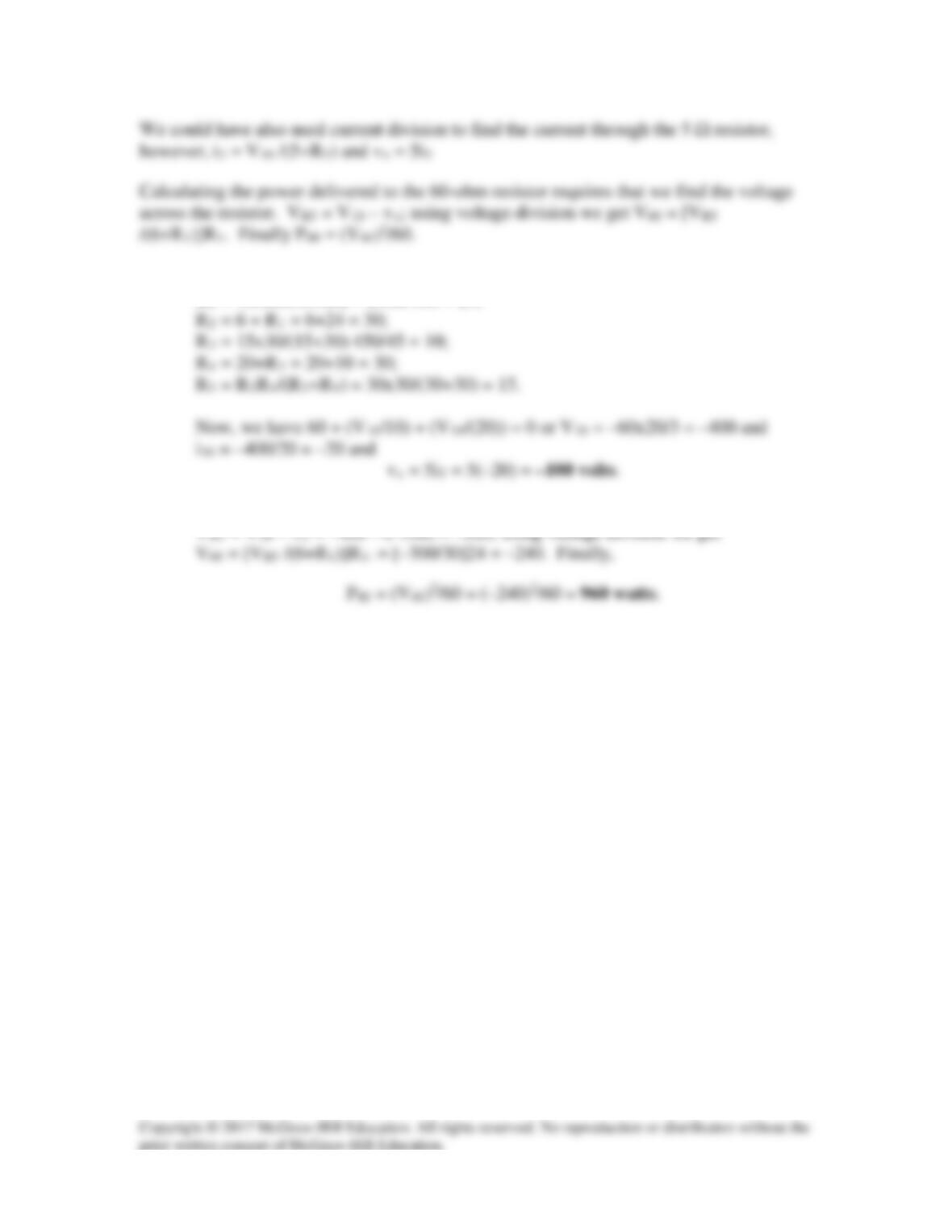
Letting V10 = vx + VR5 and using Kirchhoff’s current law, we get
5 Ω
6 Ω
+ −
5 Ω
+ −
vx
Step 2.
R1 = 40×60/(40+60) = 2400/100 = 24;
Solution 2.24
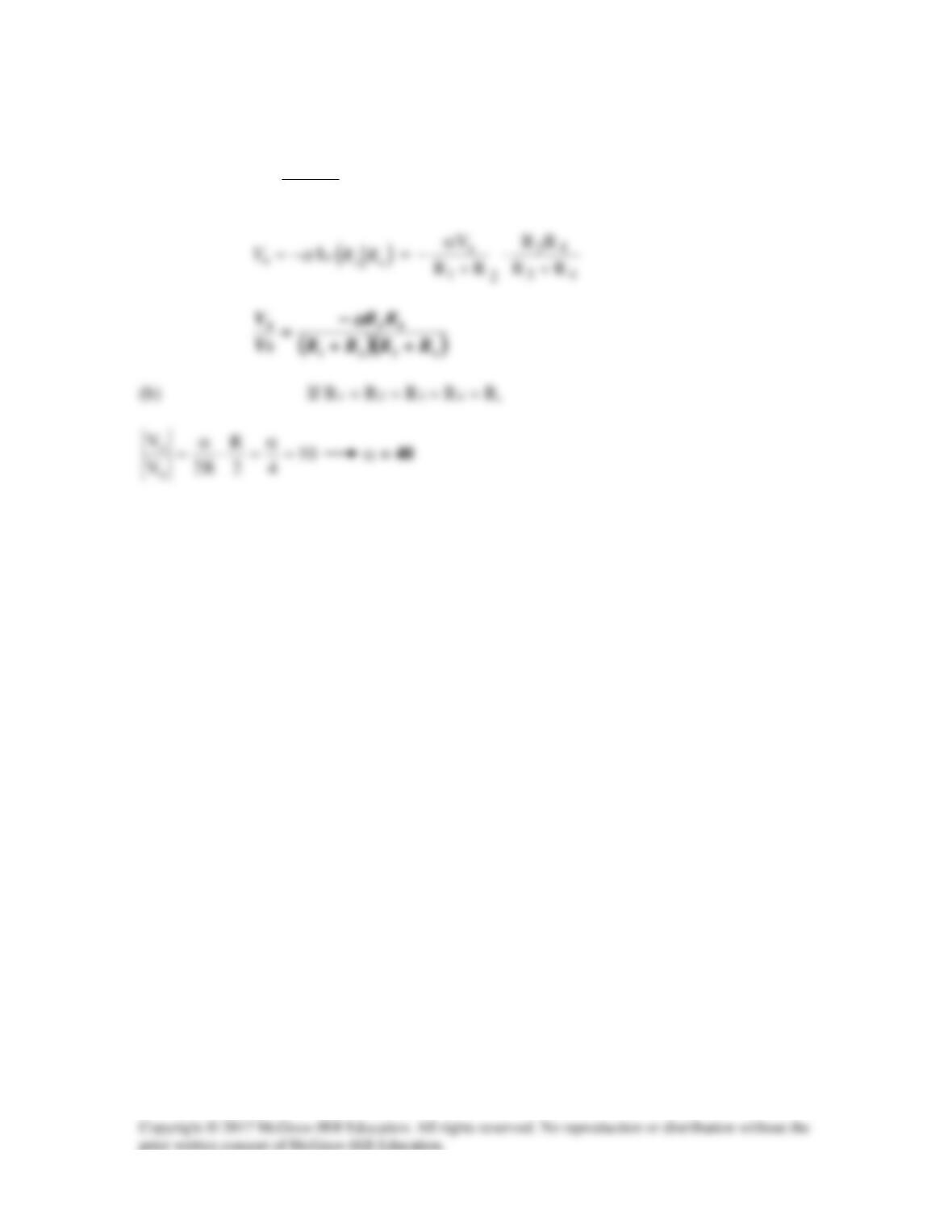
(a) I0 =
21
RR
V
s
+
Solution 2.25
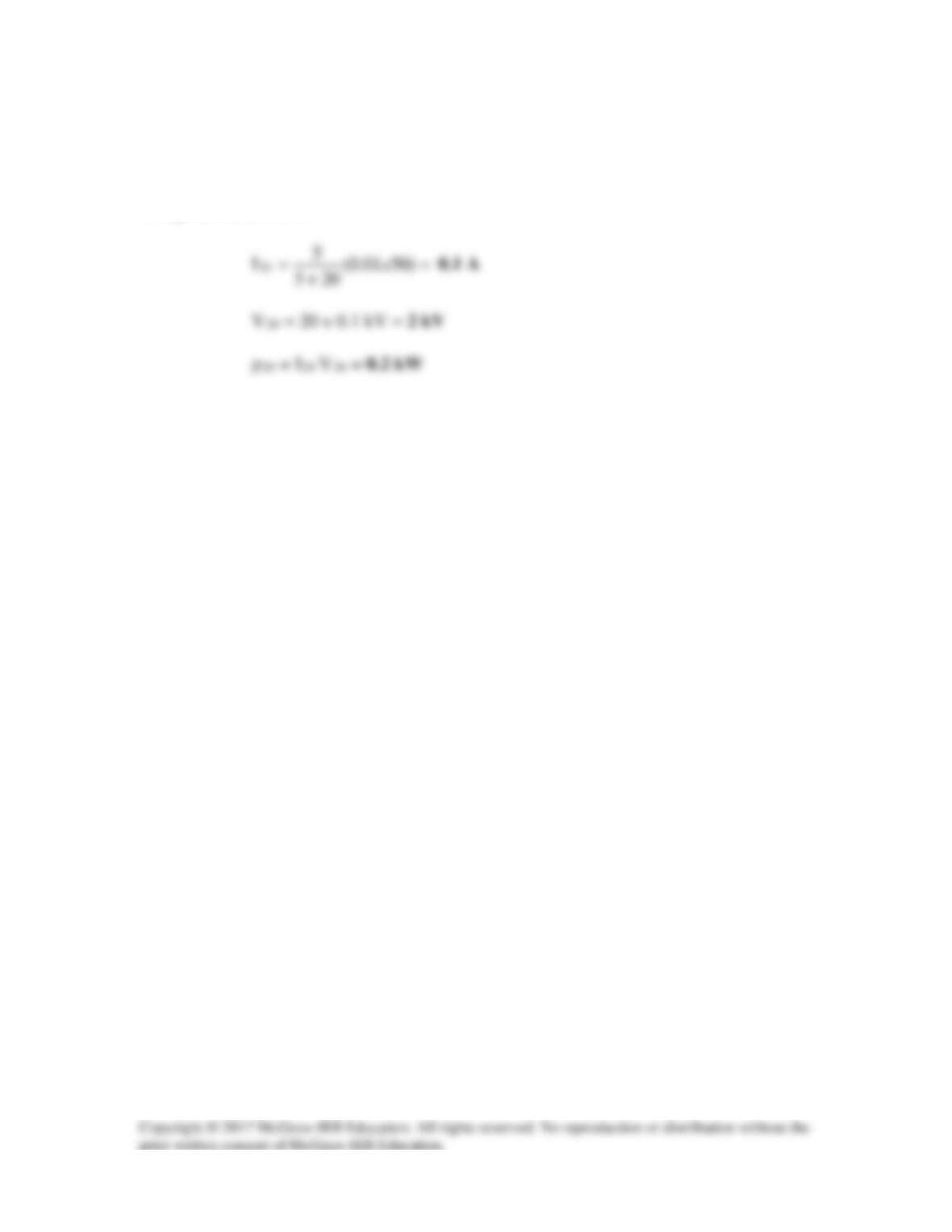
V0 = 5 x 10-3 x 10 x 103 = 50V
Using current division,
Solution 2.26
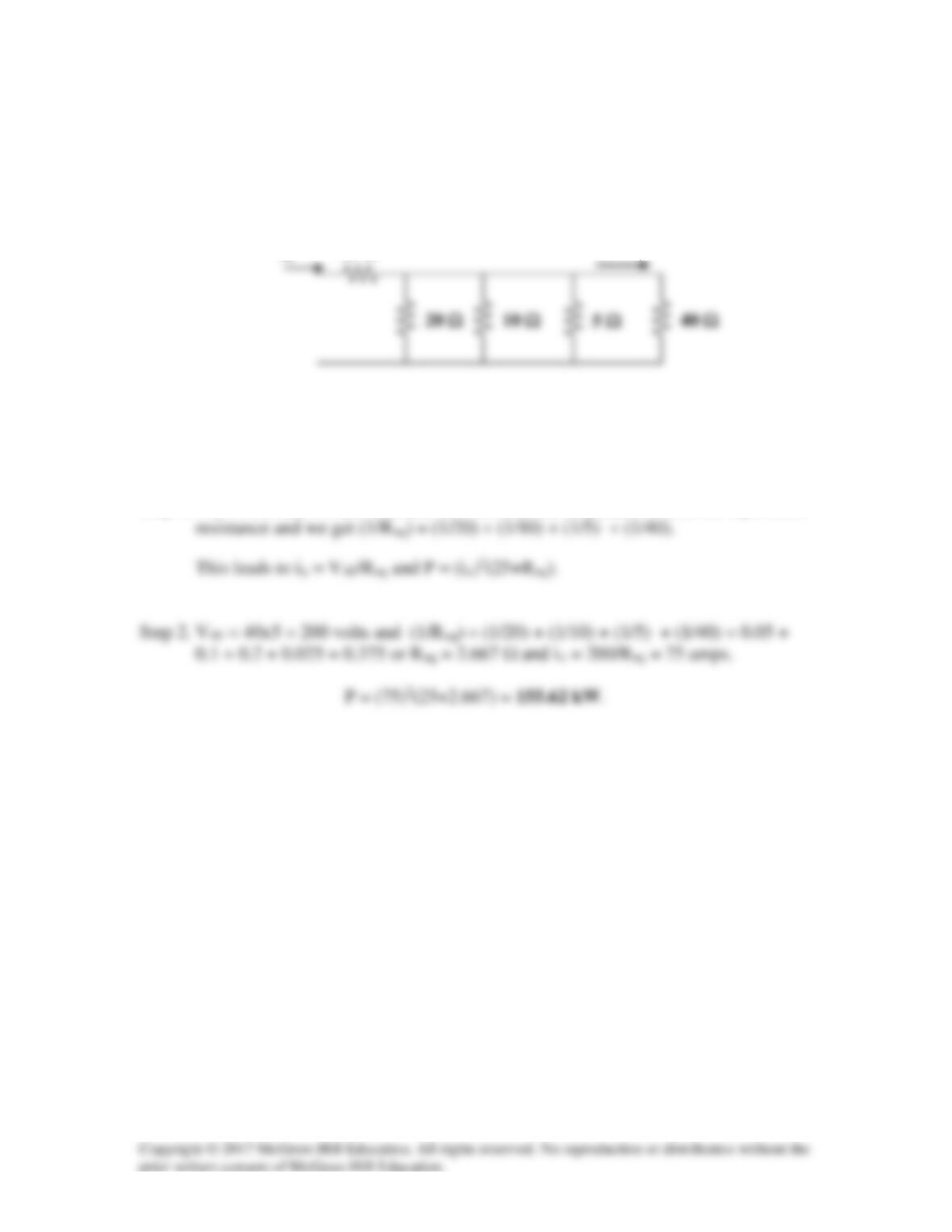
For the circuit in Fig. 2.90, io = 5 A. Calculate ix and the total power absorbed by the
entire circuit.
Figure 2.90
For Prob. 2.26.
Solution
Step 1. V40 = 40io and we can combine the four resistors in parallel to find the equivalent
ix
io
25 Ω
Solution 2.27
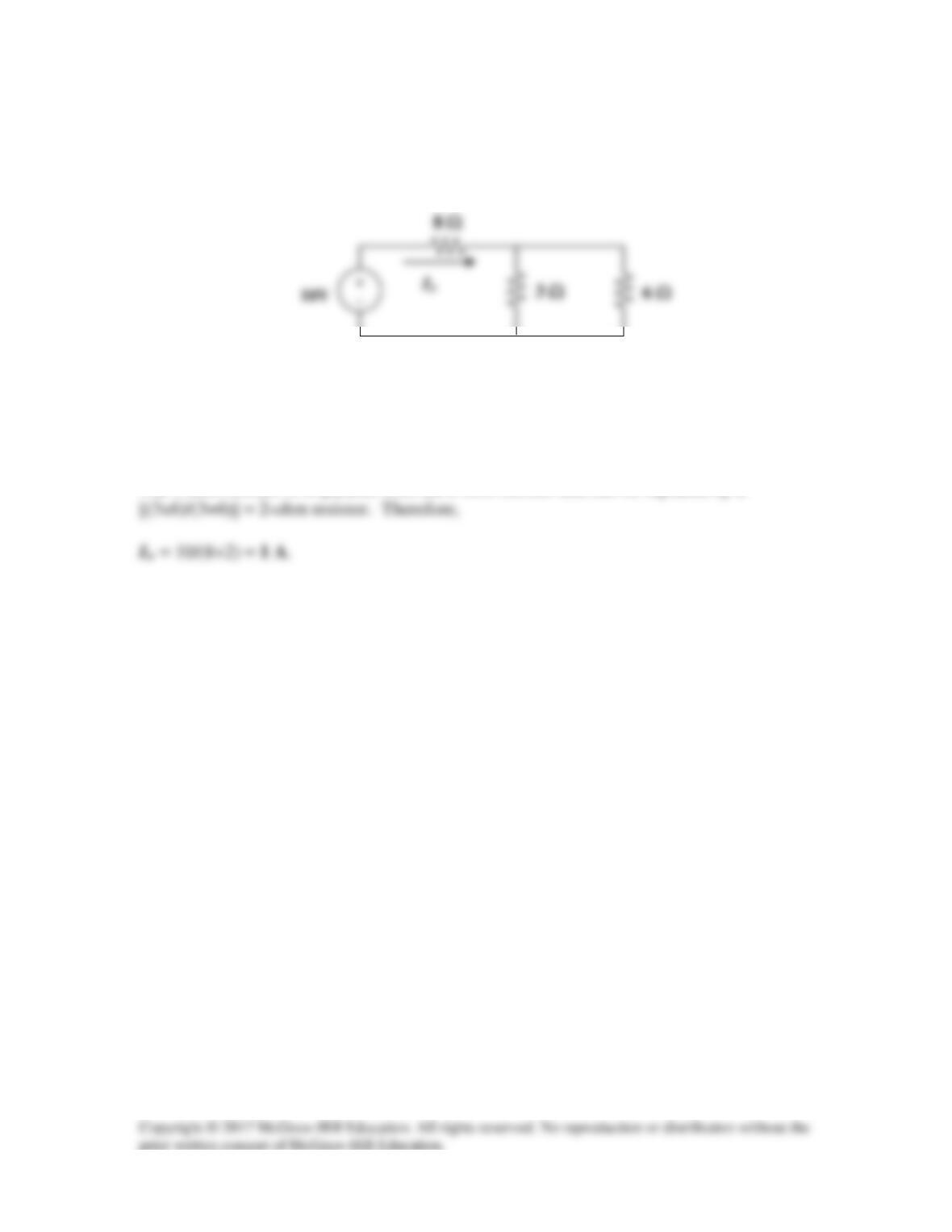
Calculate Io in the circuit of Fig. 2.91.
Figure 2.91
For Prob. 2.27.
Solution
The 3–ohm resistor is in parallel with the c–ohm resistor and can be replaced by a
Solution 2.28
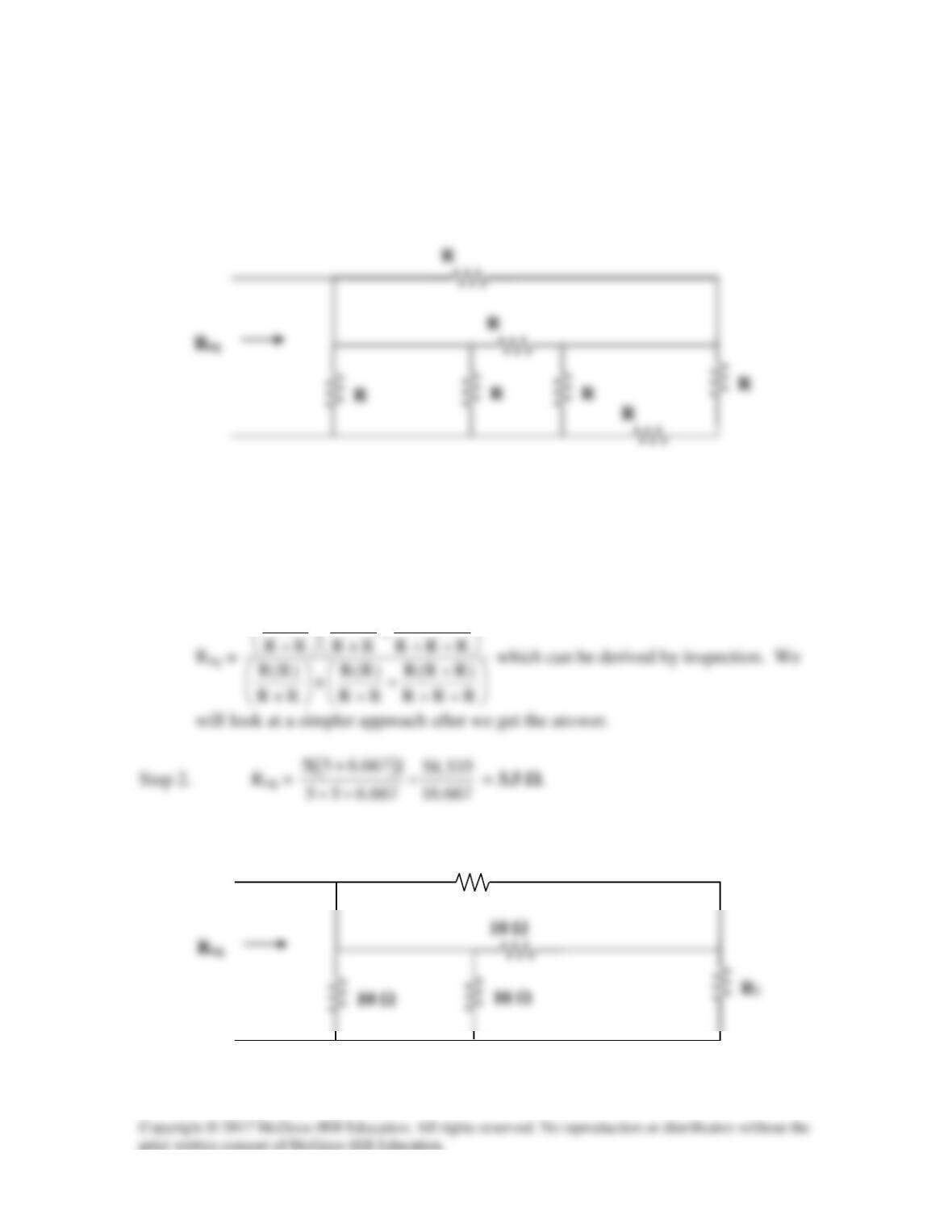
Design a problem, using Fig. 2.92, to help other students better understand series and parallel
Problem
Find v1, v2, and v3 in the circuit in Fig. 2.92.
Solution
We first combine the two resistors in parallel
We now apply voltage division,
Solution 2.29
All resistors (R) in Fig. 2.93 are 10 Ω each. Find Req.
Figure 2.93
For Prob. 2.29.
Solution
Step 1. All we need to do is to combine all the resistors in series and in parallel.
R(R) R(R) R(R R)
+
10 Ω
10 Ω
10 Ω
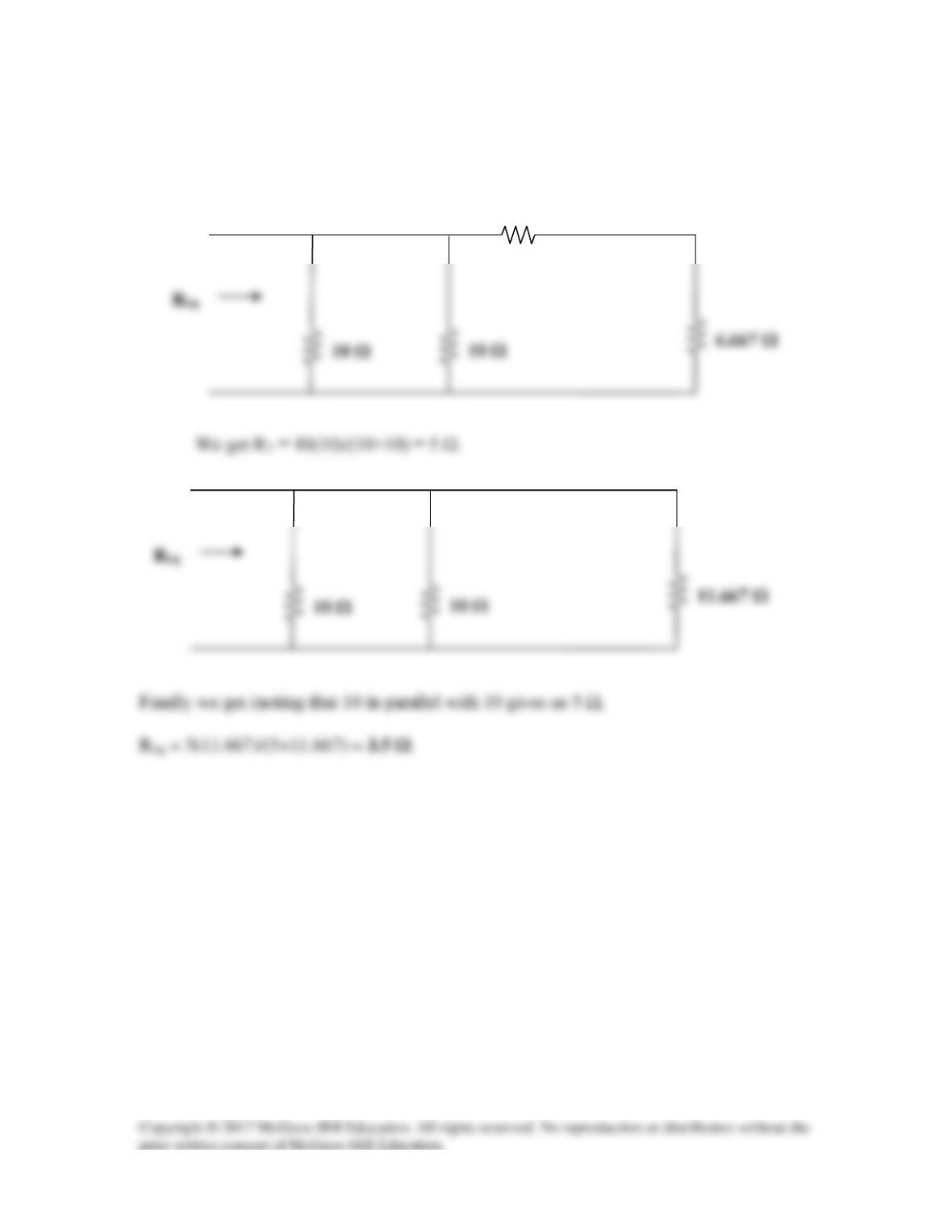
Checking we get,
R1 = 10(20)/(10+20) = 6.667 Ω.
R2
Solution 2.30
Find Req for the circuit in Fig. 2.94.
Figure 2.94
For Prob. 2.30.
Solution
Solution 2.31
1
3 2 // 4 //1 3 3.5714
1/2 1/4 1
eq
R=+=+ =
++
Solution 2.32
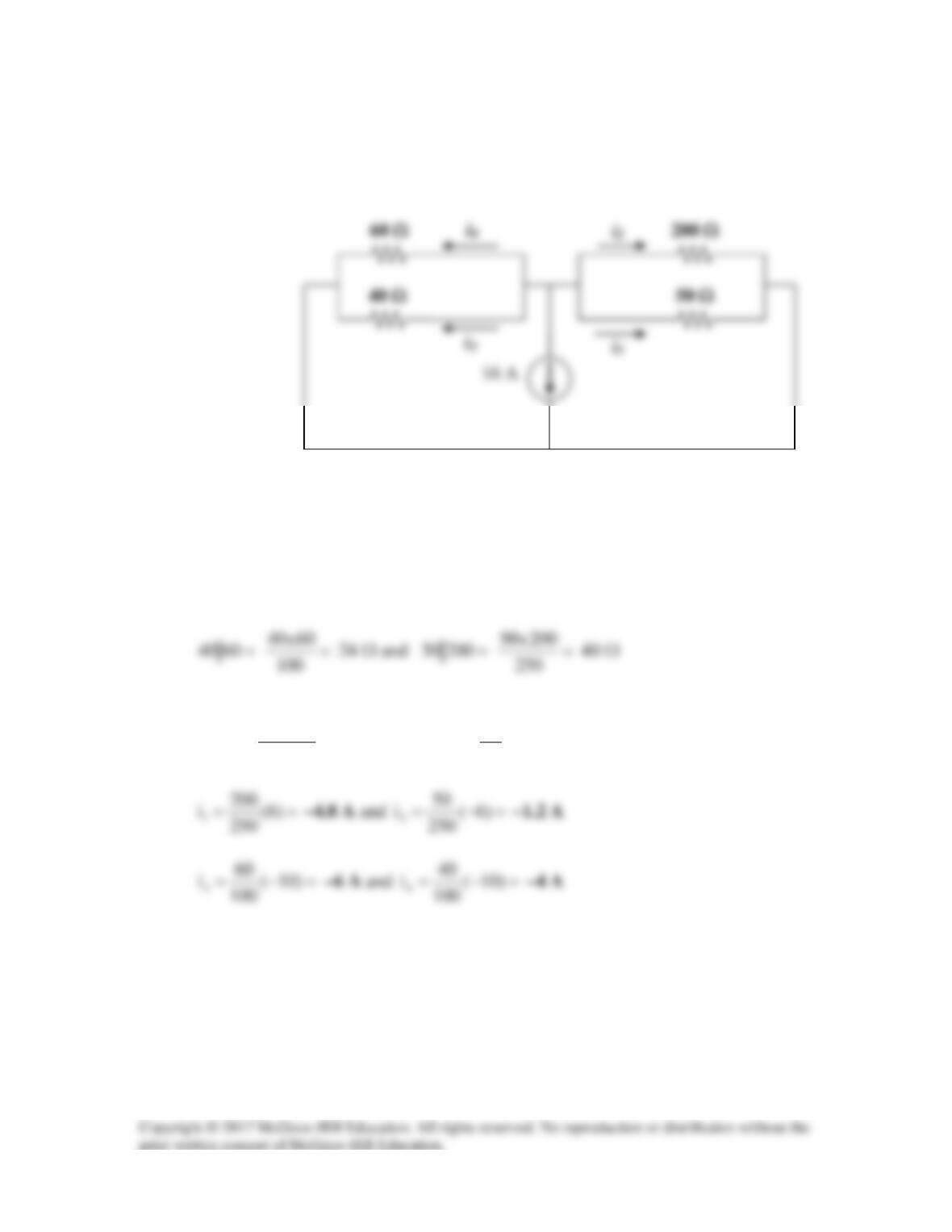
Find i1 through i4 in the circuit in Fig. 2.96.
Figure 2.96
For Prob. 2.32.
Solution
We first combine resistors in parallel.
Using current division principle,
A10)16(
64
40
ii,A6)16(
4024
24
ii 4321 −=−=+−=−
+
=+
Solution 2.33
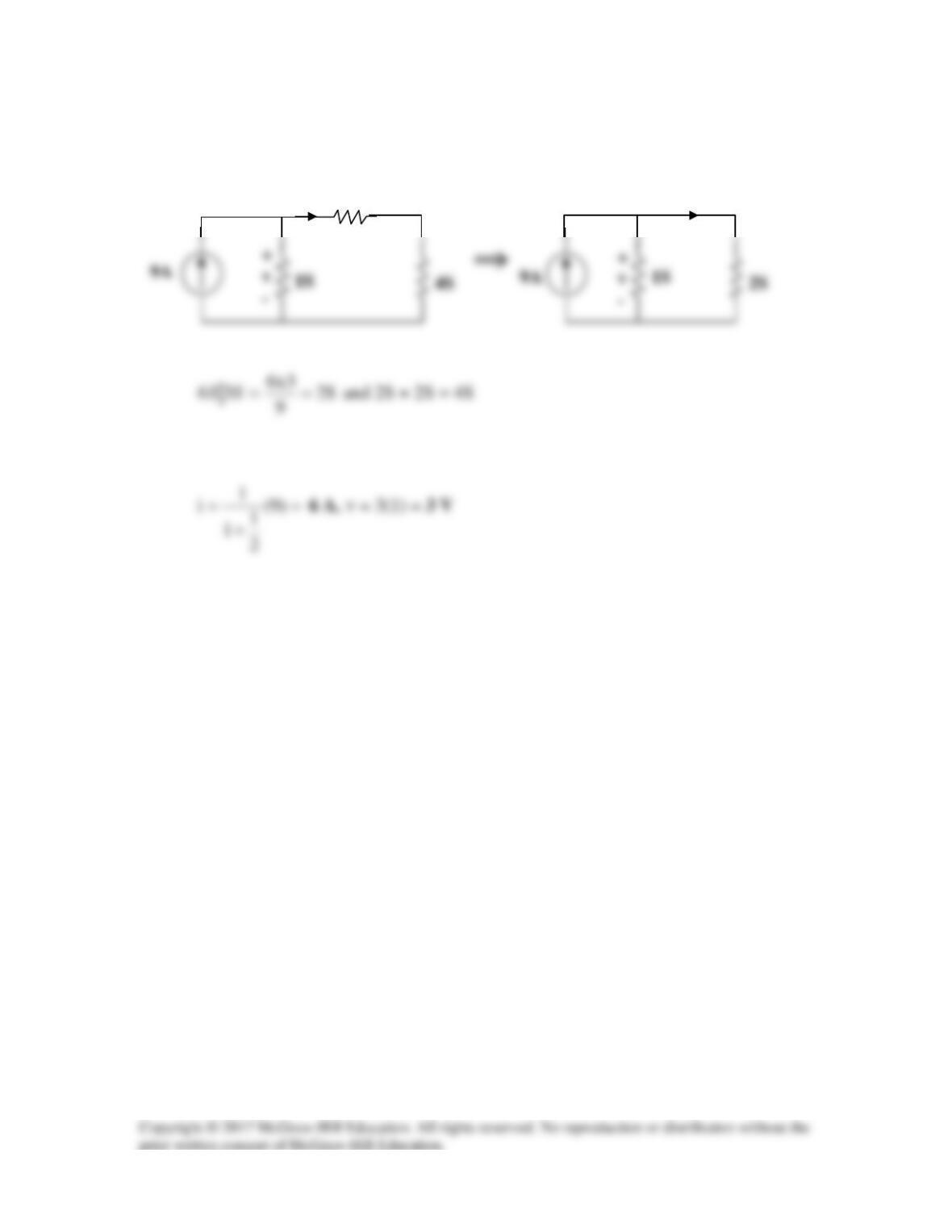
Combining the conductance leads to the equivalent circuit below
2S
4S
9A
1S
9A
Using current division,
4S
i
i
Solution 2.34
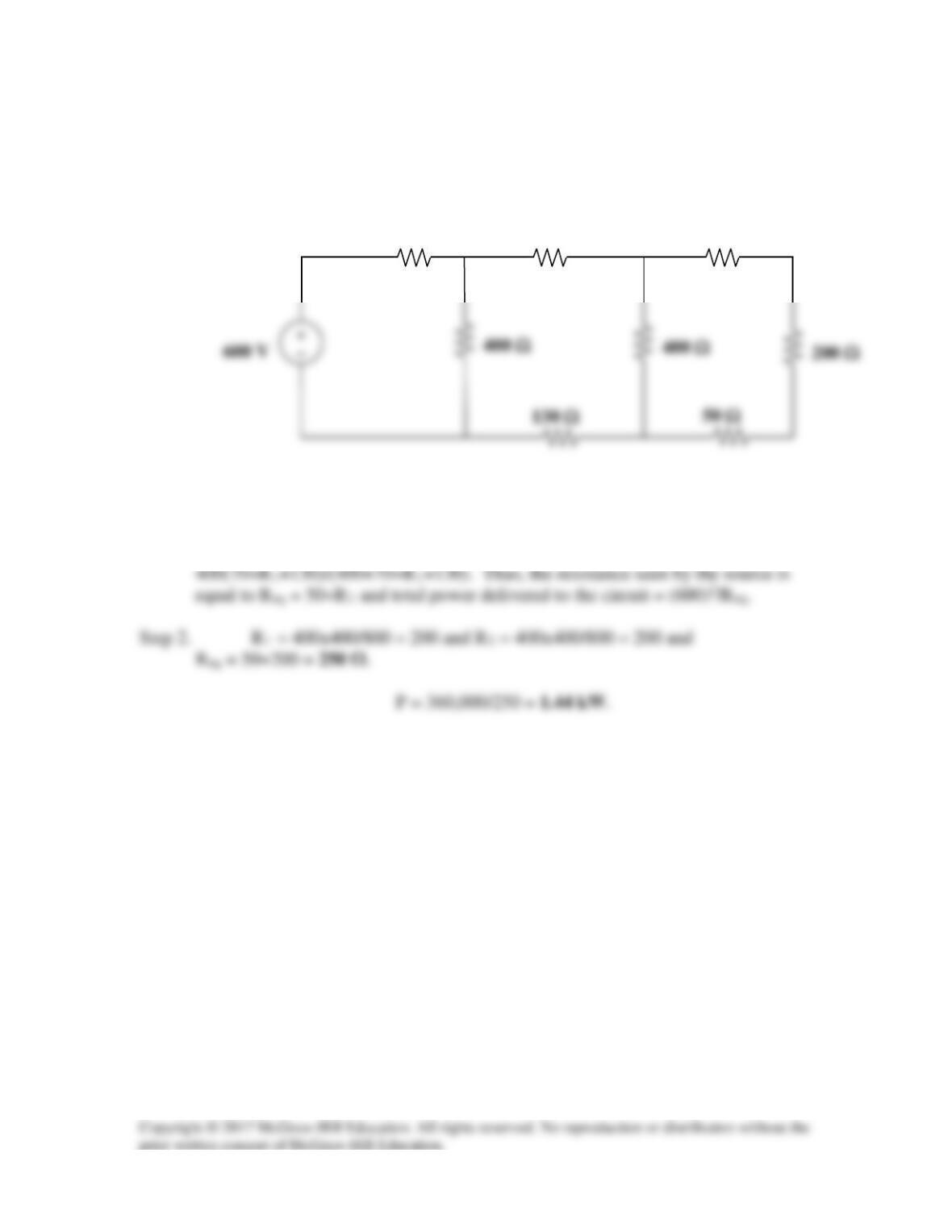
Using series/parallel resistance combination, find the equivalent resistance seen by the
source in the circuit of Fig. 2.98. Find the overall absorbed power by the resistor
network.
130 Ω
400 Ω
50 Ω
400 Ω
Figure 2.98
For Prob. 2.34.
Step 1. Let R1 = 400(150+200+50)/(400+150+200+50) and R2 =
50 Ω
70 Ω
150 Ω
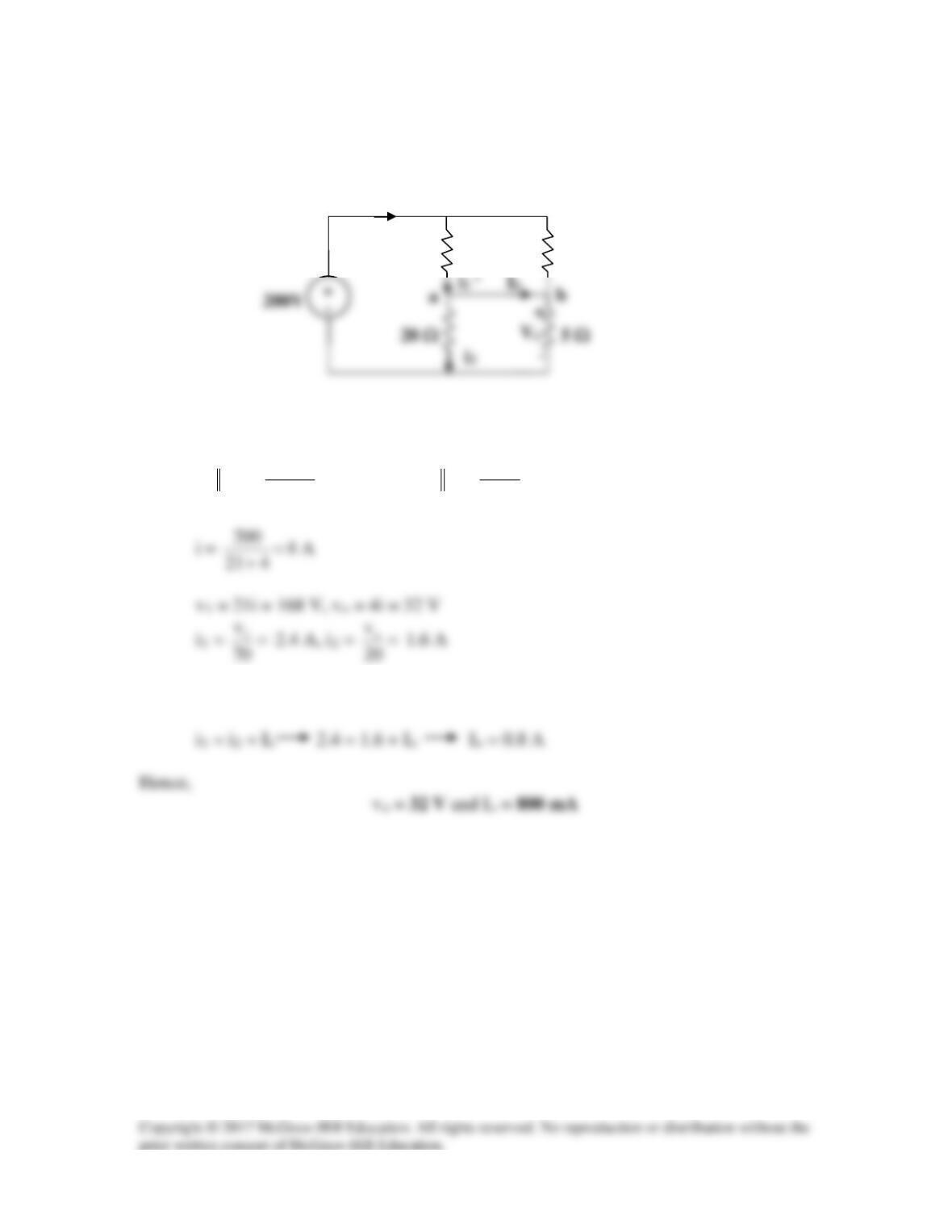
Solution 2.35
20 Ω
5 Ω
b
a
200V
+
Combining the resistors that are in parallel,
=3070
Ω= 21
100
30x70
,
=520
=
25
5x20
4 Ω
At node a, KCL must be satisfied
i
70 Ω
30 Ω
+
V1
Solution 2.36
20//(30+50) = 16, 24 + 16 = 40, 60//20 = 15
If i1 is the current through the 24-Ω resistor and io is the current through the 50-Ω
resistor, using current division gives
Solution 2.37
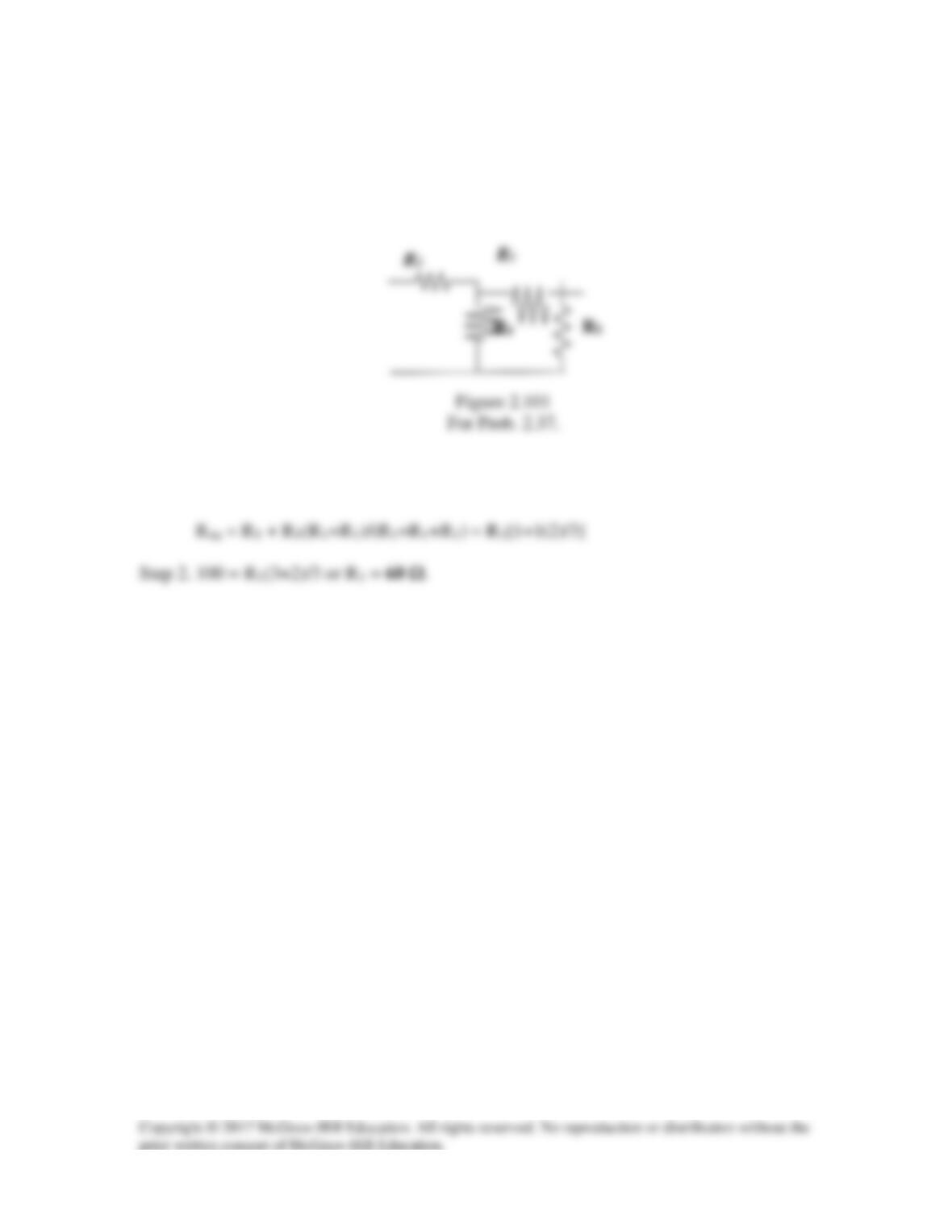
Given the circuit in Fig. 2.101 and that the resistance, Req, looking into the circuit from
the left is equal to 100 Ω, determine the value of R1.
Step 1. First we calculate Req in terms of R1. Then we set Req to 100 ohms and solve for
R1.
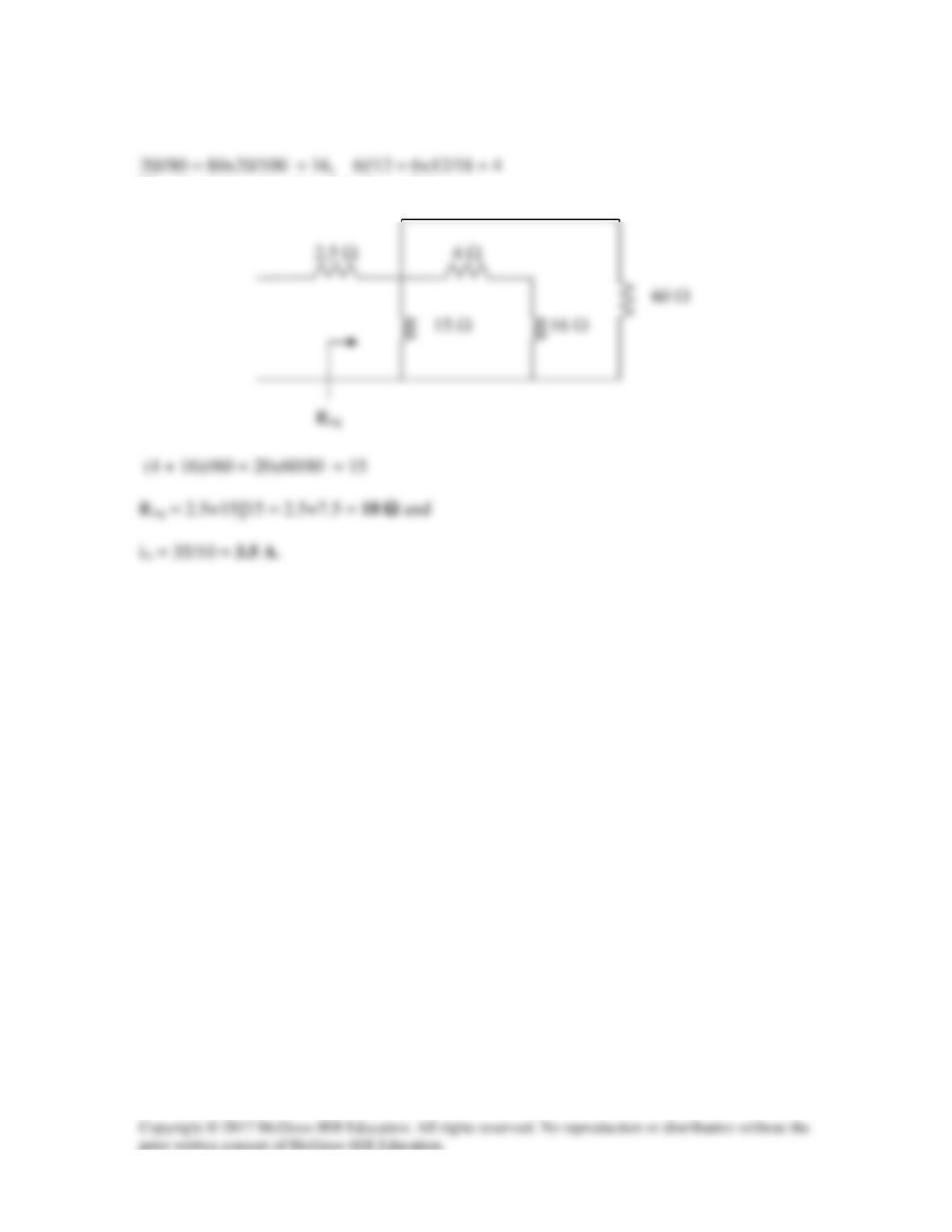
Solution 2.38
The circuit is reduced to that shown below.