Solution 2.39
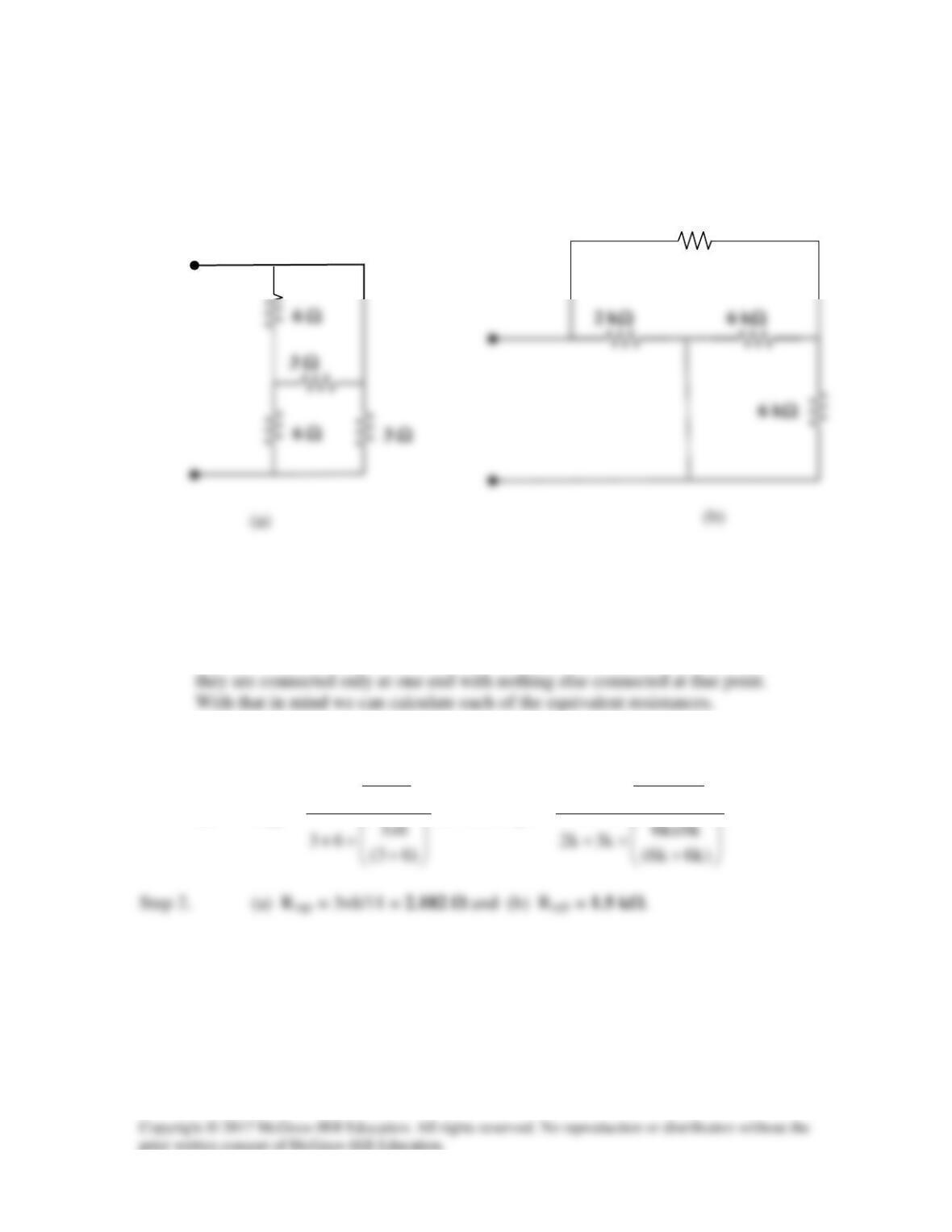
Evaluate Req looking into each set of terminals for each of the circuits shown in
Fig. 2.103.
3 Ω
6 Ω
6 Ω
3 Ω
6 kΩ
6 kΩ
2 kΩ
Figure 2.103
For Prob. 2.39.
Step 1. We need to remember that two resistors are in parallel if they are connected
together at both the top and bottom and two resistors are connected in series if
(a) Reqa =
36
36 (3 6)
x
+
+
and (b) Reqb =
6kx6k
2k 3k (6k 6k)
+
+
.
3 kΩ
Solution 2.40
Solution 2.41
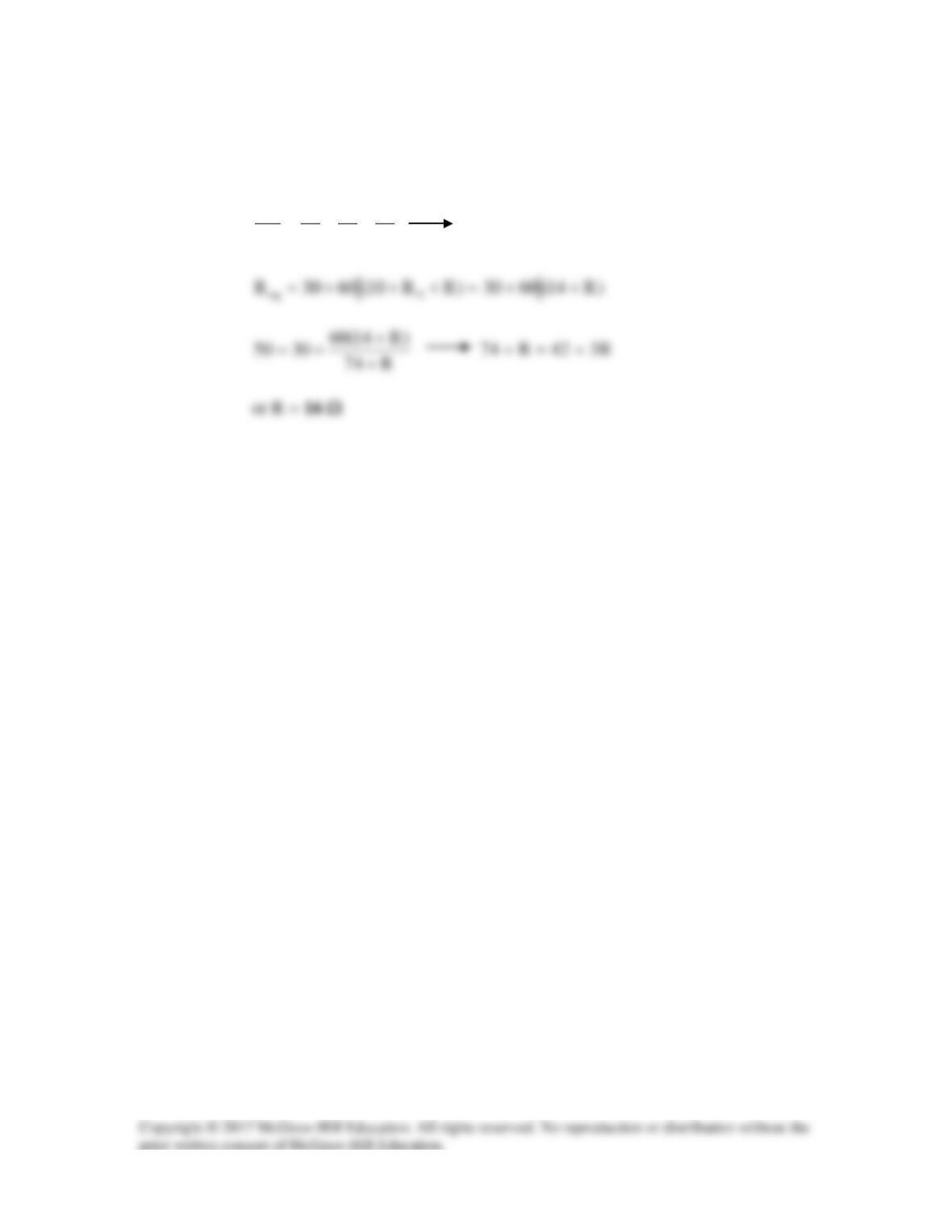
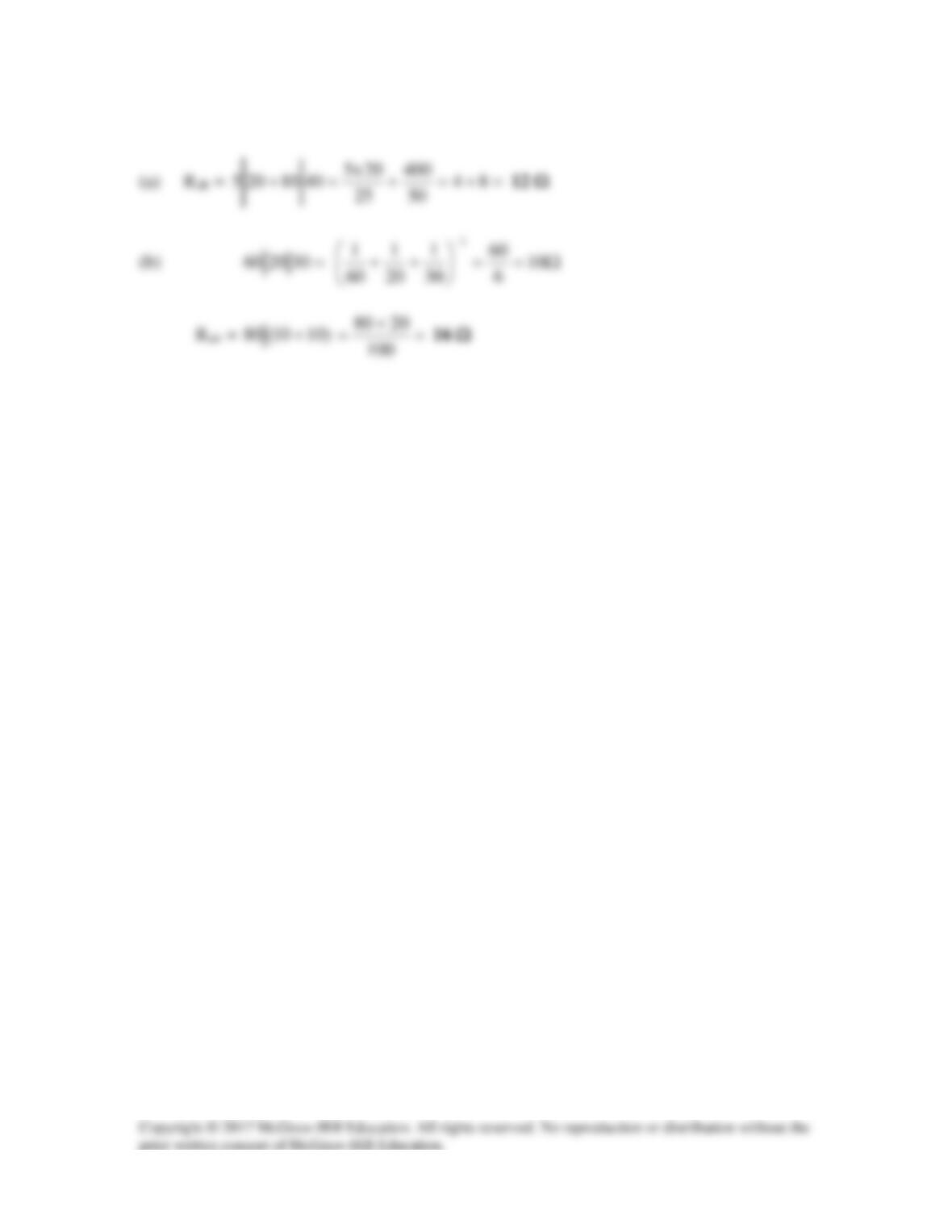
Let R0 = combination of three 12Ω resistors in parallel
12
1
12
1
12
1
R
1
o
++=
Ro = 4
Solution 2.42
Solution 2.43
Solution 2.44
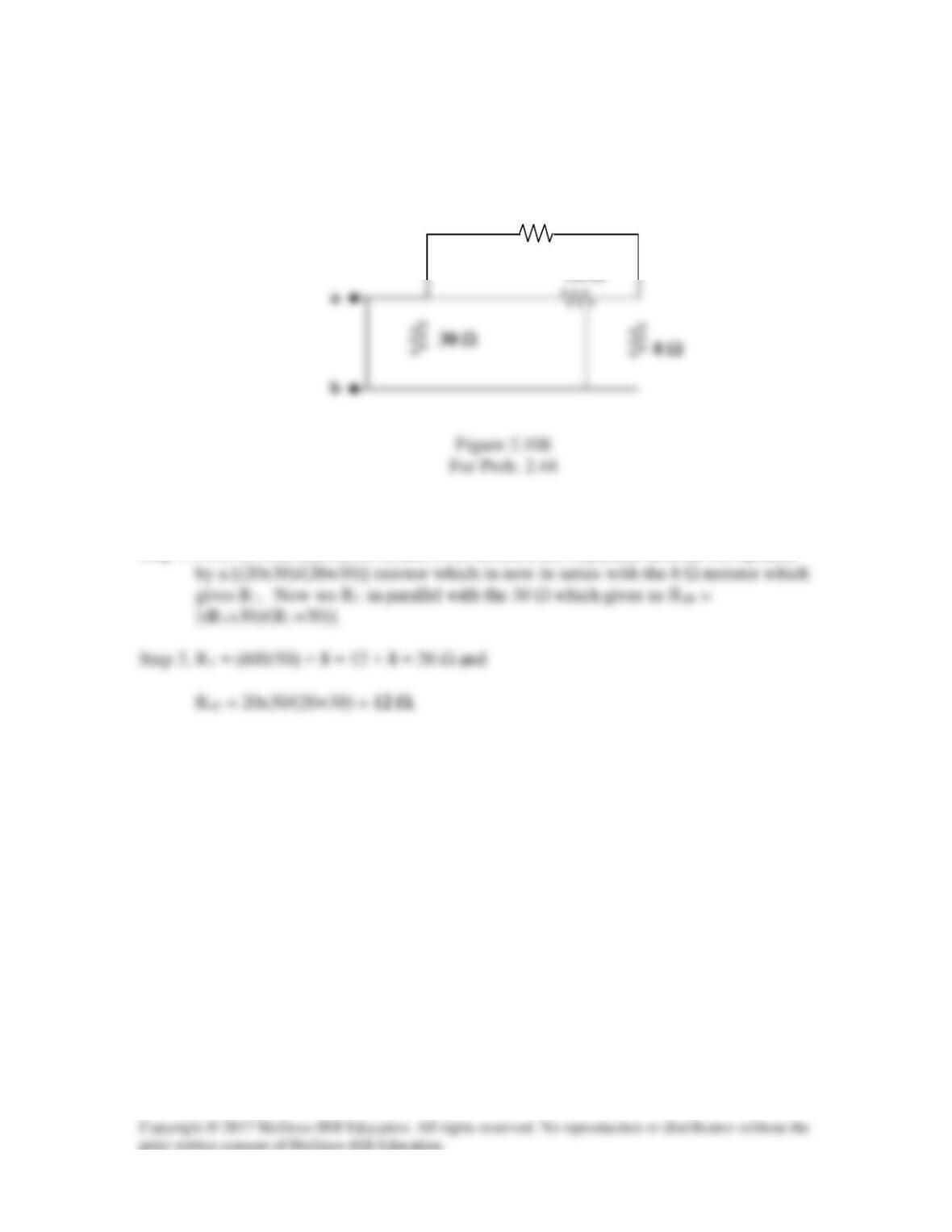
For the circuits in Fig. 2.108, obtain the equivalent resistance at terminals a-b.
Solution
Step 1. First we note that the 20 Ω and 30 Ω resistors are in parallel and can be replaced
30 Ω
20 Ω
Solution 2.45
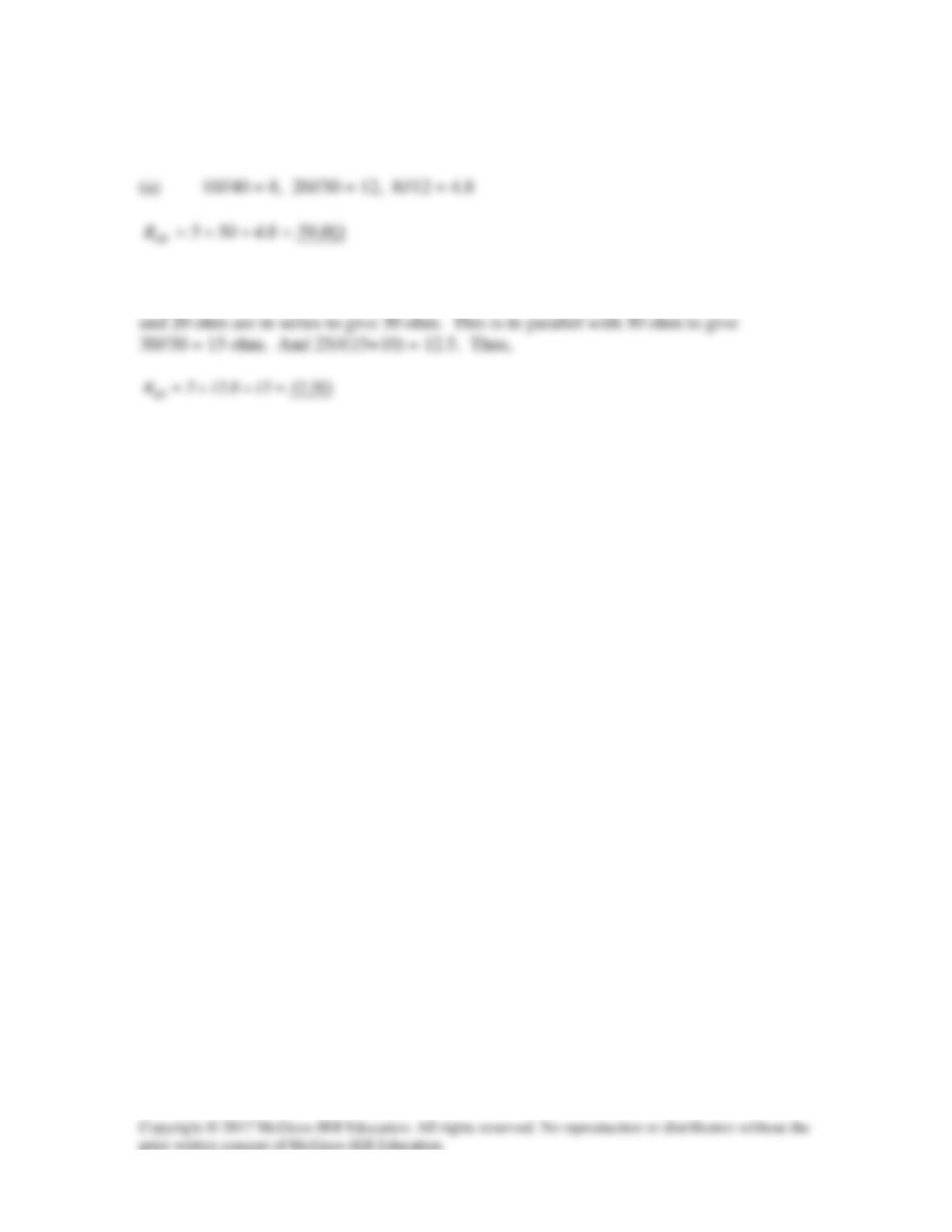
(b) 12 and 60 ohm resistors are in parallel. Hence, 12//60 = 10 ohm. This 10 ohm
Solution 2.46
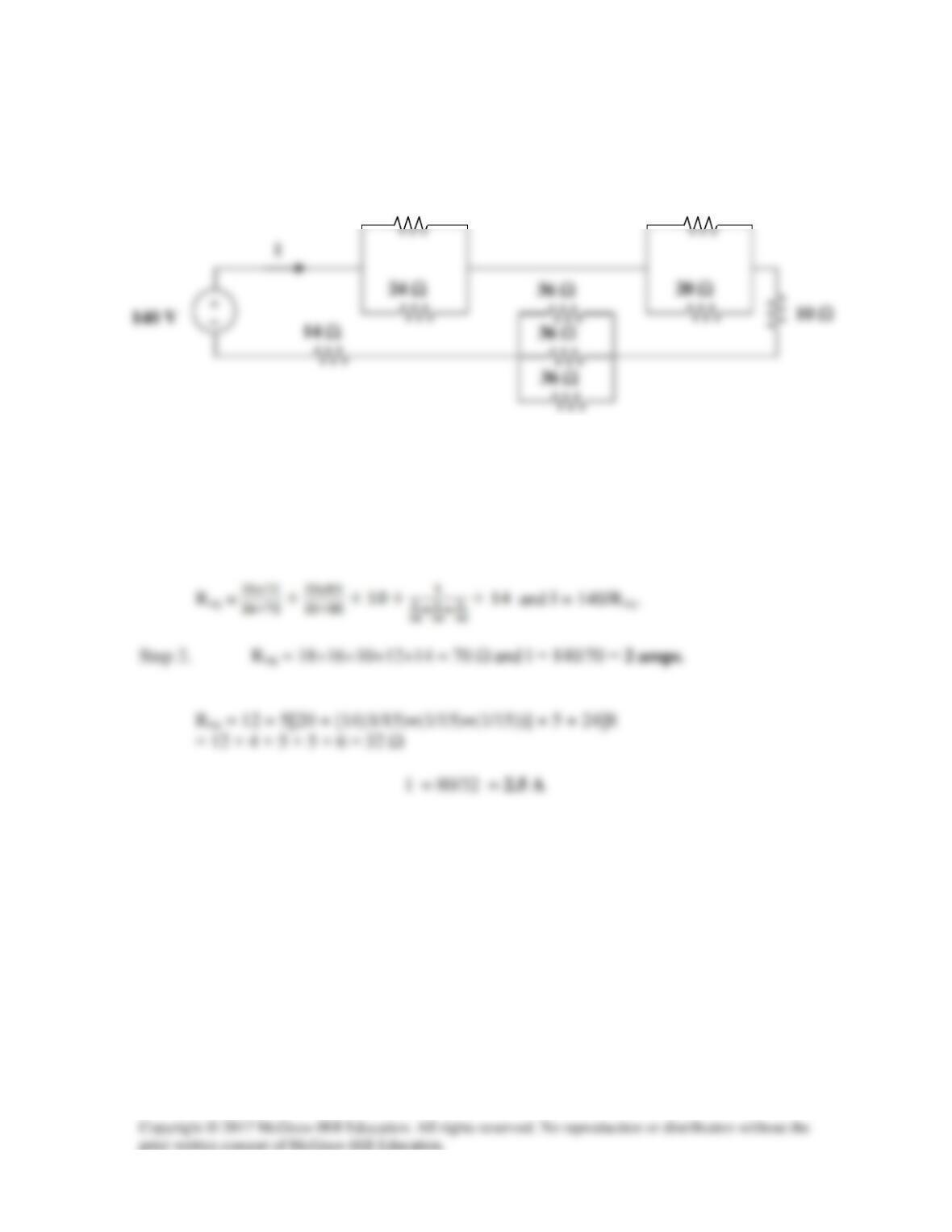
Find I in the circuit of Fig. 2.110.
14 Ω
36 Ω
36 Ω
24 Ω
20 Ω
Figure 2.110
For Prob. 2.46.
Solution
Step 1. First we need to determine the total resistance that the source sees.
72 Ω
80 Ω
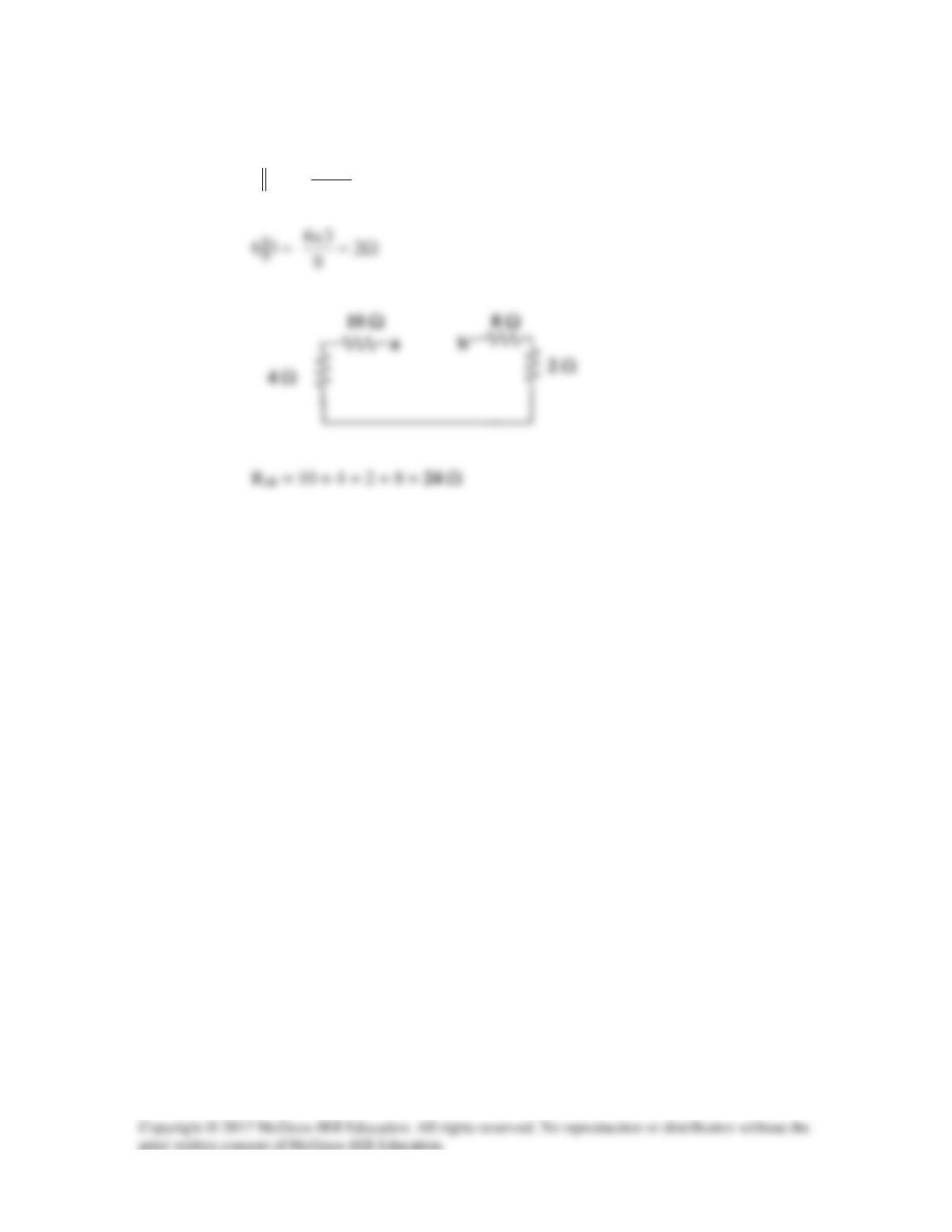
Solution 2.47
=205
Ω= 4
25
20x5
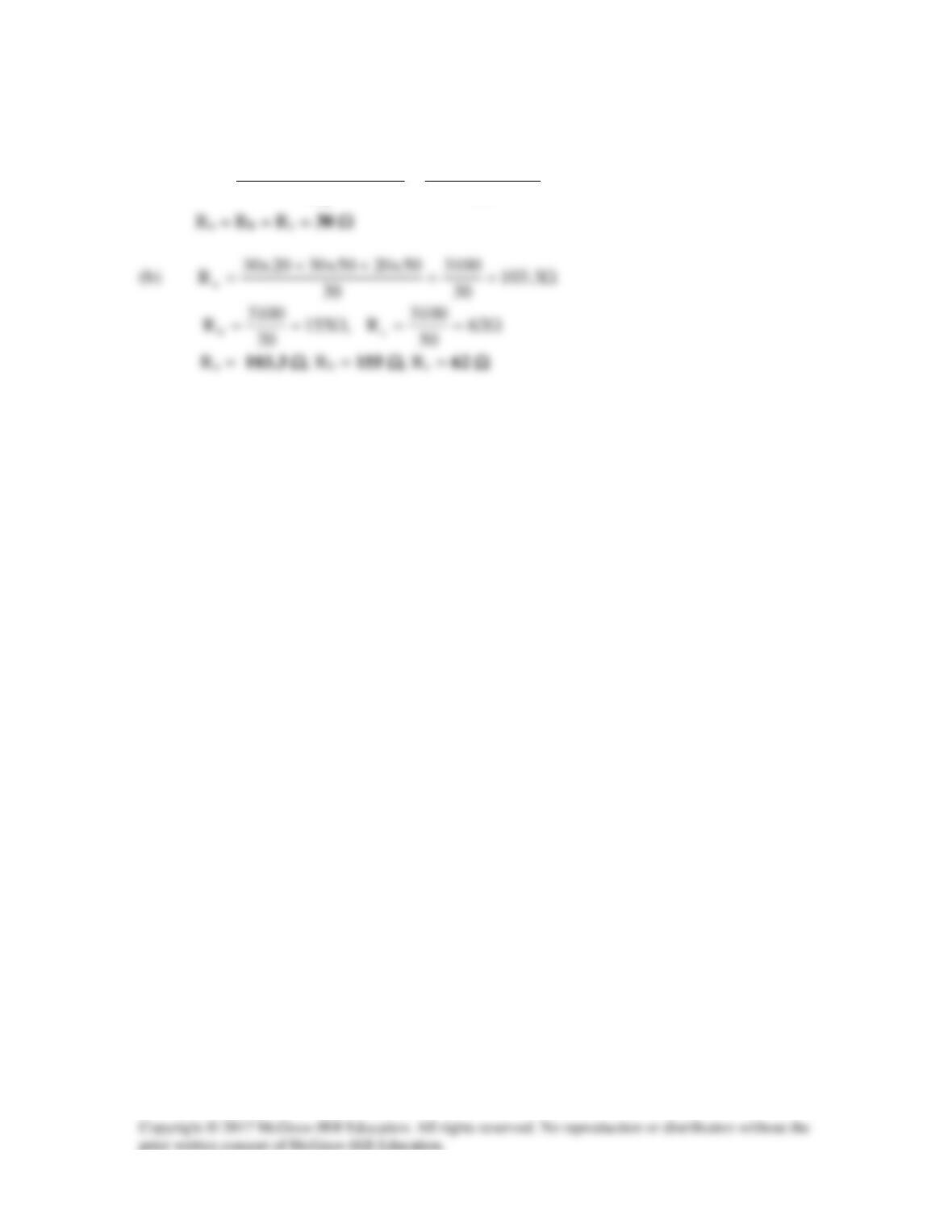
Solution 2.48
(a) Ra =
30
10
100100100
R
RRRRRR
3
133221
=
++
=
++
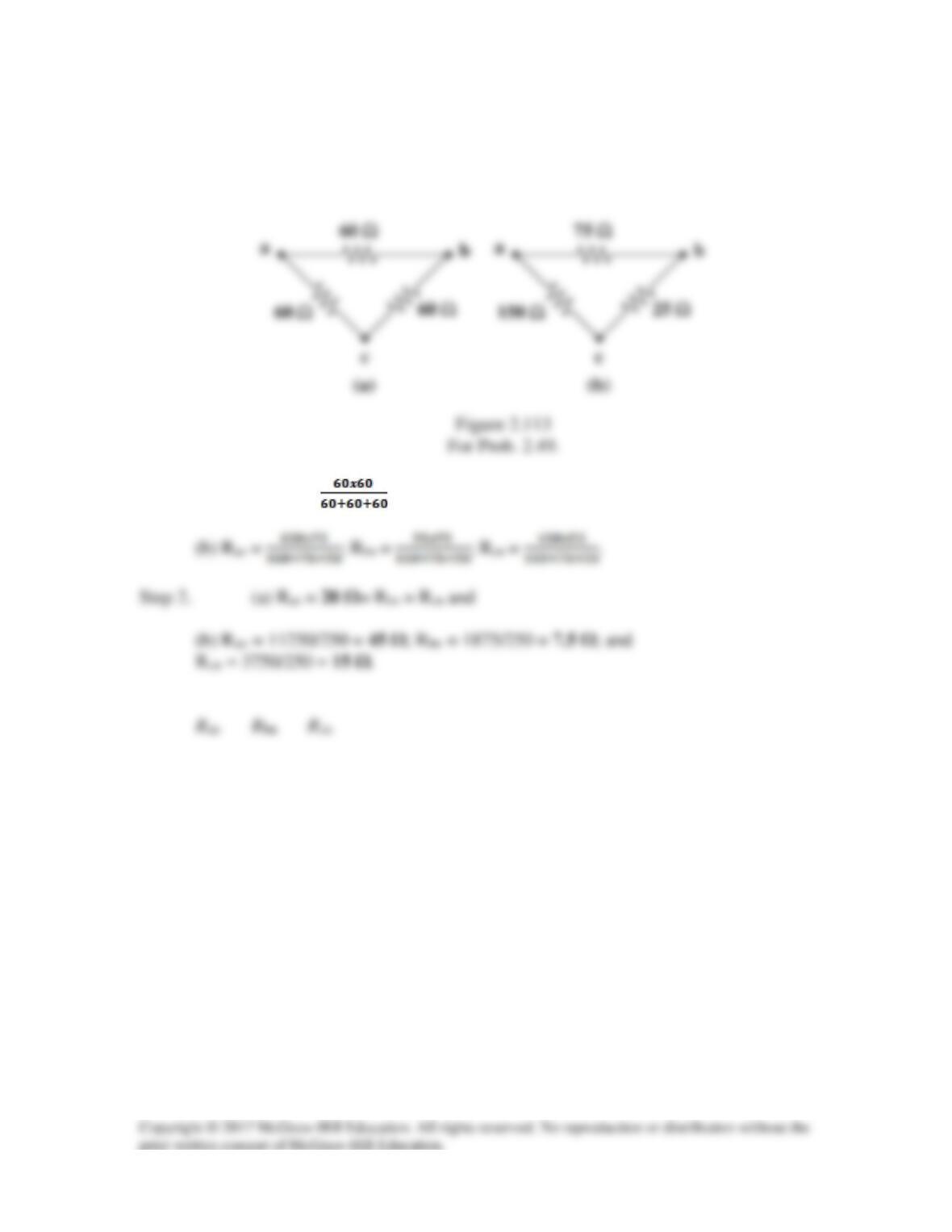
Solution 2.49
Transform the circuits in Fig. 2.113 from ∆ to Y.
Step 1. (a) Ran = = Rbn = Rcn and
Solution 2.50
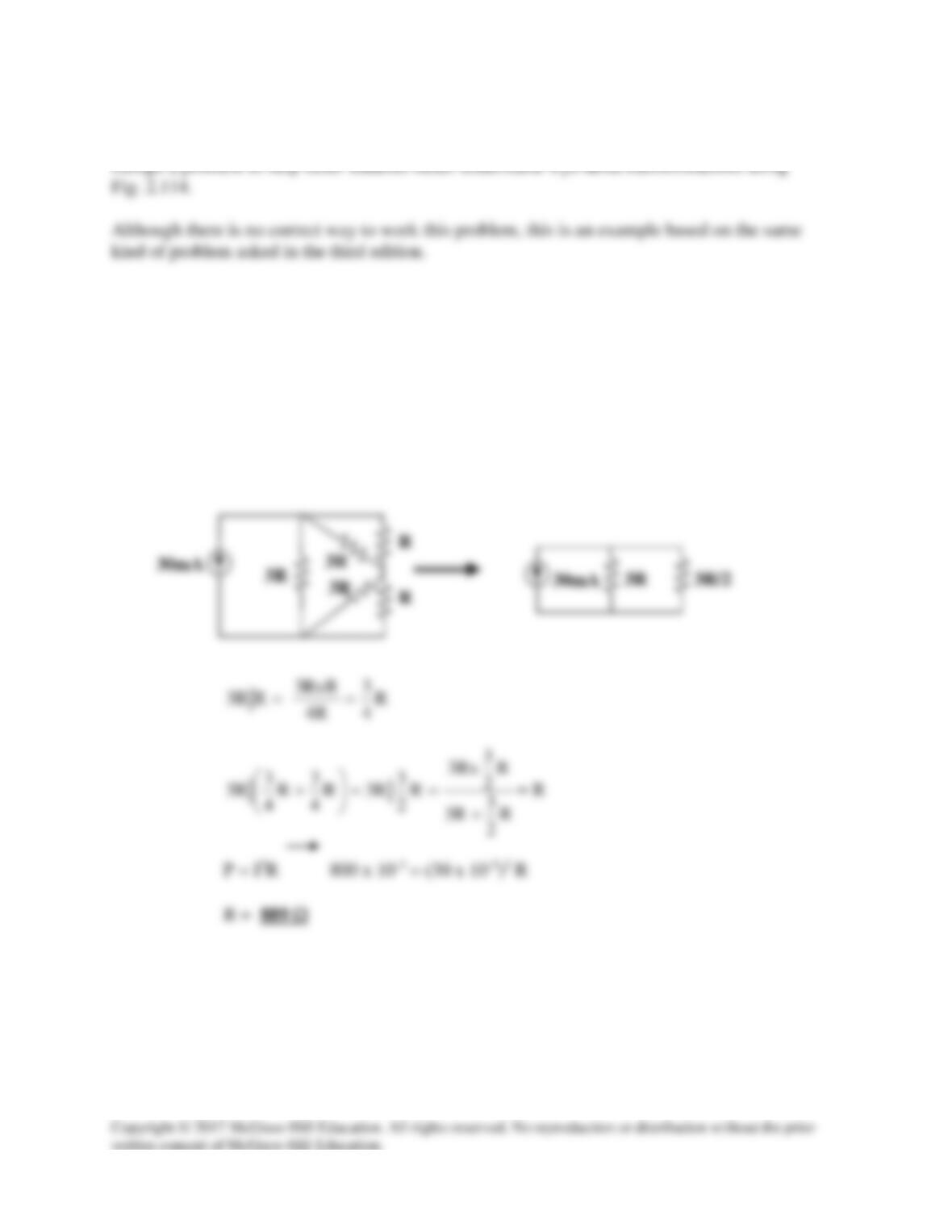
Problem
What value of R in the circuit of Fig. 2.114 would cause the current source to deliver 800 mW to
the resistors.
Solution
Using
∆
R
= 3RY = 3R, we obtain the equivalent circuit shown below:
Solution 2.51
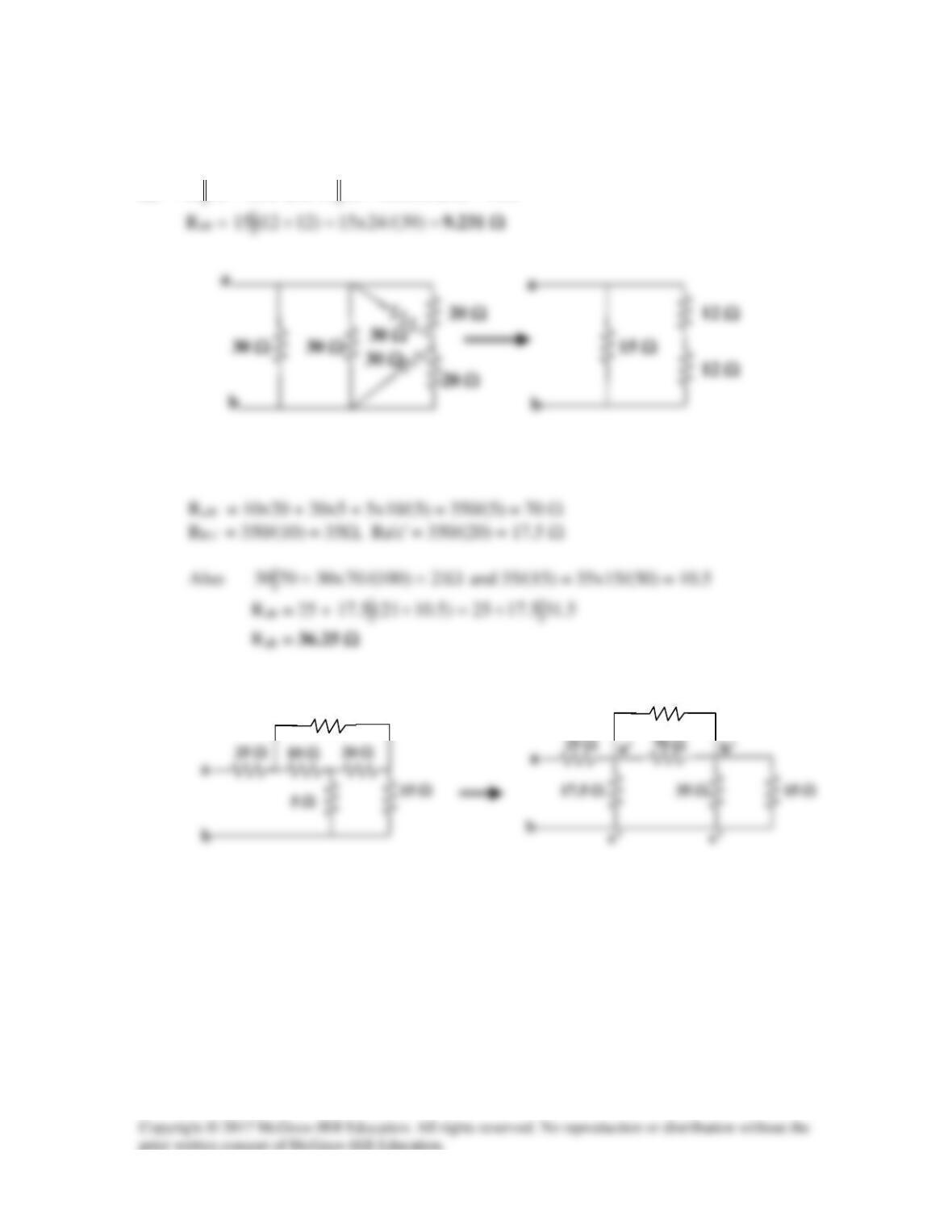
(a)
Ω= 153030
and
Ω== 12)50/(20x302030
(b) Converting the T-sub network into its equivalent
∆
network gives
20 Ω
10 Ω
25 Ω
70 Ω
25 Ω
17.5 Ω
35 Ω
15 Ω
30 Ω
30 Ω
Solution 2.52
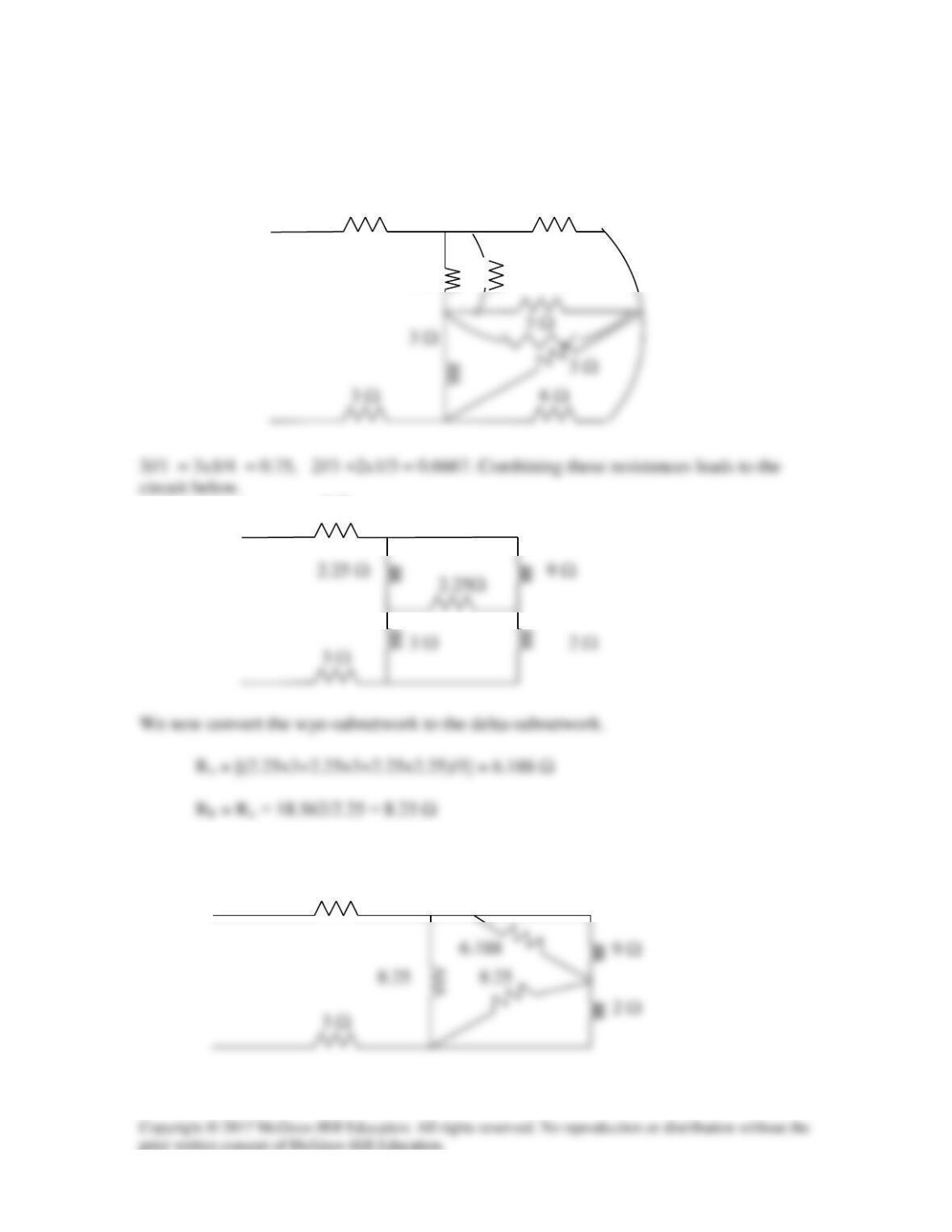
Converting the wye-subnetwork to delta-subnetwork, we obtain the circuit below.
3 Ω
6 Ω
3 Ω
3 Ω
3 Ω
3 Ω
3 Ω
This leads to the circuit below.
3 Ω
9 Ω
3 Ω
3 Ω
3 Ω
9 Ω
3 Ω
9 Ω
9 Ω
Solution 2.53
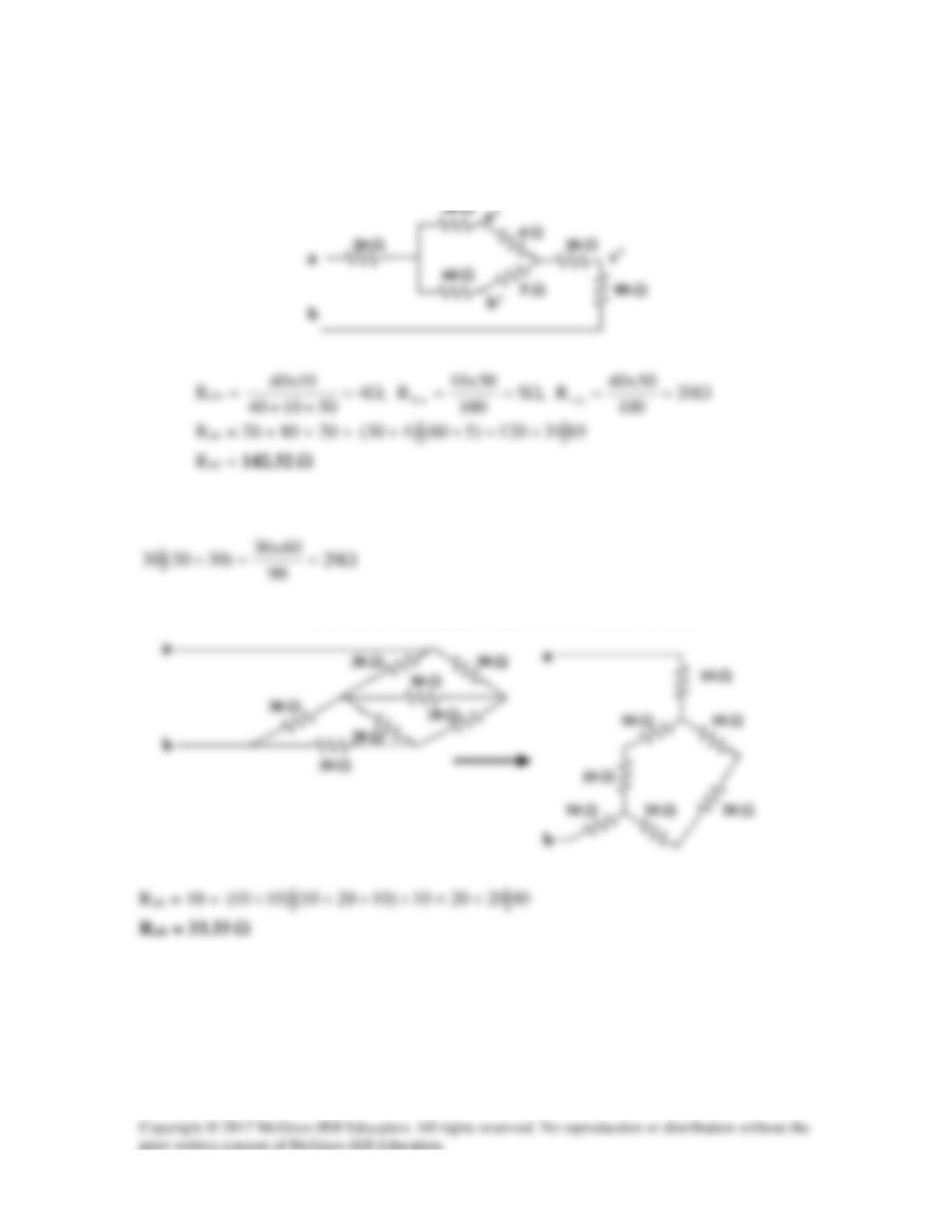
(a) Converting one
∆
to T yields the equivalent circuit below:
(b) We combine the resistor in series and in parallel.
We convert the balanced
∆
s to Ts as shown below:
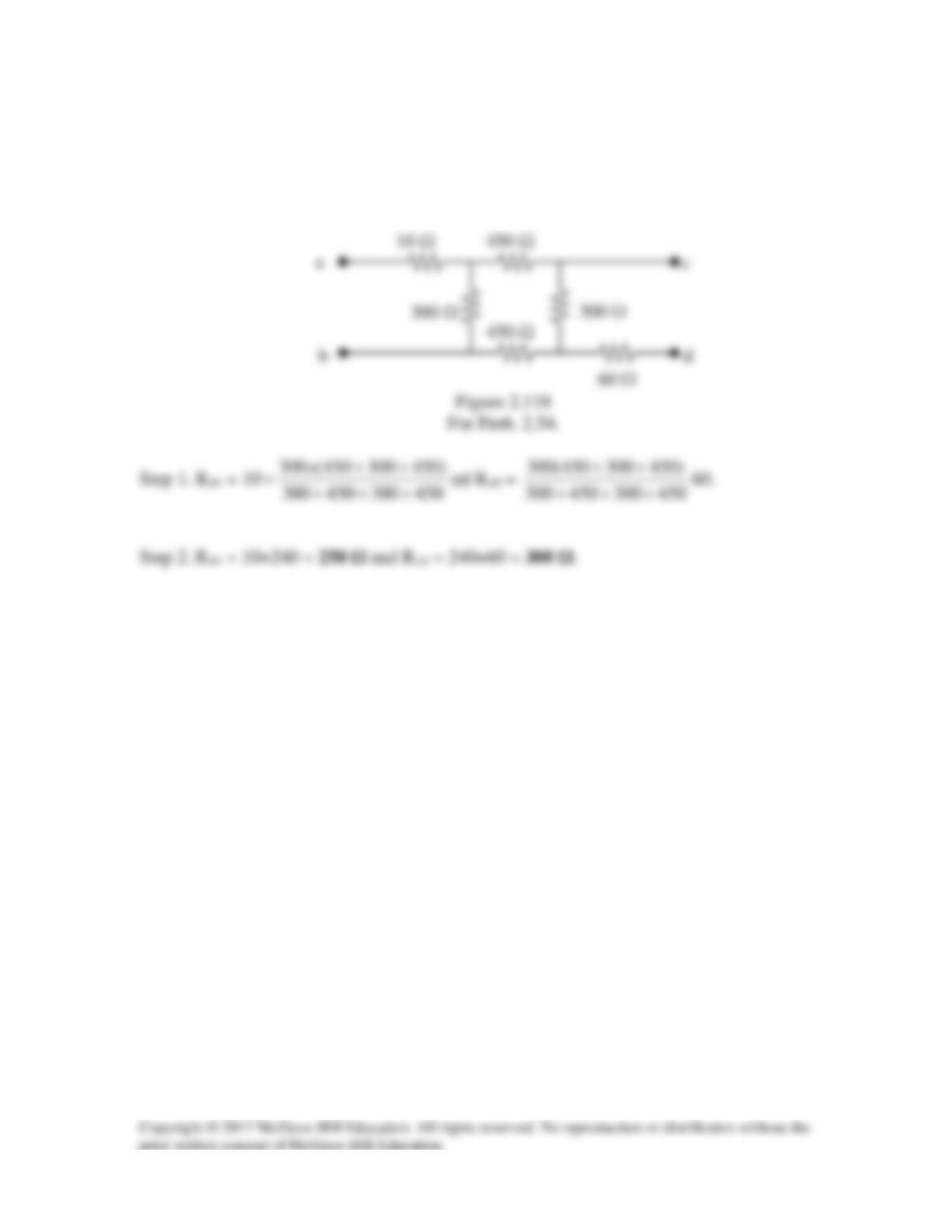
Solution 2.54
Consider the circuit in Fig. 2.118. Find the equivalent resistance at terminals:
(a) a-b, (b) c-d.
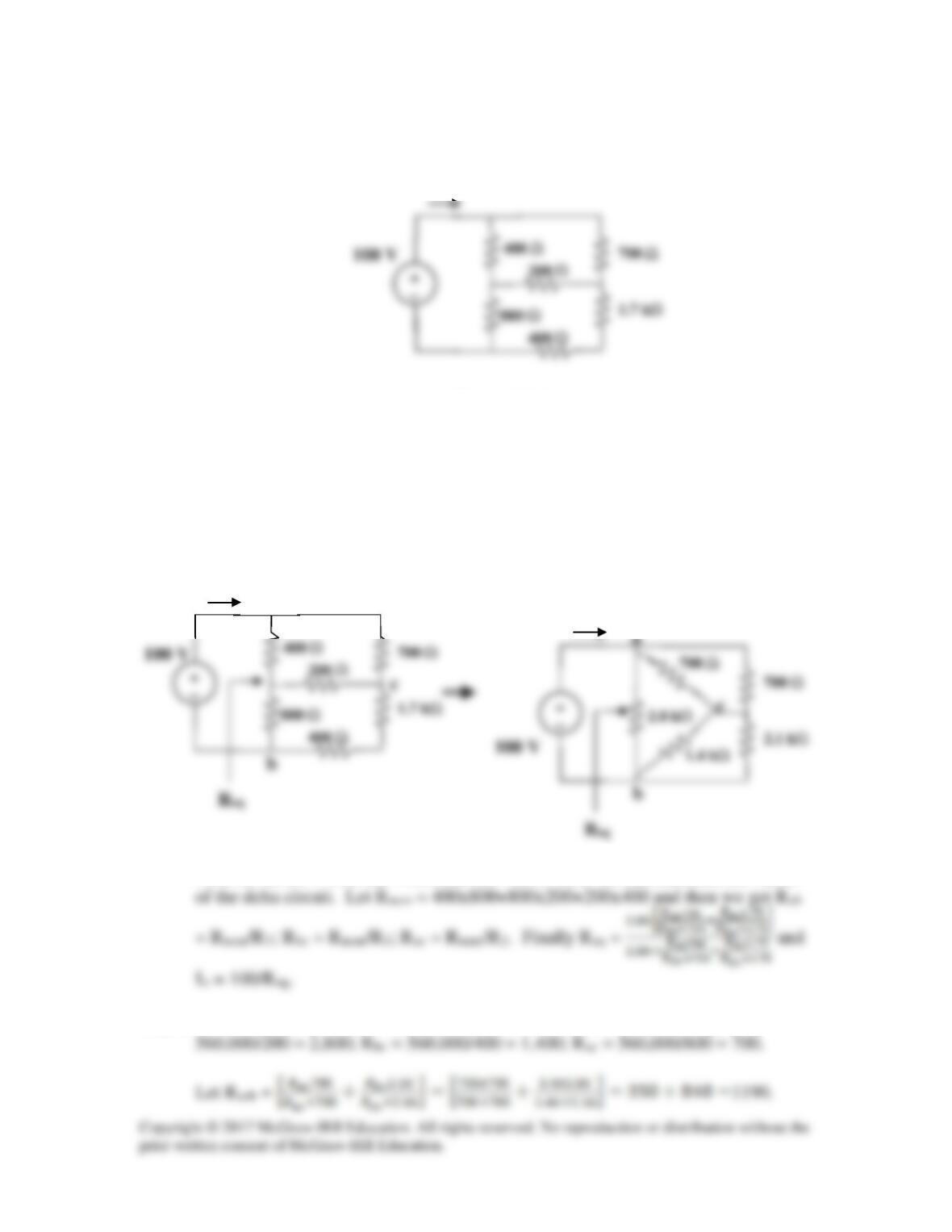
Solution 2.55
Calculate Io in the circuit of Fig. 2.119.
Figure 2.119
For Prob. 2.55.
Solution
Step 1. First we convert the T to
∆
.
b
a
b
c
Next we let R1 = 400; R2 = 800; and R3 = 200. Now we can calculate the values
Step 2. Rnum = 400×800+800×200+200×400 = 560,000 and then we get Rab =
a
Io
Io
Io
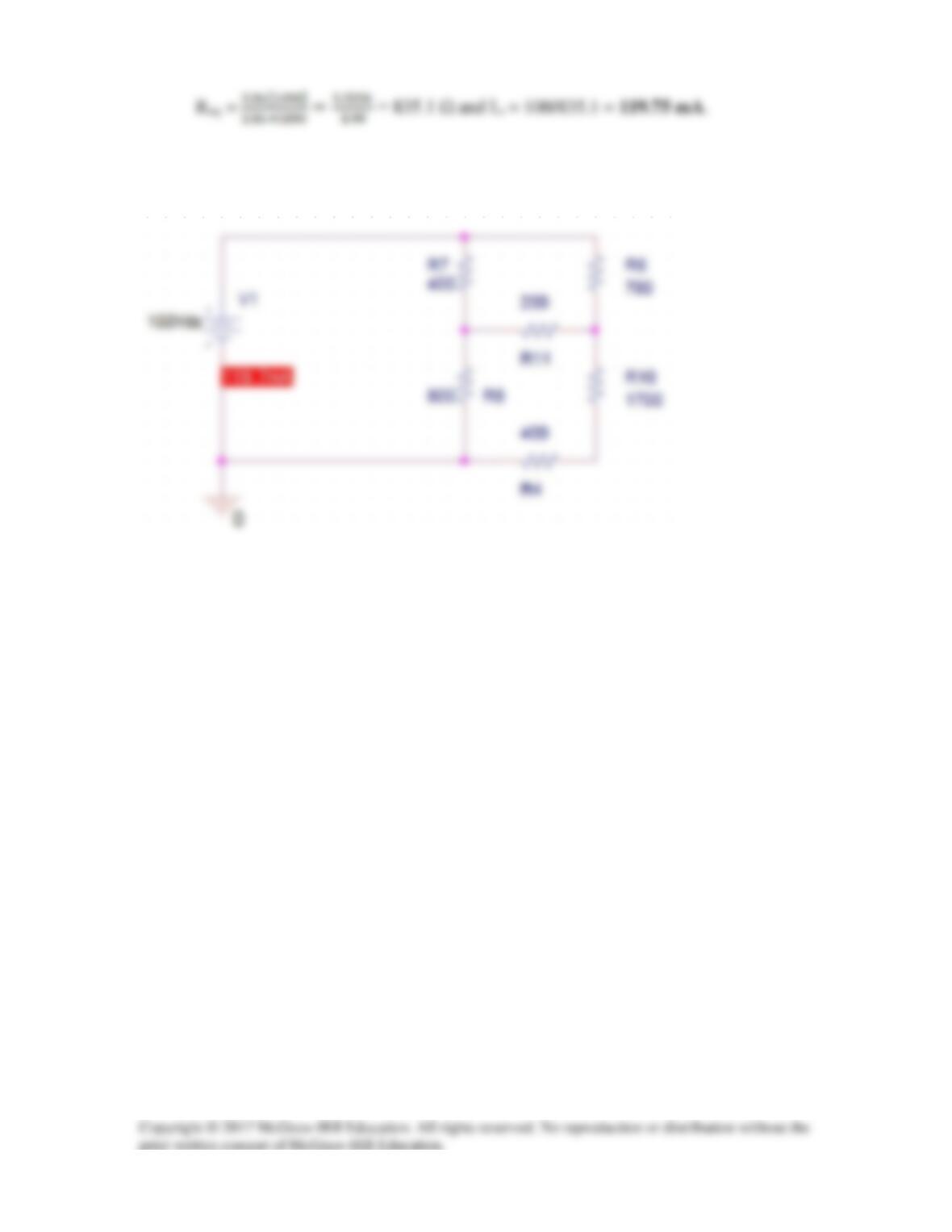
Checking with PSpice we get,
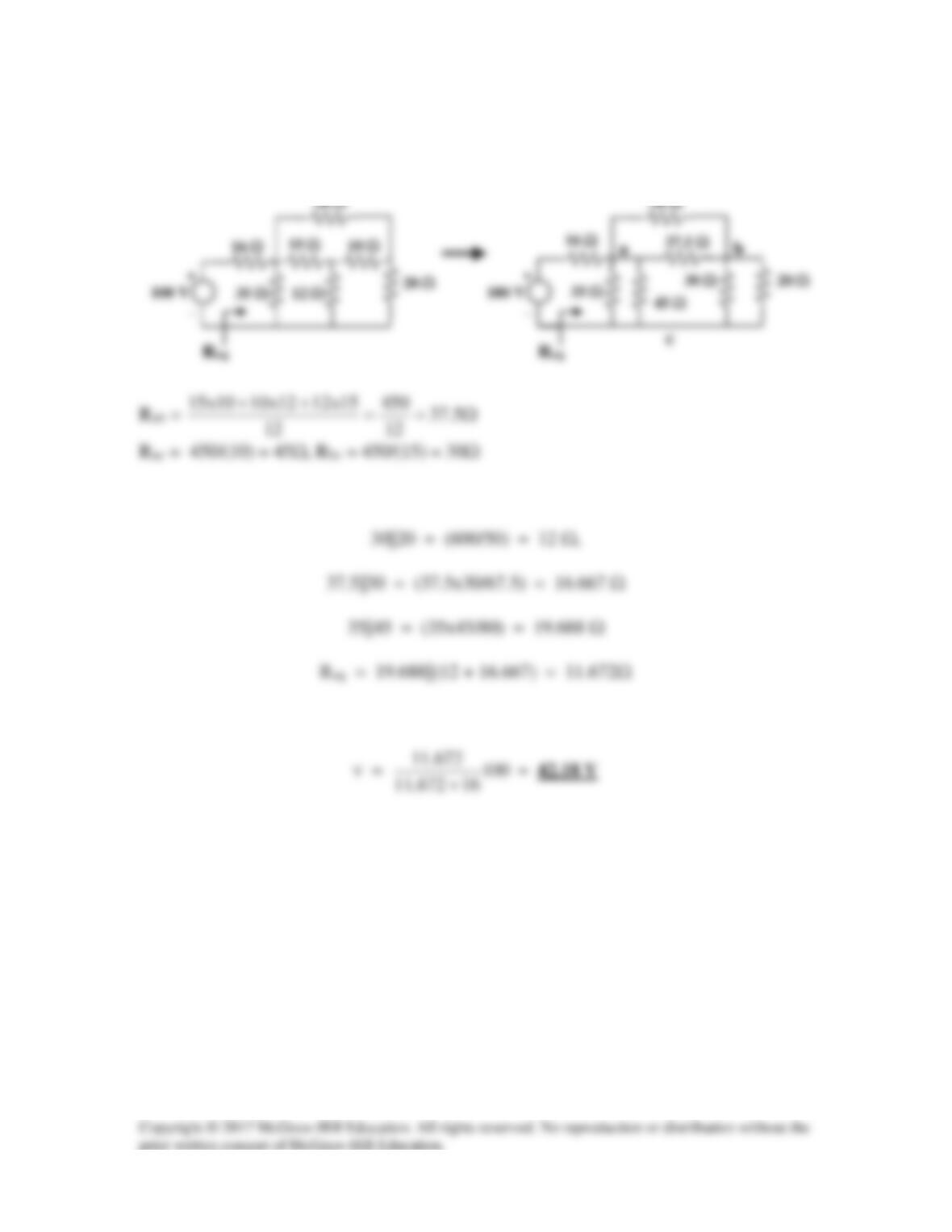
Solution 2.56
We need to find Req and apply voltage division. We first transform the Y network to
∆
.
Combining the resistors in parallel,
By voltage division,