PROBLEM 2.79
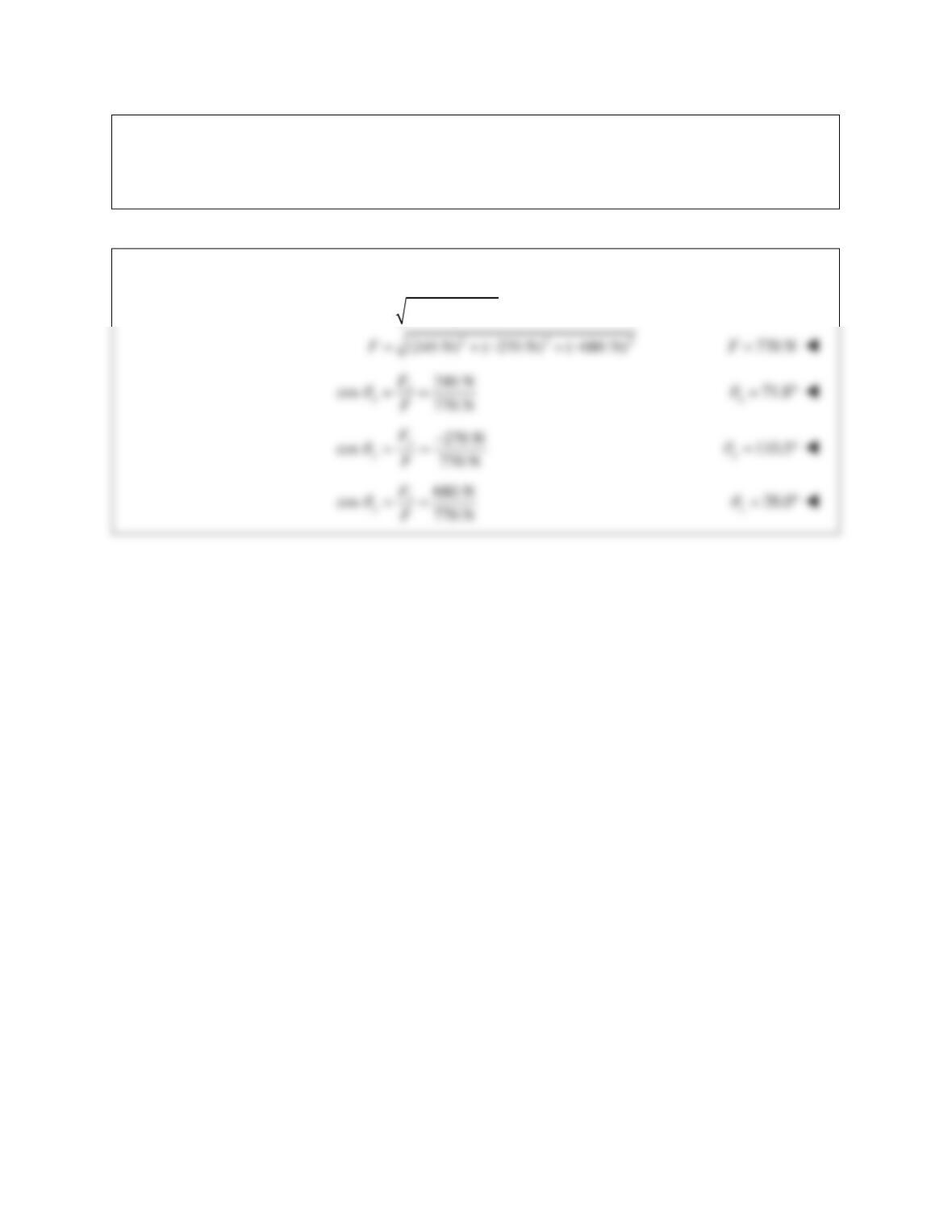
Determine the magnitude and direction of the force F = (240 N)i – (270 N)j + (680 N)k.
SOLUTION
PROBLEM 2.80
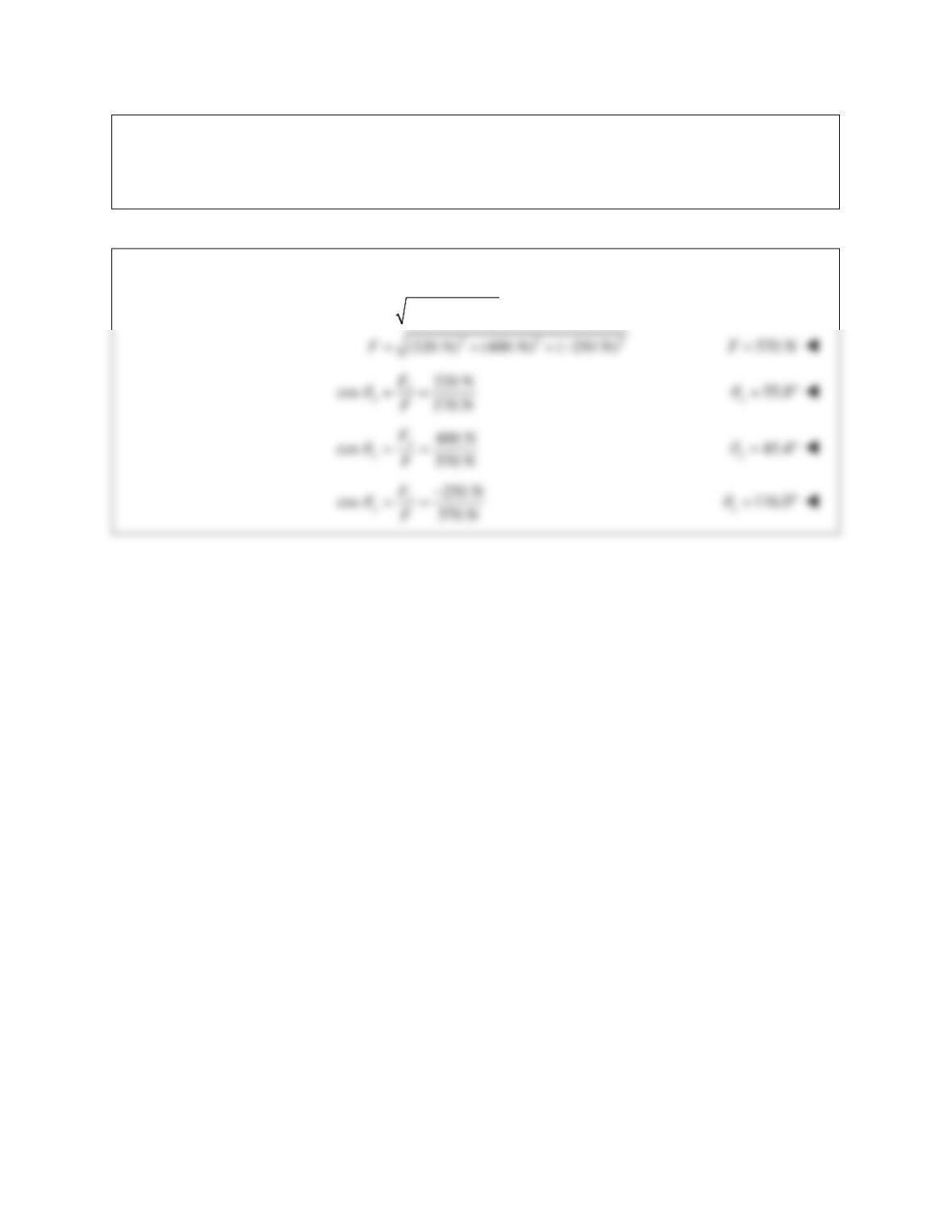
Determine the magnitude and direction of the force F = (320 N)i + (400 N)j − (250 N)k.
SOLUTION
PROBLEM 2.81
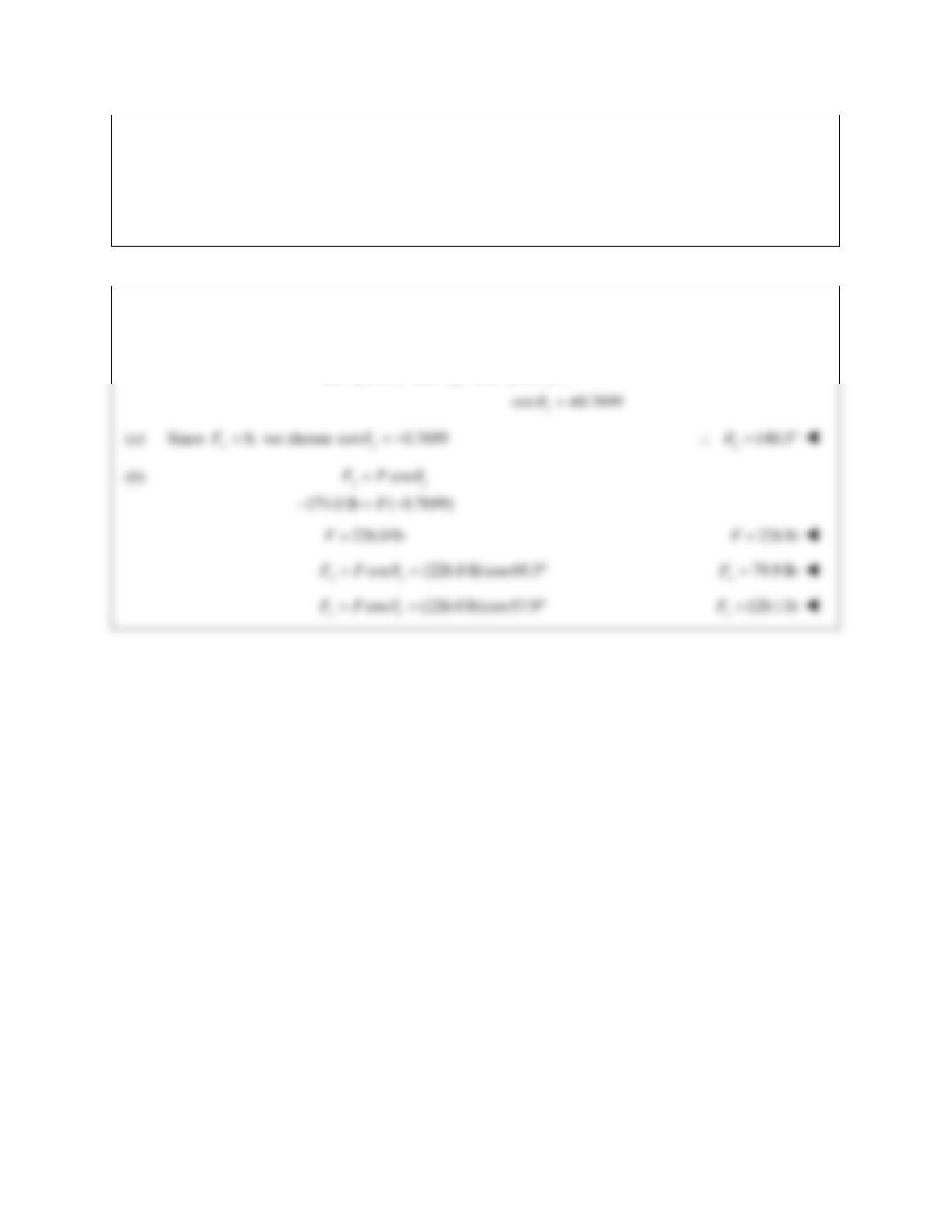
A force acts at the origin of a coordinate system in a direction defined by the angles
θ
x = 69.3° and
θ
z
= 57.9°. Knowing that the y component of the force is –174.0 lb, determine (a) the angle
θ
y, (b) the other
components and the magnitude of the force.
SOLUTION
PROBLEM 2.82
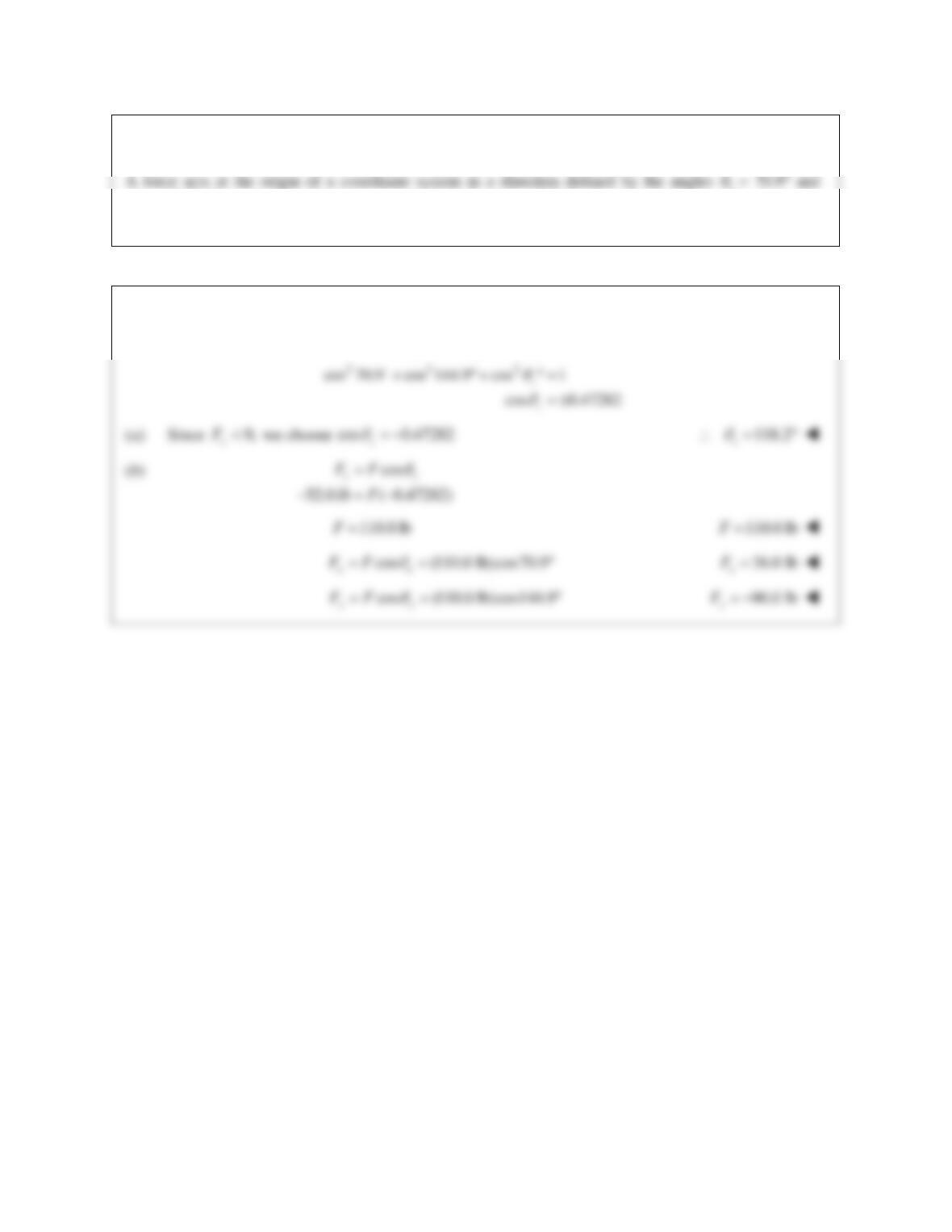
θ
y = 144.9°. Knowing that the z component of the force is –52.0 lb, determine (a) the angle
θ
z, (b) the
other components and the magnitude of the force.
SOLUTION
PROBLEM 2.83
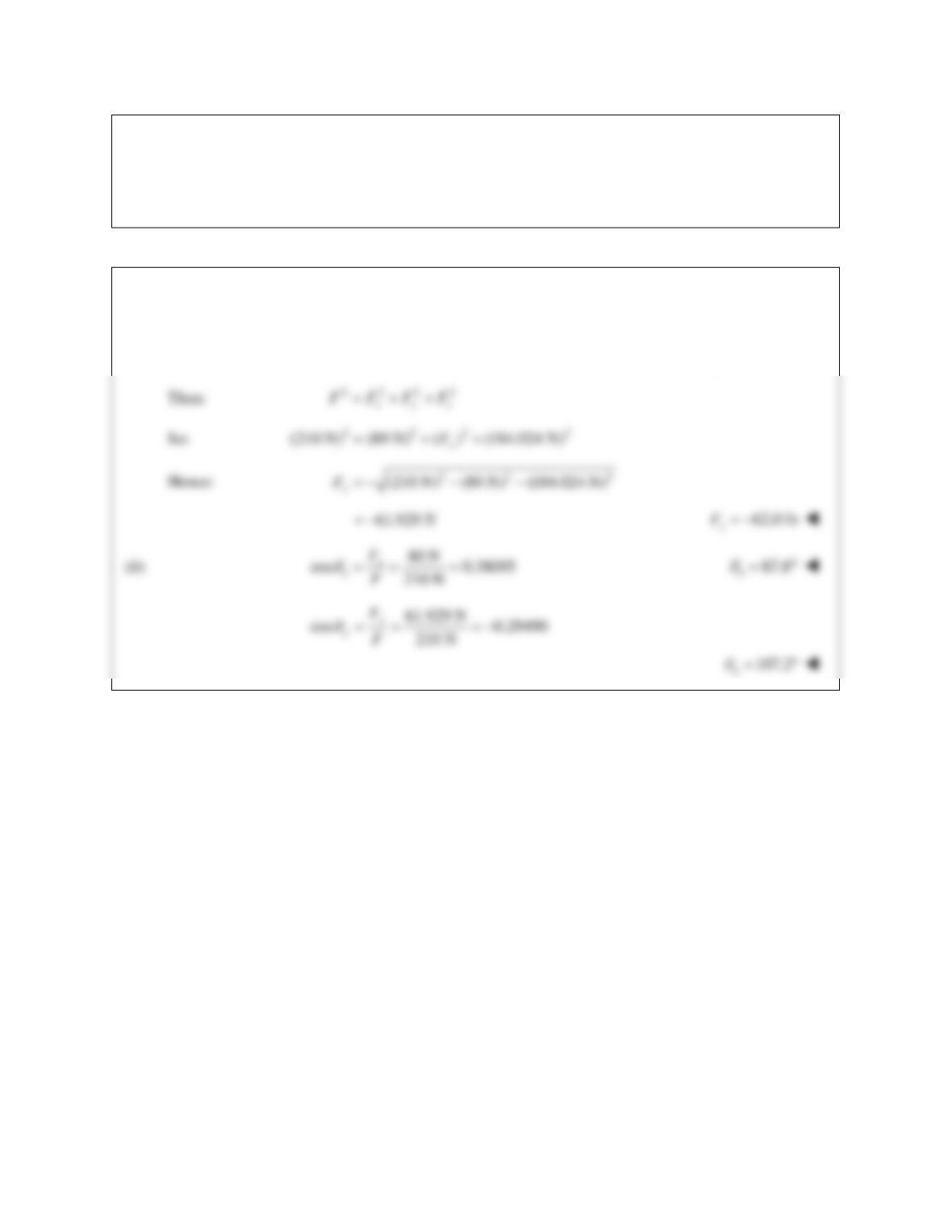
A force F of magnitude 210 N acts at the origin of a coordinate system. Knowing that Fx = 80 N,
θ
z = 151.2°, and Fy < 0, determine (a) the components Fy and Fz, (b) the angles
θ
x and
θ
y.
SOLUTION
(a)
cos (210 N) cos151.2
zz
FF
θ
= = °
184.024 N= −
184.0 N
z
F= −
PROBLEM 2.84
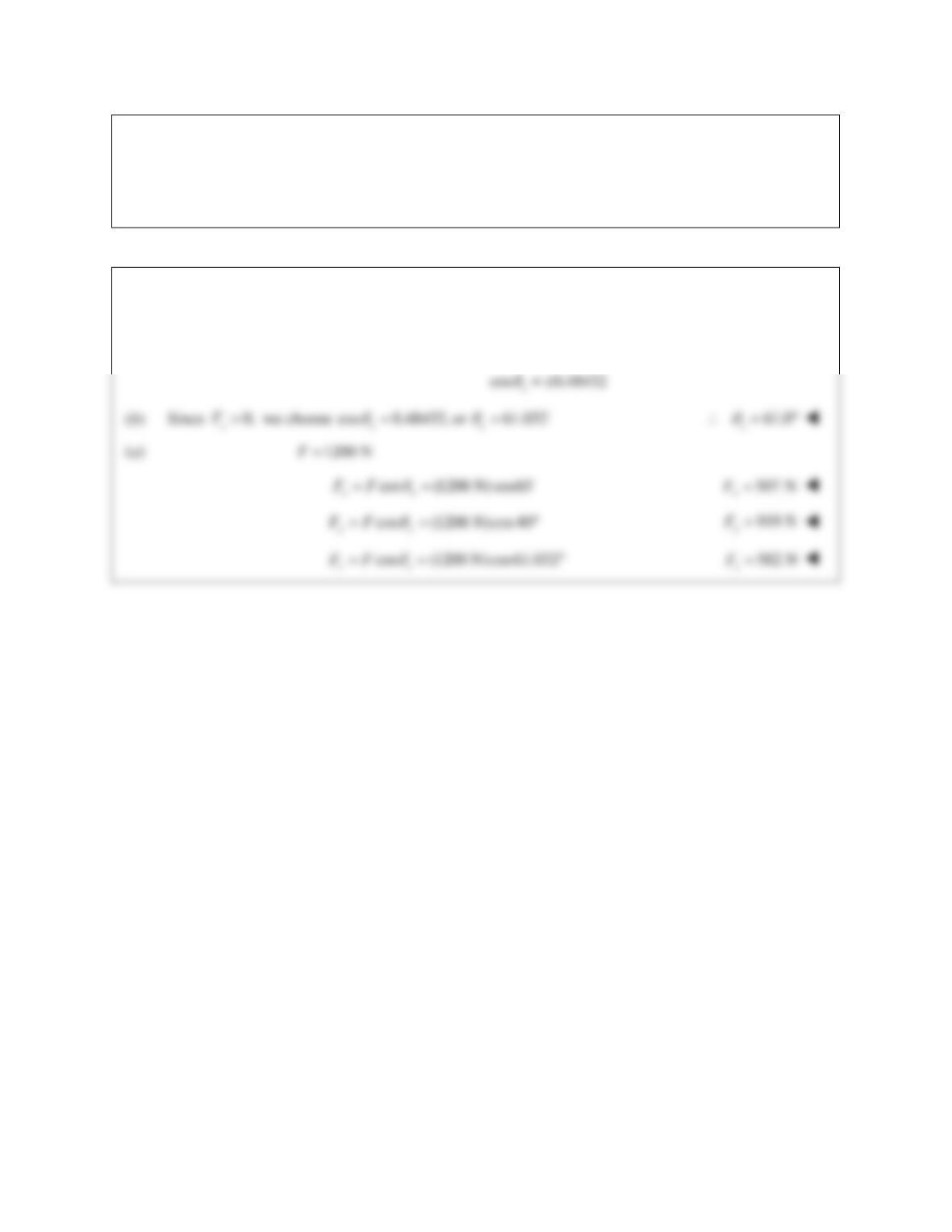
A force F of magnitude 1200 N acts at the origin of a coordinate system. Knowing that
θ
x = 65°,
θ
y = 40°, and Fz > 0, determine (a) the components of the force, (b) the angle
θ
z.
SOLUTION
PROBLEM 2.85
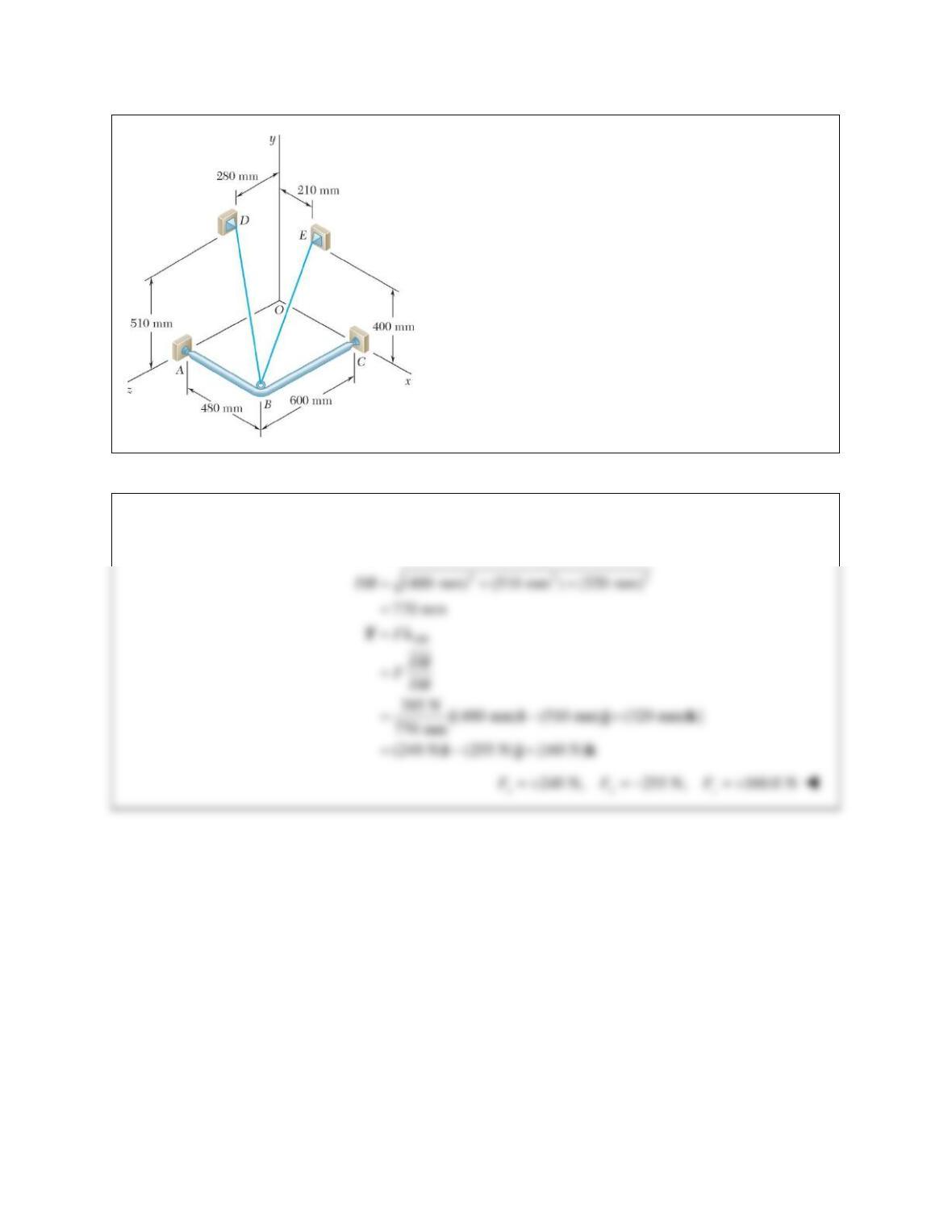
A frame ABC is supported in part by cable DBE that
passes through a frictionless ring at B. Knowing that the
tension in the cable is 385 N, determine the components
of the force exerted by the cable on the support at D.
SOLUTION
PROBLEM 2.86
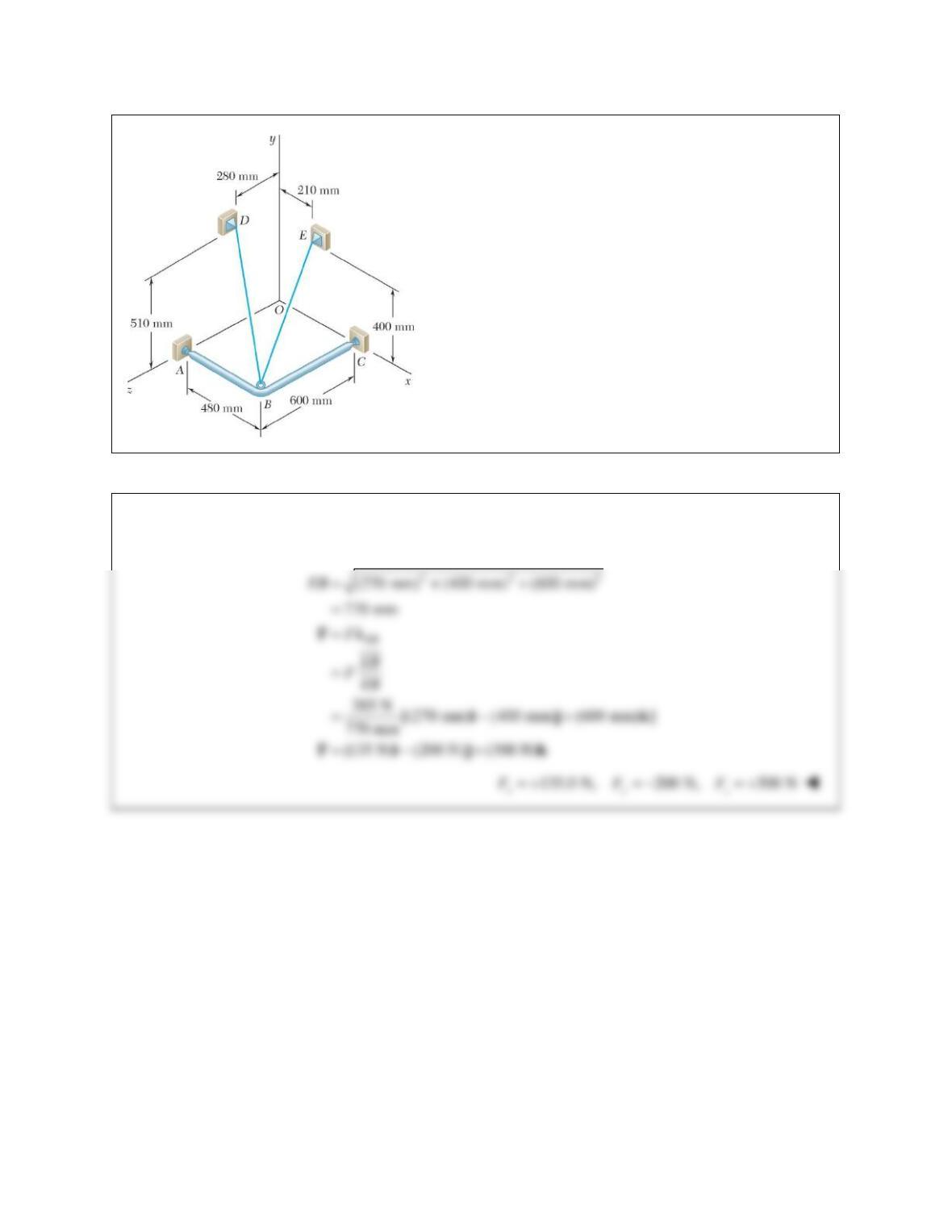
For the frame and cable of Problem 2.85, determine the
components of the force exerted by the cable on the
support at E.
PROBLEM 2.85 A frame ABC is supported in part by
cable DBE that passes through a frictionless ring at B.
Knowing that the tension in the cable is 385 N, determine
the components of the force exerted by the cable on the
support at D.
SOLUTION
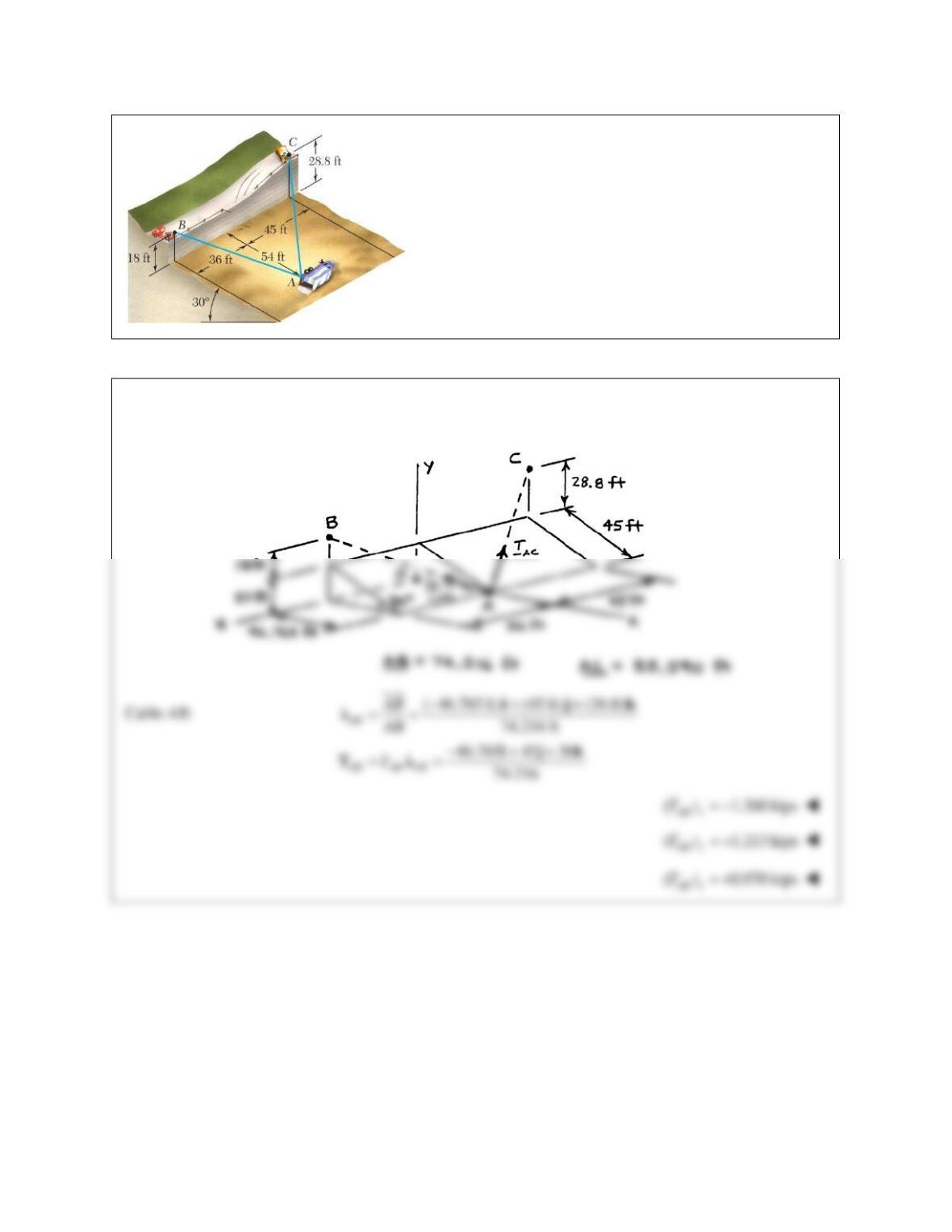
PROBLEM 2.87
In order to move a wrecked truck, two cables are attached
at A and pulled by winches B and C as shown. Knowing
that the tension in cable AB is 2 kips, determine the
components of the force exerted at A by the cable.
SOLUTION
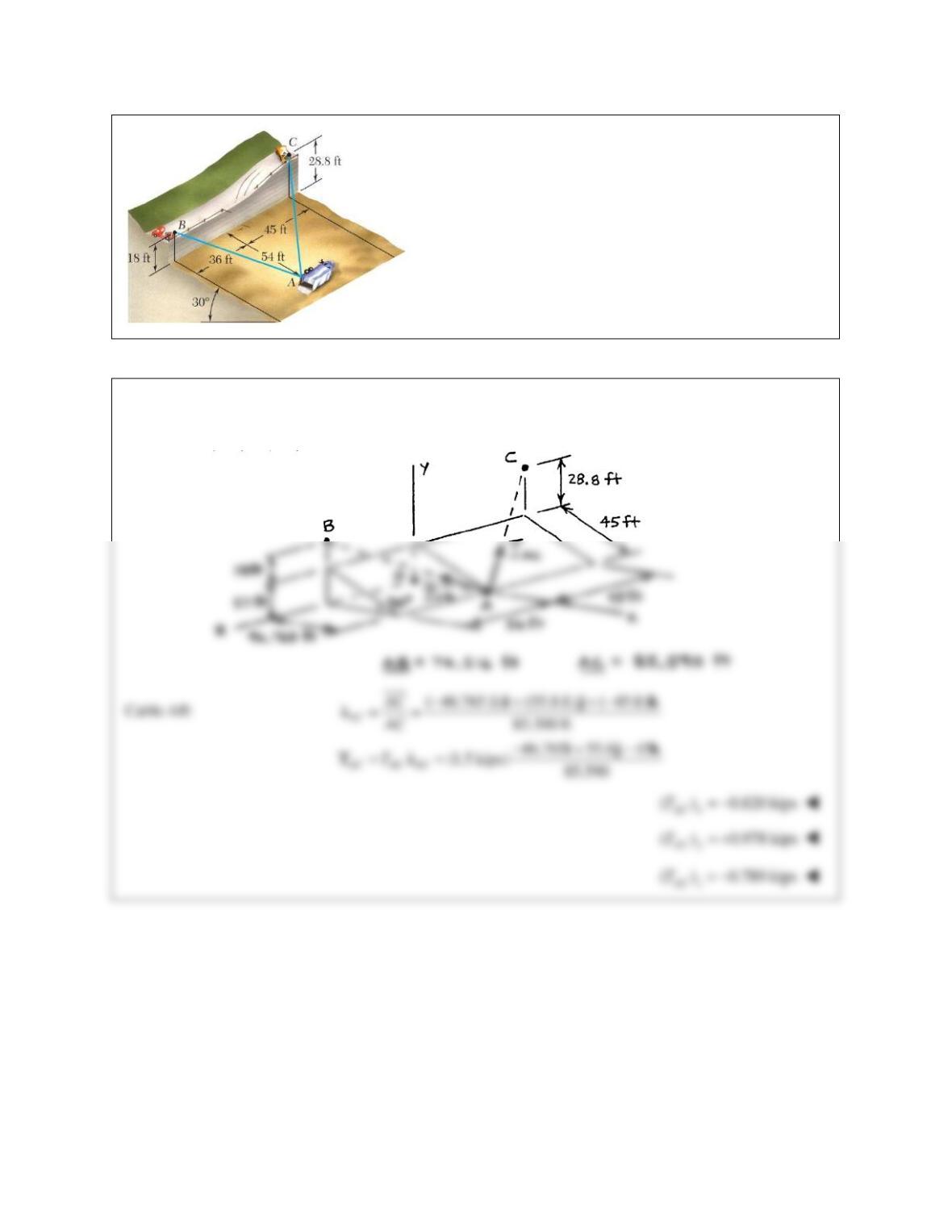
PROBLEM 2.88
In order to move a wrecked truck, two cables are attached
at A and pulled by winches B and C as shown. Knowing
that the tension in cable AC is 1.5 kips, determine the
components of the force exerted at A by the cable.
SOLUTION
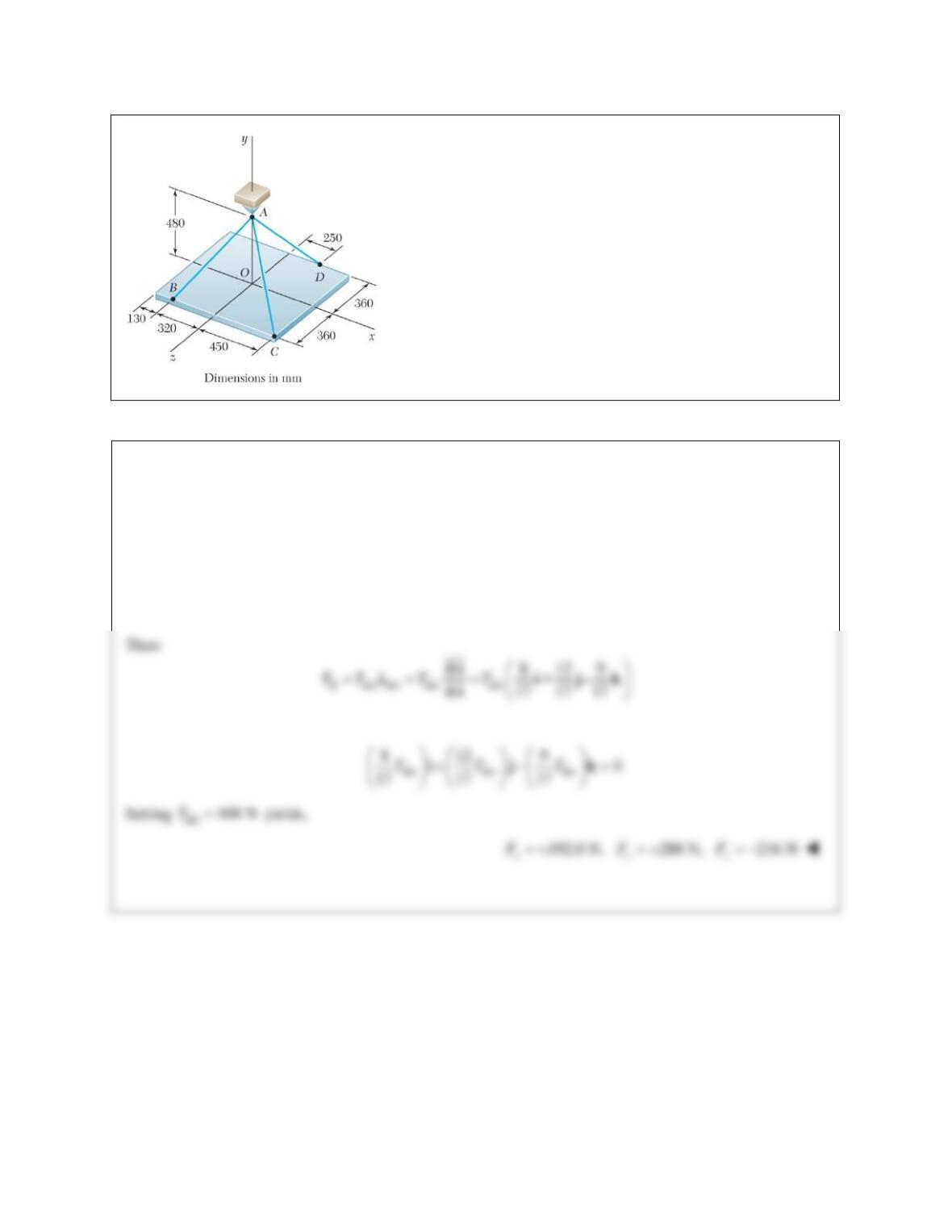
PROBLEM 2.89
A rectangular plate is supported by three cables as
shown. Knowing that the tension in cable AB is 408 N,
determine the components of the force exerted on the
plate at B.
SOLUTION
We have:
(320 mm) (480 mm) (360 mm) 680 mmBA BA=+=i+ j- k
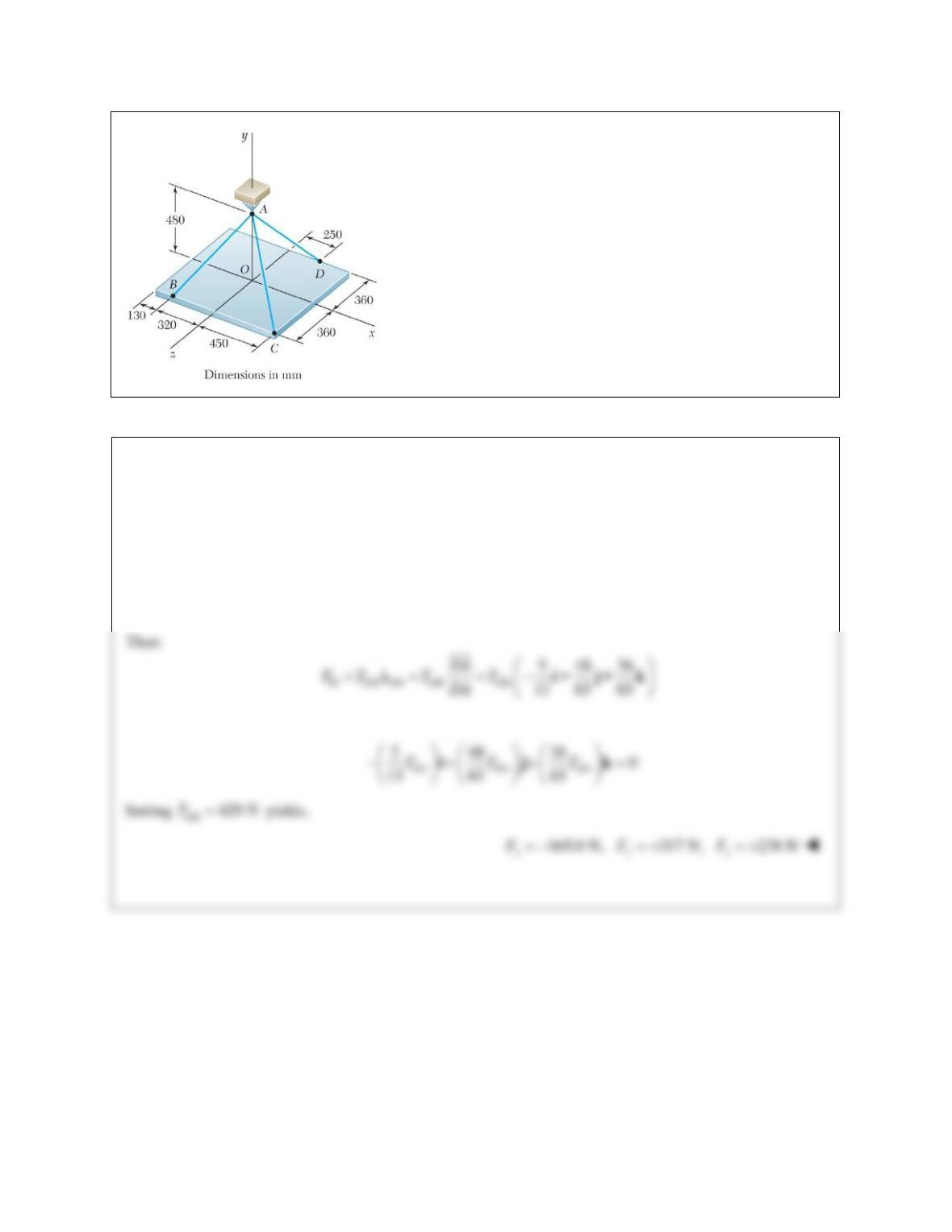
PROBLEM 2.90
A rectangular plate is supported by three cables as
shown. Knowing that the tension in cable AD is 429 N,
determine the components of the force exerted on the
plate at D.
SOLUTION
We have:
(250 mm) (480 mm) (360 mm) 650 mmDA DA=−=i+ j+ k
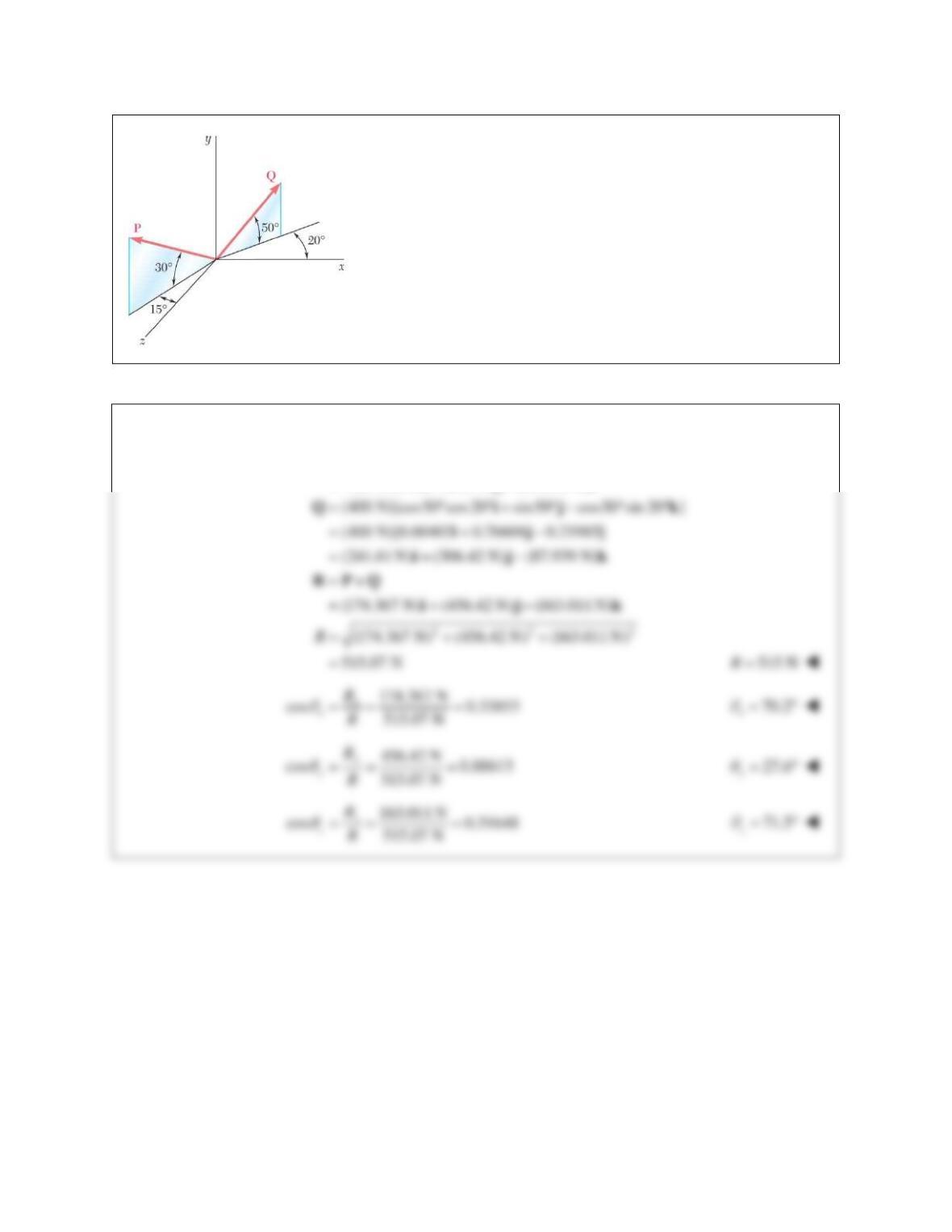
PROBLEM 2.91
Find the magnitude and direction of the resultant of the two forces
shown knowing that P = 300 N and Q = 400 N.
SOLUTION
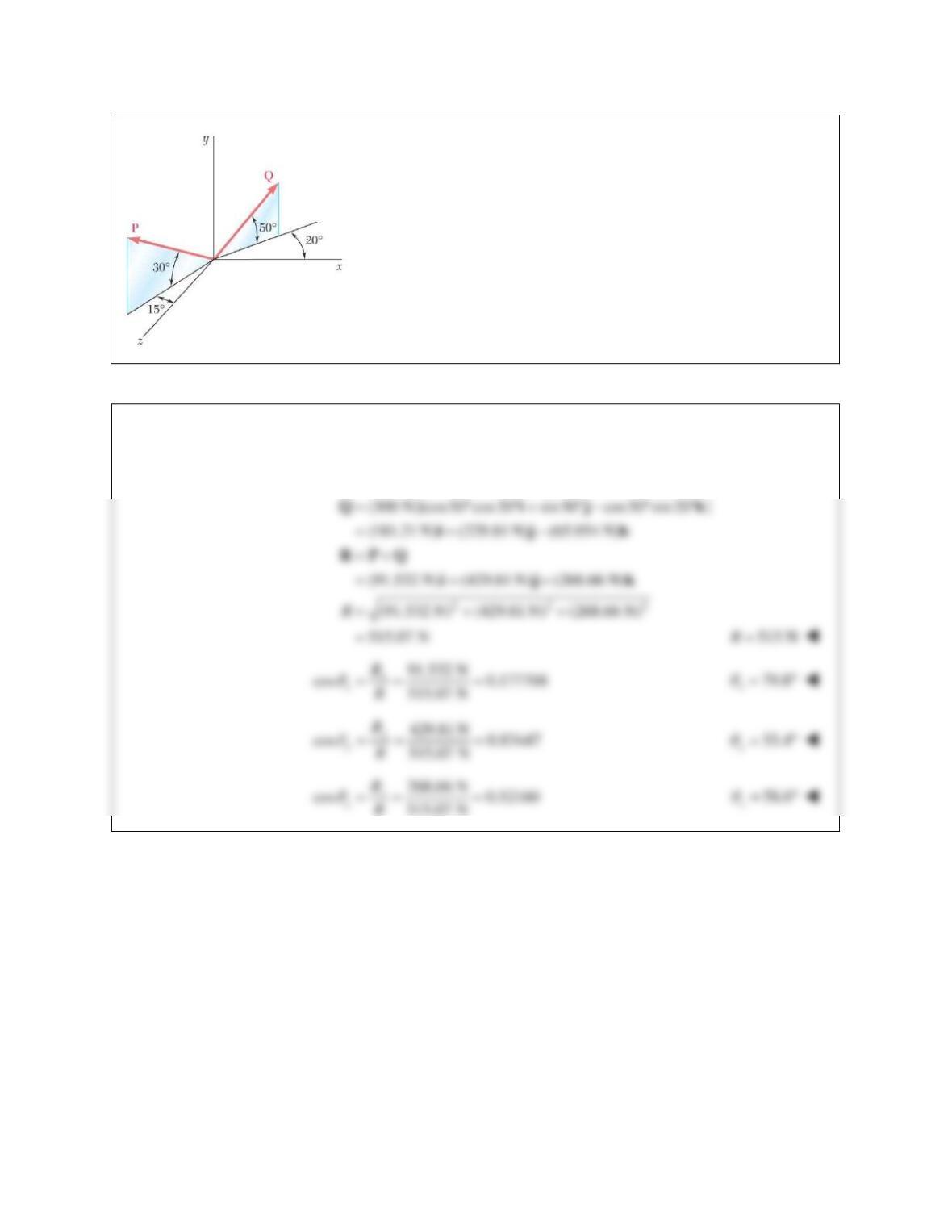
PROBLEM 2.92
Find the magnitude and direction of the resultant of the two forces
shown knowing that P = 400 N and Q = 300 N.
SOLUTION
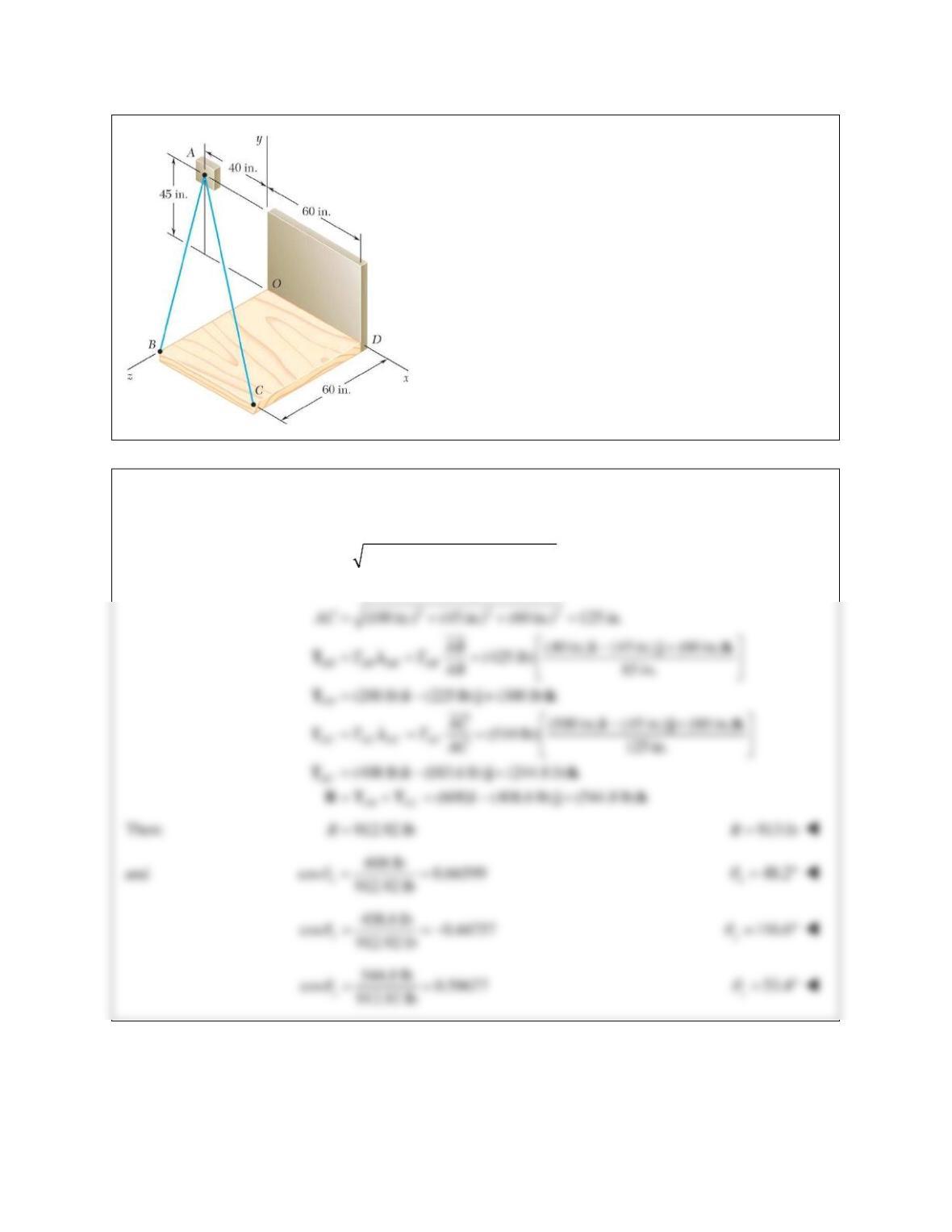
PROBLEM 2.93
Knowing that the tension is 425 lb in cable AB and 510 lb
in cable AC, determine the magnitude and direction of the
resultant of the forces exerted at A by the two cables.
SOLUTION
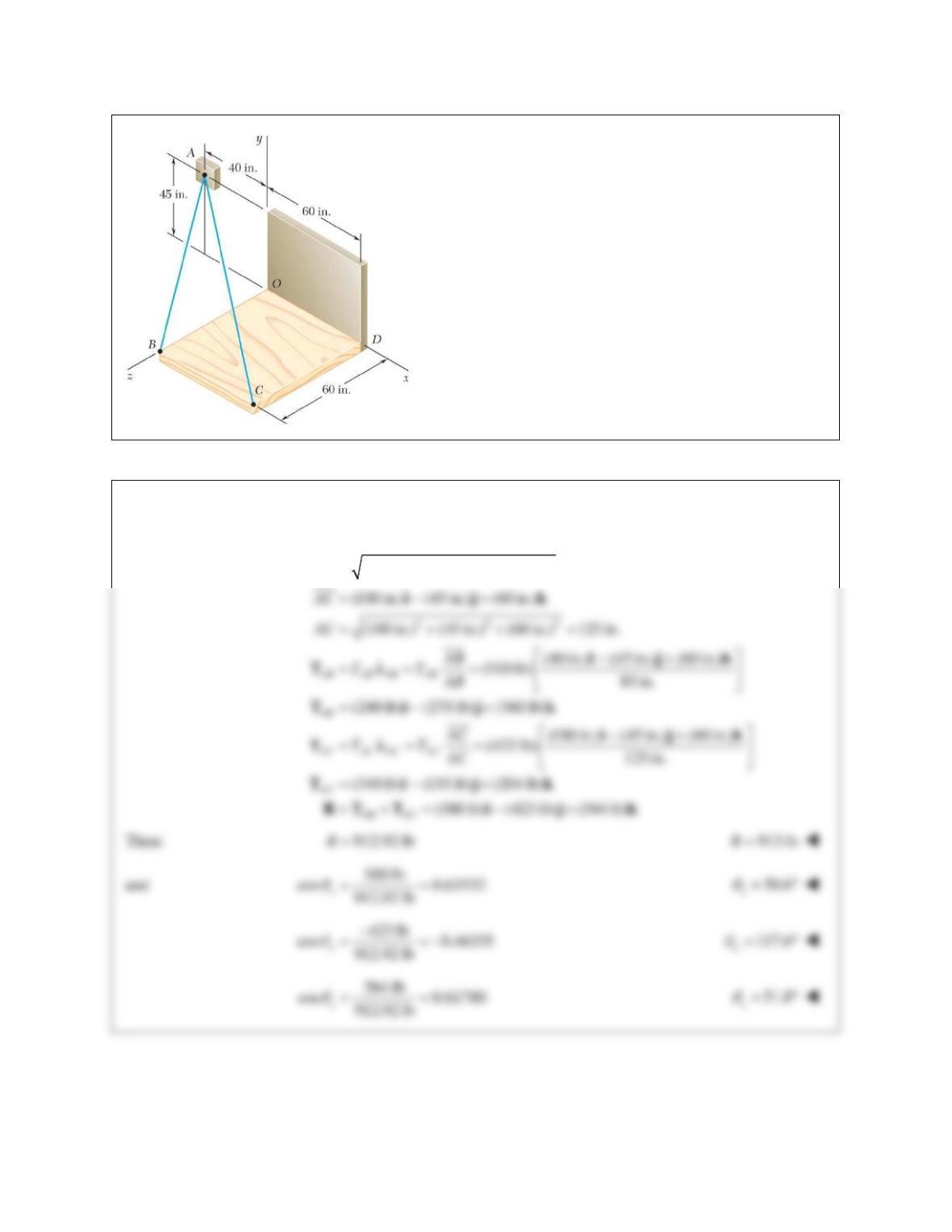
PROBLEM 2.94
Knowing that the tension is 510 lb in cable AB and 425 lb
in cable AC, determine the magnitude and direction of the
resultant of the forces exerted at A by the two cables.
SOLUTION
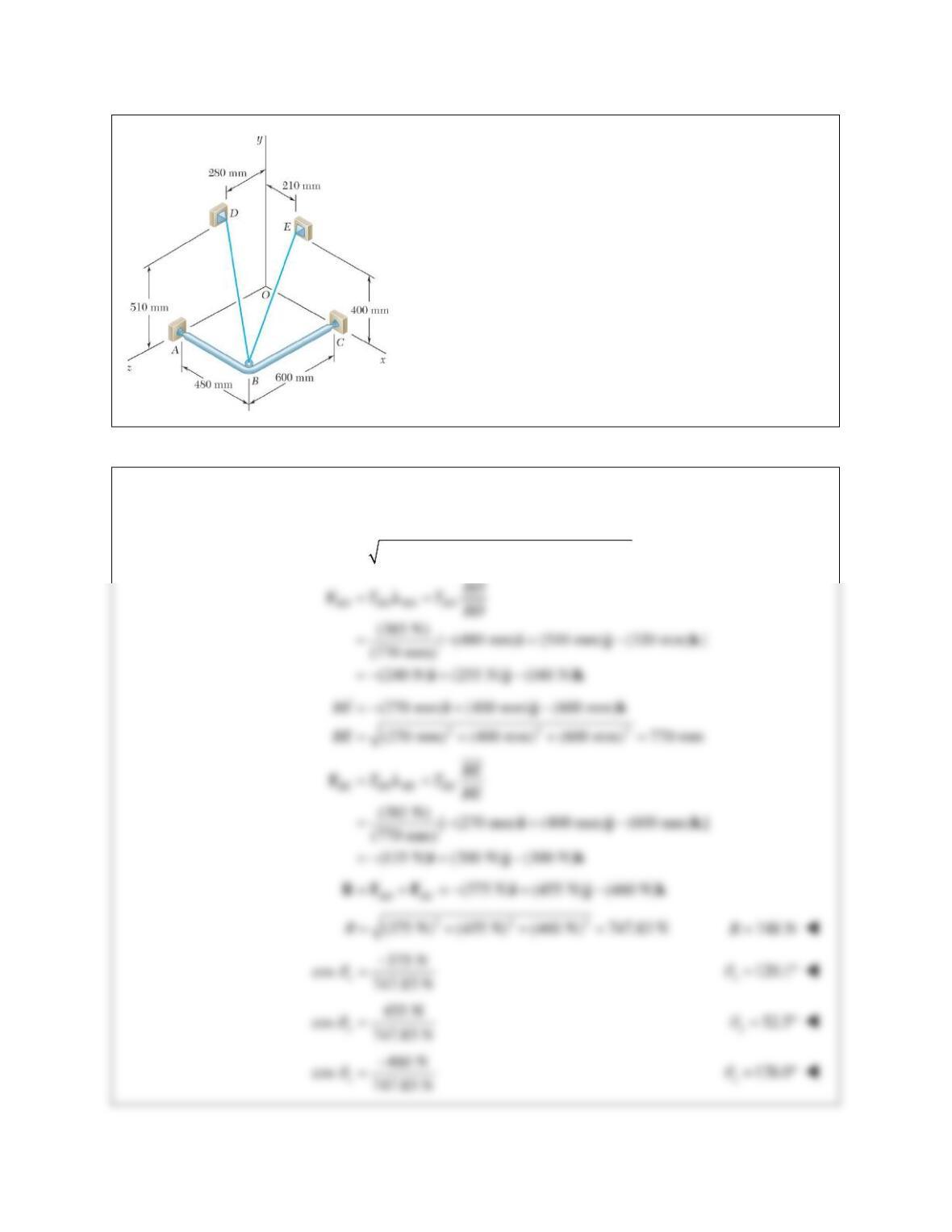
PROBLEM 2.95
For the frame of Problem 2.85, determine the magnitude and
direction of the resultant of the forces exerted by the cable at B
knowing that the tension in the cable is 385 N.
PROBLEM 2.85 A frame ABC is supported in part by cable
DBE that passes through a frictionless ring at B. Knowing that
the tension in the cable is 385 N, determine the components of
the force exerted by the cable on the support at D.
SOLUTION
222
(480 mm) (510 mm) (320 mm)
(480 mm) (510 mm) (320 mm) 770 mm
BD
BD
=−+ −
= ++=
i jk
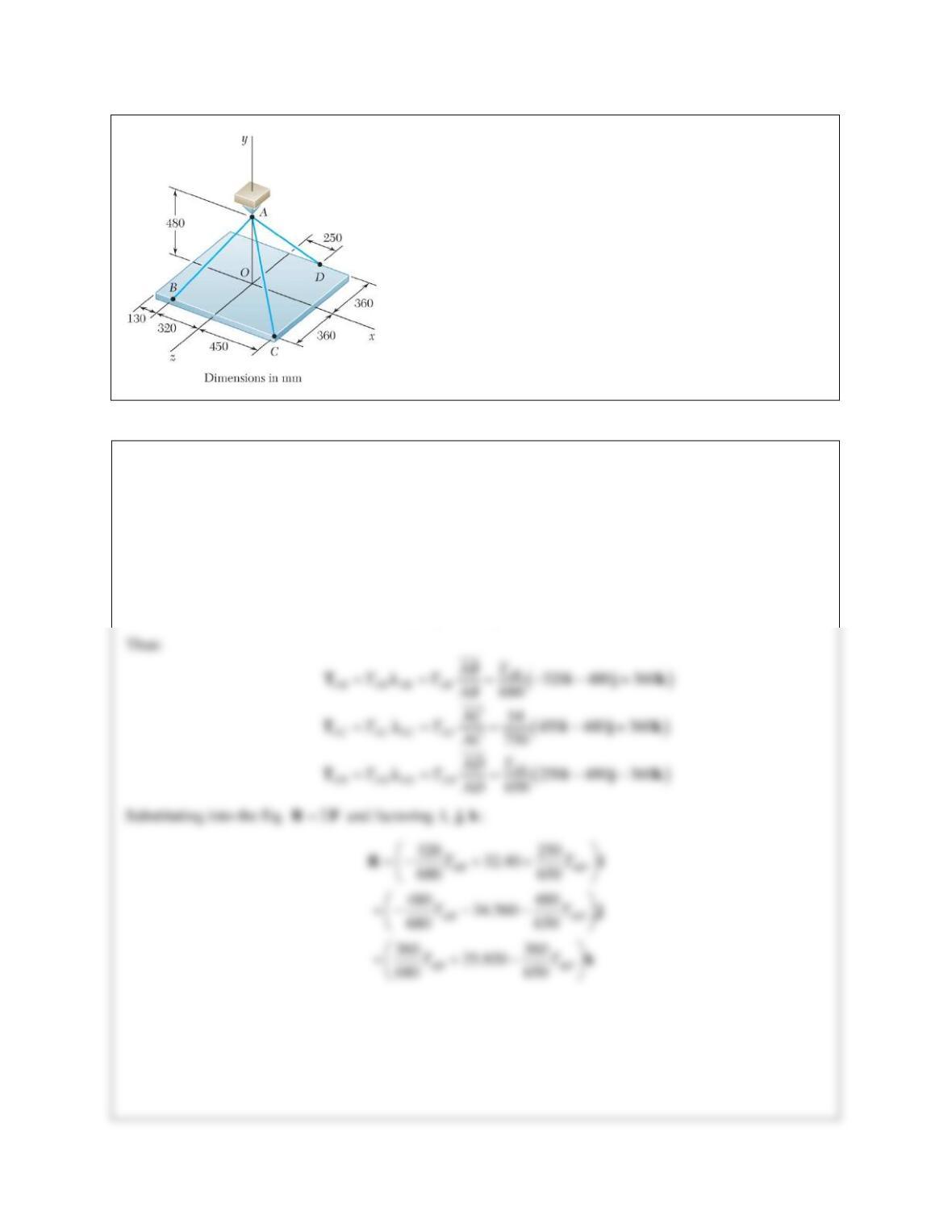
PROBLEM 2.96
For the plate of Prob. 2.89, determine the tensions in cables AB
and AD knowing that the tension in cable AC is 54 N and that
the resultant of the forces exerted by the three cables at A must
be vertical.
SOLUTION
We have:
( )
(320 mm) (480 mm) (360 mm) 680 mm
(450 mm) (480 mm) (360 mm) 750 mm
(250 mm) (480 mm) 360 mm 650 mm
AB AB
AC AC
AD AD
=−− + =
=−+ =
=−− =
ijk
i jk
ijk
PROBLEM 2.96 (Continued)
Since R is vertical, the coefficients of i and k are zero:
:i
320 250
32.40 0
680 650
AB AD
TT− ++ =
(1)
:k
360 360
25.920 0
680 650
AB AD
TT+− =
(2)
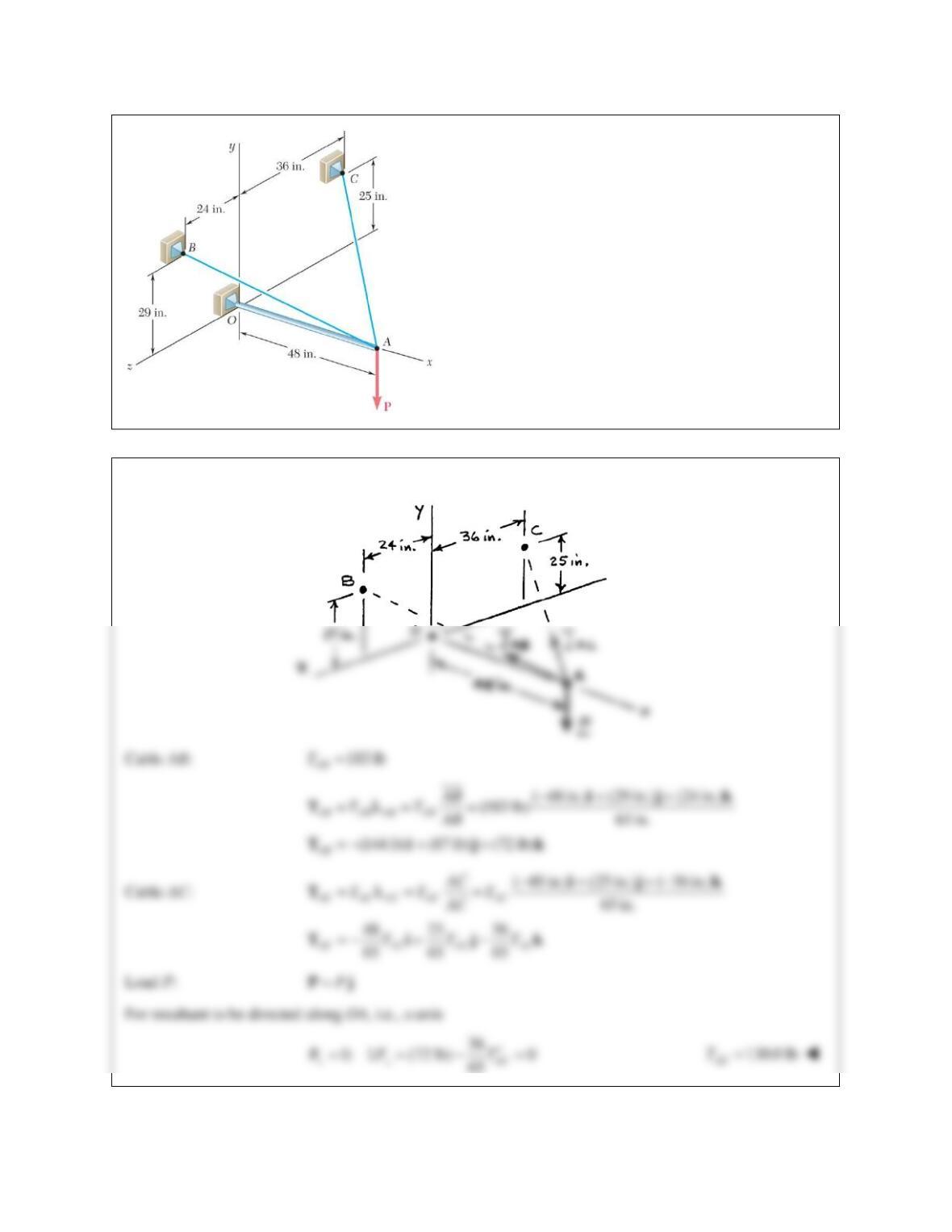
PROBLEM 2.97
The boom OA carries a load P and is supported by
two cables as shown. Knowing that the tension in
cable AB is 183 lb and that the resultant of the load P
and of the forces exerted at A by the two cables must
be directed along OA, determine the tension in cable
AC.
SOLUTION