PROBLEM 2.136
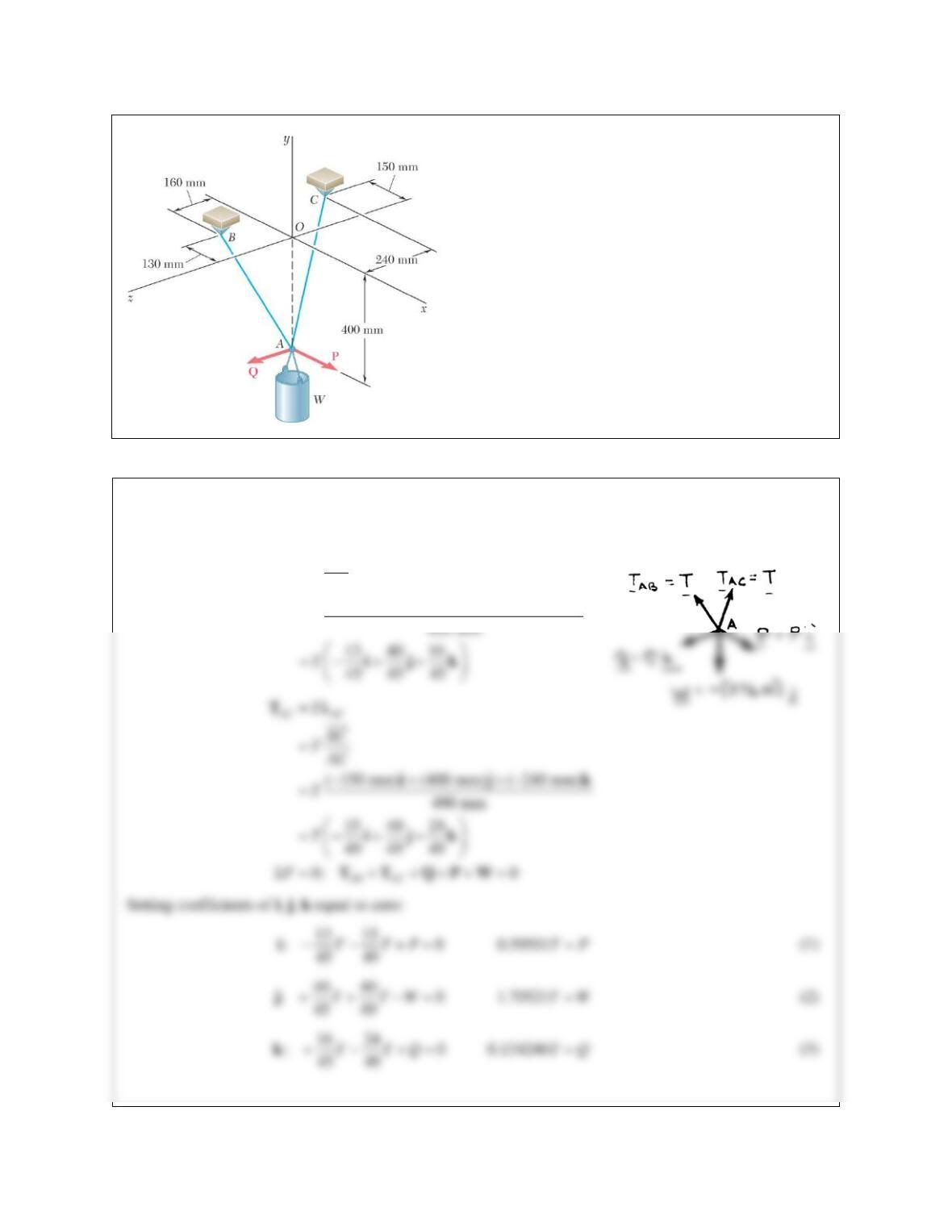
A container of weight W is suspended from ring A.
Cable BAC passes through the ring and is attached to
fixed supports at B and C. Two forces
P=Pi
and
Q
Q=k
are applied to the ring to maintain the
container in the position shown. Knowing that W
376 N,=
determine P and Q. (Hint: The tension is
the same in both portions of cable BAC.)
SOLUTION
Free-Body A:

PROBLEM 2.136 (Continued)
Data:
376 N 1.70521 376 N 220.50 NW TT= = =
0.59501(220.50 N) P=
131.2 NP=
0.134240(220.50 N) Q=
29.6 NQ=
PROBLEM 2.137
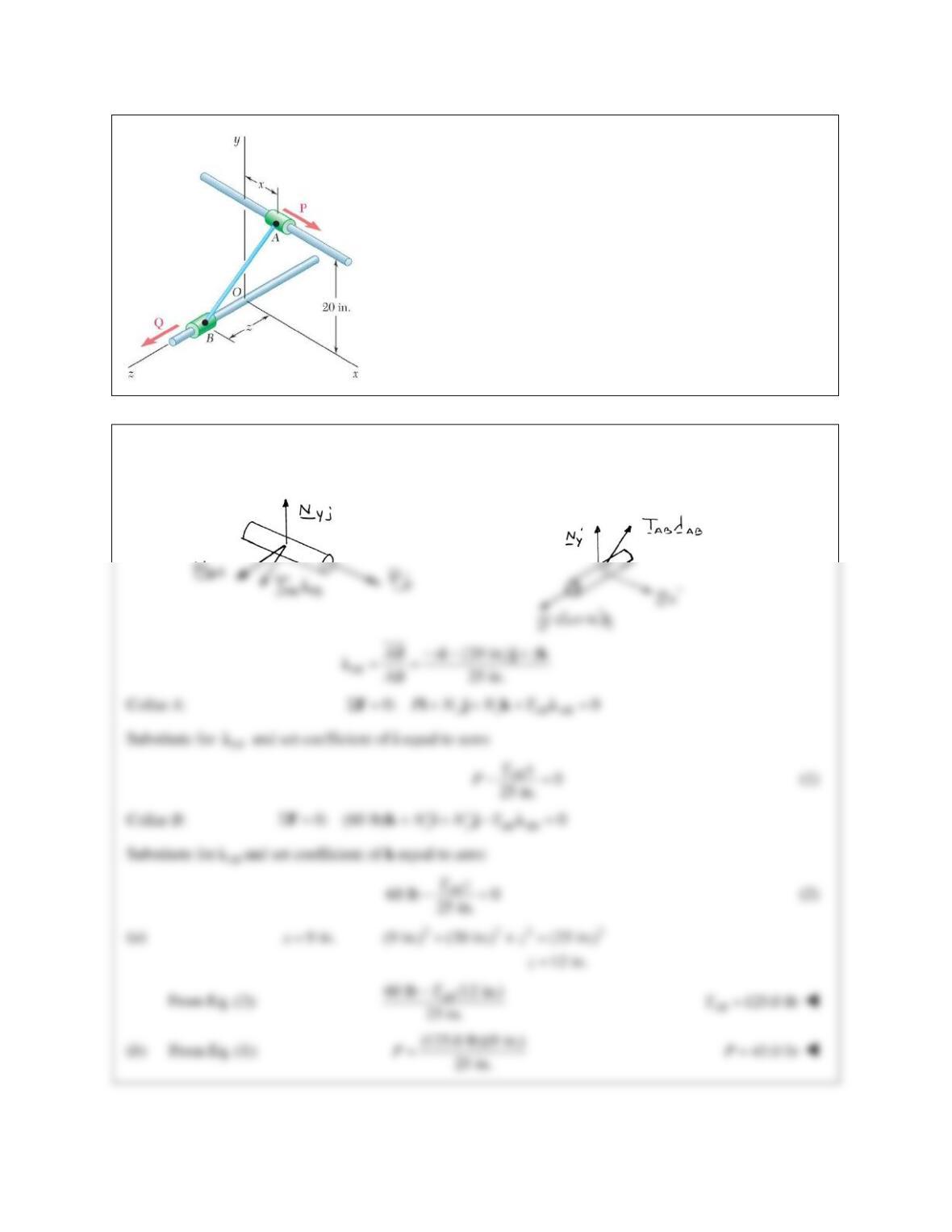
Collars A and B are connected by a 25–in.-long wire and can slide
freely on frictionless rods. If a 60–lb force Q is applied to collar
B as shown, determine (a) the tension in the wire when
9 in.,x=
(b) the corresponding magnitude of the force P
required to maintain the equilibrium of the system.
SOLUTION
Free–Body Diagrams of Collars:
A: B:
PROBLEM 2.138
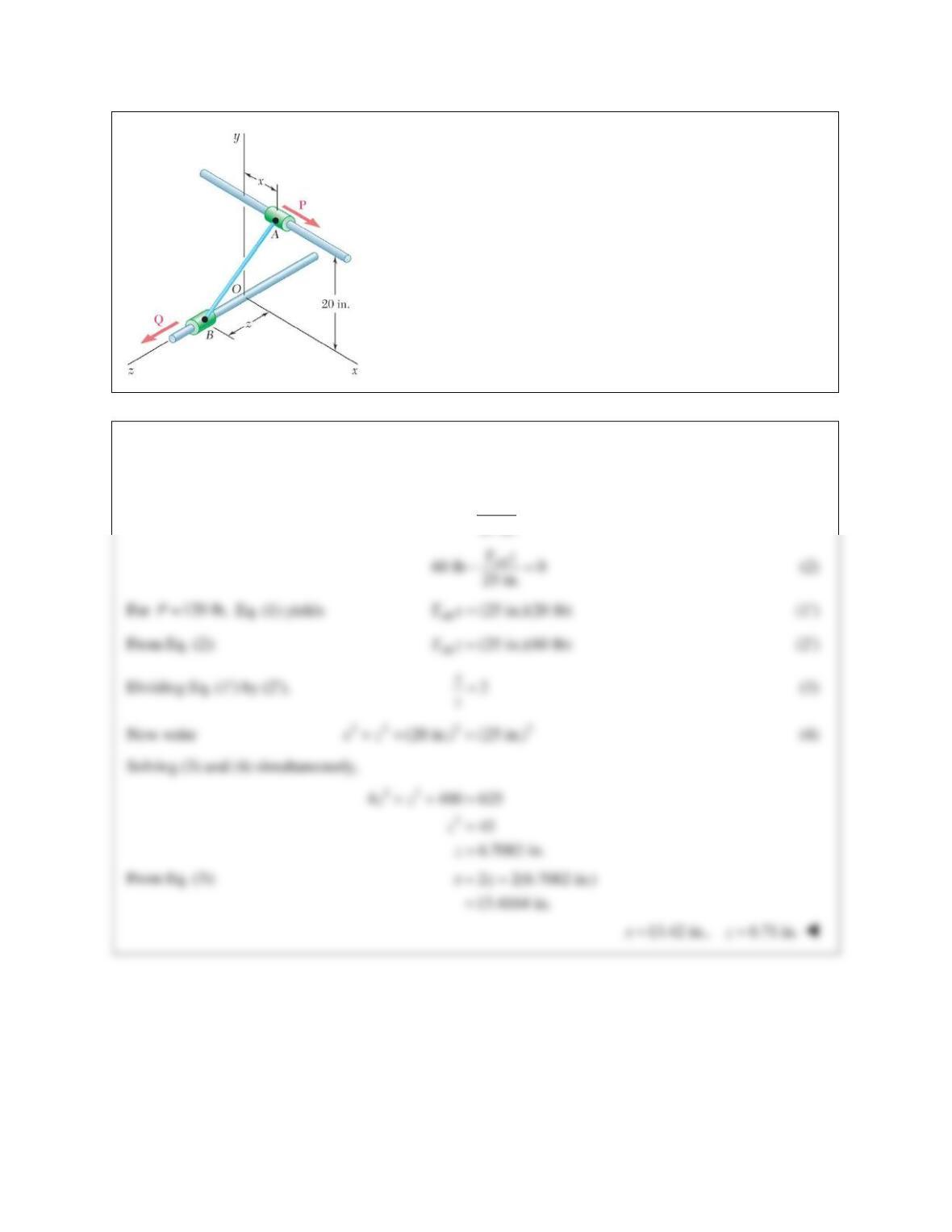
Collars A and B are connected by a 25–in.–long wire and can slide
freely on frictionless rods. Determine the distances x and z for
which the equilibrium of the system is maintained when
120 lbP=
and
60 lb.Q=
SOLUTION
See Problem 2.137 for the diagrams and analysis leading to Equations (1) and (2) below:
0
25 in.
AB
Tx
P= =
(1)
PROBLEM 2F1
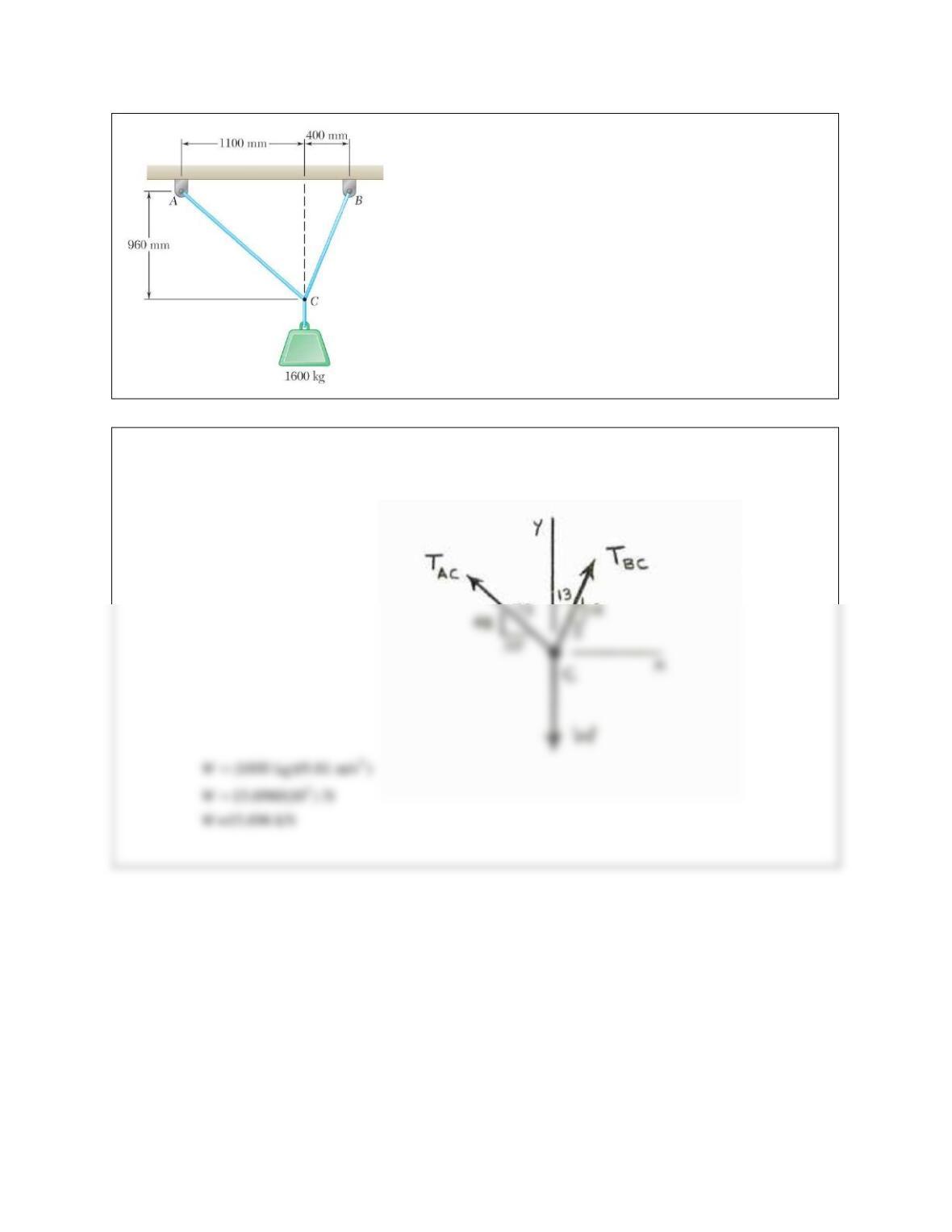
Two cables are tied together at C and loaded as shown.
Draw the free–body diagram needed to determine the
tension in AC and BC.
SOLUTION
Free–Body Diagram of Point C:
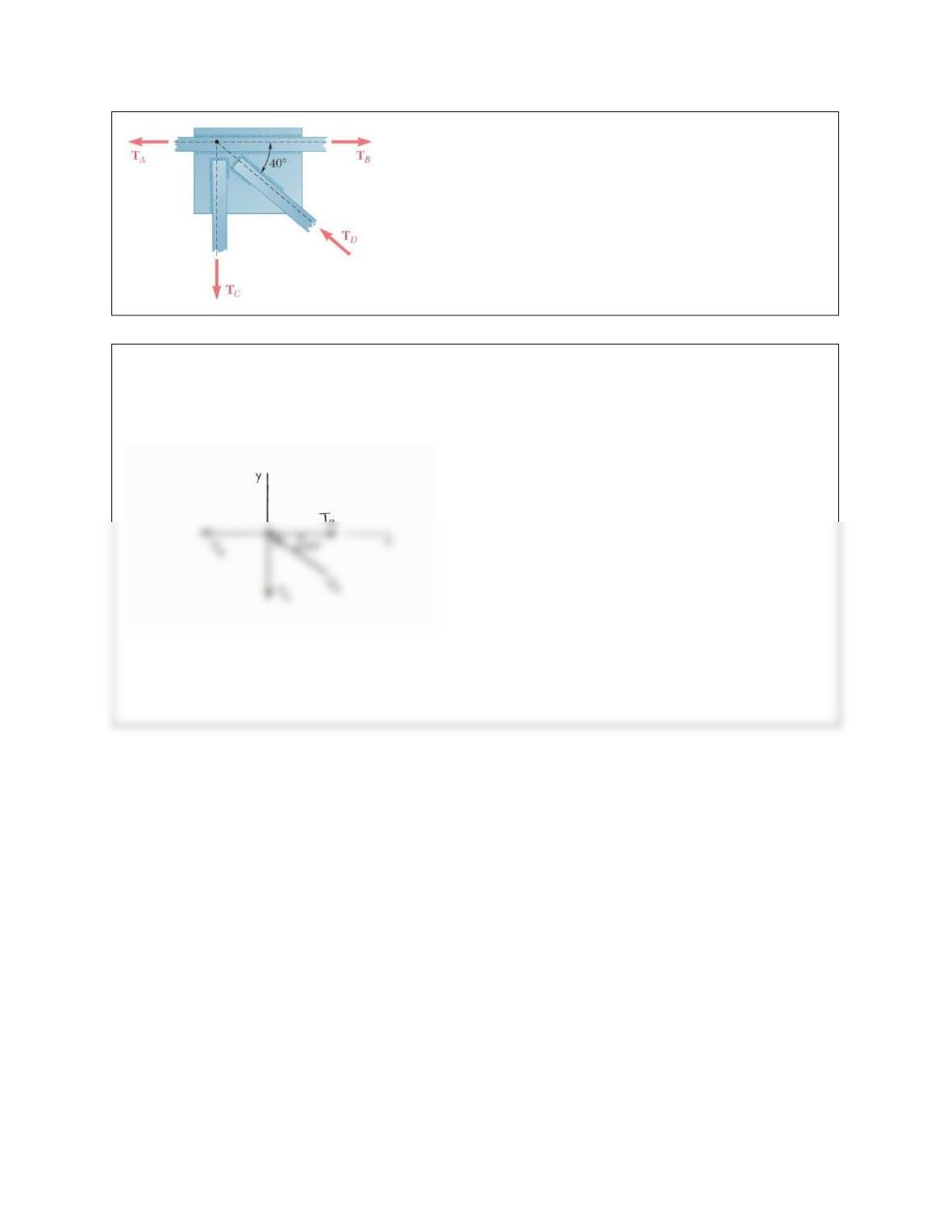
PROBLEM 2.F2
Two forces of magnitude TA = 8 kips and TB = 15 kips are
applied as shown to a welded connection. Knowing that the
connection is in equilibrium, draw the free–body diagram
needed to determine the magnitudes of the forces TC
and TD.
SOLUTION
Free–Body Diagram of Point E:
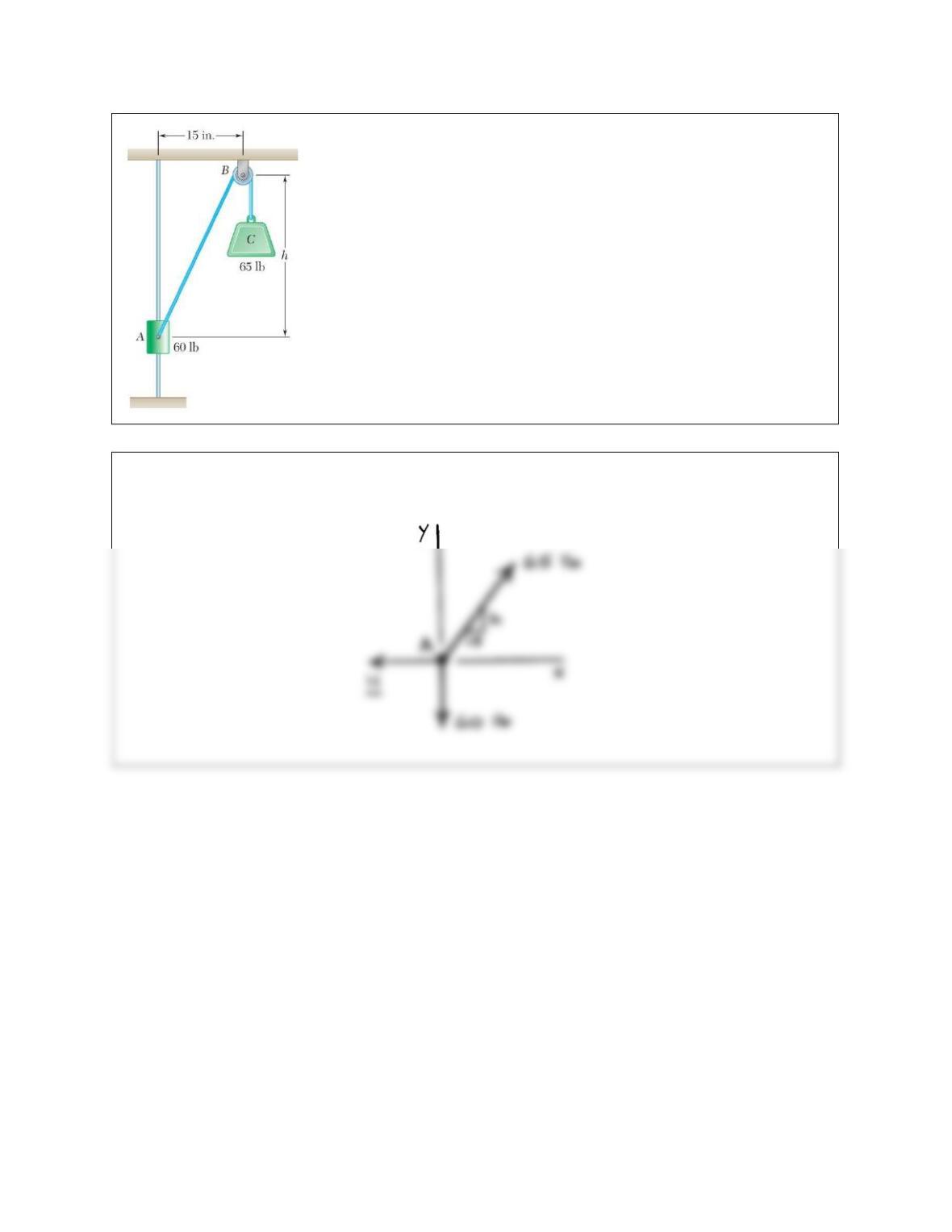
PROBLEM 2.F3
The 60-lb collar A can slide on a frictionless vertical rod and is connected
as shown to a 65-lb counterweight C. Draw the free–body diagram needed
to determine the value of h for which the system is in equilibrium.
SOLUTION
Free–Body Diagram of Point A:
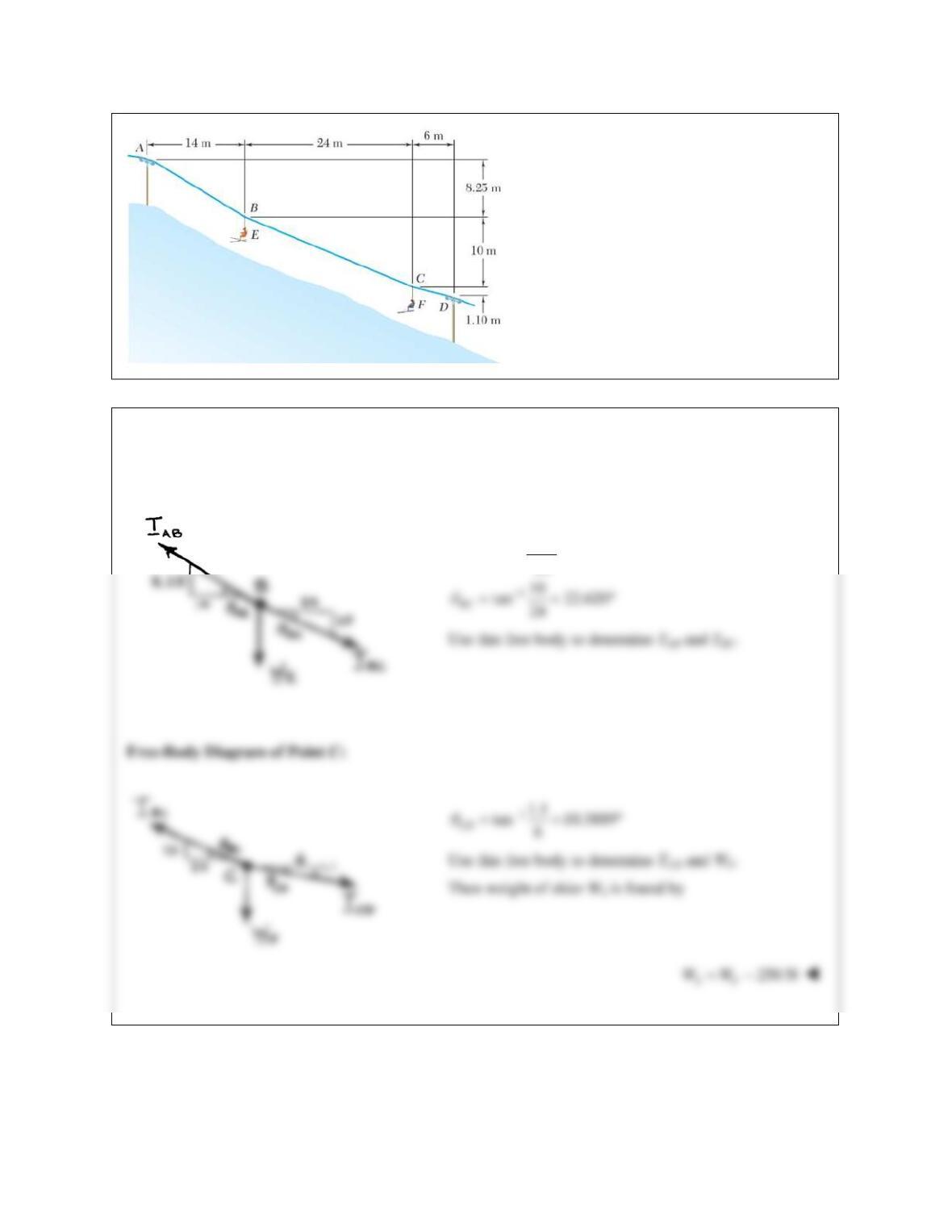
PROBLEM 2.F4
A chairlift has been stopped in the position
shown. Knowing that each chair weighs 250
N and that the skier in chair E weighs 765 N,
draw the free–body diagrams needed to
determine the weight of the skier in chair F.
SOLUTION
Free–Body Diagram of Point B:
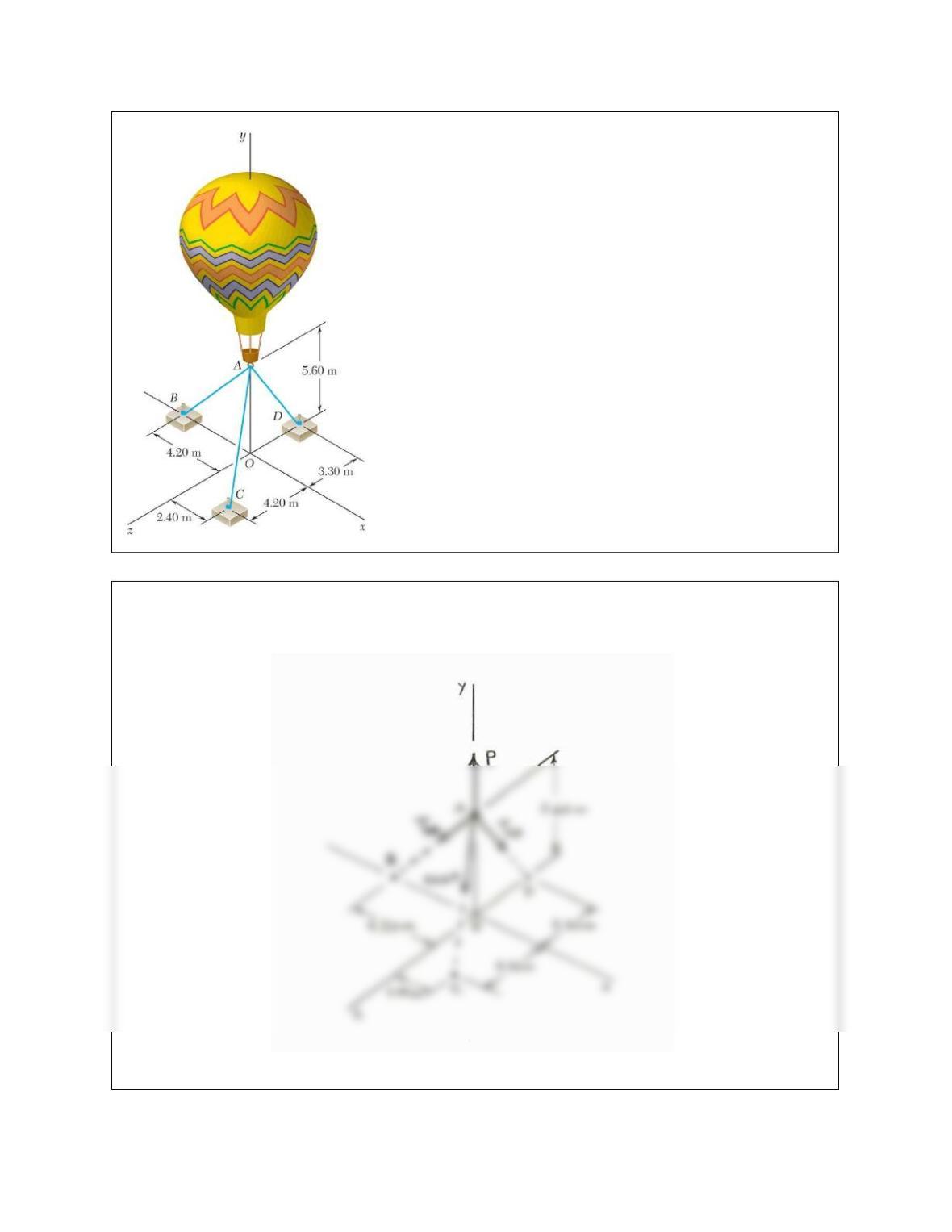
PROBLEM 2.F5
Three cables are used to tether a balloon as shown. Knowing that
the tension in cable AC is 444 N, draw the free-body diagram
needed to determine the vertical force P exerted by the balloon at
A.
SOLUTION
Free–Body Diagram of Point A:
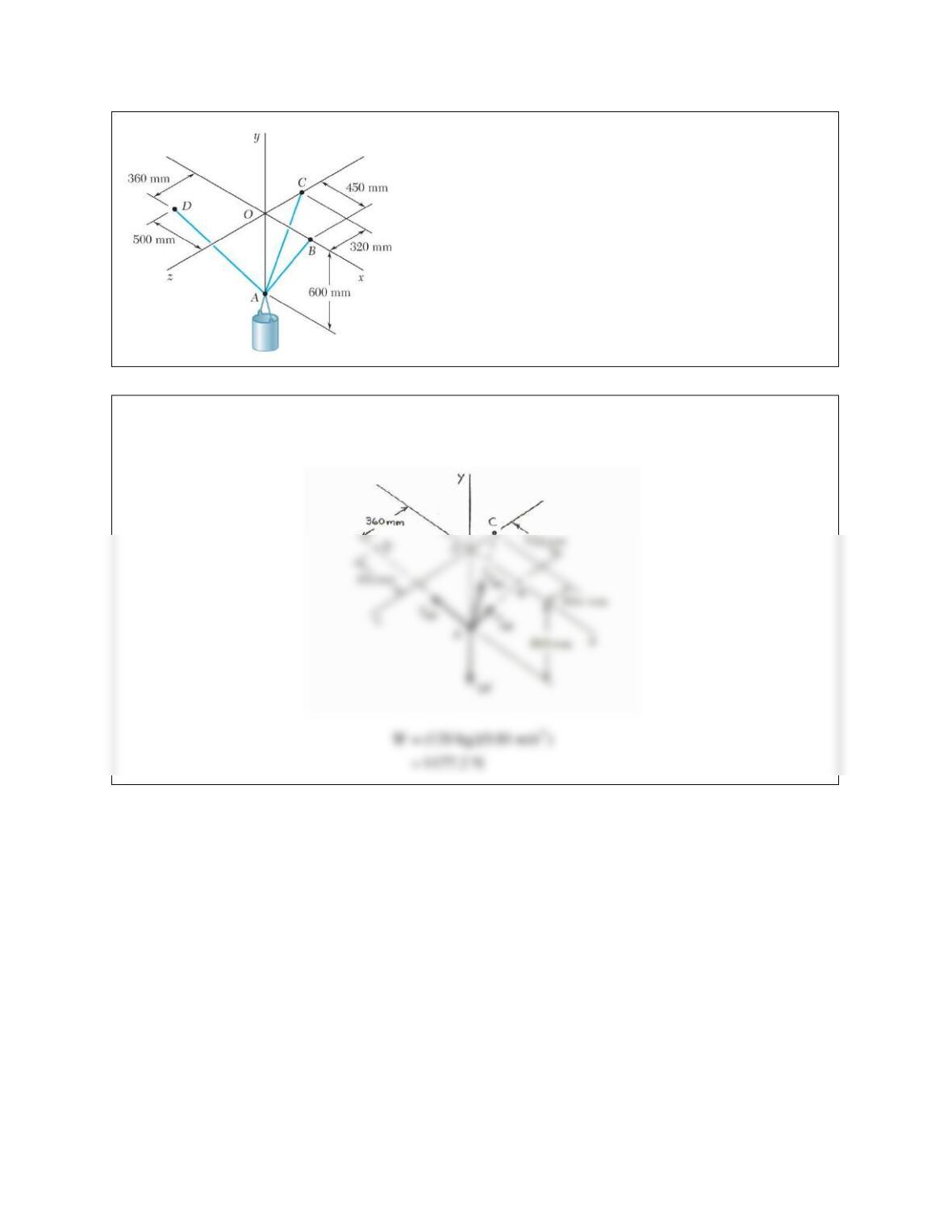
PROBLEM 2.F6
A container of mass m = 120 kg is supported by three cables
as shown. Draw the free–body diagram needed to determine
the tension in each cable
SOLUTION
Free–Body Diagram of Point A:
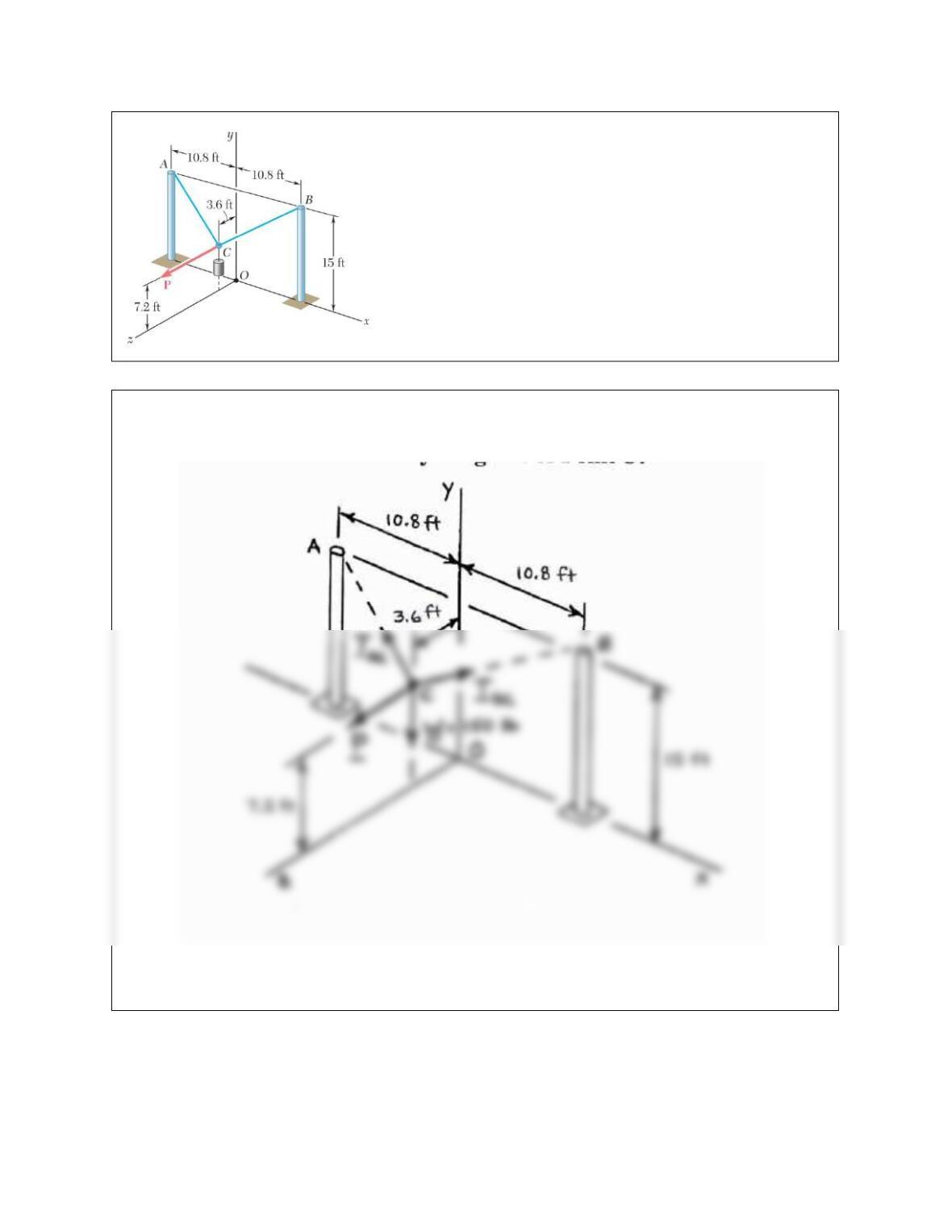
PROBLEM 2.F7
A 150-lb cylinder is supported by two cables AC and BC that are
attached to the top of vertical posts. A horizontal force P, which
is perpendicular to the plane containing the posts, holds the
cylinder in the position shown. Draw the free-body diagram
needed to determine the magnitude of P and the force in each
cable.
SOLUTION
Free–Body Diagram of Point C:
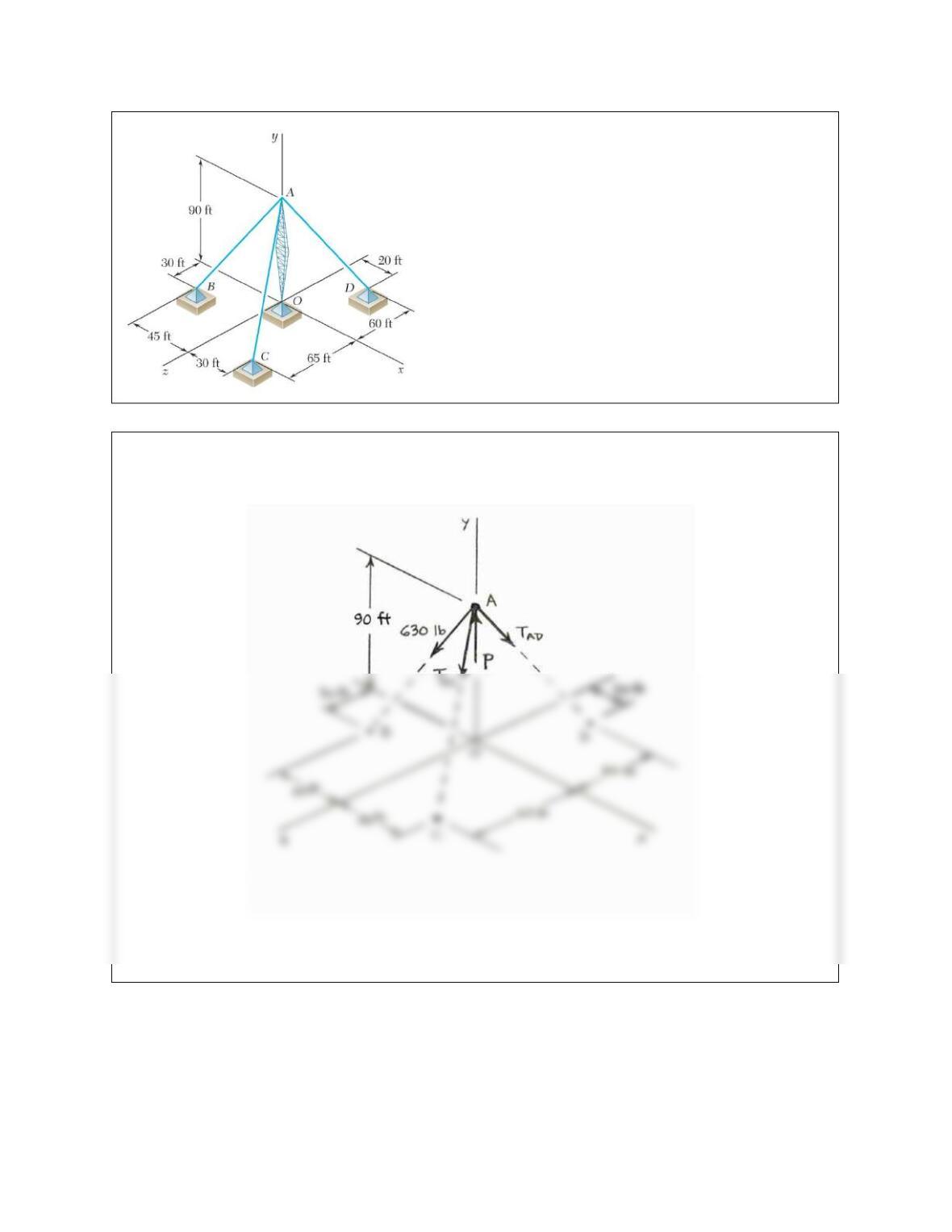
PROBLEM 2.F8
A transmission tower is held by three guy wires attached
to a pin at A and anchored by bolts at B, C, and D.
Knowing that the tension in wire AB is 630 lb, draw the
free–body diagram needed to determine the vertical force
P exerted by the tower on the pin at A.
SOLUTION
Free–Body Diagram of point A: