Advanced Digital Design with the Verilog HDL, Second Edition
Michael D. Ciletti
Prentice Hall, Pearson Education, 2011
Problem 2-1
Recall that a minterm is a cube in which every variable appears.
A Boolean expression in SOP form is canonical if every cube in the expression has a
unique representation in which all of the literals are in complemented or uncomplemented
form.
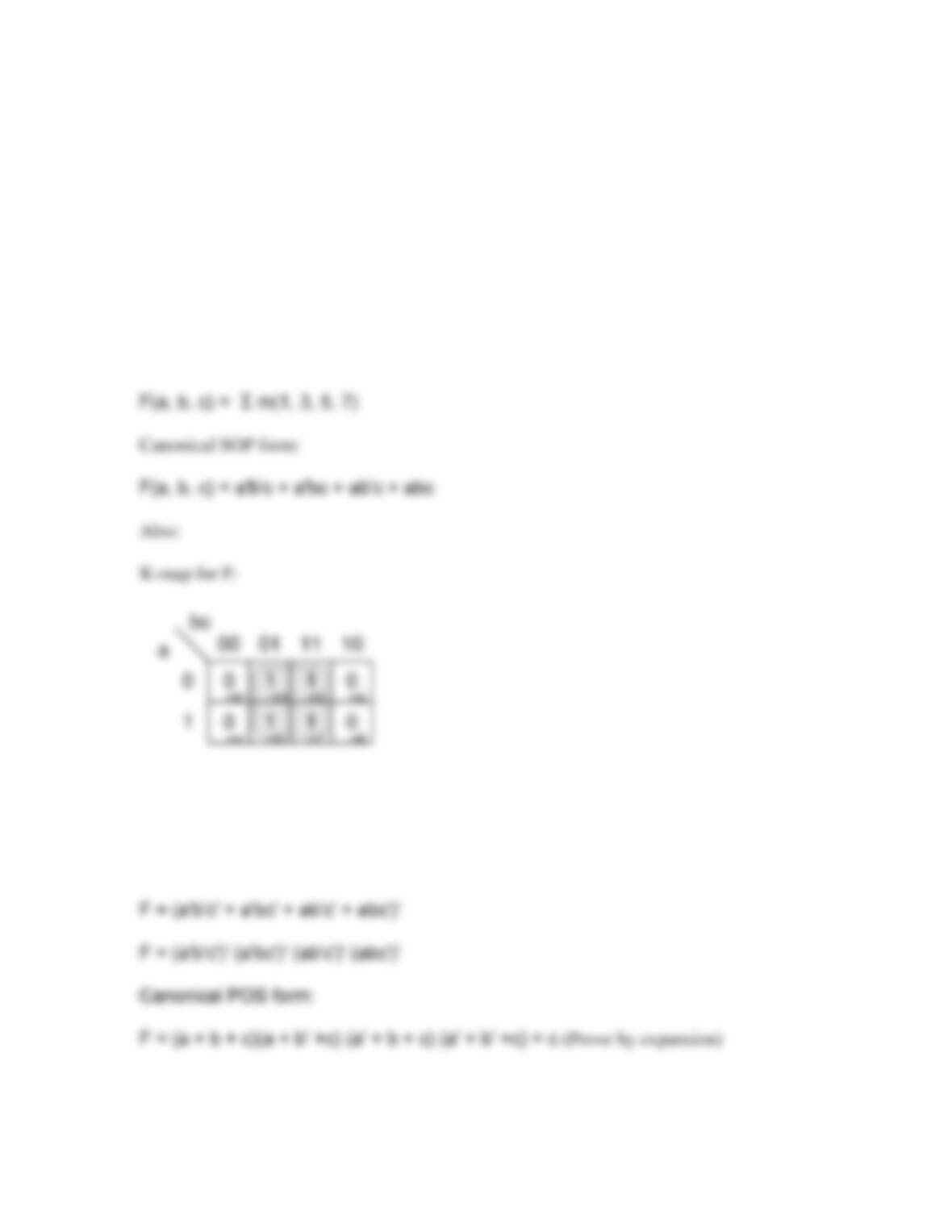
K-map reduction: F = c
F’ = m0 + m2 + m4 + m6
F’ = a’b’c’ + a’bc’ + ab’c’ + abc’

Problem 2-2
F(a, b, c, d) = Π M(0, 1, 2, 3, 4, 5, 12)
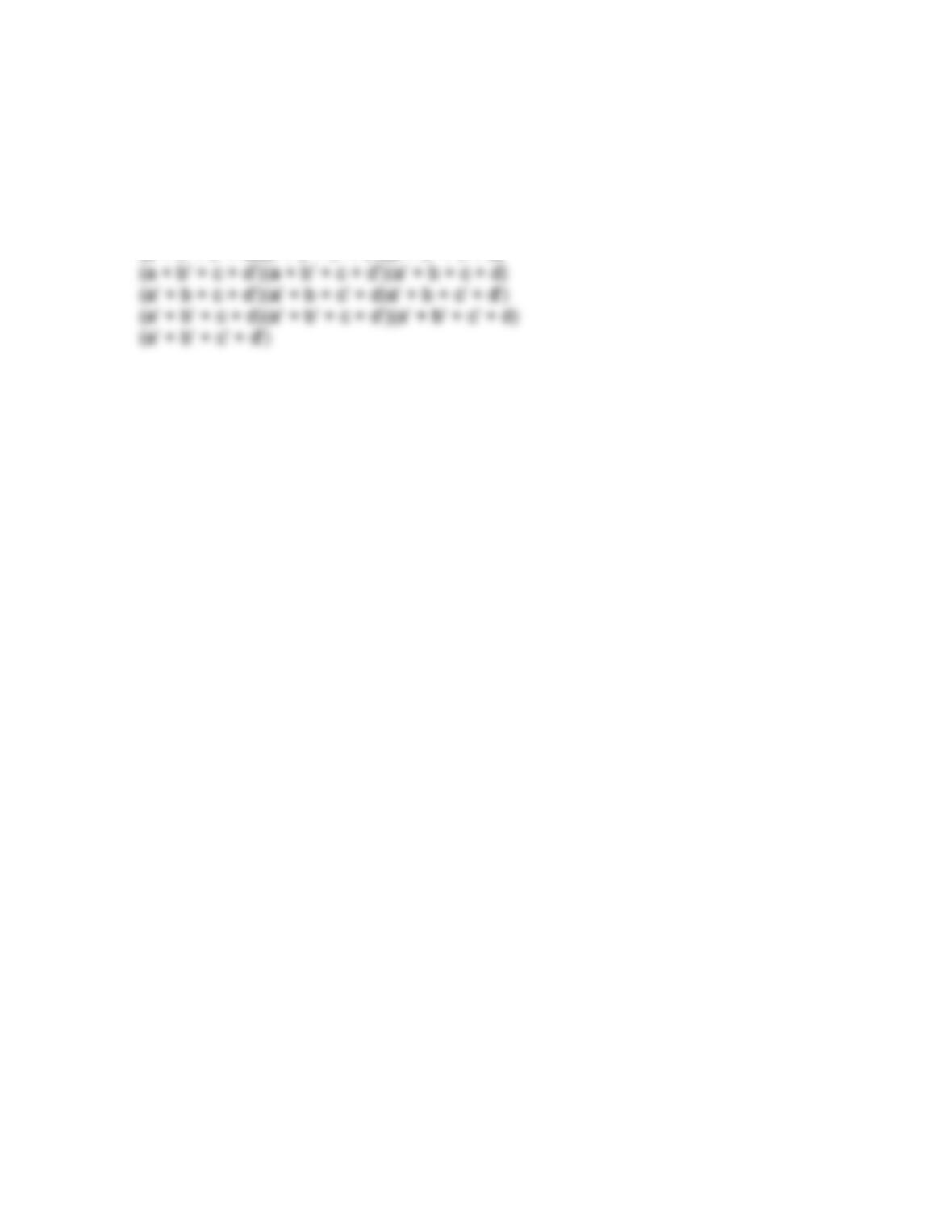
F = (a + b + c + d)(a + b + c + d’)(a + b + c’ + d)(a + b’ + c + d)(a + b’ + c + d)(a +
Problem 2-3
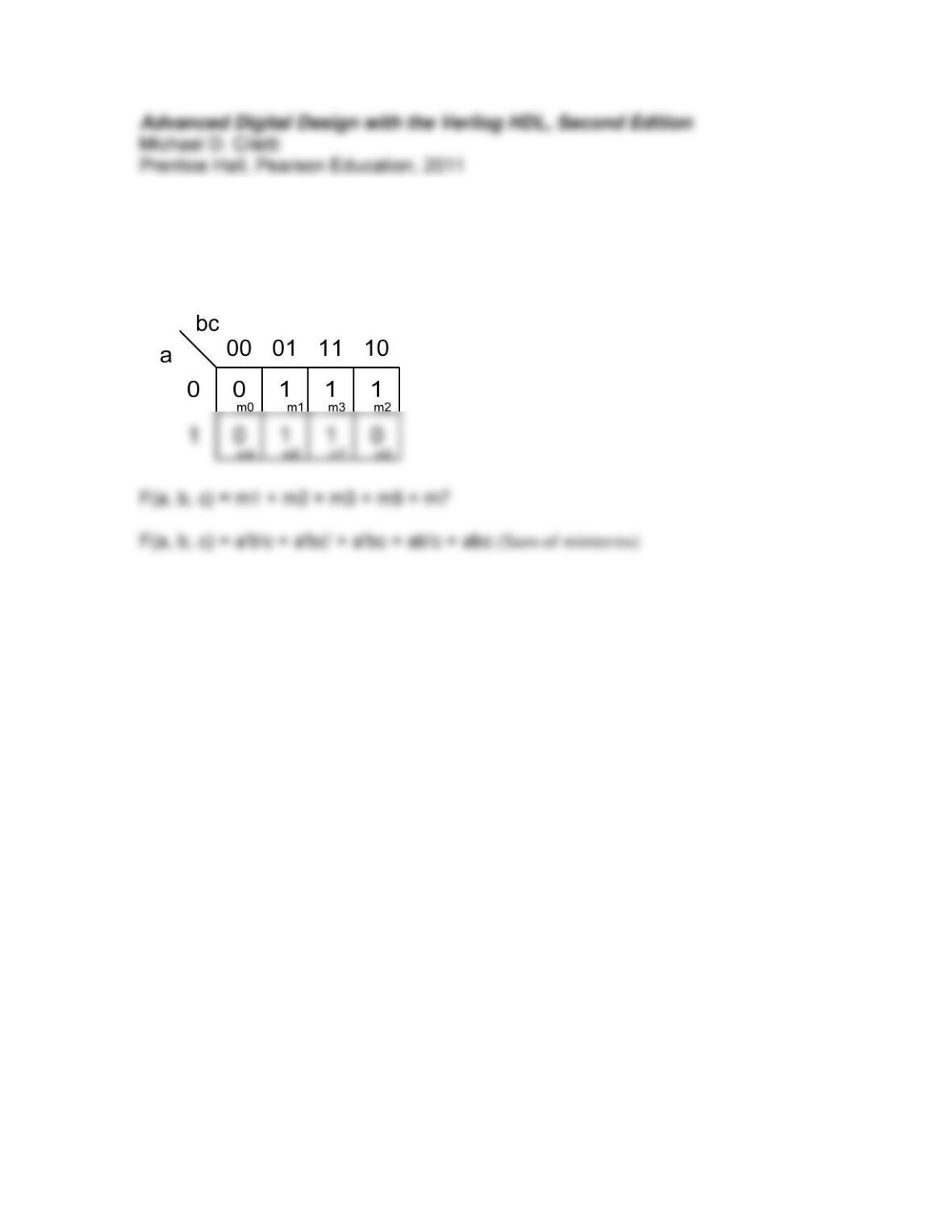
F(a, b, c) = a’b + c (Sum of cubes)

Problem 2-4
F(a, b, c, d) = a’bcd’ + a’bcd + a’b’c’d’ + a’b’c’d = m6 + m7 + m0 + m1
F(a, b, c, d) = Σ m(0, 1, 6, 7) (Sum of minterms)
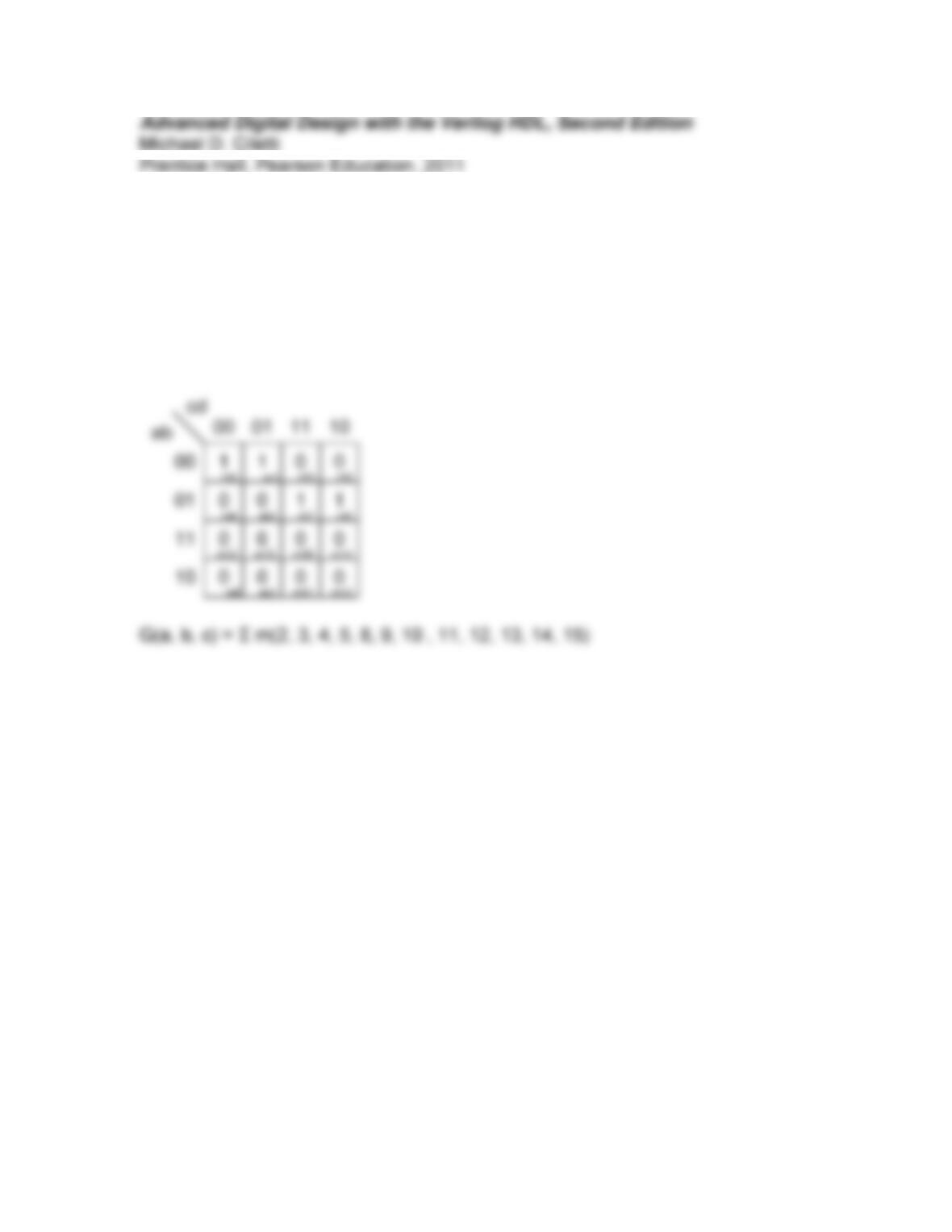
The K-map of F is given below:
F'(a, b, c, d) = m2 + m3 + m4 + m5 + m8 + m9 + m10 + m11 + m12 + m13 +
m14 + m15
The K-map of F’ is given below:
Using the sum of minterms expression for F, we get the product of maxterms for :
F’ = a’b’cd’ + a’b’cd + a’bc’d’ + a’bc’d + a’bc’d + ab’c’d’ + ab’c’d + ab’cd’ + ab’cd +
abc’d’ + abc’d + abcd’ + abcd
F =
(a + b + c’ + d)(a + b + c’ + d’)(a + b’ + c + d)
Problem 2-5
G(a, b, c, d) = (a’bcd’ + a’bcd + a’b’c’d’ + a’b’c’d)’
G'(a, b, c, d) = a’bcd’ + a’bcd + a’b’c’d’ + a’b’c’d
K-map for G’:
Problem 2-6
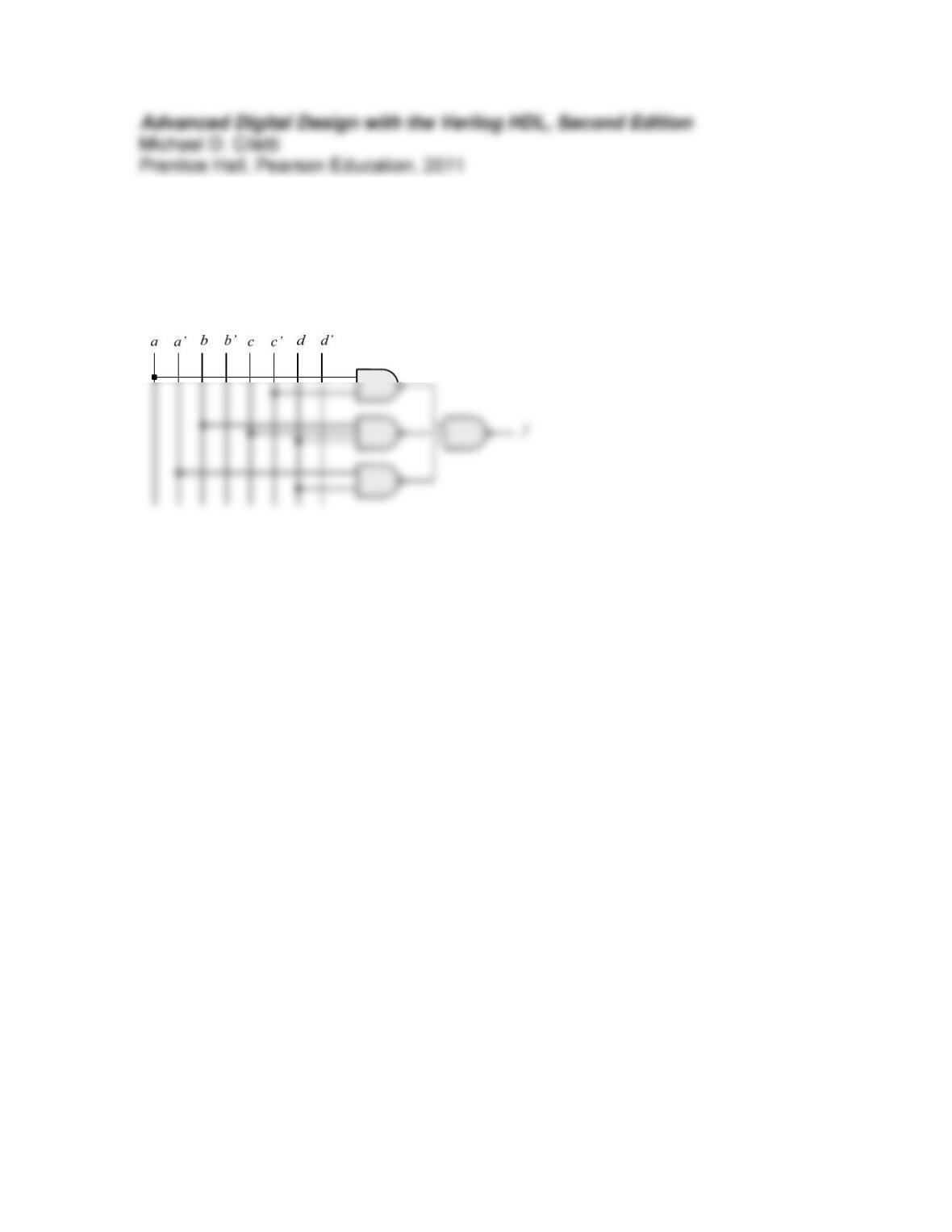
f = ac’ + bcd + a’d
f’ = (ac’)’ (bcd)’ (a’d)’
f = [(ac’)’ (bcd)’ (a’d)’]’
Problem 2-7
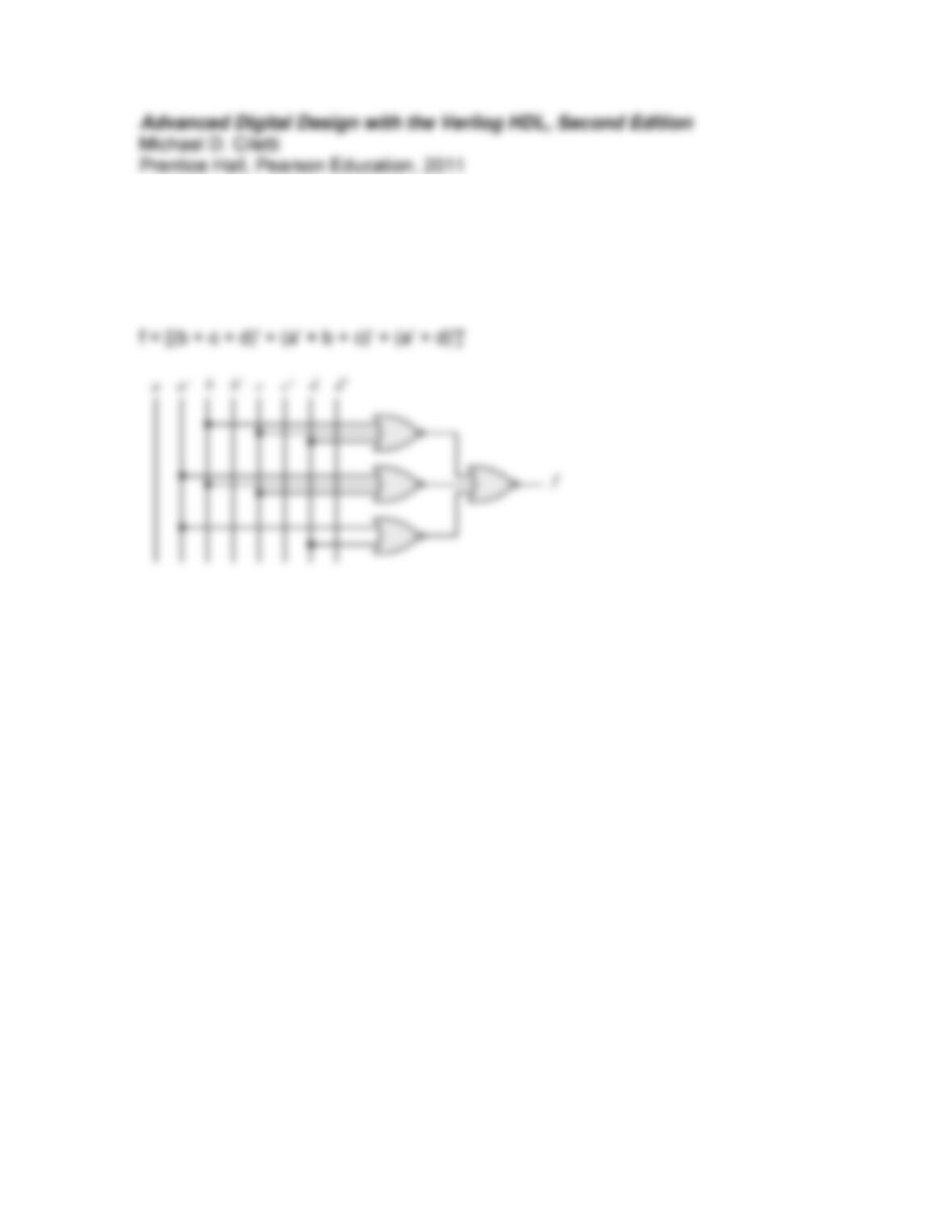
f = (b + c + d)(a’ + b + c)(a’ + d)
f’ = (b + c + d)’ + (a’ + b + c)‘ + (a’ + d)’
Problem 2-8
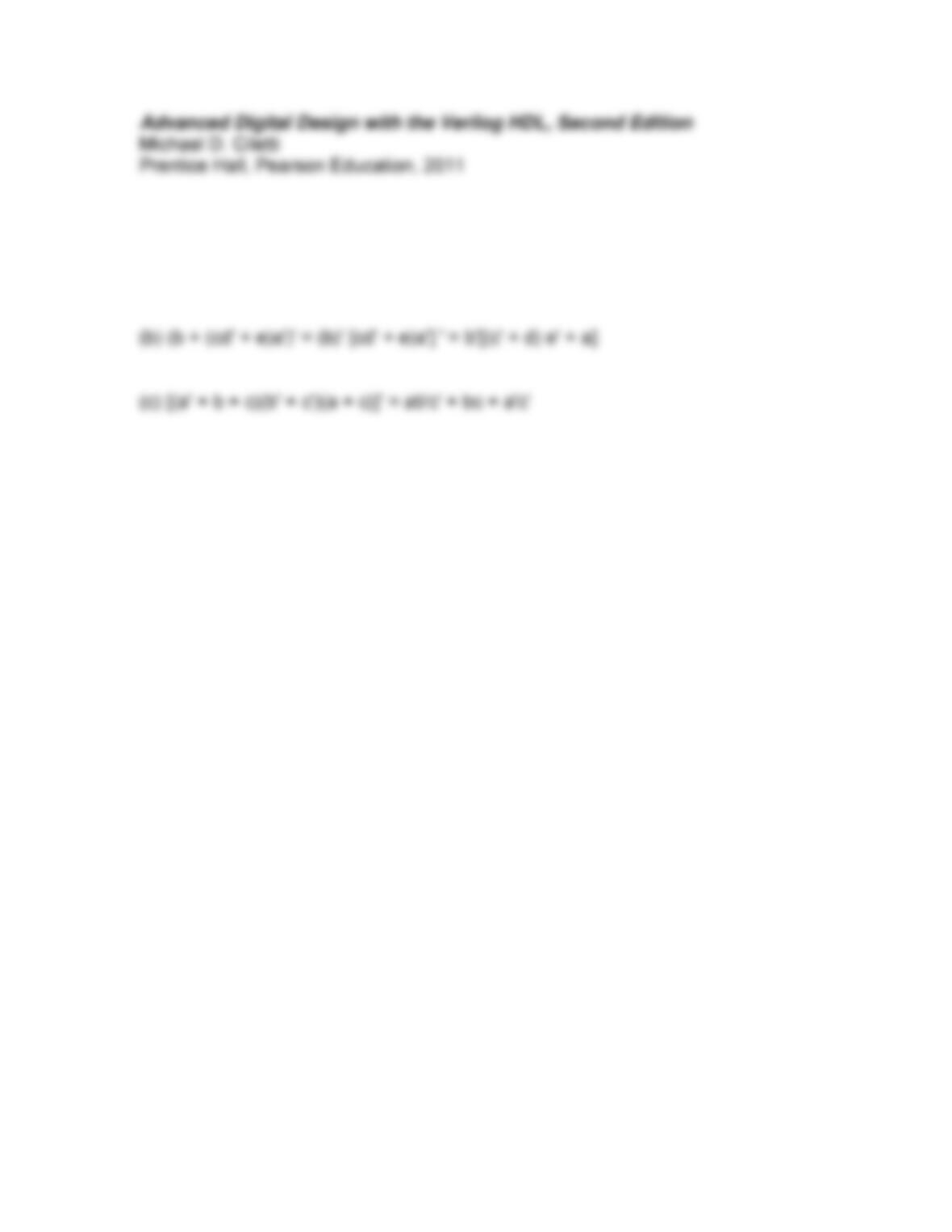
(a) (ab’ + a’b)’ = (ab’)'(a’b)’ = (a’ + b)(a + b’) = a’b’ + ab
Problem 2-9
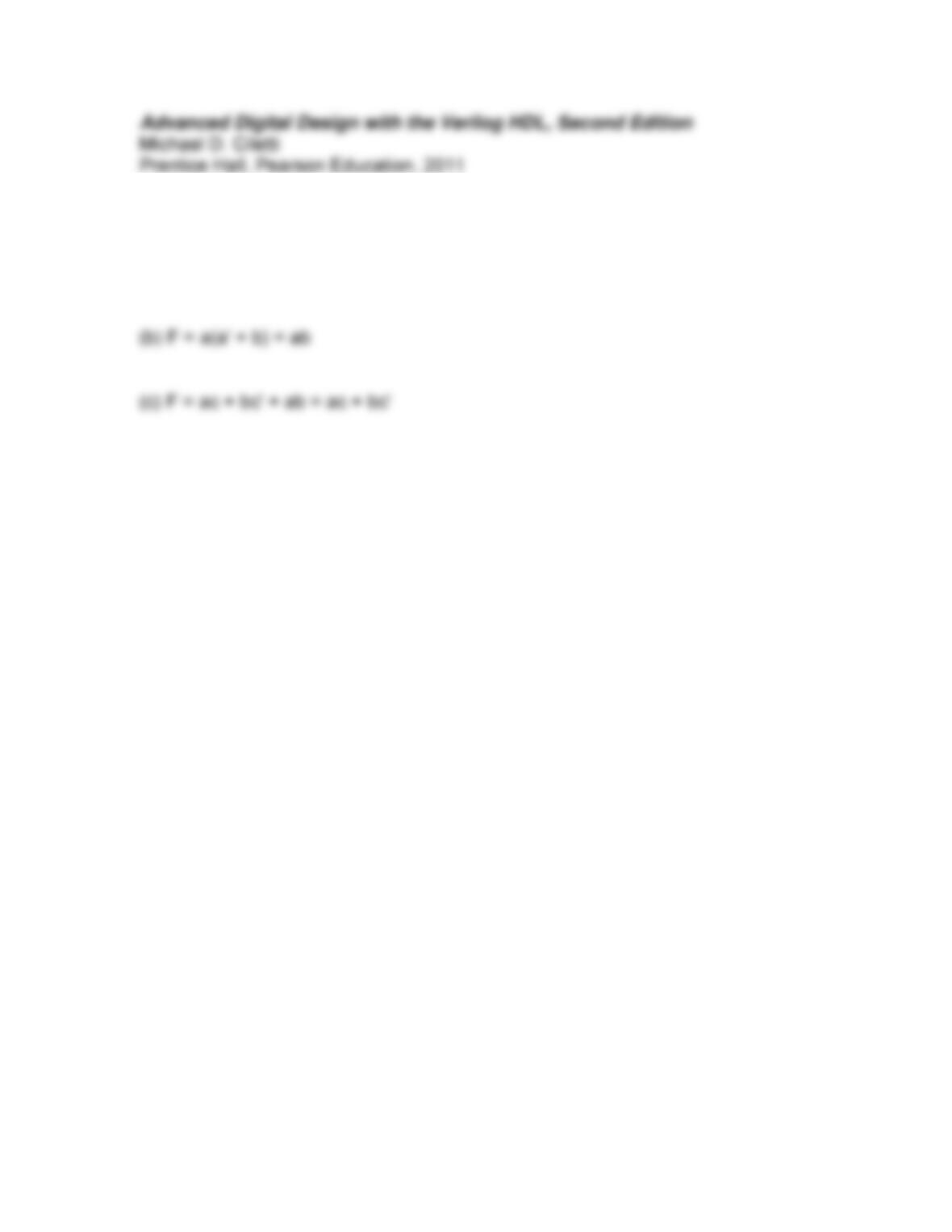
(a) F = a + a’b = a + b

Problem 2-10a
F(a, b, c) = Σ m(0, 2, 4, 5, 6)
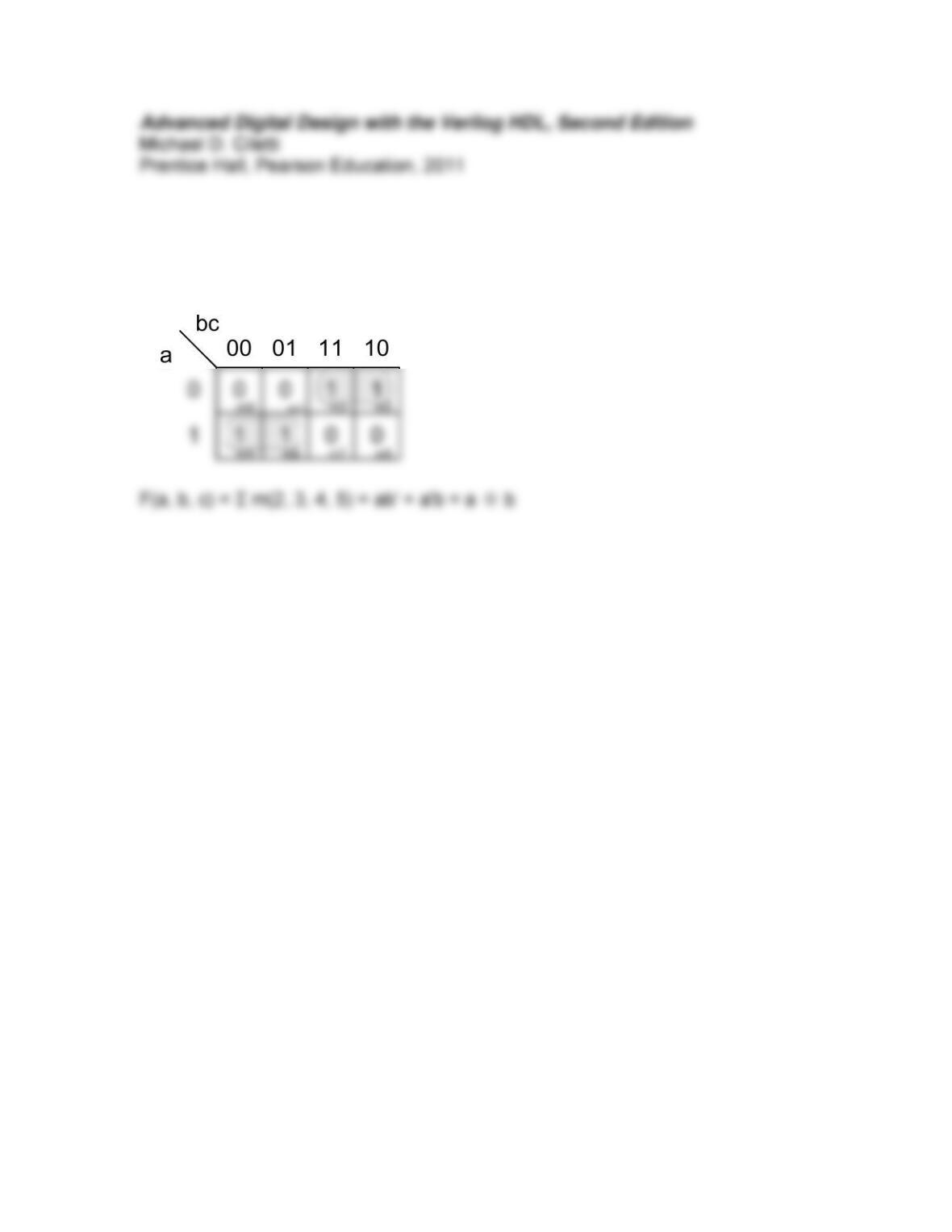
Problem 2-10b
F(a, b, c) = Σ m(2, 3, 4, 5)
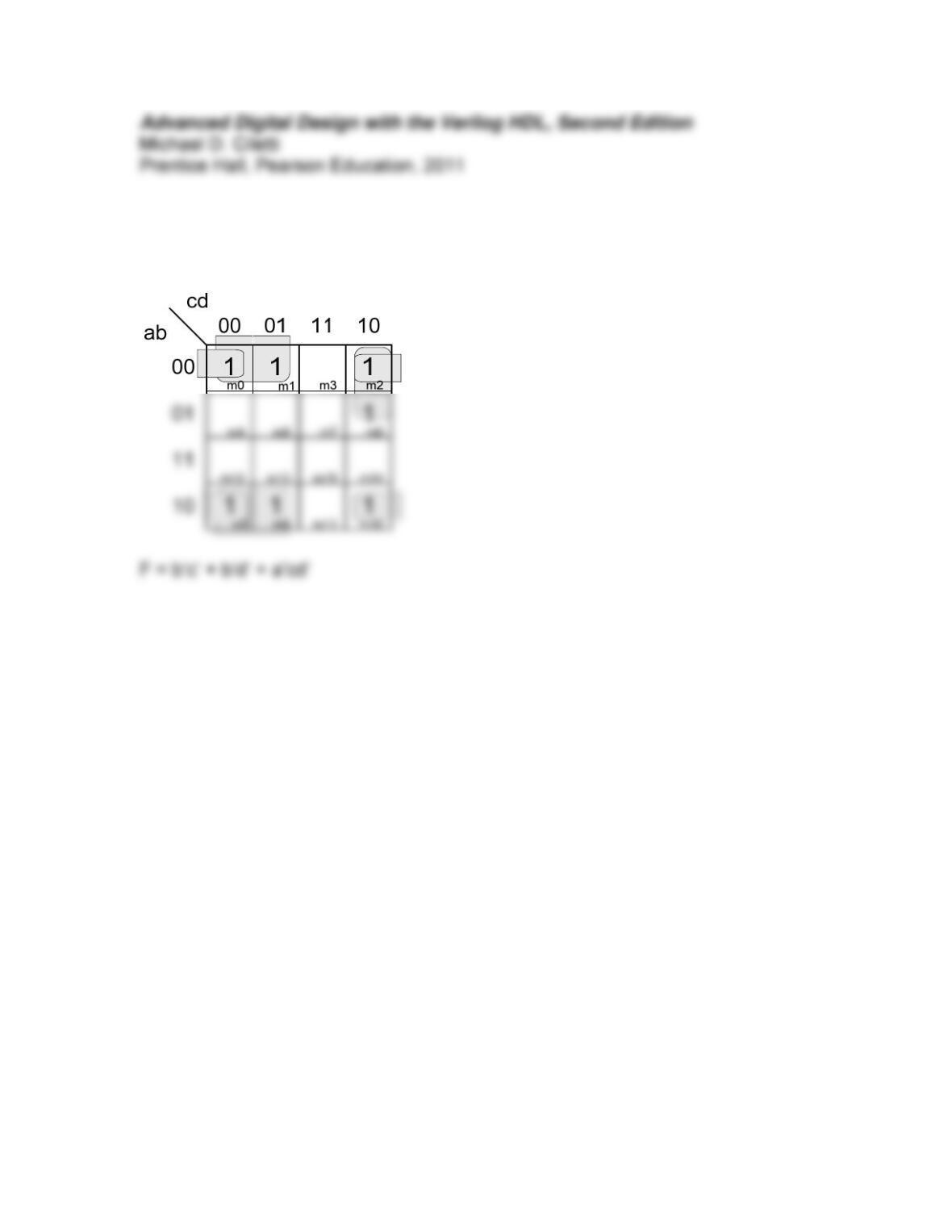
Problem 2-10e
(e) F = a’b’c’ + b’cd’ + a’bcd’ + ab’c’

Problem 2-11
F(a, b, c) = Σm(0, 6)
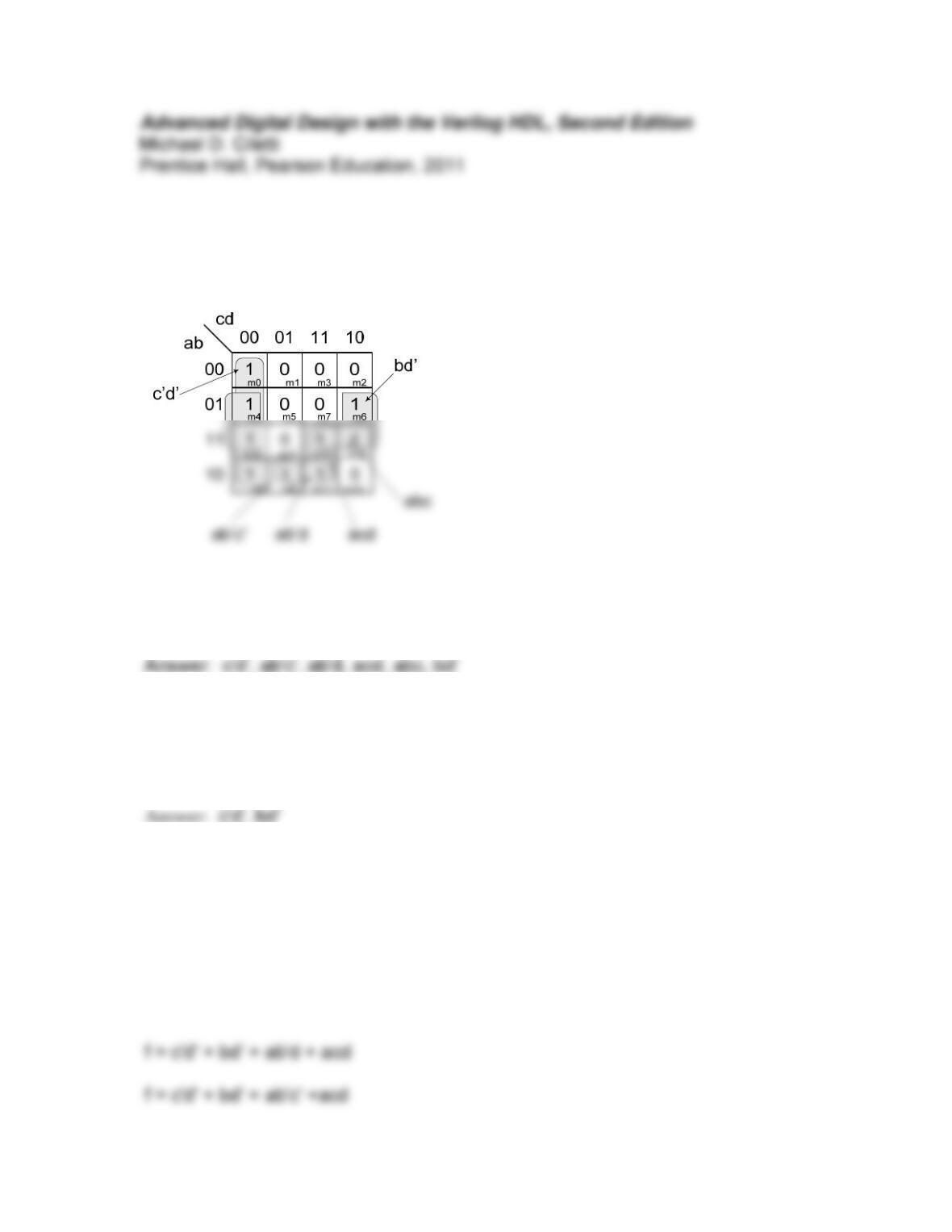
Problem 2-12
Karnaugh Map for f = Σ m(0, 4, 6, 8, 9, 11, 12, 14, 15)
1. Prime implicants are implicants that do not imply any other implicant
2. Essential prime implicants are prime implicants that cannot be covered by a set of
other implicants:
3. A minimal expression consists of the set of essential prime implicants together with
other implicants that cover the function:
Answer:
f = c’d’ + bd’ + ab’d + abc

Problem 2-13
a b c d y
0 0 0 0 0
0 0 0 1 0
1 0 0 0 0
1 0 0 1 0
1 0 1 0 0
1 0 1 1 1
1 1 0 0 0
1 1 0 1 1
1 1 1 0 1
1 1 1 1 1
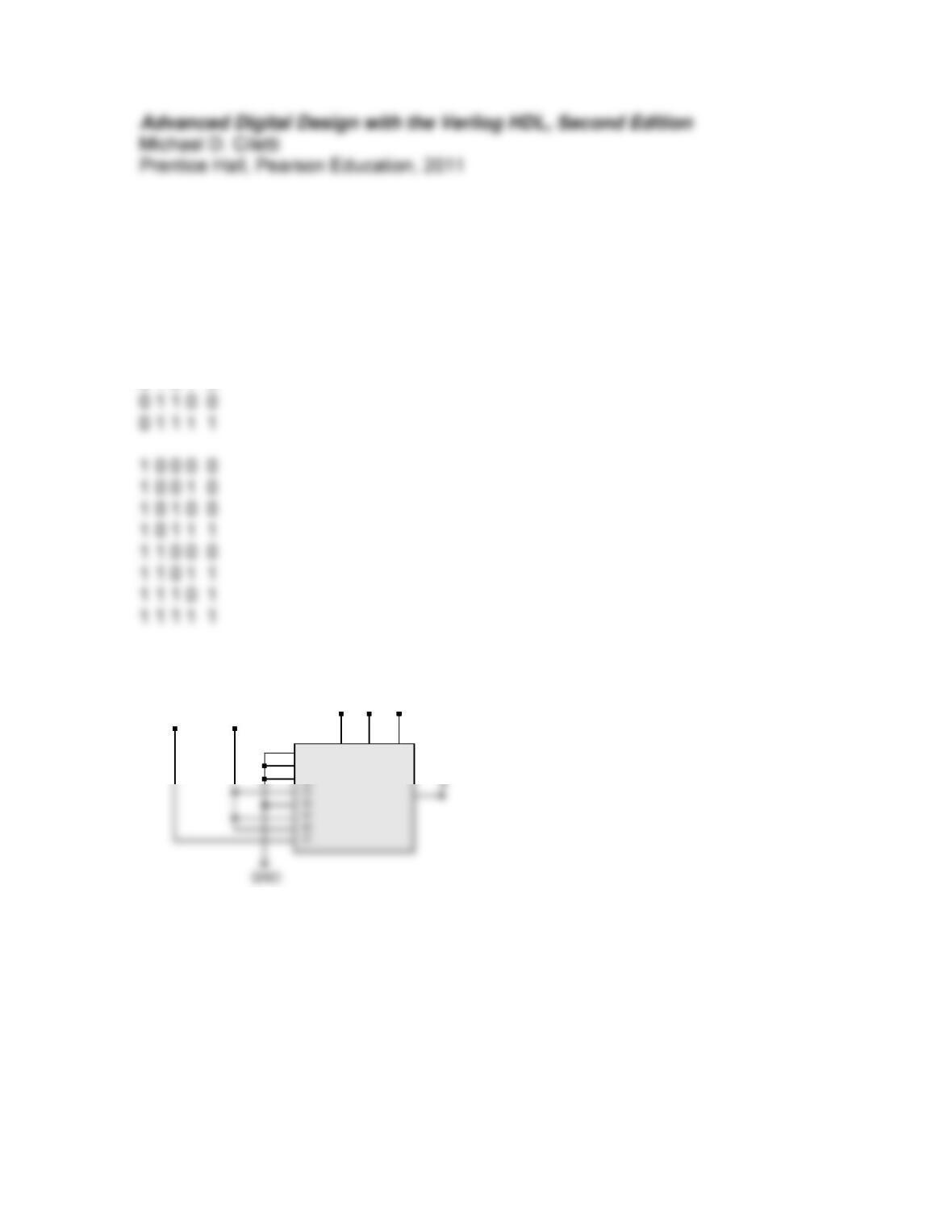
Problem 2-14
a b c d y
0 0 0 0 0
0 0 0 1 0
0 0 1 0 0
0 0 1 1 0
0 1 0 0 0
0 1 0 1 0
abc d
I0
I1
I2
y = abd + abc +bcd + acd = abcd + abc’d + abcd’ + a’bcd + ab’cd
VCC