CHAPTER 19
Cost-Volume-Profit
ASSIGNMENT CLASSIFICATION TABLE
Learning Objectives
Questions
Brief
Exercises
Do It!
Exercises
A
Problems
1. Explain variable, fixed, and
mixed costs and the relevant
range.
1, 2, 3, 4, 5,
6
1, 2
1
1, 2, 3, 4, 5,
6
1A, 6A
4. Compute the break-even
point using three approaches.
12, 13, 14
8, 9
4, 5
8, 9, 10, 11,
12, 13, 14,
16, 17
1A, 2A, 3A,
4A, 5A
5. Determine the sales required
determine margin of safety.
15, 16
10, 11, 12
5
14, 15, 16,
2A, 4A, 5A,
2. Apply the high-low method to
mixed costs.
7, 8
1, 3, 4, 5
2
3, 5,
1A
3. Prepare a CVP income
9, 10, 11, 17
6, 7
3
7, 8, 9, 10, 11,
12, 13, 17
1A, 2A, 4A,
5A, 6A
ASSIGNMENT CHARACTERISTICS TABLE
Problem
Number
Description
Difficulty
Level
Time
Allotted (min.)
1A
Determine variable and fixed costs, compute break-even
point, prepare a CVP graph, and determine net income.
Simple
20–30
2A
Prepare a CVP income statement, compute break-even
point, contribution margin ratio, margin of safety ratio,
and sales for target net income.
Moderate
30–40
3A
Compute break-even point under alternative courses
of action.
Simple
20–30
changes in business environment.
5A
Compute contribution margin, fixed costs, break-even
point, sales for target net income, and margin of safety
ratio.
Moderate
20–30
6A
Determine contribution margin ratio, break-even point, and
margin of safety.
20–30
Correlation Chart between Bloom’s Taxonomy, Learning Objectives and End–of-Chapter Exercises and Problems
Learning Objective
Knowledge
Comprehension
Application
Analysis
Synthesis
Evaluation
* 1. Explain variable, fixed, and mixed
costs and the relevant range.
E19-4
Q19-1
Q19-2
Q19-3
Q19-4
Q19-5
Q19-6
BE19-1
DI19-1
E19-1
E19-2
E19-4
E19-2
E19-5
E19-6
BE19-2
E19-3
P19–1A
P19–6A
* 4. Compute the break-even point
using three approaches.
Q19–12
Q19–14
Q19–13
BE19-8
BE19-9
DI19-4
DI19-5
E19-8
E19-9
E19–10
E19–11
E19–12
E19–13
E19–14
E19–16
E19–17
E19–16
P19–1A
P19–2A
P19–5A
P19–3A
P19–4A
Q19–15
Q19–16
DI19-5
E19–12
E19–14
E19–15
E19–17
E19–16
P19–2A
P19–5A
BLOOM’ S TAXONOMY TABLE
Q19-7
E19-1
Q19-8
DI19-2
E19-5
E19-6
BE19-3
E19-3
P19–1A
ANSWERS TO QUESTIONS
1. (a) Cost behavior analysis is the study of how specific costs respond to changes in the level of activity
within a company.
(b) Cost behavior analysis is important to management in planning business operations and in deciding
between alternative courses of action.
3. Fixed costs remain the same in total regardless of changes in the activity level. In contrast, fixed
costs per unit vary inversely with activity. As volume increases, fixed costs per unit decline and vice
versa.
5. This is true. Most companies operate within the relevant range. Within this range, it is possible to
establish a linear (straight-line) relationship for both variable and fixed costs. If a relevant range
cannot be established, segregation of costs into fixed and variable becomes extremely difficult.
8. Variable cost per unit is $1.30, or [($165,000 – $100,000) ÷ (90,000 – 40,000)]. At any level of activity,
fixed costs are $48,000 per month [$165,000 – (90,000 X $1.30)].
Questions Chapter 19 (Continued)
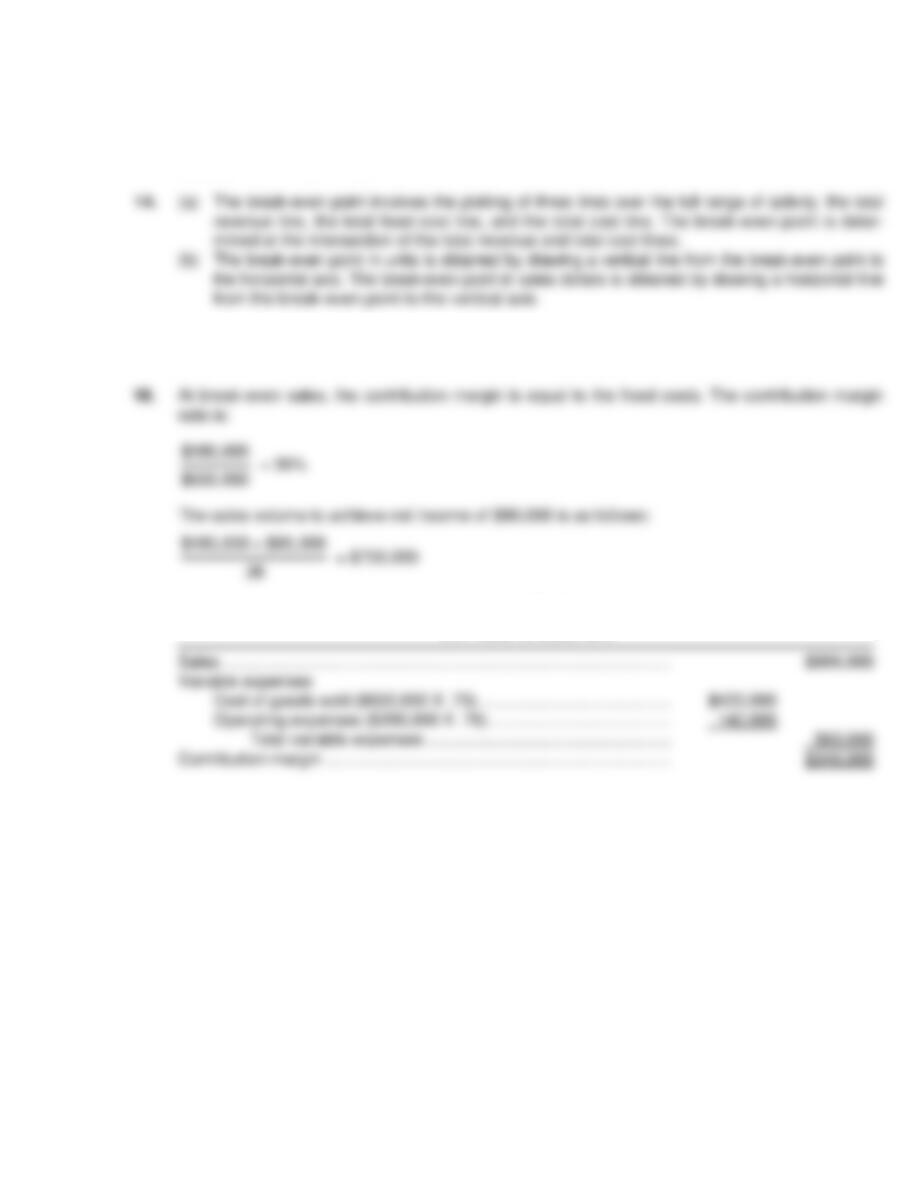
12. Disagree. Knowledge of the break–even point is useful to management in deciding whether to introduce
new product lines, change sales prices on established products, and enter new market areas.
13. $26,000 ÷ 25% = $104,000
15. Margin of safety is the difference between actual or expected sales and sales at the break-even
point. 1,250 X $12 = $15,000; $15,000 – $13,200 = $1,800; $1,800 ÷ $15,000 = 12%.
17. PACE COMPANY
CVP Income Statement
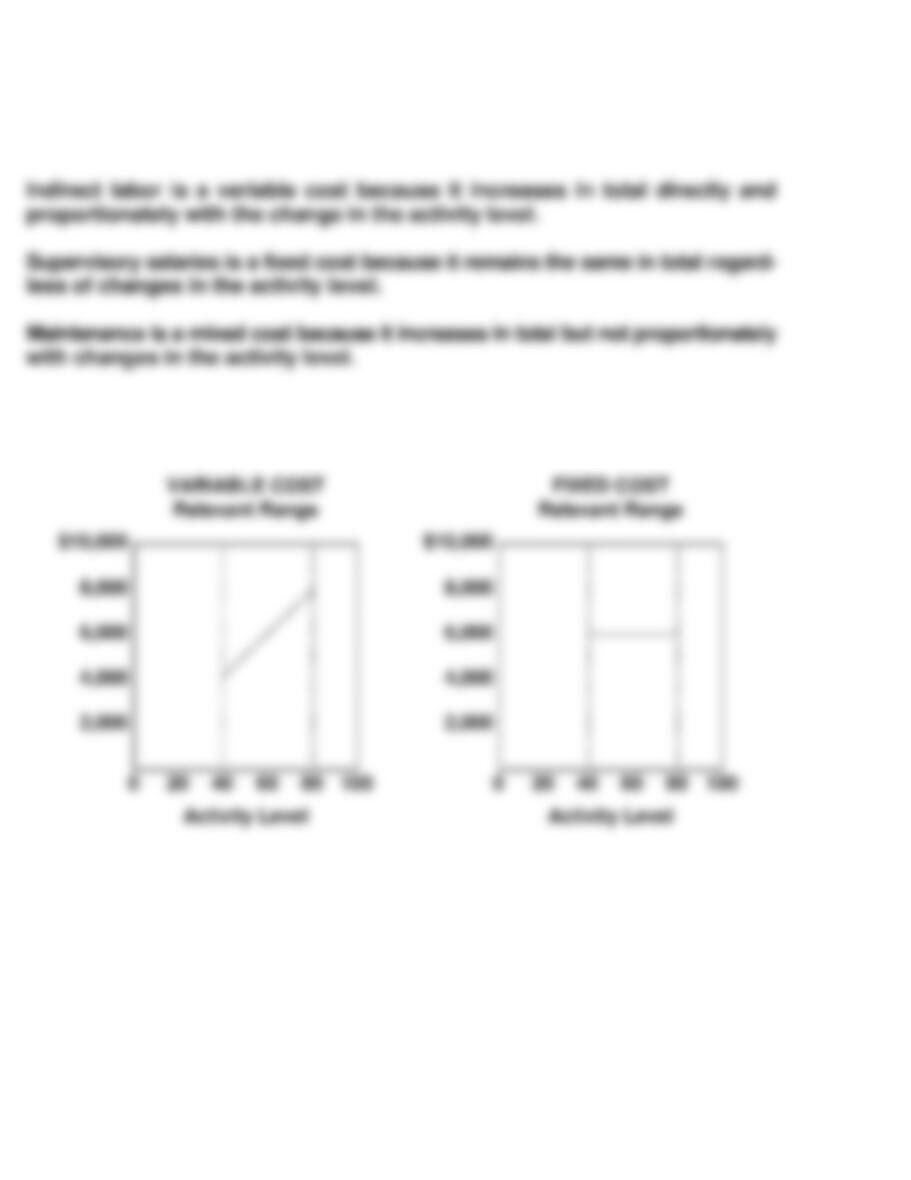
SOLUTIONS TO BRIEF EXERCISES
BRIEF EXERCISE 19-1
BRIEF EXERCISE 19-2
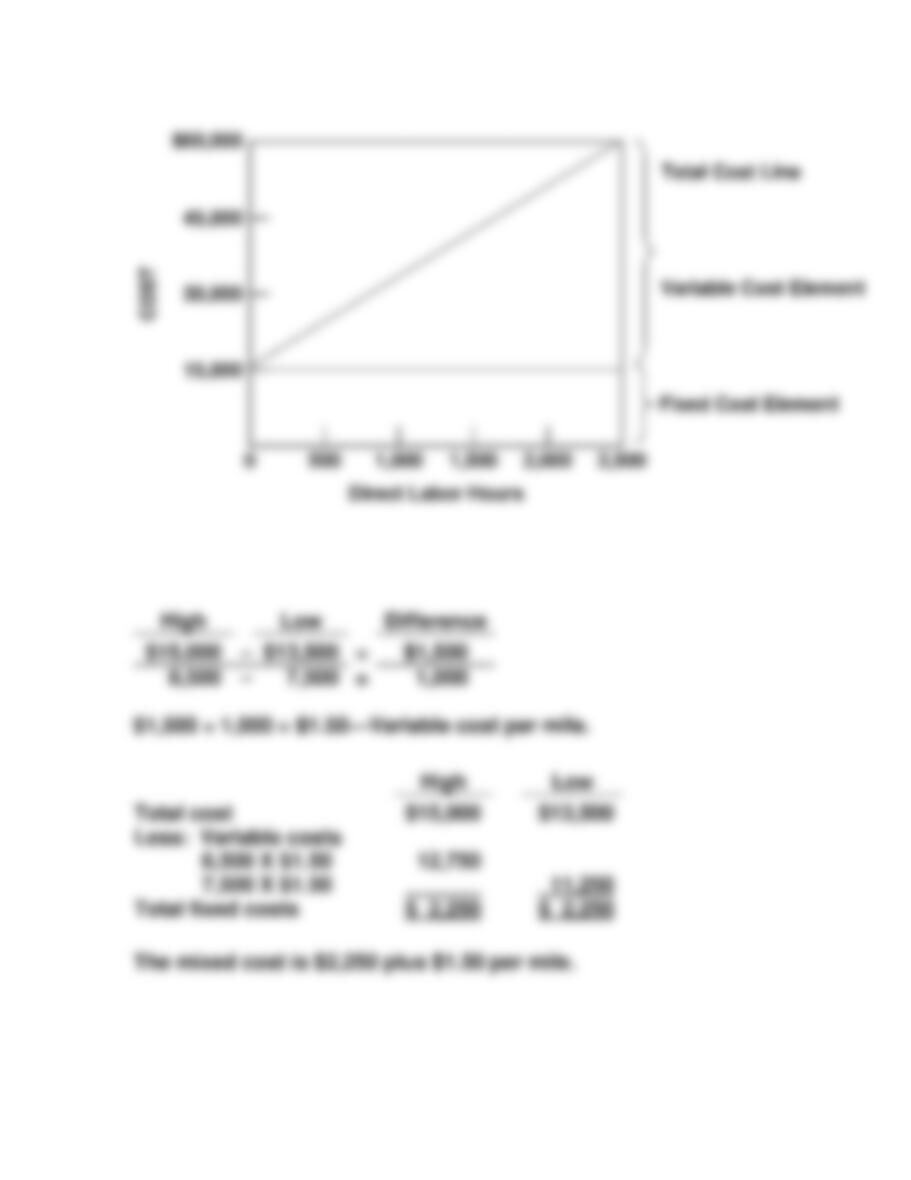
BRIEF EXERCISE 19-3
BRIEF EXERCISE 19-4
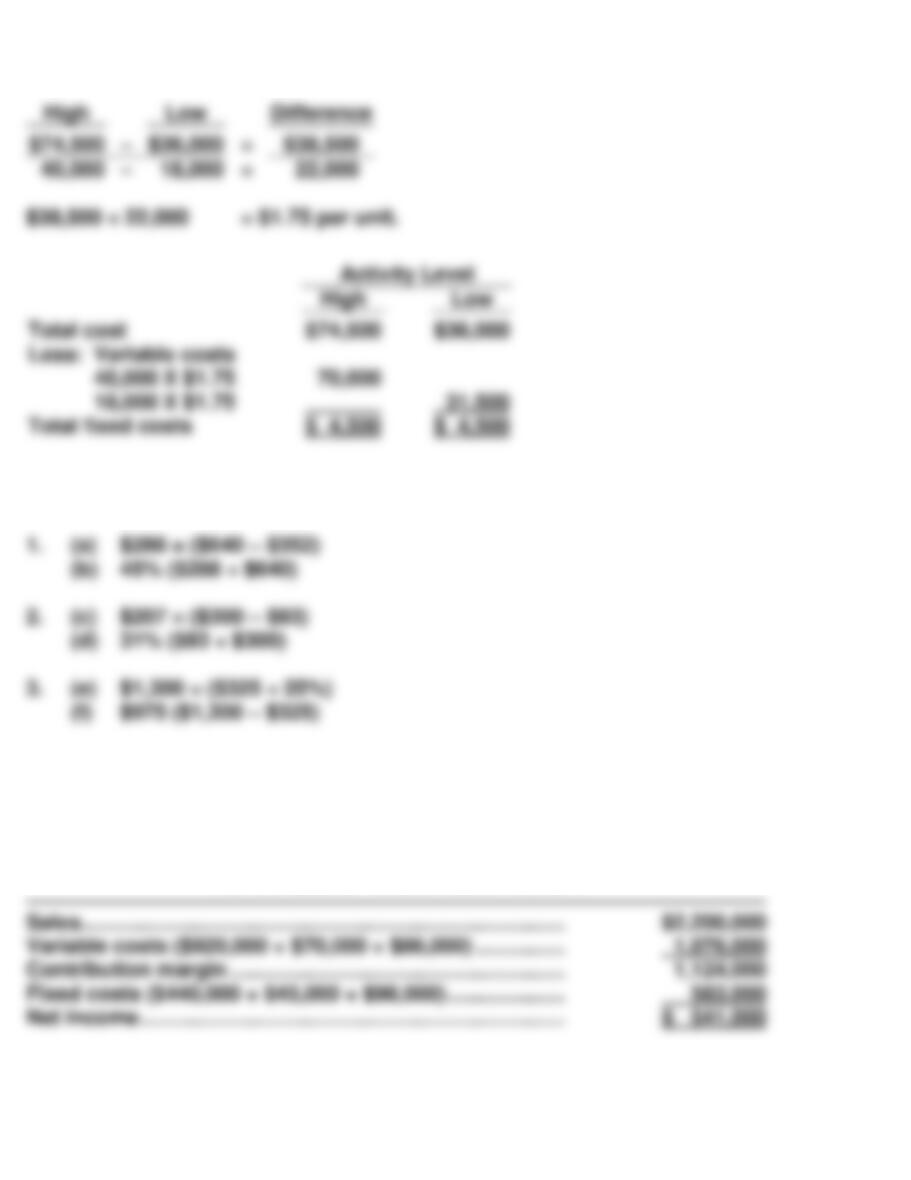
BRIEF EXERCISE 19-5
BRIEF EXERCISE 19-6
BRIEF EXERCISE 19-7
RUSSELL INC.
CVP Income Statement
For the Quarter Ended March 31, 2017
BRIEF EXERCISE 19-8
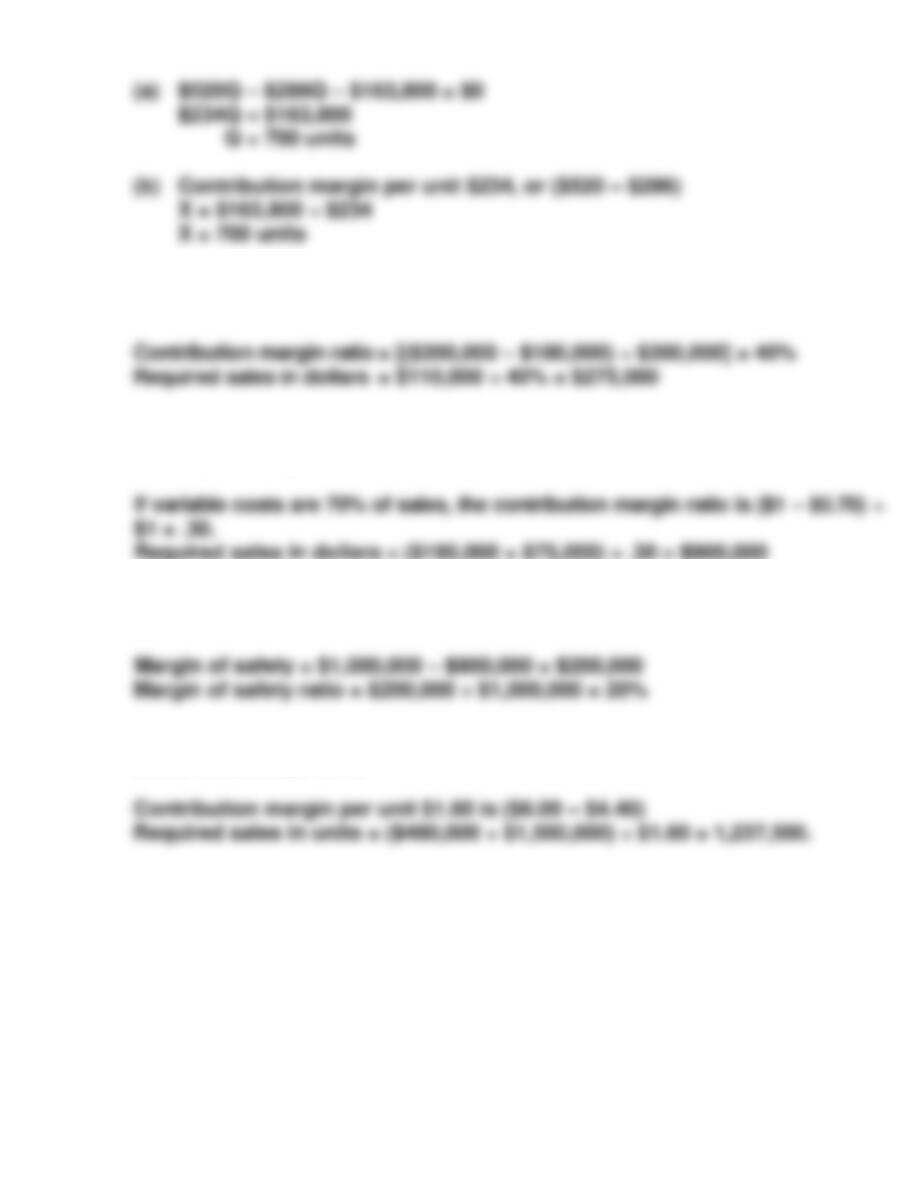
BRIEF EXERCISE 19-9
BRIEF EXERCISE 19–10
Required sales in dollars = ($195,000 + $75,000) ÷ .30 = $900,000
BRIEF EXERCISE 19–11
BRIEF EXERCISE 19–12
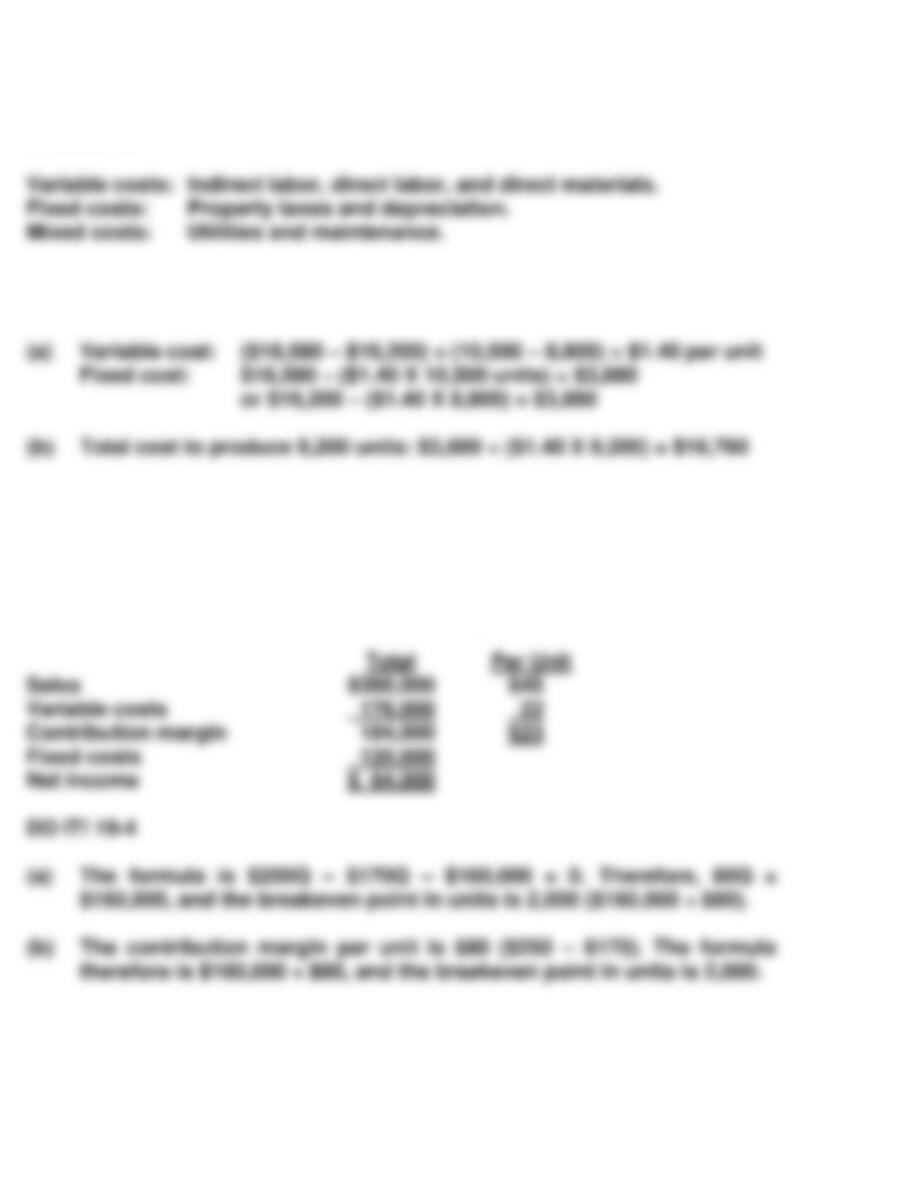
SOLUTIONS FOR DO IT! REVIEW EXERCISES
DO IT! 19-1
DO IT! 19-2
DO IT! 19-3
Cedar Grove Industries
CVP Income Statement
For the Month Ended May 31, 2017
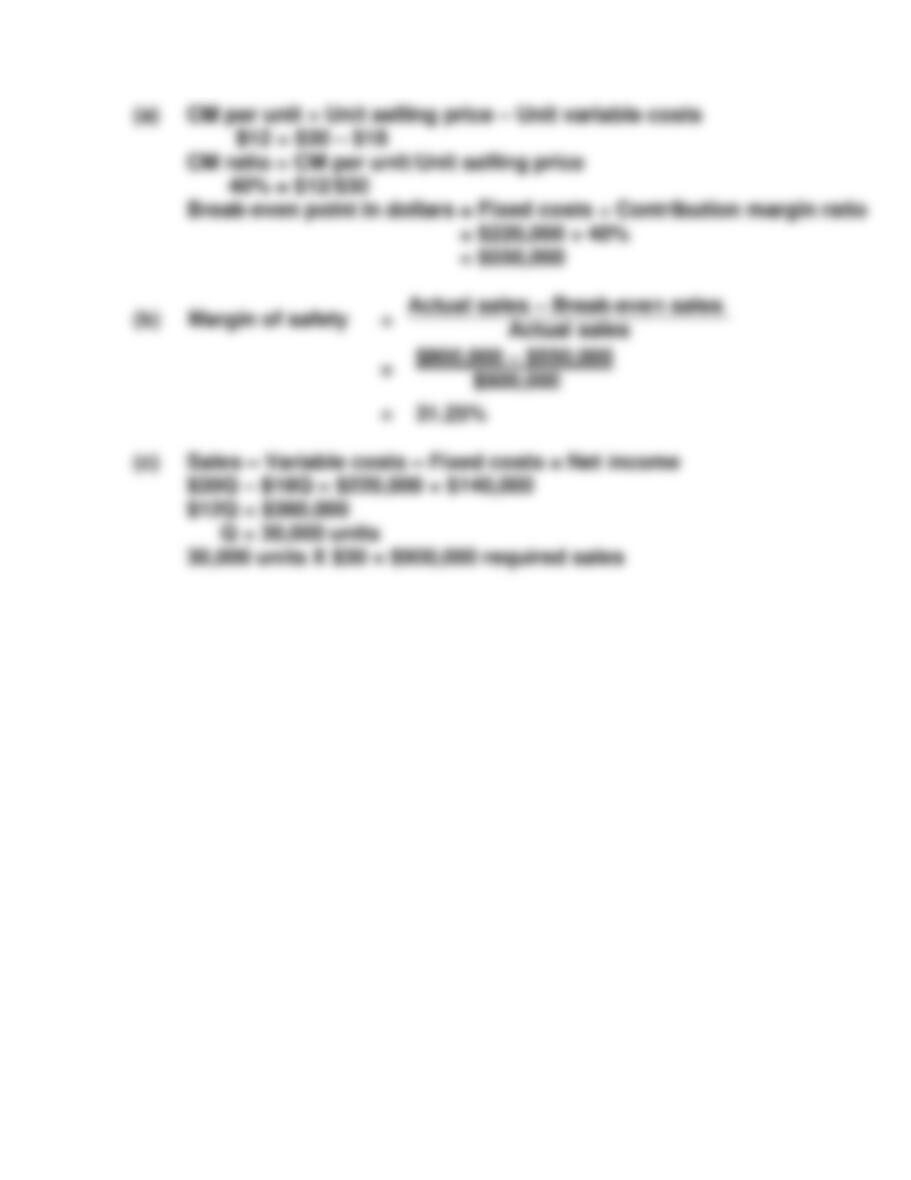
DO IT! 19-5
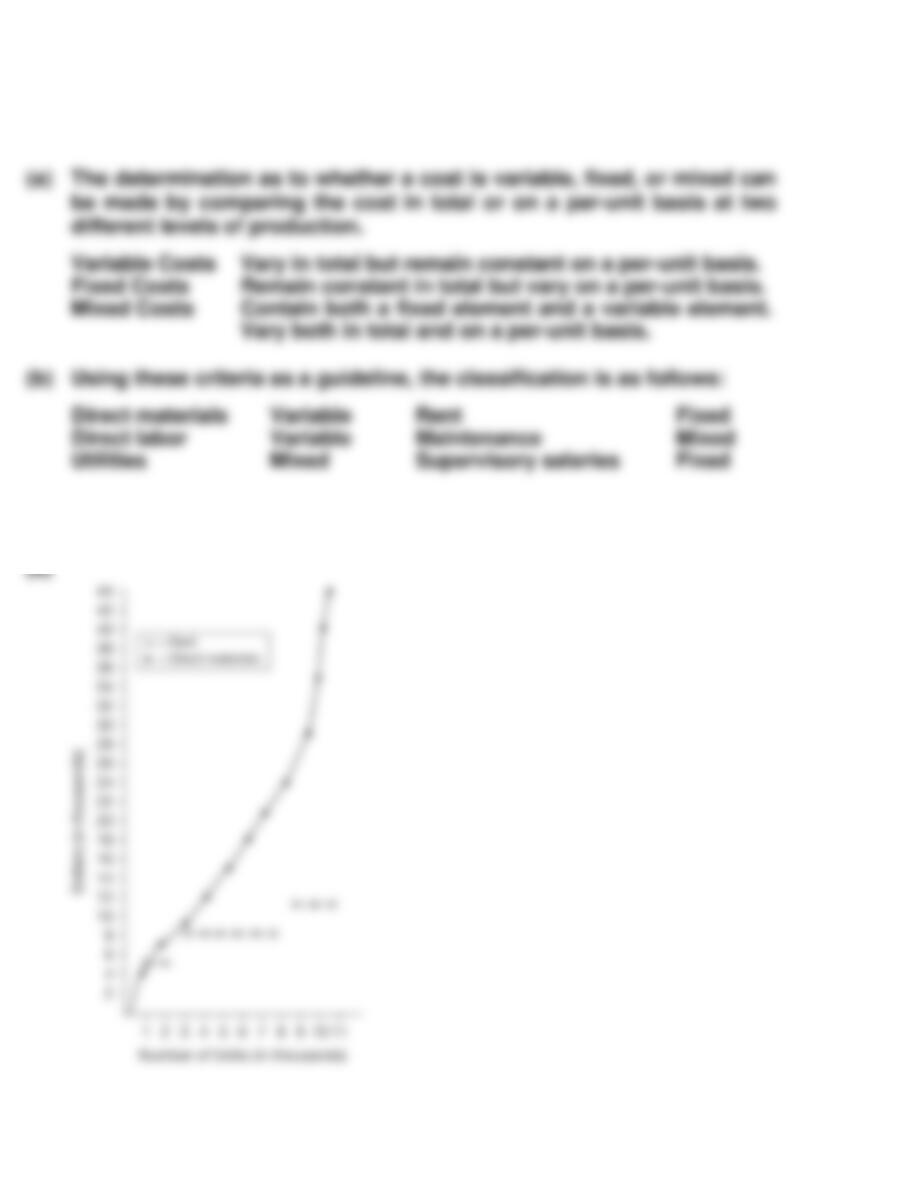
SOLUTIONS TO EXERCISES
EXERCISE 19-1
EXERCISE 19-2
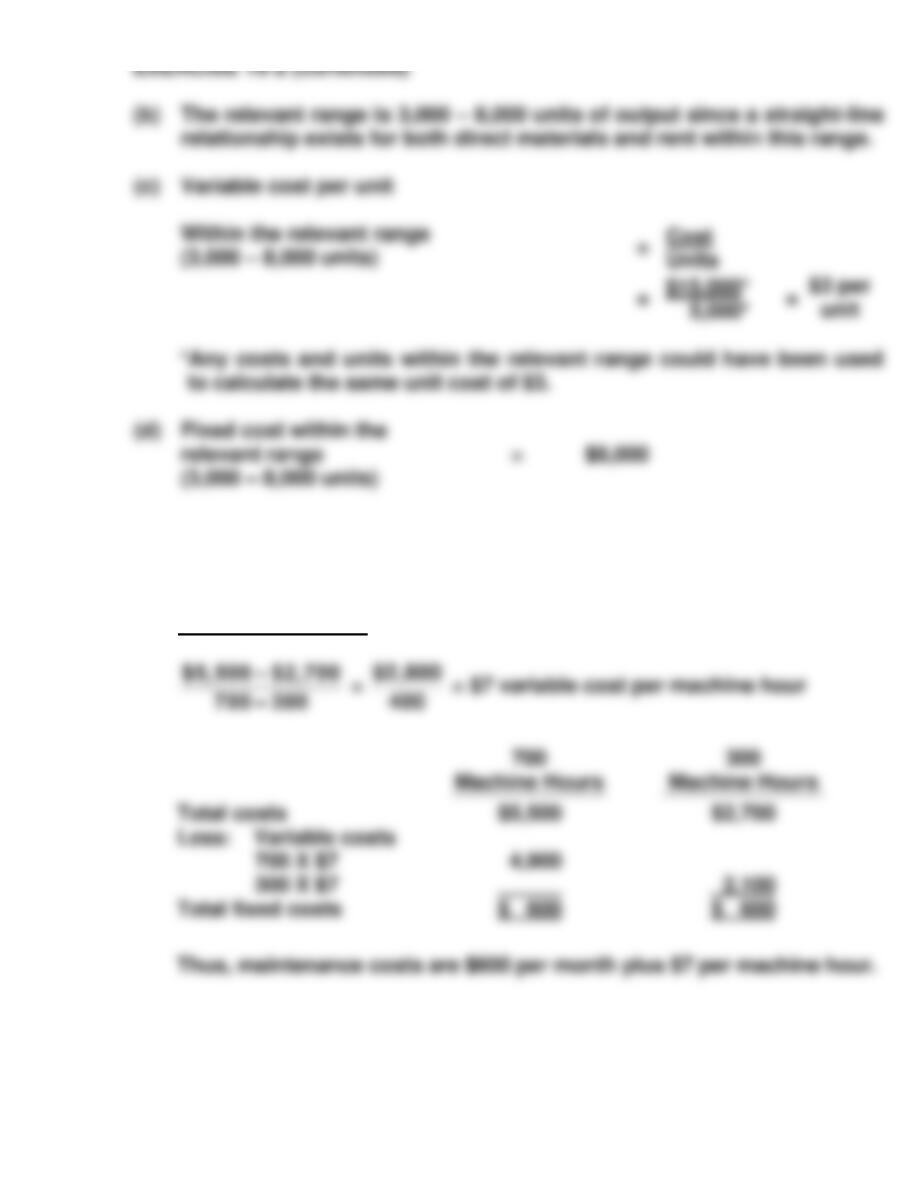
EXERCISE 19-3
(a) Maintenance Costs:
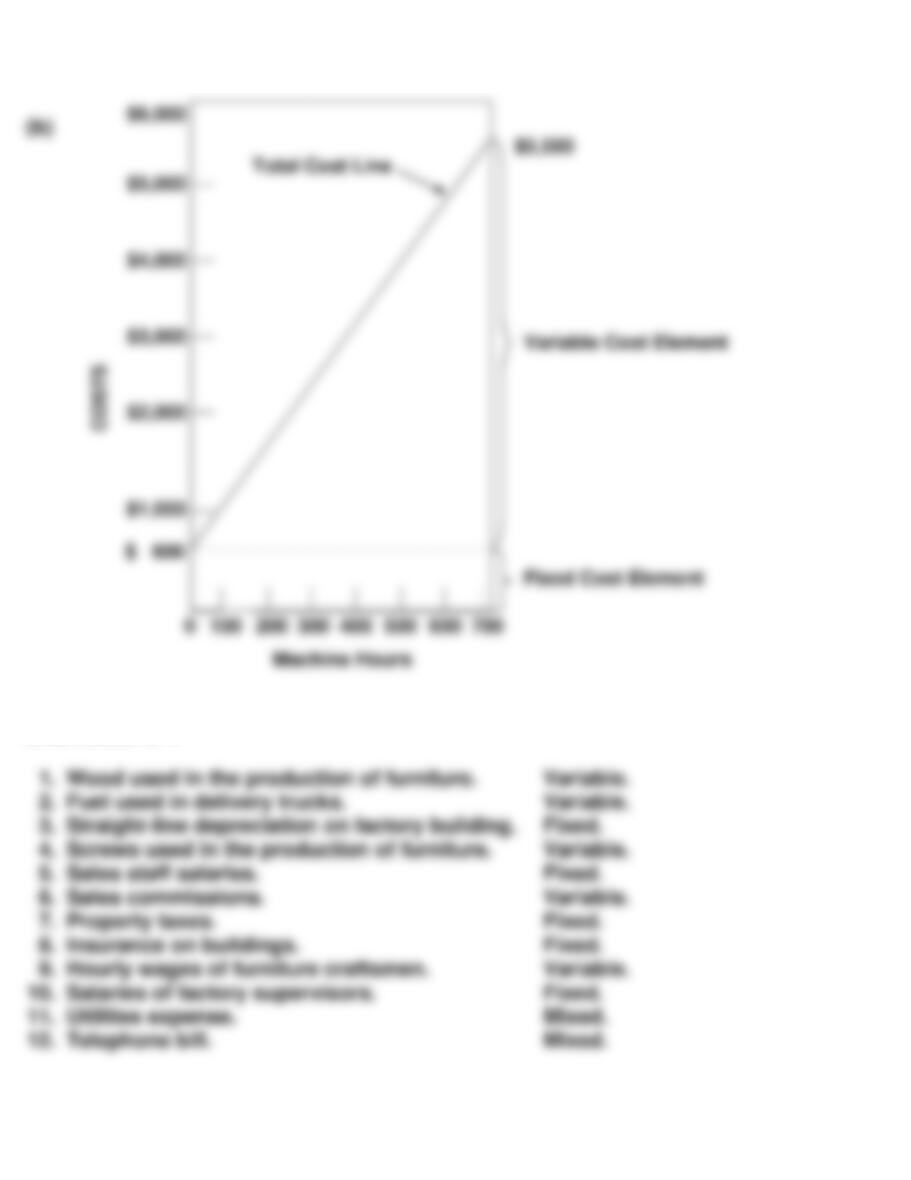
EXERCISE 19-3 (Continued)
EXERCISE 19-4
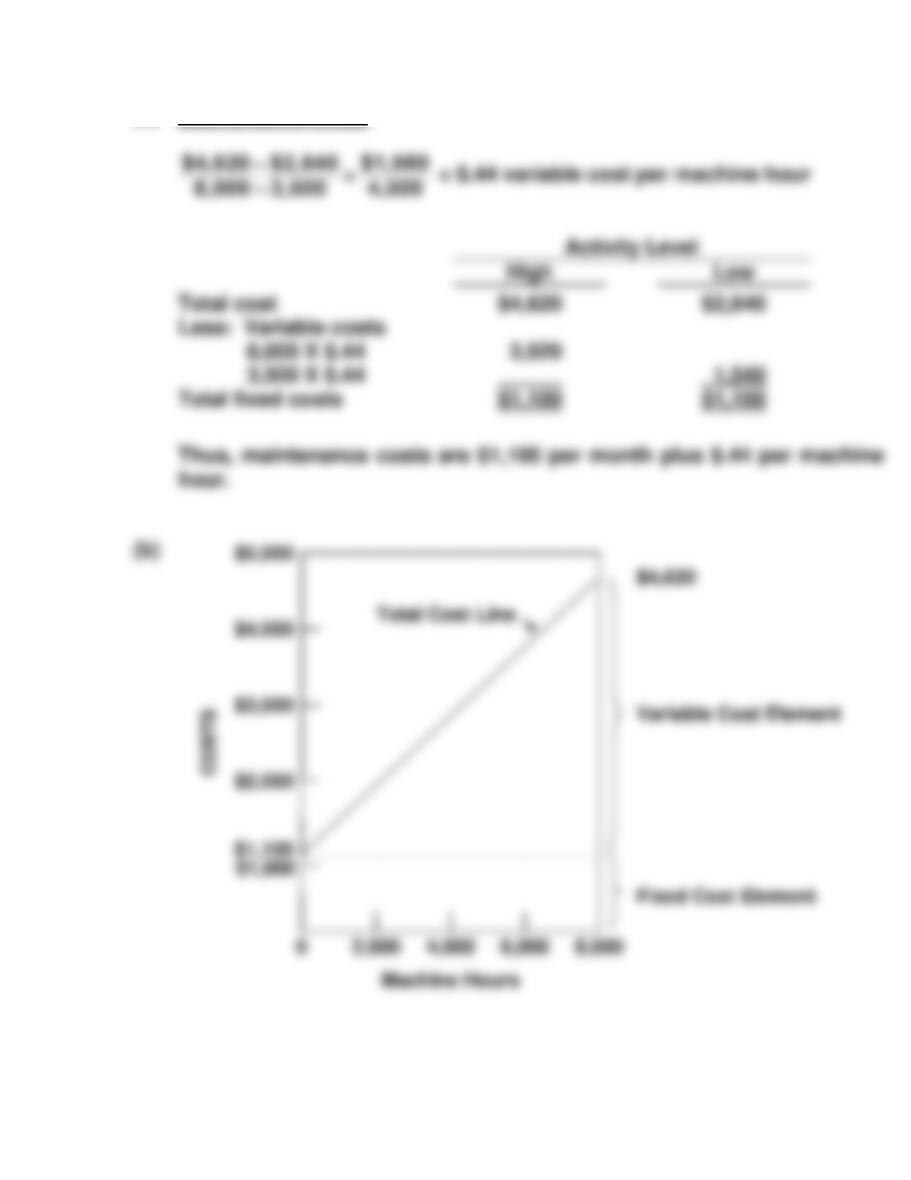
EXERCISE 19-5
(a) Maintenance Costs:
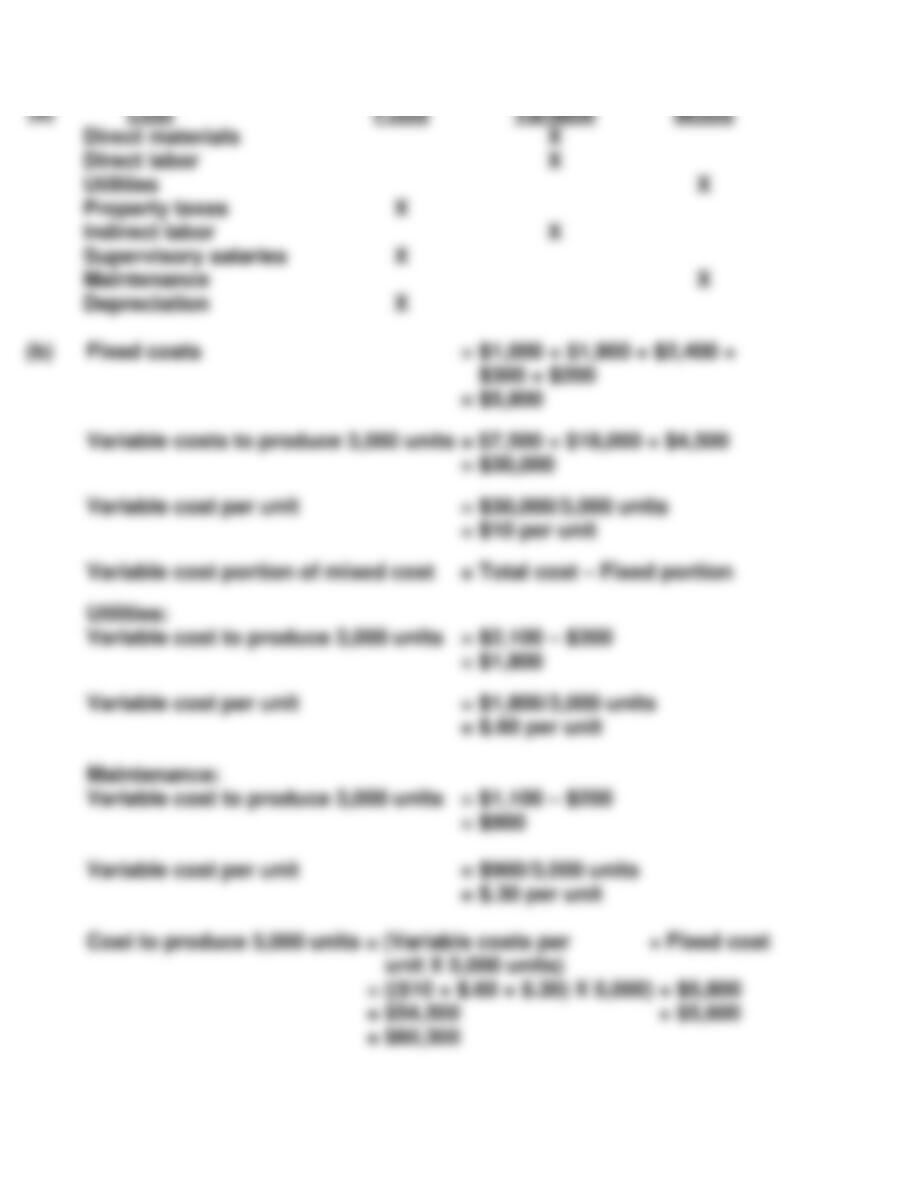
EXERCISE 19-6
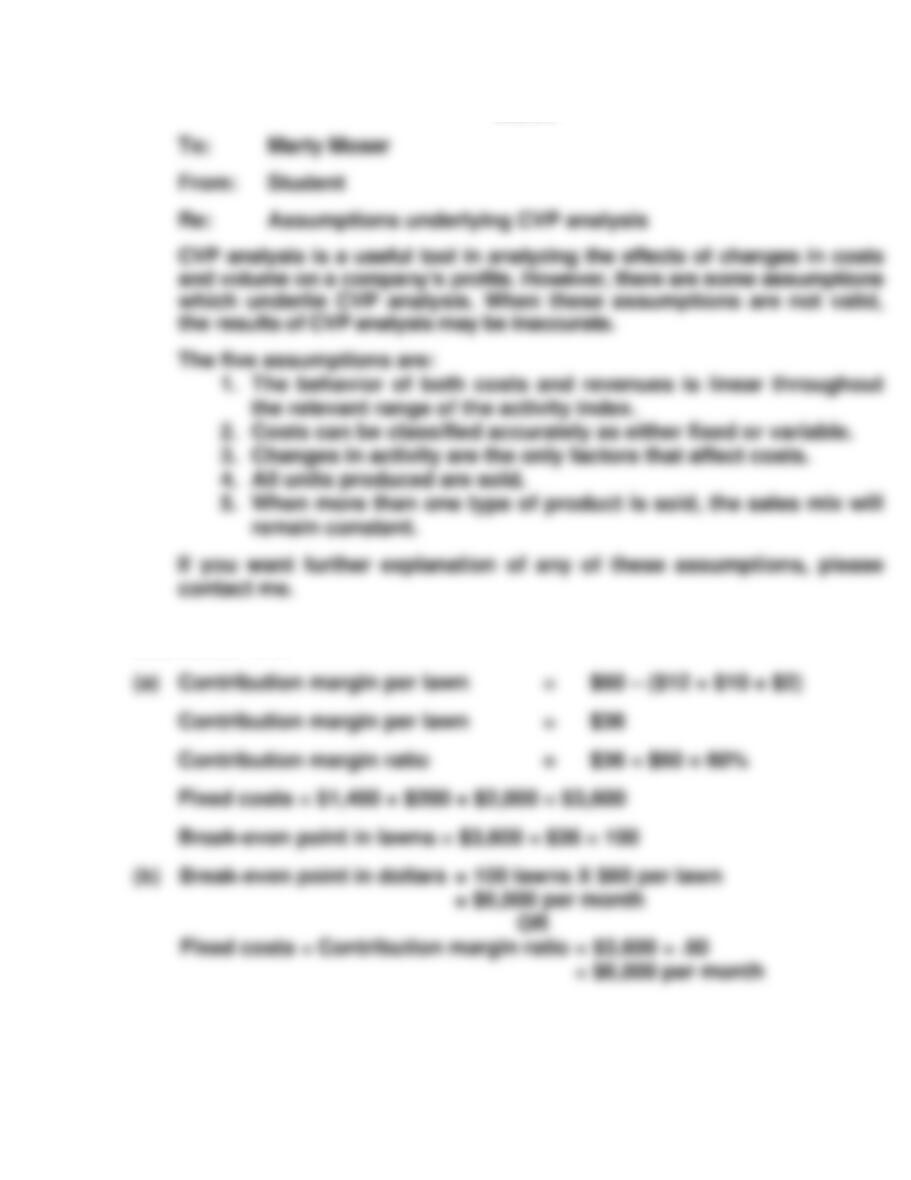
EXERCISE 19-7
MEMO
EXERCISE 19-8
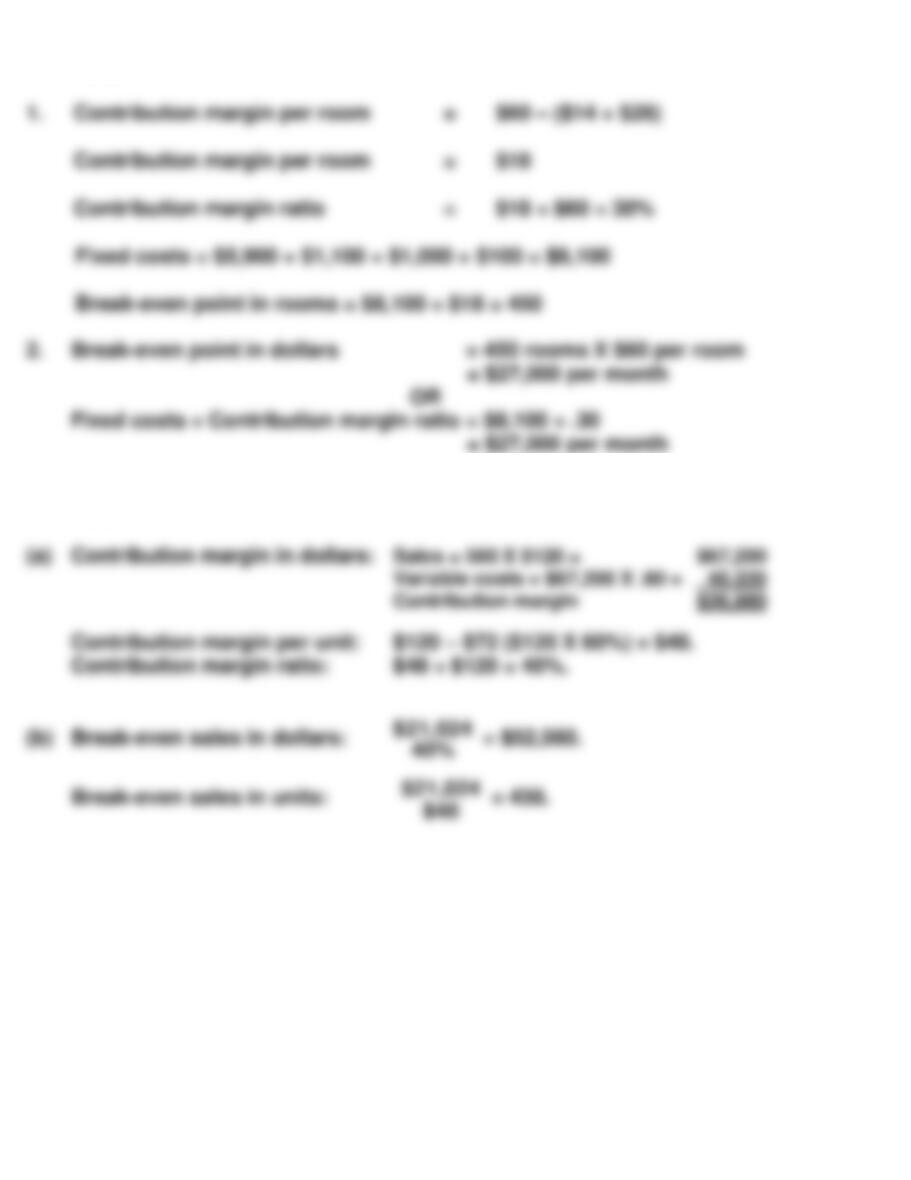
EXERCISE 19-9
EXERCISE 19–10
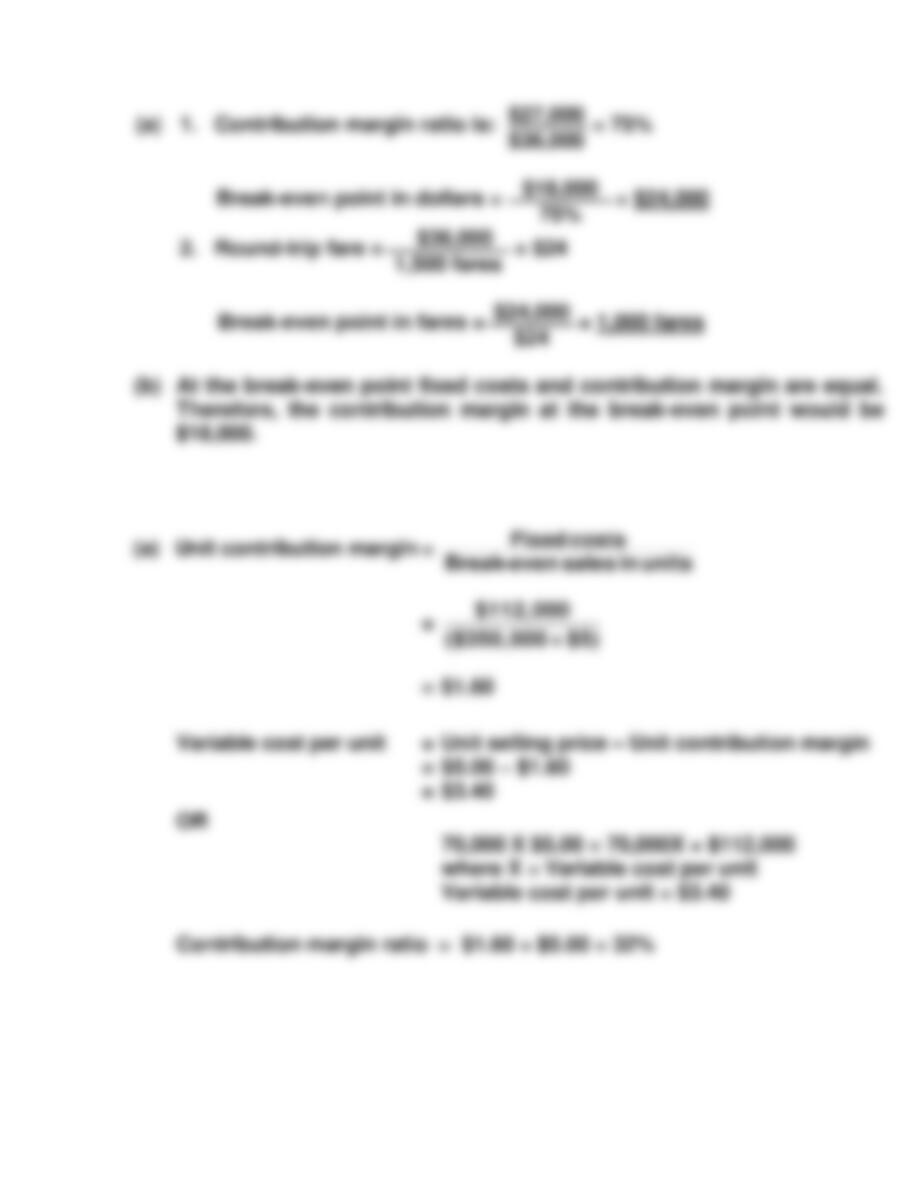
EXERCISE 19–11
EXERCISE 19–12
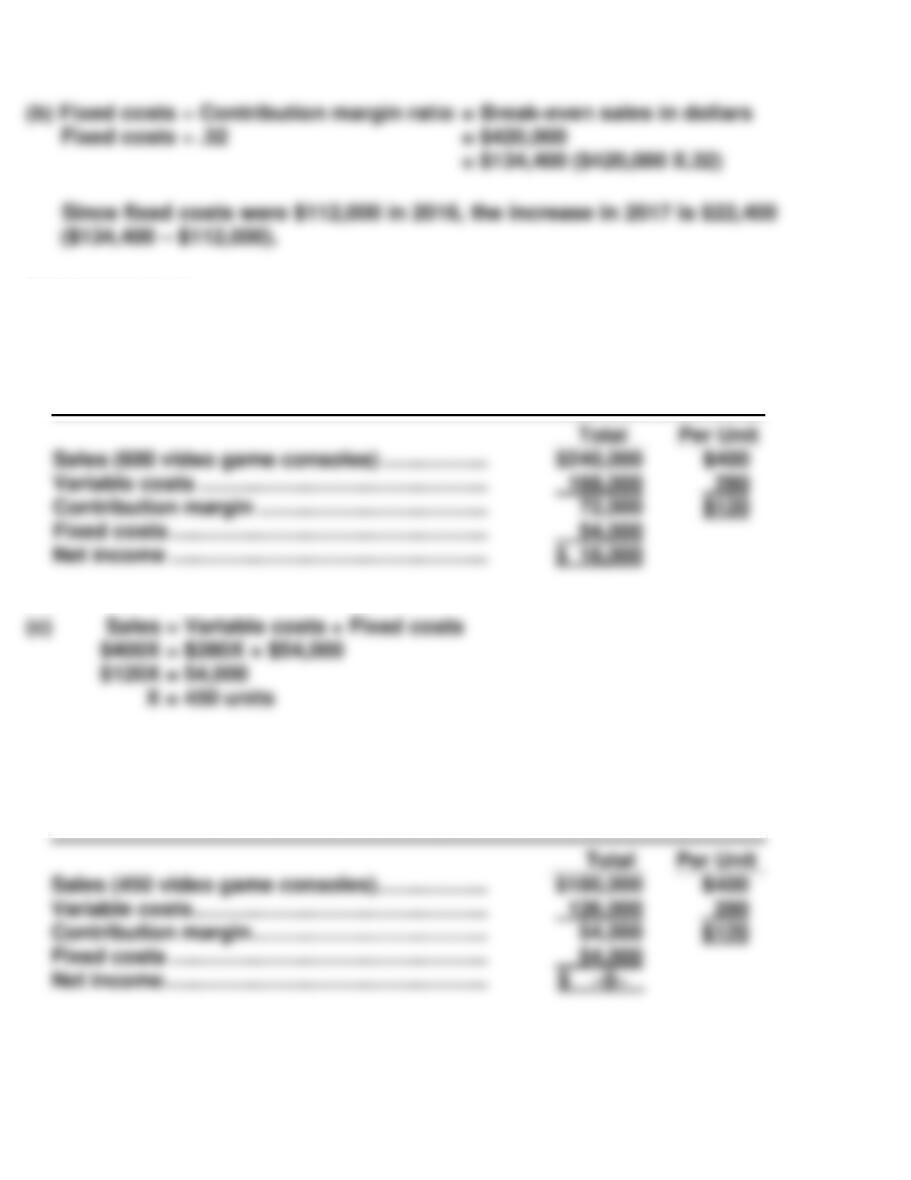
EXERCISE 19-12 (Continued)
EXERCISE 19–13
(a) and (b) BILLINGS COMPANY
CVP Income Statement
For the Month Ended September 30, 2017
(d) BILLINGS COMPANY
CVP Income Statement
For the Month Ended September 30, 2017
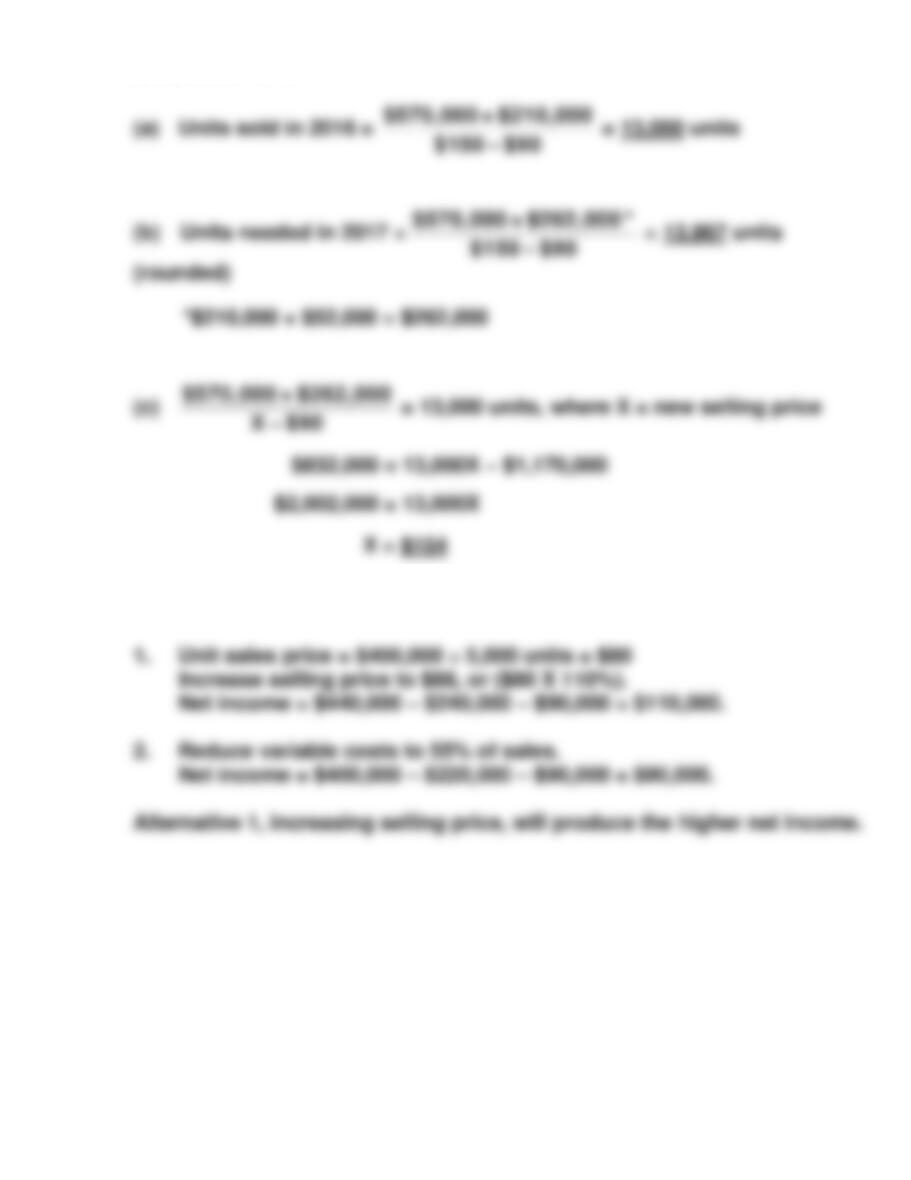
EXERCISE 19–14
EXERCISE 19–15
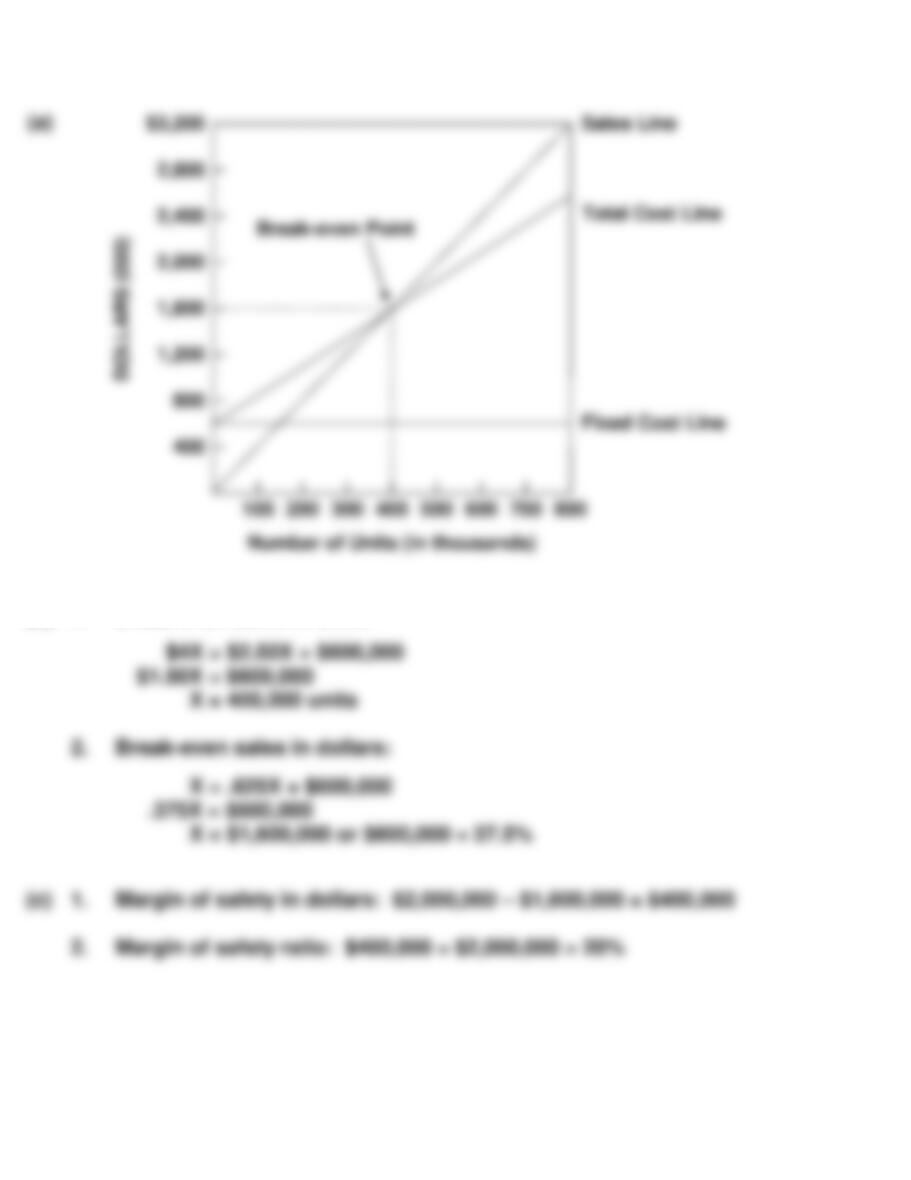
EXERCISE 19–16
(b) 1. Break-even sales in units:
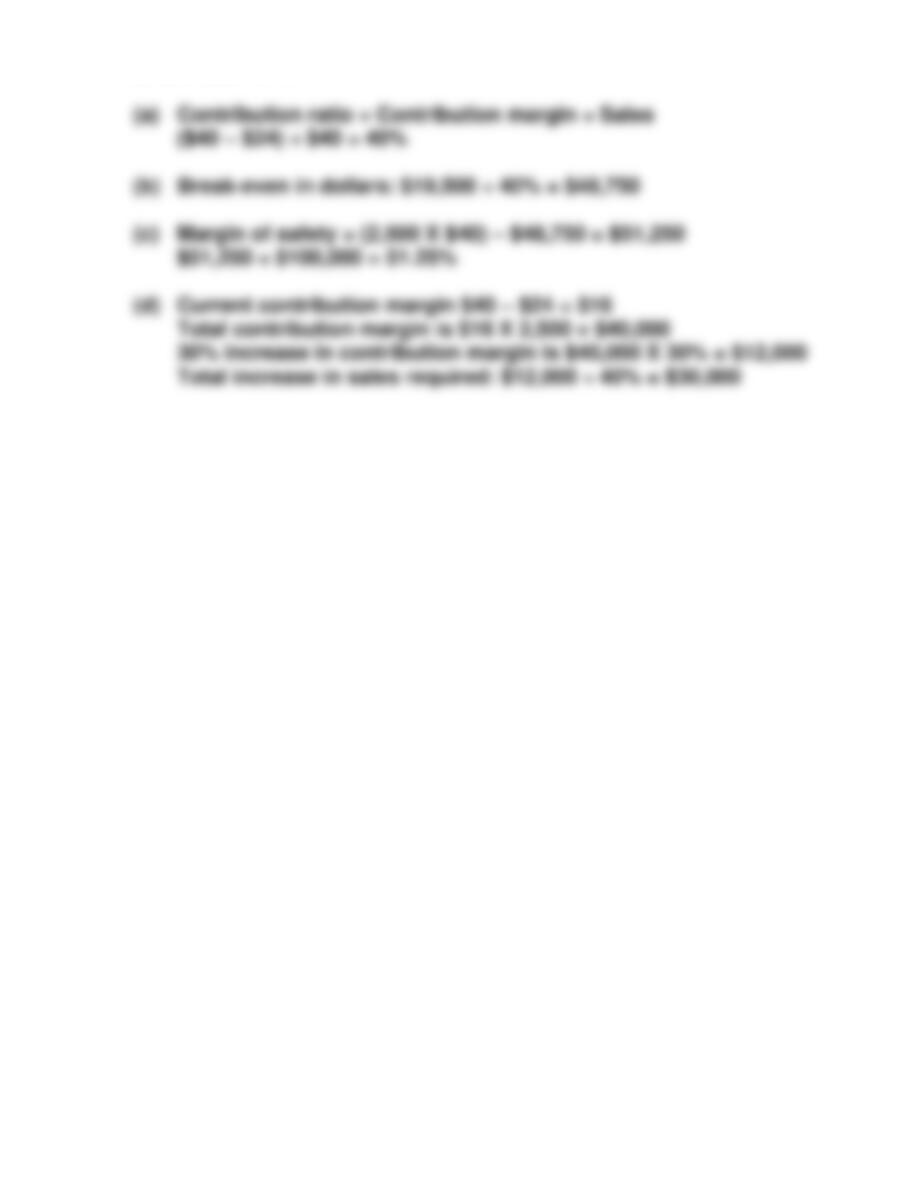
EXERCISE 19–17
SOLUTIONS TO PROBLEMS
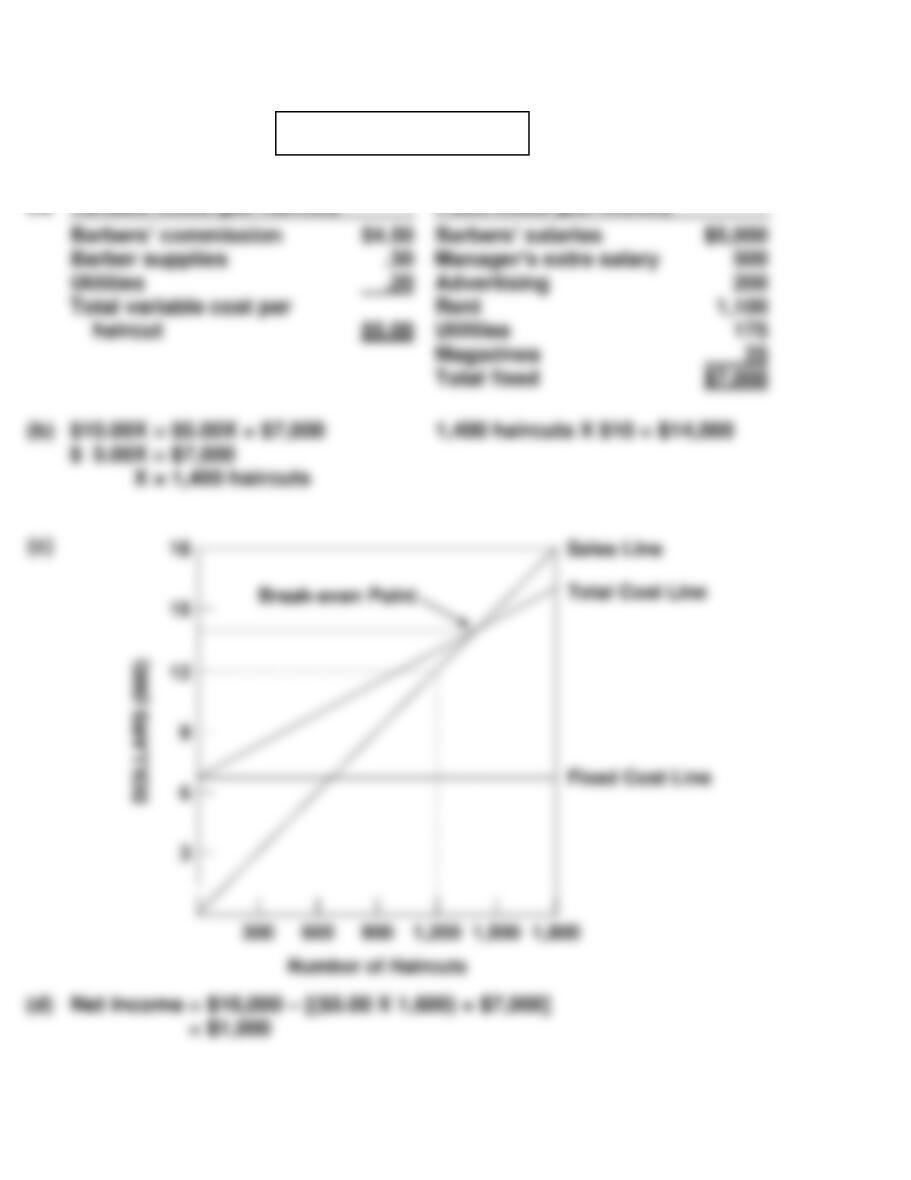
PROBLEM 19–1A
(a)
Variable costs (per haircut)
Fixed costs (per month)
Total fixed $7,000
PROBLEM 19–2A
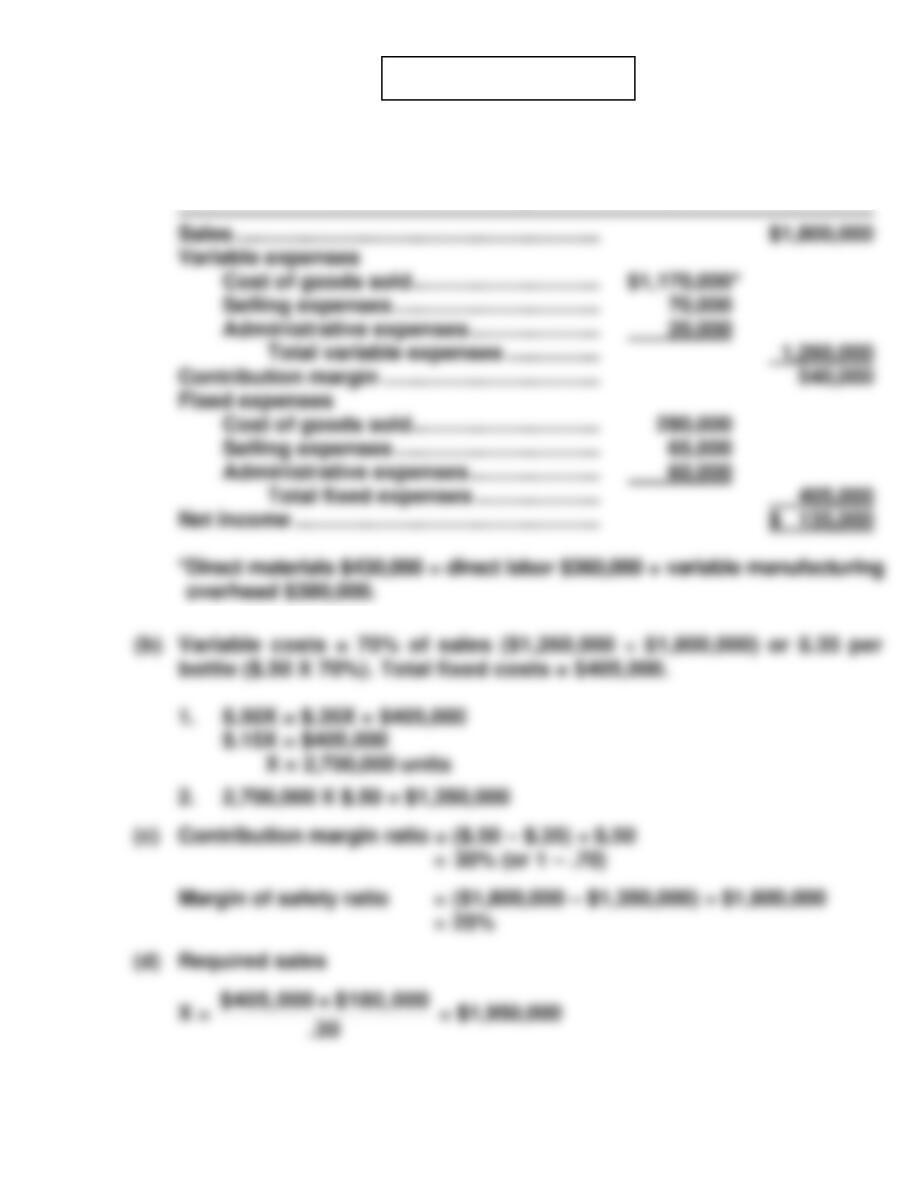
(a) JORGE COMPANY
CVP Income Statement (Estimated)
For the Year Ending December 31, 2017
PROBLEM 19–3A
PROBLEM 19–4A
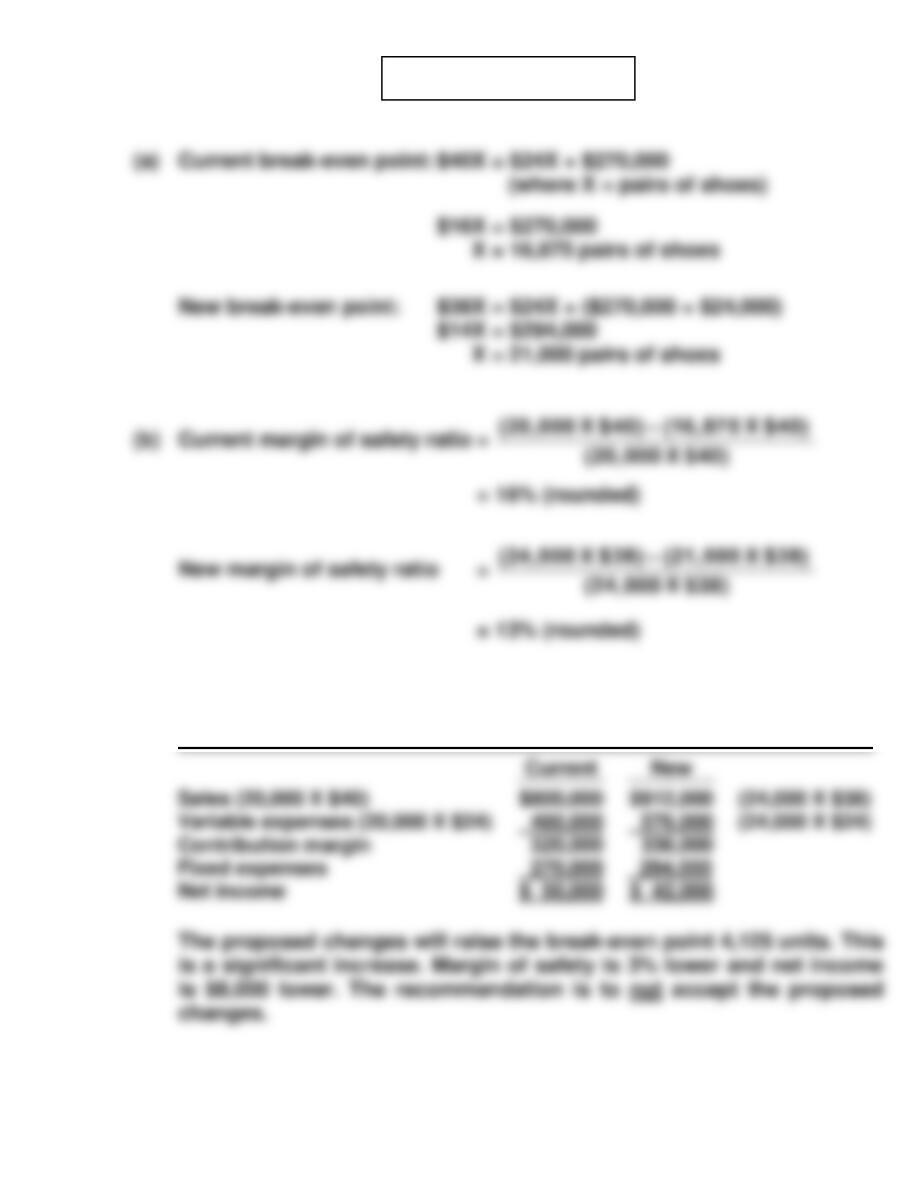
(c) BARGAIN SHOE STORE
CVP Income Statement
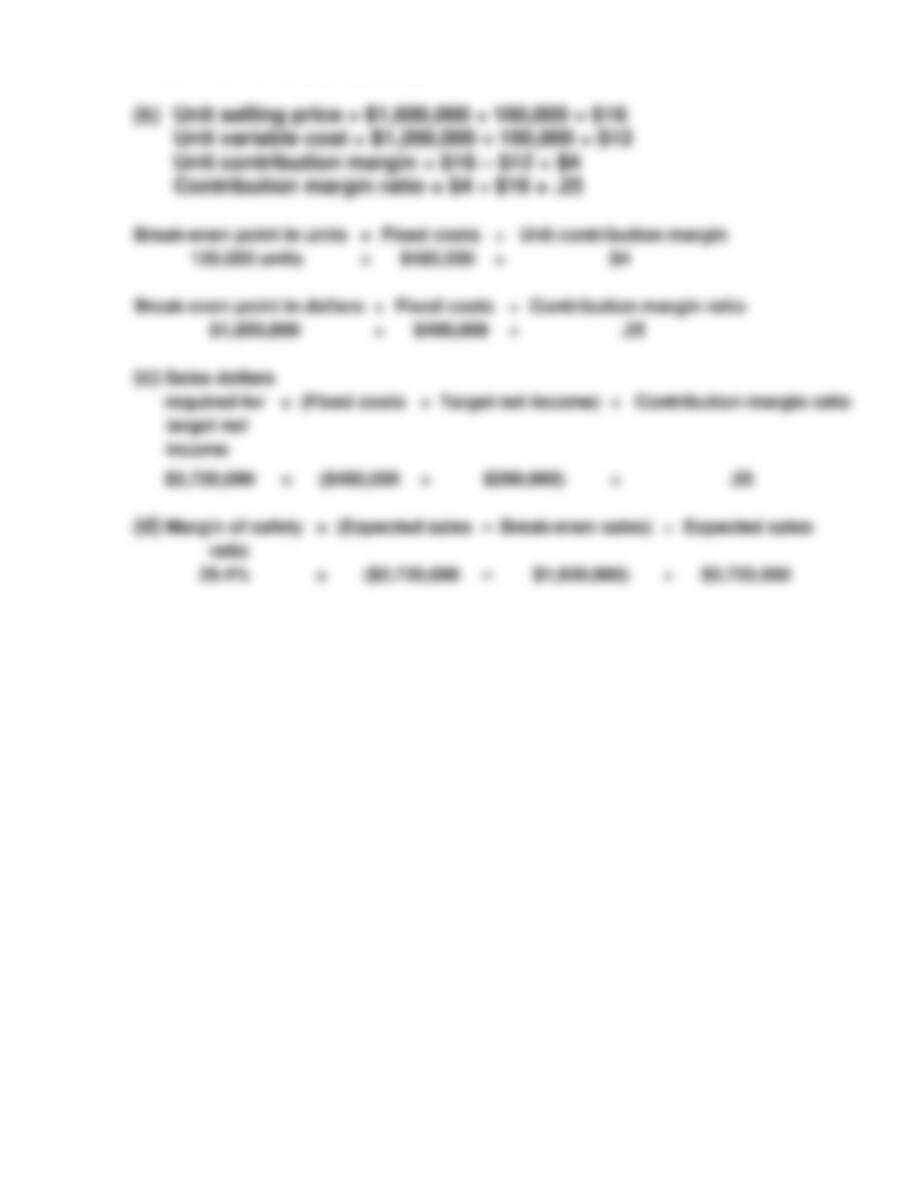
PROBLEM 19–5A
(2)
Fixed Costs
Total fixed costs
(a)
(1)
Contribution margin
Contribution margin
PROBLEM 19-5A (Continued)
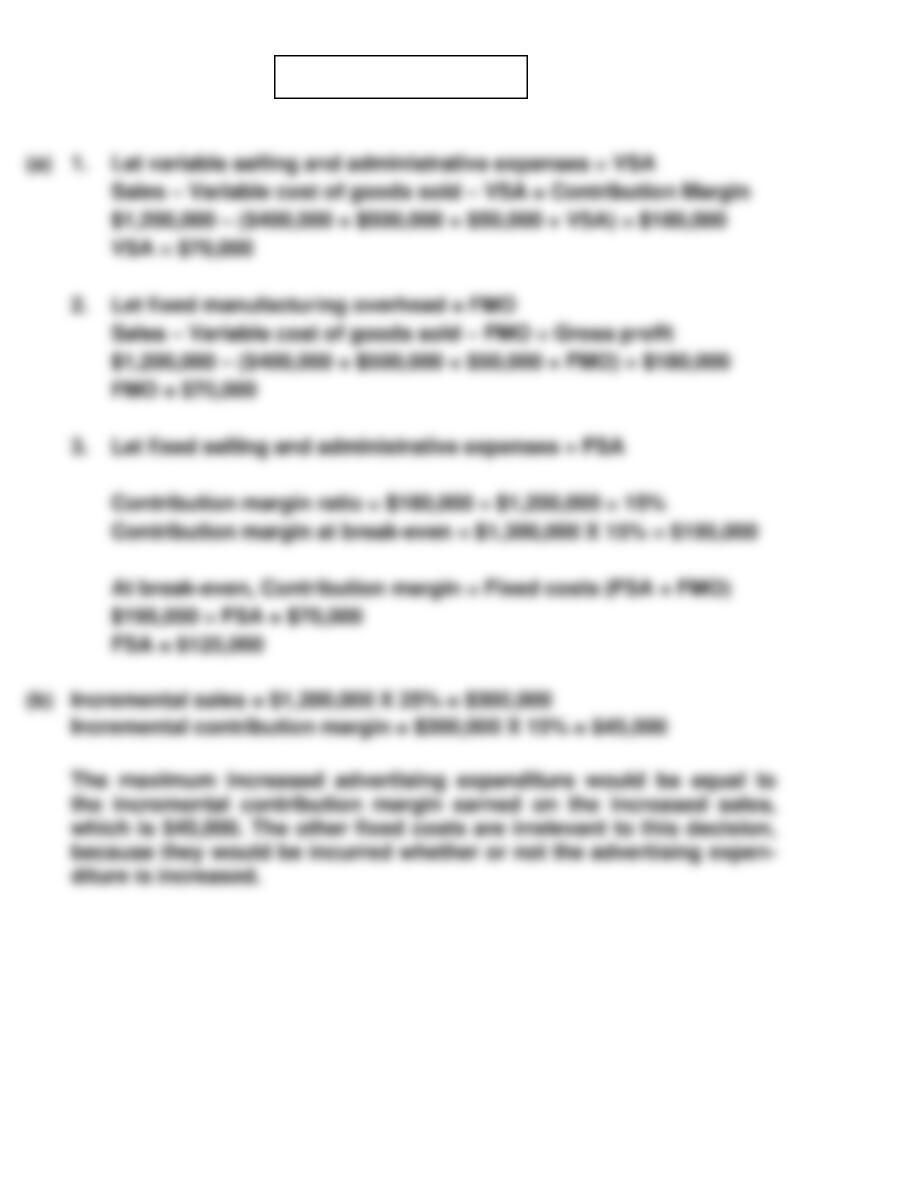
PROBLEM 19–6A
CD19 CURRENT DESIGNS
(a)
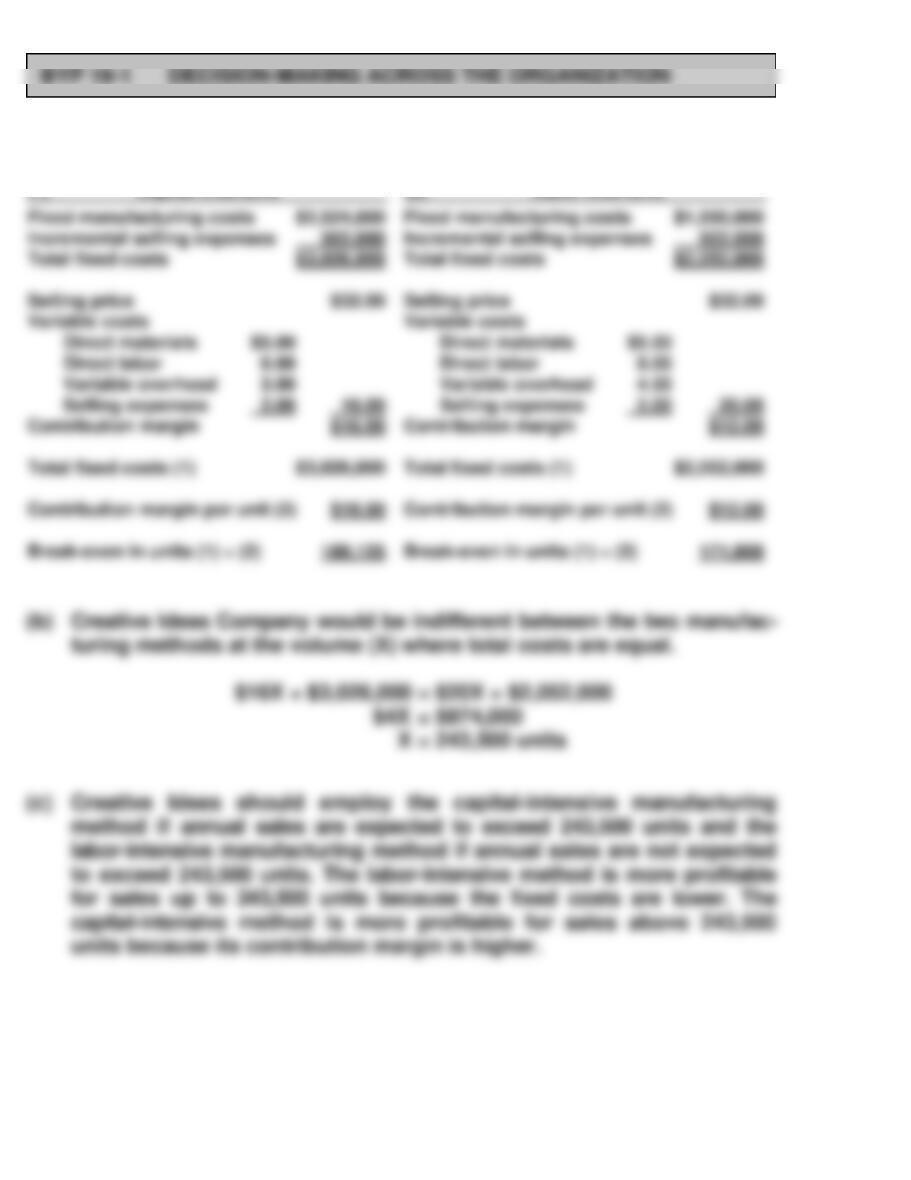
(1) Capital-Intensive
(2) Labor-Intensive
Total fixed costs $3,026,000
Total fixed costs $2,052,000
Contribution margin $16.00
Contribution margin $12.00
Total fixed costs (1) $3,026,000
Total fixed costs (1) $2,052,000
Contribution margin per unit (2) $16.00
Contribution margin per unit (2) $12.00
Break-even in units (1) ÷ (2) 189,125
Break-even in units (1) ÷ (2) 171,000
BYP 19-2 MANAGERIAL ANALYSIS
BYP 19-2 (Continued)
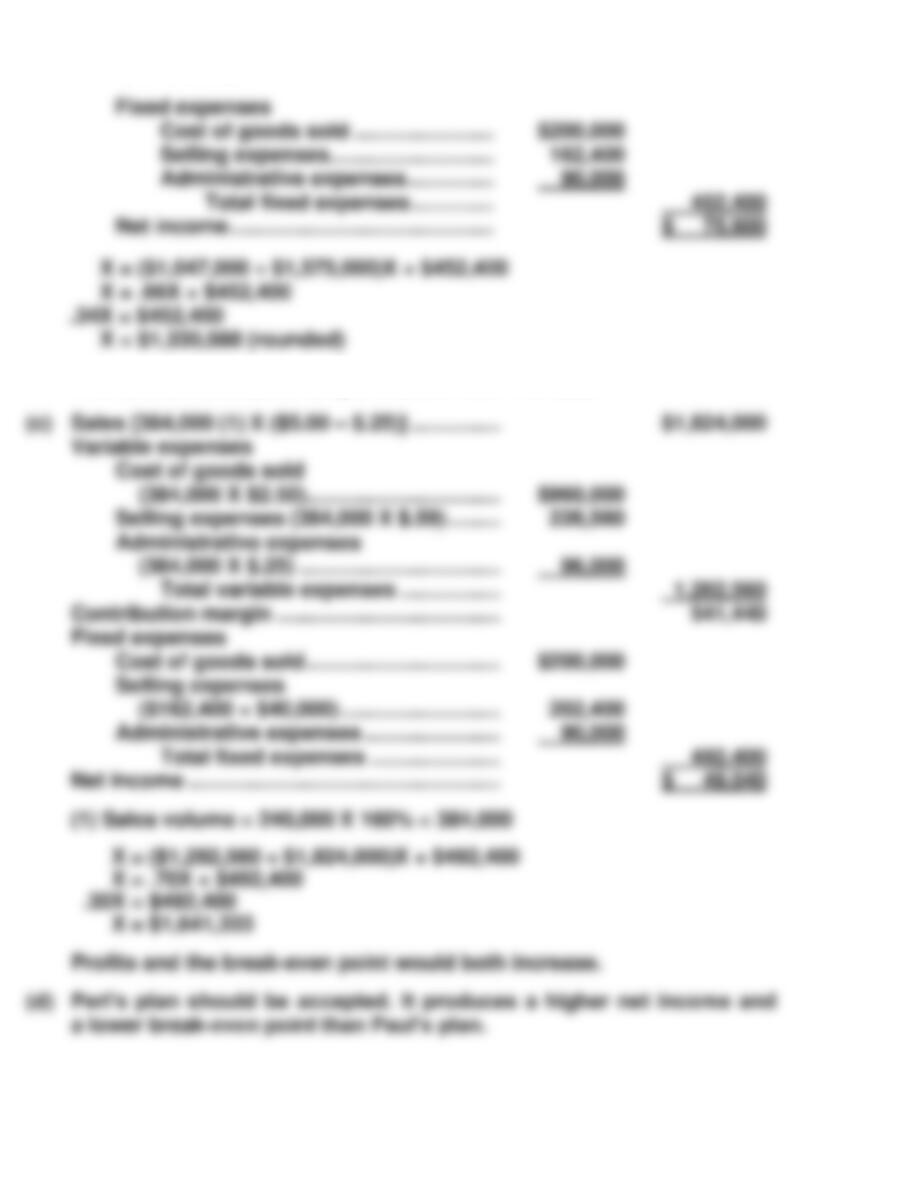
Profits and the break-even point would both increase.
BYP 19-3 REAL-WORLD FOCUS
BYP 19-4 REAL-WORLD FOCUS
BYP 19-5 COMMUNICATION ACTIVITY
To: My Roommate
From: Your Roommate
Subject: Cost-Volume-Profit Questions
In response to your request for help, I provide you the following:
BYP 19-5 (Continued)
BYP 19-6 ETHICS CASE
(a) The stakeholders in this situation are:
BYP 19-7 ALL ABOUT YOU