Solution 19.50
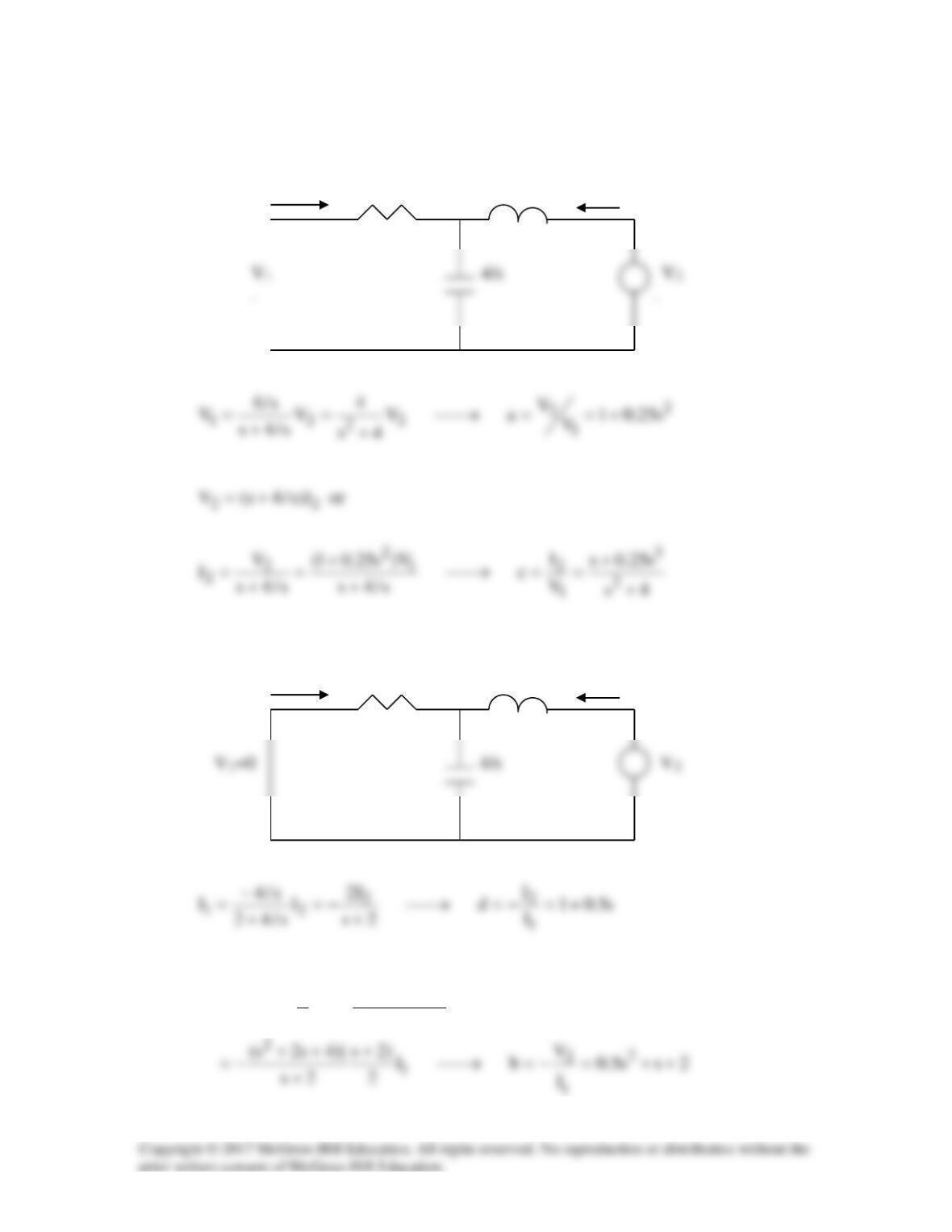
To get a and c, consider the circuit below.
I1=0 2 s I2
+ +
To get b and d, consider the circuit below.
I1 2 s I2
+ +
– –
I
2s
)4s2s(
I)
s
4
//2s(V
2
2
22
+
++
=+=
Solution 19.51
To get
a
and
c
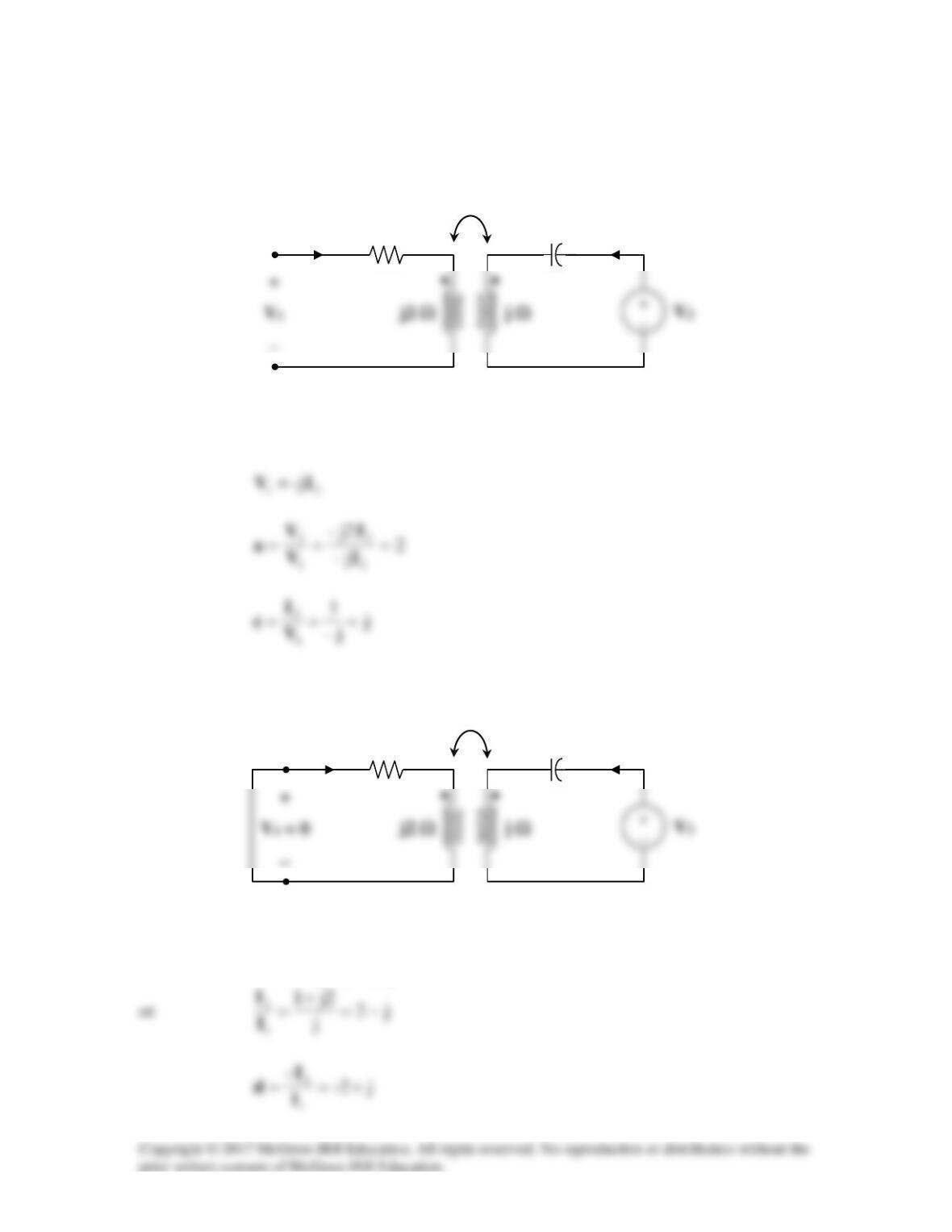
, consider the circuit in Fig. (a).
222 -j2)3jj( IIV =−=
To get
b
and
d
, consider the circuit in Fig. (b).
For mesh 1,
21
j)2j1(0 II −+=
j Ω
–j3 Ω
1 Ω
(a)
(a)
I2
−
I1 = 0
j Ω
–j3 Ω
1 Ω
(b)
(a)
I2
I1
For mesh 2,
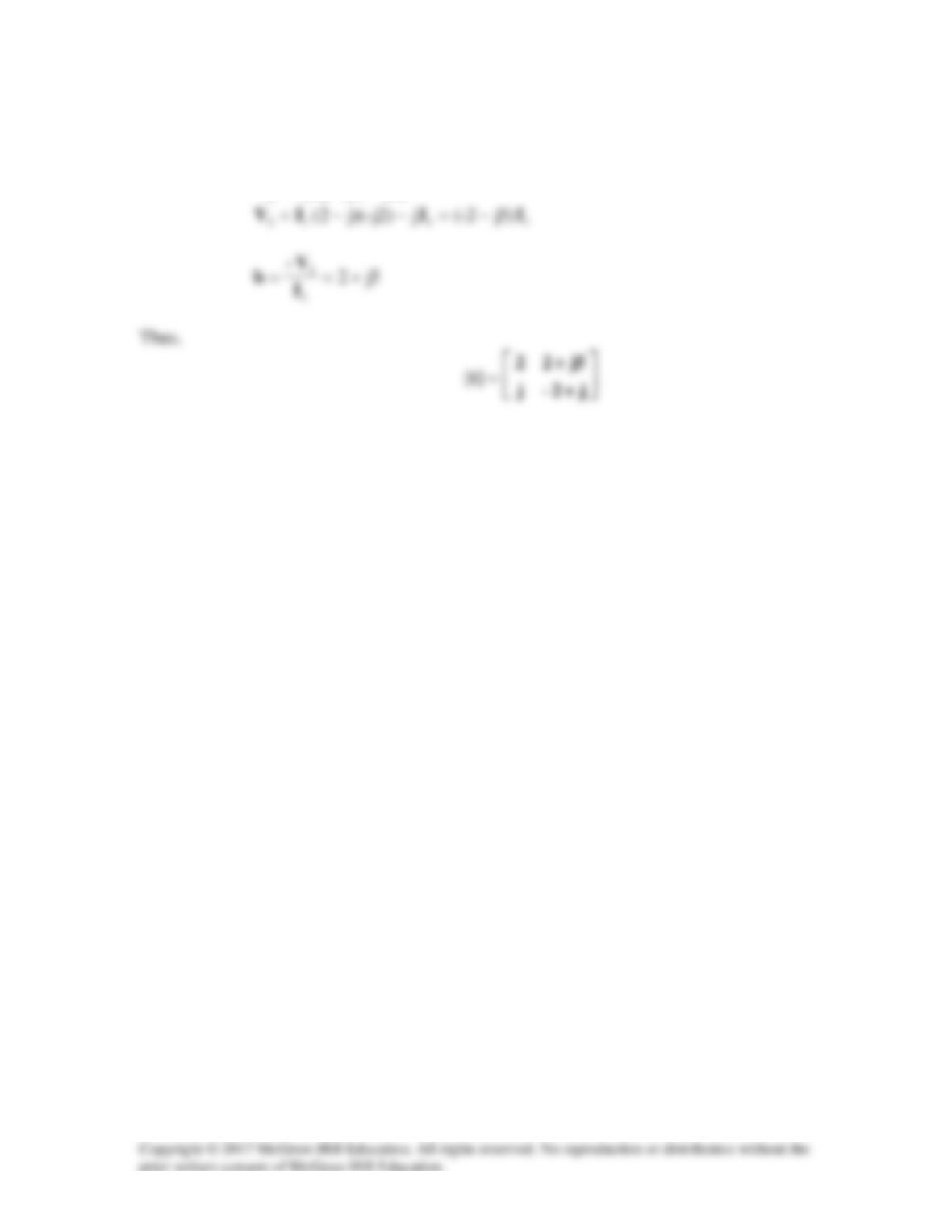
122 j)3jj( IIV −−=
Solution 19.52
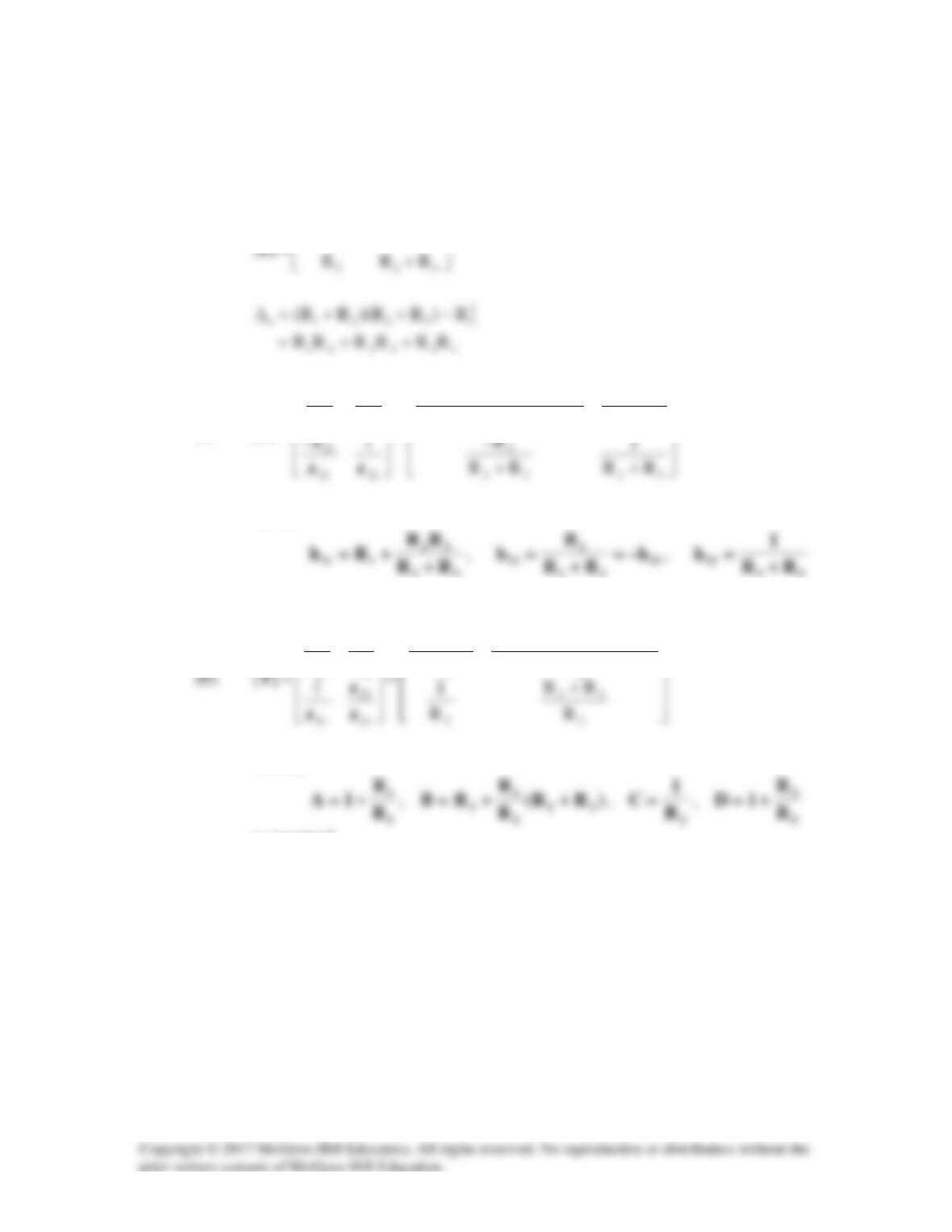
It is easy to find the z parameters and then transform these to h parameters and T
parameters.
+
221
RRR
(a)
++
++
=
∆
=
32
2
32
133221
22
12
22
z
RR
R
RR
RRRRRR
][
z
z
z
h
Thus,
as required.
++
+
∆
2
133221
2
21
21
z
21
11
R
RRRRRR
R
RR
zz
z
Hence,
as required.
Solution 19.53
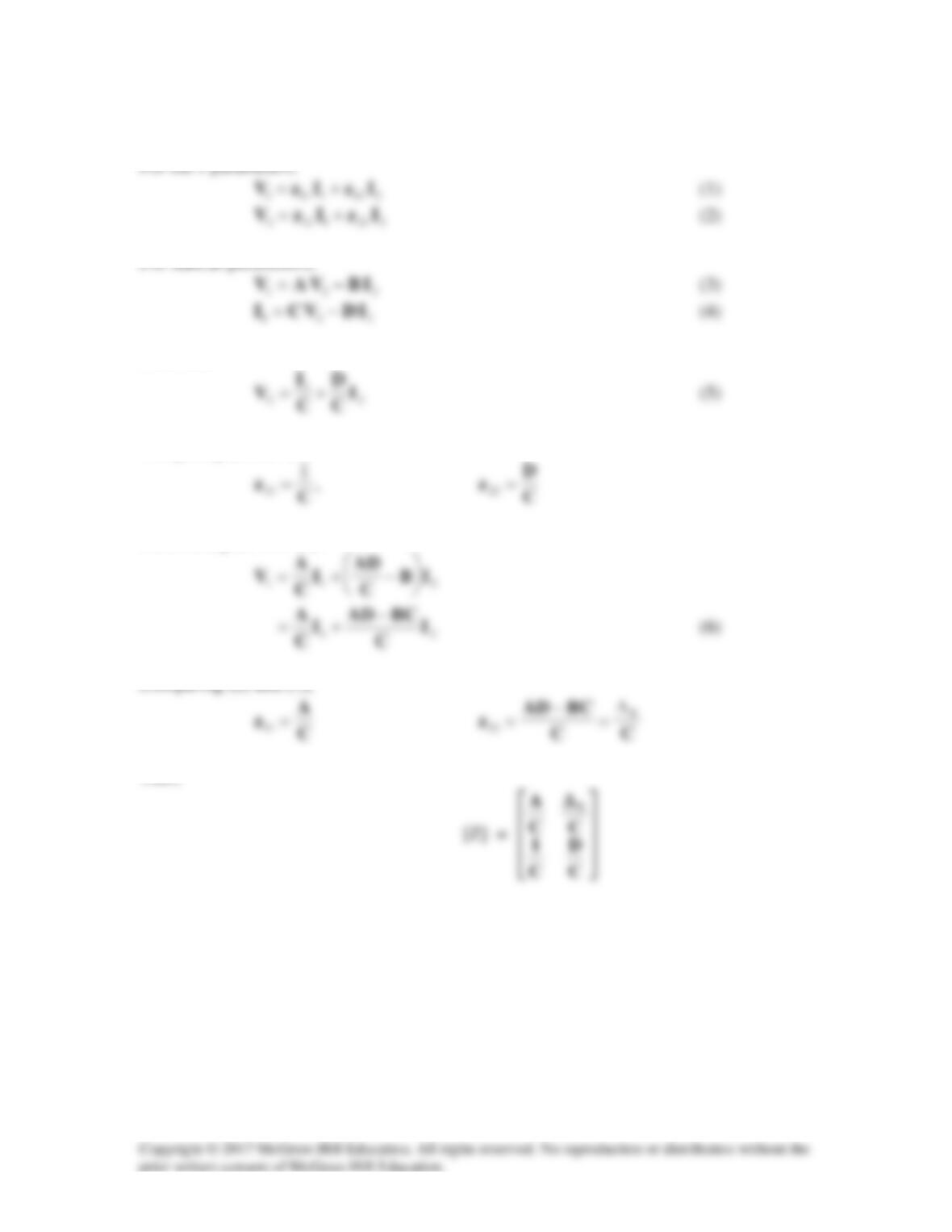
For ABCD parameters,
From (4),
Comparing (2) and (5),
Substituting (5) into (3),
Thus,
Solution 19.54
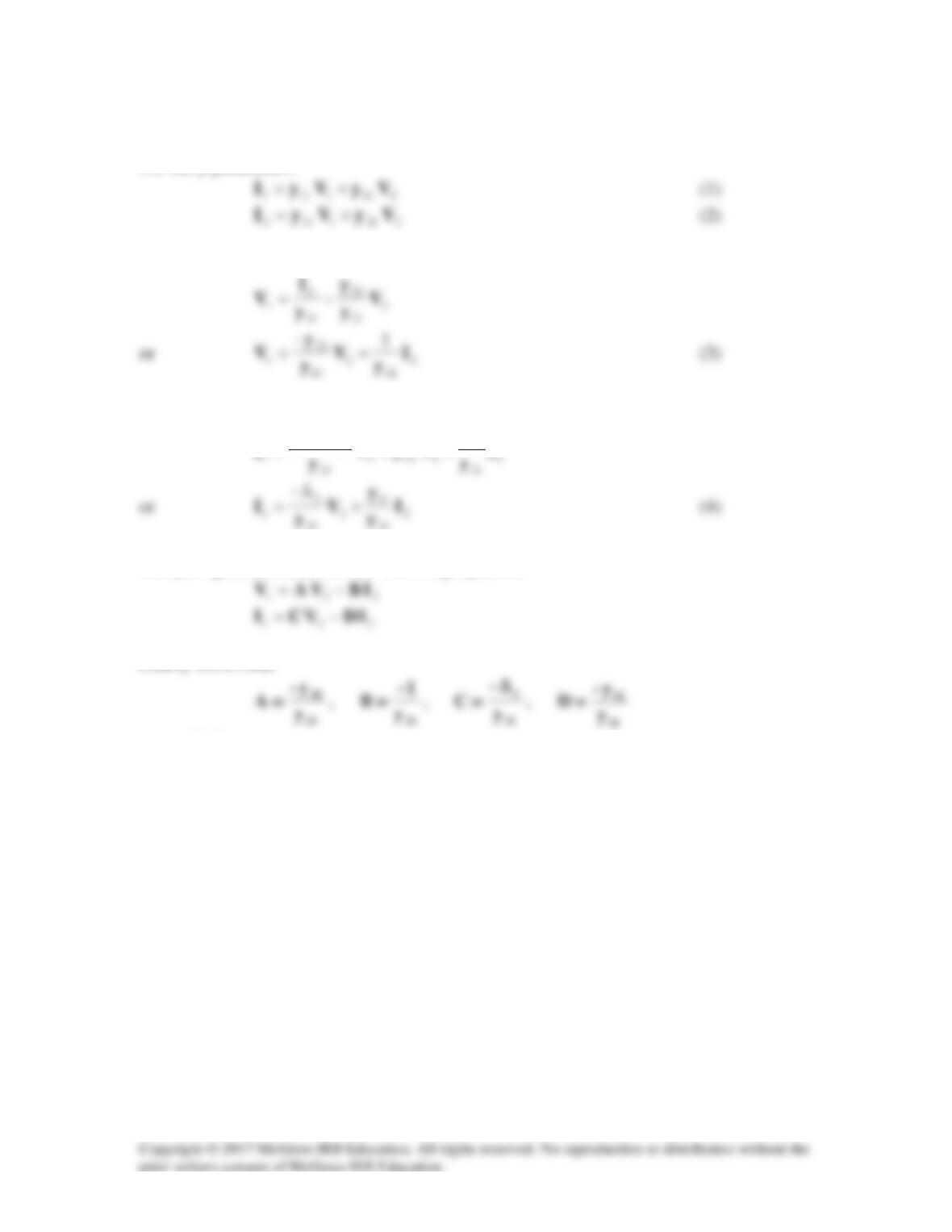
For the y parameters
From (2),
Substituting (3) into (1) gives
11
2211
–I
y
VyV
yy
I++=
21
21
Comparing (3) and (4) with the following equations
clearly shows that
as required.
Solution 19.55
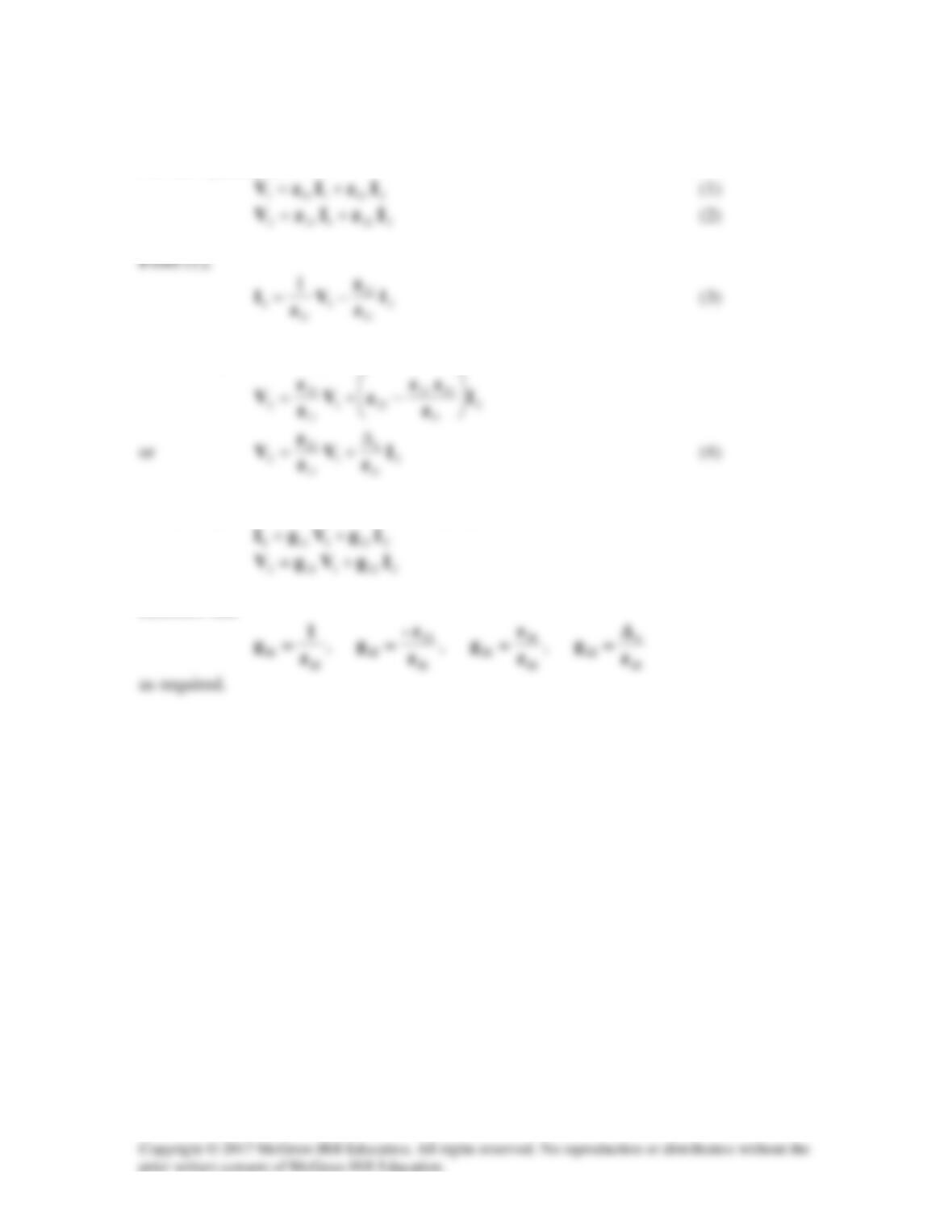
For the z parameters
Substituting (3) into (2) gives
Comparing (3) and (4) with the following equations
indicates that
Solution 19.56
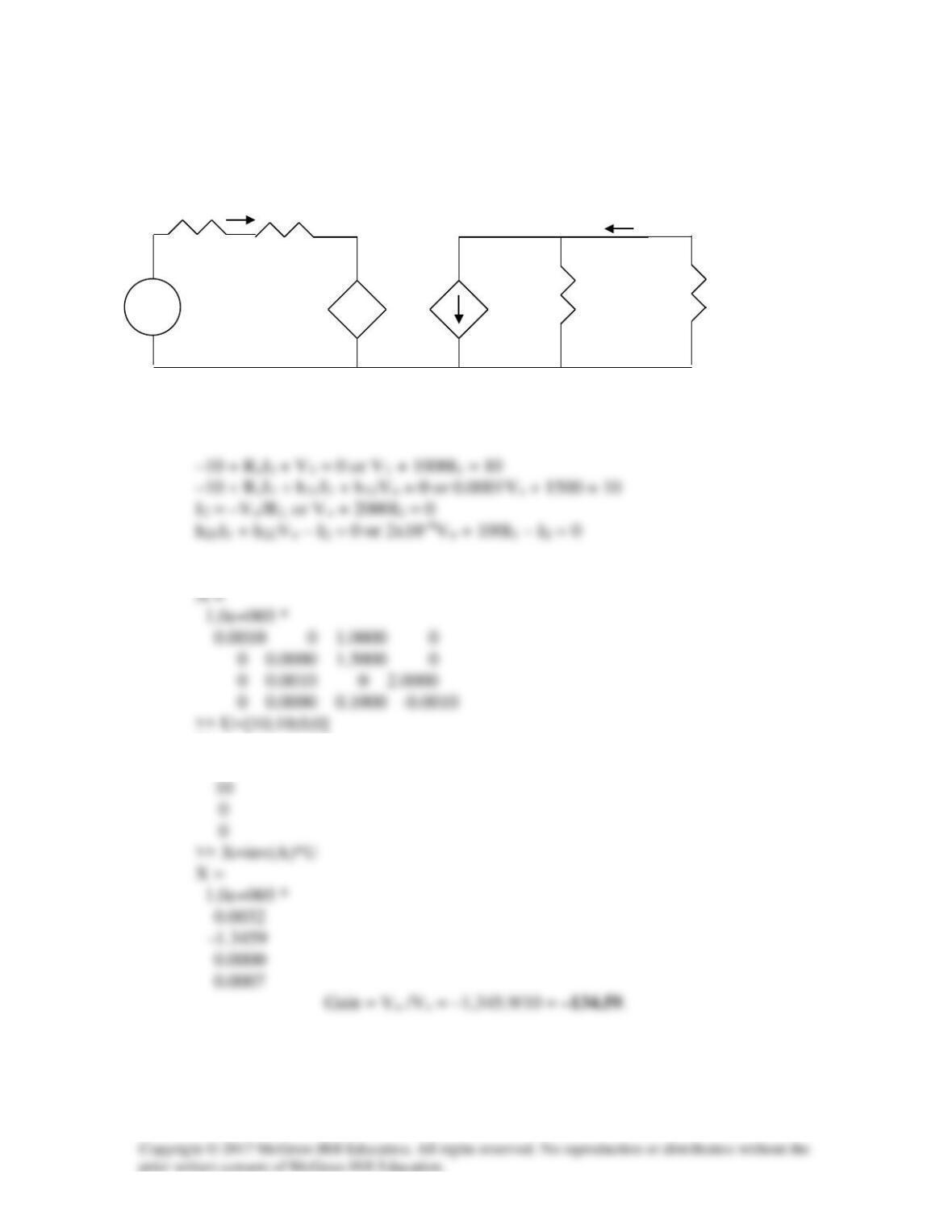
Using Fig. 19.20, we obtain the equivalent circuit as shown below.
Rs I1 h11 I2
+ +
Vs V1 V1 h12 Vo + h21I1 h22 Vo RL
–
– –
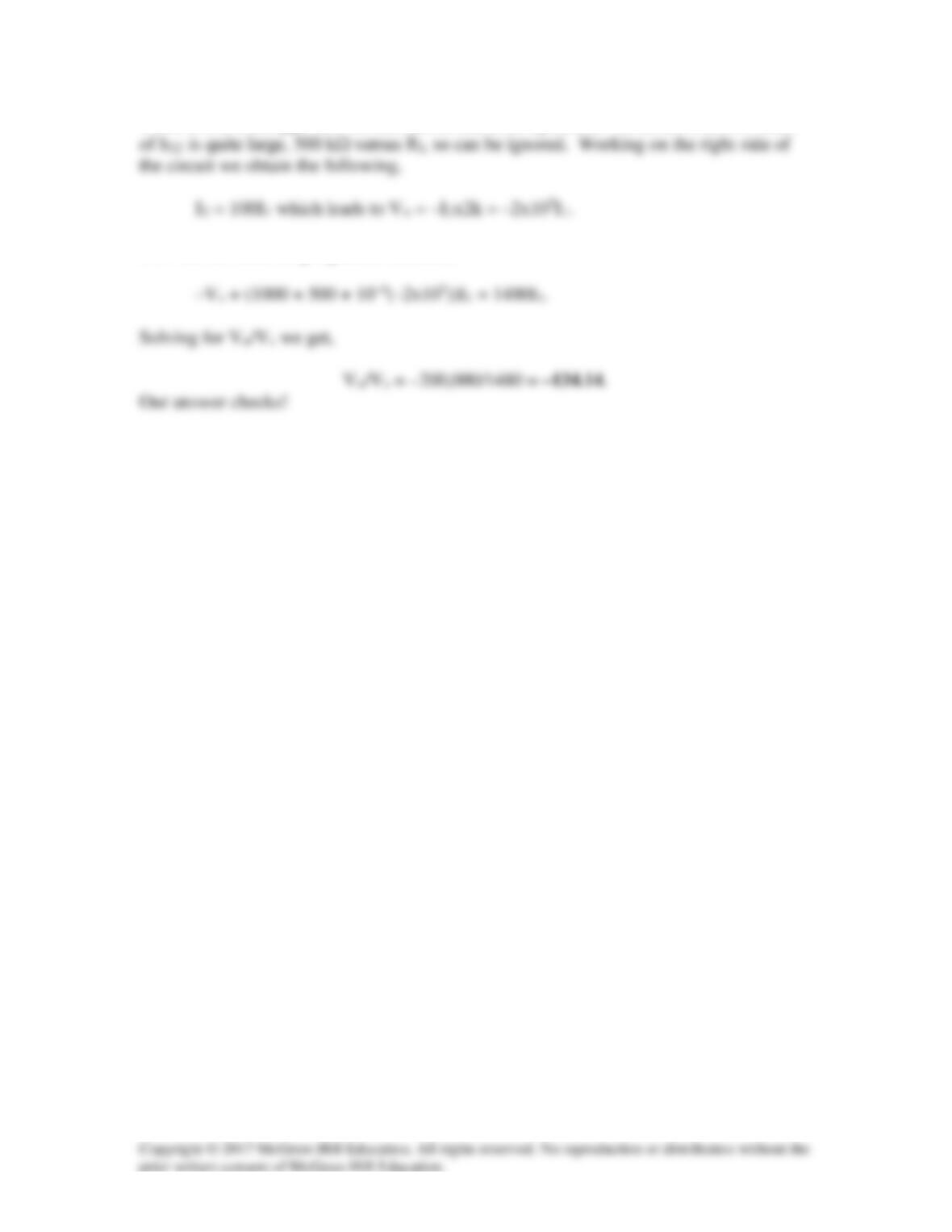
We can solve this using MATLAB. First, we generate 4 equations from the given circuit.
It may help to let Vs = 10 V.
>> A=[1,0,1000,0;0,0.0001,1500,0;0,1,0,2000;0,(2*10^-6),100,-1]
U =
10
+
_
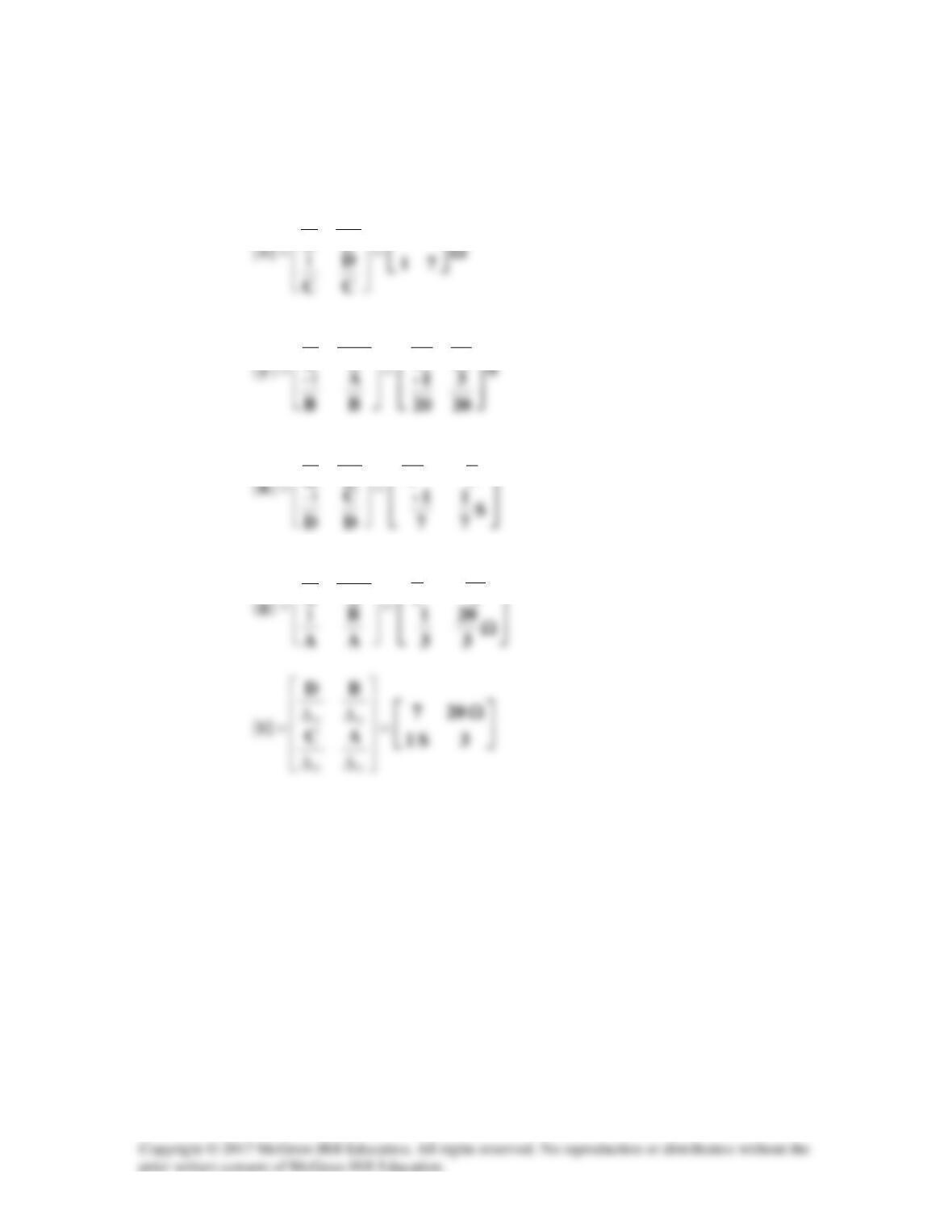
There is a second approach we can take to check this problem. First, the resistive value
Now the left hand loop equation becomes,
Solution 19.57
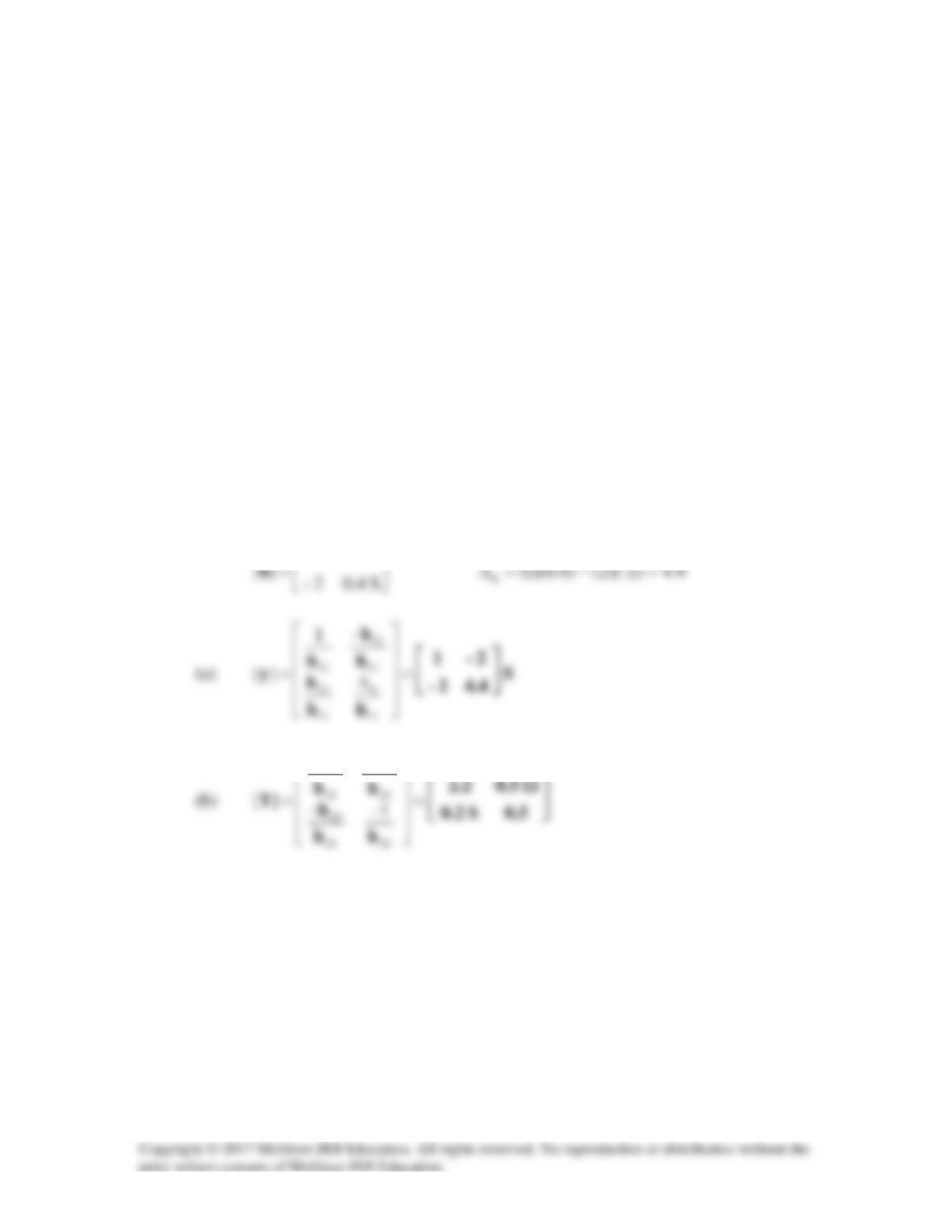
1)1)(20()7)(3(
T
=−=∆
∆
CC
A
T
13
∆
BB
D
–
T
20
1–
20
7
∆
DD
B
T
Ω
7
1
7
20
∆
AA
C
–
T
3
1–
S
3
1
Solution 19.58
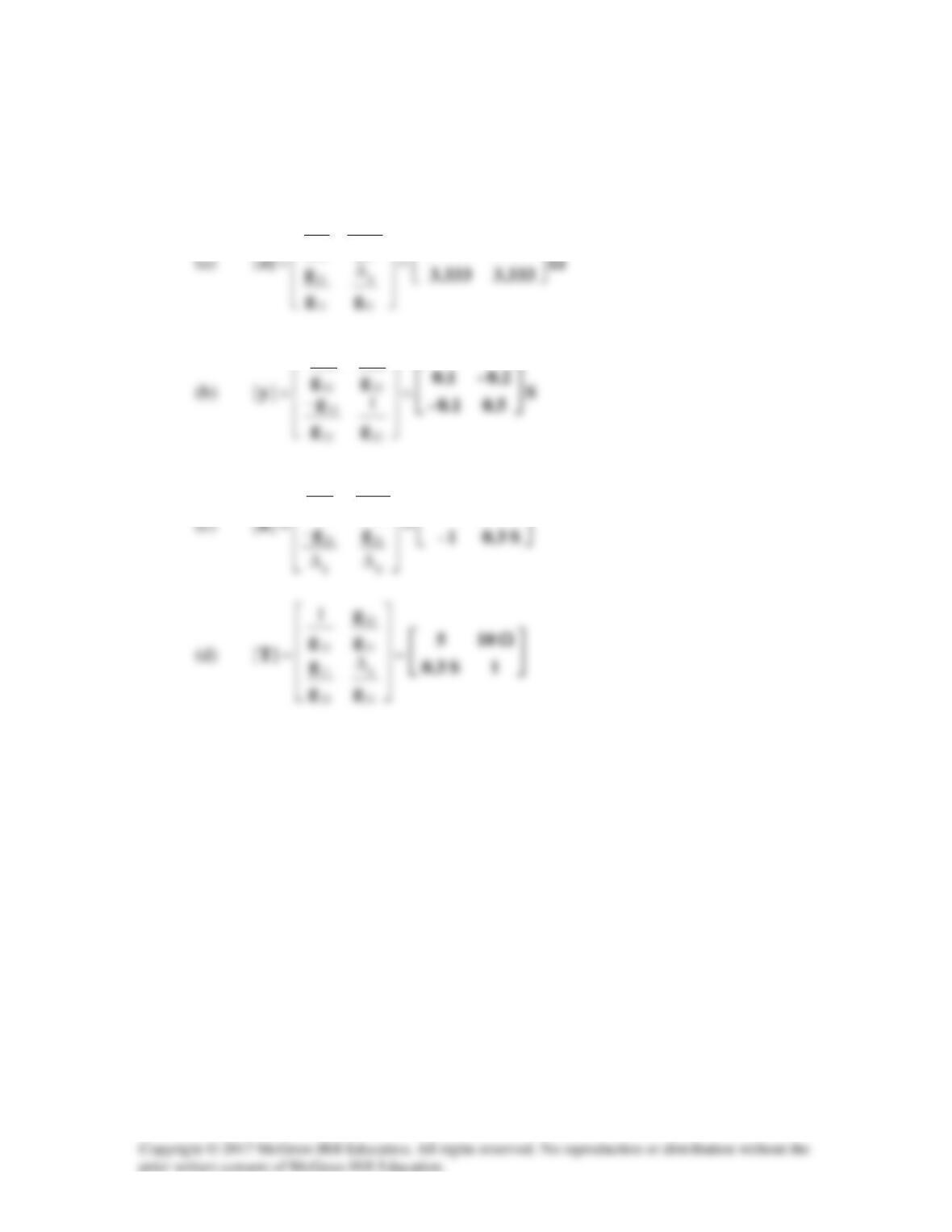
Design a problem to help other students to better understand how to develop the y
parameters and transmission parameters, given equations in terms of the hybrid
parameters.
Although there are many ways to solve this problem, this is an example based on the
same kind of problem asked in the third edition.
Problem
A two-port is described by
V1 = I1 + 2V2, I2 = -2I1 + 0.4V2
Find: (a) the y parameters, (b) the transmission parameters.
Solution
The given set of equations is for the h parameters.
Ω
21
∆
11
h
––
h
Solution 19.59
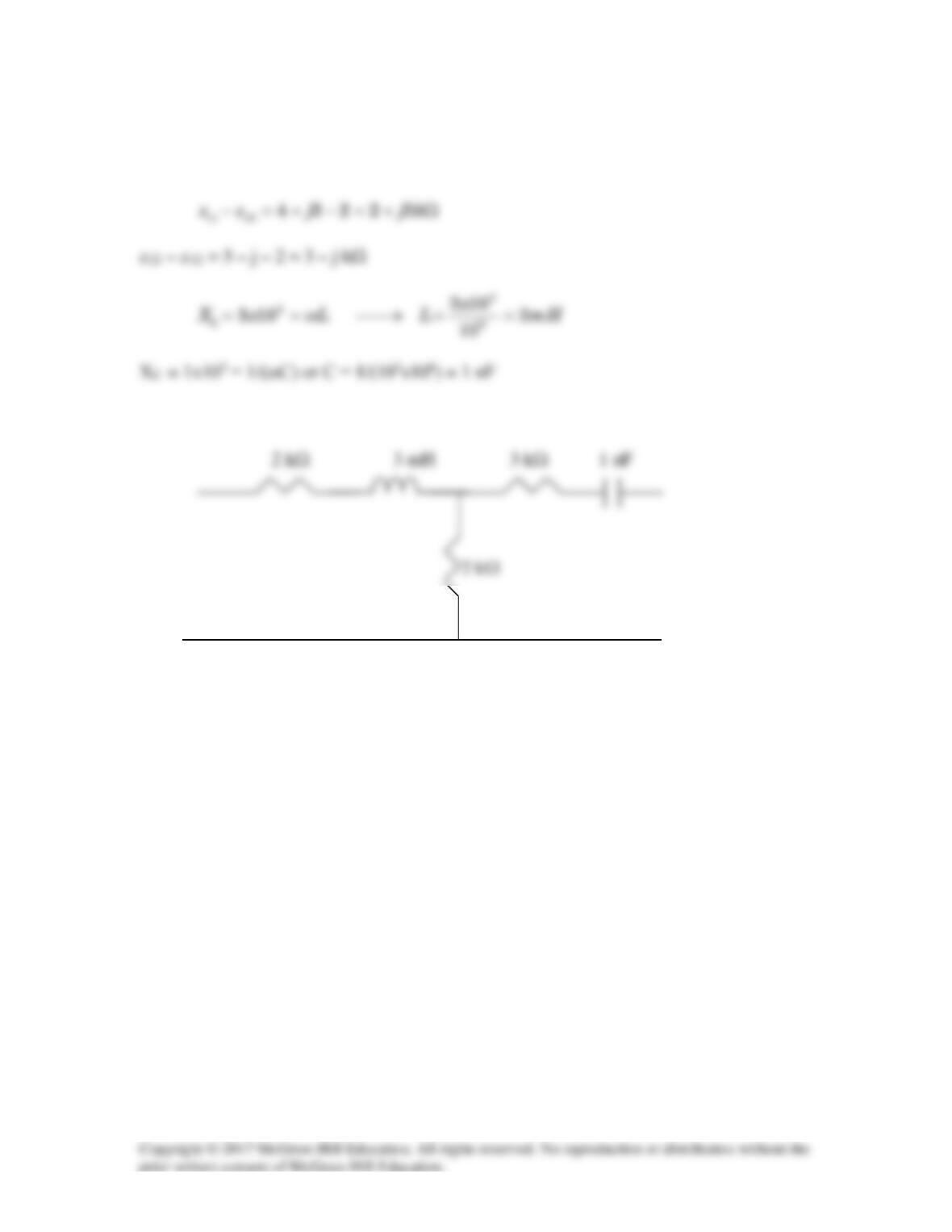
2.00.080.12-0.4)(0.2)()2)(06.0(
g
=+=−=∆
11
12
11
–
1
g
g
g
667.6667.16
∆
12
g
g
∆∆
g
12
g
22
–
gg
Ω
210
Problem 19.60
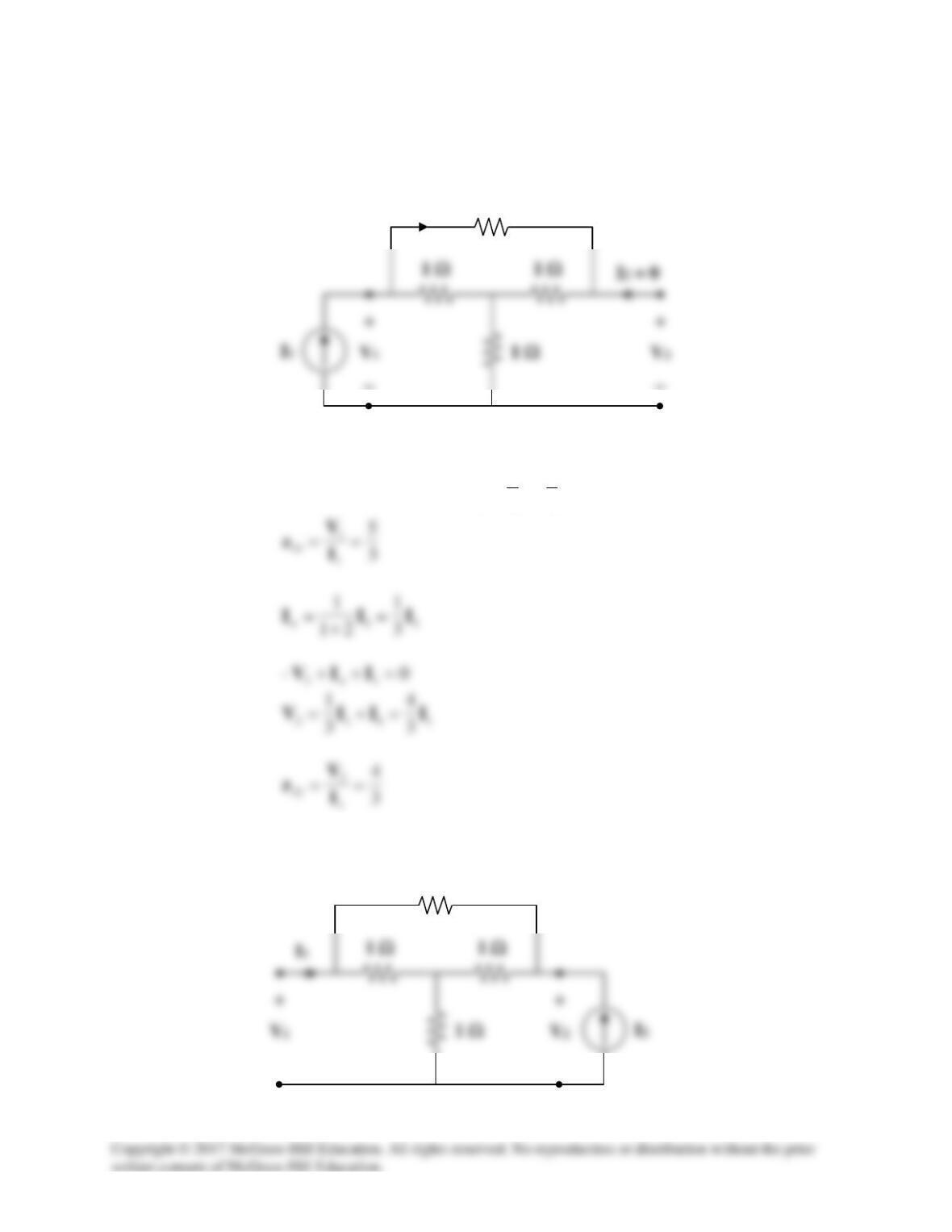
Comparing this with Fig. 19.5,
Hence, the resulting T network is shown below.
Solution 19.61
(a) To obtain
11
z
and
21
z
, consider the circuit in Fig. (a).
1111 3
5
3
2
1])11(||11[ IIIV =
+=++=
To obtain
22
z
and
12
z
, consider the circuit in Fig. (b).
1 Ω
1 Ω
1 Ω
−
(a)
(a)
−
Io
1 Ω
1 Ω
1 Ω
(b)
(a)
−
−
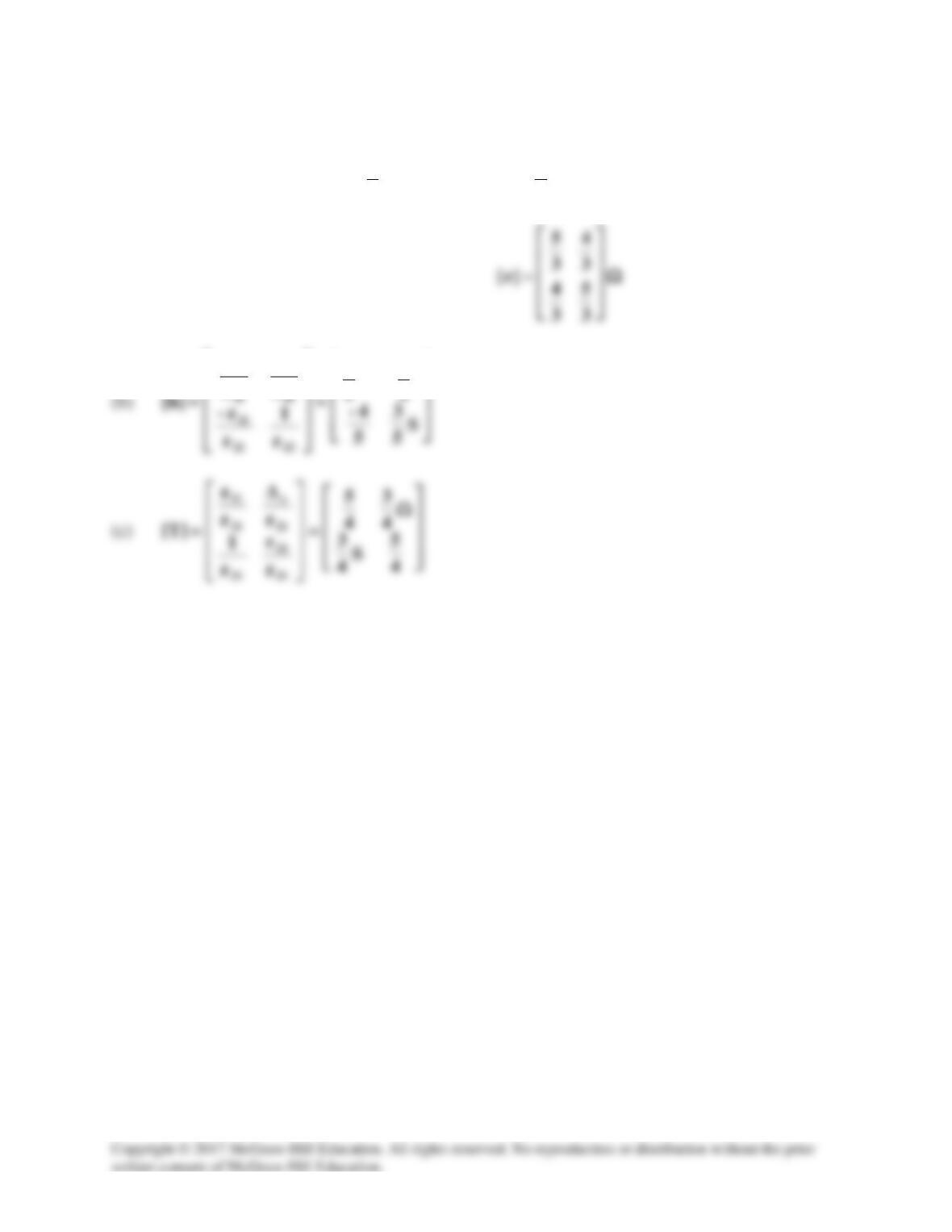
Due to symmetry, this is similar to the circuit in Fig. (a).
3
5
1122 == zz
,
3
4
1221 == zz
∆
12
z
z
z
z
Ω
4
3
Solution 19.62
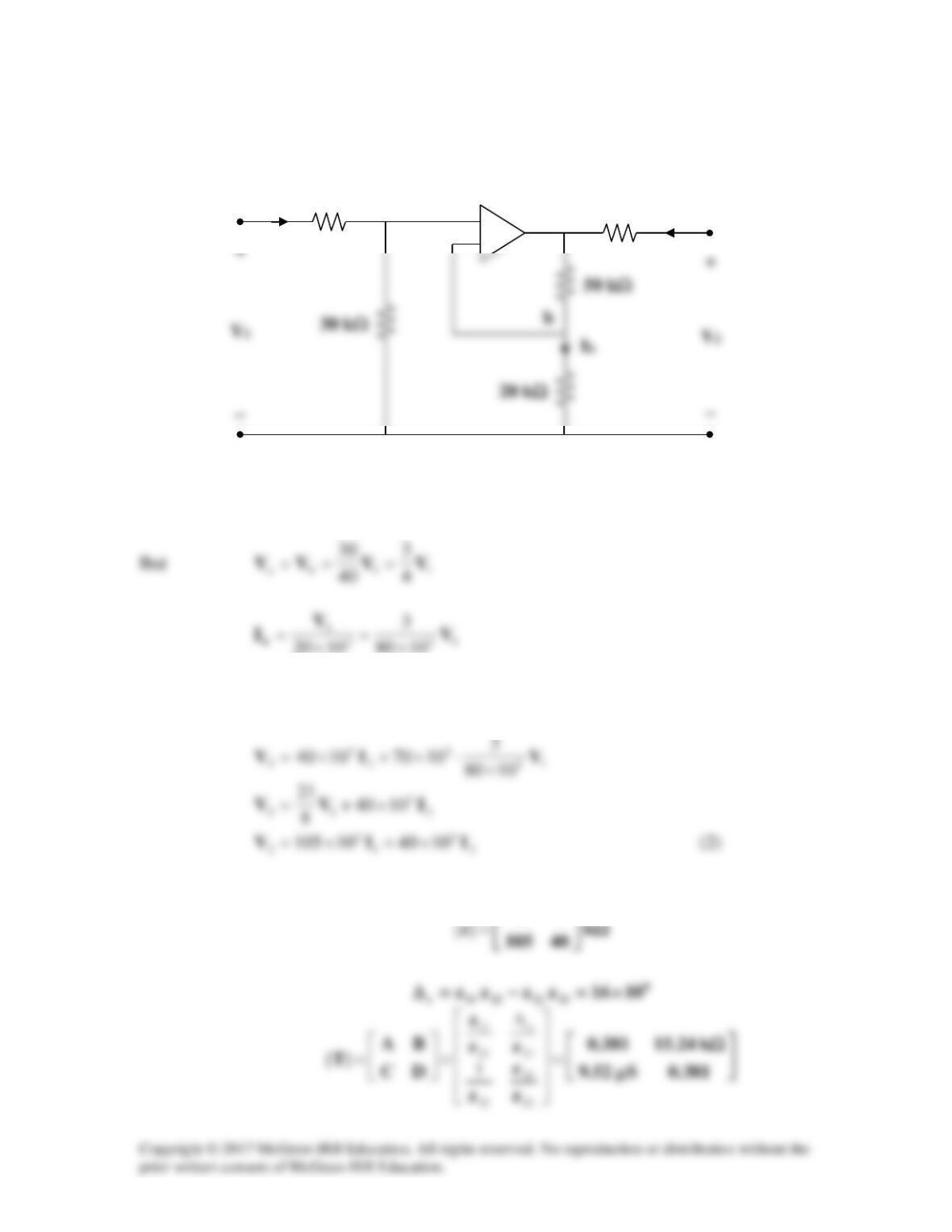
Consider the circuit shown below.
Since no current enters the input terminals of the op amp,
1
3
110)3010( IV ×+=
(1)
1020 V
×
which is the same current that flows through the 50-kΩ resistor.
Thus,
b
3
2
3
210)2050(1040 IIV ×++×=
From (1) and (2),
k
040
40 kΩ
10 kΩ
a
(a)
I1
I2
+
−
Solution 19.63
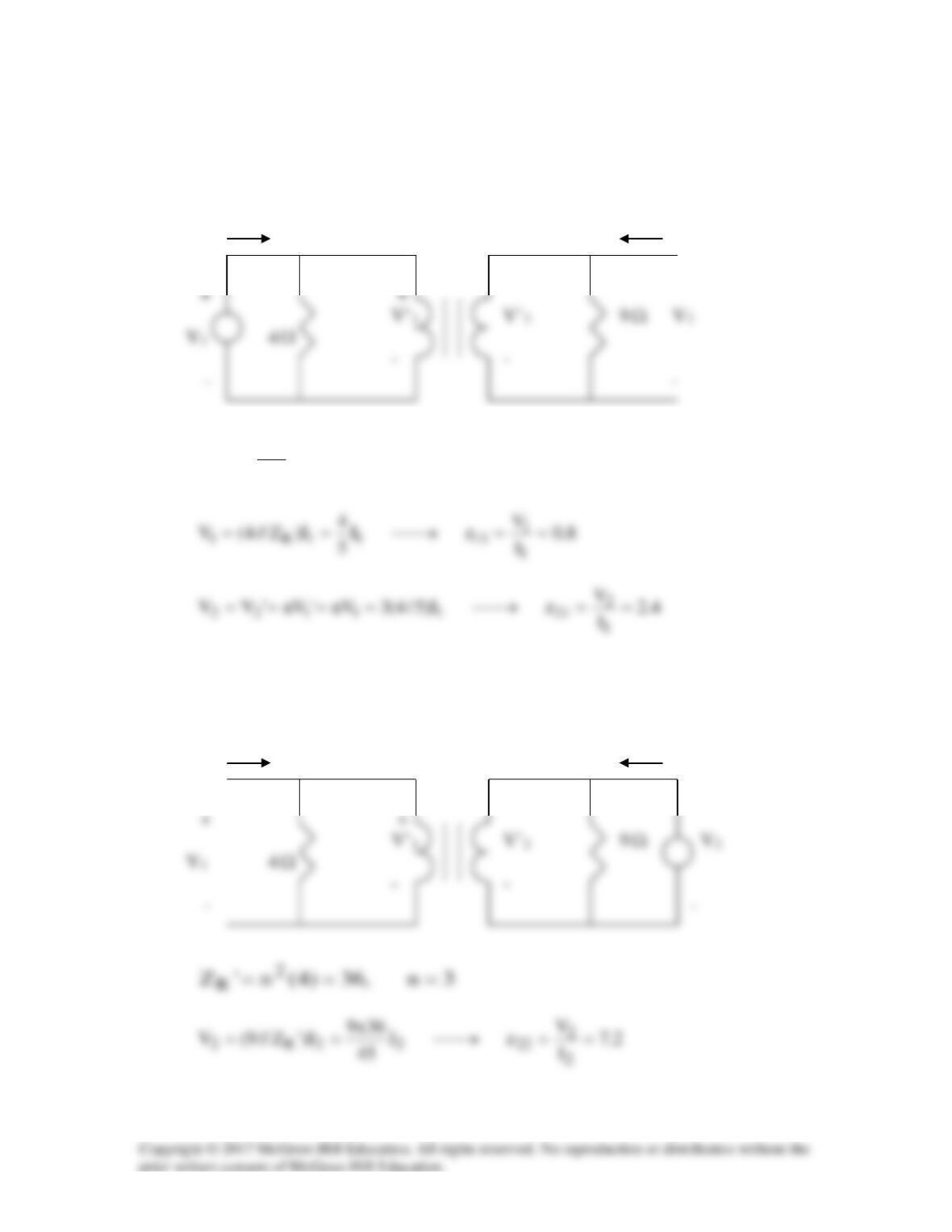
To get z11 and z21, consider the circuit below.
I1 1:3 I2=0
••
+ +
3n,1
n
9
Z
2
R
===
To get z21 and z22, consider the circuit below.
I1=0 1:3 I2
••
+ +
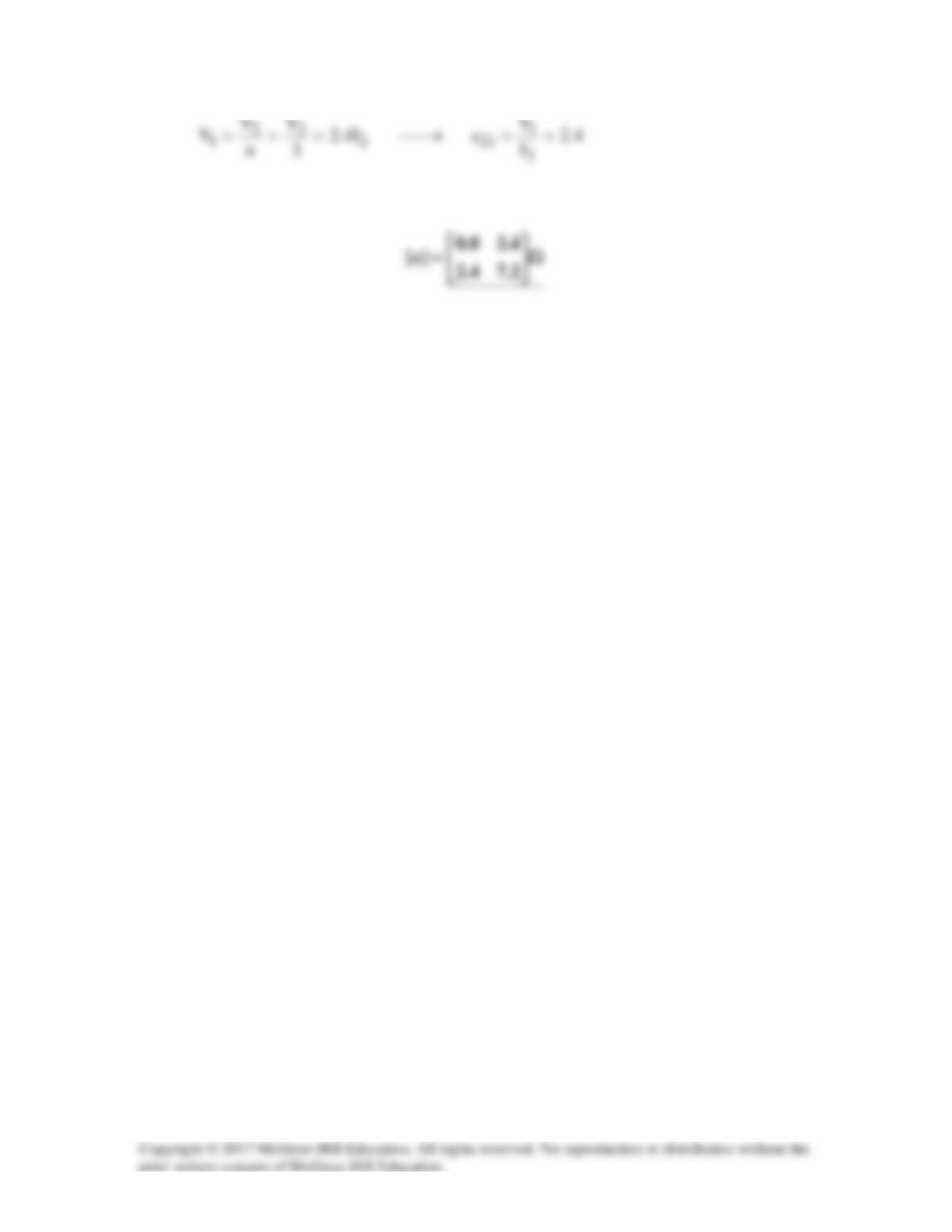
Thus,
Solution 19.64
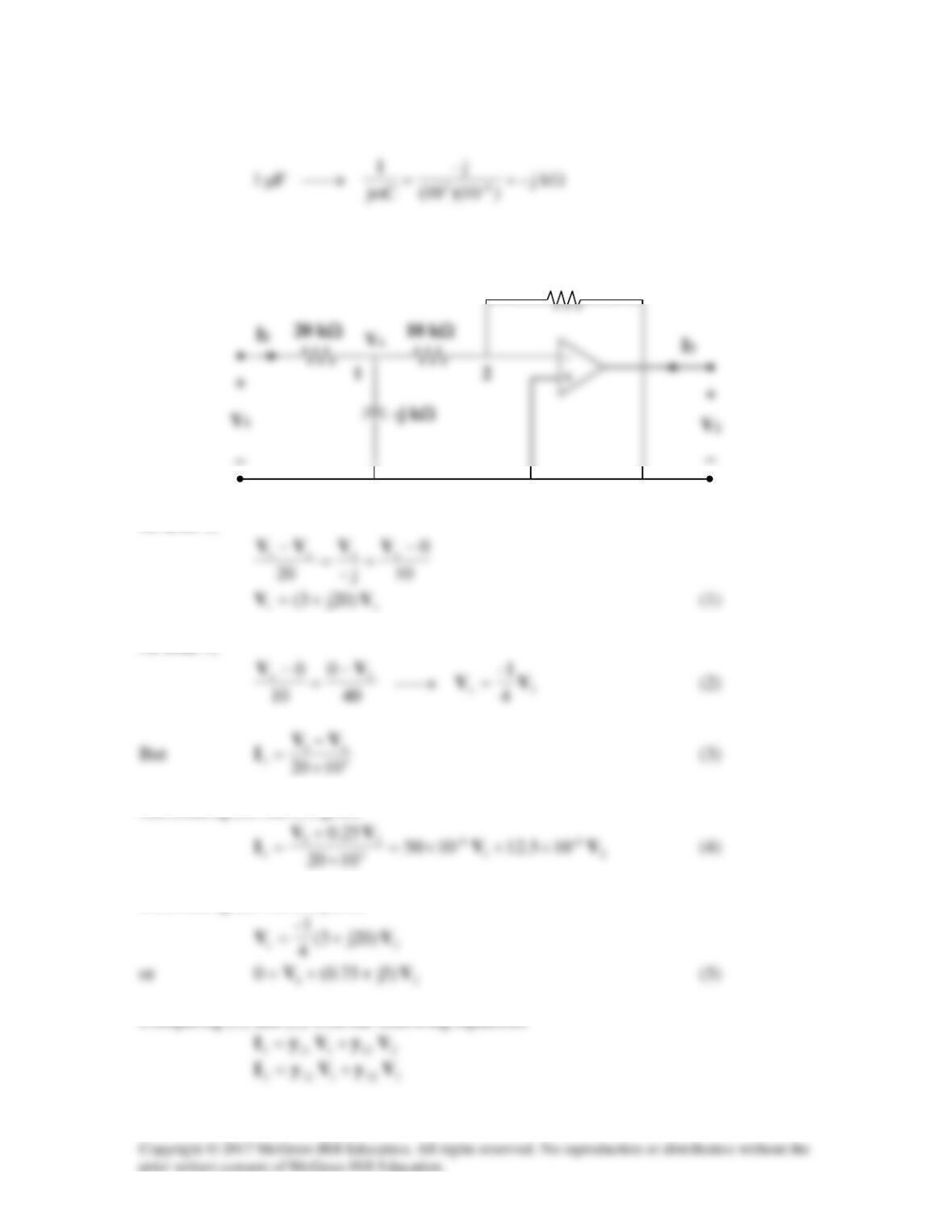
Consider the op amp circuit below.
At node 1,
At node 2,
Substituting (2) into (3) gives
Substituting (2) into (1) yields
40 kΩ
−